Marks And Spencer’s Gluten Free Food In Stations
I regularly travel by train and visit stations, outside of my normal patch of London. Once away from the capital, often the only substantial food I can get as I pass through the station are Marks and Spencer’s gluten-free sandwiches, a drink and perhaps some fruit.
At some stations, you can rely on gluten-free sandwiches being available most of the time. In this group would be.
Birmingham New Street, Cambridge, Liverpool Lime Street, Manchester Piccadilly, Oxford and Reading
Then there are important interchange stations, where possibly unless you’re there before nine, there’s never any gluten-free sandwiches.
Cardiff, Edinburgh, Sheffield and Newcastle
The worst major station for gluten-free food is Nottingham. The food shop is a Morrison’s, which I’ve never used. To get any gluten-free food you need to go to the city centre, which is a long walk or a return on the tram.
Other stations to avoid if you’re a coeliac like me, are Blackpool, Derby, Doncaster, Huddersfield, Ipswich, Norwich, Middlesbrough and Preston.
The last two are places where it is very difficult to buy any gluten-free food at all.
Where Are The Honeycomb Crispies?
I found a honeycomb crispy in M & S in Liverpool Lime |Street station on Saturday.
It was delicious, but I haven’t managed to find any since. The picture was taken at one of the St. Pancras outlets.

Where Are The Honeycomb Crispies?
I can only assume that M & S haven’t matched supply to the demand.
I can’t even find any on the company’s web site.
The Proof That Good Design Doesn’t Have To Be Expensive
I’ve watched the transformation of Manchester Victoria station from a dirty dump over the last few years. These are a few posts.
- Manchester’s Disorganised Public Transport
- Victoria Gets A Posh Umbrella
- Will Manchester Victoria Station Be Promoted To The Premier League?
- Coffee And Seats At Manchester Victoria
But now as this article on the BBC shows, it’s all finished.
Compared to other station works in the UK, the title of the report is surprising – Manchester Victoria reopens after £44m upgrade
But then the best design is often not as expensive as the crap!
Long may Victoria reign in Manchester!
Will The London Overground Aventras Have Energy Storage?
When I wrote Is Liverpool Planning To Invade Manchester By Train?, I enclosed a clip from the October 2015 Edition of Modern Railways about energy storage on the proposed new Liverpool trains.
Merseytravel has indicated that it will be seeking ‘innovative proposals’ from manufacturers, with considerable emphasis being placed on the overall cost of operating the fleet rather than just the basic cost of the trains themselves. Options such as regenerative braking and onboard systems to store energy under braking to be used for acceleration will attract particular interest. The independently-powered EMU (IPEMU or battery train) concept evaluated earlier this year on a modified Class 379 in East Anglia ,might see an application here.
So if energy storage is good for Scousers, surely it would be good for Cockneys! I could add Brummies, Geordies, Mancunians, Bristolians, Glaswegians, Hullensians and lots of others too!
I feel that using the new trains in IPEMU-mode would be a better way to run electric passenger trains on the Gospel Oak to Barking and Dudding Hill Lines, as all the inept disruption of putting up the catenary could be performed in a more relaxed manner.
But are there any other advantages, other than the energy saving and flexibility, if the trains have energy storage or an IPEMU capability?
- This morning, the wires are down on the London Overground at Hampstead, so trains are stopped. An IPEMU could possibly get through to provide a limited service.
- At times, lines are closed for work on the electrification and Rail Replacement Buses have to be used. Would an IPEMU be able to provide a service in some cases, by perhaps using another track? Obviously, safety for the workforce would have to be ensured, but Network Rail is improving its working methods all the time.
- London has two different electrification systems; overhead and third rail. Would an IPEMU allow extra services to be developed, which bridge the two systems?
- Would an IPEMU give advantages in the design, construction and operation of depots, by needing less electrification, as trains could move under their own own power.
- Suppose a terminal station like Chingford needs to be rebuilt or a new station needs to be built, would it cost less to design and build a station, if the station had no electrification?
Even if the current order for Aventra trains for the London Overground isn’t delivered with energy storage and an IPEMU capability, I believe it will become the standard for it to be installed on trains in the near future.
An Open Letter To London Mayor Candidates About East London River Crossings
This started as a post on my infrastructure blog, about the Silvertown Tunnel, but now that TfL has launched a consultation about the tunnel, I decided to update it and send it to you.
I am a sixty-eight year-old widower, living alone in Hackney, who has given up driving, so my personal feelings about the Silvertown Tunnel are that it is irrelevant to me, except that it might help some trucks bring goods that I buy on-line or at a local shop.
East London needs more cross-river routes and after recent trips to Birmingham, Nottingham and Germany and reading every word of London’s transport plans for 2050, I feel that whatever is done the Gospel Oak to Barking Line (GOBLin ) must be connected to Abbey Wood.
Over the last few weeks, I’ve made quite a few trips to South East London, including one where I walked along Bazalgette’s sewer between Plumstead and Abbey Wood.
It is a land that London has truly forgotten.
Some transport developments, like the DLR and the East London Line has made a difference, but connections are still not the best.
TfL has talked about a tunnel extending the GOBLin from Barking Riverside to Thamesmead and Abbey Wood.
After a visit to Karlsruhe specifically to see their tram-trains, I now believe that these could be the way to create a universe-class connection across the Thames. Tram-trains like those in Karlsruhe, which are soon to be trialled between Sheffield and Rotherham, could run on the GOBLin and then perhaps do a little loop at Barking Riverside before returning to Gospel Oak.
Note that we’re not talking untried technology here as you can see the tram-trains running on the streets and railway tracks of several German cities. Undoubtedly, if the Germans were extending the GOBlin, they would use tram-trains, as they could serve build several stops with the money needed to build Barking Riverside station. And all the stops, like those on the London Tramlink would be fully step-free.
The loop in Barking Riverside, could extend across the river.
I think that a tunnel under the Thames would be a case of hiding your biggest light under an enormous bushel.
So why not create a high bridge to allow the biggest ships underneath, with a tram track or two, a cycle path and a walking route?
It would have some of the best views in London. Forget the Garden Bridge! This would create a transport link, that those living on both sides of the river could use and enjoy every day to get to work or for leisure reasons. Tourists would come to view London, as they do on large entry bridges in cities like New York and Lisbon.
Effectively, you have a conventional tram connecting Barking, Barking Riverside, Thamesmead and Abbey Wood. At Barking and Abbey Wood, the tram-trains become trains and could go to Gospel Oak and perhaps Meriandian Water, Romford, Upminster or Tilbury in the North and perhaps Woolwich, Lewisham, Dartford or Bluewater in the South.
Everything you would need to create such a link is tried and tested technology or designs that have been implemented in either the UK or Germany over the last few years.
In TfL’s plans for 2050, I found the words Penge and Brockley High Level buried in an Appendix listing places where there could be new transport interchanges.
I believe that an interchange at Penge would link the East London Line to the South Eastern Main Line and trains between Victoria and Orpington. Another interchange at Brockley would link the East London Line to the trains going across South London between Lewisham and Abbey Wood.
Conventional thinking says that these interchanges will be difficult to build, but Birmingham has already created a station that solves the problem at Smethwick Galton Bridge.
As London Overground have the capacity to run twenty four trains every hour each way on the East London Line, these two interchanges would help solve the chronic connectivity to and from South East London. They would also bring more passengers to the East London Line to fill all those trains.
One of the things that the increased number of trains on the East London Line would need is another southern terminal and possibilities include Beckenham Junction or Orpington.
I think it is true to say that there are more possibilities to improve connectivity east of the East London Line, both North and South of the River, than both London’s Mayors have ever dreamed about.
To be fair to both of them, it’s only in recent years that tram-trains have been seriously thought about in the UK, although the Germans have had them for a decade or so.
Get it right and the Silvertown Tunnel would be a very different scheme.
It might even be just be an entry in that large directory of projects that were never started.
The National Infrastructure Commission Is Welcomed By Warwickshire
This article on Rail News is entitled Warwickshire rail campaigners welcome news of National Infrastructure Commission and it discusses the struggles of local campaigners trying to restore the rail line between Stratford-on-Avon and Honeybourne, on the North Cotswold Route. Wikipedia says this about the plans.
The Shakespeare Line Promotion Group is promoting a scheme to reinstate the 9 miles (14 km) “missing Link” between Honeybourne and Stratford. Called the “Avon Rail Link”, the scheme (supported as a freight diversionary route by DB Schenker) would make Stratford-upon-Avon railway station a through station once again with improved connections to the Cotswolds and the South. The scheme faces local opposition. There is, however, a good business case for Stratford-Cotswolds link.
Note this could also be a freight diversion route.
Last year, I went to Stratford-on-Avon and wrote Stratford Upon Avon Station Is Getting A Facelift.
I hinted at more services to come and linked to the Wikipedia comments above.
To return to the Rail News article, it says some interesting things like this.
A NIC could overcome one of the biggest hurdles that has existed for decades. For mainly no other reason the route from Stratford to Honeybourne straddles two government regional boundaries (West Midlands and South West) two Network Rail regions (Chiltern/West Midlands and Western), three County Councils, three District Councils and two Local Enterprise Partnerships.
Is anybody in charge? Perhaps the NIC will be. This is said on visitors to Stratford-on-Avon.
Stratford only attracts six per cent of visitors to the town to travel by rail, while the national average for visitors by rail to similar UK rail-connected tourist destinations is over double that, at 13 per cent.
As the line has a good case for reopening and Stratford-on-Avon station has been upgraded, perhaps this is a project that should be looked at seriously.
We are probably going to live in a new era if George Osbourn’s plans for business rate reform come to fruition, which might see progressive Councils developing infrastructure to enable business, housing and tourism opportunities.
Surely a reconstructed line from Stratford-on-Avon to Cheltenham would tick a few boxes.
There is a major prize at the Cheltenham end if Cheltenham Racecourse, which is one of the busiest in the UK, could be linked to the main line rail network at Cheltenham Spa station. The Google Map shows the Gloucestershire Warwickshire Railway going past the racecourse, where there is already a station.
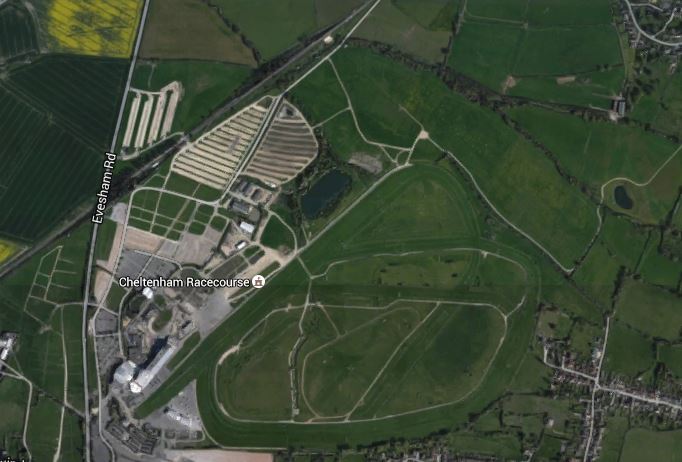
Cheltenham Racecourse
Unfortunately, there is a supermarket which is partially blocking the route between the racecourse and Cheltenham Spa station.
These are the sort of problems that a National Infrastructure Commission should have the power to solve or dismiss as insoluble.
Watching National Hunt racing at Cheltenham is one of the great sporting spectacles of the British Isles and a viable rail service to the course from London and Oxford needs to be created.
Batteries Or Flywheels?
Hybrid buses and IPEMU trains need some form of energy storage.
Typical systems generally use batteries. Mechanical devices are discussed in this article in Transport Engineer.
Read the article.
What Really Happened At Walthamstow Central
I heard a lot of complaints about the closure of the Victoria Line in August. So I was pleased to see this article in Rail Engineer entitled Life is not a rehearsal… but pumping concrete can be!
As detailed by Transport for London this is a summary of what needed to be done.
Improvement work planned this summer by London Underground (LU) will lead to the operation of 36 trains per hour. From April 2016, this will provide a train every 100 seconds during peak hours, making the Victoria line the UK’s highest frequency railway and comparable with the very best in the world. All peak-time trains will run the full length of the line from Walthamstow Central to Brixton, giving a 40% capacity boost for customers northeast of Seven Sisters.
But it wasn’t that simple to achieve and the Rail Engineer article explains the main problem of a crossing at Walthamstow.
The trackwork kept pace with the times, but wasn’t shiny and, of course, it was out of sight. At Walthamstow – the end of the line – the track arrangement ended in a scissors crossover. For the non-pway engineers, this is a compact and complex track arrangement where terminating trains arriving at the crossover from the south in the northbound tunnel can be routed into either of the two platforms at Walthamstow Central, then routed back from either platform into the southbound tunnel.
Changing it wasn’t simple and they used every trick in the book to do the project.
- A bespoke overhead crane was installed at the crossover, for ease of working, and after the job was completed it was left behind in the tunnel, so it could be used again if needed.
- A number of demolition techniques were used to remove the old track and its concrete base.
- They even wrapped the new track in polythene, so that no concrete got on the rails.
- They had actually rehearsed the major concrete pouring which required fifty truck-loads of concrete in the open at Acton Depot.
The major outcome is that the speed of trains through the crossing has been raised from 20 mph to 35 mph, which is necessary to achieve thirty-six trains an hour through London.
This is the sort of project that would make good television!
Except for one thing!
Nothing went wrong and the project was delivered thirty-six hours early.
The Class 319 Trains Keep Rolling On
Class 319 trains were built for Thameslink in the 1980s.
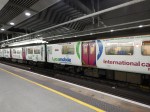
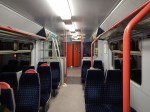

I was using the line to get from St. Pancras to Blackfriars and in a few years time, when twenty-four trains an hour run on the line, it’ll almost be like another Underground line across the city from North to South.
Class 319s are not the most attractive of trains and advertising doesn’t help. The good news is that are reliable 100 mph trains and with a refurbishment, they’ll last a few more years yet, as Northern Rail have shown.
 The Anonymous Widower