Paddington And Minehead By Train
Two projects announced in the last six months may make this a possibility.
- FirstGroup’s Paddington and Paignton Service
- The West Somerset Tidal Lagoon
Neither project has the full permissions it needs, but if Lumo do stop at Taunnton and the West Somerset Tidal Lagoon is built, if could open up an interesting possibility.
In Thoughts On Lumo’s Proposed Paddington And Paignton Service, I stated that a train could take two hours between Paddington and Taunton, if it went for a fast non-stop run to Bath Spar station.
In MP Pushes For Tidal Lagoon In Bristol Channel, I said this.
I believe that for the lagoon project to be complete, the West Somerset Railway needs to be turned into a fully-operational branch line between Minehead and Taunton to improve access for residents, visitors and workers to Minehead and other places in West Somerset.
Surely, with a quick change of train, passengers could be in Minehead thirty minutes after arriving at Taunton.
In recent years several new branch lines have open in the UK and been given time to attract new passengers.
- The Borders Railway to Tweedbank
- Merseyrail to Headbolt Lane
- The Northumberland Line to Ashington
- ScotRail to Leven.
- The Dartmouth Line to Okehampton
None appear to be in any danger of being closed.
I very much feel, that if the West Somerset Railway, ran a full service between Minehead and Taunton, it would follow the same pattern.
Fast Battery-Electric Hitachi Trains Between Paddington And Bristol Temple Mead Stations
It was when I was writing Thoughts On Lumo’s Proposed Paddington And Paignton Service, that I realised how significant Hitachi’s battery-electric high speed trains will be.
This page on the Hitachi web site gives this overview of their Intercity Battery Trains.
A quick and easy application of battery technology is to install it on existing or future Hitachi intercity trains. Hitachi Rail’s modular design means this can be done without the need to re-engineer or rebuild the train and return them to service as quickly as possible for passengers.
Replacing one diesel engine with just one battery reduces emissions by more than 20% and offers cost savings of 20-30%. Our intercity battery powered trains can cover 70km on non-electrified routes, operating at intercity speeds at the same or increased performance.
For the purpose of this exercise, I will assume the following.
- All trains are five-car trains.
- They were all originally manufactured as Class 800, 802 or 805 trains.
- They were all originally manufactured with three 750 kW Rolls-Royce mtu diesel generators.
- One diesel generator in each train has been replaced by a 750 kW battery-pack of the same size, weight and performance.
According to Hitachi’s web page, that I quote above, this gives intercity speeds at the same or increased performance, for 70 km. on non-electrified routes.
I will now look at how a Hitachi battery-electric high speed train would handle the line between London Paddington and Bristol Temple Mead stations.
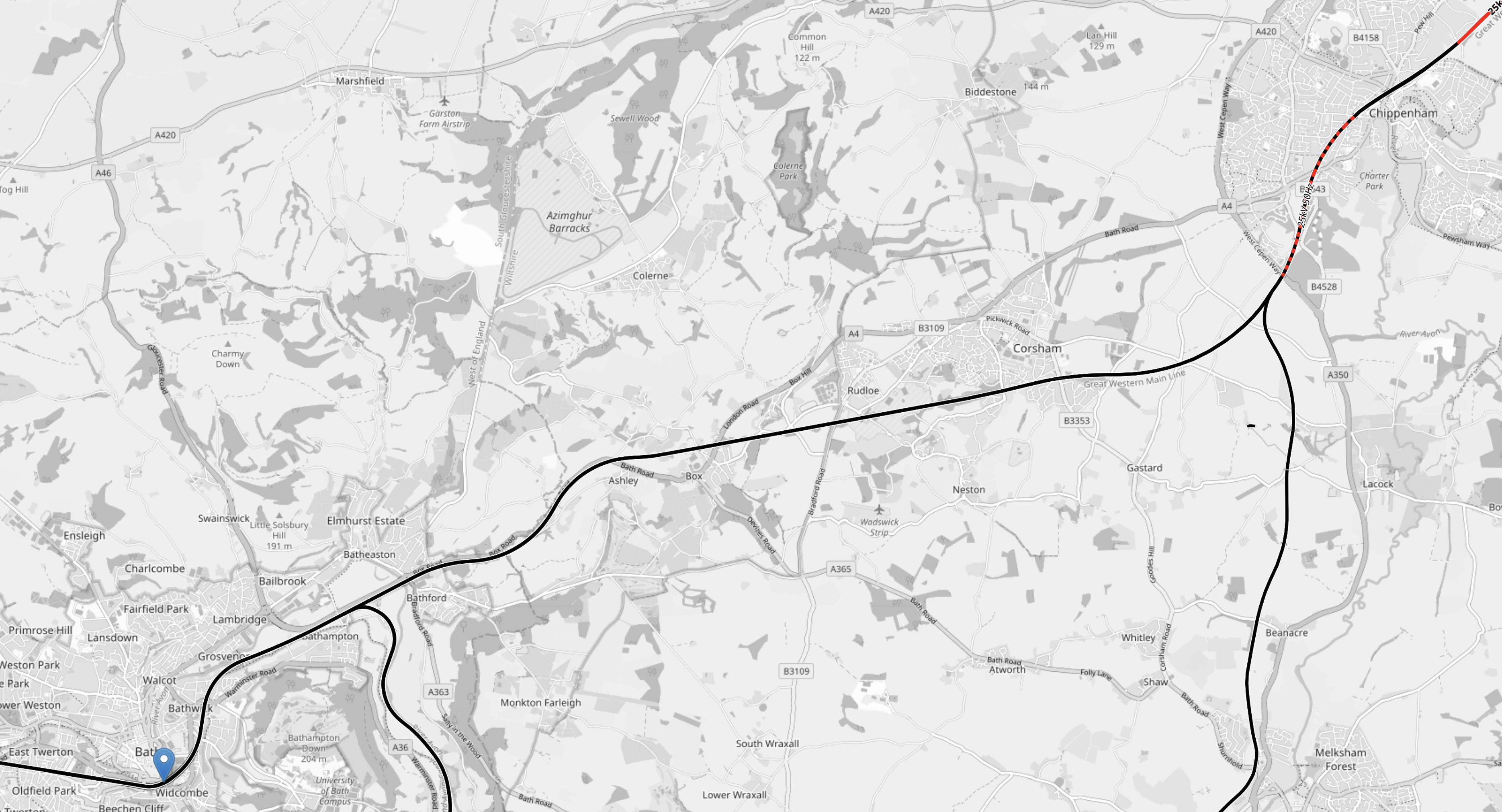
This OpenRailwayMap shows the electrification between Chippenham and Bath Spa stations.
Note.
- London Paddington and Bristol Temple Mead stations are 118.3 miles apart.
- The blue arrow indicates Bath Spa station.
- Bristol Temple Meads station is 11.5 miles to the West of Bath Spa station.
- Chippenham station is in the North East corner of the map.
- Black lines are not electrified.
- Red lines are electrified with 25 KVAC overhead wires.
- The 93.9 miles betweeen London Paddington and Chippenham is fully-electrified.
- Red and black dotted lines are being electrified.
- The 24.4 miles between Chippenham and Bristol Temple Mead stations is not electrified.
- The residents of Bath Spa are not keen for the railway through Bath to be electrified.
The single battery-pack in the train, will have to propel the train between Chippenham and Bristol Temple Mead stations.
- On arrival at Chippenham, the battery will have been fully charged on the 93.9 miles from London Paddington.
- The train will be switched to battery power and proceed through Bath Spa station to Bristol Temple Meads station.
- The 24.4 miles between Chippenham and Bristol Temple Mead stations is only 39.26 km. so it is well within range of a single battery pack.
- The trains will be able to reach Bath, as fast as the track allows, so they could have come much of the way from London Paddington at speeds approaching 125 mph.
Hence my belief that Bath Spa could be reached in around an hour without any stops from London Paddington and Bristol Temple Meads in a very fast time.
There may be a need to top up the battery at Bristol Temple Meads station for London trains to return to the electrification at Chippenham or for other trains to continue their journey through Bristol.
This could be handled by some lengths of electrification in platforms in Bristol Temple Meads station, where the Hitachi trains terminate.
However, I feel Network Rail will be able to avoid the sensitive and possibly very challenging electrification through Bath.
Conclusion
London Paddington and Bristol Temple Meads via Bath Spa trains would be substantially speeded up. Especially, if the first stop out of London Paddington were to be Bath Spa station.
Great Western Railway would only cut out the stops if they wanted to speed up services.
Who’d have thought, that powering services by batteries, would speed up services?
Leisure Market Boom? GWR’s Vision For Direct Bristol-Oxford Services
The title of this post, is the same as that of this article on Rail Magazine.
This is the first paragraph.
Great Western Railway has hopes on running direct services between Bristol Temple Meads and Oxford from September 14, subject to approval of its new trial proposal by the Department for Transport and Network Rail. The move is a test of growth in demand for leisure travel by train.
It is an interesting idea.
These are some points about the service, given in the article.
- The route will be via Swindon, Chippenham and Bath Spa.
- Fastest journey time would be 71 minutes.
- The route will be aimed at the leisure market.
- There will be two trains per day (tpd) in each direction on Saturdays.
This is GWR’s handy route map.

These are my thoughts.
Will The Trains Call At Didcot Parkway?
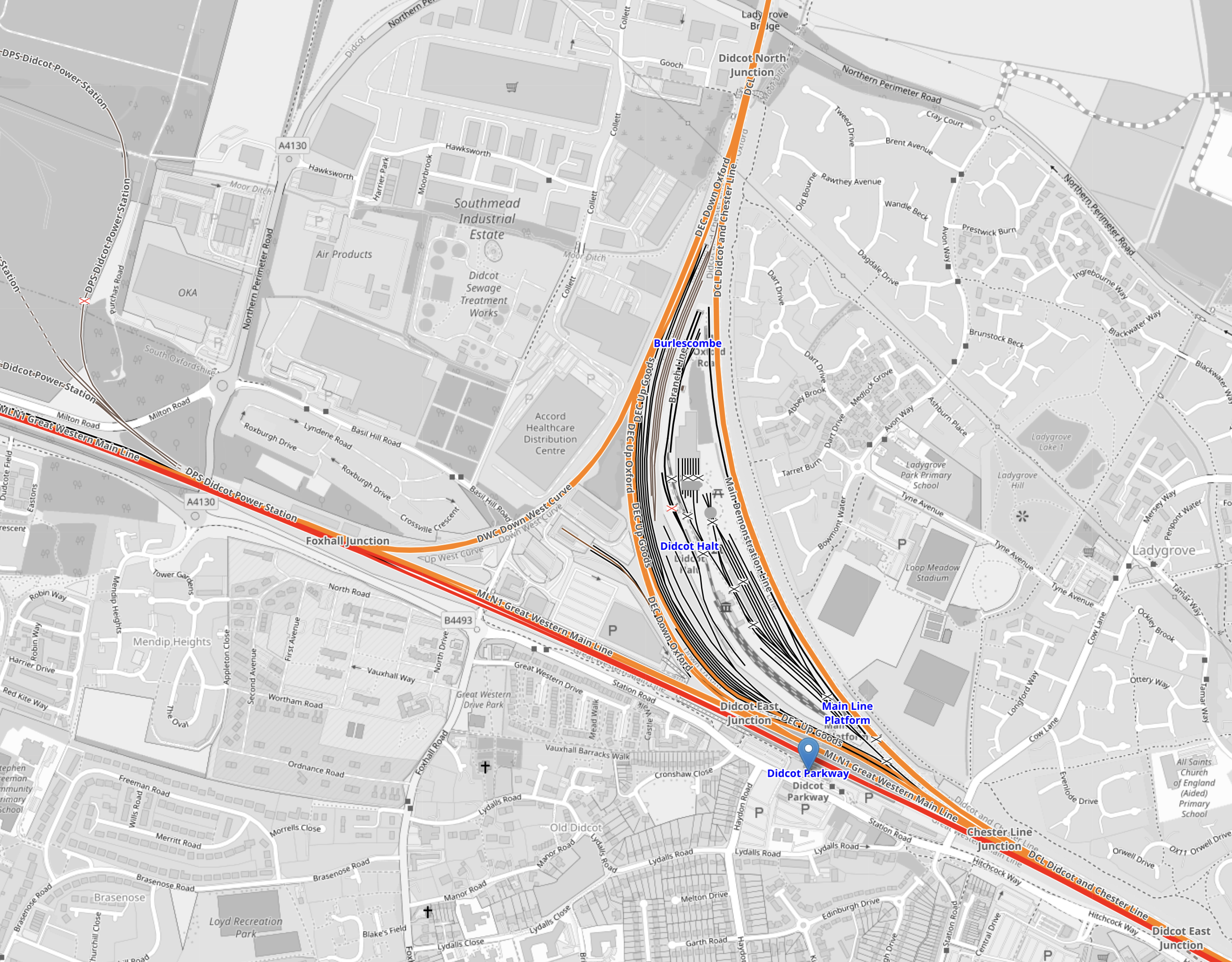
This OpenRailwayMap shows Didcot Parkway station and the large triangular junction, that connects Oxford to the Great Western Main Line.
Note.
- The red tracks are the Great Western Main Line.
- The blue arrow indicates Didcot Parkway station.
- Oxford station is about ten miles to the North.
- Chords in the junction allow trains to go between Oxford and Paddington and Oxford and Swindon, with or without a stop at Didcot Parkway station.
The article says that GWR has asked to run the following services.
- 1018 Bristol Temple Meads-Oxford – Would arrive at Oxford at 1129.
- 1155 Oxford-Bristol Temple Meads (via Didcot) – Would arrive at Bristol Temple Meads at 1306.
- 1518 Bristol Temple Meads-Oxford – Would arrive at Oxford at 1629.
- 1712 Oxford-Bristol Temple Meads – Would arrive at Bristol Temple Meads at 1823.
Note.
- I suspect that the 1155 will reverse at Didcot Parkway station.
- There is a two train per hour (tph) service between Didcot Parkway and London Paddington stations.
- It looks like the four services could be run by a single train shuttling up the Great Western Main Line.
Would it be sensible if all Oxford and Bristol trains called at Didcot Parkway station, so that travellers could use the London service to their advantage?
But, calling at Didcot Parkway station would slow the service as there would need to be a reverse.
What Class Of Train Would Be Used?
Consider.
- A Bristol and Didcot Parkway via Bath Spa service takes 55 minutes.
- This is an average speed of 71.1 mph over a distance of 65.2 miles.
- 24.4 miles at the Bristol end of the route is not electrified.
- 10.3 miles at the Oxford end of the route is not electrified.
- The four services can be run by a single train shuttling up the Great Western Main Line.
It looks to me, that a bi-mode train with good performance is needed.
So I suspect that a five-car Class 800 or Class 802 train will be used.
Will The Train Be Battery-Electric Powered?
This is an interesting possibility.
- An ideal route for a battery electric train, is surely one with a long electrified section in the middle, which can be used to fully charge the train’s batteries.
- The train would have to run for 48.8 miles on its own power at the Bristol end of the route.
- The train would have to run for 20.6 miles on its own power at the Oxford end of the route.
The data sheet for a battery-electric Class 800/802 train can be downloaded from this page on the Hitachi web site.
In a section on the page, which is entitled Intercity Battery Trains, this is said.
A quick and easy application of battery technology is to install it on existing or future Hitachi intercity trains. Adding just one battery reduces emissions by more than 20% and offers cost savings of 20-30%.
Our intercity battery powered trains can cover 70km on non-electrified routes, operating at intercity speeds at the same or increased performance. Hitachi Rail’s modular design means this can be done without the need to re-engineer or rebuild the train and return them to service as quickly as possible for passengers.
The range of 70 km is 43.5 miles, which would appear to be a little bit short to go from the end of the electrification at Chippenham to Bristol Temple Meads and back.
But various measures could be taken to make sure the train can handle the route.
- The regenerative braking strategy could be used to conserve battery power.
- A second battery could be added to the train.
- Methods to charge the train at Bristol Temple Meads could be installed.
As London Paddington and Bristol Temple Meads is an important route, I suspect that Hitachi and Great Western Railway have a strategy to handle trains from Chippenham and sending them back.
Could This Route Be A Trial Route For Battery-Electric Trains?
Consider.
- Hitachi and Great Western Railway wouldn’t want to introduce an unreliable train without full full testing.
- Trains can probably limp to either Stoke Gifford or Reading depots, after a battery failure.
- Great Western Railway could test a new route.
- A full test only needs one train.
- Passenger reaction to a battery-electric train can be assessed.
- Staff need to be trained.
- The route can be run by a standard bi-mode if required.
- It could be the world’s first high-speed battery-electric train.
- Enthusiasts would flock to have a ride.
Could this be a trial service to make sure everything goes right?
Speeding Down To Bristol By Train
On Wednesday, I went to Bristol to take a few photographs.
I took these pictures, where the electrification ran out at Chippenham station.
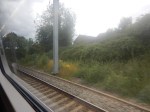
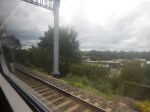
There is some half-hearted erection of electrification going on between Chippenham station and Box Tunnel, but despite the fact, that the iconic tunnel is ready for wires, construction work seemed noticeable by its absence.
Line Speed Observations
I had my personal dynamometer car connected for much of the journey.
- Between Southall and Slough we were at times running at only a few miles short of 130 mph. Are Great Western Railway starting to wind up the speed.
- Most of the journey, when well clear of stations, we were at around 125 mph until Chippenham station.
- At Chippenham, it was noticeable that the diesel engine under my seat kicked in.
- Onwards from Chippenham, we were at around 100 mph on diesel.
I suspect that London and Bristol services could be improved and/or speeded up.
- Timings could be reduced between London Paddington and Reading by running at faster speeds under digital ERTMS signalling. The train certainly felt comfortable at 128 mph.
- Any increase in electrification past Chippenham station will increase the the reach of a Class 800 train with a battery capability on a mile-for-mile basis.
- Trains should be able to increase speed towards 125 mph for some of the twelve miles between Chippenham and Bath Spa stations.
- As trains would not be swapping between diesel and electricity in Chippenham station, would panning up and down happen automatically further West?
- It might be possible to fit in a third London Paddington and Bristol service, that doesn’t stop at Chippenham station.
None of these improvements would need the line through Bath Spa station to be electrified.
Bath Spa Station – 28th July 2020
I took these pictures as I twice passed through Bath Spa station.
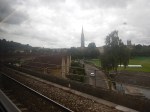
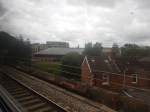
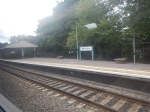
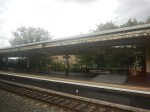
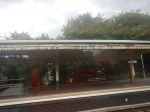
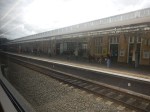

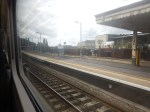
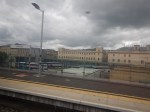
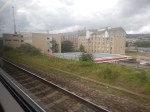
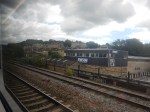
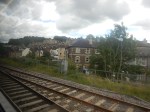
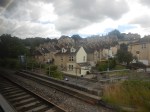


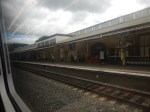
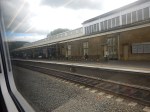

These are my thoughts.
Electrification Gantries On The Platforms
As somebody, whose eyesight is on the wane, I am not a lover of electrification, where the gantries are bolted to the platforms. These pictures show some installations of this type at Crouch Hill station.
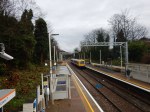
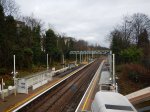
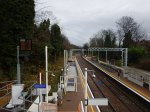
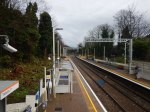
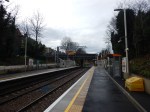
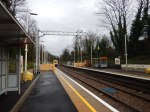
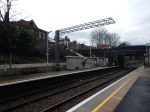
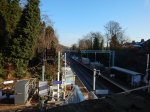
Would electrification gantries like these, be appropriate in Bath Spa station?
Could Lightweight Electrification Gantries Be Placed Between The Tracks?
These pictures show the wide gap between the two tracks in Bath Spa station.
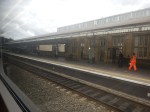
Could double-track lightweight structures, based on a design like this be placed between the tracks?
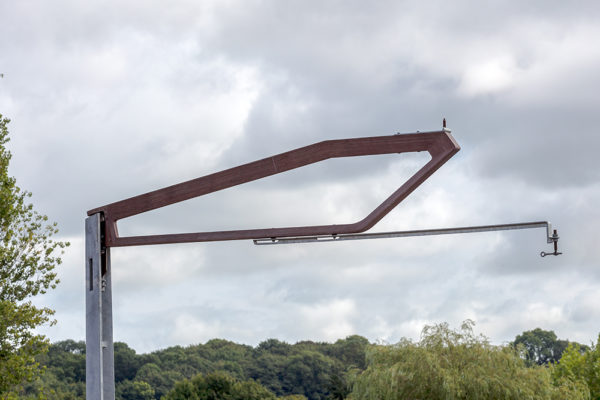
These structures are made out of laminated wood and are surely a possibility.
A Makeover For Bath Spa Station
If you look at much of the woodwork and paint in the fabric of the station, it appears tired and in need of refurbishment.
Whether the station is electrified or not, the station will need a high-class makeover.
Services Through Bath Spa Station
Three train companies run services through Bath Spa station.
- CrossCountry which only operates diesel trains.
- Great Western Railway operates Class 800 electro-diesel trains and some assorted diesel trains.
- South Western Railway only operates Class 159 diesel trains.
There are also some freight services hauled by diesel locomotives.
Trains leave Bath Spa station using one of three routes via either.
- Bristol Temple Meads station, which is 11.5 miles away without electrification.
- Chippenham station, which is where the electrification to London starts and is 13 miles away.
- Westbury station, which is on the Reading and Taunton Line and 17 miles away without electrification.
Most trains seem to go via Bristol Temple Meads station.
- The distance between Bristol Temple Meads and Chippenham stations are 24.5 miles.
- The distance between Bristol Temple Meads and Westbury stations are 28.5 miles.
Neither distance is that long.
An Alternative To Full Electrification
When I look at the distances between Bristol Temple Meads, Chippenham and Westbury stations, they tell me that they are within the range of Hitachi’s Class 800 train with a battery electric capability or Regional Battery Train, which is described in this infographic from the company.

The proposed 90 km or 56 mile range would even be sufficient take a train between Chippenham and Bristol Temple Meads stations on a return trip.
Notes for each station follow.
Bristol Temple Meads
Charging facilities would be needed.
Destinations in battery range would include.
- Bristol Parkway – 6 miles
- Cardiff Central – 5 miles to the electrified Great Western Main Line.
- Cheltenham Spa – 41 miles
- Gloucester – 39 miles
- Taunton – 45 miles
- Weston-super-Mare – 19 miles
Note.
- Return trips to Bristol Parkway and Western-super-Mare would be possible.
- The other destinations will need charging facilities.
Bristol Temple Meads station could become a major hub for battery trains.
All local services and all passing longer distance services could be trains with a battery capability.
I write more about Britol Temnple Meads station as a battery train hub in Bristol Temple Meads Station – 28th July 2020.
Chippenham
A train would leave Chippenham station with a full battery after charging on the fully-electrified route from London.
Chippenham and Weston-super-Mare would be in battery range with a charging facility at Weston-super-Mare station.
It should be noted that every extra mile of electrification past Chippenham, can be added to the distance electric trains with a battery capability can reach.
Westbury
Charging facilities would be needed.
Destinations in battery range would include.
- Salisbury – 24 miles.
- Southampton – 49 miles to the electrified South Western Main Line, at Southampton Central station.
- Weymouth – 53 miles to the electrified South Western Main Line at Dorchester Junction.
Note.
- A return trip to Salisbury would be possible.
- Trains would need to have the capability to access 750 VDC third-rail electrification.
- A few extra miles of electrification may make operation South from Westbury station easier, more reliable and allow more destinations to be included.
Westbury station could be a major hub for battery trains.
This Google Map shows Westbury station and the lines around it.
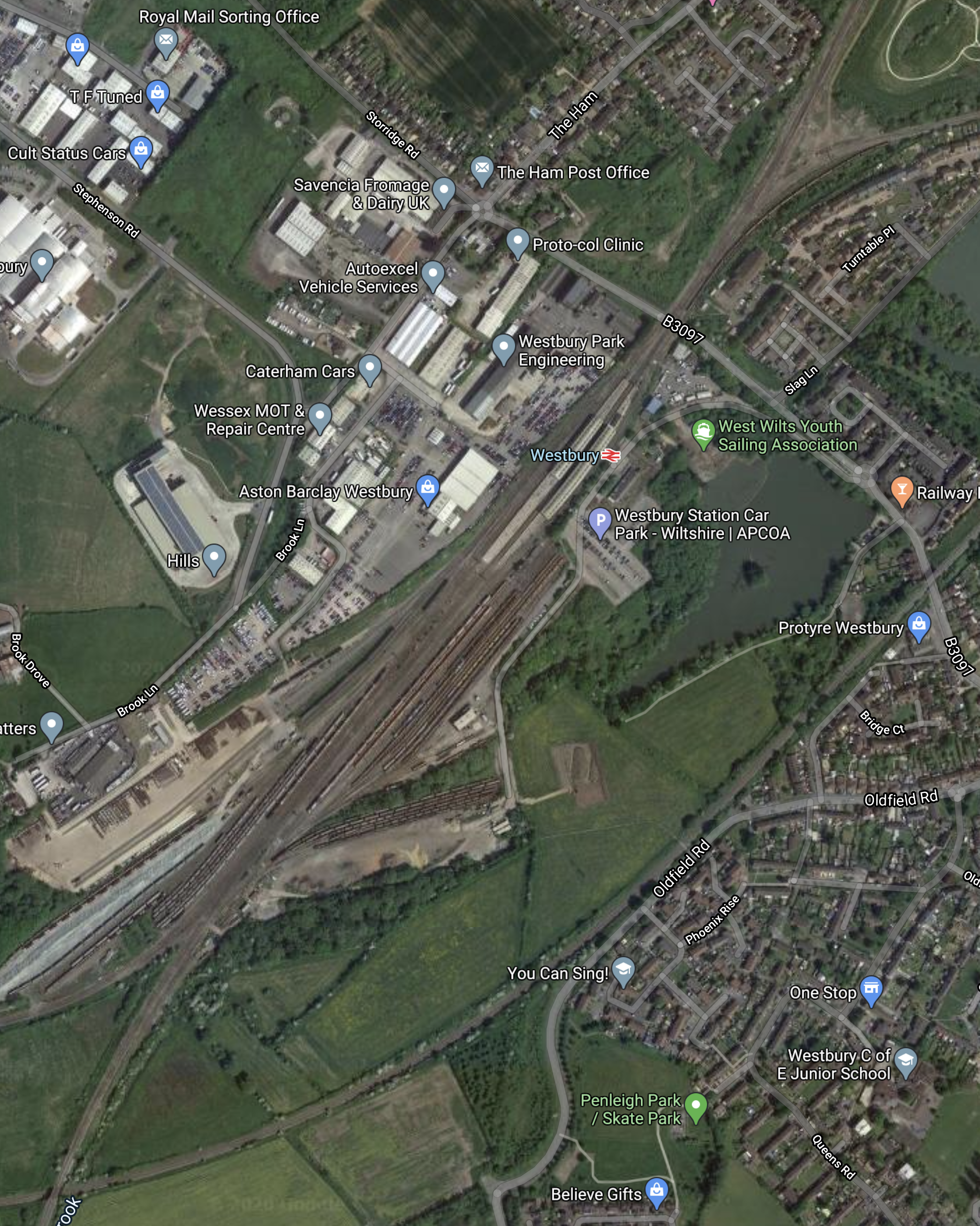
I would probably electrify a few miles either side of Westbury, so that passing trains could be in contact with the overhead wires for perhaps five to ten minutes and take a good long drink.
- Electrification could be either 25 KVAC overhead or 750 VDC overhead.
- Newbury, where the electrification to London starts is 42 miles away and trains can pick it up at speed.
- Taunton is 47 miles away and could be electrified to Exeter St. Davids.
Great Western Railway could run all their services between London Paddington and the South-West using Class 800 trains with a battery capability.
Conclusion
The prolitical, heritage and engineering problems of electrifying through Bath Spa station can be voided, by electrification and charging facilities at stations like Bristol Temple Meads, Taunton, Westbury and Weston-super-Mare.
Battery Electric Class 800 Trains Between London Paddington And Bristol Temple Mead Stations
Hitachi have changed the rules on electrification, by the announcement of the development of battery electric trains in collaboration with Hyperdrive Innovation, which I wrote about in Hyperdrive Innovation And Hitachi Rail To Develop Battery Tech For Trains.
The proposed train is described in this Hitachi infographic.
It will have a range on battery power of 90 km or 56 miles.
Currently, services between London Paddington and Bristol Temple Meads stations are as follows.
- The frequency is two trains per hour (tph)
- Services call at Reading, Didcot Parkway (1tph), Swindon, Chippenham and Bath Spa.
- Services use the electrification between London Paddington and Chippenham.
- Services use diesel power between Chippenham and Bristol Temple Meads.
- Chippenham and Bristol Temple Meads are 24.5 miles apart.
It looks to me that a well-driven Class 800 train with Hyperdrive Innovation’s clever batteries replacing some or all of the diesel engines could run between Chippenham and Bristol Temple Meads stations and back without using a drop of diesel.
It might be a bit tight, but it would certainly be possible, if there were more electrification between Bath Spa and Chippenham stations.
- From this article on the BBC, which is entitled Box Tunnel Reopens After Network Rail Electrification Work, it appears that a lot of the pre-electrification work has been completed.
- This would reduce the distance without wires to perhaps 18-20 miles.
As the Class 800 trains have agile pantographs, I’m sure that it will be possible for battery electric Class 800 trains to run between London Paddington and Bristol Temple Meads stations.
Electrification At Bristol Temple Meads Station
This will surely happen and with full electrification, the following will be possible.
- Trains would be able to recharge before returning to Chippenham.
- Trains would be able to extend the service using battery power to Weston-super-Mare, which is only twenty miles away.
- Trains would be able to use the power whilst waiting in the station.
It appears that trains that run between London Paddington and Bristol Temple Meads station, use a selection of platforms in Bristol.
Would it be sensible to reduce the number of platforms used and electrify them first, so that battery electric trains could charge their batteries?
Could A Battery Electric Train Run Between Bristol Temple Means And Taunton Stations?
Consider.
- These two stations are 46 miles apart via Weston-super-Mare, so if there was charging at Taunton, this service might be possible.
- The direct route is a couple of miles shorter.
- A train with full batteries at Taunton, would reach well past Exeter.
Could a battery-electric service be of use in creating Great Western Railway’s timetable, as in the Peak services are extended to Weston-super-Mare and Taunton stations?
It would certainly be lower carbon. than a current journey.
Would The Railway Through Bath Need To Be Electrified?
This would depend on three main factors.
- There is a certain amount of opposition to electrification in the centre of Bath.
- Can all passenger trains through the city be made zero-carbon without electrification?
- Can all freight trains through the city be made zero-carbon without electrification?
I would feel that all passenger trains could be run by appropriate trains, but freight would be a problem under existing technology.
I wouldn’t be surprised, if no electrification was ever erected through Bath!
The Great Western Main Line Through Bath Spa Station
This Google Map shows the route of the Great Western Main Line through Bath Spa station.
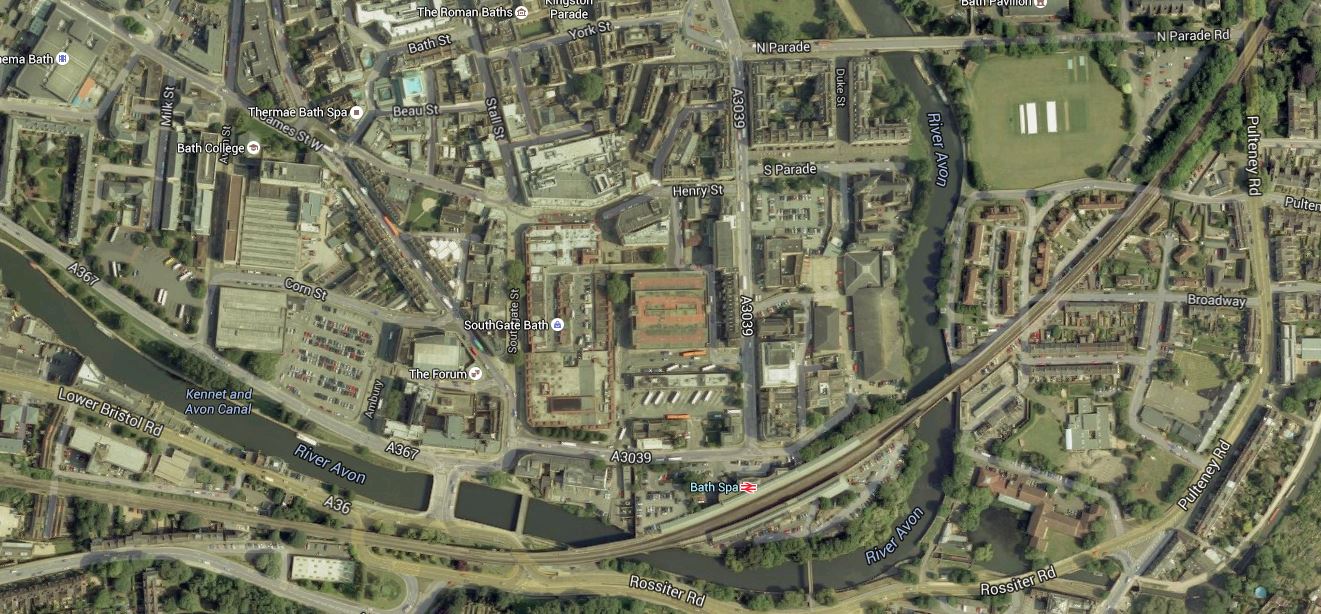
The Great Western Main Line Through Bath
Trains from Bristol come in from the West with London to the East and the layout certainly wasn’t designed to be simple.
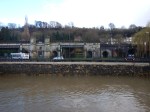
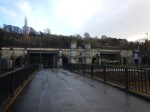
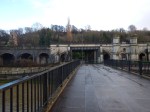
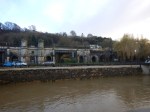
- Bath Spa station is on a viaduct hemmed in by the river.
- The railway crosses the River Avon twice.
- The railway is on a raised viaduct to the West.
- Bath is a World Heritage Site.
It is not the place, where you would want to electrify a major railway Line.
These are pictures I took of the Great Western Main Line through Bath.

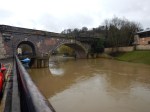
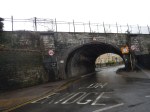
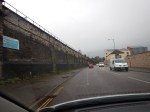
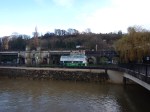





It is certainly not how, you would create a railway today.
 The Anonymous Widower