Could Paddington And Minehead Be Within Range Of Hitachi Battery-Electric Intercity Trains?
I am prompted to ask this question, by an article in today’s Telegraph, which is entitled The New British Rail Services Reversing The Damage Of Beeching’s Axe.
Line 8. is given as the West Somerset Railway between London and Minehead?
This paragraph describes the idea.
As with the Severn Valley Railway (SVR) to Bewdley, the West Somerset Railway (WSR) looks like it could one day host mainline trains and connect communities along the route with destinations such as Taunton and Bristol. Like the SVR, the WSR is a very long and well-staffed heritage line with a long history (50 years, in fact, and it was one of Britain’s first heritage lines following its Beeching closure). Running to Minehead and Dunster, you don’t need me to tell you that this is a beautiful part of the world with numerous castles and beaches, and Exmoor National Park next door.
Note.
- The author doesn’t mention London services in the text.
- Batteries are not mentioned either.
- Minehead will be only about twenty miles from Hinckley Point C nuclear power station.
Is it feasible?
What Is The Battery Range Of An Hitachi Intercity Tri-Mode Battery Train?
In The Data Sheet For Hitachi Battery Electric Trains, I came to these conclusions.
- The battery pack has a capacity of 750 kWh.
- A five-car train needs three battery-packs to travel 100 miles.
- A nine-car train needs five battery-packs to travel 100 miles.
- The maximum range of a five-car train with three batteries is 117 miles.
- The maximum range of a nine-car train with five batteries is 121 miles.
As battery technology gets better, these distances will increase.
What Is The Distance Between Minehead And Taunton?
I shall be using 24.8 miles, which I have calculated from figures given in the Wikipedia entry for the West Somerset Railway.
What is The Distance Between Paddington And Taunton Via Newbury?
I shall be using 142.6 miles, which I have calculated from figures given in RealTimeTrains.
What Is The Maximum Range From Paddington Via Newbury Of An Hitachi Intercity Tri-Mode Battery Train?
Consider.
- The electrification runs between Paddington and Newbury.
- The distance between Paddington and Newbury is 53 miles, according to RealTimeTrains.
- Paddington and Taunton is almost 30 miles shorter by Newbury, than via Bath.
This Google Map shows Taunton station.
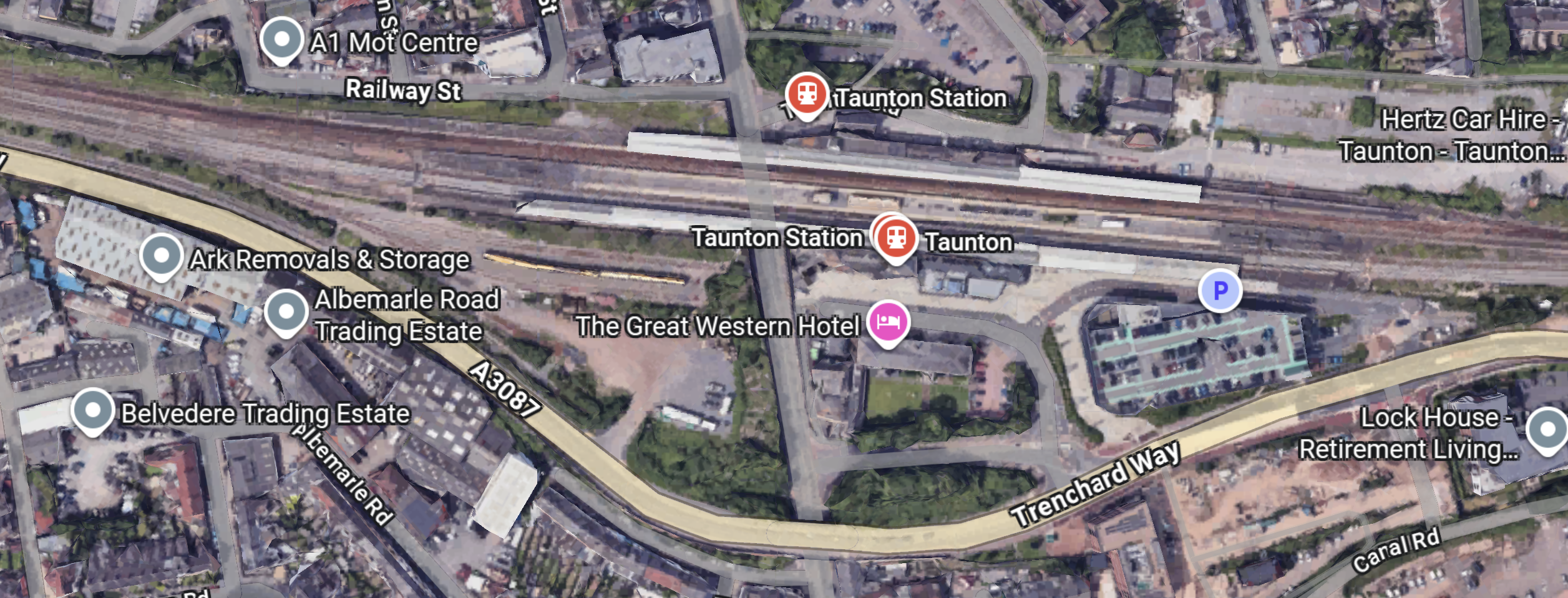
Taunton station looks spacious with numerous platforms and a hotel.
I believe that a five-car Hitachi Intercity train leaving Newbury with three full batteries could travel as far as 53+117 or 170 miles from Paddington.
Could A Hitachi Intercity Five-Car Train Reach Taunton?
This would mean that Taunton would be in range as it is only 142.6 miles.
The train would need to be recharged before returning to London.
Could A Hitachi Intercity Five-Car Train Reach Minehead?
But it could also have enough power in the batteries to reach Minehead, which is only a further 24.8 miles or 167.4 miles in total.
As with Taunton, the train would need to be recharged before returning to London.
Options For Charging Trains That Are Returning To London
This OpenRailwayMap shows the tracks through Taunton.
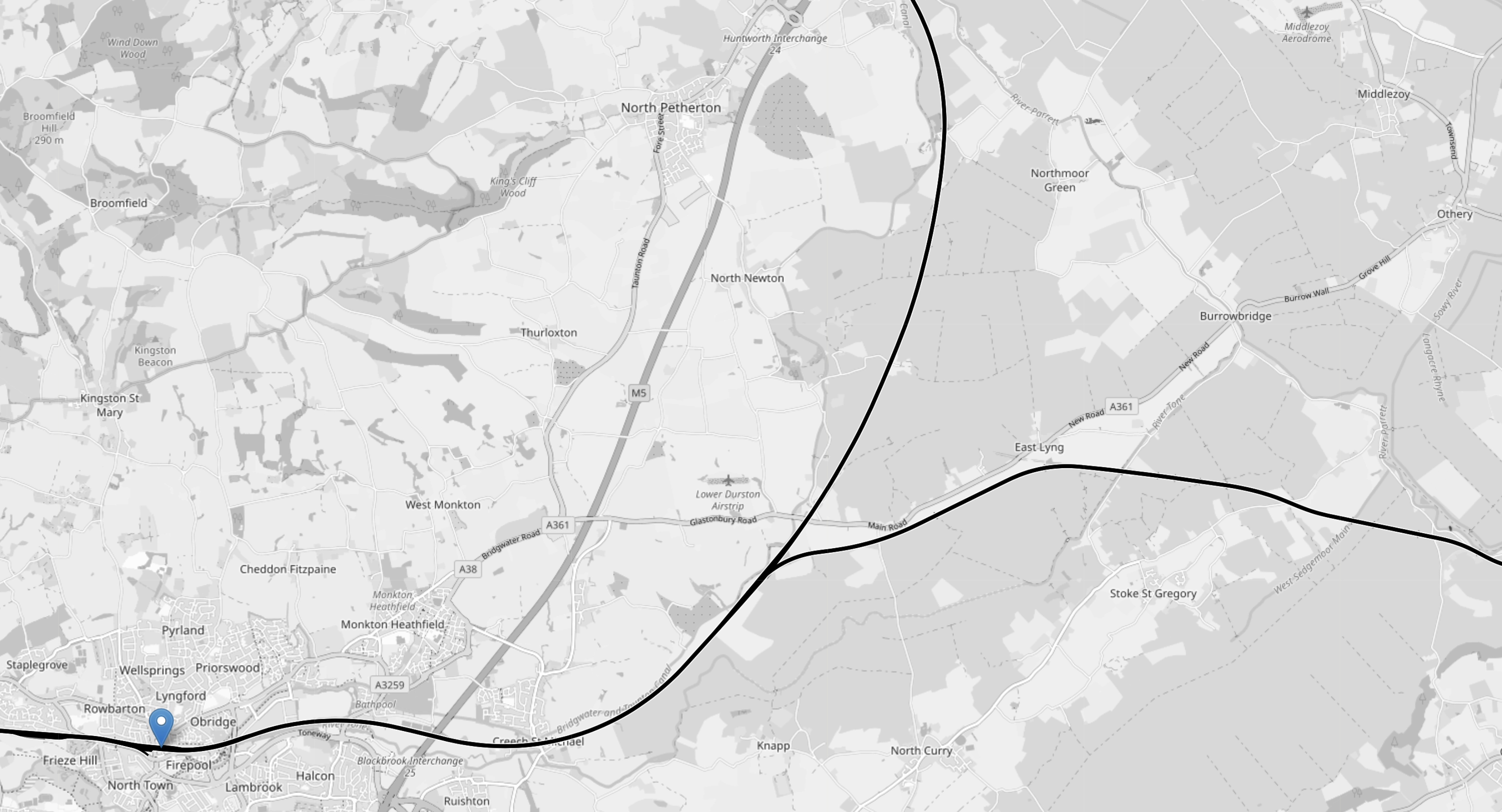
Note.
- Taunton station is indicated by the blue arrow.
- Running East-West across the map and through Taunton station, is the Reading-Taunton Line.
- Running more North-South across the map and through Taunton station, is the ~Bristol-Exeter Line.
- The two lines split going East at Cogload junction.
- Taunton station and Cogload junction are about 4.5 miles apart.
- Trains typically take about six minutes between the two places.
I believe there are three options for charging the trains.
Option 1 – Charge In Minehead Station
This would be possible, but as not all trains go to Minehead station, it probably wouldn’t be very practical.
Option 2 – Charge In Taunton Station
This would be possible, especially as most trains seem to call in Taunton station.
Option 3 – Electrify Between West Of Taunton Station And East Of Cogload Junction
Consider.
- The length of the electrification could be as long as is necessary.
- Trains would charge their batteries at line speed.
- Pantographs would be raised and lowered at line speed.
- Trains would not have to call at Taunton station.
- Trains could charge their batteries on both routes.
- Trains could charge their batteries in both directions.
I believe this could be the most efficient way to charge trains through Taunton.
Onward From Taunton
If the electrification through Taunton could be made long enough, so trains left the station with a full battery, the following would be possible.
- Going South trains should go past Plymouth.
- Going towards Newbury, trains should have enough in the batteries to reach Newbury and electrification for London.
- Going towards Chippenham, which is 63 miles away, trains should have enough in the batteries to reach Chippenham and electrification for London.
- Going towards Bristol Temple Meads, which is 44.8 miles away, trains should have enough in the batteries to reach Bristol Temple Meads.
Leisure Market Boom? GWR’s Vision For Direct Bristol-Oxford Services
The title of this post, is the same as that of this article on Rail Magazine.
This is the first paragraph.
Great Western Railway has hopes on running direct services between Bristol Temple Meads and Oxford from September 14, subject to approval of its new trial proposal by the Department for Transport and Network Rail. The move is a test of growth in demand for leisure travel by train.
It is an interesting idea.
These are some points about the service, given in the article.
- The route will be via Swindon, Chippenham and Bath Spa.
- Fastest journey time would be 71 minutes.
- The route will be aimed at the leisure market.
- There will be two trains per day (tpd) in each direction on Saturdays.
This is GWR’s handy route map.

These are my thoughts.
Will The Trains Call At Didcot Parkway?
This OpenRailwayMap shows Didcot Parkway station and the large triangular junction, that connects Oxford to the Great Western Main Line.
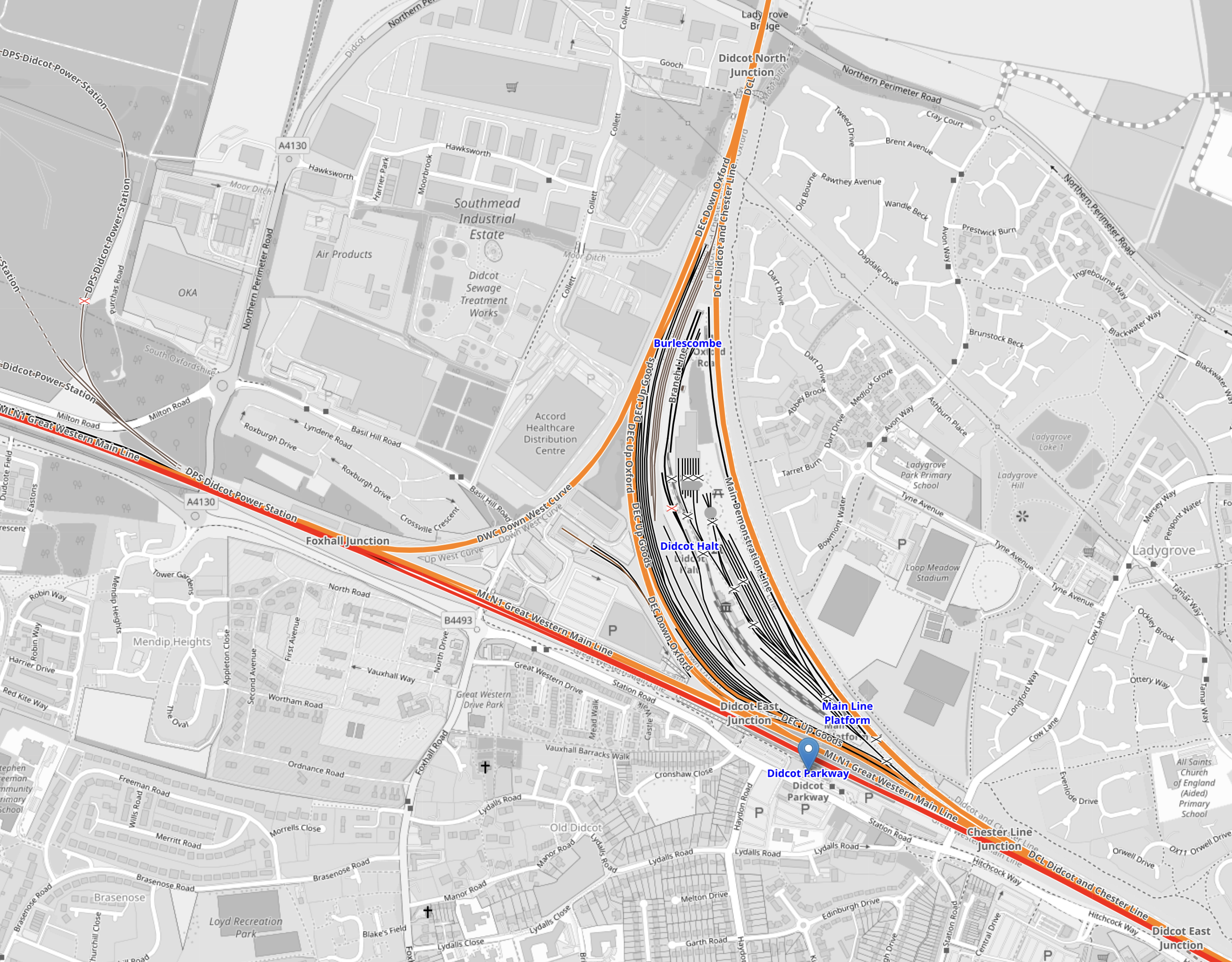
Note.
- The red tracks are the Great Western Main Line.
- The blue arrow indicates Didcot Parkway station.
- Oxford station is about ten miles to the North.
- Chords in the junction allow trains to go between Oxford and Paddington and Oxford and Swindon, with or without a stop at Didcot Parkway station.
The article says that GWR has asked to run the following services.
- 1018 Bristol Temple Meads-Oxford – Would arrive at Oxford at 1129.
- 1155 Oxford-Bristol Temple Meads (via Didcot) – Would arrive at Bristol Temple Meads at 1306.
- 1518 Bristol Temple Meads-Oxford – Would arrive at Oxford at 1629.
- 1712 Oxford-Bristol Temple Meads – Would arrive at Bristol Temple Meads at 1823.
Note.
- I suspect that the 1155 will reverse at Didcot Parkway station.
- There is a two train per hour (tph) service between Didcot Parkway and London Paddington stations.
- It looks like the four services could be run by a single train shuttling up the Great Western Main Line.
Would it be sensible if all Oxford and Bristol trains called at Didcot Parkway station, so that travellers could use the London service to their advantage?
But, calling at Didcot Parkway station would slow the service as there would need to be a reverse.
What Class Of Train Would Be Used?
Consider.
- A Bristol and Didcot Parkway via Bath Spa service takes 55 minutes.
- This is an average speed of 71.1 mph over a distance of 65.2 miles.
- 24.4 miles at the Bristol end of the route is not electrified.
- 10.3 miles at the Oxford end of the route is not electrified.
- The four services can be run by a single train shuttling up the Great Western Main Line.
It looks to me, that a bi-mode train with good performance is needed.
So I suspect that a five-car Class 800 or Class 802 train will be used.
Will The Train Be Battery-Electric Powered?
This is an interesting possibility.
- An ideal route for a battery electric train, is surely one with a long electrified section in the middle, which can be used to fully charge the train’s batteries.
- The train would have to run for 48.8 miles on its own power at the Bristol end of the route.
- The train would have to run for 20.6 miles on its own power at the Oxford end of the route.
The data sheet for a battery-electric Class 800/802 train can be downloaded from this page on the Hitachi web site.
In a section on the page, which is entitled Intercity Battery Trains, this is said.
A quick and easy application of battery technology is to install it on existing or future Hitachi intercity trains. Adding just one battery reduces emissions by more than 20% and offers cost savings of 20-30%.
Our intercity battery powered trains can cover 70km on non-electrified routes, operating at intercity speeds at the same or increased performance. Hitachi Rail’s modular design means this can be done without the need to re-engineer or rebuild the train and return them to service as quickly as possible for passengers.
The range of 70 km is 43.5 miles, which would appear to be a little bit short to go from the end of the electrification at Chippenham to Bristol Temple Meads and back.
But various measures could be taken to make sure the train can handle the route.
- The regenerative braking strategy could be used to conserve battery power.
- A second battery could be added to the train.
- Methods to charge the train at Bristol Temple Meads could be installed.
As London Paddington and Bristol Temple Meads is an important route, I suspect that Hitachi and Great Western Railway have a strategy to handle trains from Chippenham and sending them back.
Could This Route Be A Trial Route For Battery-Electric Trains?
Consider.
- Hitachi and Great Western Railway wouldn’t want to introduce an unreliable train without full full testing.
- Trains can probably limp to either Stoke Gifford or Reading depots, after a battery failure.
- Great Western Railway could test a new route.
- A full test only needs one train.
- Passenger reaction to a battery-electric train can be assessed.
- Staff need to be trained.
- The route can be run by a standard bi-mode if required.
- It could be the world’s first high-speed battery-electric train.
- Enthusiasts would flock to have a ride.
Could this be a trial service to make sure everything goes right?
Speeding Down To Bristol By Train
On Wednesday, I went to Bristol to take a few photographs.
I took these pictures, where the electrification ran out at Chippenham station.
There is some half-hearted erection of electrification going on between Chippenham station and Box Tunnel, but despite the fact, that the iconic tunnel is ready for wires, construction work seemed noticeable by its absence.
Line Speed Observations
I had my personal dynamometer car connected for much of the journey.
- Between Southall and Slough we were at times running at only a few miles short of 130 mph. Are Great Western Railway starting to wind up the speed.
- Most of the journey, when well clear of stations, we were at around 125 mph until Chippenham station.
- At Chippenham, it was noticeable that the diesel engine under my seat kicked in.
- Onwards from Chippenham, we were at around 100 mph on diesel.
I suspect that London and Bristol services could be improved and/or speeded up.
- Timings could be reduced between London Paddington and Reading by running at faster speeds under digital ERTMS signalling. The train certainly felt comfortable at 128 mph.
- Any increase in electrification past Chippenham station will increase the the reach of a Class 800 train with a battery capability on a mile-for-mile basis.
- Trains should be able to increase speed towards 125 mph for some of the twelve miles between Chippenham and Bath Spa stations.
- As trains would not be swapping between diesel and electricity in Chippenham station, would panning up and down happen automatically further West?
- It might be possible to fit in a third London Paddington and Bristol service, that doesn’t stop at Chippenham station.
None of these improvements would need the line through Bath Spa station to be electrified.
Bath Spa Station – 28th July 2020
I took these pictures as I twice passed through Bath Spa station.

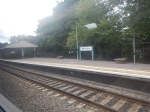
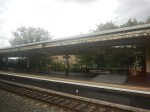
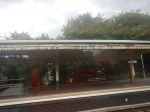


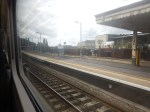














These are my thoughts.
Electrification Gantries On The Platforms
As somebody, whose eyesight is on the wane, I am not a lover of electrification, where the gantries are bolted to the platforms. These pictures show some installations of this type at Crouch Hill station.
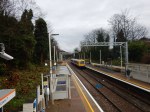
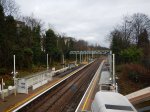
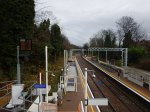
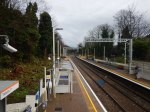
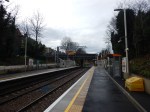
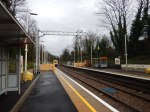
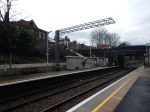
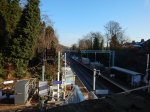
Would electrification gantries like these, be appropriate in Bath Spa station?
Could Lightweight Electrification Gantries Be Placed Between The Tracks?
These pictures show the wide gap between the two tracks in Bath Spa station.
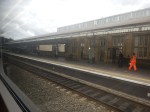
Could double-track lightweight structures, based on a design like this be placed between the tracks?
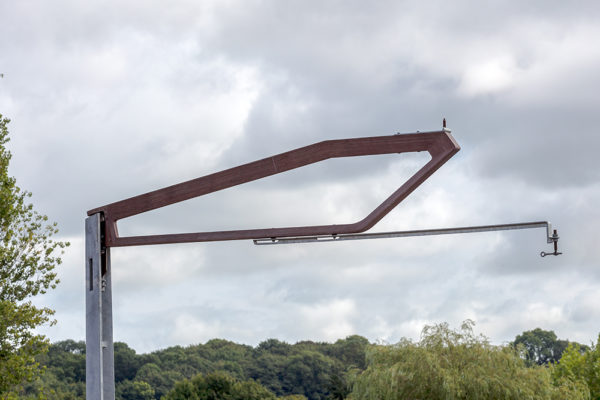
These structures are made out of laminated wood and are surely a possibility.
A Makeover For Bath Spa Station
If you look at much of the woodwork and paint in the fabric of the station, it appears tired and in need of refurbishment.
Whether the station is electrified or not, the station will need a high-class makeover.
Services Through Bath Spa Station
Three train companies run services through Bath Spa station.
- CrossCountry which only operates diesel trains.
- Great Western Railway operates Class 800 electro-diesel trains and some assorted diesel trains.
- South Western Railway only operates Class 159 diesel trains.
There are also some freight services hauled by diesel locomotives.
Trains leave Bath Spa station using one of three routes via either.
- Bristol Temple Meads station, which is 11.5 miles away without electrification.
- Chippenham station, which is where the electrification to London starts and is 13 miles away.
- Westbury station, which is on the Reading and Taunton Line and 17 miles away without electrification.
Most trains seem to go via Bristol Temple Meads station.
- The distance between Bristol Temple Meads and Chippenham stations are 24.5 miles.
- The distance between Bristol Temple Meads and Westbury stations are 28.5 miles.
Neither distance is that long.
An Alternative To Full Electrification
When I look at the distances between Bristol Temple Meads, Chippenham and Westbury stations, they tell me that they are within the range of Hitachi’s Class 800 train with a battery electric capability or Regional Battery Train, which is described in this infographic from the company.

The proposed 90 km or 56 mile range would even be sufficient take a train between Chippenham and Bristol Temple Meads stations on a return trip.
Notes for each station follow.
Bristol Temple Meads
Charging facilities would be needed.
Destinations in battery range would include.
- Bristol Parkway – 6 miles
- Cardiff Central – 5 miles to the electrified Great Western Main Line.
- Cheltenham Spa – 41 miles
- Gloucester – 39 miles
- Taunton – 45 miles
- Weston-super-Mare – 19 miles
Note.
- Return trips to Bristol Parkway and Western-super-Mare would be possible.
- The other destinations will need charging facilities.
Bristol Temple Meads station could become a major hub for battery trains.
All local services and all passing longer distance services could be trains with a battery capability.
I write more about Britol Temnple Meads station as a battery train hub in Bristol Temple Meads Station – 28th July 2020.
Chippenham
A train would leave Chippenham station with a full battery after charging on the fully-electrified route from London.
Chippenham and Weston-super-Mare would be in battery range with a charging facility at Weston-super-Mare station.
It should be noted that every extra mile of electrification past Chippenham, can be added to the distance electric trains with a battery capability can reach.
Westbury
Charging facilities would be needed.
Destinations in battery range would include.
- Salisbury – 24 miles.
- Southampton – 49 miles to the electrified South Western Main Line, at Southampton Central station.
- Weymouth – 53 miles to the electrified South Western Main Line at Dorchester Junction.
Note.
- A return trip to Salisbury would be possible.
- Trains would need to have the capability to access 750 VDC third-rail electrification.
- A few extra miles of electrification may make operation South from Westbury station easier, more reliable and allow more destinations to be included.
Westbury station could be a major hub for battery trains.
This Google Map shows Westbury station and the lines around it.
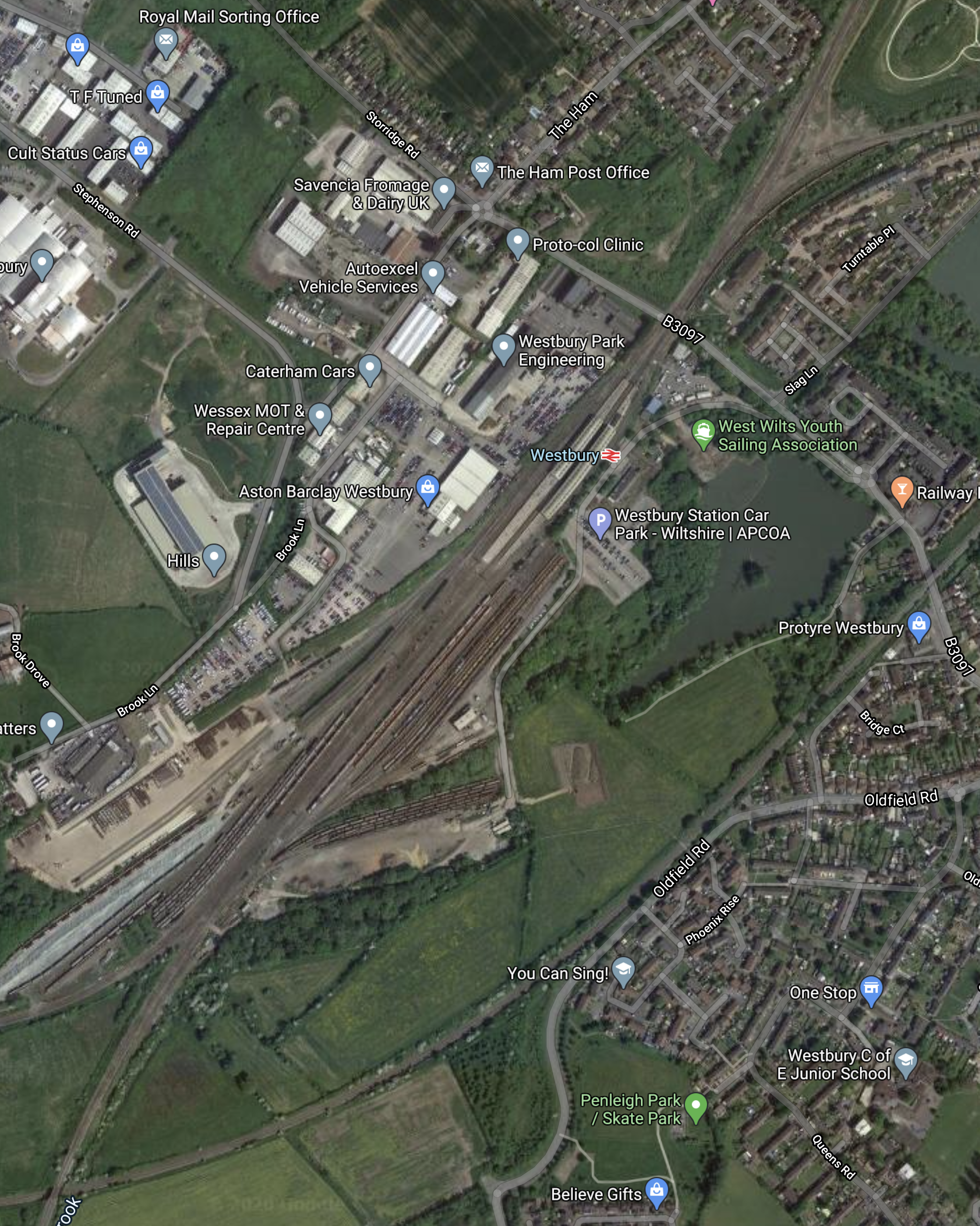
I would probably electrify a few miles either side of Westbury, so that passing trains could be in contact with the overhead wires for perhaps five to ten minutes and take a good long drink.
- Electrification could be either 25 KVAC overhead or 750 VDC overhead.
- Newbury, where the electrification to London starts is 42 miles away and trains can pick it up at speed.
- Taunton is 47 miles away and could be electrified to Exeter St. Davids.
Great Western Railway could run all their services between London Paddington and the South-West using Class 800 trains with a battery capability.
Conclusion
The prolitical, heritage and engineering problems of electrifying through Bath Spa station can be voided, by electrification and charging facilities at stations like Bristol Temple Meads, Taunton, Westbury and Weston-super-Mare.

