Meet The Futuristic-Looking Electric Arrival Bus
The title of this post, is the same as that of this article on Microsoft News.
The Arrival Bus is by the same company, who are building electric vans for UPS, that I wrote about in UK Electric Van Maker Arrival Secures £340m Order From UPS.
This is a video of the prototype under test.
This article on CNET is entitled Arrival’s Electric Bus Is Designed For Coronavirus-Era Social Distancing and it contains this paragraph.
The British startup company, which focuses on smart electric vehicles, on Wednesday debuted the Arrival Bus, pitched as just the bus for social distancing. That’s because the interior of the bus is customizable, with removable seats, so you can create additional space between passengers. It’s a pretty novel way to increase or decrease seats to meet reopening guidelines
If it works, knowing Sod’s Law, it will probably be rarely used, as someone will come up with an affordable vaccine, that’s bulletproof!
As we’ve also had an electric bus from Norfolk, that I wrote about in Equipmake Opens New Electric Bus Factory In Snetterton, there will be several players helping to decarbonise the bus industry.
Cheesecake Energy Receives Investment From The University Of Nottingham
The title of this post, is the same as that of this article on NewsAnyway.
This is the introductory paragraph.
Cheesecake Energy Limited (CEL) today announced it has received investment from the University of Nottingham to support UK-wide pilot programmes for the company’s energy storage solution.
Thse two paragraphs are a brief description of the company, their technology and what they do.
Cheesecake Energy Limited is a fast-growing startup developing energy storage at 30-40% lower cost than the current market leader, lithium ion batteries. Its system uses compressed air and thermal energy storage to achieve high efficiency, long lifetime and dramatically lower environmental impact.
Founded in 2016, the company has already established itself within the Nottingham, and wider East Midlands energy ecosystem — having secured initial interest from local councils and bus services for pilot programmes. The company is currently designing a 150 kW / 750 kWh prototype system for completion in Q4 2020 which will be deployed with a local bus depot for charging of electric buses using renewable energy.
This is the home page of their web site, which proudly announces.
The Greenest Battery In The World
We’ll see and hear that slogan many times in the next few years.
A few of my thoughts on the company.
Cheesecake Energy’s Technology
Cheesecake Energy says it uses compressed air and thermal energy storage to achieve high efficiency, long lifetime and dramatically lower environment impact.
Three other companies also use or may use compressed air to store energy.
- Highview Power – See Highview Power To Build Europe’s Largest Battery Storage System
- Form Energy – See Will The Real Form Energy Please Stand Up!
- Hydrostor – See Hydrostor Announces Australia’s First CompressedAir Energy Storage Project Secures Funding From Arena And South Australia Renewable Technology Fund
As Cheesecake appear to be using a thermal energy storage, have they found a unique way to create another type of compressed air storage?
Battery Sizes
How do the sizes of the three companies batteries compare?
- Cheesecake Energy prototype – 150 kW – 750 kWh – five hours
- Form Energy for Great River Energy – 1MW – 150 MWh – 150 hours
- Highview Power for Vermont – 50MW – 400 MWh – 8 hours
- Hydrostor for South Australia – 50+MW – 4-24+ hours
The Cheesecake Energy prototype is the smallest battery, but Highview Power built a 750 KWh prototype before scaling up.
Note.
- The first figure is the maximum power output of the battery.
- The second figure is the capacity of the battery.
- The third figure is the maximum delivery time on full power.
- The capacity for Hydrostor wasn’t given.
The figures are nicely spread out, which leas me to think, that depending on your power needs, a compressed air battery can be built to satisfy them.
Charging Electric Buses
Buses like this Alexander Dennis Enviro200EV electric bus are increasingly seen in the UK.
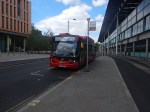
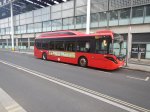
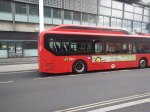
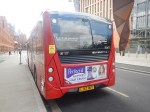
And they all need to be charged!
Cheesecake Energy say that their prototype will be deployed with a local bus depot for charging of electric buses using renewable energy.
- An electric bus depot should be a good test and demonstration of the capabilities of their battery and its technology.
- Note that according to this data sheet of an Alexander Dennis Enviro200EV, which is a typical single-decker electric bus, the bus is charged by BYD dual plug 2×40kW AC charging, which gives the bus a range of up to 160 miles.
- With a 150 kW output could Cheesecake’s prototype charge two buses at the same time and several buses during a working day?
- Would DC charging as used by Vivarail’s charging system for trains be an alternative?
To me, it looks like Cheesecake are showing good marketing skills.
I do wonder if this size of charger could make the finances of electric buses more favourable.
Suppose, a bus company had a fleet of up to a dozen diesel single-decker buses running services around a city or large town.
- How much would they spend on electricity, if they replaced these buses with electric ones?
- Would being able to use cheaper overnight energy to charge buses in the day, be more affordable?
- Would electric buses run from renewable electricity attract passengers to the services?
These arguments for electric buses would also apply for a company running fleets of vans and small trucks.
To me, it looks like Cheesecake are showing good engineering/marketing skills, by designing a product that fits several markets.
Equipmake Opens New Electric Bus Factory In Snetterton
The title of this post, is the same as that of this press release from Equipmake.
This is the introductory paragraph.
Expert electrification company, Equipmake, has opened a brand-new factory in Snetterton, Norfolk, which will design and manufacture its fully-integrated electric bus chassis for an increasingly international customer base.
This paragraph sums up their marketing philosophy for their bus chassis.
Equipmake’s innovative electric bus chassis allows any bus coachbuilder to become a full electric bus manufacturer almost overnight. Such is the demand from bus makers wishing to go zero emissions that Equipmake has forged partnerships with companies in Brazil, Argentina and India and grown its UK staff from 15 employees to 52 in a little over two years.
Equipmake certainly seem to be doing something right.
- They make their own electric motors.
- They claim to make the world’s most power dense electric motors.
Perhaps, it’s all down to good design?
This paragraph from the press release gives more details of the bus chassis.
Thanks to efficient management of its onboard heating and cooling system, the bus – a 12m single deck model capable of carrying 70 passengers – will have enough electric range for one day’s running without the need for charging. To charge the vehicle, the operator simply needs access to a standard three-phase supply, which will fully charge it in around five hours.
That seems impressive to me!
Riding On A Battery-Electric Double-Deck Bus
This morning I rode on a battery-electric double-deck bus.
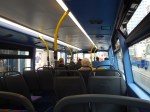
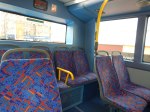


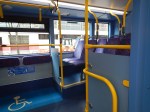



Some of these buses are russing on route 98 between Holborn and Willesden Garage, which includes a run down Oxford Street.
There’s more on the buses in this page on the Metroline web site.
I went upstairs and the experience was little different to that of a normal hybrid bus.
My Thoughts
My thoughts in various areas.
Design
It is a well-designed bus, that is easy to use for this seventy-year-old.
Passenger Experience
Travelling along Oxford Street, the passenger experience was equal to that of a New Routemaster, without the occasional low noise of the engine.
Performance Of The Bus
As we proceeded along Oxford Street, the performance of the bus, was very much in line with current hybrid buses.
The bus wasn’t full on the upper deck, but I suspect that the total weight of the passengers is very much lower than the weight of the battery, so this might mean that a full bus performs well compared with an empty bus.
Limited Space On The Lower Deck
There is one obvious problem and that is that the size of the battery reduces the number of seats downstairs.
As I said earlier, I doubt the weight of the passengers is a problem, but the available space, where they sit and stand could be.
Economics Of The Bus
The bus will obviously be expensive to purchase and to run, as batteries are expensive and need to be replaced every few years.
Coupled with the fact that capacity is smaller than current hybrid buses, which probably means more buses are needed to perform the required service, the economics of the buses may not be suitable for many routes.
I also wonder, if a battery-electric double-deck bus has better economics than a single-deck bus, as the extra weight of the top deck and the extra passengers is small compared to the weight of the battery.
But the economics will get better with improved battery technology.
The Marketing Advantages
BYD and Metroline could be big winners here, as corporate videos and marketing material showing buses in Central London, can’t be a bad thing!
The Competition From Diesel Hybrid Buses
I believe that one competitor to the battery-electric bus will be the next generation of diesel hybrid buses.
Take the current modern hybrid buses like a New Routemaster or any other hybrid bus built in the last couple of years. These have a battery that can power the bus for perhaps a couple of miles.
As the battery is smaller, it can be squeezed into an unlikely space. On a New Routemaster, the diesel engine is under the back stairs and the battery is under the front stairs.
A technique called geo-fencing can be retro-fitted, which forbids the use of the buses diesel engine in sensitive areas, based on GPS technology.
So a route like London’s route 98 could work through the ULEZ on battery power and charge the battery between Edware Road station and Willesden Garage.
The Competition From Hydrogen Hybrid Buses
This will surely be similar to that from diesel hybrid buses.
- Battery size will probably be as for a diesel hybrid bus.
- As hydrogen doesn’t give out noxious emissions, this will be an advantage and you won’t need the geo-fencing.
- But you will need to store the hydrogen.
As hydrogen technology improves, I feel that the hydrogen hybrid bus could become a formidable competitor.
The Competition From Converting Old Diesel Buses To Diesel Hybrid Buses
I talked about this in Arriva London Engineering Assists In Trial To Turn Older Diesel Engine Powered Buses Green.
Never underestimate good engineers with a good idea, that has a good financial payback.
Conclusion
There is going to be a lot of competition between the various technologies and the passengers, bus operators, London and London’s air will be big winners.
As all of this technology can be applied anywhere, other parts of the UK will benefit.
 The Anonymous Widower