These are my current thoughts on electric trains to Windermere station.
Passengers And Battery-Electric Trains
I don’t think any reputable journalist interviewed passengers on either of the two battery electric services that have successfully run for longer than a couple of days.
Those that used British Rail’s Aberdeen and Ballater service in the 1950s, are probably thin on the ground, although I did meet an elderly lady, who’d regularly used it to go to school and she said the service was reliable.
She also said that the Queen Mother was an enthusiastic passenger.
I rode the Manningtree and Harwich battery electric train during its short trial.
But more significantly, since then I have met two passengers, who used it every day during the trial to commute.
Both would like to see the train return, as it seemed more reliable. I wonder, if like much of East Anglia’s overhead wires, the route suffers from the wind.
It does appear that providing a reliable service with battery electric trains is not a difficult problem.
Two Trains Per Hour To Windermere
In Passing Loop Hope For Windermere, I discuss a passing loop on the Windermere Branch Line to enable two trains per hour (tph) along the line.
The Treasury wouldn’t like this, as it would need twice the number of trains.
But hopefully, it would double the ticket revenue.
Battery-Electric Class 331 Trains
It has been some time now since in the March 2020 Edition of Modern Railways, that it was announced that CAF announced they were building a battery-electric version of the Class 331 train, which I wrote about in Northern’s Battery Plans.
Little has been heard of CAF’s progress since, although I did write Battery-Electric Class 331 Trains On The Radar, which was based on an article in the June 2021 Edition of Modern Railways, which is entitled Northern Looks To The Future.
Lack Of Progress On Battery And Hydrogen Train Projects
Is this typical of battery and hydrogen projects?
Southern’s project on the Uckfield Branch and to close the electrification gap between Ashford and Hastings has only been conspicuous by its absence. This project is important as it releases the Class 170 trains, so that EMR can fulfil franchise commitments.
The project to use hydrogen trains on Teesside has also progressed at a snail’s pace.
It is almost as if someone in the Department of Transport or more likely the Treasury, feels that the best thing to do is to carry on using diesel, as it’s the cheapest alternative.
I don’t think it is any politician, as their public statements seem to be very much in favour of decarbonisation.
Other Electric Trains In The Lake District
I also think, that if battery-electric trains were to be run to Windermere, that they would also run to Barrow-in-Furness. Am I right in thinking that the Furness Line is rather flat, so would be ideal for battery-electric trains?
But I do wonder, if Sellafield and Direct Rail Services are pushing for electrification, as it would surely help their operations, as they could use Class 88 locomotives to bring in the flasks for processing.
Also in Battery-Electric Class 331 Trains On The Radar, I did say this.
I feel it would be possible to electrify the Cumbrian Coast Line using battery-electric Class 331 trains, with a range of at least fifty miles and some short sections of new electrification.
Surely, a battery-electric train along the Cumbrian Coast by the Lake District would be the ideal train for the area.
I can certainly see a small fleet of battery-electric working services between Barrow-in-Furness, Carlisle, Carnforth, Manchester Airport, Sellafield, Whitehaven, Windermere and Workington.
November 30, 2021
Posted by AnonW |
Transport/Travel | Barrow-in-Furness, Battery-Electric Class 331 Train, Battery-Electric Trains, British Rail BEMU, CAF Battery-Electric Trains, Carlisle Station, Class 195 Train, Class 379 Train, Cumbrian Coast Line, Harwich, Hydrogen-Powered Trains, IPEMU, Manningtree Station, Uckfield Branch, Windermere Branch Line |
14 Comments
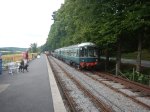
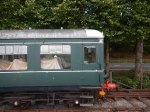
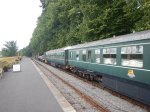
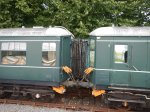
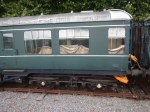
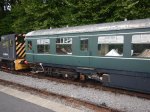
These pictures show the British Rail BEMU, which was an experimental two-car battery electric multiple unit, that ran on the Deeside Railway between Aberdeen and Ballater stations, in the late 1950s and early 1960s.
It is now parked at the Royal Deeside Railway awaiting restoration.
As the bodywork is aluminium, it struck me that it wouldn’t be an impossible restoration project.
Someone, I spoke to, said the biggest problem and probably expense were the batteries.
Perhaps, they could use some recycled batteries from electric buses or other vehicles, which some companies are going to use as house storage batteries.
A Memory From A Lady
I travelled to the Royal Deeside Railway on a bus and sat up front on the top deck. Next to me was a lady, who was perhaps in her seventies like me, who remembered using the train several times.
From what she said, it appeared to work reliably for a number of years.
Did Her Majesty Ever Use The Train?
No-one at the Royal Deeside Railway has any proof, that the Queen ever rode in the train.
But they are pretty sure, that the Queen Mother used the train. Apparently, she liked the steady speed as it proceeded through the countryside.
Conclusion
With the current developments in battery transport, I feel that this prototype might well be worth restoring to operation condition.
August 13, 2018
Posted by AnonW |
Energy Storage, Transport/Travel | Aberdeen, Battery-Electric Trains, British Rail BEMU, Innovation, Queen Elizabeth, Royal Deeside Railway |
2 Comments


 The Anonymous Widower