The New Bus for London Goes On Its Way
This was the last picture I took yesterday, as it was getting dark.
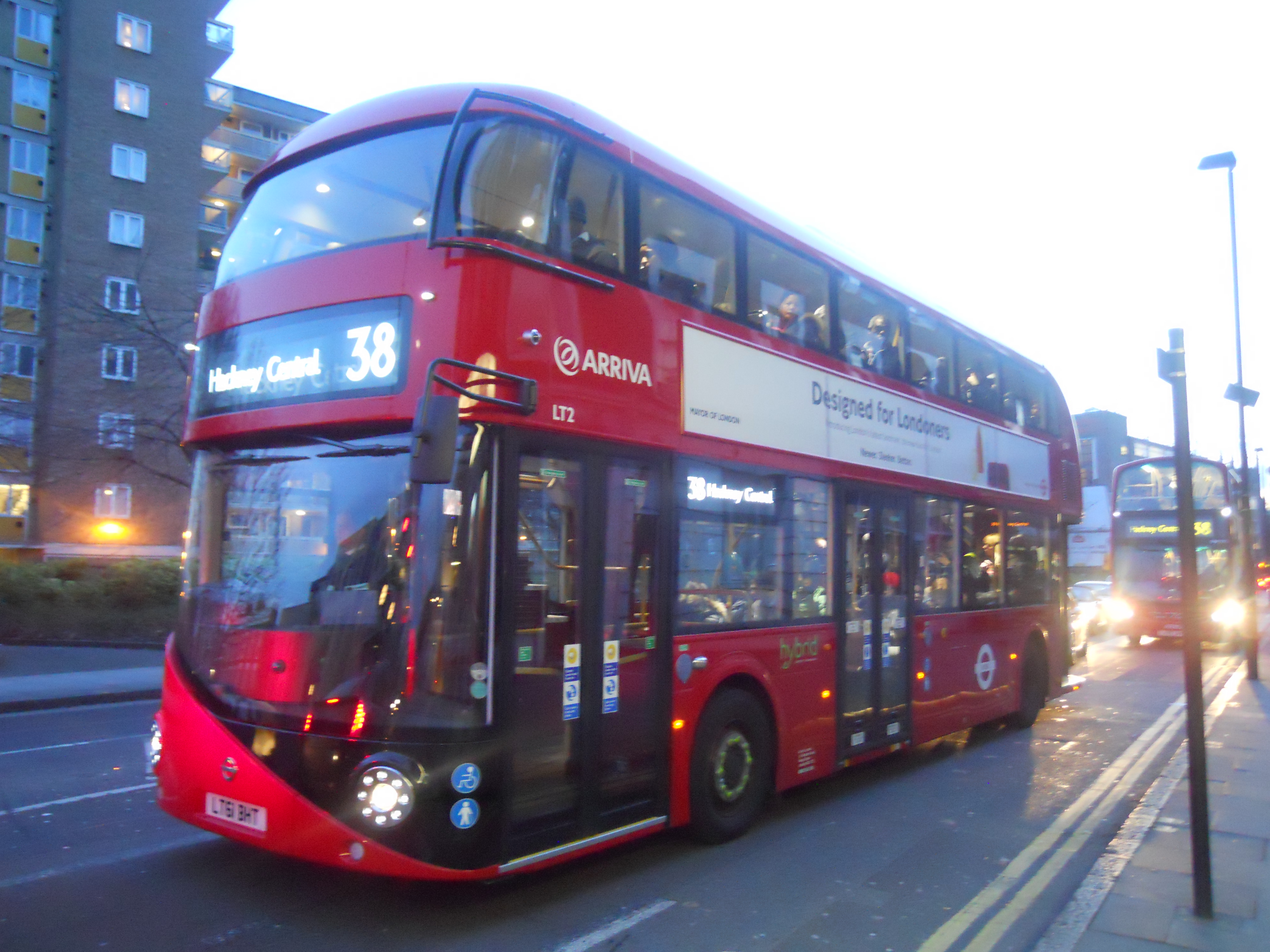
New Bus for London On Its Way to Hackney Central
It shows the New Bus for London crossing the traffic lights on its way to Hackney Central.
Note the advert saying it’s “Designed for Londoners” It is! And for visitors and tourists too!
Riding the New Bus for London
I finally caught up with the New Bus for London this afternoon. As I got to my stop to go to Islington, it was going the other way towards Hackney, so I got on the next 38 and asked the driver to ‘Follow that bus!’ Which of course he did, as all 38s go the same way. If there had been a bit of congestion and he’d manage to overtake my intended ride, I’d have just hopped-off one bus and hopped-on the other.
But we were held up and so a couple of stops before the turn around at Hackney Central, I disembarked and crossed the road to the Victoria-bound stop. Twenty minutes later and LT2 arrived.
I immediately went upstairs and the first thing you notice is how light and airy the inside is.
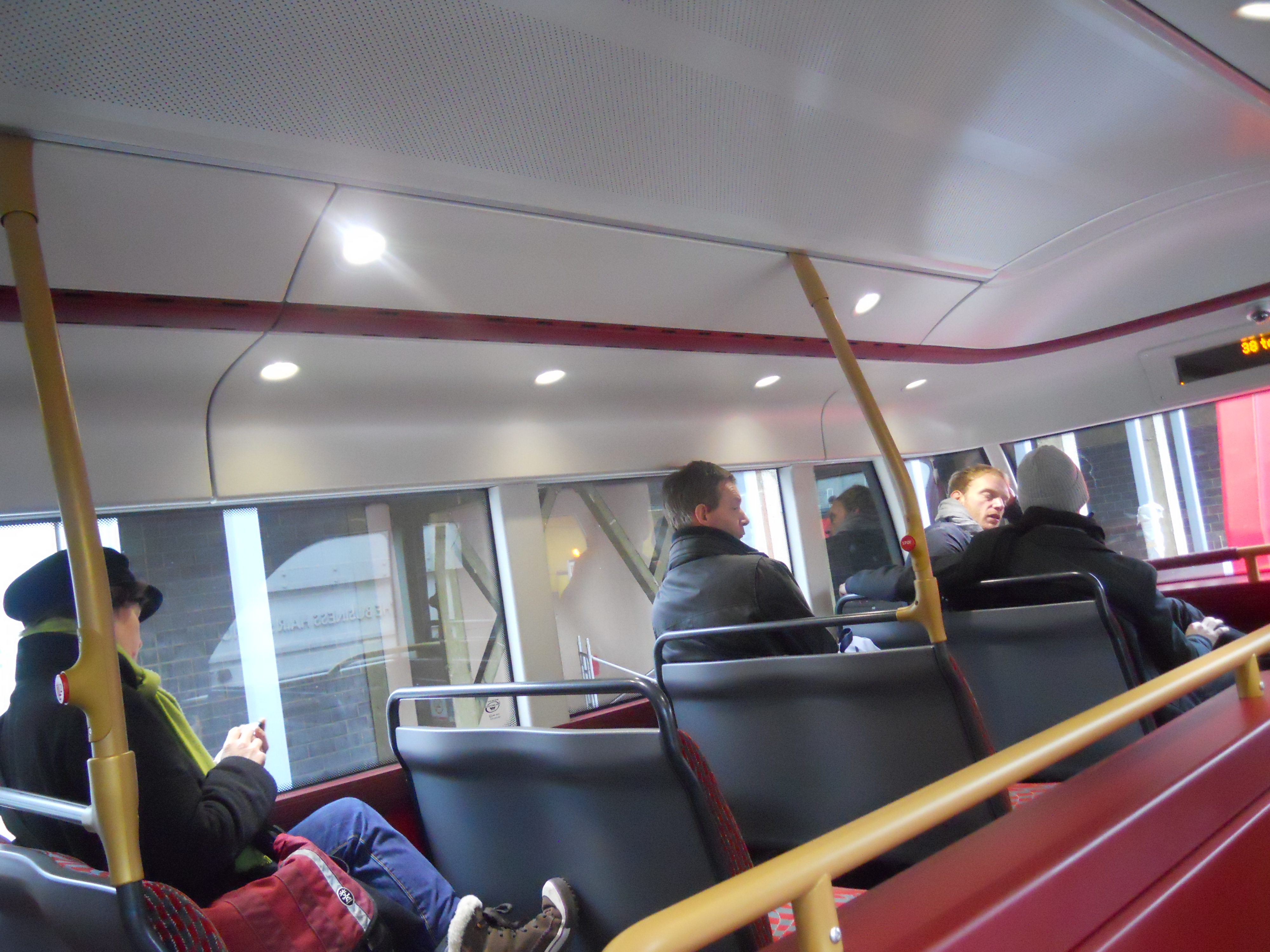
Upstairs on a New Bus for London
Colours are best described as classy and more subtle than most other buses, but light is good with LED downlighters everywhere. The windows are wide and aligned with the seats, as this view shows.
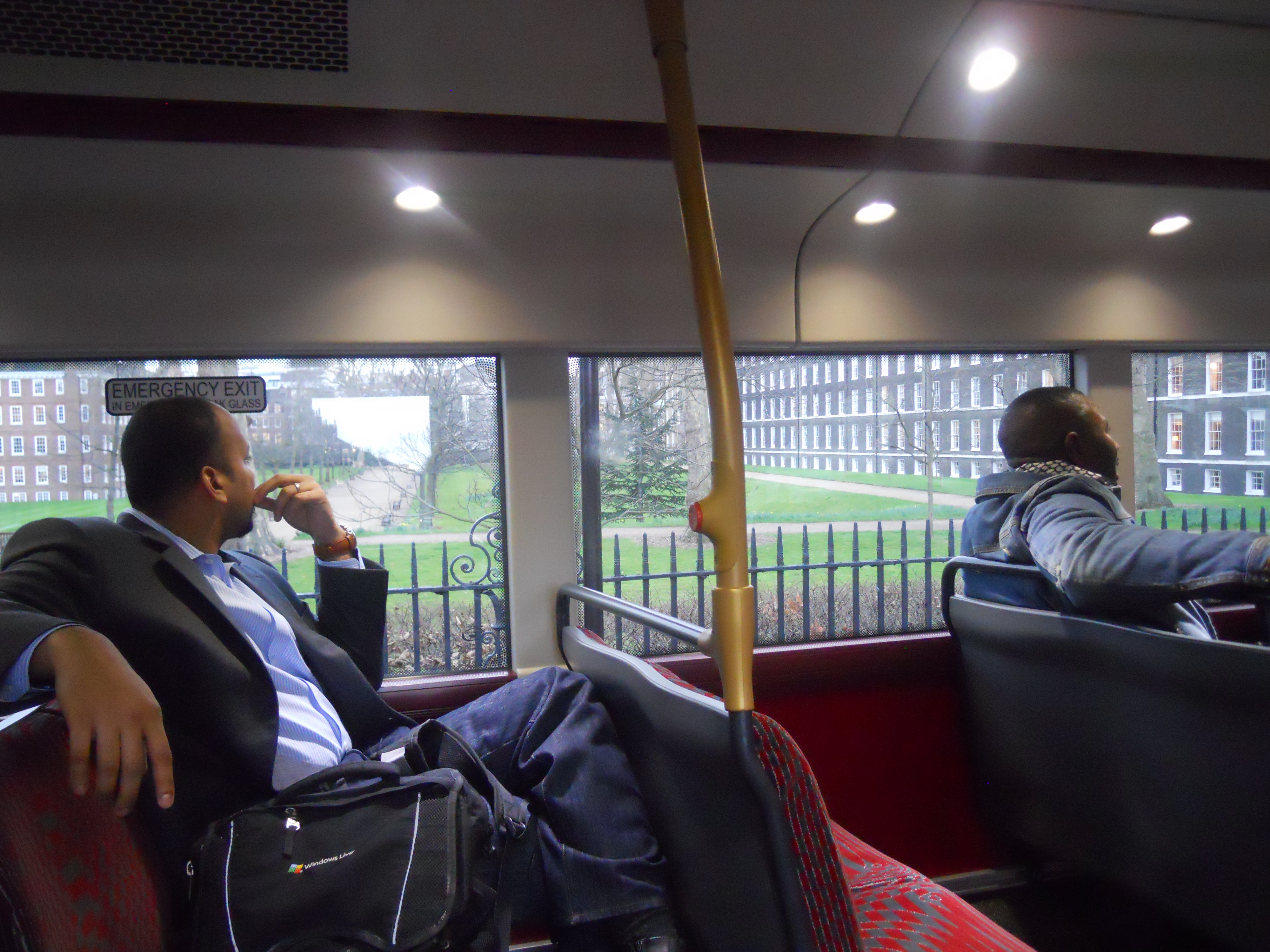
Wide Windows on the New Bus for London
Lincolns Inn Fields can be seen through the windows. Note too, the generous leg-room, compared to some other buses.
As we progressed towards Victoria I took a lot of pictures from the right hand side, with my elbow resting on the window frame, just like the gent in the previous picture is doing.
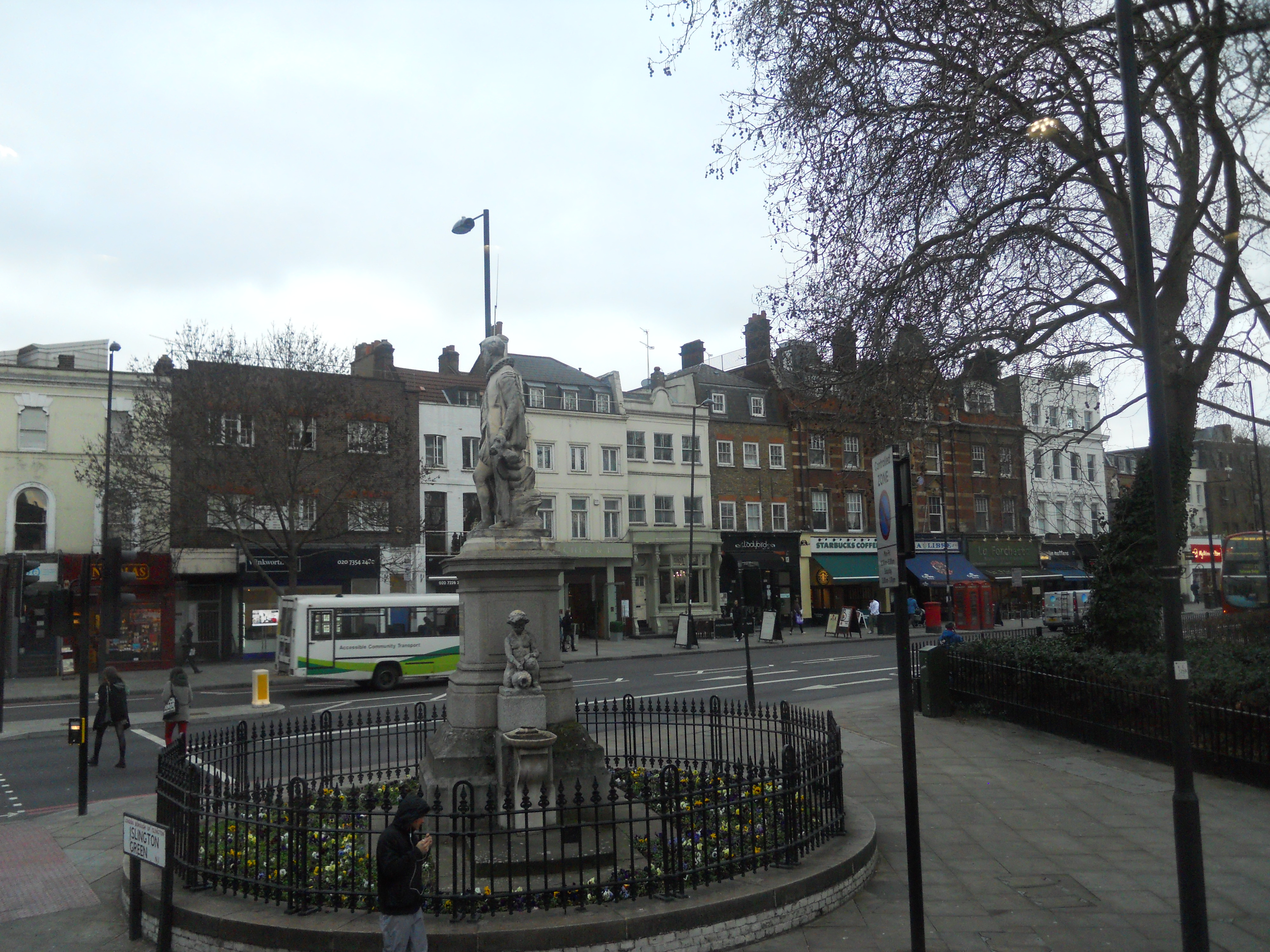
Hugh Myddelton Looks On
I wonder what Sir Hugh would have thought of it all.
Whatever the bus may be it is a superb place to film central London. I don’t think that the tours will be pleased as routes like the 38, will offer a similar experience for the price of a normal bus fare. How long before someone starts offering a smart phone app, that provides a running commentary, based on GPS. Or could the app tap into a signal from the bus to keep everything in sync?
At on point, the bus was fairly clear and I was able to look at the seats.
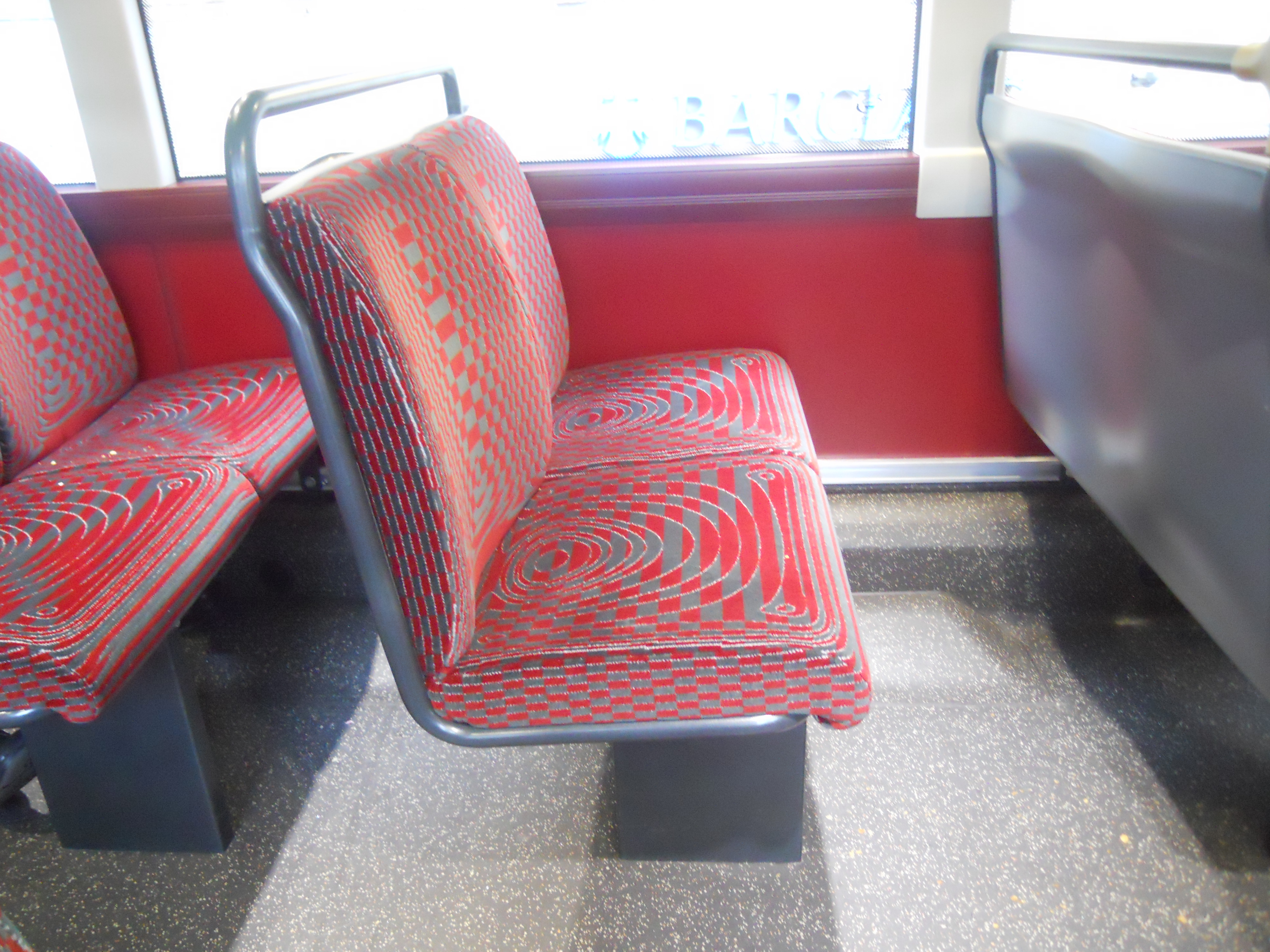
Upstairs Seats on a New Bus for London
They are comfortable and shaped to give good lumbar support. As I have said the legroom is good and you don’t feel crushed in because of the large windows and the ability to rest your arm on the window sill. You could also put a small bag underneath a lot of the seats. Compare this seat with that on the standard Wright product, that is very common in London.
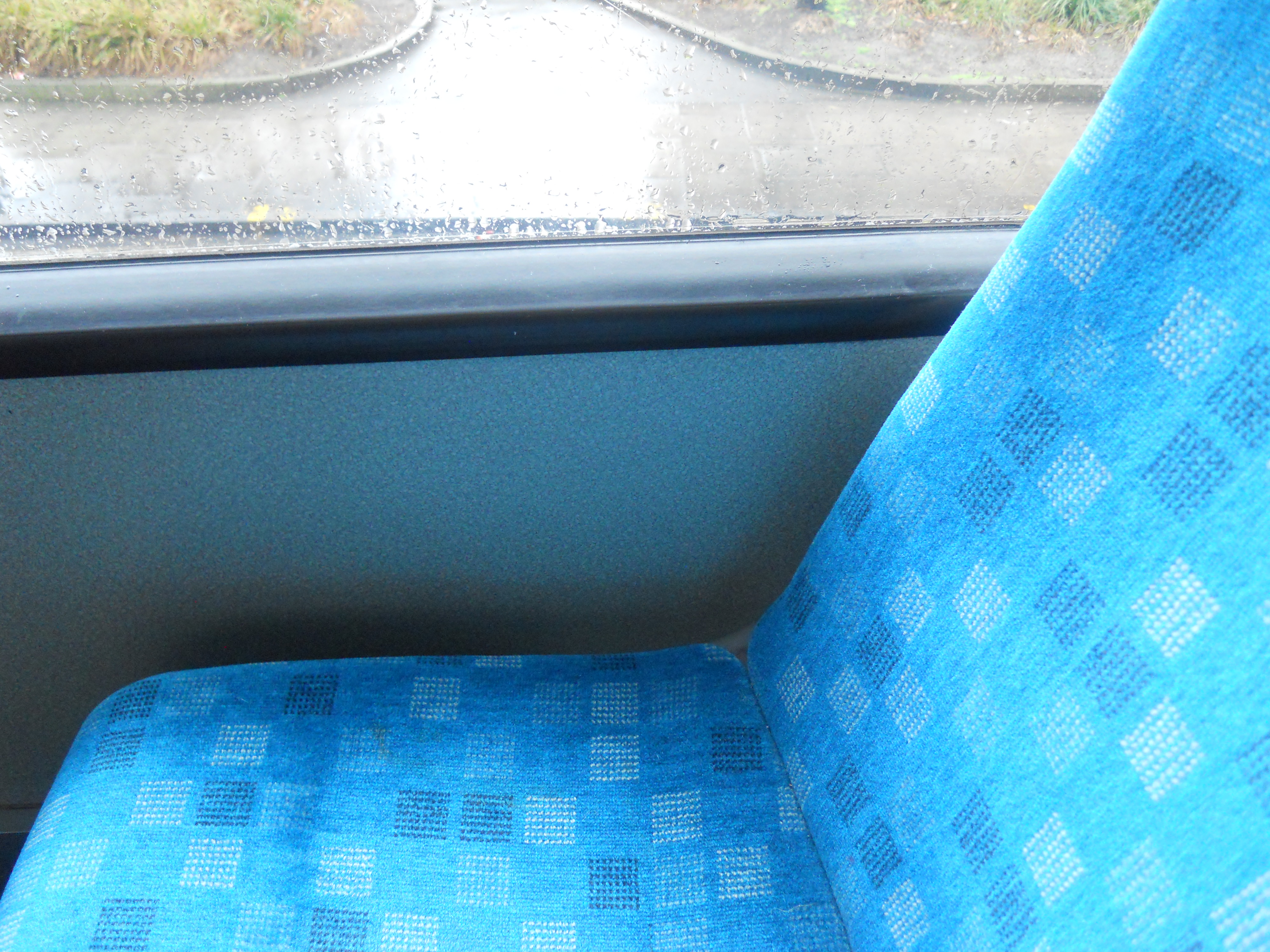
The Seat on a Standard Wright Bus
The New Bus for London certainly has a better seat, with better support and if you’re on the window side, you have somewhere to rest one arm.
After a time I was able to move up-front.
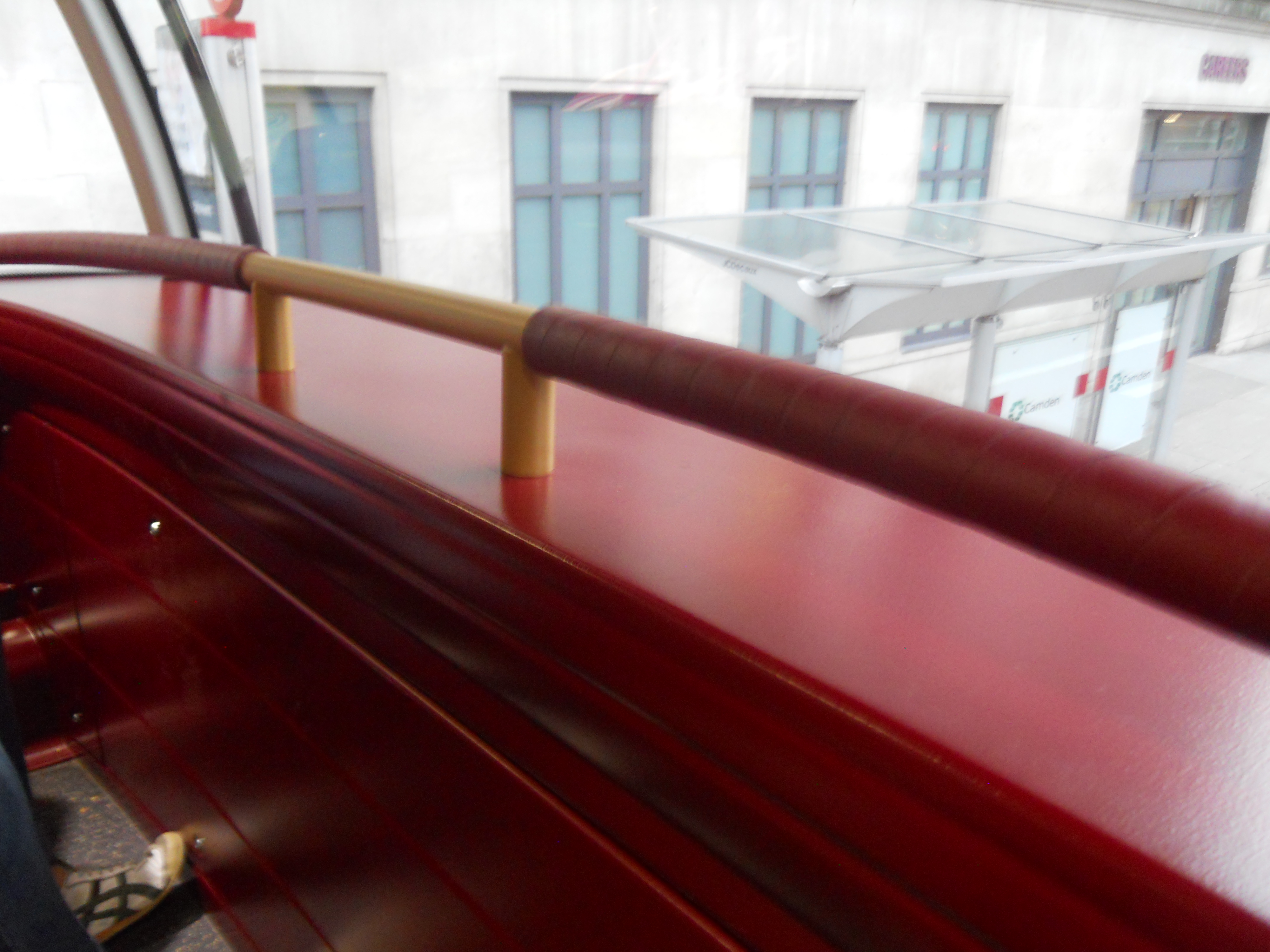
Up Front on a New Bus for London
The view is again good and there is the usual grab rail beloved of kids of all ages. Strangely, I suspect that you might get better pictures from the side of the bus, due to the wide and deep windows.
As we progressed through London, the most astounding thing, was that everybody was looking at the bus.

Eros From a New Bus for London
Quite a few of the crowds on Eros were photographing the bus. As I think was this lady.
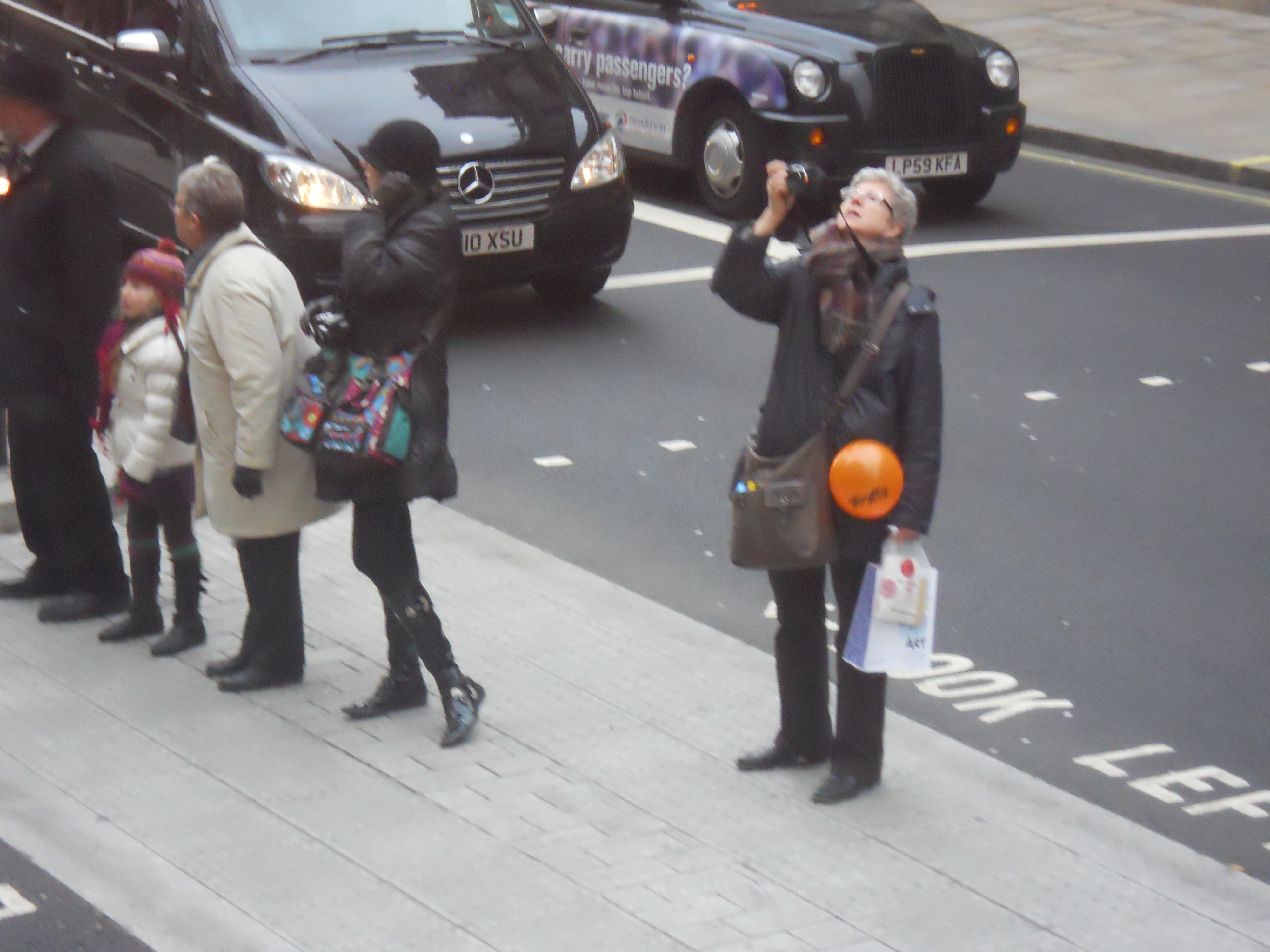
Caught in the Act
But we were outside Fortnums, so she might have been photographing the shop. At Victoria the cameras were out again.
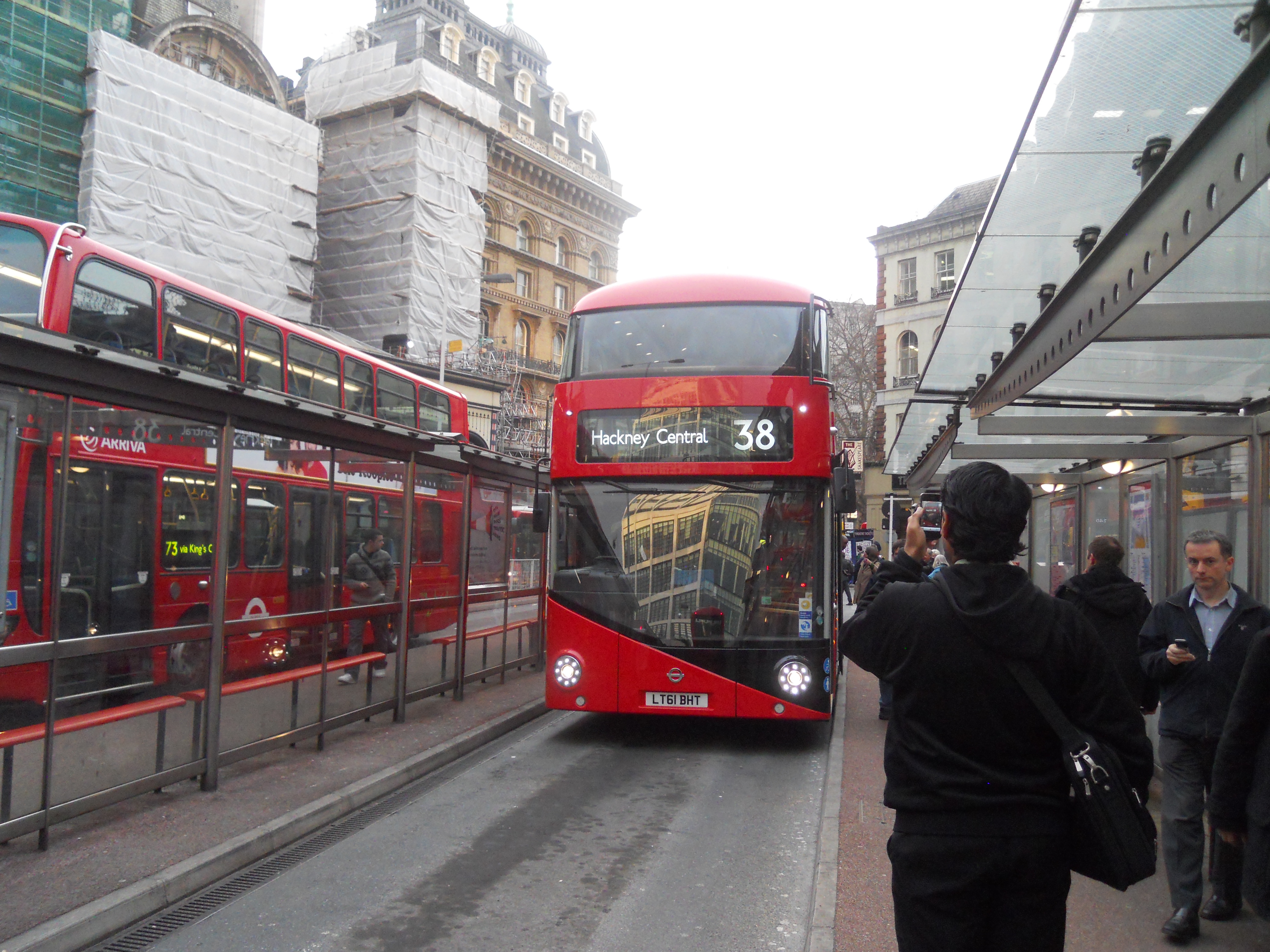
The New Bus for London at Victoria
It’s when you see it here, you realise that the bus is only marginally bigger than the standard buses. Although, on the roads, the curves make it look bigger.
Soon we were off again and i took this picture of a visiting Pole in the back seat of the top deck.
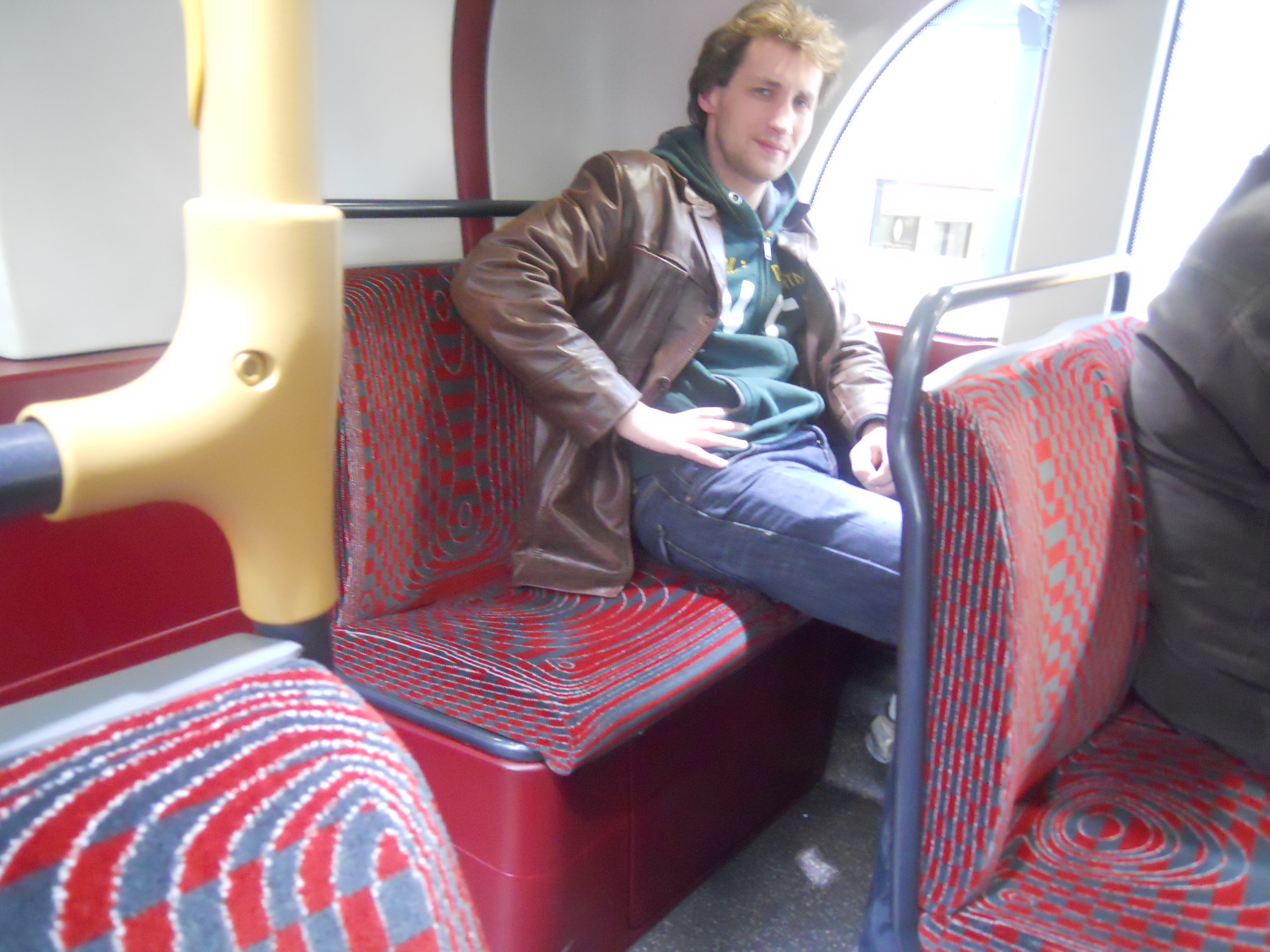
On the Back Seat of the New Bus for London
On the old Routemasters and the RT’s before them, this seat was always popular for a cuddle. I suspect that it will get used for the same purpose on this bus.
I should say, that as someone, who is a bit weak down the left hand side, I didn’t find the stairs too difficult. In fact because there are two staircases, you use the one most convenient to where you are sitting. So I suspect on a crowded bus, you’d probably get off quicker and a lot easier. They are certainly no more difficult to use than those on the standard London buses. The picture shows the front staircase.
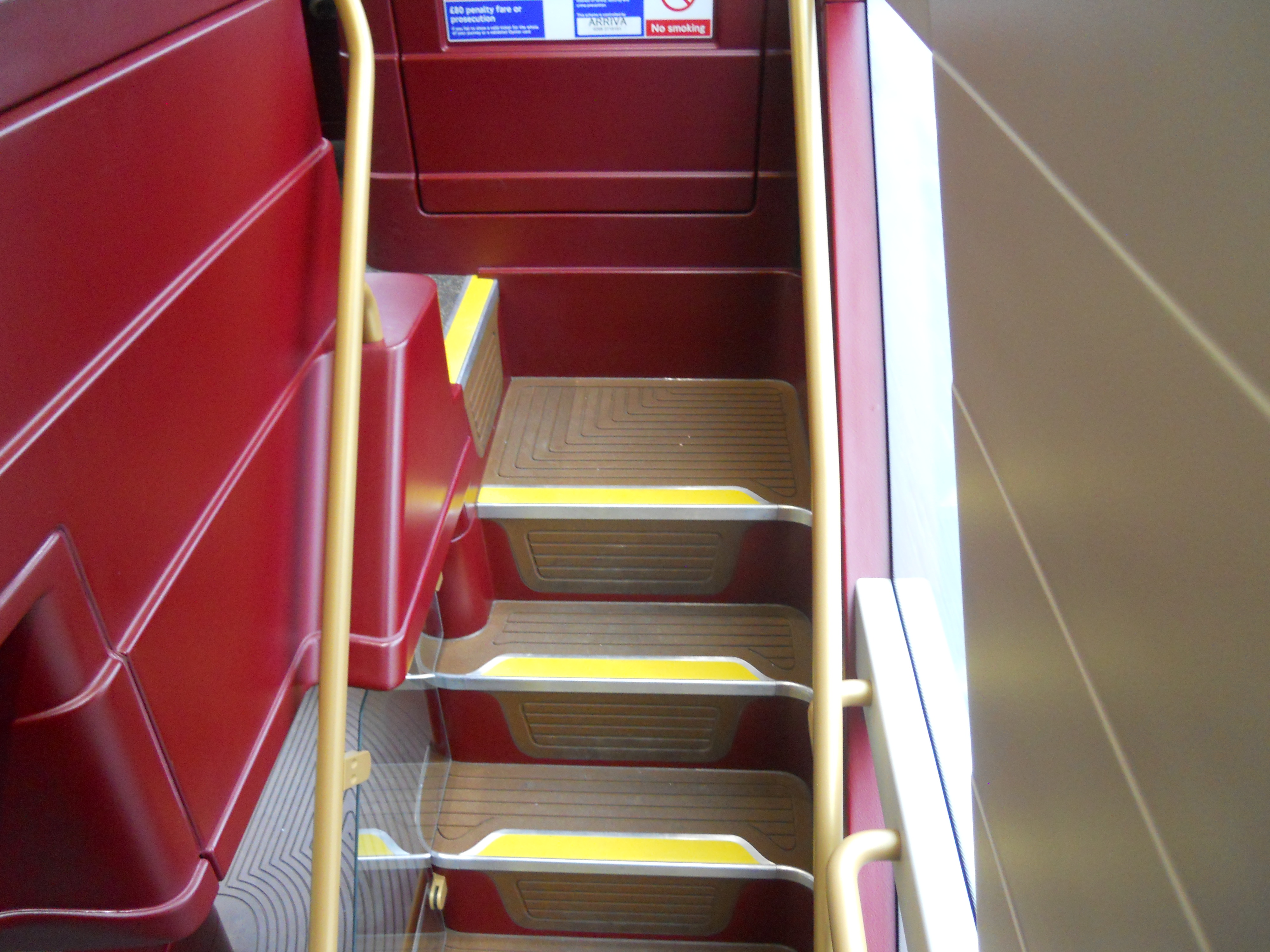
The Front Staircase on the New Bus for London
I think they might be a bit wider too. This picture was taken from the window seat just behind the staircase, which I think could be one of the best seats to take pictures from the bus.
So how do people like the bus?
I did talk to a few people and they were generally enthusiastic. Many too, were taking pictures on their phones or like me, had cameras with them.
Finally, I got off the bus and walked the short distance home.
But this couple were in a hurry and hopped on the bus, whilst it was stuck at the traffic lights.
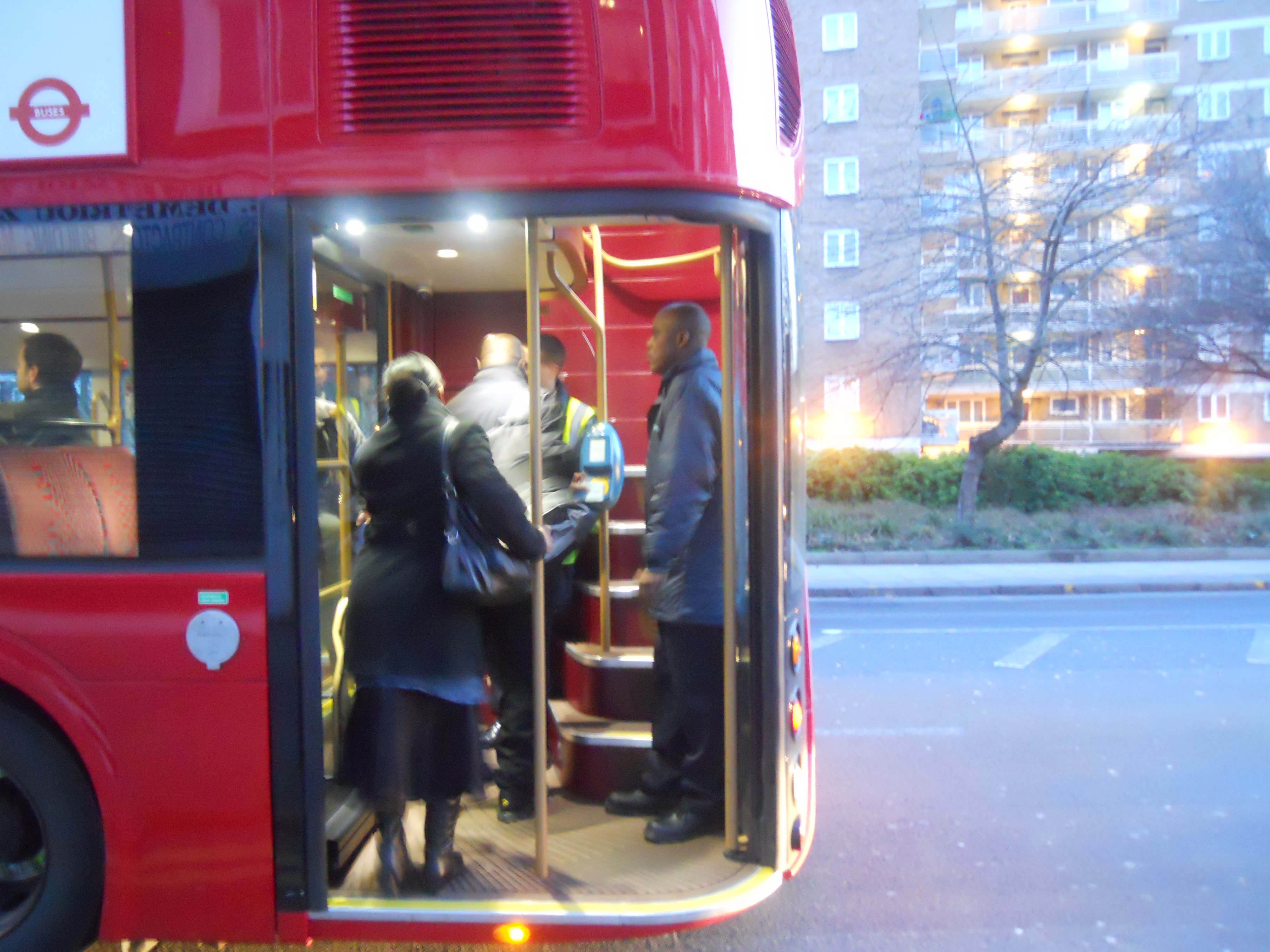
Hopping On a New Bus for London
So will the hop-on/hop-off facility work? It seems to be what Londoners want. It will help me, as often when I walk round the corner to get a 38 to Islington, one is stuck at the traffic lights, so it might save me a couple of minutes waiting for the next one.
To summarise, I think that the designers have generally got it right. The bus is light and airey, the windows give good visibility out, the staircases are easy, the open platform appears to be working and the driver I spoke to liked the bus, which is surely important.
Quite a few men, seemed to be interested in the technical details like the hybrid power system, which gives the bus very good fuel consumption. When did you last discuss how your bus or train worked with someone?
Only one lady thought there might not be enough spaces for buggies, but she did like the seats and the big windows!
Another passenger didn’t like the new smell, as I didn’t on the journey to Victoria, but that will go away in a couple of weeks.
I think my biggest conclusion about the bus is summed up in a quote by David Hockney.
Art has to move you and design does not, unless it’s a good design for a bus.
There would even be space on the top deck for a dachshund under the seat.
I Finally Catch A New Bus for London in the Balls Pond Road
I only managed to catch it with a camera, as I had my shopping with me and was just going home.
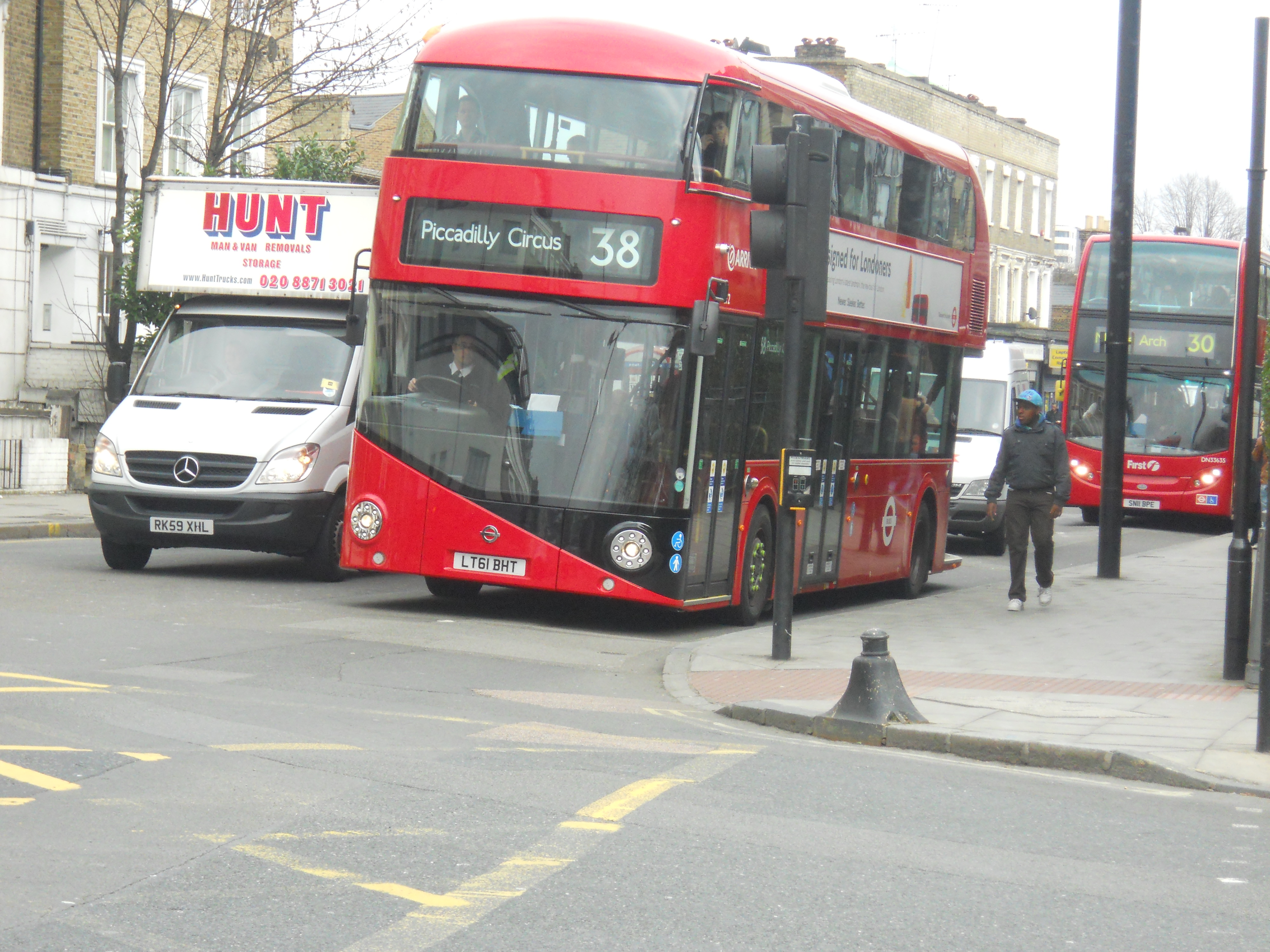
A New Bus for London on Route 38
At least though they are not a figment of London’s imagination.
My last memory of it as it crossed towards Islington, was of the conductor balanced at the bottom of the back stairs, just like he would have been on an old Routemaster.
I should say, as I was taking the picture, I was approached by a well-dressed black guy about half my age, who’d just got off the bus. He was truly enthusiastic about the bus.
So does good design appeal to everyone?
A London Bendy-Bus Has Retired to Brighton
This used to be one of London’s infamous bendy-buses.
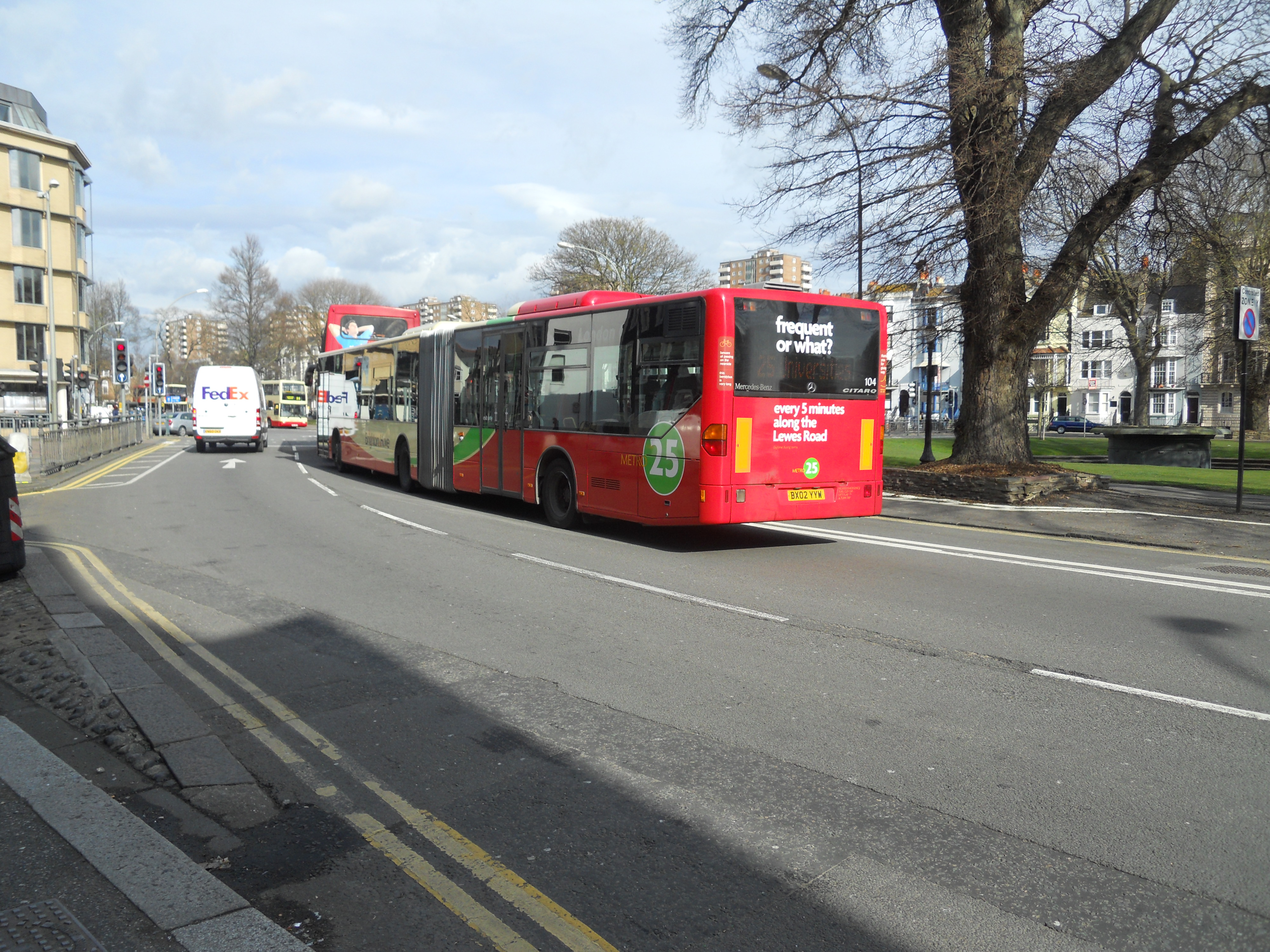
Retired London Bendy Bus in Brighton
It seems to be happily retired in Brighton. I suppose with all its hills, there are less cyclists for the bus to knock over.
Interestingly, the middle door has been removed and you enter at the front and get out at the back. So this would have eliminated the major problem on London’s bendys; fare-evasion.
Wot No New Bus for London!
I’ve only seen the New Bus for London twice, despite the fact that it passes the end of my road. And one of those sighting was during testing and in the other it was going the other way and I just saw its curved backside.
There wasn’t even one in this impressive row of ordinary buses on route 38 at Victoria station today.
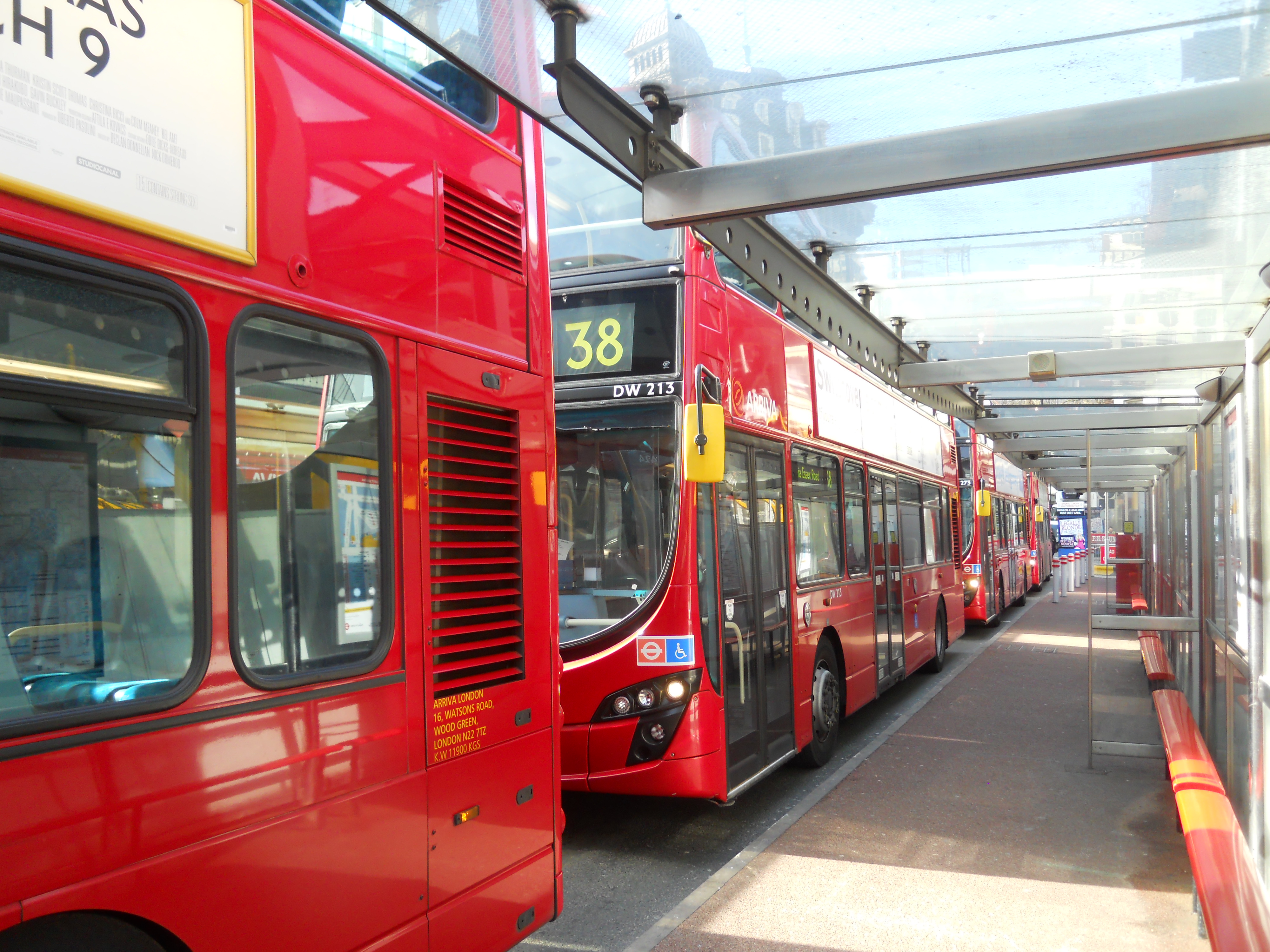
38 Buses at Victoria Station
But then as it takes 68 buses to provide a full service and at present there’s just a solitary new one, it is a bit like looking for a needle in a hay-stack.
The Bus Design Wars
There has been criticism from the usual suspects of the New Bus for London, saying it is just a vanity project and too expensive. It is the latter, if you don’t take into account the design and certification costs. But then when could politicians do arithmetic? Especially hard-left or hard-right ones!
In some ways though the New Bus for London, is just another skirmish in the battle for control of who designs and builds the UK’s buses. And the only winners of that will be the passengers, the bus operators and probably employment in either Northern Ireland or Yorkshire!
So what do the passengers want of a bus want other than it be reliable, easy to get on and off and comfortable?
Some would like wi-fi and I’ve seen this on buses in Reading and Cambridge.
Others might like groups of seats of four with a table and I’ve seen that in Reading.
Leather seats also feature on some buses in Cambridge. And comfortable they were too.
If you are disabled, in a wheel-chair or with a baby in a buggy, you want easy access. London’s dual-door buses make this much easier than some places, where single-door is the norm. Manchester for example, still has 40% of buses without wheel-chair access, whereas London has a figure of virtually 100% wheel-chair access. In my view single-door buses are not acceptable for wheel-chair access.
Londoners also want the hop-on/hop-off ability of the old beloved Routemaster.
So the specification of buses is going upmarket just like that of your average luxury car is.
Let’s look at the specification of the standard red London bus. It may seem very similar to other buses you see around the country, but with extra features.
All London buses have at least two doors, to ease boarding. How bad a single door is was illustrated to me on a new Wright bus in Manchester, where everybody clustered by the driver, distracting him and making the process of loading and unloading difficult. Anybody with a buggy or in a wheelchair probably couldn’t have got on or off. I was sitting next to an off duty bus-driver and he said it was only to save money that the bus company didn’t buy double-entry/exit buses. But he had to put up with all the aggro around the single door!
Note that wheel-chairs always enter or exit through the door at the middle of the bus.
London buses also talk you through the route and display where you are.
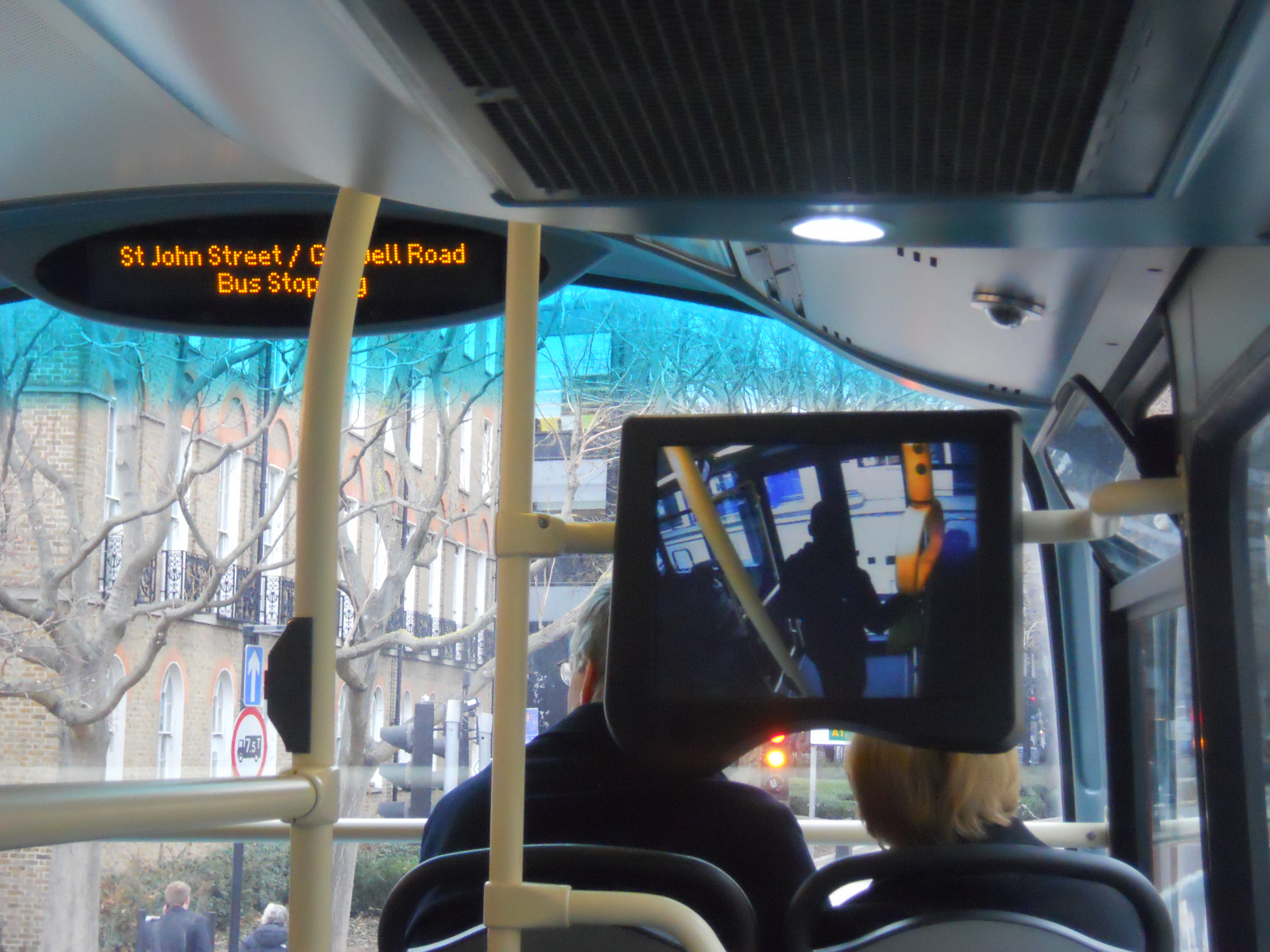
Displays on a London Bus
The picture also shows one of the security video screens on the bus. Would you commit a crime with upwards of sixty people watching?
London buses have been to this specification for some years now and even the older ones still running have two doors and route displays.
Currently, there are three main types of double deck bus, that have been delivered in the last three years or so, each delivered by a different manufacturer.
Scania OmniCity
The Scania OmniCity is built in Poland and route 56, which runs near me uses them.
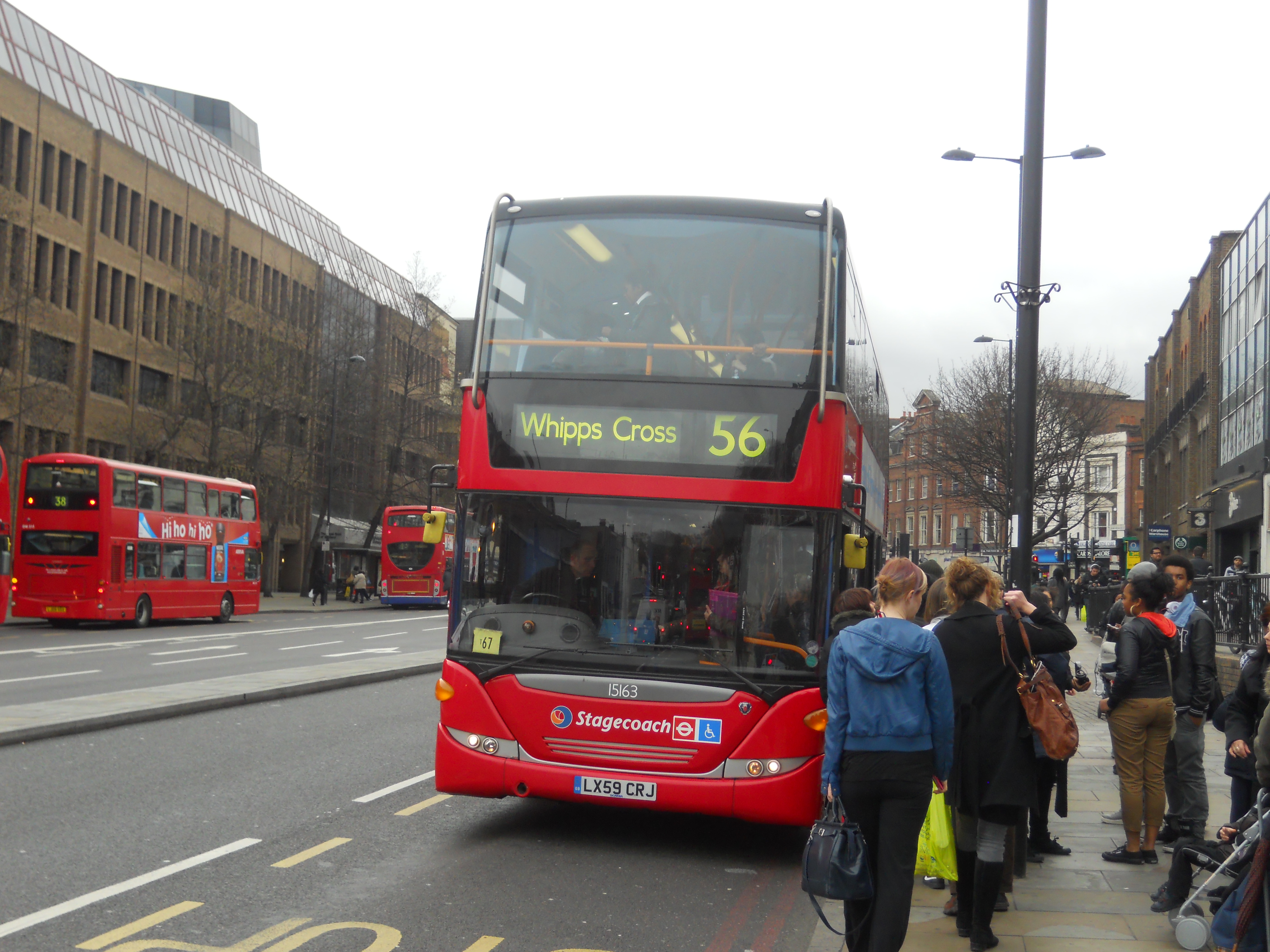
Scania OmniCity
This is one loading and unloading at the Angel today.
Wright Gemini 2
The Wright Gemini 2 is built in Northern Ireland generally using Volvo chassis components.
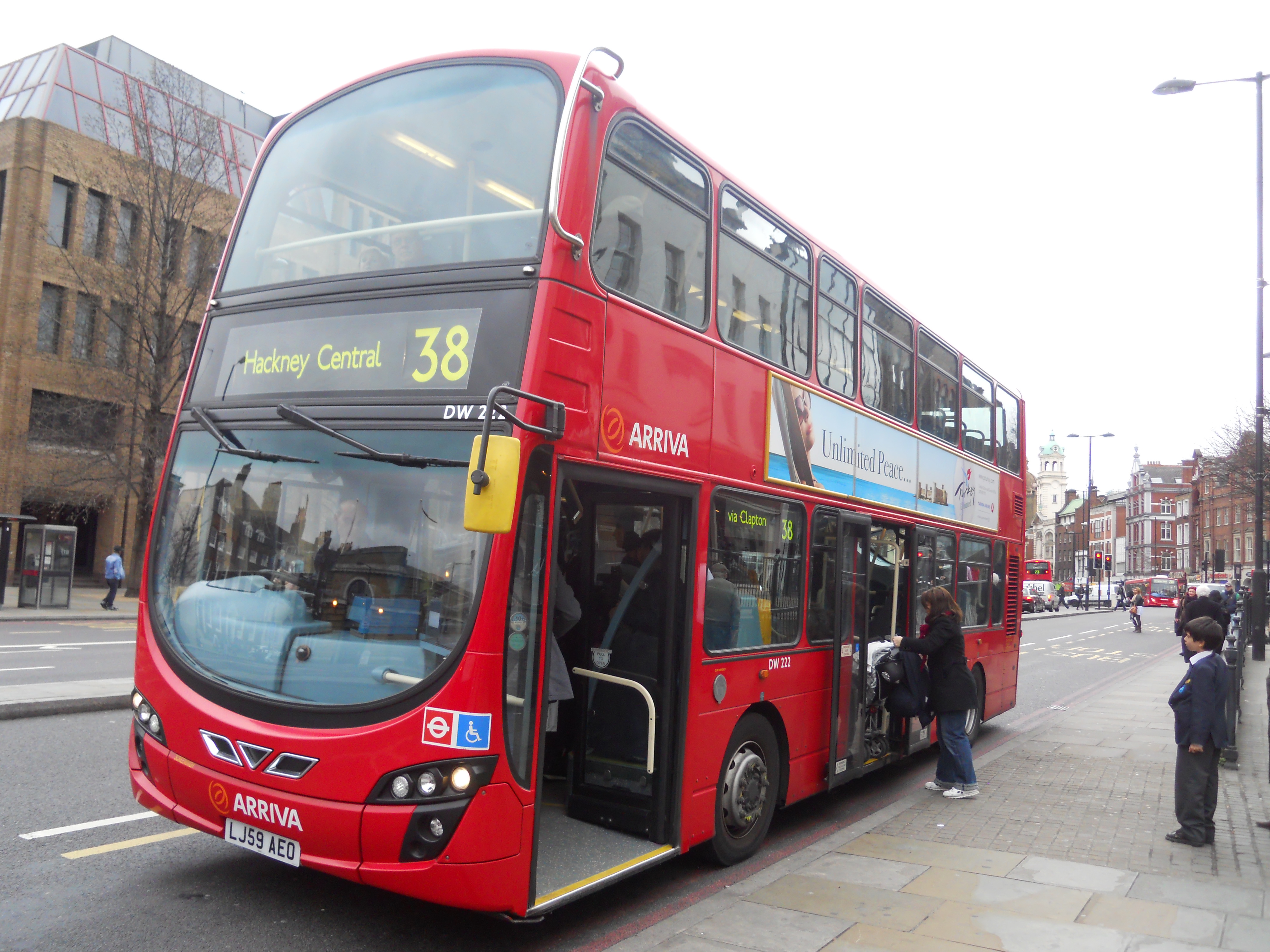
Wright Gemini 2
There are two types; a conventional diesel bus and a hybrid version.
Alexander Dennis Enviro 400
The Alexander Dennis Enviro 400 is another British-built bus from Yorkshire.
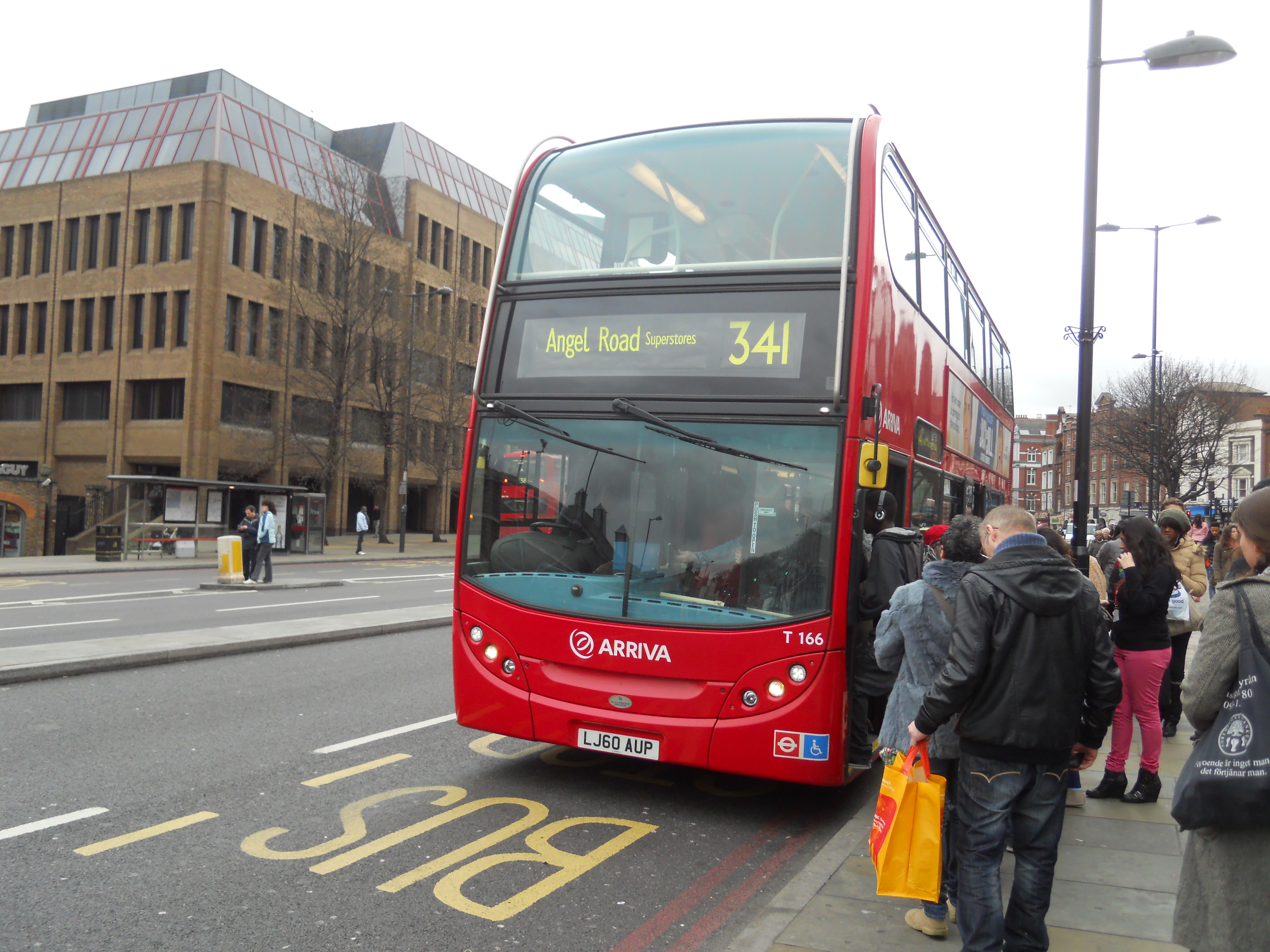
Alexander Dennis Enviro 400
As with the Gemini, it is available in both conventional and hybrid versions.
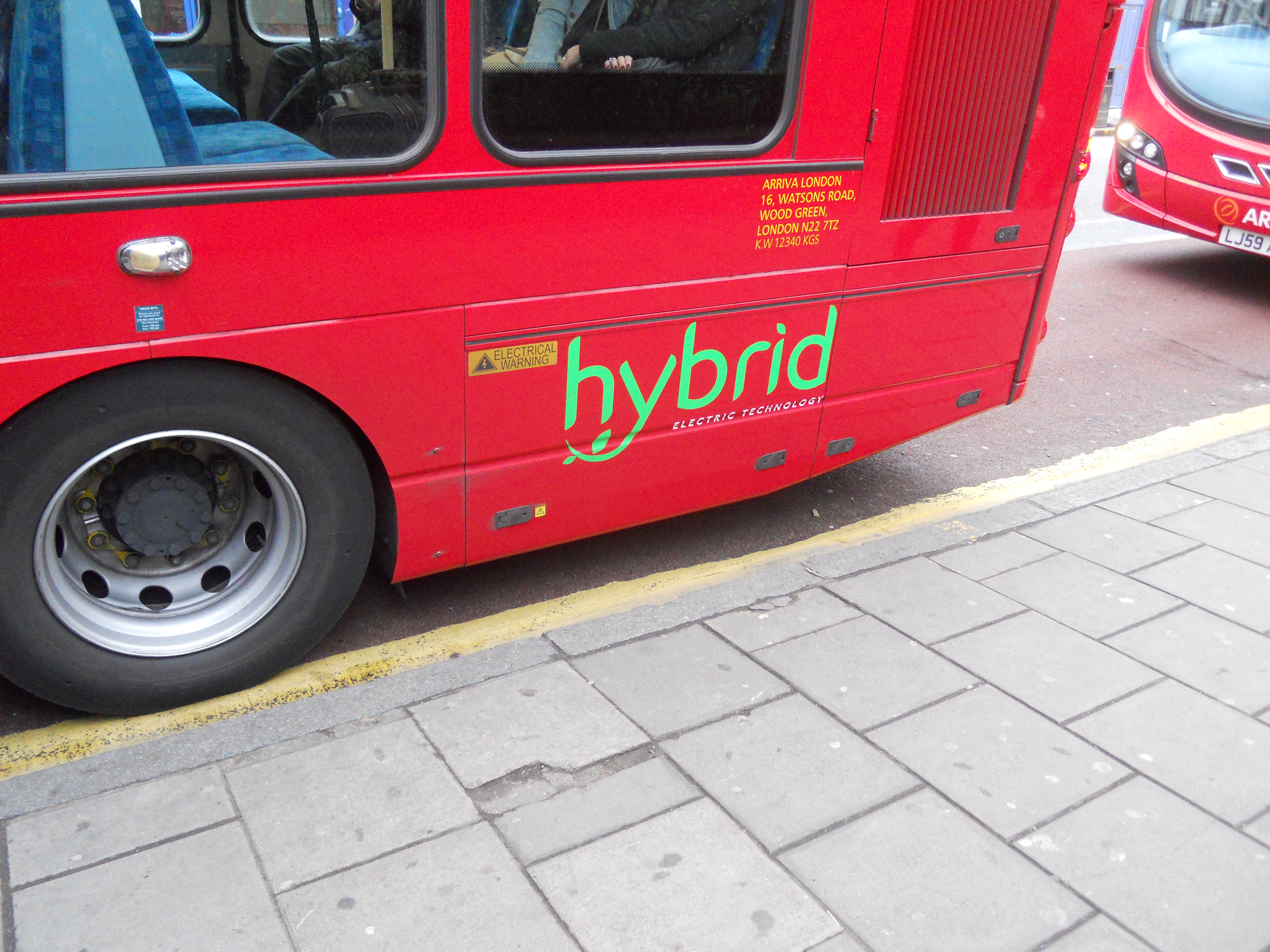
Hybrid Bus Logo
Increasingly, this logo will be seen on the side of buses, as Transport for London have said that from 2013 all new buses must be low-or zero-emission.
I tried to get on the single New Bus for London, but couldn’t find it today, as it seemed to be very popular with bus enthusiasts.
The New Bus for London will stand or fall on how it meets the objectives I outlined earlier in this post.
The current design has three doors and two staircases, which may seem excessive, but they should speed up loading and unloading. I hope tests have been done on a mock-up with real people to prove the theory. Boeing and Airbus do this with their airliners, so why shouldn’t bus designers?
But one of the advantages of two staircases is that it gives more places to hide the some parts of the hybrid drive system, like the diesel engine, the generator and the batteries. The actual electric motors are hidden in the rear wheels and do regenerative brakimg too.
In fact, the propulsion system of the New Bus for London and all future hybrid buses, will probably change drammatically over the next couple of years.
As batteries are expensive and have to be replaced every couple of years or so, so they are one of the major running costs of a hybrid bus. But Torotrak have come up with a flywheel-based solution to store energy. Someone will make it work, even if they don’t. Their prototype looks to be smaller and cheaper than a current set of batteries.
There is also a big beast that has entered hybrid drive systems for buses and larger vehicles; BAe Systems with HibriDrive. There are a lot of new buses needed both in the UK and worldwide in the next few years and BAe Systems will eat their fill from it. They will only pour petrol on the Bus Design Wars. And we know who’s going to win that; the passengers, the bus operators and hopefully UK-based builders.
A Malaysian View on London Buses
I found this article on a Malaysian newspaper website.
It is of an interview of the Chief Executive of the Malaysian Land Public Transport Commission, where they talk about improving bus services over all of Malaysia.
What is interesting, is that they are talking about using a London model, where different private companies tender for specific routes. I won’t comment yet, but make sure you read the article.
The Orange Train for the Dutch at the London Olympics
London’s new Overground system is four lines, with a fifth to be added in October, later this year.
The Dutch will feel at home on these trains, as the colour scheme of the trains and stations is predominately orange and the line is shown in orange on the tube map.
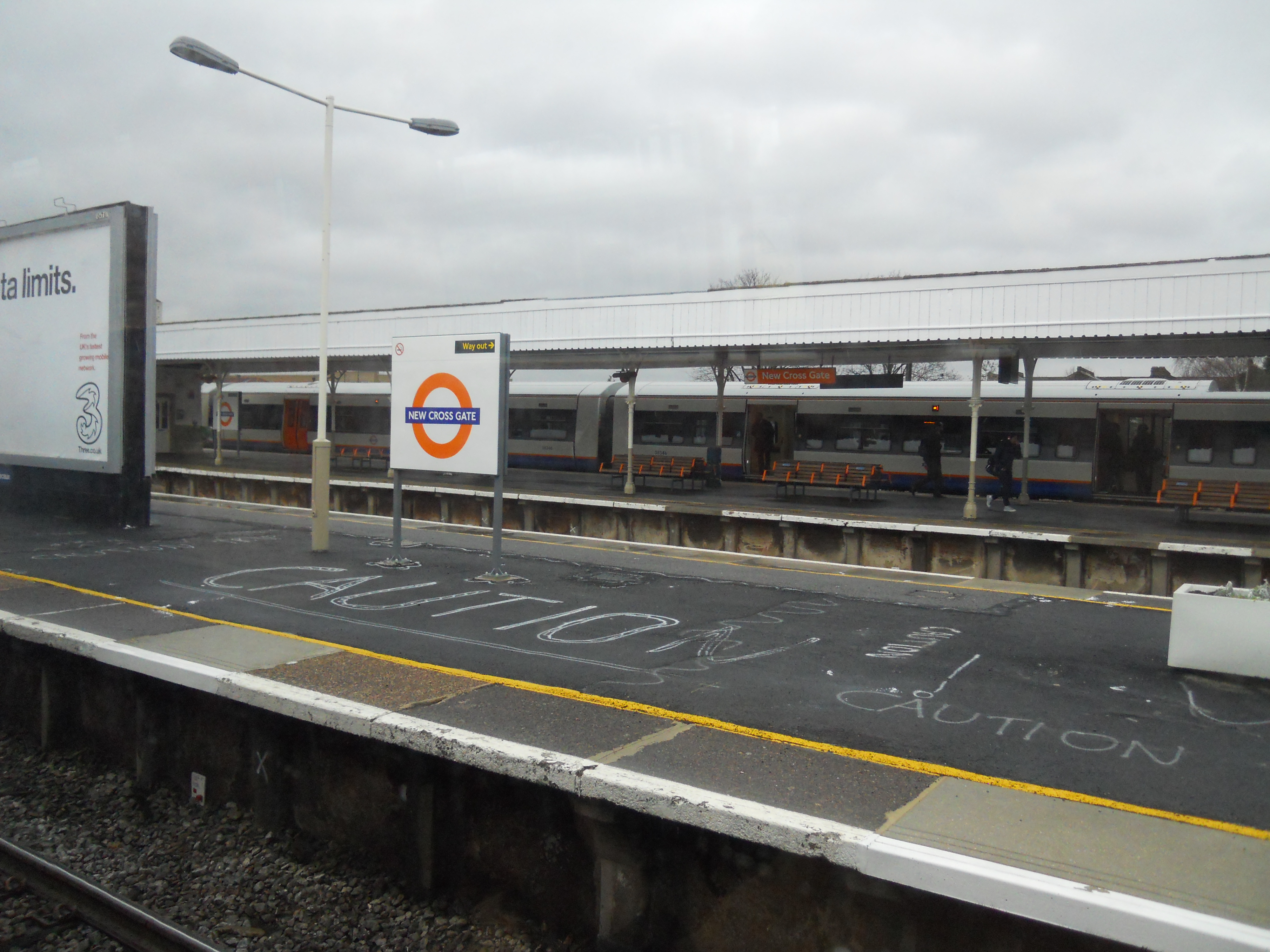
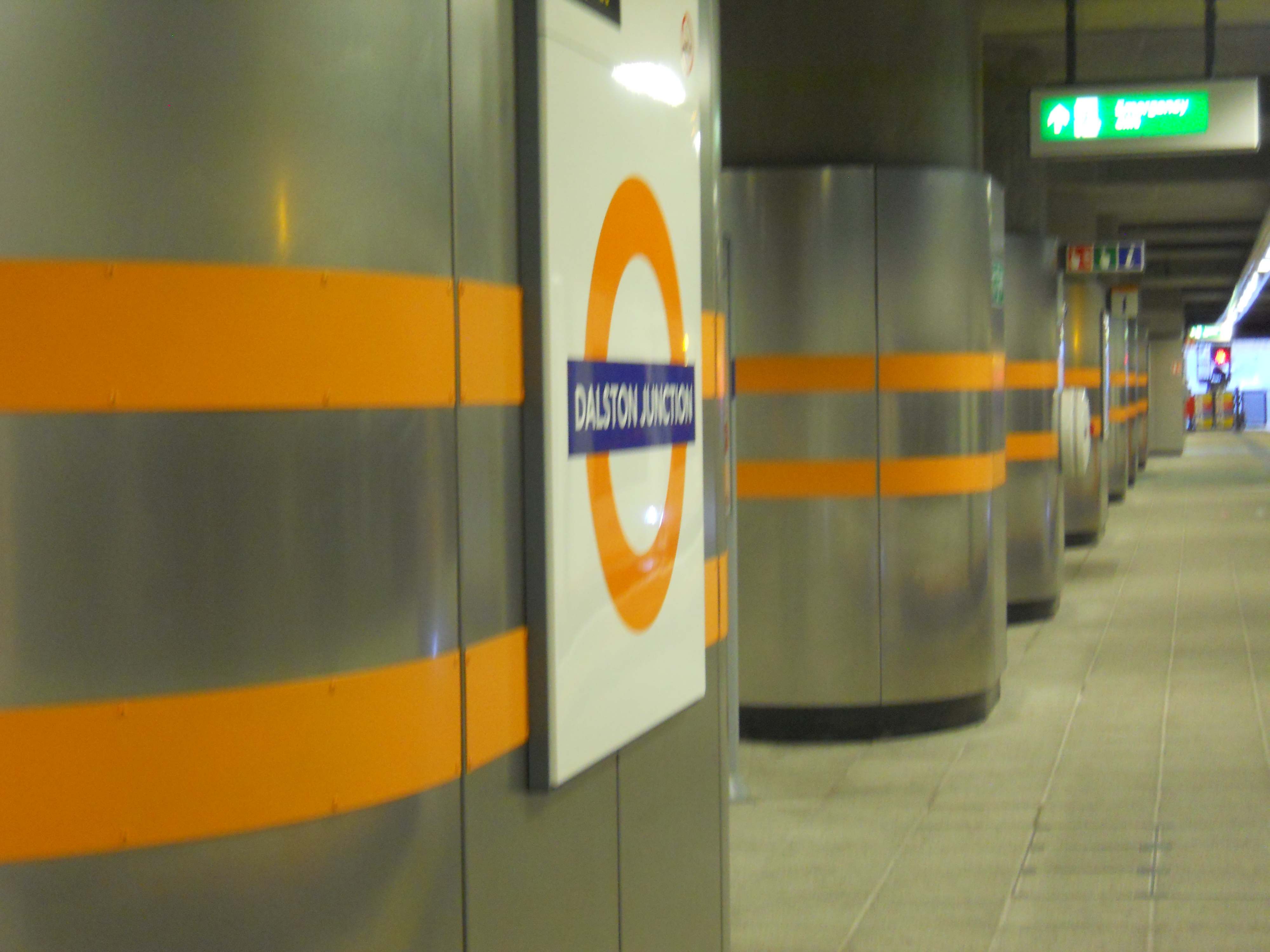
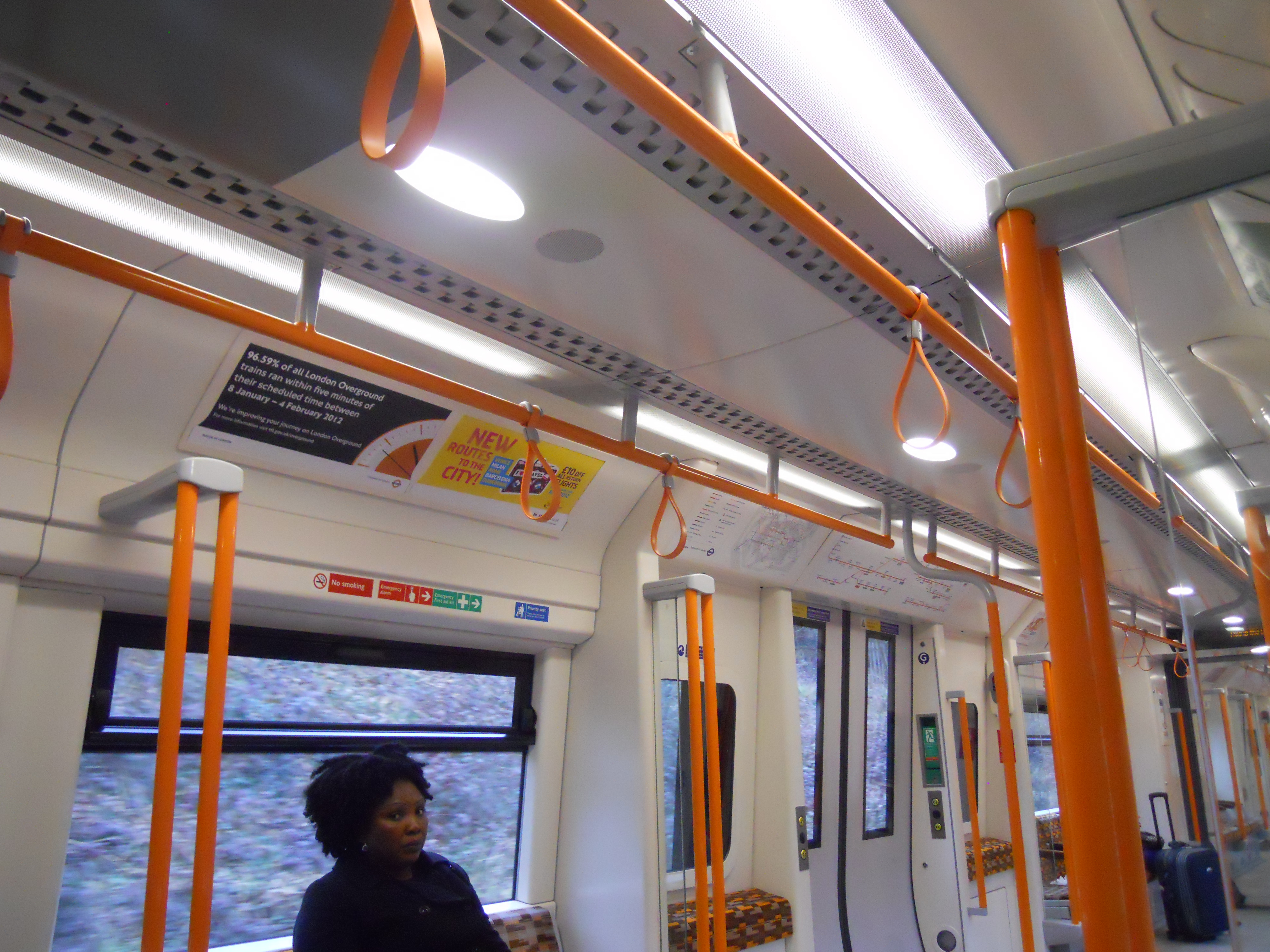
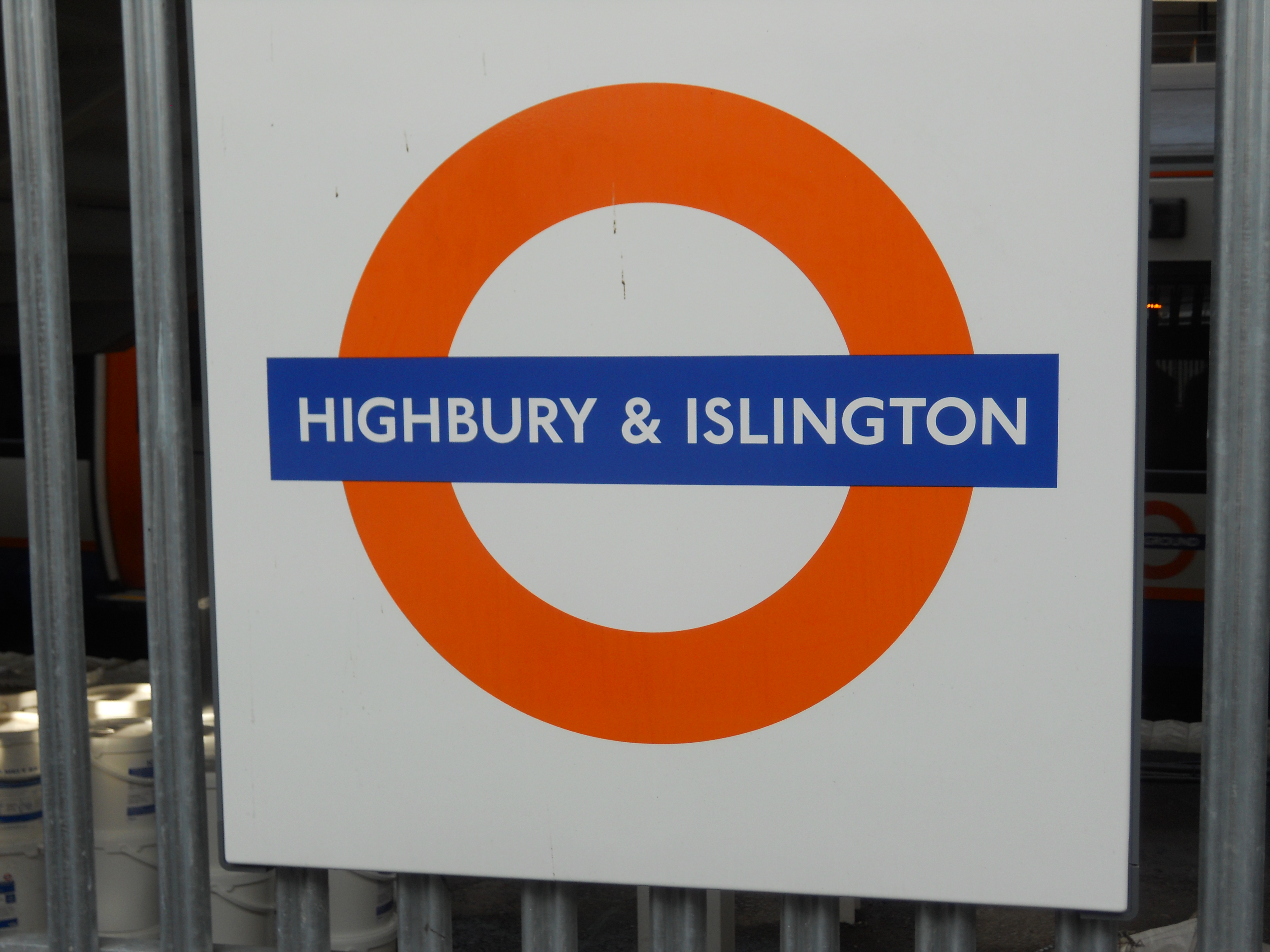
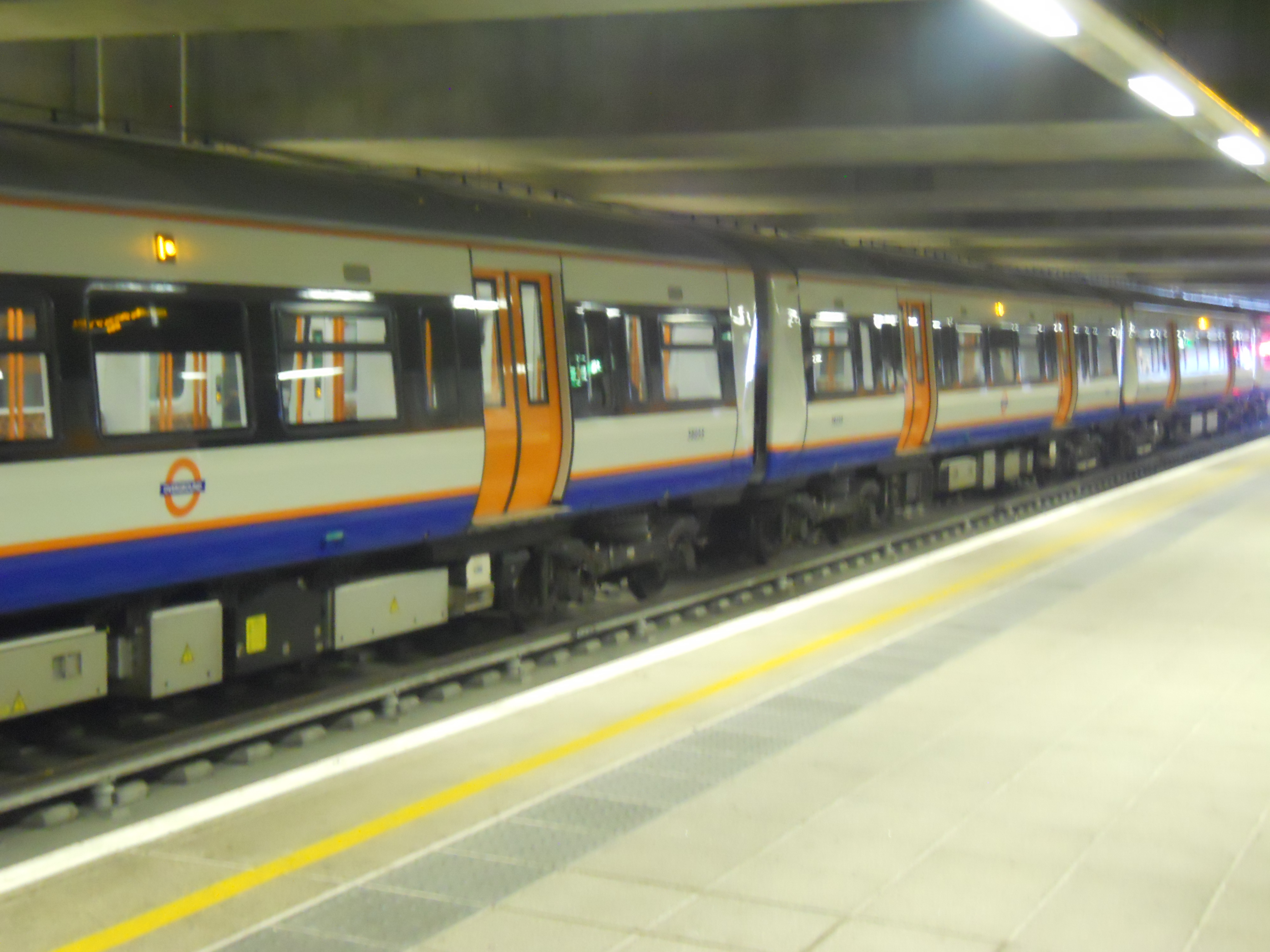
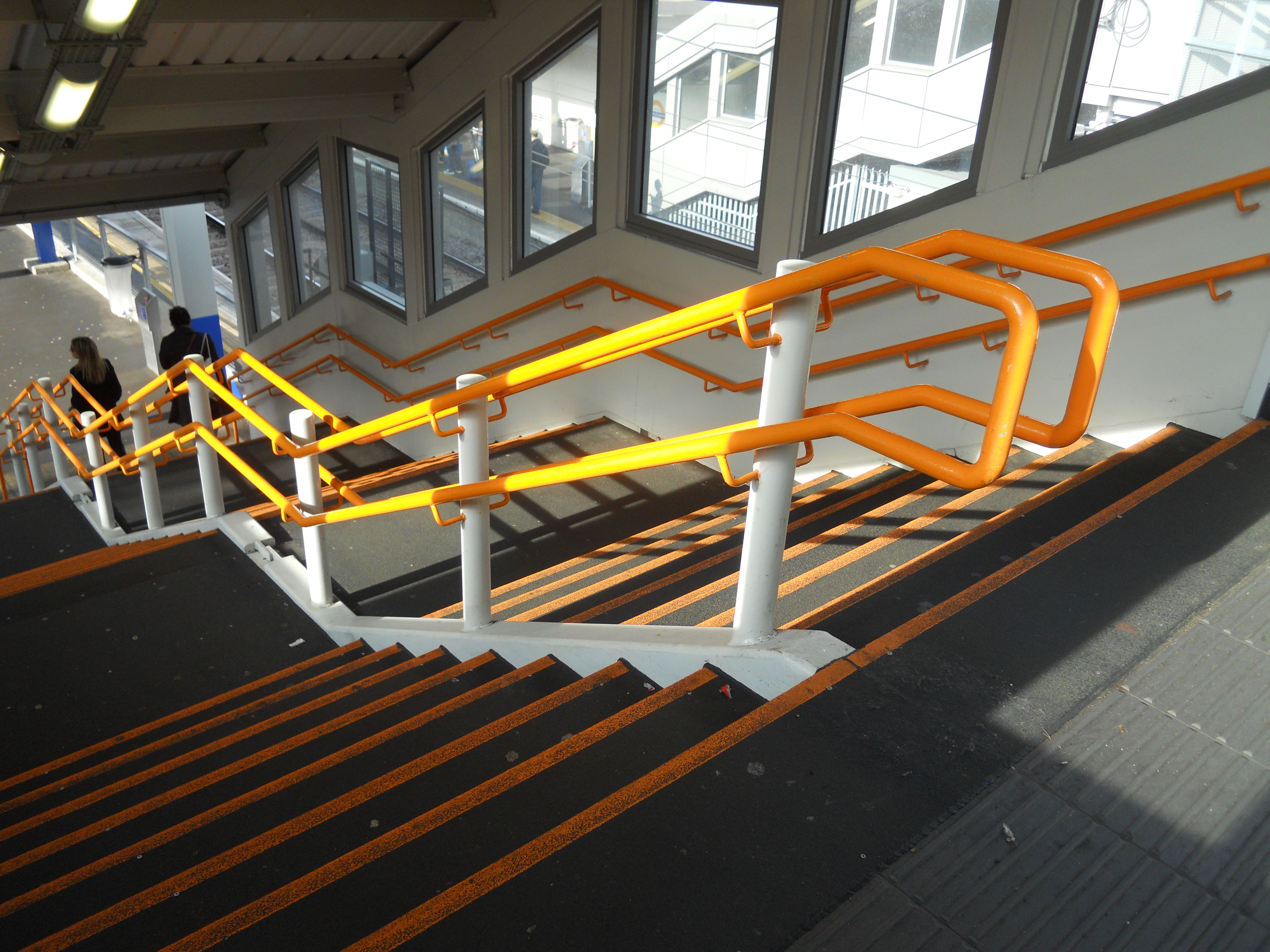
The major line, the North London line, also travels across North London from the Olympic site at Stratford and connects to buses and trains to get to the Heineken House at Alexandra Palace. If you go further west you get to Hampstead Heath and Kew Gardens, two of the best places in London to get over a hangover.
I suspect that getting to Alexandra Palace during the Olympics may be difficult, as the two train routes from Kings Cross St. Pancras station, where the Olympic Javelin Shuttles arrive, the suburban rail to Alexandra Palace station and the Piccadilly line to Wood Green station, are crowded most of the time, even without the Games. If you can get to Alexandra Palace station, it’s a much shorter walk up the hill to the Palace.
So a better alternative might be to take the North London line from Stratford to Highbury and Islington and then take the suburban rail from there to Alexandra Palace station. It will certainly avoid the inevitable crush and wait at Kings Cross.
What Do You Call People You Don’t Know?
They had this discussion on the BBC this morning, after a bus driver called a lady babe in Brighton and she objected.
Generally, I don’t mind, except if they call me Jim. Jim was my father, as I said before.
You should never assume any nicknames and to me, ones like sir, thanks, mate and luv are generally acceptable. I notice also in London, that a lot of drivers often wave you through after your ticket has been accepted. Which is acceptable to everybody and especially those who are hard of hearing. The machine also tells you to go with a visible message.
I had to laugh though when Quentin Somerville of the BBC, then said his report was on his Twitter account called MrSommerville.
So not everyone is informal!
London Bus Myths
When we were kids, there was always a story or myth about a particular London bus route, that ever since one got a direct hit from a German bomb has gone in convoy. I know 38s, seem to run in threes, but I don’t think it was that route.
The myth round here is that 4s have a take your own line approach to getting from one end of their route to the other. This was illustrated today as I saw a 4 going towards the Islington Angel on the Essex Road. I did find though when I got home, that there had been a traffic accident.
There must be many more myths.

