A High-Tech Bus Stop in Burslem
I saw this bus stop in Burslem.
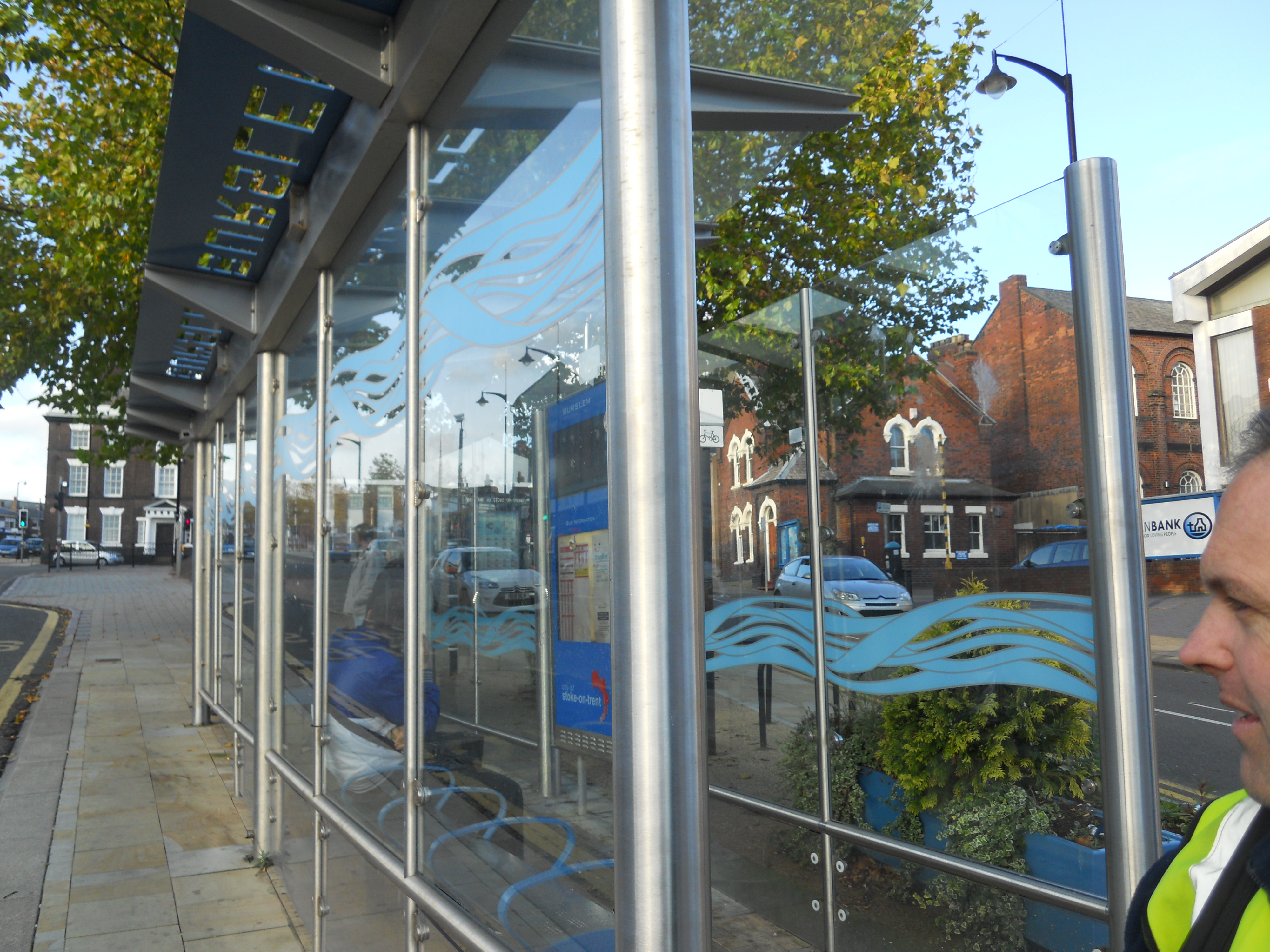
A High-Tech Bus Stop in Burslem
It looks good, but as regards giving information to visitors and locals alike, it was supremely useless. Even the texting system didn’t give any sensible information. It was even more annoying, when you consider I had to wait nearly half-an-hour to catch a bus to somewhere I didn’t really want to go.
You also can’t see it in this shot, but there was a youth using the stop, as a nice place to have his can of strong lager.
It would have been much better, if they’d spent the money on a good draughtsman to make a nice map and poster to enable everybody to use the buses efficiently.
From what I’ve seen outside London, Harry Beck, would now be spinning faster in his grave than any of the basic atomic particles. And of course good well-drawn maps are as rare as hen’s teeth or elusive as Higgs bosons.
92 Clubs – Week 4 – 11 Clubs – 18 Trains
Week 1 Week 2 Week 3 Week 4 Week 5 Week 6 Week 7
Day 22 Day 23 Day 24 Day 25 Day 26 Day 27 Day 28
This was a rather poor performance on my part, but it had got off to rather a bad start on Day 22 and I did take three days off.
Here are the awards.
Heroes of the Week
These have to be Peter, who at 84, guided me across Manchester to Oldham and the unknown driver of the 14:06 out of Paddington to Penzance, that I took to Plymouth.
Most Surprising Stadium of the Week
It has to be Port Vale, as it shows how a small club can create a stadium of whom any supporter can be proud.
Best Stadium of the Week
I’d give this to Port Vale as well, if it wasn’t so difficult to get to. I might give it to Norwich, but then I can’t, can I? Both the Nottingham clubs have good stadia, which are easy to get to, but the others with the exception of Peterborough, are public transport nightmares. So I think I’ll leave the award! in a few years time or on a match day, it will probably go to Port Vale.
Best Signposted Stadium of the Week
Portsmouth virtually has its own station at Fratton and even has separate signs to the ground for Home and Away Supporters, so it wins by a country mile.
Worst Signposted Stadium of the Week
Peterborough virtually lacks signposting and as it is fairly close to the station, some signs would help. But as I said on Day 27, the stadium is very much a work-in-progress, so perhaps it will be very much better in a few years time. I think I’ll give it to Northampton, as with a bit of thought, they could probably make a nice walking route to the ground.
Dump of the Week
After a couple of near misses Manchester finally gets the rewa4rd it deserves. It is a city with bad maps, no information and a completely indecipherable bus system. Perhaps some of the billions, they are spending on the new trams could be used to make sure the buses work or that the maps are correct.
Sign of the Week
It just has to be the one at Port Vale.
Best Train of the Week
The High Speed Train to Plymouth, where I sat on on the floor.
Worst Train of the Week
The two trains to Oxford, where there was no tables in the back of the seats in front. How can I do my Sudoku?
Worst Bus of the Week
The one I took from Boundary Park to Oldham Bus Station. If you were in a wheelchair or had a baby in a buggy, you ewouldn’t have been able to use it.
This was rather a dissappointing week, in that I could have done much more. I could make the excuse of my hay fever! So I will!
92 Clubs – Day 28 – Portsmouth, Port Vale, Preston
This was an easy day, in that I took a train to Fratton after 09:30 from Waterloo to Fratton to get to Portsmouth.
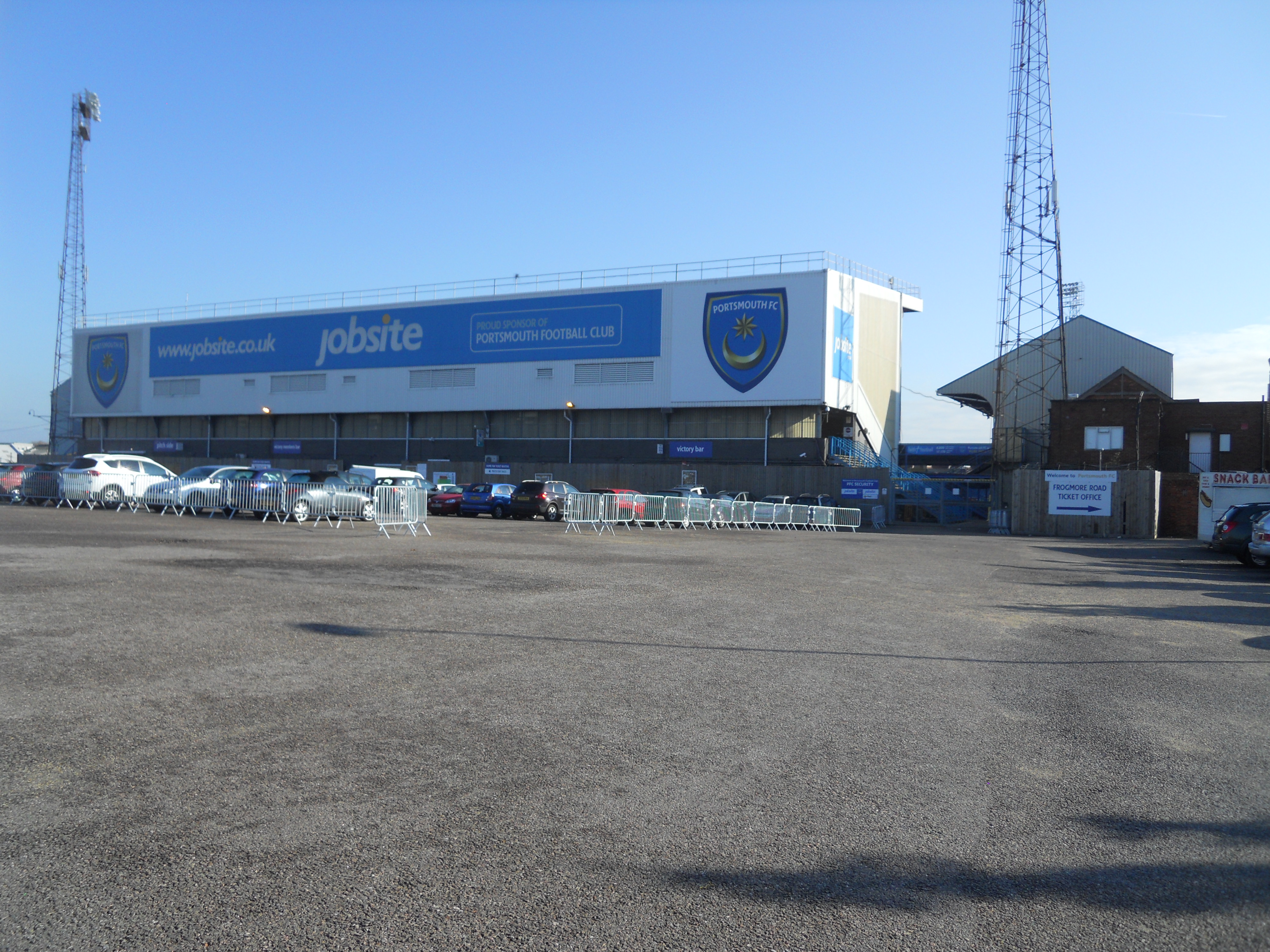
Portsmouth's Fratton Park Stadium
I was back into London ion the 11:28 and was able to catch the 13:20 out of Euston to Stoke-on-Trent for Port Vale.
Vale Park is not easy to get to from the station and although the 21 bus supposedly does most of the trip, this does mean a confusing change or stopover in Hanley. So I took a taxi to the ground from there.
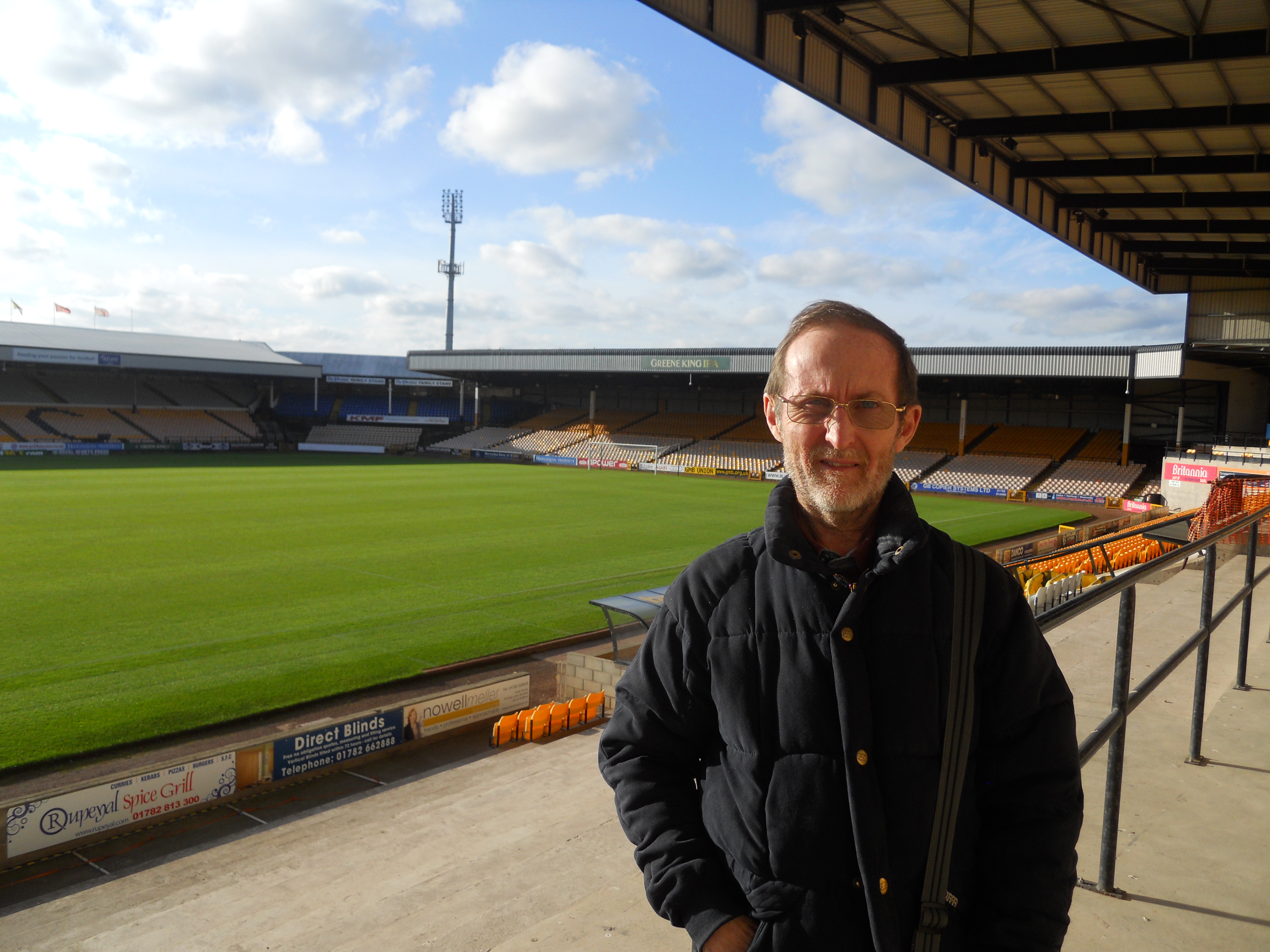
Inside Vale Park
The staff were very welcoming and one of them took the picture.
I tried to get the bus back to the station from Vale Park and asctually found the stop,but no bus of any sort appeared for some time. A local told me they were often like that and caused him great distress. In the end it was a 21 that appeared, but as I needed to get on I jumped ship at Hanley and got a taxi to the station, where I caught another Virgin Pendolino to Manchester Piccadilly. By now, I know the station like one of the rats, who I suspect live between the tracks, sao it was a run to catch the train to Preston. As it was a Trans Pennine Express, it was very crowded.
I’d been to Deepdale once before in the 1960s to see Spurs play, whilst I was at University and can remember walking a long way to the staidum then. So this time it was a taxi in the dark to Preston‘s ground.
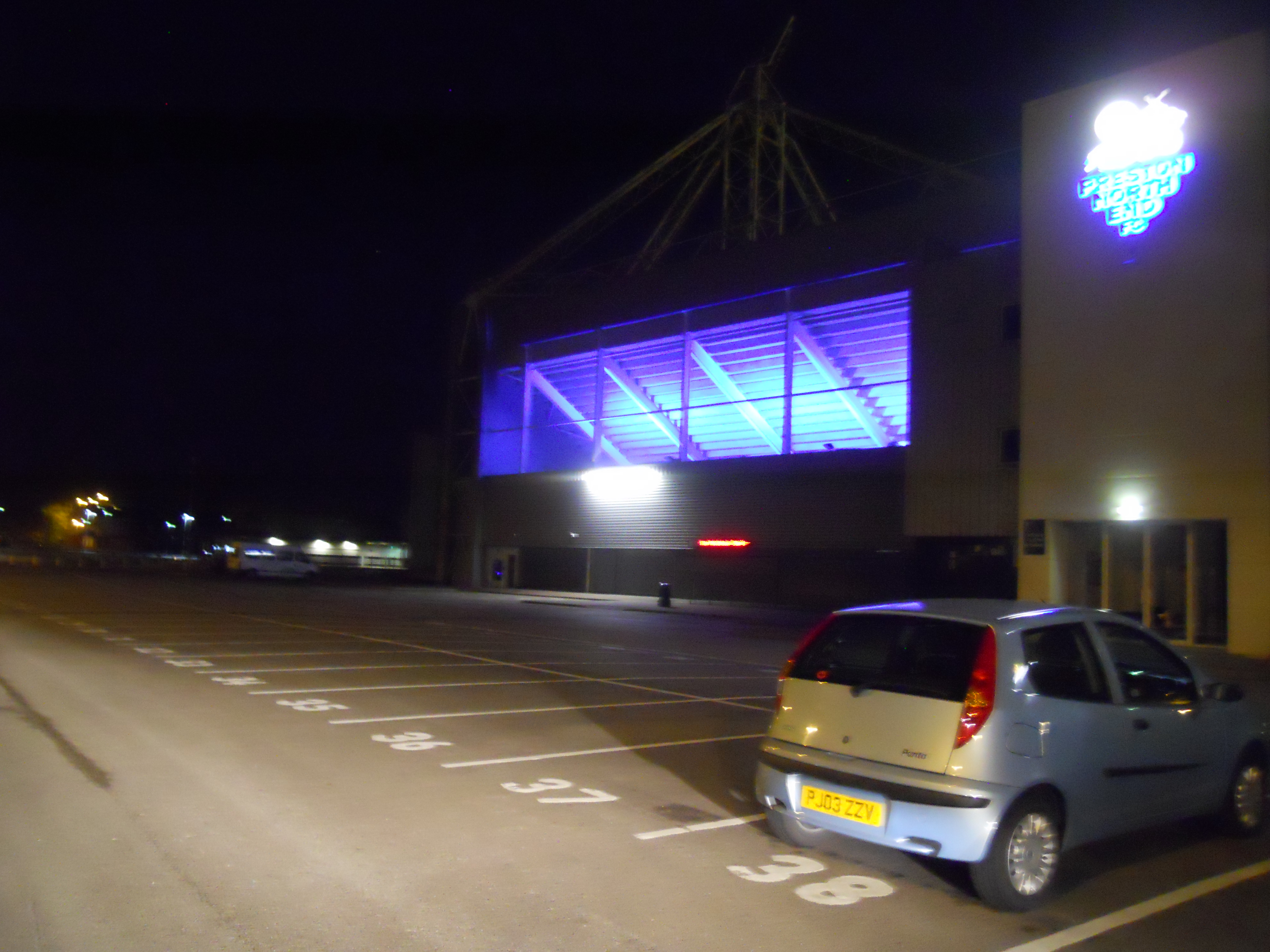
Deepdale in the Dark
I got back to the station about 18:00 and as I had an Off Peak Single to Euston, it was a situation, where I just took pot luck. I had a choice of taking the Glasgow train for Euston, which was rather full or waiting fifty minutes to get on an almost empty train starting from Preston. One of the Virgin train staff advised taking the latter, but I knew that the Glasgow train would have to unload a few passengers at Wigan and Warrington, so I took the chance. By Warrington, I had a backward facing corner seat with a window view all the way to Euston. They really are the most comfortable seats on a Pendolino, where I always prefer to travel with my back to the driver.
My Local Bus Stop
My local stop is just around the corner and has buses that go everywhere, as this picture shows.
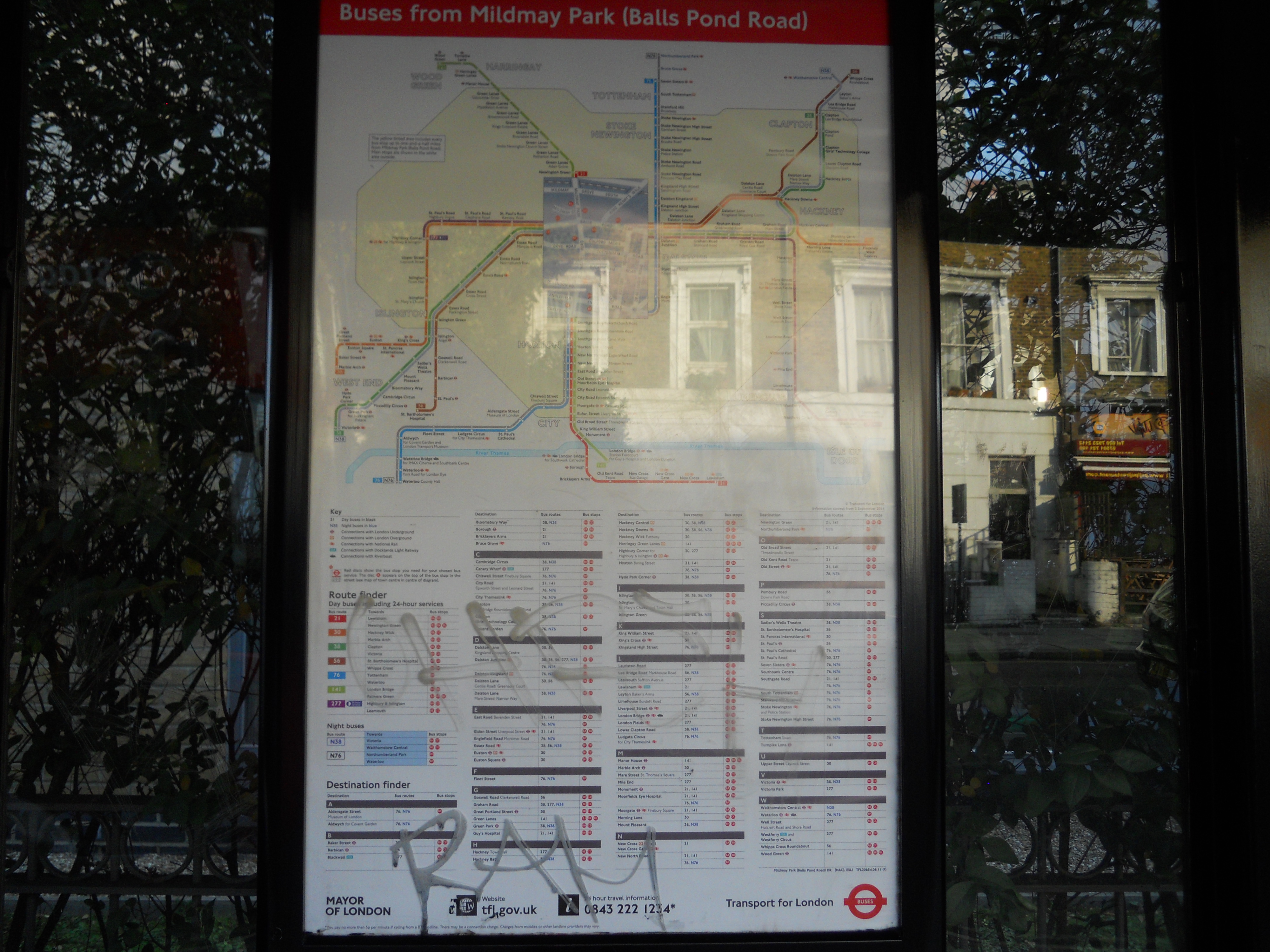
Mildmay Park (Balls Pond Road) Spider Map
Note that the actual spider maps, like this one have more information than their equivalent on the web.
The stop also has a Next Bus Information Number.
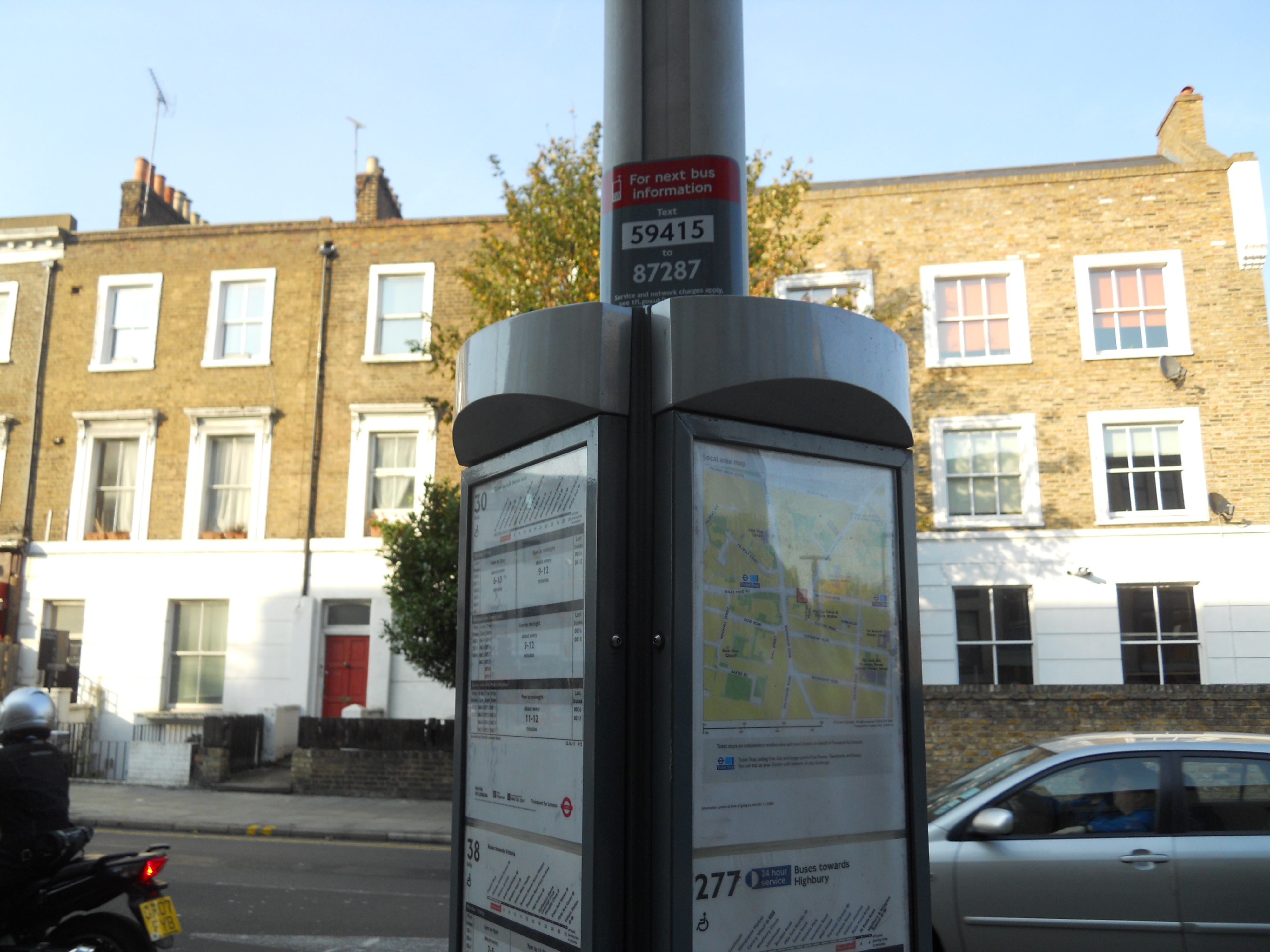
Next Bus Information Number
Note in the picture, the local street map.
The stop also has a Next Bus Display.
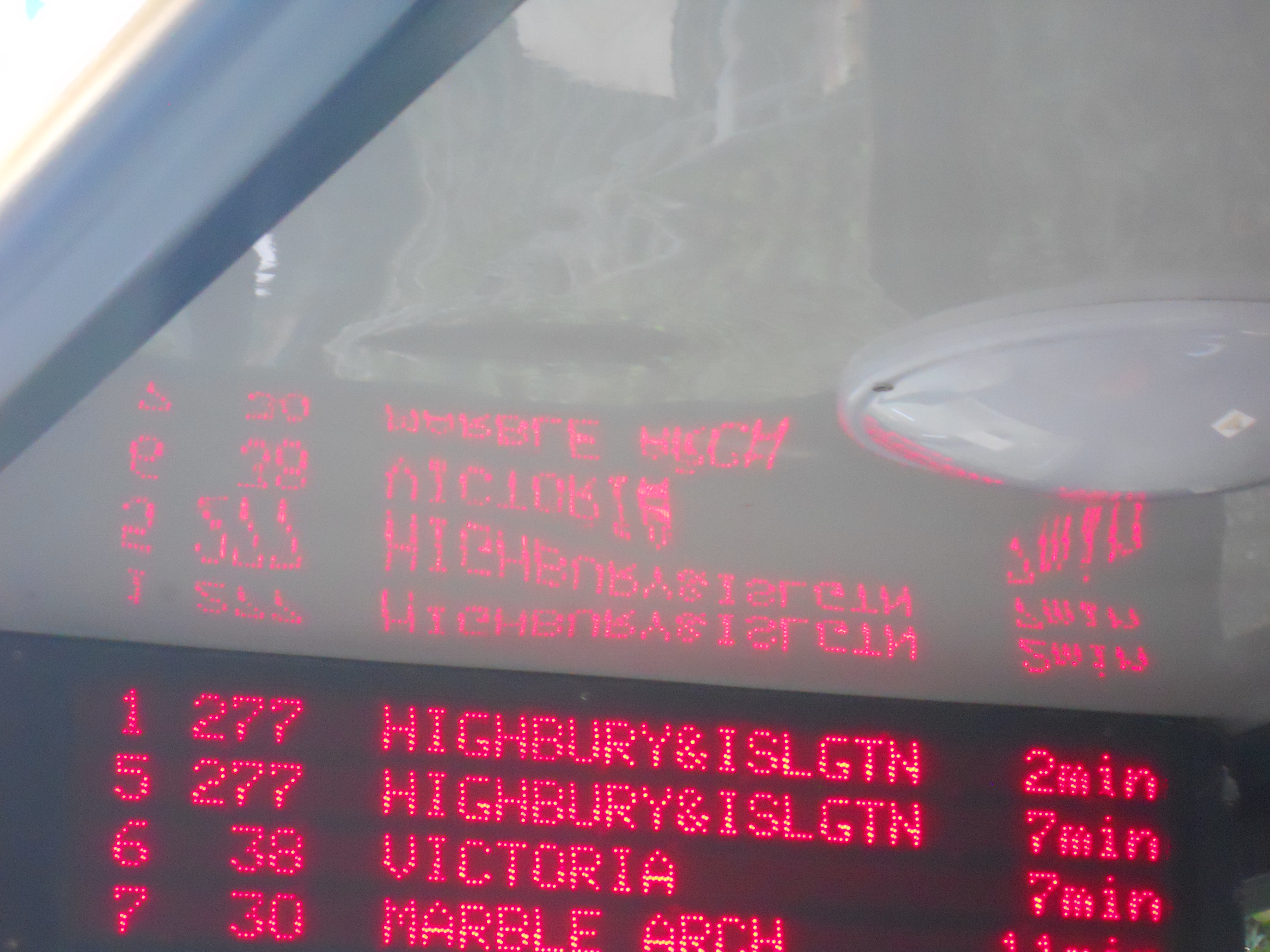
Next Bus Display
I wonder how long we’ll keep it though, as for many people the text message system will be better.
It is too much to expect all stops to be to this standard, but all important ones should have all the information, travellers might need.
I’m using the system in several ways now.
- I often check before I leave home when the next bus is due, to avoid waiting in the cold, say when I have an early train out of Kings Cross.
- If I’m expecting a visitor, I often ask them to text from say The Angel and then I can be at the appropriate stop to meet them.
- If a suitable bus doesn’t appear imminent, then I might change plan and say walk to Daldston Junction.
The only prediction is that these systems will get better and better. You might for instance text the number with say Euston attached to find the quickest way to get to that station. And I still haven’t brought up the subject of a smart phone. But then who needs one, for this purpose, if you have a smart text messaging system.
Suppose to find your way home in London, all you needed to do was text the stop code like 59415, followed by your post code to 87287. You would then be sent instructions on which bus to catch and where to change to get home.
As children, my friends and myself would wander all over London on Red Rovers. Children probably don’t do that now! But it was great fun. Being able to text to get you to your home, could make it safer.
Should We Londonise All Buses?
I know I’m a Londoner and live in the finest city in Europe, let alone the UK or England, but in my travels around the country, I have come to the conclusion, that most bus services outside the capital are very second-rate.
To start with, I should say that in most places it isn’t mainly the buses themselves, as towns and cities like Leeds, Manchester, Bristol and several others have buses that on a quick look to be on average to be the same condition and age, as those in London.
But there are three major differences.
- Most London buses are front entrance and centre exit, which effectively means that they pick up and set down passengers a lot quicker. It also means in London’s case, that a wheelchair passenger has an easier route to get on and off, as he or she uses the middle door. Because of the smaller dwell time at stops, two door buses actually travel faster and carry more people more efficiently. Whether this means the capital cost per passenger journey is lower, I don’t know. But it may well be so!
- London buses also announce the next stop both visually and audibly. Many visitors to my house are very surprised, when I say something like take the 141 to Balls Pond Road and get off there. The system also announces route changes and can be used by the driver to send a selection of common messages to the passengers.
- But the biggest difference is that all London buses are touch on, either with an Oyster card or a concession like my Freedom Pass. If you have a paper ticket, you show it to the driver and they tell you to get on. There is no timewasting mucking about with paper tickets, that London obviously deems to be just litter.
- From next summer, you will be able to touch in on your bus journey with any credit card, as Oyster is being augmented for the Olympics.
But it is the field of information that London buses are streets ahead of every other bus system in the UK.
- As a child, you were always told, that every tube station had a street map of the local area. So if you got lost, just go to the Underground station. So now, like many Londoners, when you are going somewhere foreign like Croydon for a North Londoner or Wembley for a South Londoner, you never carry a map and rely on the map at the destination station. It usually works. Now this street map system has been extended to the buses and most bus stops have a local street map. Only last night, whilst walking back from the pub, I used a map on a stop to show a tourist from Germany, how to walk to the pub where he was meeting a friend.
- These street maps are paired with spider maps, which show all the routes in the area, where they go and at which stop you catch the bus. Frank Pick and Harry Beck would be proud of this idea from their successors. Spider maps work well and if I’m lost after a walk, I just find the nearest bus and work out how to get home. Incidentally, Transport for London call them bus route diagrams, but you can’t argue with umpteen million Londoners, who call them spider maps and that term is now the one generally used by all.
- London has recently introduced text messaging at stops to find out how long you have to wait for the next bus. Other cities have this and it should be the norm everywhere.
- Important London bus stops have displays showing how long you’ll have to wait for the next bus. But as people are starting to use the text system more and more, I suspect, the number of these displays will decrease.
- You can also see when buses will arrive at a stop either through the web or from a phone app. I don’t have a smartphone, but my dumb Nokia 6310i is perfectly capable of telling me if a 30 bus, which is my preferred route home, is due ten minutes out of Kings Cross or Euston.
So how do some of the places I’ve visited compare to London in various areas?
Two Door Buses
You see the odd ones about, but not many.
On-Bus Information Systems
I’ve never seen one, but I’m told Colchester has them.
Maps at Bus Stops
Very few and most that I’ve seen have been very inferior and totally useless for visitors.
Text Information
This is a typical London next bus information notice.

London Sign For Bus Information By Text Message
And here’s one from Leeds.

Leeds Sign For Bus Information By Text Message
No prizes for guessing, which is the simpler system.
Not only is London, just a five digit number but the sign is easily read and is as low as they can put it, so that everybody from say eight to eighty can read it with ease. I can’t believe that there are over 45 million bus stops in Yorkshire! The london sign has the great advantage that it is small and just strapped to the post. So perhaps it could even be used on a temporary bus stop at road works.
I’ll let Frank Pick have the last word on this.
The test of the goodness of a thing is its fitness for use. If it fails on this first test, no amount of ornamentation or finish will make it any better; it will only make it more expensive, more foolish.
And he was born before the age of modern technology. He would have had a field day, if he was still alive and in charge of transport for the whole of the UK.
So to answer my original question, the answer must be an undoubted yes! London has proven that good, frequent and understandable bus services attract more riders, so the sooner we Londonise all buses the better.
People will go on about cost, but the first thing to do is get the maps at stops in place and get sensible text messaging systems working. And then we just have to make all new buses to the London standard! Remember too, that London retires quite a few buses each year. Many of these with a bit of refurbishment would be very suitable for lighter use in the provinces. Certainly, many of the older ones in London are much better, than the disabled-unfriendly old banger, I got back to the centre from Elland Road.
I think too, that we will underestimate the benefits of having the same bus information systems all over the country.
As an example, how much of my time and effort have I wasted trying to find out where to catch a bus on my challenge? And how much money have I wasted on unnecessary taxis?
So if it made travel easier and cheaper, would it make it easier for people to travel to work in the next town or perhaps have a day with Aunt Edna in Felixstowe?
We need any economic stimuli however small.
Remember too, that if we need new buses, that these are generally built in the UK, so much of the capital cost of new buses stays here. So if that is the case, why did Red Ken betray British workers, by buying a load of useless bendy buses? Few liked them, except perhaps fare dodgers.
92 Clubs – Day 20 – Liverpool, Macclesfield, Manchester City, Manchester United, Middlesbrough, Millwall
Not quite the Magnificent Seven, but I’ll take six after a total of nine trains, four buses, three trams, two taxis, one Underground train and quite a bit of walking, it was a long day well done.
I started very early in the morning by taking the 05:27 direct to Liverpool. I got another friendly taxi-driver, who took me to the ground for a discount and took my picture in front of the Anfield Gates.
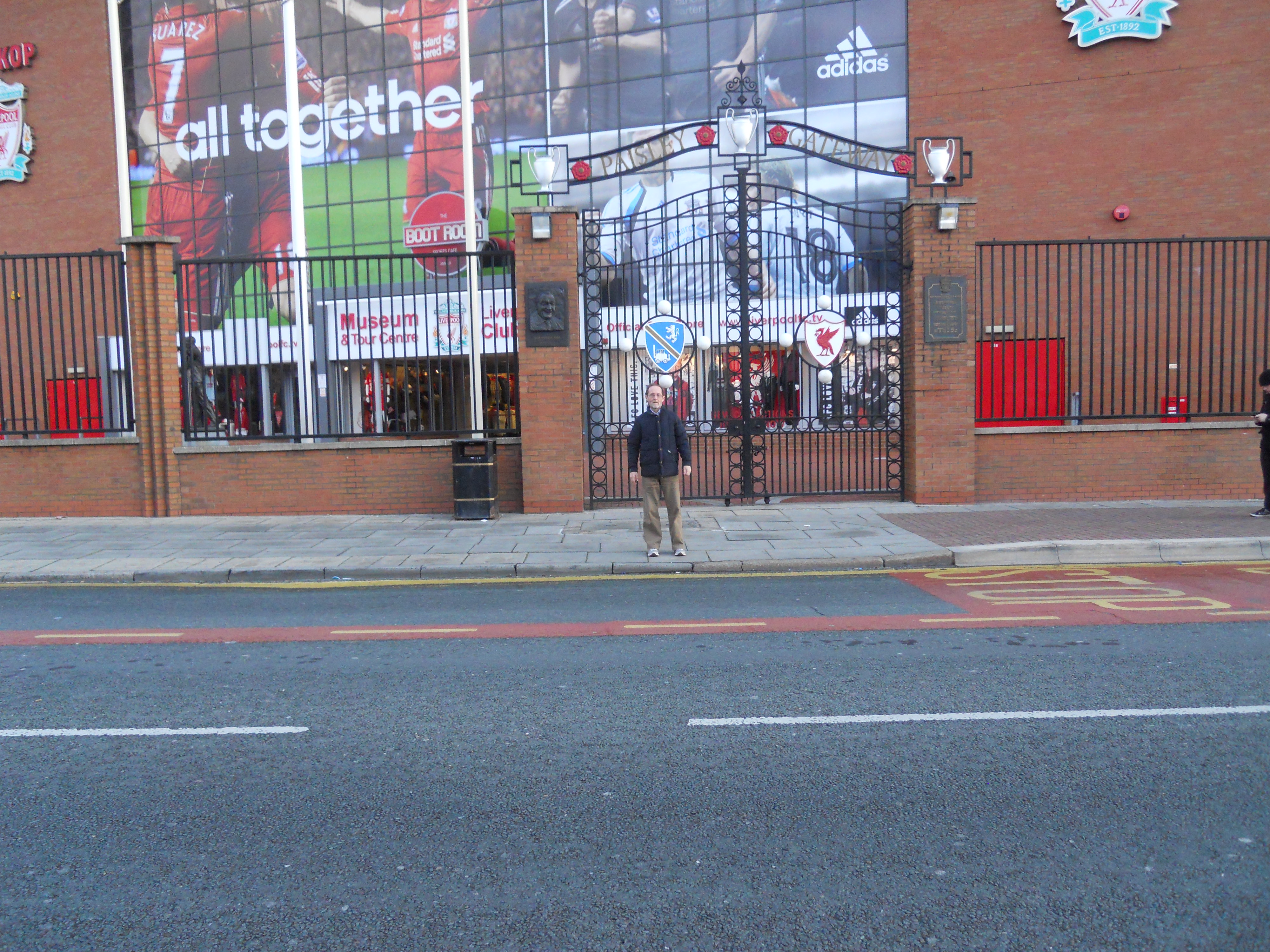
Outside the Anfield Gates
I was all very quick and I was on a train to Macclesfield just after nine. I changed at Stockport for Macclesfield and as there was no information at all at the station, it was another taxi.
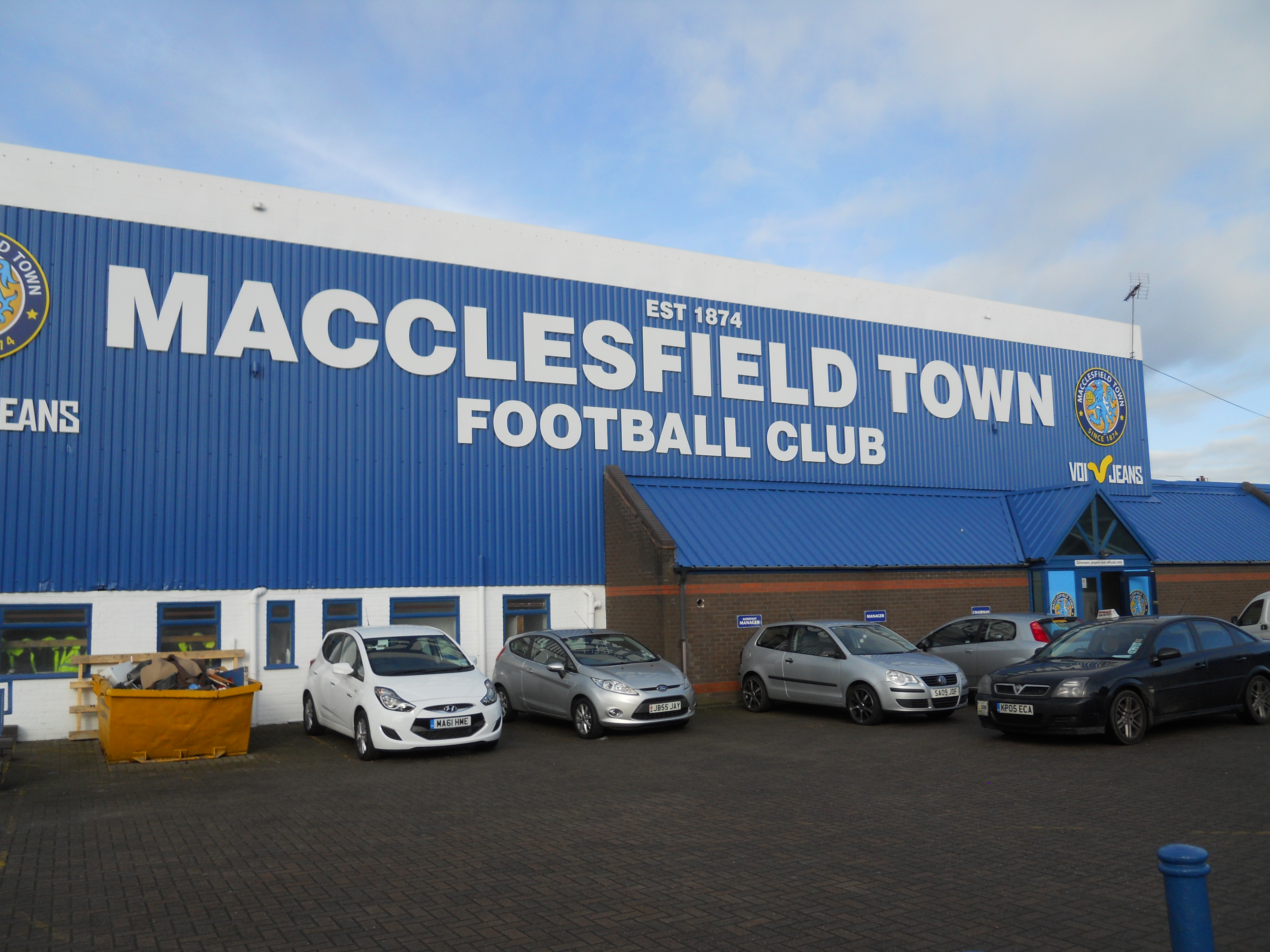
Macclesfield Town's Ground
I got the impression the driver couldn’t use a camera, so this is the best picture I took of the ground.
To get to Manchester I took one of Virgin’s Pendolinos, which as I had the right ticket was OK. However, it could be possible that you end up with a cheaper and incorrect ticket at Macclesfield, that is not valid on Virgin. So if you do buy a ticket there, check you have the right one for the train you are catching.
Piccadilly station at Manchester, is an information desert, so don’t do what I did and go there without total preparation. You’d think that directions to the Etihad Stadium, where Manchester City play would be displayed prominently. But you would be very wrong! Eventually, someone from Virgin, who I suspect was a City fan, suggested I walk to Picadilly Gardens, as any of the buses to Ashton would get me there. But there would be staff there, who I could ask! There was and I got a bus that passed the stadium.
One of the problems of buses in the provinces is that few announce the stops, as all London buses do. So it was try and peer out the dirty window on a typical rainy Manchester morning and see the stadium. In the end, I felt that I might have gone far enough, so I pressed the bell and got off a couple of stops early, so I could get wet in the drizzle.
If Manchester thinks it is an important city, it could spent a few pence on getting more information and maps for the buses and making them more user friendly. But then only the elderly, the unemployed and losers use buses. I suppose, I’m in at least two of those categories.
The stadium is impressive, but there wasn’t anybody to take a picture, which probably shows how unwelcoming and sterile many grounds have become these days.
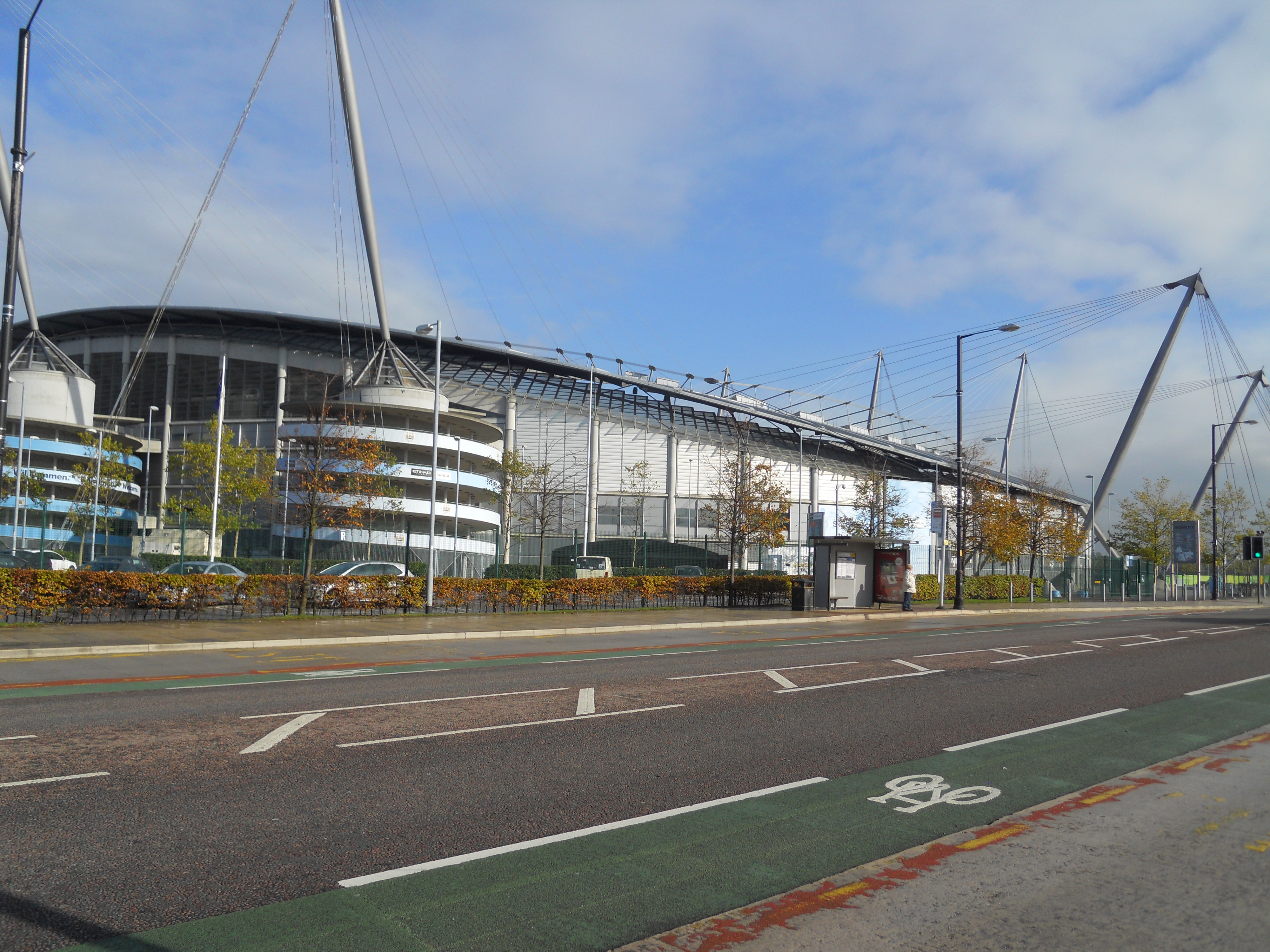
Manchester City's Etihad Stsdium
At least I had no problem finding the bus to get me back to the city centre, although crossing the road, you were just a target for speeding motorists.
Again though, I found it difficult to find the right tram in Piccadilly Gardens, as they don’t believe in telling the punters what they need to know. There does seem to be this belief up north that public transport is for the locals and they don’t need information, as they know where they are going.
I did pass the other Old Trafford on the way to Manchester United ‘s ground.
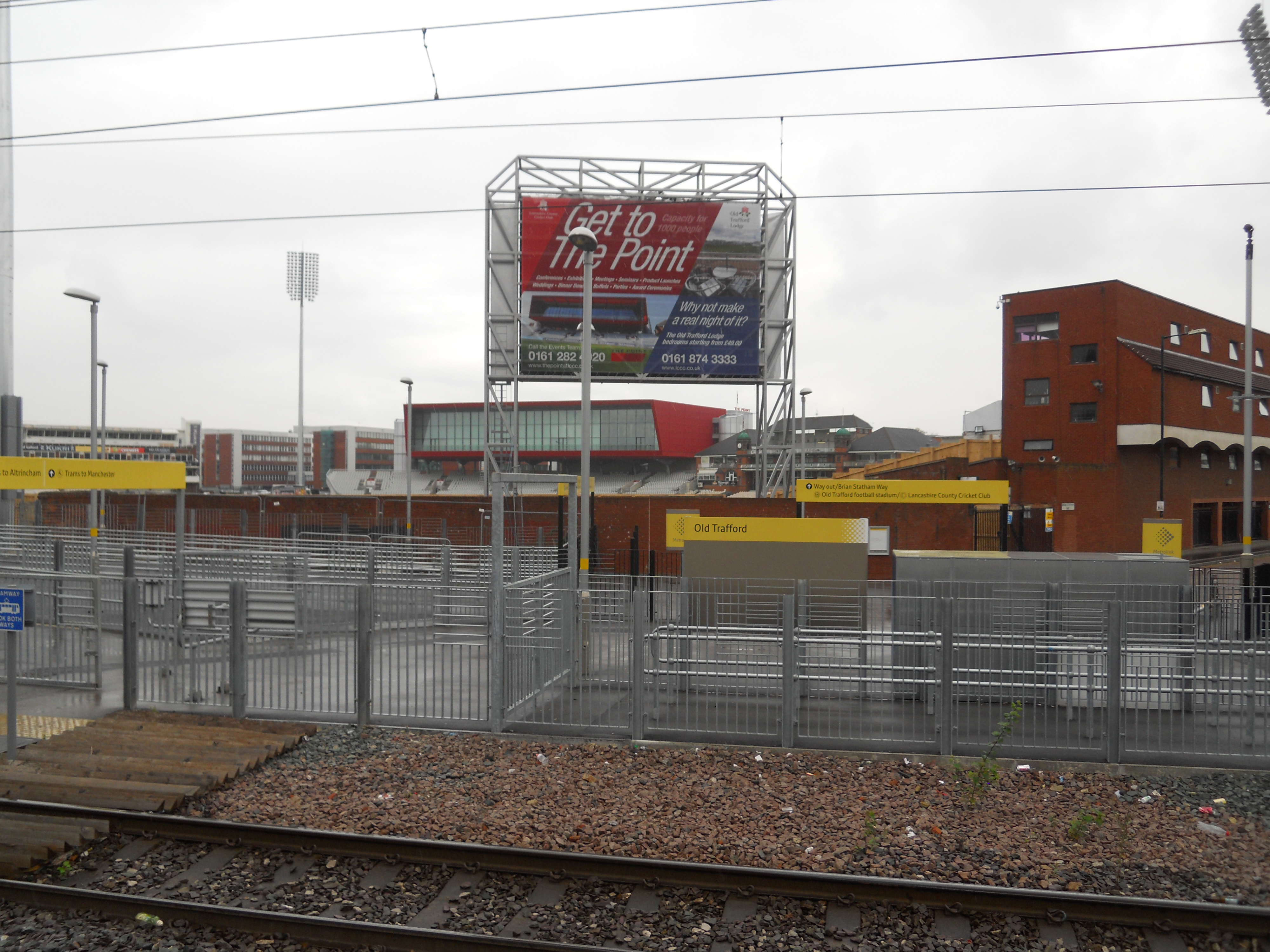
Old Trafford on Brian Statham Way
The walk to Manchester United ‘s ground from the tram stop at Old Trafford is easy, but it does pass Trafford Town Hall.
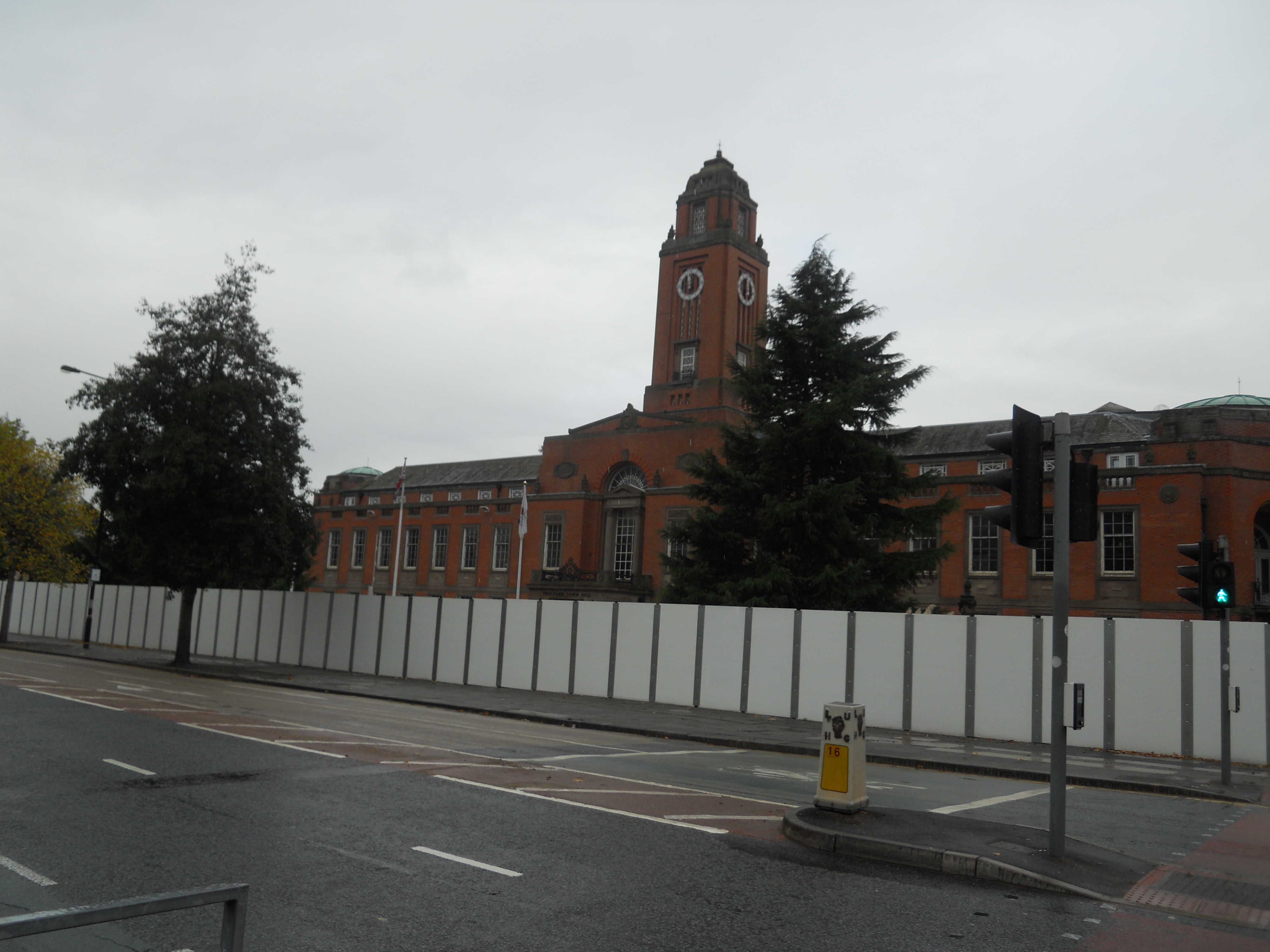
Trafford Town Hall
And this street of healthy eating establishments.

Healthy Eating By Manchester United's Ground
Note one appears to be taking Lou Macari‘s name. But then he comes from the Land of the Deep-Fried Mars Bar. Something that is definitely not gluten-free.
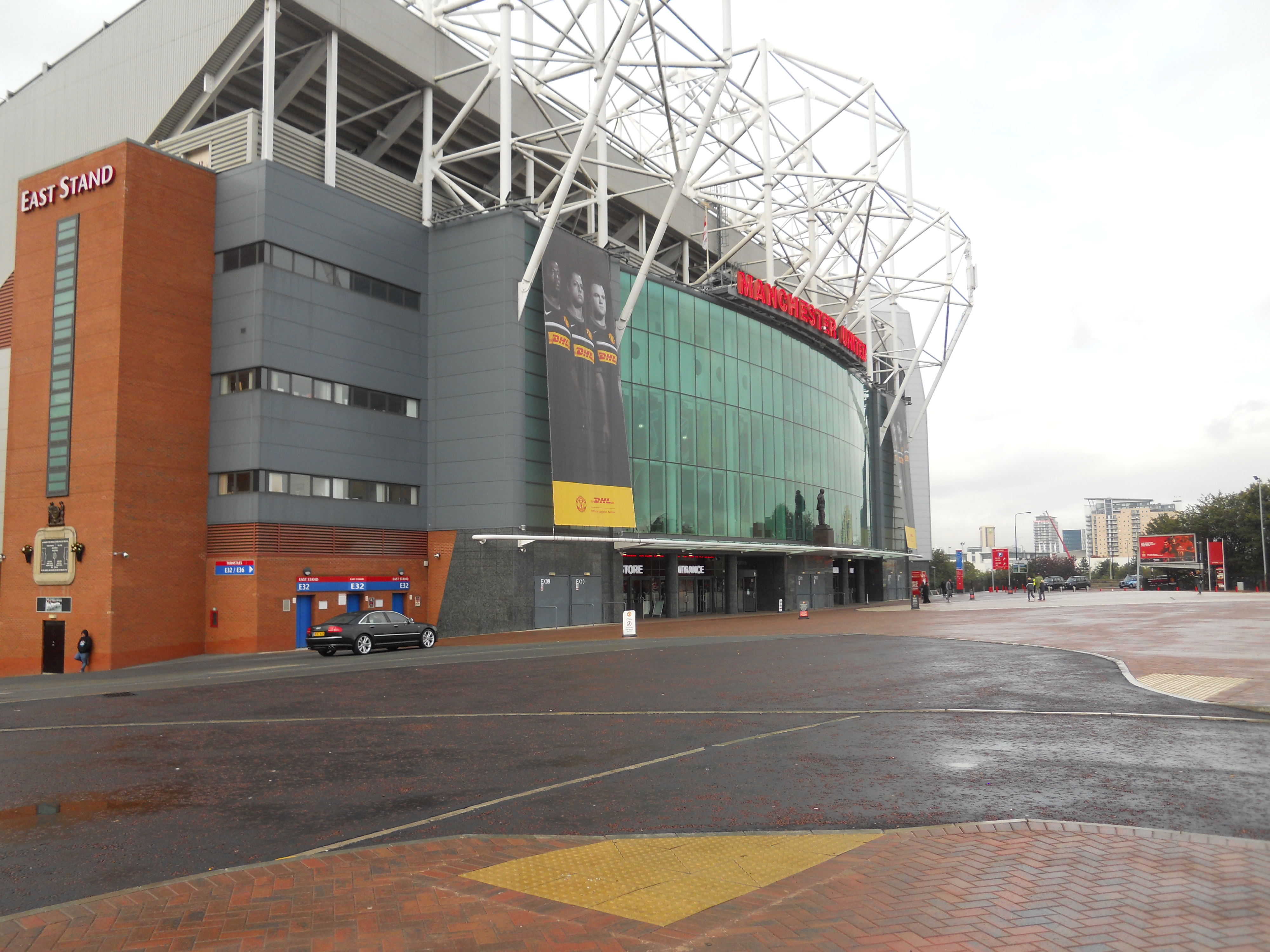
Manchester United's Stadium
I did pass the stadium and took this photograph. Obviously, I didn’t want to be photographed outside, but if I had, there were lots of people about, many who seemed to be from the more eastern parts of Asia. They would probably know how to use a camera better than some I have asked on my journey.
I carried walking past the ground aiming for a Metrolink station called Pomona. However, it wasn’t signposted. I eventually found another station with the aim of getting back to Piccadilly.
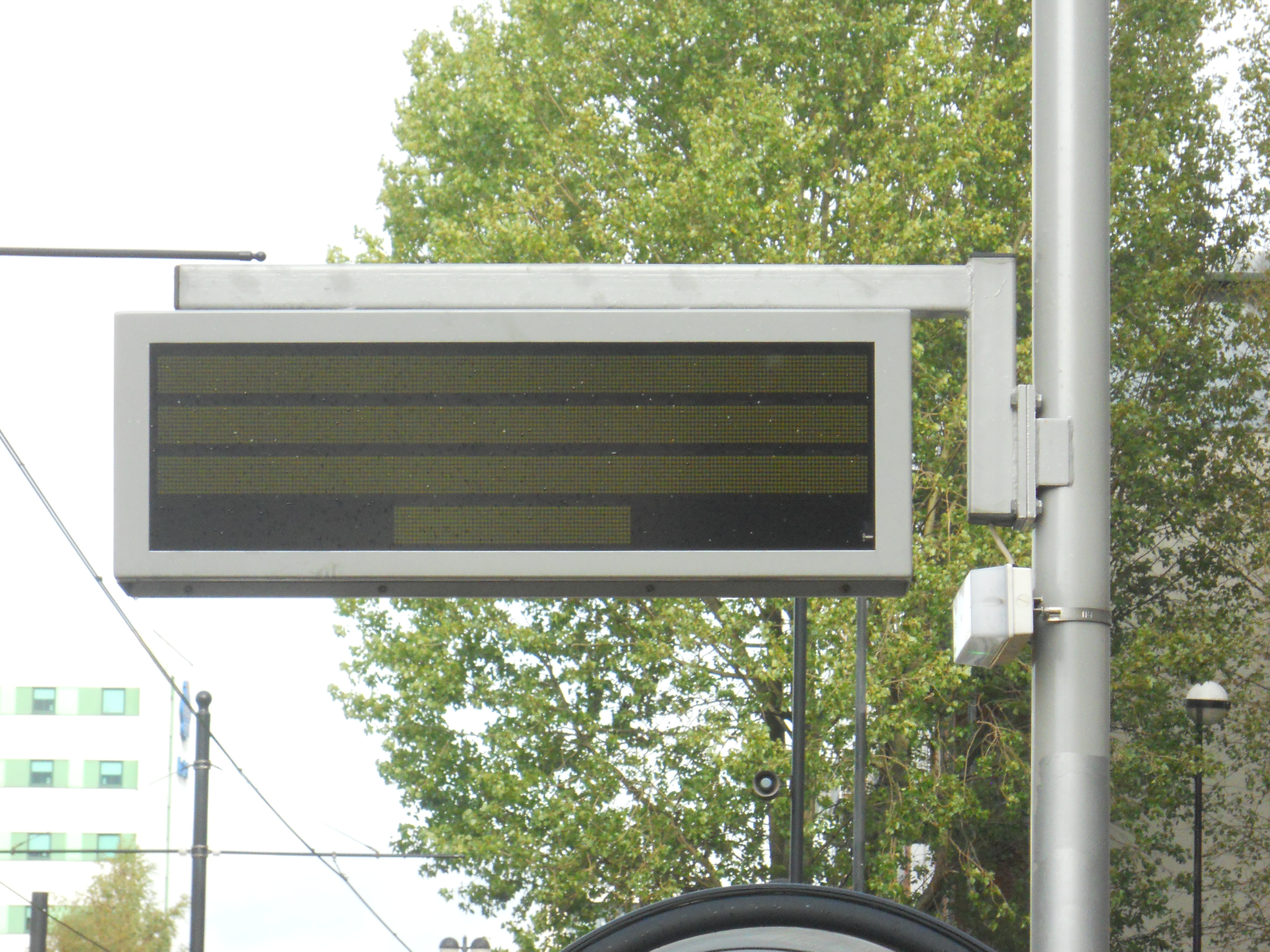
Information on the Manchester Metrolink
Note the non-functioning information system, which sums up Manchester well. Eventually, I got back to Piccadilly for a train to Middlesbrough.Finding trains at Piccadilly isn’t the easiest as this board isn’t the best.
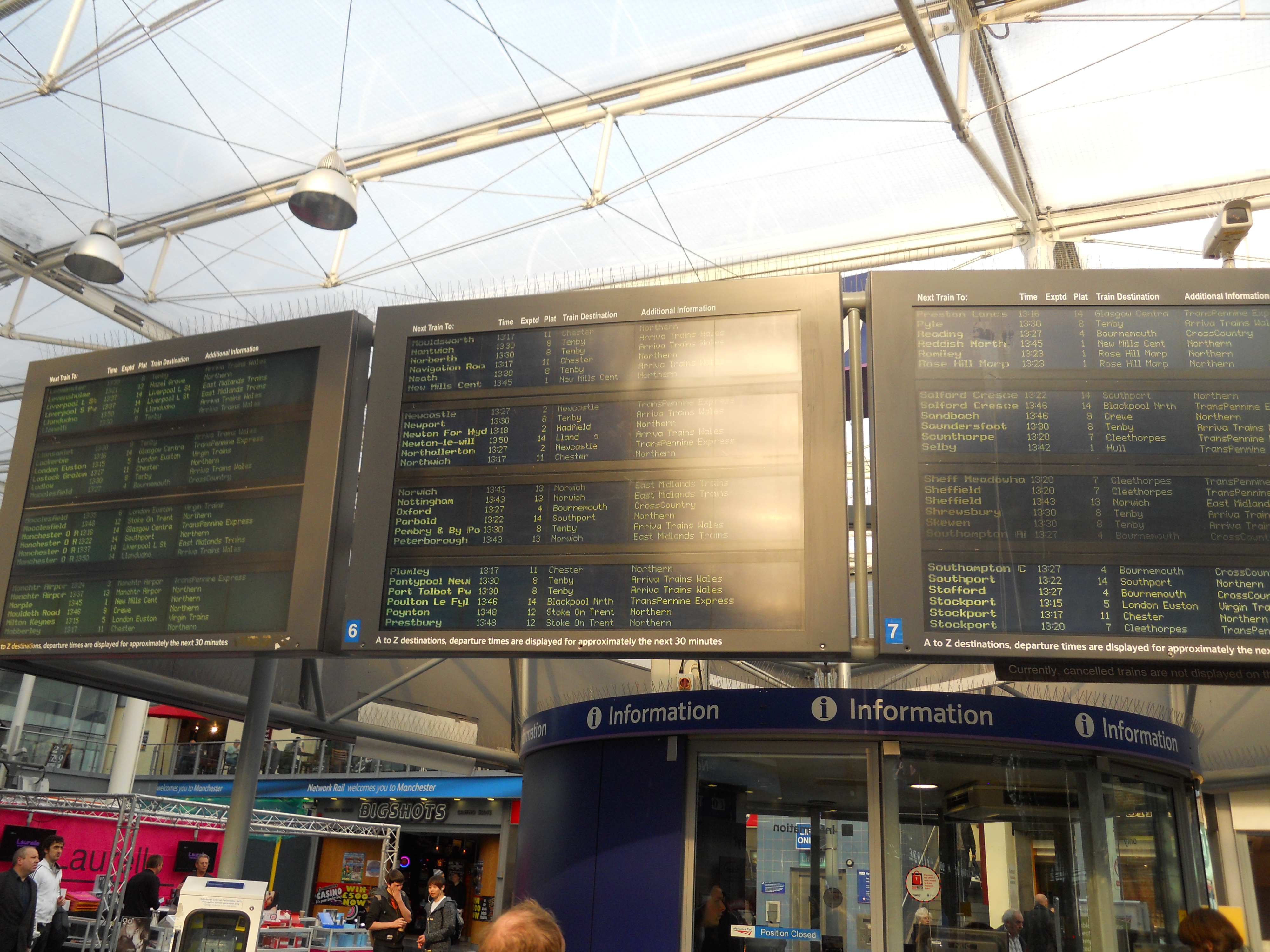
Information Board at Manchester Piccadilly
Why can’t they use the system they have at Leeds or London Bridge, which is a list of all the places served by all of the trains? This would appear to be doing something similar, but it doesn’t show all of the stations all of the time and they move about from place to place. Quite frankly, it’s one of the worst and most useless information displays I’ve seen, except for some in places like Egypt, all in Arabic.
Eventually, I arrived at Middlesbrough and walked to the Riverside Stadium.
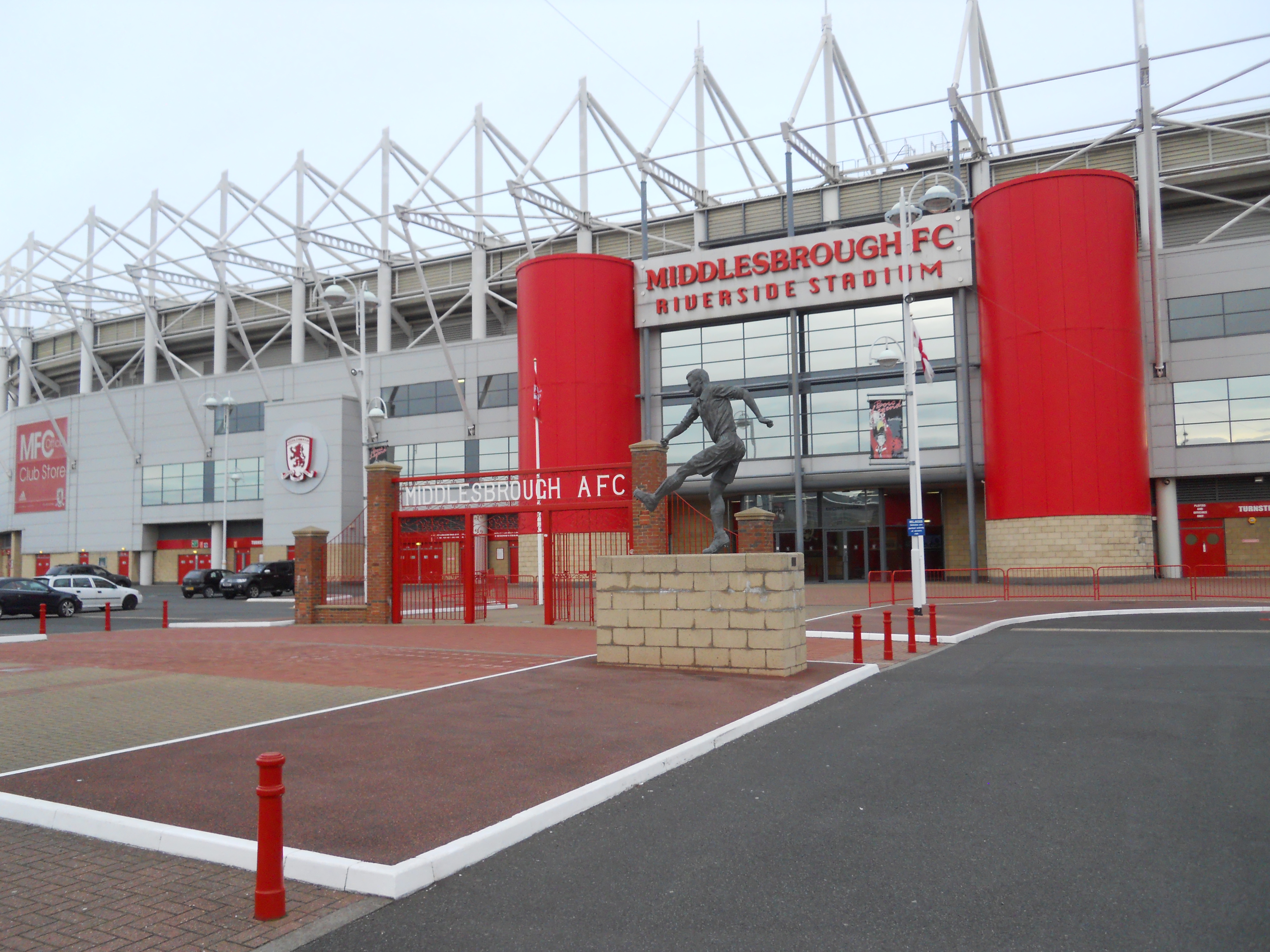
Middlesbrough's Riverside Stadium
It is another one of those modern stadia, that are surrounded by fast roads, with no crossings for pedestrians. But at least in the only match, I’ve seen there, Ipswich won.
I walked easily to and from the stadium from the station, although I wouldn’t do it in the dark with all the fast traffic about.
I got the late train back to London from Darlington and then it was off to London Bridge to catch a train to South Bermondsey for Millwall. It was dark by now and this is the best of the pictures I took.
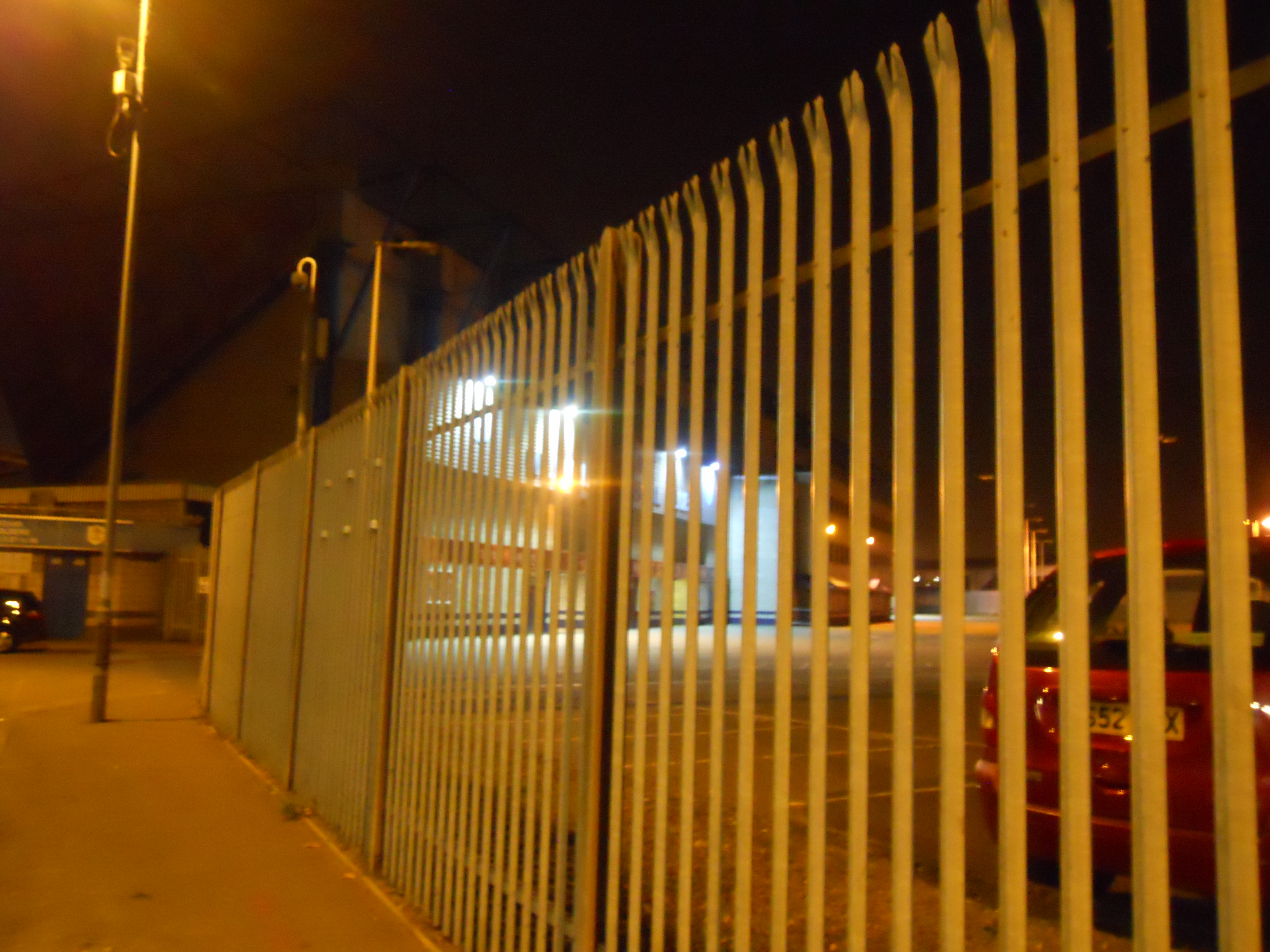
The New Den's Behind the Bars
I couldn’t get any closer without climbing the unfriendly fence. But I suppose it is Millwall and there might be lions loose inside.
I was in bed just after midnight, after a friendly and talkable 141 bus from London Bridge.
Getting Between Kings Cross/St. Pancras and Euston
London’s three major stations that serve the North and of course the Continent; Kings Cross, St. Pancras and Euston, are all close together on the Euston Road.
The first has been superbly rebuilt, the second is approaching the end of a major redevelopment and they now share probably the best Underground station in London. But Euston is rather isolated from the other two, with several ways to get between them.
- You can take a rather unpleasant walk along the busy Euston Road.
- You can use the Metropolitan or Circle lines, but this means a walk to or from Euston Square at the Euston end.
- You can dive into the Underground and take the Victoria or Northern lines, but it is not step free at the Euston end, and not recommended with a heavy case. Both deep stations are also easy places to get lost or confused.
- Going from Euston to Kings Cross or St. Pancras is quite easy by bus 30, 73, 205 or 476, which you catch in front of Euston station, but the reverse journey means you have to cross Euston Road twice.
- There are of course taxis. But not everyone can afford them.
As I had time to spare at Kings Cross, before I caught my train to Hartlepool, I decided to investigate and found a map which showed there was a fairly simple direct walking route that avoided the pollution and traffic of the Euston Road.
I started by walking through St. Pancras station and exited by the cab rank onto Midland Road, with the intention of going down Brill Place.
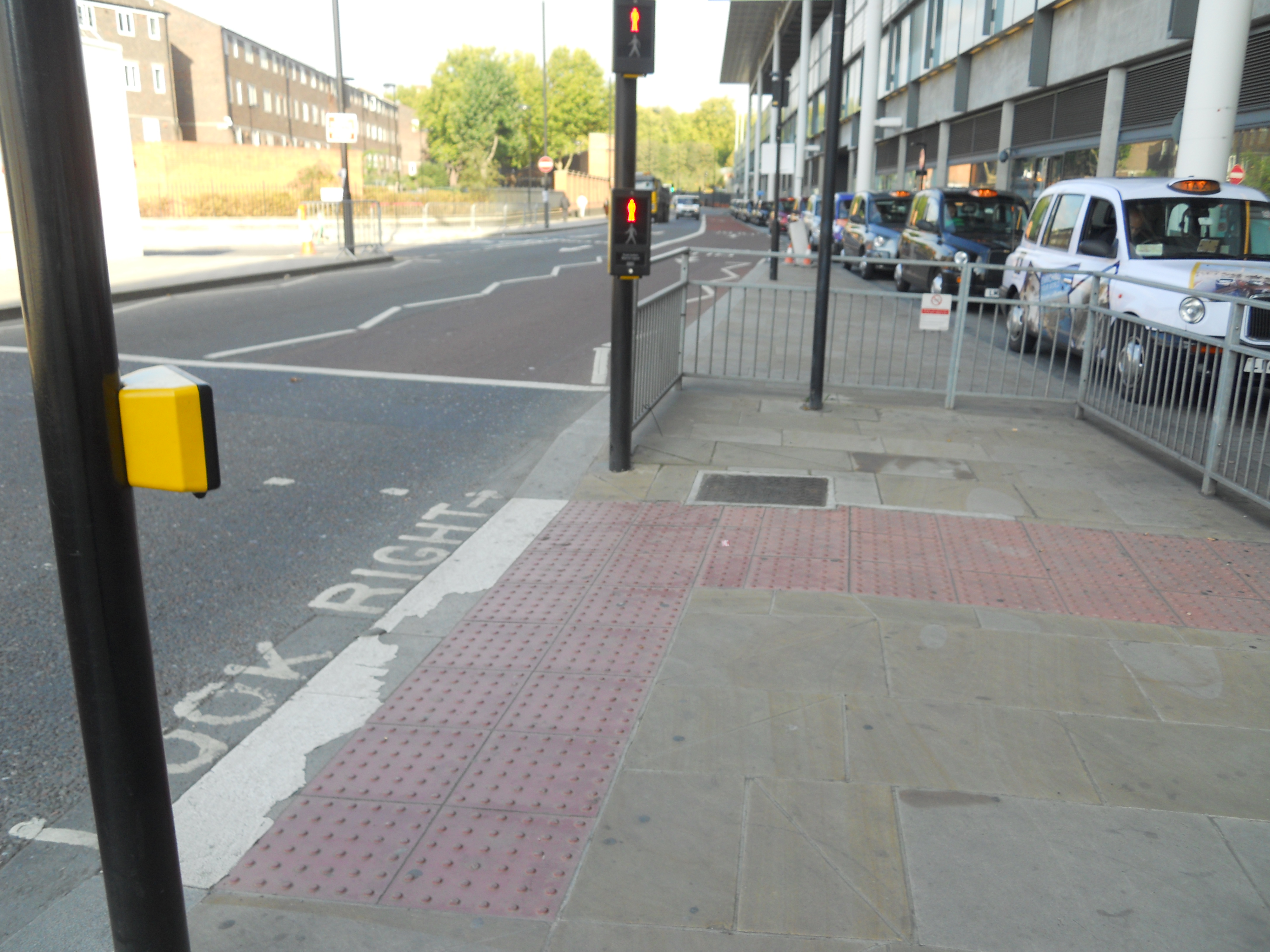
Crossing Midland Road
There is a light controlled crossing, but it is rather blocked by badly placed railings and the cab rank. Brill Place, which is the start of the road to Euston is on the left.
Brill Place is flanked on one side by the new Francis Crick Institute and on the right, there is a small pleasant park, which could provide an oasis from the crowds in the stations.
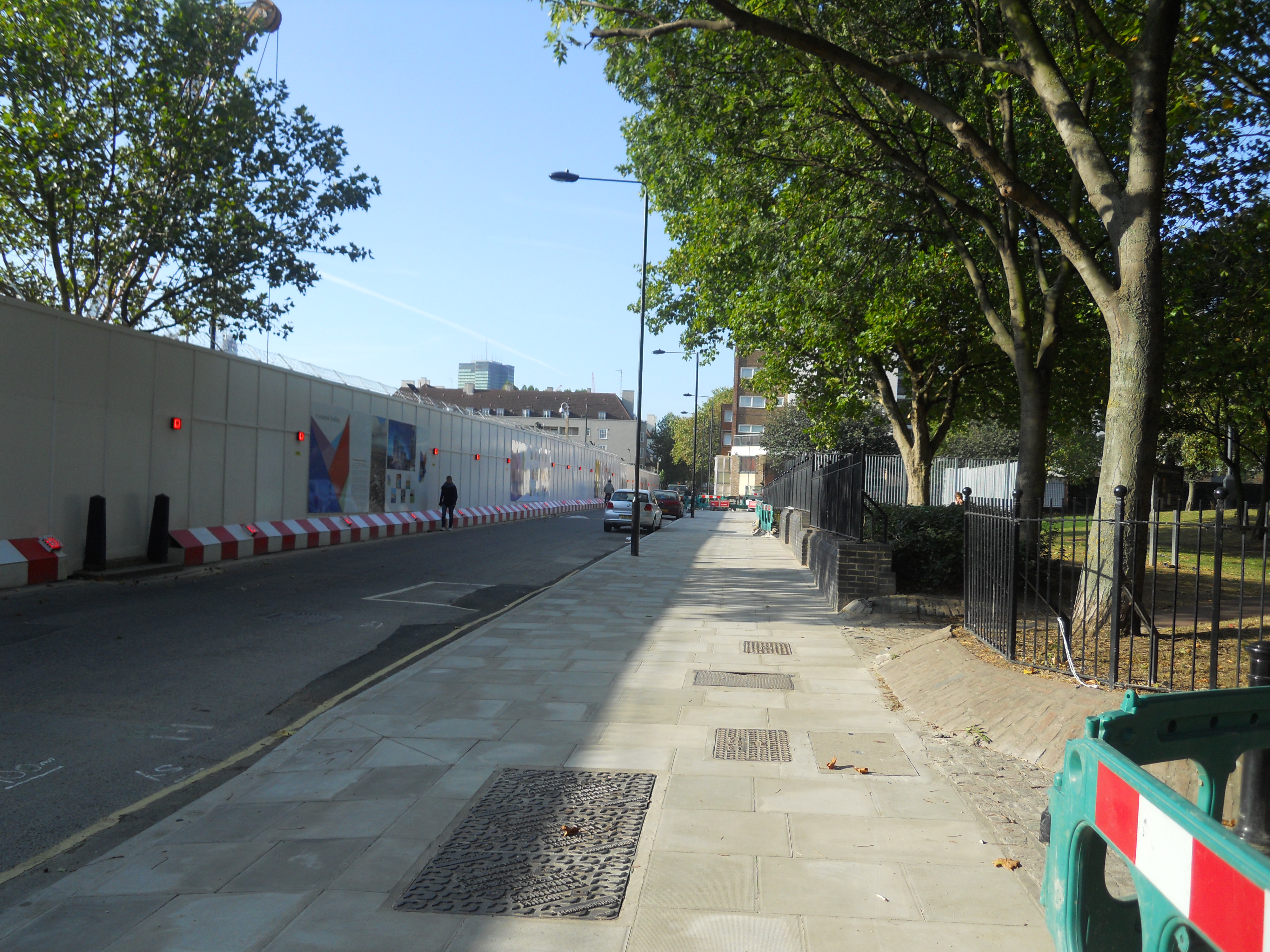
Brill Place
Brill Place itself, is not a grotty dusty road lined by parked cars, but a wide tree-lined avenue that leads on to Phoenix Road.
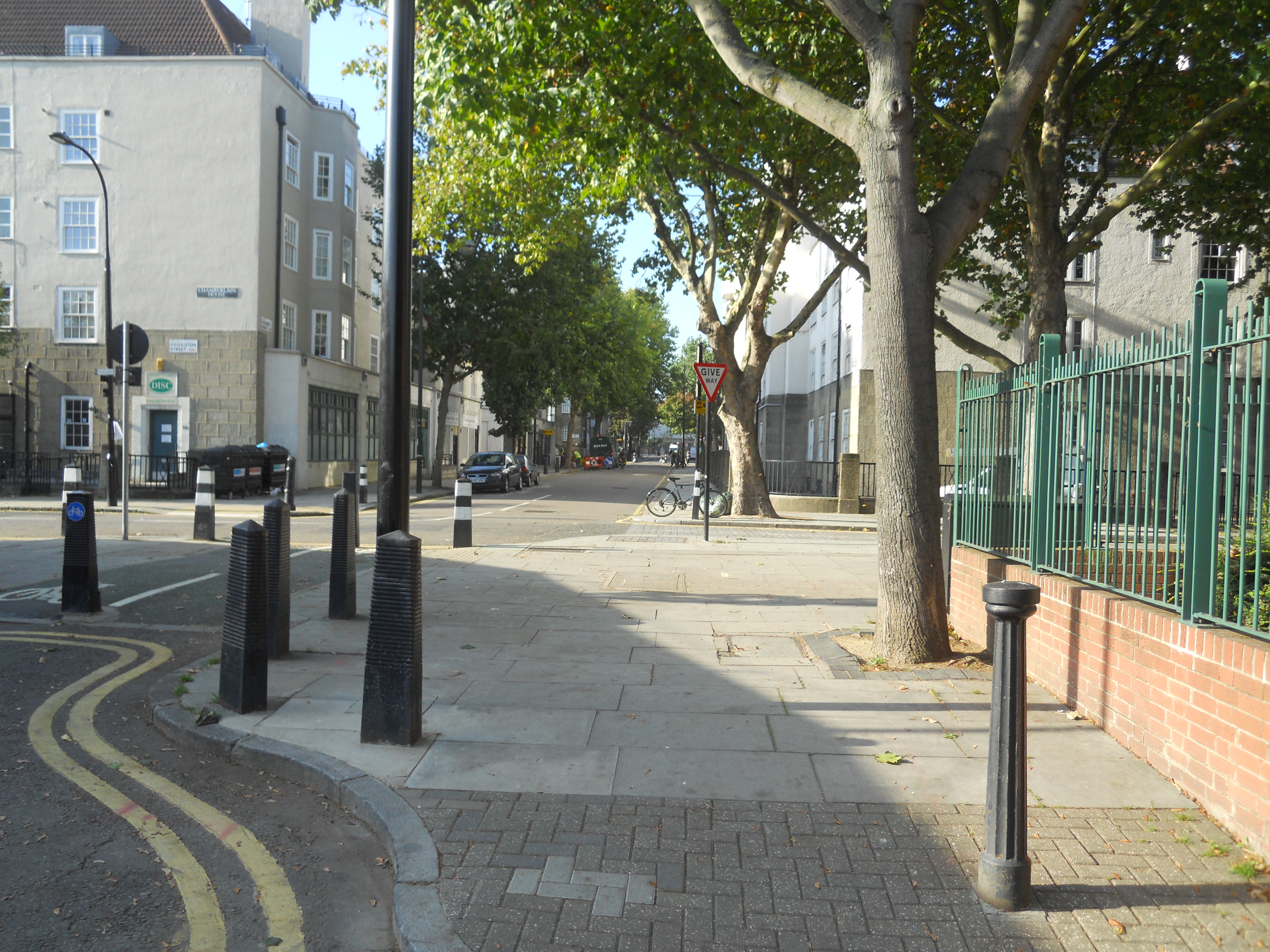
Towards Pheonix Road
At the end of Phoenix Road, you just cross Eversholt Street on one of the two pedestrian crossings and you walk down the road to Euston station.
The advantages of the route are as follows.
- The route is virtually flat.
- It would be easy trailing quite a large case.
- There are only two major roads to cross and both have light-controlled pedestrian crossings.
- There is the park, which would as I said before, be a better place to eat a packed meal than the station.
- You do pass a few shops and a reasonable-looking pub.
But there are disadvantages.
- The route is not signposted.
- The barriers at the St. Pancras end are wrongly placed.
- The side entrance to Euston station could be better.
So how would I make it better, so that in effect we had one super station for the north.
- I’d start with sign-posting. The posts are there at the St. Pancras end already.
- Perhaps, it should be marked on the ground, as a Kings Cross/St. Pancras to Euston walking route.
- You might even provide some eco-friendly transport along the route, like an electric shuttle bus or bicycle rickshaws.
- A couple of suitably placed Boris bike stations would help too.
- Shops and cafes should be developed along the road. There are some already.
To me though, this is one of those things that will happen. But probably first in a very unofficial way, as how many of those that work in the Francis Crick Institute will commute into Euston and walk there? It won’t be a small number.
It took me about fifteen minutes to do the walk and I just got a 205 bus back to Kings Cross for my train from the front of Euston station.
92 Clubs – Day 11 – Coventry, Crawley, Crewe
This was three trips out of London and it was quite a long day.
I left Euston in late morning for Coventry and it was then a twenty minute walk to the bus station at the least customer-friendly interchange I’ve found in the UK. The town has form here, as on January the first, they didn’t provide any transport to the match except taxis.
It was then a twenty five minute wait for the bus, which wasn’t good, as I missed one, as they don’t announce the bus at the stop and you can’t see the numbers from the gate. Is this why in Cambridge, the buses always come nose in to the stand, so you can read where they are going?
The ground was deserted as this picture shows.
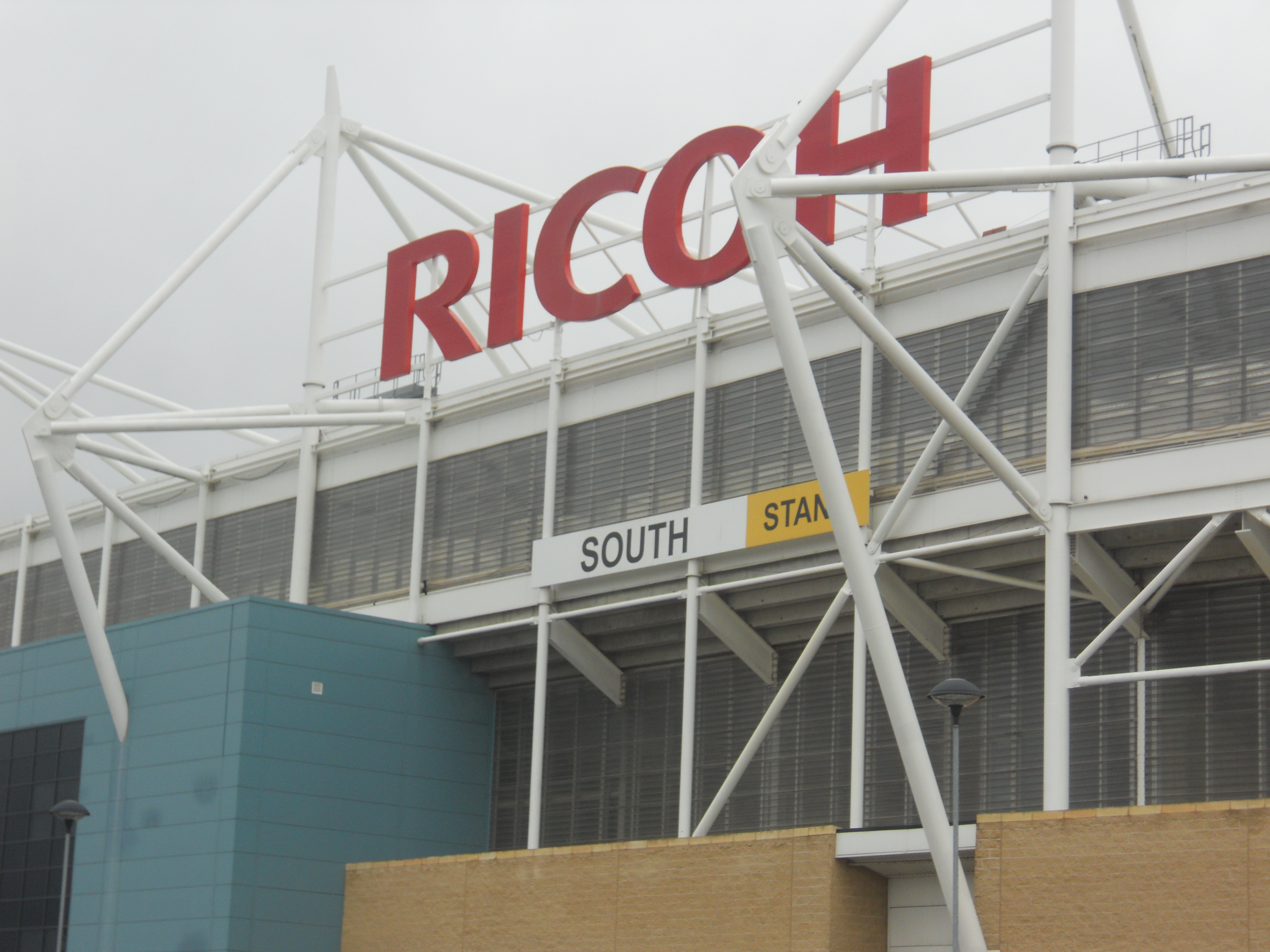
The Ricoh Arena, Coventry
It was then a walk round a retail park to find the bus home. Guess what, there were no signs to the bus station. Eventually, a bus inspector told me to walk out the back and get a bus from the main road. It was a 48 and it got me reasonably quickly back to the centre. It was still quite a walk to the train station, but not as much as from the bus station.
From Euston, i took the Victoria line to Victoria and tried to get a ticket to Crawley. Everything was rather busy and as I had plenty of time, I decided to use my freedom Pass to get me East Croydon, where I could get a return to Crawley. It should have been easy, but no-one seemed to know, which was the next platform for an East Croydon train. I was sent to platform 4, then 18, then 14 and finally back to 16. Organisation? No! Headless-chickenism of the worst kind.
Eventually, I got to Crawley stadium and the taxi driver took the picture.
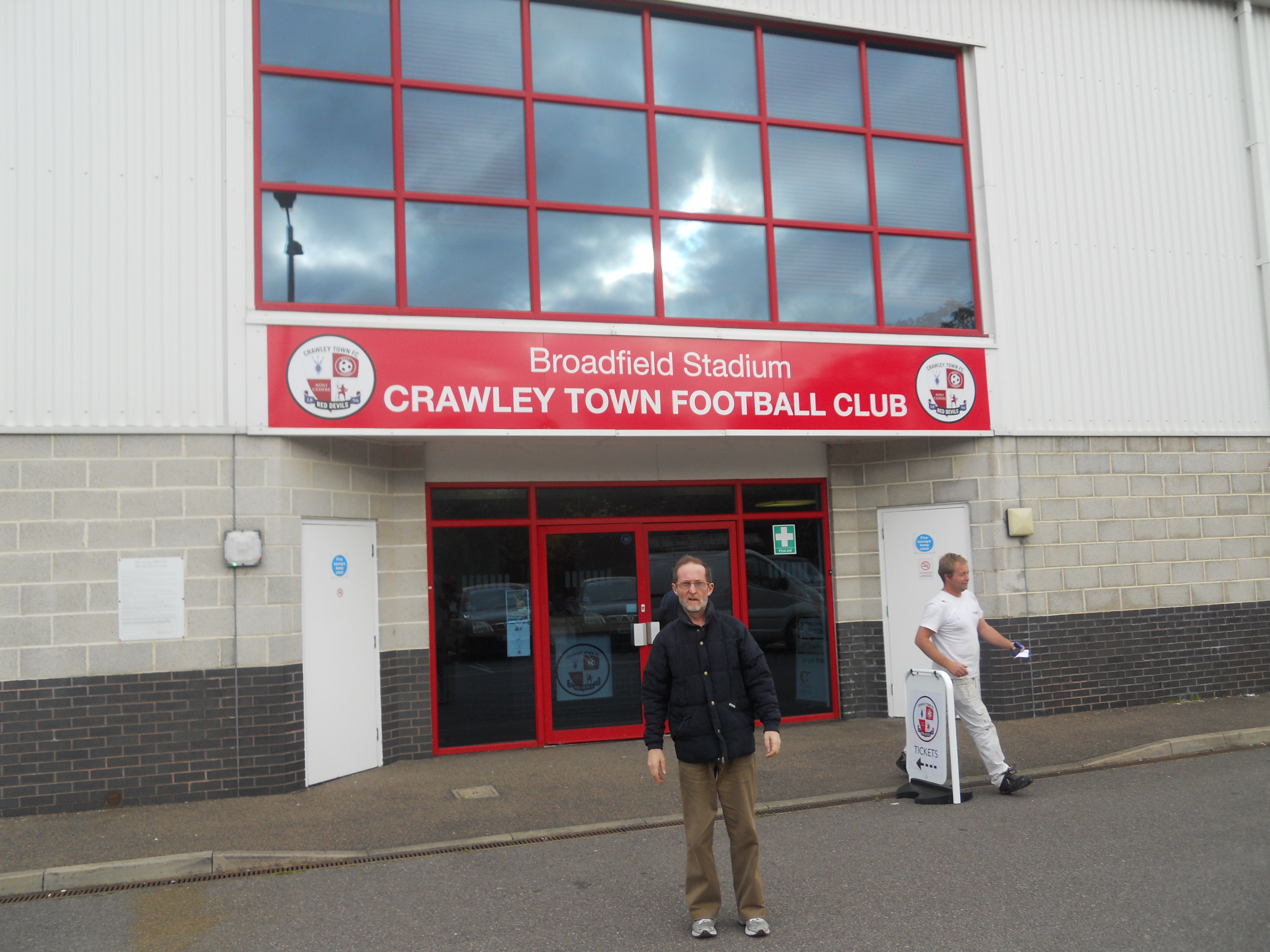
Outside Crawley Town Stadium
I had been unsure, as to whether I would do Crewe, when I returned to London, but as Virgin have no rush-hour restrictions, I took the 18:10 to the famous railway junction.
It was raining when I got there and just walked the hundred metres or so to the deserted ground.

A Wet and Dark Alexandra Stadium
Thirty minutes after arriving in Crewe, I was back on the train south.
92 Clubs – Day 10 – Cheltenham, Chesterfield, Colchester
This was a day with three stadia well away from the train stations.
I took the 7:48 out of Paddington and didn’t mess about and got a taxi to the Cheltenham‘s ground.
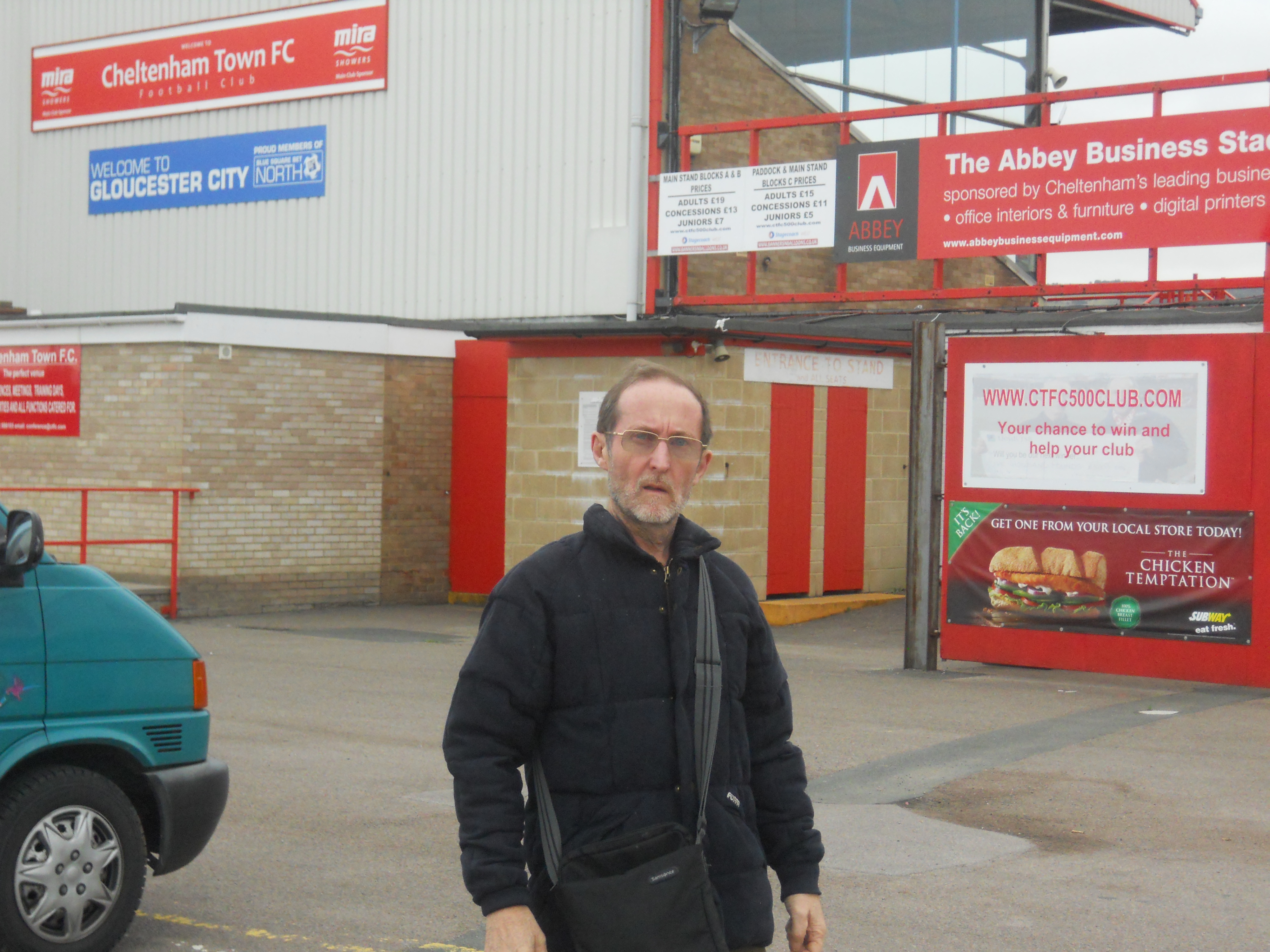
Outside Cheltenham's Abbey Business Stadium
Getting back was a little more difficult, as I got to drop me near the town centre and got lost. There wasn’t many signs either. When will these towns learn, that not all visitors come by car?
Chesterfield was next after a rather tedious but thankfully short direct train from Cheltenham. Cross-country trains seem to always be crowded and thery definitely need some larger trains.

By the Pitch at Chesterfield
As you can see from the picture, I got a warm welcome at Chesterfield, after a taxi ride from the ground. On match-days, it’s easier as they have a shuttle bus. The stadium was the most impressive this week so far.
But I did get a bus to the station and had plenty of time before my London train.
I then had time for a meal at Carluccio’s in St. Pancras, before going home to dump some rubbish and then take the evening train for Colchester.

Outside a Well-Lit Colchester Stadium
This was the best picture we could get.
But then I was quickly on the train and back to London, where I was reasonably early to bed. At least I was able to pick up the gluten-free sandwiches for at Marks and Spencer in the station.
92 Clubs – A Change of Rules
The last few days have been very tiring. Especially when it rains.
So there are two rule changes.
- I will now use taxis, especially as the driver often makes an excellent cameraman for the picture.
- I’m not sure about this, but achieving all the grounds in a month may just be impossible. So I’ll attempt to set a record, by carrying on into November if required.
Is this a retrograde step?
The alternative would be to use hotels more often, but then that woud be expensive.
 The Anonymous Widower