Cardiff Queen Street And Cardiff Bay Stations – 24th March 2026
After I’d visited Caerphilly station, which I wrote about in Cardiff And Caerphilly – 24th March 2026, I went to look at Cardiff Queen Street And Cardiff Bay stations.
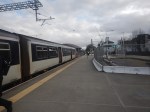
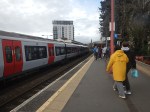
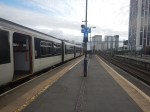
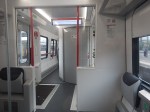
I took these pictures.
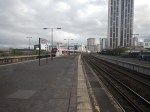
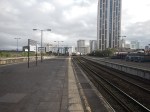
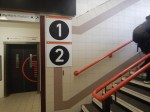
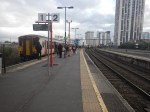


Note.
Major Revamp Of Wales’ Busiest Station Gets Go-Ahead
The title of this post, is the same as that of this article on the BBC.
This is the sub-heading.
Plans for a major revamp of Wales’ busiest railway station have received final approval.
These three paragraphs add more details.
The £140m upgrades to Cardiff Central – including a new brick arch rear entrance, larger concourse and improved waiting areas – aim to support passenger growth and reduce overcrowding.
Better accessibility for people with reduced mobility and additional retail and cycle facilities are also among the changes.
Work is due to start in the middle of next year with the aim of completing most of it within three years.
Note.
- The new entrance on the south side of the station, was opened in September 2015.
- A new Platform 8 was added in 2017, which allows sixteen local trains per hour to run between Cardiff Central and Cardiff Queen Street stations, to serve the twenty railway stations in the city.
- All platforms are bi-directional, which surely improves the flexibility of the rail network in Cardiff City centre.
- Access from the station to the Principality Stadium has improved greatly in recent years.
- The station will remain open during the works.
Cardiff’s railways are a comprehensive mix of local and inter-city trains.
I have some thoughts on Cardiff Station.
The Cardiff & Valleys Day Ranger
This very useful ticket, is the ideal way to explore the Cardiff and Valleys area and I’ve used it several times.
- I usually buy it from one of the two ticket offices in Cardiff Central station, but in one case, I did buy it in Paddington to save time.
- According to Transport for Wales, you can buy it on a local train from the conductor.
- It costs about £16 for an adult, but railcard apply.
I actually find taking a train up the valleys, is a good way to clean out my lungs.
Sights To See On The Cardiff & Valleys Lines
Google AI makes these suggestions.
The Cardiff & Valleys Lines offer historic castles (Cardiff, Caerphilly, Castell Coch), world-class museums (St Fagans, National Museum Cardiff, Big Pit), industrial heritage (Rhondda Heritage Park, Royal Mint Experience), and stunning nature in Bannau Brycheiniog National Park, with scenic railway journeys connecting these sites for history, culture, and outdoor adventure.
Hopefully, when the new Stadler trains and tram-trains are fully operational on the Cardiff & Valleys Lines, someone will write a full guide.
Crafty Electrification On The Rhymney Line
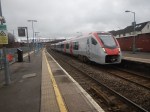
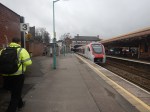
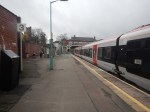
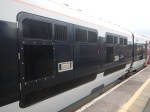
I was puzzled on Wednesday, when I took the Class 231 train to Caerphilly on the Rhymney Line, when I saw no signs of electrification.
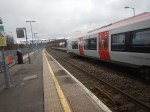
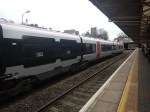
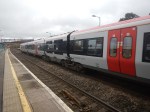
These are pictures I took at Caerphilly station.
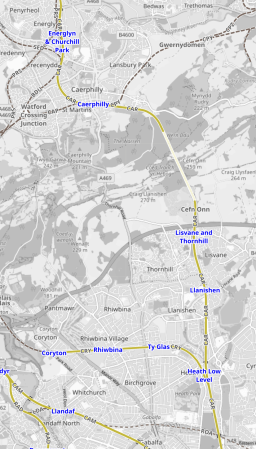
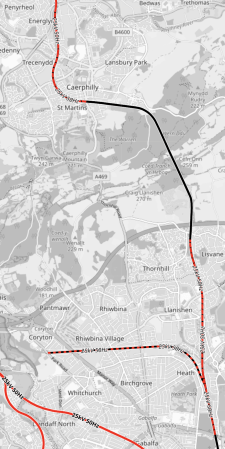
These two OpenRailwayMaps show the tracks through Caerphilly.
Note.
- The map on the left shows infrastructure, with the Rhymney Line shown in yellow.
- Caerphilly station is in the top third of the map.
- The white section of the Rhymney Line is the Caerphilly tunnel.
- The map on the right shows electrification, with the sections of the Rhymney Line that will be electrified are shown in red.
- Black sections will not be electrified.
- North of Caerphilly, the Rhymney Line is electrified, but through the station and the Caerphilly tunnel, there will be no electrification.
Trains will use battery power, where there is no electrification.
This article on Modern Railways gives more information.
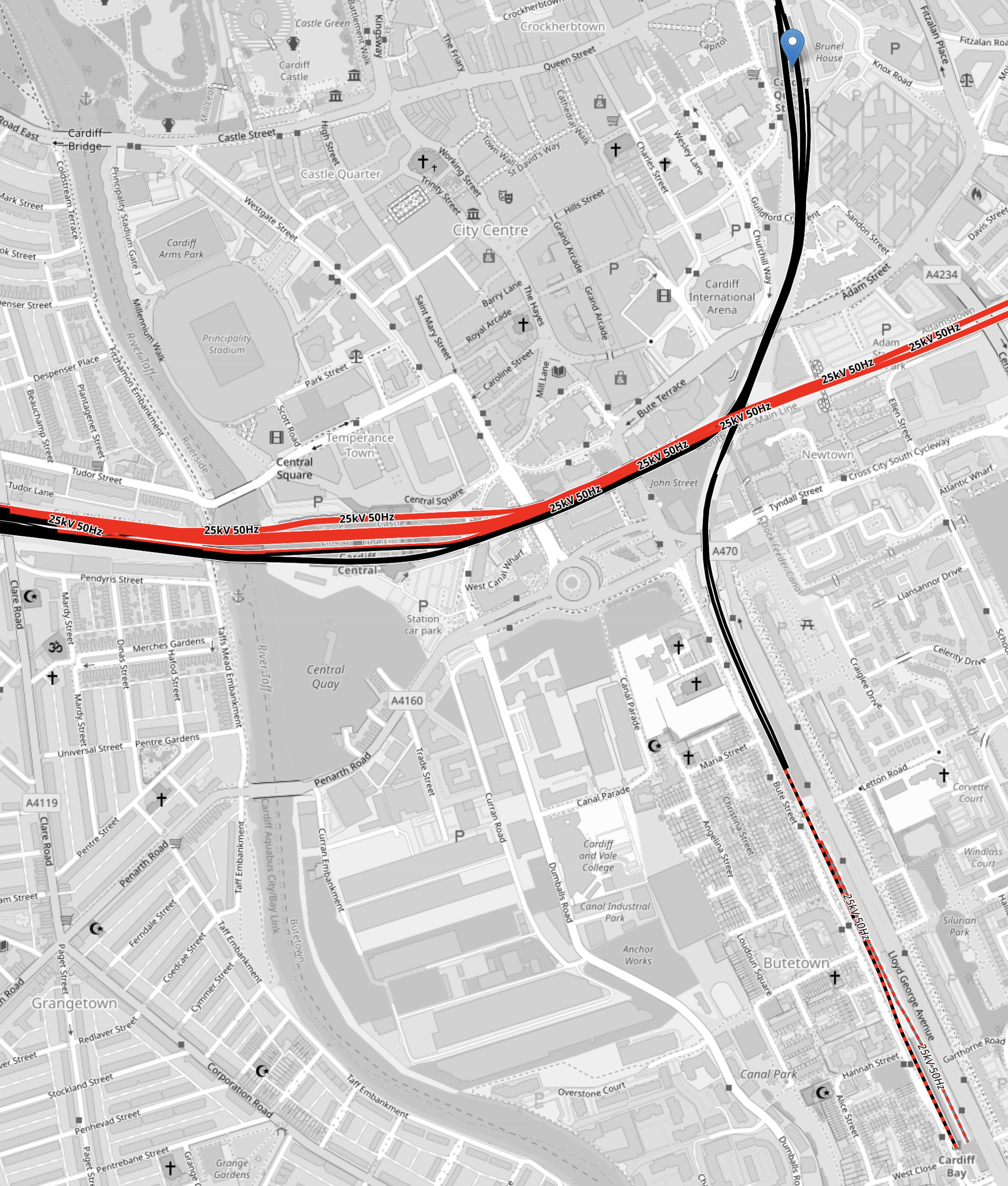
This OpenRailwayMap shows the electrification around Cardiff Central and Queen Street stations.
Note.
- Electrified lines are shown in red.
- Unelectrified lines are shown in black.
- The four-platform Cardiff Queen Street station is marked by the blue arrow in the North-East corner of the map.
- There appears to be no plans for electrification in Cardiff Queen Street station.
- The electrified line across the map is the South Wales Main Line.
- The nine-platform Cardiff Central station sits on the South Wales Main Line.
- The main line platforms at Cardiff Central station are electrified, but it appears that Platforms 6.7 and 8. that will serve the South Wales Metro, will not be electrified.
- The line going to the South-East is the branch to Cardiff Bay station.
- The Southern part of this branch appears to be planned to be electrified. so that it can charge the tram-trains before they return North.
This article on Modern Railways says this about catenary-free sections (CFS) in the electrification of the South Wales Metro.
Catenary-free sections are concentrated on areas where it is disproportionately expensive to erect overhead wires. These include the area around Cardiff Queen Street station and the adjacent junction, which has complicated switches and crossings. North of Queen Street, the Cathays area adjacent to Cardiff University and the hospital would present a significant electromagnetic compatibility challenge, so a CFS avoids this complication. Other catenary-free areas will include Pontypridd, where the station features listed canopies and the track is curved, and around the new depot at Taff’s Well, where there will be a significant number of new switches and crossings as well as challenges around highway bridges.
I am in touch with two major electrification companies and I am sure we’ll be seeing a lot more crafty electrification and the use of battery-electric trains.
Between Cardiff Queen Street And Cardiff Bay Stations
Cardiff Queen Street and Cardiff Bay stations are the two termini of the Butetown Branch Line.
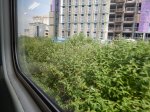
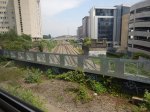
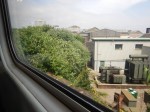
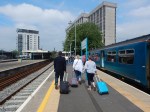
These pictures show my trip from Cardiff Queen Street to Cardiff Bay and the trip back.
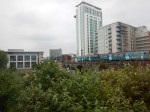
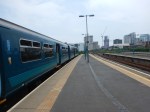
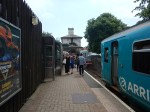
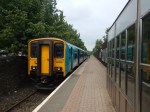
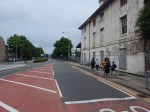
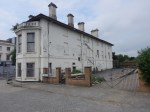
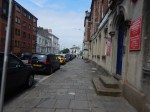
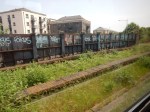
Note.
- Cardiff Bay station is a Grade II* Listed Building.
- With passenger usage of nearly a million and a quarter last year, is it the busiest single-platform station in the UK?
- It was certainly busy yesterday.
- The access for the number of passengers is inadequate.
- After removing the foliage, there must be room to add a second track, between the two stations.
This Google Map shows where the railway lines cross.

Note.
- Cardiff Central station is to the West.
- Cardiff Queen Street station is to the North.
- Cardiff Bay station is to the South.
Does the map show that running a service between Cardiff Central and Cardiff Bay stations would be difficult?
Loudon Square Station
The planned Loudon Square Station would appear to be 300-400 metres North of Cardiff Bay station.
Capacity Increase
When the current Class 150 trains with a frequency of five trains per hour are replaced by new Stadler Citylink Metro Vehicles with a frequency of six trains per hour, this will give an approximate doubling of capacity.
And there is always the option of using the Stadler Citylink Metro Vehicles in pairs!
Cardiff Queen Street Station
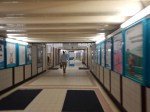
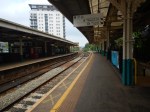
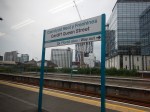
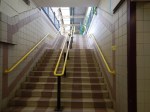
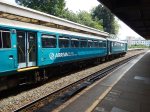
Cardiff Queen Street station is the first station to be refurbished for the proposed South Wales Metro.
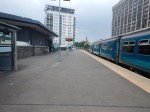
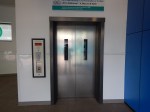
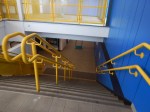
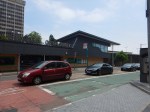
Note.
- The station is fully step-free.
- The platforms are wide, which helps interchange or waiting for your destination. See Canada Water on the Overground and St. Pancras on Thameslink.
- Currently, to get to Cardiff Bay station, you need to catch a five trains per hour (tph) shuttle train from Platform 1.
The service pattern is fairly-straight-forward, with the following lines passing though the station from South to North.
- 2 tph – Coryton Line between Radyr and Coryton stations via Cardiff Central.
- 2 tph – Cynon Line between Barry Island and Aberdare stations via Cardiff Central.
- 2 tph – Rhondda Line between Cardiff Central and Treherbert stations.
- 3 tph – Rhymney Line between Cardiff Central and Bargoed stations.
- 1 tph – Rhymney Line between Penarth and Rhymney stations via Cardiff Central.
- 2 tph – Taff Line between Cardiff Central and Merthyr Tydfil stations.
It is said, that to build anything, you need good foundations.
These services through Cardiff Queen Street station, seem to be a good foundation for the South Wales Metro.
The current proposed services through the station after the Metro is completed are.
- 2 tph – Coryton Line between Penarth and Coryton stations via Cardiff Central – Tri-Mode Stadler Flirts
- 2 tph – Cynon Line between The Flourish and Aberdare stations.. – Stadler Citylink Metro Vehicles
- 2 tph – Rhondda Line between Cardiff Queen Street and Treherbert stations – Stadler Citylink Metro Vehicles
- 2 tph – Rhondda Line between The Flourish and Treherbert stations – Stadler Citylink Metro Vehicles
- 2 tph – Rhymney Line between Barry Island and Rhymney stations via Cardiff Central – Tri-Mode Stadler Floirts
- 2 tph – Rhymney Line between Bridgend and Rhymney stations via Cardiff Central – Tri-Mode Stadler Flirts
- 2 tph – Rhymney Line between Penarth and Caerphilly stations via Cardiff Central – Tri-Mode Stadler Flirts
- 2 tph – Taff Line between The Flourish and Merthyr Tydfil stations – Stadler Citylink Metro Vehicles
- 2 tph – Cynon and Taff Lines between Aberdate and Merthyr Tydfil stations via the City Line and Cardiff Central – Stadler Citylink Metro Vehicles.
Summarising services gives these figures.
- 6 tph – To and from The Flourish – Stadler Citylink Metro Vehicles
- 10 tph – To and from Cardiff Central – Tri-Mode Stadler Flirts
- 2 tph – To and from Cardiff Central – Stadler Citylink Metro Vehicles
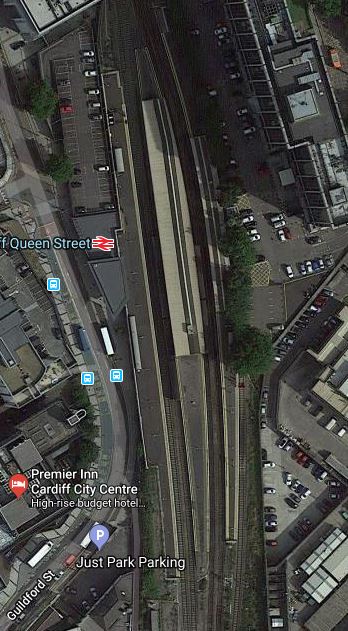
This Google Map shows Cardiff Queen Street station.
Note.
- The bay platform, which is numbered 1, is in the South East corner of the station. is used for services to Cardiff Bay station.
- There is no North-facing bay platform.
- Northbound trains for Aberdare, Merthyr Tydfil and Treherbert share Platform 5.
- Northbound trains for Bargoed, Coryton and Rhymney share Platform 4.
- Sounthbound trains use Platforms 2 and 3.
I believe that this layout will be changed in the creation of the South Wales Metro.
In an ideal world passengers should have a same-platform or cross-platform interchange between services going in the same direction.
If services going in the same direction shared the same platform, this would meet sixteen tph using two platforms, as two tph will terminate at Cardiff Queen Street station.
Canada Water station on the East London Line of the London Underground in a couple of years will be handling twenty tph.
- The platforms are wide with escalators, lifts and stairs.
- Four Southern destinations and Two Northern destinations are served.
- All services are run by Class 378 trains.
- Access between train and platform is step free and wheel-chairs and buggies can be pushed across.
- The East London Line has modern signalling.
If Crossrail and Thameslink will be able to handle twenty-four tph with digital signalling, I believe a solution can be found so that sixteen tph can pass through Cardiff Queen Street station.
Having seen wide platforms in operation at stations like Canonbury, London Bridge and Whitechapel, I feel an ideal layout at Queen Street station would be to use Platform 3 for all Southbound services and Platform 4 for all Northbound services, with as wide a platform as possible in between.
Consider.
- Passengers from Rymney and Coryton needing to go to The Flourish, would get off the train and get a Citylink for The Flourish.
- Passengers between The Flourish and Cardiff Central would just have to walk across the platform at Queen Street station to change trains.
- Passengers needing a train to Rhoose Airport could choose to change at Queen Street station.
Most waits at Queen Street station would be in a few minutes.
Although, passengers would wait longer for Barry Island, Bridgend and Rhoose Airport.
There is still the problem about what to do with the two tph that from Treherbert that terminate at Queen Street station.
- They could use Platform 2 or 5.
- They could use a new bay platform in the North end of Pltform 3/4.
- They could go through Queen Street station to terminate at The Flourish
- They could go through Queen Street and Central stations to terminate elsewhere.
Option 1 would have problems.
- Every thirty minutes a Citylink would have to cross the busy lines to the North of Queen Street station.
- Passengers wouldn’t always use the same platform for the Rhondda Line.
- Passengers wouldn’t have an easy interchange at Queen Street station.
Option 2 would be better.
- The track layout would be similar.
- Rhondda Line passengers would only have the inconvenience of sometimes walking along the platform.
.Even if this option was not used to turn trains, I suspect it could be built, as it would also be useful for service recovery purposes.
I like Option 3, although it will have the following consequences.
- ,The Flourish would need to be able to handle eight tph on the two proposed platforms.
- Queen Street station would need to be able to handle eighteen tph in both directions.
I suspect that both problems are solvable.
The problem with Option 4 is where do you turn the two extra trains?
I suspect that the Citylink vehicles can only use the City Line after Cardiff Central.
Would it be a good idea or not to run four tph on this route?
I don’t know! But a personable young station man at Queen Street station, said that handling the football can be a problem.
So perhaps more trains going to Ninian Park station might be a good idea.
I write about it in detail in The South Wales Metro and Big Events.
Conclusion
Cardiff Queen Street station has the possibility to be a World Class Metro interchange.
 The Anonymous Widower