Flex… and flexibility
This is the title of an article in Rail Magazine, which is an interview with Helen Simpson and Mark Isbern of Porterbrook.
There is a lot of information about why Porterbrook went the hybrid route rather than batteries.
These are some of facts disclosed.
- Manchester Piccadilly to Buxton was chosen as the test route as it uphill all the way with 12 stops.
- They have simulated running on routes on Great Western, London Midland and in Wales.
- The Flex technique could be applied to other EMUs such as Electrostars.
- Top speed is 100 mph under the wires and 91-92 mph when running on diesel.
- Conversion takes between four and six weeks.
- Most of the changes are in the driving vehicles.
- Porterbrook are converting an initial batch of eight trains and that they will be based on the Class 319/4 version of the train.
Above all the air of professionalism, that I felt from the advance brochure they sent me, has been maintained.
I am impressed.
These are my thoughts.
The Conversion Process
The conversion process appears to be designed for simplicity and a fair bit of throughput.
- The starting point appears to be a Class 319 train, updated with the required interior and paintjob by Knorr-Bremse at Wolverton.
- Existing Northern trains could also be converted.
- Engine rafts will be assembled and tested in advance.
- Engine rafts and other equipment are fitted to the driving cars.
My project management knowledge, leads me to feel this is a well-designed production process.
As there are 86 Class 319 trains in total, if the orders roll in, production should run smoothly.
It’s also not as if, everybody’s working on a train they don’t know well.
The Initial Eight Trains
It would appear that four trains are to be delivered by the end of December 2017. After that, at 4-6 weeks a train, the other four should be delivered in time for the May 2018 timetable change.
When I wrote Why Not Buxton To Hellifield?, I calculated that to run an hourly service between Buxton and Clitheroe would need four trains and a half-hourly service would need eight trains.
It’s not that this Buxton to Clitheroe service will be run, but running intensive services on stiff routes needs a lot of trains.
Now, if the trains do what the specification says in practice, as they do on the computer, I can see a situation, where Northern and its drivers will be able to use these trains on more and more of Northern’s numerous partly-electrified routes.
So if it all works out, I can see more trains being converted!
But if the conversion process is well-planned, that won’t be a problem.
The 91-92 mph Speed On Diesel
This surprised me, but it is significant.
My trip from Huddersfield to Blackburn in the Peak on Friday wasn’t the best of trips.
- The Class 156 train was severely asthmatic.
- Half the four-car unit was unserviceable.
- The train was full to bursting.
It gave me the impression that the train needed a major refurbishment.
The Class 156 train is a 75 mph train and if the Class 319 Flex can do over 90 mph on diesel, it would be an obvious train, with which to run services like Huddersfield to Blackburn.
Class 185 Replacement
Northern currently hire four Class 185 trains from TransPennine for the following routes.
- Manchester Airport to Blackpool North
- Manchester Airport to Barrow in Furness
- Oxenholme to Windermere
The sub-lease runs out in December 2017.
If things work out as planned and the Blackpool Branch is electrified, then Manchester Airport to Blackpool North could be worked by an electric Class 319 train.
If the wires don’t get switched on, then like the other two routes, Class 319 Flex trains will be needed.
It will be interesting to see how a Class 319 Flex performs against a Class 185 on these routes, as they are both 100 mph trains, where there is electrification.
Why Not Buxton To Hellifield?
Hellifield station, which connects to the Settle and Carlisle Line, is the Northernmost station on the Ribble Valley Line from Manchester and Blackburn.
I’ve not been there, as you need to get there from Blackburn on a Sunday, but surely, as a conductor told me, Northern Rail should provide a service seven days a week.
The Track To Hellifield
This is an extract from an e-mail from Ribble Valley Rail.
The line north of Clitheroe to Hellifield is entirely double track (in use) with a double track junction on to the S&C line at Hellifield South Junction at the south end of the station. Approximately 19 sets of points and a large amount of trackwork were renewed at Hellifield a few years ago.
They also said, that there is one small addition, they would make at Hellifield, but if services to Hellifield get a lot more numerous, I’m sure Network Rail would do what is necessary.
As the line is double-track from Blackburn to Hellifield, this would mean that running more trains on the line is determined by the number of passengers and the revenue and profit generated, rather than some quirky passing loop by a level crossing or some of British Rail’s pitiful attempts to save money.
Blackburn to Hellifield is a real railway.
Platform Lengths
The e-mail from Ribble Valley Rail, also said this about platform lengths.
All Ribble Valley intermediate stations were lengthened a few years ago and can now accommodate 4-car class 150s which now operate quite regularly, especially on Sundays. 4-car class 156 do overhang and involve locking some doors out-of-use until Blackburn or Clitheroe.
So how long is a four-car formation of the various trains?
- Class 150 – 80.24 metres – 75 mph
- Class 156 – 92.1 metres – 75 mph
- Class 172 – 94.48 metres – 100 mph
- Class 319 Flex – 79.5 metres – 100 mph
I included the Class 172, as it’s a typical modern diesel multiple unit.
So Porterbrook’s new train has an advantage in that British Rail made the Bedpan Specials, a little bit shorter, to save steel and other materials.
I’ve just received another e-mail where this is said.
Despite the lengthening of the Ribble Valley line intermediate stations, because of various constraints with adjacent bridges they have finished up different lengths. The shortest is the Down platform at Ramsgreave & Wilpshire which I am told is79 m. However a 4-car class 150 does fit on with careful stopping, all doors on the platform and only a slight overhang of the train at each end.
Look at this picture of a Class 319 train.

The end passenger doors would appear to be several metres back, so the train fits a platform, that is a few metres shorter than the train. Was this British Rail’s solution to the non-invention of selective door opening?
Health and safety might want a little fence on the platform, but it looks like the Class 319 trains were designed so that British Rail could get away without lengthening platforms on Thameslink.
Current Timings On The Route
These are timings of the various sections of the whole route from Buxton to Hellifield.
- Buxton to Hazel Grove (up) – 37 minutes
- Hazel Grove to Buxton (down) – 33 minutes
- Hazel Grove to Stockport – 9 minutes
- Stockport to Bolton – 48 minutes
- Stockport to Manchester Piccadilly – 22 minutes for a Hazel Grove to Blackpool North train via Bolton
- Stockport to Manchester Piccadilly (fastest) – 9 minutes
- Bolton to Manchester Piccadilly (fastest) – 22 minutes
- Bolton to Blackburn (up) – 29 minutes
- Blackburn to Bolton (down) – 26 minutes.
- Blackburn to Clitheroe (up) – 26 minutes
- Clitheroe to Blackburn (down) – 23 minutes
- Clitheroe to Hellifield (up) – 25 minutes
- Hellifield to Clitheroe (down) – 11 minutes
Note the differences between up and down times.
Based on these timings, I reckon that these timings are possible now with a Class 150 or Class 156 train.
- Buxton to Blackburn – 102 minutes
- Blackburn to Buxton – 103 minutes
- Buxton to Clitheroe – 128 minutes
- Clitheroe to Buxton – 126 minutes
- Buxton to Hellifield – 153 minutes
- Hellifield to Buxton – 137 minutes
This would give round trip times something like these.
- Buxton to Hellifield – 290 minutes
- Buxton to Clitheroe – 254 minutes
- Buxton to Blackburn – 205 minutes
Obviously, the two turnround times would have to be added.
But various factors would reduce the times, if a Class 319 Flex were to be used from December 2017.
- The route will be fully electrified between Bolton and Hazel Grove stations.
- Two trains per hour will be possible between Bolton and Blackburn from December 2017.
- The Class 319 Flex is a 100 mph train.
- As the Class 319 Flex has been optimised to climb the hills, it must be faster on the uphill sections.
- Drivers have told me, that the Class 319 train has excellent brakes, so they may be faster coming down.
The Bolton to Hazel Grove route is currently timetabled at 48 minutes. But surely a 100 mph electric train can knock quite a few minutes off that, when the route is fully electrified.
If this section could be done in thirty minutes, which I suspect is possible, this brings the round trip times down as follows.
- Buxton to Hellifield – 254 minutes
- Buxton to Clitheroe – 218 minutes
- Buxton to Blackburn – 169 minutes
In some ways the interesting one is the round trip from Buxton to Clitheroe, which allowing ten minutes for each turnround at Clitheroe and Buxton means that the round trip is under four hours.
This means that an hourly Buxton to Clitheroe service would need four trains and two trains per hour would need eight trains.
The Blackburn Service From December 11th 2017
On this day Northern introduced two trains per hour between Manchester Victoria and Blackburn along the Ribble Valley Line, with one train per hour exytending to Clitheroe.
If the service went to Buxton instead of Manchester Victoria, I think this service would require seven trains. If the Clitheroe service was extended to Hellifield, that would need another two trains.
Conclusion
I wonder when the real timings are obtained using Class 319 Flex trains, what cunning plan Northern Rail will come up with, to satisfy their passengers, staff and profits.
Marketing says that running between Hellifield and Buxton on a 24/7 basis, even at one train every two hours could be a very popular route.
Thoughts And Facts About Class 319 Flex Trains From Manchester And Blackburn Into The Hills
On Thursday and Friday last week, I spent two days in the Premier Inn at Blackburn and explored the rail lines around the town with journeys all over the area that should by now have been fully electrified.
Class 319 Flex Trains
The main reasons to go was to see some Friends In The North and to see Ipswich play at Barnsley, but I also wanted to explore some of the hilly routes in Lancashire.
Porterbrook in their brochure for the Class 319 Flex trains says that the objective for the train is that it can run from Manchester Piccadilly to Buxton on the Buxton Line, under the power that is available, which is electrification only as far as Hazel Grove station.
The Routes With Hills
There are three routes from Manchester and Blackburn that climb into the hills.
- The Ribble Valley Line to Blackburn via Bromley Cross and then on to Clitheroe and Hellifield stations.
- The East Lancashire Line Line to Colne station
- The Buxton Line to Buxton station.
The lines are not for low-powered trains and the current Class 150 or Class 156 trains struggled on the three climbs I did.
- Hazel Grove to Buxton in the afternoon.
- Blackburn to Clitheroe early in the morning.
- Bolton to Blackburn, crush-loaded in the rush hour.
Someone told me, that leaf fall can be a problem in the Autumn.
In no particular, these are my thoughts and some facts from other sources and my observations.
Blackburn Depot
A conductor told me that Northern Rail will be creating a depot and basing train crew at Blackburn.
This article in the Lancashire Telegraph is entitled Multi-million pound train depot set for Blackburn.
This is said.
Blackburn is to get a new multi-million pound train depot as the latest stage of East Lancashire’s rail revolution.
The stabling, maintenance and cleaning centre will include an office block and new connection to the existing Bolton junction where the tracks to Preston and Darwen divide.
If as I believe the Class 319 Flex trains could serve Clitheroe/Hellifield and Colne, then it could be an ideal location. Especially, if the Clitheroe/Hellifield and Buxton services were run back-to-back across Manchester.
Double Track Most Of The Way
The three lines have the following track layouts.
- The Ribble Valley Line has a large proportion of double track, which stretches to Hellifield.
- The Buxton Line is double-track.
- The East Lancashire Line is single-track from Rose Grove station to Colne station.
So hopefully, if two trains per hour (tph) were to be run on these three branches, passing would be possible.
Hellifield
Hellifield station is where the Ribble Valley Line connects to the Settle-Carlisle Line.
A conductor told me that he’d heard that Northern would like to serve Hellifield more regularly.
Since I first wrote this, I’ve heard that the tracki at Hellifield has been recently replaced and is in good condition.
Housing And Other Property Development
As I travelled along the lines to Clitheroe and Buxton, there was a lot of housing development along the line, at places like Clitheroe, Hazel Grove, Whalley to name just three.
The crowded trains I used in the Peak to Blackburn are going to carry even more passengers and the need for capacity with power on these lines will increase.
Tourism Issues
Buxton, Clitheroe Colne and Hellifield all have reasons for tourists and especially those that enjoy visiting the hills.
I have no figures to back it up, but I suspect leisure passengers often go loaded with children in buggies, bicycles and heavy rucksacks and cases. They certainly do in the Summer on the trains of East Anglia and that is flat.
Add in the weather forecast and the effects of new trains and at times, there could be a large increase in leisure and tourism-related travel.
If the trains connected the Settle and Carlisle Line at Hellifield to Blackburn, Manchester and perhaps Buxton, this would surely open up a tourist train route, that Doctor Beeching wouldn’t have thought was the least bit feasible.
Future Train Frequencies
Train frequencies to Manchester could possibly grow to the following.
- Blackburn – 2 tph to Manchester Piccadilly
- Blackburn – 2 tph to Manchester Victoria
- Buxton – 2 tph
- Clitheroe – 2 tph
- Hazel Grove – 4 tph
In addition, the intersecting route from Blackpool South to Colne via Preston and Blackburn, could be running 2 tph.
I do suspect though, that 1 tph to and from Hellifield will be enough. But who knows? I could just be as wrong as Beeching.
The lines probably have a Peak problem, that is fairly unusual in the UK, but probably is common in countries with real mountains like Austria, Japan and Switzerland. One direction of Peak travel is downhill, but the other is up a very steep railway.
On train frequencies, this is said in the Wikipedia entry for the Ribble Valley Line.
A six-week engineering blockade saw the existing passing loop there extended by 1 mile (1.6 km) at each end and signalling improvements made to add capacity on the line and allow for service frequencies between Bolton & Blackburn to be doubled to two trains per hour each way throughout the day from December 2017.
Could this be why, Porterbrook are planning to deliver four refurbished Class 319 Flex trains by the end of 2017, according to their brochure?
Some powerful extra trains will probably be needed to achieve the objective of 2 tph to Blackburn and four Class 319 Flex will help.
Future Train Capacity
I did two journeys in the Peak to Blackburn; in the first I took the slower service via Todmorden and Burnley in a two-car train and in the second, I took the direct route via Bromley Cross, in a four-car formation.
The second was the most crowded, but it was Friday. It also struggled up the hill from Bolton to Blackburn.
Northern’s decision to go for a four-car Class 319 Flex train which could be used on some of these routes, is understandable.
Blackburn To Huddersfield
I travelled to Huddersfield station from Manchester Victoria and didn’t see any signs of electrification on this important route.
Returning to Blackburn from Huddersfield, my train was a direct service which travelled via Manchester Victoria, Bolton and Bromley Cross.
This would be an ideal service to run using a Class 319 Flex train, until Network Rail get their act together and electrify Manchester Victoria to Huddersfield. Even if they only get the wires as far as Stalybridge, the Class 319 Flex would be an enormous improvement compared to the asthmatic Class 156, that struggled with its full load of passengers to Blackburn.
The Calder Valley Line
The Calder Valley Line goes through very picturesque countryside between Preston and Leeds.
I think that full electrification of this line could never happen.
- The line has large numbers of stone and brick viaducts and bridges, which would be very expensive to modify for electrification.
- The station at Hebden Bridge is Grade II Listed.
- There is electrification between Leeds and Bradford, which could probably be extended as far as Halifax.
- Preston is fully electrified and affordable electrification to Blackburn or perhaps Rose Grove or Burnley Manchester Road stations should be possible.
- Electrification to Rose Grove would mean that the service between Blackpool South and Colne could be run using electricity between Rose Grove and Kirkham and Wesham stations.
But the biggest problem would be the opposition to overhead gantries in the hills.
The distances are revealing.
- Burnley to Halifax is just over twenty miles
- Blackburn to Halifax is just over thirty miles.
If Halifax to Bradford wasn’t electrified then that adds another ten miles.
All distances would be within range of a modern bi-mode train, including a Class 319 Flex.
Other Destinations
From Hazel Grove, it is possible for diesel trains to access the Hope Valley Line towards Sheffield.
There must be stations on this line that are possible destinations for a Class 319 Flex train.
Chester and Windermere have also been mentioned as future destinations for the train.
Electrification
Electrification has been painfully slow in the North-West, as it has in most places in the UK.
It looks like that by the end of 2017, Manchester to Preston via Bolton and the Blackpool Branch to Blackpool North station will be electrified.
The advantage of the Class 319 Flex is that it can use this electrified set of lines to run services to stations like Barrow, Blackburn, Blackpool South, Burnley, Chester, Hebden Bridge, Sellafield and Windermere, that are off the electrified network in conjunction with the Class 319 trains.
The Need For A Train To Climb The Hills
From this brief analysis and my observations, it would seem that Northern need a few four-car trains with adequate power to get up the hills at a speed, that enables an efficient timetable. As some of the routes from Manchester Piccadilly and Victoria are electrified, the ideal train would need the capability to use the wires.
If ever, there was a series of routes that need a bi-mode train, then it is these routes.
The Class 319 Flex And The CAF Civity
The Class 319 Flex has according to the brochure I’ve seen been designed to run from Manchester to Buxton with a full load of passengers in the Peak or perhaps after a City-United Derby.
But Northern have ordered new CAF Civity trains in the following versions.
- 25 two-car Class 195 diesel trains
- 30 three-car Class 195 diesel trains
- 31 three-car Class 331 electric trains
- 12 four-car Class 331 electric trains.
This is said in the Wikipedia entry for the Class 331 trains.
In early 2016 it was confirmed that Spanish rolling stock manufacturer CAF would construct the new electric powered trains which are planned to operate in West Yorkshire to replace Class 321 and Class 322 trains and work alongside the current fleet of Class 333 units. The four-car Class 331 units will be deployed on electrified services from Manchester Piccadilly to replace the Class 323 units which are due to return to Porterbrook at the end of their current lease in 2018.
So it would appear that the Class 319 trains will continue to operate for a few years yet! Hopefully with better seats, wi-fi and a few other smaller improvements.
I think that Northern have decided that until the Class 195 trains arrive that the Class 319 Flex trains are the best short-term solution. But given the overcrowding on the routes will the future three-car trains have enough capacity?
So I suspect, if Northern go the CAF Civity route, I feel that Northern will acquire some longer diesel trains or even some dual-power Civitys.
But at least running Class 319 Flex trains on the route will effectively produce the specification for these hilly routes.
Class 319 Flex Trains And Reopening Newcastle To Ashington
In Reopening Newcastle To Ashington, I suggested that Class 319 Flex trains might be useful in reopening the Northumberland Line to passenger trains.
This map is taken from on the South East Northumberland Rail User Group (SENRUG) web site.

The East Coast Main Line is shown in red, with the proposed reopened line in a thick orange.
I have since heard from SENRUG and this is a summary of their e-mail.
- The line from Newcastle to Ashington takes freight along its entire length.
- The route between Newcastle and Bedlington and the Choppington Branch is a diversionary route for HSTs.
- The new Hitachi Class 800 trains will be able to use the Bedlington-Choppington route.
- SENRUG are promoting Ashington to Butterwell as an extension to the route and a further HST diversion.
The e-mail finishes with this sentence.
Northern tell us the reason why they don’t want electric trains on the Morpeth branch (which is wired) is because they need to consolidate maintenance expertise at Heaton Depot and need flexibility to switch units around from route to route. Thus any new stock for the Ashington route also has to travel on the 3 other routes, all of which also take freight and inter-city type services.
Come in the Class 319 Flex train, the Teessiders, Tynesiders and Wearsiders need you!
- Newcastle-Morpeth would be run using electric power, with all other lines from Newcastle using two 390kW rail-proven MAN diesel engines.
- The trains have a performance as good if not better than a Class 156 train.
- The trains are four-car and meet all regulations.
- Back-to-back services through Newcastle, such as Ashington to Sunderland or Middlesborough and Morpeth to Hexham, would be possible.
- The trains could also work Middlesbrough – Newcastle – Hexham – Carlisle via the Leamside Line, if Northern wanted to open the line in 2019.
- Northern get their route flexibility from Newcasstle, as the trains could work any route from the city.
- The standard Class 319 trains have mixed it with big freight trains for thirty years on the Bedpan (Bedford to Brighton via St. Pancras).
- They can go anywhere that an HST or a Class 156 train can go. So does that include some lines of the Metro?
- When on the East Coast Main Line, they can up pantograph and cruise at 100 mph, just as they do on the West Coast Main Line now.
- If any lines have steep gradients, the trains are designed for the 1-in-60 climb up to Buxton after a United-City Derby.
But the biggest advantage of the train, must be that as planners have ideas for new services, so long as the track and signalling are up-to-scratch, it’s just a case of Have Track, Will Travel!
As Northern were part of the writing of the specification for the Class 319 Flex train, I can’t believe that they didn’t take what they could do in the North East into account.
Consider.
- Northern are developing a similar network using a mix of Class 319 and Class 319 Flex trains linking Blackpool, Liverpool, Manchester and Preston, based at Allerton Depot in Liverpool.
- There have been proposals for new stations on the East Coast Main Line between Newcastle and Berwick-on-Tweed. 100 mph Class 319 trains would be ideal for a stopping service between Newcastle and Berwick.
- Are there possibilities to run services into North Yorkshire?
- Class 319 Flex trains could work Newcastle to Carlisle.
- Bishop Auckland, Northallerton, Saltburn, Sunderland and Whitby could be worked from Midlesbrough.
Northern could stable an appropriate mix of Class 319 and Class 319 Flex trains at a convenient depot, deploying as required using the electrified East Coast Main Line.
Could Northern be developing an electric hub concept, as what could happen in the North East could mirror what is happening in the North West?
- Central depot on an electrified main line, with good high-speed electrified connections to all routes served.
- A number of four-car 100 mph electric trains- At present they have a total of thirty Class 319 trains.
- A number of four-car 100 mph bi-mode trains. – At present they have a number of Class 319 Flex trains in development.
- New routes could be developed using the bi-mode Flex trains.
- If electrification happens on a route, the electric trains might take over.
But Northern have forty-three Class 331 electric trains on order.
These are three and four car 100 mph trains.. Northern probably have plans for these trains, but they could supplement the fleet at either hub, as routes get more numerous and passenger numbers increase.
A similar electric hub could develop at Leeds.
It looks to be a very flexible philosophy.
At some point in the future, it could happen that all Class 319 trains are the Flex variant and they work in tandem with a bog-standard four-car 100 mph electric multiple unit.
Who Would Want An Electric Train Powered Only By Diesel?
I have just seen a an early copy of Porterbrook’s brochure for their new Class 319 Flex train.
From one statement, it appears that a diesel-only version of the train is going to be delivered to one operator.
If this is a prototype, this is eminently sensible as the train could be used for the following.
- Full testing of the diesel power generators and all non-standard systems.
- Performance Assessment
- Driver training.
- Route Proving.
- Customer reaction.
The prototype could even be run on the example route from Manchester Piccadilly to Buxton and back to validate the route could be handled by the train.
Strangely, it would probably have the capability to do the route faster than the current Class 150 and Class 156 trains, as it is more powerful.
But a diesel-only version could have other uses in the long term.
Route Proving And Testing
Surely, a diesel-only Class 319 Flex train, must have uses, where an operator wants to run a service to check a new route or test a market.
Occasional Services
Events like the Open Golf and Glastonbury create a big demand for travel, often to difficult to access places. A refurbished diesel-only Class 319 Flex could have uses to serve events like these. Or it could be used as a blockade buster or train to by-pass difficulties or cover for rolling stock shortages.
The interior could even be tailored for the use.
Have Direct Rail Services done their sums and found that instead of using two new Class 68 locomotives and a few clapped-out Mark 2 coaches, a diesel-only Class 319 Flex train is better value for themselves and the train operator?
Direct Rail Services certainly seem to be good niche market spotters, as their purchase of the Class 68 locomotives shows!
Small Measurement Train
Would a diesel-only Class 319 Flex train make a smaller version of the New Measurement Train?
- It’s diesel powered, so can check all routes and those with power switched off.
- It can probably run on routes, where the HST-based New Measurement Train can’t.
- It has a 100 mph capability, so could deploy to an area, where problems have occurred quickly.
- It’s even got a pantograph well.
Currently, it takes the New Measurement Train about a couple of weeks to check all the lines it can.
From what I’ve read, Network Rail seem to keep adding capability and with the need to check more lines, there must be a need for at least a second train to help the current one.
Would Network Rail do what they have done with other complex specialist equipment and base several around the UK, so that if a possible problem occurs or some new work on the track or overhead wires has been done, engineers can check the line quickly?
Affordable Quality Four-Car Diesel Multiple Unit
There are lines in the UK, like the Heart of Wales Line and the Far North Line, which will never be electrified and need a modern diesel unit with everything customers expect at an affordable price.
Most suitable units like the two-car Class 158 trains and three-car Class 159 trains could be too small for some routes and their current operators have uses for them.
So is a niche for a reliable four-car diesel multiple unit to work all sorts of routes?
Conclusion
When I saw that Porterbrook were going to produce a diesel-only version in their brochure, I was mildly surprised.
But then I was surprised, when I saw Vivarail‘s proposal for the Class 230 train based on old London Underground D78 Stock.
So did one of the operators interested in the Class 230, see the Porterbrook announcement for the Class 319 Flex train, put two and two together and say, a four-car Class 319 Flex would do us just fine. But forget the electrification gubbins!
The Class 319 Flex Train And Third Rail Routes
In writing The Electrical System Of A Class 319 Flex, I came to the conclusion, that the designers of the Class 319 Flex had taken great care that the train would perform to a high standard on lines with third-rail electrification..
There are three routes that could be given an improved service using a third-rail bi-mode train.
Ashford to Brighton on the Marshlink Line.
Oxted to Uckfield on the Oxted Line.
Reading to Tonbridge via Gatwick Airport on the North Downs Line.
Note.
- From Ashford, trains on the Marshlink Line could go to London, but probably not on High Speed 1.
- The East Coastway Line between Hastings and Brighton can accept eight-car trains, and is a 90 mph line, that has recently been resignalled.
- From Oxted on the Oxted Line trains could go to London.
- The Uckfield Branch has been updated to accept twelve-car trains.
- Tonbridge to Gatwick Airport was electrified as a Eurostar diversion route.
For operational reasons on the Uckfield Branch and along the South Coast, it would probably be a good idea, if the ability to run as eight- and twelve car formations was developed for the Class 319 Flex.
The South Coast Express
The East Coastway Line could be connected to the West Coastway Line to Southampton Central station with a reverse at Brighton.
At present because the Marshlink Line is not electrified and the two Coastway Lines are run independently, you can’t travel between stations on the West Coastway Line to any station on the East Coastway Line without changing trains at Brighton.
Consider creating a South Coast Express between Ashford and Southampton using bi-mode trains.
- The Class 800 train, which is the only current bi-mode train, comes as a five-car train, but doesn’t have a dual voltage version, although its cousin the Class 395 train can work on third rail networks.
- The Class 319 Flex train could do the whole route and would only need to use diesel power for twenty-six miles.
- The speed limit along the two Coastway Lines could probably be upgraded to 100 mph.
- A new Eastbourne Parkway station could be created on a reopened direct line between Polegate and Pevensey & Westham stations, to avoid all trains reversing at the current Eastbourne station and hence save time.
- It would be a feeder railway to Thameslink services at Brighton and Eurostar services at Ashford.
- Eight-car or even twelve-car formations could work through Falmer station on match days at The Amex.
- Southampton have plans to develop the railway to serve St. Mary’s Stadium and the Waterfront, which could be part of an upgraded West Coastway Line.
Currently, with a change at Brighton, Southampton to Ashford takes three hours forty-seven minutes. With a 100 mph train on an updated 100 mph line, the service could surely be a lot faster.
If an hourly service was required, then you get this table of trains required to run the service against the journey time between Ashford and Southampton.
- Three hours needs six trains.
- Two and a half hours needs five trains.
- Two hours needs four trains.
Southern use more trains than that now to provide a slower service, with a change at Brighton.
West Of Basingstoke
The West of England Main Line is only electrified as far as Basingstoke station, which is just under fifty miles from London.
Distances from Basingtoke are approximately.
- Salisbury – 35 miles
- Yeovil Junction – 70 miles
- Honiton – 100 miles
- Exeter St. Davids – 120 miles.
Could a Class 319 Flex carry enough fuel to serve this route?
I have seen an early copy of the brochure for a Class 319 Flex and Porterbook say that the train is designed to handle ten round trips from Hazel Grove to Buxton, which is a seventeen mile trip, where the steep gradients up are probably balanced by the coming down.
This would indicate that the Class 319 Flex could do a round trip without refuelling.
The route is currently worked by eleven two-car Class 158 trains and thirty three-car Class 159 trains and they take three and a half-hours for each hourly service between London Waterloo and Exeter St. Davids.
The Class 319 Flex train has a comparable speed to the Class 158/159 trains on diesel and is ten mph faster, when running on electricity.
I don’t think that the trains would be used all the way to Exeter, as they are not really designed for a journey of that length, but there may be other places where they could be ideal.
- Running between London Waterloo and Salisbury to increase the frequency, where they might save upwards of fifteen minutes between Basingstoke and Waterloo, as they are faster than the diesel Class 158/159s.
- Running the hourly circular service from Salisbury to Chandlers Ford via Southampton, which has sections of electrified line, where they could replace Class 158/159s.
- Existing lines like the Lymington Branch, where they could replace Class 158/159s
- Reopened lines like the Fawley Branch, Ludgershall Branch and the Swanage Railway.
- New services like Portsmouth Harbour to Salisbury via Southampton and Romsey.
It could be that some selective electrification like Southampton to Romsey could be very beneficial.
Could There Be A Class 321 Flex Train?
I took these pictures of a Class 321 train at Ipswich station.
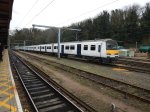
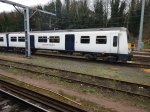
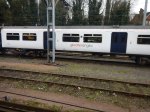
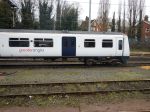
Like the Class 319 train currently being updated to a bi-mode Class 319 Flex train, I wonder if the same bi-mode upgrade could be applied to a Class 321 train.
Look at this picture of a Class 319 train.
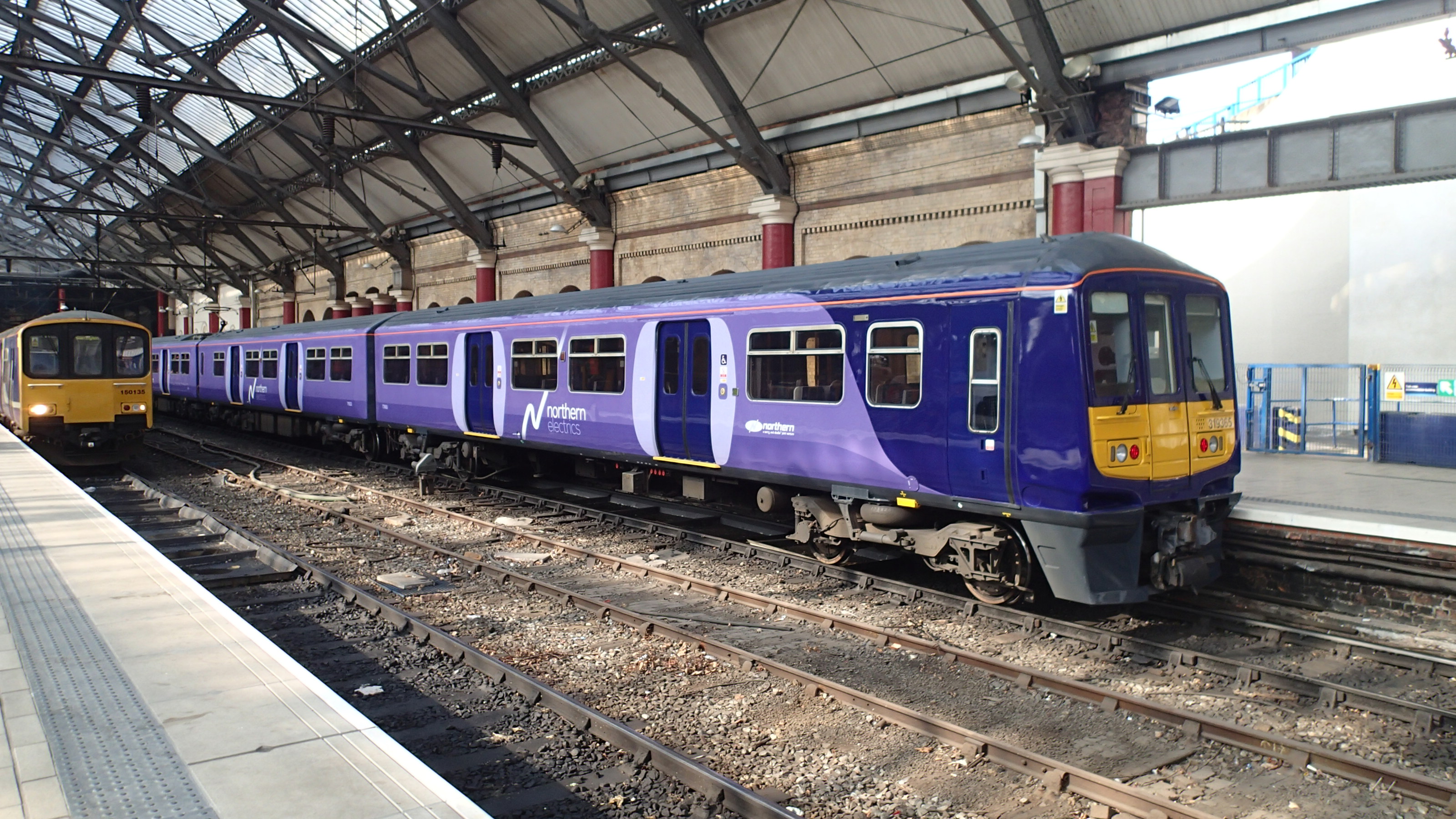
A Class 319 At Lime Street
Both trains do seem to have generous space underneath.
Consider.
- Both trains are 100 mph four-car trains based on Mark 3 coaches.
- Ten Class 321 trains are being given the Renatus treatment by Eversholt Leasing for Greater Anglia with air-conditioning and new interiors.
- The Class 321s were built after the Class 319s.
- The Class 321s are 25 KVAC overhead operation only.
- There are 117 Class 321 trains.
- As the two trains were launched within a year of each other, they can’t be that different under the skin.
It should also be remembers that train companies have a lot of experience about running both type of train.
Porterbrook Versus Eversholt
Could we be seeing a strong commercial battle, where the two leasing companies; Porterbrook and Eversholt, fight it out to sell the best four-car bi-mode train to the train operating companies?
This could only be of benefit to train companies and passengers.
The Electrical System Of a Possible Class 321 Flex
The only problem, I can envisage is that as I wrote in The Electrical System Of A Class 319 Flex, the DC electrical bus of the Class 319 train makes the design of the Class 319 Flex train easy. If the Class 321 Train doesn’t have a similar layout, then it might be more difficult to create a Class 321 Flex!
On the other hand Vossloh Keipe have received a contract to upgrade the traction systems of thirty Class 321 trains to give them.
- AC traction motors and the associated control systems.
- Regenerative braking.
This work is fully described onb this page of the Vossloh Keipe web site.
Probably, with a suitable alternator from ABB and some quality electrical engineering, I would think that a Class 321 Flex could be created.
Conclusions
Each train will have their own big advantages.
- The Class 319 Flex train will work third rail routes.
- The Class 321 Flex train will have regenerative braking on electrified routes.
But in the end, if two bi-mode fleets can be created, there will probably be a lot of conviviality in hostelries in Derby and York, where the probably long-retired engineers, who designed the Mark 3 coach and its various derivative multiple units, will be laughing loudly into their beer.
The Electrical System Of A Class 319 Flex Train
This press release from Porterbrook, which is entitled Porterbrook and Northern to introduce bi-mode Class 319 Flex trains, says this about the electrical system of the the Class 319 Flex train.
The Class 319 Flex concept is designed to create a bi-mode train by fitting two diesel powered alternators, one under each of the driving trailer cars. The diesel alternators provide power to the existing traction and auxiliary equipment to allow the EMU to operate without an overhead or 3rd rail supply. The systems will provide power through the train’s DC bus, avoiding any significant changes to the existing equipment and creating a unit capable of operating from a number of different power sources whilst maintaining its full capabilities on electrified routes.
As an electrical engineer, it looks to me, that British Rail’s original design of the dual-voltage Class 319 train with a DC bus has actually helped in creating an easy-to-design and build interface between the new diesel powered alternators and the train’s current systems.
I have seen an early copy of the brochure for the Class 319 Flex train and can add the following statements.
- The train is powered by two MAN D2876 LUE631 diesel engines, which each generate 390kW of power. This page on the MAN web site shows MAN’s range of engines for rail applications. This page shows the data sheet for the engine.
- The engines are Stage IIIB compliant with respect to emissions and use Selective Catalytic Reduction technology to achieve this.
- The proposed alternator is from ABB. This page on the ABB web site, shows their wide range of alternators.
- A new negative return bus line will be added throughout the unit to prevent return current flowing through the vehicles or rails.
- The design uses a power-pack raft. This should ease maintenance and replacement.
- Obviously various modules and controls are added to enhance the uses of the system and allow the driver to control the new systems.
- Great care seems to have been taken that the Class 319 Flex train will perform well on third rail lines.
I do have a feeling that the direction of technology over the last few years has certainly helped to enable a better design.
- The major components have probably got smaller and more reliable.
- Control system technology has moved on substantially.
- Adding batteries to the train should be relatively easy, given the DC bus and the large amounts of experience from hybrid road vehicles.
- 3D CAD systems must help in a space-critical installation.
Combined with all the statements about design and testing in the brochure, I have no reason to suspect that the train designers are doing anything other than a comprehensive and professional job. Their choice of engines and alternators is certainly picking some of the best available and the brochure states that long-lead components have already been ordered.
Class 319 Flex Trains Could Be In Service By December 2017
I have just seen a an early copy of Porterbrook’s brochure for their new Class 319 Flex train.
On the summary page, the following is said.
4 units in service by December 2017
On the North-West Electrification page of the Network Rail web site, these electrification milestones are given.
- December 2017 – Preston to Manchester and Manchester Victoria to Stalybridge
- Early 2018 – Preston to Blackpool
It would appear that the delivery of the trains and the availability of electrified lines are not a bad fit.
I estimate that three Class 319 Flex trains will be needed to provide an hourly service to Blackpool from either Liverpool or Manchester, before Preston to Blackpool is electrified.
But once Blackpool to Preston is electrified, Blackpool, Liverpool, Manchester and Preston would be linked by standard Class 319 trains, releasing the Class 319 Flex trains to develop other routes from the core electrified network.
- Barrow-in-Furness – Electrified to Carnforth
- Buxton – Electrified to Hazel Grove
- Huddersfield – Electrified to Stalybridge
- Kirkby – Electrified to Bolton
- Southport – Electrified to Bolton
- Windermere – Electrified to Oxenholme Lake District
Places like Blackburn, Burnley, Clitheroe and even Hebden Bridge and Todmorden could be reached from the electrification at Bolton, Manchester or Preston.
The electrified network will be grown, by the selective addition of electrification and/or trains.
Is There Anywhere A Class 319 Flex Train Can’t Go?
I have just seen an early copy of Porterbrook’s brochure for their new Class 319 Flex train.
This is an extract.
Porterbrook determined that the most arduous route would be Manchester Piccadilly to Buxton, which has a steep gradient and multiple stops along its 25 mile route 9(8 miles of which is electrified). This anlysis was included to give confidence that the Class 319 Flex would be comparable to existing Diesel Multiple Unit (DMU) technology across a range of different routes, stopping patterns and gradients.
So I took a quick look at the Buxton Line on Wikipedia.
This is said.
Due to steep gradients on this line, Class 142 and Class 153 DMUs are banned from the section of line between Hazel Grove and Buxton. Therefore, services to Buxton are worked by Class 150 and Class 156 DMUs. Also Class 158 DMUs were once blocked from operating on the line to Buxton due to the possibility of the large roof-mounted air vents striking low bridges on the route.
Note the two extracts both say “to Buxton”, as obviously, the trains can use the free power boost of gravity on the way down.
To back this up, trains are currently timed to take 37 minutes to climb from Hazel Grove station to Buxton and 33 minutes for the gravity-assisted return.
A driver once told me, that the brakes on a Class 319 train are up there with the best. So there’s little chance of runaway train syndrome.
Train Services To And From Buxton And Hazel Grove
Under Services in the Wikipedia entry for Buxton, this is said.
There is generally an hourly service daily (including Sundays) between Buxton and Manchester Piccadilly, taking about one hour. The service frequency is enhanced to about half-hourly in the morning and evening peaks. A limited number of trains (currently seven on weekdays in total) work through beyond Manchester, with one train each of to/from Blackpool North, Clitheroe, Barrow-in-Furness, Wigan North Western, Wigan Wallgate, Preston and Bolton.
Note.
- Of these destinations, several are not likely to be electrified in the near future, but could be reached by a Class 319 Flex.
- Some would also allow the trains to stretch their legs under the wires of the West Coast Main Line or the Manchester to Preston Line.
- As the Buxton Line is double-tracked would a more powerful train enable more frequent trains?
- Buxton station may have had improvements to ease turning trains.
- At present, Northern don’t seem to run any trains further than between Manchester Piccadilly and Buxton stations, but with the opening of the Ordsall Chord at the end of 2017, running trains past Piccadilly could ease the load on one of Manchester’s main stations.
- Despite Manchester Piccadilly to Hazel Grove being electrified, at present, no electric trains serve the route.
- ,Clitheroe station is probably the most interesting destination, as like the Buxton Line, the Ribble Valley Line needs trains with some qualities common in mountain goats.
It looks like Buxton is going to get a much improved train service.
It should also be noted, that once the Manchester to Preston line is electrified, all services from Hazel Grove to Manchester and Preston could be run by Class 319 trains, whether they are the Electric or Flex variant.
Can and will the service between Manchester and Hazel Grove via Stockport be a Turn-Up-And-Go four tph electric service from the December 2017 Timetable change?
Range On A Full Tank Of Diesel
Or that might be two tanks, as is there one in each driver car for each engine?
The brochure says.
The Class 319 Flex unit would have the capacity to make five return trips per day for two days before refuelling is required.
That surely is more than adequate.
Could The Buxton Line Be Electrified?
It would be assumed that the Germans, French or Italians would electrify a line like the Buxton Line.
But this is not always the case and I’ve used lines in Germany to reach towns the size of Buxton and the lines are not all electrified.
Electric trains on an electrified line have the advantage of bags of grunt and would handle the route with ease.
But it would cost and it wouldn’t be the easiest of engineering projects. I suspect too, that there would be objections to gantries marching sall over the Peak District
I think with modern technology there might be a better and more affordable way.
The Class 319 Flex is just a first solution.
Comparison With The New Class 195 Trains
I suspect it is unlikely that the new Class 195 trains ordered by Northern will be unable to reach Buxton, but they won’t be in service for a few years.
Comparing the two train types, it would appear.
- Installed power is about the same.
- But what about the weight?
- The Class 319 Flex has 12 First Class seats and 255 Standard Class seats in the brochure, as against 204 seats in a three-car Class 195 train.
- The Class 319 Flex is a bi-mode that can use electric power, between Manchester and Hazel Grove.
It will be an fascinating comparison: A thirty-year-old British Rail-built train with a bi-mode upgrade against a new Spanish-built diesel multiple unit.
Along The Hope Valley Line To Sheffield
The Hope Valley Line between Manchester and Sheffield has two electrified links at the Manchester end to Piccadilly.
- Via Hazel Grove and Stockport, where electrification reaches to Hazel Grove
- Via Guide Bridge, where electrification reaches almost to Hyde North, to serve the electrified Glossop Line.
Theis important route between Manchester and Sheffield has been marked down for new Class 195 trains, but I suspect that the distance is within range of a Class 319 Flex.
The Manchester end of this route could be a fertile area for using Class 319 Flex trains. As a simple example, they could be used to bridge the gap between the electrification on the Glossop Line and Rose Hill Marple station.
Conclusion
Manchester Piccadilly and Buxton may be a tough route, but if a train can can climb to Buxton crush loaded with passengers, there are a lot of benefits to the operator.
- Electric trains between Manchester Piccadilly and Hazel Grove.
- Releasing of platform space in Piccadilly when the Ordsall Chord opens.
- Back-to back services between Buxton and Blackpool, Barrow, Clitheroe and Wigan. I suspect there’s a lot more.
- A possible two trains per hour to Buxton.
- Two electric trains per hour to Rose Hill Marple.
And that’s just for starters!
 The Anonymous Widower