The Natives Are Getting Restless In Crofton Park
One of my Google Alerts picked up this article on Brockley Central, which is entitled You Shall Go To Blackfriars – Join The Campaign For Crofton Park Trains Every Fifteen Minutes.
This is said.
Local action groups aren’t supposed to be this successful. The Cinderella Line is a campaign to improve the frequency and quality of services that run through Crofton Park Station.
The group has had a recent success, in that there are now four more trains stopping at the station in the peak.
So I thought I’d go and have a look, getting my paper and some bits of shopping I need on the way.
I had started out, just before 0900, with the aim of getting the 0930 Thameslink train to Crofton Park station. Hopefully, it would have been running a bit late, so I could use my Freedom Pass.
But it was worse than that, as the train had been cancelled, so in the end, I had to take a train to Catford station and then come back a station to get to Crofton Park. As I couldn’t afford to wait, I had to pay for the ticket myself.
Not that I’m bothered!
But did Thameslink cancel the first train after 0930, to force people to catch an earlier train at full price, if they wanted to get to work on time?
Am I being cynical?
These pictures tell the story of my journey to Crofton Park and back via Peckham Rye station to Haggerston station, from where I walked home.


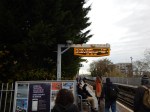

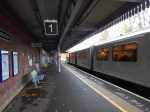
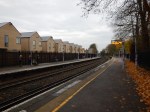
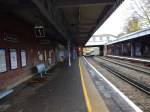
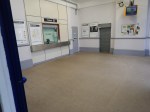
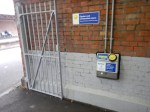
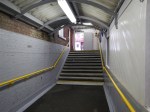
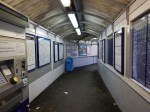
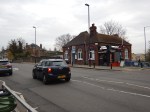
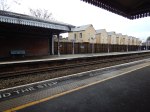
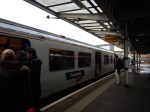

A few points.
Overcrowding
I took three Thameslink trains and one London Overground train this morning.
- St. Pancras to Catford – 8-cars and overcrowded until Farringdon.
- Catford to Crofton Park – 4-cars and crowded.
- Crofton Park to Peckham Rye – 4-cars and overcrowded
- Peckham Rye to Haggerston – 5-cars and plenty of space, with seats for those who wanted them.
Considering, that all these journeys were in the Off Peak, except for the last Overground train, it is just not good enough.
Crofton Park Station
Crofton Park station, is typical of many stations, that are South of the Thames.
- It is certainly scruffy.
- The main entrance is not step-free and the stairs are steep.
- The platforms are ready for twelve-car trains.
- There was a bad gap to mind, between train and platform.
- Staff were only noticeable by their absence.
- A fellow passenger said that announcements were unreliable.
- The information displays were not of the best.
- Typical Off peak services are 2 trains per hour (tph)
But it was certainly a station, that with the spending of some money to add lifts, could be a station of high quality and a modicum of quality.
The New Class 700 Trains
Hopefully, the new eight-car Class 700 trains will improve matters at Crofton Park, as they are better designed than the overcrowded four-car Class 319 trains, that I had to endure this morning.
This report on Brockley Central, says this about the new trains.
“We have also been pushing Thameslink to introduce new Class 700 trains, with 30% more capacity than the trains we currently have. The first of these will appear from the end of November and then replace our current trains at the rate of one per week.
So that is good news.
Extra Services To Victoria And Blackfriars
The report on Brockley Central, says this about the new services.
“From December 12th, four new trains will stop at Crofton Park between 7-9am . Three will go on to Denmark Hill and Victoria and one to Elephant & Castle and Blackfriars.
“The Victoria services currently pass through Crofton Park but don’t stop there, so they will now make the additional stop at Crofton Park.
So that is good news as well.
The interesting thing about these new train services, is that no new services are actually being introduced, but the extra service at Crofton Park is being created by getting a train that normally goes straight through to stop at Crofton Park.
The latest generation of trains, are designed to execute a stop and start in a minimum time, so I think we’ll see extra stops added on more than a few services.
This quick stop feature is achieved by several things.
- Powerful braking and acceleration.
- Wide doors.
- Level step between train and platform.
- Good information, so passengers getting on can find space.
- Good coordination between the driver and staff on the platform.
Increasingly, for some operators, a fast dwell time will be an important factor in choosing the trains to procure and providing a better service.
Here at Crofton Park station, it is being used to get extra trains to stop at the station.
Increasing Thsmeslink Frequency From 2 tph To 4 tph At Crofton Park Station
This is an aspiration for Crofton Park, but I suspect that this cannot be done at present, as there are not enough paths through the core Thameslink tunnel.
So until Thameslink is fully open in 2018, Crofton Park will probably get 2 tph.
Thameslink is consulting on the service when the full service opens.
This document on the Thameslink web site, shows two different services calling at Crofton Park.
- TL8 from Blackfriars (Welwyn Garden City in the Peaks) to Sevenoaks
- TL9 from Kentish Town (Luton in the Peaks) to Orpington.
Both have a frequency of 2 tph at all times,so this gives 4 tph through Crofton Park.
Thameslink put it like this in their proposal.
Thameslink Metro Routes TL8 and TL9 combine to provide four trains per hour (daily) between Central London, Catford, Bromley South and Bickley. During peak times these services may be supplemented by Southeastern Metro services providing six trains per hour.
That’s a well-thought out service, by any standards.
The Catford Metro
I always like calling lines like this a Metro.
As Govia Thameslink Railway have just given the name of the Great Northern Metro to the services out of Moorgate, why not call this line the Catford Metro?
It would call at the following stations.
- London Blackfriars
- Elephant & Castle
- Camberwell (if added)
- Denmark Hill
- Peckham Rye
- Nunhead
- Crofton Park
- Catford
- Bellingham
- Beckenham Hill
- Ravensbourne
- Shortlands
- Bromley South
So it looks like Crofton Park could be in the middle of a Catford Metro.
- It would have a frequency of at least 4 tph.
- It would be running new eight-car Class 700 trains.
- 2 tph would go North to each of Welwyn Garden City and Luton in the Peak
- 2 tph would go North to each of Blackfriars and Kentish Town in the Off Peak
- 2 tph would go South to each of Orpington and Sevenoaks.
- It would have a good connection to the 4 tph South London Line at Denmark Hill and Peckham Rye.
It’s a lot better than Crofton Park has at the present time!
Conclusion
Crofton Park has a big future.
The Class 319 Trains Keep Rolling On
Class 319 trains were built for Thameslink in the 1980s.
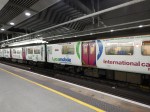
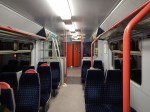

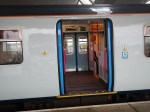
I was using the line to get from St. Pancras to Blackfriars and in a few years time, when twenty-four trains an hour run on the line, it’ll almost be like another Underground line across the city from North to South.
Class 319s are not the most attractive of trains and advertising doesn’t help. The good news is that are reliable 100 mph trains and with a refurbishment, they’ll last a few more years yet, as Northern Rail have shown.
I Finally Ride In A Refurbished Class 319 Train
I took these pictures of one of the Class 319 trains, that are being refurbished to run the new Northern Electric services between Liverpool, Manchester and the other towns covered by the North West Electrification.
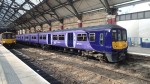


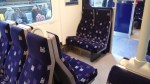
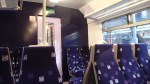

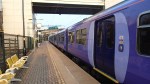
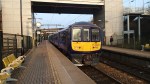
In my view the limited updating has been done well. The awful colour scheme shown in these pictures, when the trains ran between Brighton and Bedford has gone and the seats were certainly more comfortable than I remember them.
There was a bit of a problem on the information system, but the conductor said it was getting better.
A passenger I spoke to, said that she’d used the refurbished trains a few times and the biggest difference was all the extra seats and that they were so much more comfortable.
Compared to the typical diesel units they are replacing the Class 319 are four instead of two carriages and have a 100 mph top speed instead of 75 mph, so as more trains enter service and more lines are electrified, things will only get better.
Two things stick in my mind after this short trip to Wavertree Technology Park station and back in a Class 150 Sprinter.
Class 319 trains are a version of the iconic Mark 3 coach, as is the Class 150 train, I used for the return. But the ride quality and NVH (noise, vibration and harshness) comparison between the two trains was like that between say a brand new BMW and a five-year-old one that has done a hundred thousand miles. Somebody had got their spanners out and checked and tightened everything on the Class 319. The question of what a proper service and similar refurbishment would do for a Class 150, has to be asked.
This was probably the first time that I’ve sat in a newly-refurbished train just a few days after it entered service. The train was crowded and you could see fellow passengers with smiles on their faces, looking round the carriage. They were obviously riding a newly refurbished Class 319 for the first time.
I think if these Class 319 trains, were a person, they’d be Bruce Forsyth. Perhaps a bit long in the tooth, but still a very good reliable mover, that scrubs up well, with a face that is practical but not beautiful by any means.
Yet again Mark 3 coaches in one of their umpteen variants seem to be digging the UK rail industry out of a hole.
The Scenic Route From Leeds To Manchester
As I had plenty of time to travel across the Pennines to get from Leeds to Manchester Victoria, I took the scenic route on the Calder Valley Line.



The line is slower than a direct train to Piccadilly, taking probably twenty minutes longer, but I sat in a comfortable Class 156 train across the table from several friendly;y passengers, watching the countryside go by.
By coincidence today this article on Modern Railways web site, entitled Calder Valley Tops Wires Wishlist was published.
It says that full electrification of the line is the top priority after the current electrification is completed.
After all, they’ve got to create some high-quality electric railways on which to run all those shiny refurbished Class 319 trains. Thirty years old they may be, but they have the heart and soul of someone at least ten years younger. And there are a battalion of eight-six of the trains, should the powers-that-be send them all to the North to dispatch a lot of Pacers to menial duties or the scrapyard.
The electrification will mean that four-car electric trains will be able to run from Leeds via Halifax, Hebden Bridge and the Todmorden Curve all the way to Manchester Victoria, Liverpool and Blackpool.
It Looks Like This Class 319 Scrubbed Up Well
After a quick glance at the picture of Northern Rail’s first Class 319 train in a piece in Global Rail News, it looks like it’s scrubbed up well.
But then anything based 0n a Mark 3 coach, as are the 319s, are like well-respected actresses, who with a bit of make-up, TLC and some well-made clothes can outperform their younger fellows.
I’m looking forward to riding one from Liverpool Lime Street to a fully-rebuilt Manchester Victoria in a few weeks time.
Electrification Of Manchester To Preston Via Bolton
My trip to Bolton today, beautifully illustrated that the Manchester to Preston line needs to be electrified and the Ordsall Chord needs to be built. This chord would allow trains to serve both Manchester Piccadilly and Victoria stations as they pass through the city.
Trains do run directly between Piccadilly and Horwich Parkway, but going to the match, I did want to take some pictures in Manchester, so I walked to Victoria and got the train from there. Hopefully, when the scheme is fully implemented, all of the stations served by the line will get better connections at Piccadilly to and from the South.
Wikipedia says this about services between Horwich Parkway and Manchester
Northern Rail: there is a half-hourly service Monday to Saturdays northbound to Preston, with hourly extensions to Blackpool North and southbound to Bolton, with trains running alternately to Manchester Piccadilly or Manchester Victoria. An hourly service continues onwards to Stockport and Hazel Grove.
Trans-Pennine Express: one train per hour calls in each direction throughout the day, northbound to Blackpool North and southbound to Manchester Airport.
I think after the Ordsall Chord is built, it is reasonable to assume that a good proportion of the services will call at both Manchester stations. Certainly, it has been stated that Manchester Airport services will do this.
The train I got to the match from Victoria was one of Northern Rail’s better elderly diesel units, but coming back I was in one of TransPennine’s modern Class 185 trains.
After electrification of the line, I suspect there’ll be a bit of a reallocation of routes between the two train companies and most services on the line will be run by refurbished Class 319 trains. These are four carriages to a trainset and they can also be run in eight and twelve coach formations, so they can run services based on the newly-electrified lines in a very flexible manner, suited to the traffic.
I personally think that the train service between Manchester and Blackpool is totally inadequate at just a couple of rather pedestrian trains per hour.
As electrification is likely to bring a raising of speed limits and a larger pool of bigger and much better rolling stock, I would think that in a few years time, the Manchester-Blackpool service will bear no relation to the terrible one it is today.
At present it is not just the Manchester-Liverpool and Manchester-Preston-Routes that are being electrified. In their description of the electrification in this report, Network Rail show this map.
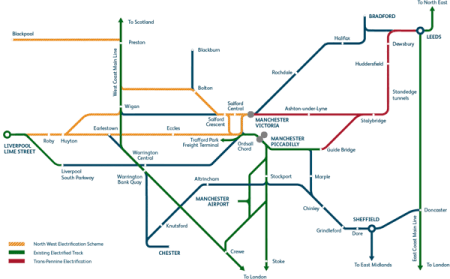
Northern Electrification Map
Note how Wigan-Liverpool via Huyton, Manchester Victoria-Leeds via Huddersfield and Guide Bridge-Stalybridge are also shown as going to be electrified. As is the Windermere Branch Line, which is not shown on this map. All are costed and funded, but there have been a few engineering problems, meaning that the Manchester to Liverpool services didn’t start when they should have done. The problems are reported in the Liverpool Echo.
Network Rail has admitted the long-awaited launch of electric train services between Lime Street and Manchester Victoria and Manchester Airport will now be postponed until next year, possibly as late as February.
The serious delay has been blamed on “unexpected ground conditions and technical issues” encountered while installing the overhead catenary wires on the 184-year-old former Liverpool & Manchester Railway mainline, said Network Rail.
This will only be the start of the revolution.
As there are 86 Class 319 trainsets, that are to be split between the North and the Great Western Main Line, I’m sure that enough sets can be found to run a good service between the following destinations, when the current electrification plans are complete.
- Liverpool-Blackpool
- Liverpool-Lancaster, Carlisle and Scotland
- Liverpool-Leeds/Newcastle via Manchester Victoria
- Manchester-Blackpool
- Preston-Windermere
Services from Liverpool, that go North up the West Coast Main Line, don’t run at present, except to Preston and Blackpool. But if the lines are all electric, subject to the paths being found, I think that one of the operators will run direct services between Liverpool and Glasgow. Failing that Liverpool to Blackpool services will probably be timed to connect with services to both Scotland and the South at Preston. Or perhaps some of the First TransPennine services between Scotland and Manchester , could divide and connect at Preston. But whatever happens travel between Liverpool and Scotland will be a lot easier.
Once electrification gets to Leeds, this will enable services from Manchester and Liverpool to go all the way to Newcastle, opening up more possibilities for new services.
I don’t believe that this will be the end of the development of electric services in the North.
The Class 319 trains currently ply between Bedford and Brighton, which by road is about 120 miles. So they should be capable of serving the slightly shorter distance between Liverpool and Hull. It would seem they are capable of travelling across the North of England reliably. As they are 100 mph electric trains, they certainly wouldn’t be slower on the route than the current Class 185 trains and probably only slightly slower than the new Class 350 trains, that First TransPennine use on Manchester-Scotland services.
In a few months time, electric services between Liverpool and Manchester will commence, probably followed about two years later by electric services from Liverpool and Manchester to Preston and Blackpool.
If the North like their refurbished trains running on electrified lines, it will be hard to resist the pressure to put in more electrification.
If Network Rail can get its act together on electrification, I think that by 2022, the number of electrified lines in the North will be greater than currently planned.
The route from Manchester to Sheffield by the Hope Valley Line will probably be a priority, as when the Midland Main Line from Sheffield to Doncaster, Nottingham and London is electrified in 2020, it will open up all sorts of routes like Liverpool and Manchester to Nottingham and the East Midlands.
If Hull to Leeds and Doncaster is electrified, then this opens up the possibility of electric Liverpool and Manchester to Hull services via Leeds. The BBC has this report about ministers backing the electrification.
The government has backed plans to electrify the Hull to Selby rail line.
Transport Secretary Patrick McLoughlin said he was making £2.5m available to take the project to the next stage
First Hull Trains is planning to spend £94m electrifying 70 miles (112km) of track to improve connections with the wider rail network.
Work is already under way to electrify the line from Manchester to Leeds, York and Selby and is due to be completed by December 2018.
This one will happen, as First Hull Trains wouldn’t spend £94million of their own money, if they didn’t think they’d make a decent return. They are probably trying to get their hands on some of the InterCity225s that will be made redundant by the new Class 800/801 trains.
It is almost if a hundred miles per hour railway across the country is fighting its way to birth by stealth, aided by some refurbished over twenty-years old British Rail rolling stock.
An interesting aside is what will happen to the thirty one InterCity225s. I have heard a rumour that some will be cascaded to the Greater Anglia Main Line to run London to Ipswich and Norwich services currently run by Class 90 locomotives hauling Mark 3 coaches.
I haven’t travelled in an InterCity225 for some months, but the last time I did on a short trip to Peterborough, they did not appear to my untrained eye to be scrapyard fodder yet.
As they are genuine 200 kph high speed trains, could we see them providing fast services from Liverpool to Newcastle and Hull in under two hours? Politicians and comedians may well have poked fun at British Rail for years, but now that we have a UK cash flow shortage, who are stepping up to the plate to help out our impoverished railways? A whole series of British Rail trains like the InterCity 225s and Class 319. No-one should forget the refurbished Class 315, Class 317 and InterCity125s, which will fill other gaps in the bad planning of our railways in theThatcher, Blair and Brown decades.
The only problem with the InterCity225s, is that they may be too long for some of the stations across the Pennines. But solving that is in the grand scheme of things a relatively minor problem for good engineers, architects and construction teams. Also, as they get replaced will some end up on the West Coast Main Line providing direct services to Blackpool?
Once the basic spine across the country is complete and running high-capacity services fast electric services between Blackpool, Liverpool and Manchester, in the West and Leeds, Hull and Newcastle in the East, two things will happen.
Politicians will press Network Rail to create a genuine high speed railway or HS3, across the country, as they love high profile projects, by which they will be remembered.
But more importantly, all of those connecting lines across the North will be prime candidates foe electrification, so they can be home to some more Class 319s.
HS3 will eventually be created, but only when the new electrified service is in need of more capacity.
I think that the electrification in the North is an unstoppable series of projects, that will only finish, when all lines are electrified.
Talking to people on the trains to Bolton yesterday, I don’t think the passengers know how their lives will change, when what is certainly going to be implemented happens.
One very extensive traveller, I met on the train between Manchester Victoria and Horwich Parkway, didn’t realise that the new electric trains in a couple of years would be larger units that the current diesels. He also had travelled on Thameslink to his daughter in South London and actually thought the current trains on that route were pretty good. He hadn’t realised that these would be running after a basic refurbishment all around Manchester.
And then on the trip back to Piccadilly, I met two young ladies, who were coming all the way from Eskdale to see the Who in Manchester. They didn’t kow that the branch to Windermere is going to be upgraded and said that it would have made their journey today a lot easier.
The rail industry in the North needs to spread the word. I have a feeling that the Class 319s, when they start operating in a few months between Liverpool and Manchester will start the process.
Refurbishing A Northern Rail Class 319
There has been a bit of disquiet up North, about the new Liverpool to Manchester electrified service being run by late-1980s vintage Class 319 trains. I took a few pictures in October and they can be seen on this post.
I think it is best to charitably describe the interiors as something designed by a committee of accountants, with a love of pink!
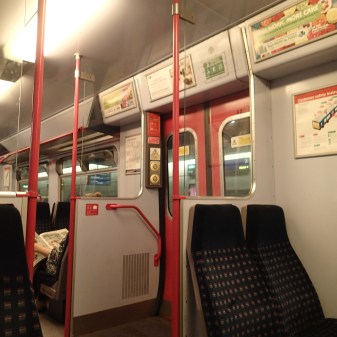
I would use the word dreadful liberally! Now look at this page on the Northern Rail web site and in particular this image.
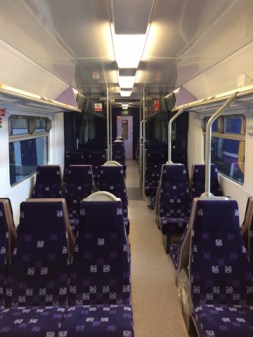
Inside A Northern Rail Class 319
Where’s all the pink gone? Or are Northern Rail applying a liberal use of Photoshop?
I doubt it’s the latter, but it does show how British Rail got the engineering right with the Mark 3 coach, on which the Class 319 is based.
On the page on the Northern Rail website, there’s a time-lapse video of the refurbishment, if you still think it’s all fake.
The proof of the pudding will be in the eating and I can’t wait to ride between Liverpool and Manchester on an electric train.
To be fair to the Class 319, it must be one of the ugliest trains on the UK network and I bet everybody wishes they’d got someone like Kenneth Grange to upsex the front end, as he did for the InterCity 125. But as an old Suffolk horseman said to me.
A good horse is never a bad colour.
The Class 319 is a good train, but the old colour isn’t the best.
The Trains Going North
Today, I went from East Croydon to Luton and then on to Bedford in two Class 319 electric trains.
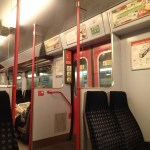
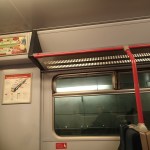
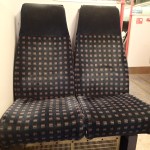
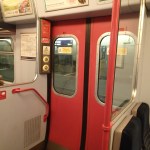

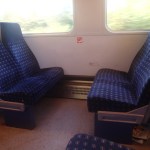
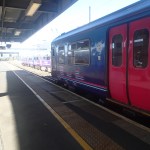

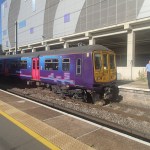
They were originally going to be fully refurbished, but now according to Wikipedia, the refurbishment will be more basic.
The cascaded trains will get a more basic refurbishment than previously proposed, which will include a new Passenger Information system, LED lighting, new seat covers and an internal and external repaint.
It will be interesting to see the trains in Lancashire. Certainly, the ones I rode today had a poor passenger information system and too much awful pink paint.
But the plus point is like all Mark 3-derived trains, they rode smoothly and quickly through the countryside, at speeds approaching their maximum of 100 mph.
 The Anonymous Widower