The Connection Between Northern And Circle/District Lines At Bank Station
I’ve done this interchange at Bank station a few times but not that I remember it. These pictures show my route as I walked from a southbound Northern Line train to the Circle/District Lines, where I went one stop to Cannon Street station.

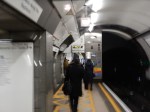


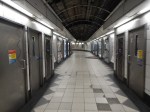
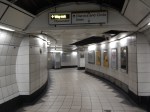
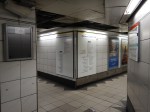
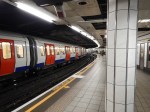
The Northern Line is unusual in Bank station, in that the southbound track is on the right hand side of the two lines, whereas normally in the UK, they follow the same rules as the roads.
I walked down the platform, took the exit at the far end and then used the escalators to get to the passageway leading to the Circle/District Line platforms.
When the station is upgraded with a new Cannon Street entrance, a new southbound tunnel will be bored several metres to the west and the space between the two tunnels will become a generous circulation space, with four cross tunnels linking the two Northern Line platforms, which hopefully will be wider than the current narrow ones.
Connections to and from the circulation space will be as follows.
- A set of three escalators will ascend to the new entrance. They are actually two sets vertically, with a landing to turn everthing the right way.
- Two travalators will connect to the Central Line platforms to the North.
- Another set of three escalators will descend to the DLR platforms some ten metres below.
- Two lifts will connect to the new entrance above and the DLR platforms below.
- The two escalators and their connection to the Circle/District Lines will be opened out and upgraded.
I’m not sure how this space connects to the Waterloo and City Line, but I’m sure that the architects have a solution.
But I do think, it’s rather a neat solution to convecting all the lines together, as the amount of walking that passengers will do compared to the current station will be greatly reduced.
I also think, it’s going to be a straightforward station to build, in that you can leave the current platforms to handle the trains until you’ve dug most of the station tunnel for the new southbound line, completing as much of the entrance as you want above the working Northern Line and DLR. Once the Northern Line is closed, the circulation space with all its lifts, escalators and travalators is put together.
I think a lot of the work will be done from the top in a big hole, lifting everything in, by the use of large cranes.
Will much of the mechanical infrastructure be put together in a nice, warm, dry factory?
The Bermondsey Dive-Under
For some time I’ve been looking for a good article about the Bermondsey dive-under. This article on Ramboll’s web site is a good one. But then I think it was written by one of the designers of the scheme that is currently being built.
What Really Happened At Walthamstow Central
I heard a lot of complaints about the closure of the Victoria Line in August. So I was pleased to see this article in Rail Engineer entitled Life is not a rehearsal… but pumping concrete can be!
As detailed by Transport for London this is a summary of what needed to be done.
Improvement work planned this summer by London Underground (LU) will lead to the operation of 36 trains per hour. From April 2016, this will provide a train every 100 seconds during peak hours, making the Victoria line the UK’s highest frequency railway and comparable with the very best in the world. All peak-time trains will run the full length of the line from Walthamstow Central to Brixton, giving a 40% capacity boost for customers northeast of Seven Sisters.
But it wasn’t that simple to achieve and the Rail Engineer article explains the main problem of a crossing at Walthamstow.
The trackwork kept pace with the times, but wasn’t shiny and, of course, it was out of sight. At Walthamstow – the end of the line – the track arrangement ended in a scissors crossover. For the non-pway engineers, this is a compact and complex track arrangement where terminating trains arriving at the crossover from the south in the northbound tunnel can be routed into either of the two platforms at Walthamstow Central, then routed back from either platform into the southbound tunnel.
Changing it wasn’t simple and they used every trick in the book to do the project.
- A bespoke overhead crane was installed at the crossover, for ease of working, and after the job was completed it was left behind in the tunnel, so it could be used again if needed.
- A number of demolition techniques were used to remove the old track and its concrete base.
- They even wrapped the new track in polythene, so that no concrete got on the rails.
- They had actually rehearsed the major concrete pouring which required fifty truck-loads of concrete in the open at Acton Depot.
The major outcome is that the speed of trains through the crossing has been raised from 20 mph to 35 mph, which is necessary to achieve thirty-six trains an hour through London.
This is the sort of project that would make good television!
Except for one thing!
Nothing went wrong and the project was delivered thirty-six hours early.
How To Build A Railway
This article from Rail Engineer, discusses the building of the Borders Railway.
It doesn’t have seem to have been plain sailing all the way. One section deals with what Network Rail called the Utilities Challenge.
In discussion with Hugh, it was clear that the diversion of public utilities was one area where some work had not gone well. Although some utilities had diverted their services in an effective manner, other companies had proved problematic and had not been able to give a time for their diversions. Some utilities had many different departments, were very procedurally orientated and could not programme their work effectively. For example, materials could not be ordered until a certain stage was complete.
Often problems were discovered at a late stage. In one case, a problem on an associated route required a road closure that then delayed work for a further three months. Hugh felt that, for some companies, the length of their supply chain would not be acceptable on railway projects. Effective liaison is not possible when the project only has contact with two men digging holes who are sub-sub-contractors.
Doesn’t any of us who’s ever connected a new property to the mains know of the arrogance of those doing the work.
It’s happened before to transport projects.
This article on the BBC web site, which talks about delays to the construction of Phase 2 of the Nottingham Express Transit says this.
The contractors blamed the latest delay on the need relocate underground utilities.
This article on the Wolverhampton Express and Star talks about delays to the construction of the Midland Metro.
Issues that have caused the delays include underground utilities not being in the locations that transport authority Centro were led to believe, and the strength of the slabs currently in place.
Perhaps Network Rail and other big users of utilities, should create a web site, where we can all enter our complaints.
Or how about a web site called How To Sue Your Surveyor!
An Innovative Use Of The School Holidays
In trying to find out what was going on at Whitechapel station because of Crossrail this weekend, I found this document entitled Crane and site related activity in Swanlea School on the Whitechapel Current Works page of the Crossrail web site. he document says this.
We will position a small crane at the western end of Swanlea Schools grounds and use the crane to lift material over the school perimeter wall and in to the Crossrail Essex Wharf, Durward Street site. Delivery vehicles will access Swanlea School between 08:00 and 22:00 on Mondays to Sundays during this time. In addition to this, the Crossrail site boundary area will extend into Swanlea School grounds during the school holiday period. We will use the area to carry out preparatory work including the creation of wooden frames for future concrete pours and steel reinforcement pre-fabrication.
This Google Map image shows the relationship between Swanlea School and the Whitechapel station site.
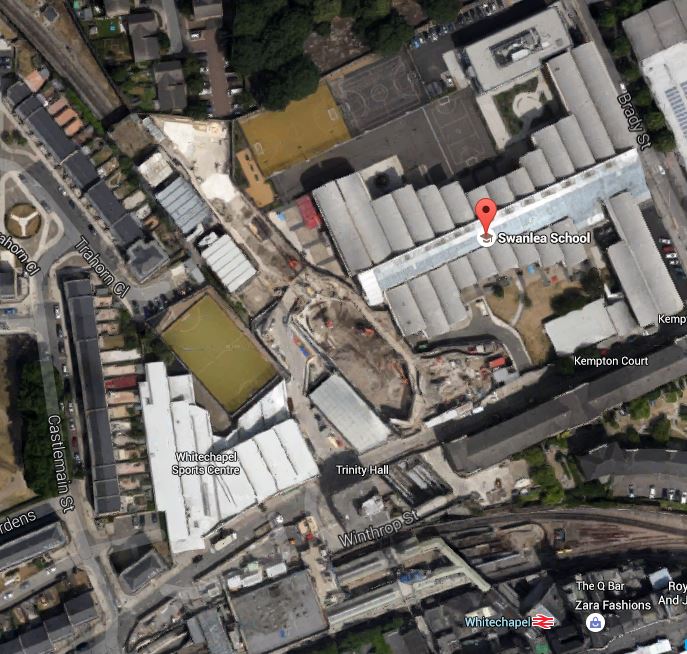
Swanlea School And Whitechapel Station
I would assume that Crossrail are paying an appropriate fee for the disruption to the school grounds.
Whitechapel station is a very congested site in a busy area of East London and Crossrail seem to have used every trick in the book, to avoid unnecessary pain and disruption to residents, visitors and passengers.
There are a lot of people worried about what will happen, if Crossrail 2 gets built through their area. They should take a trip to Whitechapel and have a look round to see how intricate heavy construction work should be done.
Extending Westbourne Park Bus Garage
I have noticed this structure grow over the last few months and have wandered what it is.
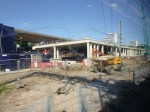

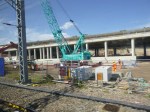


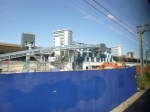
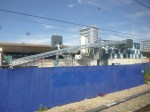
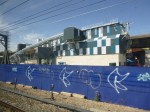
It now looks like it might be the extension to the bus parking area talked about in this article on Tower Transit in Wikipedia. This is said.
A new 180m bus parking area is to be built on a raised platform over railway lines as part of the Crossrail project.
This Google Map shows the garage squeezed under the Westway.

Westbourne Park Bus Garage
I think the Google Map was taken some time ago, as all that appears visible is probably the foundations furthest away from the bus garage.
It’s probably a sensible use for the site, where no-one would probably want to live sandwiched between the Westway and the Great Western Main Line.
It’s also a very good way of using the air space over the railway to effectively create new land.
Accessible Crossrail Sites
By accessible in this article, I don’t mean construction sites, where anybody could go and get around no matter what disability they have, but ones where anybody who could walk at least a few steps or be pushed in a wheel-chair can go to have a good look at the progress of London’s largest construction project.
Some sites worth visiting are stations, that are being rebuilt, at the same time as being fully operational.
Abbey Wood Station – Quite a large modern station is being created.
Hanwell Station – A Victorian gem is being improved and modernised.
Custom House Station – A new station is being built by the DLR station
Whitechapel – A massive project to create the Jewel of the East
There are also other places, where you can see a lot.
Eynsham Drive Bridge in Abbey Wood – It is over the top of the work at Abbey Wood.
Pudding Mill Lane DLR Station – In the middle of a Crossrail portal.
The Slow Demolition Job At Highbury And Islington Station
I went past Highbury and Islington station yesterday and they’re still demolishing the old Post Office.
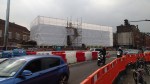
Has any other demolition job taken so long? Original gossip in the newsagents and at the station, said it would take a week. I first posted that work had started on the first of February.
I can only thing that the building is built with lots of asbestos.
The Crossrail Cambridge Heath Site At Whitechapel
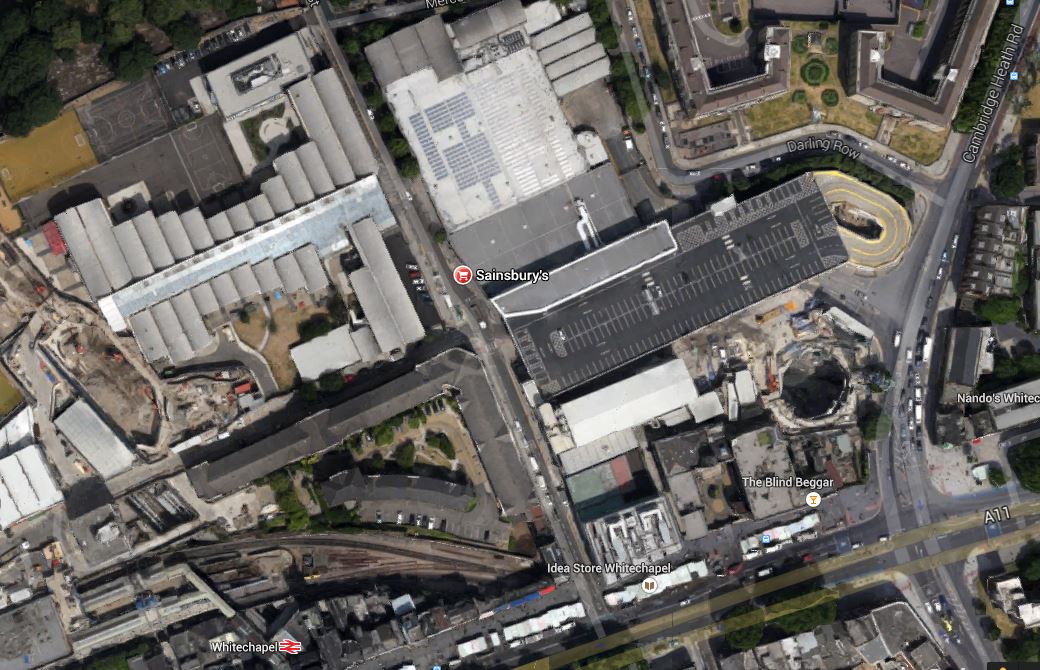
As the pictures of the delivery showed, the Whitechapel station site is extremely crowded. Luckily, the major occupier of the area, is a large Sainsburys supermarket, which seems to have been rebuilt, as I remember using it around the turn of the millennium and it was all massive surface car parks, which have now seemed to have gone. This Google Earth image shows the area from the supermarket to the Whitechapel Road.
Whitechapel Station, Crossrail And Sainsburys
The Sainsburys is large and it has a multi-story car park, which stretches across the picture.
Note the big hole to the South of the supermarket, which is thirty-two metres deep and is Crossrail’s Cambridge Heath shaft to provide emergency access and ventilation to the Crossrail tunnels. Read more about the shaft and the other works at Whitechapel station in this page on Crossrail’s web site. This is all you can see from outside the site.
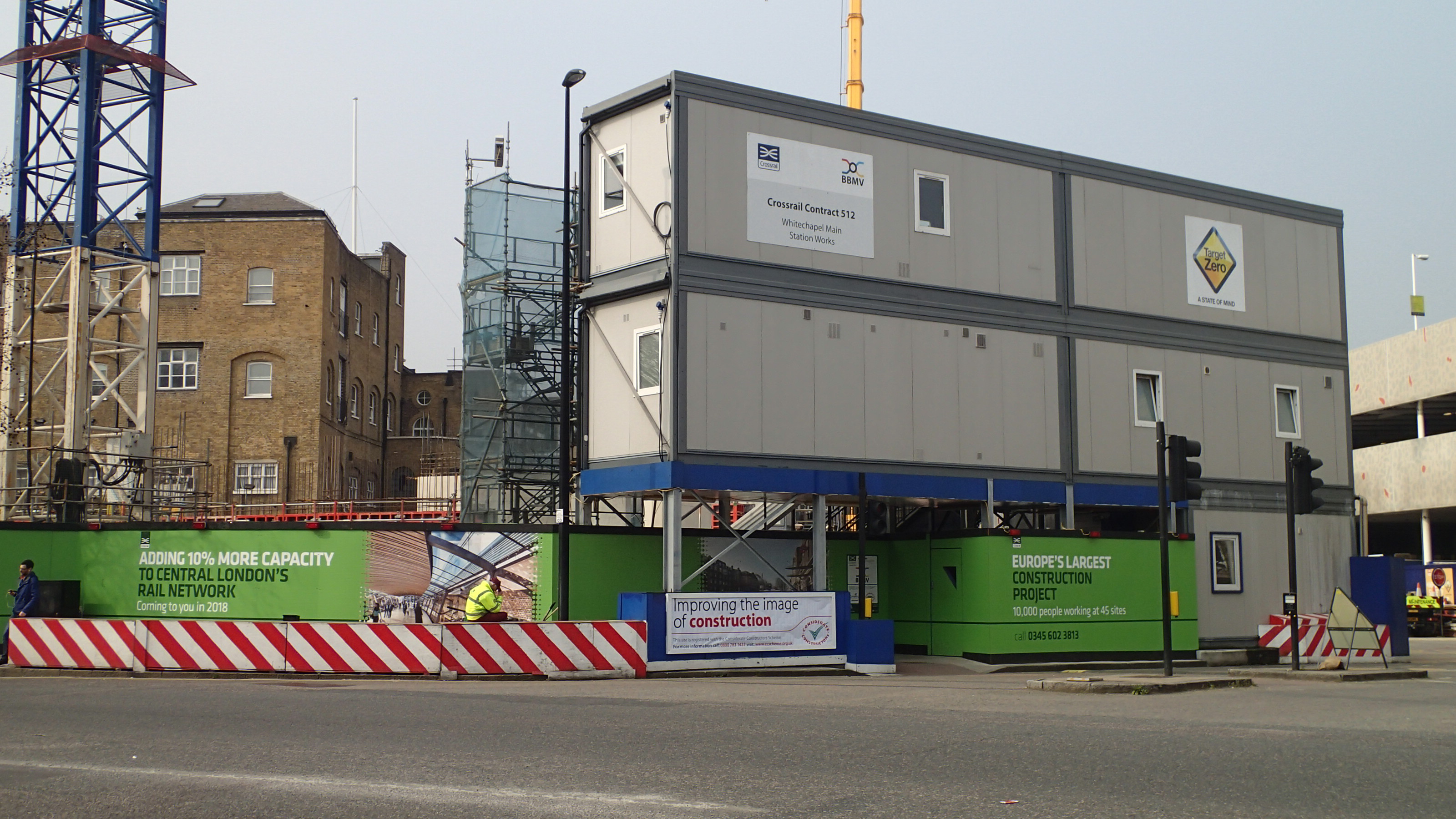
The Crossrail Cambridge Heath Site At Whitechapel
I was standing in Cambridge Heath Road, which is the road on the right of the image, which goes past the site and Sainsburys.
All this site used to be the Mann, Crossman and Paulin brewery,of which the only remains are the ornamental gates and the Blind Beggar public house. The latter is marked on the map and is notorious for its association with gang violence of the 1960s.
I wonder what the customers of those days, would make of the area now!
Crossrail 2 Under De Beauvoir Town
Crossrail 2 will go under De Beauvoir Town on its route through East London. This map from the Crossrail 2 web site shows the safeguarded area around De Beauvoir Square.
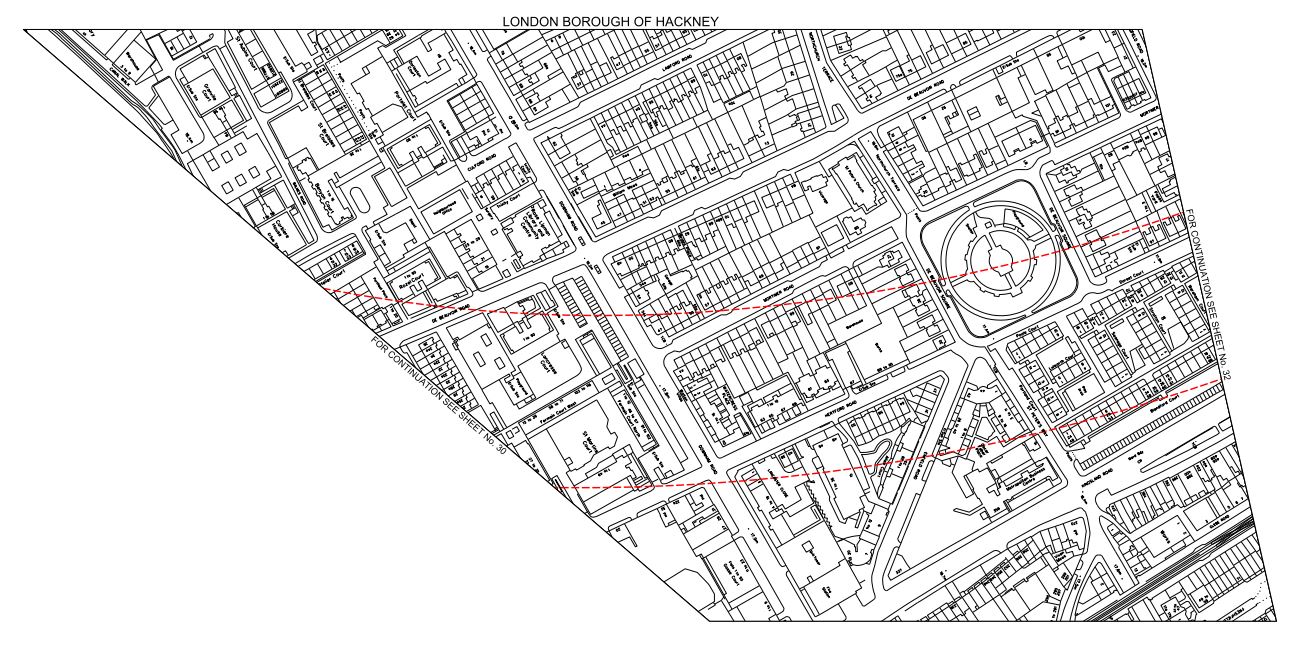
Crossrail 2 In De Beauvoir Town
The safeguarded area is shown with a red border. As with most of these maps, I’m posting, north is to the right and east is to the bottom. Hopefully, TfL will post some better and more understandable maps soon.
Crossrail 2 certainly won’t affect me, if I’m still around, as I live to the north-west of the square.
But as I explained in this post about Crossrail 2 At Dalston, the line will have to go deep to get under High Speed One, so I suspect that noise and vibration during construction and operation will be no worse than that line. I haven’t stood over High Speed One and tried to experience the trains, but does anybody know if they can heard or felt from above?
Incidentally, I can’t find any reports on the Internet about any problems.
As I also believe that stations will be built from the tunnel up, with all spoil being taken out through the tunnel and that as there seem to be no proposals to build any access shafts in the Dalston and De Beauvoir areas, I can see too much surface disruption being a problem.
To help matters there seems to be no plans to create massive stations as at Moorgate, Bond Street and Tottenham Court Road on Crossrail.
Hopefully Crossrail 2 will be a London’s first stealth railway!
 The Anonymous Widower