An Express Station
Crossrail have put up this time-lapse video of the building of the structure of Custom House station.
If you want to read the full details, it’s here on the Crossrail web site.
I believe the station is a major advance in the construction of buildings.
One of the engineers working on the station, told me that compared to traditional methods of pouring concrete on site, the quality is a lot better.
As Crossrail are claiming the whole structure was put together in a year and a day, it would appear to be quicker too!
Crossrail’s Unrecognised Legacy
I have just read this article on the BBC web site, which is entitled Crossrail: Who wants to work in a tunnel?
It contains interviews with those that work underground and shows how Crossrail has gone out of its way to create jobs for those living locally and give them training if required.
It is a classic illustration of how you use a large infrastructure project for which there is an urgent need to get people workimng and give them skills.
I wonder if the Northern Hub and the Borders Railway are having similar effects. If they aren’t, I blame the management and the politicians for not using the right employment model.
Metro To Stalingrad
After Sacre Coeur I took Line 2 of the Metro to Stalingrad.

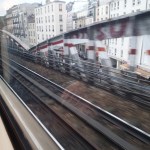
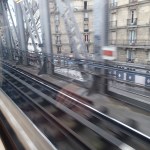
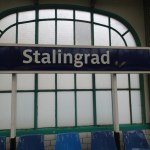
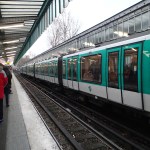
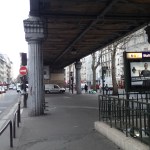

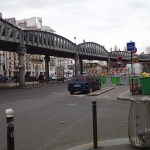
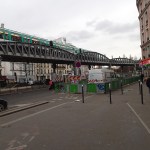

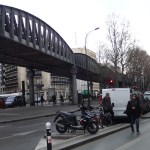
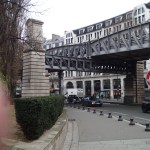


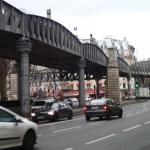
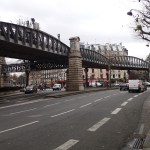
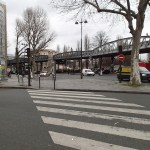
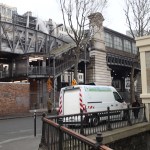
A lot of the line is an elevated railway on massive steel viaducts, something that isn’t very common in London, except for parts of the Docklands Light Railway and the Overground.
In a modern version, we tend to use massive bowspring or tied-arch bridges as at Haggerston and Shoreditch High Street rather than the heavy Victorian girders.
Both forms done correctly and with taste, add interest to the street-scape.
The Party’s Over!
Network Rail and their engineers may have had problems at Kings Cross, but the new bridge at South Tottenham station on the Gospel Oak to Barking Line opened a few minutes before the previously published time of ten o’clock.
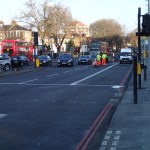
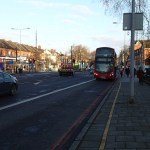
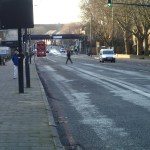
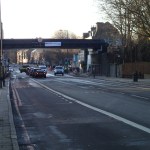
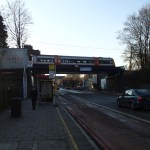
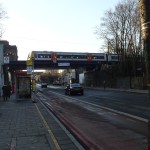
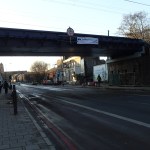
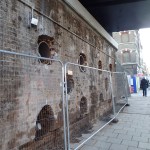
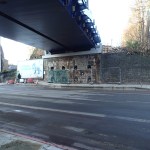
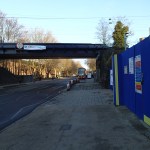
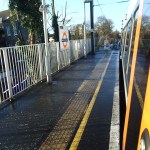
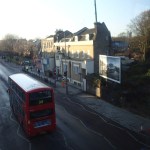
I was able to get the 09:45 train westwards from the station towards Gospel Oak.
I wonder how long it takes before a vandal puts some graffiti on the brand new bridge.
Steelwork At London Bridge
I took these pictures of the new steelwork at London Bridge station, that will carry the extra through tracks over Borough High Street and then to and from Charing Cross.
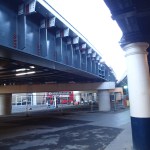
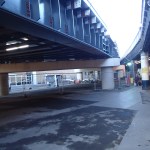
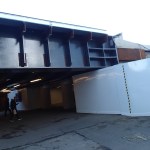
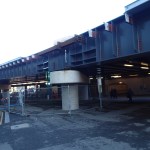
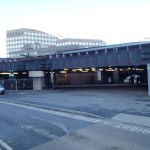
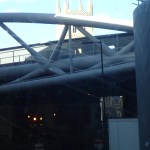

I had never used the mainline London Bridge station, until I moved to Dalston. But now, I use it regularly, as I just get a 141 bus through the City to and from the bus station by The Shard.
But don’t wait too long in the bus station, as there are sometimes down-draughts generated by the building.
What Is Happening At Highbury Corner?
Highbury Corner is a notorious junction, which I used to avoid when I drove, as it could often cause a lot of delay.
These pictures show barriers going up and the crossing outside Highbury and Islington station.
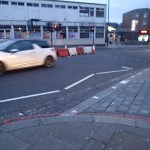


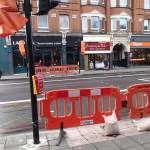

It would also appear that a new crossing is being built about fifty metres up Holloway Road. The guy in the paper shop told me that the main crossing will be closed and that the old Post Office will be demolished. I found this summary of the works here on the TfL web site. All the work is to replace a weak bridge and it says this about the old Post Office in particular.
The empty Post Office building needs to be demolished, and we expect to start work in the week beginning Monday 5 January 2015. The demolition work will be completed by March 2015.
We will make every effort to minimise the impact of noise and dust during the demolition.
The footpaths next to the old Post Office will remain open, although hoardings around the demolition site will make the footpaths narrower. This might create some crowding at busy times, impacting journeys in and out of the station.
In 2015, the main works to replace the bridge will begin.
I think it will be a good idea for pedestrians and drivers to avoid the area until 2017, when the article says that the bridge works will be complete.
The station is at a location where development would surely be worthwhile. Especially, if it put right all of the mistakes of the 1960s, which produced a Victoria Line station for the fit, agile and young. Below ground it’s a dump!
At least though it would appear that the western side of the roundabout will have reduced traffic levels and bus/Underground/Overground connections will be easier. The centre of the roundabout with its trees would also be opened up to the public.
My hopes for the bus/train interchange would include.
1. The 277 bus go right around to terminate in front of the station, ready to pick up passengers arriving at the station.
2. Easy interchange at the station from the 277 to either the 43 or the 271 to go north up Holloway Road towards Archway, Highgate and Barnet. At present you need to use two light-controlled crossings to cross two busy main roads, to affect the change.
3. The reverse journey on a southbound 43 or 271 to catch a 277 eastwards is probably more difficult, unless the buses cut through the western side of the roundabout.
But I think, I’m asking for too much!
I doubt though the development will be as grand as the original.

The Old Highbury and Islington Station
The entry on Wikipedia says this about the history of the station building.
The NLR station was damaged by a V-1 flying bomb on 27 June 1944, however, its main building remained in use until it was demolished in the 1960s during the building of the Victoria line. The original westbound platform buildings remain, as does a small part of the original entrance to the left of the present station entrance.
The Victoria Line might have had world leading automatic train operation when it opened, but most of the architecture and building of the stations, was some of the worst in the UK in the 1960s.
An End-Of-Year Report For The Crossrail Surface Works
To many, Crossrail is all about the tunnels under London, but this report from New Civil Engineer gives the status for the extensive works being done on the surface by Network Rail, which they say are now one third complete.
Reading the report, makes me realise that Crossrail will bring a lot of work on new and refurbished buildings in the next year!
It’s almost as if much of London lives in the midst of a giant building site. But at least it’s a well-run one!
VolkerFitzpatrick Are Having A Christmas Party At South Tottenham
The bridge at South Tottenham station, that carries the Gospel Oak to Barking Line over Tottenham High Road.
The road will be closed over Christmas and it looks it’ll be quite a party.

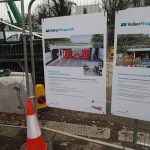
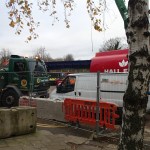
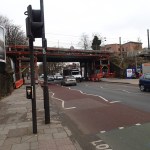

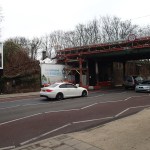

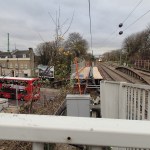
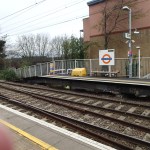
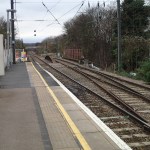
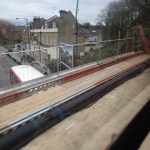

Note the large blue bridge in the pictures. If there is going to be a decent webcam, then this could be better Christmas television than most.
Coal Mining in Whitechapel
I’ve just received Crossrail’s Autumn 2014 newsletter and there’s a section about using coal mining techniques to connect the Crossrail platforms at Whitechapel to the rest of the station and the surface. They say this.
An uphill excavator is being used for the first time in the UK on the Crossrail project. The machine is being used at Whitechapel, before installing the escalators that will take passengers from the platforms (over 30 metres below ground) to and from street level.
Due to difficulties in accessing the station box to dig downwards, Crossrail’s Whitechapel contractor BBMV decided that excavating the escalator barrel upwards, starting from the platform base, was the best solution.
The uphill excavator, traditionally used in coal mines, is being used in an innovative way on the Crossrail project. Built to do two jobs in one, it works its way up by excavating the earth using a digger fixed to the front. With a spray nozzle attached to the top of the machine it also installs the tunnel lining as it goes.
I suspect this won’t be the last place that the technique is used under London. I think it could find applications in connecting stations to the surface in a reversing loop with stations, or perhaps adding step-free access to a deep Underground station.
Whatever happens, it does seem that engineers are throwing conventional thinking out of the window.
Tunnelling certainly seems to be fun!
Hanwell Station Gets A Second Entrance
Hanwell station, which will become a stop on Crossrail, is a Grade II Listed building, which according to Wikipedia, English Heritage says is in very poor condition.
A second entrance on the South side of the line has now been opened.
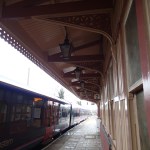
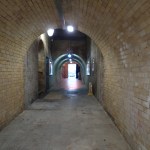
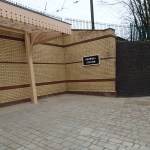
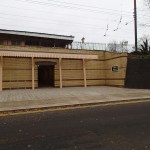
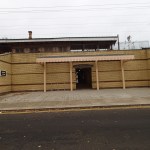
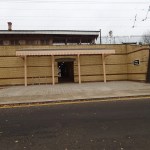
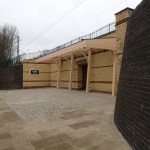
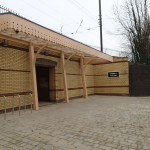
If this is the standard to which the rest of the station will be refurbished, I suspect that English Heritage will be pleased to update their view of the station.
As I’m writing this, I’m listening to Radio 5, where there has just been a piece talking about a shortage of bricklayers. Obviously, some very good ones were working hard on Hanwell station.
When I visited Hanwell station in October, I gave it a score of 3/10 and said it was a relic from the past.
I now have high hopes, that when this station opens fopr Crossrail, that it will be one of the jewels in London’s new train line.
 The Anonymous Widower