Asbestos In M&S Killed My Wife — Gove’s Ruling Is A Disgrace
The title of this post, is the same as that of this article in The Sunday Times.
It is in a section of the paper, which is entitled Act Now In Asbestos, where the paper has a campaign.
These are the first three paragraphs.
Janice Allen met and fell in love with her husband, Stuart, when they worked together at Marks & Spencer’s flagship store in London’s Marble Arch.
The shop would end up killing her.
Janice died of mesothelioma, a cancer she got from exposure to asbestos. The M&S store was constructed using the toxic building material and it was found in several locations where she worked. The department store would award her substantial damages before she died at a hospice in Kent in June 2018.
I have only worked with asbestos once.
This picture shows my father’s printing works in Station Road, Wood Green.
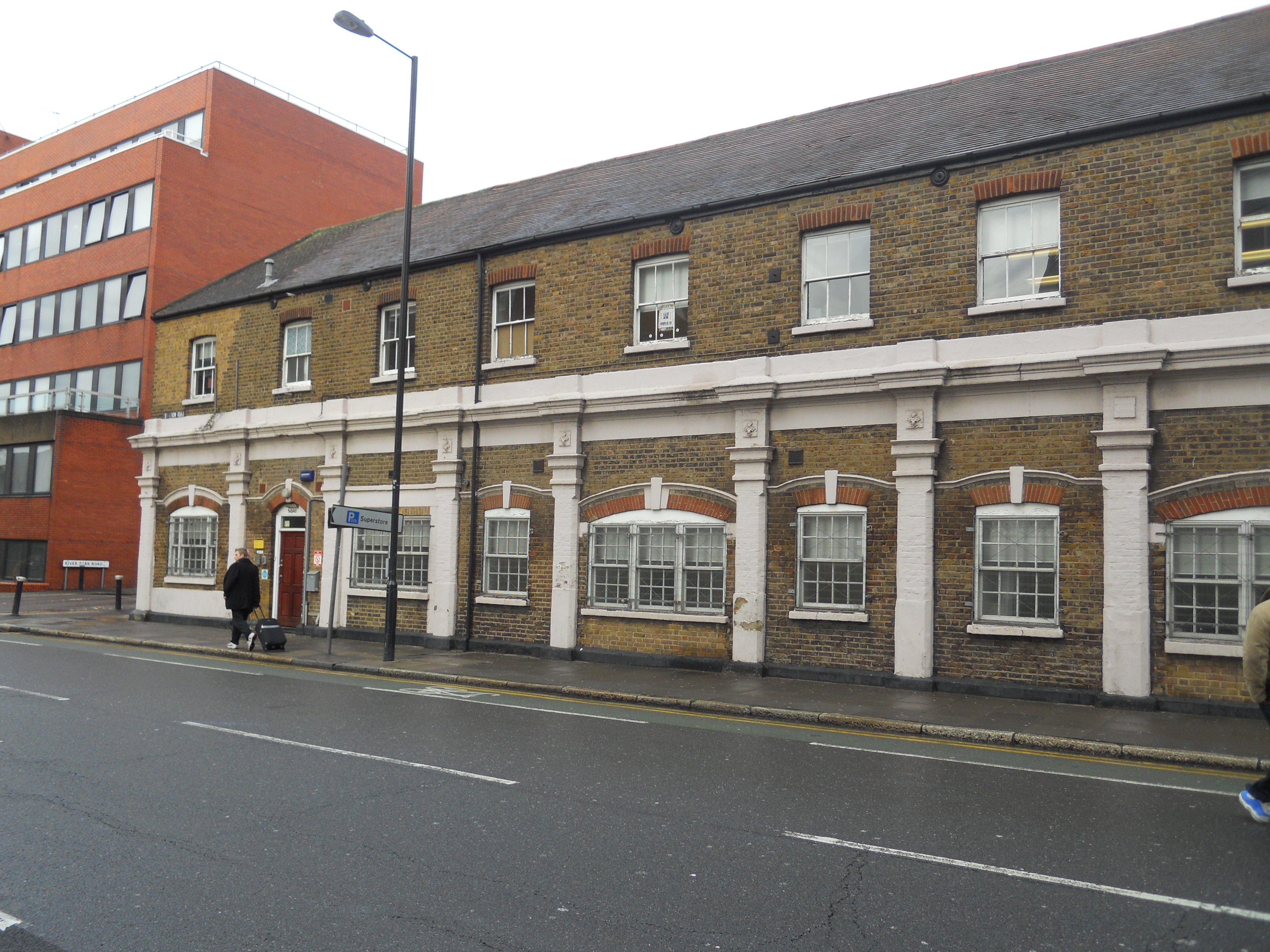
They were not the most salubrious of premises and my father was always making improvements.
My father was a very good practical carpenter and an accomplished painter and decorator.
The back wall of the building was covered on the inside with damp and mould, which even in the 1950s, he thought could be a health hazard, so he decided to do something about it.
- Above a certain height he cleaned the wall and painted it with a standard magnolia paint.
- About two metres above the ground, he fixed a two-by-two batten piece of wood to the wall.
- He also fixed another one to the wall, perhaps halfway up.
- To cover all the damp and mould, he then fixed corrugated asbestos cement sheeting to the two battens with galvanised roofing nails.
- To finish it off he screwed a piece of slatting to the top batten, which he painted a fetching blue colour.
The damp and mould was now out of sight and out of mind.
I remember how this construction was done, as I was my father’s ten-year-old assistant.
Although we’d used asbestos cement sheeting, I don’t think either my father or myself inhaled any asbestos dust, although we weren’t wearing masks, as no-one did in those days.
ICI And Asbestos
My next encounter with asbestos was at ICI in the late 1960s.
- A lot of chemical plants, built before the Second World War were riddled with it.
- But ICI, knew of the problems, and I was given strong warnings about asbestos.
- As I was only putting instruments on plants, with experienced plant fitters, I didn’t have an real encounters with it.
But why if ICI were so anti, were builders still using it and otherwise sensible companies not removing it from their buildings?
This is the large paragraph in The Times article.
An M&S spokesman said: “Like many older buildings, Marble Arch dates back to the interwar era when asbestos was commonly used in construction, and sadly our former colleague Janice Allen worked in the store over 40 years ago, before the consequences of asbestos use were known. Today we rigorously manage asbestos where it is present and ensure the store is safe for every colleague and customer.”
If ICI were worried about asbestos in the late 1960s, why weren’t Marks & Spencer worried about asbestos in the late 1970s.
A Barn In Suffolk
In the 1980s, I put up a new barn, where we lived.
Often, in those days, asbestos was still used for roofing, but I was recommended to use a new British Steel product, where steel was covered in a coloured weatherproof coating.
I Sneeze A Lot
These days, I sneeze a lot, but I didn’t sneeze this much before I was diagnosed as coeliac and went gluten-free.
Could it be that my immune system is so much stronger and when there is something in the air, it is only giving it a good kicking?
I’ve been sneezing a lot for the past few days, as the Council removed a dead tree from outside my house.
But we do know, that Nottingham University have shown, coeliacs on a gluten-free diet have a 25 % lower cancer rate than the general population.
Could this be due to a stronger immune system?
My Coeliac Son Died From Cancer
I believe my youngest son was an undiagnosed coeliac and he lived the rock-n-roll lifestyle on a diet of ciggies, cannabis and Subways, as he was a sound engineer in the music business. He died virtually out of the blue of pancreatic cancer at just thirty-seven.
So on the one hand being a diagnosed coeliac on a gluten-free diet gives you a certain immunity to cancer and other diseases and on the other hand undiagnosed coeliacs are prey to all the nasties we have to live with.
To return to the tragic story in The Times, which gives Stuart’s age as 62, so that places him as being born around 1960 and his late wife; Janice looks about the same age.
I think it is true to say, that in the 1960s, medicine started to change dramatically.
- Serious heart operations and kidney transplants became commonplace.
- The first heart transplant was performed in 1967.
- Drugs were improving.
- Vaccination was stopping polio and other diseases.
- The first test for coeliac disease in children was developed. Sadly, it wasn’t used on me.
But we had little inkling of the role of genes in diseases.
Incidentally, I didn’t come across my first coeliac, until 1972, when a neighbour had a coeliac baby son called Nicholas.
So was the poor lady in The Times story, in some ways a victim of her time?
- Asbestos was wrongly ignored by Marks & Spencer.
- Medicine hadn’t advanced enough to be able to identify, those susceptible to cancer.
- I have heard so many stories of bad use of asbestos.
Sadly, the dangers of asbestos are still ignored by many companies and organisations today and that includes the NHS.
One of my colleagues at ICI in 1968 will be livid at how we are ignoring asbestos.
Is This A Possible Scenario?
Consider.
- Someone is born coeliac and they are not diagnosed.
- If they were born before 1960, there was no test for coeliac disease in children.
- The simple genetic blood test came in around the turn of the century.
- They work with asbestos in their twenties.
- Their immune system is not good enough to protect them.
Just like my son, will they get a serious cancer?
Coeliac Disease And Covid-19
In Risk Of COVID-19 In Celiac Disease Patients, I look at a pier-reviewed paper from the University of Padua.
This sentence, sums up the study.
In this analysis we report a real life “snapshot” of a cohort of CeD patients during the SARS-CoV-2 outbreak in Italy, all followed in one tertiary centre in a red area of Northern Italy. Our data show, in accordance with Emmi et al., the absolute absence of COVID-19 diagnosis in our population, although 18 subjects experienced flu-like symptoms with only one having undergone naso-pharyngeal swab.
There were 138 coeliac disease subjects in the study and they had been gluten-free for an average of 6.6 years.
The downside of this, is how many undiagnosed coeliacs, suffered a severe dose of Covid-19.
Conclusion
Given the pain coeliac disease has inflicted on my family over the years, I believe that all children should be tested for coeliac disease.
I would also recommend, that anybody thinking of working with asbestos or taking a job with a high cancer risk, should get themselves tested for coeliac disease.
Being found to suffer from coeliac disease will not in itself kill you, and with the right diet, it might even prolong your life.
Coeliac Journey Through Covid-19 – Should Newborns Be Tested For Coeliac Disease?
Should Newborns Be Tested For Coeliac Disease?
This article on the BBC is entitled Newborns To Get Rapid Genetic Disease Diagnosis.
This is the sub-heading.
Rare genetic disorders will be diagnosed and treated in babies thanks to a project to sequence the complete DNA of 100,000 newborns.
These are the first four paragraphs.
It should spare hundreds of families in England months, or years, of anguish waiting to find out why their children are ill.
The project is the first time that whole genome sequencing (WGS) has been offered to healthy babies in the NHS.
It will screen for around 200 disorders, all of them treatable.
The Newborn Genomes Programme, to begin next year, is thought to be the biggest study of its kind in the world. If successful, it could be rolled out across the country.
- My family have suffered greatly because of coeliac disease, as I related in Coeliac Journey Through Covid-19 – The Pain Of Coeliac Disease.
- Coeliac disease affects at least 1-in-100 of the UK population.
- The test is not difficult to perform.
I believe that for these reasons, coeliac disease must be one of the diseases that are tested for in the Newborn Genomes Programme.
Coeliac Journey Through Covid-19 – A Whack-A-Coeliac Policy
A Whack-A-Coeliac Policy
Note that this page is an updated version of Should The NHS Adopt A Whack-A-Coeliac Policy?, which I wrote in July 2020.
Because of the high number of diagnosed coeliacs in the Cambridge area, I believe that I was diagnosed to be coeliac, by possible use of a Whack-a-Coeliac policy at Addenbrookes Hospital in Cambridge, in the last years of the Twentieth Century.
- I was suffering from low B12 levels and my GP sent me to the hospital to see a consultant.
- It was only a quick visit and all I remember, is the speed with which the nurse took my blood.
- A couple of days later, I received a letter from the hospital, saying it was likely I was a coeliac and it would be confirmed by an endoscopy.
- A point to note, is that I had my endoscopy with just a throat spray and this must have increased the efficiency and throughput and reduced the cost of the procedure.
The only way, I could have been diagnosed so quickly would have been through an analysis of my genes and blood. But I was never told, what method was used.
I have a few further thoughts.
My Health Since Diagnosis
It has undoubtedly improved.
Cancer And Diagnosed Coeliacs On A Gluten-Free Diet
Joe West of Nottingham University has shown, that diagnosed coeliacs on a gluten-free diet have a 25% lower risk of cancer compared to the general population.
That is certainly a collateral benefit of being a coeliac. But is it being a coeliac or the diet?
I’m no medic, but could the reason be, that diagnosed coeliacs on a gluten-free diet have a strong immune system?
Coeliac Disease Is A Many-Headed Hydra
I have heard a doctor describe coeliac disease or gluten-sensitivity as a many-headed hydra, as it can turn up in so many other illnesses.
Type “coeliac disease many-headed hydra” into Google and this article on the NCBI , which is entitled Gluten Sensitivity: A Many Headed Hydra, is the first of many.
This is the sub-title of the article.
Heightened responsiveness to gluten is not confined to the gut
My son; George was an undiagnosed coeliac, who had a poor diet consisting mostly of Subways, cigarettes and high-strength cannabis. He died at just thirty-seven of pancreatic cancer.
Did George have a poor immune system, which was useless at fighting the cancer?
Undiagnosed Coeliac Disease In The Over-Sixty-Fives
In A Thought On Deaths Of The Elderly From Covid-19, I used data from Age UK and Coeliac UK to estimate the number of coeliacs in the UK over the age of sixty-five. I said this.
Age UK has a figure of twelve million who are over 65 in the UK. If 1-in-100 in the UK are coeliac, that is 120,000 coeliacs over 65.
But some research shows that the number of coeliacs can be as high as 1-in-50.
If that 120,000 were all diagnosed, I would have several coeliacs amongst my over-65 friends. I have just one and she is self-diagnosed.
Are all these undiagnosed coeliacs out there, easy targets for diseases like cancer and COVID-19?
The Ease Of Testing For Coeliac Disease
I was worried that my granddaughter was coeliac and I asked my GP, how difficult a test is to perform.
He said, that a genetic test is usually quick and correct and only a few borderline cases need to be referred to a consultant.
Diagnosis has moved on a lot in twenty years.
Cambridge, Oxford and Covid-19
Six weeks ago I wrote Oxford And Cambridge Compared On COVID-19, to try to find out why the number of Covid-19 cases are so much lower in Cambridge than Oxford.
Checking today, the rate of lab-confirmed cases of COVID-19 per 100,000 residents is as follows.
- Cambridge 336.6
- Oxford 449
So why the difference?
In the related post, this was my explanation.
Is the large number of diagnosed coeliacs around Cambridge, the reason the area has a lower COVID-19 rate than Oxford?
It sounds a long shot, but it could be a vindication of a possible Whack-a-Coeliac policy at Addenbrooke’s in the last years of the Twentieth Century.
Or were the hospital testing the genetic test for coeliac disease? Perhaps, in conjunction with Cambridge University and/or the Sanger Centre.
Conclusion
I believe the NHS should seriously look at a Whack-a-Coeliac policy!
- The health of a large number of people would improve.
- There would be less cancer in the UK.
- A better combined National Immune System might help in our fight against the next virus to follow COVID-19.
It would be a very simple testing program, that would be mainly in the hands of the GPs, their nurses and the testing laboratories.
Coeliac Journey Through Covid-19 – The Pain Of Coeliac Disease
The Pain Of Coeliac Disease
Celiac disease has caused a lot of pain in my life.
My Unhealthy Childhood
I was a very unhealthy and sickly child and all that was done was to remove my tonsils.
I also don’t think that London’s filthy air of the 1950s helped.
Certainly, my parents’ retirement to Felixstowe in Suffolk and then studying at Liverpool University in the 1960s, seemed to improve my health.
But if I’d been diagnosed as coeliac, would I have been so unhealthy.
Bullying At School
I was very small at school, due to my inadequate non-coeliac diet and at both Primary and Grammar School, I was bullied.
The bullying only ended after, my left humerus was broken in an incident, when I was fourteen.
Would I have been so small, if it had been known to be coeliac and was eating accordingly?
The Early Death Of My Paternal Grandfather
Whether he was a coeliac, I not know, as he died in 1929 and I never met him! But he died at 51 of pneumonia and acute asthma. My father told me he was a very heavy drinker.
The Early Death Of My Father
My father died at 69 of a stroke and I am certain he was coeliac, as he was so like me at fifty.
My father after the problems his father had with drink, made certain, that my drinking habits were similar to his, which were a few units a week. Although we shared a habit of drinking lots of tea.
My Granddaughter Was Born With A Congenital Hernia Of The Diaphragm
My granddaughter; Imogen, who is not coeliac, was born with a congenital hernia of the diaphragm.
Imogen was operated on within a couple of days at the Royal London Hospital and recently celebrated her twenty-first birthday. She hopes to go to University in the Autumn.
By chance, in my volunteering at the William Harvey Centre, I met one of the nurses, who had looked after Imogen twenty years ago. She told me, that they had given her no chance of survival. Miracles do happen!
The Early Death Of My Son
Imogen’s father was my son George, who like our other two sons refused to get tested for coeliac disease, after I was diagnosed in 1997.
This is recommended by the NHS and this page on their web site says this.
First-degree relatives of people with coeliac disease should be tested.
George died of pancreatic cancer in 2010. I wrote about George’s death in The Death Of My Son George.
Would he still be alive, if he had been diagnosed as the coeliac, I believe he was and had followed a more healthy lifestyle?
My Stroke
Like my father I had a serious stroke.
Mine was in 2011, whilst I was on holiday in Hong Kong.
Doctors, say I made a remarkable recovery.
Could this be because I am coeliac and Addenbrooke’s prescribed three-monthly B12 injections, which I still have?
In the United States B12 injections are used for stroke recovery. But not in the UK!
My Cataracts
Ceoliacs can suffer from cataracts. I had mine removed in 2022.
My Gallstones
Ceoliacs can suffer from gallstones. I had mine removed in 2022.
No Female Born Into My Father’s Male Line Has Ever Successfully Had A Child Since 1800
Even my sister, who was born in 1950, never had a child.
Other Coeliacs
I used to monitor an on-line forum for coeliacs and I’ve heard so many strange tales and pain caused by coeliac disease.
Conclusion
My life would have been so different, if I had been tested for coeliac disease as a child.
Coeliac Journey Through Covid-19 – Long Covid
Long Covid
In Should Those With Long Covid Be Checked For Coeliac Disease?, I wrote this.
One of my Google Alerts picked up this interesting page on the British Medical Journal.
In response to this paper on the journal, which was entitled Long Covid—An Update For Primary Care, a retired GP named Andrew Brown had said this.
The update reminds us that alternative diagnoses should be considered in patients presenting with long covid symptoms. I suggest that screening for coeliac disease should be added to the list of conditions to look for. Coeliac disease occurs in more than 1% of the population, with many more cases undiagnosed. Typical symptoms of fatigue and GI problems are the similar to those of long covid.
As a non-medical person, I would agree, as after the Asian flu of 1057-58, I was off school for a long time with long covid-like symptoms and my excellent GP; Dr. Egerton White was very worried.
Unfortunately, my medical records from before 1969 have been lost.
But at the time, it is now known, I was an undiagnosed coeliac.
So was my coeliac disease meaning that I couldn’t fight the flu?
I cover the link between coeliac disease and long covid in more detail in Covid Leaves Wave Of Wearied Souls In Pandemic’s Wake.
Coeliac Journey Through Covid-19 – Oxford And Cambridge Compared
Oxford And Cambridge Compared
In May 2020, I had been looking at the statistics of the two cities and the country around them and found that the numbers of Covid-19 cases were twice as high in Oxford, when related to population.
In Oxford And Cambridge Compared On COVID-19, I give my reasons for why Cambridge has lower levels of Covid-19.
Consider.
- Both cities and surrounding counties have a similar character.
- Both have well-respected hospitals, medical schools and medical research.
- Air pollution appears to be low in both areas.
- Both cities probably have a similar ethnic mix and large student populations.
As I used to live near Cambridge, I have my own mad personal theory.
Addenbrooke’s Hospital
I have used several hospitals in my life, but only two changed my life totally.
- I had my vasectomy in the old Hackney Hospital.
- Addenbrooke’s, who with a simple blood test decided I was probably coeliac.
So perhaps, I’m biased.
But consider these possible facts.
- My coeliac consultant at Addenbrooke’s told me, that he had more patients with the disease than any other in the UK.
- The manager at Carluccio’s in Cambridge, told me that they sold more gluten-free food, than any other restaurant in the group.
- In 1997, I was diagnosed fast, because Addenbrooke’s were using a new genetic test. I was later checked using an endoscopy.
Could it be that someone at Addenbrooke’s had decided they wanted to find all the coeliacs in and around Cambridge?
What would be the effects of diagnosing as many coeliacs as you could find in an area?
- A doctor of my acquaintance talked of coeliac disease as the many-headed hydra, as it led to so many other medical problems. So extra diagnosed coeliacs might improve health statistics in an area.
- Personally, I have said good-bye to migraines, nail-biting and lots of joint pains, after going gluten-free.
- I also haven’t had a serious dose of flu since diagnosis. Since 2005, I’ve probably had the flu jab.
- Joe West at Nottingham University, has shown that coeliacs on a gluten-free diet have lower cancer rates than the general population.
Consider.
- Immunotherapy is a medical technique, where the patient’s immune system is activated or suppressed to help them fight a disease.
- Coeliac disease is an autoimmune disease, where gluten causes damage to the gut.
So could coeliacs on a gluten-free diet have a more powerful immune system?
Undiagnosed Coeliacs
Coeliac disease is genetic, with mine coming from an Ashkenazi Jewish ancestor from Konigsberg in the Baltic.
- Other roots of coeliac disease are Irish, Italian and black people, who have slaves as ancestors.
- There was no test for coeliac disease in children until 1960.
- There was no genetic test for coeliac disease until the late 1990s.
- Research has shown that coeliacs are at least 1-in-100 of the UK population, but could be higher.
- The NHS quotes the 1-in-100 figure on this web page, which also says reported cases of coeliac disease are higher in women than men.
If coeliacs on a gluten-free diet have a good immune system, do undiagnosed coeliacs have a poorer one?
Oxford And Cambridge Compared
Is the large number of diagnosed coeliacs around Cambridge, the reason the area has a lower COVID-19 rate than Oxford?
Conclusion
What do I know?
I’m just a mad engineer and mathematician with coeliac disease.
Coeliac Journey Through Covid-19 – Thoughts On Leicestershire
Thoughts On Leicestershire
In High Risk Of Coeliac Disease In Punjabis. Epidemiological Study In The South Asian And European Populations Of Leicestershire, I wrote a section entitled Cases Of Covid-19 In Leicestershire, where I said this.
This article on the Leicester Mercury is entitled 11 Areas Of Leicestershire Have Among Worst Infection Rates in the UK.
In Coeliac Disease: Can We Avert The Impending Epidemic In India?, I started like this.
The title of this post, is the same as that of this article on the Indian Journal Of Research Medicine.
With the high levels of COVID-19 in Leicester and an Indian population who make up 28.3 % of the population of the city, I was searching the internet to see if there was any connection between those of Indian heritage and coeliac disease.
I know you should not try to prove a theory. But as a coeliac, I’m very interested to see how the millions of diagnosed coeliacs on a gluten-free diet like me, are faring in this pandemic.
I then talk about some extracts from the Indian research.
In a section entitled, which is entitled All Wheats Are Not Equal, I say this.
The other dimension to this problem is that not all wheat is alike when it comes to inducing celiac disease. The ancient or diploid wheats (e.g. Triticum monococcum) are poorly antigenic, while the modern hexaploid wheats e.g. Triticum aestivum) have highly antigenic glutens, more capable of inducing celiac disease in India, for centuries, grew diploid and later tetraploid wheat which is less antigenic, while hexaploid wheat used in making bread is recently introduced. Thus a change back to older varieties of wheat may have public health consequences.
So did all these factors come together to create the high levels of Covid-19 in Leicestershire?
Conclusion
I am getting bored with saying this. More research needs to be done!
Coeliac Journey Through Covid-19 – Keeping Calm And Carrying On
Keeping Calm And Carrying On
I decided that this was the best action to take.
- Coeliac-UK were still not giving any specific advice.
- Lockdowns didn’t bother me!
- During the pandemic, I didn’t have one food item or takeaway meal delivered.
- In March 2020, I wrote Carry On Blogging, which details how I was carrying on.
Throughout 2020 my blog posts on Covid-19 were only a trickle for much of the year.
These are some other thoughts.
Lockdowns
Lockdowns didn’t bother me, although as a Graduate Control Engineer, I’m against them in principle.
If you’re trying to control a complex system, you don’t use bang-bang control, where you switch something on and off.
Try riding a bike, by only steering hard-left and hard-right.
Interviewing Coeliacs
Coeliac disease must be the one condition, where you regularly meet others with the same condition as you shop.
So every time, I go shopping for gluten-free products and I meet someone in the Free From aisle, I try to get a conversation going.
I must have met nearly a hundred coeliacs in the last four years and I have yet to find one that has suffered a serious dose of Covid-19.
Conclusion
Admittedly, my research has been rather haphazard and random, but my findings generally follows the pattern of the Padua research I wrote about in Risk of COVID-19 In Celiac Disease Patients.
This is the paper on the US National Library of Medicine, which is from the University of Padua in Italy.
This is an extract from the paper.
Among the 171 patients included in our registry and on gluten free diet from at least six months, we contacted 138 CeD subjects (80.7%), aged 41.3 years old (SD 14.9), 73.9% were females on a gluten-free diet from a mean of 6.6 years (SD 6.0). Two patients had a diagnosis of refractory celiac disease type one and one of refractory celiac disease type 2. Among them, none reported to have been diagnosed with COVID-19, whereas 19 CeD patients experienced flu-like symptoms with 1 of them having undergone a negative naso-pharyngeal swab.
Their study certainly gave me confidence to carry on until the vaccines arrived.
Coeliac Journey Through Covid-19 – The Elderly And Covid-19
The Elderly And Covid-19
Note that this page is an updated version of A Thought On Deaths Of The Elderly From Covid-19, which I wrote in April 2020.
The main update concern dates and ages.
It has been shown, that a lot of the deaths from Covid-19 are over seventy.
I am seventy-five and a coeliac, which was diagnosed when I was fifty in 1997.
As my GP practice nurse said at the time of my diagnosis, as we read my doctors notes together, the signs are there of coeliac disease in a lot of my earlier visits to a doctor.
So why wasn’t I diagnosed earlier?
- There wasn’t a test for young children until 1960, so my early bad health couldn’t be diagnosed.
- No clue as to my problems was obtained until an elderly but extremely competent locum decided that my blood should be analysed as a fiftieth birthday present. I had no B12 and was running on empty.
- Eventually, I was sent to Addenbrooke’s and I was diagnosed by a blood test. I suspect it was a trial of a new genetic test, as I got the result by post in two days.
How many undiagnosed coeliacs are there in those over seventy, who because they are coeliacs, have a compromised immune system?
I would be undiagnosed but for that elderly locum!
How many other coeliacs were there in the UK population in 2020?
- Age UK had a figure of twelve million who were over 65 in the UK.
- If 1-in-100, as stated by Coeliac UK and the NHS, in the UK are coeliac, that is 120,000 coeliacs over 65.
- The NHS quotes the 1-in-100 figure on this web page, which also says reported cases of coeliac disease are higher in women than men.
Note that as of 2020, 177,388 have been diagnosed with Covid-19.
Conclusion
Many of those 120,000 coeliacs will have been born before 1960 and have a high probability of not having been diagnosed, for the simple reason, that a childhood test for coeliac disease didn’t exist.
Will these undiagnosed coeliacs have a compromised immune system, that makes them more susceptible to Covid-19?
It has been said, that a good immune system helps you fight Covid-19! From my personal experience of living fifty years as an undiagnosed coeliac and over twenty-three years after diagnosis, that my immune system is now a lot stronger.
A full statistical calculation of the elderly and Covid-19 needs to be done.
Coeliac Journey Through Covid-19 – Dexamethasone
Dexamethasone
In June 2020, I wrote Dexamethasone Declared First Drug To Save Lives Of Coronavirus Patients, after reading an article with the same title in The Times.
Out of curiosity, I typed “Dexamethasone and coeliac disease” into Google.
I found this page on SpringerLink, which is entitled The Role of Corticosteroids In Celiac Disease.
This is the first sentence.
Since Dickie first described the benefits of a gluten-free diet in the 1940s and 1950s, this diet is the standard of care for all patients with celiac disease. For patients with a new diagnosis, dietary compliance can be difficult to achieve, possibly resulting in a clinical course marked by delayed recovery and persistent symptoms. This is of particular concern for patients in the developing world, where gluten-free food items may be difficult to obtain or to identify. While dietary modifications are likely to remain the treatment of choice in celiac disease, the use of adjuvant corticosteroids in newly diagnosed patients is a topic that has been addressed previously.
According to a retired Senior Hospital Pharmacist friend, Dexamethasone has been around a long time and is used in shock. She added “So don’t know why not tried before.”
It does seem though that the drug has similar affects as a gluten-free diet on coeliacs.
Budesonide
Budesonide was also recommended for Covid-19 patients at one time, and is also linked to the treatment of coeliac disease.
As I keep saying more research needs to be done.
 The Anonymous Widower