Connecting Ebbsfleet International To South London
In the May 2017 Edition of Modern Railways, there is an article entitled Kent Capacity Constraints Highlighted.
The article says this.
The provision of a direct connection from Ebbsfleet to South London is proposed using the route from Swanley to Fawkham Junction, which was used by Eurostar services to Waterloo. Options include providing a new terminal platform at Ebbsfleet adjacent to the existing lines or a connection into the existing domestic platforms.
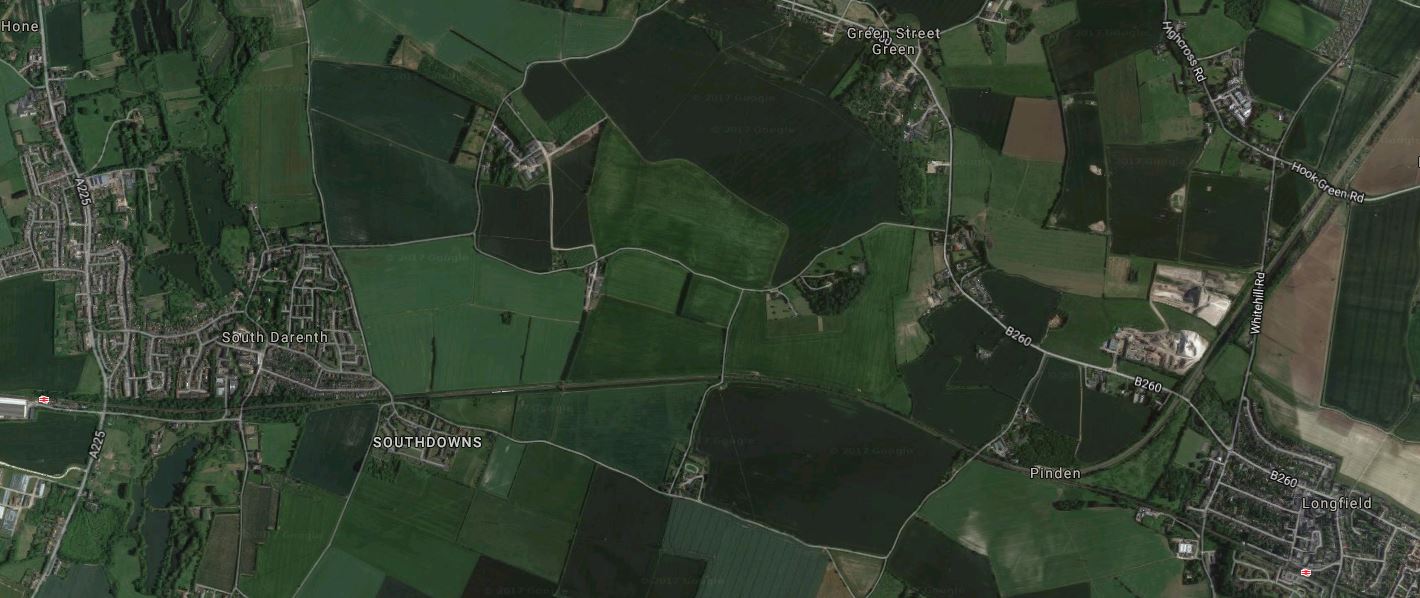
This Google Map shows the Chatham Main Line between Farningham Road and Longfield stations.
Note.
- The Chatham Main Line goes from West to East across the map.
- Fawkham Junction to the West of Longfield station.
- The rail line curves away North-Easterly to Ebbsfleet International station, using the same track-bed as the former Gravesend West Line.
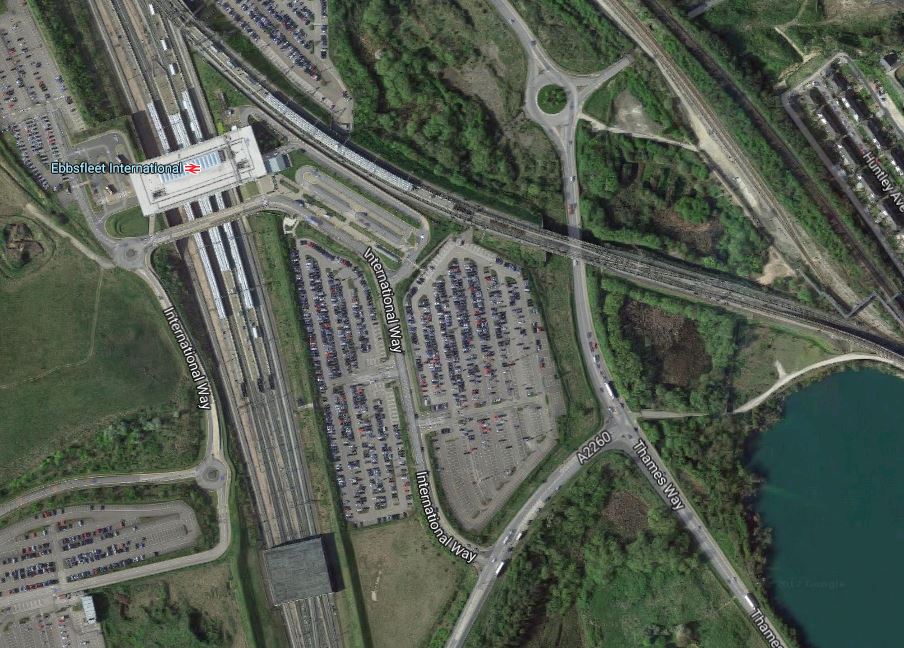
This Google Map shows Ebbsfleet International station.
Note.
- HS1 runs North-South through the station.
- HighSpeed services to Thanet destinations use the line that runs across the map from North-West to East.
- HighSpeed services to Ashford Internationl station have their own separate platforms on HS1.
The local line into Ebbsfleet International station can be as simple or complicated as the budget will allow.
The simplest arrangement would be where a single track chord connects the Gravesend West Line into the space between the stations and its Eastern car parks.
This Google Map shows the station and the Gravesend West Line.
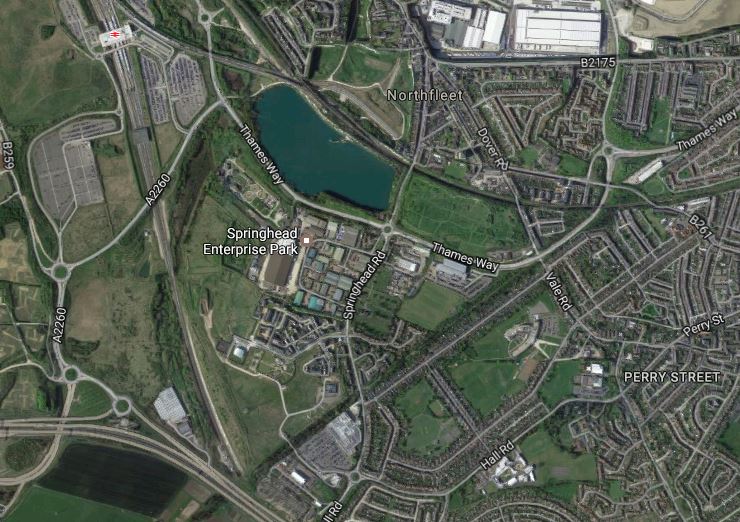
It almost looks like a good bit of space was left to connect Ebbsfleet International station to Fawkham Junction.
Train Services To Ebbsfleet
Southeastern and Thamesline are probably in pole position to provide services, as their services call at Swanley station which would be directly connected to Ebbsfleet International by the new link.
The most efficient solution would be a shuttle train or even a tram-train, at a frequency of four trains per hour.
But we shouldn’t forget Crossrail, that could be extended to Gravesend.
MTR Plans More Intensive Crossrail Service
The title of this post is the same as an article in the International Railway Journal.
The Planned Central Service
According to Wikipedia, it is planned that the services through the central section is as follows.
Peak
4 tph (trains per hour) Abbey Wood–Heathrow Terminal 4
6 tph Abbey Wood–Paddington
2 tph Abbey Wood–West Drayton
8 tph Shenfield–Paddington
2 tph Shenfield–Reading
2 tph Shenfield–Maidenhead
Off Peak
4 tph Abbey Wood–Heathrow Terminal 4
4 tph Abbey Wood–Paddington
4 tph Shenfield–Paddington
2 tph Shenfield–Reading
2 tph Shenfield–Maidenhead
Which gives totals of 24 tph in the Peak and 16 tph in the Off Peak.
The article suggests that more Off Peak services will be provided.
This is probably only following the rules of the Victoria Line, which runs at a frequency of around 30 tph most of the day and 6 tph at night.
A Train Every Two And A Half Minutes
One of Crossrail’s nine-car Class 345 trains will come through the central section, every two and a half minutes, linking the following stations between Paddington and Stratford stations.
- Bond Street
- Tottengham Court Road
- Farringdon
- Moorgate
- Liverpool Street
- Whitechapel
I think that the frequency of the trains and the design of the stations, will encourage walkers and short distance travellers to use the line.
So could we see a very different pattern of use on Crossrail, when compared to the existing Central Line.
Other factors will make predicting traffic difficult.
- The line runs along one of Europe’s busiest shopping streets.
- The line and connects to Heathrow,
- Many journeys across London will now be made without changing trains.
Being able to increase train frequency would;d be a useful contingency to avoid train overcrowding.
So it looks like MTR are being prudent.
The New Platform 6 At Shenfield Station
These pictures show the new double Platform 5 and Platform 6 at Shenfield station, which opened a few days ago.



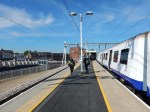


I think that it is a good design.
- Platform 5 is a through platform, where trains can go through the station to and from the sidings to the East of the station.
- Platform 6 is a new bay platform.
If these two platforms are for the exclusive use of Crossrail services, that means that in the Peak, they will be handling sixteen trains per hour (tph) or eight tph on each platform. The Victoria Line handles over twice as many trains on each of its four terminal platforms at Brixton and Walthamstow Central, so the more modern Crossrail should handle the number of trains with ease.
There has also been a major restructuring of the other lines through the station. But as services terminating at Shenfield are not now handled by Platform 4, I would assume that it is a much more operator-friendly layout.
These could be platform assignments.
- Southend Branch to London trains
- Great Eastern Main Line to London trains
- London to Great Eastern Main Line trains.
- London to Southend Branch trains
- Crossrail
- Crossrail
As there is more platform capacity, it will be interesting to see how Greater Anglia use their share of the extra capacity.
Current and Crossrail times between Liverpool Street and Shenfield are as follows.
- Shenfield Metro – Current – 43 minutes
- Single-Stop at Stratford – Current – 24 minutes
- Crossrail – 41 minutes.
The interesting time will be what will be achieved by Greater Anglia’s Aventras, with just a single-stop at Stratford. I wouldn’t be surprised to see a sub-twenty minute time.
I think passengers between Shenfield and London will choose a route appropriate to their journey.
Crossrail will be a line for the duck-and-divers.
The £20million Station Car Park
This article in the Oxford Mail is entitled Work begins on £20m multi-storey car park at Didcot Parkway.
Didcot Parkway station is a major Park-and-Ride station on the Great Western Railway, so the economics of spending £20million on car parking must be an investment, that the company thinks is worthwhile.
This Google Map shows the station and the existing car park in Foxhall Road.
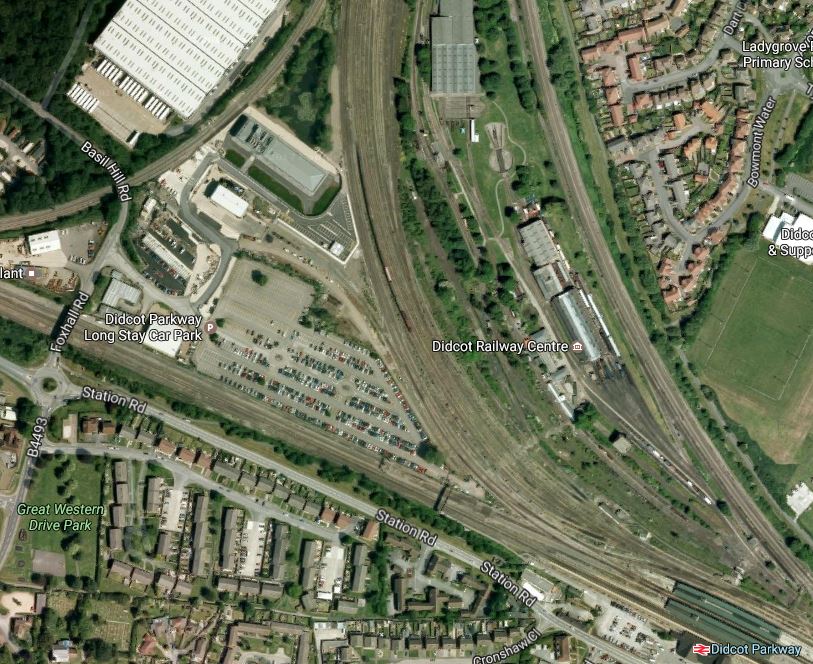
Note that Oxford is to the North, with the Great Western Main Line going across from London in the East to Swindon in the West.
This visualisation shows the new car park, which will be built on the site of the existing car park.
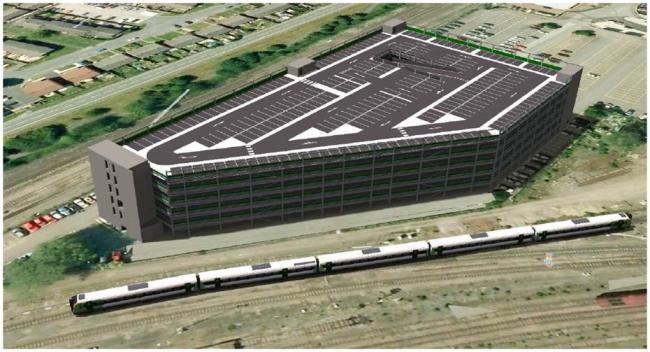
The Didcot to Oxford Railway is in front, with Oxford to the right and Didcot Parkway station to the left.
The Economics
If you go up from Didcot Parkway to Paddington, the return fares are as follows.
- Anytime Day Return – £82.40
- Off-Peak Day Return – £25.70
Consider.
- Parking will probably cost from £3/hour.
- The Internet reckons that Didcot to London is about 60 miles and it will take about one hour thirty-eight minutes to drive.
- On the other hand, the fastest trains take 41 minutes with a stop at Reading.
- From December 2019, interchange for the City and Canary Wharf wil be possible at Reading and Paddington.
I have a feeling that another large Park-and-Ride will be needed.
This Google Map shows Swindon station.
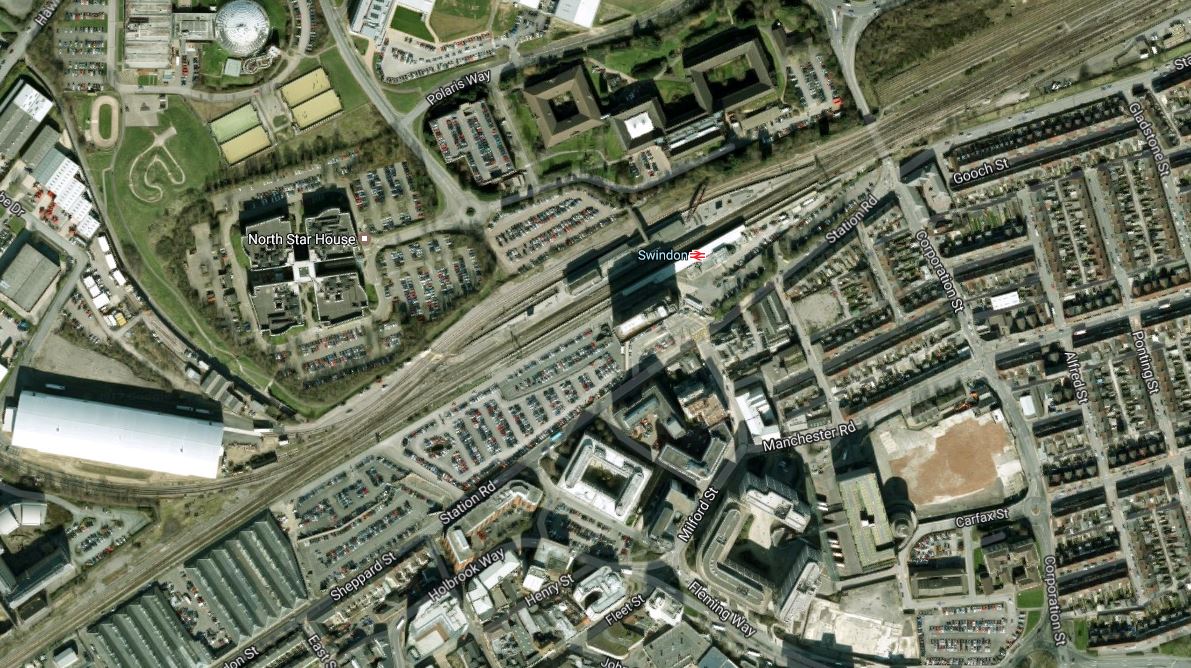
It would surely be a station, where the existing car parks could be multi-storied.
But there are probably lots of others. This article in the Wantage Herald mentions Grove, Corsham and Royal Wooton Bassett, as possible parkway stations.
Will The Broadgate Reconstruction Remove The Smoking Shelter?
Broadgate is reconstructing the building on the South side, which will face the new piazza in front of Liverpool Street station.
This visualisation shows what the entrance to Crossrail will look like in front of Broadgate.
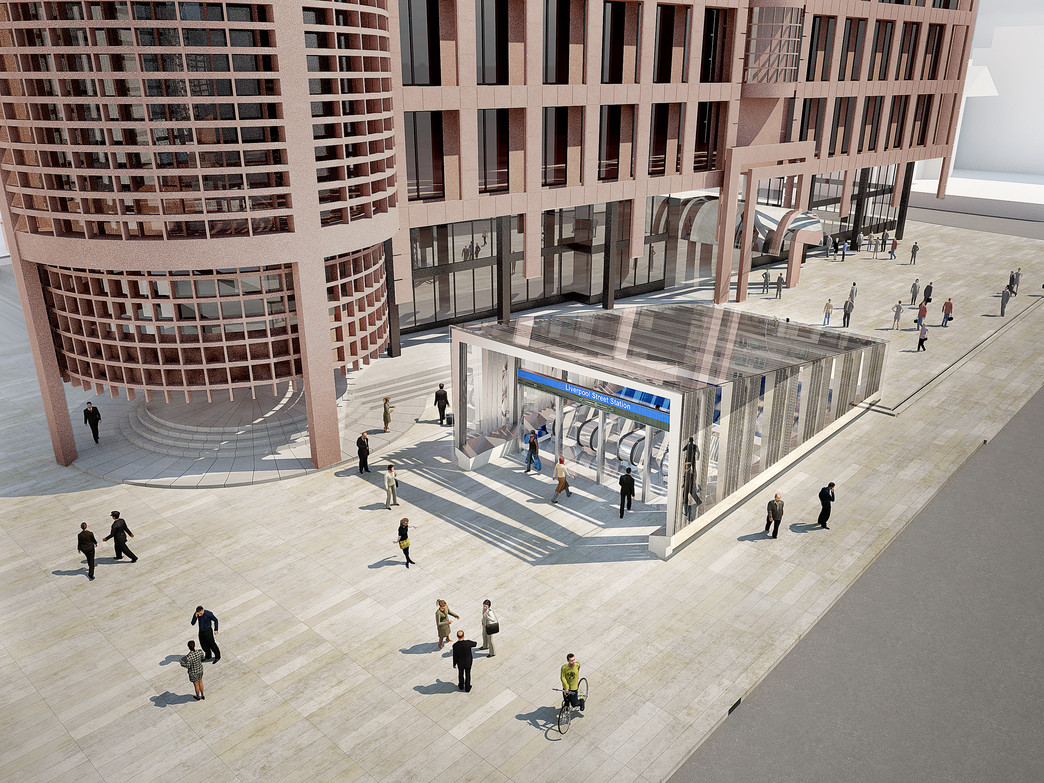
But what are they going to do with the smoking shelter, that sits in the entrance to the main-line station?




The shelter would be shown on the left of the visualisation, if the image had a wider format.
Labour Alienates The Jews And Drivers And Owners Of Diesel Vehicles
I come from mixed Jewish/Huguenot lines and my philosophy is probably humanist, although I’m a confirmed atheist.
But if I’m wrong, finding Heaven could be a bonus when I die!
This article on the BBC is entitled Labour ruling ‘fails Jewish community’, says Chief Rabbi.
Individuals, like Livingstone have no place in an inclusive political party.
This article on the BBC is entitled Date announced for London ultra low emission zone.
I am not against the ultra low emission zone, just the way that it is being brought in unilaterally in London.
We need ultra low emission zones all over the country and there is many things we can do.
- Cross-city railways and trams.
- More hybrid and electric buses when they are available at an affordable cost.
- Park-and-ride facilities.
- Trucks should be more environmentally and cyclist friendly.
- Grants will probably be needed to scrap older diesel vehicles and invest in new trucks and buses.
The one thing that is right is to bring in the zone in 2019, which will be just after the Central London section of Crossrail has opened.
There needs to be measures from Central Government, but as ever, staying in power comes first.
I have a feeling that London’s ultra low emission zone will not be good for Sadiq Khan in London, as it’s going to cause inconvenience for many in London.
Shenfield Station – April 1st 2017
It is perhaps around sixty days before the first part of Crossrail opens between Liverpool Street and Shenfield stations.


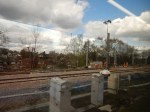
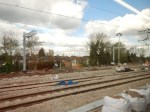
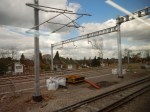
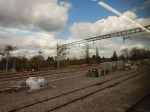
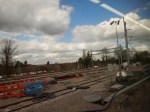
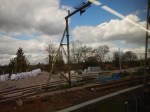

A lot of work has been done.
- It would appear that space could have been made for an extra track most of the way between Brentwood and Shenfield station.
- Is one going to be built to improve access to Platform 5 and the new Platform 6?
- Platforms 3 and 4 would appear to have been lengthened substantially. The new Stadler Flirts may be longer than the current trains.
- It looks like the stabling and reversing sidings are on the outside of the down line to Southend, which dives under the Great Eastern Main Line.
But there is still some work to do.
Swedish Aggregate For Crossrail
I found this story in Specification Online, which is entitled A heavyweight solution for Crossrail, mildly funny as , we’re importing aggregate from Sweden for Crossrail. It seems a long way to bring a simle oroduct like aggregate.
Read the story and you’ll find out why!
I suppose Mr. Farage has already made a poster with a slogan of British Aggregate for British Railways.
How Will Crossrail Affect The Docklands Light Railway?
When Crossrail opens, there will be a simple step-free walking link between Canary Wharf station and and Poplar DLR station.
As Poplar is the station on the DLR, where the North-South and the East-West routes cross, this is one of the better connectivity features of Crossrail.
Poplar serves a junction in four directions:
- Eastbound towards Beckton and Woolwich Arsenal.
- Northbound towards Stratford and Stratford International.
- Southbound towards the Isle of Dogs, Greenwich and Lewisham.
- Westbound towards Bank and Tower Gateway.
At present to get to Greenwich and Lewisham, you need to change at Canary Wharf DLR station, but as there is a reasonable walking route between Canary Wharf station and Canary Wharf DLR station, passengers for Lewisham could use that route.
As Crossrail will also have a reasonable link to the DLR at both Stratford and Woolwich, I wonder if we’ll see some reorganisation of services on the North-South DLR route between Lewishan and Stratford International.
Will some services go all the way between Lewisham and Stratford International?
Obviously, this will be determined by the routes travellers take after Crossrail opens.
There will also be affects due to the Law of Unexpected Consequences.
I am fairly sure, that Crossrail trains on the two Eastern branches will interface well at Whitechapel station, so passengers going between a station on the Abbey Wood branch to one on the Shenfield branch may prefer to go via Whitechapel, as it will be a simple cross-platform interchange.
How will this affect passenger numbers on the Jubilee Line and the DLR?
I suspect that passengers will use the route that is best for them and this can only mean spare capacity on the two historic routes.
As Crossrail will also be a bypass for the Central Line with connections between the two lines at Stratford, Liverpool Street, Tottenham Court Road, Bond Street and Ealing Broadway, the Greater East London area will be a big beneficiary from Crossrail.
We’ll have to wait and see how passenger numbers work out, but I think that the North-South route of the DLR could be blessed with spare capacity because of Crossrail, so there may be scope to extend the route past Stratford International and Lewisham.
Two possible extensions from Lewisham are detailed on Wikipedia.
But there is nothing past Stratford International. The DLR Horizon 2020 Study, does propose an extension up the Lea Valley to Tottenham Hale. This is the report’s summary of this route.
A DLR extension to Tottenham Hale via the Lea Valley was tested extending all services (15tph) onwards from Stratford International. The route would run alongside the Lea Valley rail route. The DLR extension is seen as serving intermediate markets (heavy rail would only stop at Tottenham Hale and Stratford) and would serve the Olympic site(s) and the Olympic legacy with additional stops at Lea Bridge and Walthamstow Marshes. Potential drawbacks are largely environmental, covering concerns over Hackney Marshes and the Lea Valley reservoirs.
I talked about it in a sub-section of The High Meads Loop At Stratford. This is a summary of what I said.
Extension of the DLR to Tottenham Hale was mooted a few years ago and a document called DLR Horizon 2020 talked about extending the system from Stratford International up alongside the Lea Valley Lines to Tottenham Hale station
It may be a worthy idea, but does it really make economic sense, when according to what you believe a lot of things may be happening in the area.
- A new Lea Bridge station has been created.
- A new Hall Farm Curve will happen.
- A rebuilt Hackney Wick station is being constructed.
- Crossrail 2 is being promoted and will serve Tottenham Hale and to the North.
- Transport for London have taken over the Lea Valley Lines.
- There will be a a major upgrade in the Tottenham Hale area, which is described in this document on the Haringey Council web site.
- Four-tracking will happen through Tottenham Hale station.
When the heavy rail expansion is sorted and the area between Tottenham and Walthamstow is developed as housing and a very large wetland and leisure area, the case for a Lea Valley Light Railway may be stronger and in need of reassessment.
What happens to the North-South route will be driven by the consequences of Crossrail and the massive need for housing in London and the transport links to serve it.
The Mayor’s Plan For A Gallions Reach Extension
The latest plan is to extend the DLR from Gallions Reach station across the Thames to Thamesmead and Abbey Wood.
I wrote about this plan in The Mayor’s Plans For East London River Crossings.
I shall repeat what I said, as I think this is a plan with legs.
A BBC article says this about this proposal.
A DLR crossing at Gallions Reach, helping support the development of around 17,000 new homes across Newham and the Royal Borough of Greenwich
It is different to the original proposal of a Docklands Light Railway extension to Dagenham Dock, which stayed on the North bank of the Thames.
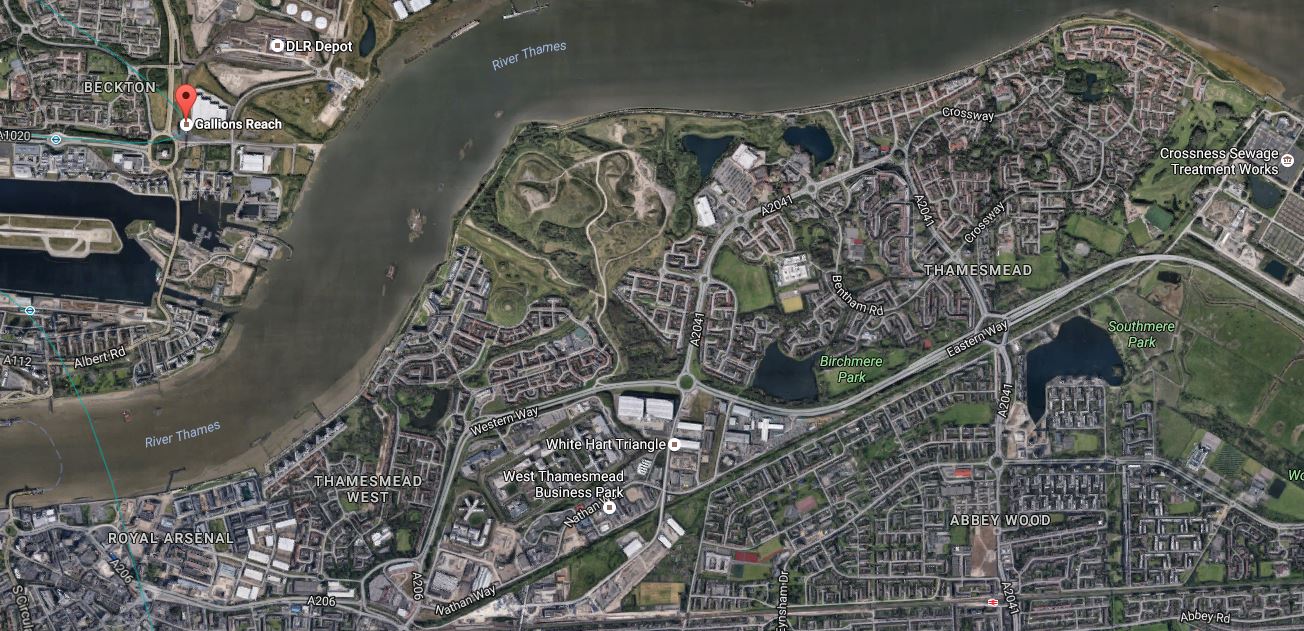
This map shows the area of London from Gallions Reach to Abbey Wood.
Gallions Reach To Abbey Wood
Note.
- Gallions Reach DLR station is marked with the red arrow.
- Just to the North of Gallions Reach station is the main DLR depot, which would probably be an excellent site to start a tunnel.
- The tunnel would probably emerge on the South bank of the Thames to the West of Thamesmead.
- It could then weave its way along the side of the main road.
- The North Kent Line with Abbey Wood and Belvedere stations runs along the bottom of the map.
- Crossrail could be extended to Gravesend.
- Crossrail should also be extended Ebbsfleet International for European rail services.
If the DLR extension went from Gallions Reach DLR station to Abbey Wood station it will be a loop on Crossrail serving a lot of areas ripe for quality housing and commercial development.
It certainly looks a feasible area to think about taking the DLR.
I also think if more destinations are created in the East, then this will need other developments.
- More capacity in the new trains, that are being ordered.
- Extra destinations in the West
- Expansion of the North-South route t balance the network.
The North and South extensions were covered earlier.
Extension To The West
I have written about this in Extending The Docklands Light Railway West From Bank Station.
Conclusion
The Docklands Light Railway must be one of the best stop-gap transport projects ever created.
Crossrail’s effects on the DLR will be more about providing opportunities, than creating problems.
We also shouldn’t underestimate the role of the DLR in bringing passengers to Crossrail.
 The Anonymous Widower