A Good Idea For The Railways?
I’ve just read this article on the BBC, which is entitled Trains and Track Come Together In Rail Management.
It could be a good idea.
If I take the railway I know best, the London Overground, the track and stations, may still be owned by Network Rail but TfL work strongly with NR in deciding what gets done and when it gets done. You could almost say that LO is the tenant and NR is the landlord, but that both bofies sit together on the same management structure. It seems to work well however they do it. But it’s mainly good management and probably good people too.
You might ask, why doesn’t LO own the tracks and have their own maintenance teams! But do you do all the work on your house yourself or call in a specialist?
But as with a block of flats having a central.focus gives all owners and tenants a central point to get something fixed.
As the BBC article says, Network Rail has split itself into the various routes. So in East Anglia, NR’s local team are responsible for tracks and Greater Anglia for trains.
I can see interesting possibilities opening up. Say you are a developer and you have obtained planning permission to build a large industrial park or thousands of houses on an old military site, that lies alongside the railway.
As the joint management now has all the assets and permissions to fit a new station into their network, the developer might get the new station they need to make their development very successful.
Some will argue that trains and track should be in one enormous nationalised industry, but how would the little man on the Felixstowe Class 153 get a handle on that?
An Understated Headline
This article on Business Insider is entitled A rail link between Oxford and Cambridge could help create a massive tech hub in the UK.
Could is not the word I’d use!
This page on the Government web site, contains a summary of the report, on which the article is based.
This is the second paragraph of the report.
The Commission’s central finding is that a lack of sufficient and suitable housing presents a fundamental risk to the success of this area. Without a joined-up plan for housing, jobs and infrastructure across the corridor, it will be left behind its international competitors. By providing the foundations for such a strategy, new east-west transport links present a once in a generation opportunity to secure the area’s future success.
As housing is so important to any development, this is crucial. The interim report makes a series of recommendations. This is the first.
- Government should go ahead with East West Rail’s initial phase, a new link cutting journey times by more than half on the route from Oxford to Bedford and Milton Keynes, ensuring it is delivered before 2024; and it should invest in developing as soon as possible detailed plans for both the next phase of East West Rail (which would complete the link to Cambridge) and for a new Oxford-Cambridge Expressway.
So why is the Government farting about?
I blame the following.
- The route via Bedford, contains lots of great-crested newts, in all the disused brick works.
- The name; East West Rail Link, doesn’t have North in it.
- Oxford doesn’t want a railway, that might encourage more visitors who would interfere with academic life.
- The Sir Humphries of this world went to one of two universities; Oxford or Cambridge. They believe the two academic cities shouldn’t be connected and certainly not via Milton Keynes.
- Addenbrooke’s hospital has objected, as it will bring lots of patients from the route to their world-class facilities.
- It doesn’t go near Islington for the Labour Party or Edinburgh for the SNP.
- Democracy
The Chinese would have built it last week or possibly yesterday, as it calls at Bicester Village!
A Level Crossing That Should Be Closed
One of my Google Alerts found this article in the Bicester Advertiser, which is entitled Tunnel could be dug under Bicester London Road railway line to keep route open.
So I found a Google Map of the crossing and Bicester Village station.
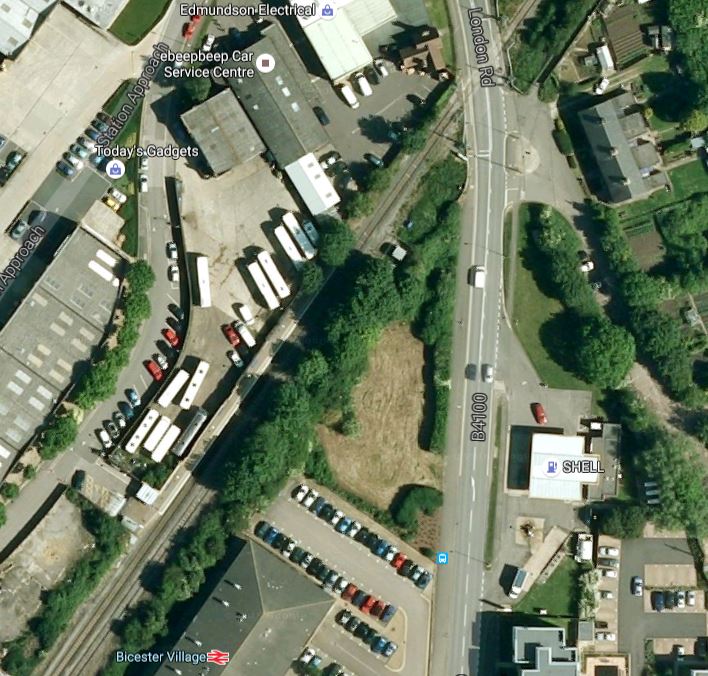
Bicester Village Station And The London Road Level Crossing
If you consider that when the next phase of the East West Rail Link opens in a few years time, the following passenger trains will be going through the station.
- 2 trains per hour (tph) from London Marylebone to Oxford
- 2 tph from Oxford to London Marylebone
- 2 tph from Reading to Bedford/Milton Keynes
- 2 tph from Bedford/Milton Keynes to Reading
That is 8 tph for a start and when you add in a few long freight trains, it is surely a good idea to close the level crossing and dig a road tunnel under the rail line.
Sometimes You Win Slow
Announcements on the East West Rail Link, haven’t exactly come thick and fast, the last one being the route of the section between Bedford and Cambridge, that I talked about in Is Cambridge University Being Pragmatic About The East West Rail Link?, was published in March 2016.
This article on Mix96 is entitled Winslow’s Station Is One Step Closer.
This is said.
Now a station for the town is one step nearer as Bucks County Council has paid £900,000 for a site to build it.
That looks like nine hundred thousand small steps to me.
Winslow station is to be built to the North-West of the town and this Google Map shows the location.
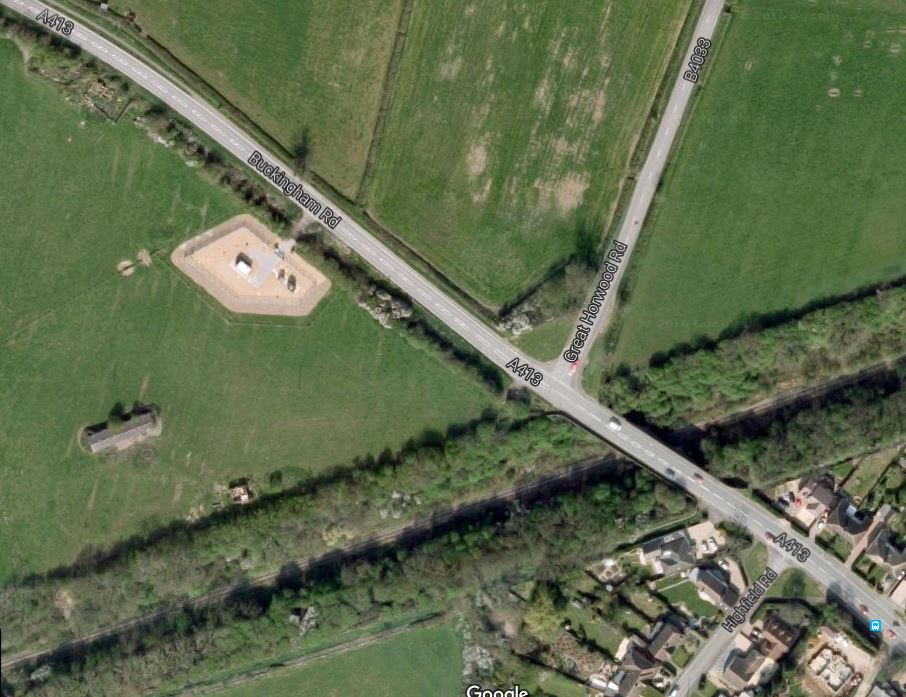
Winslow Station Site
The lower black scar contains a rusty single-track and is all that remains of the original Varsity Line
When open the station will have two services.
- London Marylebone to Milton Keynes Central via Aylesbury, Winslow and Bletchley
- Reading-to Bedford via Oxford, Winslow, Bletchley and possibly Milton Keynes Central.
Wikipedia talks about opening one train per hour on both services in 2019.
Is Cambridge University Being Pragmatic About The East West Rail Link?
I must admit, I was a bit surprised, when it was announced in this article in Global Rail News, that the East West Rail Link would go via Sandy between Bedford and Cambridge. This is said.
Network Rail has selected the Bedford-Sandy-Cambridge corridor as its preferred route for the Central Section of the East West Rail project.
The preferred route was chosen from 20 options and will now be developed further with a view to producing a ‘line on a map’ route in May.
They also show this map.
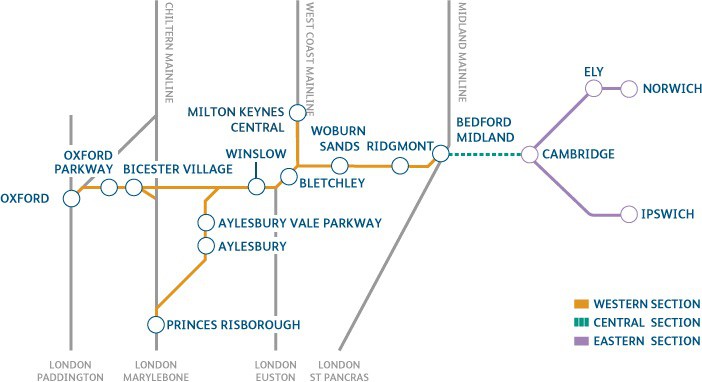
East West Rail Link
Various other articles suggest that the route will also be via Bourne Airfield and Addenbrooke’s Hospital.
I have traced the old route of the Varsity Line and very little seems to have been built on the route of the old line. Much too, seems to be on flat Cambridgeshire farmland and farmers are usually easily persuaded by alternative and profitable land uses.
The big problem is the old line is used as the track for the Mullard Radio Astronomy Observatory‘s Ryle Telescope. I’ve heard several times from astronomers in Cambridge was that it is very important and it was the major reason, why the railway line couldn’t be rebuilt on the old track-bed.
I do wonder, if Cambridge University values a direct link to Oxford highly and that as the Ryle Telescope is getting quite old, that it is better value to move it to allow the railway to be built.
A Quick Look At The Route
I’m starting at the Cambridge end and going East, as that is the area I know better.
The Varsity Line In Cambridge
This Google Map shows how the old Varsity Line connected to Cambridge station.
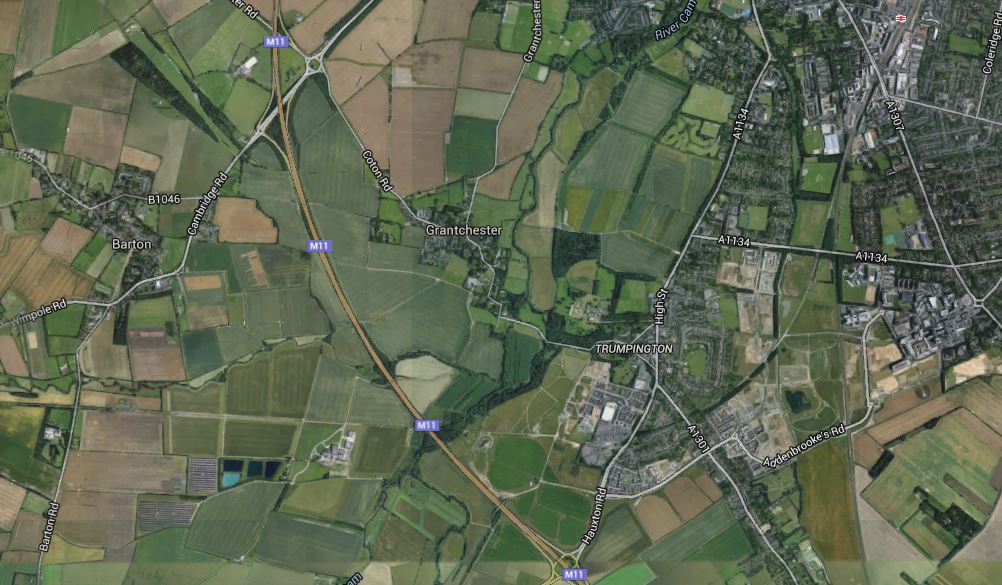
The Varsity Line In Cambridge
Note how the M11 curves to the West of Cambridge. You will notice, that there is a sandy coloured line going West from the motorway, which starts at the second blue market by the kite-shaped field, that identifies the road on the map. This is the disused trackbed of the Varsity Line and after passing under the motorway, through some housing in a cutting and under another road, it turns North to join the main Cambridge to London Rail Line.
Cambridge station is in the North-East corner of the map.
Cambridge Station
This Google Map shows Cambridge station and the rail lines going South from the station.
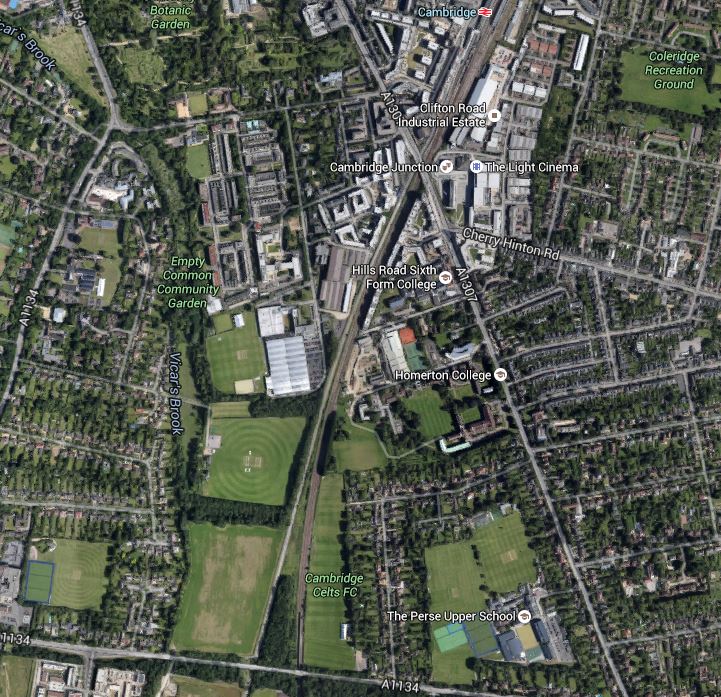
Note how after going under the bridge at the South End of Cambridge station, the main rail line goes off in a southerly direction pass the sports ground and then under the A1134.
Branching off from this rail line and going slightly to the West, there appears to be a second rail line. This is the trackbed of the Varsity Line, which has been converted into the Cambridge Guided Busway.
Cambridge station is a very busy station and has recently been upgraded with a long pair of island platforms and it is going to get even busier with Cambridge North station opening soon and Thameslink services due to call in a few years time.
The opening of Cambridge North station, may ease access to Cambridge station, as those living in or to the North of Cambridge, will be able to use the second station.
Addenbrooke’s Hospital
I have believed for many years, that there needs to be a Cambridge South station at Addenbrooke’s Hospital. This is the view of many in Cambridge and the surrounding areas.
This Google Map shows Addenbrooke’s Hospital and the land to the West.
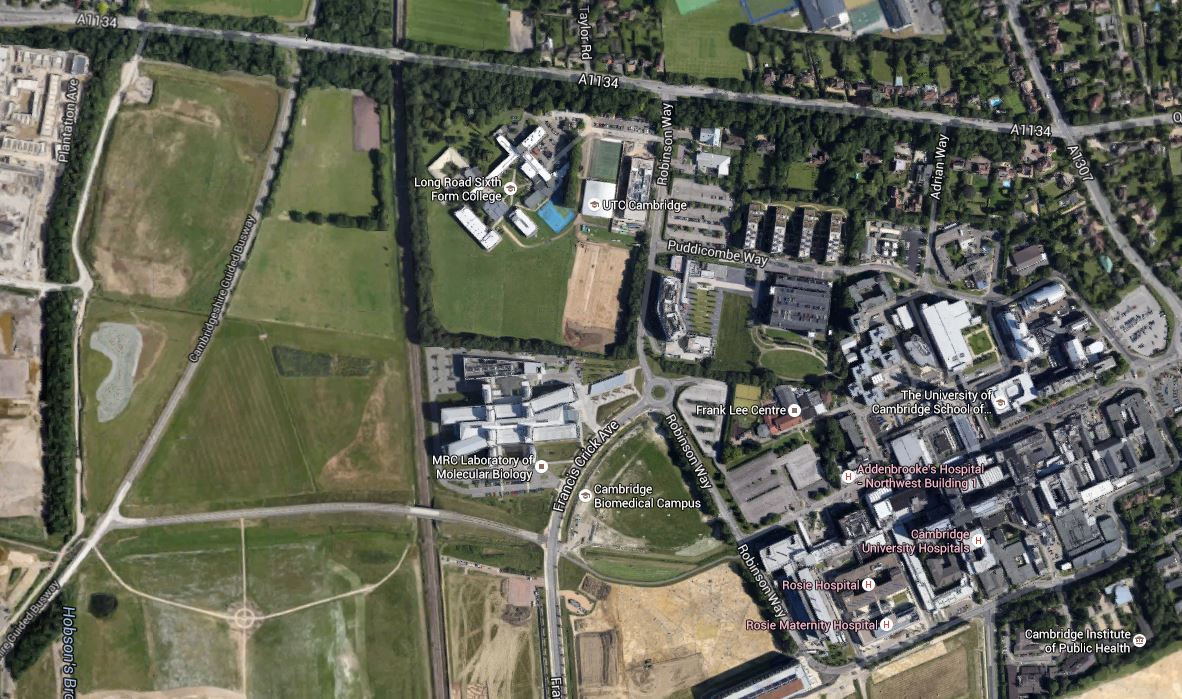
In addition to being a large general hospital, Addenbrooke’s is surrounded by major research institutions as the map shows.
It is generally sited to the East of the main railway line between Cambridge and London, which runs North-South down the map, with Cambridge station to the North and the junction where the Cambridge Line to Hitchin and the West Anglia Main Line divide just off the map to the South. The diagonal line to the South-West corner of the map, is the route of the Varsity Line, which has been partially reused for the Cambridge Guided Busway.
But there appears to be plenty of space to build a station for the hospital, which would be on both the main line and the East West Rail Link.
There is scope and space on this site to create a truly world-class station.
- It would serve the hospital.
- It would provide services on the West Anglia Main Line to London, Cambridge, Cambridge North, Ely, Kings Lynn and Stansted Airport.
- Thameslink would provide services to all parts of London and many places in the South like Gatwick Airport.
- The East West Rail Link would provide services to Bedford, Ipswich, Milton Keynes, Norwich, Oxford and Reading.
- Cross country services would call, but would passengers use the East West Rail Link and a change at Beford or Milton Keynes?
- Would the station be connected to Haverhill and Sudbury, by reopening the Stour Valley Railway? This would give Essex good access to the East West Rail Link.
I think that a truly bold station will take the pressure of the current Cambridge station, which is squeezed into the centre of the city.
The Mullard Observatory
The next section West of Cambridge and the M11 is currently the Mullard Observatory.
This Google Map shows the area.

Mullard Observatory
The telescopes seem to be clustered to the north of the track in a triangular grouping around the middle. They used to be strung out along the line. So perhaps, the astronomers don’t need it any more, as their research has moved in a different direction.
Bourne And Gamlingay
From the Observatory, the old line is more or less intact and it curves to the South of Bourne Golf Club and through the village of Gamlingay, which used to have a station. An industrial estate has been built on the trackbed.
A more northerly route could also be taken, if it was desired to have a station to serve Cambourne.
There is certainly a lot of open countryside and a couple of sizeable villages, that could benefit from a station.
Potton
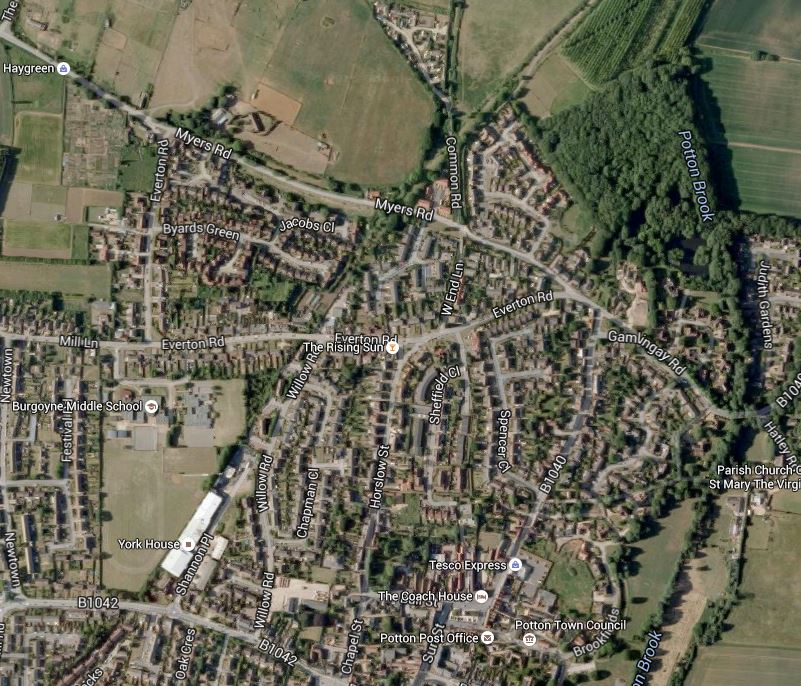
The line then goes on to Potton, where this Google Map shows the village, which had a station.
Potton
The green scar of the line can be seen, as it curves around the North-West of the village. I wonder if York House was the station.
Sandy
After Potton, the line goes through the countryside to Sandy, where the old Varsity Line came alongside the East Coast Main Line through Sandy station, before crossing the main line.
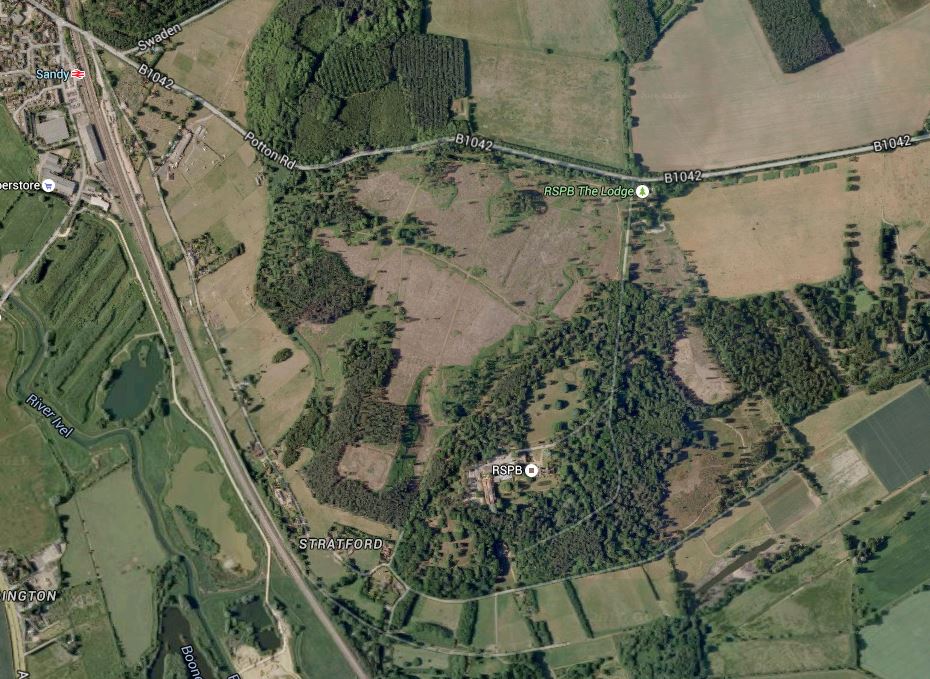
This Google Map shows the area.
Sandy, The East Coast Main Line And The Varsity Line
Sandy station is towards the top of the map and you can just see how the old line curves around the headquarters of the RSPB.
One possibility in this area, is that there are proposals for a Sandy-Beeston by-pass on the A1, to remove a bottleneck. Surely, if the routes of the by-pass and the railway were considered together, planners might come up with a superior solution.
Bedford
The original route went via stations at Blunham, Willington and Bedford St. Johns and it still shows on the Google Map.
This Google Map shows the route as it joins the East West Rail Link at Bedford St. Johns station, which is on the Marston Vale Line, which is being incorporated into the East West Rail Link, to form the link between Bedford and Bletchley.
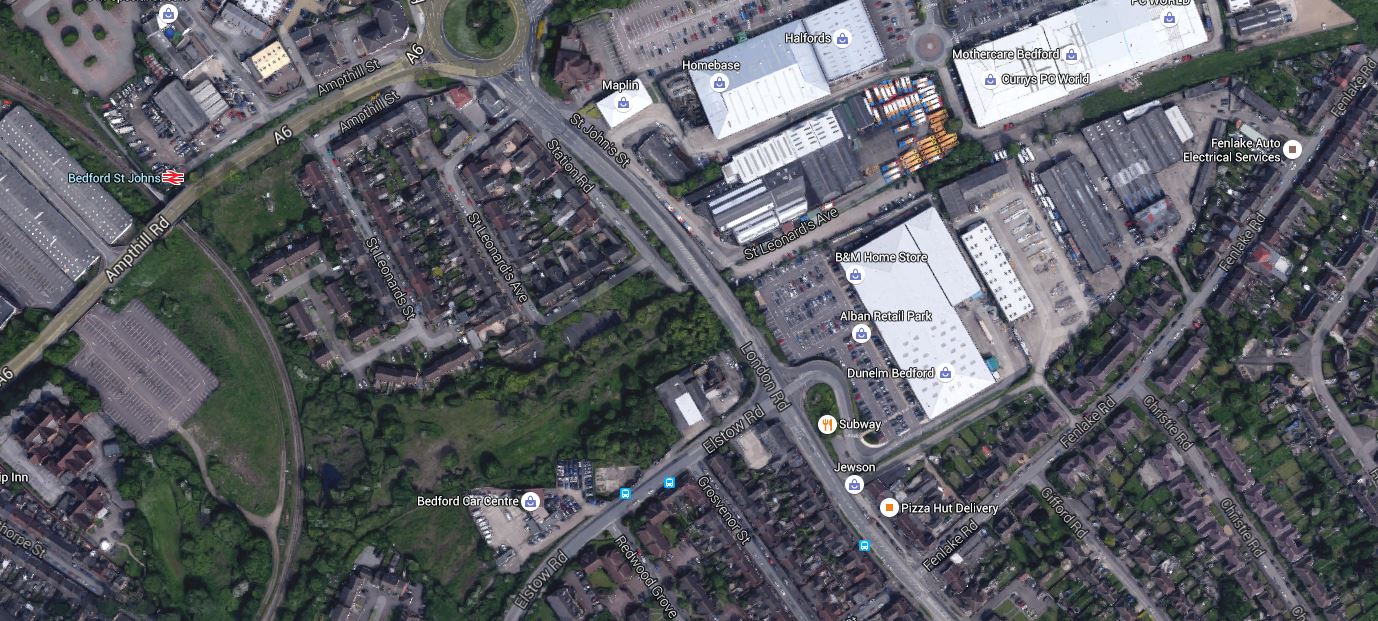
Bedford St Johns Station And The East West Rail Link
Note the green scar going between the bus garage (?) and the retail warehouses to the East. This was the old Varsity Line to Sandy.
If it were to be connected directly to the Marston Vale Line as it originally used to be, not all traffic would need to go to Bedford station.
Questions
I have some questions.
- How many of the old stations at Gamlingay, Potton, Blunham and Willington will be rebuilt?
- Will a more northerly alternative route from the Mullard Observatory to Sandy be better?
- Will there be a station at Sandy to link the East West Rail Link to the East Coast Main Line?
- Will a route be safeguarded to reopen the Stour Valley Line to Haverhill and Sudbury in the future?
Hopefully, these and other questions will be answered, when the definitive route is published.
Conclusions
After writing this, I’m surprised how much of the original line can be reinstated.
Certain factors have helped.
- The desire of Cambridge to have a station at Addenbrooke’s Hospital.
- A change in direction of the research at the Mullard Observatory or a pragmatic attitude on the part of the University.
- The need to build a bypass on the A1 at Sandy and Beeston.
- The ability to thread the railway through Bedford to link up with the Marston Vale Line.
I doubt there’ll be too much demolition of domestic properties or opposition to the route.
I also think, it will be pretty easy to build, as there don’t appear to be many bridges and viaducts.
How Would IPEMUs Fit With The East West Rail Link?
I feel very much, that IPEMUs or battery trains are very much going to be a part of the UK rail network in the next few years.
When I was writing Are The TOCs Arguing Over The Class 387 Trains?, I kept coming across the Oxford end of the East West Rail Link, so I got to thinking how IPEMUs would fit in with the line.
Will the Line Be Electrified?
The Government certainly thinks so, as Wikipedia reports.
The Secretary of State for Transport, the Rt. Hon Justine Greening MP, today announced that the Western section of East West Rail (EWR) will be part of the government’s strategy for rail transport, confirming not only funding for the project but also for electrification of the Oxford to Bedford part of the route. EWR will provide an electric link between the electrified Great Western, West Coast and Midland main lines. This further investment in the project upgrades it to form a key part of the new ‘Electric Spine’ passenger and freight route between the South Coast, the East Midlands and Yorkshire
But I’m not sure.
- Will freight operators pay out for new electric locomotives or will they stick with their old noisy and smelly Class 66 locomotives? I’m afraid most will stick with what they’ve got!
- The new Class 88 electro-diesel locomotive will be delivered this year and what effects will they have on locomotive procurement?
- One of the major intersecting lines is Chiltern, which is not electrified. Will the Chiltern Line be electrified to make things easier? It could be! But I doubt it!
- After the fuss about the aesthetics of the electrification on the Great Western Main Line, that I wrote about in Aesthetic Problems With Overhead Wires On The Great Western, I have a feeling the natives might object.
- When they see the total bill for the Great Western Electrification, will the Government have second thoughts about electrification?
I think the line will eventually be electrified, but it may not be built with electrification, just as the first section between Bicester Village and Oxford Parkway stations was.
It would be built however, so that it would be easy to electrify in future.
- All over-bridges would have sufficient clearance for overhead wires.
- Space would be left for overhead gantries and other essential electrification equipment.
- Piles for gantries might even be put in.
- Everything would be properly documented.
Too many railway lines in the past were just built and assumed no improvements would ever be made.
Connection To Existing Electification
One of the most expensive items in an electrification scheme can be connecting the new wires to a suitable electricity supply.
This is why Crossrail and the Great Western Electrification share a sub-station to the West of London.
The East West Rail Link crosses a succession of lines at its Western End from Oxford to Bedford. In order from the West they are.
Only the Chiltern Main Line will not be electrified, when the Oxford to Bedford part of the link opens.
The route from Bedford to Ipswich and Norwich is not fully defined yet, but it is likely it will cross these electrified lines.
So the link, isn’t short of connectivity to electrified lines, which will help with full electrification.
The Route
This map from the East West Rail Link web site shows the route.
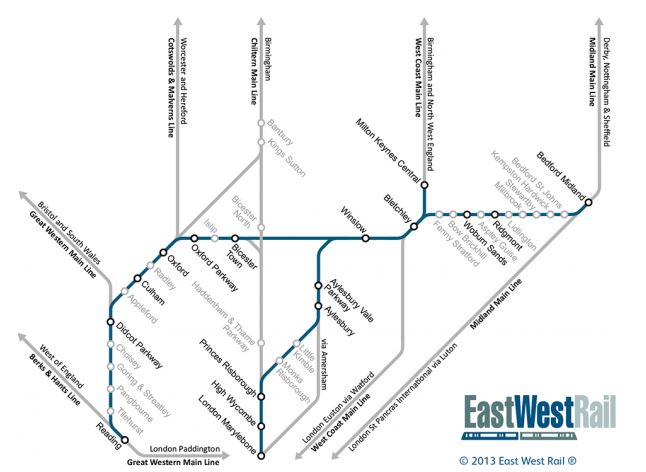
East West Rail Link
Starting from the West stations are.
- Reading on the Great Western
- Tilehurst on the Great Western
- Pangbourne on the Great Western
- Goring and Streatley on the Great Western
- Cholsey on the Great Western
- Didcot Parkway on the Great Western
- Appleford on the Cherwell Valley Line
- Culham on the Cherwell Valley Line
- Radley on the Cherwell Valley Line
- Oxford on the Cherwell Valley Line
- Oxford Parkway
- Islip
- Bicester Village
- Winslow
- Bletchley on the West Coast Main Line
- Milton Keynes Central on the West Coast Main Line
- Fenny Stratford on the Marston Vale Line
- Bow Brickhill on the Marston Vale Line
- Woburn Sands on the Marston Vale Line
- Apsley Guise on the Marston Vale Line
- Ridgmont on the Marston Vale Line
- Lidlington on the Marston Vale Line
- Millbrook on the Marston Vale Line
- Stewartby on the Marston Vale Line
- Kempston Hardwick on the Marston Vale Line
- Bedford St. Johns on the Marston Vale Line
- Bedford on the Midland Main Line
It’s quite a few stations, many of which are simple affairs in rural locations.
IPEMUs And The East West Rail Link
Proposed services when they start in 2019 will include.
- Bedford – Oxford – Reading
- Milton Keynes – Oxford – Reading
- Milton Keynes – Aylesbury – Marylebone
The first two services could be easily run by IPEMUs, but the third might need other arrangements.
According to the latest Great Western electrification schedule Oxford is not scheduled to be electrified until June 2019, so as I believe that Oxford will be reached by IPEMUs until that date, I suspect that we’ll see IPEMUs on the line, as they will be able to easily bridge the fifty mile electrification gap between Didcot on the Great Western and Bletchley on the West Coast Main Line, charging their batteries at both ends of the route.
The London to Aylesbury Line is thirty-nine miles of which sixteen miles are owned by the London Underground. Could it be if the line between Aylesbury and Winsford were to be electrified and some form of third-rail power was made available on the sixteen miles of the London Underground, that IPEMUs could work the services between Marylebone and Milton Keynes?
If they can’t, then it will be more diesels from Chiltern. But Chiltern’s ambitious nature, says they would prefer some form of electric train.
If the lines were eventually to be fully electrified, the IPEMUs would still have a valuable part to play as their self-contained regenerative braking would mean that the power supply wouldn’t have to be able to accept a return current, which lowers the cost of electrification.
Conclusions
IPEMUs will have to play some part in providing services on the East West Rail Link, because of the late running of the Great Western electrification.
Also with some selective electrification, Chiltern could use them for a service between Marylebone and Milton Keynes.
As these trains can provide a service on the whole line using existing electrification, the electrification of the East West Rail Link should be enabled but delayed to allow wires to be put up in more important places.
The Bletchley Flyover
The Bletchley Flyover is a large flyover that allows trains to cross the West Coast Main Line at Bletchley station.
This Google Map shows the area of Bletchley station and the flyover.
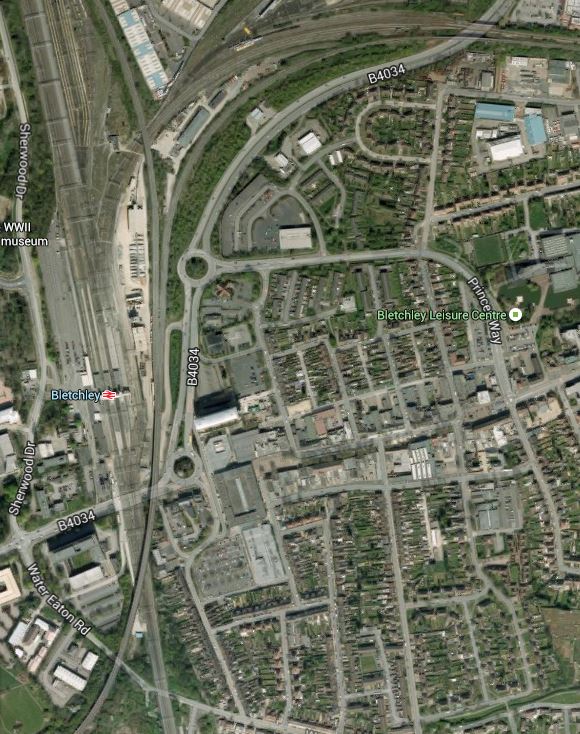
Bletchley Flyover
The double-track Bletchley Flyover starts in the South-West corner of the map and crosses the West Coast Main Line at an acute angle before, splitting into two separate double-track lines, alongside the station and north of the circular roundabout.
- One branch goes North along the West Coast Main Line to Milton Keynes.
- One branch goes East along the Marston Vale Line to Fenny Stratford and Bedford.
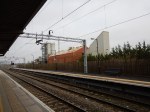
It is a massive structure as these pictures show.
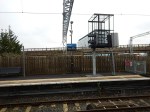

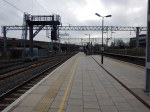
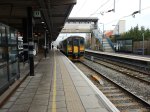
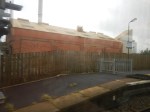
I think the problems of incorporating the following services through Bletchley are going to be challenging.
- Oxford to Milton Keynes
- Marylebone to Milton Keynes via Aylesbury.
- Oxford to Bedford.
- Freight Services.
This section in the FAQ of the East West Rail web site is entitled What train services will run on East West Rail (Western Section)? It says that frequencies of one train per hour will be run, but that more information will be released in 2016.
Will one probably four car train per hour be enough?
This would mean that two trains per hour would visit Milton Keynes. As Platform 2A at Milton Keynes Central can accommodate five car trains and it is electrified, it would appear that that station is ready for the East West Rail Link.
The difficulty also depends if the passenger services stop at Bletchley.
The current plans talk of two high-level platforms on the flyover.
This enlarged Google Map shows the platforms and footbridge at Bletchley station and the flyover.

Bletchley Station Platforms And The Bletchley Flyover
Note.
- The entrance to the station is on the west side.
- The two island platforms are 2/3 and 4/5, with two outer platforms 1 and 6.
- Trains on the Marston Vale Line terminate in Platforms 5 and 6.
- The flyover is the easternmost pair of lines.
- It splits into the Milton Keynes and Bedford lines level with the footbridge.
- The two proposed high-level platforms would be on the narrower part of the flyover, south of the footbridge.
A second entrance to Bletchley station has been proposed for the east side in Saxon Street.
One other thing that could help, is there are aspirations to move the concrete plant out of its location between the flyover and Bletchley station. It is certainly no asset to the area.
The following train services, would appear to have to use the flyover.
- Oxford to Milton Keynes
- Milton Keynes to Oxford
- Marylebone to Milton Keynes
- Milton Keynes to Marylebone
If trains between Oxford and Bedford, didn’t need to call at Milton Keynes, they would also be able to go straight over the flyover.
If they did need to call at Milton Keynes, then a train from Oxford to Bedford could take the following route.
- Over the flyover taking the branch to Milton Keynes.
- Call at Milton Keynes in an appropriate platform.
- Reverse out and then call in either Platform 5 or 6 at Bletchley.
- Reverse out and then take the Marston Vale Line.
Effectively, they would call at both the new high-level and current platforms at Bletchley station.
If I was running a train service from say Norwich or Ipswich to Oxford, to maximise my passenger levels, I would want my trains to call at the following stations.
- Cambridge
- Bedford – To also connect to services to Nottingham and Sheffield.
- Milton Keynes – To also connect to services on the West Coast Main Line.
The FAQ says that trains between Oxford to Bedford would not go to Milton Keynes.
I know that passengers would complain, if they had to stand on a draughty Bletchley station for say ten minutes, whilst waiting for a train to Milton Keynes, to get their Glasgow train.
To further complicate matters will other services could want to go between Milton Keynes and Bedford. On current plans, it is probably impossible without a reversal of direction at Bletchley.
A perfect design, would have a double-track chord connecting the Marston Vale Line to the Northbound West Coast Main Line.
Future Rail Developments At Milton Keynes
The Milton Keynes area and its stations at Bletchley, Bow Brickhill, Fenny Stratford, Milton Keynes Central and Wolverton, are in for a lot of development in the next few years.
The East West Rail Link
This map shows the East West Rail Link.

East West Rail Link
Note how it crosses the West Coast Main Line at Bletchley and has a connection to Milton Keynes Central.
The Wikipedia entry for Bletchley station has a section called Future. This is said.
The Marston Vale Line is the passenger carrying remnant of the Varsity Line. As of 2014, the line beyond Bletchley through Winslow to Bicester Town is closed to passenger traffic, with goods traffic going only as far as Newton Longville sidings for the waste disposal site there. The high level crossing (officially named the “The Bletchley Flyover” – built in 1959 as part of the Modernisation Plan, with 7 x 56 ft (17 m) spans and then expected to be used by 80 trains a day) over the WCML at Bletchley remains in place and in occasional use. There is a funded plan to re-open the line to passenger traffic via Bicester to Oxford by 2019 and an unfunded desire to rebuild it from Oxford right through to Cambridge. A key element of the plan is to build a Bletchley high level station so that passengers may transfer between the lines. (Note that there is no corresponding east to north route).
It is obviously, a bit out of date, as the East West Rail Link is now planned and funded to Bedford.
This Google Map shows the track layout at Bletchley with the Marston Vale Line joining from the East and Fenny Stratford station.

Bletchley Station And The East West Rail Link
Note.
- Stadium MK at the top of the map.
- The East West Rail Link can be seen curving to the west to the south of Bletchley station.
- The flyover over Bletchley station.
- Fenny Stratford station is to the south west of the large building at the east.
- The next station to the East is Bow Brickhill.
Bletchley will become a more important station.
East West Rail Link Services From Milton Keynes Central
The Wikipedia entry for Milton Keynes Central has a section called East West Rail. This is said.
From 2019, services are planned to operate (over a rebuilt East West Rail Link) to Oxford via Bletchley, Winslow and Bicester Town; and also to London Marylebone via Aylesbury and High Wycombe. Extension of the Oxford service to Reading has been mooted.
This will definitely need some more platforms at Milton Keynes Central, other than the single one 2A built for the still-born extended Marston Wale service to Milton Keynes.
I published some pictures in Platform Space At Milton Keynes Central, which show that there is some space.
Implications For Bletchley
I have now written The The Bletchley Flyover to cover the implications for Bletchley.
Great North Western To Blackpool
The Wikipedia entry for Milton Keynes Central has a section called Great North Western. This is said.
Great North Western Railway has been given permission to run 6 trains a day from London to Blackpool North from 2018, with conditional permission for a stop at Milton Keynes Central dependent upon future capacity after infrastructural work.
This will probably be very much a development, that will only affect Milton Keynes Central station.
Crossrail To Milton Keynes Central
The Wikipedia entry for Milton Keynes Central has a section called Crossrail. This is said.
Network Rail’s July 2011 London & South East Route Utilisation Strategy (RUS) recommended diverting West Coast Main Line (WCML) services from stations between London and Milton Keynes Central away from Euston, to Crossrail via Old Oak Common, to free up capacity at Euston for High Speed 2. Doing so would provide a direct service from the WCML to the Shenfield, Canary Wharf and Abbey Wood, release London Underground capacity at Euston, make better use of Crossrail’s capacity west of Paddington, and improve access to Heathrow Airport from the north. Under this scheme, all Crossrail trains would continue west of Paddington, instead of some of them terminating there. They would serve Heathrow Airport (10 tph), stations to Maidenhead and Reading (6 tph), and stations to Milton Keynes Central (8 tph).
In August 2014, a statement by the transport secretary Patrick McLoughlin indicated that the government was actively evaluating the extension of Crossrail as far as Tring and Milton Keynes Central, with potential Crossrail stops at Wembley Central, Harrow & Wealdstone, Bushey, Watford Junction, Kings Langley, Apsley, Hemel Hempstead, Berkhamsted, Tring, Cheddington, Leighton Buzzard and Bletchley. The extension would relieve some pressure from London Underground and London Euston station while also increasing connectivity. Conditions to the extension are that any extra services would not affect the planned service pattern for confirmed routes, as well as affordability.
Extending Crossrail to Milton Keynes would seem to be a sensible idea.
It would increase the capacity and frequency of services between Milton Keynes and London and open up several more direct destinations.
The quote from Wikipedia talks of increasing connectivity to Crossrail.
- The Watford DC Line is joined is joined at Wembley Central, Harrow & Wealdstone, Bushey and Watford Junction
- The Bakerloo Line is joined at Wembley Central and Harrow & Wealdstone
- The Metropolitan Line will be joined at Watford Junction.
This connectivity is in addition to that created by an Old Oak Common station.
As with the East West Rail Link, it will probably need extra platforms at Milton Keynes Central. But there is at least some space to create them.
Conclusion
Milton Keynes Central will be a lot bigger and busier than it is now.
But it will join that elite group of stations that are Crossrail’s and Thameslink’s super-hubs.
By Rail From Bedford To Northampton
One of my Google Alerts picked up this article from the Northampton Chronicle, which is entitled Rail campaigners reject calls by St James residents to re-open Northampton link road.
There used to be a Bedford to Northampton Line, but it has been gradually abandoned, despite interest in using it for the following.
- As an extension to Thameslink to Northampton.
- As a freight route to the West Midlands.
I also feel that with Bedford likely to be an important station on the East-West Rail Link, surely the rail link to Northampton shouldn’t be compromised, so that it can’t be reinstated.
- It would make journeys between Cambridge, Ipswich and Norwich and Northampton and the West Midlands a lot easier.
- Freight from between Felixstowe and the West Midlands would have an alternative route.
I don’t think anything will happen soon, but the expansion of Thameslink and the East West Rail Link to Bedford will make everybody think.
Electrification Of The East West Rail Link
East West Rail has this question about electrification in the FAQ.
Q: Will East West Rail be electrified and if so, when?
A: It is expected that the Western Section of the East West Rail link will include electrification of the line between Bedford and Oxford.
Bletchley to Oxford is expected to be completed first during the 2014-2019 railway funding period.
Bedford to Bletchley will follow, probably in the next railway funding period 2019-2024, as part of the wider work done to electrify the Midland Main Line to Corby, Nottingham and Sheffield.
The Office of Rail Regulation has confirmed funding in principle for the electrification. The exact amount of funding and scope is expected to be determined by the ORR by March 2015 following detailed development between NR, DfT and the train operators.
I will take this as a qualified yes or it would be desireable.
Bletchley to Oxford electrification is stated as being done first and if that timetable is met, it would be likely to be completed before services start on these routes.
- Oxford to Milton Keynes
- Milton Keynes to London via Aylesbury.
As both Oxford and Milton Keynes are currently or will be electrified by then, the services between the old and new cities could be performed by a 100 mph EMU, like a Class 387 train, which could then continue to Reading if required.
But there are no plans to electrify any of the London to Aylesbury Line. To complicate matters Chiltern Railways have a shortage of suitable diesel trains.
So although the line might be ready in 2019 or so, there would appear to be no chance of Chiltern Trains running between London and Milton Keynes.
Unless!
Wikipedia gives the length of the passenger section from London to Aylesbury Parkway as about thiry nine miles.
So this probably means that the line could be run by Class 387 IPEMU trains, if there was some electrification in Marylebone station to charge the trains before they travelled North.
It is an interesting possibility.
Especially, as an electrified Marylebone, would probably allow the same trains to run services to electrified stations at Bicester Village, Oxford Parkway and Oxford.

