Designing A Battery-Powered Mountain Goat
When I wrote Up To Ebbw Vale From Newport, this comment was posted.
I’m not surprised that the Class 150 train, had no difficulty in climbing up to Ebbw Vale Town. The max gradient is around 1 in 65. There are plenty of places in Britain where gradients are steeper and indeed part of the type test for all dmus was to climb the 2 mile, 1 in 37.7 Lickey Incline starting a couple of hundred metres before the beginning of the slope.
It certainly got me thinking.
Could a line like Newport and Ebbw Vale be decarbonised, by simply fitting batteries to an appropriately-sized electric train?
- The battery would be charged using the 25 KVAC overhead electrification in Newport station.
- The train would climb the hill to Ebbw Vale Town on battery power.
- Coming down the regenerative braking would charge the battery.
- Once in the platform at Newport station, the battery would be topped up, to the level needed to climb the hill, from the existing electrification.
The question is can the train carry enough juice in a battery?
I will work the example through with a three-car Class 331 train.
- I have chosen a Class 331 train, as CAF have a factory in Newport.
- The train weighs 30.48 tonnes.
- It has 213 seats.
- If I assume that each passenger is 80 Kg including baggage, bikes and buggies, that gives a mass of 17.04 tonnes or a total mass of 47.08 tonnes.
- The difference in altitude between Ebbw Vale Town and Newport is 764 feet.
Using Omni’s Potential Energy Calculator, that gives a value of 29.9 kWh.
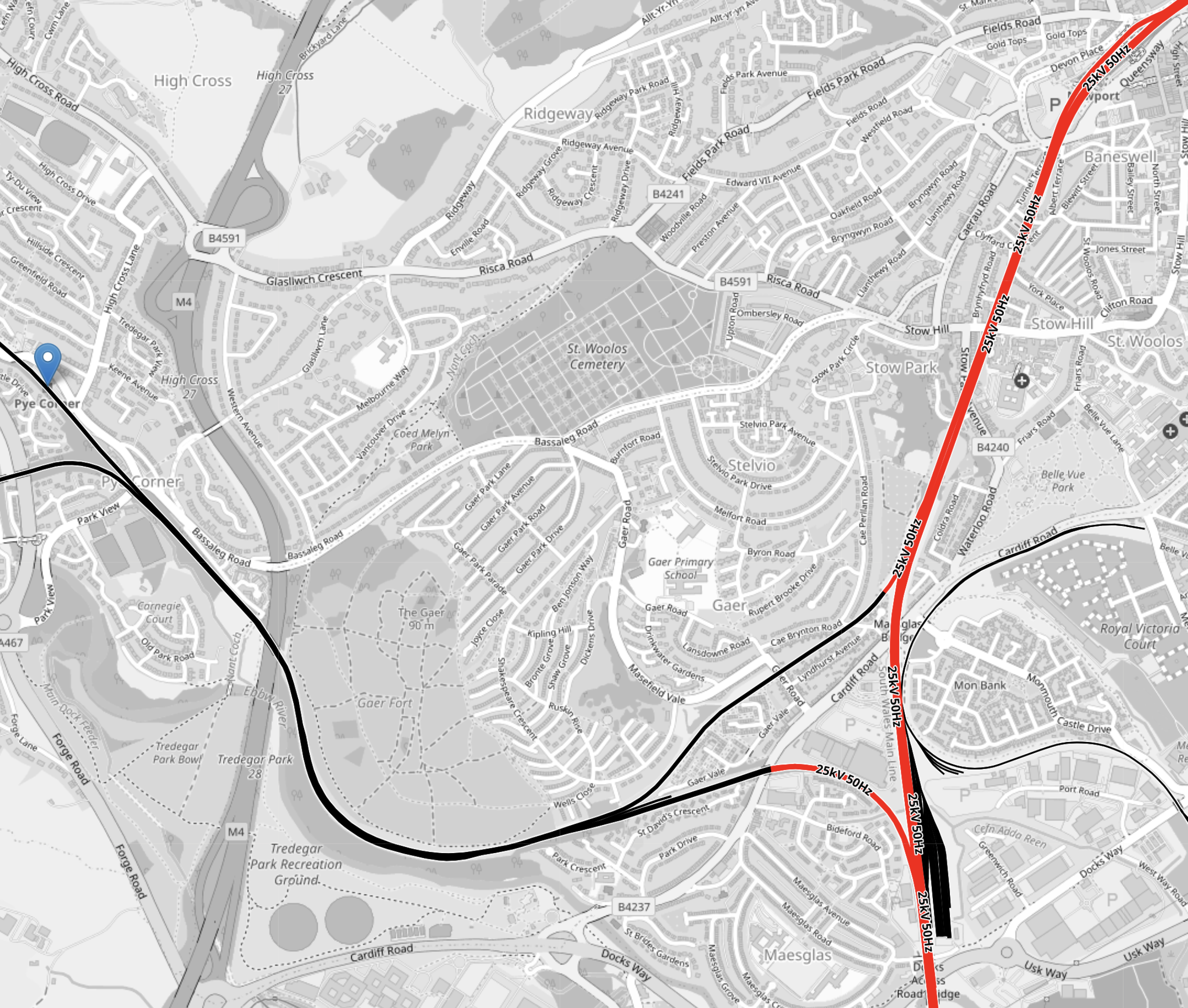
This OpenRailwayMap shows the tracks from Newport to Pye Corner.
Note.
- Red tracks are electrified and black ones are not.
- Newport station is in the North-East corner of the map, with the South Wales Main Line running through.
- Pye Corner station is marked by the blue arrow and is the first station on the climb to Ebbw Vale.
- The unelectrified Ebbw Vale branch has a triangular junction with the electrified South Wales Main Line.
- The electrification continues for a short way towards Pye Corner and goes all the way to Newport and Cardiff.
- Trains take 24 minutes to turn round in Newport.
- Newport and Ebbw Vale Town is about twenty miles.
It can be safely said that trains will start their climb to Ebbw Vale with a full battery.
What Battery Size Will Be Needed?
I don’t think it will be that large and it will be the smallest battery, that could take a train up the hill.
As part of the climb is double track, the up track could be electrified to enable a smaller battery to be used, which would mean less power would be needed, due to the lower weight.
Conclusion
I believe that it will be possible to fit CAF’s Class 331 trains with a battery large enough to take a train up the hill to Ebbw Vale Town.
Ebbw Vale Town Station – 3rd February 2024
I took these pictures as Ebbw Vale Town station.

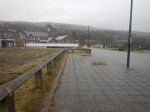


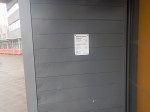


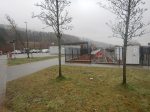
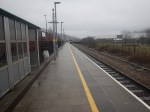

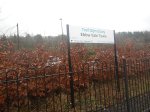
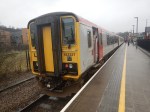
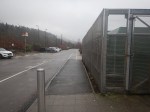
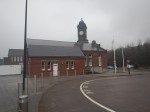
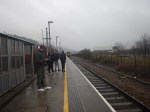

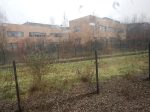
Note.
- There is a cableway to the main town.
- But t wasn’t working as it was Saturday.
- There is a large college.
- There was no information, as to how to get to the town.
- The Cardiff and Newport trains alternate every half hour.
The area certainly needed better information and perhaps a cafe, so that commuters can buy a coffee for their journey!
These are my thoughts.
The Capacity Of Ebbw Vale Town Station
According to this page on the Network Rail web site, the single platform at Ebbw Vale Town station is approximately 150 metres in length to fit up to six train carriages.
As at the current time, services are run by two- or three-car, it would appear that if a train failed in the station, the platform is long enough to accommodate another train to continue the services.
In the Wikipedia entry for Ebbw Vale Town station, it is indicated that a second platform could be built. There is certainly enough space.
Operation Of Ebbw Vale Town Station
I was at Ebbw Vale Town station for nearly two hours and I watched three Newport and two Cardiff trains arrive and leave every half-hour.
- I had arrived on the first train from Newport.
- The Cardiff trains were busy with passengers for the rugby.
- I took the third Newport train, so I could catch my train back to Reading.
- The system seemed to be working well.
Is there another single-platform station on a branch line, that serves two main line stations alternatively every half hour?
Increasing Capacity To Ebbw Vale Town Station
In Designing A Battery-Powered Mountain Goat, I stated that I believe that a small fleet of CAF’S Class 331 trains fitted with batteries could handle the Cardiff and Newport services to Ebbw Vale Town.
The sight and the curiosity of battery-electric trains climbing up the hills will certainly create more traffic on the route.
The simple solution is to lengthen the trains and that is easy at the moment, as the services are run using Class 150 trains with a Class 153 to add extra capacity, where needed.
But could a half-hourly service be run to both Cardiff and Newport?
This would double the capacity and make it more user friendly.
Nothing is said on the Internet about whether this is possible on not, but I believe that with modern digital signalling and battery-electric trains, with better performance than the elderly British Rail-era diesels, that it would be possible to run a half-hourly service to both Cardiff and Newport.
Conclusion
I believe that Network Rail have done a good job in designing this scheme.
Up To Ebbw Vale From Newport
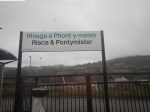
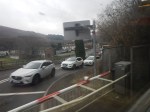
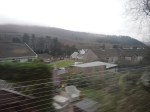
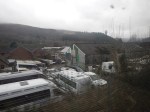
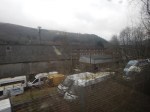
I took these pictures as my train climbed the hill up to Ebbw Vale Town station.
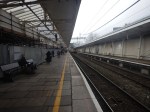
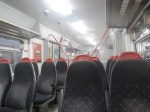
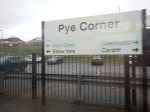
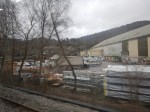
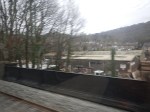
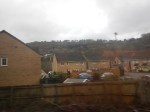
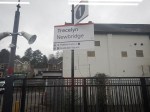

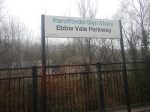
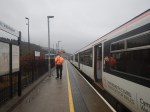
Note.
- The Class 150 train, that I was in had no difficulty in climbing up to Ebbw Vale Town.
- The dtations and track appeared in good condition.
- The weather was getting wetter, which didn’t help the pictures.
It’s a typical South Wales valley packed with houses and factories and with a small river and a few chapels an rugby pitches through in.
The Most Crowded Train I’ve Been On For Sixty-Plus Years
I started going to Tottenham Hotspur matches by myself somewhere between the age of fourteen and sixteen.
- I used to take the 107 bus from where we lived in Oakwood to Enfield Town station and then get the electric trains to White Hart Lane.
- I don’t remember much about the trains, but they were slam door stock.
- I remember this as we used to fold the doors back before the train entered the station and jump out when the train got to running speed.
- Coming back into Enfield Town station, this was essential, otherwise you wouldn’t be to the front of the queue for the 107 bus.
- Those trains returning from White Hart Lane were incredibly packed.
And I haven’t been on a train as crowded until today.
Today, I planned a simple mission to go to Ebbw Vale Town station and back to see the working of the new service between Newport and Ebbw Vale Town station.
- As I often do, I used my Freedom Pass on the Elizabeth Line to get to Reading.
- At Reading station, I bought a Super Off-Peak Return from Reading to Ebbw Vale Town for £47.05 with my Senior Railcard.
- By comparison, a Super Off-Peak Return from Paddington to Ebbw Vale Town is £57.55 with a Railcard.
The first train today, on which I could use my cheap ticket was the 11:13 from Reading.
- I had hoped, that there would still be a few seats left at Reading, as there are always a few, who use Great Western Railway’s fast trains between Paddington and Reading.
- I also expected, that many going to the Wales and Scotland match in Cardiff would take later trains.
- Unfortunately, quite a few Scots and Welsh supporters got on at Reading.
- It was a wrong decision, as there wasn’t a spare seat anywhere.
So in the end, I stood all the way from Reading to Newport.
I would hope that next time, that Scotland play Wales in Cardiff, that Great Western Railway add some more capacity.
Climbing The Valley Lines In The South Wales Metro
There are five terminal stations on the Cardiff Valley Lines, of which four will be served by battery-electric trains or tram-trains from Cardiff.
In this post, I will show how they will achieve this feat.
Consider.
- To get to Aberdare, Merthyr Tydfil or Treherbert, a tram-train must first get to Pontypridd.
- To get to Rhymney, a train must first get to Caerphilly.
I will now deal with the seven stations in alphabetic order.
Aberdare
This OpenRailwayMap shows the three branches of the Cardiff Valley Lines, that go through Pontypridd.

Note.
- Electrified lines are shown in red and unelectrified lines are shown in black.
- The branch to Aberdare is the middle of the three branches.
- It is planned that the service on the Aberdare branch will be provided using Class 398 tram-trains, that will be fitted with batteries.
- Electrification will be complete between Aberdare and Pontypridd.
It would appear that a tram-train could run between Aberdare and Pontypridd using the complete electrification.
Caerphilly
These two OpenRailwayMaps show the tracks through Caerphilly.
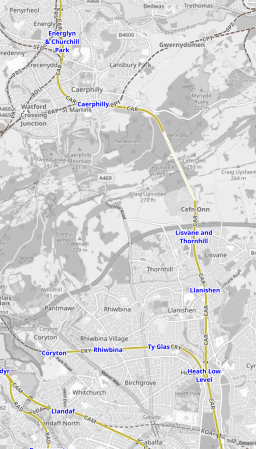
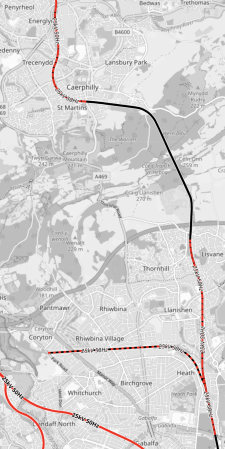
Note.
- The map on the left shows infrastructure, with the Rhymney Line shown in yellow.
- Caerphilly station is in the top third of the map.
- The white section of the Rhymney Line is the Caerphilly tunnel.
- The map on the right shows electrification, with the sections of the Rhymney Line that will be electrified are shown in red.
- Black sections will not be electrified.
- North of Caerphilly, the Rhymney Line is electrified, but through the station and the Caerphilly tunnel, there will be no electrification.
Trains will use battery power, where there is no electrification.
Ebbw Vale Town
This OpenRailwayMap shows the Ebbw Valley Railway.
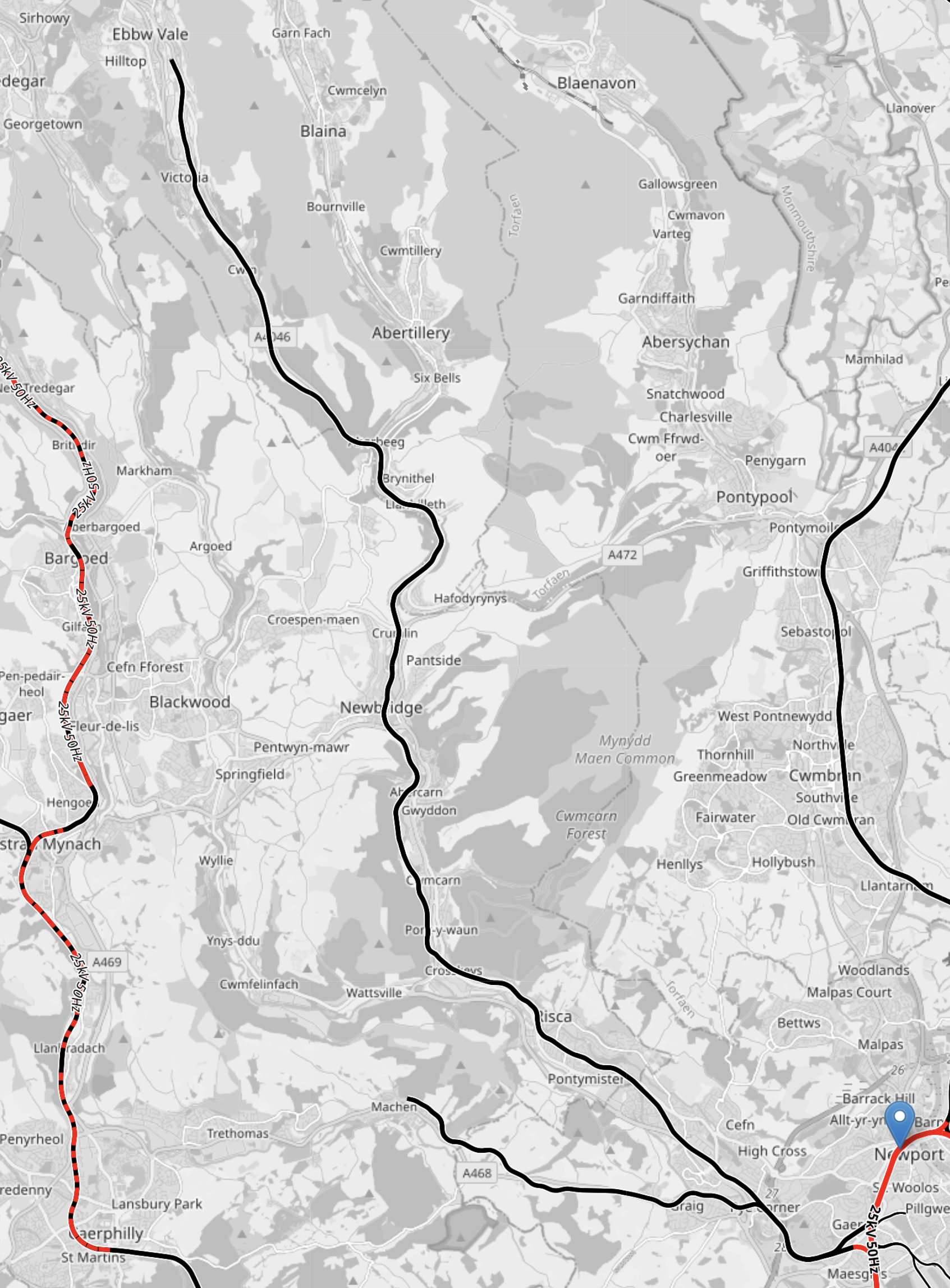
Note.
- Electrified lines are shown in red and unelectrified lines are shown in black.
- Lines where electrification will be installed are shown in red and black.
- Newport is marked by the blue arrow.
- The North-South Line at the left is the Rhymney Line.
- The North-South Line in the middle is the Ebbw Valley Railway.
- The North-South Line at the right is the Marches Line to Hereford and Shrewsbury.
Trains will use diesel power on the Ebbw Valley Railway, as there is no electrification and no means of charging battery-electric trains.
It does seem strange that no electrified solution has been proposed for the Ebbw Valley Railway.
Consider.
- An Abertillery branch has been proposed.
- A Newport and Ebbw Vale Town service has been proposed and will be implemented.
- Perhaps the line is difficult to electrify.
It could just be, the electrifying the Ebbw Valley Railway, was a step too far.
Merthyr Tydfil
This OpenRailwayMap shows the three branches of the Cardiff Valley Lines, that go through Pontypridd.
Note.
- Electrified lines are shown in red and unelectrified lines are shown in black.
- The branch to Merthyr Tydfil is the rightmost of the three branches.
- It is planned that the service on the Merthyr Tydfil branch will be provided using Class 398 tram-trains, that will be fitted with batteries.
- Electrification will be complete between Merthyr Tydfil and Pontypridd, except for two short sections.
- I would assume that the short unelectrified sections can be handled using the tram-trains battery power.
It would appear that a tram-train could run between Merthyr Tydfil and Pontypridd using the electrification and the tram-trains batteries.
This shows the track layout at Quaker’s Yard station.
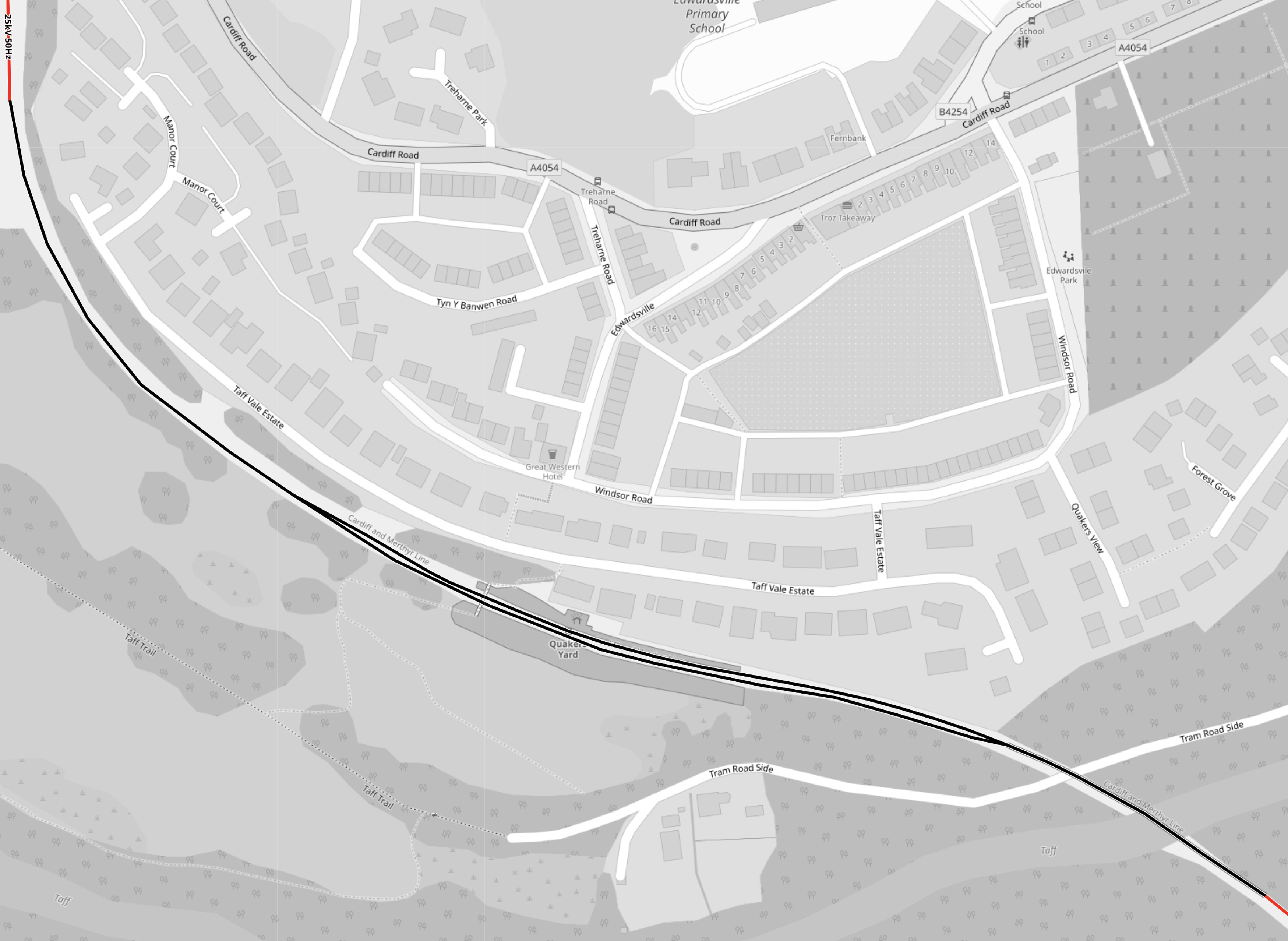
Note.
- Electrified lines are shown in red and unelectrified lines are shown in black.
- There are only two short length of electrification shown in the corners the map.
- Quaker’s Yard station has two platforms.
- The track layout appears to have single- and double-track sections.
It looks like it has been decided not to electrify this section. Perhaps, it was just too complicated to electrify easily?
This 3D Google Map shows the terminal station at Merthyr Tydfil.
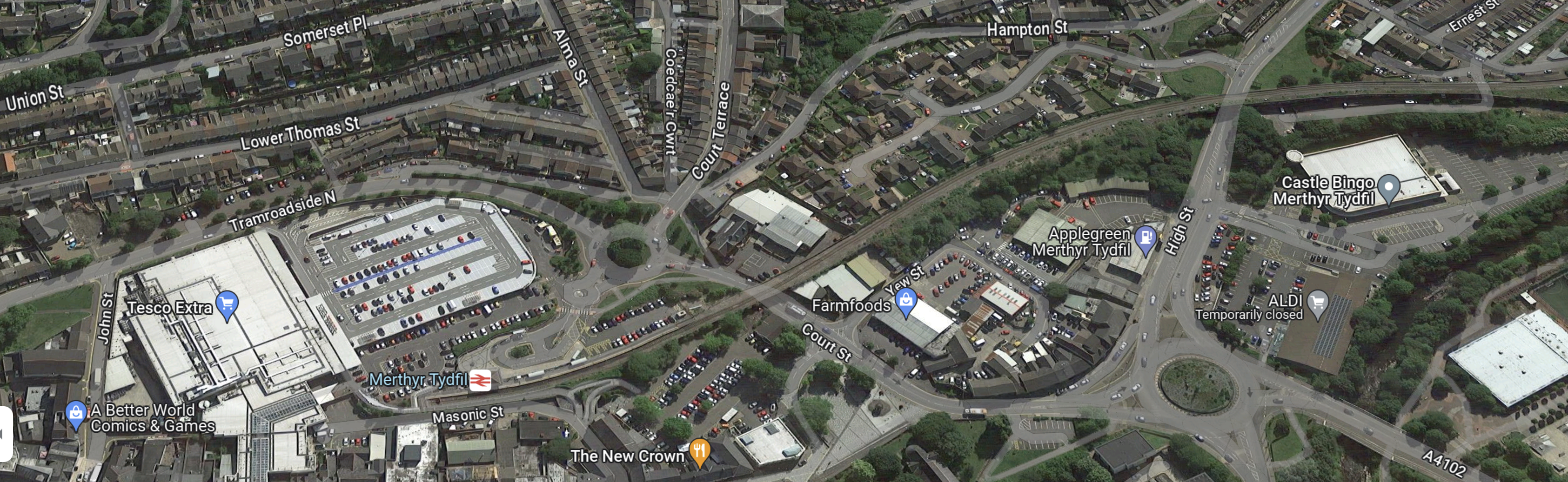
It looks like the railway runs through the town to the station. So perhaps leaving out the electrification made everything safer?
Pontypridd
This OpenRailwayMap shows the tracks through Pontypridd.
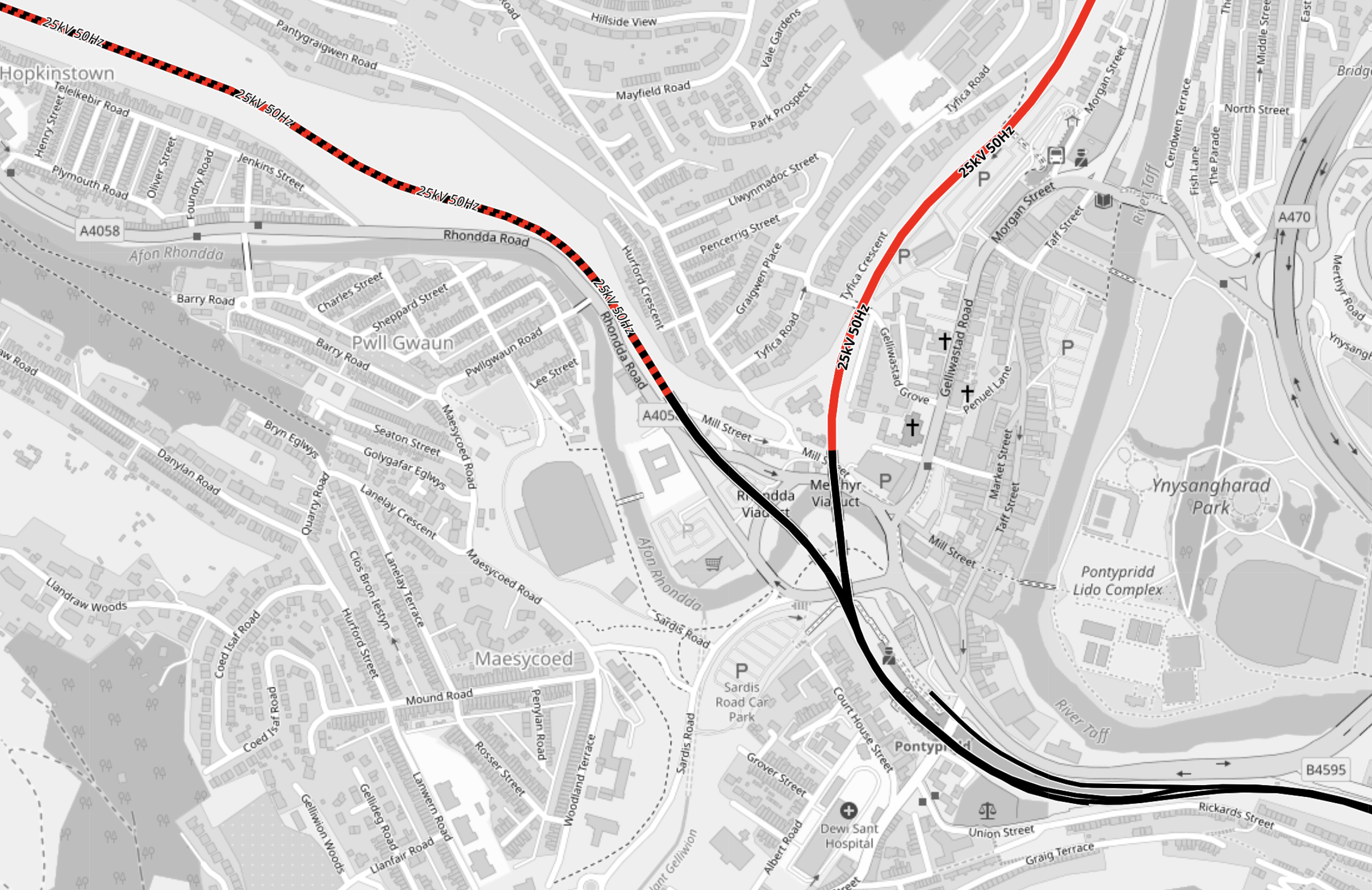
Note.
- Electrified lines are shown in red and unelectrified lines are shown in black.
- Lines where electrification will be installed are shown in red and black.
- The line leaving the map in the South-East corner is the line to Cardiff.
- The line leaving the map in the North-West corner is the Rhondda Line to Treherbert.
- The line leaving the map in the North-East corner is the Merthyr Line to Aberdare and Merthyr.
Pontypridd stations lies at the junction of the three lines.
This OpenRailwayMap shows the platforms at Pontypridd.
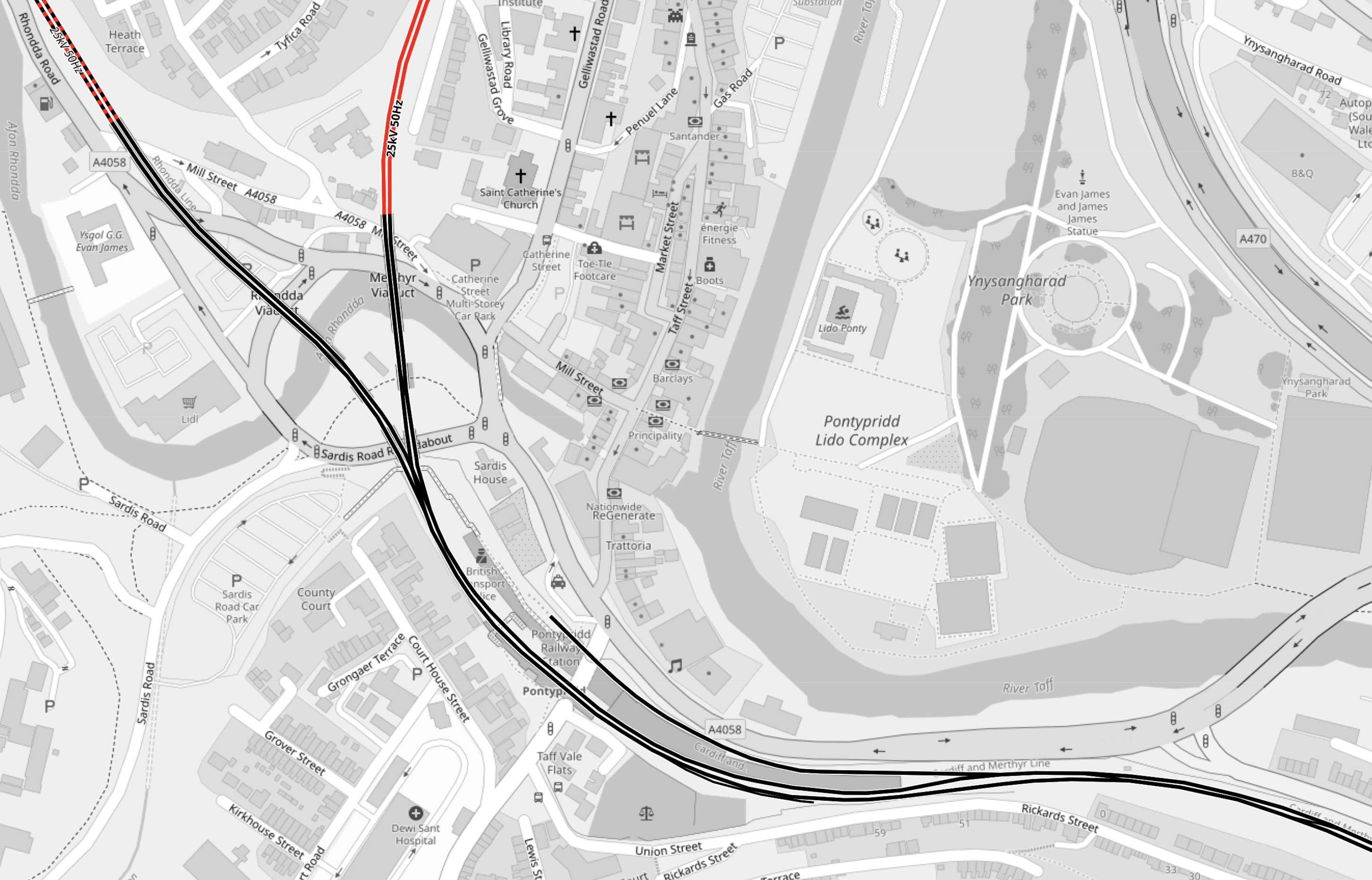
Note.
- There are two long through platforms.
- There is a bay platform on the North side of the station for extra Cardiff services.
- The station is not electrified.
These pictures show Pontypridd station.
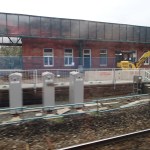
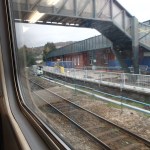
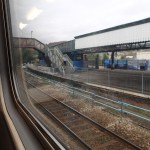
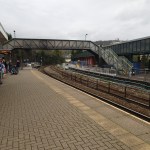
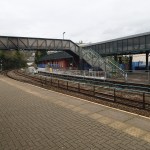
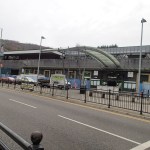
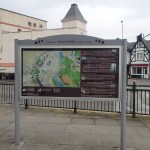
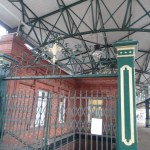
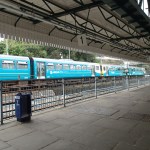
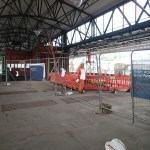
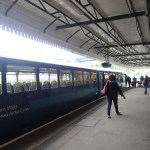
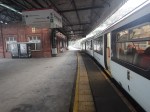
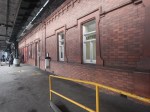
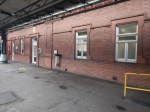
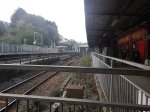
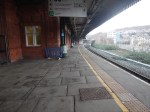
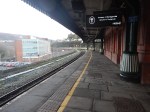
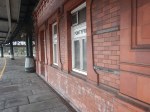
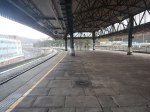
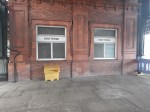
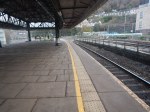
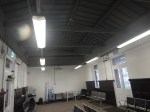

The station is Grade II Listed.
How will the tram-trains be powered through Pontypridd station?
Older Welsh railwaymen have told tales of how the coal trains from the mines in the valleys to Cardiff Docks were powered in part using gravity to propel the trains to the Docks. Steam locomotives then hauled the trains up the hills to get another load of coal.
Will Newton’s Friend be used to help the tram-trains return to Cardiff?
As the tram-trains descend, regenerative braking can be used to recharge the batteries.
A sophisticated computer control system, would choose the source of power from that which is available.
Descending from the terminal stations of Aberdare, Merthyr and Treherbert, and through Pontypridd would probably need a small amount of battery power to nudge the train to descend down the hill.
Fully-electrified stations like Aberdare and Treherbert will have the luxury of being able to use power from the electrification to start the descent.
Climbing the hills will be mainly on battery power, with the batteries being charged, where overhead electrification exists.
Rhymney
This OpenRailwayMap shows the Northern part of the Rhymney Line from Caerphilly to Rhymney.
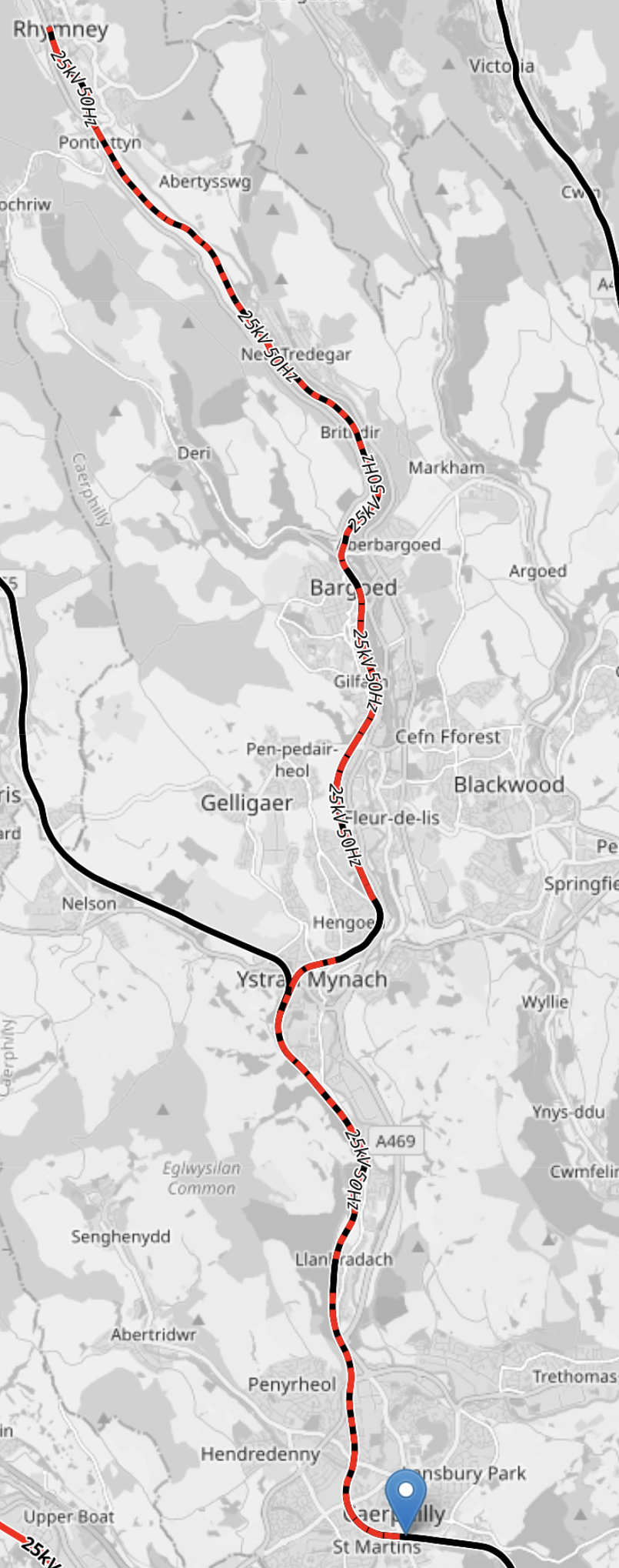
Note.
- Electrified lines are shown in red and unelectrified lines are shown in black.
- Lines where electrification will be installed are shown in red and black.
- Caerphilly is marked by the blue arrow at the bottom of the map.
- Rhymney is at the Northern end of the rail line.
- Bargoed, Hengoed, Llanbradach and Caerphilly stations appear not to be electrified.
- It is planned that the service on the Rhymney Line will be provided using Class 756 trains, that will be fitted with batteries and diesel engines.
The Class 756 trains appear to have been designed to climb to Rhymney in all conditions, including a complete power cut. They will use batteries on the unelectrified sections of the climb.
Treherbert
This OpenRailwayMap shows the three branches of the Cardiff Valley Lines, that go through Pontypridd.
Note.
- Electrified lines are shown in red and unelectrified lines are shown in black.
- Lines where electrification will be installed are shown in red and black.
- The branch to Treherbert is the leftmost of the three branches.
- It is planned that the service on the Theherbert branch will be provided using Class 398 tram-trains, that will be fitted with batteries.
- Electrification will be complete between Treherbert and Pontypridd.
It would appear that a tram-train could run between Treherbert and Pontypridd when the electrification is complete.
Conclusion
Each of the five lines use their own methods of getting trains up the hills.
I suspect we’ll see some of the ideas used here on other stretches of electrification.
 The Anonymous Widower