Air Passengers Can Beat Queues With Uber-Style Private Jet Service
The title of this post, is the same as that of this article on The Times.
Hyer Aviation are starting a service that uses similar technology to Uber to share seats on private jets around Europe.
Their modus operandi is laid out in this press release on their web site.
This paragraph is from the press release.
The concept works like an extra-comfortable UberPool with wings. Passengers can initiate their own flight or join flights proposed by others. This allows them to fly on private aircraft for a fraction of the cost while offsetting the carbon emission of their flights. From London, routes are available to some of Britain’s favourite holiday destinations such as Ibiza, Cannes, Malaga, Amalfi Coast and Amsterdam. From Amsterdam, it is also possible to find flights proposed by other passengers to Nice and Ibiza.
think this business model could fly.
Years ago, I owned a twin piston-engined six seater aircraft and I flew it all over Europe. I don’t fly now, as my medical history would probably stop that, but the experience showed there are many quiet airports all over the UK and Europe, that could be destinations for a 6-9 seater aircraft.
To me the interesting thing about this business model, is that there are several zero-carbon 6-9 seater aircraft under development.
Two are electric developments of the widely-used Cessna Caravan and the Britten-Norman Islander and others are clean-sheet developments like the Eviation Alice or the Faradair BEHA.
ZeroAvia are also experimenting with a hydrogen-powered Piper Malibu.
An electric or zero-carbon future for aviation is closer than many think.
But it will start at the smaller end with ranges of up to 500 miles.
UK Air Taxi Start-Up Finds Early Buyers For 1,000 Vehicles
The title of this post, is the same as that of this article on the Financial Times.
The article is well worth a read and describes the progress of Vertical Aerospace, which was started by Ovo Energy founder; Stephen Fitzpatrick.
The Vertical Aerospace web site is worth a visit.
Details given of their VA-X4 plane include.
- Range – 100+ miles
- Speed – 202 miles
- Capacity – 5
- Carbon Emissions – Zero
- Certification – EASA/CAA
- Noise – 100 times quieter than a helicopter.
There is a lot to like!
What is certain in my mind, is that there is a market for a short range zero-carbon aircraft of some sort.
Judging by the number of aircraft being proposed for this market, I come to two conclusions.
- The market isn’t mythical.
- Someone will make a success of it.
I also wouldn’t be surprised, if the most successful design has rather a weird look about it.
But despite saying that, two of the frontrunners; the Cessna Electric Caravan and the electric version of the Britten-Norman Islander are both conversions of existing successful aircraft.
I believe, that I’m young enough to fly in an electric aircraft.
Rolls-Royce And Tecnam Join Forces With Widerøe To Deliver An All-Electric Passenger Aircraft Ready For Service In 2026
The title of this post, is the same as that of this press release from Rolls-Royce.
This is the first paragraph.
Rolls-Royce and airframer Tecnam are joining forces with Widerøe – the largest regional airline in Scandinavia, to deliver an all-electric passenger aircraft for the commuter market, ready for revenue service in 2026. The project expands on the successful research programme between Rolls-Royce and Widerøe on sustainable aviation and the existing partnership between Rolls-Royce and Tecnam on powering the all-electric P-Volt aircraft.
This picture from Rolls-Royce shows the proposed aircraft.

The P-Volt aircraft is based on the Tecnam P2012 Traveller.
The specification of this aircraft is as follows.
- Crew – 1 or 2
- Capacity – 9 passengers
- Powerplant – 2 x 280 jW piston engines.
- Cruise speed – 200 mph
- Range – 1090 miles
- Service ceiling – 19,500 ft.
The aim is to have an aircraft in service by 2026.
Use By Widerøe
This paragraph from the press release, outlines Widerøe‘s planned use of the aircraft.
The collaboration offers an opportunity to develop an exciting solution to the commuter aircraft market. Before the pandemic, Widerøe offered around 400 flights per day using a network of 44 airports, where 74% of the flights have distances less than 275 km. The shortest flight durations are between seven and fifteen minutes. Developing all-electric aircraft will enable people to be connected in a sustainable way and will fulfill Wideroe’s ambition to make its first all-electric flight by 2026. The all-electric P-Volt aircraft, which is based on the 11-seat Tecnam P2012 Traveller aircraft is ideal for the short take-off and landing as well as for routes in the North and the West Coast of Norway.
Conclusion
There are now five electric or low-carbon aircraft in the sub-nineteen passenger segment.
- The Cessna eCaravan, which I wrote about in Watch First Electric Caravan Fly.
- The Eviation Alice, which I wrote about in Orders For A New All-Electric Airplane Now Top 150.
- The Faradair BEHA, which I wrote about in Faradair’s BEHA Hybrid Aircraft Boosted By Partnerships.
- Project Fresson, which is an electric version of a Britten-Norman Islander.
Note.
- The Slice and the Faradair are new designs.
- The Faradair is hybrid and all the others are fully electric.
- The Faradair can carry eighteen passengers and all the others are smaller.
- I suspect there are others under development.
Conclusion
The Tecnam P-Volt must have a high chance of success.
- It’s designed for a purpose in a particular airline.
- The Widerøe model would apply to large number of small feeder and commuter airlines.
- Rolls-Royce are well-respected in aviation.
- An existing airframe is being used, which shortens certification.
- Norway is not short of a few bob.
- Cape Air have ordered 93 of the piston engined variant.
I will look forward to flying this aircraft.
Watch First Electric Caravan Fly
The title of this post, is the same as that of this article on AOPA.
As AOPA is the Aircraft Owners And Pilots Association, the caravan is a Cessna C208B Grand Caravan, which has been converted to electric power.
I have flown in a Cessna Caravan in Kenya, where it took me from Nairobi Airport to the Maasai Mara.
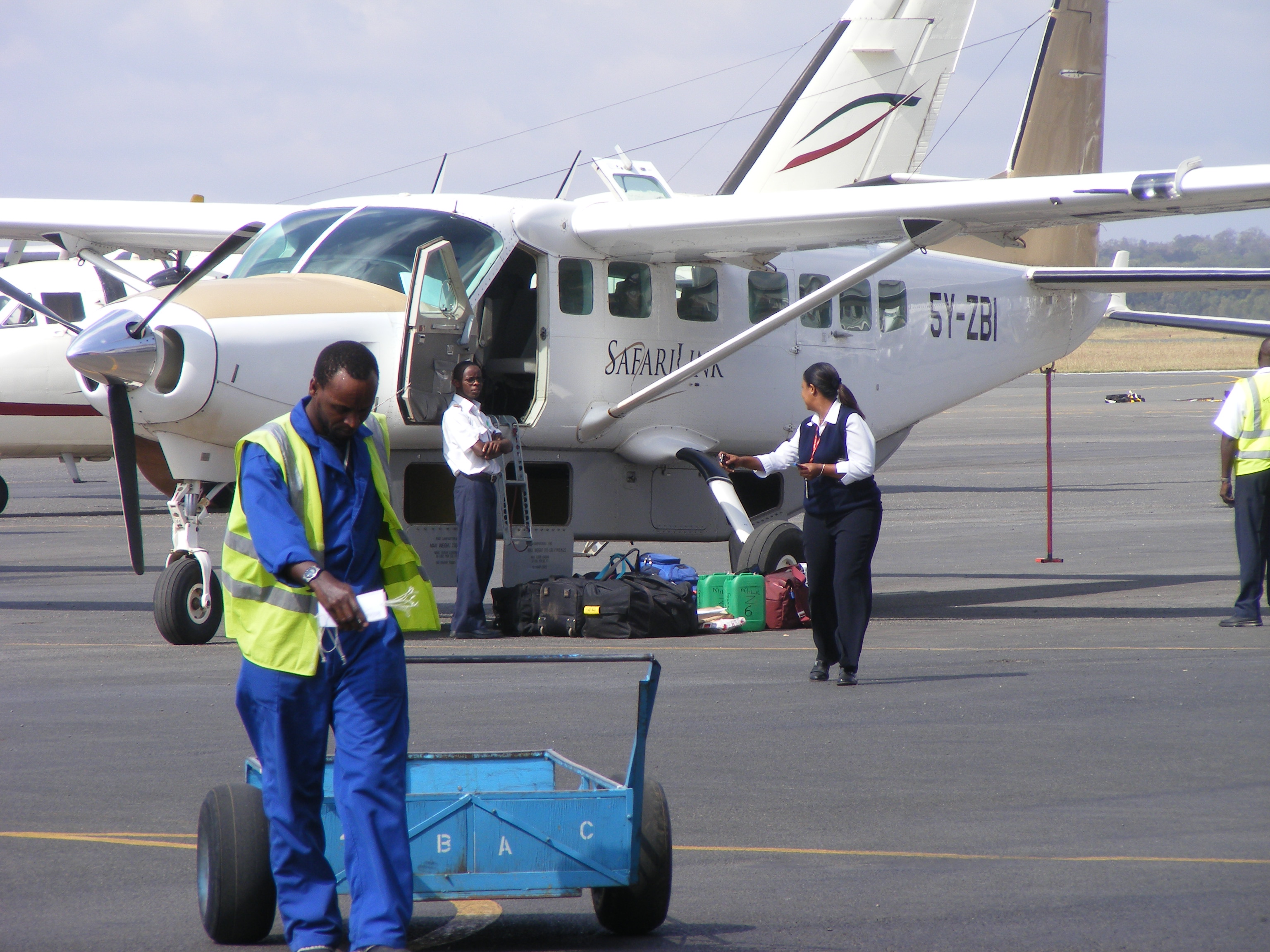
It is a typical workhorse all over the world carrying up to nine or thirteen passengers or freight.
- They have a single turboprop engine.
- The undercarriage is fixed and very sturdy.
- Around 2,600 had been built by 2017.
- It is used by a variety of operators.
I would certainly be happy to fly in one at any time, unlike some aircraft I could mention.
This paragraph from the article details how the maker of the electric motor;magniX is involved in electric flight.
The Grand Caravan is to be the largest, but not the first commercial aircraft magniX has converted to fly with 100 percent electric power. Roei Ganzarski, CEO of magniX, wrote in an email exchange that the de Havilland DHC–2 Beaver first flown in December continues its test flight program in Canada. Harbour Air, a short-haul air carrier with a fleet of seaplanes, is working with magniX to convert its fleet to all-electric power, and the same 750-hp electric motor that will power the upcoming Grand Caravan flight has been performing well in test flights over British Columbia.
Ganzarski is quoted as saying he is pleased with results to date.
The aircraft is lined up to make its first flight on May 28th, which hopefully will be shown on the Internet.
My flight in Kenya was only about half-an-hour and despite the Caravan having a range of nearly 2,000 kilometres, I suspect that many flights in the aircraft are of similar duration.
A Quick Battery Size Estimate
- 750 hp is 560 kW.
- So a half-hour flight on full power will use 280 kWh plus whatever is needed for aircraft systems like avionics, heating and air conditioning.
- The Eviation Alice electric aircraft seats nine passengers and has a 900 kWh battery according to Wikipedia.
I would suspect a 900 kWh battery should allow the Electric Caravan to do two half-hour trips.
The Future Of Electric Aviation
It is interesting to note, that four of the projects in designing and building a viable electric aircraft are in this nine-seater segment.
- Eviation Alice, which is a new radical aircraft with three magniX electric motors.
- Harbour Air Seaplanes‘s conversion of a DHC-2 Beaver seaplane using a magniX motor.
- magniX’s conversion of a Cessna Caravan, described in this post.
- Cranfield University‘s conversion of a Britten-Norman BN-2 Islander in Project Fresson.
Note.
- All except Eviation Alice, are conversions of proven high-wing aircraft with a fixed undercarriage.
- Moderately large fleets available for conversion. – Beaver (1,600 plus built), Caravan (2,600) and Islander (700)
- Conversion only needs a Supplemental Type Certificate, rather than full certification.
- The DHC-2 Beaver prototype first flew on the day I was born, so it can’t be all bad.
A detailed insight into the reasons and the economics of converting an existing fleet of aircraft are given in a sub-section called Development in the Wikipedia entry for Project Fresson.
- Scottish Airline Loganair appears to be the launch airline and will use the plane for their short flights around Orkney.
- Several companies are involved in the development.
- First flight is aimed for 2021.
- Conversion kits could be available in 2022-2023.
- It is hoped that operators would get a return on their money for the kit in 2-3 years.
Once they get the design right, there is talk of a nineteen-seat electric airliner.
I can see hundreds of converted electric Caravans and Islanders flying short routes by 2030.
Electric-Powered Passenger Aircraft To Launch By 2022
The title of this post is the same as that of this article in The Times.
In the past few months, two serious electric small airliner projects have emerged.
- The Eviation Alice is a futuristic nine-cheater, designed from scratch around electric propulsion.
- Harbour Air are converting a de Havilland DHC-2 Beaver to electric propulsion and aim for a complete electric-powered fleet.
And now Cranfield University are launching Project Fresson, which aims to convert Britten-Norman Islanders to electric propulsion.
- There are hundreds of Islanders in service.
- They were designed in the 1960s and are still in production.
- They can carry nine passengers for nearly 900 miles.
In some ways, they are the Ford Transit of the small airliner industry. Unspectacular they may be, but they do what it says in the specification.
I’ve only flown in an Islander twice and that was between islands in the Caribbean.
There are several things to like about this project.
- Cranfield University have an excellent reputation in aerospace design.
- The project is well-backed by the British Government, Rolls-Royce, the University of Warwick and others.
- The batteries appear to be coming from motorsport.
- The Islander doesn’t have a reputation as a difficult or unsafe aircraft.
- Over the years, the aerodynamics seem to have been improved.
- There must be a large number of airlines around the world, who are satisfied with their current Islanders and would look seriously at an electric version.
- The Islander is still in production.
I don’t think it carries any high level of risk.
- The current aircraft structure will be virtually unchanged, but possibly uprated for a higher payload because of the weight of the battery.
- The electric motors must meet a power output, energy consumption and weight.
- The battery will probably be made from lots of standard small cells from a well-respected manufacturer like Hitachi, Samsung, Leclanche or others.
- The battery must hold enough energy, fit in a defined space and not be too heavy.
I suspect Cranfield have already written the specifications for the motors and the battery.
Conclusion
In some ways this project has a lot in common with Harbour Air’s project to convert a Beaver.
- Simple engineering with little risk.
- Proven airframe.
- No expensive airframe to certify.
- A lot of engine and battery testing can be done safely on the ground.
- Electric motor technology seems to be improving rapidly, with new ideas cropping up in trains, cars, boats, ships and planes.
- A waiting market.
- I think pilots and passengers will like the idea of an electric aircraft.
- Pilot conversion to the electric plane will not be a long and expensive process.
- Good green credentials.
I think both projects will succeed, if they go well in the next year or so.
 The Anonymous Widower