Electrification Of The GOBlin
I have just found this article on the Gospel Oak to Barking Line on the Railfuture web site.
It explains the way the line will be electrified and other issues very well.
One thing it says is that the line will be electrified in two parts, so that whilst the overhead wires are erected on one part and passengers will be put on the bus, the other part can be used by four-car trains. Provided of course they lengthen the platforms.
The Railfuture article is an interesting read, as it talks about this short stretch of electrification.
1. The Line Connects Electrified Lines
It is joined to electrified lines at each end and several along its route, which will enable through electric passenger and more importantly freight trains to use the route.
It also means that getting electric power to the line shouldn’t be too much of a problem.
2. A Freight By-Pass For The North London Line
At present electric freight trains have to use the North London Line, but using an electrified GOBlin would avoid congested junctions at Stratford, Forest Gate and Camden Road.
3. More Passenger Capacity
Replacing two-car Class 172 diesel trains with new four-car Aventra electric trains, won’t just double the passenger capacity, but because electric trains have faster acceleration, they will do better than that.
4. Extended Passenger Routes
The extension of the GOBlin to a new Barking Riverside station was announced in the 2014 Budget, but the Railfuture article talks about extending services the other way to Willesden Junction, Clapham Junction or even Ealing, which probably means Ealing Broadway.
You can understand why Transport for London might want to do this, but it would need new platforms at Gospel Oak. This Google Map shows the station.
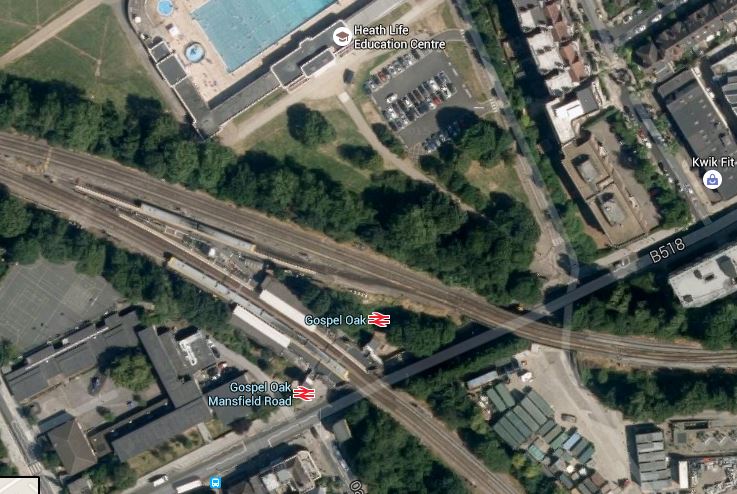
Gospel Oak Station
Note that there is a Class 172 in the platform and it looks like accommodating a train, twice that length might need a platform extension.
I suspect that Transport for London will look at other options, depending on where passengers go from Gospel Oak and the number of freight trains that have to be pathed through the area.
On a personal view, I’d like to see trains on the GOBlin terminating in Ealing, as that would give me an easy route to the area, by getting a 141 bus from outside my house to Harringay Green Lanes.
But I don’t think that is likely. After all when Crossrail opens, I can just take a 141 bus the other way to Liverpool Street/Moorgate and get Crossrail to Ealing.
Greater Electric Freight Capacity and Flexibility
Railfuture reckon that up to thirty freight trains a day will leave London Gateway and many will be electric hauled and need to make their way up the West Coast Main Line. An electrified GOBlin gives them two routes across London.
The second route will also enable services to be maintained, when say one line is blockaded.
Limited passenger services could also be run via Stratford and South Tottenham to Gospel Oak, when work is being undertaken on the North London Line.
Harringay Park Junction
Railfuture also says that this vital junction will be electrified.

Harringay Park Junction
The GOBlin runs across the image, with the junction under the bridge on the left.
It will allow eastbound freight trains to go north on the East Coast Main Line.
Carlton Road Junction
Another junction, that Railfuture believes will be electrified.
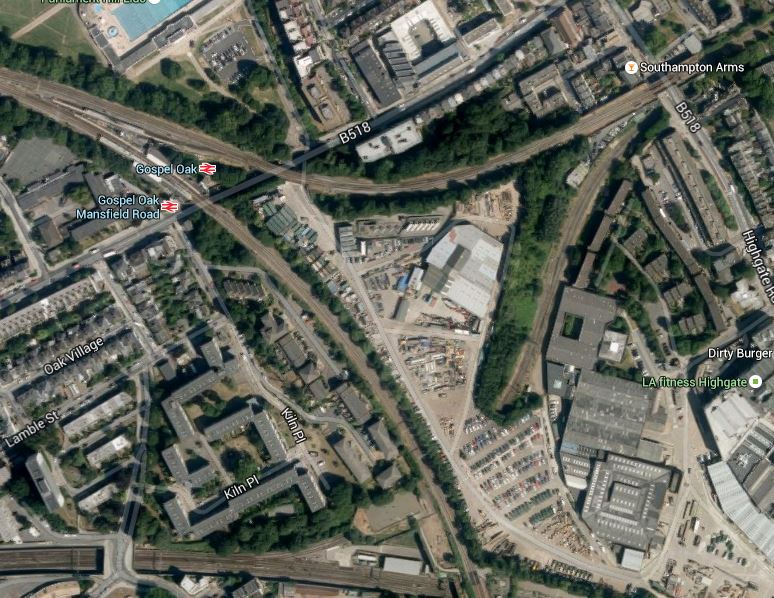
Carlton Road Junction
It will allow westbound trains to go north on the Midland Main Line, which runs across the bottom of this image
A lot will be freight going up towards the Radlett Freight Terminal or the Midlands, but a proportion will take the Dudding Hill Line to go west.
Dudding Hill Line
I think that it will not be long before the Dudding Hill Line is electrified to allow both electrified freight and passenger services to go west, by bypassing the North London Line.
Certainly Transport for London have identified this route as a possible GOBlin extension.
Before GOBlin Electrification – Walthamstow Queen’s Road
Walthamstow Queen’s Road is of a similar standard to most of the other stations on the Gospel Oak to Barking Line.



The station like Harringay Green Lanes is step-free by ramps and at some point will need lifts.
Before GOBlin Electrification – Wanstead Park
Wanstead Park station is another tidy station on the Gospel Oak to Barking Line.


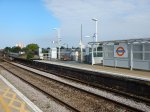
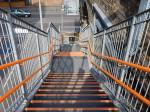


It has two steep staircases and no lifts, but the platforms can be easily extended, if needed for the new trains.
In my view the station also needs a light-controlled crossing by the entrance and better placed bus stops, so that transfer to the nearby Forest Gate station is easier.
Before GOBlin Electrification – Woodgrange Park
Woodgrange Park station is one of only two stations on the Gospel Oak to Barking Line, that is electrified.
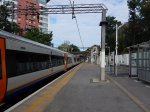
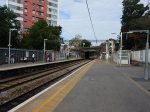
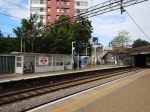

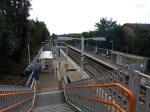

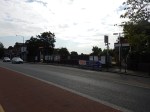
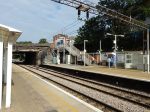

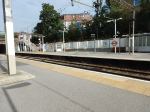

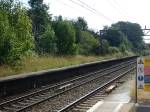
As the electrification stretches all the way to Barking, the only thing the station will need to bring it up to the standrd passengers expect, is perhaps a couple of lifts.
If the platforms need lengthening, there are abandoned sections that could probably be brought back into use. This Google Map clearly shows the usable white and disused sections of the platforms.
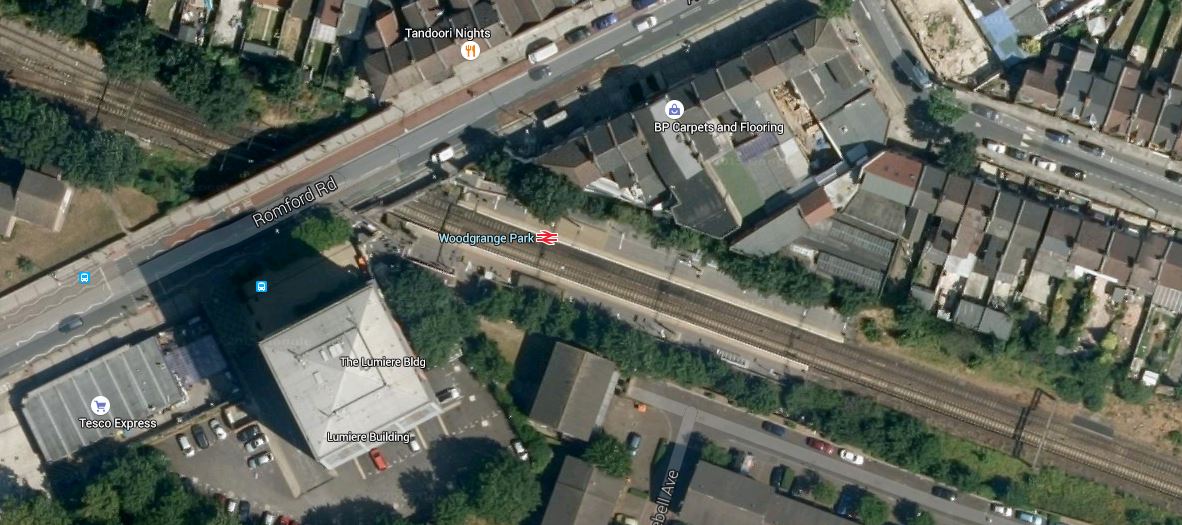
Woodgrange Park Station
I estimate from this image that the current length of usable platform is around eighty metres. So they could probably accommodate one of the new four-car trains. But should the platforms be extended to future-proof them for six or even eight-cars.
Before GOBlin Electrification – Upper Holloway
I went to Upper Holloway station on my way to Waitrose.
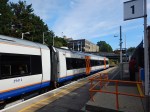
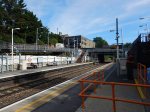
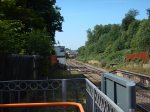
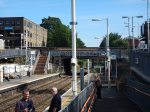
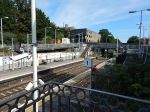
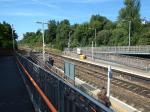
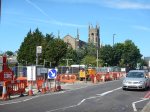
It is not a grand station, being just two ramps and staircases from the Holloway Road to two more than adequate tidy platforms. It is not unlike Crouch Hill station.
At present there are roadworks outside, as the road bridge over the railway is being replaced. I suspect that this project will have to be completed before electrification through the station is started. Obviously, when the new bridge is finished it will have sufficient headroom for the overhead line equipment.
Upper Holloway isn’t an official interchange but as the station is in middle of a slope between Archway and Holloway Road stations, which eases walking in one direction, it can sometimes be a useful interchange.
But the station will need improvements to its step-free access.
Before GOBlin Electrification – Harringay Green Lanes
To get to the Gospel Oak to Barking Line, I get a 141 bus from outside my house to Harringay Green Lanes station.

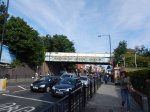
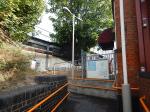


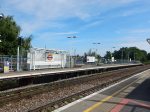
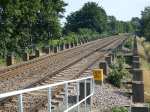
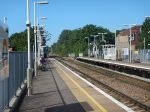
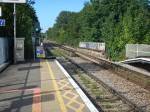
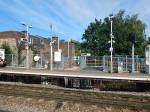


It is another tidy station serving a retail park on the site of the old Harringay stadium. Like most of the stations on the line, there are no lifts and the two platforms are served by stairs and ramps.
Other than the inadequate step-free access, note the following about the station.
- The platforms are not unduly long, but there would appear to be foundations from previous ones, that were longer.
- The bridge although obviously sound, probably needs a bit of work to bring it up to the required visual standard.
- The station is an out of station interchange to Harringay station and work could be done to make the walking route easier. I estimate that the distance is about 50% longer than the Hackney Downs/Central Link.
- There is a lot of commercial and retail use in the area, that may be redeveloped.
Note too, that the Piccadilly Line crosses underneath and there is a long distance between the stations either side on that line. No plans exist to create an interchange, but it is a station, where that should never be ruled out.
This is a Google Map showing the area around the two Harringay stations.
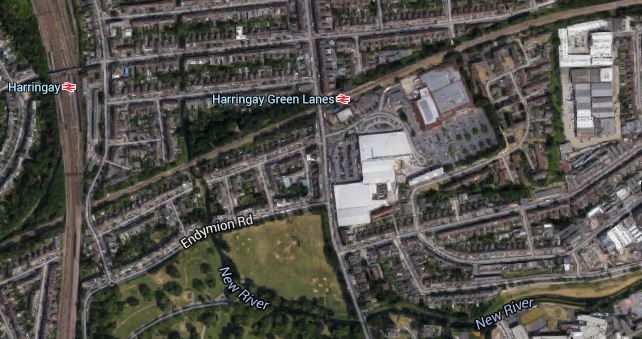
The Area Around The Two Harringay Stations
I think that by 2050, Harringay Green Lanes station will be very different.
Before GOBlin Electrification – Crouch Hill
I’d never been to Crouch Hill station before, but I went to take these pictures.


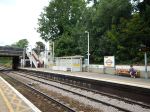

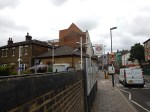
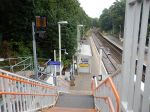

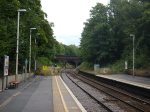


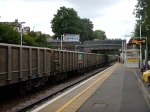
It is another tidy station with fairly long platforms, steep staircases and no lifts. Although unlike Leyton Midland Road, the station is in a cutting, rather than on a viaduct.
My pictures were as you can see interrupted by a dreaded Class 66 locomotive, with all its noise and smell passing through. After electrification, hopefully we’ll see something more environmentally-friendly like an elderly Class 90 or a brand new Class 88 locomotive. Unfortunately, I think we’ll see mainly Class 66s pulling freight trains for some years, as there are so many of them and they seem to be pretty reliable, although unloved by the drivers.
Before GOBlin Electrification – Leyton Midland Road
Leyton Midland Road station is a tidy station, but it has steep stairs and no lifts.

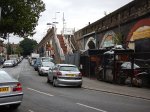
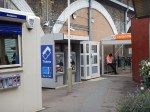


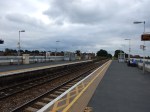
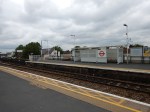
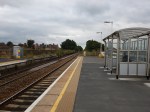
As the pictures show, the platforms are probably long enough for the new four-car trains.
Electrification Of Britain’s Railways Isn’t Easy
There are a lot of reports in the media talking about the delays in electrifying railways in the UK, like this report in the Yorkshire Post, which talks about the Trans Pennine and Midland Main Line schemes.
I have just found this report in the Rail Engineer, which talks about a forty-four day closure of the important Winchburgh Tunnel between Edinburgh and Glasgow to prepare for electrification as part of the Edinburgh Glasgow Improvement Program. The report starts with this paragraph.
A legacy of the rapid early growth of Britain’s railway network is that the UK has one of the world’s most restrictive loading gauges. As a result, typically half of the cost of British electrification projects is the civil engineering work to adapt structures to provide clearance for wires and pantographs.
As anybody who’s ever got to grips with any old building, what it looks like on the surface is very different to what is underneath.
The project described in the article is challenging to say the least. This extract describes the building of the tunnel.
Winchburgh tunnel lies at the eastern end of a five- kilometre long cutting. It is 338 metres long and was opened in 1842, having taken two years to complete. When digging the cuttings and tunnel, the contractor, Gibb and Sons, removed 200,000 tons more rock than expected and consequently made a loss.
The tunnel was cut through dolerite rock, mudstone and shale. In the middle on the nineteenth century, these oil shale deposits once made West Lothian one of the world’s biggest oil producers. This shale was also a factor in an unfortunate accident during tunnel construction in 1839 when a man was severely burnt by firedamp.
The cutting is crossed by two streams, west of the tunnel. A twin four-foot diameter cast-iron inverted syphon was provided to carry Myers Burn under the railway. Swine Burn crosses the cutting on an aqueduct that had to be re-decked as part of the EGIP electrification works. Downstream of the aqueduct is a pumping station, which drains the cutting west of the tunnel. This is an area with significant drainage issues, some of which are addressed by the tunnel works.
So making it large enough for electrification wasn’t easy. As is typical on a project such as this, concrete slab track was used. You don’t see it much on UK railways, as where it is used is generally in tunnels and other places, where you have tight clearances.
In the Winchburgh tunnel slab track was used and they are also using an overhead rail system to get the power to the train.
In searching for a good article about slab track, I found this article on Balfour Beatty’s Rail web site, which is entitled Polyurethane Slab Track.
Balfour Beatty have worked with Herriot Watt University to create a method of using polyurethane to create a method for strengthening track in awkward places.
One example describes how a bridge was improved to cope with modern loads.
While George Stephenson was a forward thinker, even he didn’t predict freight trains running at 80mph with 25 tonne axle loads over his bridge. So he hadn’t calculated for those stresses. The bridge has done a good job of coping with them for 190 years, but it was getting a bit tired.
The article also highlights that Network Rail has 25,000 masonry arches, so you can see why there must be a need for such a technique.
The technique has also been used to increase the headrom for electrification in a tunnel on the Midland Main Line.
It’s all impressive engineering.
Where Are The Wires?
I took this video between Twyford and Reading stations.
There is no sign of the overhead wires that will be needed for Crossrail and the electrification of the Great Western Main Line.
To be fair to the comntractors, there was a lot of activity past Reading, so perhaps for various reasons the stretch near London has been left to last. Perhaps they want to get all the trackwork like the Action Dive-Under and the Stockley Flyover completed first!
There may have been lots of steelwork and a few wires between Reading and Didcot, but there wasn’t anything on the Cherwell Valley Line to Oxford.

