Levelling Up Funding Will Double Train Services To Belmont In Surrey
The title of this post, is the same as that of this article on Rail Advent.
This project is outlined in these three paragraphs in the article.
An award of £14.1 million to Sutton Council from the government’s Levelling Up Fund will unlock the full potential of the London Cancer Hub and allow the number of trains running to the village of Belmont in South London to be doubled.
The London Cancer Hub is a world-leading life sciences campus that is being developed at Belmont in Surrey, and which will create 13,000 jobs and £1.2 billion each year for the UK economy.
Until now, Belmont has been poorly served by public transport and the money will enable its train services to be doubled to four trains an hour, and extra direct services from Belmont to London Victoria.
This document from Sutton Council gives more details in this paragraph.
This bid will double train frequency between Belmont and London Victoria from 2 to 4 trains per hour by building a siding turnback south of Belmont Station. It will improve accessibility at the station and provide better routes for people walking and cycling to the station from the nearby area and The London Cancer Hub. As a result, public transport accessibility will improve and active travel will increase.
This map from CartoMetro shows the current track layout at Belmont station.
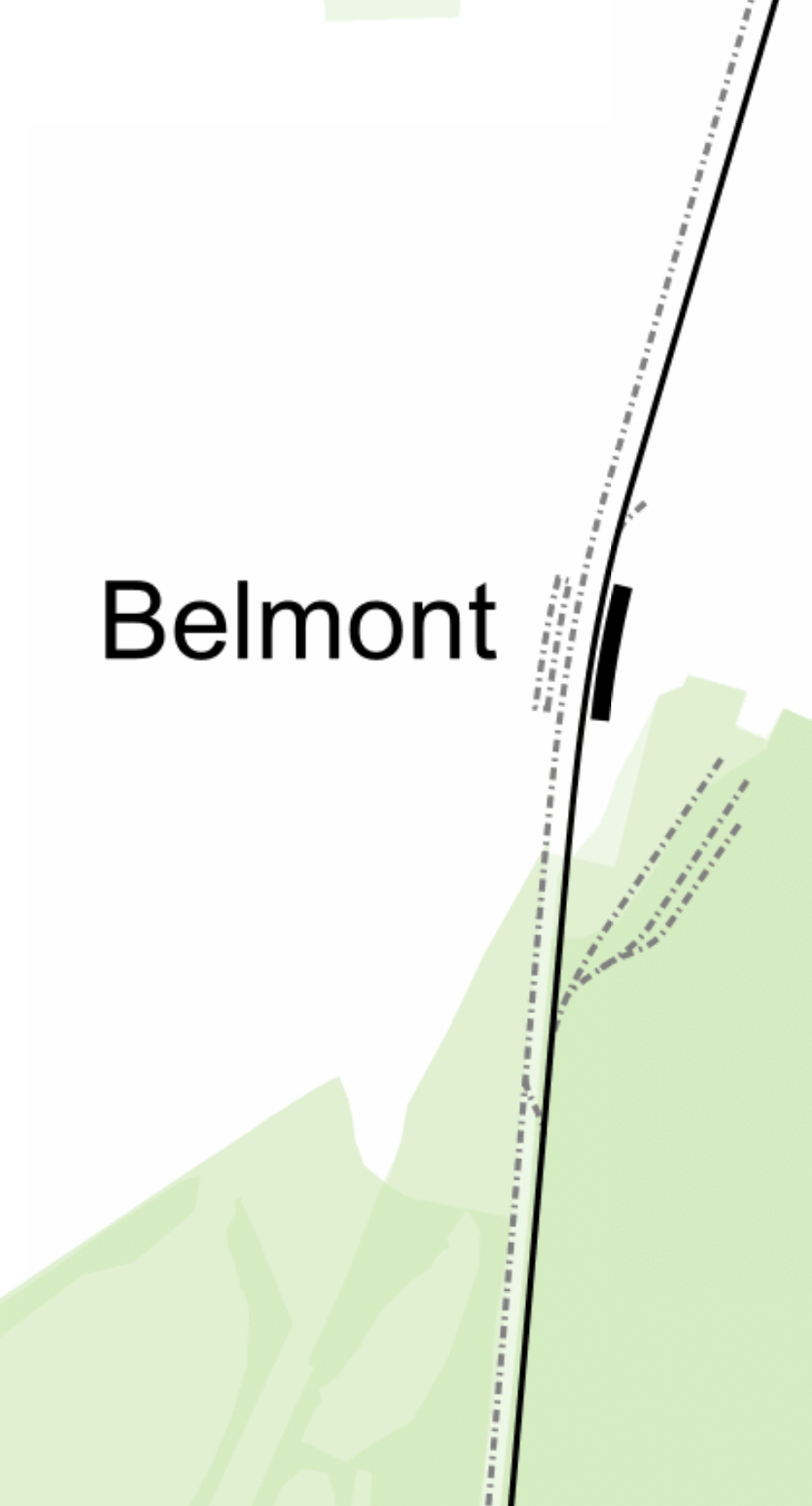
Note.
- The Epsom Downs branch used to be double track, with a second platform at Belmont station.
- There used to be a cross-over South of the station.
I suspect a length of the other track will be reinstated, with a cross-over the other way round to create the turnback siding.
This will allow two extra trains per hour to run between London and Belmont, that will turn back at Belmont.
In Could Third-Rail Tram-Trains Work The Epsom Downs Branch?, I walked up the hill to the Royal Marsden Hospital and it wasn’t an easy walk, as these pictures show.
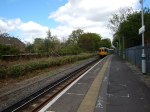
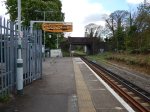
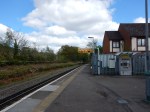
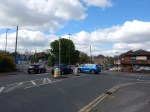
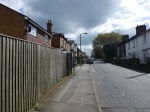

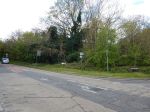
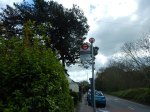
Perhaps all trains should be met by a zero-carbon shuttle bus.
Going to a cancer hospital is not a pleasurable experience, especially for a child, so why not liven it up a bit with a ride in the best zero-carbon bus, that can be found?
Could Third-Rail Tram-Trains Work The Epsom Downs Branch?
The Epsom Downs Branch is a single-track branch line from Sutton to Epsom Downs station.
Currently, it has a service to Victoria of around two trains per hour (tph), but it doesn’t seem to generate much business.
In 2015-16, Epsom Downs station had 112,000 passengers, whereas Sutton station had 7,111,000.
As the three stations on the branch are all single-platform stations with few facilities, can it be viable to run Class 377 and Class 455 trains on the branch?
When the London Tramlink arrives in Sutton, I wonder if the branch would be more suited to be running by trams.
But as the line is electrified with the standard 750 VDC third-rail system, is it one of those places, that could it be served by a third-rail tram-train, as I proposed in The Third-Rail Tram-Train?
I think the answer is in the affirmative.
Consider.
- The tram service could terminate at the proposed Streatham Common Interchange station.
- It takes less than ten minutes to go between Sutton and Epsom Downs
- In the Peak or when more capacity is needed, Class 377 trains could still run the service.
- The tram-trains could provide a step-free service.
Running the service with tram-trains, would give one big advantage; the ability to run a service to the Royal Marsden Hospital, which according to this document from the hospital is not the best, when it comes to public transport.
A single-track branch from the Epsom Downs Branch could start South of Belmont station and tram-trains running on batteries could serve both the Royal Marsden Hospital and the Institute of Cancer Research.
This Google Map shows Belmont station and the hospital.
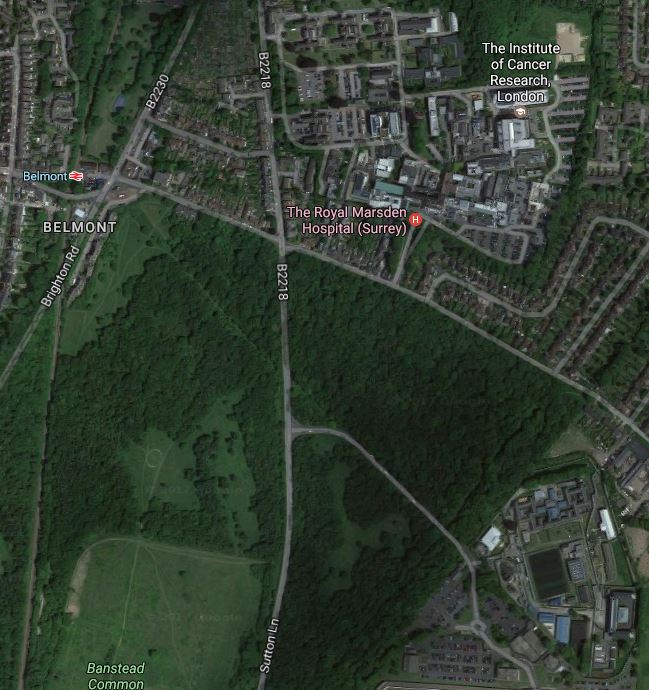
Note.
- The rail line from Belmont station to Epsom Downs station running down the West side of the map.
- There are two prisons in the South East corner of the map.
- The road from Belmont to the Hospital may only be half a mile, but it is up a steep hill.
- Why is every train arriving at Belmont station, not met by a shuttle bus to the Royal Marsden Hospital?
- There is one train per hour through Belmont station in both directions.
A silent battery tram-train without any overhead wires, climbing up on the railway line and then turning East across Banstead Common calling at the prisons en route to the Hospital, might be acceptable to the Planning Authorities. It would surely be less intrusive than some of cars and vans, I saw rushing through the Downs.
I would think that the hospital needs a frequency of four trains per hour to Sutton, in addition to the current sewrvices between Sutton and Epsom Downs.
A charging station, like a Railbaar, at the end of the short branch might be needed, to make sure that the gradients were conquered.
These pictures show Belmont station and the walk to the Royal Marsden Hospital.
Knowing, what I now know of the Royal Masrsden Hospital, it wouldn’t be my choice of hospital.
I don’t think, I’vw seen a hospital with such terrible access by public transport!
The Third-Rail Tram-Train
I’ve never seen anybody propose a third-rail powered tram-train, but that is probably because everybody has assumed quite rightly, that you couldn’t power a tram by using third-rail electrification. It’s just too dangerous! But is it so dangerous on a segregated track?
In February 2016 I wrote Brummies Go For Battery Trams and it is now ienvisaged that Midland Metro‘s trams will be running services under battery power in 2019.
Battery power is used for trams in several places around Europe and the rest of the World and is becoming a proven technology. Is there any reason why a battery tram-train, can’t be powered by third-rail electrification, when it is running as a train?
The Class 399 Tram-Train
The Class 399 tram-train is under test in Sheffield, to prove that it can run passenger services in the UK.
These tram-trains can handle either 25 KVAC or 750 VDC from overhead wiring. I also think, they are also clever enough to work out what voltage they are getting and configure themselves accordingly.
Since, I originally wrote this post, KeolisAmey Wales have ordered thirty-six tram-trains from the same Citylink family as the Class 399 trains.
Stadler, whose Valemcia factory built the Class 399 tram-trains, will also be building trains for Merseyrail’s network, which will run using 750 VDC third-rail electrification.
Would it be reasonable to assume, that Stadler will be able to design an appropriate pick-up shoe for the Class 399 tram-train, so that it can run on a 750 VDC third-rail network?
Batteries
A battery system would also be needed, but I believe that this will be generally offered by all tram and tram-train manufacturers, as trams and tram-trains will be running increasingly in heritage or sensitive areas.
Charging The Batteries
Batteries would normally be charged, when the tram-train is running on an electrified line, under power from the third-rail system.
The MetroCentro in Seville, works without catenary and has a fast charging system at the two end stops.
There is no reason to believe that a Class 399 tram-train with batteries, couldn’t work with a fast charging station like a Railbaar.
Tram-Trains For The South Wales Metro
Since, I originally wrote this post, KeolisAmey Wales have ordered thirty-six tram-trains from the same Citylink family as the Class 399 trains, for running on the South Wales Metro.
These tram-trains will be fitted with batteries.
Would A Third-Rail Tram-Train Have A Pantograph?
This would be a matter for the operator.
But there is one UK tram network; the London Tramlink in Croydon, which is surrounded by an extensive third-rail electrified network.
The ability to run on both types of 750 VDC systems might be an asset and enable new services to be created without any extra electrification, by using a small amount of battery power to change from one system to another.
Changing Between Third-Rail And Overhead Electrification
This map from carto.metro.free.fr shows the track layout at Mitcham Junction station.
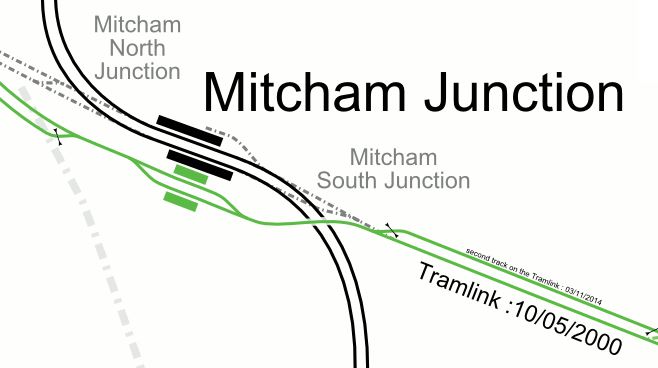
Suppose a link were to be provided, so that tram-trains could come from the South, pass through Mitcham Junction station and then cross over to the tram tracks for Wimbledon.
These pictures show the area.


As the link would have no electrification, the power changeover would be as follows.
- Arrive in Mitcham Junction station, using third-rail power.
- Raise and isolate the third-rail shoe.
- Switch to battery power.
- Proceed using the link to Mitcham tram stop.
- Raise the pantograph and switch to overhead power.
A reversed procedure would be used in the opposite direction.
Range On Third-Rail Power
The range of a Class 399 tram-train running on third-rail power, would be more limited by the train-tram’s speed of 100 kph and interaction with other services, rather than any electrification issues.
The range will probably be the same as the German cousins of the Class 399 tram-trains on the Karlsruhe Stadtbahn. These trams run on both 750 VDC and 15 KVAC, to places up to fifty kilometres from the Centre of Karlsruhe.
As a simple example, a third-rail tram-train running on the London Tramlink, could certainly use third-rail lines to access Gatwick Airport.
Range On Battery Power
In Out Of The Mouths Of Brummies, which describes an interview with those involved in the Midland Metro battery train project, I published this quote about battery trams.
Since then there has been lots of work and we’re now comfortable that battery technology has advanced sufficiently for it to be viable.
Under test conditions with plain straight track a tram could travel 20 km catenary-free. In practice, this would be rather less for a fully laden tram ascending the 9% gradient on Penfold Street. The longest catenary-free run we’ve envisaged is around 2 km, and we’re comfortable we can achieve that.
I think until Birmingham proves otherwise, 2 km. would be a sensible range for a tram or tram-train running on a full battery.
Compatibility Issues With Other Rail Vehicles And Platforms
This to me is a matter of design, but after the Sheffield tram-train trial and the analysis of platform solutions in Europe, I suspect that we’ll come up with a solution that works.
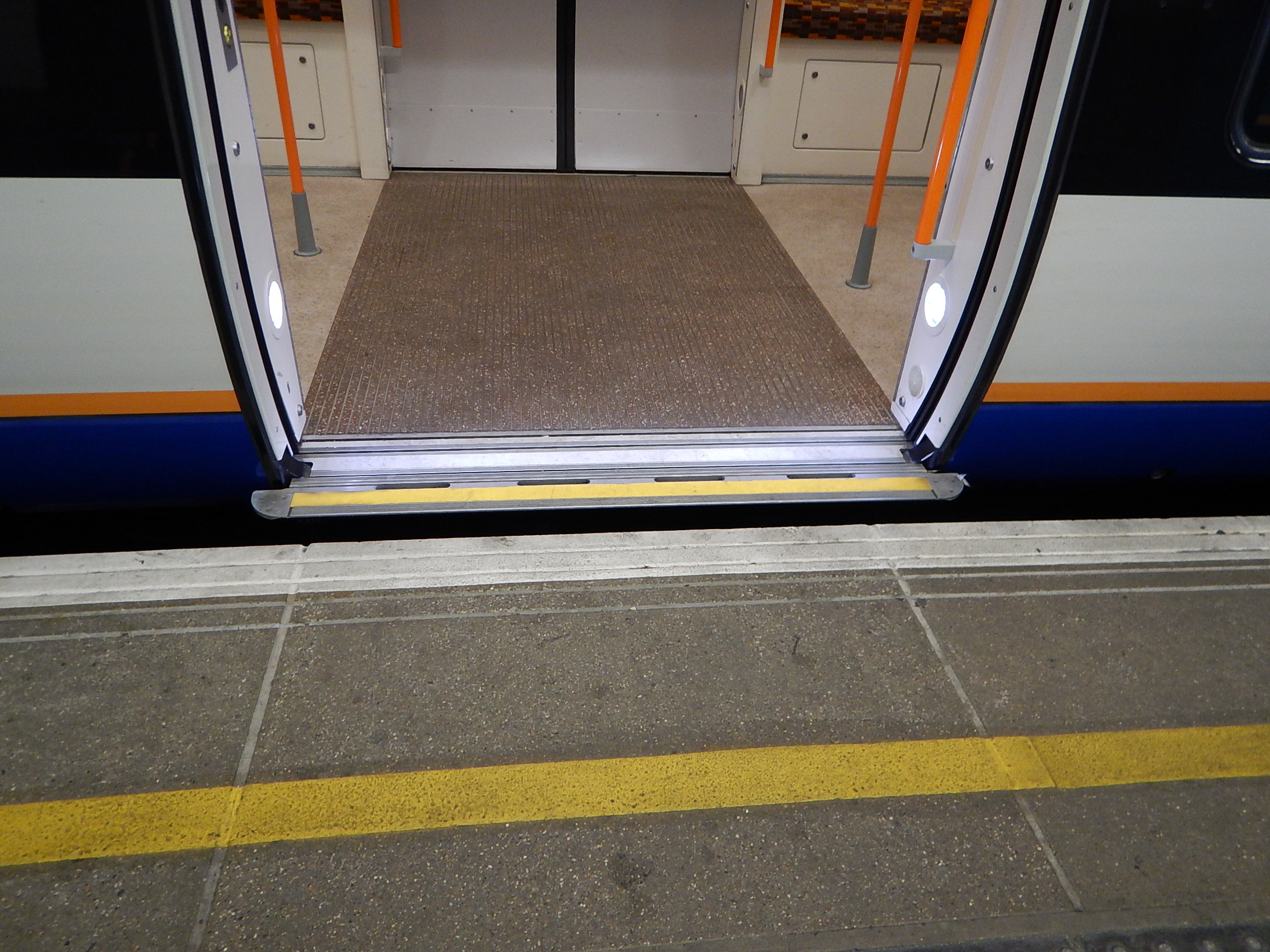
I think it is true to say, that many of our trains are badly matched to the platforms, but as this picture of a Class 378 train on the London Overground shows, the gap is becoming easier to mind.
I think too, we have an advantage over Europe, in that our loading gauge is smaller and our trains are closer in size to a modern tram or tram-train.
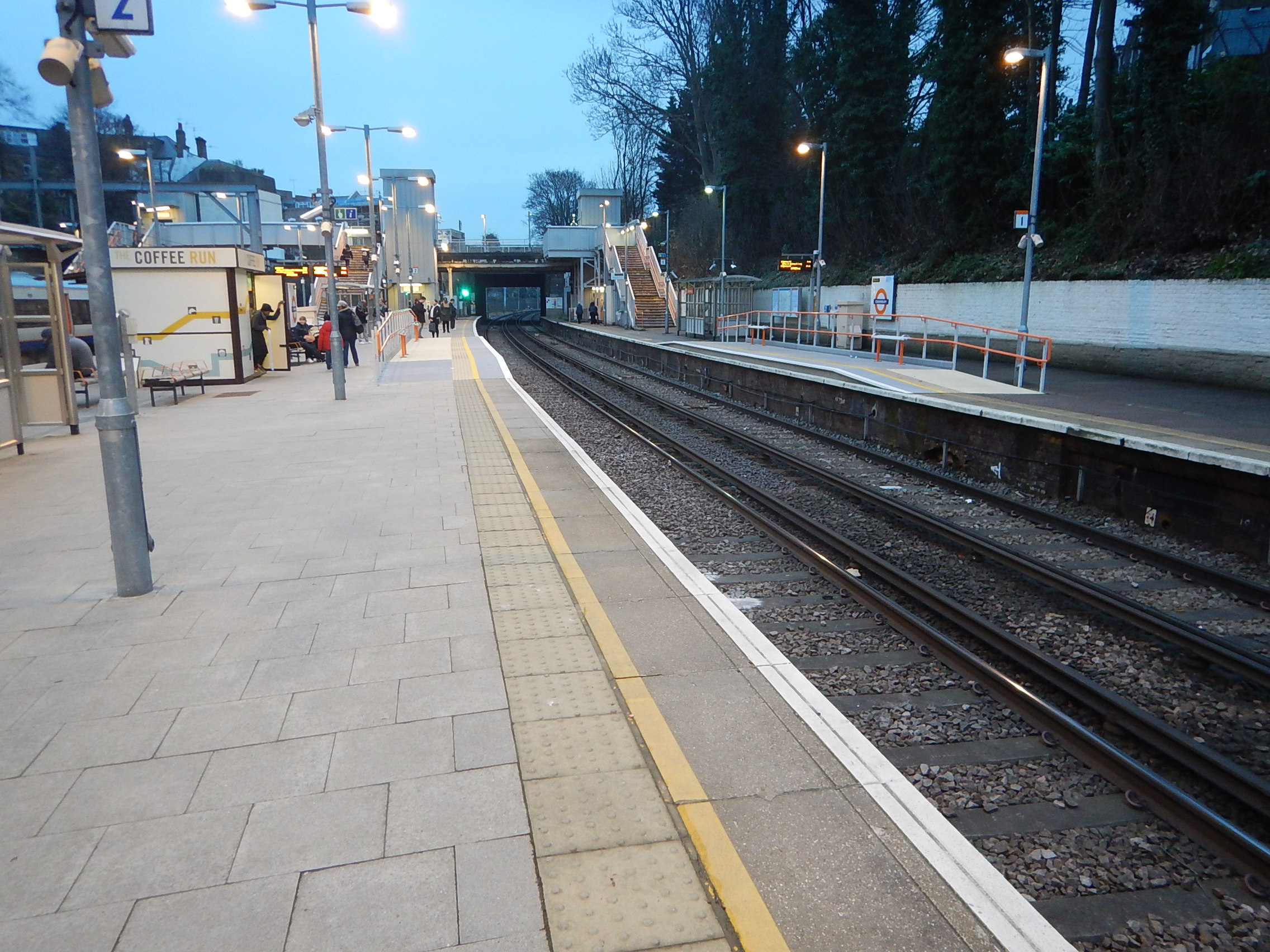
We are also good at innovative access solutions, as this picture from Canonbury station shows.
We may have a problem with using double-deck trains, but I believe that good design can minimise the problems of good access to both trains and tram-trains at the same platform.
Applications
The applications will be limited by battery range and by the gradients of the line.
In Southampton – A City Built For Cars, I describe how if they built their proposed Solent Metro around third-rail tram-train technology, they could transform the city.
In Could Beckenham Junction To Birkbeck Be Run Using Third-Rail Tram-Trains?, I show how third-rail tram train-technology , could be used to create more capacity at Beckenham Junction station.
In Could Third-Rail Tram-Trains Be Used To Increase Services In South London?, I show how third-rail tram-train technology, could be used to expand the London Tramlink.
In Could Third-Rail Tram-Trains Work The Epsom Downs Branch?, I show how third-rail tram-train technology, could serve the Royal Marsden Hospital.
In The Cranleigh Line, I suggest that third-rail tram-train technology could be used on this route.
Conclusion
Technically, I feel that a Class 399 tram-train capable of running on third-rail electrified lines is possible.
But it would have to run on battery power or 750 VDC overhead, when running as a tram.
 The Anonymous Widower