From Farringdon To Tottenham Court Road Station
After photographing the artwork at the new Barbican entrance to Farringdon station, I went to the current station entrance with the aim of getting to Tottenham Court Road station.
Obviously, when Crossrail opens, this will be a single-station hop on Crossrail, but there is no obvious quick way as present.
So out of curiosity, I asked one of the station staff, what is the recommended route.
She said, that the easiest way is to walk to Chancery Lane station and take the Central Line.
I also asked her why Thameslink, which is so much part of Farringdon station and will be such an important route at the station after Crossrail opens.
She said, but that’s National Rail.
So I walked to Chancery Lane.
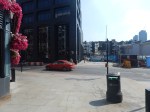
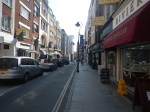


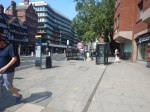
It was a very hot day and uphill. But I made it without difficulty.
Crossrail will certainly make my journey easier, but I can’t help feeling that some journeys from Farringdon are better done using Thameslink.
Consider the following journeys.
Farringdon To London Bridge
Currently, I would do this journey using Thameslink, but what will Transport for London want us to do?
- Use Crossrail to Moorgate and get the Northern Line.
- Use Crossrail to Bond Street and get the Jubilee Line.
- Use Crossrail to Whitechapel and get the Jubilee Line.
I shall still use Thameslink.
Farringdon To Victoria
Currently, I would do this journey using Thameslink to Blackfriars and then get the Circle or |District Lines.
I suspect that Transport for London would recommend one of these.
- Use the Circle Line all the way. Easy but long.
- Go to Kings Cross on the Circle or Metropolitan Lines and get the Victoria. Not the easiest with a heavy case.
I shall continue to use Thameslink.
The New Museum Of London
The new Museum of London will be built close to Farringdon station.
I think, it will end up as one of London’s top museums.
But is it easy to get to the British Museum, National Gallery,Tate Modern and all those other museums in South Kensington.
The British Museum will be just a stop on Crossrail, when that opens, but for the others Thameslink will play a part.
For these routes and other reasons, Thameslink must be on the Tube Map.
Farringdon Station – 7th July 2018
These pictures show the Barbican station end of the Crossrail entrance at Farringdon station.


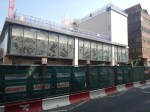

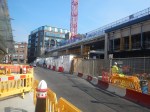
Note the design in the glass.
This article on Property Week is entitled Helical To Build £120m Office Over Farringdon Station.
It looks like the building of this block is starting.
The Victorian Roof At Farringdon Station
Farringdon Station is Grade II Listed and has a Victorian roof dating from 1865. The roof is not a grand but a very practical affair.
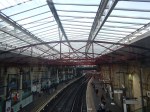
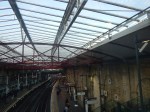
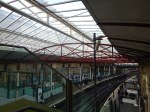

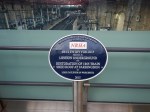
As the pictures show, it won a Railway Heritage Board Award in 2015.
I wonder if Barbican station had a similar roof, as you can still see the remains of crudely cut off trusses, not unlike the those remaining at Farringdon station.
If the Barbican station roof should ever be recreated, perhaps something like the one, I wrote about in The New Roof At Crystal Palace Station could be used.
The two stations could be a tribute to Ancient and Modern
Smithfield’s Iceberg
One Central London Crossrail station, that doesn’t seem to make the headlines is Farringdon station.
This article on bdonline.co.uk is entitled Crossrail prompts Farringdon makeover plans, brought the station into my mind.
Like some other Crossrail stations, Farringdon is a long double-ended station, stretching almost from Barbican station to the current Farringdon station, where Thameslink and the Sub-Surface Lines cross.
Wikipedia says this about Crossrail development at the station.
The Farringdon Crossrail station is being built between Farringdon and Barbican Underground stations and it will have interchanges with both of them.[19] Access at the Farringdon end will be via the new Thameslink ticket hall. Work is anticipated to be completed in 2018. Crossrail will link Farringdon to London City Airport and London Heathrow Airport, the Olympic Park in Stratford, Canary Wharf, Bond Street and Oxford Street, and Maidenhead in the west and Shenfield in the east. The station will also be a hub for cross-London travel, being the only station to be on both the north-south Thameslink service and the east-west Crossrail service.
This Google Map shows the area.
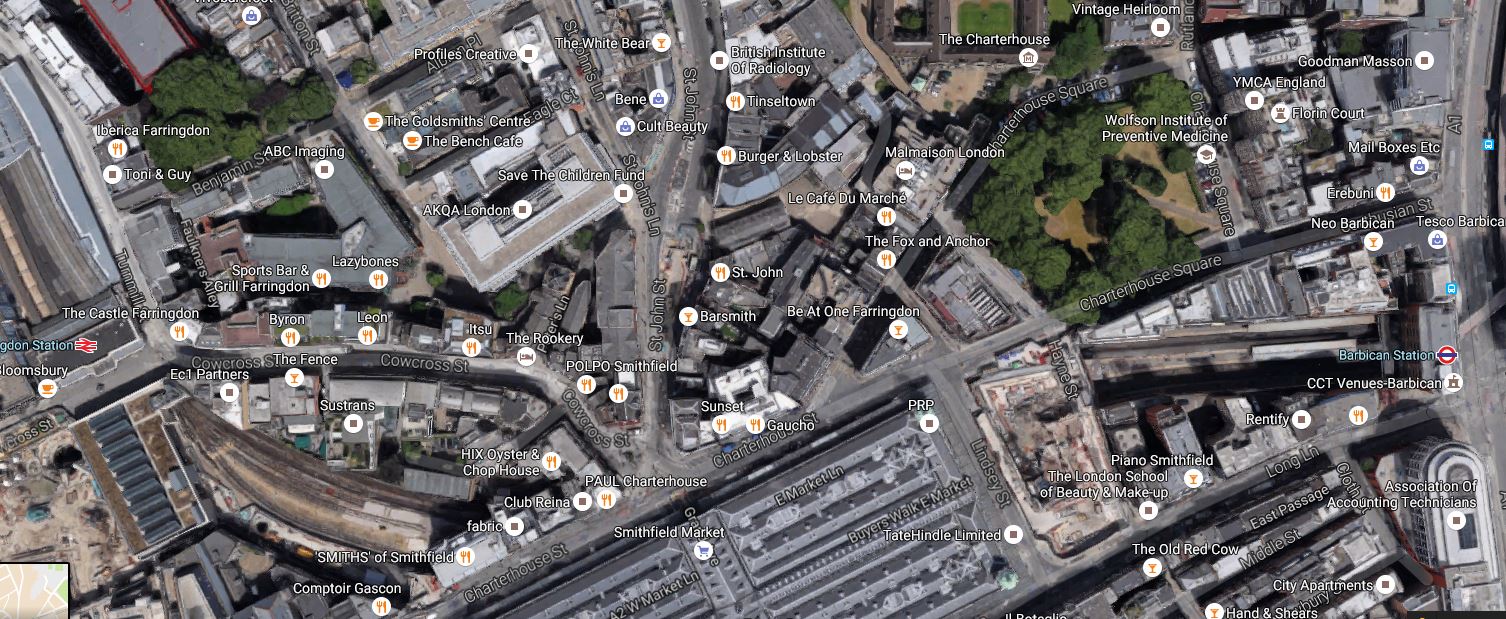
farringdon And Barbican Stations
Station Entrances
There would appear to be station entrances in Long Lane at the Barbican end and Cowcross Street at the Farringdon end, according to this page on the City of London web site, which contains these details of Farringdon station.
The station will include two ticket halls. The eastern hall will be located within the City at Lindsey Street and the western hall (shared with Thameslink, and which opened in December 2011) is be located at Cowcross Street in the London Borough of Islington. The eastern ticket hall will also provide a second entrance to London Underground’s Barbican station.
The entrance to the eastern ticket hall will be via a double height space, occupying most of the frontage on Long Lane and part of the frontage on Lindsey Street. The remaining frontage will be formed by future over-site development. Part of the frontage is also required for the discharge of Smithfield Market car park ventilation and escape stair.
Access to the platforms will be by means of escalators and there will be a number of lifts to provide step-free access to the Crossrail platforms and the London Underground platforms at Barbican station.
Preliminary discussions have commenced with Crossrail about the need for complementary measures such as improved crossing facilities and streetscape improvements to handle the projected increase in pedestrians in this area when the station opens. Crossrail have been advised that the over-site development will have to complement the settings of the listed market buildings and the Smithfield Conservation Area.
Rail Lines
It is interesting to look at this map of the rail lines through Farringdon from carto.metro.free.fr.

Lines Through Farringdon Station
Note how the two Crossrail tracks appear to move apart through the area. It will certainly allow lots of escalators at each end of the Crossrail platforms.
Platform Length
Crossrail platforms are long, to accept the Class 345 trains, which are two hundred metres long.
But this article on the Crossrail web site, which is entitled Current Works At Farringdon Station, contains this paragraph.
A new ticket hall is being constructed at the eastern end adjacent to the London Underground Barbican Station. It is linked to the Cowcross Street Ticket Hall by two platform tunnels which are among the longest on the route at 350 metres, more than double the length of the Hammersmith and City line platforms.
As the crow-flies distance between the two Sub-Surface Line stations is around 500-600 metres, these are seriously long platforms.
Obviously, this length of 350 metres is deliberate, but why?
I can think of the following reasons.
- Longer platforms might be needed to connect to the two ticket halls.
- Because the platforms appear to curve apart, they would need to be longer.
- Passenger access to the various walkways, escalators and lifts, might be better.
- There could be some safety reason.
- Two trains could both be partly in the Farringdon platforms at one time, to perhaps transfer passengers from a stalled train.
But whatever the reason, it could be a long walk,, if you get in the wrong end of a train for the exit at your destination.
A Gallery
Early on a Sunday morning, I walked between Barbican and Farringdon staions.




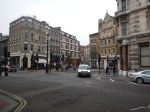

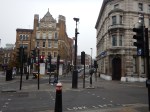


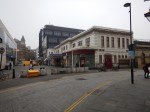

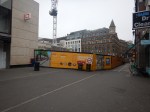
I’ll split comments into sections..
Barbican Station
Note the following about Barbican station.
- It has some excellent brick walls enclosing the station.
- The station was unsympathetically remodelled by the Nazis.
- You can still see the remains of a steel and glass roof , that was removed in the 1950s.
- There will be an entrance to the Barbican end of the Crossrail station at Farringdon from the Western End of the central platform.
My thoughts on Barbican station.
- When as a family we lived in the Barbican, we used this station extensively and I suspect that the humble entrance to and from the station will be heavily used by Crossrail passengers.
- If the central island platform proves to be too narrow for a walking route, it could always be widened, by using some of the space, where the trains used to run to Moorgate.
- Will an entrance be built on the other platform to Crossrail, so that passengers going East on the Sub-Surface Lines will have an easy step-free interchange with Crossrail?
On a personal travel point, Barbican might be my entrance to Crossrail/Thameslink, as I’d just take a 56 bus from round the corner from where I live.
The Long Lane Entrance To Farringdon Crossrail Station
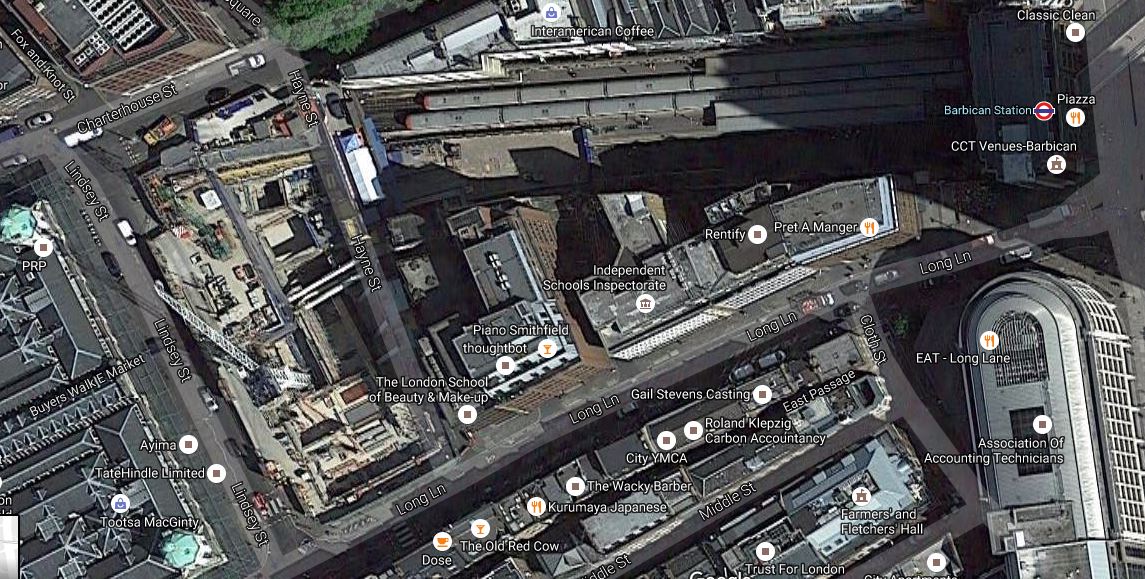
This Google Map shows Barbican station and the building that will contain the Long Lane entrance to Farringdon Crossrail station.
Barbican Station
This map is a very informative one.
- You can actually see behind the hoardings on the platform at Barbican station.
- There are two trains in the station.
- There is a gap in the buildings on the South Side of the station along Long Lane, that I labelled a development opportunity in the gallery.
- You can see the two domes on the Eastern end of Smithfield Market.
This image shows how the Long Lane entrance to Farringdon Crossrail station and Barbican station, will end up being treated as one station by travellers.
This is an image from the Farringdon station page on the Crossrail web site.
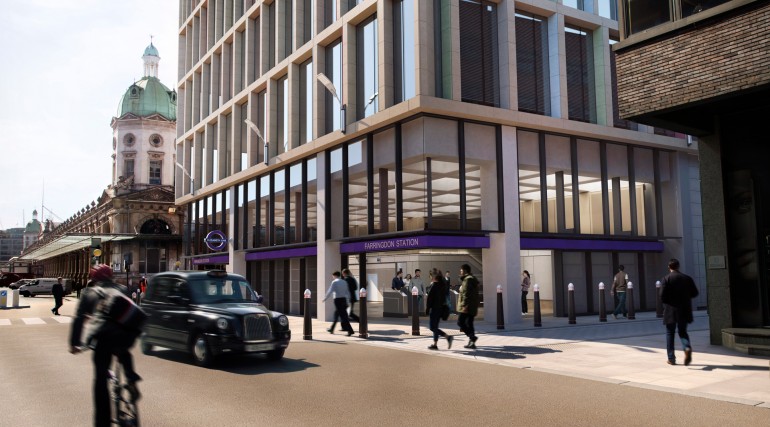
And this is my picture taken on my walk.

I think that the angles are similar, but I probably needed to stand further out.
This second image from the Crossrail web site, shows the view from just round the corner.
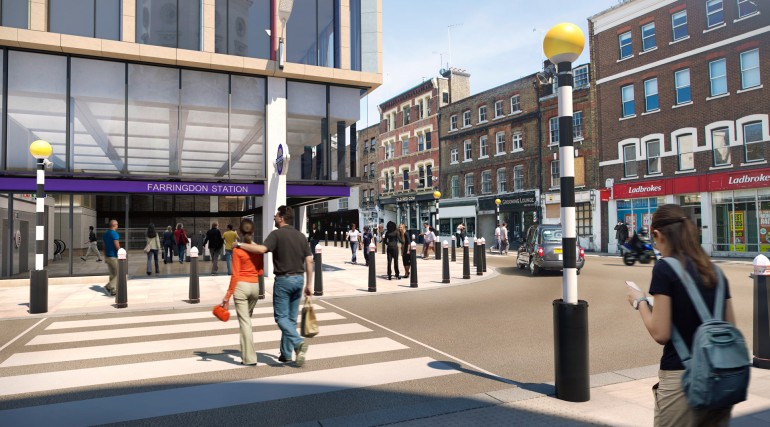
This is the nearest picture I have.

Note the zebra crossing, which appears on both images.
The Cowcross Street Entrance To Farringdon Crossrail Station
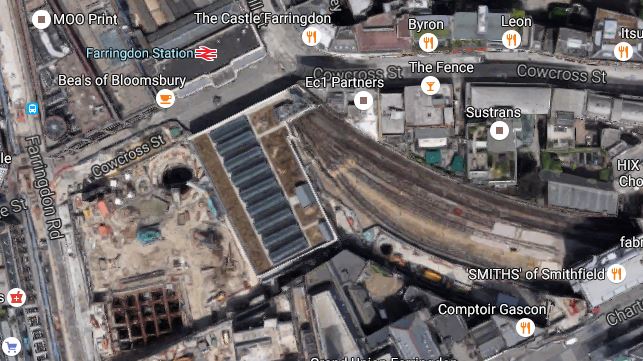
This Google Map shows the Cowcross Street site in relation to the current station.
Farringdon Station
The site with the obvious hole and what looks to be a large grating is where the Cowcross Street entrance is being built. If you go into the Thameslink Ticket Hall and look to your right, you’ll see that the wall is not of the highest quality. It could be just temporary, until the Crossrail station is built.
Between Comptoir Gascon and Smiths of Smithfield, is a small Crossrail site, which is shown in the gallery. Is it just a delivery and work site, or is it for something more substantial?
I think it could be the former, as from a Metropolitan Line train, little is visible, as this picture shows.
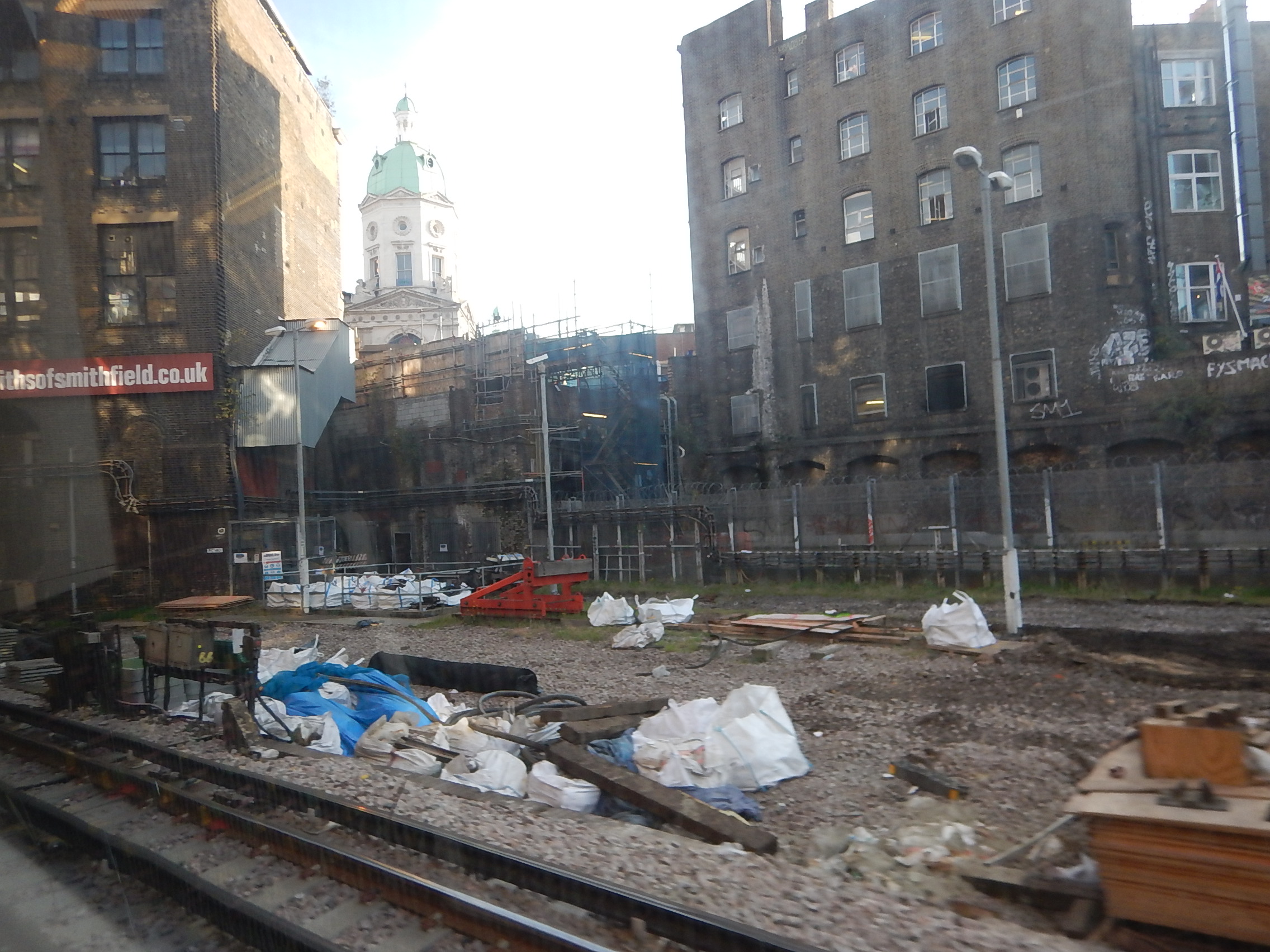
Behind The Hoardings On Charterhouse Street
This Google Map shows quite good detail.
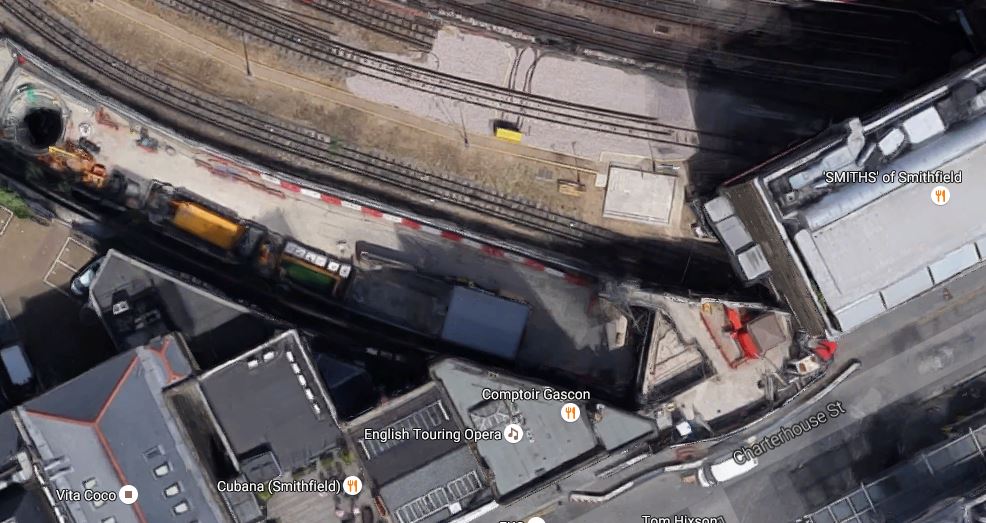
Behind The Hoardings On Charterhouse Street From Above
The hole shown in the top-left corner of the second image is shown on some drawings,labelled as Network Rail Lift Shift.
But, I can’t help thinking that with the development of Smithfield and especially the new Museum of London, that an entrance to Farringdon station at this location, would be beneficial,
The New Museum Of London
This is being built in West Smithfield. This Google Map shows the area.
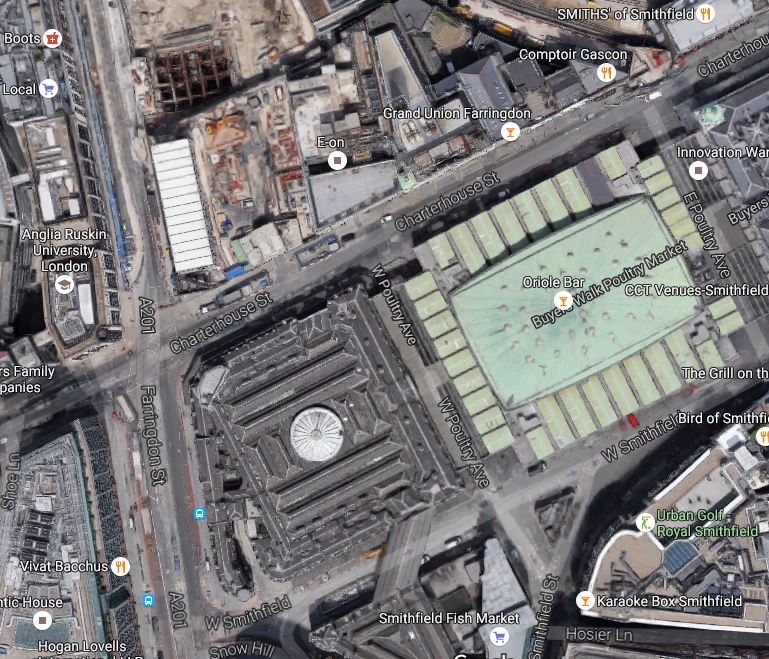
The New Museum Of London Site
This article in the Guardian is entitled Off to market: Museum of London shows off its new Smithfield site.
Read the article and this third paragraph is an ambitious vision.
“Our job is to make this the best museum in the world,” Ament said, carefully stepping around pigeon droppings and pools of water in the old market, which has been empty for the last 30 years while developers and conservationists fought over its fate. “I’m desperate to keep the train line running through it – nobody else has one of those. Just imagine the people on the trains looking out and seeing a museum around them, and the people in the museum seeing the trains go by.”
Surely, one of the best cities in the world, needs one of the best museums in the world to explain itself.
This map from carto.metro.free.fr shows the railway lines in the area.
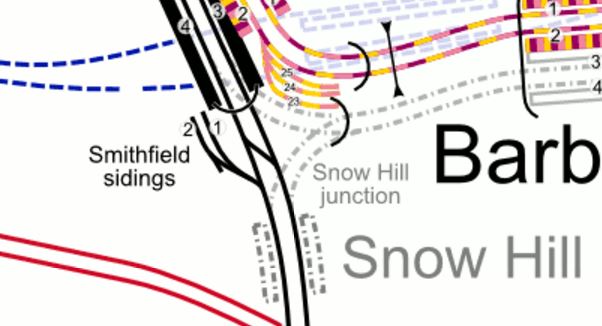
Snow Hill station would have been just South of the Museum site, but it is known that under the market there are numerous railway lines and sidings, where animals were brought to the market.
These must create ideas for the architects.
There are more notes on Snow Hill station on this page of the Disused Stations web site.
The train line refereed to in the Guardian article previously, is of course Thameslink, running in the Snow Hill Tunnel.
Certainly, the future development of the area must provide a decent connection between the Museum and Farringdon station.
I don’t think that Snow Hill station will be reopened, but there must be ways to connect the museum to the Thameslink platforms at Farringdon.
A Walk from City Thameslink Station Through The New Museum Site To Farringdon Station
I started the walk at City Thameslink station, as I wanted to see if the new Class 700 trains, changed voltage smoother than the Class 319 trains. I felt that three decades of progress had improved matters.










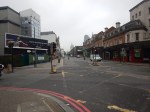

The Museum site needs work and some good architects. This is one proposal.

There is more in this article on the Dezeen web site.
The Future Of The Widened Lines To Moorgate
Trains from North of London used to go to Moorgate station along the Widened Lines until 2009, when platform lengthening for Thameslink at Farringdon station meant they couldn’t be used.
Two platforms at Moorgate are still used in busy times, but two platforms at Moorgate and Barbican stations are unused.
The only thing, I can find about the future of these lines is they could be used for storing Metropolitan Line trains.
If this is done, then let’s hope there is worthwhile oversite development!
Some spaces are quite large as this picture from East of Farringdon station shows.
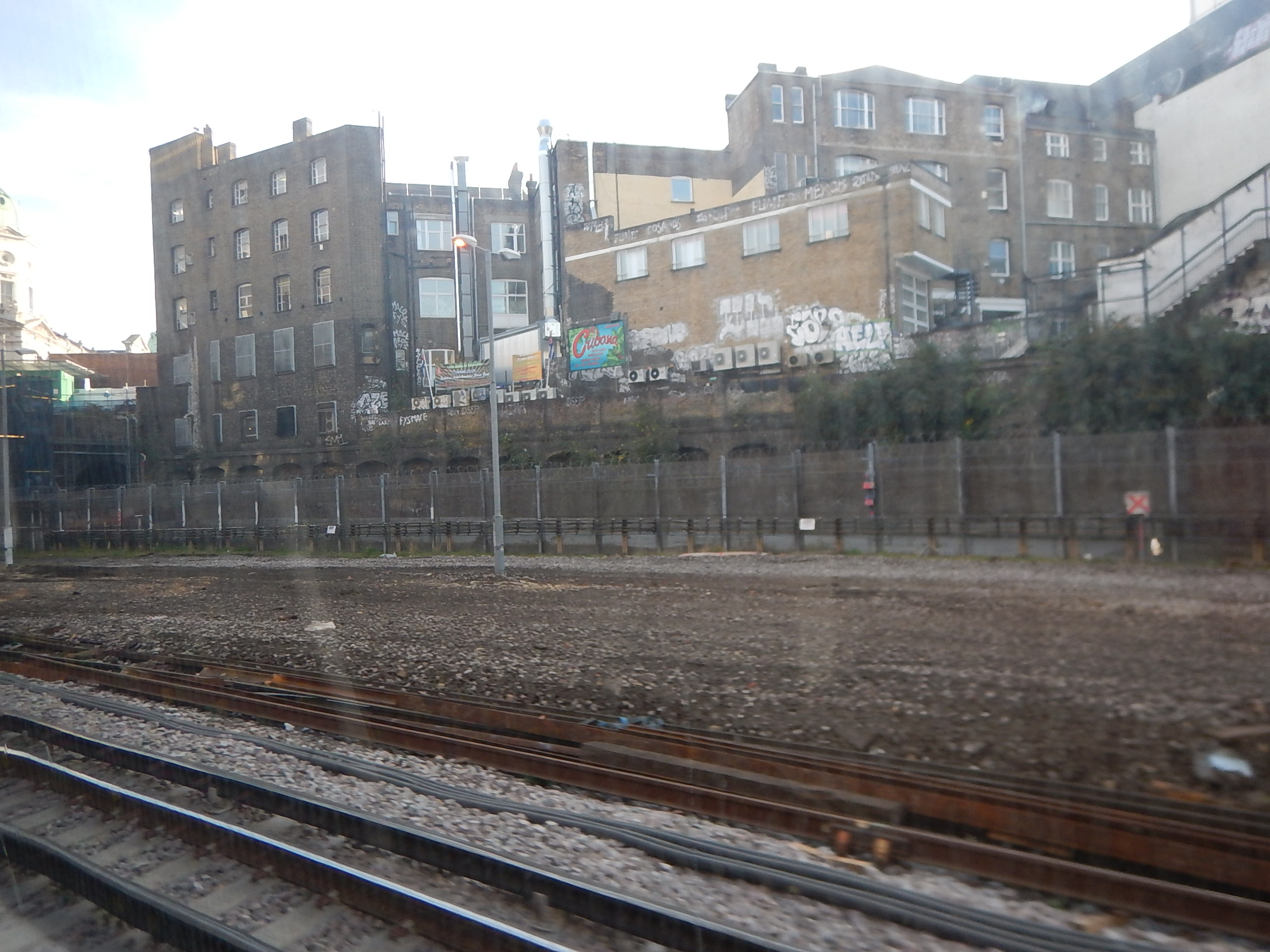
Space East Of Farringdon
You could store a lot of trains there.
London’s Future Air Terminal
This article on the Network Rail web site is entitled Farringdon Station: London’Newest Transport Hub.
This is said.
From 2018 Farringdon will be the only station where Thameslink, Crossrail and tube services meet. Passengers will have the choice to travel north-south, east-west or around London.
With up to 24 trains an hour running in each direction on Thameslink and Crossrail, including tube trains Farringdon will be served by over 140 trains an hour.This will relieve pressure from the Tube and deliver more seats for commuters.
Farringdon will provide direct links to three of London’s major airports, Heathrow, Gatwick, and Luton, and to St Pancras International for Eurostar services.
I have a feeling some of the spaces and oversite development in the area of Farringdon station, could become visitor-friendly ones, like hotels, cafes and restaurants.
Get it right and long-haul passengers into Heathrow and Gatwick, might prefer a night to refresh and enjoy themselves around Farringdon, before travelling out a day or so later.
The area will have a lot going for it in a few years.
- The Barbican Centre
- St. Paul’s Cathedral
- Hatton Garden
- The best church in London; St. Batholomew-The-Great
- The new Museum of London
- A short walk to the Thames.
- Direct links to Gatwick, Heathrow and Stansted airports.
- Direct links to Kings Cross, Liverpool Street, London Bridge, Old Oak Common, Paddington and St. Pancras stations.
- One-change links to City and Stansted airports and Euston, Marylebone, Victoria and Waterloo stations.
- Good restaurants
- Superb urban walks.
If it all goes wrong, you can always visit the Wife Market.
As some places like Iceland and Dubai market themselves as a journey break, why can’t London? Or do passengers prefer ice, geysers, sand and anonymous concrete and glass buildings?
Not that London doesn’t have a few of the latter!
Conclusion
The area round Farringdon station will be a new centre for London.
I wonder what my Huguenot grandfather, who was born in 1870, a couple of hundred metres to the North, would have thought?
A Space Too Good To Leave Empty
I took these pictures in the space between the Southbound Thameslink and Westbound Metropolitan platforms at Farringdon station.


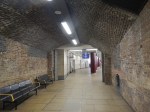
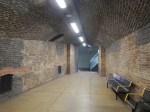
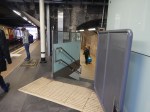
It’s just too good to leave empty!
But at least it’s a convenient almost step-free way to interchange between the two lines. Say from.
- Liverpool Street to Gatwick.
- Bedford to Paddington.
It’s just a pity that all the other connections at Farringdon, seem to be lots of steps.
Will Farringdon Station Become A Destination In Itself?
Until Crossrail is opened, I don’t think we can know the effect that it will have on London’s transport systems. I put a few of my thoughts in this post about London’s airports, but at the time I hadn’t read read Crossrail’s description of the new Farringdon station on its web site. Here’s a key paragraph.
Situated at the intersection of a new east-west and north-south axis, it will be possible to directly connect with three of London’s five airports (with single interchange to the other two), providing a highly desirable railway connection between Heathrow and Gatwick. We believe this interchange will become so important to London that Farringdon will re-emerge as a destination in itself.
I couldn’t agree more.
There will need to be a new Airports Commission, as Crossrail will be the London’s biggest gamechanger since the Underground.
Farringdon Station
After visiting the works at Crossrail, I went to have look at Farringdon station on the Metropolitan Line.
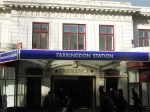
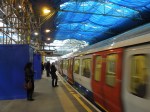

Note how the new station is coming on.
Around Farringdon Station
Yesterday, I was on a 45 bus going up Farringdon Road, just west of the station and took these pictures.

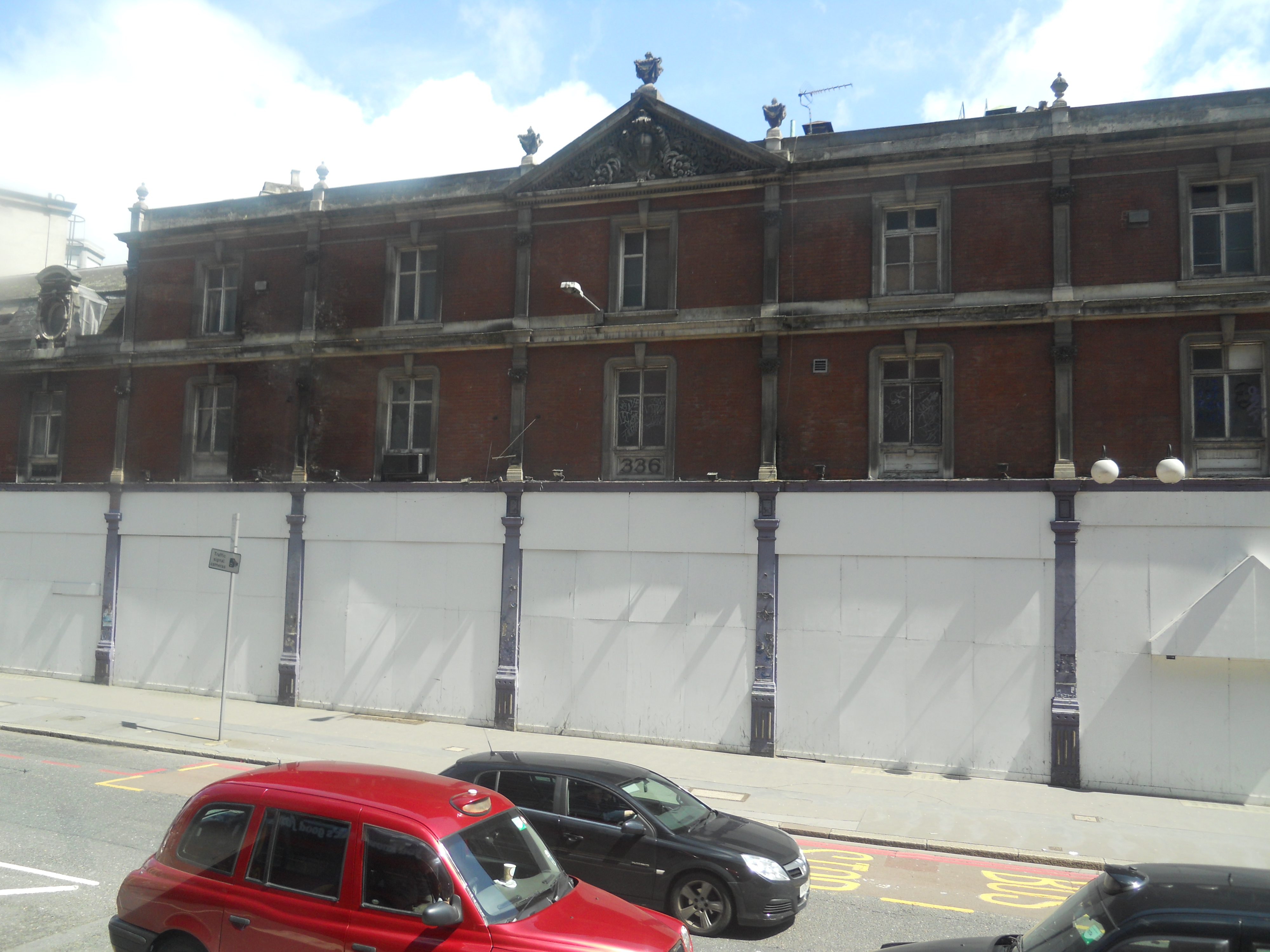

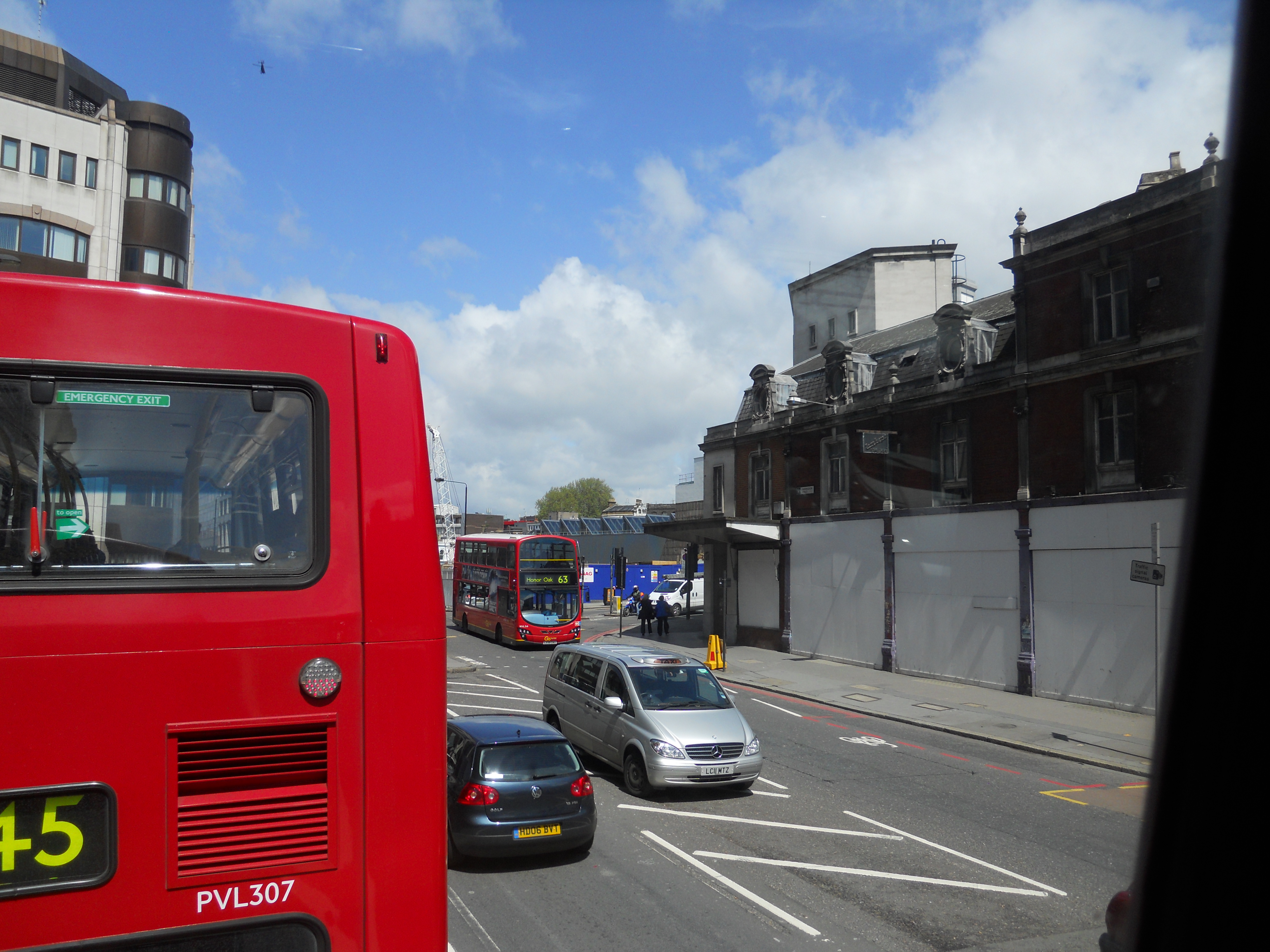
There does seem to be quite a few sites to develop hotels around the important Central London transport interchange, that Farringdon station will become, as I proposed in my post about London’s Airports.
The New Farringdon Station
The new longer 12-coach Thameslink trains are now running through the tunnels from St.Pancras to south of the river and Farringdon Station has been upgraded and lengthened to cope.
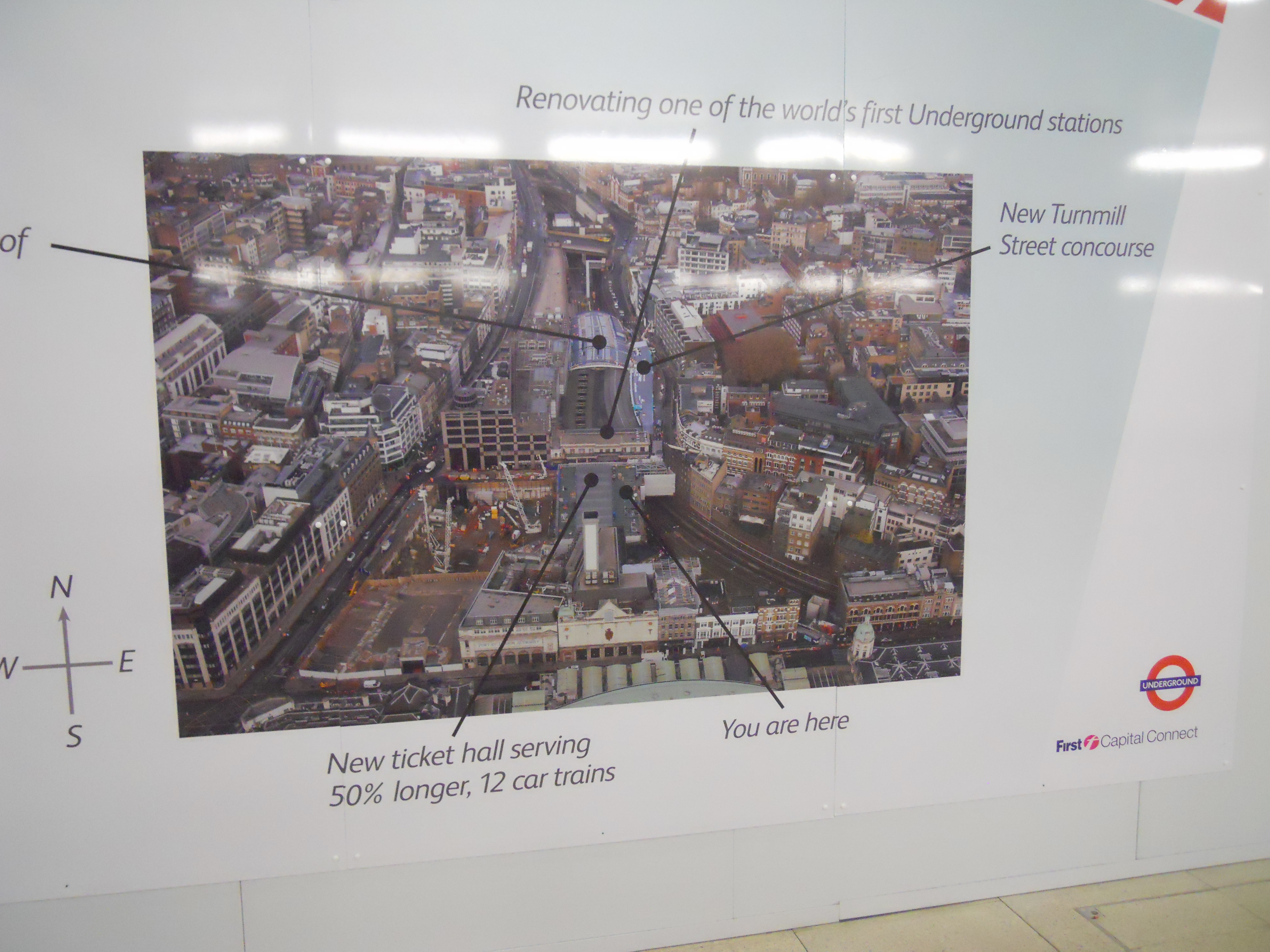
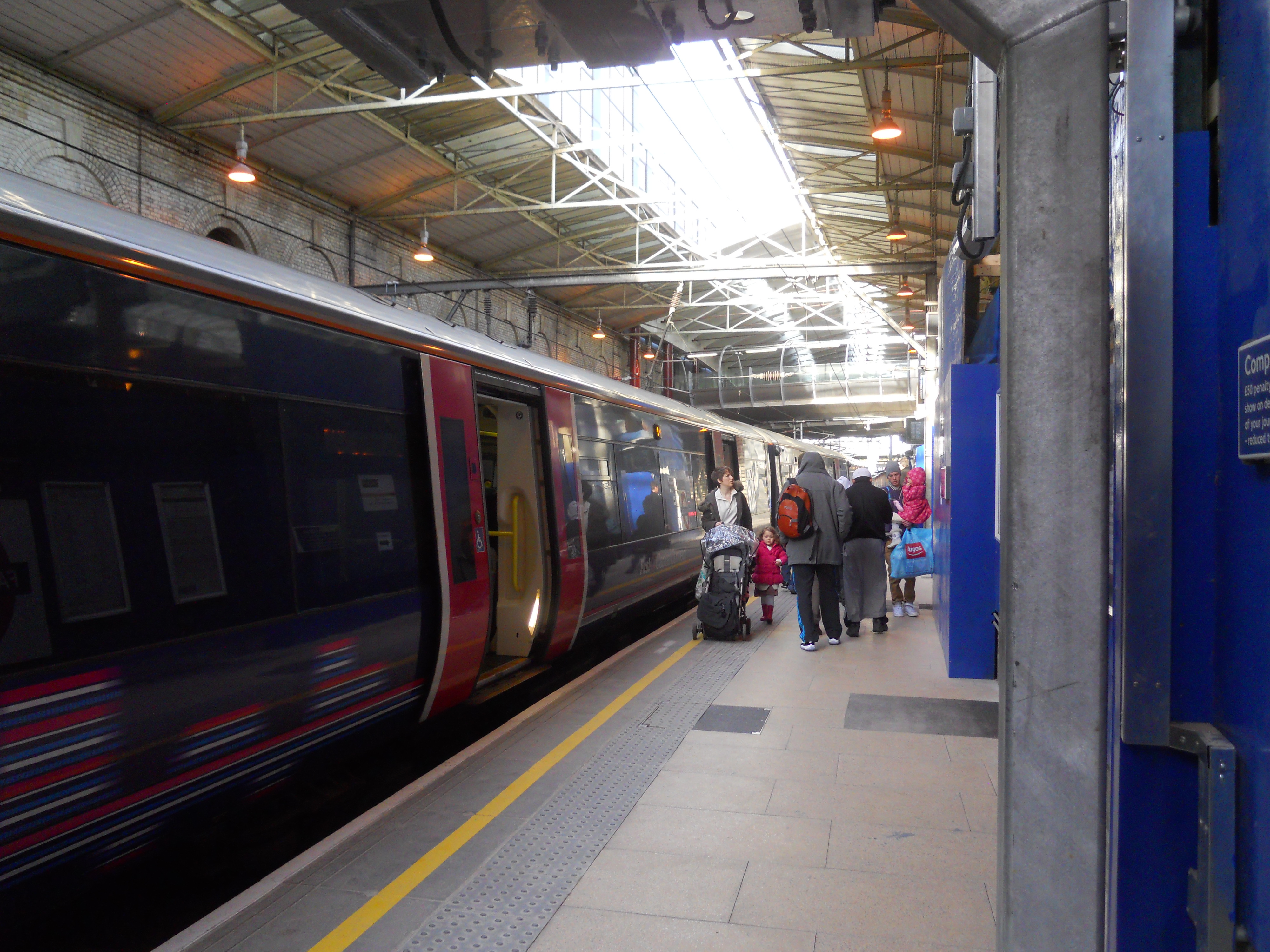
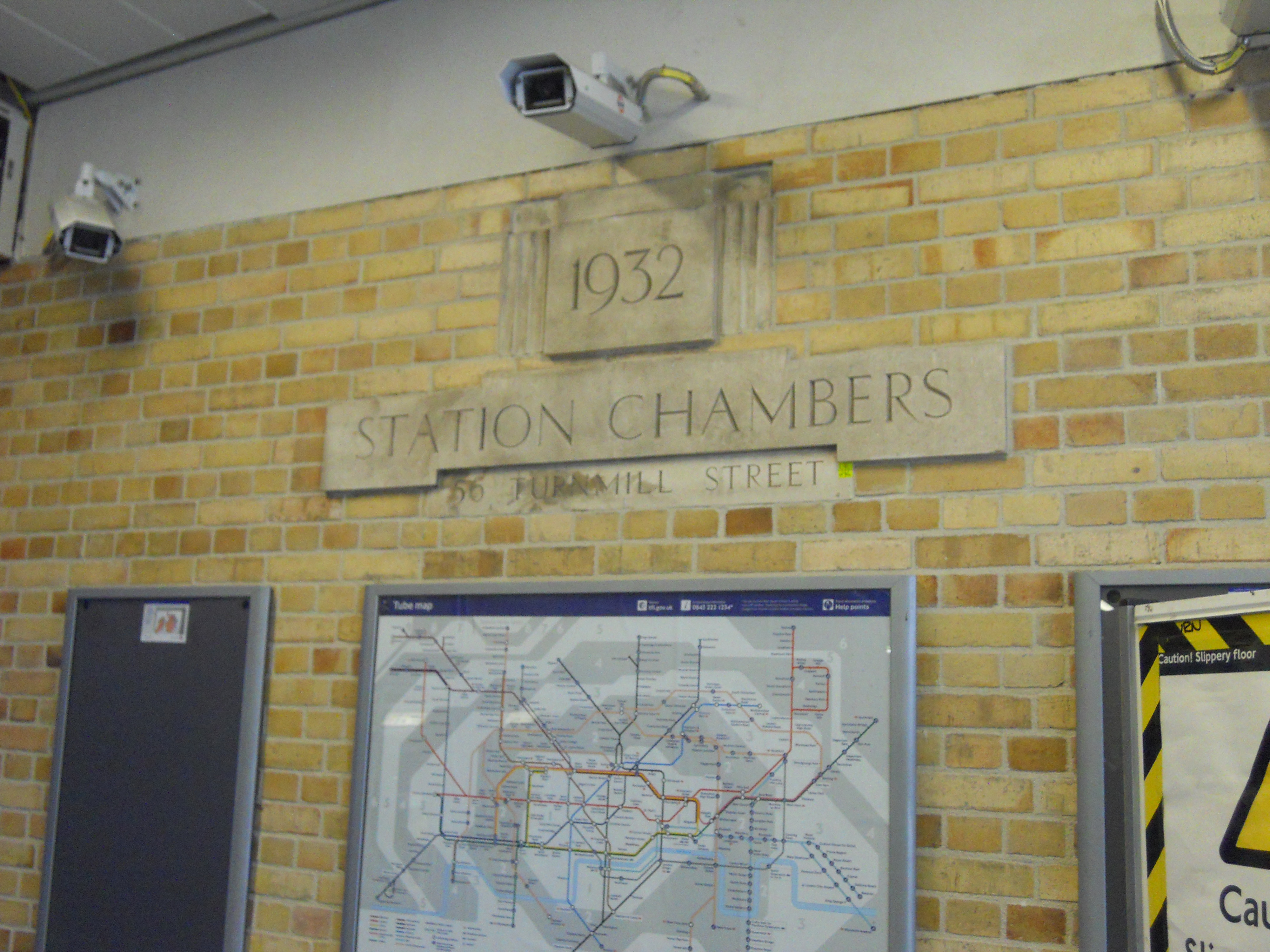

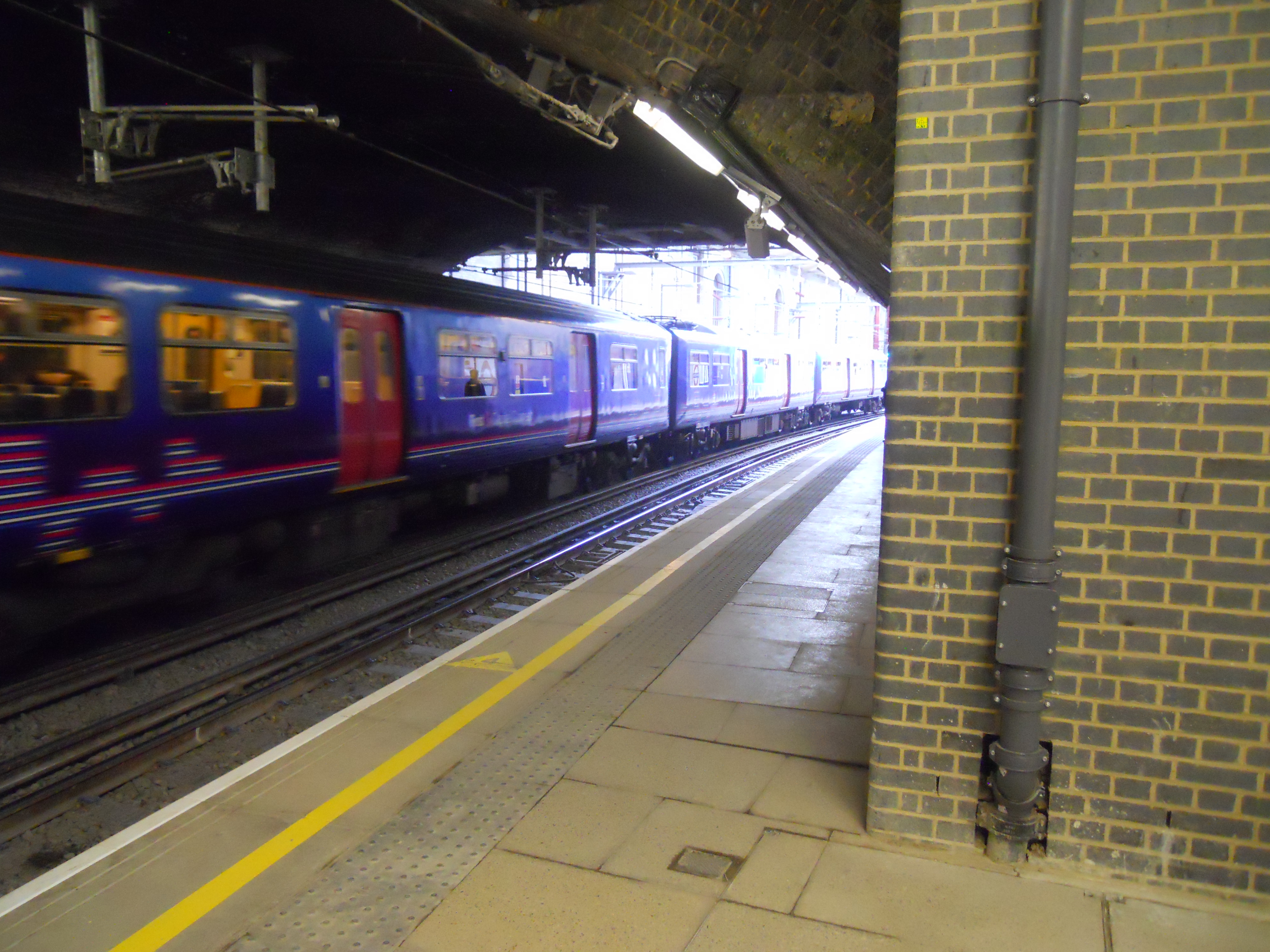
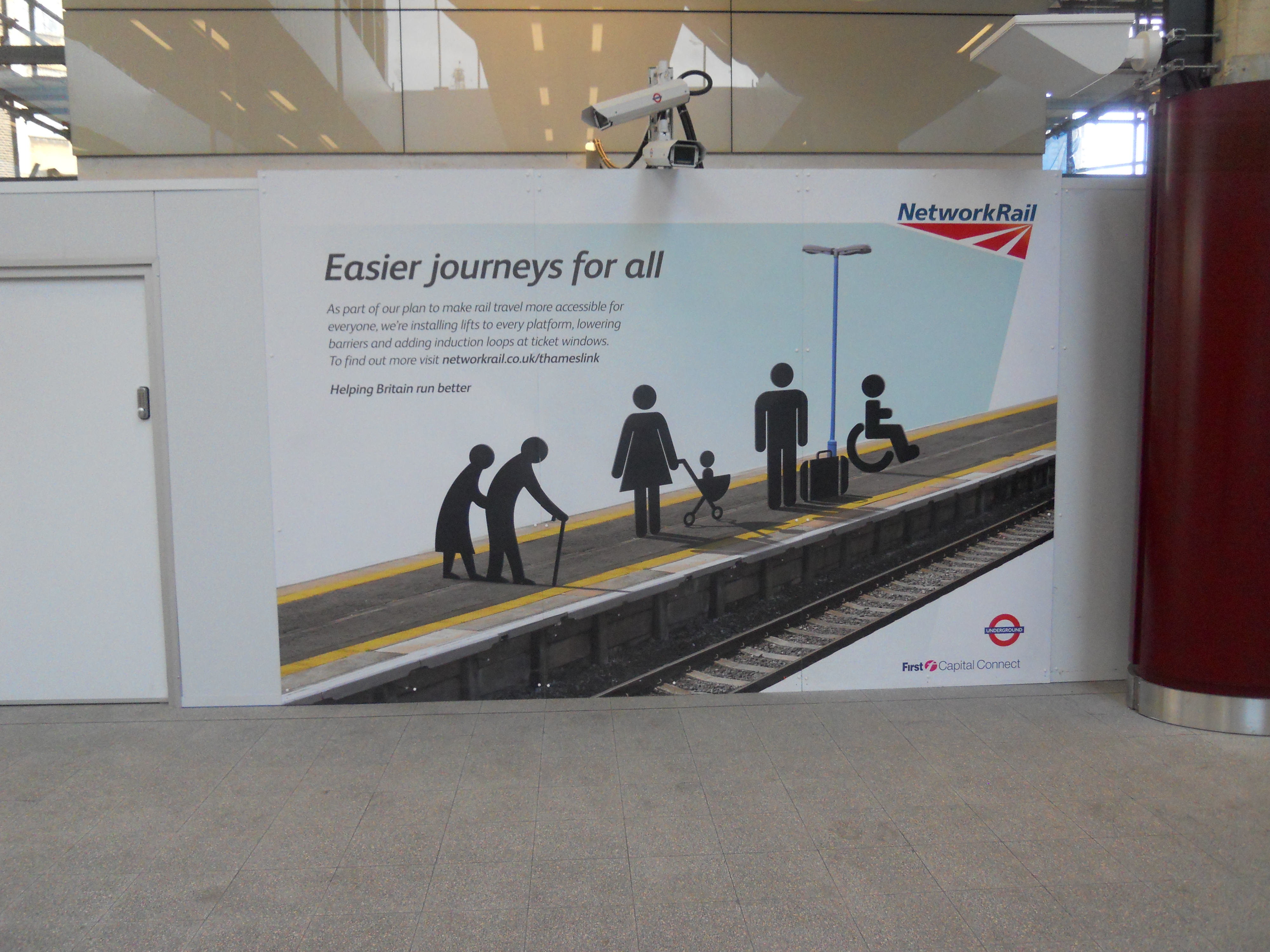
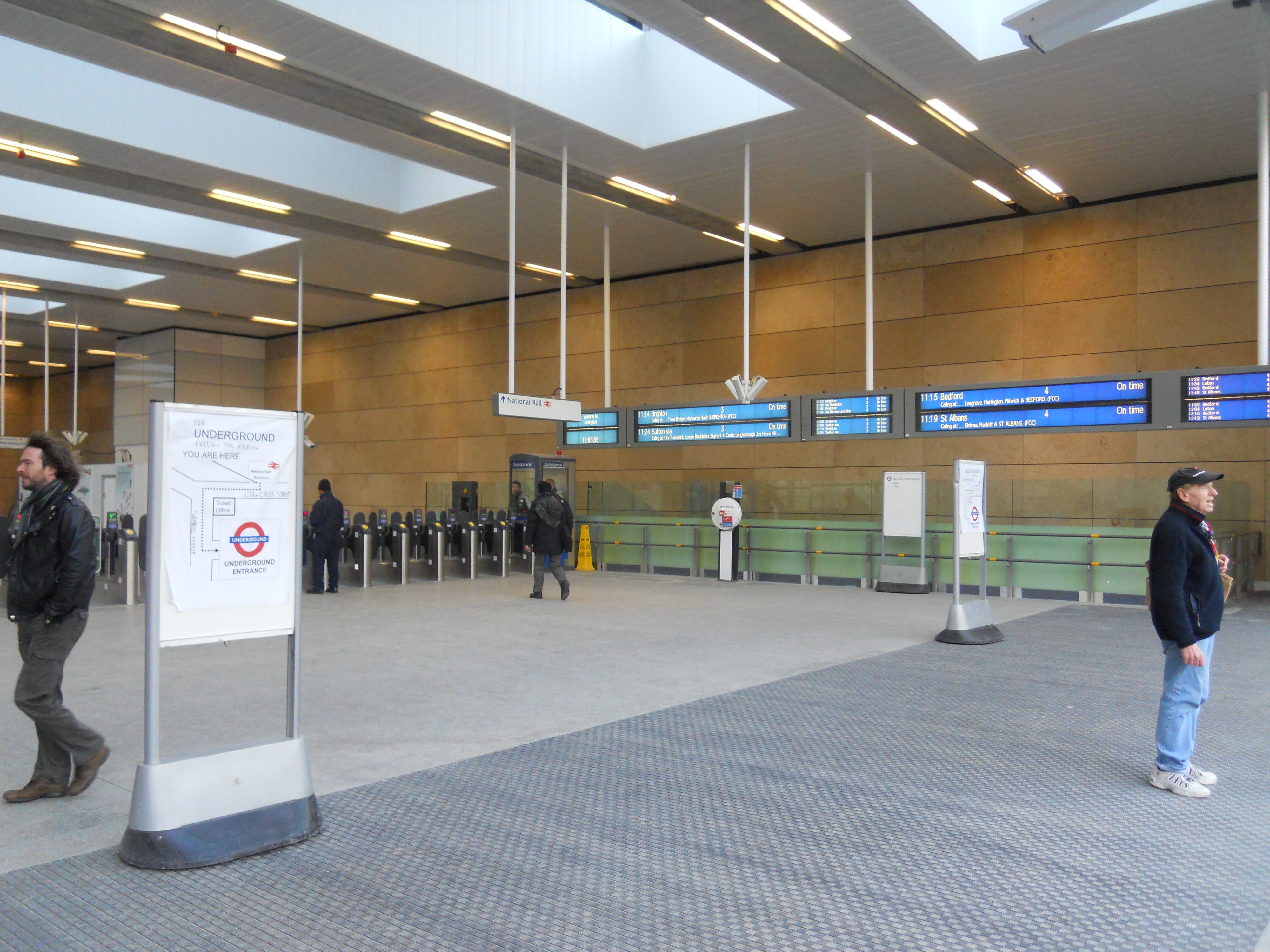
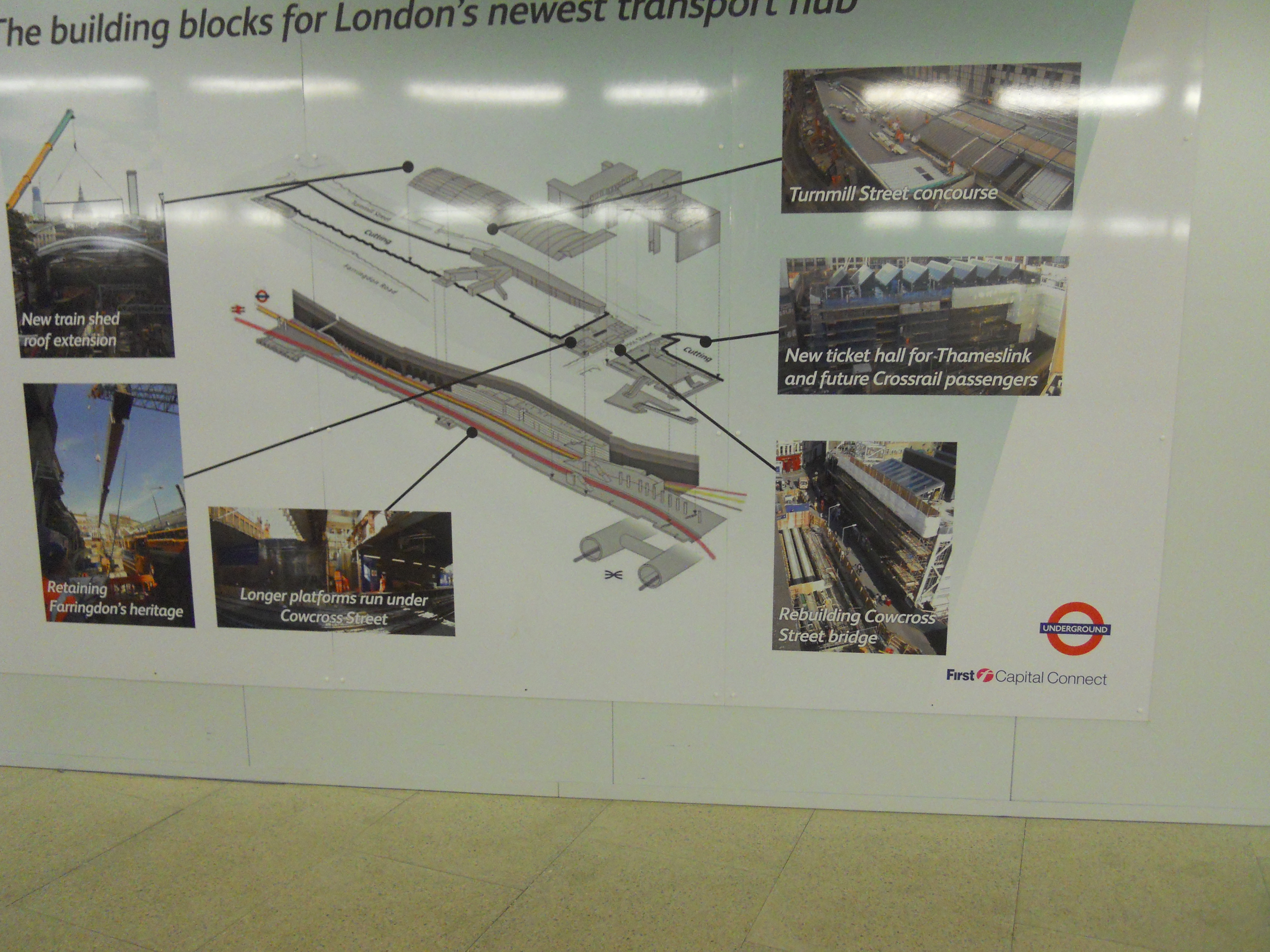

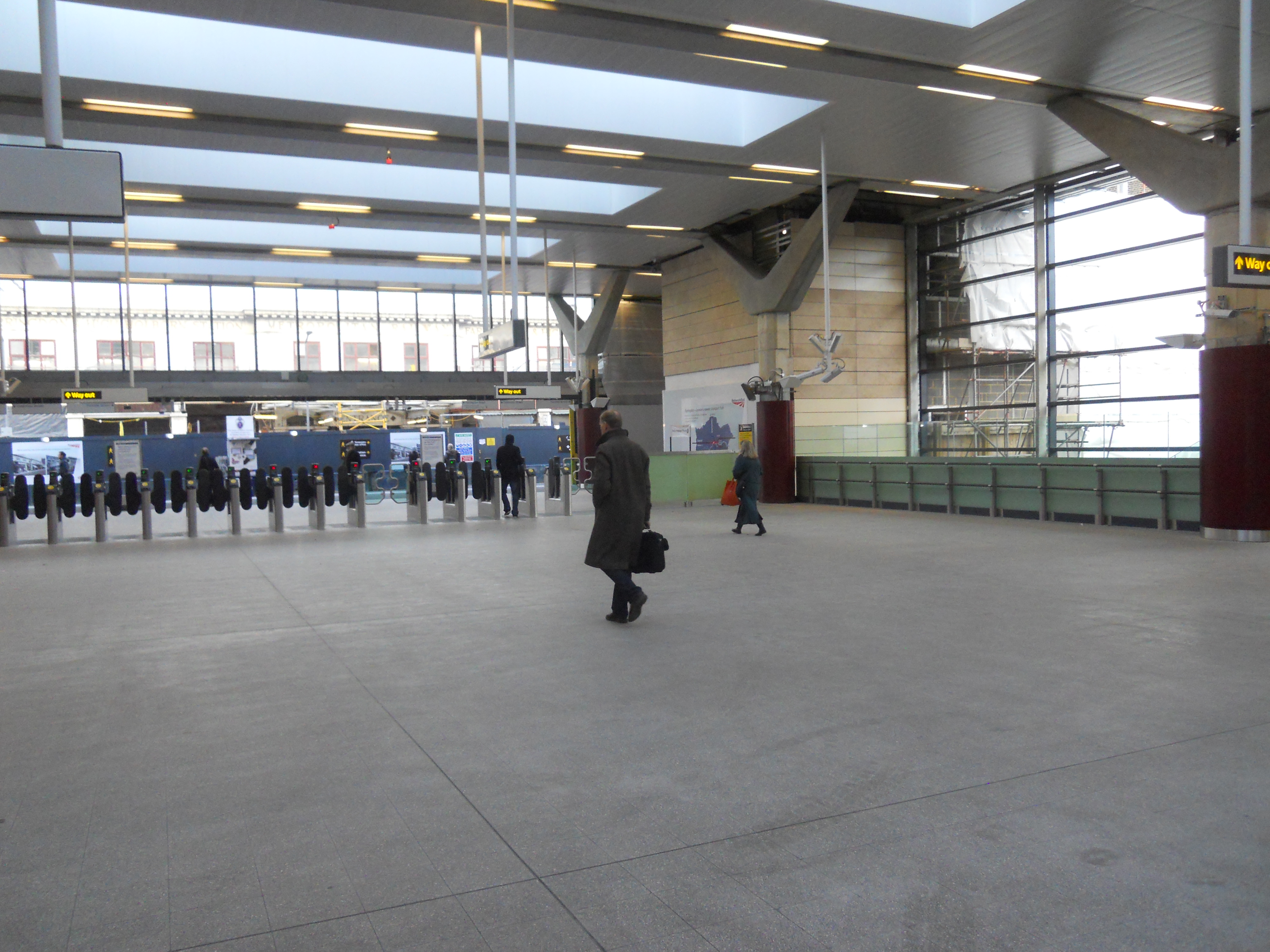
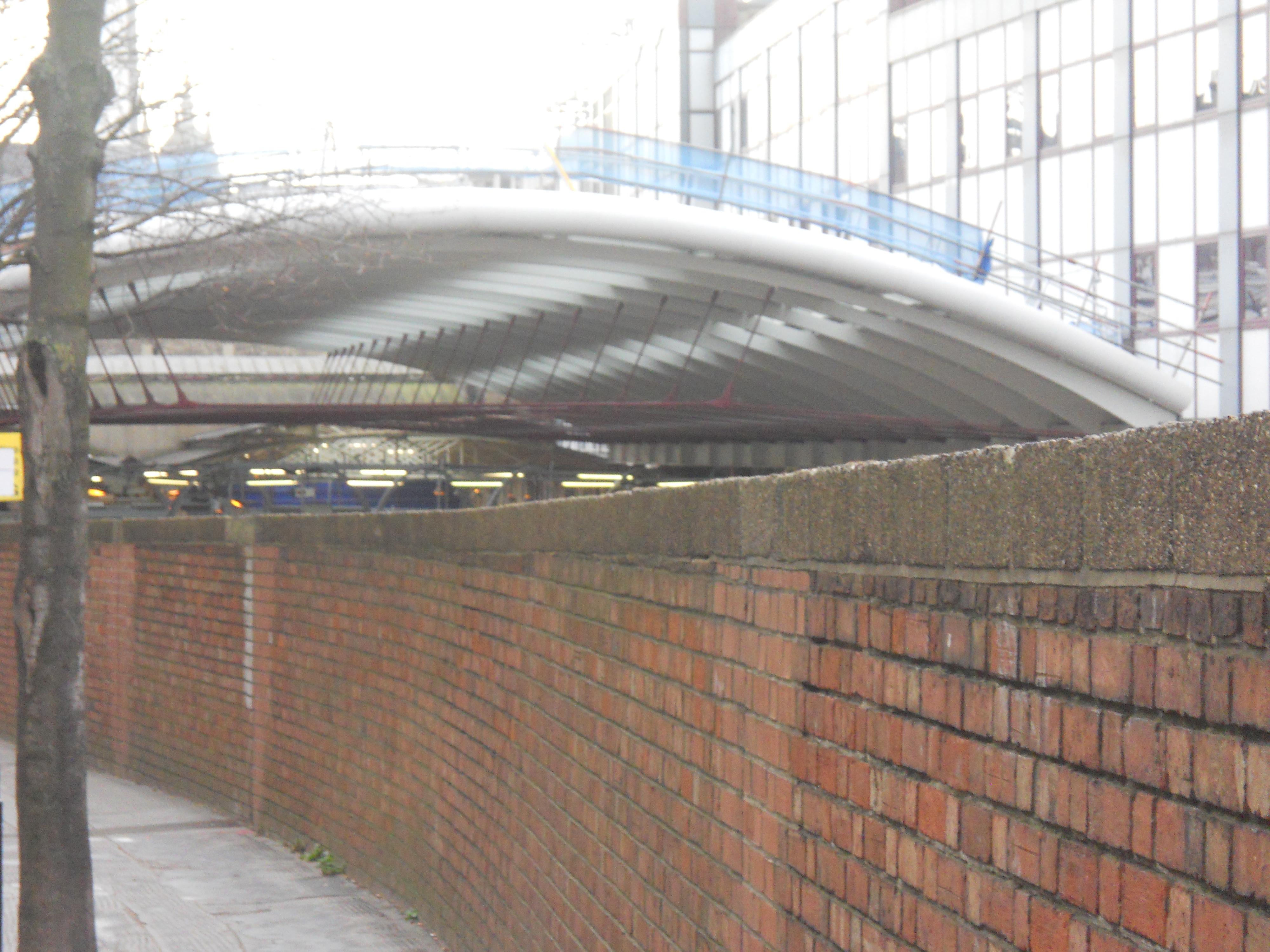
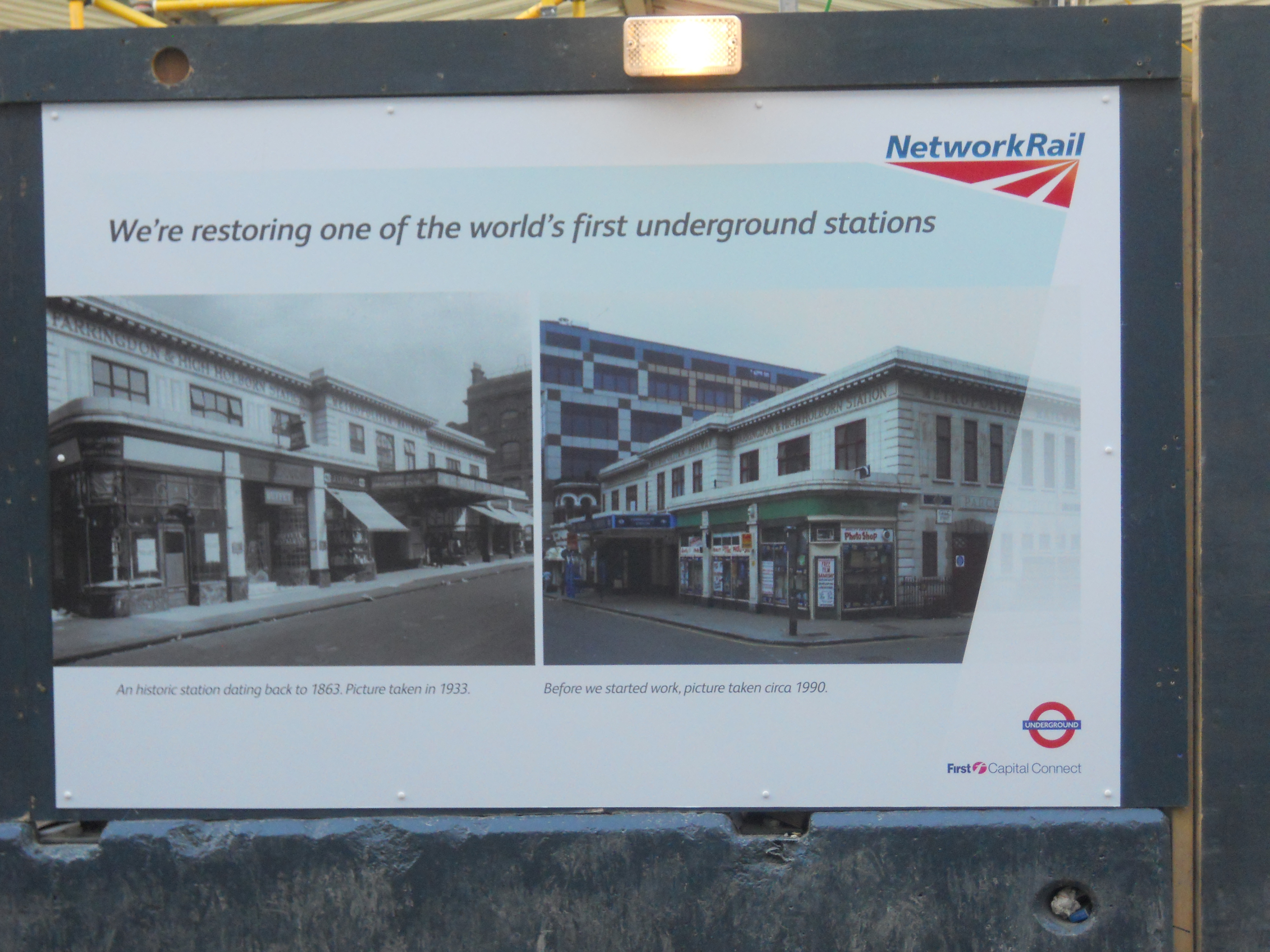
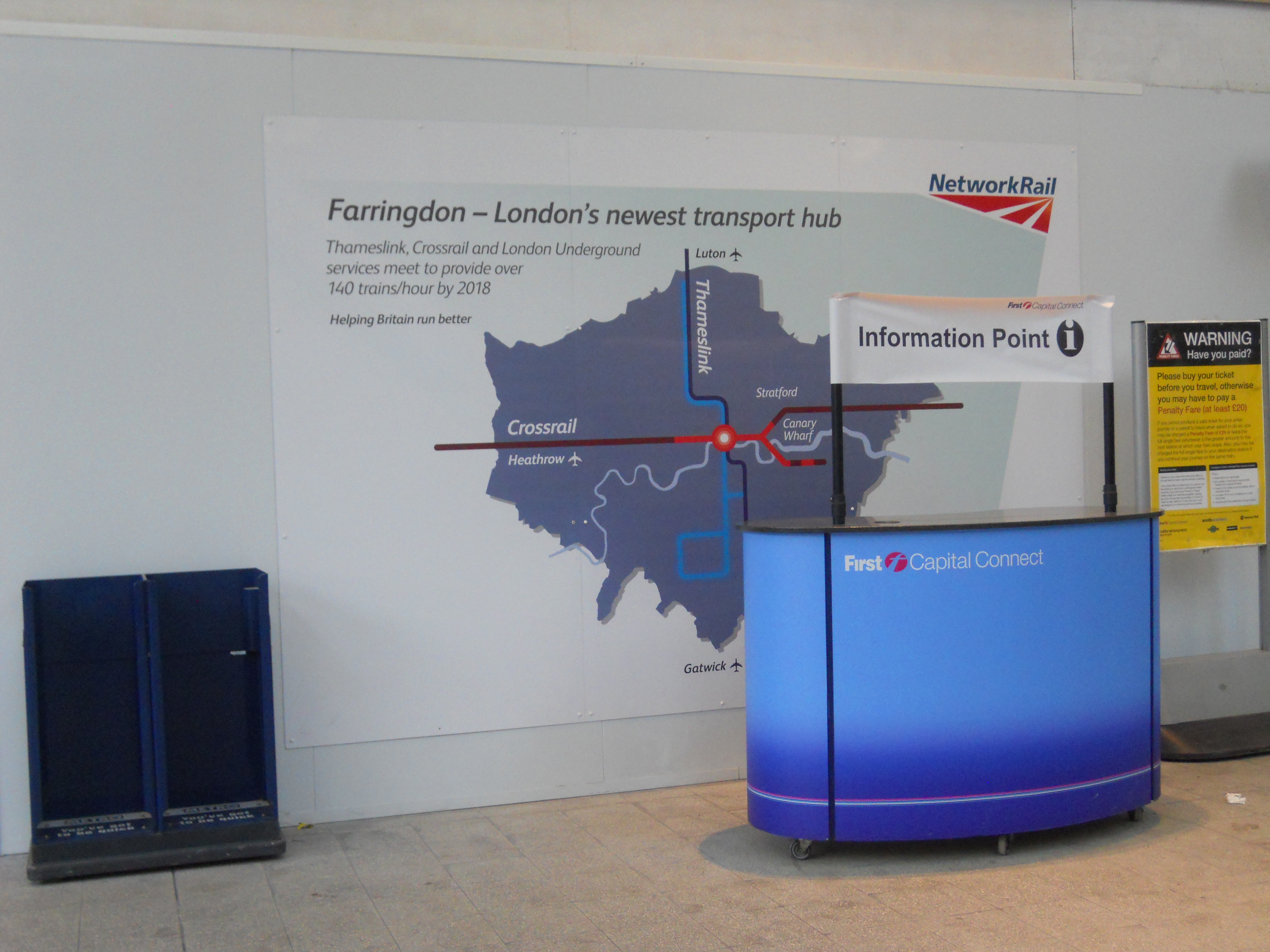
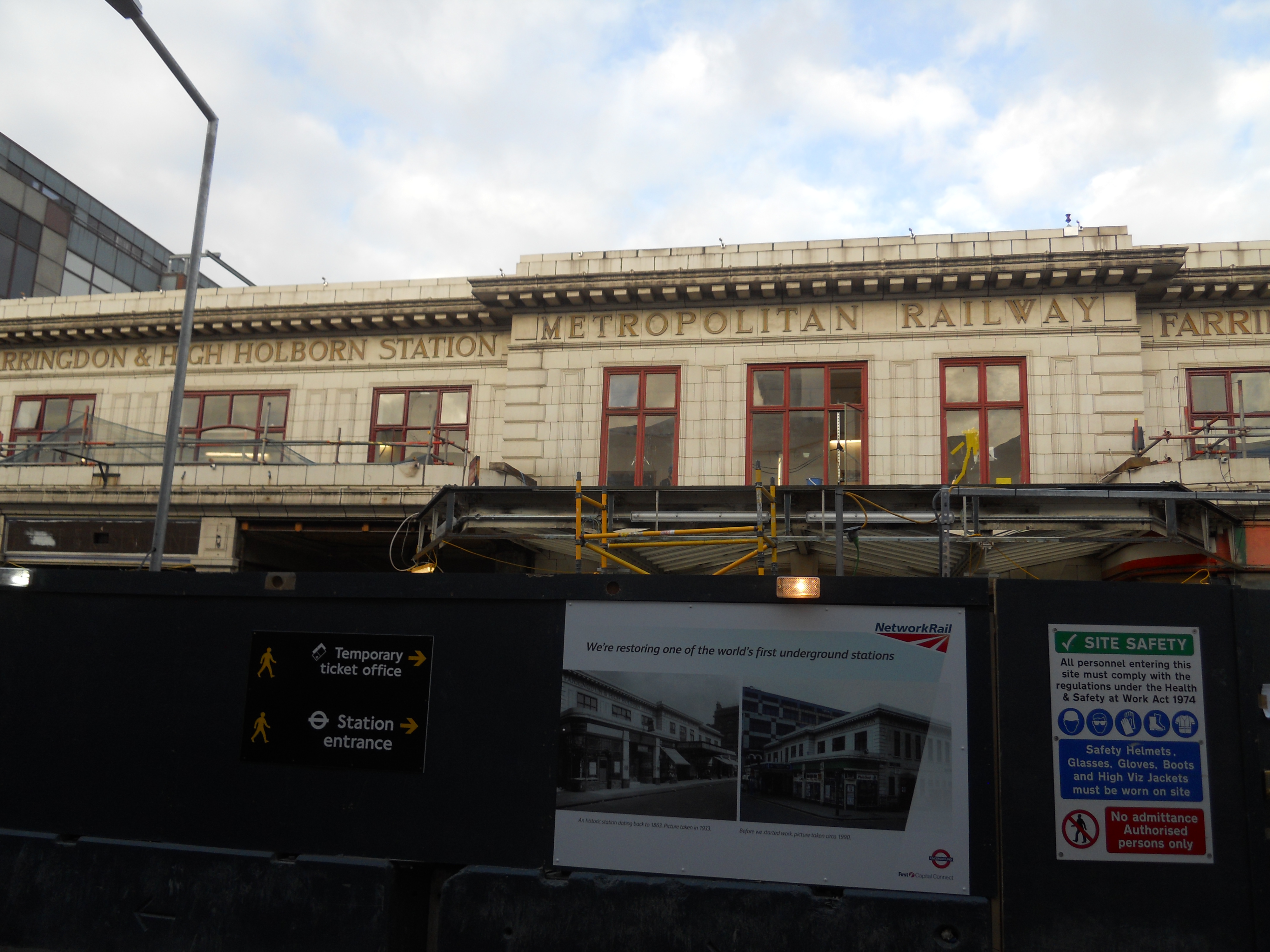
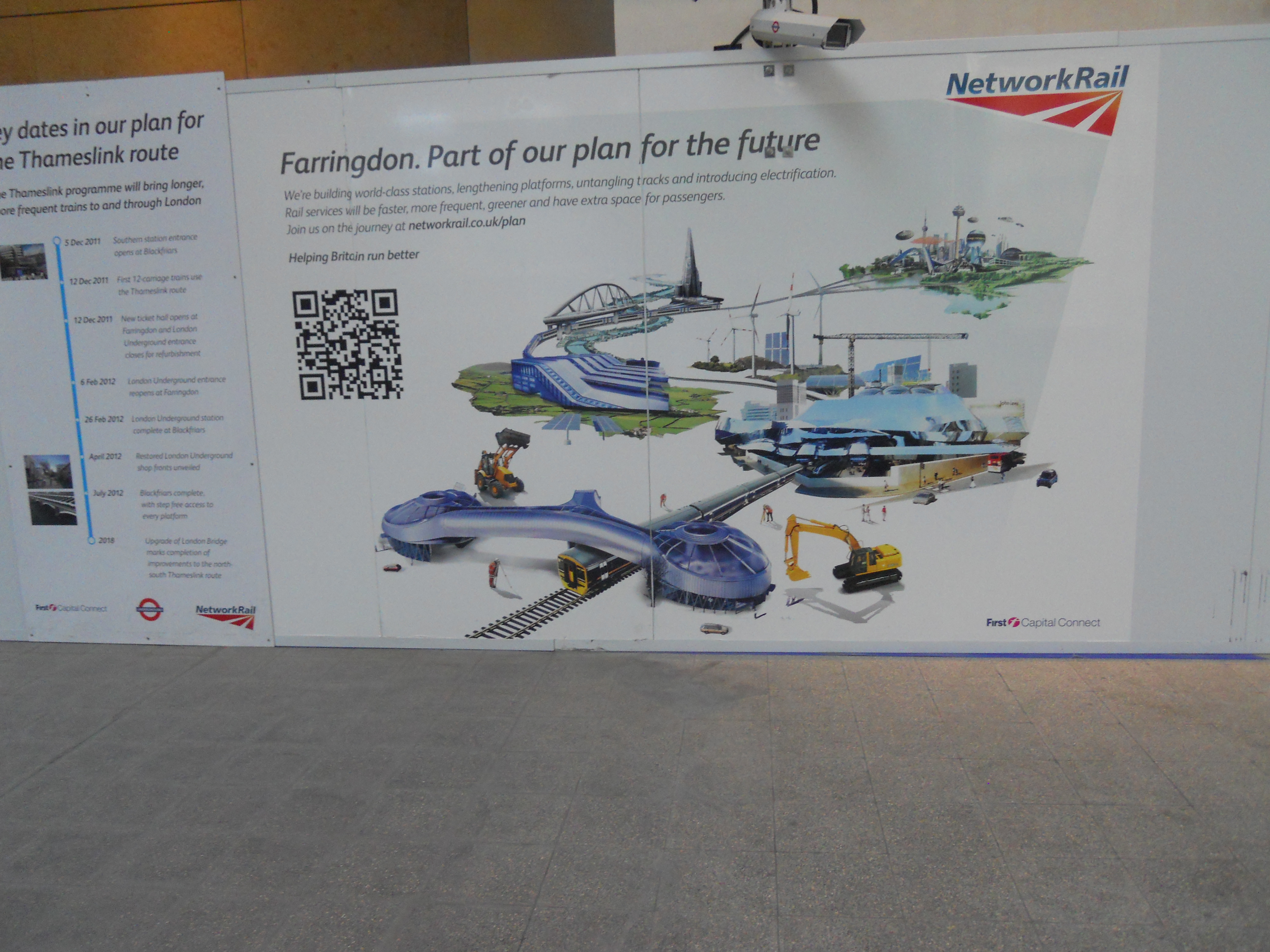
In a few years time, it will be the major interchange between Thameslink and Crossrail and one of the busiest stations in London.
The information on what they are doing is good to.
Note that the station used to be called Farringdon and High Holborn.
 The Anonymous Widower