A Station At Great Cornard
I can’t find anything about a possible station at the village of Great Cornard.
This is a Google Map of the area.

Note Sudbury station at the top of the map from where the Gainsborough Line turns South along the course of the River Stour towards Bures and Marks Tey.
A single-platform station at Great Cornard would seem to be a feasible proposition from an engineering point of view.
It could provide a valuable commuter and leisure route to Colchester and London, especially, if as I suspect Greater Anglia will run trains between Sudbury and Colchester Town via Marks Tey and Colchester.
The train company are probably analysing various scenarios concerning a new station at Great Cornard.
Passengers At Cambridge Station
I found a reference to the passenger growth at Cambridge station, which is confirmed in Wikipedia.
In 2011/12 passengers at the station were around 9 million and in 2015/16 that had grown to around 11 million.
Consider.
- Cambridge North station opens in May this year.
- Thameslink will start services to Cambridge from all over London in 2018.
- Greater Anglia will be increasing capacity and frequency to Bury St. Edmunds, Colchester, Ipswich, Norwich, Peterborough and Stansted Airport.
So what will be the traffic in say 2020?
Are The Trains In Ely Finally To Be Sorted?
Railways in Ely must be a bit of a problem as they have their own section in Wikipedia.
This map shows the lines in the area.
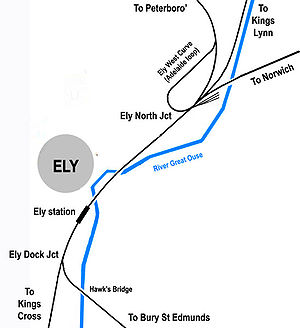
Ely Lines
This is a Google Map of the area.
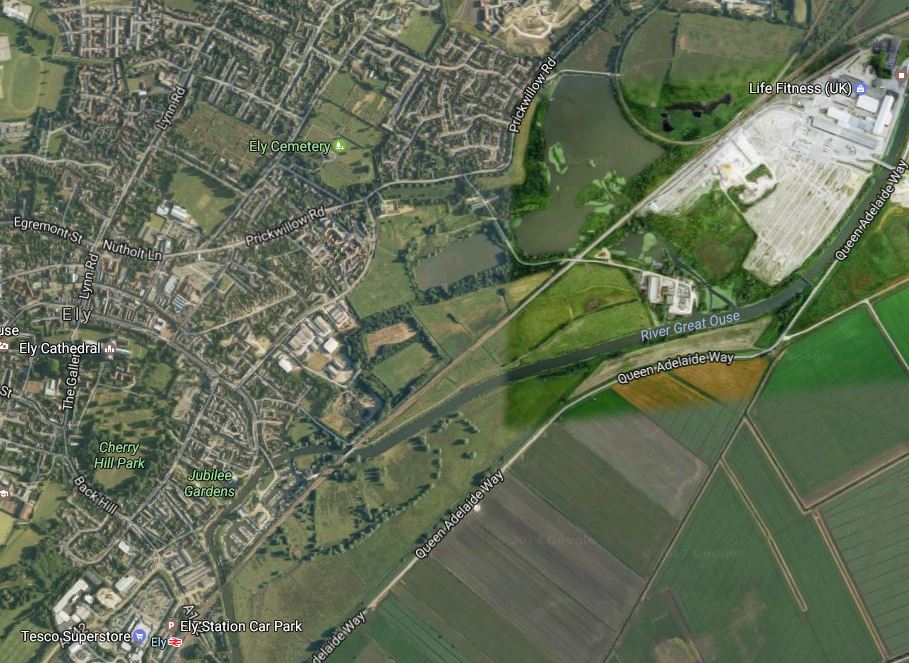
The current Ely station is towards the South-West corner, with the iconic cathedral to the North. The main line goes South-West to North-East across the map with Ely North Junction alongside the white chalky area in the North-East corner.
What suggested that I write this post was this article in the Eastern Daily Press, which is entitled Talks in Downham Market hear work to end East Anglia’s rail bottleneck at Ely could begin in three years’ time.
Reading the title, is a good summary of the article.
So what are the problems at Ely?
Ely Station
Ely station was not designed for efficient operation.
The following services call at the station.
- Ipswich and Peterborough.
- Cambridge and Norwich.
- London, Cambridge and King Lynn.
- Stansted Airport and Birmingham.
- Norwich and Liverpool.
To make matters worse. the Norwich-Liverpool service has to reverse in the station.
Connectivity between services can be bad and I have read that passengers between Kings Lynn and Ipswich may have to wait up to nearly an hour for a connection.
Because the station has only three platforms, organising the trains into a sensible pattern, for train operators and passengers. must be a difficult process.
The station is not step-free and relies on long ramps to cross the lines.
The Low Road Bridge On The A142 At Ely Station
This is said in Wikipedia about the low bridge just to the North of the station.
The height available for road traffic passing beneath the bridge is only 9.0 feet (2.7 m) which is unusually low for a bridge over an A-road. Despite the various warnings, the limited headroom is a frequent cause of accidents.[12] High vehicles must use a level crossing next to the bridge.
East Anglia’s legendary bad drivers, who seem to find new ways to cause chaos on the railways, must have real fun with this crossing.
According to this article on the BBC web site, the bridge was hit twelve times in 2015/16.
This Google Map shows Ely station.
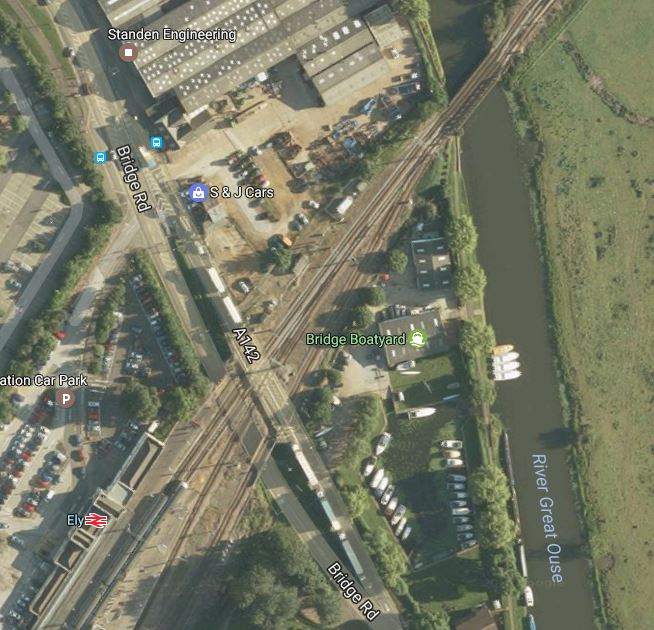
Note that the level crossing is closed.
The Large Number Of Freight Trains Between Felixstowe And Peterborough
In Along The Felixstowe Branch, I said that the number of trains on the Felixstowe Branch could rise to 47. Not all will come through Ely station, but there could be a couple of long container trains in both direction every hour.
Note.
- The number of freight trains will increase.
- These freight trains can be up to 775 metres long and the average length will grow.
- Hawk Bridge over the Great Ouse on the Ipswich-Ely Line is only single-track, as is several miles of the line to Kennett station, where the Cambridge and Peterborough branches join.
All of these trains have to pass over the low bridge and through the level crossing.
Ely North Junction
Ely North Junction is a busy junction, where services to Kings Lynn, Norwich and Peterborough split.
This Google Map shows the junction.
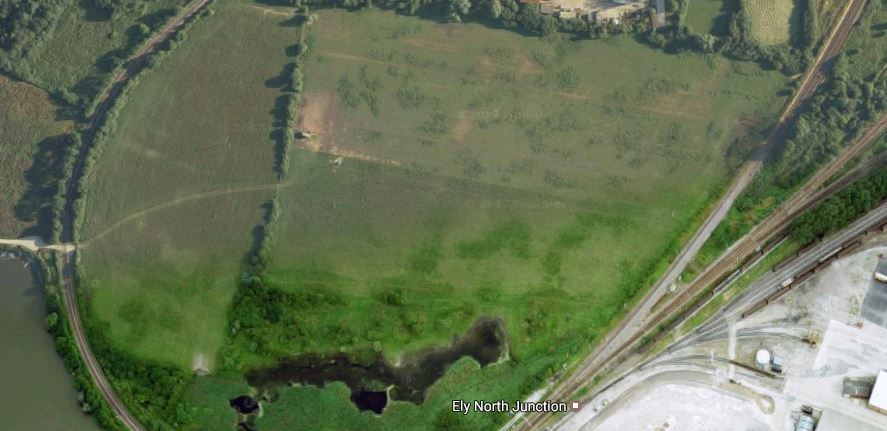
Note the tracks come from Ely station to the South-West and split into three separate lines.
- Ely-Peterborough Line
- Fen Line to Kings Lynn.
- Breckland Line to Norwich.
There is also.
- A single-track loop line called the West Curve, that allows traius to go between Peterborough and Norwich.
- A distribution depot by the junction.
One of the problems is that freight trains between Peterborough and Felixstowe pass on the Southern side of Ely station and need to cross the lines to connect to Peterborough.
Footpaths
Footpaths and where they cross the railway are a sensitive issue in the Ely area. This document on the Network Rail web site, illustrates some of the problems.
This is said in the document.
The railway at this level crossing carries passenger and freight trains with a line speed of 60 mph. There are generally 194 trains passing throughthis level crossing per day.
That sounds like a recipe for a serious accident to me.
The Opening Of Cambridge North Station
The new Cambridge North station is scheduled to open on the 21st May, 2017 and will initially be just a stop on all services passing through.
The Cambridge Effect
Cambridge is successful and overflowing.
Towns and cities like Bury St. Edmunds, Ely, Haverhill, Huntington, Newmarket and Peterborough will increasingly find that they become satellites of the East Anglian Mega-Powerhouse.
These towns and cities will need good transport links to Cambridge.
Rail links to both Cambridge and Cambridge North stations will be important.
The New Greater Anglia Franchise
Greater Anglia have published plans that will affect Ely.
- They will run an hourly service between Peterborough and Colchester via Bury St. Edmunds and Ipswich to replace the current less frequent service between Peterborough and Ipswich.
- They will run an hourly service between Norwich and Stansted Airport to replace the current less frequent service between Norwich and Cambridge.
- I have also read somewhere, that Greater Anglia would like to run a direct service between Cambridge North and Ipswich via Bury St. Edmunds.
- Fordham and Soham stations could be reopened.
Some of these changes will put more pressure on Ely, but they will have two very beneficial effects.
- A North-facing bay platform will be released at Cambridge station.
- There will be two trains per hour (tph) between Kennett and Ipswich via Bury St. Edmunds.
I suspect that Greater Anglia will bring in other changes.
The Reopening Of March To Spalding Via Wisbech
Network Rail has spent £330million on upgrading the Great Northern Great Eastern Joint Railway into a freight link between Peterborough and Doncaster, which I wrote about in Project Managers Having Fun In The East.
It might never happen, but why shouldn’t the route be extended from Spalding to March on the Peterbough-Ely Line via Wisbech?
This would open up two main possibilities.
- Freight trains between Felixstowe and Doncaster would avoid the East Coast Main Line to the South of Doncaster.
- A passenger service from Cambridge to Wisbech could be opened.
Other longer distance passenger services might be viable.
The East West Rail Link
The East West Rail Link will provide a new route from Cambridge to the West, via a new Cambridge South station.
It will add to the numbers of passenger trains through Ely, as services will probably go from Oxford to Norwich and Ipswich via all three Cambridge stations.
But will the East West Rail Link be used to route freight trains between Felixstowe and Wales and the West?
A Proposed Ely North Station
I have found this article on the Ely Standard web site, which is entitled Could railway revolution see new station built at Ely North?.
The article says a new four-platform station would allow.
- Two tph on the Fen Line
- Connections reduced to no more than eight minutes.
- The introduction of a Kings Cross to Norwich service.
The new station would probably have the following.
- More passenger-friendly features.
- A lot more car parking.
- Good walking access to the City Centre.
- Trains between Norwich and Liverpool would stop in the station and would use the West Curve to avoid reversing in the station.
With all the water in the area, there must be scope for an architecturally excellent station.
From a project management view, this station is a good idea.
- It could probably be built fairly easily without causing too much interruption to current services, as Cambridge North station seems to have been.
- Once open, the current Ely station could be demolished or simplified.
- The low bridge and the level crossing could then be replaced with a modern traffic underpass capable of handling trucks.
- Ely Dock Junction and the lines South of the City could be remodelled to speed the freight trains through the area.
There might even be a dive-under to simplify operations.
I have no idea if the good people of Ely will like the idea of a new station.
Conclusion
The extra freight traffic and the published plans of the Greater Anglia franchise will mean, that substantial work will have to be done at Ely.
- Network Rail have a long term ambition of dualling the whole route between Ely and Kennett including Hawk Bridge over the Great Ouse, which would certainly ease the problems of the freight trains.
- A new Ely North station may be created.
- Closing the level crossing and creating an underpass for traffic at Ely station, would be an obvious thing to do, but could this be done without closing the railway for several months? Construction companies could always use the technique they did at Silver Street station in the 1990s, to get the North Circular Road under that station.
- Eventually, there will be a need for a chord at Ely Dock Junction, so that trains can go direct from Cambridge to the Ipswich to Ely Line without a reverse in Ely station.
I’ll be interested to see what Network Rail propose.
Network Rail Seem To Have Survived Christmas Without Indigestion
This article in the International Railway Journal is entitled Network Rail completes £100m of upgrades over Christmas.
It lists all the projects that were completed over Christmas,
I’m pleased that a lot of work seems to have been completed between London and Norwich, so hopefully, I’ll be seeing a more reliable rail service to Ipswich next season.
I also saw some of the fruits of the work yesterday, which I wrote about in Through The Acton Dive-Under.
So far, there have been no complaints on the news about the work, that I’ve seen.
Can Mark 3 Coaches Come To The Rescue?
The Mark 3 coach is one of the mainstays of UK railways.
- Chiltern Railways use thirty one coaches on Birmingham and Oxford services from Marylebone.
- CrossCountry have thirty-eight coaches as part of InterCity 125s.
- East Midlands Trains have over a hundred as part of InterCity 125s
- Greater Anglia use one hundred and thirty coaches between Liverpool Street and Norwich.
- Great Western Railway have over four-hundred and fifty coaches as past of InterCity 125s.
- Virgin Trains East Coast have over a hundred coaches as part of InterCity 125s.
It should be said, that some are in better condition than others and very few meet the latest access regulations.
But even the table hides a few strength and problems.
Chiltern Trains
Chiltern Trains run their Mark 3 sets with a driving van trailer (DVT) and a Class 68 locomotive on some Birmingham and Oxford services.
- Marylebone to Birmingham Moor Street is a two trains per hour (tph) service and the journey takes ten minutes under two hours.
- Marylebone to Oxford is a two tph service and the journey takes a few minutes over an hour.
The Birmingham service needs eight trains for a 2 tph service.
The Oxford service would need six trains for a 2 tph service, but if the journey could be under the hour, there could be a reduction in the number of trains needed.
If Chiltern decided to run a 2 tph service between Oxford and Birmingham, as I suggested in Where Next For Chiltern?, this would need another four trains.
This leads me to say.
- As Chiltern only have six sets of Mark 3 coaches, they will have to use Class 168 trains for some of the services.
- Probably by clever timetabling, they would need at least a dozen trains to run a quality two tph service on both routes.
- They would probably like all their services to Birmingham and Oxford to share a common train type, for operational and marketing reasons.
So where do Chiltern find another probably ten trains?
- The Class 68 locomotives would have to be hired.
- There are up to a dozen DVTs in storage at Long Marston according to Wikipedia, so creating some for the trains, might be a reasonably predictable refurbishment.
But where do they find the sixty coaches needed?
This article from Rail Magazine in June 2012, is entitled Making the Mk 3s even better, describes Chiltern’s methods.
This is an extract.
Economics dictate that it is cheaper to rebuild the Mk 3s than to order brand new DMUs. Indeed, because of track access and fuel costs, if a LHCS formation is more than five coaches (as they are in Chiltern’s case), then the costs favour locomotive-hauled trains.
The freedom to be able to do this is also a factor for Chiltern. The franchise is owned by Deutsche Bahn, which also owns the coaches. This means that vehicles can be tailored to exactly what the operator wants, rather than thinking about the re-sale value. No expensive engineering will be needed, again because this is what Chiltern wants.
Note the trains are in the same ownership as Chiltern; Deutsche Bahn.
As a passenger, the proof of the pudding is in the eating.
The product looks, feels and tastes good!
Greater Anglia
Greater Anglia could be a good source of quality Mark 3 coaches.
- Greater Anglia have 130 of them, which are leased from Porterbrook.
- The trainsare due to be replaced by new Flirt electric multiple units during 2019/2020.
- The trains have recently been refurbished and have been fitted with wi-fi and retention toilets.
The problem is that they are still slam-door stock and don’t meet the latest access regulations.
But this is not a great problem, as Chiltern have form in updating Mark 3 coaches to meet the latest standards.
Greater Anglia are also replacing fifteen sets of carriages with just 10 electric multiple units, which will provide Norwich in ninety minutes at 3 tph, as opposed to the current service of Norwich in two hours at just 2 tph.
Incidentally, just eight trains are needed to provide the current service, so Greater Anglia could have a few spares.
So it looks to me, that immediately each Flirt is in service, there will be a Mark 3 set sitting in Crown Point ready to go on its next task.
But as just ten Flirts will be replacing fifteen Mark 3 sets, it looks to me, Chiltern might be able to raid Greater Anglia’s stock of spare trains earlier than has so far been thought.
Suppose three trains could be released, this would release twenty-four refurbished coaches and three DVTs.
If another DVT could be sources from Long Marston, then there would be another four rakes of coaches for refurbishment to Chiltern’s standards.
One of the great advantages of modifying the Greater Anglia coaches, is that they have all been refurbished to a high standard, so I suspect that all the mechanicals and structure of the coaches are in virtually in as-new condition.
This page on the Greater Anglia web site, gives full details of the refurbishment.
This is said.
The significant refresh will see all of the train operator’s MkIII fleet enhanced, with improvements throughout for both First Class and Standard carriages including, plug points; new LED lighting; new carpets; new tables; new seat covers; upgraded environmentally-friendly controlled emission toilets with new floors and new taps; re-painting of the carriage interior saloon and vestibule panels, walls and ceilings.
It also appears that Greater Anglia set up a special work-shop in Crown Point TMD to do the update.
Could Greater Anglia have stolen a copy of Chiltern’s rule-book? More likely, they used the same consultant.
After a recent trip in one of these coaches with a friend, I wrote The Power Of Three! To say she was impressed, could be an understatement!
Chiltern just need to fit the new doors and their own interiors.
The Various InterCity 125 Coaches.
There are several ideas as to what to do with the various High Speed Trains formed from two Class 43 locomotives and an appropriate number of Mark 3 coaches.
This according to Wikipedia is Abellio’s Scotrail’s plan.
Abellio ScotRail will also introduce 9 four-car (2+4) and 17 five-car (2+5) refurbished High Speed Trains by December 2018 on longer-distance services between Edinburgh, Glasgow, Aberdeen and Inverness. Scotrail will receive the first locomotives and carriages late 2017, with the refurbishment program taking place at Brush Loughborough (power cars) and Wabtec Doncaster (carriages) between late 2017 and May 2019.
There have been rumours that Great Western Railway will do something similar with a few more trains.
As the InterCity 125s will each be shortened by a few coaches this will release more coaches for use by other operators.
Lots Of Mark 3 Rakes Of Coaches
There are probably enough Mark 3 coaches in excellent condition and DVTs, that can be refurbished, to create perhaps another twenty-five rakes of between five-car and eight-car Mark 3 coaches, tailored to an individual customer’s need.
All of the design work has been done and proven by Chiltern or their contractors.
Obviously, you wouldn’t fit the doors and do the final parts of the refurbishment, until you actually had a customer, but it looks to me, that Porterbrook, who own the Greater Anglia Mark 3 coaches, seem to be doing a bit of speculation. Obviously, they have a plan in there to make money, as ROSCOs don’t do charity!
There is also this article from Rail Magazine, which is entitled Refurbished Mk 3s for Tornado.
It describes how, a rake of Greater Anglia’s Mark 3 coaches, will be acquired to be used with the new-build steam locomotive 60163 Tornado. One would even be fitted with a water tank to extend the range of the engine. Surely, a Mark 3 can handle that sort of weight.
Porterbrook have done well in the last few months out of a speculative order for Class 387 trains, that helped tide some train companies through rolling-stock shortages.
So have they seen a market niche to create an affordable train for longer routes based on Mark 3 coaches hauled by a Class 68 locomotive or perhaps a Class 88 electro-diesel locomotive.
Consider.
- It would meet all the access and environmental regulations.
- It would probably be quieter than a shortened InterCity 125.
- According to the Rail Magazine article, track access charges are affordable.
- As Chiltern and Greater Anglia are showing, it would deliver a superb customer experience.
- Chiltern like the package and could be a customer or do something similar themselves.
- It would be ideal for some of CrossCountry’s long routes like Aberdeen to Plymouth.
- It would be ideal for an open-access operator, developing a new route.
- Virgin West Coast might like it for Euston to Holyhead.
- With a faster version of the Class 88 locomotive, it might have a maximum speed in excess of 100 mph.
It would do anything a Class 800 train can do, at probably a more affordable purchase price, lower track access charges and an earlier delivery date.
Conclusion
Their is something behind Porterbrook’s decision to refurbish Greater Anglia’s Mark 3 coaches, when they knew there was a good chance they would be replaced by new trains, as the clapped Class 90 locomotives certainly couldn’t do London to Norwich in ninety minutes, as mandated in the new East Anglian franchise.
I suppose that Abellio could have been keen to upgrade the coaches, as the interiors were very much on the tatty side and the upgraded coaches would hold the fort until the Flirts arrived, without too much grief.
On the other hand, if the Great Western Electrification gets later and Abellio ScotRail lose their source of shortened InterCity 125s, locomotive-hauled Mark 3s to a high standard would be a very acceptable and affordable alternative.
I must also ask this question.
Could Greater Anglia’s Mark 3 coaches have been refurbished, so that to fulfil Scotrail’s requirements, all that needs to be done is the following?
- Fit doors that are compliant with the access regulations.
- Shuffle the coaches to the length and First and Standard Class capacities required.
- Give the rake of coaches a Scotrail livery.
- Couple a Class 68 or Class 88 locomotive on one requisite end.
I suspect the negotiation would be quite convivial, as both Greater Anglia and Scotrail are owned by Abellio.
The only problem would be that Scotrail need 9 four-car and 17 five-car trains and there may not be enough DVTs. However, some sets could be to the original plan of shortened InterCity 125s.
Scotrail certainly have a Plan B, if the Great Western Electrification gets even more pear-shaped.
Appendix – Posted on December 24th, 2016
In the January 2017 Edition of Modern Railways, under a heading of Pennine Pretendolino, there is a picture of a Class 68 locomotive hauling, the jokily named spare rake of Mark 3 coaches to Laira depot for attention, so that it can be used for driver training purposes by TransPennine Express, prior to the arrival pg the new Mark 5A coaches from CAF.
The Pretendolino is described under rolling stock on the Virgin Trains entry in Wikipedia. This is said.
Following the loss of a Class 390 Pendolino in the Grayrigg derailment, a Mark 3 set with a Driving Van Trailer was leased with a Class 90 hired from English Welsh & Scottish as required. In 2008 Virgin looked at leasing two Class 180[49] but decided to retain the Mark 3 set. Nicknamed the Pretendolino, this received re-upholstered seating, power points, wi-fi and a full external re-paint at Wabtec, Doncaster in 2009.[50] Virgin used this set with a Class 90 locomotive hired from Freightliner on a Euston to Crewe (via Birmingham) service on Fridays only until December 2012. From 9 December 2013 it was utilised to operate a London Euston -Birmingham New Street train on Thursdays and Fridays only, until its withdrawal in October 2014. The Mk.III set was also occasionally hired out as a private charter train. It was used in the filming of Harry Potter and the Deathly Hallows and can be seen at King’s Cross station at the end of the film. It is currently in use as a ‘hot spare’ with Abellio Greater Anglia
Like most of its siblings, it is showing a very strong survival instinct and keeping well away from the scrapyard.
Over the last year or so, I’ve ridden to and from Ipswich in the train several times, as it has been filling in whilst, the operator was updating their own Msrk 3 coaches.
Are Greater Anglia Making Ipswich Station A Better Interchange?
Services In A Few Years
By the end of this decade, Greater Anglia will be running the following services through or from/to Ipswich station.
- 3 trains per hour (tph) Norwich to London, taking sixty minutes to London – Platform 2
- 3 tph London to Norwich, taking 30 minutes to Norwich – Platform 3
- 1 tph Peterborough to Colchester – Platform 2
- 1 tph Colchester to Peterborough – Platform 3
- 1 tph Ipswich to/from Cambridge – Platform 4
- 1 tph Ipswich to/from Felixstowe – Platform 0 or Platform 1
- 1 tph Ipswich to/from Lowestoft – Platform 0 or Platform 1
I have assumed a new Platform 0 is built outside of Platform 1, is as I speculated in A Good Look At Platform 1 At Ipswich Station And The Work On The Far Side.
A Service Pattern
As each of these trains has fairly clear routes in and out of Ipswich station, could we see a sequence like this at the station, at a fixed time in every hour?
- Trains from Cambridge, Felixstowe and Lowestoft arrive in their respective platforms.
- London-Norwich and Norwich-London call at the station.
- Trains leave for Cambridge, Felixstowe and Lowestoft.
As the Peterborough-Colchester service provides a second service between Ipswich and Bury St. Edmunds, this would be scheduled thirty minutes after the Cambridge-Ipswich service.
Services To Nearby Towns
It is worth showing a table of frequencies to nearby towns.
- Bury St. Edmunds – 2 tph
- Cambridge – 1 tph
- Colchester – 4 tph
- Felixstowe – 1 tph
- Lowestoft – 1 tph
- Manningtree – 4 tph
- Newmarket 1 tph
- Norwich – 3 tph
- Stowmarket – 5 tph
- Woodbridge – 1 tph
There are also places, that lack a direct service from Ipswich, such as Cambridge North, Aldeburgh, Harwich, Sudbury and Yarmouth
Independently-Powered Trains
Services from Ipswich to stations that are not on the Great Eastern Main Line, will need to use independently-powered trains.
Greater Anglia will have three possible types of independently-powered trains.
- The existing Class 170 trains, some of which may be retained.
- The new bi-mode Flirts.
- The new Aventras, which could be fitted with on-board energy storage.
All are modern trains, with at least a 100 mph capability.
Extra Services From Ipswich
Intriguingly, because the current one tph Ipswich-London service has been extended to Norwich, there is probably space to terminate another service from the South.
To the South, there are only two possibilities for extra services.
- Harwich, which already has a very limited service from Ipswich.
- Sudbury, which will be served from Colchester Town.
Neither is an obvious terminal for services, So I think it likely, that no Southern services would be added at Ipswich.
The only other possibility for extra services South from Ipswich, would be if it was decided to create a second route across East Anglia connecting Ipswich and Colchester to Cambridge and the East West Rail Link, via Sudbury and Haverhill, using the existing Gainsborough Line and a rebuilt Stour Valley Railway.
But if a Suffolk Circular Railway is ever built, it will be a long time coming.
Services along the Ipswich to Ely Line to Cambridge and Peterborough, will be as follows in a couple of years.
- Bury St. Edmunds – 2 tph
- Cambridge – 1 tph
- Ely – 1 tph
- Newmarket 1 tph
- Peterborough – 1 tph
- Stowmarket – 5 tph
It’s certainly better than it was, when I lived in the area, but there is a big new station at Cambridge North, that needs to be adequately served from Bury St. Edmunds, Ipswich and Suffolk.
Passengers from Bury St. Edmunds and Ipswich to Cambridge North will have a choice of three routes.
- Take a Peterborough service and change at Ely.
- Take a Cambridge service and change at Cambridge.
- Take a Cambridge service and change at Cambridge to the Cambridge Guided Busway.
None is ideal and the last can get stuck in Cambridge’s legendary traffic jams.
Greater Anglia’s full plans have not been disclosed, but Wikipedia says this.
- 5tph to Cambridge, with 2tph continuing to London King’s Cross; 1tph continuing to London Liverpool Street and 1tph continuing to Stansted Airport.
- 4tph to Ely, with 1tph continuing to King’s Lynn, 1tph continuing to Birmingham New Street and 1tph continuing to Norwich.
So all stations to Birmingham get a direct service, but Suffolk doesn’t!
Consider.
- Norwich-Cambridge services will be extended to Stansted, releasing a bay Platform 5 at Cambridge station.
- Trains can’t go between Cambridge North and Bury St. Edmunds will have to reverse at Ely station.
- Kennett to Ely could be double-tracked to improve freight routes between Felixstowe and Peterborough.
- Soham station could be reopened.
- This Network Rail document talks of improving connections at Newmarket.
- The East West Rail Link will connect to Cambridge at a proposed Cambridge South station.
I can see a package of work emerging, that would include.
- Dualling from Kennett to Ely.
- Provision for Soham station.
- Improvements to Ely station and the various lines in the area.
- Improvements to the junctions between Newmarket and Kennett.
- Provision for connection to the East West Rail Link.
This would enable more capacity for freight trains.
It would also allow a second Ipswich and Bury St. Edmunds service to Cambridge, via Kennett, Soham, Ely and Cambridge North stations.
- There would be capacity in Platform 4 at Ipswich and Platform 5 at Cambridge for the service.
- Between Ipswich and Bury St. Edmunds there would be three tph.
- The new station at Soham would have excellent connectivity.
- Kennett station has excellent connectivity, is surrounded by space and is close to the A14 and A11. Could it be developed as a Parkway station?
- A chord might be built at Ely to connect the lines to Cambridge and Kennett, which would avoid the reverse at Ely.
- Greater Anglia will have trains for the route.
It will be interesting to see what happens in the next few years, but services to Cambridge will call the tune.
Congestion At Ipswich Station
Ipswich station suffers from too much traffic and not enough platforms
This set of pictures was taken as I changed trains for Felixstowe, at around 12:00
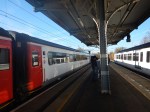

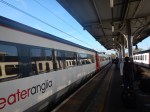
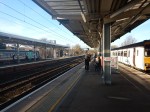
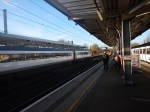

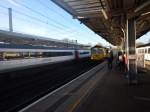
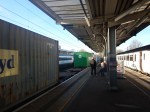
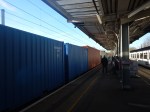
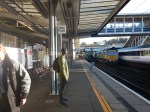
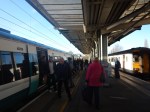
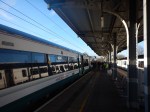
In the short time, I was there, I saw the following trains go through the station.
- A Norwich to London Express.
- A London to Norwich Express
- A very long freight train.
- A train arrive from Lowestoft and wait in Platform 1.
- My train arrived from Felixstowe.
What made matters worse was a light engine sitting on the avoiding line between the two main lines.
I took these pictures later on my return from Felixstowe.
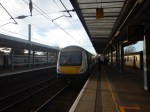
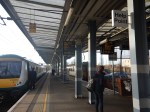
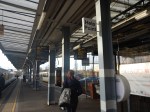
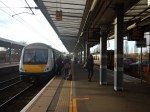
The two sets of pictures illustrate some of the problems at Ipswich station.
- There is a large number of freight and passenger trains, that go through the station.
- The platforms available for services to Cambridge, Felixstowe, Lowestoft, Norwich and Peterborough is limited.
- Trains sometimes have to terminate in the Through Up Platform 2.
- Two long passenger trains per hour between London and Norwich, go through in each direction.
Unfortunately, 3 and 4 interact badly with each other and this interaction will get worse with the new Flirt trains, which are longer than the current trains.
One solution would be a second bay platform, alongside the current Platform 1.
The new Greater Anglia Franchise has also had a sort out of services through Ipswich. The two most important ones that will be implemented are.
- Peterborough-Ipswich will be hourly and continues to Colchester. So Colchester has the problem of turning the train.
- The hourly Liverpool Street to Ipswich service will be extended to Norwich, to increase the Liverpool Street to Norwich frequency to three trains per hour.
These two changes reduce the amount of platform space needed, as these services will stop and hopefully be quickly on their way!
A Good Look At Platform 1 At Ipswich Station And The Work On The Far Side
In Curious Rail Construction At Ipswich Station, I wondered what was happening on the far side of Platform 1 in the station.
This morning although there was congestion later, that I wrote about in Congestion At Ipswich Station, the platform was empty long enough for me to take these pictures.

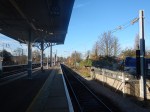
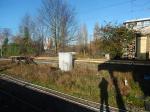
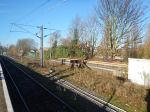


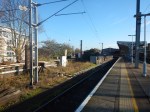
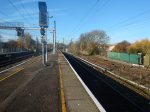
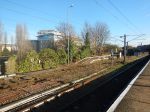
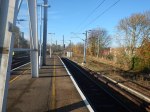
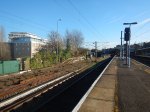
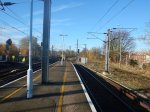
Note that in the pictures and this reasoning, I refer to the construction as Platform 0, but it could be just a ramp so that drivers can access their freight locomotives.
Consider.
- Platform 1 would accommodate a five-car train and it could be lengthened to perhaps six-cars.
- Platform 0 would accommodate a one-car Class 163 train or possibly a two-car train.
- It might be possible to extend Platform 0 towards the main part of the station, by digging out the corner of the car park and moving a few steel girders.
- The end supports for the catenary would need replacing with a longer Platform 0, but that is not difficult electrification.
- An extended Platform 0, wouldn’t need moving of the free bicycle parking and the waiting room.
- If Platform 0 and 1 were for Felixstowe and Lowestoft, interchange between the two lines and London trains would be easy.
- Changing from trains from London to trains at Platforms 0 and 1 would be by using the nearby recently-built step-free bridge.
With two bay platforms 0 and 1, there would be no need to use Platform 2 as a terminus, as my Felixstowe train did today.
The curious point, is that except for the Express London to Norwich services, there are no current or planned electric passenger services to Norfolk or the West from Ipswich.
So why are the wires in Platform 1 and the area that could become platform 0, so comprehensive?
I believe that Greater Anglia might be thinking of running electric trains with on-board energy storage from the station.
Felixstowe is the most likely possibility, as the other routes could be too long.
So could we see a five-car Aventra with on-board energy storage shuttling along the Felixstowe branch?
It’s all a bit different from the Class 105 train, that I rode on the route in the early-1960s
As I said a few days ago, it’s all very curious.
Curious Rail Construction At Ipswich Station
I came into Ipswich station today on a train from Lowestoft and took these pictures before I got on a train to London.






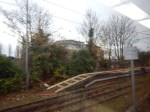

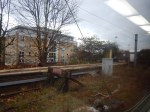
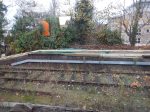
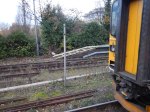
They would appear to show the following.
- An electrified line has been created to the North of Ipswich Yard between the Felixstowe Branch Line and Ipswich station.
- Some construction on the far side of the siding that lies next to the platform used for Lowestoft and Felixstowe trains.
Could the construction, be tye start of work for a dedicated platform for the Felixstowe Branch?
Consider the following about traffic on the Felixstowe Branch Line.
- According to this article in Rail Magazine, there are now twenty-three daily freight trains out of Felixstowe.
- The freight trains are getting longer and I have seen trains hauled by a pair of Class 66 locomotives.
- Passenger trains are a single-car Class 153 train every hour.
- The Class 153 train takes twenty-six minutes.
- The line is around fifteen miles of unelectrified line.
- The Freightliner motive power depot is going to be moved from Ipswich to Felkixstowe.
- The December 2016 Edition of Modern Railways is saying that a 1.4 km loop will be built on the branch and six level crossings will be closed.
Despite the last two points, the single track branch line must be very much full.
There are also issues with the Class 153 trains at Ipswich.
- Do they sometimes find it difficult to get through all the freight trains to the bay platform at Ipswich?
- Sometimes, they use the end of the main platform 2, but as the Flirts will be longer, this won’t be possible when the new trains arrive.
- Various reports have said that two bay platforms are needed; one for Felixstowe services and one for Lowestoft services.
We don’t know their actual plans, but Greater Anglia would probably love to put a modern electric train on the Ipswich-Felixstowe route.
Electrification of the Felixstowe Branch is not even likely.
- Electrification of the Felixstowe Branch without wiring all the way to Nuneaton would probably not be good value for money.
- Where would Freightliner get all the electric locomotives?
- The Port of Felixstowe isn’t wired and might not want wires all over the place with cranes everywhere!
- The Gospel Oak to Barking Line will be electrified and what effects will this have?
The only bright spot on the horizon is Greater Anglia’s new Flirts, which could release fifteen well-maintained and reliable Class 90 locomotives.
A modern two-coach train, even if it was a diesel, would have benefits.
- It would be faster and thus scheduling the crowded route could be easier.
- It might attract more passengers to the line, especially, if there was space for bicycles and buggies.
- It should be more reliable.
But I suspect Greater Anglia would want an electric train with all the trimmings.
So am I right, that a new electrified line has been created into the station in a place where a new platform can be created?
- I might be wrong and it could have been there for years to enable the movements of electric locomotives, without blocking the main line.
- But there are certainly modern style gantries and supports for the overhead wires.
- The existing bay platform 1 is wired. Why? No current or possible electric services could use the platform.
But something is certainly happening.
- Is it a new platform or just tidying up?
- Is it a walkway to enable train drivers to get to locomotives in Ipswich Yard?
- Is it a short platform to take up to a two-car train?
There is one other possibility, that fits with my observations at Maidenhead and the Marlow Branch, that I wrote about in Bourne End Station And Improving The Marlow Branch Line.
At Maidenhead, I came to the conclusion, that electric trains (Class 387s?) with on-board energy storage were going to be used on the Marlow Branch to Bourne End, with a diesel shuttle between Bourne End and Marlow.
Is the current Platform 1 at Ipswich, which could probably accommodate a five-car Aventra going to be used in the same way?
Consider how an electric train with on-board energy storage, would work the Ipswich-Felixstowe service.
- I’ll assume that a fully-charged train starts from the new depot at Manningtree or some othe suitable overnight stabling.
- The train positions early in the morning for the first service from Felixstowe, using overhead power to Ipswich and on-board power on the branch.
- Passengers load at Felixstowe and the train proceeds to Ipswich under on-board power to the current Platform 1 at Ipswich.
- The train would sneak into the platform on the North side of Ipswich Yard, well out of the way of the Great Eastern Main Line and any freight movements.
- If the platform was busy and the train had to wait at a signal, it could even up pantograph to start the recharging of the on-board storage.
- Once in Platform 1, the train would either start or continue the charging process.
- The pantograph would be lowered, when the charging was complete or the train was approaching the limit of the overhead wiring on its way out to Felixstowe.
The process would continue all day.
But Aventras will be a clever train. This is a snippet from an article in the Derby Telegraph.
Unlike today’s commuter trains, Aventra can shut down fully at night and can be “woken up” by remote control before the driver arrives for the first shift.
So could we see a train parked at Felixstowe overnight, ready for the driver to get into a nice warm train?
I used to live round the corner from Felixstowe station and as the train would be in full view of the Police Station opposite and electrifically dead, I doubt there would be any security problem.
A five-car Aventra parked overnight with an appropriate all-over paint scheme might even encourage new passengers to give it a try.
Obviously, the suitable Aventra doesn’t exist yet, but putting in a new short platform 0 at Ipswich station, that can accept a three-car train, would mean.
- Platform 2 would no longer be needed for terminating trains at Ipswich.
- Twelve-car Flirts could work the London-Norwich services, without terminating services interfering.
- Felixstowe and Lowestoft services would have a short platform 0 and a longer platform 1, to use appropriately.
- The infrastructure would be ready for the Aventra with on-board storage.
But surely the biggest advantage is that a second bay platform would probably be to make it possible to schedule all trains such that if passengers were changing between the various lines to Bury St. Edmunds, Cambridge, Felixstowe, London, Lowestoft and Norwich, it was a convenient process of less than ten minutes.
Whether an Aventra with on-board storage will ever appear on this route is unknown at present, but there could be other advantages to running such a train on the Felixstowe Branch.
- Electrification of the branch can be kicked into some very long grass or buried at sea.
- The branch gets a massive increase in passenger capacity, without losing any paths for freight trains.
- The extra capacity with plenty of space for bicycles and buggies.
- Greater Anglia get a line for training drivers to use on-board storage.
- Bombardier get a demonstration of a train with on-board energy storage.
It could be a win for all parties.
Is This The Worst Bottleneck On The UK Rail Network?
This Google Map shows Norwich station and the various rail lines that serve it.
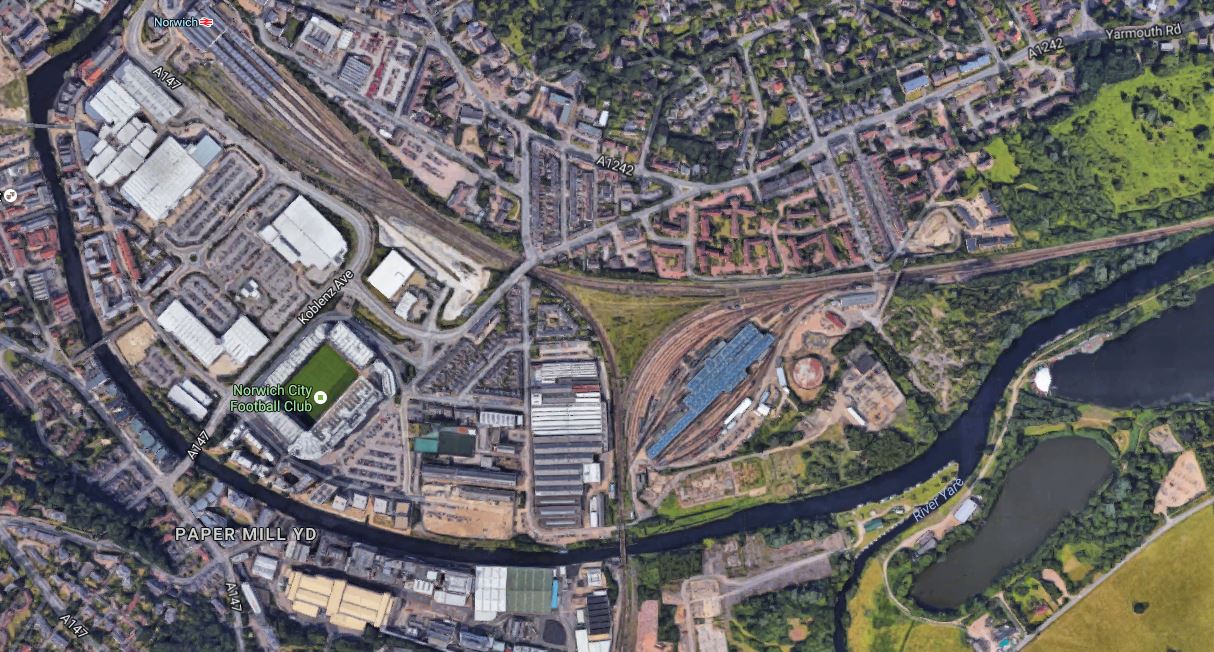
Norwich Station And Approach Lines
All the lines come into the station from the East and they split soon after leaving the station, with lines to Cromer, Lowestoft, Sheringham and Yarmouth taking the Eastern line, with trains to Ipswich and Cambridge taking the Southern line.
Between the two lines, lies Crown Point Traction and Rolling Stock Depot, which looks after much of Greater Anglia‘s rolling stock.
This Google Map shows the bridge at the South West corner of the depot, where the rail line to Ipswich and Cambridge, crosses the River Wensum.
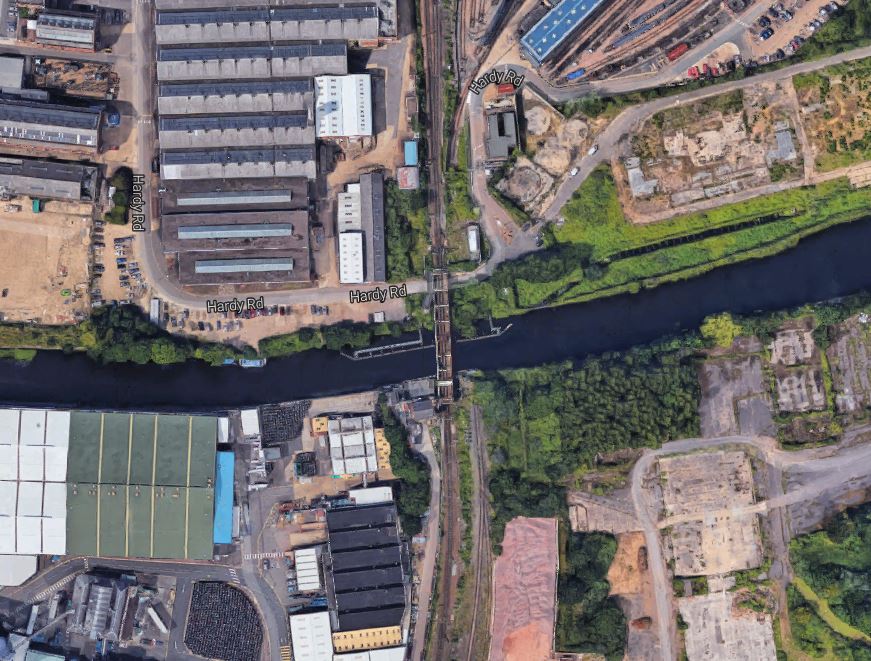
Trowse Bridge
Trowse Bridge is no ordinary bridge.
- It is a single track swing bridge.
- It was built in the 1980s, probably to a low cost design.
- It is electrified by overhead conductor rail, rather than overhead wire.
- It is mandated by an Act of Parliament to open for traffic on the river on demand.
- It is rather unreliable.
It must be a nightmare for both Greater Anglia and Network Rail.
I wonder if this bridge has had effects on projects that are happening in East Anglia.
The New Depot At Brantham
A new depot is being built by Greater Anglia at Brantham, just North of Manningtree station. There are obviously, good reasons for this, but could the access over the Trowse Bridge to Crown Point be a factor.
It would certainly be easier for bi-mode Flirts working Lowestoft-Ipswich and Colchester-Peterborough to be based at Brantham rather than Crown Point. Wikipedia says this.
Scheduled to open in 2018, it will be the home depot for Greater Anglia’s new fleet of Class 745 and Class 755 Stadler Flirts.
Greater Anglia would be a very unusual company, if they didn’t have an efficient plan for the stabling and maintenance of their new trains.
Direct Yarmouth To Lowestoft Trains Via A Reinstated Reedham Chord
There used to be a direct Yarmouth to Lowestoft Line, but now it is possible to use the Wherry Lines, with a reverse at Reedham station.
Network Rail are talking about reinstating the Reedham Chord to create a more direct route between East Anglia’s largest North-Eastern towns. This is said about the Reedham Chord in Direct Yarmouth Services in the Wikipedia entry for Lowestoft station.
In January 2015, a Network Rail study proposed the reintroduction of direct services between Lowestoft and Yarmouth by reinstating a spur at Reedham. Services could once again travel between two East Coast towns, with an estimated journey time of 33 minutes, via a reconstructed 34-chain (680 m) north-to-south arm of the former triangular junction at Reedham, which had been removed in c. 1880. The plans also involve relocating Reedham station nearer the junction, an idea which attracted criticism.
Could one of the reasons for looking at the the reinstatement of the Reedham Chord, be that it would allow diagrams for the trains working the branch lines to the East of Norwich and Ipswich to avoid the Trowse Bridge?
The Design Of The London To Norwich Trains
The current rakes of eight Mark 3 coaches hauled by Class 90 locomotives, that run the service between London to Norwich, only have one pantograph.
So does this mean there are operational problems with the train on the Trowse Bridge, as it does seem that the bridge owes a lot to Mr. Heath Robinson.
A long modern electric multiple unit, like say the Class 345 trains for Crossrail, often has two pantographs. This should be more reliable, if one should fail.
Consider.
- The Class 745 trains, which have been ordered to replace current trains, will be somewhere around two hundred metres long.
- These trains are Stadler Flirts, which in some cases have two pantographs.
- Trowse bridge is less than thirty metres long.
- The other passenger trains that will use bridge, will be bi-mode like the Class 755 trains or diesel.
- On modern trains, pantograph control is automatic and fast.
- Electrification gaps are common on third-rail systems.
Would two pantographs, allow the Class 745 trains to bridge an electrification gap on the bridge.
Suppose, the electrification was removed from the Trowse Bridge!
Would this and other improvements make it possible to simplify the bridge and improve reliability?
|Electric trains could use the following procedure to cross the bridge.
- Trains could approach the bridge with the front pantograph lowered., drawing power from the rear one.
- The train would cross the bridge and when the front pantograph was under the overhead wire on the other side, it would automatically raise and connect, lowering the rear pantograph appropriately.
Bi-mode trains would just use their diesel engines, swapping between modes automatically.
The Replacement Of The Bridge
Eventually, the bridge will have to be replaced, but surely a bridge without electrification would be easier to design and build. It could even be double-track to improve capacity into and out of Norwich.
I suspect that the long-term solution would be a double-track lifting bridge, similar to the Kingsferry Bridge in Kent. This was built in 1960 at a cost of £1.2million, which is £19.3million in today’s money.
When it is completed the Western Gateway Infrastructure Scheme, will incorporate a similar lifting bridge which will carry a road and the Manchester Metrolink over the Manchester Ship Canal.
Both these schemes also incorporate roads, so the Trowse Bridge will be simpler.
I think there could be scope for an engineer or architect to design something special for this crossing.
The Affordable Alternative
It has to be said, that perhaps the most affordable solution would be to build a stylish fixed link, probably with a double-track railway and foot and cycle bridges.
As to the boat users, all boats that need to go under the bridge regularly would be modified so their masts could be lowered at no cost to their owners.
Other bribes could be given to occassional users.
 The Anonymous Widower