Heart Aerospace Relocates Corporate Headquarters To Los Angeles, California
The title of this post, is the same as that of this news item from Heart Aerospace.
This is the sub-heading.
Hybrid-electric airplane manufacturer Heart Aerospace has announced the relocation of its corporate headquarters from Gothenburg, Sweden to Los Angeles, California. This strategic move aims to bolster the company’s product development in the United States, supporting the upcoming experimental flights of its Heart X1 prototype and the future Heart X2 prototype.
These two introductory paragraphs add ,ore detail.
Scheduled for its maiden flight in 2025, the X1 marks a major milestone in Heart’s innovation journey, setting the stage for X2.
“Our move to Los Angeles marks a new chapter in Heart Aerospace’s journey—one that prioritizes iterative development and deeper vertical integration,” said Anders Forslund, co-founder and CEO of Heart Aerospace. “For the X2, we’re developing key technologies like batteries, actuation systems, software, and hybrid-electric hardware in-house. This approach allows us to refine and enhance our systems continuously, just as we’ve done with the X1 prototype, which has seen extensive testing and major design updates since its initial rollout in 2024.”
In some ways, I find this move to California slightly sad, as I suspect most of those associated with the airliner, would have liked to see the development stay in Sweden.
This paragraph gives more details on the reasons for the move.
“We are deeply grateful to our team in Sweden for being part of this chapter of Heart’s journey, and for all the support we have received in Sweden,” said Anders Forslund. “However, as our customers, partners, and investors are increasingly based in the U.S, we see greater opportunity in focusing our resources here. By consolidating our operations in Los Angeles, we can accelerate development, strengthen collaboration, and better position Heart Aerospace for the future.”
They are not mentioned, but I do hope, Trump’s tariffs have nothing to do with it.
Heart Aerospace Unveils New Airplane Design, Confirms Air Canada And Saab As New Shareholders
The title of this post, is the same as that of this press release from Heart Aerospace.
These are the first two paragraphs of the press release.
Swedish electric airplane maker Heart Aerospace today unveiled significant design updates to its first electric aircraft and confirmed Air Canada, one of North America’s largest airlines and Saab, the Swedish aerospace and defense company, as new minority shareholders.
The new airplane design, called the ES-30, is a regional electric airplane with a capacity of 30 passengers and it replaces the company’s earlier 19-seat design, the ES-19. It is driven by electric motors powered by batteries, which allows the airplane to operate with zero emissions and low noise.
And this is a visualisation of the aircraft from Heart Aerospace..
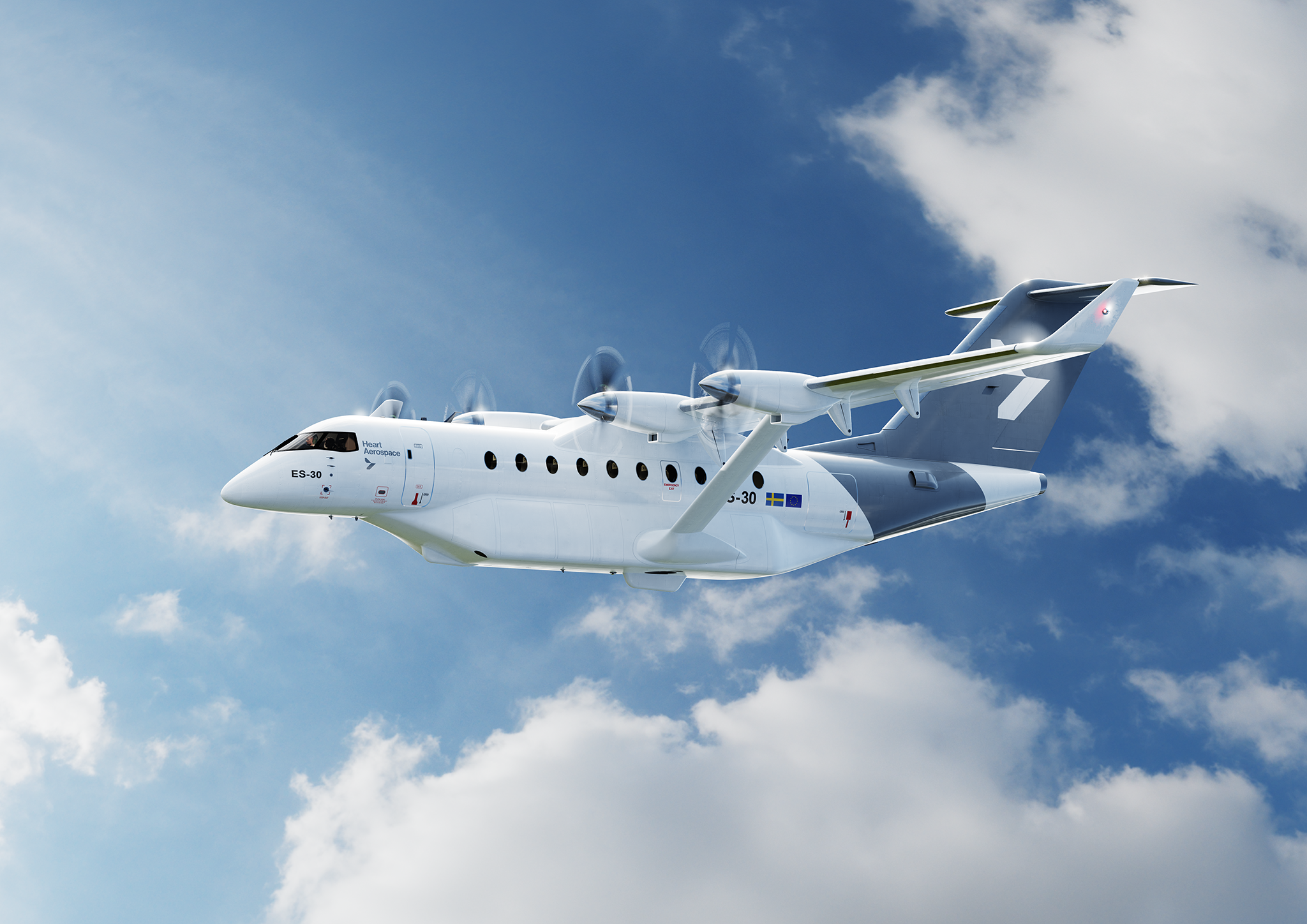
It looks fairly normal, except that it has four electric engines instead of two turboprops.
This paragraph of the press release gives details of the engine configuration.
The airplane will also include a reserve-hybrid configuration, consisting of two turbo generators powered by sustainable aviation fuel. The reserve-hybrid system is installed to secure reserve energy requirements without cannibalizing battery range, and it can also be used during cruise on longer flights to complement the electrical power provided by the batteries.
Note.
- The slightly larger Dash 8-100 aircraft seats just under forty and has 2.7 MW of installed power.
- Rolls-Royce have a 2.5 MW hybrid turbo generator that runs on sustainable aviation fuel.
- Honeywell have a similar smaller hybrid turbo generator, based on the auxiliary power unit of an Airbus A 350.
I’m sure that Heart can find the hybrid turbo-generators they need for the ES-30.
This paragraph of the press release gives details of the performance.
This gives the airplane a fully electric range of 200 kilometers, an extended range of 400 kilometers with 30 passengers, and flexibility to fly up to 800 kilometers with 25 passengers, all-inclusive of typical airline reserves.
Eight hundred kilometres is sufficient range to serve Bordeaux, Frankfurt, Geneva, Hamburg, Inverness, Paris and Shannon airports from London City Airport.
The press release also discloses that the company has received 96 letters of intent for the aircraft and expects that the in-service date will be 2028.
I don’t think that the date is unreasonable.
2.7M Tonnes Of Co2 Could Be Saved Per Year If UK Domestic Flights Went Electric
The title of this post is the same as that of this article on Simple Flying.
This is the introductory paragraph.
Analysing over 100 domestic routes within the UK, researchers have uncovered some significant Co2 reductions upon the inevitable switch to electric.
It is an excellent summary of the state and potential of electric airliners in the UK.
The article gives this example of the sort of carbon savings, that can be achieved.
One of the shortest domestic flights in the United Kingdom, a 38-minute hop between Belfast International and the Isle of Man, uses around 36kg of carbon dioxide per passenger. In 2019, the route served approximately 20,000 passengers – with a switch to electric aviation, 752 tonnes of carbon dioxide could be cut on the 76-mile flight.
The article says this about one of the more developed electric aircraft; the ES-19 from Heart Aerospace.
One manufacturer, in particular, is seeing a significant surge in interest; Swedish electric aircraft startup, Heart Aviation. Currently holding letters of interest from United Airlines and Finnair, Heart’s 19-seat ES-19 is set to be the first all-electric regional aircraft, boasting a 400km range with a full-charge time of just 40 minutes. The first flight is planned for 2024, with an anticipated 2026 start date.
Airports within a 400 km range from London would include.
- Anglesey
- Blackpool
- Exeter
- Guernsey
- Jersey
- Leeds/Bradford
- Liverpool
- Manchester
- Newquay
- Norwich
- Paris
- Schipol
Dublin, Isle of Man and Newcastle are just over 400 km.
Note.
I also suspect that Dublin, Edinburgh, Leeds and Liverpool would make excellent hubs for electric aircraft.
I used Free Map Tools to get the distances.
United Airlines To Buy 100, 19-seat Electric Planes from Heart Aerospace
The title of this post, is the same as that of this article on Reuters.
This is the first paragraph.
United Airlines said on Tuesday it would buy 100 19-seat ES-19 electric planes from Swedish start-up Heart Aerospace, as the U.S. carrier eyes battery-powered aircraft for regional routes.

It looks fairly conventional, except that you don’t find many four-engined propeller driven aircraft these days.
This page on the Heart Aerospace web site, gives more details of the company and its plane.
I suggest you read the FAQ, as the last five sections give details on the use of the planes, as short-haul airliners and island hoppers.
What’s A Typical Route That The ES-19 Will Fly In 2026?
In answer to this question, the FAQ says this.
Our early adopter market will be very short flights where there is high demand. This will include island-hopping and flying over mountainous terrain, where the flight distance is significantly less than the road routes available.
I can certainly see these planes and other 19-seaters island hopping and on cross-country routes all over the British Isles.
Other 19-seater Aircraft You May Have Flown
I have only flow in one and that was an Embraer Bandeirante from Norwich to Stavanger.
Others will have flown in a De Havilland Canada Twin Otter or the Britten-Norman Trilander.
Conclusion
This well-backed Swedish design could be a very widely-used airliner, if it meets the ambitious in-service date of 2026.
There are other designs being developed including the more unusual Faradair Aerospace BEHA.
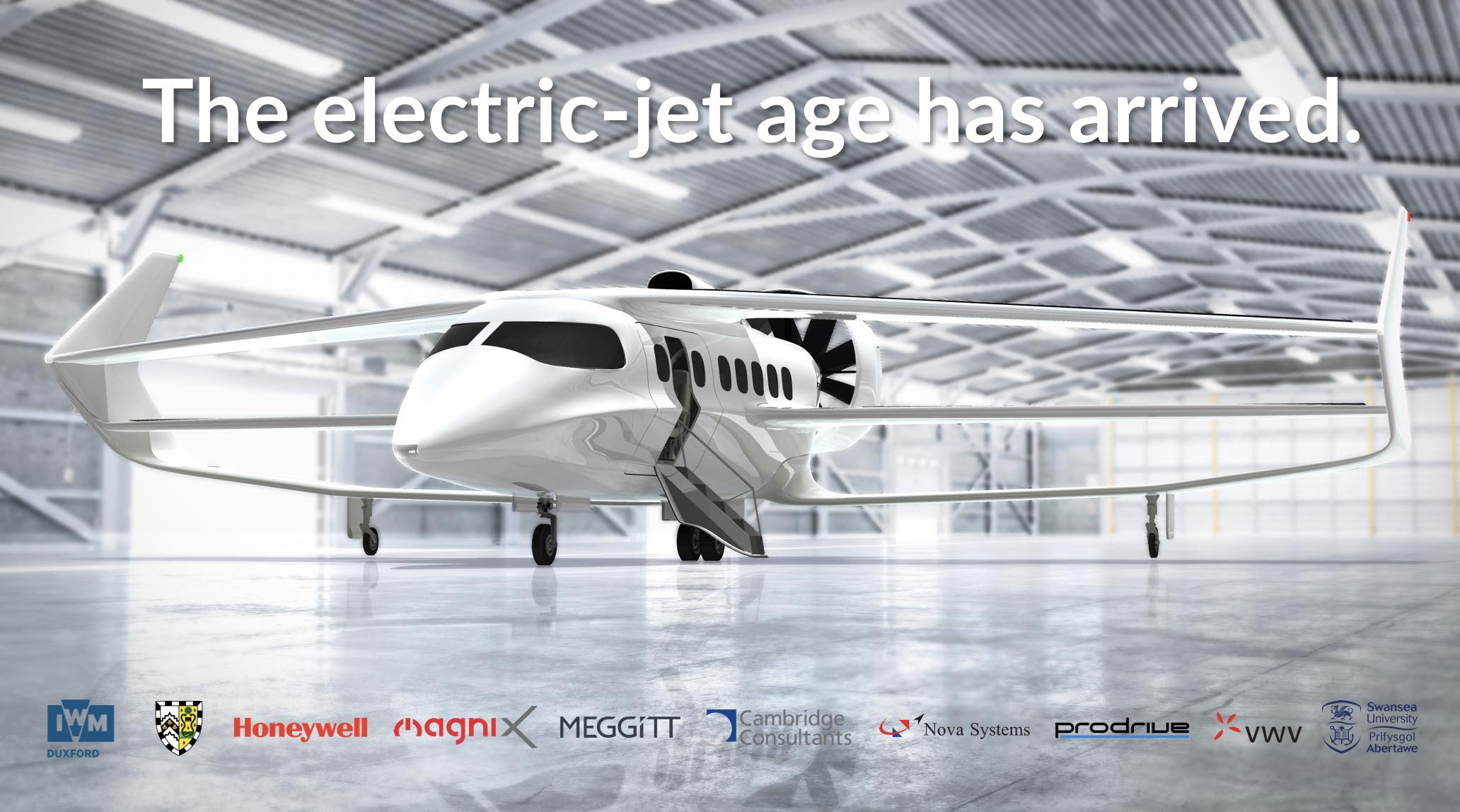
Unlike the ES-19 it is not fully electric, but is powered by a small Honeywell gas turbine running on sustainable aviation fuel.
But the ES-19 looks the best yet!
N
 The Anonymous Widower