MTR Vying To Join Heathrow Southern Rail Bid
The title of this post, is the same as that of this article in New Civil Engineer.
The title gives you all you need, but consider these facts about MTR.
- MTR is a Hong Kong company with a revene of about £4 billion per year, which is about the same size as the Stagecoach Group.
- MTR will be running Crossrail for Transport for London.
- MTR in partnership with First Group, are running South Western Railway.
In addition, FirstGroup are running Great Western Railway.
So it could seem logical for MTR to be included in the consortium behind Heathrow Southern Railway, as they could have a lot of influence on the consortium’s policies.
In an argument about train paths or stations, MTR or their partner; First Group, will be involved on both sides.
The problem is Heathrow Airport and their ownership of Heathrow Express, especially if it is extended deep into South Western Railway territory at Basingstoke, Guildford or Working.
This is said on the Heathrow Southern Railway web site.
Whether or not a third runway is built, many more passengers and airport workers need to be accessing Heathrow by train. The Government’s recent M25 South West Quadrant Study ruled out widening the motorway. HSR provides the alternative, switching traffic from the roads and contributing to improving local air quality. We estimate that HSR will reduce use of this section of the M25 by over three million car trips a year.
Heathrow might be a greedy bully, but they probably need a superb rail service more, than they need to own Heathrow Express.
MTR and AECOM, who is a large partner in Heathrow Southern Railway partner, are big enough to stand up to anybody.
Traffic Between Windsor And Staines After The Building Of Heathrow Southern Railway
Currently, Windsor and Eton Riverside station has a two train per hour (tph) service to Waterloo, which calls at Staines.
These are also the only trains on the Staines-Windsor Line.
So if, there are four tph on a Crossrail service from Heathrow to Staines, as I talked about in Heathrow Southern Railway’s Plans For Staines, then that only raises the frequency of the trains on the Southern part of the Staines-Windsor Line to six tph.
In his article about the Heathrow Southern Railway in the December 2016 Edition of Modern Railways, Chris Stokes says this.
With the addition of a chord at Staines, it would also be potentially possible to operate a half-hourly Weybridge – Virginia Water – Egham – Terminal 5 service, providing a further attractive local link to Heathrow.
If this service were to be added, that only raises the frequency to eight tph.
I suspect that if modern signalling techniques were applied, that the capacity of this route would be above this frequency.
Heathrow Terminal 5 Station
I doubt there will be any problems of capacity at Heathrow Terminal 5 station.
The station has been built with two Piccadilly Line and four heavy rail platforms.
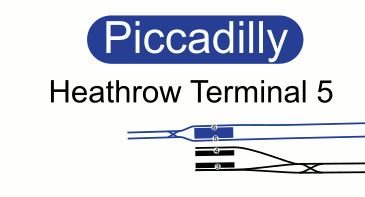
This map from carto.metro.free.fr, shows the platform layout.
Note.
- It would appear there are only two heavy rail platforms in use.
- Through trains would use these currently in use platforms.
- The two spare platforms could be arranged, so that they could handle a terminating train from either direction.
- The terminating platforms can probably handle four tph or even six tph.
- The through platforms can handle well over ten tph, with the right signalling.
Someone seems to have got the design right.
The Future Of Heathrow Express
In his Modern Railways article, Chris Stokes says this about services from Woking to Heathrow.
We have assumed half-hourly services from Basingstoke and Guildford to Heathrow and Paddington, providing a 15-minute frequency from Woking, with stops at Farnborough Main (Basingstoke services), Working, Terminal 5, Terminal 2 and 3 and Old Oak Common.
He also says that this service could take over the Heathrow Express paths and it would use the through platforms at Heathrow Terminal 5 station.
This arrangement has several advantages.
- Heathrow Express doesn’t terminate in the tunnels under Terminal 5.
- No new train paths between Heathrow and Paddington are required
- Heathrow Express gets new destinations without any expensive new infrastructure.
But it would appear that Heathrow Express may have a future.
Heathrow Southern Railway’s Plans For Staines
In an article in the December 2016 Edition of Modern Railways about the Heathrow Southern Railway, Chris Stokes outlines how railway will serve Staines.
The addition of a bay platform at Staines, deliverable within the existing railway boundary, would assist service resilience and potentially allow extension of Crossrail services from T5 to Staines, providing a highly attractive alternative route from Staines to central London, together with enhanced interchange with South Western services. Journey times from Staines to Paddington would be as fast as to Waterloo, with excellent central London distribution provided by Crossrail. We would expect the majority of Staines to central London passengers to transfer to Crossrail, with significant interchange to Crossrail from intermediate stations between Staines and Reading, relieving overcrowding between Staines and Waterloo.
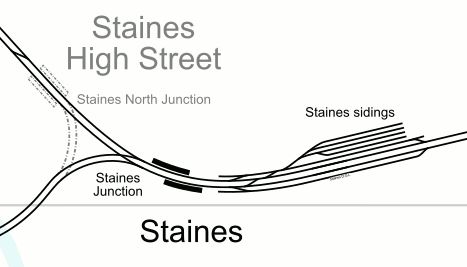
This map from carto.metro.free.fr shows the rail lines at Staines station.
Note.
- London trains take the lines to the East.
- Windsor and Heathrow trains take or will take the lines to the North-West.
- Reading trains take the lines to the South-West.
Heathrow Southern Railway plan to add a bay platform in the North West corner of the station.
- It will be built on current railway land. (Chris Stokes)
- It will help with the resilience of the train service. (Chris Stokes)
- It could possibly be the terminus of an extended Crossrail service from Heathrow Terminal 5. (Chris Stokes)
I shall now look at various features, benefits and possible problems in detail.
Could A 205 Metre Long Platform Be Built?
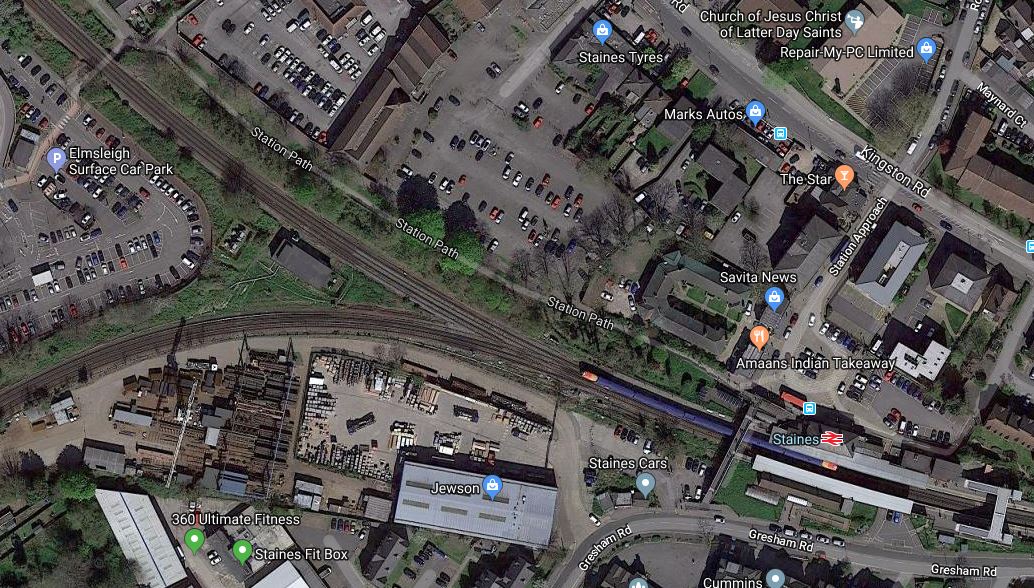
The Google Map shows Staines station.
Note.
- The five-car blue train in the station.
- The train is probably a Class 458 train, which is just over a hundred metres long.
- Crossrail’s Class 345 trains are up to 205 metres long.
- The two footbridges over the tracks.
- The junction, where the tracks split to the West of the station.
These pictures show the area, where the new bay platform would go.





The Station Path and the green space are clearly shown on the Google Map.
Using the train in the station as a hundred metre ruler, I feel that with good design a platform, that was long enough for a Class 345 train could be built.
- The path would be landscaped.
- The platform would connect to the London-bound Platform 1.
- There is probably space for some shelters and other facilities.
- There might be a new entrance to the station at the West end.
Platforms have been built in much more difficult locations than this.
What Frequency Of Trains Could The Platform Handle?
Many terminal platforms in the UK handle four trains per hour (tph).
Crossrail will actually handle 12 tph using three terminal platforms at Shenfield station, when the station gets the full service in May 2019.
I don’t think it would be outrageous to say, that the single bay platform at Staines station would be able to handle four tph.
Would Crossrail Want To Serve Staines?
Crossrail’s current service plans are lop-sided, with more trains going to the East than to the West. This means that 12 tph turnback at Paddington station.
I’m sure they would welcome extra termini in the West!
Heathrow Southern Railway’s plan is that trains will pass through Heathrow Terminal 5 station and then take the new rail link to Staines.
Crossrail’s current plan envisages two tph terminating in Heathrow Terminal 5 station, but I don’t think with the right signalling and timetable, that running four tph through the airport to the bay platform at Staines, would be impossible.
But this will only happen if there are the passengers to use the service.
Who Might Use Crossrail To And From Staines?
Chris Stokes said this.
We would expect the majority of Staines to central London passengers to transfer to Crossrail
As there is research behind the proposal, this will be right.
But there is one group of passengers, who will welcome Crossrail with open arms.
That is those people, who live in Staines or the surrounding area and work or want to work at Heathrow.
As Chris Grayling announced that Southern access to Heathrow was a priority, I discussed it with one of South Western’s station staff.
They put me right about getting from Staines to Heathrow for an early shift.
Crossrail’s Plans for Heathrow at 6th January 2019
Om the 9th January 2019, Wikipdia said that following Crossrail trains will run to Heathrow.
- Terminal 4 – Four trains per hour (tph)
- Terminal 5 – two tph
In addition it looks like Heathrow Express will run four tph to Terminal 5.
Heathrow Southern Railway plan to run the Heathrow Express services through to Basingstoke, Guildford and Woking.
If Crossrail were to run four tph to Staines in addition the extended Heathrow Express at four tph, that would only be one train every seven and a half minutes. Compare this with the time it takes of ten minutes to turn trains in the platform at Heathrow Terminal 5 station.
I would suspect it could be possible to run four tph through Terminal 5 to a bay platform at Staines.
Conclusion
It’s amazing what can happen, when you add a simple bay platform!
New Heathrow Rail Link To Lead The Way For Future Transport Funding Schemes
The title of this post, is the same as that of this Press Release on the Department of Transport web site.
This is the opening two paragraphs.
Private companies have been asked to come forward with ideas to deliver a new southern rail link to Heathrow Airport.
The link will be one of the first projects under government plans to invite third parties – such as local authorities and private sector companies – to invest in the rail network, over and above the £47 billion the government is already planning for the next 5 years.
In the past, I have talked about two privately-funded schemes for access from the South to Heathrow.
The Times is saying today, that it could be the second scheme.
But Heathrow can be such a money-earner, you do wonder if other schemes to serve the airport will be put forward.
How Would A Scheme Work In Practice?
A consortium consisting of engineering, financial and railway interests would put forward a scheme.
They would do the following.
- Design the scheme and ensure it was acceptable to all stakeholders, including Network Rail, the Office of Rail and Road, local authorities, train operating companies, passengers, residents and in the case of Heathrow, the airport itself.
- Raise the finance to build the scheme from appropriate institutions like insurance companies, banks and pension funds.
- Build the scheme and get it approved by the appropriate companies, authorities and regulators.
- Once the scheme is commissioned, trains using the scheme would pay appropriate track access charges, in the same way, that they do now, when they use Network Rail’s tracks.
- Maintenance would be the responsibility of the consortium, that built the scheme.
In some ways the consortium functions like a mini-Network Rail, as it obeys all the same standards with regards to engineering and safety.
But.
- The finance is not provided by taxpayers.
- Any profits go to those, who conceived, built or financed the project.
- Risks associated with the project are not borne by the Government or taxpayers.
If say in ten years time, the consortium goes bust, then I suspect that the assets would be bought on the cheap, by either Network Rail or another investor, who would learn from the original consortium’s mistakes.
Not that I think that will happen!
Has Anything Similar Been Done Before In The UK?
I think it is true to say, that various innovative ways have been found to fund railways in the UK.
The article from the Independent, which was written in 1992 is entitled Canary Wharf Banks Agree Funding For Jubilee Line.
This is a paragraph from the article.
The Government has always insisted that the scheme will not go ahead without private funding. In return for the financing, the banks are believed to be insisting that the Government chooses Canary Wharf as the site for the relocation of about 3,000 civil servants from the Department of Environment and the Department of Transport. It is also considering three other sites in the area.
So it looks like relocating three thousand civil servants got the Jubilee Line built!
Chiltern Railways have expanded by leaps and bounds over the years and some of their methods have been professional and innovative.
Project Evergreen with three phases has expanded and improved their passenger services.
This is an extract from the section of Wikipedia, that talks about the project.
Chiltern Railways former chairman Adrian Shooter said, “This is the biggest passenger rail project for several generations not to call on the taxpayer for support. Working closely with Network Rail, we are going to create a new main-line railway for the people of Oxfordshire and the Midlands. This deal demonstrates that real improvements to rail services can be paid for without public subsidy by attracting people out of their cars and on to trains.”
I don’t know whether this relates to all of Project Evergreen or just one part.
This is also said.
Network Rail provided the capital for the upgrade and will recover this through a facility charge over the subsequent 30 years, initially payable by Chiltern until its franchise expires, and then by the next franchisee. The infrastructure upgrade was carried out by main contractor BAM Nuttall, in partnership with Jarvis and WS Atkins.
It may all sound complicated, but Chiltern Railways is a train operating company that commuters don’t seem to complain about.
Could Any Other Schemes Be Funded Using The Department for Transport’s New Model?
Building the southern access into Heathrow Airport will be a large project costing more than a billion pounds.
But that doesn’t that all projects need to be that size!
I suspect, that the DfT’s model will be applied to some projects, as small as a hundred million pounds.
These are my thoughts on future projects, which I have split into various sections.
Airports
If a scheme like the Heathrow scheme gets the go-ahead, then I think this could lead to other airport links being designed, funded and built using a similar model.
At present, Aberdeen, Bristol, Doncaster-Sheffield, East Midlands, Glasgow, Leeds and Liverpool airports are looking to improve rail access and the DfT’s model may be a way to build some, if the demand is there.
Network Extensions
The proposed Heathrow Southern Railway is effectively a well-thought out extension to three networks; Crossrail, Heathrow Express and South Western Railway to all of their mutual benefit.
I doubt there’ll be such big extensions, but there are some useful ones being planned.
- Bramley Line -The track-bed of this route is still there and connecting March to Wisbech could create a new commuter route for Cambridge.
- Fawley Branch Line – This would provide a passenger service and serve new housing developmemts in Hythe and Fawley.
- Ivanhoe Line – Proposals to improve this service in Leicestershire with new stations.
- Merseyrail Northern Line Extensions – The £300 million extension to Skelmersdale is being planned and another from Ormskirk to Preston is proposed using battery trains.
- North Downs Line – This line could be updated to provide an improbred Reading- Gatwick. Would it make a freight route for Minis from Oxford to the Channel Tunnel?
- Skipton To Colne Reinstatement – This project of just a dozen miles is high profile amongst Conservative politicians and would provide another route across the Pennines.
- West London Orbital – This £264 million extension to the London Overground would create two new lines in North West London.
This is by no means a complete list, but it shows how many routes could benefit with reinstatement or improvement.
Electrification
Why shouldn’t electrification be privately funded, with the builders and investors getting their returns, through an electrification access charge, which would be similar to a track access charge.
I discuss possible electrification schemes in Charting An Electric Freight Future.
The linked article is mainly about freight, but I suspect there are examples, where some shortish stretches of electrification could be privately-funded.
If electrification experts identified the problems of the past few years and how to solve them, there must be a case to formulate a business that merged engineering, finance and construction, that was able to install electrification on time and on budget.
Depots
Greater Anglia has commissioned a new depot at Brampton on a design, finance and build basis and it’s not the only depot built this way.
But that is more traditional financing.
Stations
The financing of some stations has been extraordinarily innovative.
I suspect that that some deals will get even more so.
Some will even charge for passengers per day.
Conclusion
One of the reasons, I like the DfT’s proposal of mixing design, finance and build with a good helping of innovation, is that this closely follows the model that we used with Metier Management Systems, when we started the company in the 1970s, to develop our Project Management system called Artemis.
- We designed the systems.
- We financed the systems.
- We installed the systems
- We maintained the systems.
- The customers wanted the systems.
- Customers paid so much a month.
The cream on top was the lashings of innovation.
There might be a lot of extra finance flowing into UK railways!
,
Could Crossrail And Thameslink Serve Clapham Junction Station?
This may seem a silly question, but I believe it is a valid one for the following reasons.
Clapham Junction Is A Major Interchange
Wikipedia says this about Clapham Junction station.
Routes from London’s south and south-west termini, Victoria and Waterloo funnel through the station, making it the busiest in Europe by number of trains using it: between 100 and 180 per hour except for the five hours after midnight. The station is also the busiest UK station for interchanges between services.
It is also the tenth busiest station measured by passenger numbers in Great Britain.
Clapham Junction Is Step-Free
Clapham Junction station has both a bridge and a subway between the seventeen platforms.
The bridge is fully step-free with lifts to all platforms.
Clapham Junction Has A Wide Bridge
The bridge between platforms is not only step-free, but very wide.
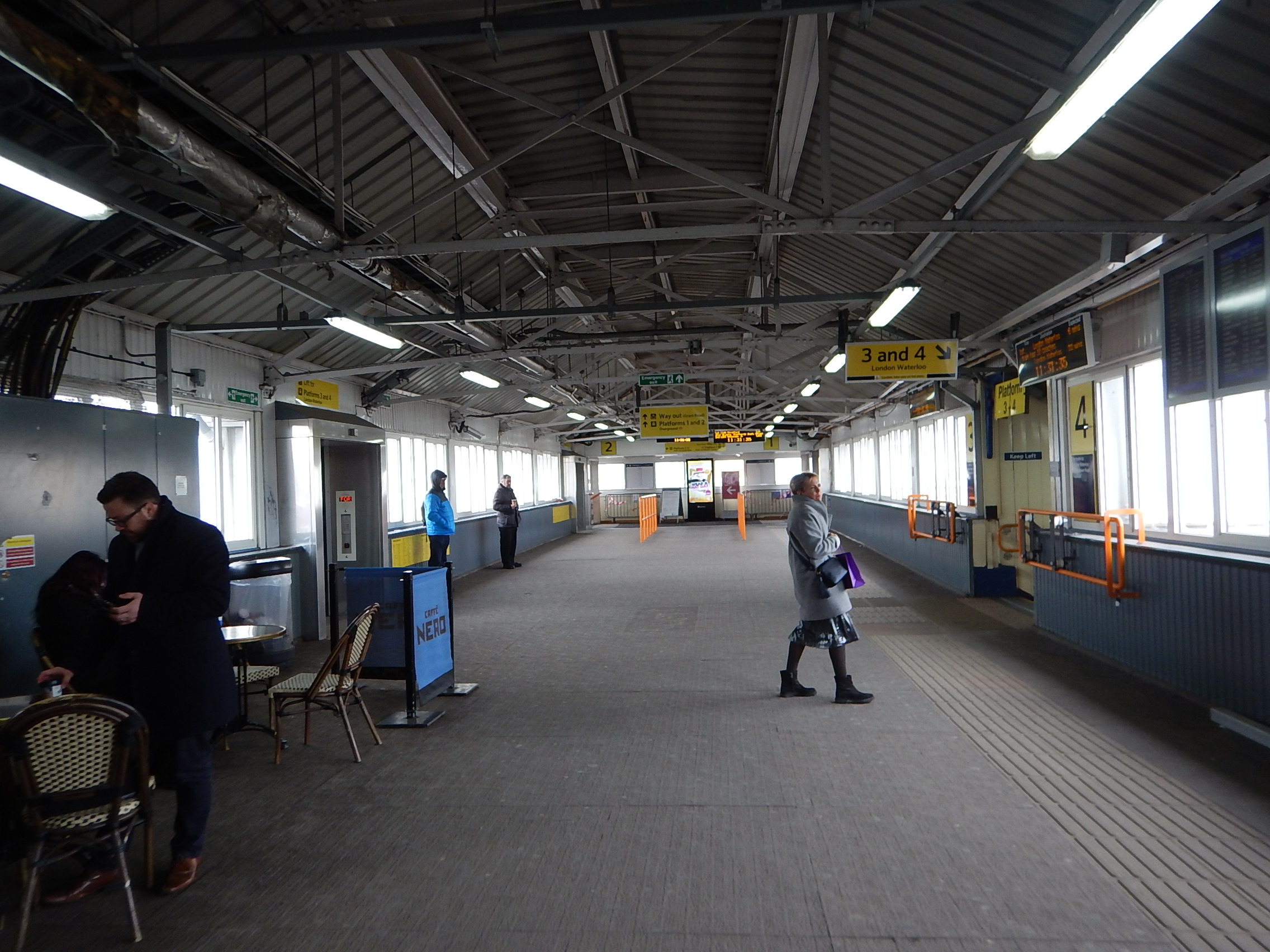
rchitects have copied this Victorian design at Leeds and Reading stations.
Clapham Junction Is Often A Convenient Place to Change Trains
When I go to Portsmouth or Southampton, I will often avoid Waterloo, by using the Overground between Dalston Junction and Clapham Junction stations.
It may be slower, but it is a very easy interchange, especially if I go step-free on the wide bridge.
Perhaps this explains why interchange passengers at Clapham Junction, are almost as many as those entering or leaving the rail network.
With some journeys like say Southampton to Wembley Stadium, changing at Clapham Junction is probably the most convenient.
Clapham Junction Links To The Overground
This interchange, is something I use a lot, as I have four trains per hour (tph) on the London Overground, from my nearest station at Dalston Junction.
As there are thirty-one stations on London’s circular railway, the interchange probably generates a lot of traffic.
Clapham Junction Seems To Be Well-Organised
If you want to go to say Gatwick, then generally the same platform will be used.
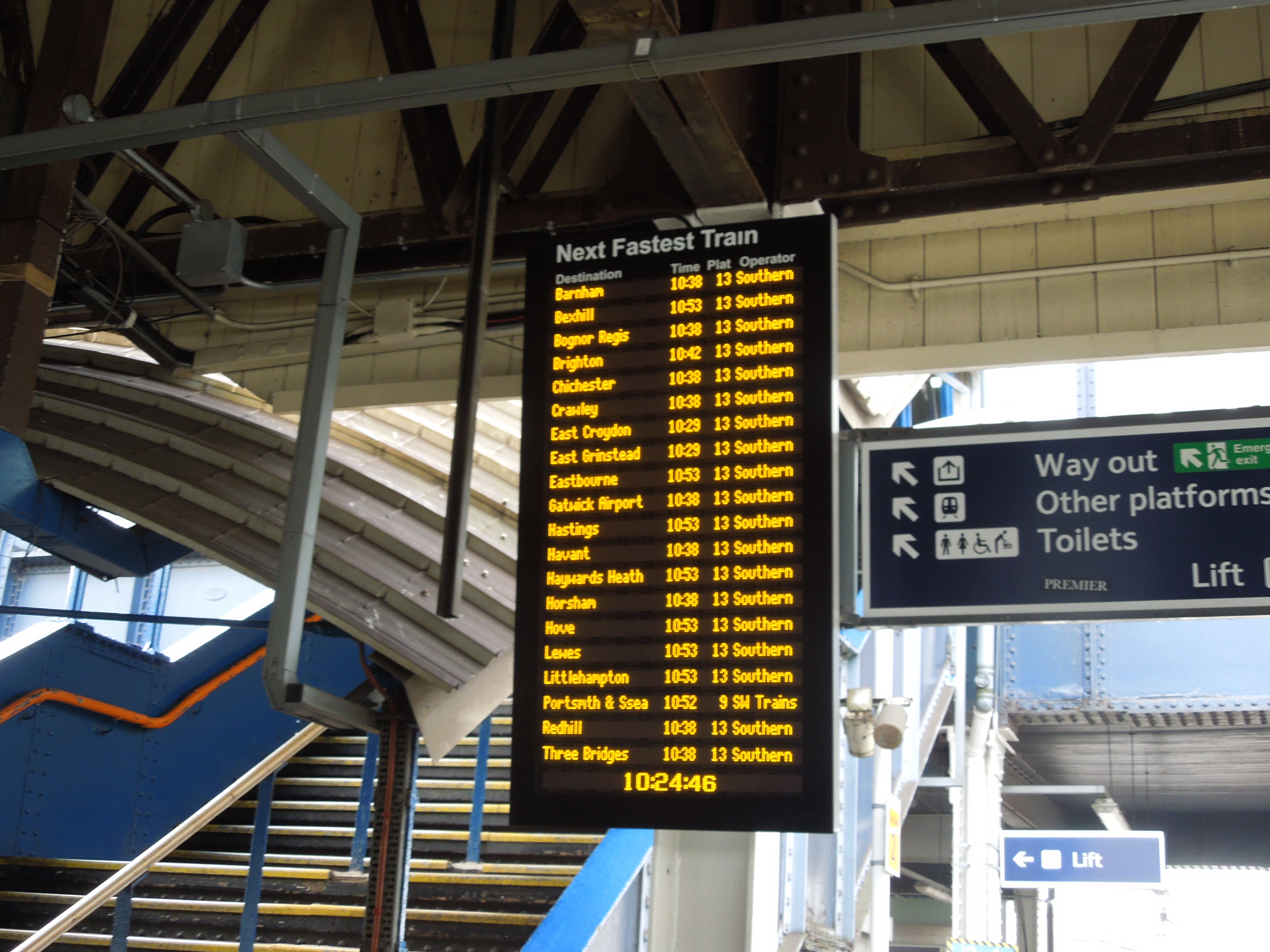
All Trains To Gatwick Go From 13
This can’t be said for many stations.
The station even has lists of stations and the platform to use.
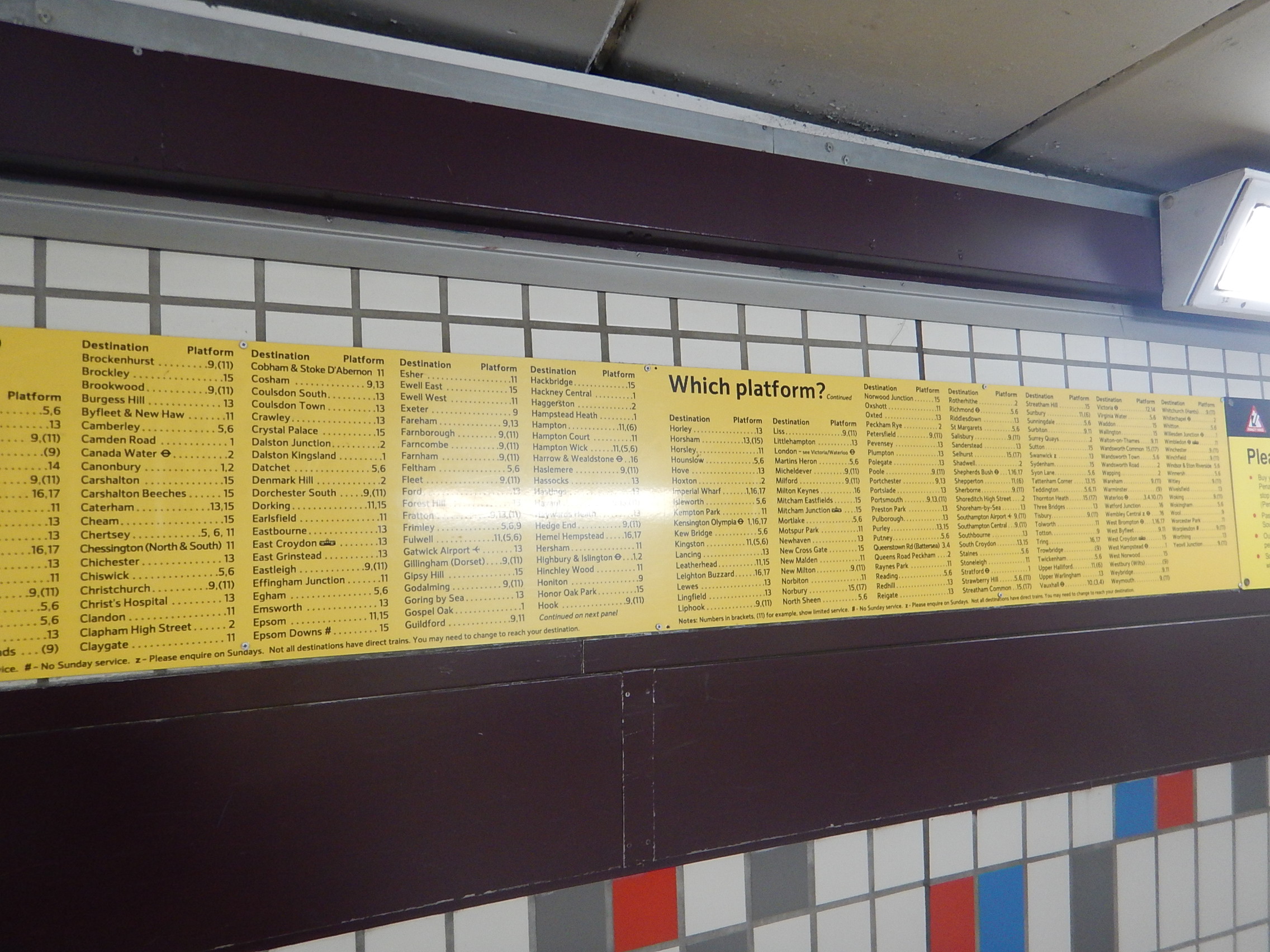
This would be impossible at most large stations!
But this is the busiest station in Europe by the number of trains using it!
The Victorians certainly got the design right!
Does this passenger-friendly design attract passengers?
Crossrail, Thameslink And Clapham Junction Station
Crossrail and Thameslink don’t call at Clapham Junction station.
But some services do directly link Crossrail and Thameslink to Clapham Junction station.
London Overground From Stratford To Clapham Junction Via Willesden Junction
This West London Line service has a frequency of four tph, which from some time this year will be raised to six tph or one train every ten minutes.
It will have the following interchanges in the future.
- Thameslink at West Hampstead
- Crossrail at Old Oak Common
It will also have interchanges with the Bakerloo, Central, District, Jubilee and Victoria Lines.
London Overground From Stratford To Clapham Junction Via Canada Water
This South London Line service has a frequency of four tph, which from some time this year will be raised to six tph.
It will have the following interchanges in the future.
- Thameslink at Denmark Hill and Peckham Rye
- Crossrail at Whitechapel
It will also have interchanges with the District, Docklands Light Railway, Hammersmith and City,Jubilee and Northern Lines.
Southern From East Croydon To Milton Keynes
This West London Line service has a frequency of one tph.
It will have the following interchanges in the future.
- Thameslink at East Croydon
- Crossrail at Old Oak Common
If Crossrail is extended along the West Coast Main Line, there will be additional interchange stations.
It will also have interchanges with the Bakerloo, Central, District and Northern Lines.
Southern From Clapham Junction To Brighton Main Line
There is a high-frequency service from Clapham Junction along the Brighton Main Line.
- 3 tph – Brighton
- 1 tph – Hastings
- 2 tph – Eastbourne
- 2 tph – Littlehampton
- 4 tph – Horsham
- 4 tph – Haywards Heath
- 4 tph – Three Bridges
- 6 tph – Gatwick Airport
- 12 tph – East Croydon
Most of these services terminate at Victoria.
The named stations, except for Hastings and Eastbourne, will also be served by Thameslink.
From the passenger point of view, those going to and from London from the Brighton Main Line and South Coast stations, have a choice of London terminus.
- Thameslink – London Bridge, Blackfriars, City Thameslink, Farringdon, St. Pancras and Thameslink’s Northern stations.
- Southern – Clapham Junction and ictoria.
The two separate routes have Central London fully covered.
Deficiencies Of The Current System
Suppose you want to travel from the extremities of Crossrail and Thameslink to say somewhere like Basingstoke, Bournemouth, Exeter, Portsmouth or Southampton, that is served by Waterloo and Clapham Junction in Central London.
- From Brighton and other stations on the South of Thameslink, there is a high-frequency Southern service.
- From Luton and other stations on the North of Thameslink, you will probably use the Jubilee Line between London Bridge and Waterloo.
- From Shenfield and other stations on the East of Crossrail, you will probably use the Jubilee Line between Bond Street and Waterloo.
- From Heathrow, Reading and other stations on the West of Crossrail, you will probably use the Bakerloo Line between Paddington and Waterloo.
All the Underground interchanges will be fully step-free with lifts and lots of escalators, but the connections could be simpler.
The Arrival Of Old Oak Common Station
The building of the new mega-hub station at Old Oak Common will tie together the following lines.
- Crossrail
- HS2
- North London Line
- West Coast Main Line
- West London Line
There is also the possibility of the West London Orbital Railway linking Old Oak Common to Hendon and West Hampstead Thameslink.
Old Oak Common and Clapham Junction stations will be two mega-hub stations, that for obvious reasons will need a high-frequency connection service.
Currently, that is planned to be the following services.
- 6 tph – London Overground from Stratford to Clapham Junction.
- 1 tph – Southern from Milton Keynes to East Croydon.
It is not enough, especially, if either connection at Old Oak Common and Clapham Junction is a long walk.
But there are easy ways to increase the numbers of connections.
Improve The Southern Service
In his report, Chris Gibb recommended that this Milton Keynes to East Croydon route be transferred to the London Overground. I wrote about this in Gibb Report – East Croydon – Milton Keynes Route Should Be Transferred To London Overground.
In my view Chris Gibb is right for the following reasons.
- All passenger services on the West London Line would then be run by London Overground.
- London Overground have a reputation for running a good train service.
- The Milton Keynes to East Croydon service could be integrated with the Watford DC Line, the North London Line and a possible West London Orbital Railway to produce an integrated frequent local service in an area of West London, that needs a greatly improved train service.
- Frequency between Old Oak Common and Clapham Junction could be raised to as high as ten or twelve tph.
- It would improve connections between Watford and the expanding Wembley Stadium complex with South London.
I doubt it would be an expensive and difficult project to move this service between operators.
Build The West London Orbital Railway And Extend It To Clapham Junction
In this article on Ian Visits, this is said about the service on the proposed West London Orbital line.
Phase 1: 4 trains per hour from West Hampstead to Hounslow, calling at West Hampstead, Cricklewood, Neasden, Harlesden, OOC, Acton Central, South Acton, Brentford, Syon Lane, Isleworth, Hounslow.
Phase 2: additional 4 trains per hour from Hendon to Kew Bridge, calling at Hendon, Brent Cross/Staples Corner, Neasden, Harlesden, OOC, Acton Central, South Acton, Kew Bridge.
The track is all in place and with a new bay platform at Hounslow, trains running on batteries could work Phase 1 with ease. The batteries would be charged South of Acton Central station.
Because of the importance of Clapham Junction as an interchange,, would it be a sensible idea to extend Phase 2 from Kew Bridge to Clapham Junction, by way of Chiswick, Barnes Bridge, Barnes, Putney and Wandsworth Town stations?
This may not be possible, as the route may not be able to accept four extra trains.
This map from carto.metro.free.fr shows the track layout around the two Overground platforms at Clapham Junction.

I also took these pictures of Platform 2.


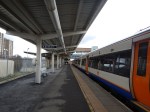
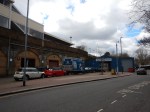
I suspect that a bay platform could be added, opposite to Platform 2.
- There would appear to be plenty of space.
- The platform would share the lift, facilities and staff with Platforms 1 and 2.
- It would make a good interchange, with simple connections to Platforms 1 and 2.
There could even be the possibility of making Platform 2 bi-directional so that a loop service from Hendon to Dalston Junction could be created, if that was considered the best solution.
One advantage of extending the Phase 2 Kew Bridge route, would be that it would give more electrified running to charge a battery train.
Luton/Bedford to Clapham Junction
If this route from Hendon to Clapham Junction via Old Oak Common and Kew Bridge can be successfully created, it establishes the important link between the Luton/Bedford branch of Thameslink and Clapham Junction.
Cambridge/Peterborough to Clapham Junction
There is no direct route, but probably the fastest is to dive into the Victoria Line at Finsbury Park and go to Vauxhall, from where it’s a single stop to Clapham Junction.
Just avoid changing to the Victoria Line at St. Pancras, unless you like long walks.
Crossrail to Clapham Junction
Three factors will determine how good using a double change at Old Oak Common and Clapham Junction to get between Crossrail and Clapham Junction will be.
- The frequency of trains between Old Oak Common and Clapham Junction.
- The quality of the interchange at Old Oak Common. As it will also involve HS2, I suspect it should be good.
- The quality of the interchange at Clapham Junction. It probably needs improvement, but it’s not bad for something designed by the Victorians.
It could be a very good link.
Could Thameslink Serve Clapham Junction Directly?
From the Brighton Main Line, there is a frequent service, but going North to Thameslink is not easy.
It could be possible to use the West London Orbital Railway to get to and from Hendon, but whether anything other than a local route is needed is open to doubt.
Could Crossrail Serve Clapham Junction Directly?
This Google Map shows the Old Oak Common area.
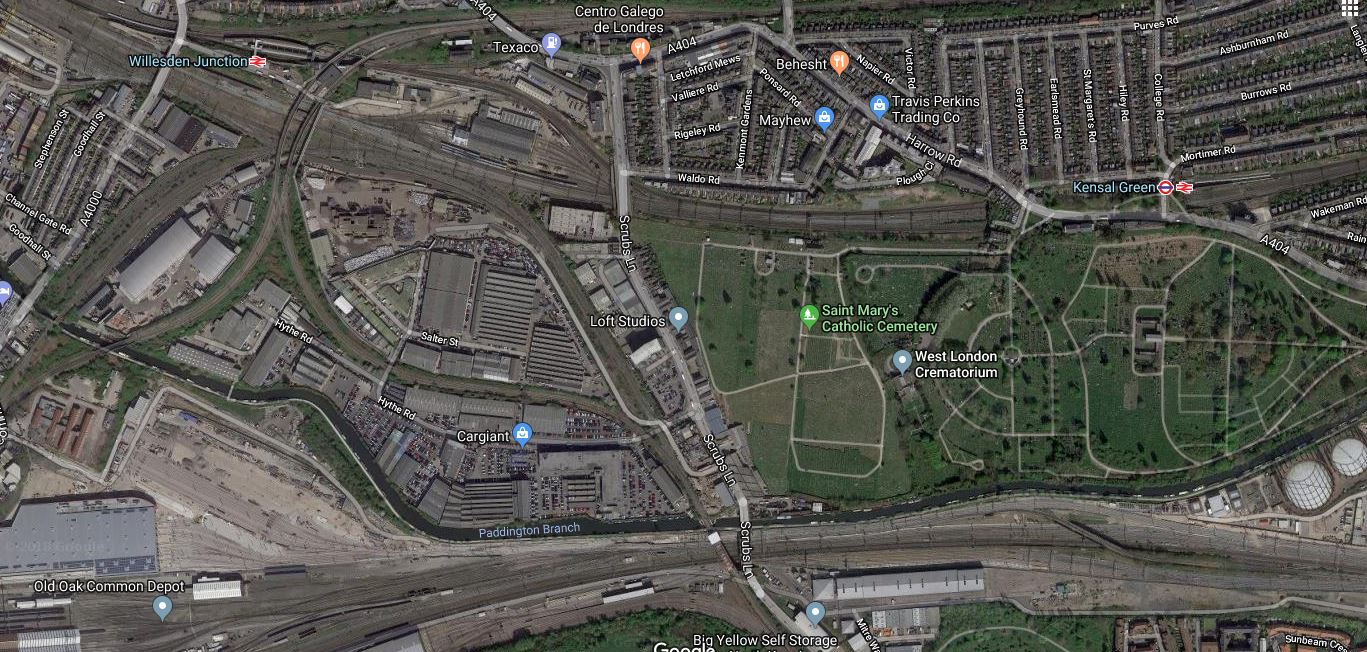
The railway running across the map to the North is the West Coast Main Line, whilst the Great Western Main Line goes across the bottom.
Looking at the map in detail, it might be possible to thread flyovers or dive-unders into the area to allow Crossrail trains to take the West London Line to the North or South from the East or West.
Consider
- There are certainly some large industrial sites that could be cleared.
- There are a couple of cemetries too.
- There are Central, Chiltern, Crossrail, Great Western Main Line, HS2, North London Line, West Coast Main Lines to connect together.
- A Heathrow to Gatwick Link could be threaded through.
It all depends on how much can be spent!
And Then There’s The Heathrow Southern Railway!
This is a bit different, as it’s a privately-funded railway that aims to sneak into Heathrow by following and hiding by the M25 and the use of the odd tunnel.
This map is a schematic of the proposed railway, which is caused the Heathrow Southern Railway.
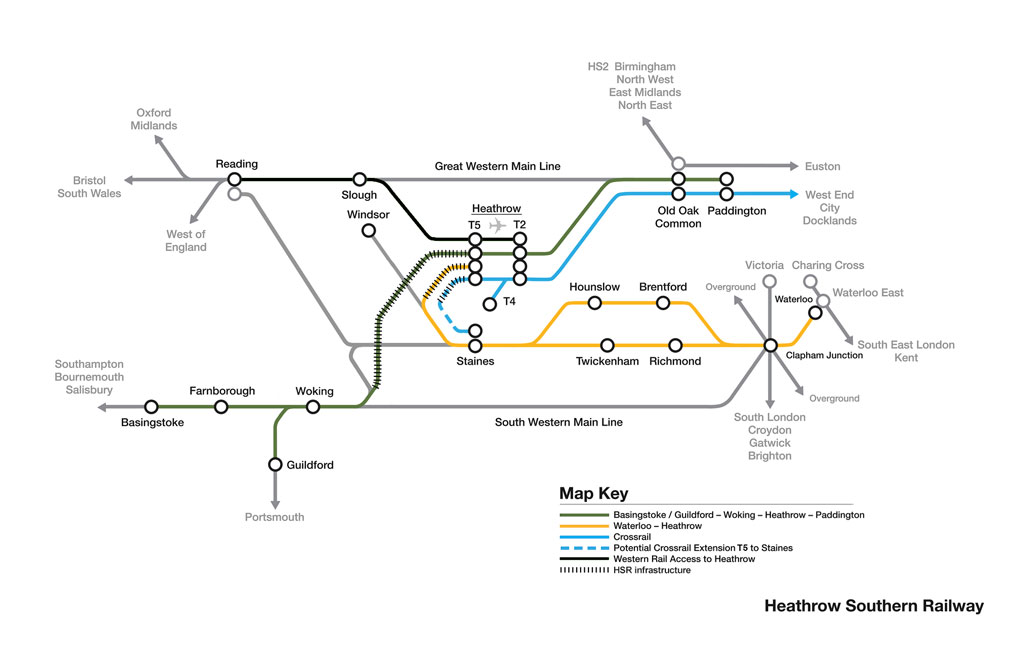
Note.
- The blue line is Crossrail.
- The yellow line is a direct link from Waterloo to Heathrow.
- The station in a six pointed star is Clapham Junction.
On the Heathrow Southern Railway web site there is a section called Service Opportunities.
It details two routes.
Heathrow – Staines – Clapham Junction – Waterloo
- Most track is existing.
- New track will run along the M25.
- Trains will be fully-integrated with South Western Railway.
- Four tph should be possible with planned capacity improvements.
- A bay platform will be added at Staines, within the current railway.
- Xrossrail could be extended from Terminal 5 to Staines.
Heathrow Southern Railway envisage that a lot of passengers from Staines will use Crossrail for London.
Basingstoke/Guildford – Woking – Heathrow – Paddington
The web site says this about the route.
An exciting additional benefit of Heathrow Southern Railway is the scope to introduce half-hourly services from Basingstoke and Guildford to Heathrow and Paddington. These trains would provide a 15-minute frequency from Woking, with stops at Farnborough Main (Basingstoke services), Woking, Terminal 5, Terminal 2 and 3 and Old Oak Common.
I like the ideas and the tone of the project.
Conclusion
With all the ideas in the West of London, I think that some very good things will happen to the railways in the area, whether Heathrow Airport builds another runway or not.
In
Will Some Of The New Buildings For Heathrow Be Built In Scotland?
It’s all explained in this article on the Offsite Hub website, which is entitled Heathrow To Offer Offsite Hubs To Other Mega Projects.
This is the first two paragrahs.
Airport says schemes such as HS2 and Hinkley could make use of planned offsite manufacturing hubs
Heathrow Airport has said it hopes its idea for a series of offsite manufacturing hubs to help with its £16bn expansion plans will be used by other major projects, including the new nuclear power station at Hinkley and the HS2 railway.
Sounds a good idea to me.
A few other points.
- Offsite accounts for 10% of the construction industry.
- Heathrow are aiming for between 25% and 40%.
- It will reduce the peak on-site workforce at Heathrow.
- Offsite was safer, cleaner and less weather dependent.
- Four hubs are plans, with one definitely in Scxotland.
A few months ago I talked to one of the managers building Custom House station, which was largely built offsite in Sheffield.
He told me, that the quality was so much better, than if it had been built traditionally.
The quality certainly wasn’t traditional pre-fab either.
Could this be part of the solution to our housing crisis?
Location! Location! Location!
I’ve heard it several times, that the title of this post is the three most important things about property.
This article on Construction Enquirer is entitled Great Portland Estates Plans Work on £233m Trio Of Schemes.
The three schemes are.
Cityside House E1
This Google Map shows the location.
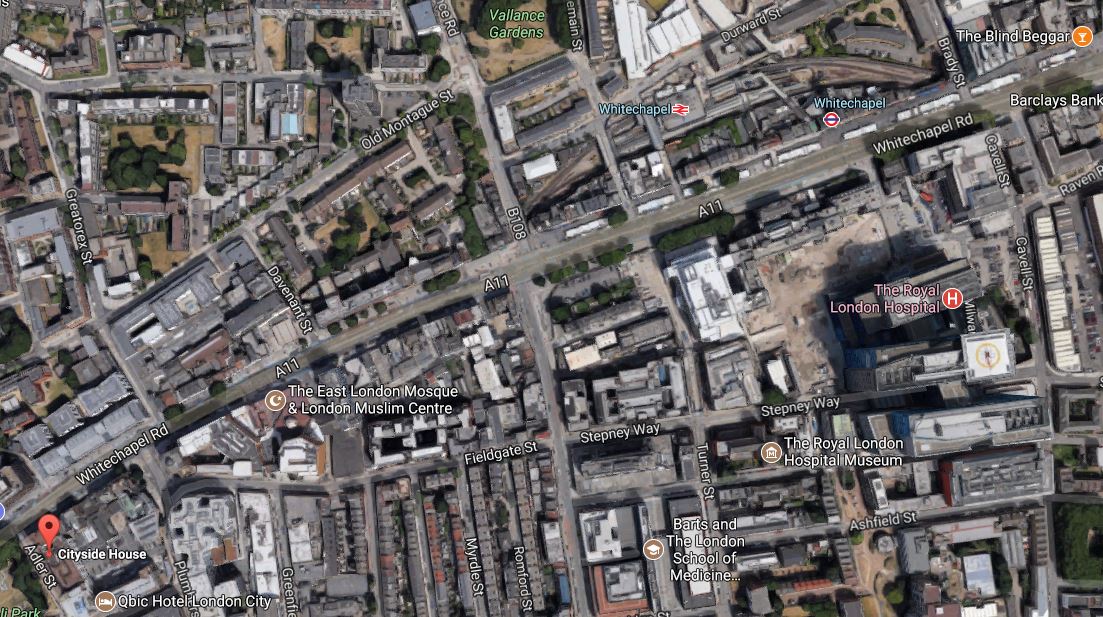
Note.
- The block is indicated by a red arrow.
- It is a short walk from Whitechapel station, which is served by Crossrail.
The office accommodate is being upgraded and residentialo and a hotel will be added.
Oxford House W1
This Google Map shows the location.
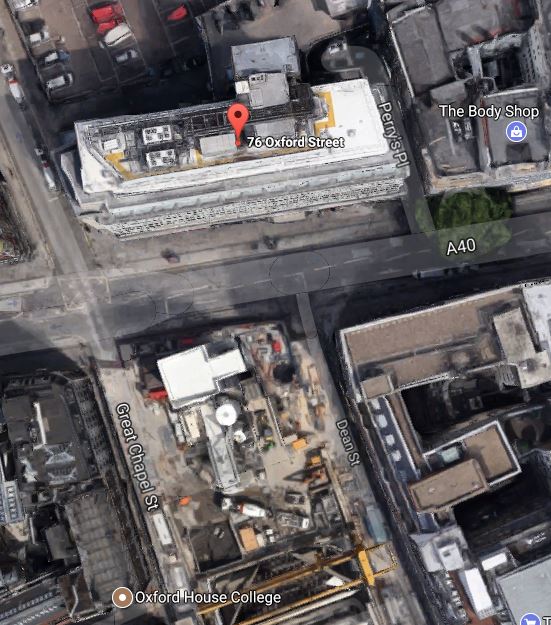
Note.
- The block is indicated by a red arrow.
- The building site opposite is the under-construction Western entrance to Tottenham Court Road station, which is served by Crossrail.
- Tottenham Court Road station is just thirty minutes to Heathrow on Crossrail, with a train every ten minutes.
The block is to be redeveloped.
Is there a better location for an office block?
Hanover Square W1
This Google Map shows the location.
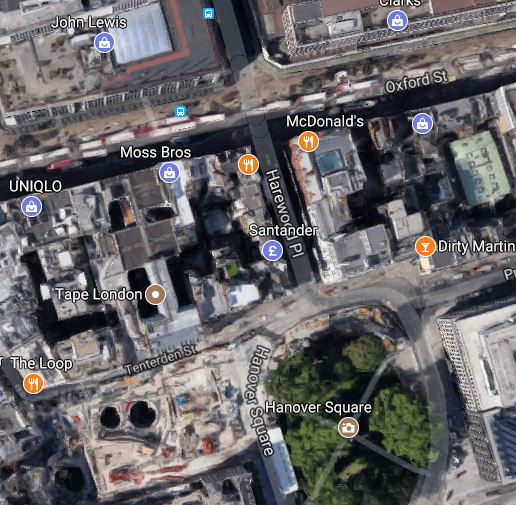
Note.
- The site is on the North-West corner of Hanover Square.
- The building will be on top of the Hanover Square entrance to Bond Street station, which is served by Crossrail.
- Bond Street station is just twenty-seven minutes to Heathrow on Crossrail, with a train every ten minutes.
I doubt Great Portland Estates will have problems filling this development.
Conclusion
These three property developments are all tightly tied to Crossrail.
There will be many more!
Is There Going To Be More Change At Ealing Broadway Station?
Ealing Broadway station is being upgraded for Crossrail.
In the November 2017 Edition of Modern Railways, there is a Capital Connection supplement, which discusses London’s railways.
On Page 7 in a section about the sub-surface lines, this is said.
One possibility being discussed is that the Piccadilly should take over the District’s Ealing Broadway service. This would free up space on the South side of the inner-London circle for more City trains off the Wimbledon branch, one of the sub-surface network’s most-crowded routes.
On Page 15 in a section about the Mayor’s plans, this is said.
It is suggested Piccadilly Line services run to Ealing Broadway instead of the District Line, enabling increased frequencies on the latter’s Richmond and Wimbledon branches.
As the plan is mentioned twice, certainly the proposal is being thought about.
The Lines At Ealing Broadway Station
This map from carto.metro.free.fr shows the lines at Ealing Broadway station.
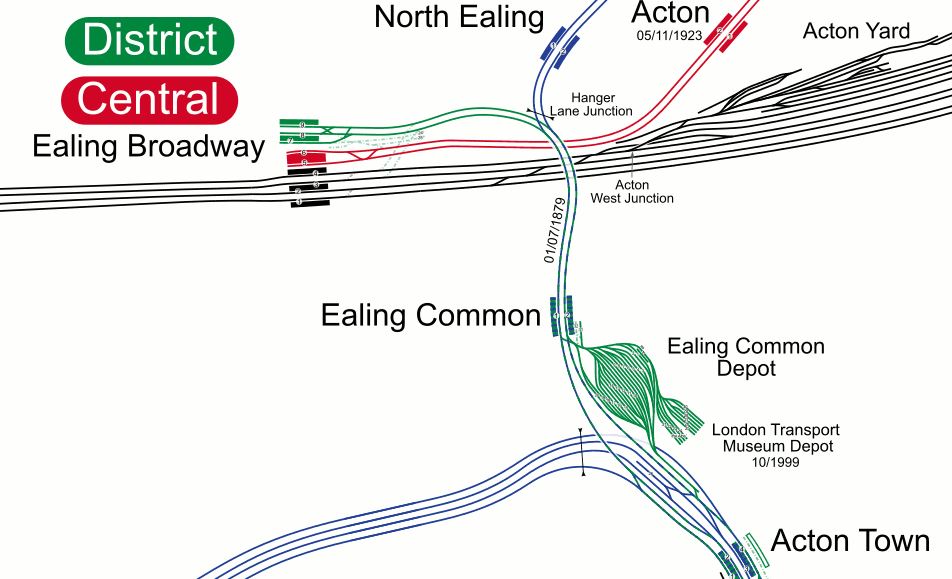
Note how the Piccadilly and District Lines share tracks from Ealing Common station, which then split with District Line trains going to Ealing Broadway station and Piccadilly Line trains going to Rayners Lane and Uxbridge stations.
If the change happened and Ealing Broadway station was only served by the Piccadilly and Central Lines of the Underground, then there might be opportunities to improve the efficiency of the Underground side of the station.
Crossrail Effects On Access To Heathrow
Crossrail will change the way a lot of passengers go to and from Heathrow Airport.
Crossrail To Heathrow
From May 2018, the service will be.
- 4 trains per hour (tph) between Paddington and Heathrow Central and Heathrow Terminal 4
After December 2019, the service will be.
- 4 tph between Abbey Wood and Heathrow Central and Heathrow Terminal 4
- 2 tph between Abbey Wood and Heathrow Central and Heathrow Terminal 5
In addition these services will serve all station including Canary Wharf, Liverpool Street, Bond Street,Paddington and Ealing Broadway.
Effect On Heathrow Express
It will be difficult to predict what will happen to Heathrow Express, but I suspect several groups of passengers will desert it.
- Passengers wanting to go anywhere East of Paddington without changing trains.
- Passengers wanting any Crossrail station.
- Passengers, who don’t like the prices of Heathrow Express.
- Passengers using Oyster or contactless cards.
- Passengers who want to ride on London’s spectacular new Crossrail.
After Old Oak Common station is opened, the numbers will further decrease.
Will Heathrow Express survive?
Effect On Piccadilly Line
The current Piccadilly Line route to the Airport will not be closed, as for many it will still be a convenient route to the Airport
- Passengers who live on the Piccadilly Line and don’t want to change trains. Think Southgate, Knightsbridge, Hammersmith and Osterley!
- Passengers to the East of Acton Town station.
- Passengers, workers and others needing to go to Hatton Cross station.
If Crossrail connected with the Piccadilly Line at say Holborn, it would be all so different.
Effect On District Line
When Crossrail opens, the District Line will become a loop from Crossrail, between Ealing Broadway and Whitechapel running along the North Bank of the Thames via Earls Court, Victoria, Charing Cross and Monument.
The step-free interchange at Ealing Broadway could become busy with passengers travelling to and from the Airport.
Effect On Piccadilly Line Overcrowding
Heathrow trains on the Piccadilly Line can get very overcrowded with so many passengers with heavy cases.
It must sometimes be very difficult to get on a Piccadilly Line train between Heathrow and South Kensington stations.
Crossrail should take the pressure from these trains, by allowing passengers to use the District Line with a change at Ealing Broadway.
Effect On My Personal Route
My personal route to the airport is to take a 141 bus to Manor House station and then get the Piccadilly Line. It takes 94 minutes.
After Crossrail fully opens, if I took the East London Line from Dalston Junction to Whitechapel and then used Crossrail, I’d take 57 minutes.
Conclusion
Crossrail will affect the way many get to Heathrow Airport.
But there are large areas of London, who still will need to change trains twice to get to the airport.
Piccadilly Line To Ealing Broadway Effects
Adding Ealing Broadway station as a fourth Western terminus to the Piccadilly Line will have effects, but not as important as the opening of Crossrail.
Some Improved Journey Times To Heathrow
Some Piccadilly Line stations will see improved journey times to Heathrow.
Hammersmith to Heathrow currently takes 37 minutes by the Piccadilly Line.
Taking a Piccadilly Line train to Ealing Broadway and then using Crossrail could save a dozen minutes.
The District Line Connection To Crossrail At Ealing Broadway Is Lost
Passengers along the District Line from Monument to Hammersmith will lose their direct access to Crossrail at Ealing Broadway.
Cross-platform access to the Piccadilly Line at Hammersmith and Turnham Green will probably be provided or improved, but it will be a second change.
Note that until the Piccafilly Line gets upgraded and new trains arrive around 2023, the District Line with new trains and the soon to be installed new signalling may well be a better passenger experience.
More Trains To Richmond
This will certainly be possible, if some Ealing Broadway trains are diverted to Richmond.
But Crossrail has another delight in its cupboard for Richmond.
Old Oak Common station is scheduled to open in 2026 and will offer an interchange between Crossrail and the North London Line.
Richmond will certainly be getting a better train service to Central and East London.
More Trains To Wimbledon
This will certainly be possible, if some Ealing Broadway trains are diverted to Wimbledon.
The Ealing Common Problem
At Ealing Common station, the Piccadilly and District Line share the same tracks and platforms.
Some commentators have suggested that the new trains on the Piccadilly Line will be designed to work with platform-edge doors for improved safety and dwell times.
So if platform-edge doors were to be fitted to all stations on the Piccadilly Line as has been suggested, there would be no way the doors would fit the new S7 Stock of the District Line.
Swapping Ealing Broadway from the District to Piccadilly Lines would solve this problem and give more flexibility, but it might give London Underground other problems with regard to access for District Line trains to Ealing Common depot.
These pictures show Ealing Common station.






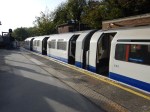

Note the difference of levels between the Piccadilly and District Line trains.
There would be no way to provide level access for both types of train using a Harrington Hump.
So is making a station that serves both deep-level and sub-surface lines, step-free, a problem that is still to be cracked?
This Google Map shows Ealing Common station.
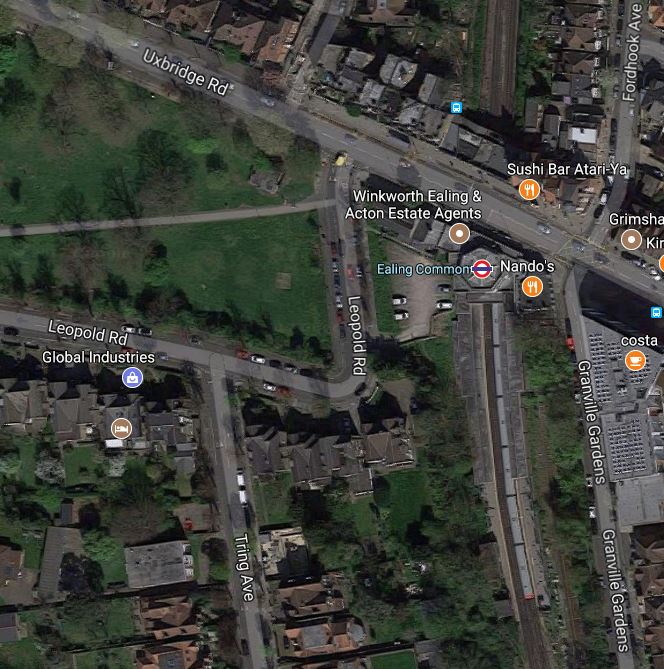
It doesn’t look that it is a station, where two extra platforms could be squeezed in, so both lines could have their own platforms.
Could Ealing Common station be one of the main reasons to serve Ealing Broadway station with the Piccadilly Line?
Acton Town Station
On a brief pass-through of Acton Town station, it would appear that the Ealing Common problem exists.
So making Acton Town station, a Piccadilly Line-only station, would ease making the station step-free, as it would only be served by one type of train.
Chiswick Park Station
Chiswick Park station only has platforms on the District Line and would need to be remodelled, if Ealing Broadway became the terminus of the Piccadilly Line.
One suggestion I found was to add two new District Line platforms to the Richmond branch.
This Google Map shows the station.
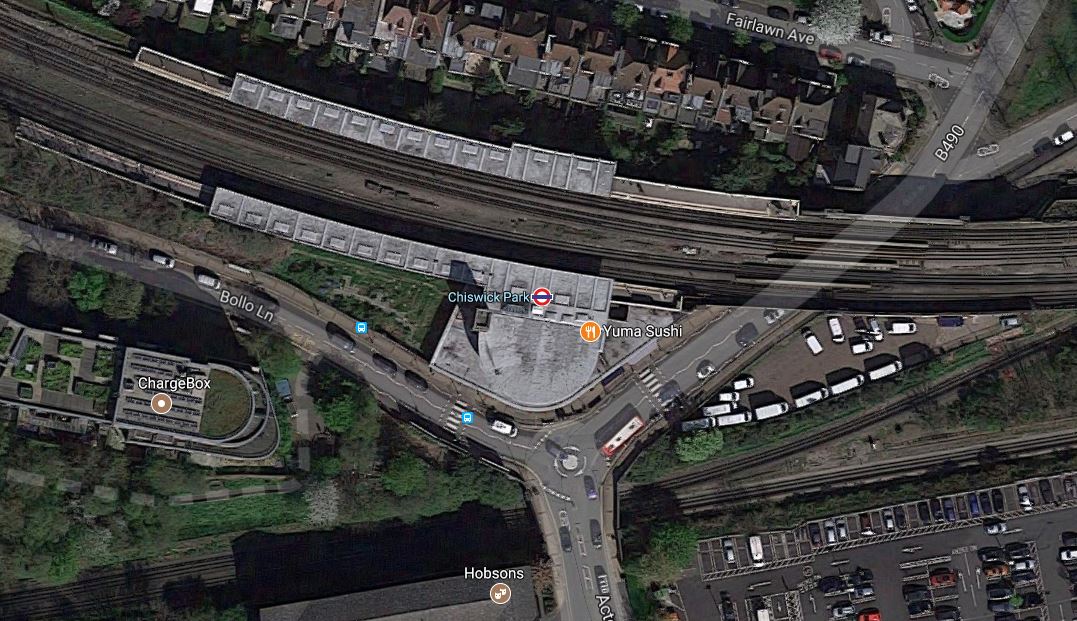
Note the Richmond branch passing South of the station.
Chiswick Park station is Grade II Listed and I’m sure that a good architect can find a more than acceptable solution.
Conclusion
It appears to me, there are two opposite forces on either side of a possible proposal to serve Ealing Broadway station with the Piccadilly Line, rather than the District Line.
- The District Line will form a loop South of Crossrail between Ealing Broadway and Whitechapel stations.
- Making a station step-free that handles both deep-level and sub-surface lines, is not an easy undertaking.
Running the Piccadilly Line to Ealing Broadway means that a change is required at Turnham Green, Hammersith or Barons Court stations to use the loop described in point 1.
But this change would enable the step-free access to be created in all stations in the area.
I think that the change of terminus will go ahead, with the following additions.
- Improved access to Ealing Common depot.
- Improved cross-platform access at Turnham Green, Hammersith or Barons Court stations.
- Two extra platform on the District Line at Chiswick Park station.
What started out as a simple change could end up as a substantial project.
But overall, because it sorts out step-free access in the area, I think it is a good proposal.
The Garden Station
Stations increasingly are getting to be very grand and expensive buildings.
I was musing today about the design of the Windsor Royal station on the proposed Windsor Link Railway.
This railway could be a double-track railway between the current Windsor and Eton Riverside station and the Slough To Windsor And Eton Line, created in a cut-and-cover tunnel across Windsor.
Much of the area of the route is either car parks or gardens.
The station could be a single island platform with the following characteristics.
- The platform would be long enough for the longest trains to use the route.
- The platform would be wide enough to incorporate booking, passenger and staff facilities in a relaxed layout in the middle.
- Escalator and lift entrances at several places along the platform.
- Minimalist surface buildings much like the fosteritos of the Bilbao Metro.
- Light pipes and other ideas could give the station a lot of natural light.
The surface area would be one large garden with walking routes to the sights of the town.
Any car parking would surely be provided at a Park-and-Ride station outside of the town.
Doubts Arise About A third Runway At Heathrow
I have always been sceptical about a third runway at Heathrow and put down my thoughts in Will The Third Runway At Heathrow Be Actually Built In The Near Future?.
Media reports are now saying that there should be more consultation, due to the election stopping the publication of updated forecasts for passengers and pollution. The Labour Party also seems to be against the idea.
By the end of 2019, Crossrail and Thameslink will be fully operational and I believe that they will push everybody including politicians, airline boses and other business leaders to seriously rethink their positions. The statements of Willie Walsh; the Chairman of the airline group;IAG seems increasingly sceptical about Heathrow’s third runway.
2019 also marks the date when Gatwick Airport can start to think about developing a second runway.
In Could Thameslink Connect To Heathrow?, I showed that it would be possible to create a high-capacity link between Heathrow and Gatwick via Thameslink.
- The link would connect Gatwick, Heathrow, HS1 and HS2.
- No expensive infrastructure would be needed.
- This link could easily accommodate four trains per hour and possibly double that, when Heathrow rebuilds its terminals to make it a greener airport, more reliant on rail.
It could be in place in 2020.
Conclusion
All of these forces will kick the third runway even further into the future.
 The Anonymous Widower