A High Speed Diesel Train at Castle Cary
I took this video of a High Speed Diesel Train at Castle Cary station some time ago.
I think though, that it sums up the grace and pace of probably the best diesel train ever built. It’s certainly the fastest in regular service and has proved that good engineering is timeless.
The railway industry and press is now saying that these trains will still be running to Devon and Cornwall from London in 2035, which will make them about sixty-five years old. I don’t believe that all will be retired even then, especially as they have other uses like the Flying Banana. But with another refurbishment to include coach rewiring, power doors and better toilets, they would make superb trains to take leisure passengers to the far-flung parts of the UK.
The Flying Banana
As I was waiting for my train, an unusual yellow one passed through.
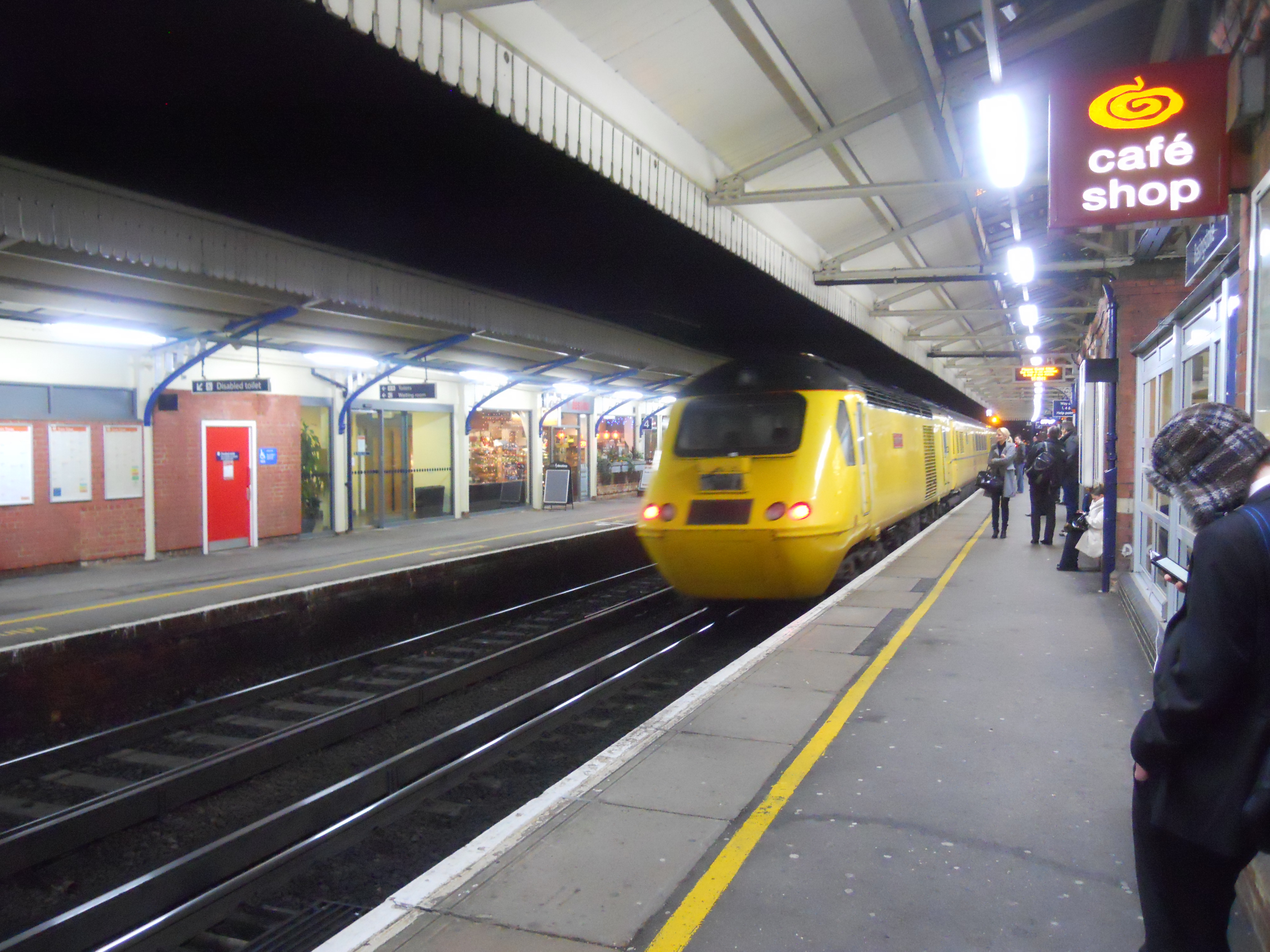
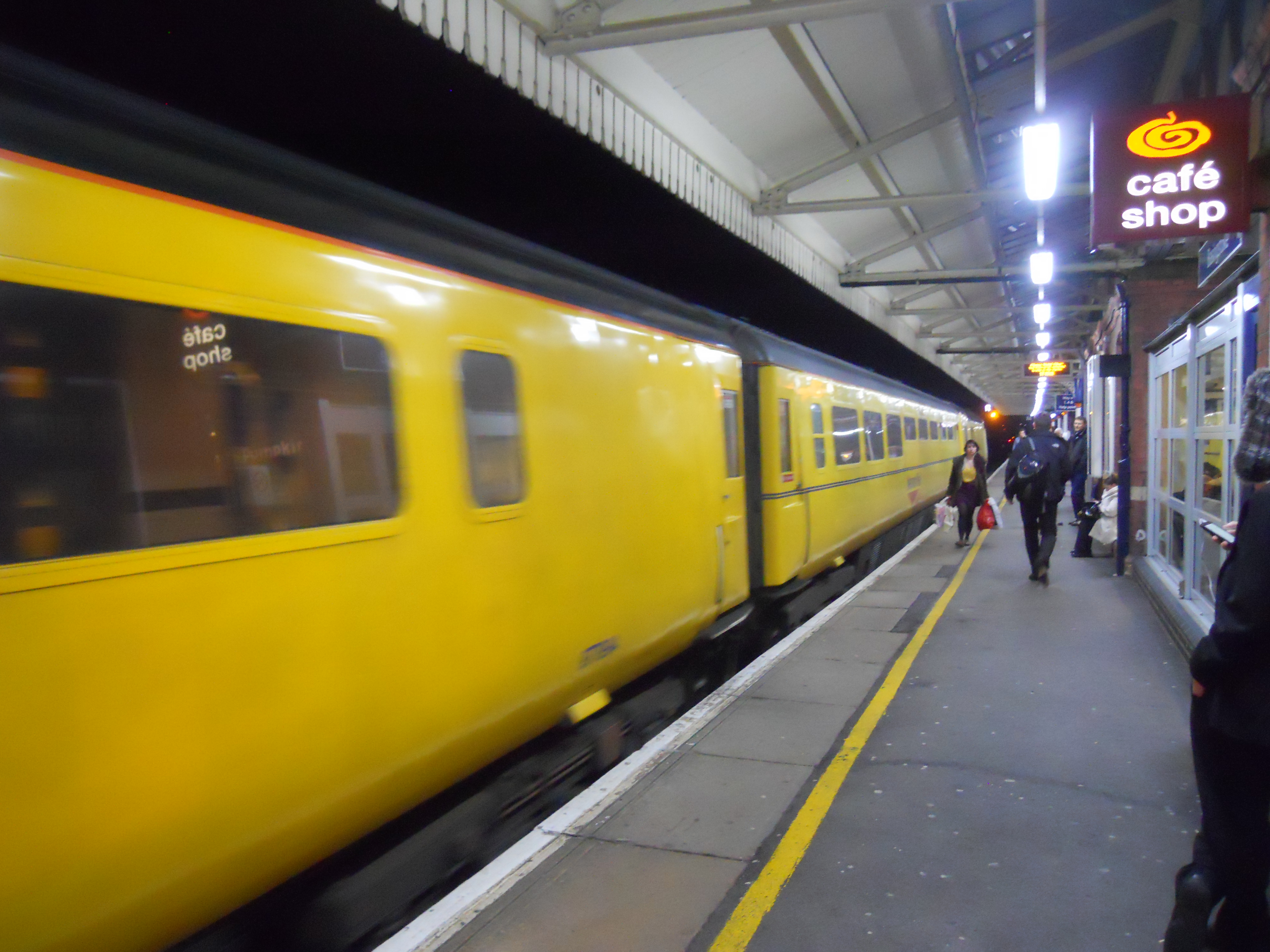
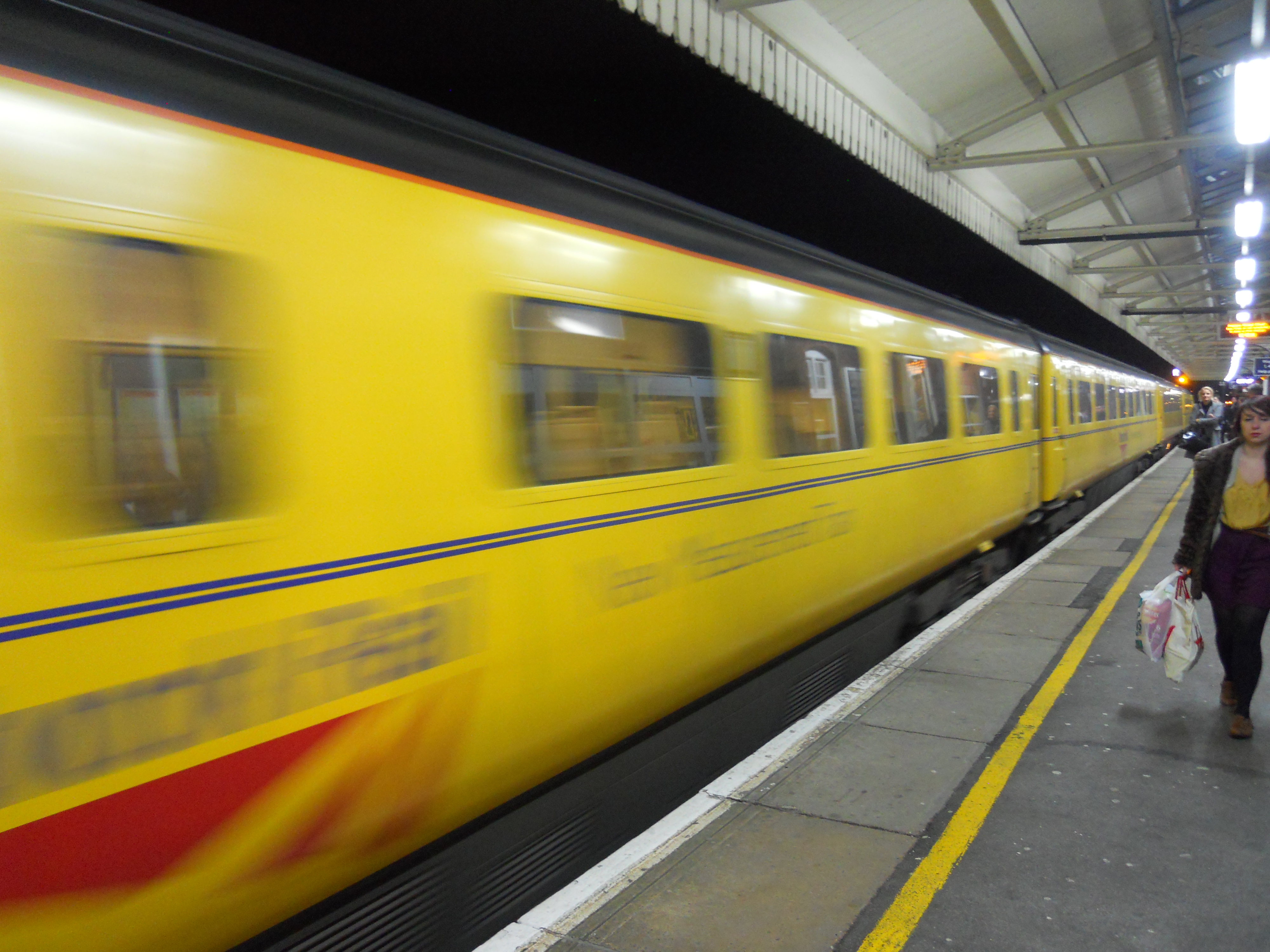
It looks like a High Speed Diesel Train, and it is actually a modified one called the New Measurement Train, which travels all over the network, checking track and electrification systems. Inspection is based on a thirteen week cycle. There is a detailed article on the train here in Construction News. And a video here.
You can see why it got its nickname.
In some ways it is a unique train, not only in the UK, but worldwide.
The Japanese and the French have similar trains for their high speed lines, but these are electrically powered, whereas the New Meaurement Train has two powerful diesel power cars. So as the British train is completely self contained, it can check any line in the UK, whether it is electrified or not. Where I saw it at Basingstoke, it was on a section of track, that uses third rail electrification.
As it is a High Speed Train, it can also be used at 200 kph on the East and West Coast Main Lines, thus testing them at their operational speeds.
Note that as the lines through the Channel Tunnel to London, are effectively built using French electrification standards, the French train is used to monitor those lines every two months. But it has to be diesel hauled through the tunnel.
It all goes to show that the High Speed Diesel Train will be laughing at us for a few decades yet.
What Do You Think Of It So Far, Isambard?
I was walking through Paddington station to the Hammersmith and City line, when I noticed that the High Speed Diesel Train named after Brunel was stationed under the newly-restored roof.
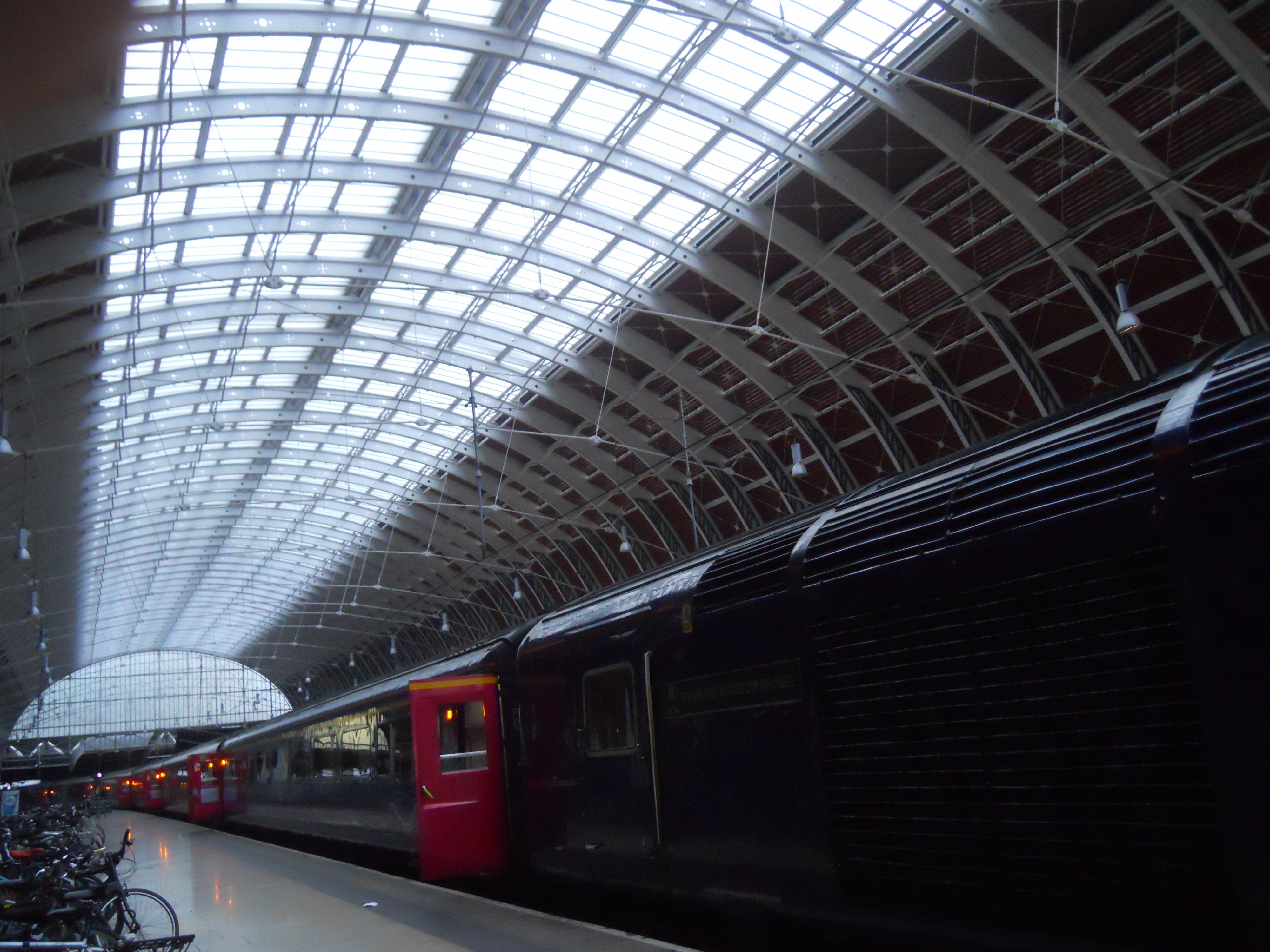
Isambard Kingdom Brunel at Paddington
I wonder what he would have thought of his restored London terminus.
He might have found the pink interior to the carriage doors a bit much, especially as the Great Western used chocolate and cream.
92 Clubs – Day 48 – Yeovil
They say you should leave the best to last, but this was not a case of that. But with Yeovil, it was much a case of saving the worst to last.
The only good bit was going to the town on a High Speed Diesel Train changing at Castle Cary for Yeovil Pen Mill.
Before I left, I looked up their web site to see how you get to the ground from the station. My eyes aren’t good, but look at this page, which gives directions to the ground. Trains, buses and walking aren’t even mentioned. So I sent the club an e-mail and of course they didn’t bother to reply. They don’t appear from the site to run a match-day bus either!
When I arrived at the station, I walked to the town centre, along a pleasant path in a country park, but once in the centre, despite plenty of signs to it, I couldn’t find the tourist information centre. I think when I did, it wasn’t signed and it was closed.
So in the end I took a taxi to the ground and got the driver to drop me at the station on the way back. I think we saw just one sign to the ground and that was when you could actually see Huish Park. So I just took a picture and retreated.

Huish Park, Yeovil
The only trouble was I had to wait ninety minutes for the train. But at least the station was worth seeing from an architectural point of view and had been well restored.
I was back at Paddington just before 16:30 to complete my odyssey.
In my travels, I have not found a town or football club with so little information for vistors. I shall not be going again. I certainly won’t have to look far for my dump of the week.
Am I On A Ferry?
I took this picture of myself by holding the camera, as far away as I could.
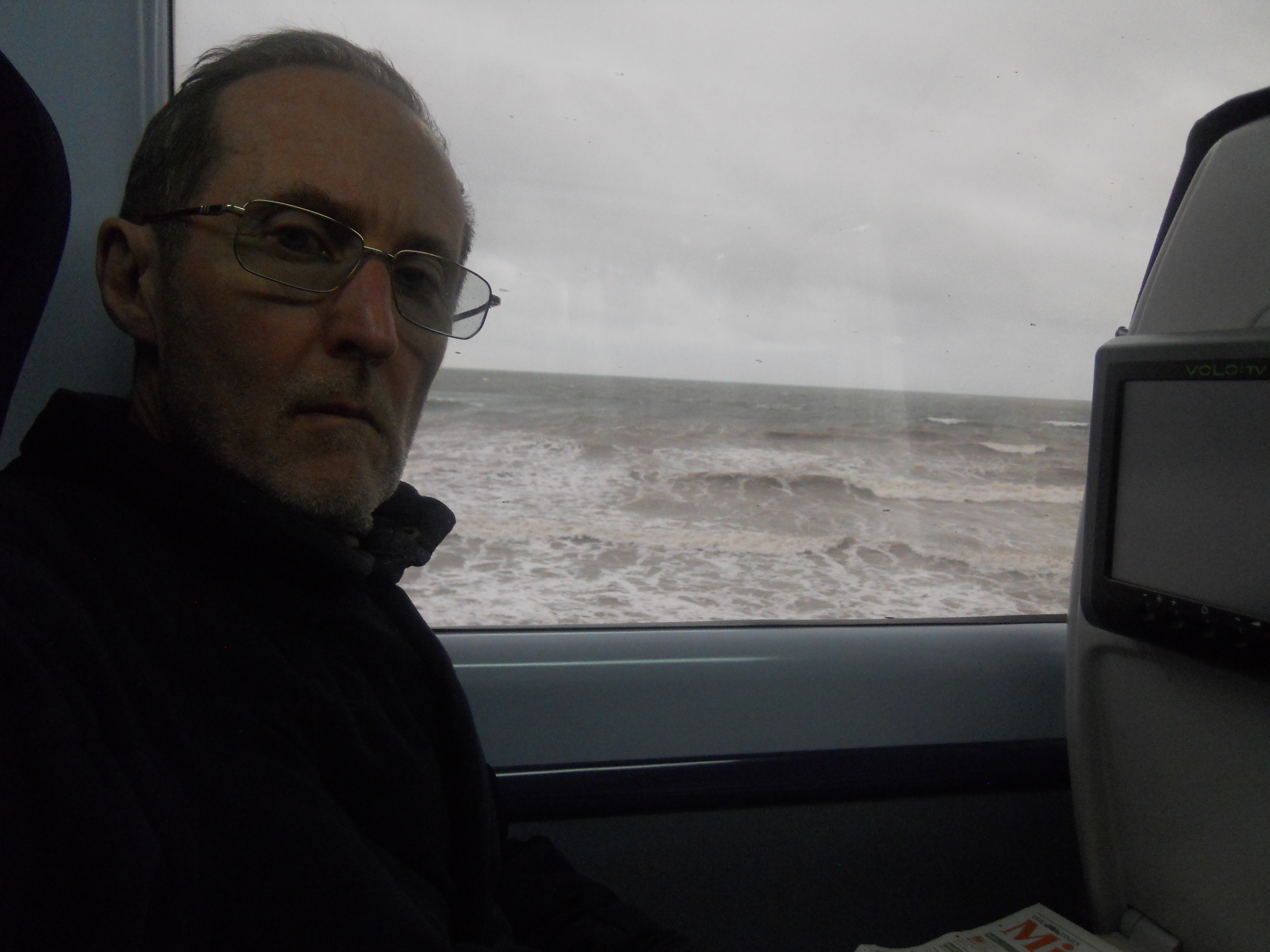
Am I On a Ferry?
But where am I? Judging by the water and the state of the sea, it could be on a cross channel ferry or perhaps one going to the Isle of Wight.
But remember, I’m visiting all 92 football grounds and teams are all on the mainland. I think the only football club that isn’t is Canvey Island, but they play in the Isthmian League.
So the picture was taken at Dawlish between Exeter and Newton Abbot from a High Speed Diesel Train. Trains are regularly sprayed with sea-water and being diesel powered it usually isn’t a problem. But if the line was electrified, who’s to say what will happen. After all, they’ve got forty years of running these trains in this sort of weather.
They couldn’t close the line, as what would they do when they needed iconic photographs of trains for publicity purposes!
Who’d have thought that the High Speed Diesel Train would live on because of the British weather?
92 Clubs – Day 40 – Swindon, Torquay, Tottenham
Swindon was surprisingly easy, as it was only about twenty minutes walk from the main railway station.

Swindon's County Ground
Or it will be when they finish the roadworks and sort out the pedestrian access around the station. There are a few maps and signs, but due to the location of the ground, the road signs are a great help once you get started in the right direction. They also have helpful distances on a lot of them.
I’d arrived on the 08:15 from London at 09:13 and had plenty of time to catch the 10:55 direct train to Torquay. I was surprised it was a direct train, but even more surprised that it was a High Speed Diesel Train on its way from Paddington to Paignton, via Swindon, Bath, Bristol, Weston-super-Mare, Exeter and Torquay. I hope that after electrification of the main line to Bristol and Cardiff, that they use these trains to run lots of holiday trains to the West Country.
I was meeting an old friend in Torquay, so I took a taxi to Torquay‘s football ground. I didn’t see one signpost.
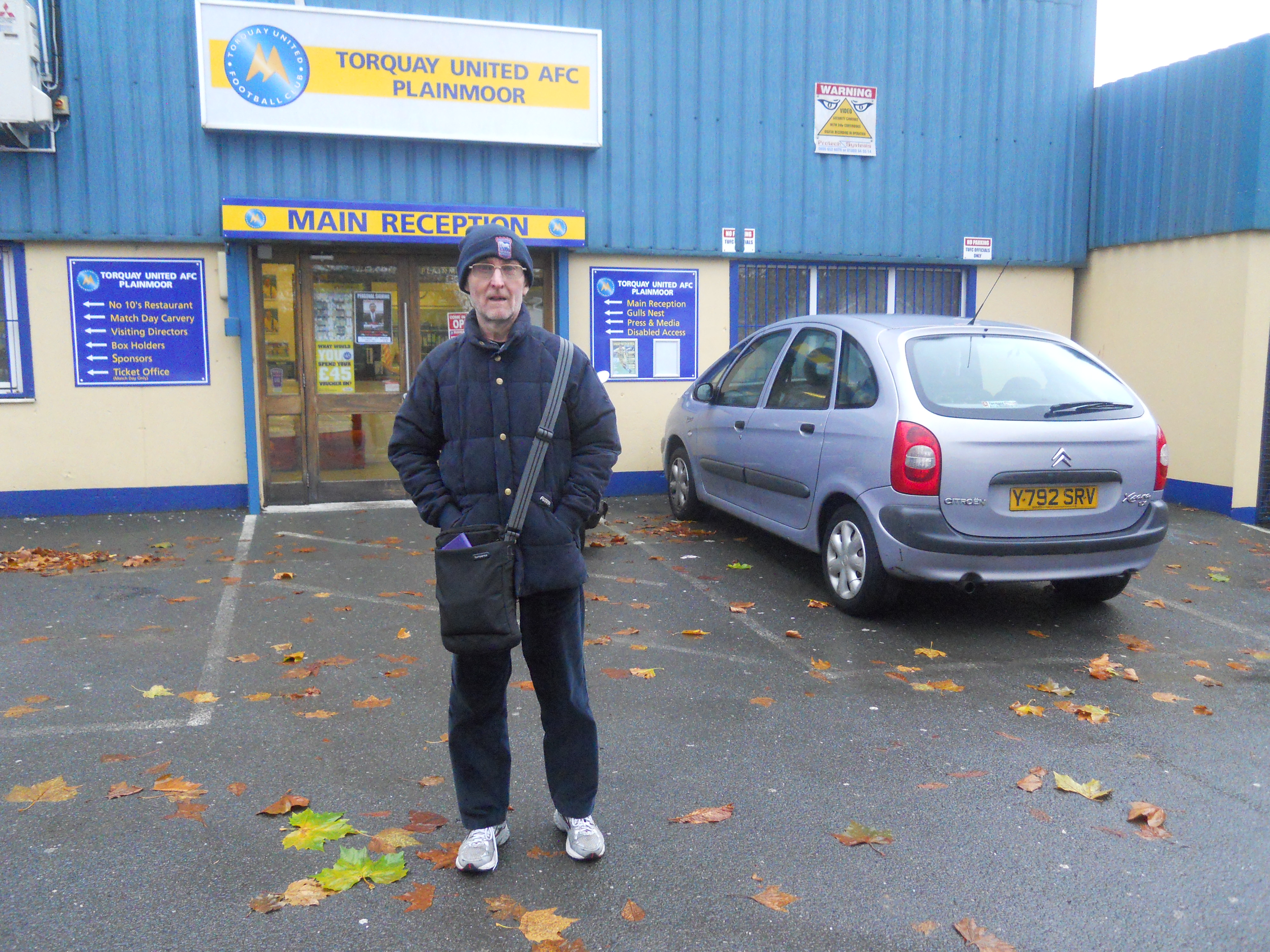
Outside Plainmoor
I certainly needed the coat, as it wasn’t weather typical of the English Riviera. Afterwards it was back to the station to catch a train to London.
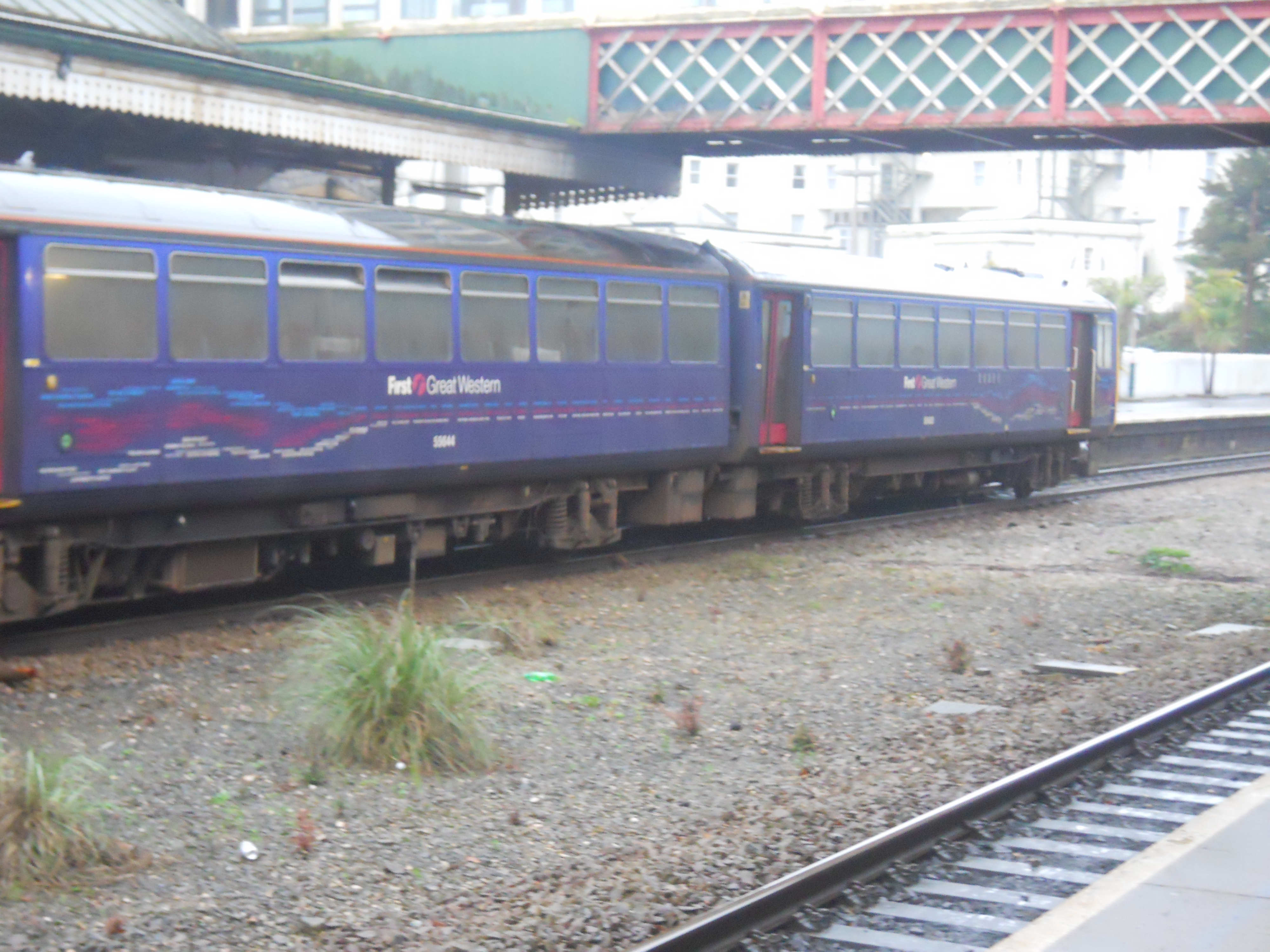
A Pacer at Torquay
Unfortunately, it was a Pacer to Newton Abbot for the High Speed Diesel Train to London, where I arrived soon after 18:00.
I still had time to visit Tottenham in the dark, by taking the train to White Hart Lane.
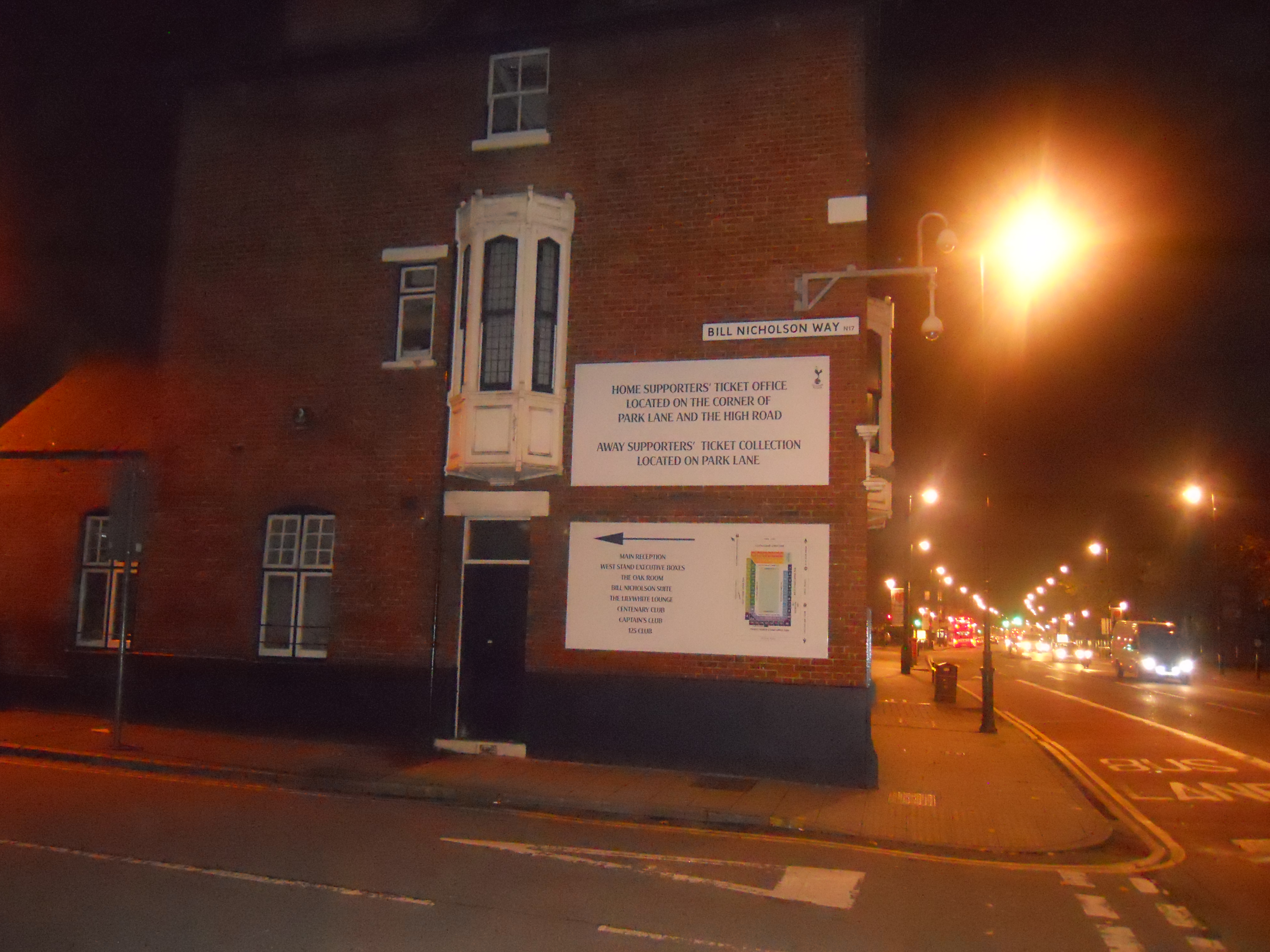
The Entrance to White Hart Lane
Afterwards, I was able to get a bus back from the ground to close to my house. Except for Arsenal, where I just walk, it is the easiest ground to get to from my home.
In some ways it was a day of three lessons.
- The High Speed Diesel Trains used on West Country services are a superb asset to the railways. Passengers like them and in some ways they are irreplaceable in serving the far-flung parts of the west and the Scottish Highlands. They may be forty years old, but engineers know how to keep them going for a few more years yet. Many of them will outlive me! I suspect too, that there is a strong cost benefit in keeping them running, rather than electrifying all the lines, where they run.
- The Pacers still used in various parts of the country are a disgrace. To make matters worse, they were a disgrace when they were built. They should be replaced with a modern train as soon as possible. The train used on the Overground from Gospel Oak to Barking would probably be an ideal replacement. And they would be built in Derby!
- The train from Liverpool Street to White Hart Lane station may have been thirty years old, but it had been well-refurbished. On that line it is the stations that are a disgrace which deny access to no-one but the fit to the railway. I wouldn’t like to try to tranport a baby in a buggy either on many of the stations. So perhaps, one of the priorities after the Tpttenham riots, should be to fix those stations.
92 Clubs – Day 27 – Oxford, Peterborough, Plymouth
If I’d chosen different trains to go to Oxford, this day could have been subtitled a day of six HSTs or Inter City 125s, but time was tight, if I was to get back to London at a reasonable hour.
Oxford, must surely be one of the most difficult stadia to get to from the town centre, even if you have a car. And if you do, you have to actually drive along the by-pass where there are queues of traffic. Of all the taxis I have taken to get to and from grounds, Oxford was by far the most expesive.

Oxford United’s Kassam Stadium
Oxford‘s stadium is just a rather anonymous pile stuck by the Science Park. I will not be sad, if I never ever go there again. It should be said, that Oxford is not noted for its wonderful traffic systems, as every time I go, it always seems to be totally gridlocked. A couple of years ago, I went there to play real tennis and walked to the court from the station. It would appear that or a bicycle is the only sane way to get about. If ever a city needed a second or parkway station it is Oxford.
Peterborough was a very different kettle of fish and it was just a short run in a High Speed Train to the city and then about 15 minutes walk.

Peterborough’s London Road Stadium
I should say that the walk could be made easier, but I suspect that as the ground is still not finished, that this will come later.
I was soon back on another HST to Kings Cross and then it was on the Circle Line to Paddington for Plymouth.
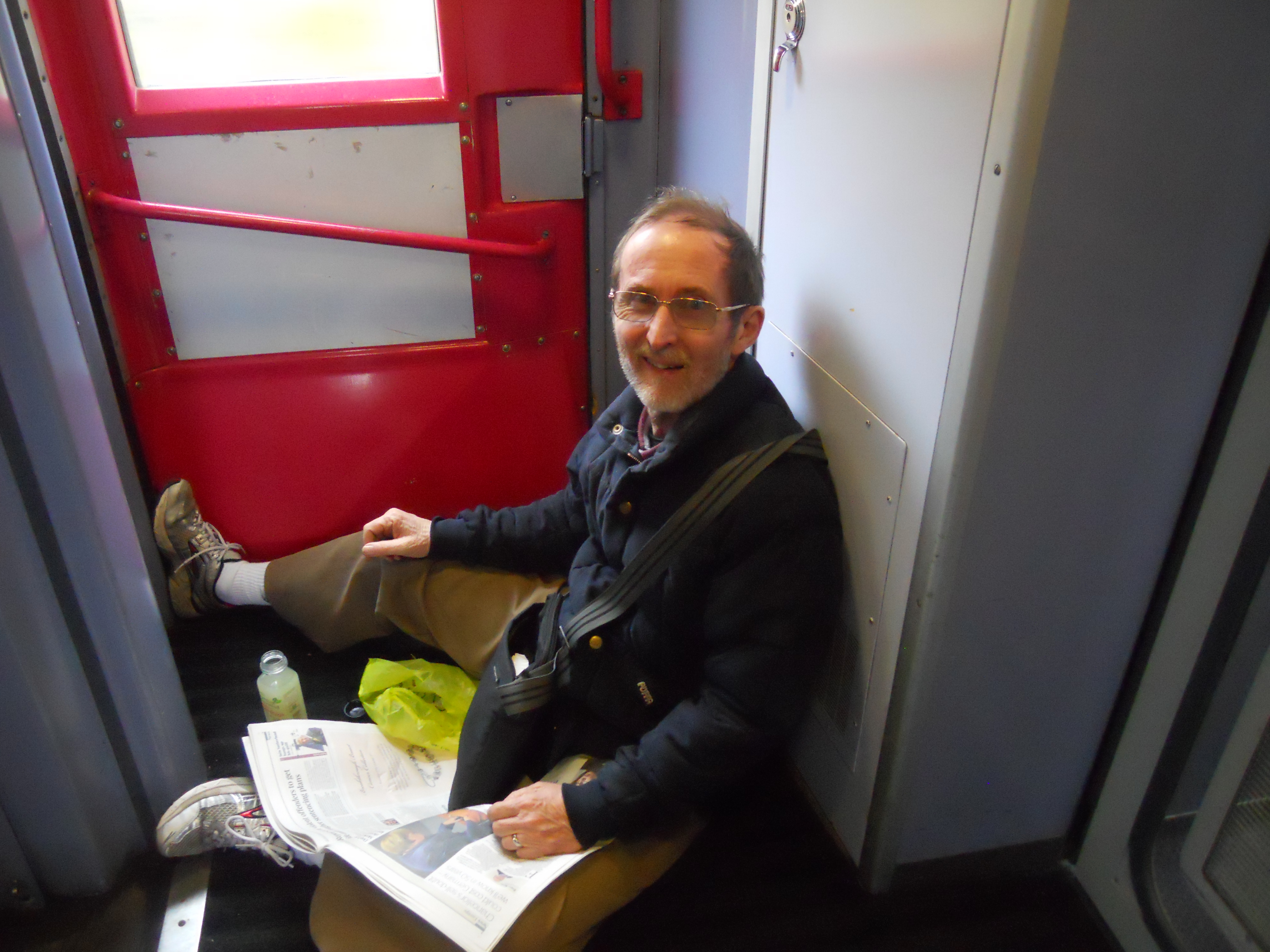
Sitting in Style on a First Great Western HST
I had been unable to get a seat online, so I just bought an Off Peak Return and made the best of what was available, as the picture shows.
I should say that it wasn’t that uncomfortable and I got a seat from Taunton, when the train started to clear. I wouldn’t like to sit like that in a Pendolino, as they certainly don’t ride like forty-year old HSTs.
It did look like it was all going to go pear-shaped, as the train had been delayed at Paddington for about fifteen minutes by a fault and this meant it had got stuck behind a stopping train along the Devon Coast. We were nearly thirty minutes late at Totnes and it was starting to look like I’d miss the 18:00 back to London. But then driver got a clear line and let the HST go, so much so that it was only twenty minutes late at Plymouth, giving me just ten minutes to get to the stadium and back.
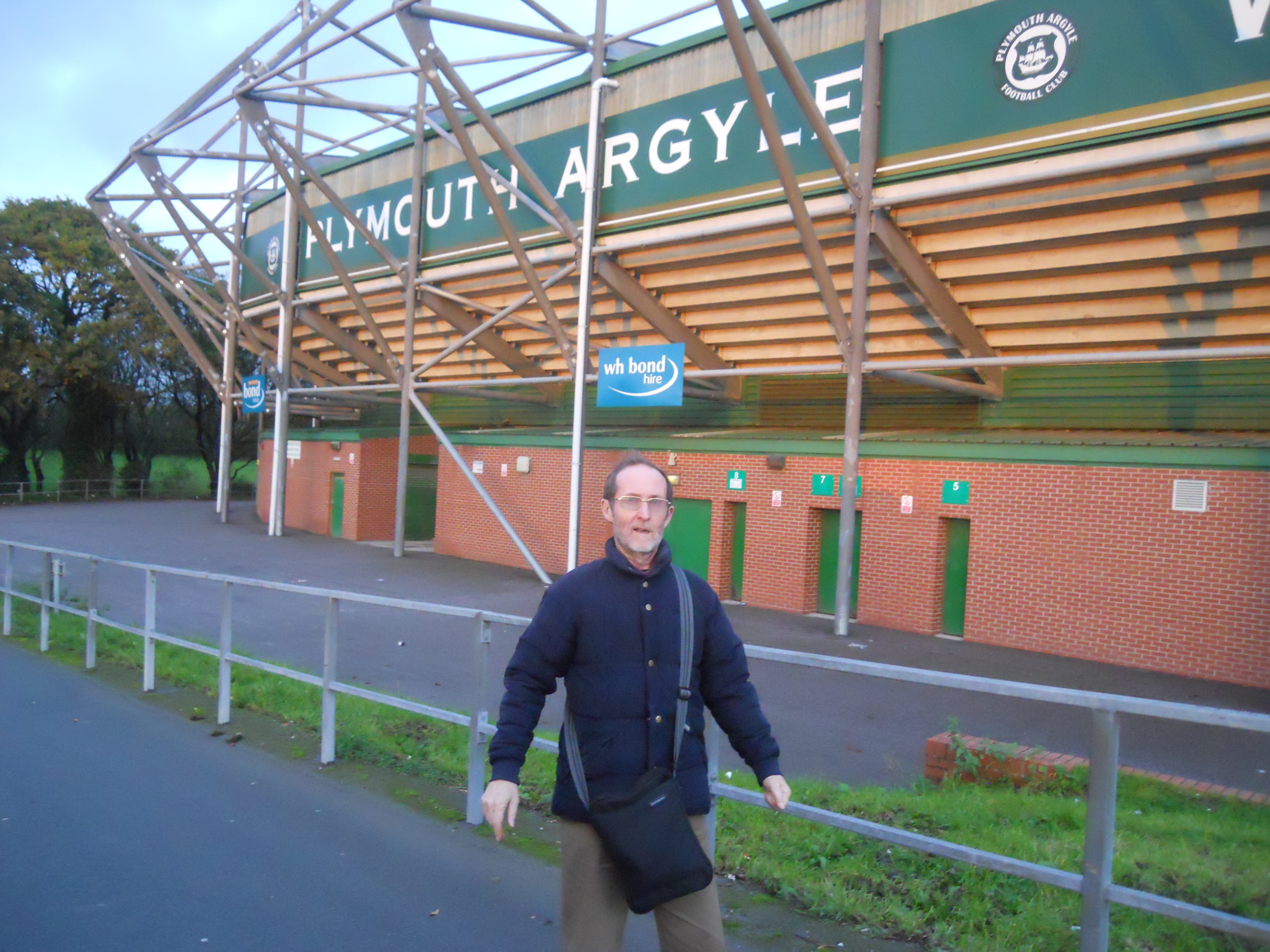
Outside Home Park
As you can see I made it.
I did get a seat all the way back, but the train was late due to someone falling under a train at Reading West station.
But if the day did prove one thing, it was that the stopgap Intercity 125 is a superb train. But then I know that, having been through the Highlands at 90 mph.
There are plans to make sure these trains continue for a few years yet. Who’s to say that in the 2060s, they won’t be a tourist attraction in their own right, as they speed passengers to the West Country. Probably to the consternation of politicians, who can find all sorts of reasons to not use a what would be then be a nearly ninety year old train. After all, I doubt that electrifying this line to Plymouth will ever be done.
Anastasia the Ambassador at Paddington
First Great Western have been one of the better train companies on this journey. On my way to Hereford yesterday, I was accosted by, Anastasia, one of their Customer Ambassadors at Paddington, whilst waiting for the train.
I said how pleased I was with the company, adding that I hope it wouldn’t upset the journey I was about to do. It didn’t! We then got talking about Inter City 125’s and how she and the customers preferred them. She also said, that quite a few people booked so they travelled in one.
All those proponents of the IEP would not have warmed to the conversations.
THe Inter City 125s will be replaced on the main line, but they’ll outlive most of us!
Three Hours on a Train
I wanted to see Ipswich play the first match of the season at Bristol yesterday and instead of going just for the say, went to see a friend in Plymouth on Friday.
I arrived at a very crowded Paddington in mid-morning for the 11:06 to Plymouth. It was crowded, with the usual wheeled cases being trailed everywhere. Do these selfish people realise that their mobile obstacles are a nuisance to anyone with limited movement or vision? I’m alright now and to prove a point, I had everything I needed in my new Samsonite bag.
I was carrying my gluten-free sandwiches and a bottle of wine for my friends, from Marks and Spencer in a carrier bag, but as I’d arrived with plenty of time, I walked straight on to the Standard Class Quiet Coach nto the window seat I’d booked. My two bags and coat spent most of the journey on the overhead coat rack. I only needed to disturb my companion once to get my lunch down and for another to get a coffee and take a toilet break. I should say that I was surrounded by a family of about six, all of whom spent most of the time reading and playing on a laptop. Their mother was dispensing a real picnic, with lots of parma ham, salad and fruit. Surely, they were showing how you use a Quiet Car!
In fact, the whole car was mostly quiet with not even a crying baby and there were some small toddlers there. The only problem was that some had blocked the aisle with heavy luggage. Those going to Plymouth seemed to have used the Baggage Car as the staff had asked them to.
I made one mistake on the journey. Although, I was sitting by the left hand window, I forgot to get my camera out to take shots of the train as it sped along the Exeter to Plymouth line between Exeter and Newton Abbot.
At Plymouth, I got ff the train pretty fresh, which is more than could be said as I got off my flight to Athens on easyJet.
Both journeys are about the same time, but give me the train anytime. Especially in a forty-year-old, but newly refurbished IC125.
From London and Crewe to Dublin By Train and Ferry
Ireland has an economic problem, as is well known. Commentators will argue the various reasons, but something that doesn’t help is that getting from Great Britain to Eire is not as easy as to get from Birmingham to Scotland. There are lots of flights, but they are not convenient or acceptable for everyone who wants to travel.
If you go to Dublin by train and ferry there is one train at 9:10 in the morning from Euston, that gets you to Dublin at 17:15, which is a journey time of eight hours and five minutes. I looked for tomorrow and the fare is only £32 one way. But there is only one service during the day, with another overnight.
So how fast could a service be done if the line was electrified all the way to Holyhead? Crewe from Euston can be done in two hours quite easily and it is only 84 miles from Crewe to Holyhead. The fastest services now take just short of four hours. but the trains are not electric or have the smooth ride of an IC125. The fast ferries take two hours for the crossing, but the larger slower ones take three hours fifteen minutes.
If we assume that Crewe to Holyhead can be done at a similar speed as Liverpool Street to Norwich, it would appear that a time of about one hour ten minutes could be obtained on this part of the route. So this would mean a time from London of three hours ten minutes in a smooth modern electric train. If this could be paired with a fast ferry this could mean a time of under five and a half hours if the sea conditions were good enough.
But this is more than about electrifying the North Wales Coast line, which it would appear that the Welsh Assembly would probably like to do. It is about kick starting the Irish economy. And that of North Wales too!
So surely instead of spending billions of euros propping the Irish up, wouldn’t it be better to spend use of that money to connect Eire to Europe more efficiently. After all, railwise, despite what some might believe, the UK is actually part of Europe.
It would be 84 miles of electrification and perhaps a subsidy to the Holyhead to Dublin ferries to make sure that the fast service was every three hours or so. Surely, that would be a more affordable option, as it would also benefit North Wales, which is not one of the more prosperous parts of the EU.
But it is not just about London to North Wales and on to Dublin. Properly built the line would also connect Birmingham, Liverpool and Manchester to North Wales. As an example Liverpool to Holyhead would be under ninety minutes, which is the magic time that makes day trips easy. I also think it would make trips between North and South Wales quicker, but it would probably mean a change at either Chester or Shrewbury.
There are also other issues on the horizon. The major sources of employment on Anglesey, are the nuclear power station at Wylfa and the aluminium smelter. Who knows what will happen in the next few years? But if Holyhead and Anglesey had a first class electrified rail line to the rest of both Wales and the UK, it would help to attract long term jobs. It would of course help tourism and would probably make the University of Bangor even better.
 The Anonymous Widower