Torotrak Share Price Rises
On of my Google Alerts picked up this article from www.financialmagazin.com which is entitled How Analysts Feel About Torotrak plc After Today’s Huge Increase?
Torotrak is an engineering company behind some kinetic energy recovery systems, that are seen in motor sport like Formula One. But the technology also has applications in the general motor industry to save fuel and we all know the hole VW has dug for itself.
But could the rise in the share price be driver by the big event happening tomorrow – The Chancellor’s Autumn Statement?
Probably not, but Torotrak’s system might be part of a suitable energy storage system for an Independently Powered Electrical Multiple Unit or IPEMU.
One of George Osborne’s biggest problems is funding the electrification of the railways, as if we are to modernise this country, then most rail lines need to be electrified or at least provided with modern trains.
I believe that the IPEMU is one solution to reduce costs, by avoiding the horrendous problems and costs of putting up the wires.
So will George go for it?
North Yorkshire Proposes Rail Expansion
It surprised me when I read that North Yorkshire was the largest county in England. But thinking about it, there can’t be many others of a similar size.
This document on the coumty’s web site is entitled North Yorkshire County Council Local Transport Plan 2016 – 2045 and it lays out, what it says on the fitrst page.
It has these two sections about rail.
Rail Line Re-openings
The County Council supports, in principle, proposals for rail reopening in the County, on identified routes such as Skipton to Colne and Harrogate to Ripon / Northallerton.
In the past many of the line re-openings were considered to be “local schemes” and therefore required local funding. The Council will only actively support opportunities for line re-openings where these are demonstrated as of National or pan North of England importance. National or pan North strategic importance will be assessed on the basis of the contribution to network resilience, improved strategic connectivity, the delivery of greater capacity or improved rail freight opportunities.
In all cases North Yorkshire County Council will only work with railway industry and local stakeholders where there is common agreement to develop a proposal.
Future of Rail
On the East Coast Main Line, over £240m is being spent by Network Rail on infrastructure, increasing capacity, reducing journey times and improving reliability. With investment in new InterCity Express trains and the franchise holder’s commitment to further investment, including a new timetable with 6 direct services between Harrogate and London, the route is set to be transformed by 2020.
The re-franchising for both the Northern and TransPennine services has produced invitations to tender that are transformational. In North Yorkshire this will result in many routes having increased frequencies, additional Sunday services, new or modernised trains and better customer focus. With greater local input into the management and development of the franchises through Rail North it is felt that we can achieve the rail services that are needed for the North.
High Speed connectivity with proposals for HS2 network linking London –Midlands– Sheffield-Leeds–York and the North East in the early 2030s and the work of Transport for the North on HS3, providing fast frequent and reliable links between Northern Cities provides opportunities now for the Council to develop its plans for good connectivity for North Yorkshire to and within these networks.
Private investment such as the Potash Mine near Whitby (improvements planned for the rail service on the Esk Valley) along with other planned housing and economic growth in North Yorkshire all combine to facilitate growth in rail.
The County Council remains committed to ensuring North Yorkshire benefits from the growth and investment in our railways and will continue to influence decisions to achieve the best outcome for the County
The Council is recommending re-opening these two lines.
Skipton to Colne
Skipton station is a station at the western end of the electrified lines to and through Leeds. There are several plans for the future, involving direct trains to London and more frequent services to and from Leeds. There is also an aspiration of the Embsay and Bolton Abbey Railway to extend into Skipton.
Colne station is at the eastern end of the partly single-track East Lancashire Line, with services all the way to Blackpool South station via Burnley, Blackburn and Preston.
The two stations used to be connected until 1970, when it was closed, despite not being recommended for such by Beeching.
An organisation called Skipton-East Lancashire Rail Action Partnership is pressing for the line to be reopened. This map shows the rail lines in the area.
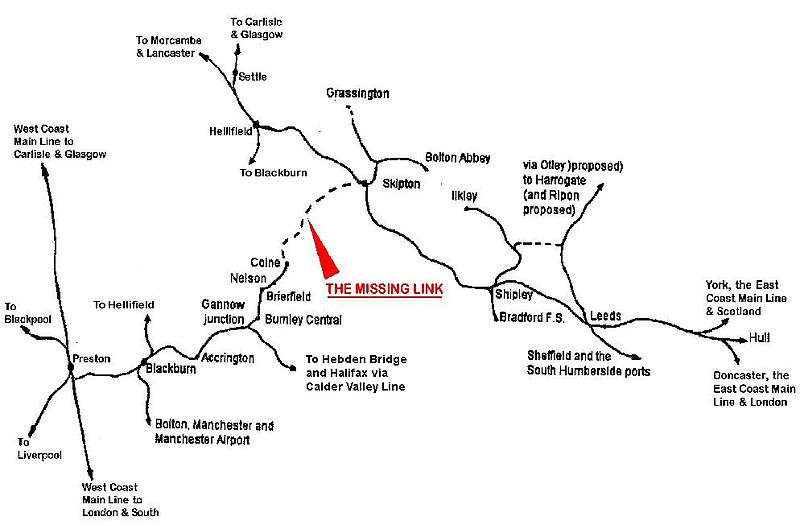
Skipton To Colne
Reopening this just under twelve miles length of track could bring a lot of benefits.
Most of the trackbed hasn’t been built on, but look at this Google Map of Colne station.
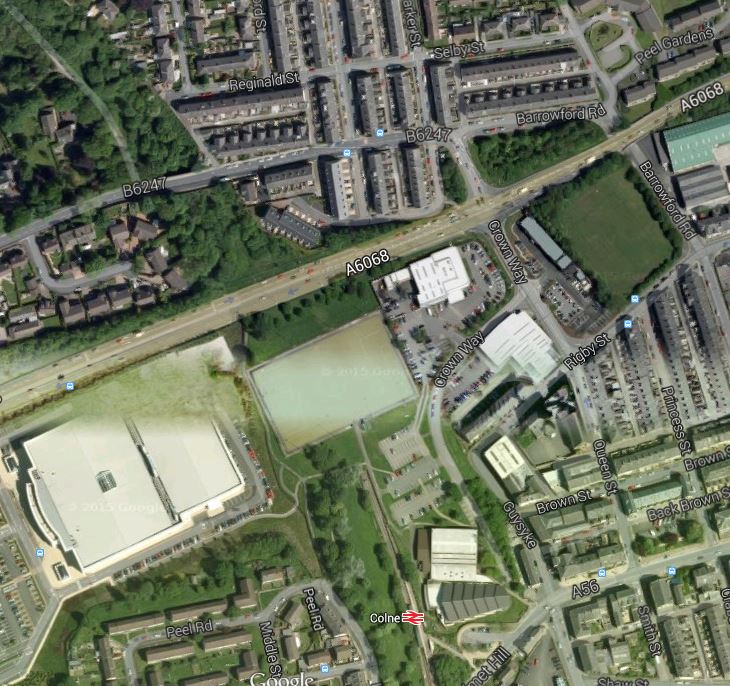
Colne Station
Note how the dual-carriageway, A6068 and a football pitch have been built, where any link from Colne would probably go.
So there would be a need for an expensive bridge. But as the line to Colne is only single-track, I suspect that the bridge could get away with one track, providing there was a passing loop at Colne station.
Having seen tram-trains in Germany, I know what the Germans would do and that is run tram-trains from the Blackpool tramway across Lancashire as trains and then over a tramway to Skipton. The advantage would be simpler infrastructure and lower costs.
But we have our own solution in the shape of the IPEMU, which could charge its batteries at Skipton and Preston and use bateries on any unelectrified line in between. The advantage would be no wires and possibly only a single track across the Pennines.
But if it is decided to create a link between Skipton and Colne, the railway technology developments of the last few years, could make the link more affordable.
Harrogate to Northallerton
Harrogate station has local services on the Harrogate Line to Leeds and York and some long-distance services to London and the South. The lines through the station are not electrified.
Northallerton station is on the East Coast Main Line
The plans would reopen the section north of Harrogate of the Leeds and Northallerton Railway. This would reconnect the cathedral city of Ripon to the rail network.
Under the Wikipedia entry for the former Ripon station, this is said.
Today much of the route of the line through the city is now a relief road and although the former station still stands, it is now surrounded by a new housing development. The issue remains a significant one in local politics and there are movements wanting to restore the line. Reports suggest the reopening of a line between Ripon and Harrogate railway station would be economically viable, costing £40 million and could initially attract 1,200 passengers a day, rising to 2,700. Campaigners call on MPs to restore Ripon railway link.
On the face of it, it might appear a good plan, but there are still questions to be answered.
- Ripon would need a new route and probably a parkway station.
- Leeds to Northallerton is under sixty miles and is electrified at both ends, so a passenger service could be run by IPEMUs.
- Would the line be double-track and electrified?
- Would the line be capable of being used as a diversion route for the East Coast Main Line?
- Would freight trains be encouraged to use the line to relieve pressure on the busy East Coast Main Line?
I’ll repeat what the report says about the East Coast Main Line..
On the East Coast Main Line, over £240m is being spent by Network Rail on infrastructure, increasing capacity, reducing journey times and improving reliability. With investment in new InterCity Express trains and the franchise holder’s commitment to further investment, including a new timetable with 6 direct services between Harrogate and London, the route is set to be transformed by 2020.
It is probably true to say, that what happens on the East Coast Main Line is going to determine, whether the Harrogate to Northallerton Line gets reopened.
This article in the Northern Echo is entitled £230m plan to reinstate key North railway line receives major boost details a lot more about the project and the Council’s enthusiasm.
Improved Connectivity
This is always an aim of Councils and reports like that commissioned by North Yorkshire County Council. These come to mind.
Esk Valley Line
The only specific mentioned is that York Potash might be funding improvements to the Esk Valley Line.
In An Alternative Approach To Provide A Local Metro Network, I put forward the concept of using IPEMU trains with minimal electrification to dvelop a Tees Valley Metro.
I believe with some small amount of electrification at Middlesbrough, the Tees Valley would get its Metro and Whitby an improved service of new electric trains.
Leeds to Sunderland
Reopening an electrified Harrogate to Northallerton line, with additional electrification from Leeds to York on the Harrogate Line and Northallerton to Middlesborough on the Northallerton to Eaglescliffe Line, would open up the possibility of extending services between London and Leeds to Harrogate, Ripon, Northallerton, Middlesbrough and Sunderland without using the East Coast Main Line north of Doncaster.
Again with minimal electrification, the service could be run by 110 mph IPEMUs.
Sorting Northallerton
Northallerton station is in a nest of level crossings. Removing these is probably high up Network Rail’s list of must-do projects, but it strokes me that in the future, if all plans for the East Coast Main Line, the Northallerton to Harrogate Line and the various electrification schemes in the area come to pass, then Northallerton station and the tracks leading away from it, need a very strong sorting out.
Conclusion
To me, the most important thing about this report from North Yorkshire is that the council is looking seriously at transport options for the future.
An Advantage Of IPEMU Trains
My correspondent from the Corbedian Republic Of North Islington, has visited family in Newcastle over the weekend.
But things coming home didn’t go to plan and I received this text.
Our train dropped it’s pantograph.
Driver can’t put it back and train has been declared a failure. I quote. Now waiting to be rescued from Doncaster.
Later I received another text.
Train guard and driver not in touch. Could turn long and silly!
It all got me thinking!
As the train dropped a pantograph it was probably an InterCity 225 and not a diesel InterCity 125, which are built to Carry On Regardless. When I travel North from Kings Cross, I’ll look to see if the train is going to Aberdeen or Inverness, which means it will be a 125, with a reliable lump of a massive diesel engine front and back!
Incidentally, I found this extract in the Wikipedia entry for the Class 91 locomotive that pulls the InterCity 225.
In November 2012, unit 91114 had a second pantograph added as a pilot project operated jointly by Eversholt Rail Group, East Coast, ESG, Wabtec Rail and Brecknell-Willis. The new design uses the same mounting positions as a conventional pantograph but pairs two pantograph arms in an opposing configuration. If there is an ADD (Automatic Dropping Device) activation or the pantograph becomes detached, the train can keep going, so the system provides redundancy in the event of a pantograph/OLE failure.
So it could be that Class 91s regularly drop pantographs like whores drop their drawers!
As far as I can find out, only one locomotive has been fitted with the new pantograph.
But in future, I have a feeling that this type of problem could give a big advantage to an IPEMU train, which has on-board energy storage.
As it rolls along, it will be charging the battery, so if the pantograph fails, it will have a full battery and should be able to run for perhaps another fifty miles or so to a convenient station.
Having two independent systems, is not a bad way of improving reliability.
Is This Another Line For A Great Western Railway IPEMU?
Nothing much has happened since I wrote Rumours Of Battery Powered Trains, which said that a report had appeared in Modern Railways saying that Great Western Railway was looking at Class 387 IPEMUs.
But I did find this article on the Get Reading web site entitled Green Park Station may open without any trains stopping there.
Apparently, the problem is that diesel multiple units can’t accelerate fast enough to keep to the schedule with the stop at Reading Green Park station, but electric ones can.
As it appears the wires won’t go up in time for the station’s opening of 2018, then the trains won’t be electric.
Unless of course an IPEMU could stick to the schedule. It would certainly have a lot of power in the battery, as Reading to Basingstoke must be less than twenty miles and it’s electrified at both ends.
The line is a classic for use of IPEMU technology.
Is The Cavalry Arriving?
I can’t understand this article on Global Rail News entitled Porterbrook buys more trains from Bombardier. This is said.
Rolling stock company (ROSCO) Porterbrook Leasing has announced that it will purchase an additional 80 Class 387 vehicles from Bombardier.
This deal is in addition to the 256 vehicles in this class already on order. Delivery from Bombardier’s Derby factory will take place between October 2016 and June 2017.
Now I’ve ridden in Class 387 trains many times and they are a very good 110 mph electric multiple unit. In a Future section of their Wikipedia entry this is said.
Once the 387/1s are released from Thameslink they will be cascaded to the Great Western Railway franchise. It will also receive eight new Class 387s, which will be built after the 387/2 order for Gatwick Express. They will replace Class 165 and 166 diesel multiple units on the newly electrified Great Western Main Line from London Paddington to Oxford and Bedwyn. This is scheduled for December 2016, however delays may defer this.
In November 2015, Porterbrook Leasing announced it had ordered a further a total of eighty additional Class 387 vehicles to act as a buffer stock of trains guarding against future demand for electric units, with a number of operators already expressing interest in obtaining the use of them.
At present, the trains are arranged in four-car sets and delivered or on order are 29 for Thameslink, which will be released as the Class 700 trains arrive, 8 for Great Western Railway and now 20 for Porterbrook. In addition there are also another 27 for the Gatwick Express, which can be ignored in this analysis.
So that means we have a total of fifty-seven four-car electric trains to accommodate on the UK rail network. There is one problem on the GWR, where 37 would have been used and that is that the electrification isn’t complete.
So they’ll be parked in sidings!
A couple of months ago, Modern Railways talked about rumours that the extra eight Class 387 trains for the GWR would be IPEMUs. I wrote about it in Rumours Of Battery Powered Trains.
In early 2014, I rode the prototype IPEMU, which was based on a Class 379 train between Manningtree and Harwich.
I was impressed and the prototype is now back in service as a regular Class 379 train.
So it would appear that converting Class 379 trains from standard to IPEMU is not an exercise that needs to completely rebuild the train. Incidentally, Bombardier have told me, that in the upcoming Aventra train, you just add and remove battery modules as required.
These facts lead me to speculate that a cunning plan is emerging.
Consider the following.
- Why would a professional company like Porterbrook buy trains on spec, just to have them sit in sidings? If that was their plan, then imagine the headlines in the Mirror and Mail!
- Changing production at Bombardier from Electrostar to Aventra will introduce a gap in the production of trains. Look at the gap, when Ford bring in a new Mondeo, for example.
- Bombardier has probably got the production of Electrostars down to a fine art, given the numbers of Class 375s, 377s, 378, 379s and 387s, they’ve produced in recent years. So if someone will order Electrostars, they’ll build them!
- Bombardier have proven that the concept of an IPEMU works.
- Everybody is getting fed-up with Network Rail’s performance, from David Cameron and George Osborne down to the passenger on the crowded Leeds-Manchester train.
- There is a need to get rid of a lot of tuly dreadful diesel trains.
- As the Class 700 trains arrive from Siemens, could the replaced Class 387 train be converted to an IPEMU immediately? This would enable the cascade of some diesel trains . It would just be an amusing game of musical trains!
- The new Hitachi factory is coming on stream to deliver Class 800/801 trains. Luckily they can be fitted with diesel engines, but we don’t need too many more high speed diesel trains. There have been rumours that Hitachi have been asked to dliver more electro-diesel version to Great Western.
If you look at all this together we end up with an oversupply of electric trains and a chronic shortage of quality diesel trains.
But suppose that Bombardier is building a virtually new production line for the very different Aventra.
Would it be economic for them to continue building Electrostars at a rate of several a month? You bet it will!
And would it be feasible to produce these trains as IPEMU variants as these could then be used to bridge the gaps in electrification on the TransPennine and Midland Main Lines. Using IPEMUs on these lines would probably release some quality Class 185 diesel trains.
They could also be used to release quality diesel units by running on routes like.
- Gospel Oak to Barking – Class 172 trains leased from Angel Trains
- Marshlink Line – Class 171 trains leased from Porterbrook
- Uckfield Line – Class 171 trains leased from Porterbrook
These three lines alone, would release eighteen two car and six four-car high quality diesel multiple units.
Note the following.
- The leasing company for the Class 171 trains is Porterbrook.
- Southern already operate Class 387 trains.
- Southern gets an all-electric fleet if they replsce the Class 171 trains with Class 387 trains.
So will Porterbrook swap the trains here, to release the Class 171s to serve elsewhere? If it’s profitable of course they will.
It almost looks like you get a free quality diesel train with each new electric IPEMU, without having the expense and inconvenience of putting up the wires or laying more third rail.
Another article in Rail Magazine about the Porterbrook order says this about who might receive the trains.
A number of parties have already expressed an interest in leasing this new fleet, notably Rail for London but also established operators and prospective bidders of upcoming franchises
Rail for London is one of TfL’s operating companies.
Incidentally, I was at Upper Holloway station today and took this picture of a bridge that is being replaced by 2017.
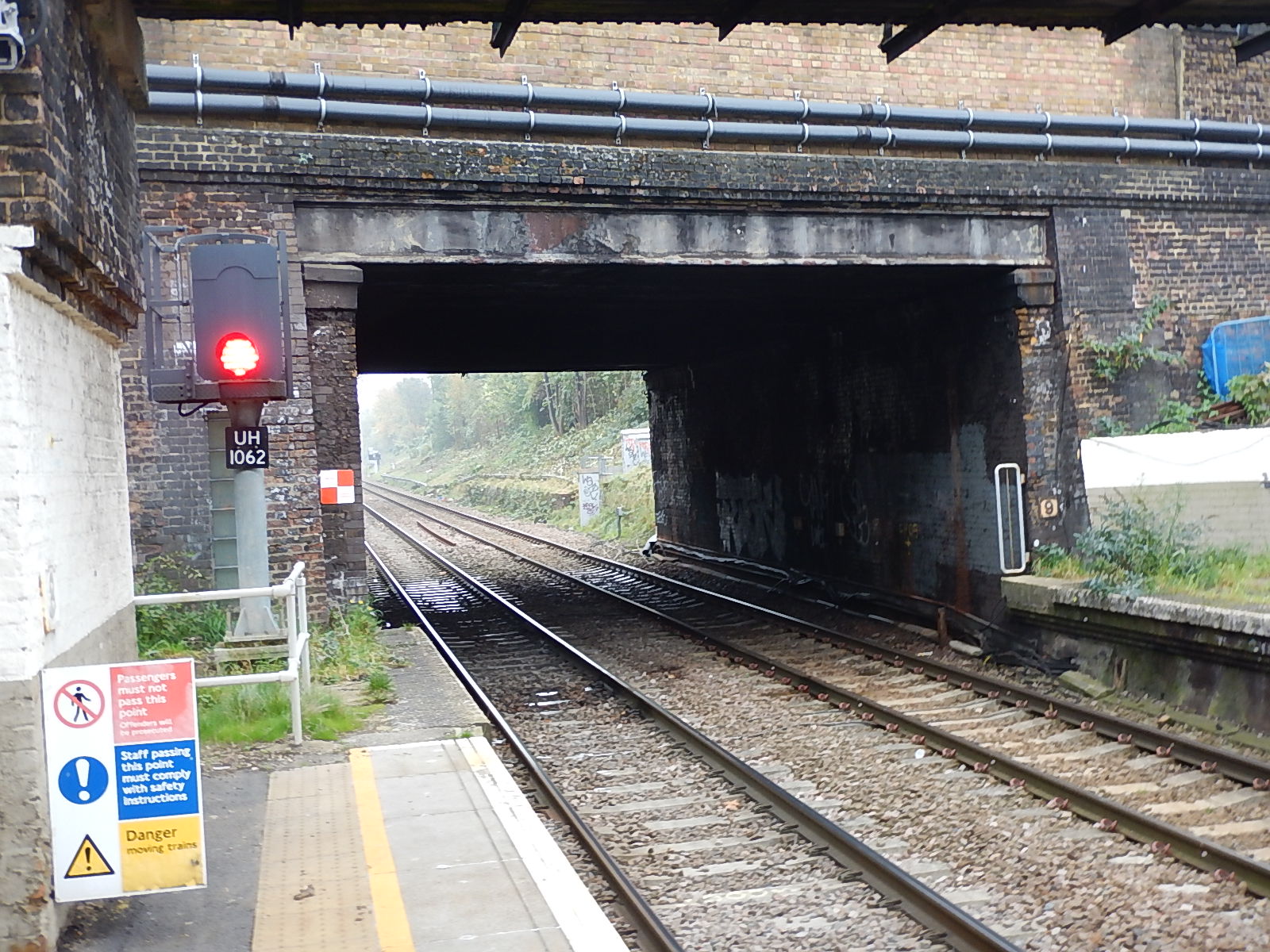
Upper Holloway Bridge
Someone told me, that the bridge will take longer than that. You certainly couldn’t electrify it now!
So I can’t see conventional electric trains running on that line before 2019 at the earliest, thus delaying the cascade of the much-needed Class 172 trains.
But an IPEMU variant of a Class 387 train could run on that line much sooner than that.
Just replacing the Class 172 trains with Class 387 trains would solve one of the major problems on that line, which is a chronic lack of capacity.
There would probably need to be a few platform extensions, but surely the increase in passengers would compensate.
In some ways, the beauty of this approach, is that where you are using IPEMUs to bridge gaps in electrification, when you electrify the gap, you can either convert the IPEMUs to standard trains or replace them with something designed for the line and send the IPEMUs on to another line to work their magic there!
I suspect George Osborne will order the cavalry to charge in the Autumn Statement on November 25th.
Sudbury To Cambridge – D-Train, IPEMU Or Tram-Train?
In D-Trains For East Anglia? I reported on how possible Anglia franchisees, were looking at using Vivarail D-Trains between Marks Tey and Sudbury on the Gainsborough Line.
So as someone, who lived by the disused line from Sudbury to Cambridge Line via Haverhill for nearly twenty years, I have views on whether this route should be opened.
The Case For Reopening
After my stroke, for a year, I lived just North of Haverhill, in the middle of nowhere. The only way to get to say Cambridge, Ipswich or London, was to get a taxi to either Newmarket and get a train or Haverhill and get a bus.
As with many people, a station in Haverhill would have given me an alternative route, using a cheaper taxi!
But for many who live along the Stour Valley getting to Cambridge and its employment opportunities means the car or a bus.
Haverhill is now a town of 30,000 souls and when the line closed, the population was under a quarter of that figure.
So although the case for closure of the Stour Valley Railway in 1967, was strong, there is probably just as strong a case to provide a high-quality public transport system between Sudbury and Cambridge via Cavendish, Clare and Haverhill.
The Route Today
Much of the route is still there, although in places it has been built upon.
But I believe, as do others, that a single-track railway with passing places could be built between the West Anglia Main Line, just South of Shelford station to Sudbury station on the Gainsborough Line thst connects to the Great Eastern Main Line at Marks Tey station.
If the line is built mainly single-track, this would be more appropriate for an area of outstanding natural beauty and it would make it easier to squeeze the line into difficult places like the station at Sudbury, which is shown in this Google Map.
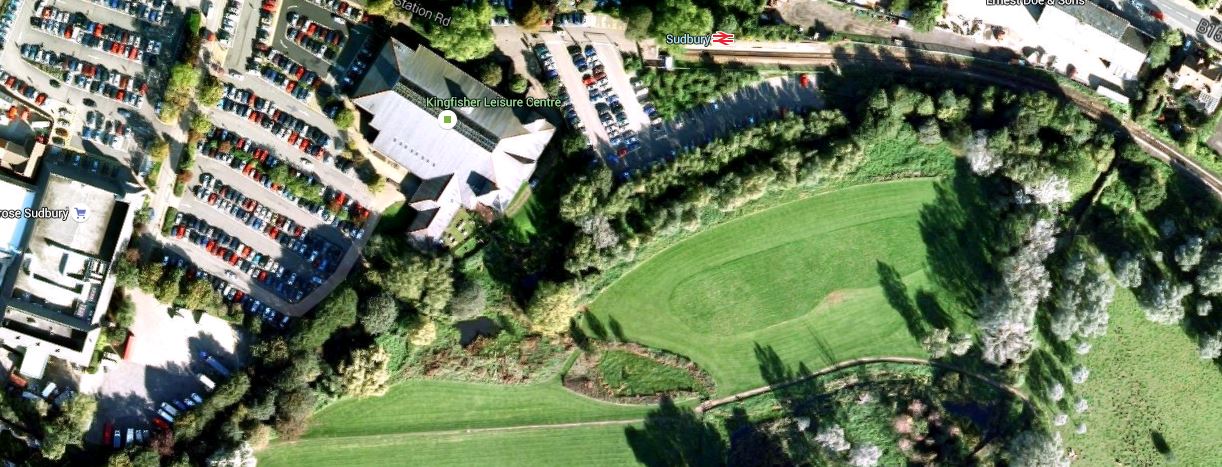
Sudbury Station
The route of the overgrown disused rail line, goes out towards the South-West.
The route of the line is still visible in the other major town on the line; Haverhill. It is shown on this Google Map.
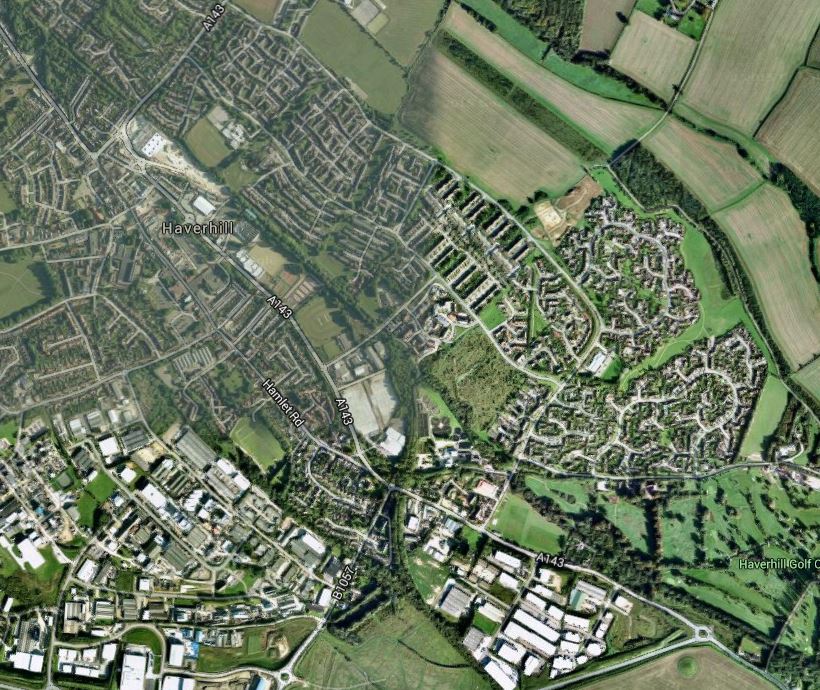
The Railway Through Haverhill
The railway goes across the town from North-West to South-East. It does split with one branch going South over a massive brick viaduct and the other going East towards Clare, Cavendish and Long Melford.
Much of the line now is a footpath through the town, which I suspect could share the route with a single-track railway or tramway. Tesco’s probably wouldn’t mind if the station was just to the North of their massive car-park.
I suspect that all stations would be designed to be as simple as possible.
Several of those on the new Borders Railway like Eskbank, Galashiels, Gorebridge and Newtongrange are well-designed single platforms and some have no means to cross the railway.
Stations like these would be practical and unobtrusive.
Possible Rolling Stock
Because of the limited nature of the track, which as I pointed out could possibly be mainly single track, I think that some types of rolling stock can be ruled out.
If say, the line was to be run using something like two or three-car Class 168 trains, there could be capacity, vibration and noise problems.
So I think we’re left with the following.
- D-train or Class 230 trains
- IPEMUs
- Class 399 tram-trains
I shall now look at each in detail.
Class 230 Trains
Class 230 trains or D-trains have been talked about as possibilities for the Gainsborough Line and these conversions from London Underground D78 Stock could certainly travel easily between Marks Tey and Shelford, before going on to Cambridge.
Other than possible hostility to their origin and second-hand provenance, I can see other problems with these trains.
- When running between Shelford and Cambridge, would they get in the way of faster trains to and from London and Stansted.
- Would they have a noise and vibration problem, as they trundled through quiet villages?
- Extending the service at either end to perhaps Colchester and Cambridge North might be difficult.
- They would have a shorter life-span than the other options.
But we haven’t seen a Class 230 train in service yet.
IPEMUs
IPEMUs or battery-powered trains have only been seen briefly on UK railways and that was at Manningtree, where Bombardier and Network Rail ran the prototype in a successful trial in public service.
They are full size four-car electric trains and could run from Marks Tey to Shelford on batteries, charging up on the electrified main lines.
In addition they would have the following other advantages.
- They have a high-capacity, with all the facilities that all types of passengers could want or need.
- There could be no need to put up any overhead wires between Marks Tey and Shelford.
- They would probably have a very low intrusion factor into the environment.
- When they are on the main lines, they become normal trains, so there would be no disruption to other traffic.
- They could also extend the service to between say Colchester and Cambridge North.
Perhaps the only disadvantage of IPEMUs, is that being full-sized trains, the railway might have to be fully-protected with fences.
Class 399 Tram-Trains
Class 399 tram-trains are the unusual one of the three. But in some ways they are the most versatile.
They are a three-car high-capacity 100% low-floor tram, very similar to those you see in Blackpool, Birmingham, Croydon or Nottingham. But in addition to being able to run using a tram 750 VDC overhead supply, they can also run as a train using the standard 25kVAC supply of the main line railway.
They combine the best characteristics of both means of transport.
In the next couple of years they will be trialled in Sheffield on an extension of the Sheffield Supertram to Rotherham.
For those that worry about the technology, several German cities have large systems of mixed trams, trains and tram-trains, so it is not by any means untried. Especially, as a Class 399 tram-train is a German standard tram-train, modified for our overhead voltage, which incidentally is much more standard, than the German’s 15kVAC.
The tram-train would start at Cambridge or Cambridge North stations and run as a tram to Shelford station, where it would become a tram running on the route of the Stour Valley Railway all the way to Sudbury, where it would continue along the Gainsborough Line to Marks Tey, where it could use the overhead wiring to go to Colchester if required.
A Class 399 tram-train would have advantages and disadvantages compared to say the IPEMU.
I’ll deal with the disadvantages first.
- It is a three-car tram of slightly smaller capacity than the four-car IPEMU.
- It would need to have a track electrified to 750 VDC using a simple overhead catenary.
- They have tram interiors and no toilets.
- They are slightly slower on train sections, than the IPEMU.
But it does have advantages too.
- They are 100% low-floor vehicles, so have comprehensive step-free access.
- Stops can be a very simple design without any expensive foot-bridges, lifts or long disabled ramps. Just like Croydon for example!
- They are good sight-seeing vehicles for a beautiful part of the country
- When the line allows it, they can get up to speeds of nearly 70 mph on a main line railway.
- Tram-trains have all the flexibility and manoeuvrability of trams, so they can go off for a meander rather than a direct route, if necessary.
- If used between Cambridge and Marks Tey,instead of going direct from Cambridge to Shelford, they could take a loop around the Addenbrooke’s site.
- Or perhaps if they turned at Cambridge North, they could perhaps do a tour of the Science Park rather than a simple reverse.
It is a terrible pity that the Cambridge Guided Busway was designed before tram-trains became a viable alternative.
Conclusions
It is very much a case of who pays the money makes the choice.
- The Class 230 train is a remanufactured train that doesn’t need any expensive electrification, but may have noise, vibration and performance issues.
- The IPEMU is a brand-new train that doesn’t need any expensive electrification and has all the performance, comfort and facilities of any modern full-size electric train.
- The Class 399 tram-train is also brand new, needs only simple electrification and infrastructure and has all the performance and flexibility of a tram coupled with many features of a full-size electric train.
If the choice was down to me, I would discount the Class 230 train, but only because the other two solutions are new and not remanufactured old ones, which will have to be replaced at some time.
So why not have the new IPEMUs or Class 399 tram-trains, both of which would probably give first-class service for a large number of years?
Both the new trains are types of trains, that will be common on the UK rail network, so as the knowledge base increases we’ll probably find ways of using them both to create very high-class public transport systems.
Choosing between the two new solutions is extremely difficult.
As neither has run in extended service on the UK rail network, I feel that for the moment I’ll duck that difficult choice.
As an aside, this analysis has proved to me, that the Cambridge Guided Busway may have been a good decision at the time based on the knowledge available, but with the arrival of IPEMUs and tram-trains, it is very much a technology that few will choose in the future.
Will IPEMU Trains Transform The Greater North-East?
I think before I write this, I should define a few terms.
The Greater North East
By this area, I mean that area of England, that is North of the River Humber and is bordered in the West by those towns and cities that lie on or just to the West of the electrified East Coast Main Line. So they would be working Northwards up the line.
- Doncaster – On the ECML
- Sheffield – Including Meadowhall
- York – On the ECML
- Leeds – On the ECML
- Bradford – Electrified from Leeds
- Darlington – On the ECML
- Newcastle – On the ECML
It would also include those branches that reach to the West to places like Bishop Auckland, Carlisle, Halifax and Hexham.
IPEMU Trains
IPEMU stands for Independently Powered Electric Multiple Unit and is a normal train, that has on-board energy storage which is uses on lines that are not electrified to power the traction and other systems on the train.
To a passenger they would appear to be a normal four-car electric muliple unit. I described my ride in the prototype between Manningtree and Harwich in Is The Battery Electric Multiple Unit (BEMU) A Big Innovation In Train Design?
I was extremely sceptical until I rode the train and looked into the physics.
Bombardier are developing a new train called the Aventra, which will be wired so that it can be converted to an IPEMU, if operators need the capabilities.
An Aventra IPEMU have at least the following properties.
- At least a sixty mile range on the stored energy (Batteries or perhaps KERS?)
- Identical passenger experience to a standard train.
- The energy storage would be charged when the train was running on electrified lines.
- Regenerative braking would also be used to charge the energy storage.
- The energy storage could be used to move the trains around depots and sidings that were not electrified.
These trains sound almost too good to be true!
But as a Control Engineer by training, I have a feeling that the Ultimate Aventra IPEMU might be an impressive beast with a two hundred kilometre per hour top speed under wires, a range greater than sixty miles on energy storage and a very impressive electrical efficiency, which would make the train more affordable to operate.
I would also feel that the trains could use some form of mechanical energy storage like KERS in Formula One. Batteries are rather naff, but using something lifted from Formula One could be rather sexy and high-performance.
IPEMU Hubs
Suppose you were to build a series of IPEMU hubs, where the storage on IPEMU trains could be charged.
In several cases these hubs already exist, as they are stations with electrified platforms.
- Carlisle
- Darlington
- Doncaster
- Leeds
- Newcastle
- York
Some like Carlisle, Darlington and York would only need a couple of extra platforms to be electrified.
There would also possibly be other stations, where some form of charging would need to be provided, so that trains could be topped up with energy before returning to a main hub.
Stations in this category might include.
- Cleethorpes
- Hull
- Scarborough
- Sheffield
- Whitby
Sheffield will get fully electrified under the Midland Main Line electrification program anyway.
Services
The big route that could be run by IPEMUs would be North TransPennine, as IPEMUs would be capable of bridging the gap between Leeds and Manchester.
Also given the right structure of IPEMU hubs, virtually every passenger service in the Greater North East could be run using IPEMUs.
Conclusion
Who needs conventional electrification?
Freight services do!
So eventually the main freight routes will need to be electrified. This will mean that the primary use for the energy storage in the IPEMUs would be to make the trains more efficient.
D-Trains For East Anglia?
This article in Rail Magazine is entitled D-Trains For Anglia and says this.
Vivarail spokesman Alice Gilman told RAIL on October 19 discussions have been held about the possibility of the rebuilt D-Trains being used as part of the new Anglia franchise.
She suggested that North Norfolk and the Marks Tey-Sudbury routes could be homes for the Class 230s, which are being converted from redundant London Underground D-Stock.
Who knows what will happen?
Remember that the trial of the IPEMU happened in East Anglia and I suspect that the current franchise holder, Abellio; knows the capabilities and costs of the two train types as good as anybody does.
So if Abellio is talking to Vivarail about D-trains they must have good reason.
Platform Lengthening
Could it be that it would need some expensive platform lengthening to accommodate the four-car IPEMU on the Gainsborough Line and the Bittern Line in North Norfolk!
I’m not sure, but I think all the other branches in East Anglia have platforms that are long enough for four-car trains, so they could accept IPEMUs tomorrow, if any were available.
London To Lowestoft
The latest franchise documents show direct trains between London and Lowestoft. Modern Railways in November 2015 says this.
Lowestoft is to regain direct services to the capital, with four through journeys in each direction.
The old direct services were well supported in the 1970s, so I suspect that they will be whenever they start.
The services would need an IPEMU, a Class 800 electro-diesel or diesel-hauled coaching stock, so you can take your pick on what ends up running these services. But it won’t be a D-train.
I wouldn’t be surprised to see all services on the Lowestoft branch were run by IPEMUs, with some extended all the way to London.
Extension From Sheringham And The Norfolk Orbital Railway
Also in Norfolk, the Bittern Line is now connected to the North Norfolk Railway at Sheringham station over a new level crossing.
Are there moves afoot in Norfolk to extend the Bittern Line to Holt? Or perhaps to even create the Norfolk Orbital Railway from Sheringham to Wymondham via Holt and Fakenham?
The campaigners for the North Norfolk Railway have created this web site.
I can’t believe Norfolk Orbital Railway will ever open, but after the successful recreation of the Borders Railway, the rules for the creation of new rail routes must have changed.
Could D-trains be an ideal way of providing rolling stock on a line with no electrical connections?
Lowestoft To Yarmouth
There must be lots of good reasons concerning commerce, tourism, leisure and families to connect the two biggest towns in the East of England by rail. Great Yarmouth is slightly bigger with a population of 70,000 to Lowestoft’s 60,000.
Because no connection exists, I’d always thought that to provide one was difficult, as it would envisage building a large bridge across the water in the area. But I have just read a section entitled Direct Yarmouth Services in the Wikipedia entry for Lowestoft station. This is said.
In January 2015, a Network Rail study proposed the reintroduction of direct services between Lowestoft and Yarmouth by reinstating a spur at Reedham. Services could once again travel between two East Coast towns, with an estimated journey time of 33 minutes, via a reconstructed 34-chain (680 m) north-to-south arm of the former triangular junction at Reedham, which had been removed in c. 1880.The plans also involve relocating Reedham station nearer the junction, an idea which attracted criticism.
Surely if Network Rail has suggested this link in this study on their web site, it must be fairly easy to reinstate, as they don’t want to start any more fiascos.
There are several possible reasons.
- Has the Todmorden Curve shown that these links generate traffic and revenue for Network Rail? Perhaps, they’ve even got the maps out and looked for similar curves to Todmorden.
- Does this link give an extra route between Norwich and Ipswich, that makes it easier for passengers to do certain journeys without changing trains?
- There is a significant number of journeys betwen Lowestoft and Yarmouth by rail and road.
- Does it make it easier for IPEMUs to serve Lowestoft and Yarmouth?
- Perhaps reorganising the rail lines and station at Redham realises a sizable piece of land for development.
- Do Network Rail want to create a record for reopening the oldest closed railway line? 135 years has probably not been beaten.
This map shows the area of the proposed junction.
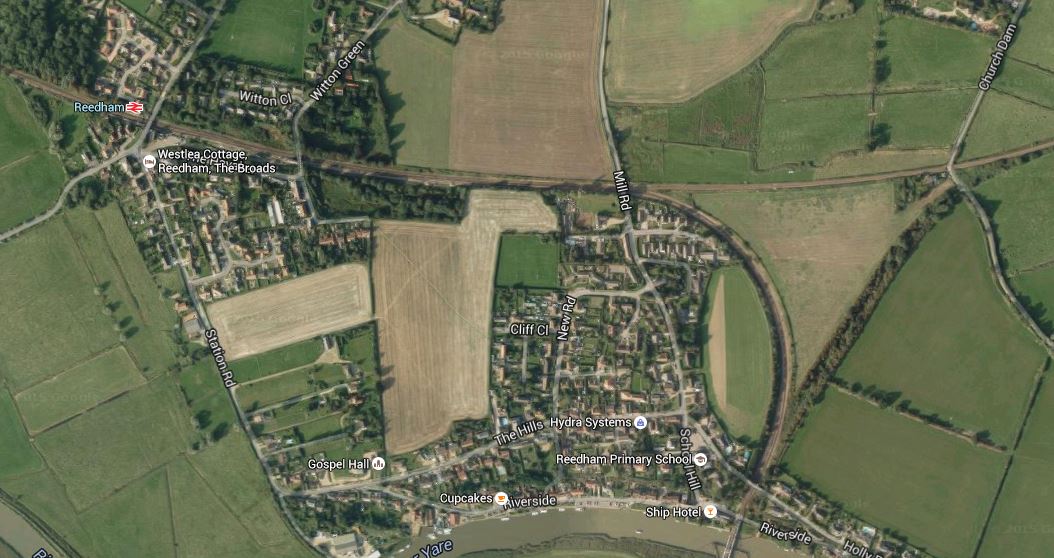
Reedham Station And Junction
Dspite being removed in 1880, the line of the third side of the junction is still visible.
But there is opposition as this article in the Great Yarmouth Mercury details. Perhaps, the locals don’t want any more housing?
The article mentions a cost of a billion pounds, which would make it a no-no! However the Todmorden scheme cost less than ten million pounds for a similarly-sized curve.
If a simple shuttle was to be run between Lowestoft and Yarmouth, this could be handled with ease by a D-train. But where would you charge an IPEMU?
From Hull To Sheffield
I escaped from Hull on a train to Sheffield, as on my walk across the city from my hotel to the station, I didn’t pass one welcoming looking cafe or a suitable shop to buy my copy of The Times. I did finally find a cafe in the station called the London Way Cafe, but I’d already bought my ticket and didn’t fancy waiting an hour and a half for the train after the one I was catching.
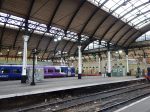
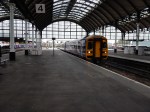
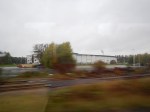
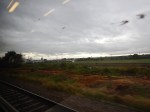

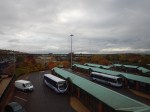
The route to Sheffield via Goole and Doncaster is across very flat country as the pictures show.
Can I come to any conclusions?
- I think the last time, I did this journey it was in a dreaded Pacer, but this time it was a clean Class 158 train. So some things are getting better!
- Part of Hull station has been turned into a bus station, which is properly integrated with the trains.
- The signposting in the station to local attractions like The Deep and the KC Stadium can’t even be judged on quality, as there isn’t any.
Much of the line is the Hull to Doncaster branch, which effectively connect the two TransPennine routes into Hull and Cleethorpes at Gilberdyke and Thorne. It is not electrified, but given the fact that Doncaster is and Sheffield could be in a few years, this line would be ideal for IPEMUs running a possible half-hourly electric service between Hull and Sheffield via Doncaster.
At present Hull trains from London take two hours thirty minutes for a direct run via Selby and if you change at Doncaster it takes a few minutes under three hours using Virgin East Coast.
So perhaps if the Sheffield to Hull service is improved using IPEMUs and a bit of selective electrification is installed from say Doncaster to Thorne or in Hull station, the service from London with a change at Doncaster could be reduced to almost the two and half hours using the direct train.
But if IPEMUs can do Doncaster to Hull, then surely Hull Trains could use them on the Doncaster route to go to Hull as an all-electric alternative. They could still serve Brough, but Selby would need to use that route.
This simple exercise shows how IPEMUs could change the rail landscape of the UK.
York Station
York station is a busy station as both the East Coast Main Line and Cross Country services pass through. It is also quite large with eleven platforms.
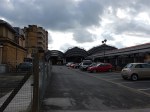
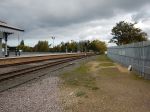

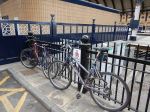
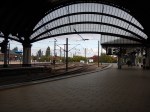
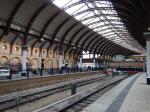
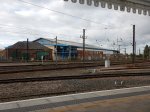
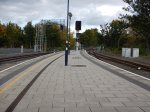
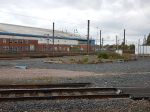
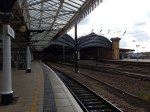
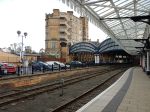
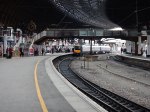
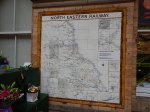
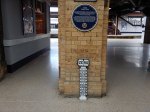
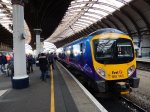

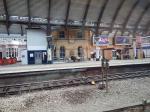
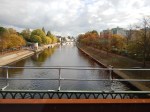

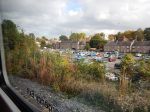
The pictures show how you can look out along the Scarborough Bridge and the bay platform 2, where trains from Scarborough can be turned back.
The last shot is the car park where the three mobile cranes were positioned to lift the bridge into place in Dancing With Cranes And A Bridge With Help From Lego.
It is worth taking a look at this Google Map of the station.
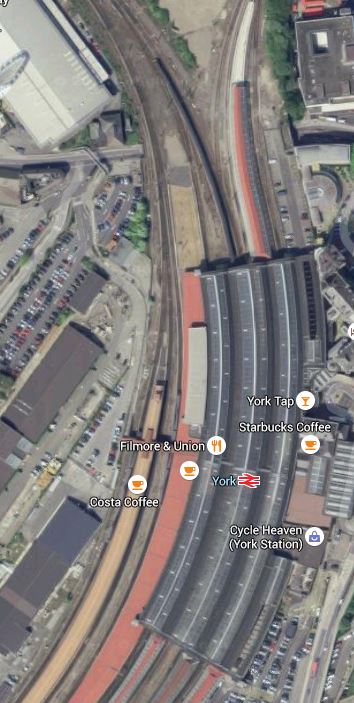
York Station
Note the island platform poking out from under the roof at the top, with Platform 4 on the left and Bay Platform 2 on the right.
There is another simple Bay Platform 1 at the southern end, which serves the line to Hull.
Both platforms 1 and 2 could be electrified, if it was decided to run IPEMU trains to Hull and Scarborough respectively. I think that East Yorkshire services could be electrified in this manner using the power at York, Doncaster and Leeds, with perhaps some form of top-up at Hull and Scarborough.
 The Anonymous Widower