An Illustration Of East Anglia’s Rail Problems
This article in Rail Magazine is entitled More capacity for Anglia with second locomotive hauled set.
It describes how Abellio Greater Anglia is hiring in two Class 68 locomotives and a rake of three Mark 2 coaches, to maintain services after one of its Class 170 diesel multiple units, was badly damaged in a crash with a tractor at a level crossing in April. There are more details of this in this story on ITV, which is entitled Train carrying 135 passengers crashes at level crossing.
The hiring in of two-brand new locomotives can’t be a very affordable option, but it just illustrates that there is no spare stock available. If say a major bus company needs extra capacity for a big event, contingency plans probably mean a fleet is rustled up from somewhere.
So why isn’t there a pool of say refurbished diesel multiple units available? Most old diesel multiple units are probably only fit for scrap, when they are retired and I doubt any Government since railway nationialisation in 1948, would have allowed train companioes to have a central pool for emergencies.
But the real cause of this particular problem, is the old East Anglian one of level crossings. And a lot of those in East Anglia have trains passing at over 75 mph.
Intriguingly, in The New Trains Arriving In East Anglia, if I got it right that the Breckland Line between Cambridge and Norwich is going to run four- or even eight-car 100 mph electric trains with an IPEMU capability, then something must be done about these level crossings. The infrastructure has already been updated with new signalling and track improvements, but obviously this private level crossing was still being used.
A Very Bad Level Crossing Problem
I have a Google Alert for “Crossrail” and it picked up this article in This is London, which is entitled How Should This New Malden Level Crossing Be Redeveloped When Crossrail 2 Arrives?. This is said.
Residents are being invited to put forward their views on a New Malden level crossing that could be closed by the arrival of Crossrail 2.
Kingston’s Liberal Democrats are asking residents to come forward with suggestions of how to redevelop the Elm Road level crossing, with the party asking how nearby Dickerage Road and New Malden High Street could cope with the extra traffic.
Possible outcomes according to the party’s consultation could include building of bridge or closing the crossing all together.
To get a better feel, this is a Google Map of the crossing.
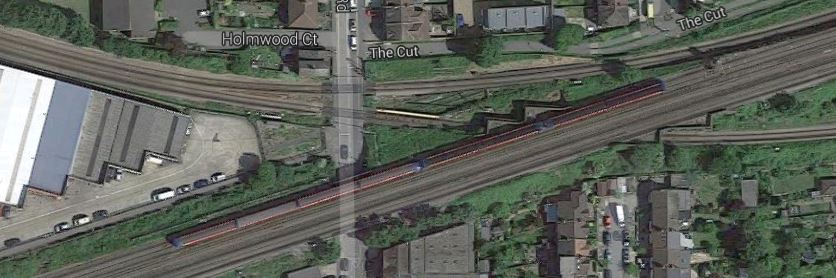
Elm Road Level Crossing
Note.
- New Malden station is to the East, Berrylands station is to the West and Norbiton station is to the North-West.
- New Malden and Berrylands station are on the busy South Western Main Line.
- Crossrail 2 trains will serve all three stations.
- The level crossing is only on the line to Norbiton.
This map from carto.metro.free.fr shows the lines in the area.

Lines Around New Malden
Note the other level crossing North of Motspur Park station.
I believe that these maps, show that something must be done, as obviously there probably shouldn’t be any level crossings on a Crossrail route.
There are also other level crossings on the Crossrail 2 route, at or near these stations.
- Brimsdown – Before Crossrail 2
- Enfield Lock – Before Crossrail 2
- Hampton Court
- Motspur Park
- Northumberland Park – Before Crossrail 2
A quick look and my local knowledge of the crossings in the North, make me feel, that none is as difficult as the crossing near New Malden station.
I went to New Malden station and walked to the crossing.

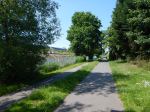
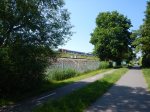

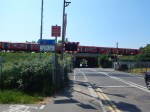
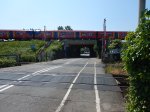
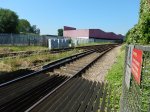

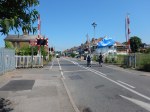
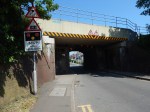
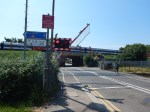
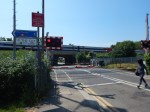
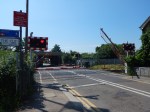
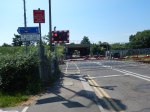
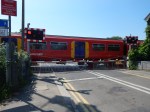
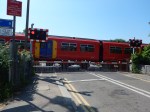
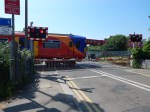
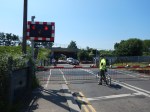
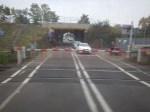
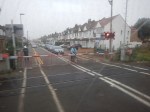
in some ways at eleven in the morning, the crossing wasn’t that busy. A lot of the traffic was on foot.
At the present time, in the off peak there are six trains an hour going through Norbiton station, to or from the New Malden direction, so this must mean that the barriers go down six times or four if the two trains to Norbiton cross at the level crossing.
Crossrail 2 will mean that the barriers will be down longer in each hour.
- Crossrail’s Class 345 trains are two hundred metres long, so if Crossrail 2 uses the same trains, these will be longer than the current eight-car trains of a hundred and sixty metres.
- Crossrail 2 will probably run at a higher frequency.
So something may have to be done.
As the number of pedestrians, buggy-pushers, runners and cyclists will increase, I think that all solutions would accommodate a bridge or subway, for non-vehicular users.
It might even be possible to dig a shallow subway, with both steps and ramps, under the two tracks of the branch, as has been done at Brimsdown station.
The overall solution depends on how much traffic uses the level crossing.
But as there appears to be no industrial premises, that generate lots of truck traffic nearby, I wonder if the best solution for road traffic, is to keep the road crossing as it is. Perhaps with the addition of improved barriers, displays and warnings.
- Building a bridge or a tunnel would be a very difficult and disruptive exercise.
- A bridge would be very expensive, as it would have to go over the main line as well.
- Still having a crossing would give access for the emergency services, even if they had to wait two or three minutes.
- This would also mean that someone pushing a wheelchair or a heavy buggy could cross on the level, perhaps after a wait.
I’m sure that the solution to this level crossing will not be one that requires massive expenditure, as after a proper survey, engineers will probably come up with a simple, safe and affordable solution.
A Part-Solution To The Level Crossing Problem?
Several times in my life, I have been delayed on trains, by accidents at level crossings.
Luckily none of them were that serious, but this list of United Kingdom level crossing accidents, includes quite a few where several died.
So I was pleased to find this data sheet on the Internet for a Vector LX. This is said.
VECTOR LX is now in operation at multiple level crossing sites around the UK, operating as an unattended enforcement system. VECTOR LX is a highly capable monitoring and enforcement tool that continually captures and analyses data, identifying offenders and providing valuable ‘intelligent’ data.
Using a unique combination of ANPR, video and scanning radar, VECTOR LX not only identifies when offences occur, but gathers a wealth of ‘situational awareness’ data to identify behaviours at different times of day. All of this is delivered without the need for road loops or intrusive connections into the traffic signals, providing a system that is powerful, effective and simple to maintain.
Surely, it is a part-solution to the problem of drivers weaving through the barriers.
Report from Sir Peter Hendy to the Secretary of State for Transport on the Replanning of Network Rail’s Investment Programme
This report is crucial to a lot of reconstruction work continuing on railways in parts of the UK.
I’ve put the link, so I can find the report easily.
Here’s a taster of what the report contains.
This extract is entitled Case study – Aristotle Lane, Oxford and talks about the problems of closing a private level crossing in Oxford.
Network Rail planned to install a replacement footbridge over the Oxford to Banbury Line north of Oxford Station and close an adjacent private level crossing for safety reasons. People walking from a nearby car park, across some allotments to the other side of the tracks, used the level crossing. The new bridge will have a link to the allotments removing the need for people to cross the tracks.
The level crossing is not a public right of way and the rights to use it are owned by Oxford City Council. As part of the East West Rail (phase 1) improvement scheme, Chiltern Railways made an application in 2009 to close the level crossing as part of a wider project to upgrade the railway line.
Objections from allotment holders at the Public Inquiry meant that the approval was not granted. This meant that Network Rail needed to pursue a separate planning application in order to complete the work and deliver Marylebone to Oxford services.
Efforts to close the crossing and deliver the scheme continued. Meetings were held in 2012 between Network Rail, ORR and the Council to find a solution. Finally, in 2014 the principle to close this one level crossing was granted, but with the conditions that Network Rail had to fund and construct better access to the allotments, arrange a land swap so the local school could be expanded and to fund and build a new car park. All of these require further, and separate, planning permissions.
A planning application was submitted in May 2014 and approved a year later after three separate planning committee presentations. Construction of the bridge is now planned to start in January 2016 with completion in September 2016. The level crossing will then be closed seven years after the first application.
Kafka is certainly alive and well and living in Oxford.
For more information on this fiasco/farce/cock-up/vexacious litigation/waste of money (delete as appropriate!) read this article in the Oxford Mail, entitled Network Rail changes its plan for new Aristotle Lane bridge after protests.
Some of the comments are priceless.
I am very much of the opinion that all level crossings should be shut on safety grounds. If there are serious objections, then surely the railway should be closed until an agreed solution is negotiated.
Beware The Tosser With A Digger!
This story from the Standard is entitled Digger cripples London Overground route after tearing down overhead wiring at level crossing.
This accident happened on a Sunday between Shepherd’s Bush and Willesden and it doesn’t appear anybody was hurt.
But it just illustrates how dangerous level crossing are.
Currently, several hours later,there is no service on the line.
I Wonder If This Happens In Europe
This article from Rail News entitled Level crossing upgrade hits deadlock is priceless. This is the first couple of paragraphs.
A bid to upgrade the gates at a ‘high risk’ level crossing in Sussex has fallen foul of planning laws, and Network Rail has written a letter of apology to local residents who have been protesting that the road across the railway has now been closed for several weeks.
The gates at Plumpton between Burgess Hill and Lewes are of the traditional pattern, and controlled from the box alongside. But Network Rail said that “despite its local popularity and heritage, independent risk assessments had identified that the level crossing posed a high safety risk, as well as being increasingly difficult to operate and maintain”.
They now need to be replaced with modern lifting barriers which could in future be controlled by the new Rail Operating Centre at Three Bridges. The upgrade is costing £2 million.
This all sounds straightforward.
But it isn’t as Lewes Council has refused planning permission on heritage grounds.
The lawyers must be loving this one, as it will obviously run and run.
But as it’s a high risk crossing, surely this crossing should be closed before a serious accident happens.
Remember, I used to live in East Anglia and every few months or so, there was a news story about a serious level crossing accident.
Network Rail should be tasked to get rid of them all as soon as possible, so more tragedies like Elsenham and Ufton Nervet never happen again.
I suppose they could always close the East Coastway Line and run Rail Replacement Buses instead.
I wonder if other countries in Europe handle this sort of problem better!
A Very Wet Stop At Lincoln
I had intended to have a good lunch at Lincoln and go up the hill to look at the cathedral.
But the weather put a stop to that and I just went to see the progress on the two level crossings in the area. This Google Map shows the area of the station and the two crossings that are being given step-free footbridges.
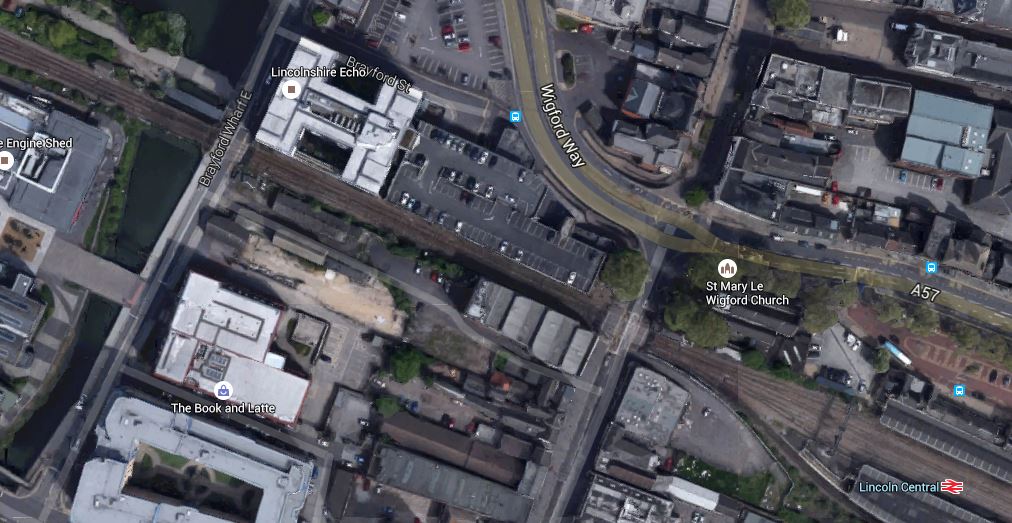
Lincoln Level Crossings
These are some of the pictures I tried to take.
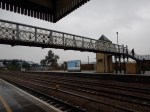

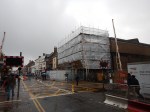
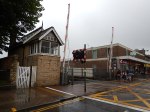

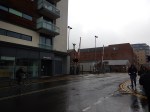

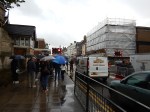

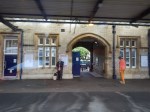
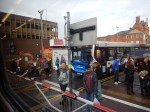
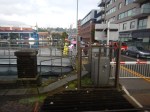
Progress doesn’t seem to be very fast.
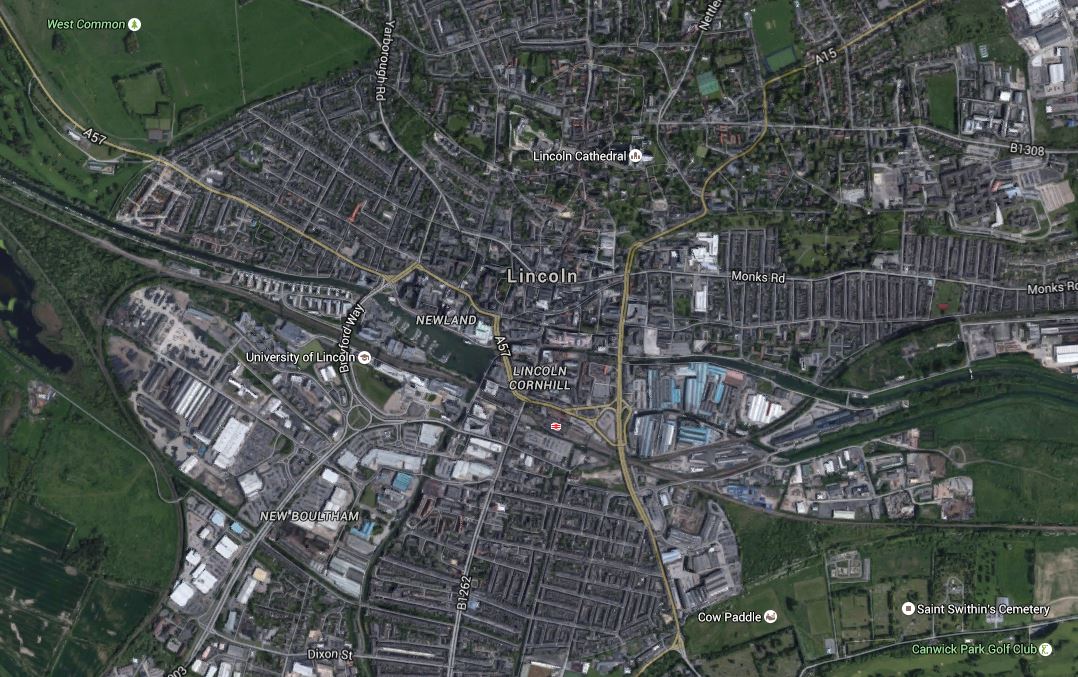
It will be interesting to see if Network Rail’s solution makes things easier. This Google Map shows the southern part of Lincoln.
Lines Through Lincoln
The lines come into the City and through the station on an East-West axis. You can just make out the scar of the Lincoln Avoiding Line, which used to allow trains to by-pass the level crossings. Together with Lincoln St. Marks station, it closed in the 1980s.
According to Wikipedia, train services run between Lincoln and
- Newark North Gate and Leicester via Newark Castle and Nottingham using the Nottingham to Lincoln Line (“Midland line”);
- Sheffield via Retford and direct to Doncaster via the Doncaster to Lincoln Line (“Great Northern and Great Eastern Joint Line”).
- Peterborough via Sleaford via the Peterborough to Lincoln Line (“Great Northern and Great Eastern Joint Line”)
- Grimsby Town via Market Rasen, with occasional journeys to Cleethorpes
Most of these services operate on an hourly or two-hourly basis although some services to places like Nottingham might go to two trains per hour.
There are also once daily services Monday to Saturday to London St Pancras operated by East Midlands Trains and to London Kings Cross operated by Virgin Trains East Coast.
Lines to Doncaster, Newark, Nottingham and Sheffield run to the West and lines to Grimsby, Peterborough, Skegness, Sleaford and Spalding are to the East.
You can understand, why the Route Utilisation Strategy (RUS) for the East Midlands felt that services could be improved by joining services together in Lincoln to free up platform space. At present some Grimsby Town services go though Lincoln to Newark North Gate.
It’s certainly a tricky problem at Lincoln and I can’t help feeling that at some time in the future, there’s going to have to be a solution that takes freight trains away from Lincoln High Street.
From Peterborough To Lincoln
The Peterborough to Lincoln Line is part of the Great Northern and Great Eastern Joint Railway, from Doncaster to Peterborough, which is increasingly used as a by-pass for freight and other trains from the East Coast Main Line.
The line leaves the East Coast Main Line at Werrington Junction and then runs through the flat Lincolnshire countyside to Lincoln via Spalding and Sleaford.
These pictures show the character of the line.

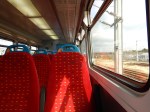
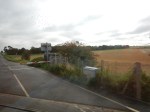

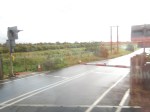
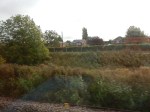
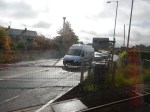
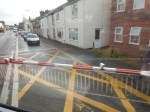

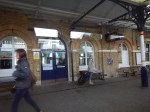
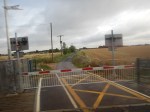
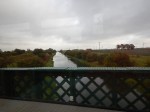
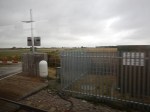
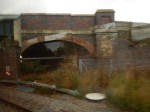
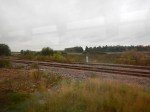
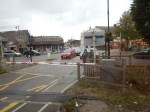
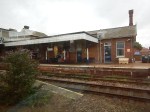
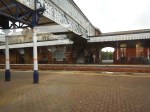

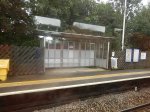
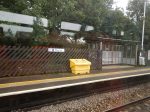

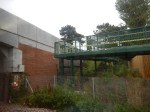
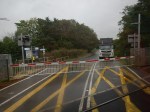

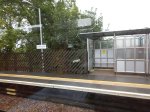




I’ve never seen so many level crossings and so much featureless countryside.
Surprisingly, I only saw one other train which was another single carriage Class 153 train going the other way.
It would appear that the line generally has an hourly service between Peterbrough and Lincoln and the Nottingham to Skegness Line has an hourly service through Sleaford.
This Google Map shows the lines around Sleaford.
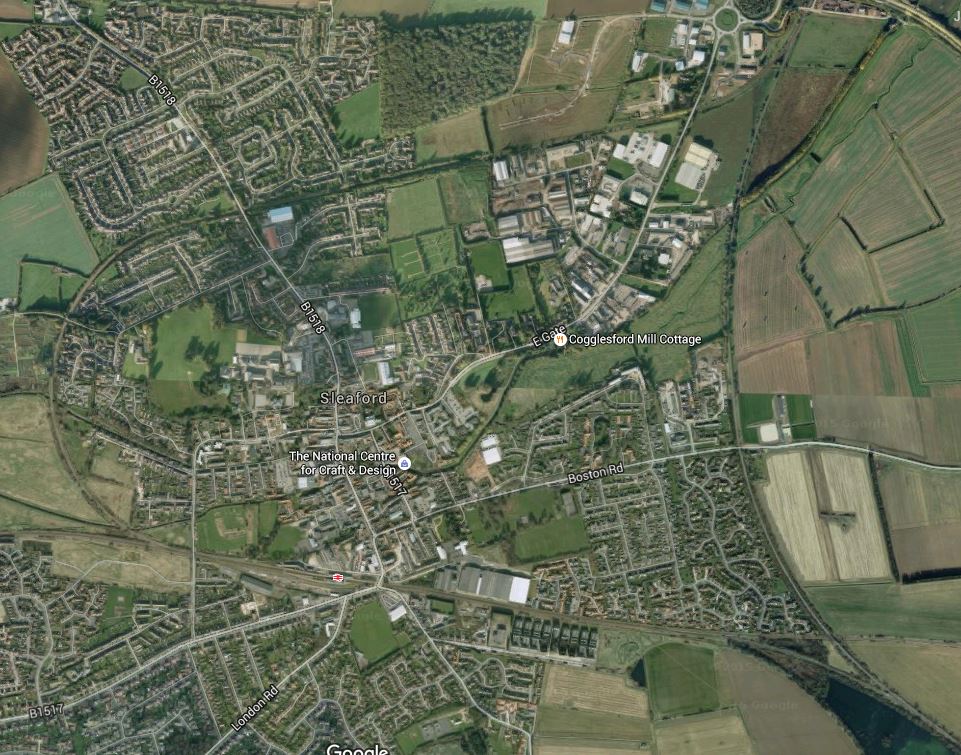
Sleaford
The line from Peterborough comes in at the South East corner with Lincoln to the North and Grantham and Nottingham to the West. The map clearly show the avoiding line connecting Lincoln to Peterborough, so that freight trains can by-pass the town.
The Route Utilisation Strategy (RUS) for the East Midlands felt that services could be improved by joining services together in Lincoln to free up platform space. Perhaps too the trains on the two lines should be more co-ordinated so that changing trains at Sleaford was easier. If you want to go from Skegness to Lincoln by train, some trains have only a few minutes wait, whilst changing at Sleaford, but others the wait is half an hour. I don’t know Sleaford station, but it may be a nice place to wait for a train!
This report on the BBC is entitled Cornwall rail network to get £146m investment.
So could the railways of Lincolnshire be improved, by giving more local control to the county?
Before Crossrail 2 – Brimsdown
I have a bit of a love hate relationship with Brimsdown station, despite having rarely used it as a start or end point of a train journey. It’s just that I’ve spent many minutes waiting for trains to cross the level crossing, in a car or with my bike. When I worked at Enfield Rolling Mills, I seemed that every other day, I had to wait perhaps ten minutes for a train to pass.
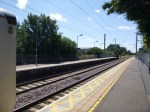
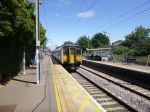
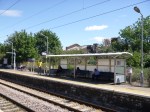

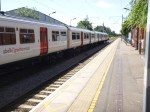
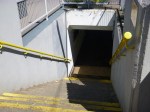
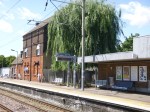
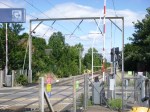

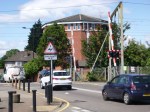
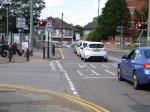
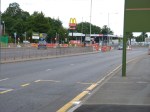
As you can see on a relatively quiet Sunday morning, the level crossing inconvenienced quite a few.
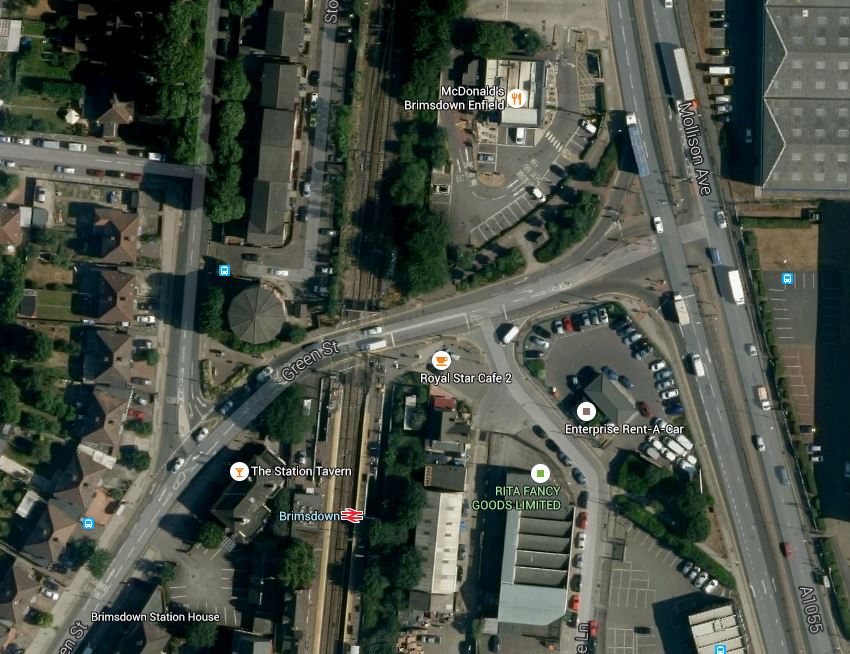
This Google Map shows the layout of the station and the roads around it.
Brimsdown Station
This is going to be one station, where four-tracking and removal of the level crossing will not be easy.
I think that the four tracks could be squeezed through as there is green space on each side of the tracks, but there is so little space around the station that a bridge or an underpass for traffic would be impossible.
So I suspect the only thing to do is create alternative pedestrian and bicycle routes from one side to the other and close the level crossing.
It will not be popular!
Before Crossrail 2 – Capacity And Level Crossings From Tottenham Hale To Hertford East
It is being proposed that Crossrail 2 goes up the West Anglia Main Line just after it surfaces from the central tunnel and then it would take the Hertford East Branch to the terminus at Hertford East station.
There are some issues and problems on the West Anglia Main Line that have to be solved before Crossrail 2 can be fully developed.
1. Services At Lea Bridge Station
The service level at the new Lea Bridge Station must be settled before the full plans for Crossrail 2 can be drawn up.
Wikipedia says that it is intended to have three trains per hour stopping at the station in both directions. All Southbound trains would go to Stratford and two Northbound would go to Bishops Stortford and one to Angel Road.
I don’t think that this level of service will be provided, as Transport for London like to set a minimum of four trains per hour, which exists on many places on the Overground. Surely, if the large development at Meridian Water is to realise it’s full potential, Angel Road will need a frequent service to Stratford and Liverpool Street, in addition to the full Crossrail 2 service.
There is also the complication of possible services between the Chingford Branch and Stratford using the Hall Farm Curve.
Between the Hall Farm Curve and Stratford, there is probably enough capacity on the two track line to accommodate the extra services, but what about north of where Crossrail 2 emerges from its central tunnel probably in the area of Coppermill Junction?
2. The Service Level On Crossrail 2
The service level from Liverpool Street to Hertford East is currently two trains per hour, which would probably be doubled to four trains per hour, as this is Transport for London’s preferred minimum.
The question has to be asked if there will still be a service between Hertford East and Liverpool Street via Hackney Downs?
Train commuters tend to be a conservative bunch and they may not take kindly to being told that instead of going into Liverpool Street they’re going to Angel and Kings Cross.
So I suspect that just as when Thameslink is completed there will still be services on the Sutton Loop Line, I suspect they’ll still be two trains per hour between Hertford East and Liverpool Street.
3. Extra Termini
The South Western end of Crossrail 2 has quite a few branch lines that can be used to extend the system, but in the North East, there aren’t the obvious termini.
With a railway like Crossrail 2, it is important that the line is balanced as this makes it easier to operate. The East London Line has four terminal platforms at both ends and each platform operates a four trains per hour service to its paired platform, thus giving sixteen trains per hour through the core. I think Thaneslink and Crossrail will both use a similar operating principle.
To accomplish this, Crossrail has the ability to turnback trains short of the terminus of the line at stations like West Drayton and Chadwell Heath,
I suspect that to make it easier to balance the service through the core tunnel, there will be one or more stations on Crossrail 2 that can turn trains back. The three most important stations; Tottenham Hale, Cheshunt and Broxbourne might be provided with such a facility. These stations could also act as interchanges between Cambridge and Stansted services to Crossrail 2.
I do wonder if the planners of Crossrail 2 are looking at putting a facility at Angel Road, which will become an important station because of the Meridian Water development.
There is certainly more opportunities to create extra termini on the line, than would there would appear from a cursory look.
4. Capacity From Tottenham Hale To Broxbourne
There are a lot of possibilities for making more and better use of Crossrail 2 services up the Lea Valley, but all of them will add to the number of trains running between Tottenham Hale and Broxbourne.
In addition if the services through Lea Bridge are increased then we’ll see the following trains running up the line.
- Stansted Expresses – Liverpool Street-Stansted Airport – 4 tph
- Cambridge Expreses – Liverpool Street-Cambridge – 2 tph
- Liverpool Street-Bishops Stortford – 2 tph
- Stratford-Bishops Stortford – 4 tph
- Liverpool Street-Hertford East – 2 tph
- Crossrail 2-Hertford East – 4 tph
The frequencies are speculation, but when you add them up, they do illustrate how more capacity is needed on the line, especially when you take into account the fact that the Cambridge and Stansted services will want to travel much faster than the local stopping services.
The planners for the West Anglia Main Line are already planning an increase in the number of lines from two to four as this Future Developments section in Wikipedia says.
If Stansted Airport’s expansion is authorised it is planned that the line will see many further changes. Long term proposals include four-tracking between Coppermill Junction and Broxbourne junction; an additional tunnel and platform edge on the Stansted Airport branch; one additional train per hour serving Stansted and up to six further trains per hour at peak times, including four into Stratford as a terminus. More stations, such as Broxbourne, will also have platform extensions to accommodate 12-car trains.
It seems likely that two tracks will be built alongside the line to Cheshunt as part of Crossrail 2. Intermediate stations from Tottenham Hale will transfer to Crossrail 2 releasing capacity on the main line for additional trains
I think that the last paragraph could be saying that stations like Northumberland Park, Angel Road, Ponders End, Brimsdown, Enfield Lock and Waltham Cross will have two fast tracks without platforms and two slow Crossrail 2/local tracks with platforms.
Whatever it means, the four-tracking is one of those projects that is needed whether Crossrail 2 is built or not.
I would hope that Network Rail’s surveyors have shown that four-tracking is possible. It will certainly need a design of narrow station.
5. Level Crossings
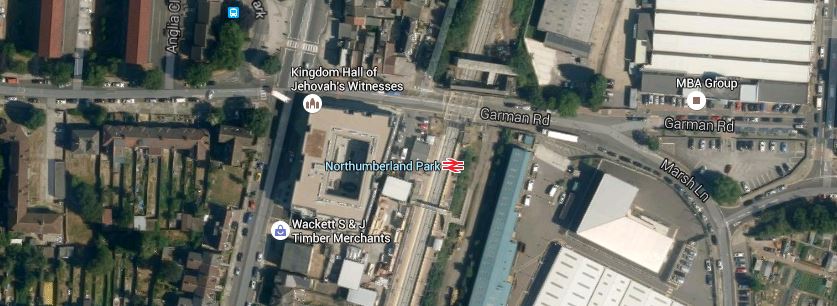
Levels crossings are numerous on the West Anglia Main Line, with examples at Northumberland Park, Brimsdown and Enfield Lock, south of Waltham Cross. The post on Enfield Lock shows queues at the crossing. This Google Map shows queues at Northumberland Park.
Northumberland Park Station
Removing this level crossing would look to be particularly difficult, but surely with the development of Meridian Water just to the North East, the time is now right to sort it once and for all.
Incidentally, when I worked at Enfield Rolling Mills in the 1960s, driving across the railway was a slow and tedious business, because of jams at the Brimsdown and Enfield Lock crossings.
In the 1980s the A1055 Meridian Way was built, which must have taken some pressure from these two level crossings.
I have found this page from Hansard in 1958, which mentions the Brimsdown level crossing and another which must have now been closed at Ponders End.
It’s now nearly sixty years!
I think any plan to four-track the West Anglia Main Line must include removal of these crossings.
6. Conclusion
I think it is essential that the West Anglia Main Line is four-tracked and the level crossings south of Broxbourne are removed before any other work on Crossrail 2 starts. I would also rebuild the Hall Farm Curve at the same time.
 The Anonymous Widower