Designing A Battery-Powered Mountain Goat
When I wrote Up To Ebbw Vale From Newport, this comment was posted.
I’m not surprised that the Class 150 train, had no difficulty in climbing up to Ebbw Vale Town. The max gradient is around 1 in 65. There are plenty of places in Britain where gradients are steeper and indeed part of the type test for all dmus was to climb the 2 mile, 1 in 37.7 Lickey Incline starting a couple of hundred metres before the beginning of the slope.
It certainly got me thinking.
Could a line like Newport and Ebbw Vale be decarbonised, by simply fitting batteries to an appropriately-sized electric train?
- The battery would be charged using the 25 KVAC overhead electrification in Newport station.
- The train would climb the hill to Ebbw Vale Town on battery power.
- Coming down the regenerative braking would charge the battery.
- Once in the platform at Newport station, the battery would be topped up, to the level needed to climb the hill, from the existing electrification.
The question is can the train carry enough juice in a battery?
I will work the example through with a three-car Class 331 train.
- I have chosen a Class 331 train, as CAF have a factory in Newport.
- The train weighs 30.48 tonnes.
- It has 213 seats.
- If I assume that each passenger is 80 Kg including baggage, bikes and buggies, that gives a mass of 17.04 tonnes or a total mass of 47.08 tonnes.
- The difference in altitude between Ebbw Vale Town and Newport is 764 feet.
Using Omni’s Potential Energy Calculator, that gives a value of 29.9 kWh.
This OpenRailwayMap shows the tracks from Newport to Pye Corner.
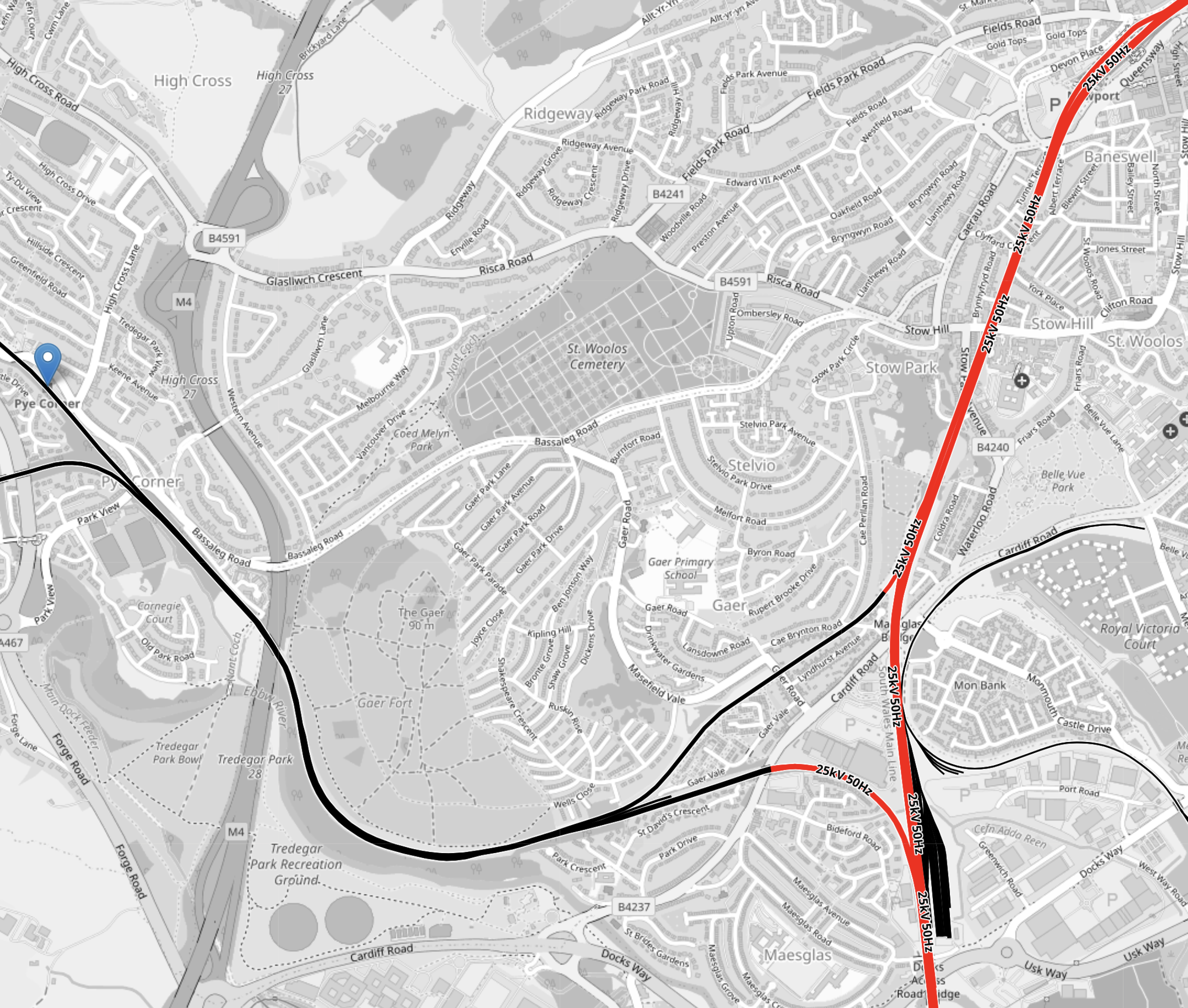
Note.
- Red tracks are electrified and black ones are not.
- Newport station is in the North-East corner of the map, with the South Wales Main Line running through.
- Pye Corner station is marked by the blue arrow and is the first station on the climb to Ebbw Vale.
- The unelectrified Ebbw Vale branch has a triangular junction with the electrified South Wales Main Line.
- The electrification continues for a short way towards Pye Corner and goes all the way to Newport and Cardiff.
- Trains take 24 minutes to turn round in Newport.
- Newport and Ebbw Vale Town is about twenty miles.
It can be safely said that trains will start their climb to Ebbw Vale with a full battery.
What Battery Size Will Be Needed?
I don’t think it will be that large and it will be the smallest battery, that could take a train up the hill.
As part of the climb is double track, the up track could be electrified to enable a smaller battery to be used, which would mean less power would be needed, due to the lower weight.
Conclusion
I believe that it will be possible to fit CAF’s Class 331 trains with a battery large enough to take a train up the hill to Ebbw Vale Town.
Electrification At Bromsgrove – 26th December 2017
These pictures show the electrification works at Bromsgrove station and up and down the Lickey Incline.


Nearly all the gantries seem to have been erected and much of the wiring seem to have been added.
It would appear that there is every chance that Bromsgrove will be able to run an electric service on Birmingham’s Cross-City Line in May 2018.
Onward From Bromsgrove With Electric Trains
It is worthwhile to look at the options for taking electric trains onward from Bromsgrove station.
The distances to and from Bromsgrove are as possible.
- Birmingham – 25 miles – Electrified
- Worcester – 16 miles – Not Electrified
- Hereford – 42 miles – Not Electrified
West Midlands Trains‘ fleet of four-car diesel CAF Civity trains would handle Birmingham to Hereford with ease.
Abellio, who are a partner in West Midlands Trains, have ordered Stadler bi-mode Class 755 trains for Greater Anglia.
These trains are ideal for routes like Norwich to Stansted and Cambridge to Ipswich, but they would also be efficient on the Birmingham to Hereford route.
So perhaps we might see bi-mode trains or trains with batteries on suburban routes from Birmingham.
I doubt a battery train could go further than Worcester.
The Lickey Incline
Electrifying from Birmingham to Bromsgrove means that the steep Lickey Incline will be included in the works.
Once the Lickey Incline is electrified, I would think it more likely that bi-mode trains could be seen on the routes to Hereford and Worcester.
Bromsgrove Station
Bromsgrove station is unusual in that it is at the bottom of the historic Lickey Incline, which for in railway terms is a very steep hill. Wikipedia says this about the station.
Bromsgrove is only one of four stations in the UK which get annual usage of over half a million journeys with just an hourly service (Blackrod, Hartlepool and Inverurie being the other 3 stations).
So Network Rail are rebuilding the station and electrifying the Lickey Incline to add Bromsgrove to Birmingham’s Cross-City Line as described in this section in Wikipedia. These pictures show the current station and the works for the new one.
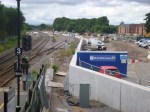
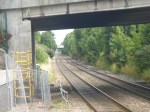
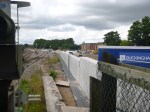
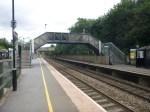
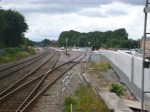
There will be four platforms and a large car-park, so obviously they are expecting an increase in passenger numbers. This Google Map shows the station and its relationship to the town.
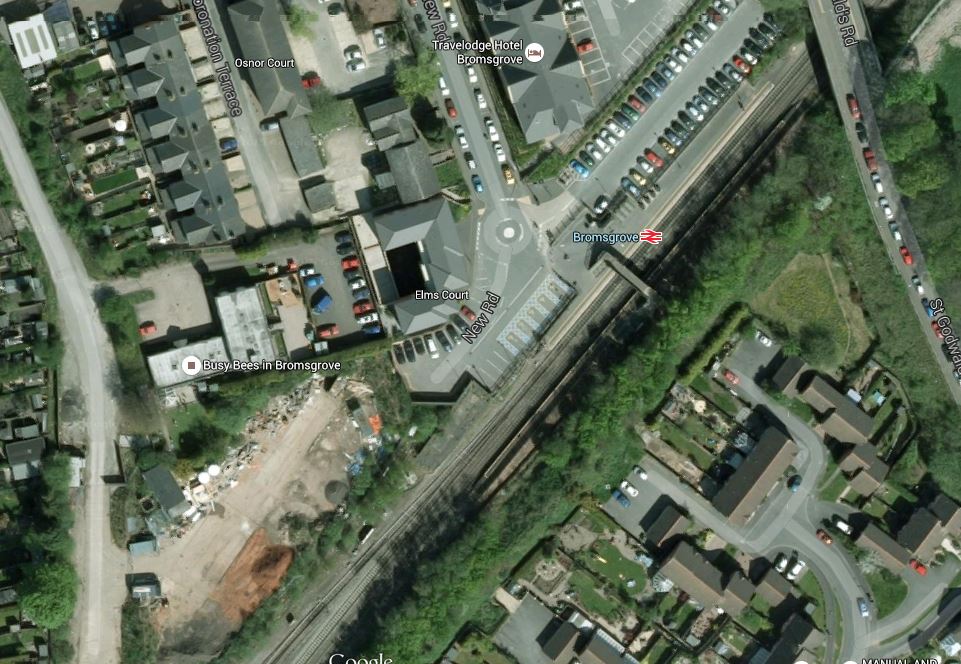
Bromsgrove Station
I can’t visit Bromsgrove station without commenting on the Lickey Incline, which I talked about in Up And Down The Lickey Incline. The views are pretty good as you look out over the Worcestershire countryside.
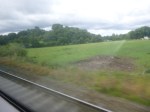
Going down, I felt that the train was very quiet, as the driver was relying on Newton’s friend, but going back to Birmingham, the underfloor diesel engines on my fully-loaded Class 172 train, were working very hard.
My train had taken the Lickey Incline from a standing start at Bromsgrove station, unlike the trains going straight through, which seemed to use the extra momentum of higher speed to climb the slope as easily as possible.
Sadly, I wasn’t treated to a show, as a banking engine pushed a heavy freight train up the hill.
 The Anonymous Widower