Before Overground – Clapton
Another Station For Those Not In The First Flush Of Youth – Rating 2/10
Clapton station is another with access problems for the disabled, buggy-pushers and the elderly.
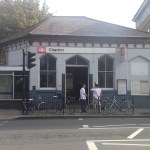


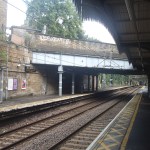
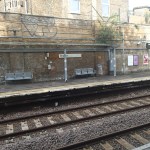
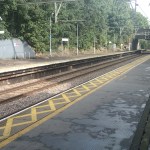

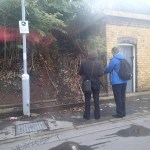
Unfortunately, the station also seems to have a touch of the Japanese Knotweed, although this could be one of the few stations in the Lea Valley Lines, where simple gardens could make the station much more pleasant.
I’ve been trying to imagine this station in a few months after a deep clean and a good painting, London Overground double orange handrails, some better standard seating and some tidy foliage at the far end of the platforms.
It will be much better than it is now.
Before Overground – Hackney Downs
Could Be A Great Station With Imagination – Rating 3/10
Hackney Downs station is rather a dump at present, as the pictures show.
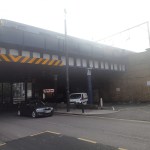
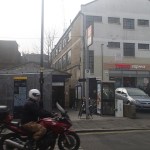
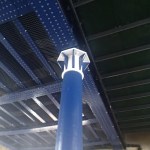
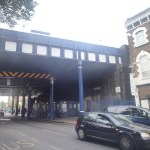
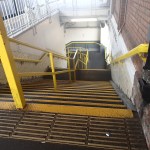
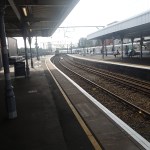
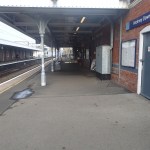
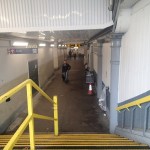
But because it is four platform station with rooms all over the place, it could with imagination be turned into the Crystal Palace station of the North.
The pictures show how the bridge over Dalston Lane has been restored, so at least a good start has been made. As the station has a lot of ironwork, I wonder if a Leadenhall Market solution could be applied. Instead of using expensive painters for all the ironwork, the City of London laid down the scheme and paid art students to do it. Hackney Downs obviously isn’t as grand, but if some of the ironwork in the station and others on the Lea Valley Line were to be properly painted, it might liven up a series of otherwise drab stations.
I also think that the large island platform, may be a suitable place to put a nice bronze sculpture that is deemed to be too valuable to display, as it might get nicked.
The station is a bit like one of those large rambling Victorian houses with umpteen rooms, that are advertised with tremendous potential.
Before Overground – London Fields
A Station With an Excellent Bakery/Cafe – Rating 3/10
London Fields station is another station on the Lea Valley Lines with no decent access.
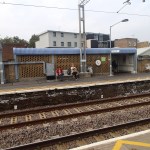
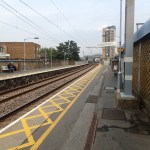
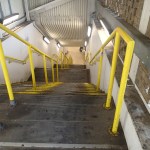


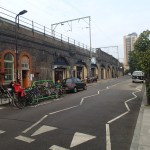

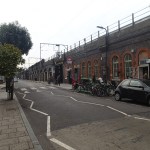
As I arrived a Japanese lady was struggling down the stairs with her three-year-old, a buggy and a scooter.
The reason she was coming was to visit the E5 bakehouse and cafe. It was so full, that I couldn’t get my intended cup of tea.
As you can see from the pictures, Network Rail have done a superb job in creating a series of small workshops in the railway arches.
It’s just a pity, that the access at the station wasn’t fixed at the same time.
As the station has only had a frequent service since 2005. was this one of those stations that British Rail hoped would quietly die?
Before Overground – Stoke Newington
A Dreadful Station To Avoid – Rating 2/10
Stoke Newington station was built when people weren’t disabled, pushed buggies or grew elderly and it shows.
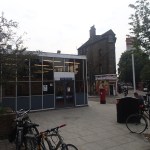

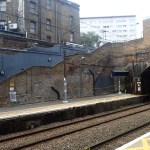
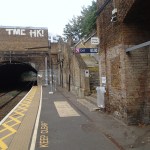
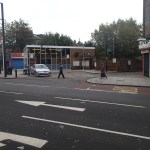
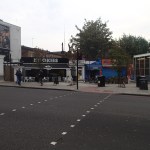
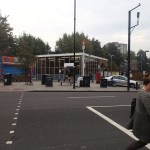

In my view it’s one of those stations, that with a creative surface makeover, lifts and perhaps a light-controlled crossing to access buses going north, could be turned into one of the better stations on the line. The station forecourt has what looks to be a decent cafe, so selective development around the station could probably improve matters.
Before Overground – Silver Street
A Disgraceful Station By An Important Hospital – Rating 1/10
These are pictures taken at Silver Street station.
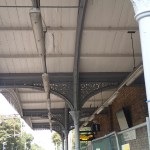

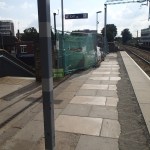
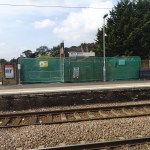
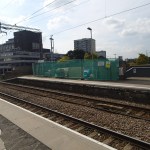

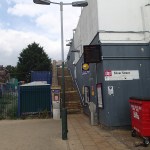
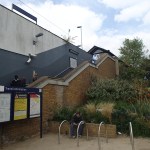
It is not one of the better equipped stations, as it has no lifts, escalators, no open ticket office or cafe.
The stairs are also long and precipitous. They would be impossible for anybody with a baby in a buggy!
What makes this a lot worse, is that the station is close to the North Middlesex hospital. So if you have access problems and are visiting the hospital, steer clear of this station. You’d be better going to Edmonton Green and ordering a taxi.
All hospitals should have very easy step-free access from the nearest transport interchange.
Before Overground – Edmonton Green
A Prototype Station For The Lea Valley Lines – Rating 8/10
This is the first of a series of posts, where I post pictures of the stations on the Lea Valley Lines before the takeover by the London Overground in May next year.

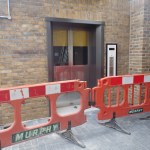
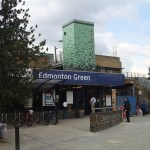

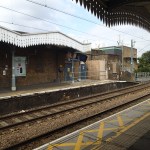

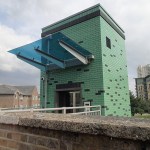
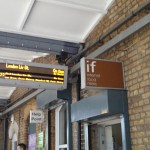
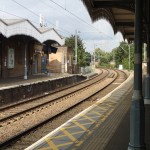
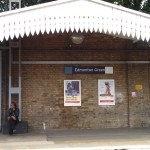
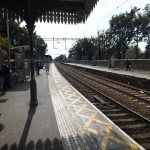
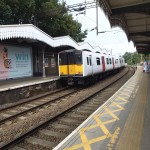
Edmonton Green station is one of the better stations on the line and the lifts that are being installed, should be fully working in a month or so.
I’ve used quite a few stations on the Lea Valley Lines, but this must be one that needs the smallest amount of work to bring it up to a high standard. It’s got lifts, a cafe, tasteful shelters and seats.
It also has good bus connections, so it is one of those stations, where if you were in a wheelchair or pushing a buggy, you might swap your mode of transport.
Up And Down On The East London Line
My memories if the East London Line don’t go back very far, as I probably only ever used the line once before I moved to Dalston in 2010. I think it must have been around 2000, when I was travelling from Brighton to my youngest son’s house in Bow. I changed trains at New Cross Gate to get to Whitechapel, from where I must have used the Metropolitan Line to Mile End, near to where he lived.
Comfortable and clean it wasn’t! The trains weren’t as bad as the travelling urinals of the North London Line, but the A Stock were forty years old and very tired.
I posted here about the step-free access improvements on the London Overground, so I thought I’d check them out.

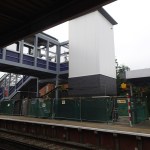
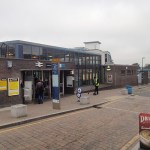

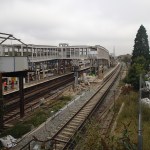

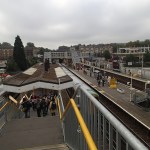
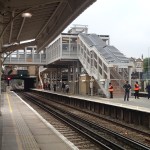
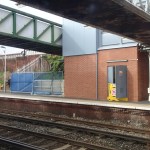
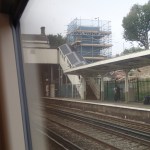
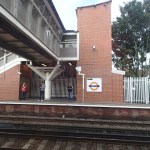
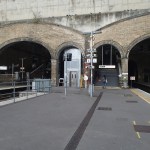
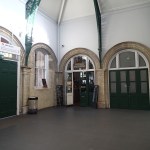

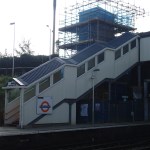

The pictures show my route from Dalston Junction to New Cross, from where I walked to New Cross Gate for a train to Crystal Palace. After a refreshment stop at the excellent Brown and Green cafe at the flagship southern terminus of the East London Line, I retraced my steps stopping to look at the improvements at Honor Oak Park and Brockley.
Of the stations south of Surrey Quays on the New Cross and Crystal Palace branches only Sydenham will not be substantially step-free by early next year. At Sydenham though it is effectively two stations, one for each direction, which means with planning, difficult stairs can be avoided.
Several excellent new cafes and coffee stalls, seem to be setting up in the stations.
The future is definitely looking up on the East London Line.
A good start has definitely been made on bringing some of the stations in South London into the twenty-first century.
More Step Free Access On The Overground
Looking at the London Overground map for 2026, there appear to be additional stations marked for step-free access.
Blackhorse Road – Plans are detailed here. They may be already completed!
Brockley – Improvements in the near future are detailed here.
Honor Oak Park – Improvements in the near future are detailed here.
New Cross – Improvements in the near future are detailed here.
New Cross Gate – This station would appear to be being rebuilt.
South Tottenham – Plans are detailed here in the Haringey Independent.
Watford Junction – I suspect that as everything seems to be happening at Watford Junction, full disabled access will be achieved by 2026.
Whitechapel – This will happen before 2020, as Crossrail will bring step free access between all lines here.
It does seem that all of these schemes seem to be following what appears to be Transport for London’s policy of improving the London Overground on a step-by-step basis as funding allows.
I suppose that with the Overground, putting in lifts and ramps is a lot easier, as the stations except for a few are totally above ground.
London Overground’s 2026 Map
Transport for London (TfL) have published a map of what they feel the London Overground will look like in 2026.
Most of the changes actually will occur next year, so I suspect there will be other things added before 2026.
My money would be on some of these being completed.
- Electrification of the Dudding Hill Line as a westward extension of the Gospel Oak to Barking Line to rejoin the North London Line.
- A More Comprehensive Interchange at West Hampstead station.
- Some developer-led station rebuilds and perhaps additions.
- Reopening Of the Hall Farm Curve to enable services between Chingford and Stratford, with a stop at Lea Bridge.
- Extra Overground branded services in a loop across South London.
With the exception of the electrification of the Dudding Hill Line and the works at West Hampstead, most of the other projects could probably be classed as smallish ones in terms of cost to TfL. But they may have a high return.
At present the Overground is being upgraded to take five-car trains, but judging by this picture taken at Camden Road station, it would appear that where they can fit them in, platforms are being readied for the next upgrade to six cars.
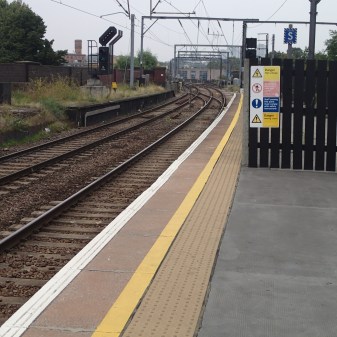
Platform Extension At Camden Road Station
TfL have said, that where stations can’t be extended selective door opening will be used. As the Class 378 trains are walk-through and have a full information system, I’m sure the self-loading cargo, will get used to it.
This afternoon, I travelled along the North London Line and it would also appear that TfL are taking the opportunity presented by the platform lengthening to widen a few of the narrower platforms, like those at West Hampstead. This picture was taken at Brondesbury Park.
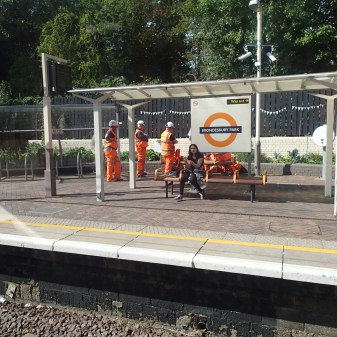
An Oasis At Brondesbury Park
It would appear that they’ve created a much wider platform with a roof and a garden.
TfL also don’t seem to be using a one-size-fits-all at the stations. Too often railway lines seem to be designed to a very limited set of rules to save costs. The London Overground inherited a series of run-down and mismatched stations, which they have almost used to advantage. Some like Hampstead Heath, were probably beyond saving, so they have rebuilt them to a station that befits their location.
In asddition, three external factors will drive the development of the London Overground; freight, the need for the development of more homes and commercial properties of all sorts and Crossrail.
Freight
The Overground gives over a lot of paths to freight, especially on the northern lines. A lot of these trains are still hauled by unfriendly Class 66 diesel locomotives. Alternative electric locomotives or the new Class 88, should be an aspiration for all lines that go through cities.
Bear in mind that once, the Midland Main Line, the Great Western Main Line and the Gospel Oak to Barking Line are electrified, which should all be complete by 2020, the Dudding Hill Line would be the only line, habitually used by freight trains in the northern part of London, not to be electrified.
So for freight reasons alone, I would think electrifying the Dudding Hill Line is a good idea.
But expect a few surprises if Option 1 is implemented, as Transport for London and especially the Overground has a history of doing the unexpected but excellent. Look at the one platform solution at Clapham Junction, where the West and South London Lines of the network meet.
Development of New Homes and Commercial Properties
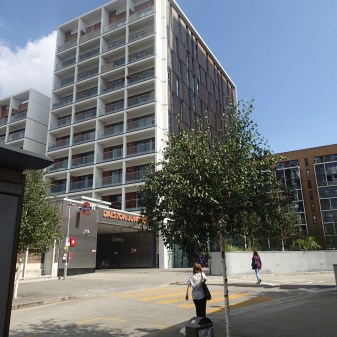
London may need new railways to cope with the increased population, but it also needs new homes and commercial properties. Land in London is at a premium, but see what was done here in building flats over the new Dalston Junction station.
Residential Development Over Dalston Junction
It is not the highest quality of developments, but it was probably the best that could be done at the height of the recession. Small scale development is already taking place at some stations like Highbury and Islington and West Hampstead.
But in this country, we have some very good architects and developers, so I would expect to see some innovative development proposals all round the London Overground.
I must admit, that if I had to live in a modern development, surely one on top of a well-connected railway station is probably best!
Crossrail
London’s new railway; Crossrail, will change a lot of things in London’s transport system.
As a simple example if I go to Heathrow from home, the journey takes about an hour and twenty-two minutes. But after Crossrail is running, the journey will take less than an hour.
But this means, I’ll take the East London Line to Whitechapel to connect with Crossrail.
In addition, Crossrail and the Overground have interchanges at Stratford, Whitechapel and probably by 2026 at Old Oak Common.
So I suspect that many journeys in London will change because of Crossrail.
Predictions made now will be valueless after Crossrail opens in 2019.
Should The Gospel Oak To Barking Line Be Extended To Barking Riverside?
There is no doubt in my mind, that the Barking Riverside area needs better transport links. I was there mid-morning and the buses were busy. One lady told me that buses in the area weren’t reliable.
So either the Gospel Oak To Barking Line or the Docklands Light Railway must be extended.
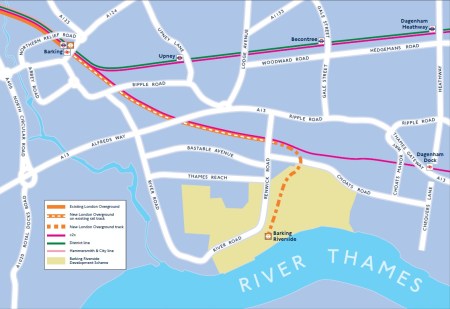
It would appear that TfL has chosen the heavy rail solution and they have started a consultation and published this map.
GOBlin Extension To Barking Riverside
The housing looked to be of good quality, although there are reports that some of the first houses weren’t.
When I see housing like this, I am reminded of our first and only house, where I took the car to work and C was stuck in all day with a baby, in a place with no public transport.
It didn’t do much good for our relationship!
Barking Riverside could have in the future a population of around 26,000. This makes it all the more essential that something is added to the two bus routes with a frequency of five buses an hour.
I actually think, that when the area is fully developed, this extension to the Gospel Oak To Barking Line, will need to be augmented. Especially, if the line is extended again under the river to Abbey Wood.
But before we go to Abbey Wood, wouldn’t it be a good idea to follow the electrification of the Gospel Oak To Barking Line with electrification of the Dudding Hill Line, so that trains could go all the way to West Hampstead, Acton and ultimately to Hounslow, as is proposed in Transport for London’s Tranpost Plan for 2050.
 The Anonymous Widower