Could Third-Rail Tram-Trains Work The Epsom Downs Branch?
The Epsom Downs Branch is a single-track branch line from Sutton to Epsom Downs station.
Currently, it has a service to Victoria of around two trains per hour (tph), but it doesn’t seem to generate much business.
In 2015-16, Epsom Downs station had 112,000 passengers, whereas Sutton station had 7,111,000.
As the three stations on the branch are all single-platform stations with few facilities, can it be viable to run Class 377 and Class 455 trains on the branch?
When the London Tramlink arrives in Sutton, I wonder if the branch would be more suited to be running by trams.
But as the line is electrified with the standard 750 VDC third-rail system, is it one of those places, that could it be served by a third-rail tram-train, as I proposed in The Third-Rail Tram-Train?
I think the answer is in the affirmative.
Consider.
- The tram service could terminate at the proposed Streatham Common Interchange station.
- It takes less than ten minutes to go between Sutton and Epsom Downs
- In the Peak or when more capacity is needed, Class 377 trains could still run the service.
- The tram-trains could provide a step-free service.
Running the service with tram-trains, would give one big advantage; the ability to run a service to the Royal Marsden Hospital, which according to this document from the hospital is not the best, when it comes to public transport.
A single-track branch from the Epsom Downs Branch could start South of Belmont station and tram-trains running on batteries could serve both the Royal Marsden Hospital and the Institute of Cancer Research.
This Google Map shows Belmont station and the hospital.
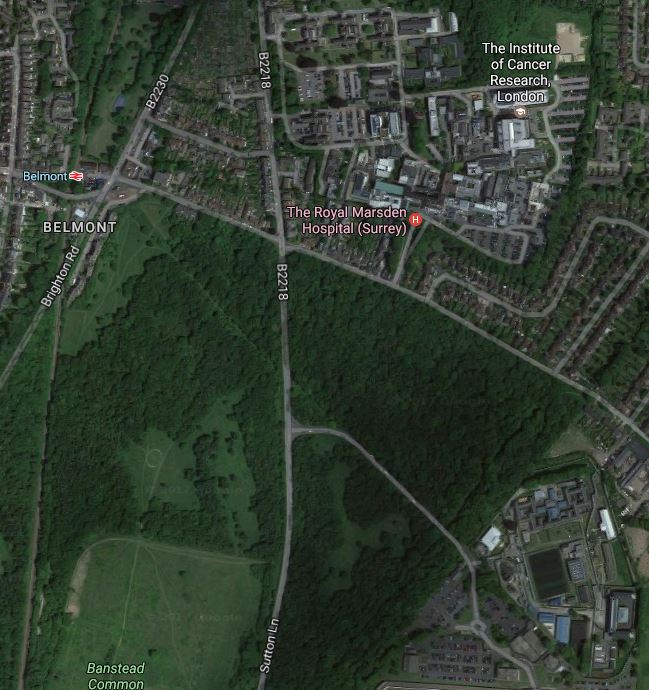
Note.
- The rail line from Belmont station to Epsom Downs station running down the West side of the map.
- There are two prisons in the South East corner of the map.
- The road from Belmont to the Hospital may only be half a mile, but it is up a steep hill.
- Why is every train arriving at Belmont station, not met by a shuttle bus to the Royal Marsden Hospital?
- There is one train per hour through Belmont station in both directions.
A silent battery tram-train without any overhead wires, climbing up on the railway line and then turning East across Banstead Common calling at the prisons en route to the Hospital, might be acceptable to the Planning Authorities. It would surely be less intrusive than some of cars and vans, I saw rushing through the Downs.
I would think that the hospital needs a frequency of four trains per hour to Sutton, in addition to the current sewrvices between Sutton and Epsom Downs.
A charging station, like a Railbaar, at the end of the short branch might be needed, to make sure that the gradients were conquered.
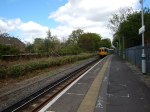
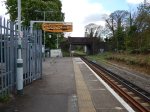
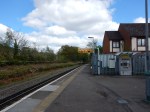
These pictures show Belmont station and the walk to the Royal Marsden Hospital.
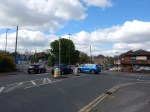
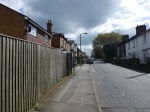

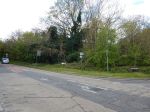
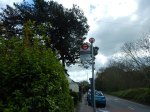
Knowing, what I now know of the Royal Masrsden Hospital, it wouldn’t be my choice of hospital.
I don’t think, I’vw seen a hospital with such terrible access by public transport!
Could Third-Rail Tram-Trains Be Used To Increase Services In South London?
I ask this question, as some of the frequencies on suburban lines in South London aren’t up to their equivalent in the North.
Sutton Loop Line
As an example, Sutton Common station on the Sutton Loop Line of Thameslink, has this Off Peak service according to Wikipedia.
The typical off-peak service from the station is 2 trains per hour to Wimbledon (clockwise around the loop) and 2 trains per hour to Sutton (anticlockwise).
Other stations on the loop with this level of service include Haydons Road, Morden South, St. Helier, South Merton, Tooting, West Sutton and Wimbledon Chase.
On the other side of the loop via Mitcham Junction station, the service is augmented by London Victoria to Epsom services, running at two trains per hour (tph).
People might say, that the solution to the poor service at stations on the Sutton Loop Line is just to run four tph in both directions round the loop.
But that would probably mean the Snow Hill Tunnel with its capacity of 24 tph, will become overloaded.
Thameslink’s Route To Sevenoaks
Crofton Park station on Thameslink’s route to Sevenoaks station has this Off Peak service according to Wikipedia.
Two trains per hour to West Hampstead Thameslink and Sevenoaks.
The passengers moan about it as I wrote in The Natives Are Getting Restless In Crofton Park.
They want four tph now!
But again they can’t have them, as it’s the capacity of the Snow Hill Tunnel.
Transport For London’s Philosophy
Transport for London, have released a report on the Bakerloo Line Extension that they call the Option Selection Summary Report.
It is one of those worthy documents, you get from analysing the data from consultations.
But it is full of several nuggets, which although not directly associated with the Bakerloo Line could be very important for passengers coming from or venturing to South London.
They have also provided this helpful map, which lays out possible actions and improvements.
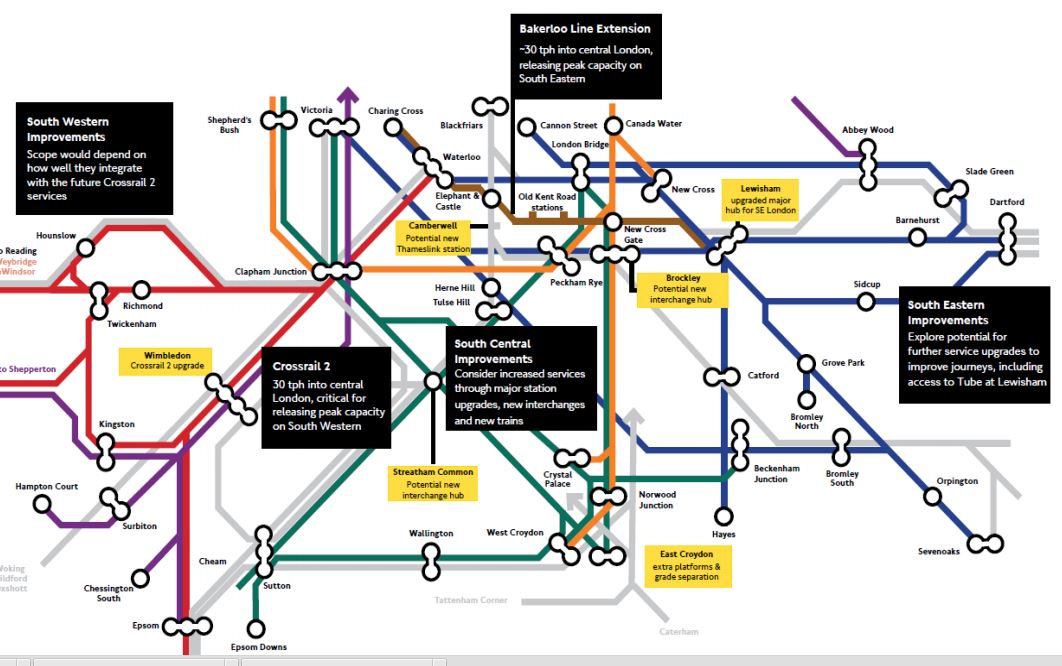
It seems to me that TfL are following a plan to add more transport hubs to their network South of the Thames.
Currently, the following are important interchanges between Underground, Overground, trains, Tramlink and buses.
- Bromley South
- Clapham Junction
- East Croydon
- Greenwich
- Lewisham
- Wimbledon
- Woolwich
Note.
- East Croydon will benefit in a large way from Thameslink, but so will Greenwich and Woolwich in a smaller way.
- Clamham Junction and Wimbledon will be stations on from Crossrail 2, if it’s ever built.
- Lewisham will become the terminus of the Bakerloo Line.
The map and other sources also show other stations becoming important transport hubs or connections.
- Brixton, where all the lines in the area are in a single station.
- Brockley
- Catford, where the current Catford and Catford Bridge stations become one station.
- Crystal Palace, which will soon get extra services from Whitechapel and Highbury and Islington stations.
- Orpington
- Penge
- Streatham Common
- Sutton
London Bridge station shouldn’t be ignored, as after Thameslink is completed, it will be an efficient interchange between the North-South Thameslink services and the Southeastern services between Charing Cross/Cannon Street and the wider South-East.
Put all of these proposals together and could third-rail tram-trains be a useful addition to transport in South London?
I will detail a few possible routes.
Onward From Beckenham Junction To Bromley South or Orpington
In Could Beckenham Junction To Birkbeck Be Run Using Third-Rail Tram-Trains?, I detailed how third-rail tram-trains could be used between Harrington Lane tram stop and Beckenham Junction station to create more capacity.
If run by tram-trains, this service could be extended to Bromley South or Orpington.
Orpington station has four bay platforms facing towards London and Beckenham Junction.
This map from carto.metro.free.fr shows the track layout at the station.
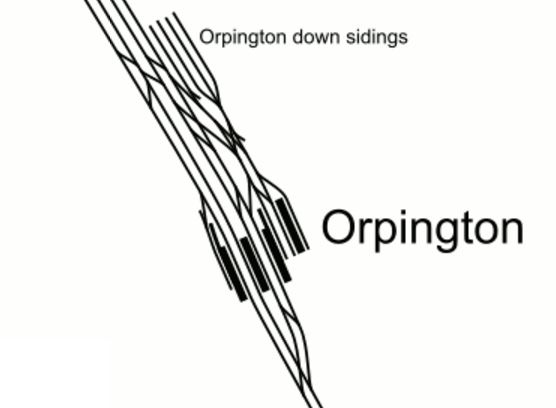
The tracks reduce from four to two at Orpington station, which probably means that tram-trains should probably not go further than Orpington station.
Bromley South station is another possibility for a terminus for tram-trains and this map from carto.metro.free.fr, shows the station layout.
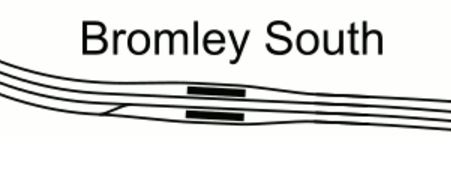
The tram-trains would probably use the two Northern tracks.
At present there are the following services between Birkbeck and Beckenham Junction stations.
- 2 trains per hour between London Bridge and Beckenham Junction
- 6 trams per hour between East Croydon and Beckenham Junction
Looking at the frequencies, I suspect that if two of the trams per hour, were tram-trains and ran to Bromley South and Orpington, this could be accommodated in the timetable.
I think that this route would have the following advantages.
- Bromley South and Orpington stations would be valuable interchanges to Southeastern’s and Thameslink’s Kentish destinations.
- Running tram-trains between Birkbeck and Beckenham Junction stations as tram-trains on a double-track line, must improve capacity and reliability.
- Bromley town centre has been touted as an extension to Tramlink.
Bromley South station, might not be Bromley town centre, but it is only a short walk.
However, if it were needed, I suspect that a single-track spur to serve the town centre could be created to the West of Bromley South station.
This Google Map shows the Southern end of Bromley High Street and Bromley South station.
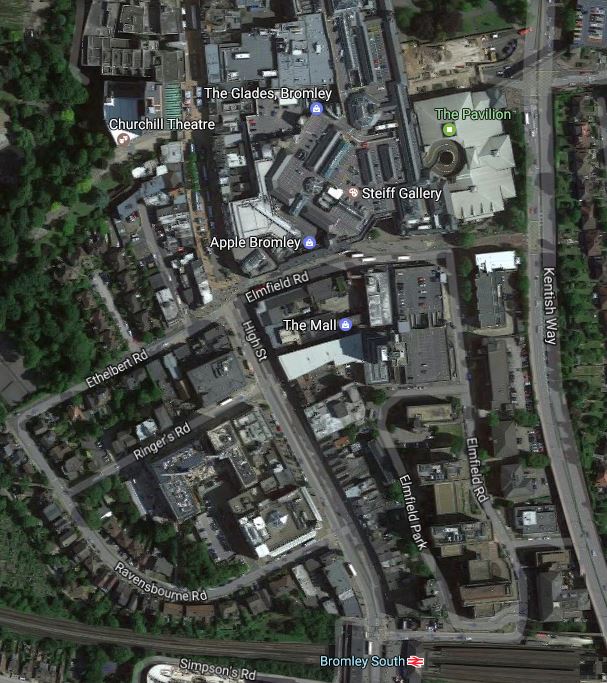
It could probably use battery power to pull up the short hill to Bromley town centre.
- The terminal tram stop could be at the South end of the pedestrianised area.
- The on-street route would be single-track, bi-directional and electrically dead.
- A second tram stop could be provided by Bromley South station.
- The maximum frequency to a single platform would probably be two trams per hour.
In some ways, the town centre tram stop is a bay platform for Bromley South station, that can only be used by tram-trains with a battery capability.
Onward From Harrington Road To Crystal Palace
It was always hoped that Tramlink could be extended to Crystal Palace station and this has been developed as Route 5.
The Wikipedia entry for Harrington Road tram-stop says this.
Transport for London once had plans to extend the Tramlink system to Crystal Palace. These plans were known as Extension D or Tramlink route 4, and would have involved a junction to the north of Harrington Road, with the extension joining the existing railway in the opposite direction to the current line 2.
The planned extension to Crystal Palace was formally dropped by Transport for London in 2008.
But using tram-trains could make this a more flexible low-cost option.
- Battery power could be used to go to the terminus at Crystal Palace Parade.
- Battery trams would be very easy to install in a park, if required.
- A charging station, like a Railbaar, could be provided at the terminus, if the battery running looked like needing assistance.
- Tram-trains could go past Crystal Palace to a station with a suitable bay platform.
This Google Map shows the route.
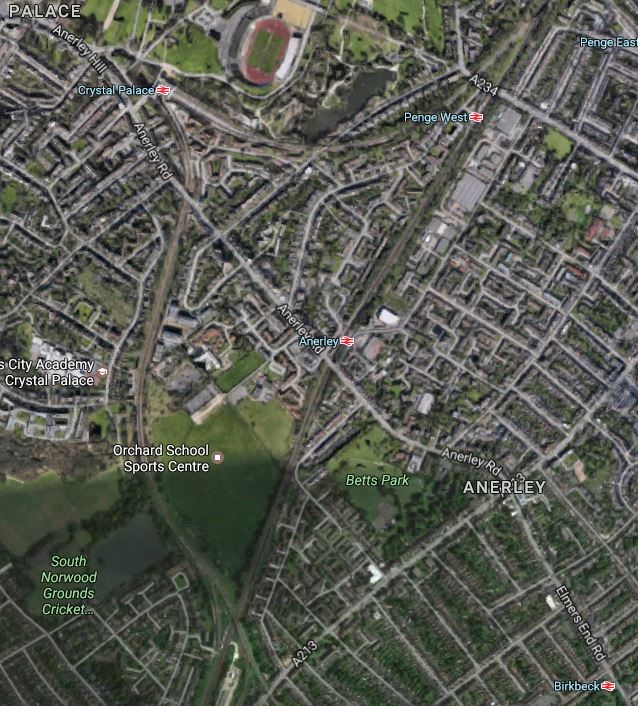
Note Crystal Palace in the North West corner, by the running track and Birkbeck station in the South East.
New tram stops have been proposed at Penge Road and Anerley Road and as the lroute will be run by tram-trains, I suspect that an innovative island station design could serve both tram-trains and trains.
Crystal Palace station, which in a couple of years will have six tph from the well-connected Whitechapel, would benefit from a Tramlink connection.
Onward From Elmers End To Catford
Elmers End station has six trams per house from East Croydon.
This Google Map shows the station.
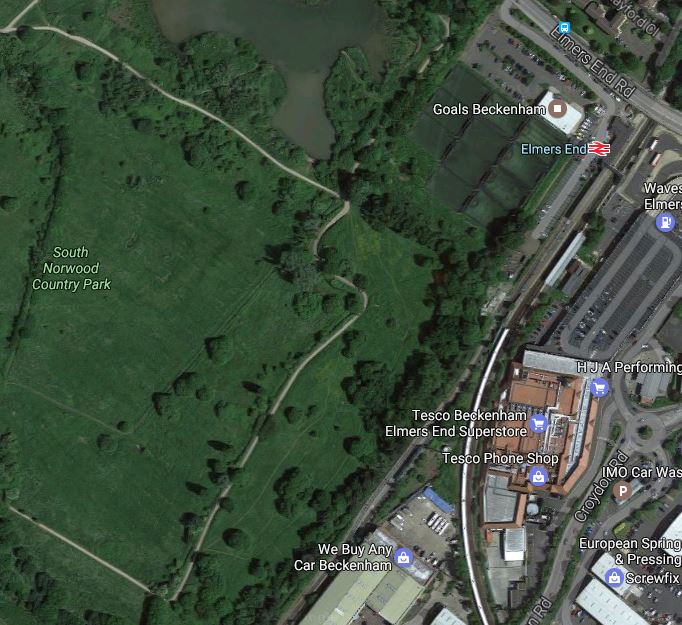
Note how it connects to the Hayes Line and I doubt if it would be difficult to allow through running of tram-trains between East Croydon and stations to the North on the Hayes Line.
The logical Northern terminus would probably be in a new Catford Interchange, which Transport for London have talked about to combine Catford and Catford Bridge stations.
This Google Map shows the two stations and Catford town centre.
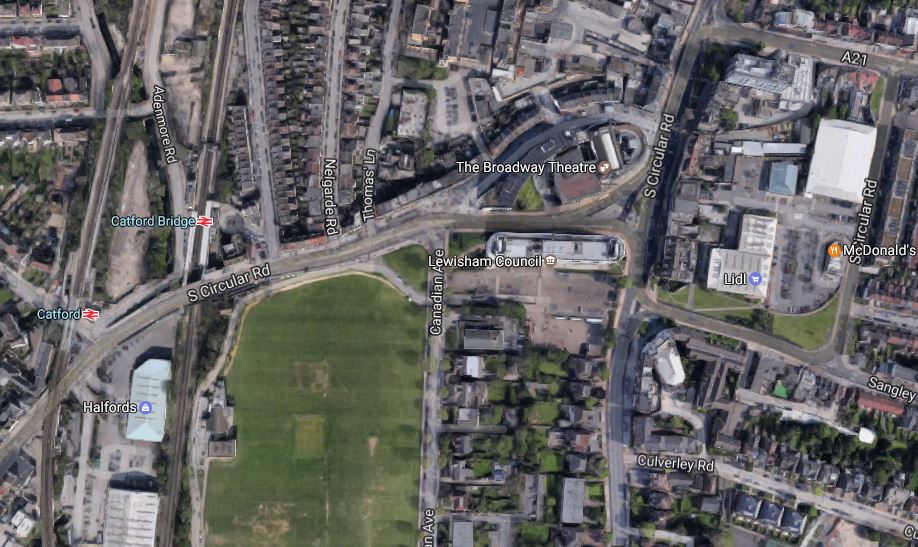
A tram-train could probably run on batteries to the town centre, perhaps with a terminus at Catford Broadway by Lewisham Town Hall and the Broadway Theatre.
But with the right design of the new interchange, the tram-train could go further North to a station with a handy bay platform, if that was deemed necessary.
Increasing The Frequency On The Sutton Loop Line
As I said earlier stations on the Western side of the loop, generally get about two tph in both directions, but those on the Eastern side get an extra two tph going between Victoria and Epsom.
The trains on the line are typically eight-car trains of a variety of types. Capacity may be a problem, but a line like this needs at least four tph all day.
There could also be a case for an extra station to serve St. George’s Hospital and perhaps another as part of the development at Hackbridge.
There is a Hackbridge Masterplan on Wikipedia. This is the first paragraph.
The London Borough of Sutton is working to make Hackbridge the ‘UK’s first truly sustainable suburb’. There has been a regeneration scheme in Hackbridge which has a number of developments on many sites. These are mentioned as part of the Hackbridge Regeneration. Detailed plans include proposals for new eco-friendly homes, more shops, leisure and community facilities, jobs, sustainable transport and pedestrian/ cycle initiatives, improved networks and open spaces.
It all sounds good to me. This is a Google Map of the area.
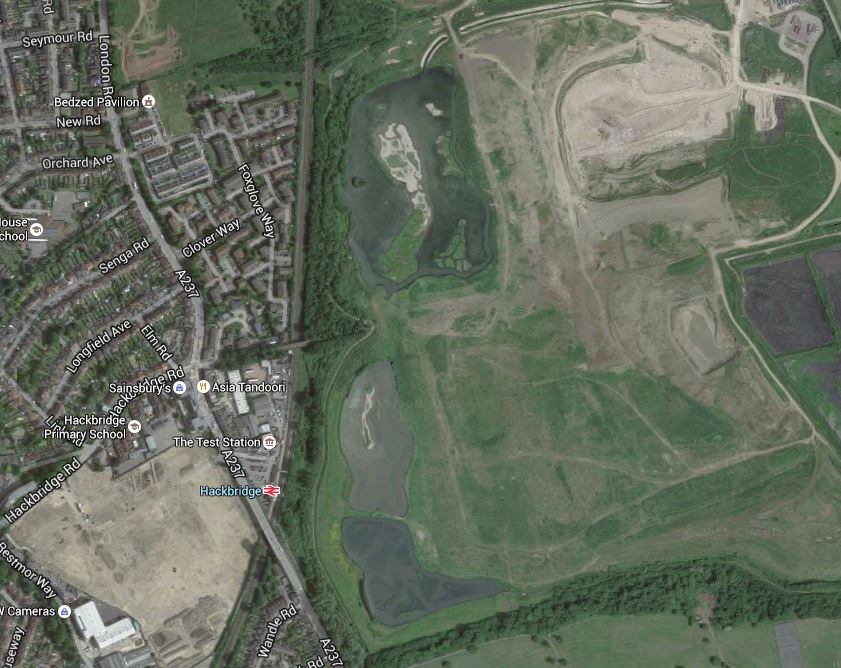
Hackbridge
Note the rail line going up the map with Hackbridge station about a quarter of the way up.At the top of the map, is an icon indicating the BedZed Pavilion.
If they are truly into green transport, it strikes me, that there needs to be another station between Hackbridge station and Mitcham Junction station, which is the next one to the North. As the Tramlink through Mitcham Junction runs down the eastern side of the site and has a stop at Beddington Lane on the north east corner, I would also feel that there scope for extensions to the through Hackbridge.
So for frequency and environmental reasons, I think there is a strong case to improve the Sutton Loop Line.
The obvious way to increase the service would be to have two tph start and finish in a bay platform, at the proposed Streatham Common transport interchange. Not only would it provide four tph on the whole loop, but if the trains were scheduled correctly, all stations on the loop would have the following services to Blackfriars.
- 2 tph direct.
- 2 tph with a change at Streatham Common.
- 2 tph direct via Sutton
- 2 tph via Sutton with a change at Streatham Common.
With good design the change at Streatham Common could be a walk across the platform.
I don’t think that the extra services would need to be eight-car trains, but why use tram-trains?
The tram-trains major advantage is that they could go walkabout to perhaps serve some of the new developments or hospitals like St. Helier or the Royal Marsden.
Using The Sutton Loop Line As A Reversing Loop For Trams From Croydon
This Google Map shows Mitcham Junction station.
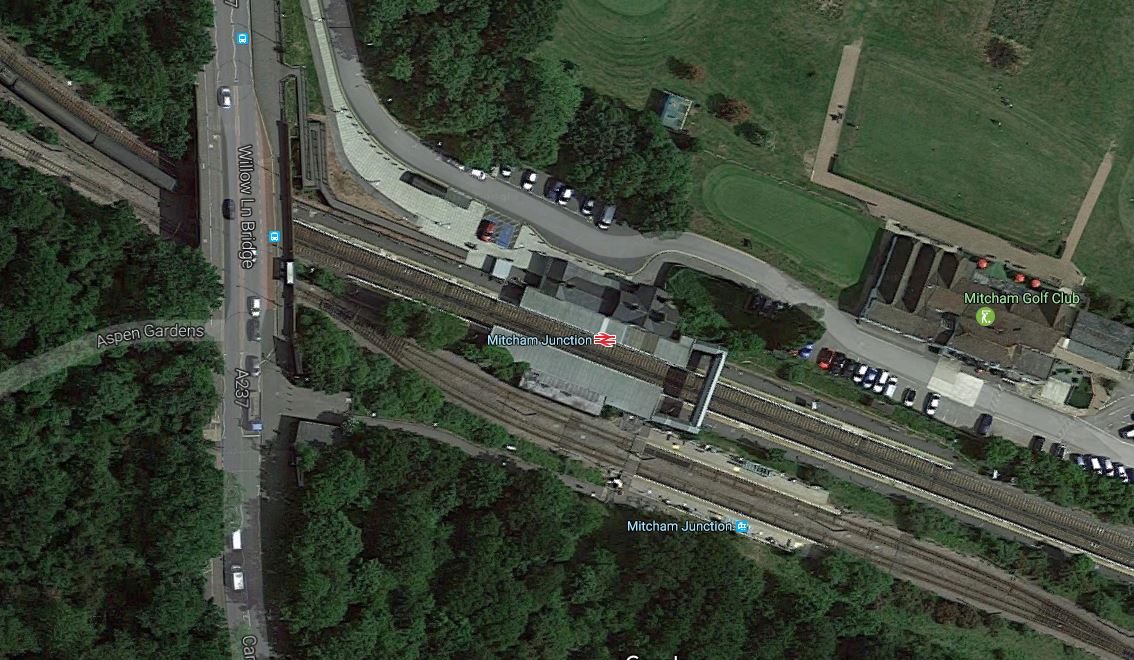
I don’t think it would be too difficult to add chords to the junction, so that a tram-train coming from Croydon could transfer from Tramlink to the Sutton Loop Line. The tram-train would then go round the loop including passing through Wimbledon station on the opposite face of the Tramlink platform.
After returning to Mitcham Junction, the tram-train would return to Croydon.
It may seem a long way round, but there’s probably only a couple of minutes in it.
But it would need a chord at Streatham Common for the tram-trains to by-pass the station.
This Google Map shows the location of the proposed Streatham Common interchange.
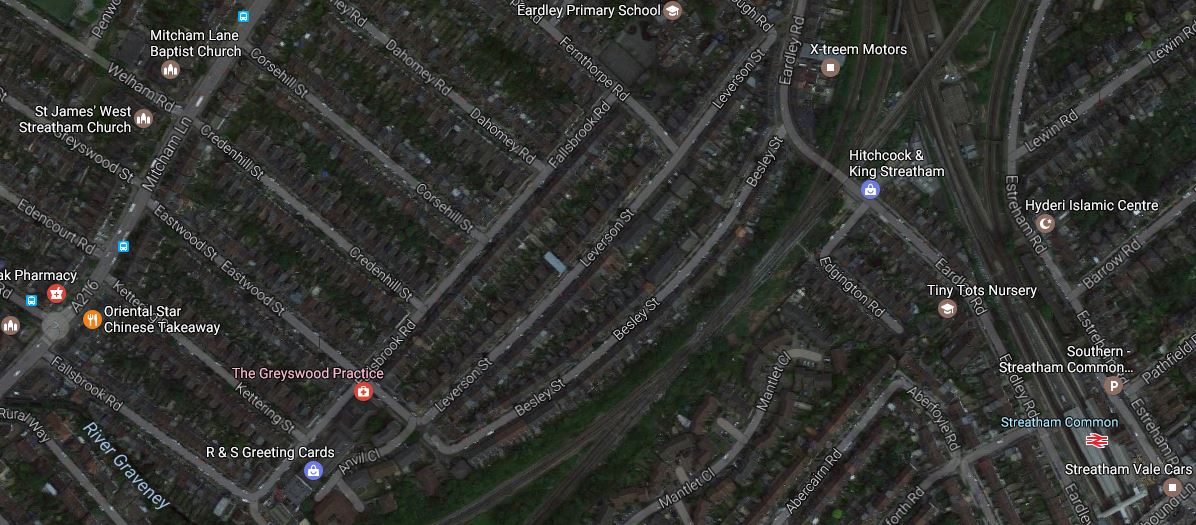
The current Streatham Common station is in the East, The interchange would be built, where the lines cross.
The chord would be built to the South of where the two lines of the Sutton Loop meet, at the bottom of the map.
The track could be adjusted, so that tram-trains could go round the loop both ways.
Will The Victoria-Epsom Service Call At Streatham Common Interchange?
Stops with modern trains are much quicker than they used to be only a few years ago.
So If the design of Streatham Common station and the timetable could allow a fast interchange, it might improve journey times for those living on the Wimbledon side of the Sutton Loop Line, which don’t get direct services from Victoria.
The Proposed Tramlink Extension To Sutton
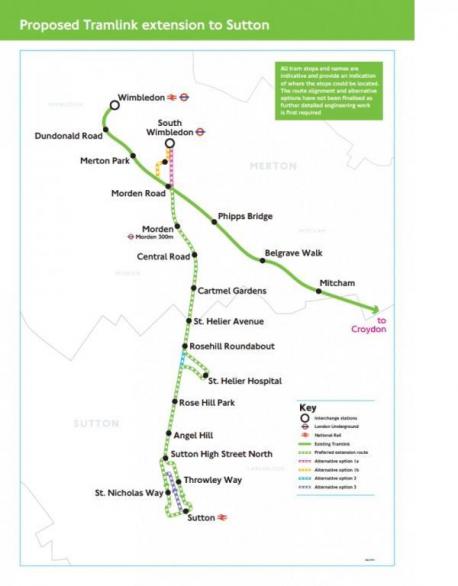
The proposed Tramlink route Between South Wimbledon And Sutton is possibly a worthwhile extra public transport link to throw into the mix. It is described under Extension A in the Wikipedia entry for Tramlink. This is said.
In July 2013, Mayor Boris Johnson affirmed that there is a reasonable business case for Tramlink to cover the Wimbledon – Sutton corridor. A map has been released showing the planned route. It would leave the existing route just to the east of Morden Road and head along the A24 and A297 to Rosehill Roundabout, then the B2230 through Sutton town centre, ending at the station. A loop via St Helier Hospital and a possible extension to Royal Marsden Hospital also are shown.
This is a map of the route.
So how would third-rail tram-trains using the Sutton Loop Line affect the proposed Tranlink Extension to Sutton?
- There are at least four tph in both directions on the Sutton Loop Line.
- The trams will reach Sutton, but only running as trains.
- St. Helier Hospital is not served.
- Tram-trains could possibly serve the Epsom Downs Branch, in addition to the direct services to Victoria.
I describe how third-rail tram-trains could serve the Epsom Downs Branch and the Royal Marsden Hospital in Could Third-Rail Tram-Trains Work The Epsom Downs Branch?
Could Beckenham Junction To Birkbeck Be Run Using Third-Rail Tram-Trains?
Look at this map from carto.metro.free.fr, which shows the lines to the west of Beckenham Junction station.
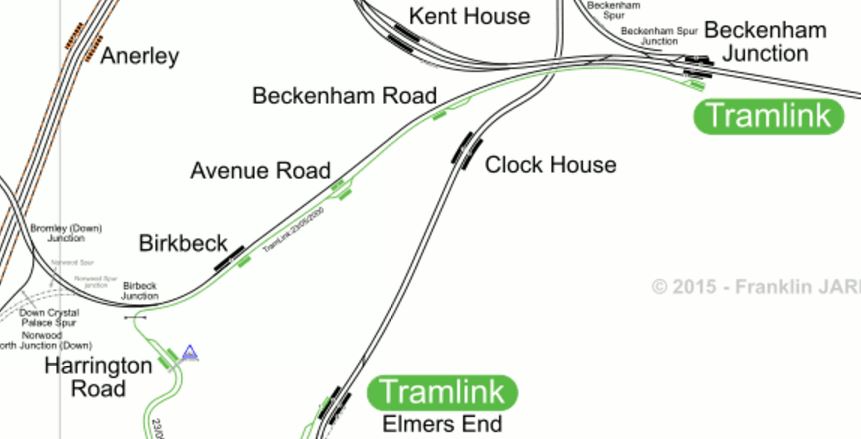
Lines To The West Of Beckhenham Junction Station
At Beckenham Junction station, there are the following platforms.
- Two through platforms.
- Two Westward-facing bay platforms for trains.
- Two Westward-facing bay platforms for the Tramlink.
But the real problem of operation of the section of line through Beckenham Junction station is that, both the main line and tram line to Birkbeck station are bi-directional, which must limit capacity.
Running Using Third-Rail Tram-Trains
Suppose that the trams going to Beckenham Junction were tram-trains capable of running on both 750 VDC overhead and third-rail electrification, with a limited range of perhaps 2 km. on batteries.
The following would be done.
- The current Tramlink line would be for all Westbound tram-trains and trains.
- The current heavy rail line would be for all Eastbound tram-trains and trains.
- Both tracks betweeen Birkbeck and Beckenham Junction would have third rail electrification.
- There would be no electrification of any sort between Harrington Road tram stop and Birkbeck station.
- All trams using the line would have a tram-train capability, dual 750 VDC pick-up and batteries.
- All trains using the line would be as now.
- Birkbeck, Avenue Road and Beckenham Road stations would revert to traditional stations.
- All platforms would need to be adjusted to give step-free access to the two types of vehicles.
I suspect that Beckenham Junction station could also be remodelled to have bay platforms, that could accept both trains and tram-trains.
The Current Services
The typical off-peak service frequency is:
- 4tph (trains per hour) to London Victoria (Southeastern)
- 2tph to London Bridge via Crystal Palace (Southern)
- 4tph to Orpington (Southeastern)
These train services would be unaffected, except that they could stop in Birkbeck, Avenue Road and Beckenham Road stations, if required.
The tram services would be generally unaffected, although they would need to cross over from the Eastbound line into Beckenham Junction, as trains do now.
Tram-Train Operation
Consider how a third-rail tram-train would operate between Croydon and Beckenham Junction.
- It would run as a normal tram using the overhead electrification to Harrington Road tram stop.
- At Harrington Road tram stop, the pantograph would be lowered and the tram-train would run to Birkbeck station on battery power.
- The tram-train would then lower the third-rail shoe and run to Beckenham Junction on the third rail electrification.
This Google Map shows Harrington Road tram stop and Birkbeck station.
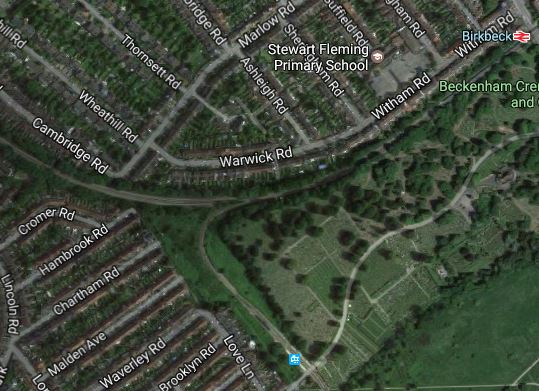
The distance between the two is probably under a kilometre.
Advantages
I can’t believe that creating a double-track railway, that can be used by both tram-trains and say Class 377 trains, doesn’t have advantages.
- The passing loops on the tram line would not be needed, as Eastbound and Westbound trams would be on different lines.
- The double-tracking should reduce train delays.
- It would allow the tram frequency to Beckenham Junction to be increased., which might enable a whole lot of possibilities.
- Tram-train services could be extended to Bromley South station.
I do feel though that the biggest advantages might be enabled, if Birkbeck, Avenue Road and Beckenham Road became single island platforms between the tracks. This would enable.
- Same platform interchange.
- Train passengers going East could change to a tram-train going West and vice-versa.
- A single lift could be installed at Birkbeck, Avenue Road and Beckenham Road stations for step-free access.
There are certainly possibilities to improve the line.
The Bakerloo Line Extension To Hayes and Beckenham Junction Stations
If this happens, which is looking inreasingly likely, there may be advantages in using tram-trains to Beckhenham Junction and Bromley.
Conclusion
By replacing the trams to Beckenham Junction station with tram-trains, capable of running on both 750 VDC types of electrification and with a limited battery capabilty, would simplify operation at Beckhenham Junction and enable Tramlink services to be extended to Bromley South station.
Were The New Merseyrail Trains Designed In A South London Pub?
In Thoughts On Merseyrail’s New Trains, I postulated that the new Stadler trains could work as trams on appropriate infrastructure.
I looked at the pictures in The Design Of Tram Or Tram-Train Stations, which I wrote in March 2015 and came to the conclusion, that Merseyrail’s new trains might be able to run on the London Tramlink with some modifications.
- The ability to run on 750 V DC overhead electrification.
- Precise adjustment to the platform height.
- Tram lights and signalling to make the vehicles comply with regulations.
So why do I say that the new Merseyrail trains were designed in a London Pub?
- Both Merseyrail and South London have networks with third-rail electrification.
- Merseyrail need a train to match their tunnels and platform heights, which are sized to the current Class 508 trains.
- South London has the London Tramlink, which runs Stadler Variobahn trams.
- The London Tramlink has strange infrastructure between Birkbeck and Beckham Junction stops, which could be improved if trams and trains could share lines and platforms.
- The London Tramlink would like to extend to Bromley South station.
- Merseyrail have been talking about running a tram-train to Liverpool Airport.
- Stadler have experience of trams, trains and the very special experience of Zwickau, where Stadler DMUs share tracks with electric trams.
- Stadler builds the tram-trains for Karlsruhe, Chemnitz and Sheffield.
- Karlsruhe has a problem of two different sized tram-trains, which has been solved, by clever design of the vehicles and the platforms.
- Every Stadler train seems to be different, with different car dimensions to fit the customers tracks and different power systems to give them the required performance.
I think that a Stadler engineer or perhaps more came over to look at both London and Liverpool’s problems and after riding round South London, they ended up in a local hostelry and lots of alcohol was added to the mix to see what would happen.
The result was a concept, which I think of as a train-tram with the following features.
- The ability to run as a speedy commuter EMU train on either 750 VDC third-rail, 750 VDC overhead or 25 kVAC overhead electrification.
- The ability to run as a tram on 750 VDC overhead electrification.
- The ability to run on energy stored in an onboard energy storage device.
- It could be built to fit any of the tram gauges and platform sizes in the UK and quite a few around the world.
- Level access to the vehicle from platforms of the correct height at all times.
- Signalling would either be using traditional signals or in-cab displays. The second would be preferable, as it could display the same format at all times.
- The ability to run the Glasgow Airport Rail Link, in a city where Stadler are providing trains for the Subway.
- The ability to run on the other tram lines in the UK, if the vehicle were to be built to the correct size.
- The ability to run on standard heavy rail infrastructure.
If you see the Zwickau DMU in a train station, you think it’s a train, if you see it at the stops in the centre of Zwickau, you think it’s a tram.
Get the dimensions and the look of the vehicle right and no passengers will bother that it’s a train, when running in tram mode.
The big advantages come with certification.
- As it’s a train, certification for heavy rail and lines without electrification is the same for any new train.
- Adding the vehicles to a tram network, would be like adding any new tram type to any existing tram network.
Merseyrail have got in first with an order, but I wouldn’t rule out something similar used to extend the London Tramlink or vehicles for the Glasgow Airport Rail Link.
Where could you run a train-tram with onboard energy storage on London’s third-rail network?
- Extend Ttranlink from Beckenham Junction to Bromley South
- Abbey Wood to Thamesmead
- Grove Park to Bromley South via Bromley North and Bromley town centre.
- Greenehithe to Bluewater.
- Chessington South to Chessington World of Adventure.
These are just for starters.
I also didn’t include short branch lines and routes without electrification, but close to 25 KVAC overhead electrification.
Could Beckenham Junction To Birkbeck Be Run On The Zwickau Model?
Look at this map from carto.metro.free.fr, which shows the lines to the west of Beckenham Junction station.
Lines To The West Of Beckhenham Junction Station
At Beckenham Junction station, there are the following platforms.
- Two through platforms.
- Two Westward-facing bay platforms for trains.
- Two Westward-facing bay platforms for the Tramlink.
But the real problem of operation of the section of line through Beckenham Junction station is that, both the main line and tram line to Birkbeck station are bi-directional, which must limit capacity.
Running Under The Zwickau Model
After what I saw at Zwickau and wrote about in Riding The Vogtlandbahn, I feel that a similar solution could be applied to this section of line.
The following would be done.
- The current Tramlink line would be for all Westbound trams and trains.
- The current heavy rail line would be for all Eastbound trams and trains.
- Both lines would have no third rail electrification and would be electrified for trams only.
- All trams using the line would be identical to now.
- All trains using the line would need to have onboard energy storage. I suspect some Class 377 trains could be modified to work the required services.
- All platforms would need to be adjusted to give step-free access to the two type of vehicles.
- There would need to be adjustment to the crossings and tram electrification at Beckenham Junction.
The whole plan is very similar to that carried out and working successfully between Zwickau Hbf and Zwickau Zentrum, except that the Germans have the problems of different tram and train gauges and use diesel multiple units.
The Current Services
The typical off-peak service frequency is:
- 4tph (trains per hour) to London Victoria (Southeastern)
- 2tph to London Bridge via Crystal Palace (Southern)
- 4tph to Orpington (Southeastern)
The Orpington to Victoria trains would be unaffected, as they don’t use the changed section of line.
The London Bridge to Beckenham Junction stations would need to be operated by an IPEMU or a train with onboard energy storage, as they’d need the power between Beckenham Junction and Birkbeck stations.
The tram services would be generally unaffected, although they would need to cross over from the Eastbound line into Beckenham Junction, as trains do now.
Advantages
I can’t believe that creating a double-track railway, that can be used by both the current trams and say Class 377 trains with an IPEMU capability, doesn’t have advantages.
The passing loops on the tram line would not be needed, as Eastbound and Westbound trams would be on different lines.
The double-tracking should reduce train delays.
It would allow the tram frequency to Beckenham Junction to be increased., which might enable a whole lot of possibilities.
I do feel though that the biggest advantages might be enabled, if Birkbeck, Avenue Road and Beckenham Road became single island platforms between the tracks. This would enable.
- Same platform interchange.
- Train passengers going East could change to a tram going West and vice-versa.
- A single lift could be installed at Birkbeck, Avenue Road and Beckenham Road stations for step-free access.
Beckenham Junction Station
Beckenham Junction station is one of the stations on a proposed South London Outer Orbital
These are pictures I took of the station, as I passed through.
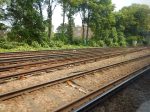
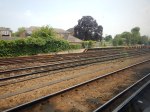
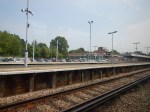
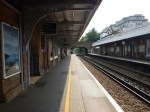
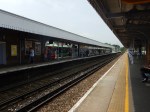
Beckenham Junction offers the following connections.
- A link to Tramlink.
- A link to Thameslink in the peak hours.
- A link to Victoria via Herne Hill
- A link to London Bridge via Crystal Palace.
I also think that as I said in Do We Make The Assets Sweat At Crystal Palace Station?, that there will be a good one-change link to Beckenham Junction from the East London Line.
There are worst stations to get stuck!
Could Tramlink Use The Heavy Rail Lines In South London?
Look at these pictures, I took at Birkbeck station, where one track is for heavy rail and the other is for London Tramlink.
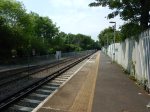
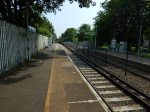


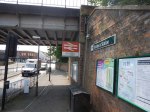
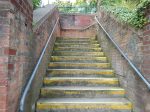
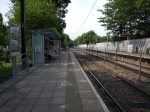

When I took these pictures, I wondered, if it would ease the expansion of the Tramlink network, if trains and trams could share lines.
I am not talking about tram-trains, but more a useful approach to benefit both types of transport.
So lets list the problems.
Rail And Wheel Profile
One of the problems in Sheffield with the introduction of tram-trains is that the rail profile needs to be changed to one that is compatible with the existing trams and the new Class 399 tram-trains.
But to be fair it is a trial and problems will be thrown up.
Platform Height
As someone, who has travelled all over Europe on trams, trains and tram-trains, one of the biggest problem is getting the platform height right, so that everybody including those in wheel-chairs can get on and off easily.
On a scale of five, we generally score about four, but we mustn’t be complacent and I think it will get better.
Some continental countries have problems as their trains have a low step and you step up into the train. This is because traditionally, they had low platforms, whereas for some time, we’ve been aiming for step across.
Karlsruhe has been running tram-trains on their Stadtbahn for over twenty years and are putting in a tunnel to take the tram-trains under the city.
This is said about platform height.
In addition, the platforms of the station’s tunnel will have pedestals that are about 15 metres long with a height of 55 cm above the rail so that the first two doors of Stadtbahn trains will have step-less entry. This will make possible stepless entrance on lines S 4 / S 41 and S 5 / S 51 / S 52 in Karlsruhe for the first time, reflecting a trend that has long been standard elsewhere. The platforms cannot consistently have a height of 55 cm, because the tunnel will be used by trams and DC services of the Stadtbahn, which have an entry level on the modern lines of 34 cm.
If the Germans have to go to that sort of solution, with all their experience, then platform height must be difficult to get right.
I have not heard anything about the platform design at Rotherham Central station, where the platforms must accept trains as different as Pacers and Class 399 tram-trains.
Power Supply
The current trams need overhead power, which with most tram systems is 750 VDC.
So if you want to run Tramlink trams on third-rail lines in South London, you’ll need to put up overhead wires or fit the trams with contact shoes.
It is my view, that for Health and Safety reasons and some design ones too, that running trams using third-rail power will not be practical.
Remember, passengers know they can walk across the tram lines and frequently do, so whatever happens, you don’t want live rails under the trams.
So any rail route, that will be running trams will have to have the 750 VDC overhead supply.
In the Sheffield trial, to extend the Sheffield Supertram, a freight route to Rotherham is being electrified at 750 VDC, rather than the main line standard of 25 KVAC.
Signalling Systems
Rail and tram signalling are different. But after a successful tram-trial in Sheffield, the problems of trams and train sharing the same track, should have risen to the surface.
Rules Of The Tracks
Trams and trains run under different rules.
One main difference is that trams have a maximum speed of 25 mph, whereas trains run at whatever speed the line permits.
So for safety and other reasons, if trams and trains were sharing a length of track, they would have to run under the same set of rules.
I suspect this would mean that the maximum speed would be 25 mph.
In some ways the problems are the equivalent of managing traffic at an airport like Southend, where light aircraft share the runways and airspace with Airbus-319s.
I don’t think it is an insurmountable problem, as two-car diesel multiple units have shared tracks with 125 mph expresses and hevy freight trains for years.
An Ideal Mix Of Trains
So is an ideal solution to use 750 VDC overhead wires for the trams and diesel trains?
Possibly!
But you could always use IPEMUs or EMUs with an on-board battery.
Supposing there is a chord or link line, that would be ideal to be used by trams and say the ubiquitous Electrostars that are popular in South London.
Wires would be put up and all Electrostars using the line, would have to have enough battery capacity to bridge the gap in the track with no electrification.
West Croydon Station
A possible application might be at somewhere like West Croydon station.
The map from carto.metro.free.fr, shows the heavy rail lines through the station and the tram lines around it.
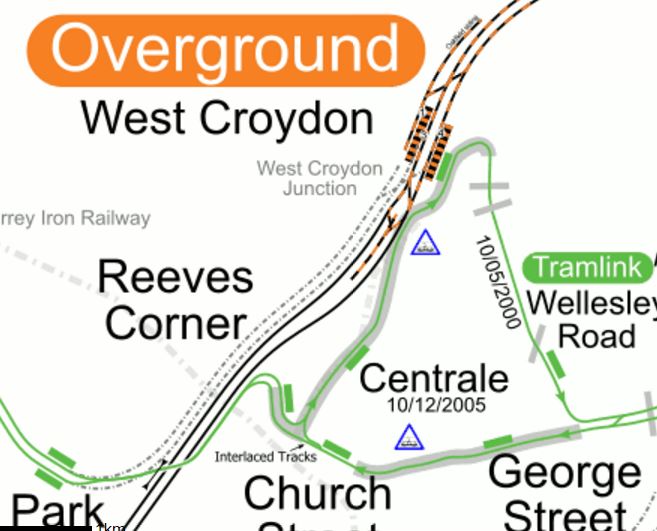
Lines Around West Croydon Station
I’m sure that the engineers in Karlsruhe would have had the trams going through the station to give same-platform interchange to and from trains.
Conclusion
Network Rail has a lot of tools in the box and I think that as technology develops, we’ll see some interesting ideas.
The London Tramlink Is Now Shown Properly On The Tube And Rail Map
The new London Tube and Rail Map, that is now shown in all good tube and rail stations has a redrawn and understandable tram map.
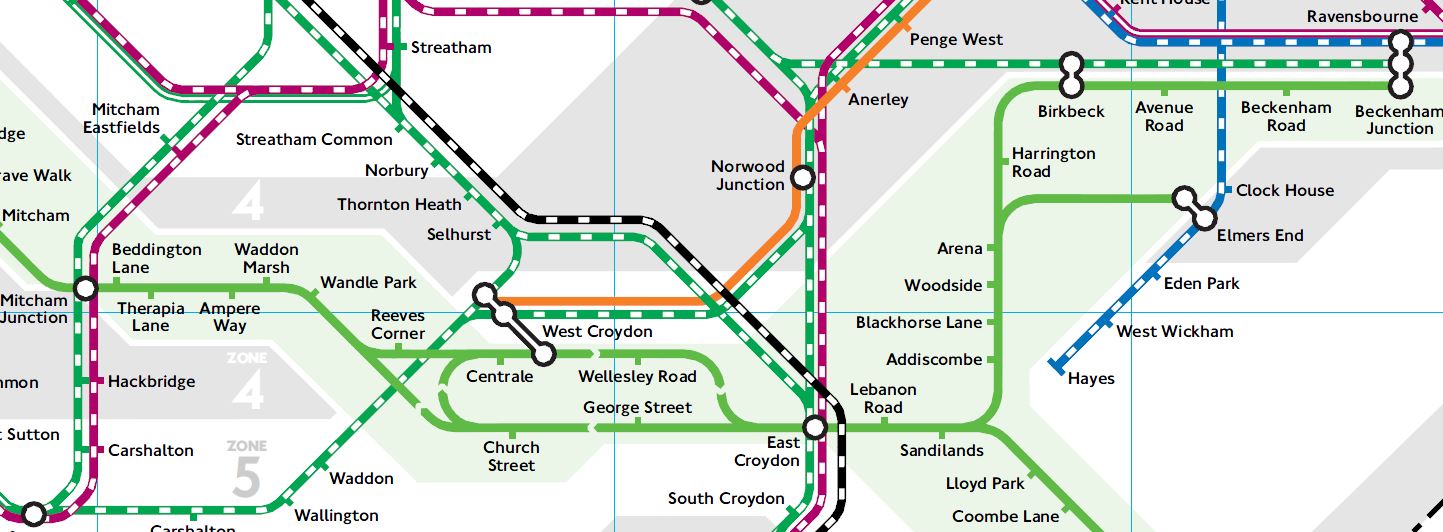
Trams In Croydon
At last!
Note the treatment at West Croydon!
I suppose to get from East Croydon station to West Croydon station, you just need to get on a tram, that’s going round the loop, rather than on to Wimbledon.
It still doesn’t answer the old chestnut of how you get from West bCroydon station to somewhere like Wimbledon or Ampere Way for IKEA.
No Connection At Croydon
On Sunday, I wanted to go from Dalston Junction station to East Croydon station to get to Tattenham Corner.tat
The first train to appear was on to West Croydon, so I thought I’d get it and then take a tram across Croydon.
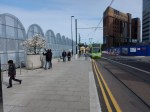
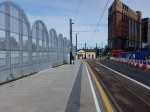
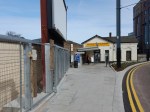
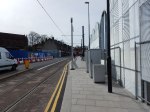

But I’d forgotten it was a Sunday and the tram stop exit of the station was closed, as the pictures show.
Surely, if the station is open and the trams are running the tram stop exit should be open.
From Whitechapel To Oxted
If you want to travel between Whitechapel and Oxted stations, it should be one of those journeys, where you get an Overground train to Croydon and then get a Southern one from Croydon to Oxted.
But the East London Line of the Overground was designed by a nincompoop, who did a course in transport system design at the Ryanair Business School.
So instead of going to East Croydon station, with all its connectivity to South London, Surrey, Sussex, Brighton and Gatwick Airport, and the London Tramlink to both East and West of Croydon, the East London Line goes to West Croydon, which just has a few odd services and the Tramlink to take you to East Croydon, which is where you should have gone in the first place, as you know, it generally connects to where you want to go.
This map from carto.metro.free.fr shows the layout of lines around Croydon.

West Croydon and East Croydon Stations
Surely something can be done to improve connectivity.
So my simple trip down the East London Line meant a change at New Cross Gate, which was an up-and-down change of platform.
At least, I got the Oxted train at East Croydon, by just waiting on the platform for a dozen minutes or so.
You’d think the uprated Thameslink will make this better, but it will actually make it worse, as it would appear, that there will be no simple way to get from Whitechapel to East Croydon, without going via Farringdon or St. Pancras. If this turns out to be the case, expect lots of complaints from those living on the East London Line.
Swapping the East London Line from West Croydon to East Croydon would probably solve the problem, but there probably isn’t enough paths or platforms at East Croydon station.
This Google Map shows the platform layout at East Croydon station a few years ago.
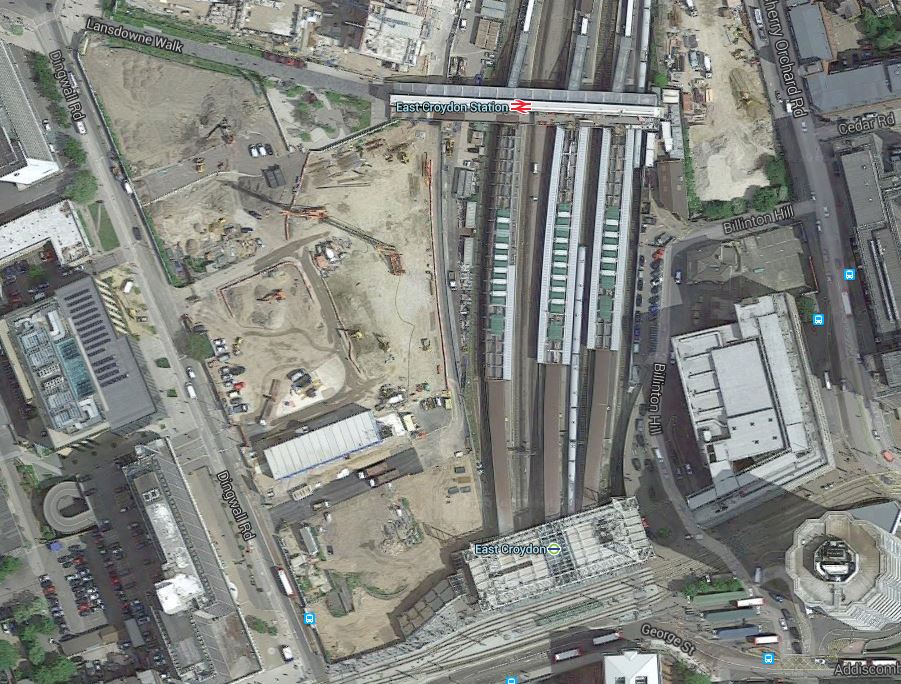
East Croydon Station
It would appear that, when this picture was taken, it might have been possible to squeeze another couple of terminal platforms under the tower blocks, that are now being built to the East and West of the station.
I believe, that it a real pity, that when the opportunity was available, nothing was done!
An intelligent remodelling at East Croydon station, would surely have delivered the following.
An Improved East London Line
The East London Line would have become a valuable North-South route between the following stations.
- Highbury and Islington for Victoria Line, Northern City Line and North London Line
- Dalston Junction for North London Line and Crossrail 2 (when built!)
- Shoreditch High Street for the Central Line (when and if interchange built!)
- Whitechapel for Metropolitan and District Lines and Crossrail,
- Shadwell for the DLR
- Canada Water for the Jubilee Line
- New Cross Gate for the Bakerloo Line (when extended!)
- Penge (A proposed hub station!) for the Chatham Main Line
Other connections would also be possible, such as reopening the Dalston Eastern Curve to give access to Hackney Central, Stratford, Lea Bridge, Walthamstow and Chingford.
It would also mean that many stations to the South of London, like Arundel, Brighton, Hastings and Southampton would have a single change journey to many places in the East of London.
Is this Thameslink 2?
Or as I prefer, the Brunel Line?
An Improved West London Line
The West London Line is an underused line that allows trains to run from Watford to East Croydon calling at stations including.
- Watford Junction for West Coast Main Line and Crossrail
- Wembley Central for Wembley Stadium
- Willesden Junction for Bakerloo Line and North London Line
- Old Oak Common (A proposed hub station!) for North London Line, Crossrail and HS2
- Shepherd’s Bush for shopping
- Kensington Olympia for exhibitions
- Clapham Junction for Main Line services, Northern Line and Crossrail 2
- Balham for Northern Line
- Streatham Common (A proposed hub station!) for Sutton Loop Line
At present there are two train operators using the line.
- London Overground provides services from Clapham Junction to Willesden Junction and Stratford
- Southern provides an hourly service from East Croydon to Watford Junction and Milton Keynes.
I think that because of the connectivity to the West Coast Main Line and HS2, that there needs to be at least four trains per hour from East Croydon to Watford Junction and possibly on to Milton Keynes.
This line is Thameslink 3.
A Proper Interchange At East Croydon
In an ideal world or where East Croydon station was in the middle of open countryside, the station would be very different.
It needs.
- Fast lines for trains not stopping in the station.
- Cross platform interchange between Thameslink and other services. At present many changes need a change of island platform.
- A better interchange to an expanded Tramlink
- Terminal platforms for the four trains per hour on both the East London Line (Thameslink 2) and West London Line (Thameslink 3)
In my view the station can either go wider or higher.
Wider is probably not possible any more, due to developments to the West and East of the station.
However, it would be possible to build a deck above the station for the terminal platforms needed for the East and West London Lines. The trams could cross on the Southern end of the deck and the area in front of the station could be released for pedestrians, taxis and buses.
Passengers from the South needing to go to say Whitechapel or Shoreditch High Street would get on an escalator or lift in the low-level platform to raise them to their Thameslink 2 train.
Passengers for the North needing to go to Gatwick or Brighton would use an escalator or lift to descend to their southbound train.
If all the trains were electric, then it would be possible for a good architect to design a station with plenty of space and lit by natural light.
I also think, that a station of this design, could be built from the current one in stages, where services were maintained during the construction.
Could West Croydon Station Be Closed?
If East London Line services moved from West to East Croydon station, the following services to Central London would be left.
- Four trains per hour to Victoria via Selhurst, Streatham Common, Balham and Clapham Junction
- Two trains per hour to Victoria via Norwood Junction, Crystal Palace, Balham and Clapham Junction
- Two trains per hour to London Bridge via Selhurst, Streatham Common, Tulse Hill, Peckham Rye and South Bermondsey.
I think there is scope for a sorting out of these services, given Transport for London’s plans for a major hub station at Streatham Common. I wrote about this in Puzzled Over Streatham Common Station and came to the conclusion a Streatham Common hub could be a masterstroke of an idea, for the following reasons.
- The station would connect the two lines crossing there; Brighton Main Line and Sutton Loop
- The station could be the terminus of a two train per hour local service around the Sutton Loop.
- The station could be a valuable interchange between Brighton Main Line and other services.
- The station could be a destination for Tramlink.
- The station could enable tram-trains on Tramlink.
- The station could be a terminus for a branch of the East London Line.
- The station could be an important hub, collecting passengers for HS2 and the West Coast Main Line, as it is on the West London Line.
- Crossrail 2
- Alternative routes for Croydon
One point to bear in mind, is that all of the land required is already owned by Network Trail/TfL and I doubt any demolition of other property would be needed.
I think there are various scenarios that will simplify train movements in the triangle of stations; Norwood Junction, Streatham Common and West Croydon.
It would be a great advantage to train companies, if there were no direct train services between West Croydon and Norwood Junction and all services went via the Streatham Common hub station, as this would simplify movements through the congested Windmill Bridge Junction.
But passengers would still want the service they’d used for years!
I do think though that there is some way to sort out services through West Croydon, perhaps by using tram-trains linking to Tramlink and running to Crystal Palace or Streatham Common, that could keep the functionality of West Croydon station and increase the capacity of the trains, but simplify the movements to Norwood Junction.
This Google Map shows the station with the Tramlink stop along the side.
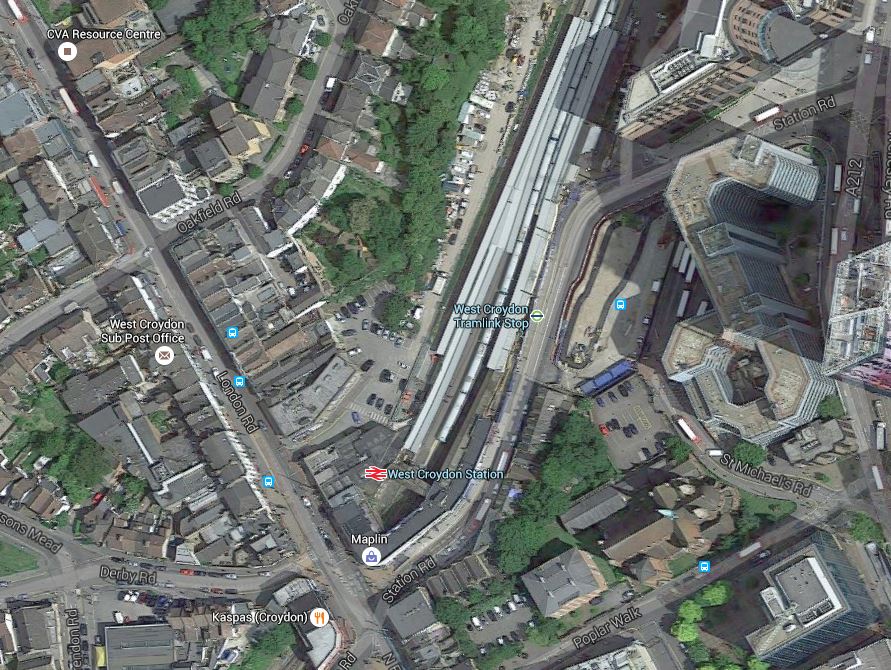
West Croydon Station
Trams only go to East Croydon and to get one back, you have to walk halfway across Croydon. It’s another bit of connectivity straight from the Ryanair Business School.
This map is from carto.metro.free.fr and shows the rail and tram lines at West Croydon station.
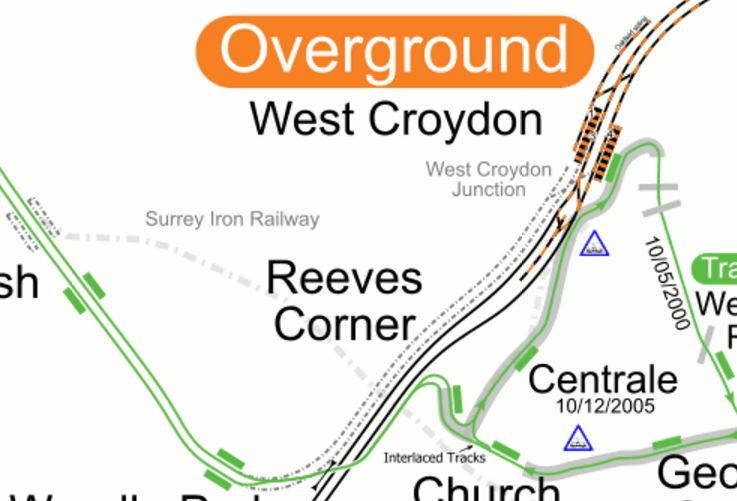
Lines Around West Croydon
I suspect that the layout is such that a connection could be made between Tramlink and the rail lines to enable tram-trains to run on both tracks.
It would certainly enable simplification of traffic through West Croydon station.
I think though, that this simplication can only happen if the Streatham Common hub station is developed and it is served by Tramlink.
I’ll be interested to see what Transport for London does in the next twenty years at West Croydon.
Sorting Out Windmill Bridge Junction
This junction to the North of East Croydon station, is often stated to be a bottleneck on the lines through the area.
This Google Map shows the junction and Selhurst station and depot.

Windmill Bridge Junction, Selhurst Station And Depot
There would appear to be a mass of railway lines, south of the depot, which makes Spaghetti Junction look positively simple.
But
- If the terminal platforms for the East and West London Lines were at a high level over East Croydon station, then surely, they could climb over the junction as well and enter the station at the right level.
- If there was a lot less traffic between the East London Line and West Croydon station, space would be released.
- Tram-trains could sneak through, using their better manoeuvrability.
I’m sure that if the services to the two Croydon stations are redesigned, then a better and more efficient junction could follow.
Conclusion
A rethinking of services through Croydon and on the East London Line is needed, otherwise thousands of Mr, Mrs. Ms. and Miss Angries will be steaming away at Transport for London.
TL would have appeared to sleepwalk into this train-crash, by not sorting out East Croydon station, when the site was clear and they were designing Thameslink.
 The Anonymous Widower