Transport for London Improve Their Apologies
I’ve just received the usual e-mail from Transport for London informing me of the weekend closures on the Underground/Overground. They say this about the Metropolitan line.
There is no service this weekend between Baker Street and Aldgate due to Crossrail work at Farringdon.
There is also no service this weekend between Wembley Park and Northwood/Uxbridge while we carry out track replacement work at Preston Road.
More Bins Are Appearing On The Underground
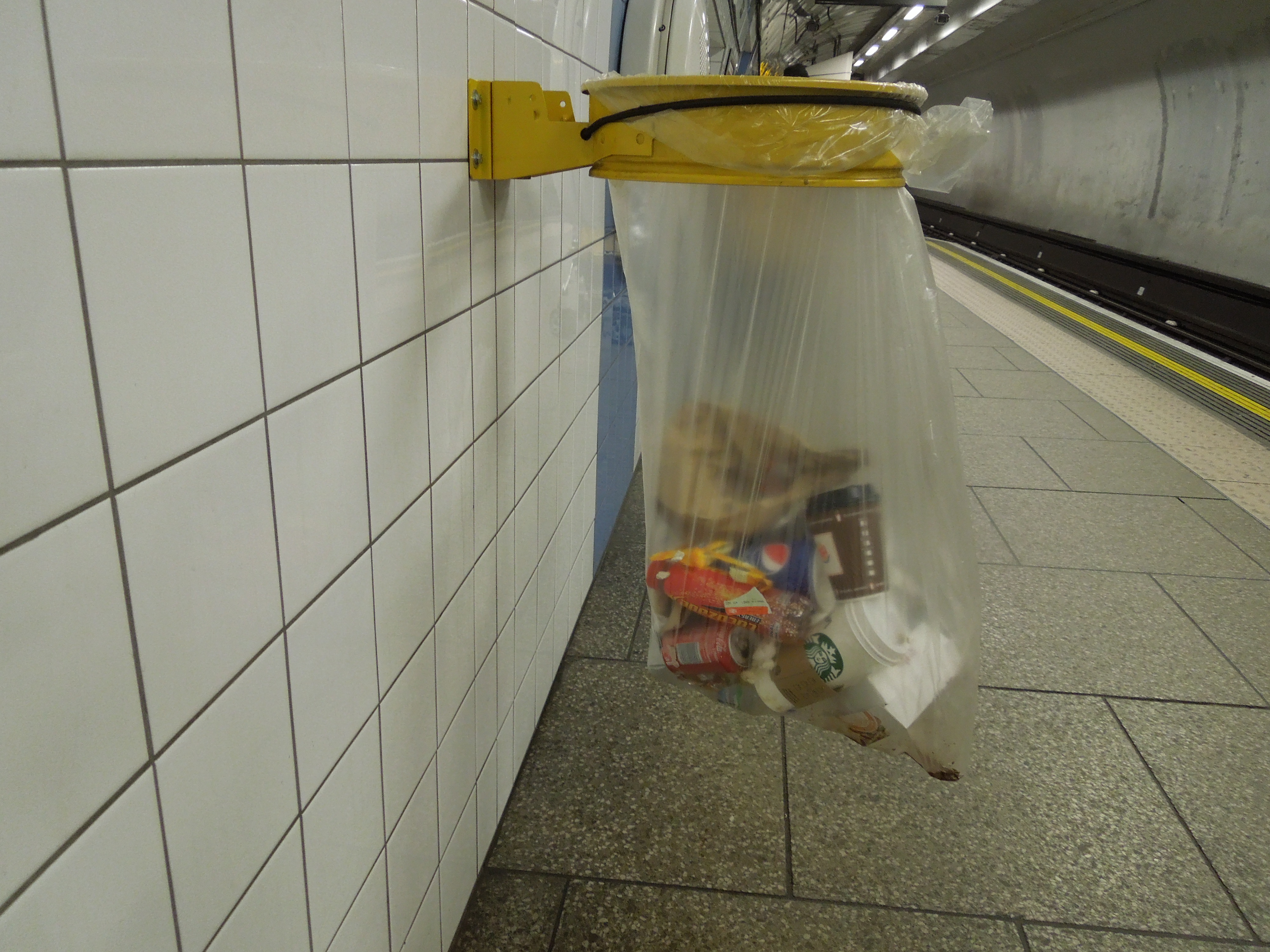
I took this picture today at Green Park station.
More Bins Are Appearing On The Underground
I know there are sound reasons for not having bins on the London Underground, but litter also causes its own problem. I also found this article about recycling on the Underground.
So we may be getting there!
Labyrinths In The Underground
To celebrate the 150th anniversary of the London Underground, each station is going to get a new artwork from Mark Wallinger. It’s here on the BBC. The first stations were unveiled yesterday.
The first stations to have the design are: Baker Street, Bank, Embankment, Green Park, King’s Cross St Pancras, Oxford Circus, St James’s Park, Tottenham Court Road, Victoria and Westminster.
I shall check them out today.
-

- Baker Street – 58
-

- Bank – 142
-
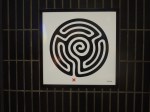
- Embankment – 63
-
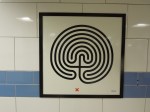
- Green Park – 232
-
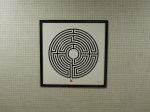
- Kings Cross St. Pancras – 172
-
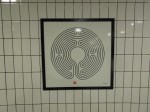
- Oxford Circus – 176
Baker Street was the first I found.
Where’s The Plaque Gone?
Although, I can’t ever remember seeing it, it may have cropped up in conversations at home.
But I’ve finally found proof on this page of the British Listed Buildings web site, that there was a plaque at Oakwood station, indicating that the first land you’d hit if you travelled east was the Urals. This is the paragraph from the web site.
The booking hall originally had a plaque claiming that the station occupied ‘the highest point in Europe in a direct line west of the Ural Mountains of Russia’, a reference to the site being 300 feet above sea level.
I would like to see the plaque restored.
Edgware Road Station Revisited
I had to go round to High Street Kensington today, so I went by the Circle line from Kings Cross St. Pancras station to Edgware Road station, where I changed across between Platform 4 to Platform 3 to the District line for Kensington High Street station. Coming back, I got a Circle line train back to Edgware Road, from where I got another Circle line train to Moorgate, by walking from Platform 2 to Platform 1. So they were two very easy step free changes. Here’s some pictures, which compliment those I took yesterday.


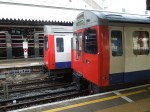
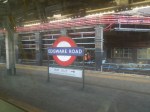


The station sign was is at Kensington High Street station. It advises you to get a Circle line train, if you are going onwards to the east at Edgware Road station.
Notice that at the eastbound end of the platforms at Edgware Road station, there is quite a bit of space. It is just a pity, that they have to allow for trains to run through between the two pairs of platforms, as if they didn’t then perhaps the two central platforms, 2 and 3, could be used as traditional terminal platforms, with the ability of passengers to walk across directly between the two pairs of platforms.
Perhaps something like Thomas Hetherwick’s rolling bridge could be used.
A set of rules should probably be used.
Going from east to south, you should get the first District line train on the opposite platform, changing to the Circle line if that is the one you want by getting off at either Paddington, Bayswater or Notting Hill Gate and taking the first Circle line train that stops. It’ll probably be the first train anywhere.
Going from west to south, is similar, except you get a Circle line train and change as before if you need to.
Going from south to east, you can either climb over the stairs or make sure you’re on a Circle line train, when you get to Edgware Road station.
Going from south to west, is similar, except you make sure you’re on a District line train. It looks like the trains on both District and Circle lines run at a frequency of six trains per hour.
It sounds complicated, but I suspect most of the regular users know the rules. There perhaps is a need for a bit more information to get the passengers going the right way!
I suppose too, that it’s all step free.
One point to note is that the new S-Stock trains are walk-through, and passengers will probably walk to their most convenient exit a lot of the time, just as they already do on the Class 378 of the London Overground. So this will probably make the turn-rounds at Edgware Road quicker.
The Operation Of Edgware Road Station
Edgware Road station has been changed dramatically over the last few years, by becoming the balance station in the Circle line. The platforms are organised this way according to Wikipedia.
The usual service pattern is: platform 1 for outer rail services to Kings Cross, Liverpool Street and beyond, platform 2 for circle line to High Street Kensington and Victoria, platform 3 for district line trains to Earls Court and Wimbledon, and platform 4 (inner rail) for Shepherds Bush Market and Hammersmith. This may vary in times of disruption – trains can go east from any of platforms 1 2 and 3 and to any of the westbound destinations from platforms 2 3 or 4.
As I came back from Paddington station, I got out of the station to get a newspaper and I also watched Circle line trains reverse on Platform 2. There actually waiting for a few minutes and cleaners were cleaning the trains before they returned back through Victoria. It was all very efficient.
It would appear that most of the transfers at the station, just involve a simple cross platform transfer, although not always.
But by adding lifts and sorting out the access between Platforms 1 and 2, and 3 and 4, would improve those travelling through the station, especially for those who need step free access or are travelling with heavy cases.
As an example, if you are coming north through Notting Hill Gate station on the District or Circle line and want to go west at Edgware Road station, you are best to get a District line train, but if you’re going east, a Circle line train is better.
The Rebuilt Metropolitan Station At Paddington
The Metropolitan station at Paddington is emerging from the extensive building works at Paddington station.


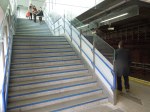


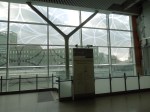
Note that there is still quite a lot to do, like installing the lifts.
Farringdon Station
After visiting the works at Crossrail, I went to have look at Farringdon station on the Metropolitan Line.
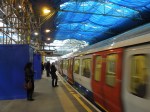
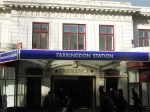

Note how the new station is coming on.
Should London Improve The Sub Surface Tubes?
London’s three sub-surface lines; Metropolitan, District and Circle, are getting new S-Stock trains, but you do wonder if investment in the stations along their core route would improve things no end and perhaps even add more capacity to the lines. It should be said incidentally that the new trains will add more capacity and when they are running at full speed, they should give a further increase in passengers carried.
The part I know best is the Hammersmith and City and Circle lines from Whitechapel to Paddington.
Kings Cross St. Pancras station has already been rebuilt and has good access from the two main line stations and to the three deep lines that meet at the station. It will be even better in a few months, when the buses have been reorganised around the new square opening outside. We tend to forget about buses, but they are often an invaluable way to get to your required train line.
Whitechapel, Liverpool Street, Moorgate, Barbican, Farringdon and Paddington stations are all on Crossrail and will probably go through a lot of changes to improve access over the next few years. The stations from Liverpool Street to Farringdon, will effectively be connected to two giant double-ended stations on Crossrail, so interchanges to the Central and Northern lines and Thameslink will be greatly improved. In fact, when you look at journeys made in the eastern part of Central London, you can see how Crossrail will transform them. Even a journey as mundane as Liverpool Street to London Bridge will be a lot easier, as you’ll just dive into the Crossrail station to walk to the Northern line at Moorgate. I’ll probably use that route to get to my 141 or 21 bus from Liverpool Street to get home.
The next station is Euston Square, which is one of those stations on the London Underground, that was built in the wrong place. They didn’t even rectify the problem, when the current Euston station was built in the 1960s, by moving it in front of the station, like the corresponding station at Kings Cross St. Pancras. Probably all that could be done is to put lifts into the North entrance to the station and improve the walking route from the main line station. When the main line station is rebuilt, Euston Square station will probably be part of the rebuilding.
Great Portland Street station is typical of many of the Central London, sub-surface stations. Short double staircases lead down to two platforms on either side of the tracks. Lifts or escalators could probably be installed, but I suspect a clever engineer or architect could do better.
Baker Street station is one of the architectural gems of the Underground and doing anything to improve it will be difficult. The junction to the east of the station also makes things difficult operationally.
Edgware Road station, is one that needs significant improvement, although as with many of the sub-surface stations, space is limited. Since the Circle line, stopped being a circle in 2009, the station has become a nightmare, as many visitors can’t understand that you have to change trains to continue round.
Paddington station, when it is fully rebuilt and Crossrail has been opened, may help with the problems of the sub-surface lines. If I come into Paddington from say Bristol or Cardiff, I will take the bridge at the back of the train and walk to the Metropolitan line, from where I get a train to Moorgate for a bus home. But when Crossrail is running from Reading to Moorgate, I might take that route instead, by changing trains at Reading. I suspect that many commuters from Reading, will go direct to Central London stations on Crossrail. After all, that was one of the reasons for which the line is being built.
So it would seem that on the Northern part of the lines, only Edgware Road and Euston Square stations need substantial improvement.
The Tube Will Run Later
I’m not sure it will make much difference to me, but many in London will welcome the announcement that the London Underground will run through to two in the morning on Fridays and Saturdays from 2015. It’s reported here in the Standard.
Let’s hope that the negotiations with the unions, also clear up the non-running of the system on Boxing Day.
 The Anonymous Widower