St. Pancras And Leicester Via Corby
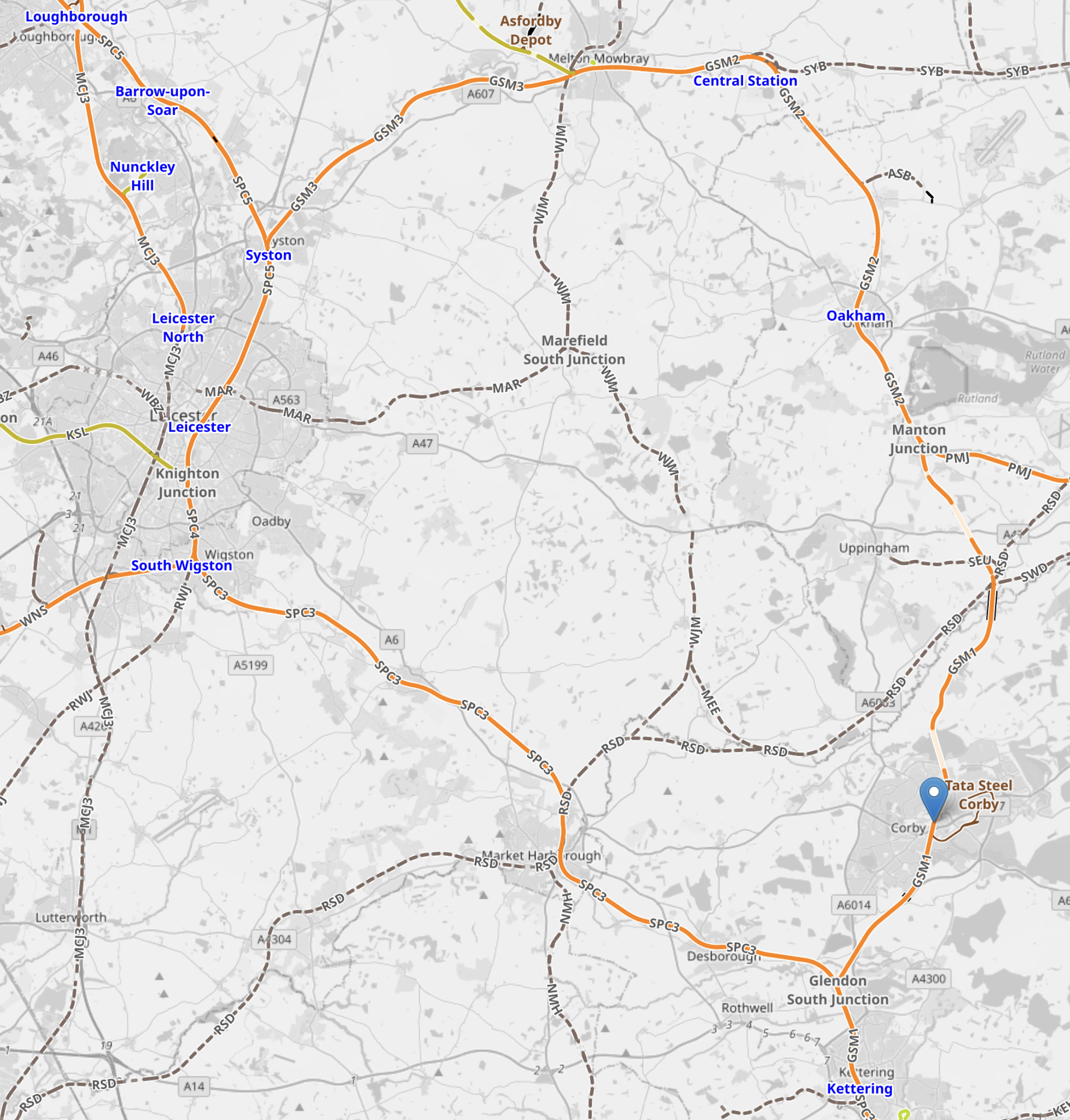
This OpenRailwayMap shows the route between Kettering and Leicester via Corby.
Note.
- Kettering station is in the bottom right corner of the map.
- Kettering is on the Midland Main Line from St. Pancras.
- North of Kettering the route splits into two.
- The Midland Main Line goes North-West through Market Harborough to Wigston junction and Leicester.
- The Midland Main Line is electrified to Wigston junction.
- The Corby branch goes North-East to Corby, which is indicated by a blue arrow.
- The Corby branch is electrified to Corby.
On Saturday, I went to Leicester and because there were engineering works at Market Harborough, the train went via Corby.
Over The Welland Viaduct
After Corby, the train went over the Welland Viaduct and I took these pictures.
















It is an impressive viaduct and is the longest viaduct across a valley in the United Kingdom.
I have some further thoughts.
Could The Corby Service Be Extended to Leicester?
Consider.
- Between Corby and Leicester is 40.8 miles of track without electrification.
- Trains could call at Oakham, Melton Mowbray and Syston stations.
- Oakham, Melton Mowbray and Syston stations, could be given an appropriate number of trains every day to Leicester, Corby, Kettering, Wellingborough, Bedford, Luton, Luton Airport Parkway and London St. Pancras International stations.
- No new infrastrructure would be needed.
- I suspect an hourly service would be sufficient.
I am fairly sure that a Class 810 train fitted with batteries could work the route.
Leicester, Oakham, Melton Mowbray And Syston Stations Would Get A Direct Connection To Luton Airport
Some travellers might find this very useful.
Leicester Station Would Have A Neat Passenger Drop-Off For Luton Airport
I wrote about this in Busiest UK Airports Raise Kiss-and-Fly Fees, Says RAC.
Every rail station needs a passenger drop-off as good and affordable as the one at Leicester station.
The Problem Of Electrifying Leicester Station
This post is my attempt to try and explain the problem of electrifying the Midland Main Line through Leicester station.
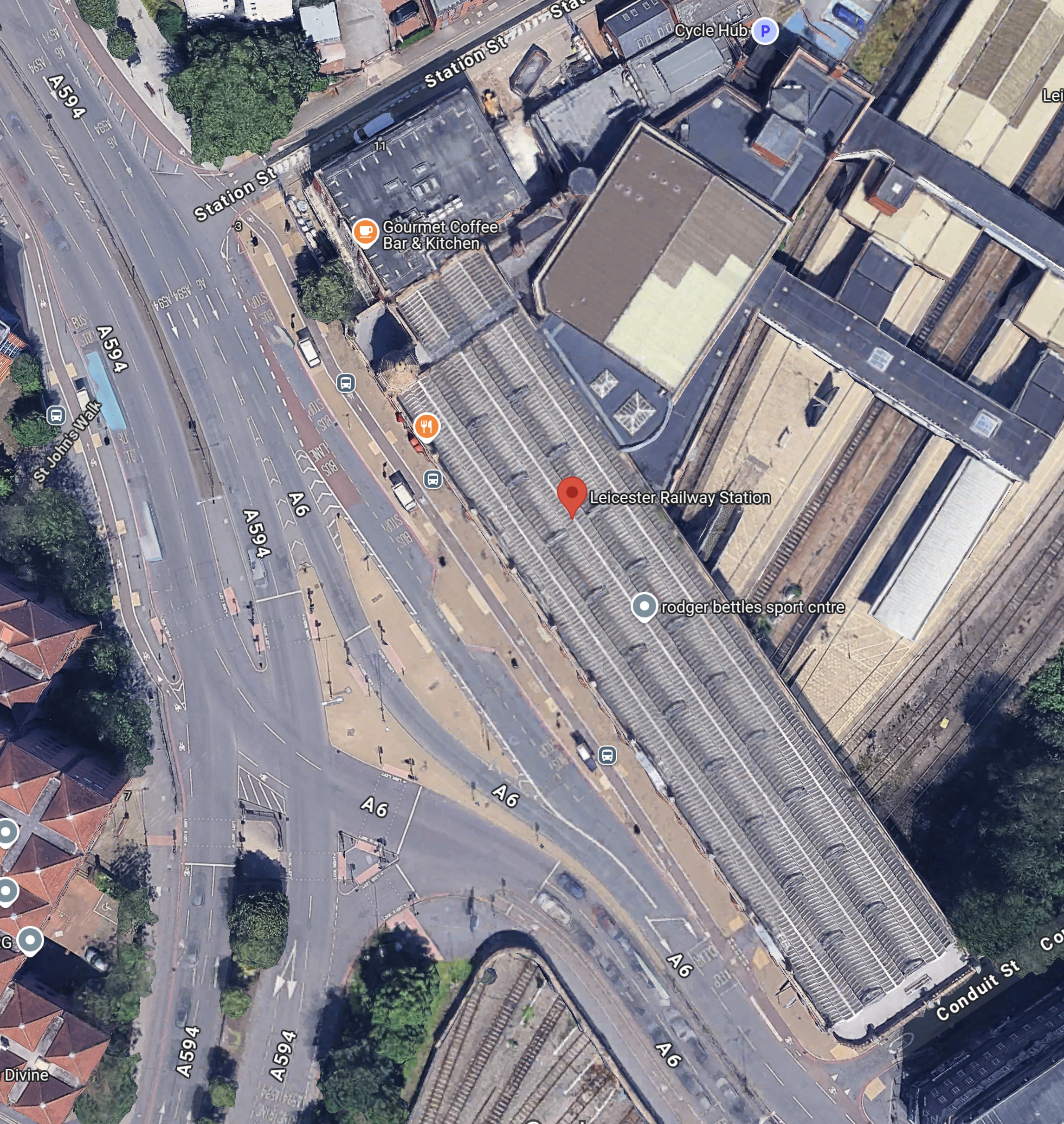
This Google map shows the Southern end of the station.
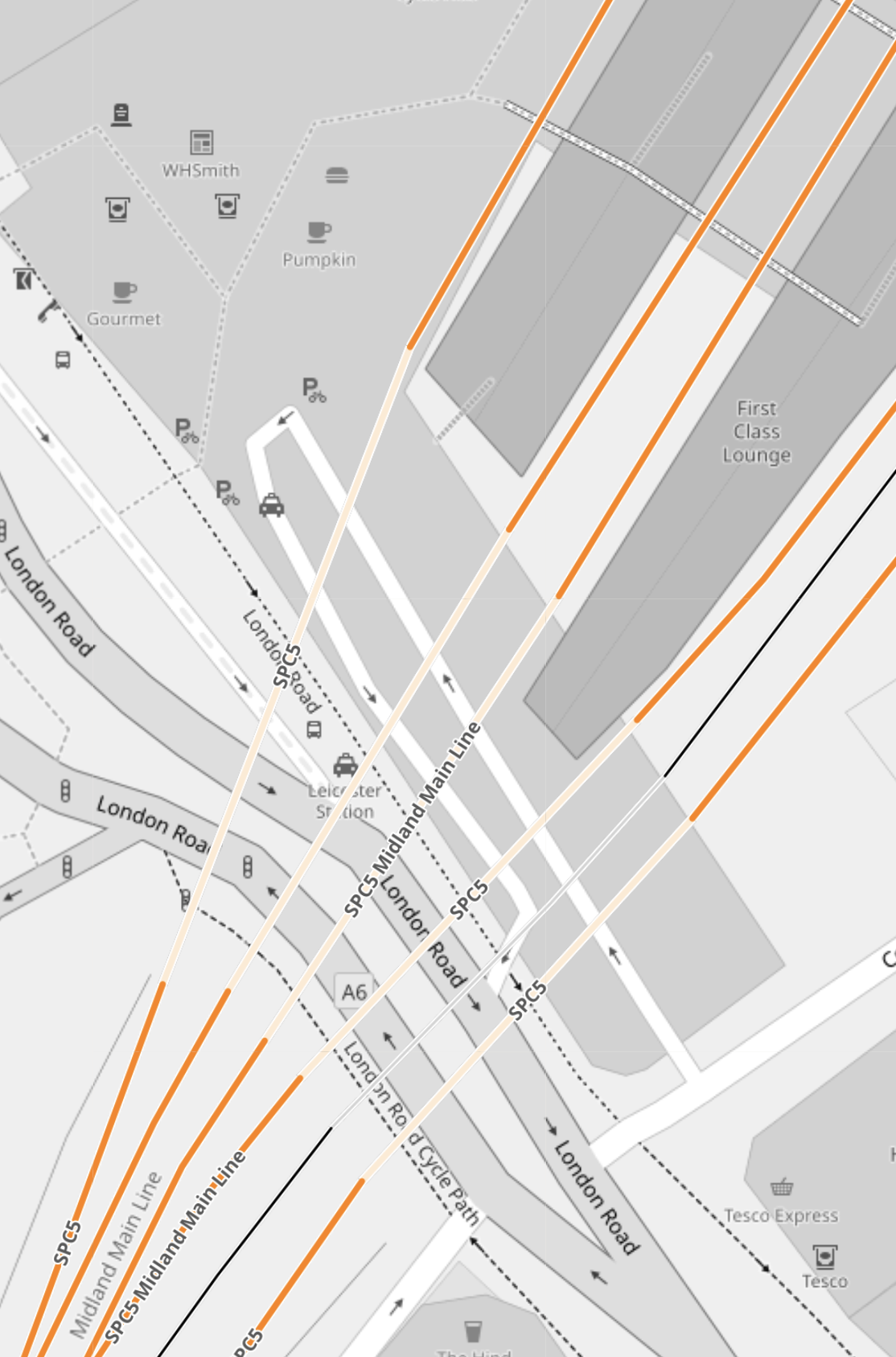
This OpenRailwayMap shows the station.
Note.
- There appear to be five tunnels under the station buildings and London Road.
- What is the tunnel going underneath the tracks used for?
Leicester station has a Grade II Listed frontage.




















Note.
- It is an impressive Victorian station.
- The station building is on a bridge over the tracks.
- The station is also on one of the main roads through Leicester.
- The road layout is very complicated.
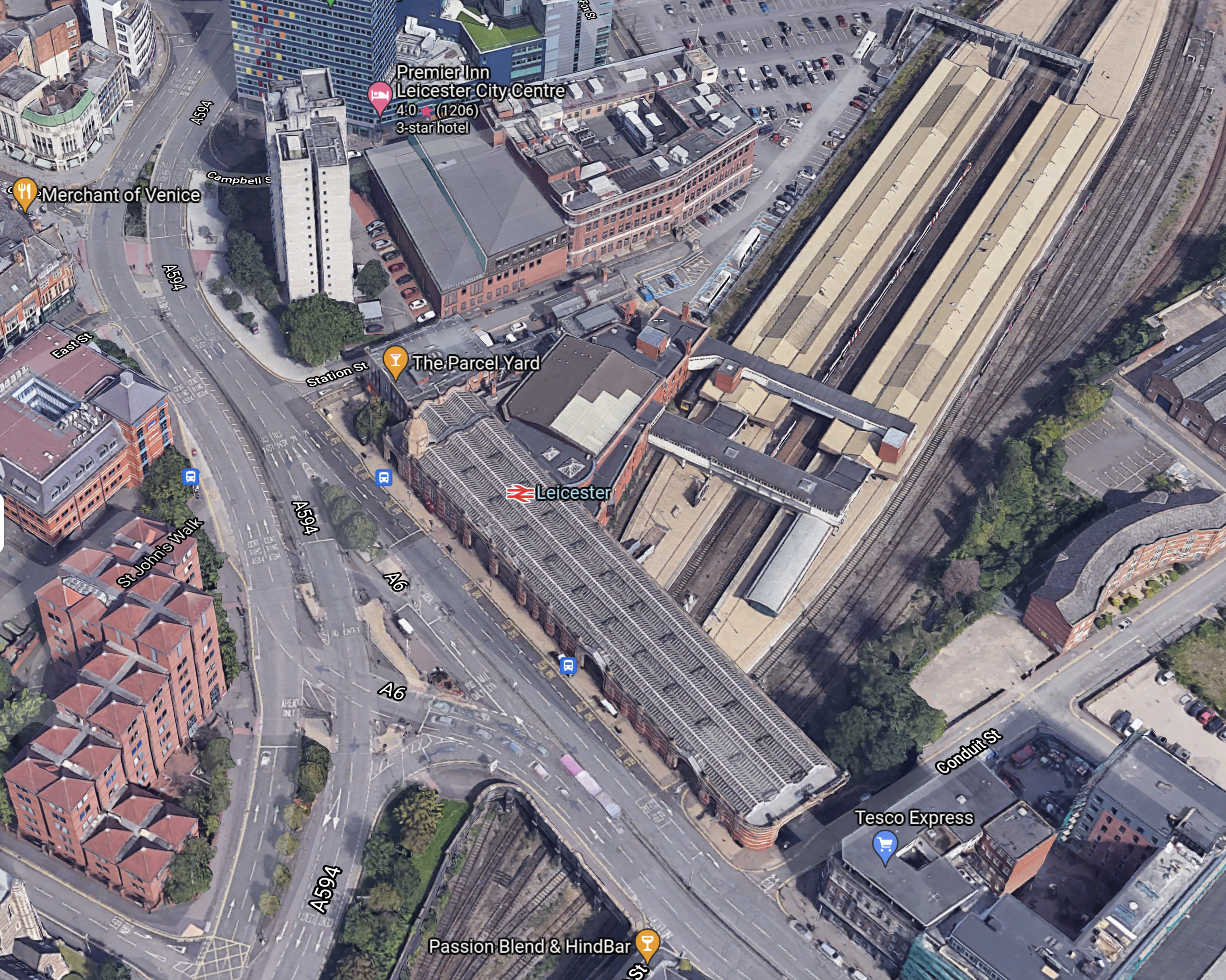
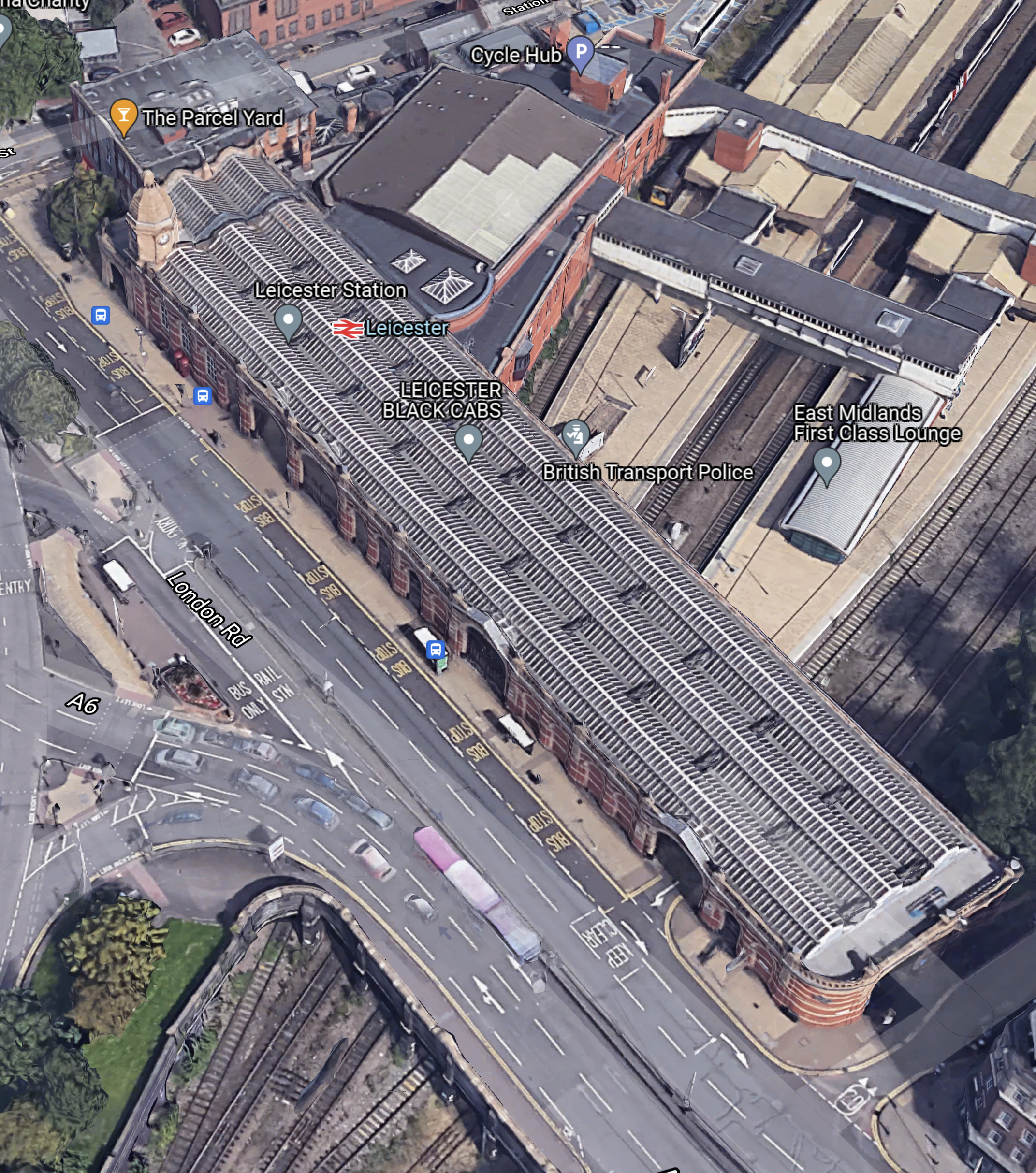
This 3D Google Map, shows an aerial view of the station.
Note.
- There four platforms, which are numbered 1-4 from the left.
- The expresses between London and Derby, Nottingham and Sheffield use the two middle tracks.
- Other main line and East-West services use the outside platforms.
- There is an avoiding line for freight services.
- 5. The step-free footbridge is clearly visible.
This second 3D Google Map, shows an enlargement of the frontage of the station.
These pictures show what is inside the building at the front of the station.








The building would appear to be a Grade II Listed taxi rank and free twenty-minute car park.
There are plans to increase the capacity of the station.
- A fifth platform will be added.
- Three miles of quadruple track will be be built South of the station.
- The Midland Main Line was also to be electrified.
Real Time Trains indicates that the distance between Leicester and Wigston North junction is 3.1 miles.
This OpenRailMap shows that section of track.
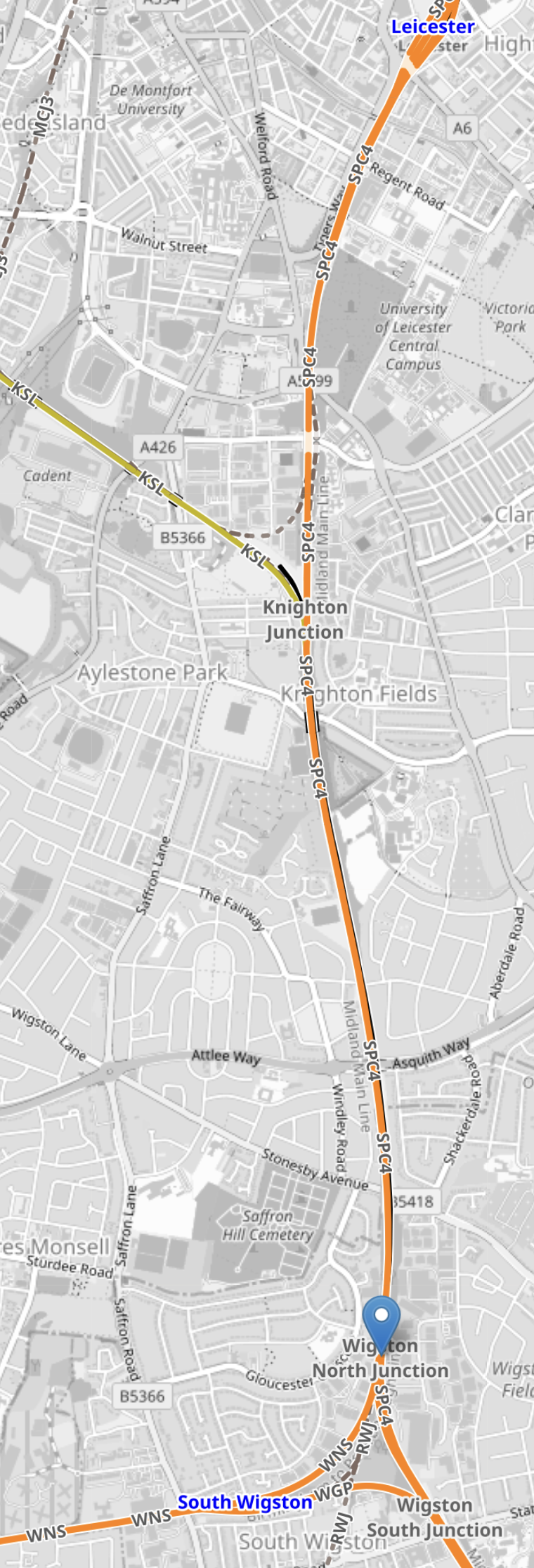
Note.
- Leiester station is at the top of the map.
- Wigston junction is the triangular junction at the bottom of the map.
- Wigston North Junction is indicated by the blue arrow.
- OpenRailwayMap only shows a 100 mph Northbound track and a 90 mph Southbound track on the route.
It looks to me, that four tracks between Leicester and Wigston North junction would mean that trains could expedite arrivals to and departures from Leicester to and from the South.
South From Wigston Junction
Consider.
- London St. Pancras and Kettering is a four-track railway as far as the Corby Branch.
- North of Luton the slowest maximum speed is 100 mph, with much of the line rated at 110 mph plus.
- Wigston North junction and Luton station is 65.8 miles.
- Current Class 222 diesel trains typically take 40 minutes.
- This is an average speed of 98.7 mph.
- An average speed of 110 mph between Wigston North junction and Luton station would take 36 minutes.
- An average speed of 125 mph between Wigston North junction and Luton station would take 31.6 minutes.
- An average speed of 130 mph between Wigston North junction and Luton station would take 30.4 minutes.
I believe with track improvements and digital signalling, there are time savings to be gained between St. Pancras and Leicester stations.
Ultimately, if the 140 mph design speed of the Class 810 trains under digital signalling could be maintained, this would do the following.
- Push the St. Pancras and Leicester times under an hour.
- Push the St. Pancras and Nottingham times under ninety minutes.
- Push the St. Pancras and Sheffield times under two hours.
Batteries would only be used on the three miles between Wigston North junction and Leicester station.
Could Bi-Mode Trains Be Used?
They could be used initially and to prove if the partial electrification works.
But each train has four diesel engines and sometimes they will be working in pairs through the stations between Leicester and Sheffield.
Passengers will take a dim view of being covered in lots of diesel smoke, when they have been promised clean, zero-carbon electric trains.
But the battery-electric trains will be much quieter and pollution-free.
This page on the Hitachi Rail web site is entitled Intercity Battery Trains.
New Infrastructure Needed
The only infrastructure needed will be that which will support the new trains.
The Class 810 trains will be maintained at Etches Park at Derby.
If they are battery-electric trains, there may be some strategically-placed chargers, which typically would be a short length of overhead wire.
Luton Station To Go Step-Free
This document on the Government web site is entitled Access for All: 73 Stations Set To Benefit From Additional Funding.
Luton station is on the list.
These pictures show the station.






Without doubt, this is the worst station, I’ve found so far in an important town, that is to be made step-free.
There is nothing of any architectural merit at all in this station.
Will Abellio East Midlands Railway Improve Their Service To Luton?
Currently, Luton station has the following.
- Full electrification, which is being upgraded to a high standard for 125 mph running.
- Platforms long enough to accommodate Thameslink’s 242 metre long twelve-car Class 700 trains.
- The Class 700 trains are already fitted for working with digital signalling and this will be added to all trains.
It certainly treats trains better than it does passengers.
From December 2020, the following trains will run through Luton station.
- Two trains per hour (tph) to/from Corby, which will be 240 metre long twelve-car electric trains in the Peak. Why not in the Off Peak?
- Two tph to/from Leicester and Nottingham
- Two tph to/from Leicester, Derby, Chesterfield and Sheffield
At the present time, only the single Corby service stops at Luton.
From 2022, East Midlands Railway will be running new bi-mode trains through the station.
- For compatibility with the electric trains to Corby and to make full use of long platforms, I suspect that these trains could be up to 240 metres long.
- They will have a larger capacity, than the current Class 222 trains.
- They will effectively be electric trains between London and Market Harborough, where the electrification ends.
- They will have fast acceleration and smooth regenerative braking, because of the electric power.
- They could have step-across access between train and platform.
As Luton station is electrified and has long platforms, these trains will be able to stop at Luton (and Luton Airport Parkway) in minutes.
Network Rail intend to make Luton station step-free by 2024.
The improved access will give easier connections between the expresses and Thameslink, and entry/exit to the station.
I can see several trains per hour stopping at Luton.
Conclusion
If money was no object, this station should be totally rebuilt.
But money is an object, so the architects will be struggling.
But by 2024 at the latest and possibly a couple of years earlier Luton station could be sorted for passengers and handling well upwards of a dozen 240 metre long high capacity trains in every hour.
 The Anonymous Widower