TransPennine Express Releases Blueprint For Improving Service And Fleet Upgrade
The title of this post, is the same as that of this article on Rail Technology Magazine.
This is the sub-heading.
TransPennine Express (TPE), which transferred to the government’s owning group (DOHL) earlier this year, has set out its plans to address many of the issues which have caused problems and disruption for rail customers.
These three paragraphs summarize their plans.
Making Journeys Better: A Prospectus gives clear detail of the issues TPE has faced during the past two years as well as outlining how TPE, under DOHL, will work to make things better, having completed an in-depth review of the business.
Part of the plans involve the operators plans for its new fleet. Its New Trains Programme outlines its long term view for decarbonisation. The report states that TPE will look towards new technology on its fleet to overcome the lack of clarity on the full electrification of the line.
This, it states will help with the cascading and removal of diesel trains faster across its network.
It always looked to me, that TPE under First Group, brought rather a dog’s breakfast of trains, when a unified fleet of Class 802 trains, as per Hull Trains, might have been easier to operate.
- They are already retiring the Class 68 locomotives and their Mark 5 coaches, so surely to decarbonise their services, a number of battery electric high speed trains would be an idea.
- They are already testing Class 802 battery-electric trains for Hitachi and Eversholt Rail.
- I also feel that CAF could offer a suitable battery-electric train, based on the Class 397 train.
TPE say in the example, that they expect a decision later in the month.
TransPennine Express Services And Battery Electric Trains
These are their services and how they would be effected by battery-electric trains.
- Liverpool Lime Street And Newcastle – Fully-electrified after TransPennine Upgrade.
- Liverpool Lime Street And Hull – Fully-electrified after TransPennine Upgrade.. – 42 miles unelectrified – Service could be run by a battery-electric train that charged between Leeds and Micklefield.
- Manchester Airport and Saltburn – Fully-electrified between Manchester Airport and Northallerton after TransPennine Upgrade. – 33.6 miles unelectrified – Service could be run by a battery-electric train that charged between Leeds and Northallerton. Would eliminate overnight noise problems at Redcar.
- Manchester Piccadilly and Newcastle – Fully-electrified after TransPennine Upgrade.
- Manchester Piccadilly and Scarborough – Fully-electrified between Manchester Piccadilly and York after TransPennine Upgrade. – 42.1 miles unelectrified – Service could be run by a battery-electric train that charged between Leeds and York.
- York and Scarborough – Electrified at York – 42.1 miles unelectrified – Service could be run by a battery-electric shuttle train that charged at York.
- Manchester Piccadilly and Huddersfield – Electrified at Manchester Piccadilly – 25.5 miles unelectrified – Service could be run by a battery-electric shuttle train that charged at Manchester Piccadilly.
- Leeds and Huddersfield – Electrified at Leeds – 17.2 miles unelectrified – Service could be run by a battery-electric shuttle train that charged at Leeds.
- Liverpool Lime Street and Cleethorpes – 125,6 miles unelectrified – In Electrification Of The Hope Valley Line, I show how this route can be run by battery-electric trains that charged on existing electrification a short new section of electrification at Cleethorpes.
Note.
- If Manchester Victoria and Huddersfield, is not electrified, battery-electric trains would be able to cross the 25.8 miles of unelectrified track on battery power.
- If Leeds and Huddersfield, is not electrified, battery-electric trains would be able to cross the 17.2 miles of unelectrified track on battery power.
- I am assuming that the TransPennine Upgrade between Manchester and Leeds will be completed, so that between Liverpool Lime Street and Leeds is fully-electrified.
- The only new infrastructure needed would be electrification at Cleethorpes to charge the trains.
All services except for Liverpool Lime Street and Cleethorpes could be run using battery-electric trains with a range on a full battery of at least 100 miles and with no additional electrification.
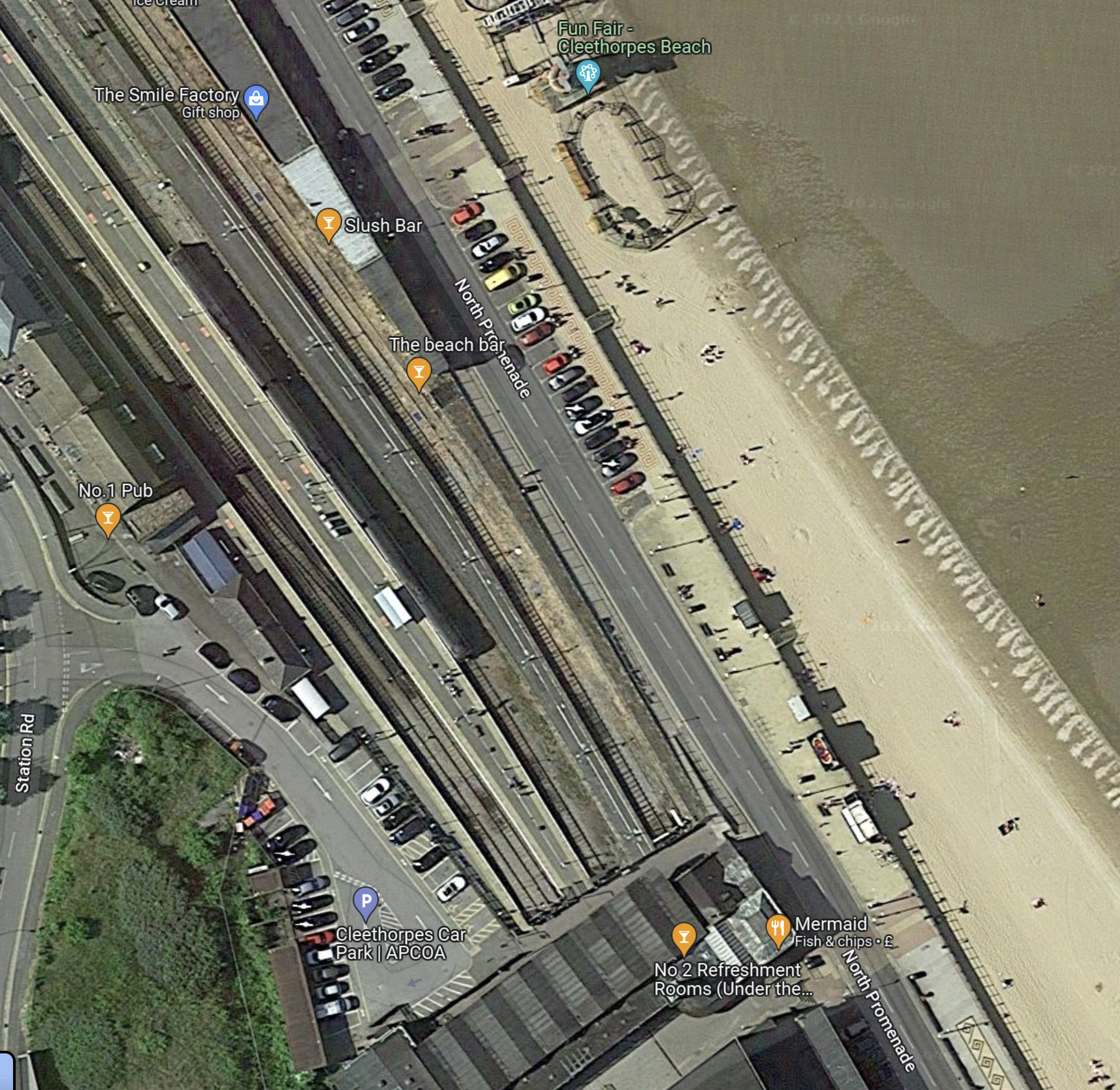
Electrifying Cleethorpes Station
This Google Map shows Cleethorpes station.
These pictures show the station in June 2023, when it appears to be going through a platform refurbishment.
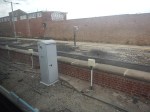
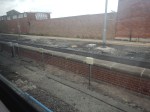
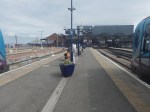
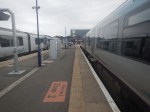
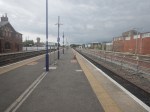
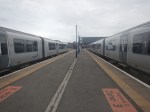
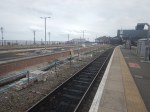
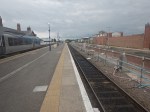
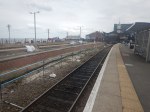
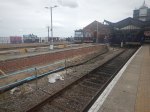
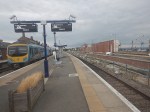
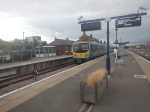
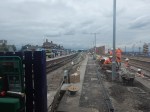
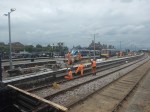
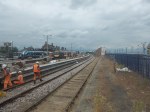
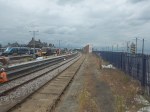
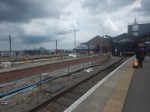
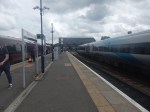
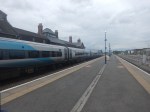
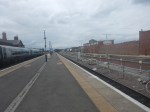
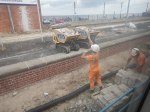
I don’t think it would be the most difficult station to electrify.
- There are four platforms.
- As the station is likely to get more battery-electric services, including one from King’s Cross, I would suspect that at least three out of the four platforms would be electrified.
- Although, the station is Grade II Listed, there doesn’t appear to be any canopies or important architectural details, that would get in the way of electrification.
Once Cleethorpes station had been successfully electrified, similar installations could be applied at other stations like Saltburn, Scarborough and Skegness.
Conclusion
If TransPennine Express were to buy the right number of battery-electric trains with a hundred mile range, they can decarbonise all their routes in a train factory.
GWR and DfT’s Commitment To The Night Riviera
The May 2020 Edition of Modern Railways has an article, which is entitled West Of England Improvements In GWR Deal.
Under a heading of Sleeper Planning, this is said about plans for the Night Riviera.
Whilst GWR is already developing plans for the short term future of the ‘Night Riviera’ sleeper service, including the provision of additional capacity at times of high demand using Mk. 3 vehicles withdrawn from the Caledonian Sleeper fleet, it is understood the company has been asked to develop a long-term plan for the replacement of the current Mk. 3 fleet of coaches, constructed between 1981 and 1984, as well as the Class 57/6 locomotives, which were rebuilt in 2002-03 from Class 47 locomotives constructed in the early 1960s.
This must show commitment from both GWR and the Department for Transport, that the Night Riviera has a future.
These are a few of my thoughts on the future of the service.
The Coaches
I would suspect that GWR will opt for the same Mark 5 coaches, built by CAF, as are used on the Caledonian Sleeper.
I took these pictures on a trip from Euston to Glasgow.

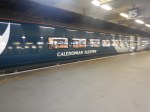
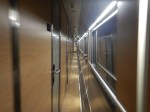

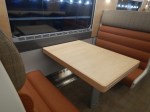

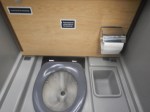


The coaches don’t seem to have any problems and appear to be performing well.
The facilities are comprehensive and include full en-suite plumbing, a selection of beds including doubles and a lounge car. There are also berths for disabled passengers.
The Locomotives
The Class 57 locomotives have a power output around 2 MW and I would suspect a similar-sized locomotive would be used.
Possible locomotives could include.
- Class 67 – Used by Chiltern on passenger services – 2.4 kW
- Class 68 – Used by Chiltern, TransPennine Express and others on passenger services – 2.8 MW
- Class 88 – A dual-mode locomotive might be powerful enough on diesel – 700 kW
I wouldn’t be surprised to see Stadler come up with a customised version of their Euro Dual dual-mode locomotives.
 The Anonymous Widower