North East Coast Named Top UK Rail Walking Route Thanks To Northumberland Line Reopening
The title of this post, is the same as that of this article on the Northumberland Gazette.
This is the sub-heading.
A once-missing link in Northumberland’s rail network has helped unlock a new coastal walking route.
These two introductory paragraphs add more detail.
Railwalks.co.uk, a national group which aims to promote walking from railway stations, has identified the North East coastline as one of the best-served by rail in Britain.
This has only become possible since the reopening of Ashington Station last year. Until July 19, Railwalks.co.uk founder member Steve Melia will be walking 92 miles from Alnmouth to Seaton Carew, following the England Coast Path.
If people are walking the coast, they are going to need support like cafes, pubs and shops.
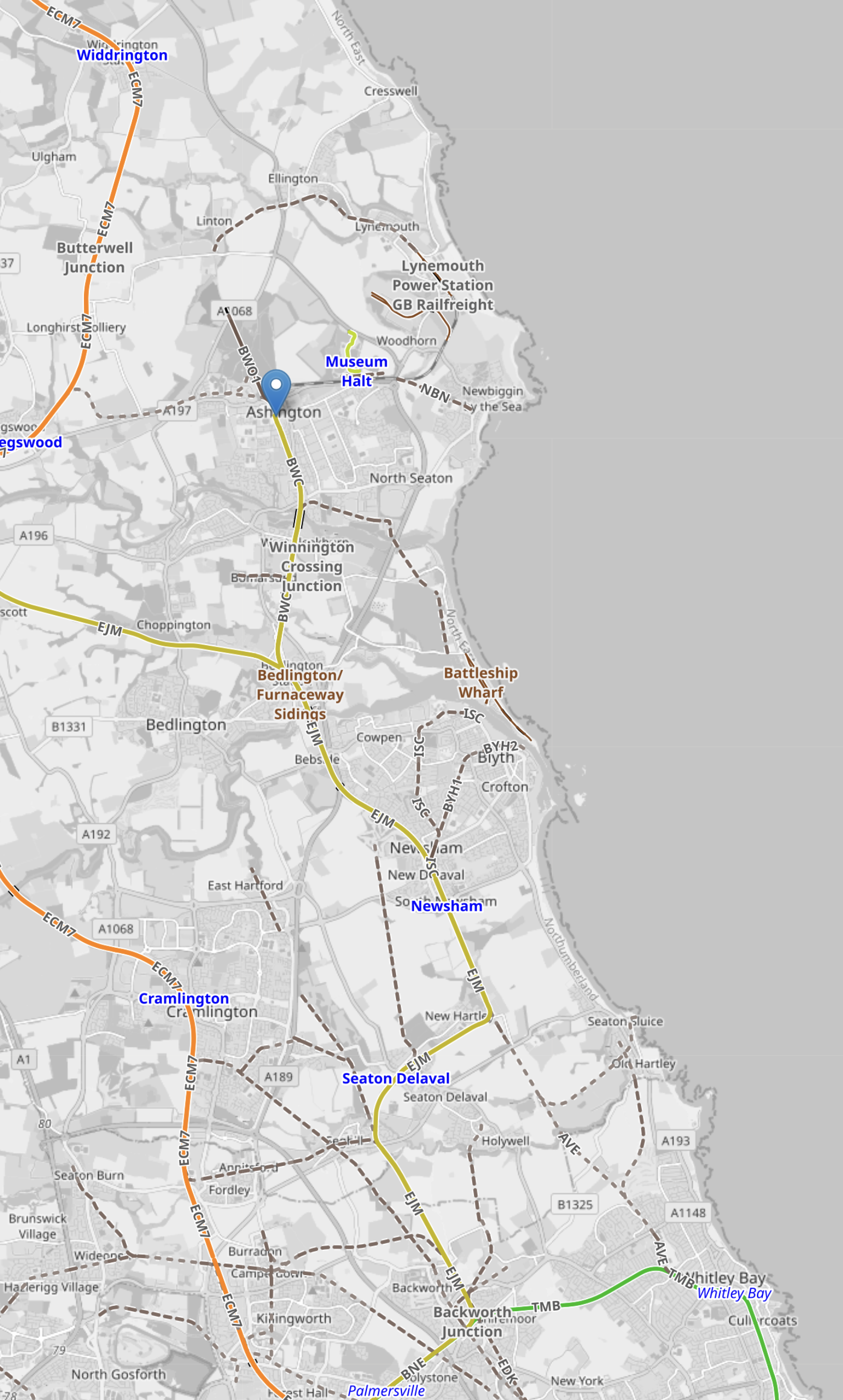
This OpenRailwayMap shows the Northumberland Line and the coast.
Note.
- The orange track is the East Coast Main Line with stations at Widdrington, Pegswood and Cramlington, as you come down the map.
- The blue arrow indicates Ashington, which is the terminus of the Northumberland Line.
- The yellow track is the Northumberland Line, which passes through Newsham and Seaton Delaval.
- The green track at the bottom of the map, is the Newcastle Metro to Whitley Bay, Tynemouth and North Shields.
- To the East of Ashington is Museum Halt, which could be a station on an extension of the railway to Newbiggin-by-the-Sea, which I wrote about in Onward To Newbiggin-by-the-Sea For The Northumberland Line?.
How many other places in the UK would benefit from a new or reopened railway for business, leisure and building houses in nice little inaccessible towns and places?
Darlington And Bishop Auckland – 26th June 2025
My second trip out from Darlington was to Bishop Auckland station and I took these pictures on the way up and down.

















































Note.
- Bishop Auckland station is a one-platform station, but all the other stations seem to be two-platform stations.
- The railway museum; Locomotion seems to be within walking distance of Shildon station.
- There is a short section of electrified track, that Hitachi use to test trains and get them to the East Coast Main Line.
The stations seemed tidy and clean, but more step-free access is needed.
I have some further thoughts.
The Location Of Hitachi Rail
This Google Map shows the location of Hitachi Rail.
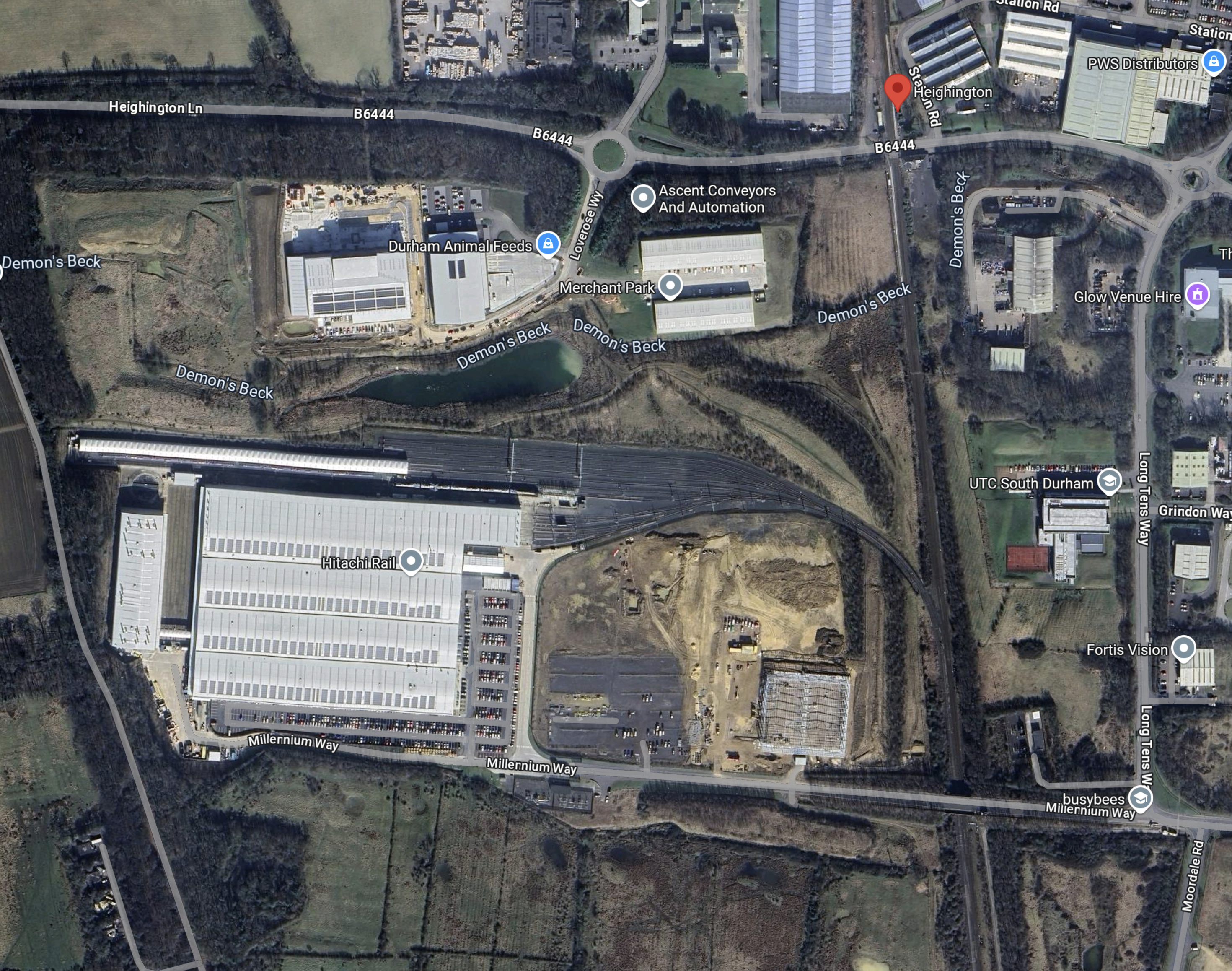
Note.
- Heighington station on the Tees Valley Line is marked by the red arrow.
- Hitachi Rail is the large building in the South-West corner of the map.
- There appear to be electrified sidings to the North of the factory, which have a connection to the Tees Valley Line.
From the map it looks efficient and well-designed.
Could The Services On The Branch Be Run By Battery-Electric Trains?
I don’t think there would be too many problems.
- Bishop Auckland and Darlington is only twelve miles.
- Both platforms at Darlington used by Tees Valley Line services are electrified.
- The single platform at Bishop Auckland station could be fitted with one of Siemens’s Rail Charging Convertors.
- Hitachi at Newton Aycliffe might like some more formal electrification between Newton Aycliffe and Darlington stations.
- An electrified Tees Valley Line would surely be useful to Hitachi for showing the capabilities of battery-electric trains.
This would be a very easy line to run using battery-electric trains.
Onward To Newbiggin-by-the-Sea For The Northumberland Line?
This is the headline on the Chronicle Live.
Plans Underway To Extend Northumberland Line To Newbiggin-by-the-Sea
And this is the heading on the Northumberland Gazette.
Plans Underway To Extend Northumberland Line To Newbiggin
Both articles say council officers have been asked to look at extending the line from its current terminus at Ashington.
This OpenRailwayMap shows the route onwards from Ashington to Newbiggin-by-the-Sea.
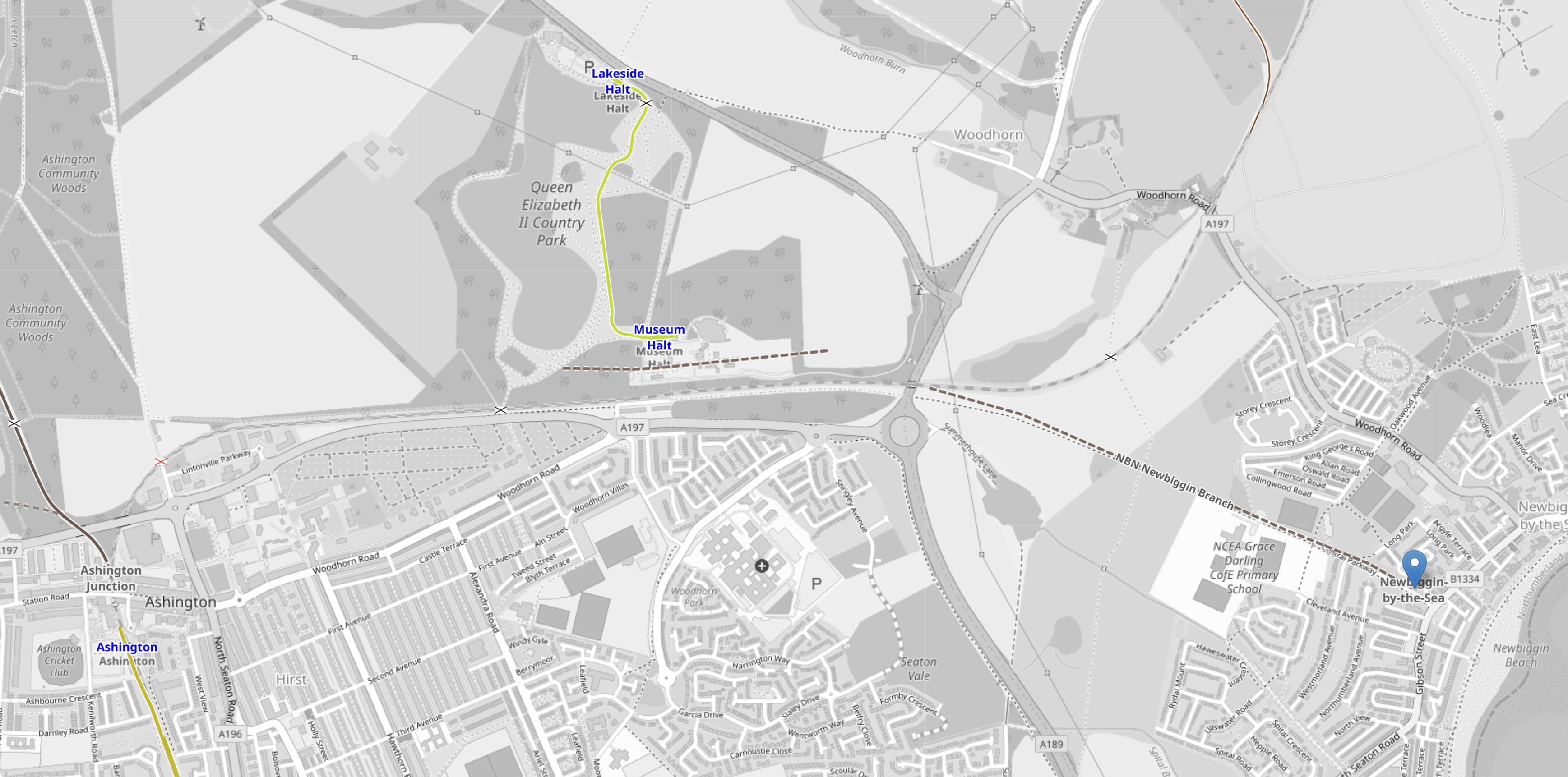
Note.
- Ashington station is in the South-West corner of the map.
- The yellow track is the route of the new Northumberland Line to Newcastle.
- The possible site of the proposed Newbiggin-by-the-Sea station is marked by the blue arrow.
- The route of the railway between Ashington and Newbiggin-by-the-Sea is marked by a dotted line on the map.
- There appears to be a country park and a museum complex with a railway about halfway between Ashington and Newbiggin-by-the-Sea.
There also appears to be other disused colliery rail lines going to other closed collieries, that may be worth developing.
At a first look, it doesn’t appear that extending the Northumberland Line to a new station at Newbiggin-by-the-Sea would be the most difficult of railway projects.
Woodhorn Museum, Woodhorn Colliery And The Queen Elizabeth II Country Park
This Google Map shows this attraction in detail.
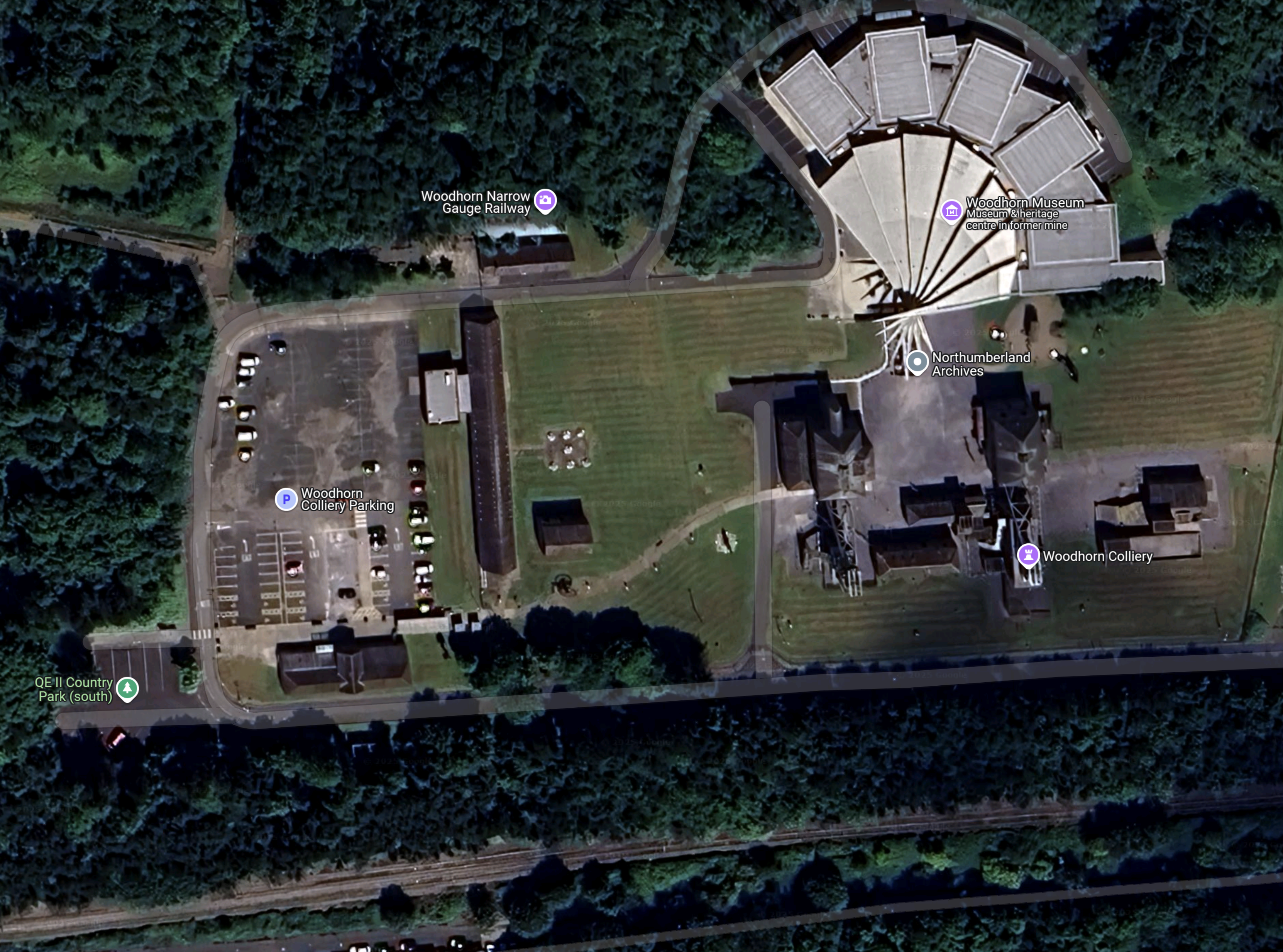
Note.
- Woodhorn Museum is the fan-shaped building in the North-East of the map.
- Woodhorn Colliery is part of the museum and is to the South of the main museum building.
- The Northumbrian Archives are also on the Woodhorn site.
- The Woodhorn Narrow Gauge Railway is indicated by the lilac arrow in the North of the map.
- The Queen Elizabeth II Country Park is indicated by the green arrow in the West of the map.
- Across the bottom of the map, there appears to be a double-track railway, which appears to connect to the new Ashington station.
This is the sort of attraction, that is crying out to have its own railway station.
This Google Map shows the Woodhorn Roundabout on the A 189 to the South-East of the Woodhorn Museum
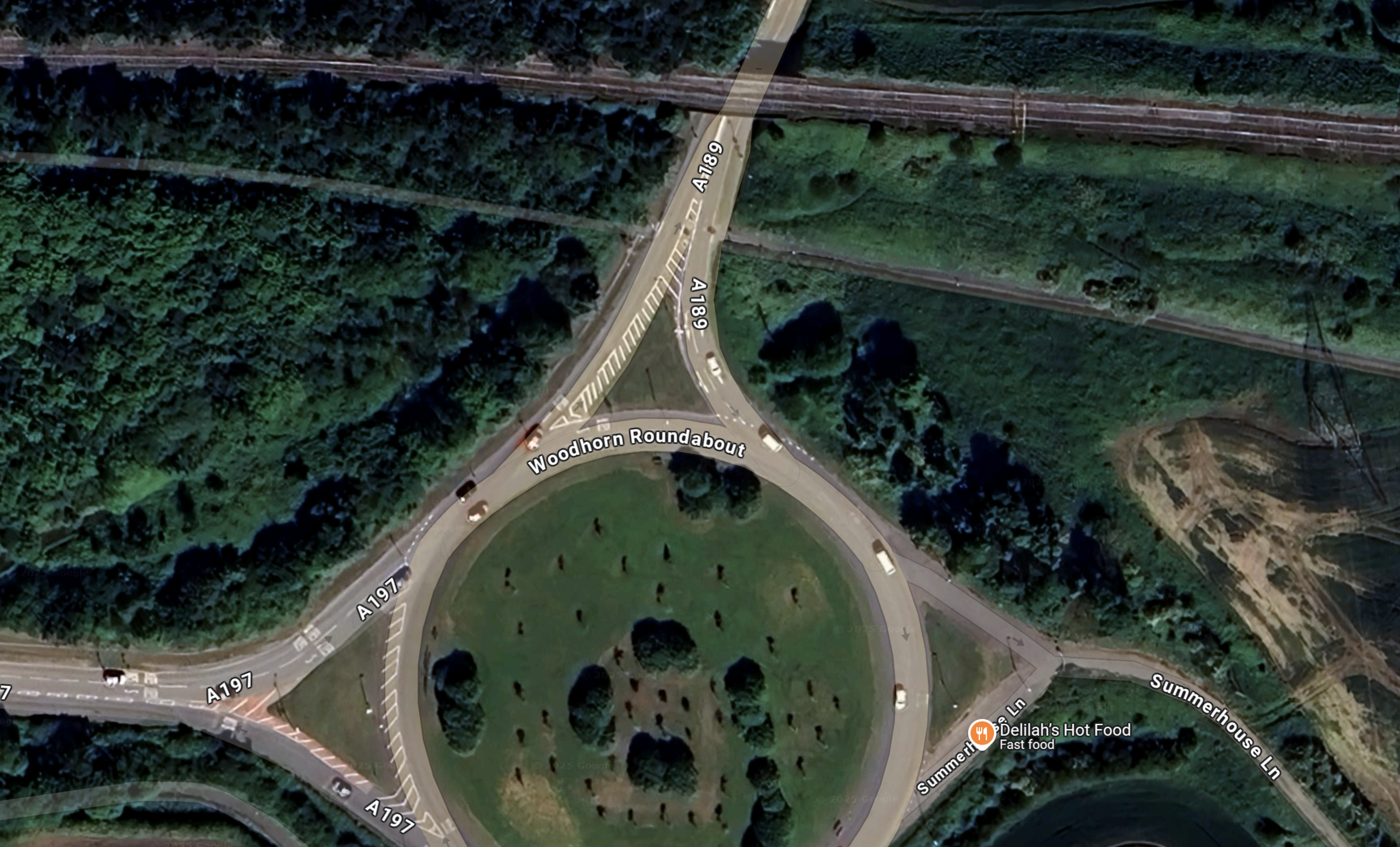
Note.
- The road to the North is the A 189 which leads to Lynemouth power station, which is fueled by biomass.
- The double-track railway across the top of the map, also goes to Lynemouth power station. Note it has a bridge over the A 189.
- The single-track railway to the South of the double-track can be followed almost to the centre of Newbiggin-by-the-Sea. It looks like it goes under the A 189.
It looks to me, that a single-track could easily handle two trains per hour to a single-platform at Newbiggin-by-the-Sea station.
How To Go Mining In A Museum
This article on Active Investors is entitled Government Backing Lined Up For Cornish Lithium As It Partners With Wardell Armstrong And The Natural History Museum To Advance UK Battery Capabilities.
These are the first few paragraphs.
Cornish Lithium is now moving in some pretty august circles in its quest to put the UK on the lithium map.
Lithium is essential in the manufacture of batteries for electric vehicles.
“It’s been a huge voyage of discovery,” says Jeremy Wrathall.
“An absolutely amazing journey.”
In the past year the company he created, Cornish Lithium, has been transforming rapidly from a concept conjured up from the pages of old documents hidden in half-forgotten library vaults into a well-funded exploration vehicle with 10 geologists and some serious-minded partners providing additional funding and know-how.
The article goes on to give the full story of lithium in Cornwall and how by looking at old documents in the museum’s archives, Jeremy Wrathall may have found where to mine for the valuable mineral.
Now his company; Cornish Lithium, who are partnered with Wardell Armstrong, who describe themselves on their web site as.
An Engineering, Environmental and Mining consultancy with over 180 years of international service and experience.
And the Natural History Museum, who need no introduction.
They have been backed by £500,000 from the Government’s Faraday Battery Challenge fund.
It is a must-read tale, that I hope, very much has a successful conclusion.
A Visit To The V & A At Dundee
I took these pictures on a visit to the V & A At Dundee.












It should be noted that I was taking a lazy journey between Glasgow and Edinburgh, so I went via Dundee, where the new museum and other attractions are very close to the station.
A Quick Visit To The German Museum Of Technology
I had time before my train left for Munich to have a quick visit to the German Museum of Technology.
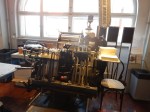











As I do in most museums of this sort, I ended up in the printing section.
Walking Around Berlin’s Museum Quarter
I took these pictures as I walked around Berlin’s Museum Quarter.




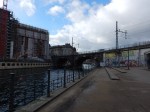











There is a lot of construction going on.
I spent about an hour in the Historical Museum finding about my Jewish ancestor, who Ibelieve came from Konigsberg.
Exploring The Historic Centre Of Las Palmas
I took a 30 bus from the port to the bus station at San Telmo and walked to the cathedral and back.




























There is a lot to see as the pictures show.
Museum de Cruquius
The Museum de Cruquius is just up the road from The Hague near Haarlem, although our journey up wasn’t the easiest, because the motorway was closed.





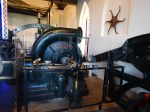
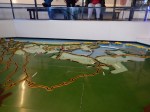
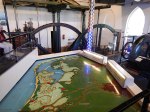
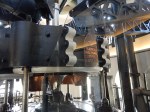
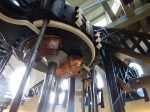
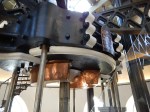
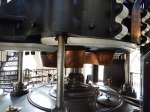
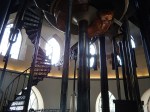
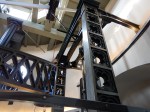
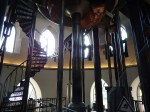
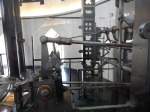
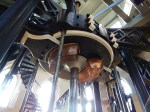

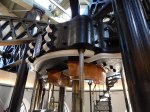

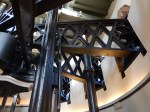
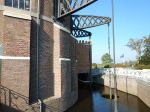

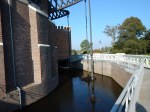
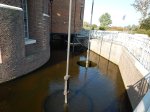
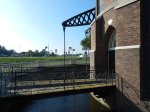

It is well worth a visit as it shows a tremendous amount about how the Dutch have kept water at bay.
The enormous steam engine, which sadly doesn’t work, was actually built in Cornwall.
When I see a museum and engine like this, I do think it sad that London’s massive sewage engines at Crossness were just filled with sand and abandoned in the 1960s.
Both sites incidentally, are about the same age!
Lottery Grants To Museums And Heritage
This article on the BBC web site details the grants to various museums and heritage organisations.
I am pleased that one local to me; the Geffyre Museum is getting a grant.
The Geffrye Museum in London, which specialises in the history of the English domestic interior, is being given £11m.
The funding will allow the development of a new entrance from Hoxton station, accessible spaces for the collections, library and archive, new learning facilities and a new cafe.
The second entrance from Hoxton station is to be welcomed and I hope they make sure that the cafe serves gluten-free offerings.
One thing I feel strongly about is that all lottery-funded attractions, should have good access for those like me, who can’t or don’t drive.
Obviously some on today’s list like the Geffryre and Science Museums and Lincoln Cathedral are accessible by rail, but this isn’t always the case.
Jodrell Bank is a place, I would like to visit, but on looking up travel information on their web site, it has to be a taxi from the nearest stations. That is just not good enough and a real pity considering that Jodrell Bank lies virtually alongside the rail line between Manchester and Crewe.
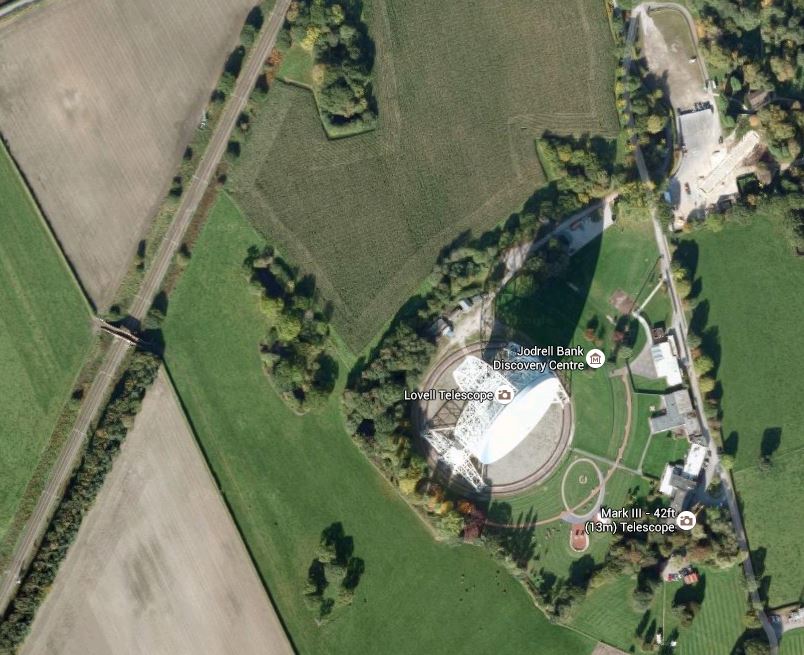
Jodrell Bank And The Manchester-Crewe Railway
A station would be expensive, but I’m certain that many European countries would have provided something better than expecting visitors to take a taxi, especially as the nearest station at Goostrey is only served by one train an hour. It would be interesting to see what would happen, if the service was twice an hour and there was a free shuttle bus to Jodrell Bank.
In my view anything that makes science more accessible and also puts Jodrell Bank on a sound financial footing is to be welcomed.
 The Anonymous Widower