Has Andy Burnham Made Any Comments About The Picc-Vic Tunnel?
This is the introductory paragraph for the Wikipedia entry for the Picc-Vic Tunnel.
Picc-Vic was a proposed, and later cancelled, underground railway designed in the early 1970s with the purpose of connecting two major mainline railway termini in Manchester city centre, England. The name Picc-Vic was a contraction of the two key station names, Manchester Piccadilly and Manchester Victoria. The proposal envisaged the construction of an underground rail tunnel across Manchester city centre. The scheme was abandoned in 1977 during its proposal stages. The view was that the scheme still retained two large and expensive-to-maintain terminal stations in Manchester while other similarly sized cities had reduced their terminals to one.
Note.
- British Rail had a plan to improve the rail system in the North of England, by building rail tunnels under Liverpool, Manchester and Newcastle.
- Liverpool’s and Newcastle’s tunnels were built and are used by Merseyrail and the Newcastle Metro.
- Harold Wilson cancelled the Picc-Vic Tunnel, the TSR2, the Channel Tunnel and Maplin Airport, as he’d run out of taxpayer’s money.
I asked Google-AI, the question in the title of this post, and received this answer.
Greater Manchester Mayor Andy Burnham has made extensive comments about the Picc-Vic tunnel, effectively resurrecting the concept of an underground railway for the city.
Key details of his statements include:
The Vision: Burnham has tasked Transport for Greater Manchester (TfGM) with designing a conceptual underground system—which has been likened to a “Crossrail for Manchester”. He envisions two lines (North-South and East-West) intersecting at a new subterranean station at Manchester Piccadilly.
Rebranding the Concept: Acknowledging the original 1970s Picc-Vic plan that was ultimately shelved, Burnham views the new tunnel as an absolute necessity to cope with the city’s growth, stating “it is essential to the future economic prosperity of the city-region”.
Piccadilly Station: He is adamant that Manchester Piccadilly Station should be the “Kings Cross of the North”. He has pushed heavily against “cut-price” infrastructure, demanding an entirely underground railway option rather than sprawling over-ground train lines.
Next Steps: He has instructed officials to prepare detailed plans and cost estimates for the multi-billion pound project, with initial discussions on funding mechanisms already underway with the government.
You can read more about his 10-year strategy announcement on the BBC News report or follow local discourse on the Reddit Manchester threads.
Conclusion
If Andy Burnham is going to do all this for his beloved Manchester, can the rest of the country, afford him to be Prime Minister?
An Extreme Day Out – Bedlington And Northumberland Park Stations
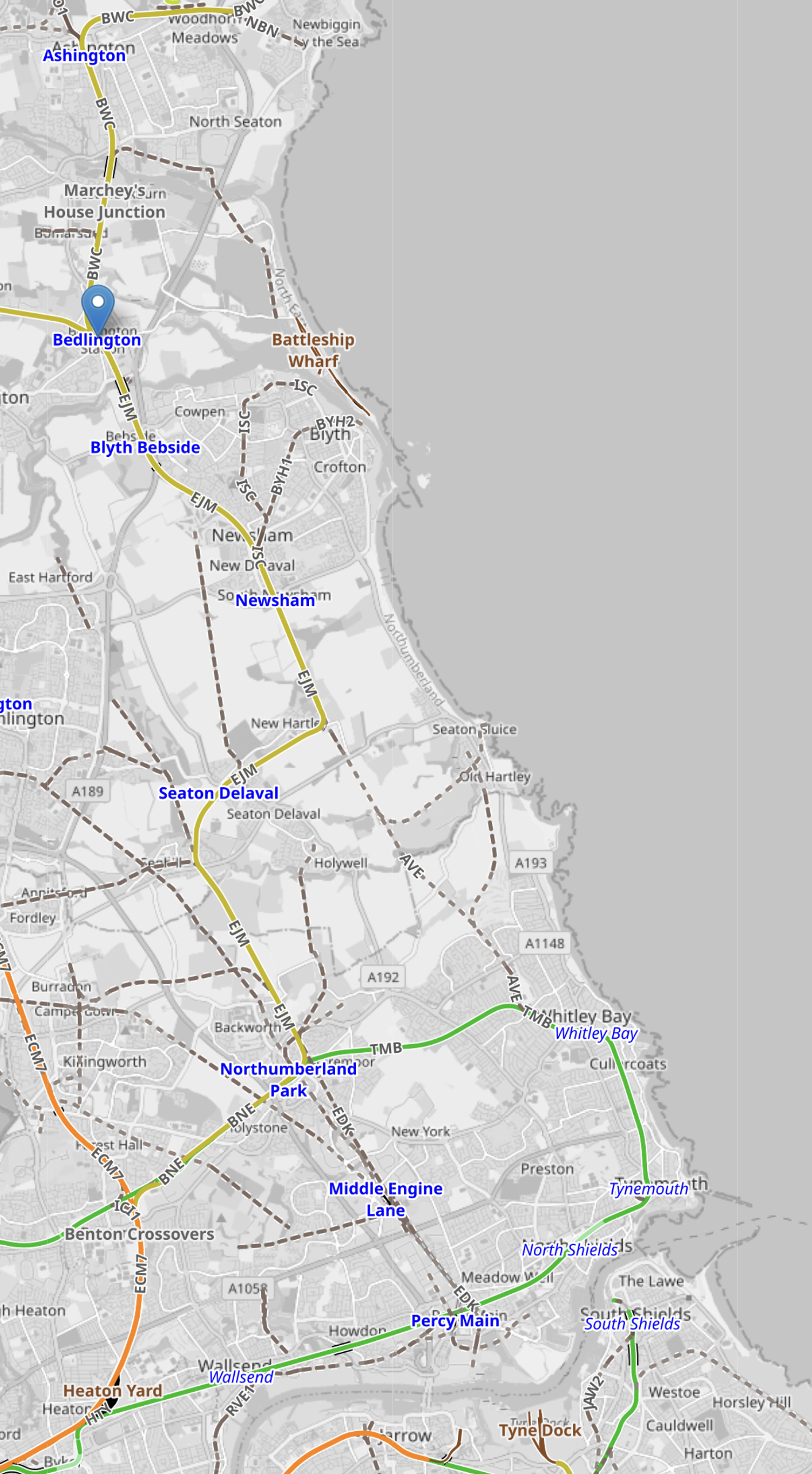
This OpenRailwayMap shows the Northumberland Line and the Eastern part of the Newcastle Metro.
Note.
- The yellow track is the Northumberland Line.
- It terminates in the North at Ashington in the top-left corner of the map.
- Bebington station is indicated by the blue arrow.
- It terminates in the South at Newcastle station.
- The green track is the Newcastle Metro.
- There is now an interchange between the two lines at Northumberland Park station.
In the following sections, I’ll describe my trip.
King’s Cross And Newcastle Return For £66.35
I bought my two long distance tickets on a walk-up basis at King’s Cross and Newcastle stations from the machines.
- I traveled North on a Lumo service to Glasgow for £27.20.
- I did indulge myself with a tea for £2.60.
- I traveled South on an LNER service for £36.55.
- One of the reasons, I buy tickets on a walk-up basis, is that with my uncomplicated pancolonic diverticular disease, I might decide to cancel at the last minute, so it avoids the hassle of getting refunds.
Both services were within a few minutes of the timetable, although LNER had said they would be late, due to signalling problems.
My Route In Northumberland For £2.60
I bought a return ticket at Newcastle station for Ashington, which is the current terminus of the Northumberland Line.
- I actually didn’t go past Bedlington station, where I turned round and had a drink.
- As there are two trains per hour on the Northumberland Line, waits are not generally not too long.
- I only came back as far as Northumberland Park, where I swapped to the Metro for Newcastle station.
If I had had more time, I would have stopped at Seaton Delaval station to have a gluten-free dinner, which I wrote about in Seaton Delaval Station – 30th March 2025.
From Newcastle to Bedlington Station
I took these pictures going to Bedlington station.



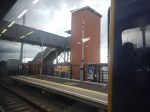
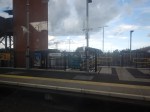

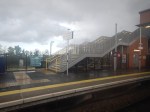
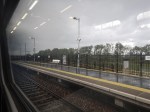

I would have taken more pictures, but the train was rather full.
Bedlington Station And Bedlington
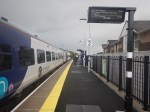
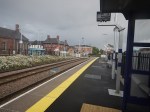
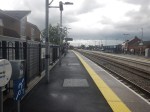
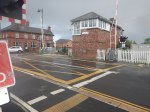
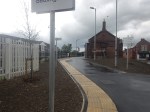
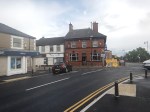
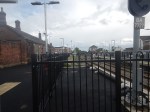
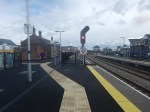
I took these pictures at and around Bedlington station.




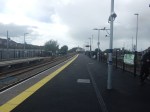
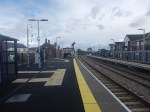
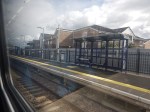
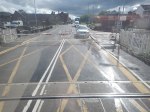
Note.
- Although it is a completely rebuilt station, it has a level crossing.
- But is the signal box keeping a watchful eye over trains and the road?
- Bedlington station appears to be step-free using ramps and the level crossing.
- Just to the North of the station, the tracks split to Ashington and Morpeth.
In my forty minutes or so in Bedlington, I didn’t see a terrier.
Are Any Bedlington Terriers Still Bred At Or Near Bedlington?
I had to ask Google AI, this question and I received this reply.
Yes, Bedlington Terriers are still bred in and around their namesake town in Northumberland, UK. While they are a relatively rare breed overall, the historic North East region remains one of the primary strongholds for these distinct “lamb-like” dogs.
Northumberland Park Station
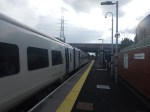
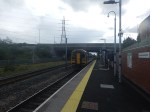
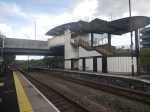
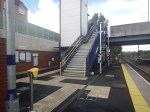
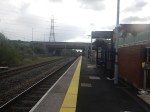
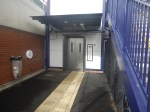
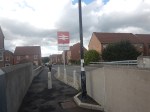
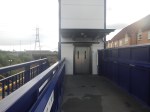
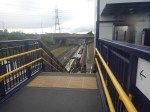
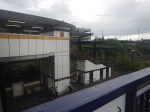
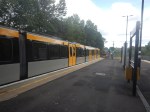
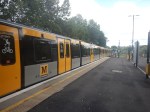
I took these pictures at Northumberland Park station.

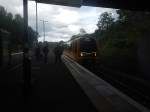
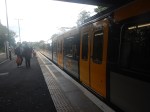
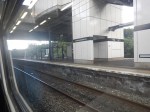
Note.
- The Northumberland Line uses a single bi-directional platform on the North side of the station.
- The Newcastle Metro uses an island platform on the South side of the station.
- Both platforms have steps and lifts.
- There are around 400 parking spaces and a Sainsbury’s Superstore at the station.
At 78, after a stroke, I didn’t find the change between the two lines difficult. But I did use the lifts!
What Are The Future Plans For The Northumberland Line?
I couldn’t resist asking Google AI this question and I received this answer.
With the Bedlington and Northumberland Park stations fully operational, the core phase of the Northumberland Line connecting Ashington to Newcastle is complete. Future plans now focus on route extensions, additional stops, and increasing capacity to handle high passenger demand.
Key Future Plans
Extension to the Coast: The North East Combined Authority is actively funding the development of an extension to Newbiggin-by-the-Sea, utilizing existing freight tracks. Planning submissions for this expansion are targeted for 2028.
New Station Proposals: Proposals are being explored to build an additional stop serving the Wansbeck General Hospital and to replace the long-closed Choppington station.
Increased Capacity: Operator Northern Rail is in ongoing discussions with transport partners to lengthen train services (which are currently constrained to two to four coaches) to help accommodate massive patronage on the line.
Integrated Ticketing: The Northumberland County Council is exploring integrated ticketing with the Tyne and Wear Metro to allow for seamless travel between the two networks at stations like Northumberland Park.
From my observations on the line over the last few years, I would go along with Google AI’s recommendations.
These are some specific thoughts.
Extension To Newbiggin-by-the-Sea
This OpenRailwayMap shows the tracks that used to exist between Ashington and Newbiggin-by-the-Sea.
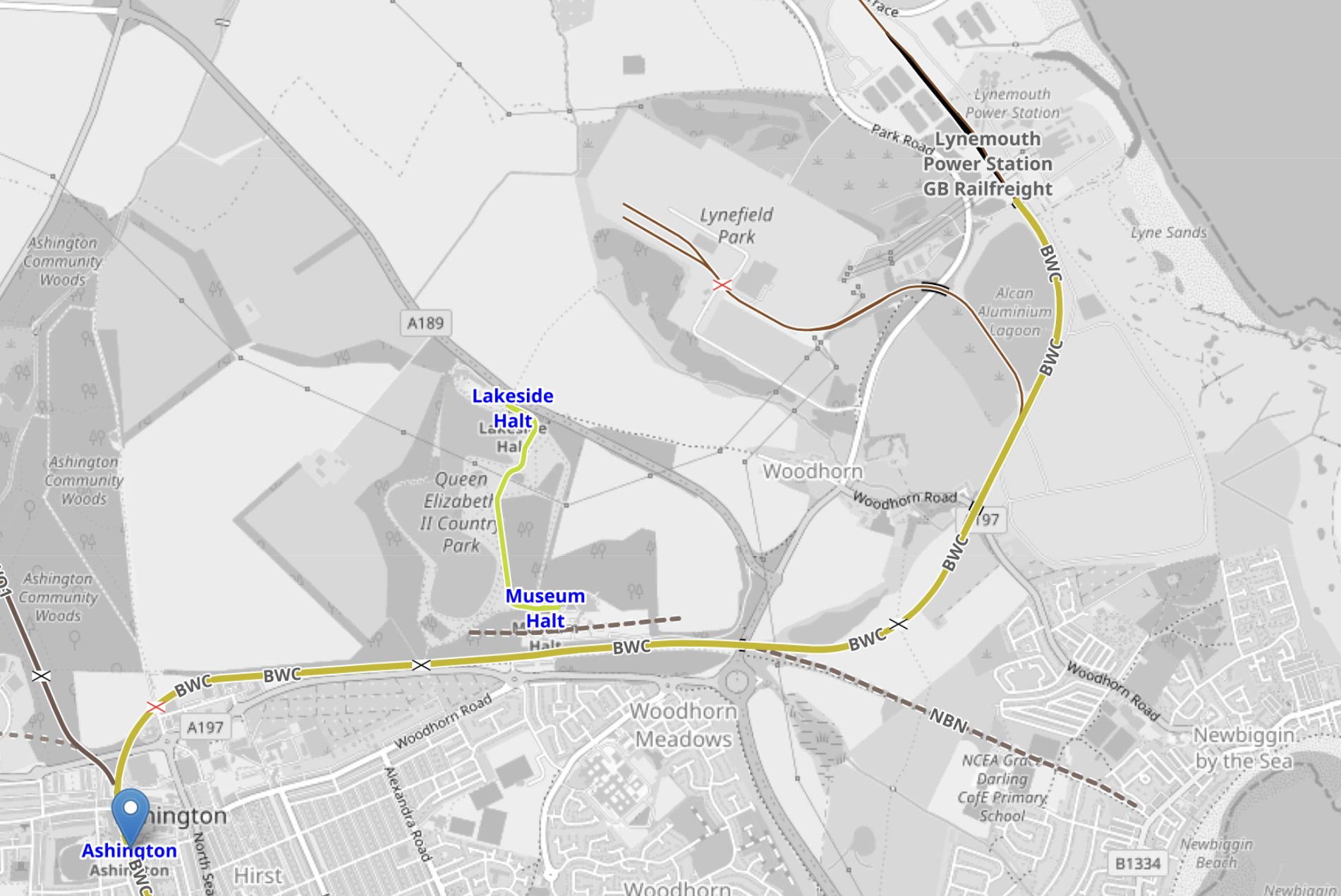
Note.
- Ashington station is in the South-West corner of the map.
- A freight line exists, which is shown in yellow, all the way to Lynemouth power station, which is a 420 MW biomass power station.
- Lynemouth powerstation was originally built to power an aluminium smelter.
- Running South-East from the Northumberland Line, is a disused railway alignment labelled NBN, which leads into Newbiggin-by-the-Sea.
This Wikipedia section describes the history of railway connection of the town.
Situated on the west side of Front Street (now the B1334), the station opened on 1 March 1872 as a terminus of the Blyth and Tyne Railway (now known as the Northumberland Line). The station had a long island platform onto which the station building faced. There were sidings on both sides of the station which handled goods traffic, controlled by a signal box. The station closed to both passengers and goods traffic on 2 November 1964. With the reopening of the Northumberland Line, Provisions have been made, especially at Ashington so that the line could be extended to Newbiggin. As of the end of 2025, there were calls to extend the railway by 1.6km (1 mile) into the centre of Newbiggin-by-the-Sea. This will require new track and is all subject to a feasibility study. A formal bid was launched in December 2025 for this.
In Formal Bid To Extend Railway Line, I wrote about the latest progress in January 2026, based on a BBC article.
The Northumberland Line Needs A Focus Other Than Commuting
Several of the stations have large car-parks, which is good for commuting, but the railway needs to serve more places for leisure and other activities.
- Seaton Delaval Hall is Grade 1 Listed and is just 10 minutes in a bus from the station with the same name.
- If the Northumberland Line is connected to Newbiggin-by-the-Sea, that could bring in those, wanting a day by the sea.
- The extended Northumberland Line would also connect to Woodhorn, which is a museum, described in this Wikipedia entry.
QTS are also developing an AI data centre at Cambois, which surely will generate commuter traffic from all over the North East.
This OpenRailwayMap shows the location of the QTS AI Data Centre.
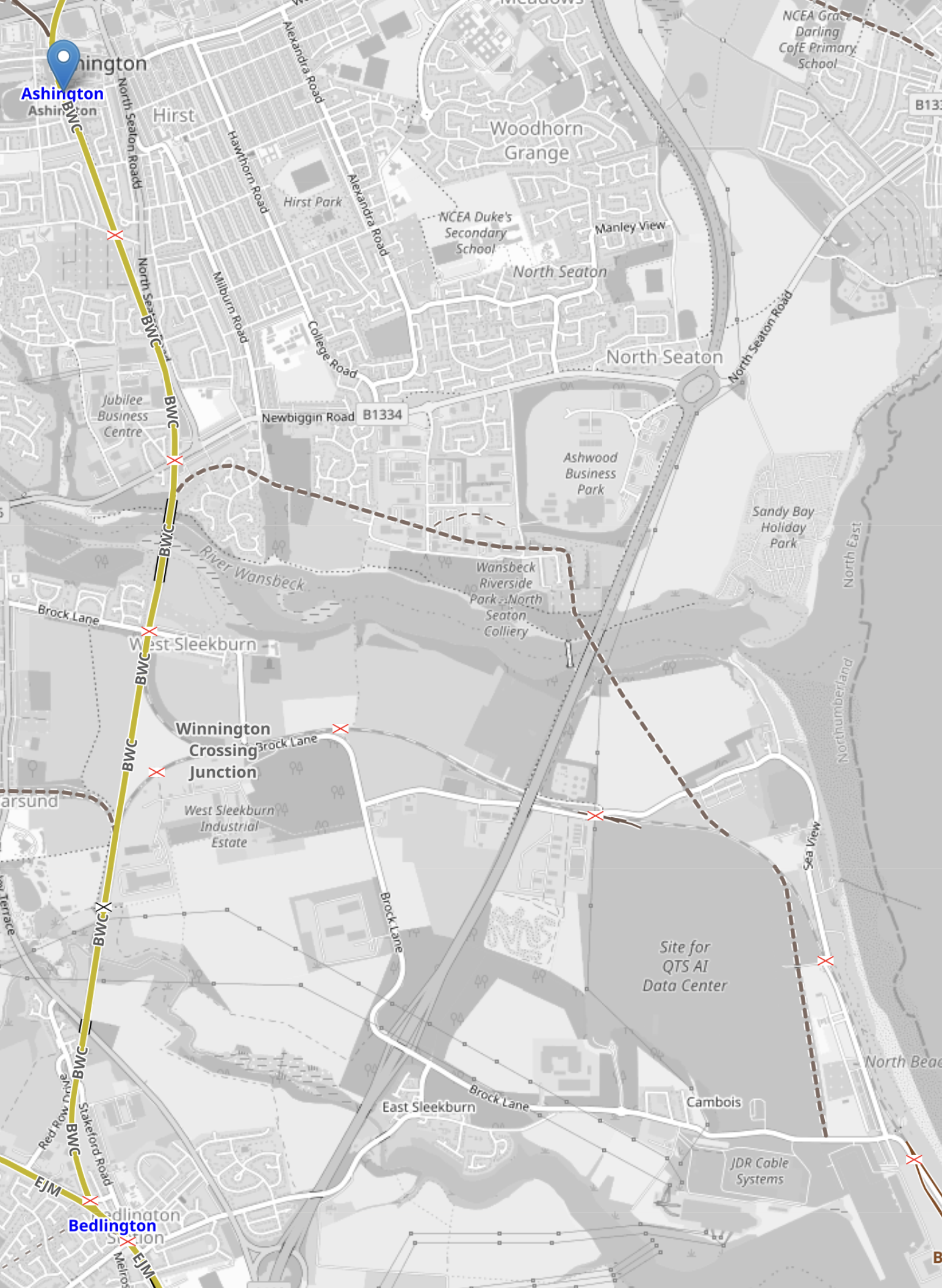
Note.
- Ashington station is indicated by a blue arrow.
- The yellow track is the Northumberland Line, which now terminates at Ashington station.
- Bedlington station is in the South-West corner of the map.
- The trapezoidal grey box to the East of Bedlington is labelled as Site for QTS AI Data Centre.
- As the site, was that of Blyth coal-fired power station, before QTS acquired it, there is a disused railway line that connects the site to the Northumberland Line.
I suspect there are powerful economic arguments about whether or not, the Northumberland Line is extended to the QTS AI Data Centre site.
How Much Power Will QTS Cambois Data Centre Need?
I couldn’t resist asking Google AI this question and I received this answer.
The proposed QTS Cambois data centre in Northumberland is expected to require between 620MW and 720MW of critical IT power capacity, with an initial proposal capacity of up to 1.1GW.
Details on the planned power infrastructure include:
Power Capacity: The facility will support up to 720MW of critical IT capacity across ten planned buildings, though some council estimates cite an expected total power capacity of 620MW.
Backup Power: To guarantee uptime and handle power outages, the campus will rely on nearly 600 diesel-powered generators, requiring up to 58 generators per data hall.
Site Details: Located on the former Blyth Power Station site in Cambois, the £10 billion development will span 540,000 square metres.
My views on this are.
- There is the 1.4 GW North Sea Link from Blyth to Norway, that I wrote about in UK To Norway Sub-Sea Green Power Cable Operational.
- The 4.1 GW Berwick Bank wind farm is planned to send 1.8 GW to Blyth.
- To help if QTS need more power, there is the 1.4 GW Sofia wind farm.
- So 1.1 GW should be manageable, as Blyth is blessed with more power than Niagra Falls.
I also believe that Centrica and Delta have a much better backup solution, that I described in Delta And Centrica Launch Scalable Off-Grid Fuel Cell Power Solution. Hydrogen could come by pipeline or rail.
How Would The Northumberland Line Connect To Wansbeck Hospital?
This Google Map, shows the location of Wansbeck General Hospital with respect to Ashington station.
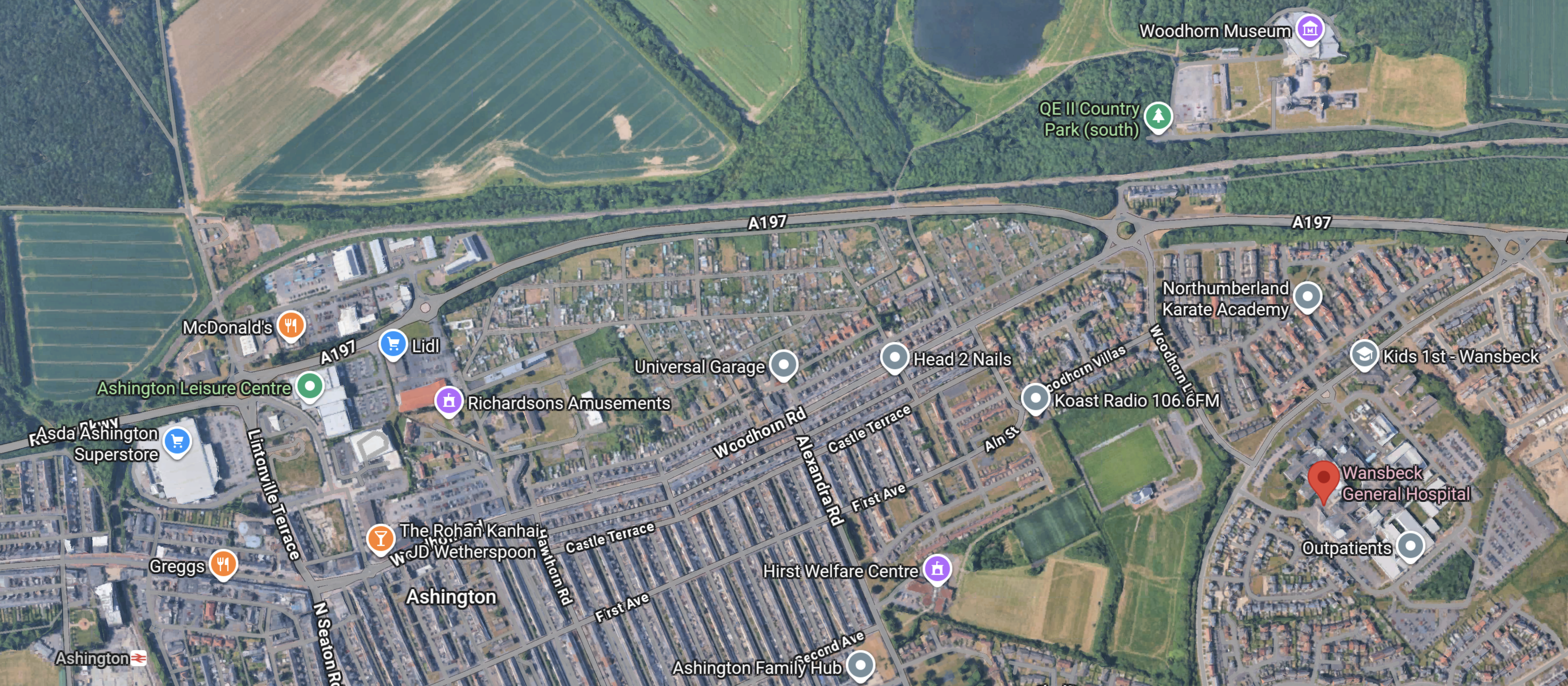
Note.
- Ashington station in the South-West corner.
- Woodhorn museum is in the North-East corner.
- Wansbeck General Hospital is indicated by a red arrow.
- The Northumberland Line runs East-West to the South of the museum and then curves round to reach the station.
Perhaps the station could go between the museum and the hospital and an innovative shuttle would connect all three locations.
How Would The Northumberland Line Connect To Choppington?
This Google Map, shows the location of Choppington, with respect to Morpeth and Bedlington stations.
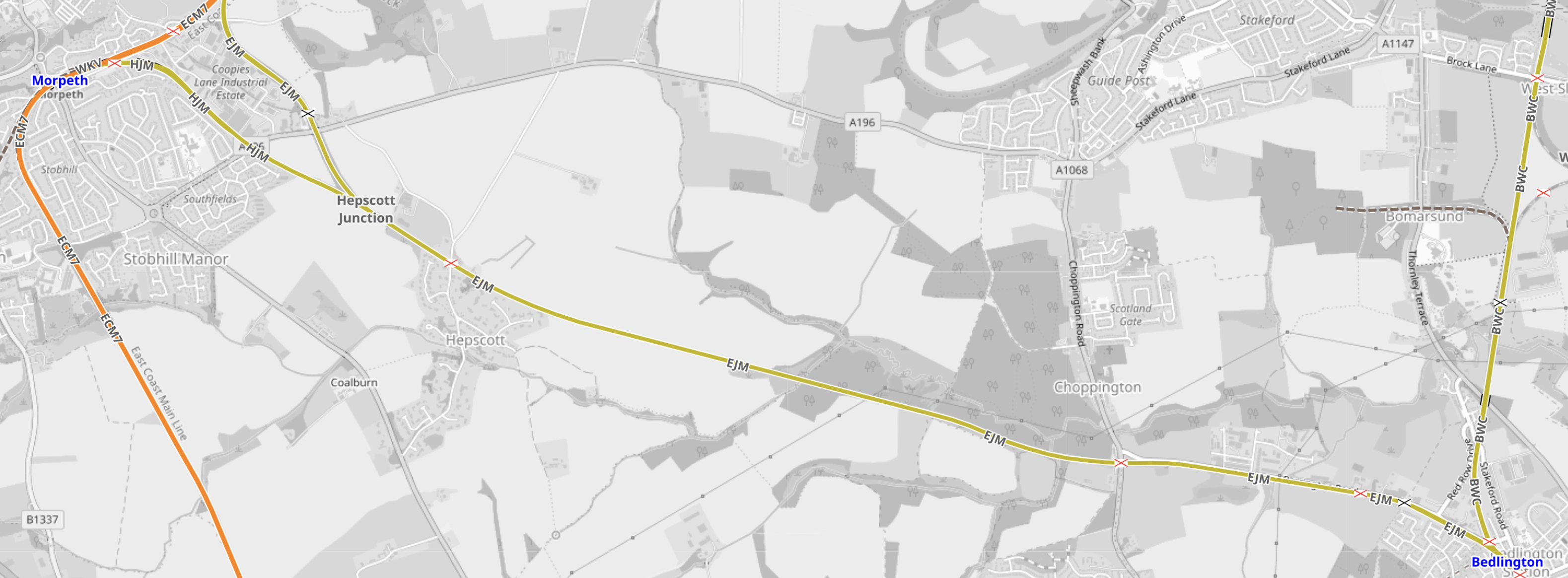
Note.
- The orange track on the West side of the map is the East Coast Main Line.
- Morpeth station is in the North-West corner of the map.
- Bedlington station is in the South-East corner of the map.
The Eastern end of the Bedlington and Morpeth Line can be seen in this picture to the left of Bedlington North signal box at the Northern ends of the the platforms.
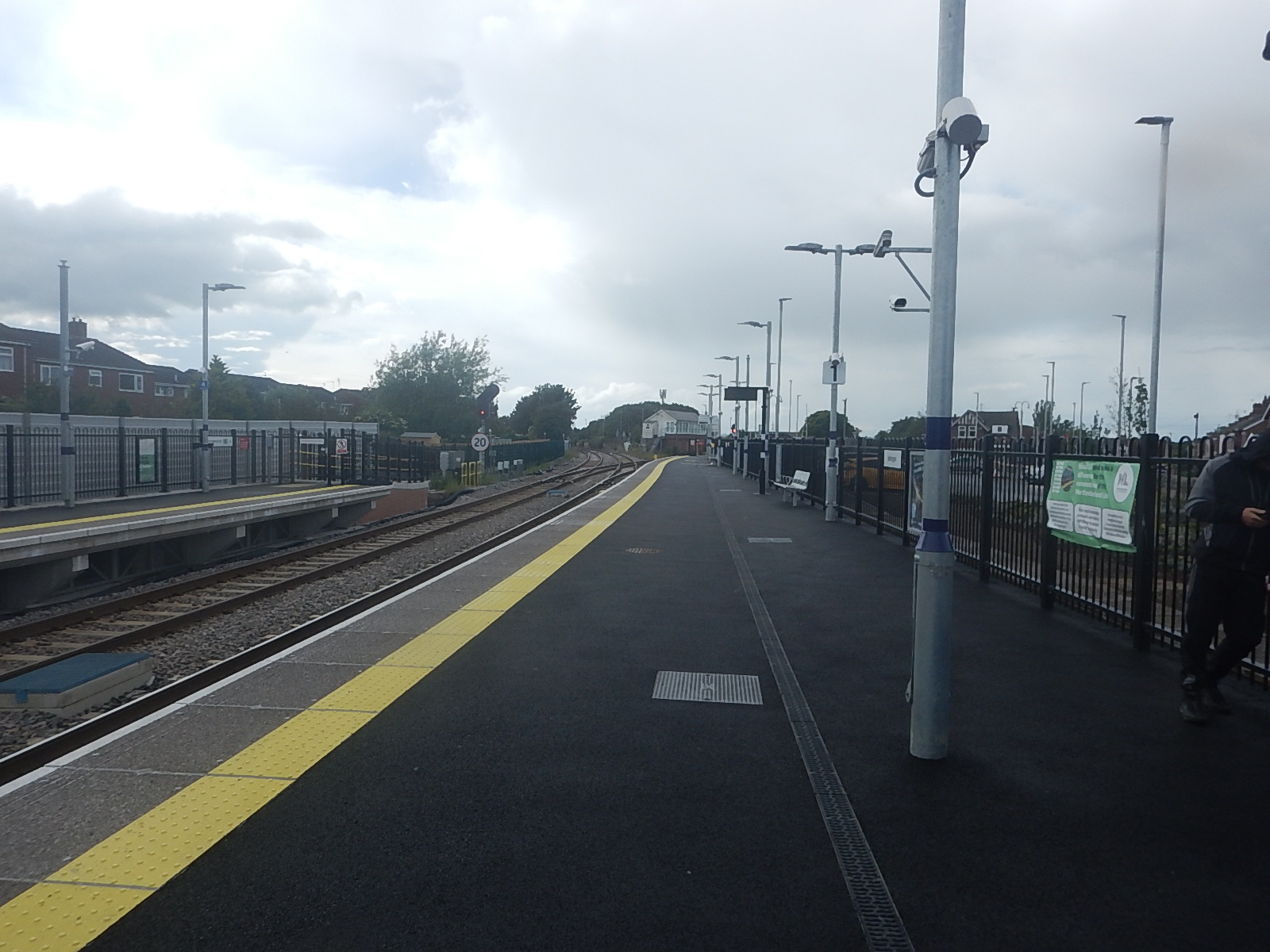
Note.
- Bedlington North signal box has a communication mast behind it.
- The track to the left of the box goes to Morpeth.
- The track to the right of the box goes to Ashington.
This OpenRailwayMap shows Choppington Road, which crosses the Bedlington and Morpeth Line at the only level crossing between Bedlington station and Hepscott junction.
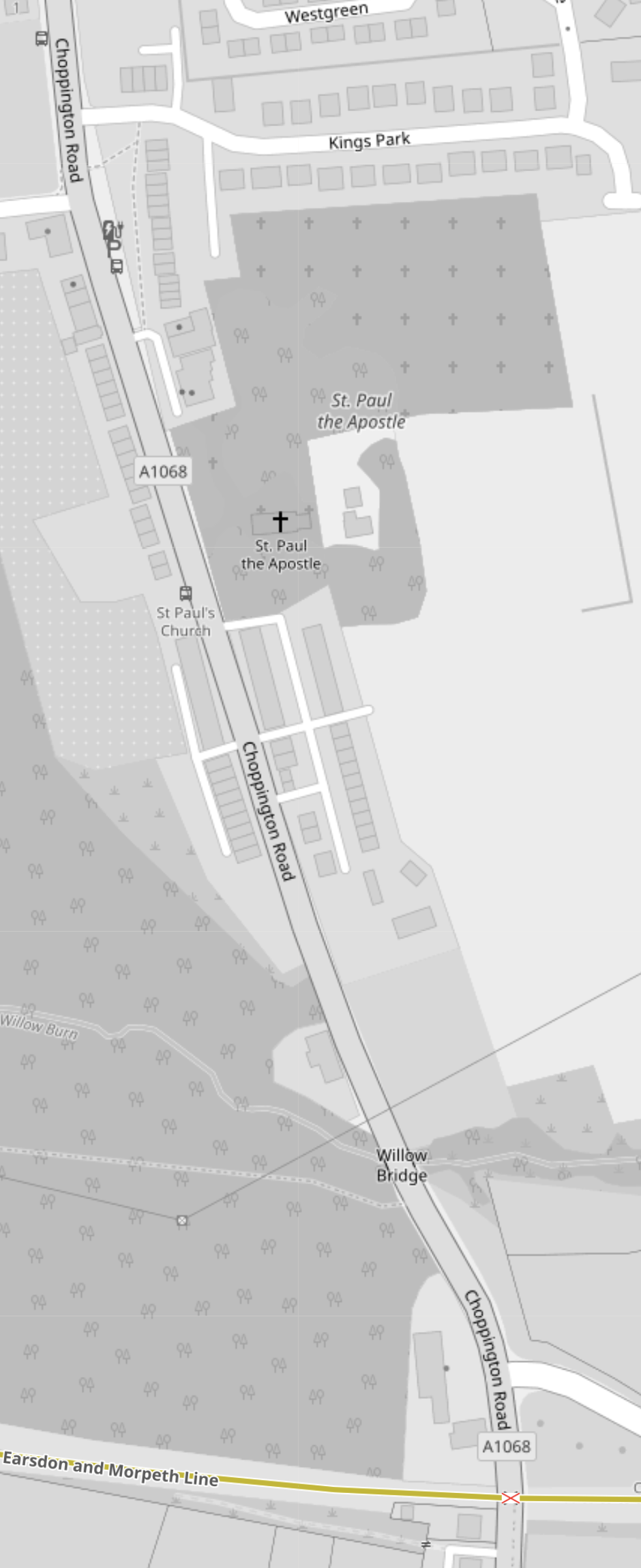
Note.
- Choppington Road, which runs North-South on the map.
- The yellow tracks are the Morpeth and Bedlington Line, which runs East-West across the map.
- Where they cross, a red cross indicates a level crossing.
- The Wikipedia entry of Choppington station shows a level crossing.
As the level crossing on the map is the only one shown, this must be the location of Choppington station.
North East Coast Named Top UK Rail Walking Route Thanks To Northumberland Line Reopening
The title of this post, is the same as that of this article on the Northumberland Gazette.
This is the sub-heading.
A once-missing link in Northumberland’s rail network has helped unlock a new coastal walking route.
These two introductory paragraphs add more detail.
Railwalks.co.uk, a national group which aims to promote walking from railway stations, has identified the North East coastline as one of the best-served by rail in Britain.
This has only become possible since the reopening of Ashington Station last year. Until July 19, Railwalks.co.uk founder member Steve Melia will be walking 92 miles from Alnmouth to Seaton Carew, following the England Coast Path.
If people are walking the coast, they are going to need support like cafes, pubs and shops.
This OpenRailwayMap shows the Northumberland Line and the coast.
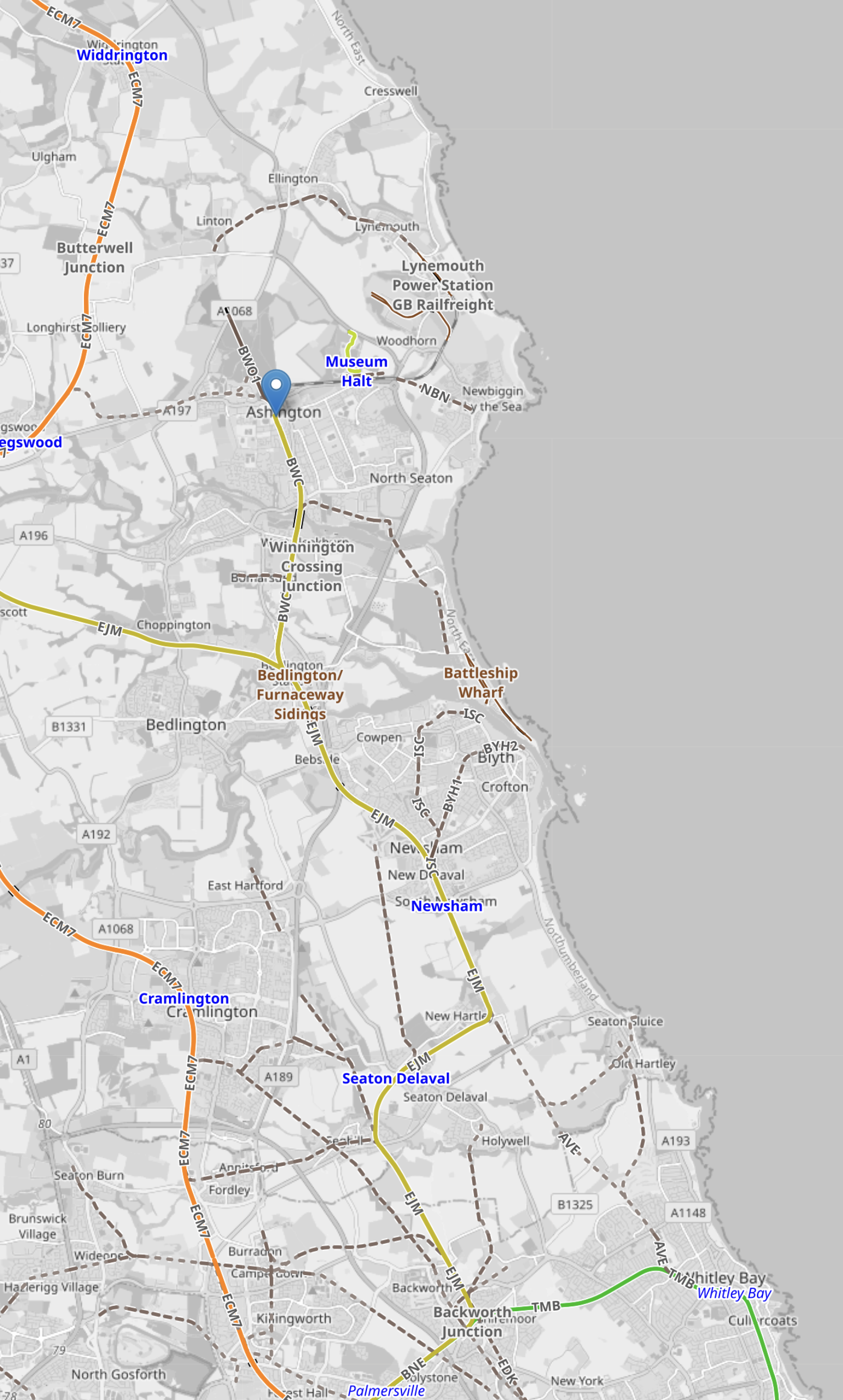
Note.
- The orange track is the East Coast Main Line with stations at Widdrington, Pegswood and Cramlington, as you come down the map.
- The blue arrow indicates Ashington, which is the terminus of the Northumberland Line.
- The yellow track is the Northumberland Line, which passes through Newsham and Seaton Delaval.
- The green track at the bottom of the map, is the Newcastle Metro to Whitley Bay, Tynemouth and North Shields.
- To the East of Ashington is Museum Halt, which could be a station on an extension of the railway to Newbiggin-by-the-Sea, which I wrote about in Onward To Newbiggin-by-the-Sea For The Northumberland Line?.
How many other places in the UK would benefit from a new or reopened railway for business, leisure and building houses in nice little inaccessible towns and places?
Thoughts On Tram-Trains In Manchester
The State Of Public Transport In the North
Over the last few years plans have been put in place to improv the state of the public transport of the major cities of the North and progress has started to happen, with new trains, trams and light rail systems being planned and in some cases coming into service.
Birmingham, Coventry And The West Midlands
A lot of investment has been made and it is continuing.
- Birmingham New Street station has been rebuilt.
- Coventry and Wolverhampton stations have been remodelled.
- Two new stations were built in Birmingham for the Commonwealth Games.
- A large number of new Class 730 local trains are being brought into service.
- Birmingham stations are being updated for High Speed Two.
- The West Midland Metro has been extended at both ends and a second line is under construction.
Transport in the wider West Midlands has been greatly improved.
Derby, Nottingham, Sheffield And The East Midlands
The major investment in this area is the electrification of the Midland Main Line and the provision of new Hitachi electric Class 810 trains.
In addition the following has been done.
- The Hope Valley line between Manchester and Sheffield has been improved.
- Derby station has been improved.
- The local trains have been refurbished.
- The power supply has been improved.
- An application for an Open Access service to Sheffield has been made.
The improvements in the East Midlands, will not be on the same scale as in the West Midlands, but they will make a difference.
Leeds, Bradford And West Yorkshire
For decades, West Yorkshire and especially Bradford has lagged behind the rest of the North.
But at least things are stirring.
- Plans have been laid to create a through station in Bradford.
- Leeds station has been refurbished.
- An extra platform is being added at Bradford Forster Square station.
- The TransPennine Upgrade is underway to electrify between Huddersfield and York.
- Hitachi have developed a battery-electric high speed train for the TransPennine route.
- Bradford is installing a hydrogen electrolyser, so that the city can have hydrogen buses to cope with the hills.
- Plans are now being developed to create a metro for Leeds and Bradford.
West Yorkshire is closing the gap to the rest of the North.
Liverpool And Merseyside
Again, a lot of investment has been made.
- The approaches to Liverpool Lime Street station have finally been sorted, with more tracks and new signalling.
- Liverpool Lime Street station has been improved and is now one of the finest stations in Europe.
- Trains are now approaching High Speed Two times between Crewe and Liverpool.
- More services between London and Liverpool can now be planned, with the arrival of new Class 807 trains.
- Some new stations have been built and more are planned.
- A large number of new Class 777 local trains are being brought into service.
Transport in the wider Merseyside has been greatly improved.
Newcastle, Tyneside And Northumberland
The area is getting investment, but not as much in proportion as others.
- The Metro trains are being replaced and the Metro itself, is getting a major update.
- The East Coast Main Line has received improvements to power supplies, signalling and some bottlenecks.
- The Northumberland Line to Ashington is being brought back into operation.
It’s a start, but if the Northumberland Line is a success, I can see a call for more line re openings.
Manchester And Greater Manchester
If you look at each of the areas, they generally have one or more large projects.
- Birmingham, Coventry And The West Midlands – Birmingham New Street station, Class 730 Trains, High Speed Two, West Midland Metro
- Derby, Nottingham, Sheffield And The East Midlands – Midland Main Line, Class 810 Trains, Hope Valley Line, Open Access To Sheffield
- Leeds, Bradford And West Yorkshire – Leeds station, Bradford improvements, TransPennine Upgrade, Battery-Ekectric Trains, Leeds Metro
- Liverpool And Merseyside – Liverpool Lime Street Improvements, Class 807 Trains, Class 777 Trains
- Newcastle, Tyneside And Northumberland – Metro upgrade with New Trains, Northumberland Line
So what improvements are in the pipeline for Greater Manchester?
This Wikipedia entry is entitled Proposed Developments Of Manchester Metrolink.
The proposed developments include in the Wikipedia order.
- New Metrolink Stop: Stop to serve new housing development proposed at Elton Reservoir on the Bury Line.
- New Metrolink Stop: Stop to serve new housing development proposed at Sandhills on the Bury Line.
- New Metrolink Stop: Stop to serve new housing development proposed at Cop Road on the Oldham and Rochdale Line.
- Airport Line extension to Terminal 2: A short extension of the Airport Line from the current Manchester Airport station to the site of the expanded Terminal 2.
- Airport Line extension to Davenport Green: An extension of the Airport Line from Roundthorn to the site of the proposed Manchester Airport High Speed station on the HS2 high speed network.
- Oldham–Heywood via Rochdale tram-train pathfinder: A tram-train service utilising the heavy rail Calder Valley line to connect Oldham to Heywood through Rochdale railway station.
- Manchester Airport–Wilmslow via Styal tram-train pathfinder: A tram-train service operating on the southern section of the heavy rail Styal Line between Manchester Airport and Wilmslow in Cheshire.
- South Manchester–Hale via Altrincham tram-train pathfinder: An extension of Metrolink’s Altrincham Line using tram-train to reach Hale on the heavy rail Mid-Cheshire line.
- Improved Metrolink frequency between Piccadilly and Victoria stations: Increasing capacity to provide a direct service from Rochdale and Oldham to Manchester Piccadilly.
- Interventions to improve Metrolink capacity and reliability: Includes improvements to turnback facilities and double-tracking currently single-track sections.
- Further interventions to improve Metrolink capacity and reliability: Includes longer vehicles, a third depot and double-tracking currently single-track sections.
- Manchester–Stalybridge extension: An extension of the East Manchester Line from Ashton-under-Lyne to Stalybridge.
- Manchester–Middleton extension: A proposed spur from the Bury Line connecting to the town of Middleton.
- Oldham–Middleton extension: A spur from Oldham to Middleton.
- MediaCityUK–Salford Crescent: A line connecting the MediaCityUK tram stop to the Salford Crescent railway station interchange. Further new Metrolink.
- Connections between Salford Crescent, Inner Salford and the City Centre: Extension of the MediaCityUK–Salford Crescent line into the regional centre.
- Completion of the Airport Line (Wythenshawe Loop): Completion of the Wythenshawe Loop by connecting the Metrolink lines between the Davenport Green and Manchester Airport Terminal 2 extensions.
- Port Salford/Salford Stadium extension: Extending the Trafford Park Line from the Trafford Centre to a proposed container terminal at Port Salford.
- Glossop tram-train: A tram-train service utilising the Glossop line between Manchester and Glossop in Derbyshire.
- Marple tram-train: A tram-train service utilising the Hope Valley line branches north of Marple towards Manchester.
- Manchester–Wigan via Atherton tram-train: A tram-train service utilising the Atherton section of the Manchester–Southport line between Manchester and Wigan.
- Manchester–Warrington tram-train: A tram-train service utilising the southern route of the Liverpool–Manchester lines between Manchester and Warrington.
- Stockport–Hazel Grove tram-train: A tram-train service between Stockport and the suburb of Hazel Grove.
- Stockport–Manchester Airport tram-train: A tram-train service between Stockport and Manchester Airport.
- Rochdale–Bury via Heywood tram-train: Extension of the Oldham–Heywood tram-train pathfinder from Heywood to Bury.
- Manchester Airport–Mid Cheshire tram-train: A tram-train service from Manchester Airport using a proposed Western Link rail line to the Mid-Cheshire line.
- Stockport–Ashton via Denton and Reddish tram-train: A tram-train service utilising the Stockport–Stalybridge line from Stockport to Ashton.
- Cornbrook–Manchester Airport via Timperley tram-train: A tram-train service from Cornbrook using the Altrincham line to Timperley, the Mid Cheshire line to Baguley, then the Wythenshawe Loop to Manchester Airport.
- Regional centre metro tunnel: Providing capacity for more services on the network.
- Oldham–Greenfield via Grotton extension: A Metrolink spur from Oldham town centre to Greenfield railway station on the Huddersfield line.
- Oldham–Royton extension: A Metrolink spur from the Oldham and Rochdale line to the town of Royton.
Note.
- The number of times that tram-trains are mentioned.
- But with its numerous rail and tram lines, Greater Manchester is ideally suited for conversion to tram-trains.
- There are three pathfinder routes for tram-trains, which will be converted first to prove the technology.
These are my detailed thoughts on tram-trains in Greater Manchester,
All Routes Could Be Run By Identical Tram-Trains
If this can be arranged, it is surely preferable from the operator, staff and passengers point-of-view.
Tram-Trains Can Run On Secondary Routes Like The Calder And Hope Valley Lines
In Manchester, this would enable some routes to be swapped from the rail to the tram network.
It would also allow trams to run between networks, so you could have a direct tram service between say Stockport and Sheffield on the Hope Valley Line.
Tram-Trains Can Be Faster
Tram-trains can be faster, when running on rail lines, so they don’t hold up expresses.
What Do Tram-Trains Look Like?
This is one of Sheffield’s Class 399 tram-trains at Rotherham Parkgate.
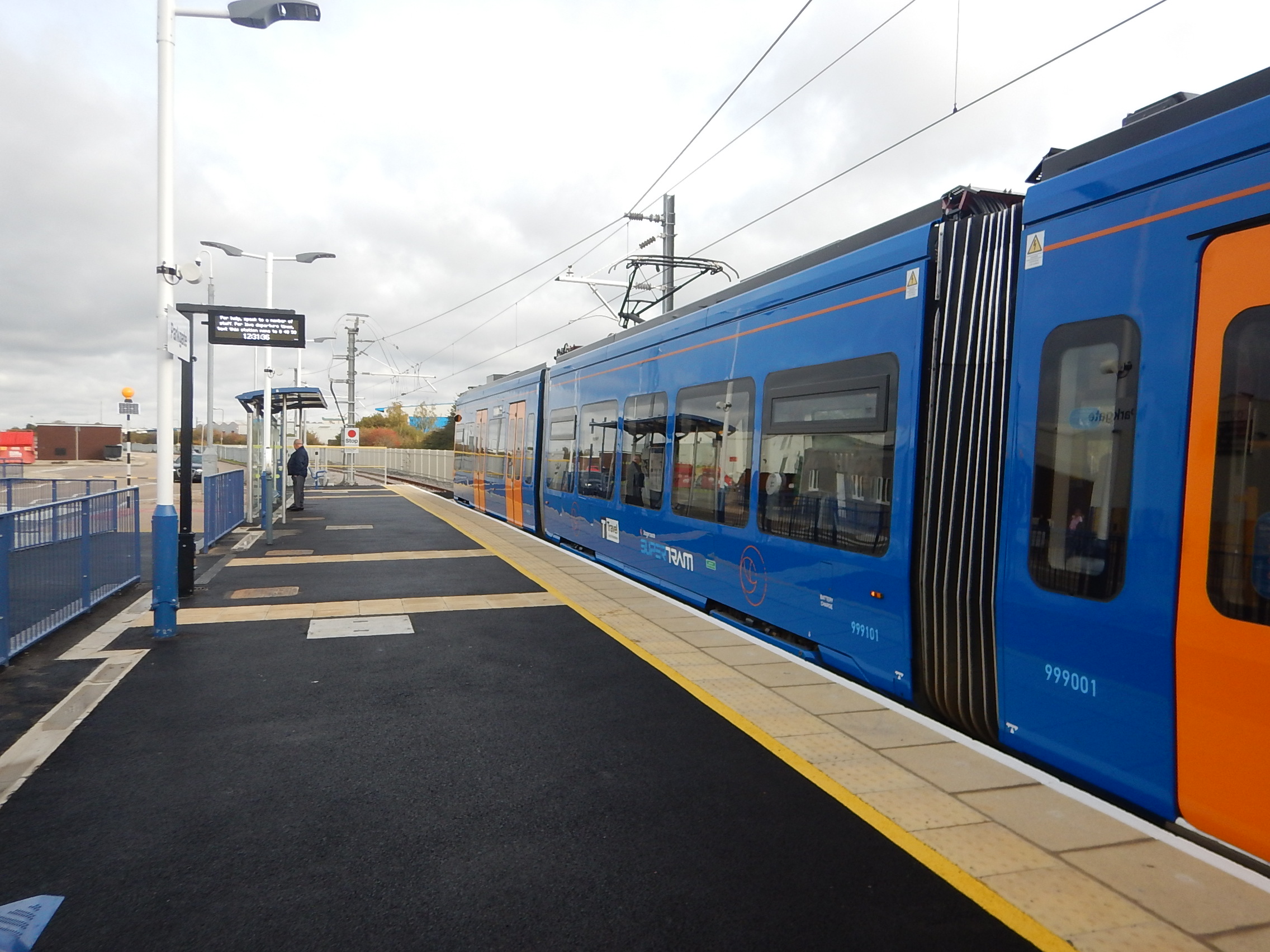
Note.
- This tram-train is a member of the Stadler Citylink family.
- this version can be powered by either 750 VDC or 25 KVAC.
- The Welsh version will also have battery-power.
- It is a three-car tram train.
- There is step-free access.
The Wikipedia entry for the Stadler Citylink has lots more details.
Stadler have just launched a new smaller one- or two-car tram-train.
This image from the press release shows the prototype hydrogen-powered one-car RS ZERO.
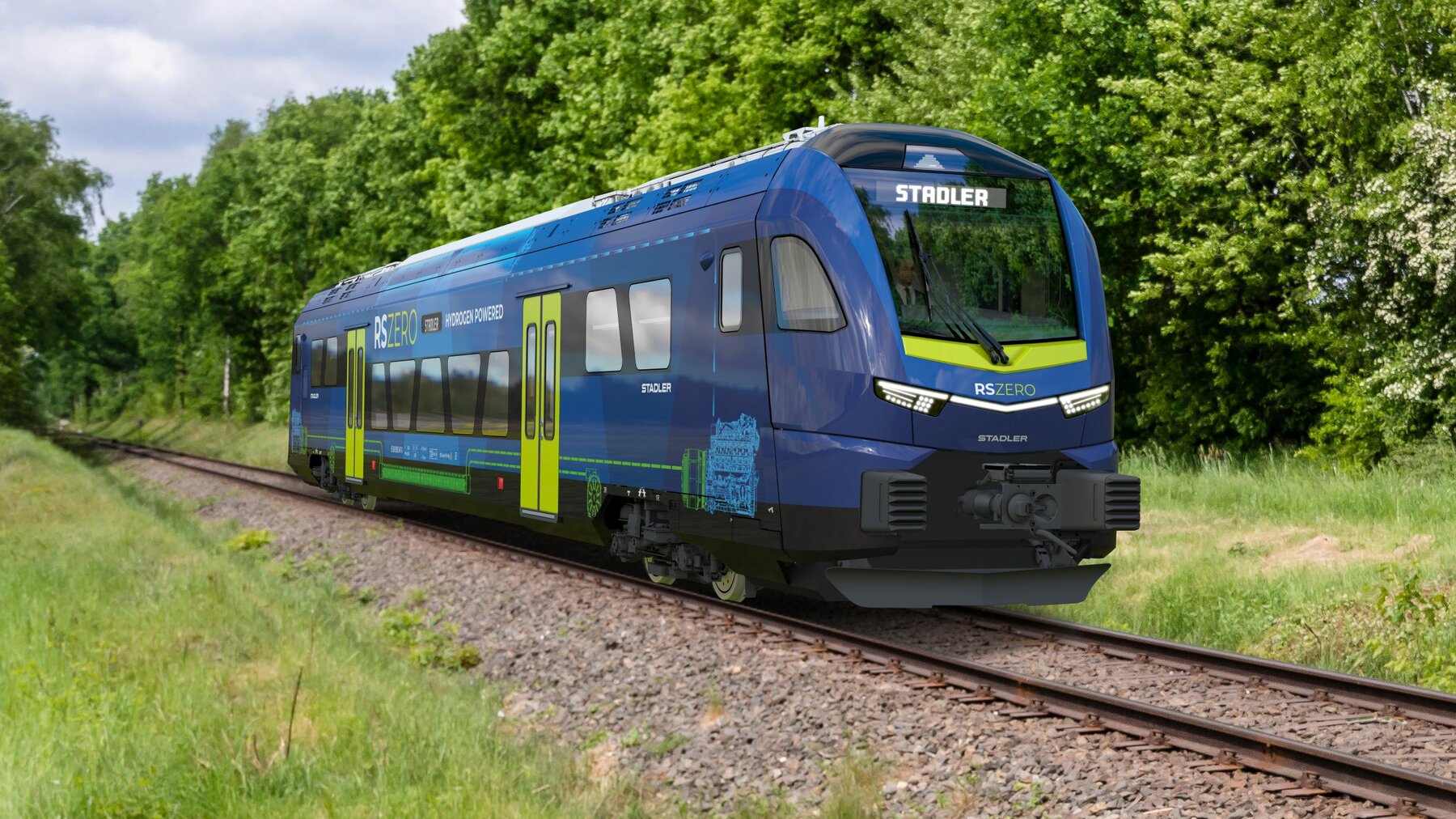
Note.
- The Regio-Shuttles can run as up to seven car trains.
- These RS ZERO are powered by overhead electrification, battery or hydrogen power.
- They can carry 170 passengers at 75 mph.
- They can run as train-trams using the Chemnitz model on compatible tram networks.
- The interiors are very flexible.
- An RS ZERO can be fitted with toilets for the posher parts of Manchester.
- Typically, a one-car RS ZERO handles a similar passenger load to a one-car Metrolink vehicle.
The more I compare the RS ZERO with the Metrolink’s trams, the more it looks like Stadler’s design has a Metrolink order firmly in its sights.
A Simple Tram-Train Example
The Altrincham Line of the Metrolink, runs between Altrincham and Deansgate-Castlefield in Central Manchester.
- Tram-trains would be capable of sharing the tracks with the current trams.
- Initially, they would run an identical service to the same destinations in the North.
- At either Navigation Road or Altrincham stations, they would switch to the heavy rail track.
- They would then travel to Hale or whatever station is determined to be the terminus.
Tram-trains would be a simple way of extending a tram service along a heavy eail line.
The Range Of The RS ZERO
This article on the Railway Gazette is entitled Prototype RS Zero Hydrogen Or Battery Railcar For Secondary Lines Unveiled At InnoTrans, has this paragraph.
The hydrogen powered RS Zero has a range of more than 700 km in the single car version, and a two-car version would offer more than 1 000 km. Battery trains will offer ranges of 80 to 110 km or 90 to 180 km. The maximum speed is 120 km/h.
As Chester and Manchester is only 45 miles or 72.4 kilometres, ways and means of running the battery versions on the route should be possible.
In fact, as Stockport and Manchester Piccadilly is already electrified at 25 KVAC and a return trip to Manchester Piccadilly from Stockport probably takes about twenty-five minutes, I would envisage that an RS ZERO would leave Stockport for Chester with a full battery. As Stockport and Chester is only 39.2 miles or 63 kilometres, the RS ZERO should do the trip if it started with a full battery and had a short length of electrification at Chester to top up the battery, if needed.
Other Possible Tram-Train Routes From Stockport
It is indicated the Metrolink would like to run other tram-train routes from Stockport.
- Ashton – Not sure of the route
- Buxton – 31.8 km
- Hazel Grove – 5 km – Electrified
- Manchester Piccadilly – 9 km – Electrified
- Manchester Airport – Not sure of the route
- Sheffield – 59 km – Will be electrified at Sheffield
Note.
- This would speed up Sheffield services.
- Buxton would be an interesting route and would probably use Newton’s friend to help on the return.
I suspect that nearly all local services from Manchester through Stockport could be run by battery-electric or hydrogen tram-trains.
The Glossop Line Could Be Converted To Tram-Train
It’s already electrified so why not?
Conclusion
It strikes me, that a lot of Manchester’s suburban rail network could be converted to RS ZERO tram-trains.
The RS ZERO tram-trains could also be used on existing tram routes to convert them to tram-train operation and extend them.
As a bonus Manchester’s trains would be substantially decarbonised.

