New Study Shows How North Sea Offshore Wind Can Yield More While Costing Less
The title of this post, is the same as that of this article on offshoreWIND.biz.
This is the sub-heading.
A less dense development of offshore wind in the German Exclusive Economic Zone (EEZ) of the North Sea, and a relocation of capacities to neighboring countries can both increase the yield from offshore wind and reduce costs, a new study by the Fraunhofer Institute for Wind Energy Systems (Fraunhofer IWES) has shown.
These two paragraphs add more detail.
With Germany’s current expansion target of 70 gigawatts (GW) by 2045 and the planned land use to date, the utilization of offshore wind power will fall far short of its technical potential, the study has shown.
While the North Sea is among the windiest regions worldwide, shading effects would significantly reduce the achievable yield of up to 5,000 full-load hours. Furthermore, the close proximity of wind farms reduces each other’s wind output.
It appears from the text in this must read report, that the Germans might develop as much as 20 GW in neighbouring countries.
In Will A Large Green German Elephant Get Involved In The Clacton By-Election?, I talked about a 2 GW cluster of wind farms being developed by RWE and their partners.
- 1.1 GW – Five Estuaries
- 504 MW – North Falls
- 353 MW – Galloper
Note:
- In total they are around 2 GW.
- The wind farms are around 30 km. offshore from Clacton.
- RWE are a respected German company, who are one of the UK’s largest electricity generators.
I believe that RWE and their partners could receive a lot of opposition to an overhead power line across Essex to connect these wind farms to the National Grid, and 2 GW would not be a small set of pylons.
Would it be a better value project to bring this energy to Germany, either as green electricity or green hydrogen, than connect it to the UK’s National Grid?
Consider.
- A cable between the three wind farms and the nearest part of Germany would be about 300 miles.
- The longest undersea interconnect is the Viking Line between England and Denmark, which is 475 miles long.
- RWE have been building a big offshore electrolyser in The Netherlands called H2OpZee and I believe that similar technology could be used with the Clacton wind farms.
- 2 GW of energy would be ten percent of the energy, that Germany needs.
- I’m sure Rachel from Accounts would be happy for any payments for the energy.
It looks to me that energy links between the UK and Germany will only get more numerous and stronger as the years roll by.
North Sea Exclusive Economic Zones
Out of curiosity, I searched for a map and found this on Wikipedia.
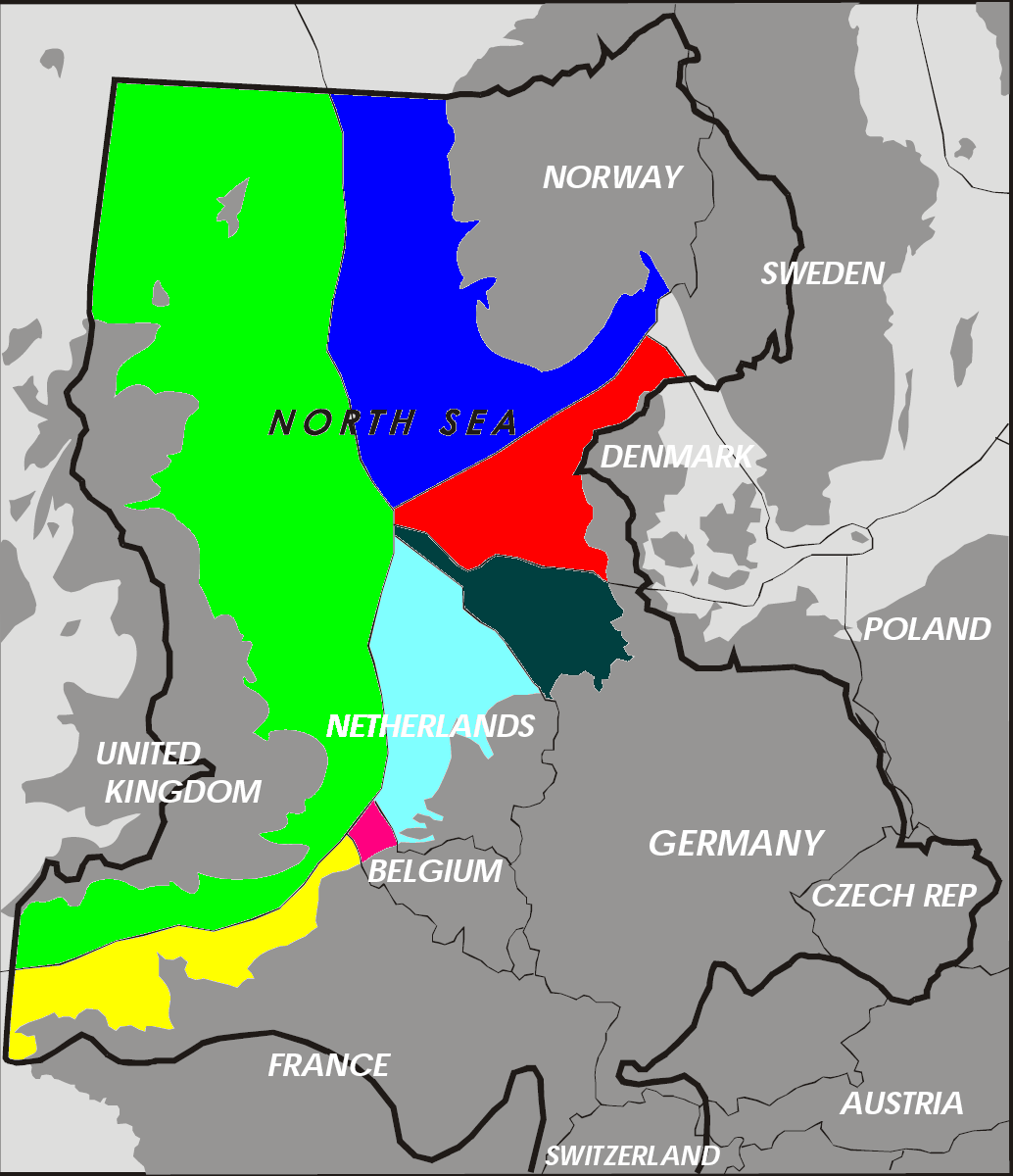
Note.
- Yellow is France.
- Mauve is Belgium, who drew the short straw.
- Light Blue is The Netherlands.
- Black is Germany, who despite their large land area, don’t have as much sea as the UK.
- Red is Denmark.
- Dark Blue is Norway.
- Green is The UK.
Didn’t we do well!
But Belgium and Germany miss out badly, when it comes for virgin sea to fill with wind farms.
Energy Links To Belgium
The UK has developed or is developing two grid links to Belgium.
- Nemo Link – a 1.0 GW interconnector.
- Nautilus – A 1.7 GW offshore hybrid asset.
National Grid is a partner with their Belgian equivalent ; Elia in both.
Energy Links To Germany
Germany is developing.
- NeuConnect – a 1.4 GW interconnector.
- GriffinLink – a hybrid offshore link.
- AquaVentus – In AquaVentus, I outlined this massive German project to bring Hydrogen to Germany from the North Sea.
I believe there will be more links.
What Are Offshore Hybrid Assets?
The title of this post is the same as that of a story explaining energy from National Grid.
This is the sub-heading.
Offshore Hybrid Assets or OHAs (formerly known as multi-purpose interconnectors) are a new generation of subsea technology that will connect clusters of offshore wind farms to multiple countries.
This is the first paragraph.
OHAs will help to speed up the connection of offshore wind and maximise the use of wind generation. They will also reduce the impact on local communities by reducing the amount of connection points and onshore infrastructure required to connect this clean energy to the shore.
The story goes on to discuss OHAs and how they are being developed.
It is very much a must read.
EuroLink, Nautilus And Sea Link
EuroLink, Nautilus and Sea Link are three proposed interconnectors being developed by National Grid Ventures.
EuroLink
EuroLink has a web site, where this is said.
To support the UK’s growing energy needs, National Grid Ventures (NGV) is bringing forward proposals for a Multi-Purpose Interconnector (MPI) called EuroLink, which will deliver a new electricity link between Great Britain to the Netherlands.
EuroLink could supply up to 1.8 gigawatts (GW) of electricity, which will be enough to power approximately 1.8 million homes, as well as contribute to our national energy security and support the UK’s climate and energy goals. We’re holding a non-statutory public consultation to inform you about our EuroLink proposals, gather your feedback to help refine our plans and respond to your questions.
Note, that EuroLink is a Multi-Purpose Interconnector (MPI) and they are described on this page of the National Grid website.
In EuroLink’s case, this means it is basically an interconnector between the UK and The Netherlands, that also connects wind farms on the route to the shore.
- Coastal communities get less disruption, as the number of connecting cables coming ashore is reduced.
- Less space is needed onshore for substations.
- Electricity from the wind farms can be directed to where it is needed or can be stored.
As an Electrical and Control Engineer, I like the MPI approach.
The technology to implement the MPI approach is very much tried and tested.
There are many references to EuroLink terminating at Friston.
Nautilus
Nautilus has a web site, where this is said.
Nautilus could connect up to 1.4 gigawatts (GW) of offshore wind to each country through subsea electricity whilst connecting to offshore wind farm/s at sea. By combining offshore wind generation with interconnector capacity between the UK and Belgium, Nautilus would significantly reduce the amount of infrastructure and disruption required both onshore and offshore.
With this new technology, we hope to reduce the impact of infrastructure on local communities and the environment, as well as support the government’s net zero and energy security targets. We are already working closely with other developers in the area to coordinate activities and minimise impact on local communities. We believe that through improved coordination, the UK government can achieve and support the co-existence of renewable energy with coastal communities.
Nautilus is another MPI.
This is said on the web site.
Last year, National Grid Ventures ran a non-statutory consultation for Nautilus, which proposed a connection at Friston.
NGV holds a connection agreement on the Isle of Grain in Kent as part of its development portfolio and we are currently investigating if this could be a potential location for Nautilus. Until this is confirmed to be technically feasible, Nautilus will be included as part of our coordination work in East Suffolk.
So it looks like, Nautilus could connect to the UK grid at Friston or the Isle of Grain.
Sea Link
Sea Link has a web site, and is a proposed interconnector across the Thames Estuary between Suffolk and Kent.
This is said on the web site about the need for and design of Sea Link.
The UK electricity industry is evolving at pace to help lead the way in meeting the climate challenge, whilst also creating a secure energy supply based on renewable and low carbon technologies.
The demands on the electricity network are set to grow as other sectors of the economy diversify their energy consumption from using fossil fuels towards cleaner forms, the move towards electric vehicles being just one example.
Where we’re getting our power from is changing and we need to change too. The new sources of renewable and low-carbon energy are located along the coastline. We need to reinforce existing transmission network and build new electricity infrastructure in these areas in order to transport the power to where it’s needed. This is the case along the whole of the East Coast including Suffolk and Kent.
To allow this increase in energy generation, we need to reinforce the electricity transmission system. Sea Link helps to reinforce the electricity network across Suffolk and Kent.
Our proposals include building an offshore high voltage direct current (HVDC) link between Suffolk and Kent with onshore converter stations and connections back to the national electricity transmission system.
On the web site, in answer to a question of What Is Sea Link?, this is said.
Sea Link is an essential upgrade to Britain’s electricity network in East Anglia and Kent using subsea and underground cable. The proposal includes approximately 130km of subsea cables between Sizewell area in East Suffolk and Richborough in Kent. At landfall, the cables would go underground for up to 5 km to a converter station (one at each end). The converter station converts direct current used for the subsea section to alternating current, which our homes and businesses use. A connection is then made to the existing transmission network. In Suffolk, via the proposed Friston substation; in Kent via a direct connection to the overhead line between Richborough and Canterbury.
Note, that from Kent electricity can also be exported to the Continent.
All Cables Lead To Friston In Suffolk
It looks like EuroLink, Nautilus and Sea Link could all be connected to a new substation at Friston.
But these will not be the only cables to pass close to the village.
This Google Map shows the village.
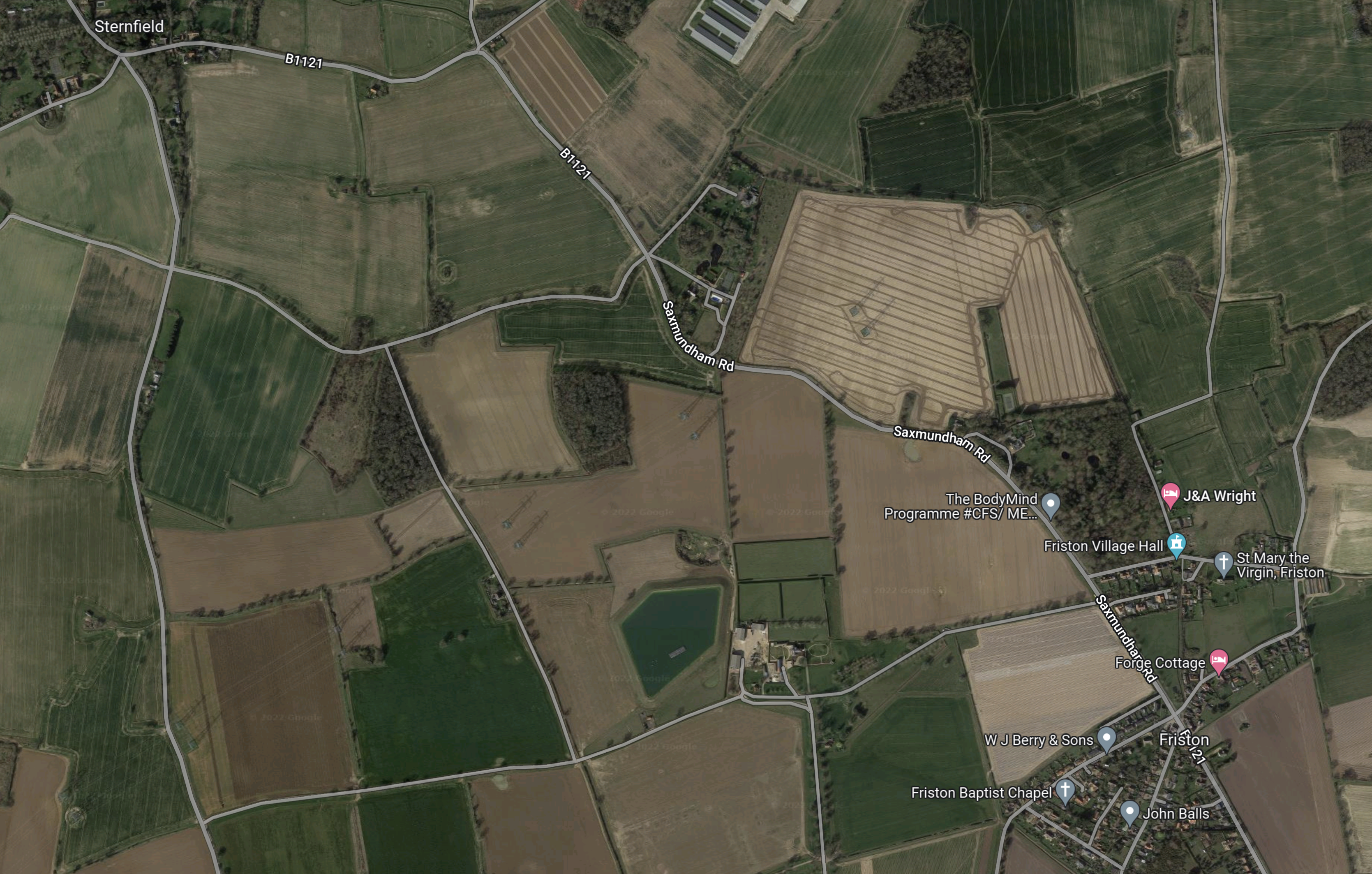
Running South-West to North-East across the map can be seen the dual line of electricity pylons, that connect the nuclear power stations at Sizewell to the UK electricity grid.
Has Friston been chosen for the substation, so that, the various interconnectors can be connected to the power lines, that connect the Sizewell site to the UK electricity grid.
This would enable EuroLink, Nautilus and/or Sea Link to stand in for the Sizewell nuclear stations, if they are shut down for any reason?
It does appear from reports on the Internet that the Friston substation is not welcome.
Exploring Opportunities For Coordination
The title of this section is a heading in the EuroLink web site, where this is said.
In response to stakeholder feedback, NGV’s Eurolink and Nautilus projects and NGET’s Sea Link project are exploring potential opportunities to coordinate. Coordination could range from co-location of infrastructure from different projects on the same site, to coordinating construction activities to reduce potential impacts on local communities and the environment.
That sounds very sensible.

