Toyota To Enter Hydrogen-Powered Car In 2027 Dakar Rally
The title of this post, is the same as that of an article on autosport.
This is the sub-heading.
Toyota will field a fuel cell-powered prototype alongside its regular petrol-engined Hilux in the Dakar.
These two paragraphs add more details.
Toyota’s Gazoo Racing arm has announced plans to field a hydrogen-powered prototype in the 2027 Dakar Rally.
Christened the DKR GR FC Hilux, the car incorporates fuel cell technology into the pick-up that has become the benchmark in the World Rally-Raid Championship.
As someone, who worked in a hydrogen factory in the 1960s, I find this a very positive development for the use of hydrogen.
New Study Shows How North Sea Offshore Wind Can Yield More While Costing Less
The title of this post, is the same as that of this article on offshoreWIND.biz.
This is the sub-heading.
A less dense development of offshore wind in the German Exclusive Economic Zone (EEZ) of the North Sea, and a relocation of capacities to neighboring countries can both increase the yield from offshore wind and reduce costs, a new study by the Fraunhofer Institute for Wind Energy Systems (Fraunhofer IWES) has shown.
These two paragraphs add more detail.
With Germany’s current expansion target of 70 gigawatts (GW) by 2045 and the planned land use to date, the utilization of offshore wind power will fall far short of its technical potential, the study has shown.
While the North Sea is among the windiest regions worldwide, shading effects would significantly reduce the achievable yield of up to 5,000 full-load hours. Furthermore, the close proximity of wind farms reduces each other’s wind output.
It appears from the text in this must read report, that the Germans might develop as much as 20 GW in neighbouring countries.
In Will A Large Green German Elephant Get Involved In The Clacton By-Election?, I talked about a 2 GW cluster of wind farms being developed by RWE and their partners.
- 1.1 GW – Five Estuaries
- 504 MW – North Falls
- 353 MW – Galloper
Note:
- In total they are around 2 GW.
- The wind farms are around 30 km. offshore from Clacton.
- RWE are a respected German company, who are one of the UK’s largest electricity generators.
I believe that RWE and their partners could receive a lot of opposition to an overhead power line across Essex to connect these wind farms to the National Grid, and 2 GW would not be a small set of pylons.
Would it be a better value project to bring this energy to Germany, either as green electricity or green hydrogen, than connect it to the UK’s National Grid?
Consider.
- A cable between the three wind farms and the nearest part of Germany would be about 300 miles.
- The longest undersea interconnect is the Viking Line between England and Denmark, which is 475 miles long.
- RWE have been building a big offshore electrolyser in The Netherlands called H2OpZee and I believe that similar technology could be used with the Clacton wind farms.
- 2 GW of energy would be ten percent of the energy, that Germany needs.
- I’m sure Rachel from Accounts would be happy for any payments for the energy.
It looks to me that energy links between the UK and Germany will only get more numerous and stronger as the years roll by.
North Sea Exclusive Economic Zones
Out of curiosity, I searched for a map and found this on Wikipedia.
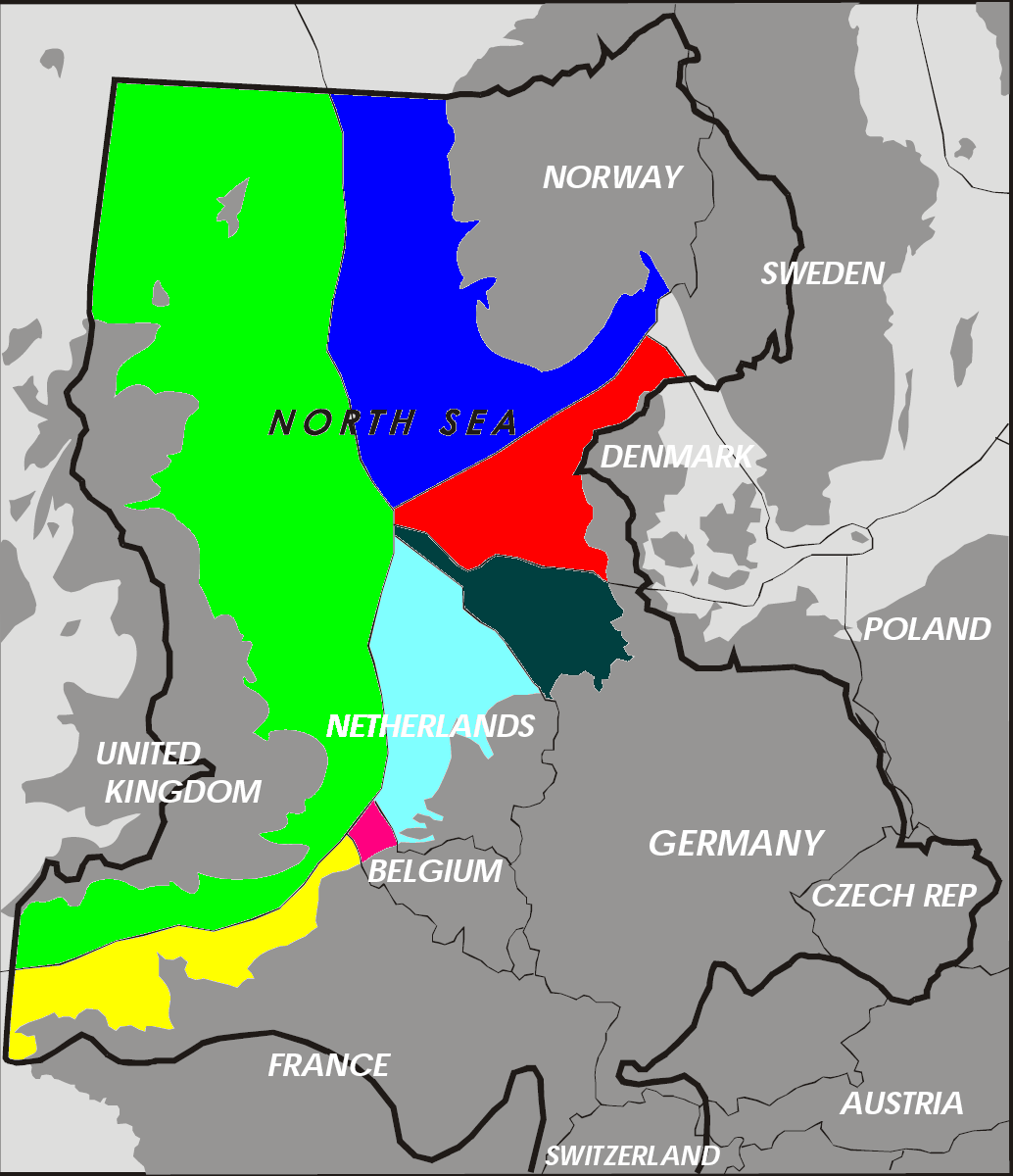
Note.
- Yellow is France.
- Mauve is Belgium, who drew the short straw.
- Light Blue is The Netherlands.
- Black is Germany, who despite their large land area, don’t have as much sea as the UK.
- Red is Denmark.
- Dark Blue is Norway.
- Green is The UK.
Didn’t we do well!
But Belgium and Germany miss out badly, when it comes for virgin sea to fill with wind farms.
Energy Links To Belgium
The UK has developed or is developing two grid links to Belgium.
- Nemo Link – a 1.0 GW interconnector.
- Nautilus – A 1.7 GW offshore hybrid asset.
National Grid is a partner with their Belgian equivalent ; Elia in both.
Energy Links To Germany
Germany is developing.
- NeuConnect – a 1.4 GW interconnector.
- GriffinLink – a hybrid offshore link.
- AquaVentus – In AquaVentus, I outlined this massive German project to bring Hydrogen to Germany from the North Sea.
I believe there will be more links.

