Manor Park Station – 15th May 2017
In Before Crossrail – Manor Park, I likened Manor Park station to A Ruin With Serious Issues and gave it a score of 1/10.
I also said.
Manor Park is very unusual architecturally. I do wonder if the Luftwaffe tried to demolish the station.
Perhaps the builders just ran out of money and couldn’t afford to put in windows.
With hindsight, I think I was being generous with one point.
But these are the pictures I took today.


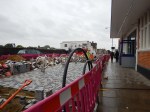
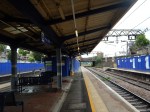

The builder is certainly not our friend Jerry.
When my train arrived, I stepped out close by the driver’s cab. I was surprised to see that half the old station had disappeared and it must have shown, as the driver asked me if I was OK!
I certainly was and it looks like the builders and the architects are well on the way to turning one of London’s worst stations, into one of the better.
- Judging by the position of the gate line on the South side of the Ticket Hall, it will lead to a series of passages to the stairs and the lifts to the platforms.
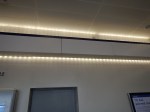
- I particularly liked the use of strips of LED lights to illuminate the Ticket Hall and the area outside the doors.
- The staff seem to have a good view of the front glass doors from the Ticket Counter.
- It looks to me that any bits of the old station that there were good reasons to keep, have been kept.
- It could be a very welcoming station, that I suspect Transport for London hopes will attract a lot of new passengers.
- I was told that the lifts are only a couple of months away.
Importantly with my Project Manager’s hard hat on, it would appear that they have managed to create much of the new station without too much disruption.
Reverse Commuting To Cambridge North Station
Cambridge North station opens on the 21st May 2017.
Around 1070, I commuted from London to Welwyn Garden City. It was much more relaxing than sharing the busy trains into London and on early trips to Cambridge in the last few years, I’ve noticed that quite a few people commute from London to Cambridge.
So given the proximity of the new Cambridge North station to the Cambridge Science Park, I wonder how many will use the service to get to and from their place of work?
The Service On Sunday, 21st May 2017
Trains would appear to be every hour at XX:42 taking about ten minutes under two hours.
The Service On Monday, 22nd May 2017
The weekday service would appear to be more comprehensive.
- 06:08 KX 1:02
- 06:44 KX 0:53
- 06:52 KX 1.14
- 07:04 KX 1:32
- 07:28 LS 1:32
- 08:04 KX 1:29
- 08:14 KX 1:00
- 08:28 LS 1:33
Note that KX is Kings Cross and LS is Liverpool Street.
All the trains shown arrive before 10:00 or a few minutes after.
Given that Thameslink will improve this service in May 2018, by adding another two trains per hour, it is certainly a good start.
The £20million Station Car Park
This article in the Oxford Mail is entitled Work begins on £20m multi-storey car park at Didcot Parkway.
Didcot Parkway station is a major Park-and-Ride station on the Great Western Railway, so the economics of spending £20million on car parking must be an investment, that the company thinks is worthwhile.
This Google Map shows the station and the existing car park in Foxhall Road.
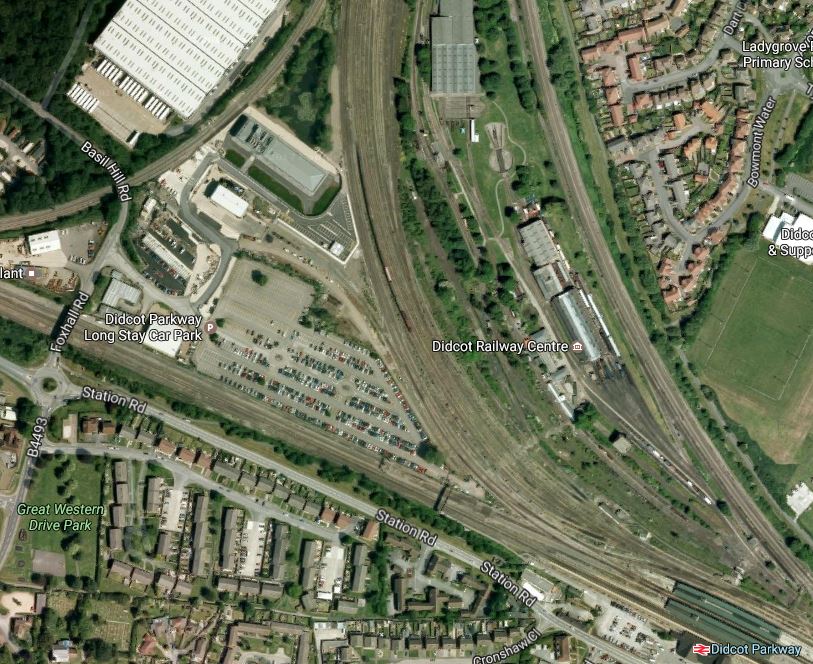
Note that Oxford is to the North, with the Great Western Main Line going across from London in the East to Swindon in the West.
This visualisation shows the new car park, which will be built on the site of the existing car park.
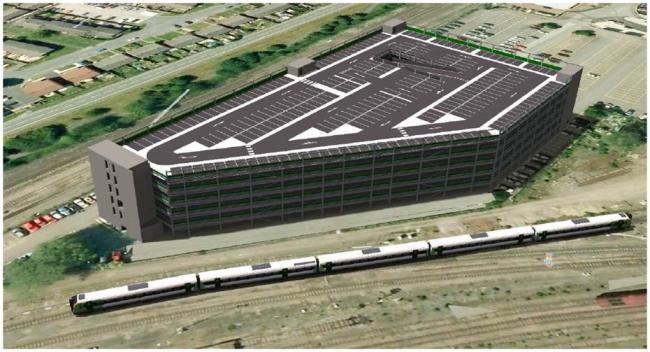
The Didcot to Oxford Railway is in front, with Oxford to the right and Didcot Parkway station to the left.
The Economics
If you go up from Didcot Parkway to Paddington, the return fares are as follows.
- Anytime Day Return – £82.40
- Off-Peak Day Return – £25.70
Consider.
- Parking will probably cost from £3/hour.
- The Internet reckons that Didcot to London is about 60 miles and it will take about one hour thirty-eight minutes to drive.
- On the other hand, the fastest trains take 41 minutes with a stop at Reading.
- From December 2019, interchange for the City and Canary Wharf wil be possible at Reading and Paddington.
I have a feeling that another large Park-and-Ride will be needed.
This Google Map shows Swindon station.
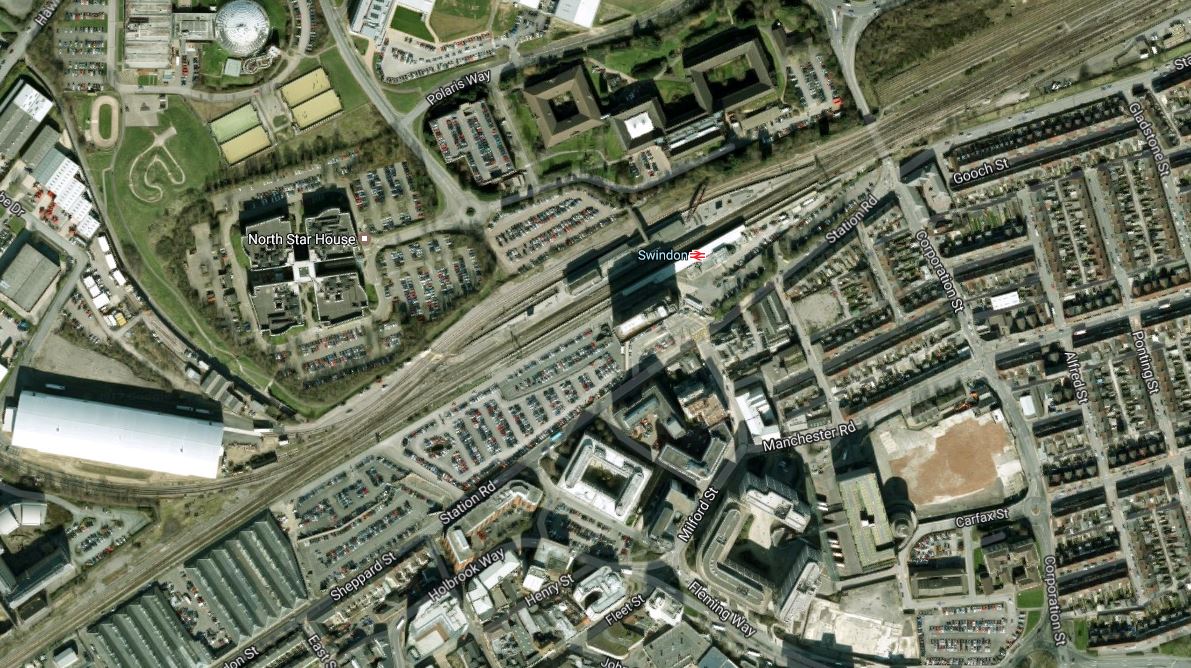
It would surely be a station, where the existing car parks could be multi-storied.
But there are probably lots of others. This article in the Wantage Herald mentions Grove, Corsham and Royal Wooton Bassett, as possible parkway stations.
Low Moor Station
I arrived at Low Moor station on a direct service from Kings Cross.





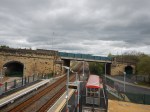

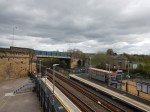


As with several other new stations, it has been fairly very well-constructed, but the design has a few failings.
There Are Not Enough Trains
I was at Low Moor station for an hour taking pictures. In that time several local services went throiugh, but then only one train per hour stops in each direction.
At least two and possibly four trains per hour, as at Halifax, should stop.
Passengers on a wet, cold day will soon get fed up with waiting an hour for another train.
Trains to and from Manchester Airport should also stop.
It Is A Very One-Sided Station
The car park and the main access to the station appear to be on the Bradford-bound side of the station.
Lea Bridge station, that I use regularly near where I live, was built like this and you have to leave extra time to catch a train, as you have to cross the tracks on the footbridge, to go in one direction.
However at Ilkeston station, which I wrote about in Ilkeston Station Opens, the station footbridge replaces one that existed before the station was built. Passengers arrive on top of the station and then descend to the appropriate platform. Or they can walk-in at ground level from the car-drop-off areas or car parking on either side of the tracks!
What makes it worse at Lea Bridge station, is that they could have designed the station to have walk-in access from the road bridge over the lines, as the station does not have ticket gates.
There Should Be Ticket Machines On Both Platforms
I didn’t see the ticket machine, when I arrived, but one is not enough.
Imagine, you are in a hurry and have booked on-line for the 07:01 Grand Central train to Kings Cross and need to retrieve a ticket.
Will you be able to park your car, retrieve the ticket and cross the line before the train comes, especially if there is a queue for the sole ticket machine?
Surely too, ticket machines on the platforms are less likely to be vandalised, as CCTV will be expected.
Why Is There No Direct Access Between The Car Park And The Bradford-Bound Platform?
Both Lea Bridge and Ilkeston stations allow walk-in access to the one or both platforms. Why isn’t there a short flight of steps between the car park and the Bradford-bound platform?
I hope it’s not different rules being applied by different councils? It has been allowed at Kirkstall Forge station.
There Should Be Drop-Off/Pick-Up Areas On Both Sides Of The Station
Obviously, this can’t be arranged at all platforms at all stations, but many stations manage it for at least one, with a step-free bridge across the tracks.
Low Moor station doesn’t score well in this.
Poor Access With Bicycles To The Platforms
Cyclists come in all shapes and sizes, but many will find the steps unacceptably steep and will not use this station.
Or put their muddy bikes in the lifts!
Conclusion
It is a well-built, but rather poorly designed station.
I don’t think, it will attract the number of passengers it should!
Across South Yorkshire On A Grand Central Train
If you take a Grand Central West Riding train between Kings Cross to Bradford Interchange stations, as I did, the route could be considered somewhat of a Cook’s Tour of the South of Yorkshire.
There are stops at Doncaster, Pontefract Monkhill, Wakefield Kirkgate, Mirfield, Brighouse, Halifax and Low Moor stations. I alighted at the last station, which only opened on the second of this month.
I took these pictures on the route between Doncaster and Low Moor






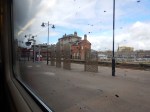


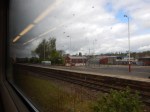


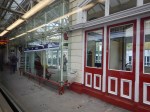


These are some notes on the journey.
Hambleton Junction
Hambleton Junction was created as part of the Selby Diversion, where the East Coast Main Line was diverted away from the possible subsidence, that could have been created by the giant Selby Coalfield.
This Google Map shows the layout of the junction.
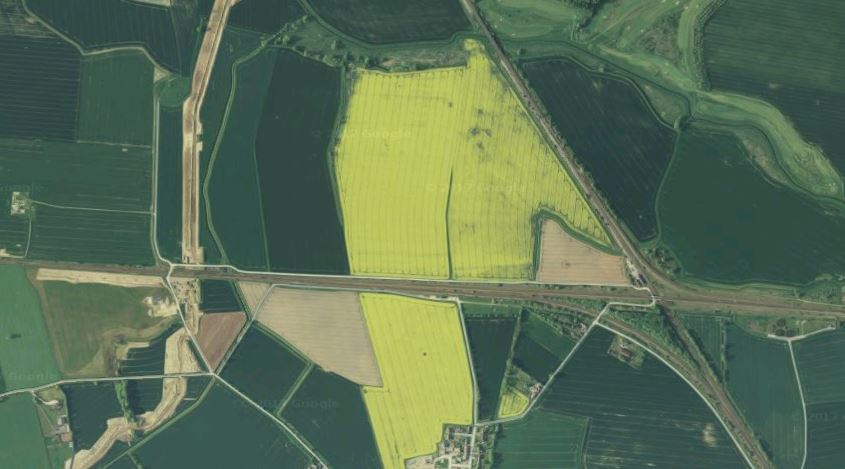
The Grand Central train turned West at Hambleton Junction to take a South-Westerly route to Pontefract Monkhill station.
It should be noted, that the mistake of the 1980s, when the Selby Diversion was created off not electrifying the Leeds to Selby Line may be rectified in the near future, according to this section in Wikipedia. This is said.
In 2009 the Network Rail route utilisation strategy electrification paper identified the North Cross-Pennine route including the Leeds-Selby-Hull Line as a high ranking option for future electrification, in terms of benefits to passenger services.[70] In 2011 funding for the electrification in CP5 (see Network Rail Control Periods) of the section from Leeds to Micklefield was announced. Funding for the section of the line from Micklefield to Selby was added to the electrification schedule in 2013.
As with all electrification in the UK, I’ll believe it, when I see it.
Ferrybridge Power Stations
The power stations at Ferrybridge, have been a landmark on the A1 since the 1960s.
This Google Map shows the large site, surrounded by major roads.
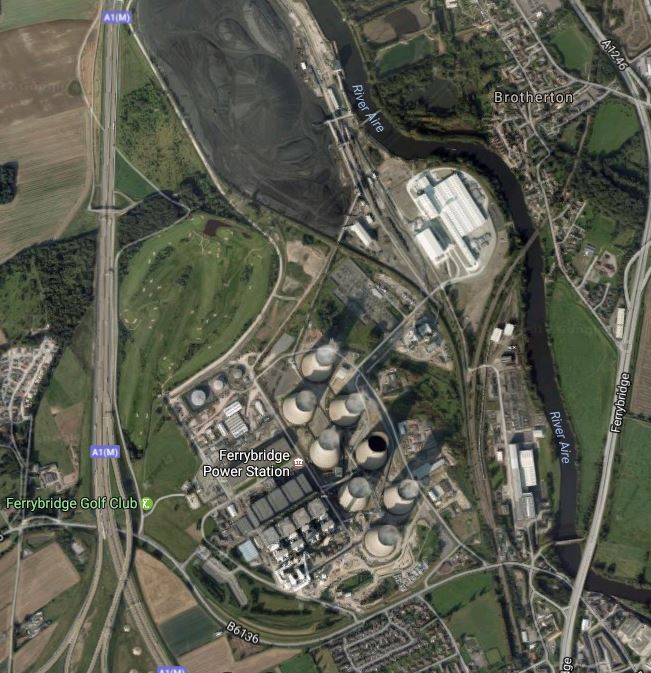
There is now a Ferrybridge Multifuel power station, but at 68 MW compared to the 2034 MW of the 1960s-built Ferrybridge C., it isn’t very large.
For comparison, according to these statistics in Wikipedia, the UK had installed 11,562 MW of solar power, which generated 10,292 GwH or 3.4% of our total electricity consumption in 2016, which was a thirty-six percent increase on 2015.
Perhaps it was a better summer!
Pontefract Monkhill Station
Pontefract Monkhill station is a simple affair, with just two platforms and no permanent buildings or ticket machine.
This Google Map shows the location of the station.
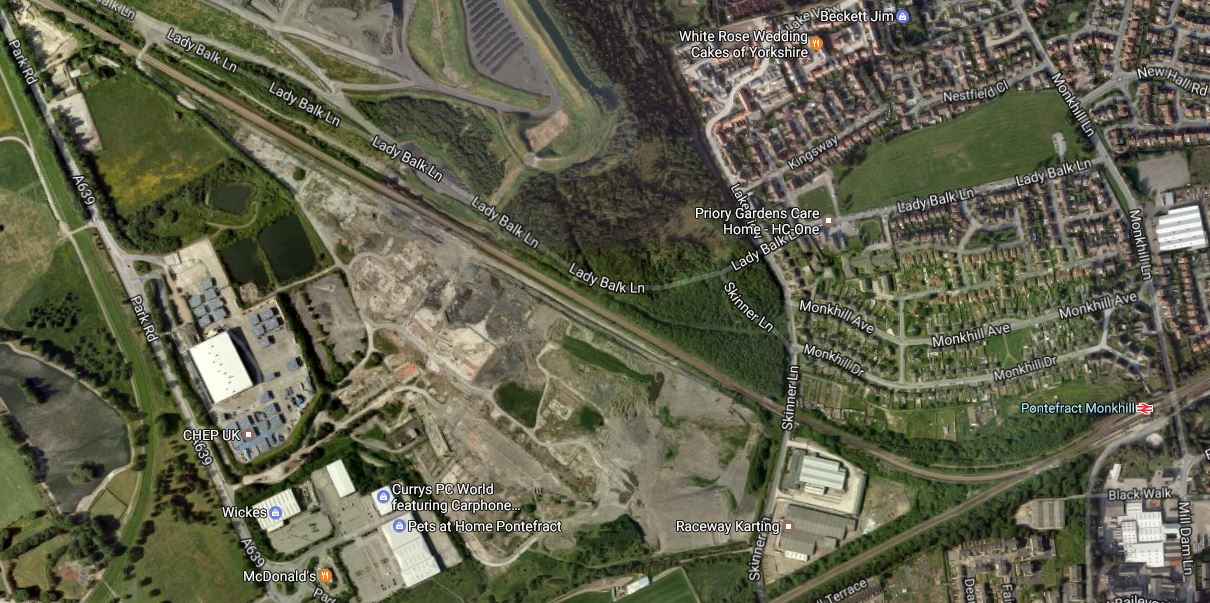
Note in the North West corner of the map is Pontefract racecourse, where C and I once had a winner.
I think it is true to say, that passenger use of Pontefract Monkhill station would improve with a few more facilities.
The train took the line past the racecourse on the way to Wakefield Kirkgate station.
Wakefield Kirkgate Station
Wakefield Kirkgate station, has been refurbished recently and whether it will see increased usage, is something on which I can’t or won’t speculate.
This Google Map shows the relationship between Kirkgate and Wakefield Westgate station, which is served by electric trains to Leeds and London.
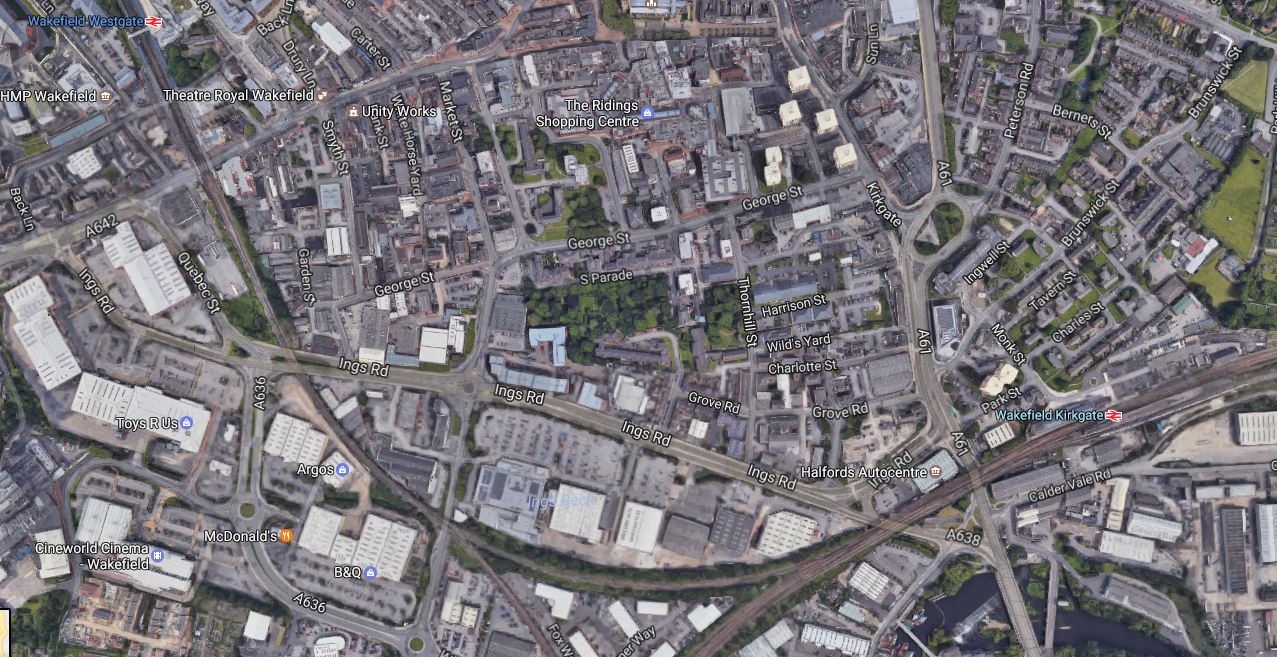
Grand Central probably have a marketing problem with Kirkgate station, as to tickets too and from London, as they have only four trains per day and they take around two and a quarter hours, as opposed to Virgin’s two trains per hour, which take around two hours.
Their major weapon must be price.
Mirfield Station
Mirfield station is another simple station, with minimal facilities.
Brighouse Station
Brighouse station is a station that closed in 1970 and reopened in 2000.
That explains, why when I had to go to Brighouse to see a client of mine in the early 1970s, in the town, I had to drive.
It was typical of the projects, I got involved in at the time, as I was helping Allied Mills to optimise what flours they used to make bread. I was using simple linear programming with an objective function.
I can’t leave Brighouse without a few stories.
- All the Senior Management I dealt with had been bakers and didn’t eat the company product, preferring to bake their own.
- Bread was sold on commission to the delivery van drivers. As you could get more square sliced loaves in a van, they ignored fancy loaves, as it dropped their income. Did this infuence the UK’s like of bad bread?
- Bread was sold on sale or return. The returned bread was put to use in animal and pet food.
- Harold Wilson thought this was waste and banned the practice, meaning the secondary uses dried up and a lot of products became more expensive.
- One particular recycled bread, was supposedly very suitable for grewyhounds.
- Dartmouth Naval College insisted that the bread they received was yesterday’s as it discouraged cadets fromj eating too much!
If I remember a few more, I’ll add them.
Halifax Station
Halifax station is probably one of the busiest on the route.
This Google Map shows the station and the nearby Nestle factory.
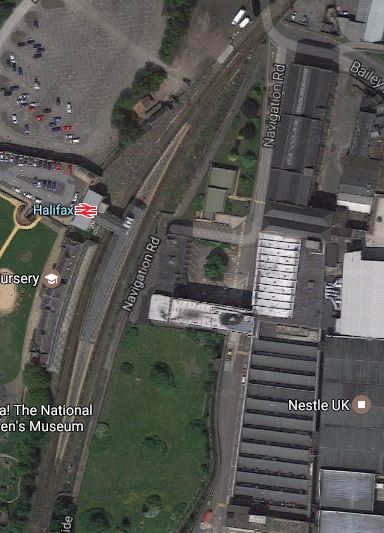
Halifax station has a four trains per hour service to Bradford Interchange and Leeds. This is also said in Wikipedia.
On Sundays there is an hourly service to Manchester Victoria and to Blackpool North and one train every two hours to Huddersfield. New Northern Rail franchisee Arriva Rail North plans to introduce additional services to Leeds & Manchester in 2017, many of which will run through to either Liverpool Lime Street or Chester.[16][17] Through services to Manchester Airport will also operate once the planned Ordsall Chord is built.
So it will be getting better and Halifax could be the station where you go to to the West.
These extra services and after a couple of visits to the station, suggest to me that the station needs a bay platform or even a third one, that can act as bay platforms looking both ways.
This is said in Wikipedia.
In October 2014 plans were submitted to bring an old platform back into use to create three platforms together with signalling improvements.
Perhaps my feelings are correct.
Conclusion
It is a well-thought out route, through some of the least developed parts of Yorkshire, where I suspect car ownership is not on the high side.
The route, which goes in a curve from Bradford to Doncaster, South of the cities of Bradford and Leeds, does a similar job to that of the Gospel Oak to Barking Line in London, as a compliment to the radial routes.
But four trains per day is not enough and the route has the sense of dereliction that Gospel Oak to Barking and North London Lines had in London.
Perhaps the solution, is to run one of the Class 319 Flex trains every hour between Bradford Interchange or Halifax and Doncaster in both directions to tie everything together.
Currently, Grand Central’s Class 180trains take the following times.
- Doncaster to Bradford Exchange – 90 minutes
- Doncaster to Halifax – 75 minutes
The Class 319 Flex trains could probably match these times if they ran on electric power between Doncaster and Hambleton Junction.
Even if they stopped more often, they might even be able to run between Halifax and Doncaster in under ninety minutes. This would mean that three trains could provide a stopping service between Halifax and Doncaster.
Railway Stations As Marketing Tools
It goes without saying that, one of the ways to get a passenger contribution to the cost of a station, is for the station to attract passengers to use the trains calling at the station.
Ilkeston
Look at this picture of Ilkeston station.
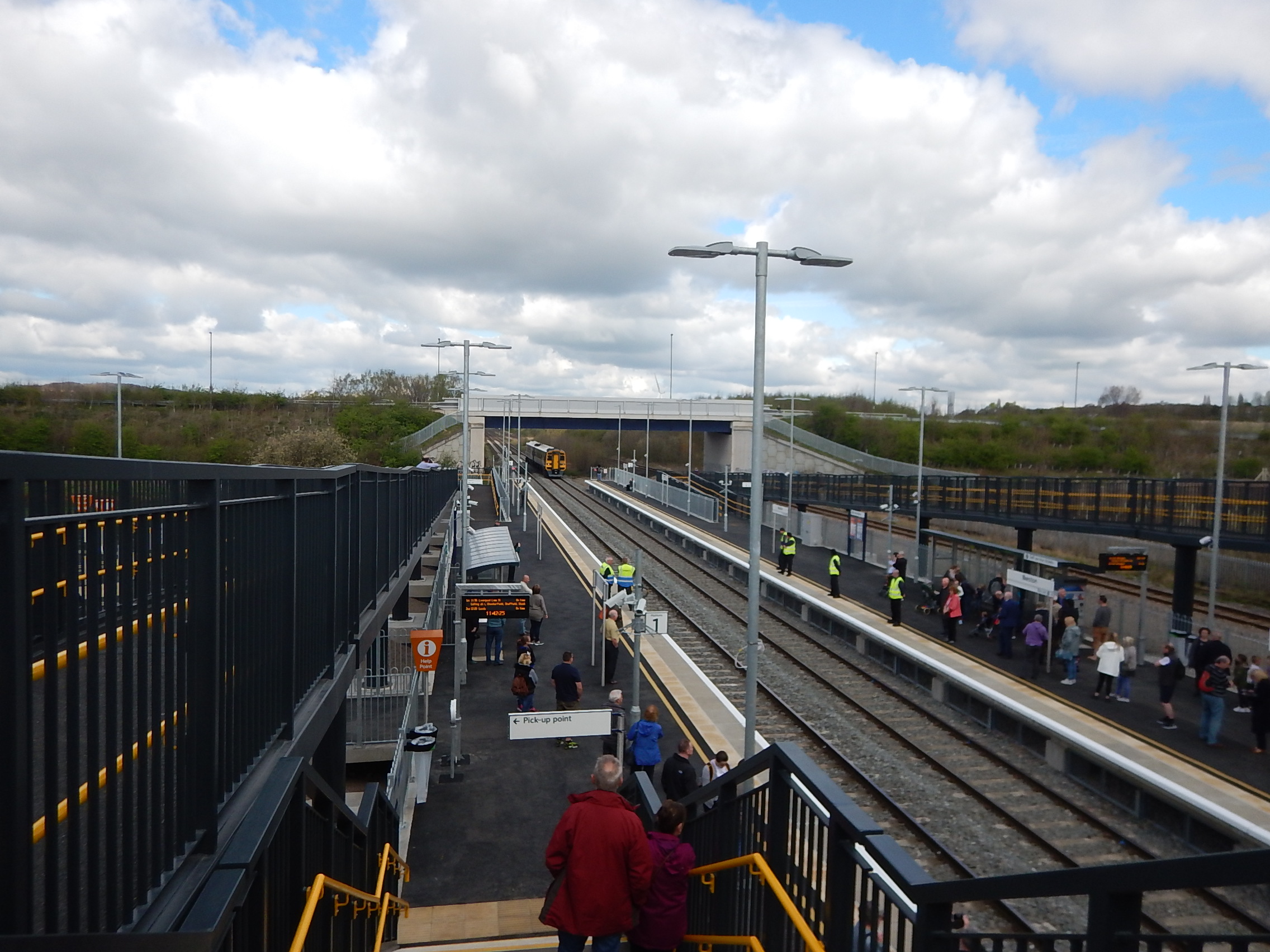
It was taken from the footbridge over the railway and shows that Ilkeston station is effectively two single platform stations on either side of the double-track railway.
Each platform has a ticket machine and a shelter, so all passengers arriving without tickets have no trouble getting one. I know of lots of stations, where the ticket machine is tucked away, almost as if to discourage travel.
But the real marketing trick at Ilkeston is the station footbridge replaces a footpath alongside of Station Road.
This Google Map shows, the station during construction and the old footbridge is clearly visible to the North side of Station Road.
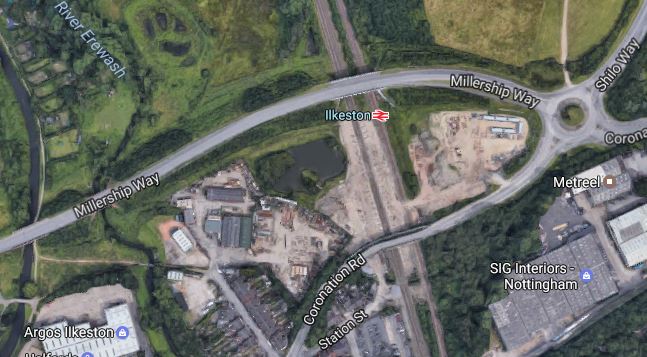
Now the station is open with its new footbridge, how many people will walk past the station, as they go about their business and get curious and perhaps use the trains next time they go into Nottingham.
Hackney Wick
Hackney Wick station is going to be a much grander affair, than Ilkeston, as this visualisation shows.
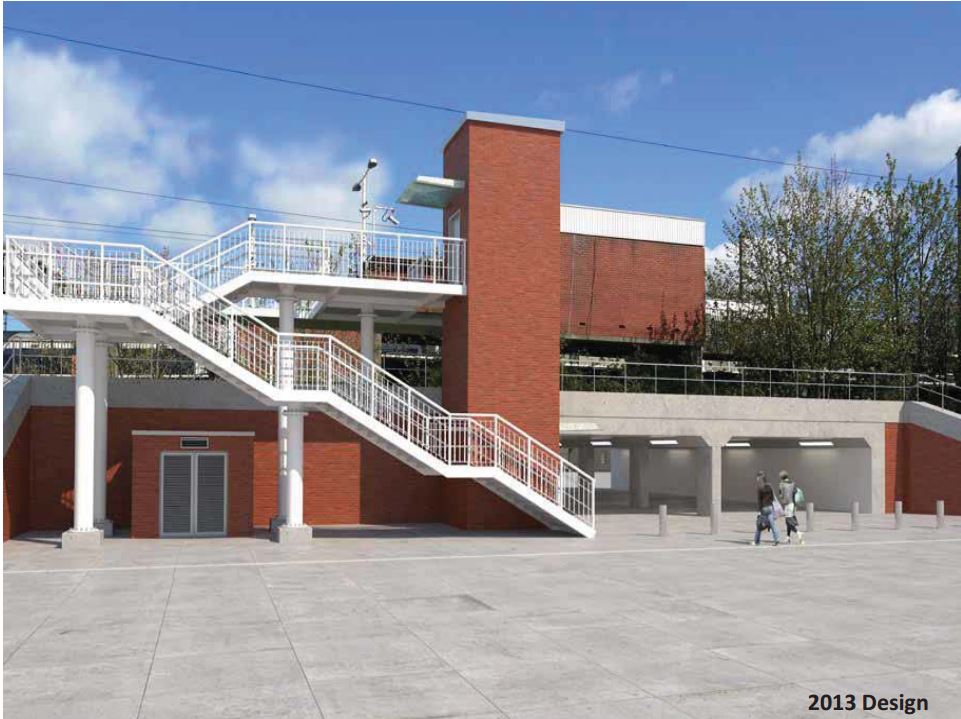
Hackney Wick Station South Elevstion
But London Overground can be accused of very direct marketing in the design.
Note the double subway under the railway. One section leads into the actual station and the railway and the other is a pedestrian route under the railway.
They will be separated by an artistic glass wall.
How many people will be encouraged to use the railway by this design?
Lea Bridge
Lea Bridge station has been designed as a simple station, although it does have lifts.

But it was designed before Ilkeston with the entrance at one side, rather than on the bridge, where it used to be sixty years ago.
It will be interesting to see how passenger numbers stack up at Lea Bridge.
Kirkstall Forge
Kirkstall Forge station is a new station near Leeds.
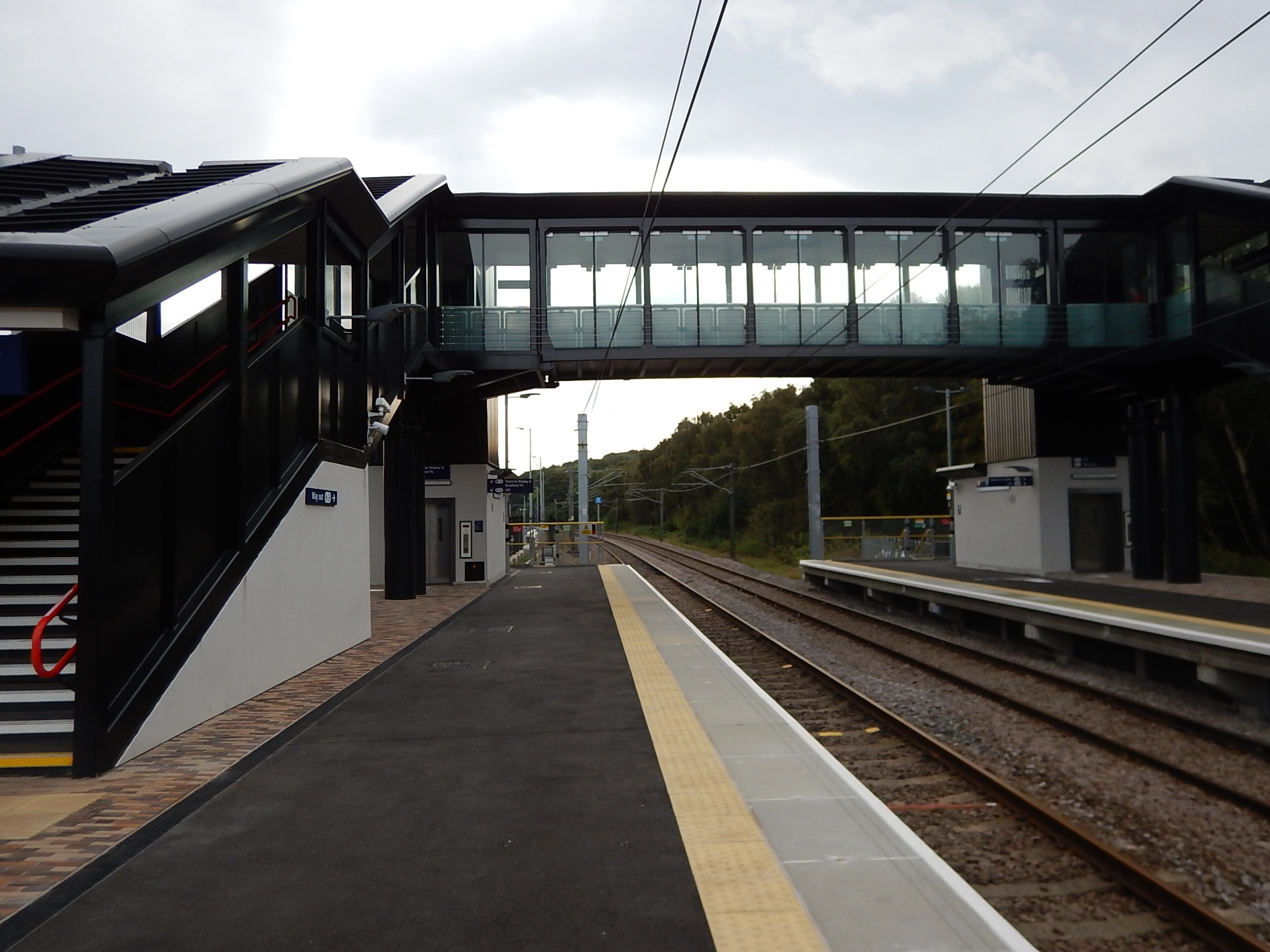
It is a fully-equipped station, that relies on position, new developments and a large car-park to bring in the passenger traffic.
Ebbw Vale Town
Ebbw Vale Town station is a station of a different type, but because of a prominent location, It looks to have been a success.

When you consider that it only has an hourly service to Cardiff to pull in 168,000 passengers in its first year of operation is very creditable.
Newcourt Station
Newcourt station is a new station on the Avocet Line that was opened in June 2015.
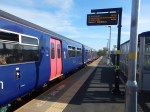
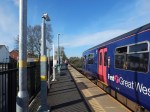
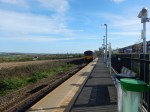
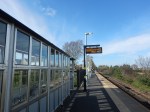
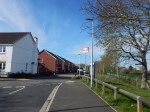
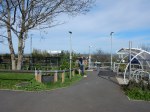
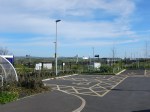
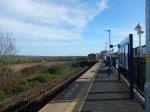
It is one of the simplest new stations I have seen.
- A single platform about to take four-car trains.
- A shelter for passengers.
- Ticket machine.
- Information display.
What surprised me was that the only parking is four disabled spaces.
As the station serves newly-built housing, I suspect that research has shown that most passengers will walk to the station.
It was certainly busy, when I passed through.
Handling The Next Generation Of Trains
The most modern train on order is the Aventra, which has been ordered by Crossrail, London Overground and Greater Anglia.
The smaller versions of these trains have the following characteristics.
- Four or five cars.
- Step-free platform-train access, if the platform is the right height.
- Wide doors and lobbies for quick loading and unloading.
- fast acceleration and powerful brakes.
- Walk-through
- Selective door opening.
I would expect trains from other manufacturers will have similar characteristics.
The platform at Newcourt station is 124 metres long, which should take most trains, but because of the selective door opening and the walk-through capability, passengers will not be too inconvenienced.
On the Avocet Line there are two trains per hour (tph), so Newcourt station should be able to handle the required four tph or one train in every fifteen minutes.
To help the driver more and more systems will appear that flag the precise speed and acceleration, so that a timetable is precisely kept.
Ilkeston Station Opens
I went to the new Ilkeston station this morning and took these pictures.


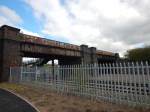

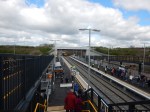
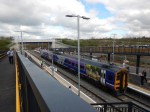
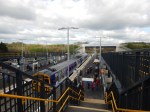
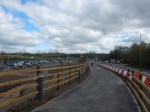
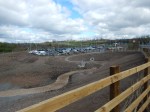
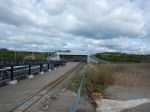
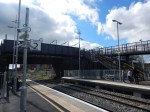
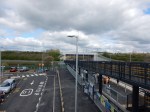
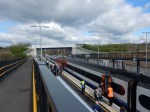
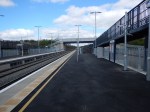
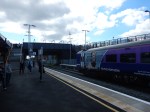
It is not the most sophisticated of stations and it is worth comparing the design with Lea Bridge station.
This picture is from A Look At Lea Bridge Station, which shows the station in detail.
Comparing Ilkeston and Lea Bridge stations, there are similarities and differences.
- Both stations are built adjacent to existing road bridges.
- Both road bridges have some good brickwork and a utilitarian span over the railway.
- Both stations have two platforms on the outside of a double-track main line.
- Both stations don’t have ticket barriers.
- Lea Bridge has lifts and Ilkeston has long ramps for step-free access.
- Lea Bridge is fitted with comprehensive CCTV for Driver Only Operation (DOO). Ilkeston is not!
- Ilkeston has car parking and Lea Bridge has none.
Both stations cost around ten million pounds, with perhaps Lea Bridge slightly more because of the lifts and DOO cameras.
My Overall View
I think that Ilkeston station is a job well-done by the architect to keep costs to a minimum for a well-functioning station, that meets all current and future regulations.
These are more details on various features.
The Station Entrance
One of my gripes with Lea Bridge station, is that when I use that station, I take a bus to it, which drops me just before the road bridge over the station. I then have to walk past the station footbridge, with no possible access and in a great circle to get to the station entrance at the side.
At Ilkeston, those walking to the station by the side of the road that crosses the bridge, just walk over the station footbridge, from which they walk down to their chosen platform.
This is a much better arrangement and will surely suggest to passers-by, that using the train isn’t a hassle.
When I went to Ilkeston, some months ago, I remember that the area between the Town Centre had what developers call potential and perhaps could be turned into a green walking and cycling route.
This Google Map shows the relationship between the town and the station.
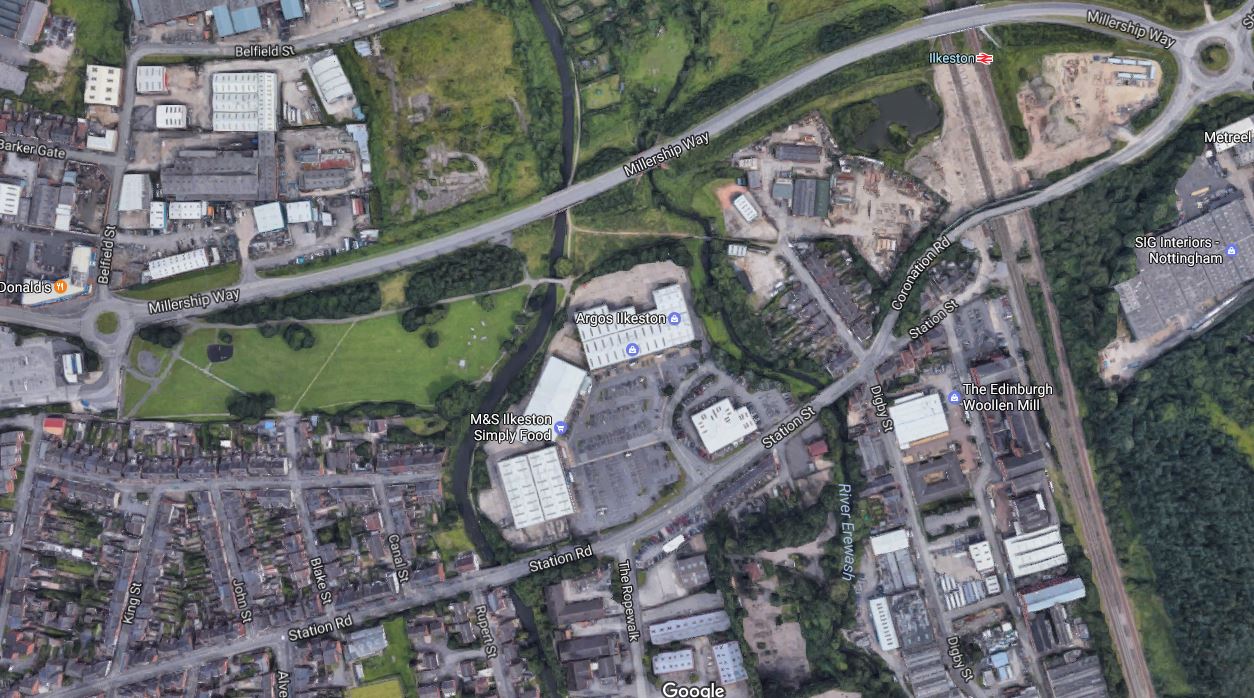
It certainly isn’t as desolate as the Town Centre was on my last visit. There’s even a Marks and Spencer’s Simply Food store in a retail park, just a couple of hundred metres from the station.
I made a mistake in not exploring that way today, as it looked not to be finished.
I shall return!
Car Parking
The car parks are on both sides of the tracks, which is good for the able-bodied passengers, as if space allows they can park where is best for their personal circumstances.
My one worry about the car parking, is that 150 spaces might not be enough.
On the other hand car ownership is low in the Erewash Valley! So perhaps they expect a lot of passengers to walk to the station.
Access To The Platforms
At present, the landscaping is not finished on the Nottingham-bound side (Platformk 2) of the station and I suspect the walking route to the platform will be improved.
But supposing you are a passenger with a touch of arthritis and failing eyesight. Whatever side you park your car, you will have to negotiate both long ramps to cross the tracks, when you catch a train out of Ilkeston or on your return.
But saying that several London Overground stations near me use long ramps and there doesn’t appear to be too many protests.
Lifts would of course be better. But a lot more costly!
Picking Up And Dropping Off Passengers
The drop-off/pick-up point is by the Chesterfield-bound Platform 1, but I suspect that when the station is completed, drivers will be able to do the drop-off/pick-up in the car park by Platform 2.
Taxi Rank
The taxi rank is by the Chesterfield-bound Platform 1, so passengers arriving on Platform 2 will have to cross the tracks on the footbridge.
I did talk to a taxi driver called Paul Kitchener, who is one half of a taxi company called Paul and Jackie Taxi. I was able to find them on Fscebook, so if you have special needs for a taxi and you don’t live in Ilkeston, you could always contact them first.
Shelters and Ticket Machines
As expected a shelter is provided on both platforms, but perhaps more surprisingly, there is a ticket machine on both platforms as well.
Thjs duplication of ticket machines is to be welcomed, as is placing them in an obvious place on the platform.
The Germans make their ticket machines very easy to find, which is not often the policy of some of our train operators.
Two ticket machines by stairs to the footbridge, which pedestrians will use as access to the station, is an idea, that might result in more revenue for the train operator.
Bike And Motor-Cycle Parking
I didn’t see much, although there were a few hoops outside Platform 1
Coffee Kiosks
A guy from London Overground, told me that if you have a coffee kiosk on the platform, it may attract more passengers.
The platforms at Ilkeston might not be quite big enough for a kiosk, but I’m certain the architect has ideas.
Future Proofing
There have been troubles recently, where stations have been built without enough clearance for future electrification.
Without getting out a measure, it appears that the two existing road bridges and the new foot-bridge at Ilkeston, may have enough clearance to satisfy the most nit-picking of inspectors. The bridge that could be dodgy is the rusty road bridge and that would not be the most difficult bridge to replace with a new one.
Perhaps, as it has not been given a coat of paint, the new bridges are being constructed, as I write.
The design of the station, would also allow the following.
- Two fast lines through the station, between Platform 2 and the boundary fence, where there is already an avoiding line.
- The possibility of putting a second face on Platform 2, so that a bay platform or a platform on a fast line could be created.
- The addition of lifts.
I also suspect that the platforms are long enough for a Class 222 train to call.
A Good Local Reaction
One of the staff told me that he reckoned about five hundred people had come to have a look at the new station, which he felt was more than expected.
Several, that I spoke to seemed enthusiastic.
One couple, I spoke to, said forty-eight pounds each was a lot to get see their daughter and her family. But yet again, they hadn’t heard of the Two Together Railcard. They felt thirty-two pounds was a lot more reasonable.
Services
Current services through the station are an hourly train between Leeds and Nottingham via Sheffield and a two-hourly service between Liverpool and Nottingham via Manchester.
This gives an impressive list of destinations from Ilkeston, that includes Barnsley, Chesterfield, Ely (for Cambridge), Leeds, Liverpool, Manchester, Norwich, Nottingham and Sheffield.
But what is missing are connections to Birmingham, Derby, London and Mansfield.
London will be solved in the future, when passengers by their journey hsbits put sufficient pressure on the train operator.
A solution for Derby and Mansfield was proposed in this article in the Nottingham Post which is entitled Hopes HS2 could see ‘Maid Marian Line’ opened to passengers.
There is a freight-only line between Kirkby-in-Ashfield station on the Robin Hood Line and Pye Bridge on the Erewash Valley Line, on which Ilkeston is situated.
The proposal would allow trains to go between Kirkby-in-Ashfield via Pinxton and Selston to Langley Mill and Ilkeston and then on to Toton for HS2.
From there services could go on to Nottingham or Derby and also give access to the Nottingham Express Transit at Toton.
In my view, the ideal service would be Mansfield to Derby via Kirkby-in-Ashfield, Langley Mill, Ilkeston, Toton (when built), Long Eaton and Spondon.
At Derby, there is also up to four trains per hour to Birmingham.
Conclusion
This is a fine station, which has been built at a keen price, which with more services will be a big asset to Ilkeston.
Could There Be An Overground Station At East Brixton?
This post is based on another snippet from the Kent Route Study, which you can download from this page on the Network Rail web site.
The study says this about the possibility of reopening East Brixton station.
5.15.17. There was a station at East Brixton on the rail route between
Denmark Hill and London Victoria which closed in 1976. The station
site sits within the London Borough of Lambeth.5.15.18. As with Camberwell, there have been numerous calls from
local stakeholders to reopen the station over the years. The London
Borough of Lambeth is keen to reopen the station to improve the
connectivity of Brixton town centre to orbital rail routes, building on
the success of the London Overground route to Clapham Junction
which opened in 2012. If reopened the station would be served
solely by London Overground services operating to and from
Clapham Junction via the East London Line.5.15.19. The London Borough of Lambeth are therefore leading a
review of the business case and demand for East Brixton station
with support from Transport for London and Network Rail. This
review will include consideration of the impact of a new station on
local development opportunities. It is expected to complete during
early 2017 and will determine whether or not the station has a
viable business case. Any further developments will be reported in
the final Route Study.
If you look at this map from carto.metro.free.fr.
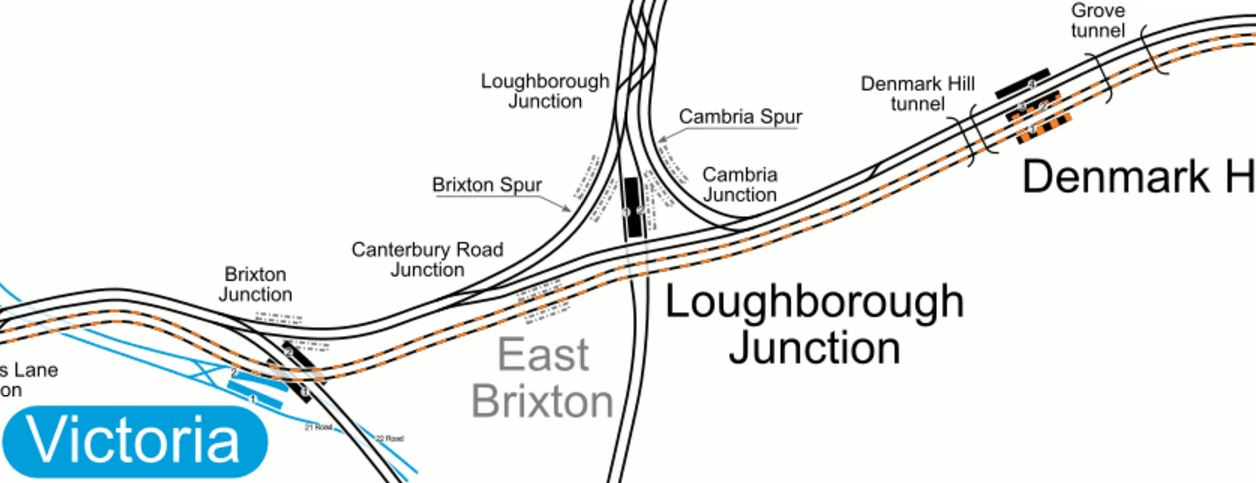
East Brixton station is clearly shown on the tracks now used by the East London Line.
These pictures show the railway and what remains of the station on Moorland Road.
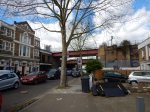


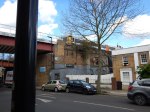
I spotted the station because of the signature brickwork of the window, which you see in several stations in South London like Peckham Rye station, which was designed by Charles Henry Driver.
This Google Map shows the location of the station.
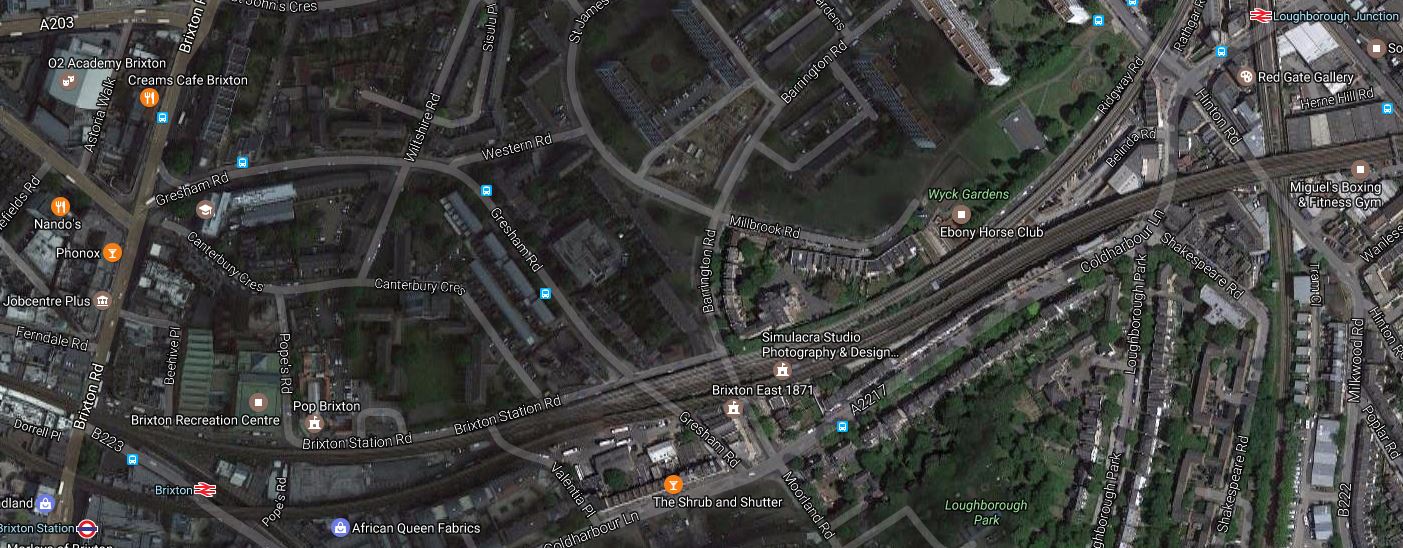
Loughborough Junction station is in the North-East corner of the map, with Brixton station in the South-West corner.
Note that the venue; Brixton East 1871 is shown in the pictures and on the map.
In an ideal world Loughborough Junction and Brixton stations should have platforms on the Overground, but budgets are not limitless, so neither of them has.
But perhaps an option to build a station at East Brixton is a good compromise and will break up the long stretch between Denmark Hill and Clapham High Street stations.
It may look a stiff climb to the platforms, but it is no more than some other Overground and DLR stations. Lifts would be essential.
Could We See A Plastic Station?
The Pedesta Bridge, that I talked about in Would You Trust Your Weight On A Thirty Metre Long Plastic Bridge?, has got me thinking.
Look at this picture of the soon-to-be-built Maghull North station.
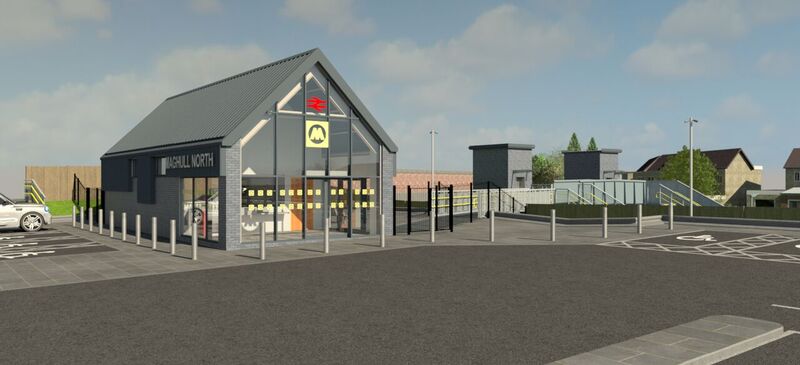
Maghull North Station Building
The station would appear to be in a cutting with lift towers sticking their heads above the cutting and these are connected by an open walkway to the station building.
Pedesta bridges would surely be a lot easier to slot between the station building and the lift towers., than the traditional heavy steel and glass constructions. From pictures on various web sites, the bridges could even have a roof to protect travellers from the weather.
But why stop at just the bridges?
Could we see prefabricated plastic steps for example?
Anything that cuts the cost of new stations, would surely mean more!
 The Anonymous Widower