By Overground To High Speed Two
The North London Line will be my route to High Speed Two when it opens in 2026.
This map from Wikipedia, shows how the lines connect.
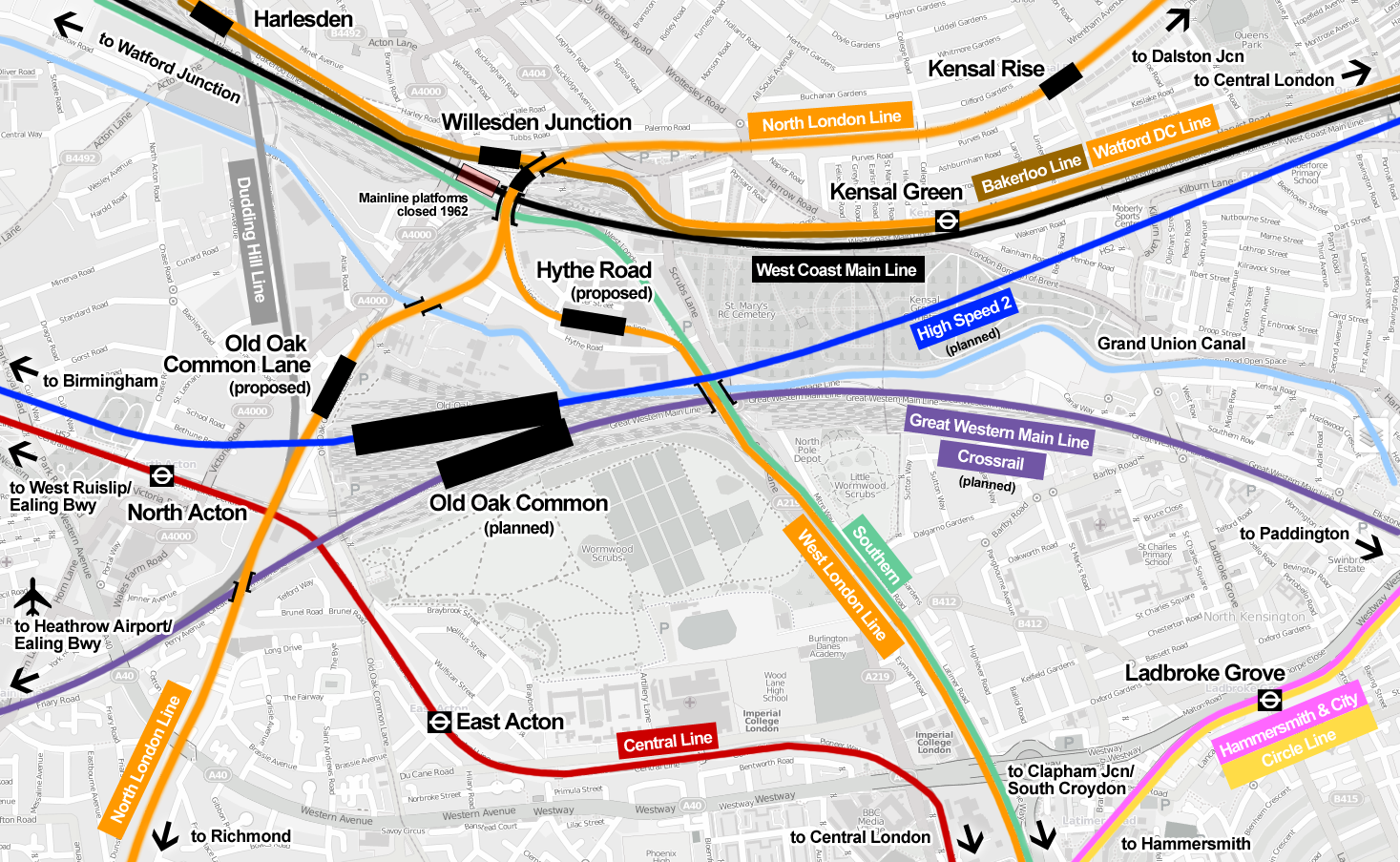
I will actually have two Overground stations, that I will be able to use.
- Old Oak Common Lane station on the North London Line between Stratford and Richmond stations.
- Hythe Road station on the West London Line between Stratford and Clapham Junction stations.
Note.
- Wikipedia says that both stations should open in 2026, which is the same date as High Speed Two.
- Hythe Road station is 700 metres from the High Speed Two station.
- Old Oak Common Lane station is 350 metres from the High Speed Two station.
Currently, both lines have a four trains per hour (tph) service.
- The Class 378 trains are five cars, which can get very busy in the Peak.
- It would need an additional five trains to increase the frequency to five tph on both routes.
- Six new five-car Class 710 trains are on order for North and West London Line services.
- I feel the higher frequency could be in operation by the opening of High Speed Two.
- Most stations between Stratford and Willesden Junction would appear to be able to accept six-car trains, if selective door opening were to be used.
I think by 2026, there will be a more than adequate service between Stratford and High Speed Two.
- There will be at least ten tph to Stratford, with services split equally between Hythe Road and Old Oak Common Lane stations.
- Richmond and Clapham Junction stations will get at least five tph.
- Step-free access is not currently available at Brondesbury Park, Brondesbury, Finchley Road & Frognal, Kentish Town West and Dalston Kingsland stations.
But what other developments will or might happen?
Highbury & Islington Station
Highbury & Islington station is the thirteenth busiest station in the UK and it is in need of a major upgrade to bring the deep level platforms and their access up to the standard of the four London Overground platforms, which all have lifts.
I also think that the track layout at the station could be modified to allow trains on the East London Line to continue further to the West. This was mentioned, when the Oveground was created, but is seldom talked about these days.
Step-Free Access On The North And West London Lines
These two lines which form a Y-shaped railway that splits at Willesden Junction, will provide these services from High Speed Two to major interchange stations.
The only thing that is needed is to complete step free access at all stations on the North and West London Lines.
The Maximum Frequency Across North London
Five tph on both the North and West London Line would give the following turnback frequencies at the four terminals.
- Clapham Junction – 5 tph
- Richmond – 5 tph
- Stratford – 10 tph
This chart from TfL shows planned improvements on the London Overground
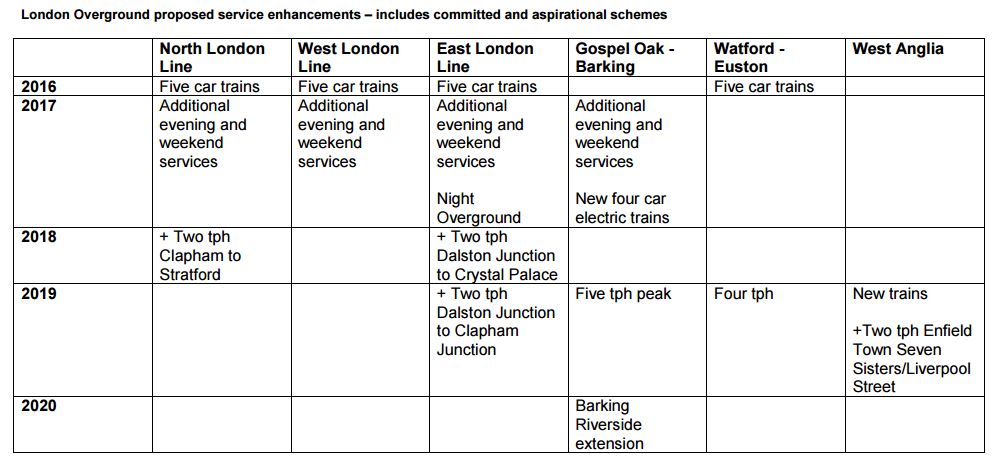
Note that it clearly shows that it is possible to run a six tph service between two single platform stations.
I think it likely that it would be possible to run six tph on both routes, provided that the route and the signalling could handle the increased frequency.
Twelve tph between Stratford and Willesden Junction stations would probably be the maximum frequency.
But would the number of freight trains allow this frequency?
A Reduction In Freight Services
Currently, the North London Line carries a lot of freight trains, going between Barking, Felixstowe and London Gateway in the East to virtually everywhere West of London.
- Noises from the East West Rail Consortium are hinting that services to and to and from Bristol, Liverpool, Manchester, South Wales, Southampton and the West Midlands might use their new route between Oxford and Cambridge.
- Could more freight use ports like Liverpool and Teesport in the North of England, which would reduce the traffic through the ports in the South?
Whatever happens, the current succession of diesel-hauled freight trains across London is not environmentally-friendly and it will raise increasing numbers of protests.
I think it is inevitable that the number of freight services will reduce, thus allowing more paths for passenger trains.
Digital Signalling
To handle the increasing traffic on the North and West London Lines, I can see digital signalling being installed. There could even be a degree of Automic Train Control.
Six-Car Trains
Only a few stations can handle six-car trains without selective door opening and even the rebuilt West Hampstead station still has platforms for five-cars.
Selective door opening would allow six-car trains to use the five-car platforms and passengers have in London have shown they can cope with moving forward to get out at certain stations. Especially, as the walk-through design of the train, makes this a lot easier.
A Round-The-Corner Service
I can remember reading in Modern Railways, that one of the reasons for the East and North London Lines running parallel through Canonbury to Highbury & Islington was to possibly enable extension of the East London Line to perhaps Willesden Junction, where there is a handy bay platform.
This has not happened and I doubt we’ll ever see something like a New Cross to Willesden Junction service, as Crossrail will effectively provide a faster frequent service between Whitechapel and Old Oak Common stations.
West London Orbital Railway
The proposed West London Orbital Railway will have two routes.
- West Hampstead Thameslink and Hounslow
- Brent Cross Thameslink and Kew Bridge
Both routes will have four tph and have a connection to Crossrail, High Speed Two and the North London Line at Old Oak Common station.
The only possible problem would be the eight extra tph through Acton Central station and level crossing and South Acton station.
But it would become an important feeder route to Crossrail, Heathrow Airport and High Speed Two.
Conclusion
The North and West London Line route between Stratford and Willesden has the ability to handle a lot more traffic than it currently does.
Dgital signalling and six-car trains could add over another fifty per cent capacity to the route.
I very much feel that digital signalling will be absolutely necessary.
The Dalston Kingsland Station Problem
One of my local stations on the North London Line is Dalston Kingsland station.
Unlike Hampstead Heath station and the three neighbouring stations of Canonbury, Dalston Junction and Hackney Central, there are no lifts at Dalston Kingsland station and the stairs are narrower without a central rail.
Looking at the passenger traffic at the stations I have mentioned, gives the following numbers for 2017-18 in millions.
- Canonbury – 3.0
- Dalston Junction – 5.7
- Dalston Kingsland – 5.5
- Hackney Central – 4.3
- Hampstead Heath – 3.3
Dalston Kingsland serves almost as many passengers as does the nearby Dalston Junction, but it is a very inferior station.
- Recently, a high capacity wide gate-line has been installed.
- When trains call at the station, it is difficult to get to the platforms, unless you wait until arriving passengers have come up the stairs.
- There are no lifts.
- More housing is being built around Dalston Kingsland station.
- In December 2018, the train frequency through Dalston Kingsland was raised to eight from six trains per hour (tph).
Is Dalston Kingsland station an accident waiting to happen?
Various plans and other improvements will effect the passenger traffic through Dalston Kingsland station.
More Trains Through Dalston Kingsland Station
In Gospel Oak-Barking Fleet Plan Remains Unclear, I calculated that running the current combined eight tph service between Stratford and Clapham Junction/Richmond needs twenty trains.
- Increasing this service from four tph to five trains per hour to both Western termini, would increase the frequency between Stratford and Willesden Junction to ten tph.
- It would also require twenty-five trains to run the service.
- London Overground has six five-car Class 710 trains on order, that will be used to improve the service on the North and West London Lines.
This would leave a spare train to cover failures and maintenance.
So it would appear that Dalston Kingsland station could get a train every six minutes in both directions.
Passengers would appreciate this, but what about the freight operators, that use the line?
Will a twenty-five percent increase in train capacity result in a similar increase in passengers using the stairs at the station?
The Effect Of London Overground Syndrome
In London Overground Syndrome, I described the syndrome like this.
This benign disease, which is probably a modern version of the Victorian railway mania, was first identified in East London in 2011, when it was found that the newly-refurbished East London Line and North London Line were inadequate due to high passenger satisfaction and much increased usage. It has now spread across other parts of the capital, despite various eradication programs.
The North London Line through Dalston Kingsland station seems to have a particularly strong form.of the syndrome.
In December 2018, the frequency through the station was increased by thirty-three percent, but overcrowding in the Peak seems not to have reduced.
Could it be that because the line offers a more pleasant and easier connection between Stratford, Highbury & Islington, Camden, Hampstead, Willesden, Clapham Junction, Acton and Richmond, that any increase in capacity is welcomed and passengers transfer from a more crowded Underground?
There will be more Ducking and Diving!
Crossrail Effects
I suspect only educated guesses can be made, as to what effects Crossrail will have on Dalston Kingsland station.
Judging by the number of passengers, who get on and off Overground trains at Highbury & Islington station, a lot of passengers use the North London and Victoria Lines for commuting and other journeys.
Crossrail, with its connection to the North London Line at Stratford and eventually at Old Oak Common will take passengers from the North London Line and the various connections between the two lines, will further even out passenger traffic.
If it does, it will be Londoners Ducking-and Diving again!
Avoiding Dalston Kingsland Station
I think that some groups of passengers will avoid Dalston Kingsland station.
- Like me, some travellers have a choice of station.
- Passengers walking between the two Dalston stations, may choose to use the shorter step-free interchange at Canonbury.
- As the frequencies on the Overground increases, passengers may find that a less obvious route is better for them.
- I suspect some savvy passengers take a train from West Croydon at Dalston Junction station and then cross the platform at Highbury & Islington station.
It’s classic animal behaviour to avoid problems and go by a better way.
Northern City Line Effects
The Northerrn City Line between Highbury & Islington and Moorgate stations could have an effect on passenger numbers at Dalston Kingsland station.
In a couple of years, the line will be much improved.
- Services will be running seven days a week.
- Elderly Class 313 traiins will have been replaced by new Class 717 trains.
- There will be a step-free connection to Crossrail at Moorgate station.
- Frequencies will be significantly increased.
Overall, there will be a new high-capacity line running North-South within walking distance or a couple of bus stops of the two Dalston stations.
I have already started to use the line more, by catching a bus to Essex Road station for a train to Moorgate station. It’s quicker in the morning Peak.
HS2 Effects
I remember using the North London Line in the 1970s, between Broad Street and Willesden stations. It was terrible. But now, when High Speed Two opens in 2026, London’s Mucky Duck which has grown into a swan, will speed you to Old Oak Common station for your journey to the North.
Because many of these travellers will have heavy bags with them, all stations on the North London Line must be made step-free.
Highbury & Islington Station Improvements
Highbury & Islington station was rebuilt for the Victoria Line in the 1960s, when costs were much more important than passenger convenience.
The area outside the station is being sorted, but the plans are starting to be developed to create better and step-free access to the deep level platforms.
A much improved Highbury & Islington station would create a lot of easier routes from both Dalston stations.
Essex Road Station Improvements
Essex Road station has lifts, but is not step-free as the lifts go to well below the platforms, to which the final connection is a long set of steps.
The station sits on what must be a valuable site in Islington, which would be ripe for redevelopment.
Redevelopment of this station will happen and it will make things a lot better for me, as it is within my walking range or a short bus ride.
Bus Improvements
When I moved to Dalston in 2010, there was a good bus service to Highbury & Islington station along the Balls Pond Road.
But now, a South London Mayor has cut this, because I suspect we can use the Overground.
But this assumes that Dalston Kingsland station is has quality access. Which of course it doesn’t!
The buses must be improved along the Balls Pond Road.
Six-Car Trains Through Dalston Kingsland Station
I’ve deliberately left this to last, as it is the biggest and most difficult.
There are two routes through Dalston Kingland station.
- Four tph on that use the West London Line to go to Clapham Junction station.
- Four tph on that use the North London Line to go to Richmond station.
One or both of these routes might be possible to be run by six-car trains using selective door opening on the short platforms.
Lengthening the new Class 710 trains will not be a problem, as a few extra coaches would be ordered.
On the other hand lengthening the existing Class 378 trains may be more problematical, as they are out of production. I suppose that two five-car trains could be converted into a six-car and a four-car.
Six-car operation would surely add twenty percent to the passengers going through the station.
The Future Of Dalston Kingsland Station
The extra trains and capacity through Dalston Kingsland station will increase the pressure on the inadequate access at the station.
But some of the other improvements will divert passengers from the station and take the pressure off.
I suspect that Transport for London are hoping this will be sufficient action to keep the station functioning at a comfortable level, until it is rebuilt for Crossrail 2.
But that is a tough ask and could contain a lot of wishful thinking.
Conclusion
Dalston Kingsland station needs lift and wider and safer stairs in the near future.
Improving Safety On Stations
Some of London’s stations have stairs down to the platforms as this picture taken at Hampstead Heath station on the North London Line shows.
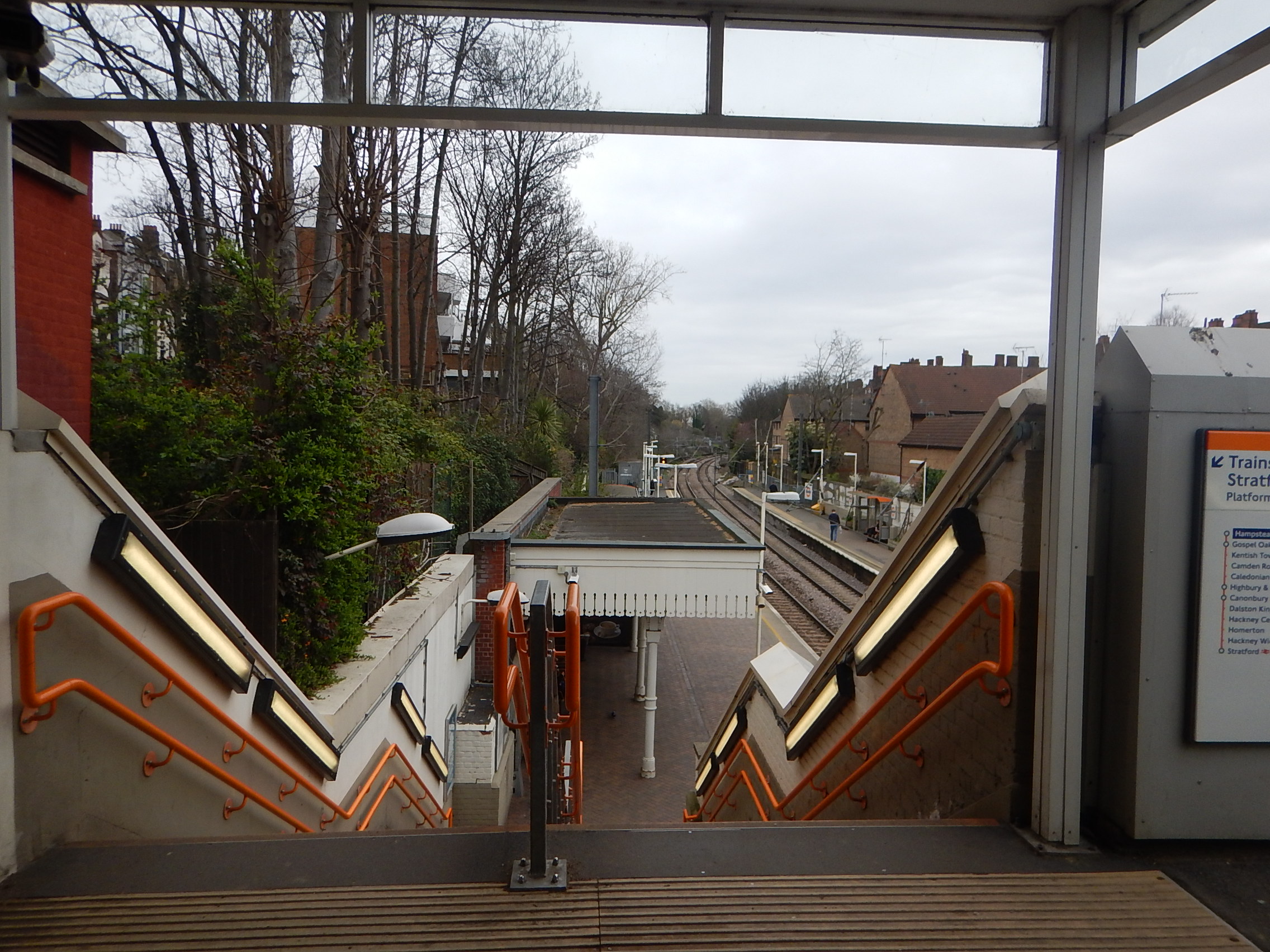
Hampstead Heath is a fully-rebuilt station.
- Each platform has a set of stairs and a lift.
- The stairs are also divided into two by a central double handrail.
Transport for London have posters everywhere, that say that passengers shouldn’t rush and to hold the handrail.
But accidents do happen, as I witnessed a few days ago at Manor House station.
So would it be safer, if at the top of the stairs, there was a display showing how long it was to the next couple of trains?
It might just encourage people to slow down, if they knew they had eight minutes before the next train, or it wasn’t for their destination.
Will The Gospel Oak To Barking Line Have Long Term Capacity Problems?
There are certainly, short term capacity problems on the Gospel Oak to Barking Line, (GOBlin) due to the non-delivery of the new Class 710 trains.
Comparison With The North London Line
There are a lot of similarities between the Gospel Oak to Barking Line and the North London Line (NLL).
- Both run roughly East-West across North London.
- Both have interchanges with the Underground, Crossrail and National Rail.
- Both run electric trains.
- Both have several freight trains per day.
In addition, the Eastern end of the NLL and the GOBlin, run through areas of East London, where a lot of regeneration and housing development is ongoing.
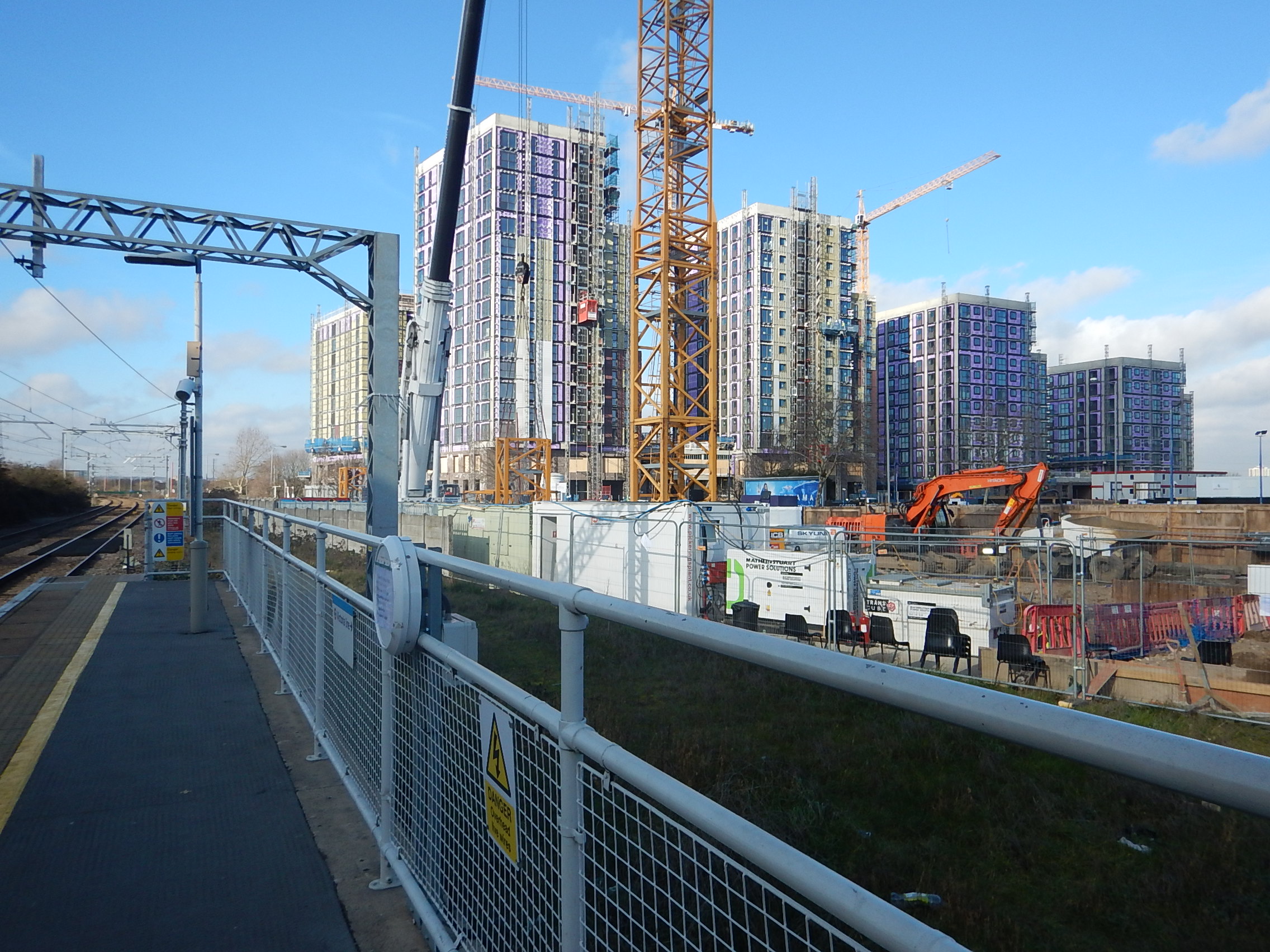
This picture was taken at Blackhorse Road station. The station is being surrounded, by a large amount of housing.
Capacity On The North London Line
When I moved to Dalston in 2010, the frequency of trains between Stratford and Willesden Junction stations was around six trains per hour (tph). The trains were three-car Class 378 trains, giving a capacity of 18 carriages per hour (cph).
Now in early 2019, the frequency on the same section of the NLL is eight tph and the trains are five-cars, giving a capacity of 40 cph.
This large increase of 120 percent, has not been enough to prevent trains on the NLL from being very full at times. But then there have been large housing and commercial developments at Stratford, Hackney Wick, Hackney Central, Dalston Junction and West Hampstead stations.
Future Capacity On The Gospel Oak to Barking Line
Until a few months ago, the GOBlin had a frequency of four tph. The trains were two-car Class 172 trains, giving a capacity of 8 cph.
The service from today is two four-car Class 378 and two two-car Class 172 trains per hour, giving a capacity of 12 cph.
Hopefully, when the Class 710 trains are working, we’ll be seeing four four-car Class 710 trains per hour, giving a capacity of 16 cph.
It is not the 120 percent increase that the NLL has already seen, but surely a 100 percent increase is better than nothing.
My Observations On The Gospel Oak To Goblin Line
For the last three of four years, Highbury & Islington station has been a station to avoid.
- There have been continuous roadworks in the area of the station.
- There have also been several water-main bursts.
- The bus service between the station and my house has been halved in frequency.
Consequently, if I’m coming East to my home, I find it a lot easier, but slightly slower to change to the GOBlin at Gospel Oak station and then get a bus home from Harringay Green Lanes station.
So if a GOBlin train is waiting at Gospel Oak station, I take that route.
Helpfully, Transport for London have improved the cross-platform interchange.
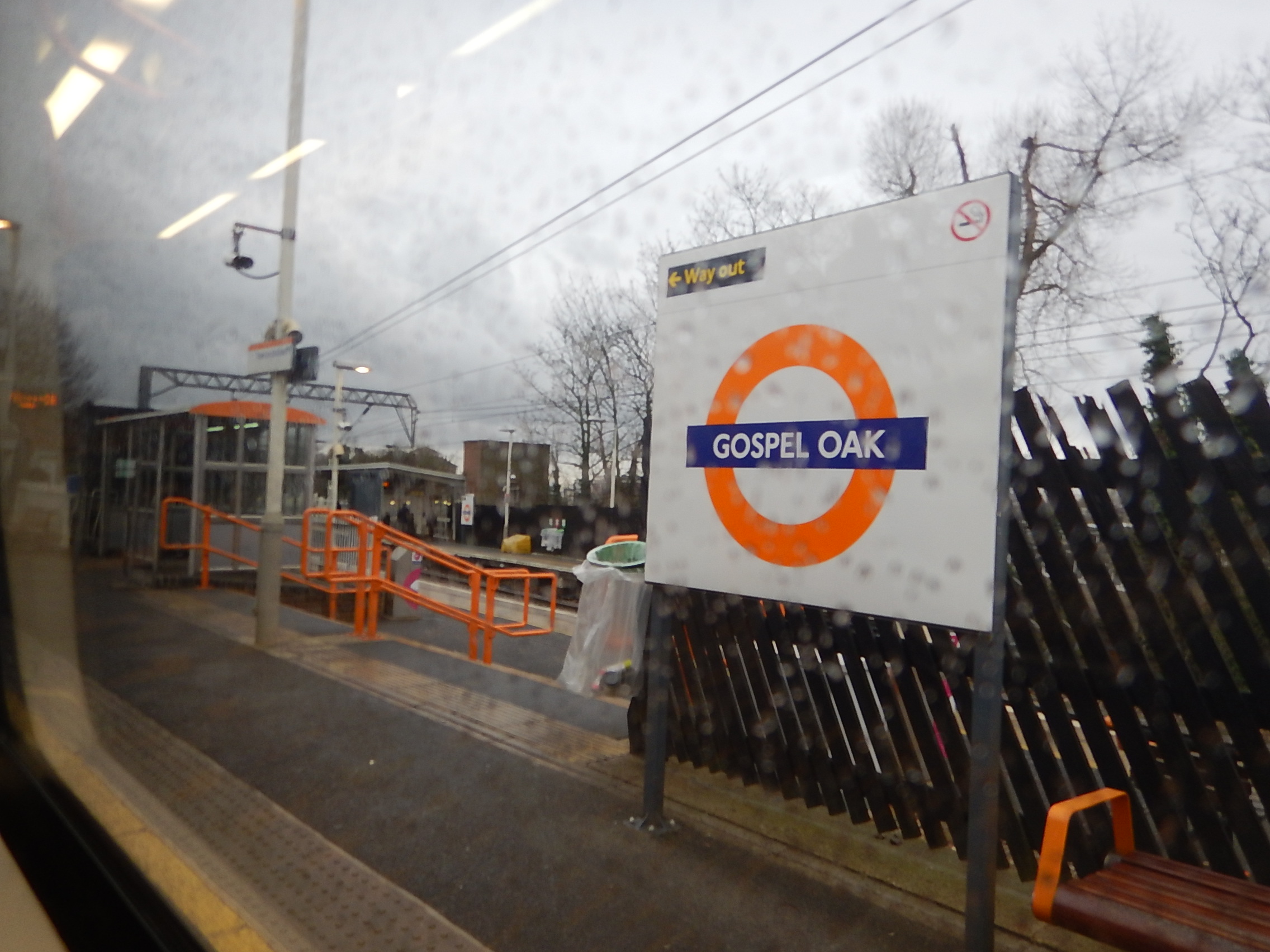
They’ve also added more stairs to the right of these.
I actually, think, that passengers wanting to go to areas between the two lines are starting to use the GOBlin, as often by Harringay Green Lanes station, a lot of passengers have left the train.
Londoners are just practising their ducking and diving!
I’ve also left Barking a couple of times in a very full train in the Off Peak.
- Passengers for whatever reason, seem to be using the GOBlin more!
- Do clean electric trains attract passengers more than less friendly diesels?
- Does the occasional four-car journey impress passengers with more space?
- Is it since the Class 378 trains took over some duties, that the service is more reliable?
Or perversely could it be, that all the bad publicity about the GOBlin has reminded people that it is still there and might be worth a second chance?
Will The Proposed Gospel Oak To Barking Line Be Enough In The Long Term?
I am rapidly coming to the conclusion, that although capacity on the GOBlin is going to be doubled, when the new Class 710 trains arrive, this may not be a large enough increase for the long-term.
What Measures Can Be Taken To Increase Capacity?
There are some simple measures that can be taken.
Higher Frequencies
Transport for London are planning to run five tph in the Peak this year.
If it happens, this will increase capacity by a small amount, where it is needed.
But it probably can’t be a general increase, as that would probably restrict the number of freight trains.
Trains With A Higher Performance
The electric Class 710 trains probably have a higher performance than the diesel Class 172 trains.
This will help with running higher frequencies and faster services, but on its own, it won’t increase capacity.
Longer Trains
The Class 710 trains are Aventras, and these trains have been ordered up to ten cars by other operators.
So five- or six-car trains would certainly be possible.
But the problem is that some platforms would need to be lengthened.
- Barking already handles longer trains.
- Upper Holloway, Crouch Hill, Harrigay Green Lanes, Walthamstow Queens Road, Leyton Midland Road, Leytonstone High Road, Wanstead Park and Woodgrange Park used to have longer platforms, which might be possible to reinstate.
- Blackhorse Road, South Tottenham and Gospel Oak would be major undertakings.
Five-car trains might be possible, if selective door opening was used at the last three stations.
Five-car trains would increase the capacity to 50 cph or an increase of twenty-five percent on the capacity after the Class 710 trains are successfully introduced.
Conclusion
I am very sure, that the only way to increase the capacity of the Gospel Oak to Barking Line, would be to run longer trains.
But they would need to use selective door opening at Blackhorse Road, South Tottenham and Gospel Oak stations.
After the problems of platform lengthening on the East and North London Lines, why weren’t platforms at least prepared for five- or even six-car trains, when the GOBlin was rebuilt and electrified?
A406 North Circular Road ‘Most Congested’ In The UK
The title of this post is the same as that of this article on the BBC.
This is the first paragraph.
Motorists on the UK’s most congested road spend an average of two and a half days a year sitting in traffic.
The section of the A406 between the Hangar Lane Gyratory and Chiswick Roundabout has always been a dreadful road to drive on, as long as I can remember.
These pictures show typical traffic around eleven o’clock in the morning.




There does seem to be rather a lot of private cars and small commercial vehicles, with only a few HGVs and buses.
I would love to see an analysis of where these journeys start and finish.
Converting the road to a multi-lane dual carriageway wouldn’t be possible, as much of it is lined with private houses and even if it could be built it would just attract more traffic and would need to be widened even more.
There are circular routes further out of London like the M25 and the A412, but this road is an intractable problem.
Perhaps, it needs to be in a Congestion Charge Zone?
But is a solution at hand?
Crossrail
Crossrail, if and when it opens, will not be a direct solution, as it goes East-West and not North-South like the A406 through the area.
But it will give better access to Heathrow, which is a large traffic generator in West London.
Crossrail will link the following to the Airport.
- Canary Wharf
- The City of London
- East London and Essex
- South-East London and Kent
- West End and Paddington
It will do little to help those in North and South London to travel to and from the Airport.
Old Oak Common Station And High Speed Two
The connection of High Speed two and Crossrail could make a difference.
- Passengers using High Speed Two travelling to and from Heathrow, would have an easy route.
- North and North-East Londoners will be able to use the North London Line with a change at Old Oak Common.
- South Londoners will be able to use the West London Line with changes at Old Oak Common and Clapham Junction stations.
But Old Oak Common station won’t open under 2026 at the earliest.
It is needed now.
It also does nothing for those travellers in wide swathes of North-West London.
The West London Orbital Railway
If there is a trusty knight on an immaculate white charger, coming to the rescue, it could be the West London Orbital Railway, although as it would be stitched together from parts of existing and underused infrastructure, it has more of the Dirty Dozen about it.
There would be two routes.
- West Hampstead Thameslink and Hounslow via Cricklewood, Gldstone Park, Neasden, Harlesden, Old Oak Common, Acton Central, South Acton, Brentford, Syon Lane and Isleworth.
- Hendon and Kew Bridge via Brent Cross West, Gldstone Park, Neasden, Harlesden, Old Oak Common, Acton Central and South Acton.
The project has various advantages.
- No substantial amount of new track will be needed.
- It could be run using battery-powered trains.
- Costs would be well under half a billion pounds.
- It would connect to Thameslink and Bakerloo, Jubilee and North London Lines.
When Old Oak Common and High Speed Two open, it would have a direct connection.
I wrote about this railway in detail in New Railway Line For West London Proposed.
North Acton Station
As stated under Development in the Wikipedia entry for North Acton station, there may be reasons to rebuild the station to create a connection between the North London and Central Lines.
This Google Map shows the area around North Acton station.
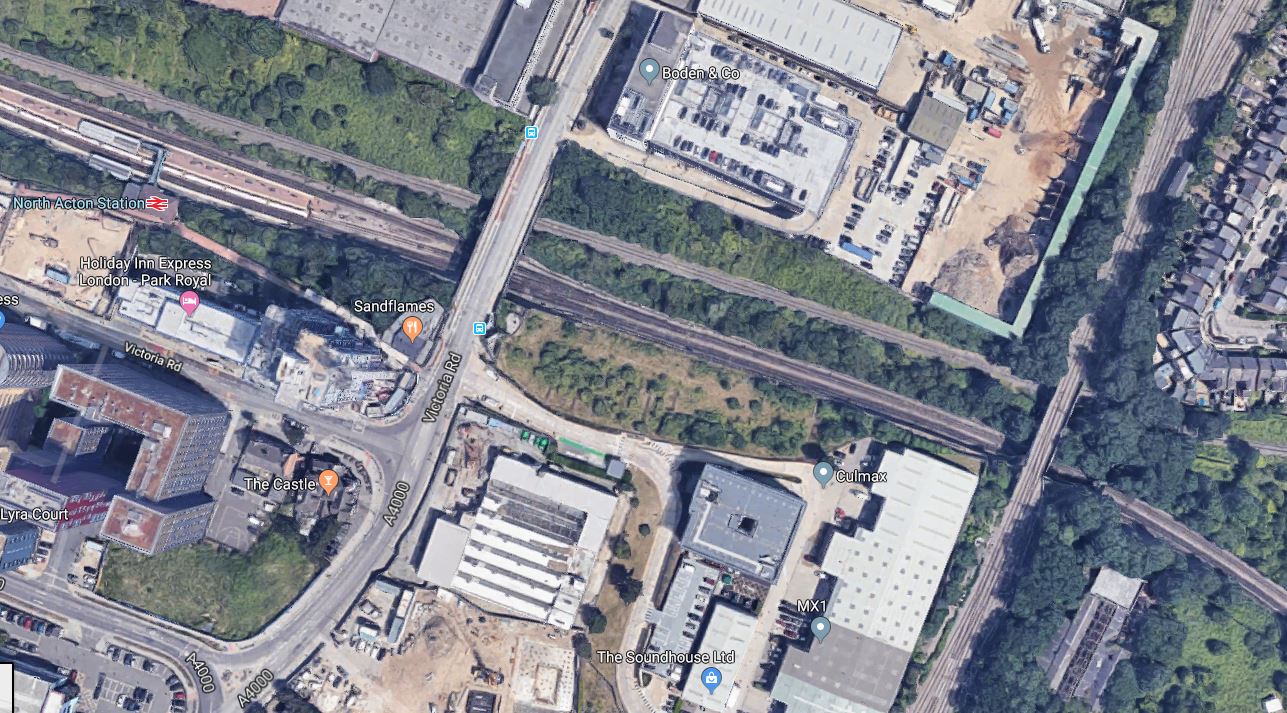
Note.
- North Acton station in the North-West corner of the map.
- The North London Line running North-South to the right of the map.
- The Dudding Hill Line branches off the North London Line at the top of the map.
- The Central Line running East-West through North Acton station and under the North London Line.
- Threading its way through North of the Central Line is the Acton-Northolt Line.
- The Acton-Northolt Line could be developed by Chiltern Railways to give access to a second London terminal at Old Oak Common.
To develop a successful station at North Acton, that tied everything together would be a hard ask.
- The bridge carrying the North London Line is very high.
- The height would make step-free access expensive.
- The frequency of trains on both the North London and Central Lines could be twelve trains per hour (tph).
- At least, there does appear to be plenty of space from the map.
On the other hand, an architect with vision might be able to create a station that was affordable and provided high benefits for passengers.
Conclusion
There’s certainly potential in West London to improve the rail routes, although I’m not sure whether rebuilding North Acton station would be viable.
But, we should start building the West London Orbital Railway immediately.
Has The Canonbury Cross-Over Become More Difficult?
In The Canonbury Cross-Over, I described how it was possible at Canonbury station to change easily from a Westbound train on the North London Line to a Southbound-train on the East London Line.
Services through Canonbury station on the East London Line in trains per hour (tph) are.
- Four tph between Highbury & Islington and Crystal Palace stations.
- Four tph between Highbury & Islington and West Croydon stations.
This means that eight tph call in Platform 2 at Canonbury station.
Services through Canonbury station on the North London Line used to be.
- Four tph between Richmond and Stratford stations.
- Two tph between Clapham Junction and Stratford stations.
This means that six tph call in Platform 3 at Canonbury station.
Since the December 2018 Timetable Change, two tph have been added to the Clapham Junction service.
So now both services calling at Platform 2/3 have the same frequency of eight tph.
So Why Does The Canonbury Cross-Over Appear To Be More Difficult?
Today, I was coming from Stratford on a Richmond train and was changing to the East London Line to Dalston Junction station, from where I can get a bus from outside the station to my house.
It takes a bit longer, but I was carrying my weekend shopping and as Dalston Junction station has lifts, if you need them and Dalston Kingsland station doesn’t, A lot of passengers, seem to use the Canonbury Cross-Over, when they are going from Stratford to stations on the East London Line.
As my train arrived at Canonbury station, in Platform 3, a Southbound-train was leaving Platform 2. So I had a wait of seven minutes in the rain for the next train to Dalston Junction station.
Since the Timetable Change, it appears that I am having to wait for several minutes a lot more.
Look at these times from the 6th of February. The time is when a train on the North London Line calls in Platform 3 and the integer is the number of minutes before the train calls on the East London Line in Platform 2.
- 1150 – 7
- 1157 – 0
- 1205 – 7
- 1212 – 0
- 1220 – 7
- 1227 – 0
- 1235 – 7
- 1242 – 2
- 1250 – 7
- 1257 – 0
- 1305 – 7
- 1312 – 0
- 1320 – 7
- 1327 – 0
- 1335 – 7
- 1342 – 0
- 1353 – 4
- 1357 – 0
- 1405 – 7
- 1312 – 0
In some cases two Southbound trains call between two Westbound ones.
Quite frankly, it’s crap!
Why?
I am no expert on railway timetabling, but if I look at the timetable, it appears that the two trains often seem to be timetabled to arrive at the same time.
As Southbound trains on the East London Line have only come one stop from Highbury & Islington station, are they more likely to be on time, than North London Line trains that have come all the way from Stratford station.
So like today, do North London Line trains arrive after the East London Line train has departed?
Conclusion
The timetable needs to be improved.
Would it be possible to timetable the East London Line trains a couple of minutes after those on the North London Line?
Are Platforms Being Extended On The North London Line?
At West Hampstead station today, I took this picture.
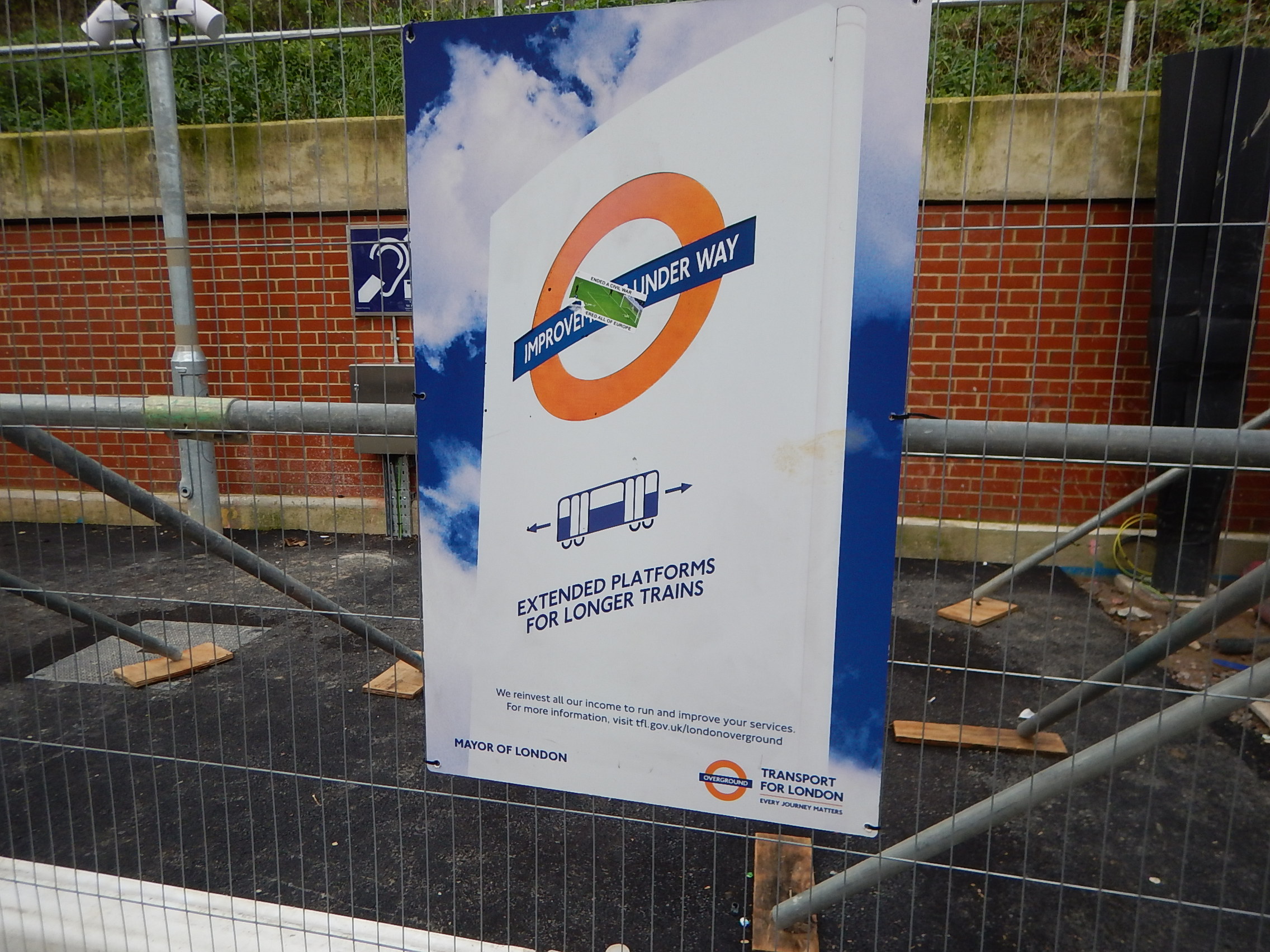
I have not found any reference to platform extensions on the North London Line and West Hampstead station in particular.
However I did find an answer from the Mayor to this question.
Further to your answer to Question No: 507 / 2013 and 1039 / 2013 is the Department for Transport ‘Access for All’ funding allocated for the financial year 2012/13 still guaranteed for the work needed to make this station step free; when will work commence and when will it be completed in making the station step free; on what do you base your assertion that local stakeholders are supportive; which local stakeholders do you claim are of this mind; and what information has been disseminated locally, to whom and in what manner, on the present proposed plan?
This was the answer.
I am determined to provide step-free access (SFA) at West Hampstead, but it is important that any scheme taken forward maximises benefits for passengers and ensures value for money.
Consequently, TfL has decided not to proceed with a standalone SFA scheme, but to take some extra time to ensure that SFA works can be integrated with further enhancements which are necessary at West Hampstead station – including platform extensions for the new 5-car service, work to reduce congestion in the ticket hall, and integration with an adjacent development. This will reduce costs, increase benefits and keep passenger disruption to a minimum.
As a result, TfL will re-apply for Access for All funding in Control Period 5 next year. Work on site could start in 2015.
It looks like the platform extension work was delayed until the work was carried out to make the station step-free.
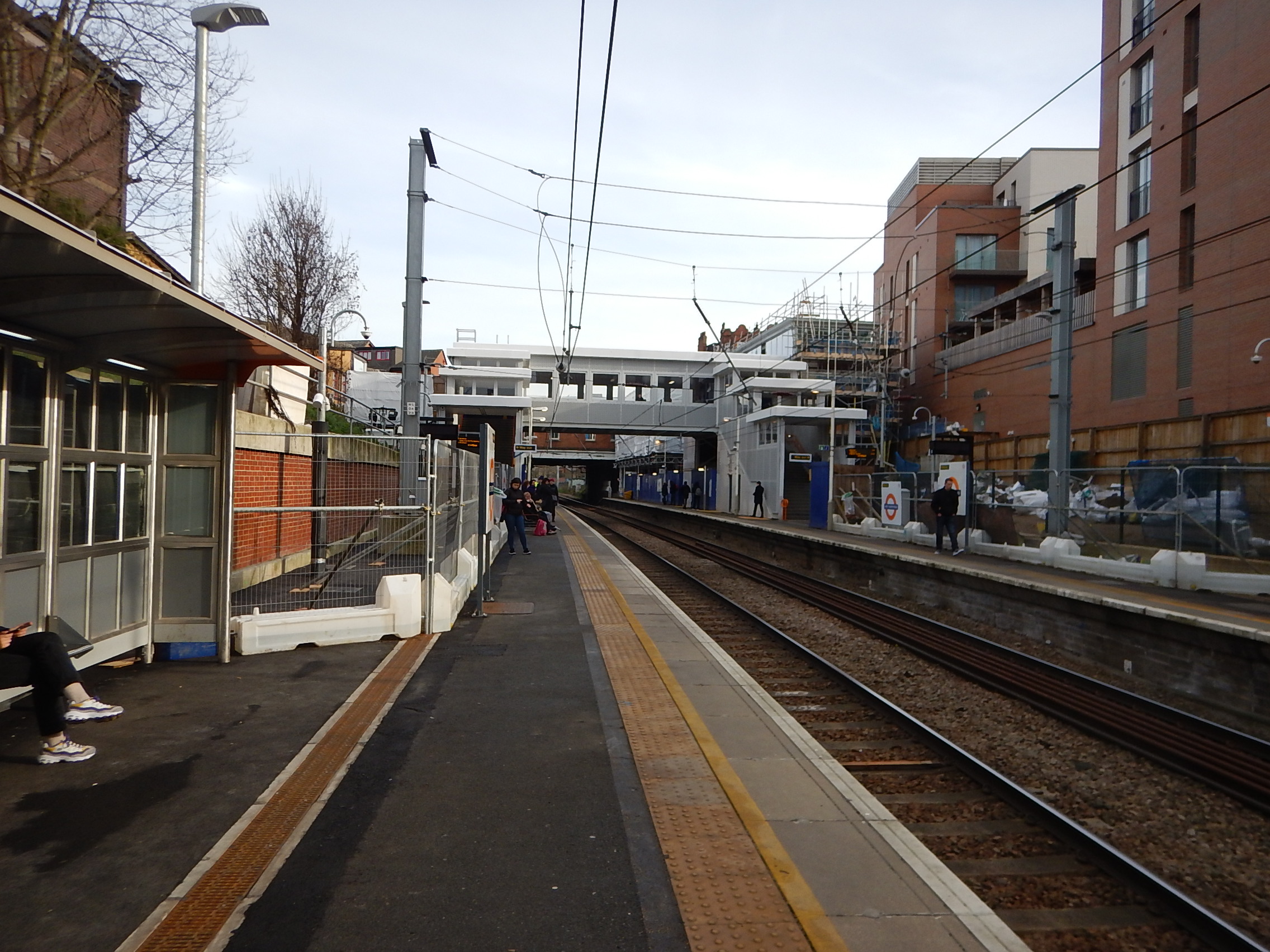
The picture shows that the work at the station appears to be nearing completion.
When my train arrived, it appeared that the platforms are sized for five-car trains.
Will these platforms be long enough, when new stations open to connect the North London Line to High Speed Two and Crossrail at Old Oak Common station.
How Will Class 710 Trains Access Willesden TMD?
This map from carto.metro.free.fr shows the track layout around Willesden TMD, where the Class 710 trains for the Gospel Oak to Barking Line (GOBLIN) will be stabled.
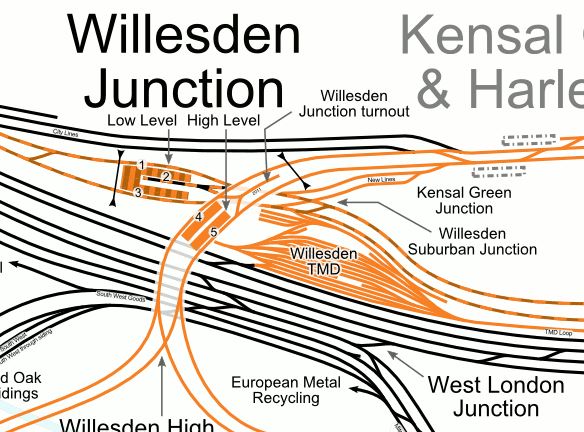
Note the following lines around Willesden TMD.
North London Line
The North London Line goes through platforms 4 and 5 at Willesden Junction station.
South of the station it splits, with the North London Line continuing to Richmond and the West London Line going to Clapham Junction.
North of the station the line continues to the East and at Gospel Oak station, the GOBLIN branches away.
The Bakerloo Line And Watford DC Line
The shared tracks of the Bakerloo Line and the Watford DC Line, which are shown in black/orange go through platforms 1 and 3 at Willesden Junction station.
To the East the tracks go towards Euston and to the West, they go towards Watford.
There is also a bay platform 2 in Willesden Junction station, which is shown in these pictures.

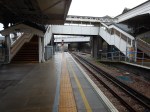
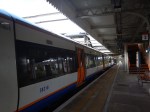
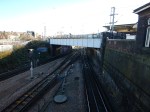
Note that is long enough to take a five-car Class 378 train and that it is also electrified with London Underground’s four-rail electrification.
Platform 2 To The North London Line to the East
Two tracks give a direct route from Platform 2 at Willesden Junction station to the Eastbound North London Line. greatkingrat says they are labelled “New Lines”
Looking from the train this morning, I don’t think this pair of tracks is electrified, so it doesn’t allow Platform 2 to be used to turn electric trains running on the North London Line.
I have seen Platform 2 used as a terminus, but the trains must use the electrified route via Primrose Hill.
After greatkingrat’s comment, I went back and had a second look.
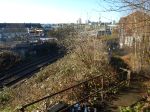
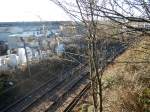
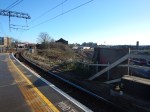
Note.
25 KVAC overhead electrification can be seen at the North London Line end of the tracks.
There is 750 VDC third-rail electrification at the Willesden
This Google Map shows, where the connecting tracks join the Bakerloo/Watford DC Line.
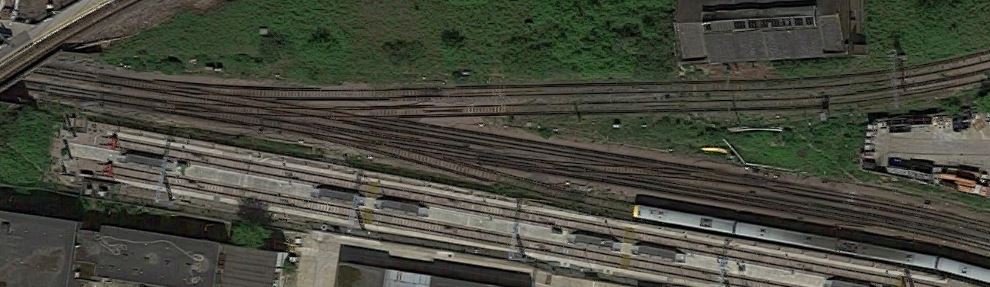
It does appear that the third-rail and a couple of gantries are visible.
- Trains leaving Platform 2 should be able to use third-rail electrification until they are under the overhead wires, when they would change over.
- Trains arriving at Platform 2 would use overhead wires, as far as they could and then swap to third-rail.
If this route is to be used by new Class 710 trains, I’m sure it will get more than adequate testing.
Entering Or Leaving Willesden TMD
I am not sure, how Class 378 trains working the Watford DC Line service transfer to and from Willesden TMD, but it does appear there are some convenient crossovers.
I have looked at Real Time Trains and early in the morning of the 9th of January, these trains called at Platform 2 at Willesden Junction station, that originated at Willesden TMD.
- 05:02 – Willesden TMD to Barking
- 05:15 – Willesden TMD to Upper Holloway
- 05:23 – Willesden TMD to Stratford via Primrose Hill
- 05:56 – Willesden TMD to Kensal Green
- 06:17 – Willesden TMD to Euston
There were also other services, which appeared to be going between Euston and Stratford.
It looks to me that trains were being positioned to start service and that the bay platform 2 at Willesden Junction station is used to reverse trains, coming out of the depot.
It also appears that some trains use the electrified route to the East via Primrose Hill.
The 05:02 and 05:15 are Class 172 trains going to the GOBLIN, and as they are diesel trains, they use the pair of direct tracks, that connect to Platform 2.
How Will Class 710 Trains Go Between the GOBLIN And Willesden TMD?
As the Class 710 trains will be dual voltage trains, they should be able to take the direct route, which has both types of electrification and requires a change at some point.
They can also take a roundabout route possibly via Primrose Hill and using Platform 2 at Willesden Junction station to access the depot.
But I suspect Class 710 trains will have battery power.
This would enable them to take the same short cut, but without using the electrification, between Platform 2 and the North London Line, that the Class 172 trains use currently.
Dual-voltage Class 378 trains should be able to use the short route.
Conclusion
Fitting batteries to Class 710 trains, would make their operation on the GOBLIN, a lot easier, as they could use the batteries to get in and out of Willesden TMD.
Could it be that the software that handles power and charges and uses the batteries, is the unreliable software?
This article on Rail Magazine is entitled Gospel Oak-Barking Fleet Plan Remains Unclear.
This is a paragraph.
London Overground was due to put new Bombardier Class 710 electric multiple units into traffic on the route from March 2018, with a full rollout by May. However, problems with the Train Control Management System (TCMS) has so far prevented this.
I also think that for a train to work the GOBLIN and be stabled at Willesden TMD, it must be a dual-voltage train or have a capability to run on batteries.
Gospel Oak-Barking Fleet Plan Remains Unclear
The title of this post is the same as that of this article on Rail Magazine.
In the article, there is a picture of 378232 at Barking station.
According to the Wikipedia entry for Class 378 trains, this unit is listed as being four-cars and TBA (To Be Allocated?)
So is it a spare train, that is used for driver and staff training and route proving?
It was certainly doing the latter at Barking.
The Situation On The Gospel Oak To Barking Line Is Critical
This page on the Barking-Gospel Oak Rail User Group web site is their latest newsletter, which was issued on the 14th of January.
These are the headlines on the newsletter.
- Train Service On Brink Of Collapse
- Not Enough Trains For Viable Service
- TfL Has No Idea When New Trains Will Be Fit For Service
- Rail Users Demand Mayor Takes Action To Restore Reliable Train Service Now
- Rail Users Demand Compensation After Years Of Misery
It’s all strong stuff.
Trains that work are urgently needed to replace the diesel Class 172 trains, which will all leave by the end of April or even March.
Possible Replacement Trains
These types of trains have been touted as replacement trains.
Class 315 trains
TfL has started to send some Class 315 trains, made redundant by TfL Rail, for scrapping.
Could some of these be held back for use on the Gospel Oak to Barking Line?
- They should fit the route.
- London Overground already runs these trains to Cheshunt, Chingford and Enfield Town.
- The expertise and driving experience must be there to run a service.
But, as there have been no reports of any Class 315 trains on the route, I suspect that there’s a reason, why these trains can’t fill the gap.
Could it be the disability regulations, which kick in at the end of 2019?
The proposed Class 710 rains ordered for both Gospel Oak to Barking Line and the Watford DC Line are dual voltage.
As the Willesden TMD was built to handle trains with the ability to use third-rail electrification, is this ability needed to access the depot?
But Class 315 trains are 25 KVAC only, so this could mean they are unsuitable.
Class 365 Trains
Class 365 trains got ScotRail out of trouble, but like the Class 315 trains, they are 25 KVAC only, so may have the same stabling issues.
They would also be a new train class for London Overground.
Class 319 Trains
Class 319 trains are dual-voltage and could probably be used on both routes, but they would need a refurbishment and would also be a new train class for London Overground.
Class 378 Trains
Class 378 trains already work the Watford DC Line and after the test of a four-car unit to Barking, London Overground probably know how difficult, it would be for four-car trains to work the route.
The trains are dual-voltage and London Overground’s strategy of basing trains for both routes at Willesden TMD would probably be possible.
Drivers and other staff know them very well, as do the passengers.
I am drawn to the conclusion, that of the trains available in the event of non-delivery of Class 710 trains, the Class 378 trains are the best choice.
How Many Trains Are Needed For The Gospel Oak To Barking Line?
The full service was run by a fleet of eight Class 172 service.
As the same number of Class 710 trains have been pencilled in for the route, I must assume that this is the number of trains required. I think six trains are needed for the service, with two in reserve or maintenance.
How Many Class 378 Trains Are Needed For A Full Overground Service?
If I go through the routes of the original Overground, I find the following.
Dalston Junction And Clapham Junction
Trains take 46 minutes to go South and 44 minutes to come North and a round trip would take two hours.
This means thatthe current four trains per hour (tph) service would need eight trains.
Dalston Junction And New Cross
Trains take 22 minutes both ways and a round trip would take an hour.
This means that the current four tph service would need four trains.
Highbury & Islington And Crystal Palace
Trains take 44 minutes to go South and 43 minutes to come North and a round trip would take two hours.
This means that the current four tph service would need eight trains.
Highbury & Islington And West Croydon
Trains take 52 minutes both ways and a round trip would take two hours.
This means that the current four tph service would need eight trains.
Euston And Watford Junction
Trains take 47 minutes to go South and 50 minutes to come North and a round trip would take two hours.
This means that the current three tph service would need six trains.
Stratford And Richmond/Clapham Junction
Between Stratford and Richmond, trains take 59-64 minutes to go West and 62 minutes to come East.
Between Stratford and Clapham Junction, trains take 62 minutes to go West and 64 minutes to come East.
The round trip times are very similar and are around two and a half hours.
This means that the current eight tph service would need twenty trains.
Summarising, these services gives.
- Dalston Junction and Clapham Junction – 8 trains
- Dalston Junction and New Cross – 4 trains
- Highbury & Islington and Crystal Palace – 8 trains
- Highbury & Islington and West Croydon – 8 trains
- Euston and Watford Junction – 6 trains
- Stratford and Richmond/Clapham Junction – 20 trains
This gives a total of 54 trains. As there are fifty-seven Class 378 trains, this means there are three spares to cope for maintenance and breakdowns.
London Overground have plans to increase frequencies and they are detailed in this table.
Note that four extra services are planned for the East London, North London and Watford DC Lines.
- Two extra tph between Stratford and Clapham Junction, which has already been implemented.
- Two extra tph between Dalston Junction and Clapham Junction. This would mean that twelve trains would be needed for this service.
- Two extra tph between Dalston Junction and Crystal Palace. This would mean that twelve trains would be needed for this service.
- One extra tph between Euston and Watford Junction. This would mean that eight trains would be needed for this service.
Summarising again gives.
- Dalston Junction and Clapham Junction – 12 trains
- Dalston Junction and New Cross – 4 trains
- Highbury & Islington and Crystal Palace – 12 trains
- Highbury & Islington and West Croydon – 8 trains
- Euston and Watford Junction – 8 trains
- Stratford and Richmond/Clapham Junction – 20 trains
This gives a total of 64 trains.
As London Overground only has 57 Class 378 trains, this proposed timetable is impossible without some new Class 710 trains.
London Overground plan to use some of the Class 710 trains to release Class 378 trains from the Watford DC Line, to reinforce East London Line services.
So it looks like the late delivery of the Class 710 trains has also scuppered London Overground’s plans to increase services on the East London Line.
How Many Class 378 Trains Could Be Scraped Together?
This table shows the number of Class 378 trains needed for the current service.
- Dalston Junction and Clapham Junction – 8 trains
- Dalston Junction and New Cross – 4 trains
- Highbury & Islington and Crystal Palace – 8 trains
- Highbury & Islington and West Croydon – 8 trains
- Euston and Watford Junction – 6 trains
- Stratford and Richmond/Clapham Junction – 20 trains
This gives a total of 54 trains. With just three trains spare.
As the Gospel Oak to Barking Line needs eight trains to run a full service, this is not enough.
What strategies can be applied to increase the number of trains available?
Reduce The Stratford And Clapham Junction Service To Two tph
The Stratford and Clapham Junction service was two tph until recently, when it was raised to four tph.
Reducing it back to two tph, would reduce the number of trains required on Stratford and Clapham/Richmond services by five.
This would give eight spare trains, which would be almost enough to run a full service on the Gospel Oak to Barking Line.
Provided of course, that there was a hundred percent availability, which is rather an impossible dream.
Introduce The Class 710 Trains On The Watford DC Line
The Class 710 trains for the Gospel Oak to Barking Line are dual-voltage trains, which will also run on the Watford DC Line. So would it be a sensible idea to introduce these trains first on the Watford DC Line?
- The third-rail electrification on the line is at least fifty years old, so must be fully tested.
- The drivers have extensive route knowledge of running electric trains on the route.
- Willesden TMD, where the Class 710 trains are stabled, is on the Watford DC Line.
- The route is only shared with the Bakerloo Line.
- The route is to be equipped with six Class 710 trains anyway.
Every Class 710 train introduced will release a Class 378 train.
But if the Class 710 trains don’t work, this is no help!
Introduce The Class 710 Trains On The North London Line
Running on the North London Line is more complicated than the Watford DC Line, but five-car Class 710 trains, are planned for this route.
They could be introduced to release Class 378 trains.
The Four-Car Train Problem
Every four-car train created means that a trailer car is removed from a five-car Class 378 train.
I would assume that it is most likely, these spare cars will be put into store until the, the new Class 710 trains finally enter service.
Or would they be added to other Class 378 trains to create six-car trains, which would then be run on the North or West London Lines, where the platforms could be almost long enough? Selective door opening on the trains could also be used at short platforms.
Conclusion
I feel if the London Overground swap trains around and perhaps reduce the Stratford and Clapham Junction service to its old level of 2 tph, then enough Class 378 trains would be available to run a full four-car service on the Gospel Oak to Barking Line.
A North London Line With Digital Signalling
In Digital Signalling Implications For North London, I indicated that there may be benefits in equipping the North London Line with digital signalling.
- It would ease co-ordination of services between Gunnersbury and Richmond stations, where track, stations and signalling are shared with the District Line.
- All freight trains are being fitted with digital signalling capabilities.
Obviously, the other benefits of digital signalling like closer running of trains would apply.
Current Service Levels
The Service Levels section of the Wikipedia entry for the North London Line, gives the following details..
Services run seven days a week and since the December 2018 timetable change are the same all day.
- Four trains per hour (tph) – Richmond and Stratford
- Four tph – Clapham Junction and Stratford
Which gives eight tph between Willesden Junction and Stratford
Compared to the service I remember from the 1980s, it is a great improvement.
Possible Future Service Levels
London Reconnections is a web site, that usually gets things right.
In this article, which is entitled More Trains for London Overground: A Bargain Never to be Repeated, this is said.
London Overground have a long-held desire to increase the frequency on the WLL from 4tph to 6tph. They also aspire to another 2tph (at least) from Clapham Junction continuing to Stratford, to further increase the frequency on the North London Line (NLL). This would enable 10tph on eastern end of the North London line. This is due to be implemented with the main order of the new Class 710 stock.
What, it is suspected, London Overground would really like is to have 6tph from Richmond to Stratford and 6tph from Clapham Junction all the way to Stratford. Unfortunately, the additional trains to Stratford would appear to rely on freight, travelling between East London and the West Coast Main Line, using the route via Gospel Oak instead of via the NLL. Until that actually happens, sometime after the electrification of the GOBLIN, such an intensive service on the NLL can only be a dream.
Would this mean this service?
- Six tph – Richmond and Stratford
- Six tph – Clapham Junction and Stratford
Which gives twelve tph between Willesden Junction and Stratford
I can’t say I’d complain living equidistant from Dalston Kingsland and Canonbury stations.
Richmond Station
The current service between Richmond and Gunnersbury station is as follows.
- Four tph – London Overground to Stratford
- Six tph – District Line to Upminster
Digital signalling on the District Line is likely to add 33% capacity to Peak Hour services, so this would mean another two trains to Upminster.
So a future service could be as follows.
- Six tph – London Overground to Stratford
- Eight tph – District Line to Upminster
This level of service could be easily handled by conventional signalling and good driving or by digital signalling.
Piccadilly Line To Ealing Broadway Station
This article on Chiswick W4, is entitled Major Reorganisation Of Local Tube Services Planned.
This is said.
The decision appears to have been made by Transport for London (TfL) to press ahead with a major restructuring of local underground services. This would see the District line service to Ealing Broadway ended and services switched to the Piccadilly line. The rolling stock would transfer to the Richmond and Wimbledon branches of the District line allowing an increase in regularity for these services.
Currently, Ealing Broadway station has a six tph service to Upminster on the District Line.
This map from carto.metro.free.fr shows the lines at Ealing Broadway station.
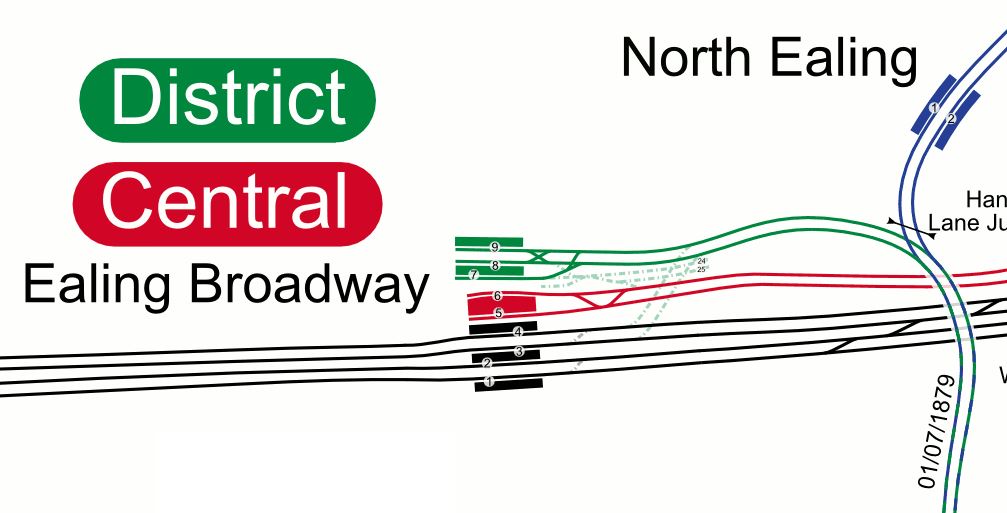
Note that after the changeover, the following would apply.
- The Piccadilly Line would have three platforms.
- In a few years time, the Central and Piccadilly Lines will have similar trains.
- Passengers for Turnham Green, Stamford Brook and Ravensbrook Park, would use the Piccadilly Line, which would probably have a higher frequency.
- Passengers for Victoria and other stations in the East on the District Line, would probably have a step-free cross-platform interchange at a number of stations.
But I think, that probably the main reason for the change, is that it will make the proposed frequency of well upwards of twenty tph of the Piccadilly Line easier to operate.
Consider.
- The platforms would help with service recovery,
- I suspect that TfL would like to see a Victoria Line frequency of thirty-six tph.
- Currently, twenty-four tph run between Arnos Grove and Acton Town in the Peak.
- Twenty-one tph run in the Off Peak.
If thirty-six tph is the intended frequency, then two terminal platforms in a rebuilt step-free Ealing Broadway station, could turn a lot of trains.
A Side Effect Of Changing The District Line Terminus
If the District Line service of six tph to Ealing Broadway, were to be reallocated between Richmond and Wimbledon, this would add three tph to the section between Gunnersbury and Richmond.
So now we could be looking at seventeen tph between Gunnersbury and Richmond stations.
Will that mean that North London Line trains to Richmond will need digital signalling and automatic train control?
The West London Orbital Railway
The proposed West London Orbital Railway will use the Dudding Hill Line to create the following services.
- West Hampstead to Hounslow
- Hendon to Kew Bridge
If both routes run at four tph, then it will add eight tph to the North London Line between Acton Wells and South Acton junctions.
Added to the six tph between Richmond and Stratford, this would be fourteen tph through Acton Central and South Acton stations.
Digital signalling on the North London Line and the West London Orbital Railway would probably ease the merging of trains for the joint section.
Freight
It appears that there are up to four freight trains per hour in both directions on the line.
The Level Crossing At Acton Central Station
I doubt the users of the level crossing at Acton Central would like the levels of traffic, that digital signalling would enable.
A Summary Of Passenger Services
I can summarise the passenger train frequencies as follows.
- Stratford to Willesden Junction – 12 tph
- Willesden Junction to Acton Wells Junction – 6 tph
- Acton Wells Junction to South Acton Junction – 14 tph
- South Acton Junction to Gunnersbury – 6 tph
- Gunnersbury to Richmond – 16 tph
I have assumed all developments mentioned earlier take place.
The Effect Of High Speed Two And Crossrail
When High Speed Two and Crossrail open at Old Oak Common station, this must surely increase the number of passengers using the North London Line, by a significant amount.
There will be two new stations.
- Old Oak Common Lane station will be between Willesden Junction and North Acton stations.
- Hythe Road station will be on the West London Line between Willesden Junction and Shepherds Bush stations.
Will the proposed six tph, each of five cars have sufficient capacity?
Conclusion
It looks to me, that they’ll come a time, when digital signalling will be needed to squeeze the required number of trains along the North London Line.
As I said in the previous section, traffic will continue to grow on the North and West London Lines because of High Speed 2 and Crossrail, as it has done since the route’s reopening with new trains in 2010.
I feel there will come a time, when trains will have to be lengthened from their current length of five cars.
Can all the stations on the route be extended if necessary?

