Flex… and flexibility
This is the title of an article in Rail Magazine, which is an interview with Helen Simpson and Mark Isbern of Porterbrook.
There is a lot of information about why Porterbrook went the hybrid route rather than batteries.
These are some of facts disclosed.
- Manchester Piccadilly to Buxton was chosen as the test route as it uphill all the way with 12 stops.
- They have simulated running on routes on Great Western, London Midland and in Wales.
- The Flex technique could be applied to other EMUs such as Electrostars.
- Top speed is 100 mph under the wires and 91-92 mph when running on diesel.
- Conversion takes between four and six weeks.
- Most of the changes are in the driving vehicles.
- Porterbrook are converting an initial batch of eight trains and that they will be based on the Class 319/4 version of the train.
Above all the air of professionalism, that I felt from the advance brochure they sent me, has been maintained.
I am impressed.
These are my thoughts.
The Conversion Process
The conversion process appears to be designed for simplicity and a fair bit of throughput.
- The starting point appears to be a Class 319 train, updated with the required interior and paintjob by Knorr-Bremse at Wolverton.
- Existing Northern trains could also be converted.
- Engine rafts will be assembled and tested in advance.
- Engine rafts and other equipment are fitted to the driving cars.
My project management knowledge, leads me to feel this is a well-designed production process.
As there are 86 Class 319 trains in total, if the orders roll in, production should run smoothly.
It’s also not as if, everybody’s working on a train they don’t know well.
The Initial Eight Trains
It would appear that four trains are to be delivered by the end of December 2017. After that, at 4-6 weeks a train, the other four should be delivered in time for the May 2018 timetable change.
When I wrote Why Not Buxton To Hellifield?, I calculated that to run an hourly service between Buxton and Clitheroe would need four trains and a half-hourly service would need eight trains.
It’s not that this Buxton to Clitheroe service will be run, but running intensive services on stiff routes needs a lot of trains.
Now, if the trains do what the specification says in practice, as they do on the computer, I can see a situation, where Northern and its drivers will be able to use these trains on more and more of Northern’s numerous partly-electrified routes.
So if it all works out, I can see more trains being converted!
But if the conversion process is well-planned, that won’t be a problem.
The 91-92 mph Speed On Diesel
This surprised me, but it is significant.
My trip from Huddersfield to Blackburn in the Peak on Friday wasn’t the best of trips.
- The Class 156 train was severely asthmatic.
- Half the four-car unit was unserviceable.
- The train was full to bursting.
It gave me the impression that the train needed a major refurbishment.
The Class 156 train is a 75 mph train and if the Class 319 Flex can do over 90 mph on diesel, it would be an obvious train, with which to run services like Huddersfield to Blackburn.
Class 185 Replacement
Northern currently hire four Class 185 trains from TransPennine for the following routes.
- Manchester Airport to Blackpool North
- Manchester Airport to Barrow in Furness
- Oxenholme to Windermere
The sub-lease runs out in December 2017.
If things work out as planned and the Blackpool Branch is electrified, then Manchester Airport to Blackpool North could be worked by an electric Class 319 train.
If the wires don’t get switched on, then like the other two routes, Class 319 Flex trains will be needed.
It will be interesting to see how a Class 319 Flex performs against a Class 185 on these routes, as they are both 100 mph trains, where there is electrification.
From Liverpool To Huddersfield
These pictures document a trip I took between Liverpool and Huddersfield.

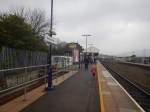
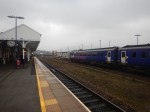

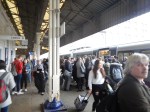

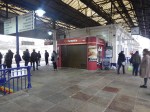
Some thoughts on the trip.
The Class 319 Interior
The first batch of Northern’s Class 319 trains are very much pack-it-in specials for running commuter services around the Blackpool, Liverpool, Manchester Airport triangle.
They are good for a thirty-year-old train, but they could be better.
In Porterbrook’s Class 319 Flex brochure, they show a proposed interior based on a Class 319/4 with the following.
- A mix of 2×2 and 2×3 seating.
- 12 First Class seats
- 255 Standard Class seats
- A full-accessible toilet.
- Two luggage racks per car.
It would certainly be a much better passenger experience.
Works At Edge Hill
Buckingham Group obviously have a big project on to the East of Edge Hill station.
This Google Map shows the lines through and to the East of Edge Hill.
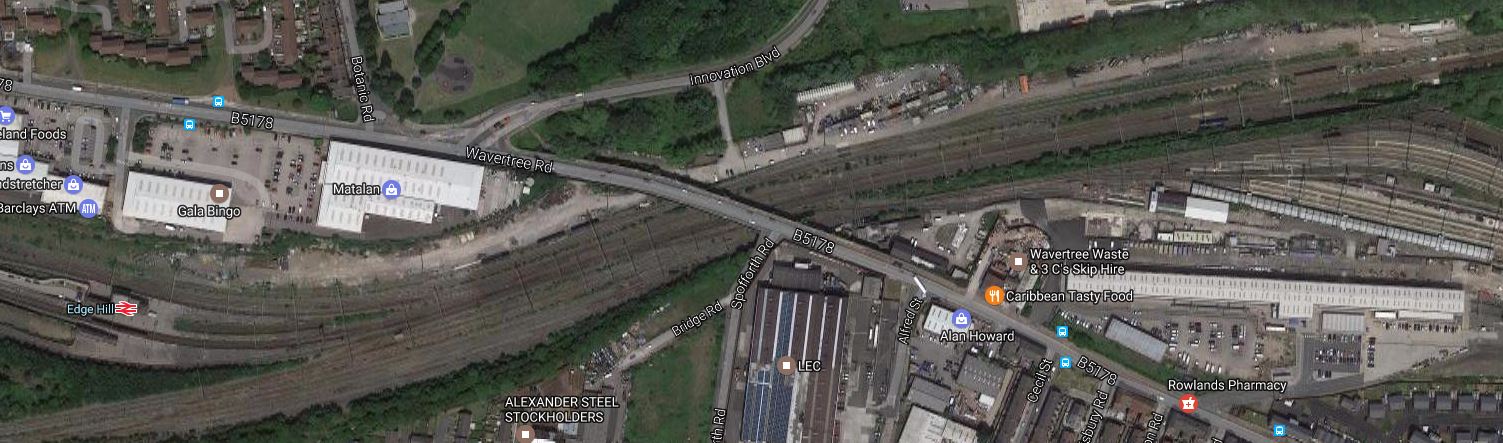
Note how to the South of the Retail Park and/or warehouses, work seems to be going on. Are extra tracks being created?
There is also a white scar at Wavertree Technology Park station, so if this was two fast lines, then fast services between Liverpool and Manchester and Wigan could storm in and out.
The Atherton Line
The Atherton Line is part of the Manchester-Southport Line and runs between Wigan Wallgate and Salford Crescent stations.
Wikipedia says this about Improvements to the Atherton Line.
There is ongoing feasibility into the conversion of parts of this line (Wigan–Atherton–Manchester) to operate as a Manchester Metrolink service with a higher frequency metro service for the Greater Manchester Boroughs of Wigan and Salford into the city centre. In November 2013, the Greater Manchester Combined Authority approved a recommended strategy for reconfiguring existing commuter services into tram-train operation, identifying the Atherton line as providing an opportunity for extending potential tram-train services from the south-east (Marple, Glossop) across the city centre and outwards to the north west.[2] Southport and Kirkby services on this line would be diverted to operate via Bolton. Additionally, Network Rail has identified electrification of Wigan to Southport, together with the Ormskirk–Preston line and the Burscough Curves as a possible source of new services.
I also think that the route from Salford Crescent to Southport via Atherton and Wigan could be ideal for electrifying in stages using Class 319 Flex trains to bridge any gaps.
The tools seem to be there, now is the time to think about how the work will be done.
Salford Crescent
Salford Crescent station could look very different in the future, as modern station design might be seen to favour two island platforms, one face of each dealing with Manchester Victoria station and the other Manchester Piccadilly station.
- Passengers going in to Manchester, needing trains to the other terminus, would just wait on the platform and catch the next train.
- Passengers coming from Manchester, who needed a different distination would change at Salford Crescent to their desired train.
- Comprehensive information would be provided.
The platforms would be built with lots of space, waiting rooms and coffee kiosks and would be well-staffed.
Manchester Victoria Station
Manchester Victoria station is starting look dirty again.
It must be all those elderly diesel trains.
Huddersfield Line
The Huddersfield Line took me to Stalybridge station and then later on to Huddersfield station.
There was no sign of any electrification work.
Stalybridge Station
As a coeliac, I found Stalybridge station one of the most gluten-free-unfriendly stations I have ever found.
In future, if I’m going that way, I’ll make sure that I stock up in Manchester or Leeds first.
TransPennine Express
The train was crowded and getting on at Stalybridge for the short trip to Huddersfield was delayed, as the conductor couldn’t get near to the doors to open them. Whereas the driver could have had a clear view.
It’s about time the NUR stopped this Driver Only Operation farce, which nearly all passengers think is sillier than the Teletubbies.
I hope the idiot, who landed TransPennine routes with the inadequate number of Class 185 trains, now has a job where he can do no harm, like in charge of the railways on the Scilly Isles.
Huddersfield
I don’t know Huddersfield and the only thing I’ve ever bought in the town is a ticket to the football.
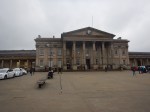
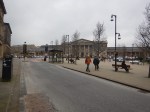
You arrive in the Grade I Listed Huddersfield station and walk out into the magnificent St. George’s Square, which should be a welcoming gateway to the town.
Compare it to Kings Cross Square, where there is generally something going on and on a Friday is bustling with food stalls.
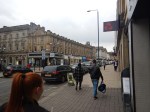
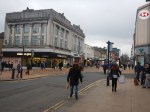
I walked to the shops and did find Marks and Spencer in a prominent place, but why wasn’t the route for pedestrians only, as it was crammed with traffic and parked cars.
Huddersfield needs to think how they organise their town centre, as except for the square ut’s about as weloming to visitors as Turkey is to the Dutch.
This Google Map shows the area.
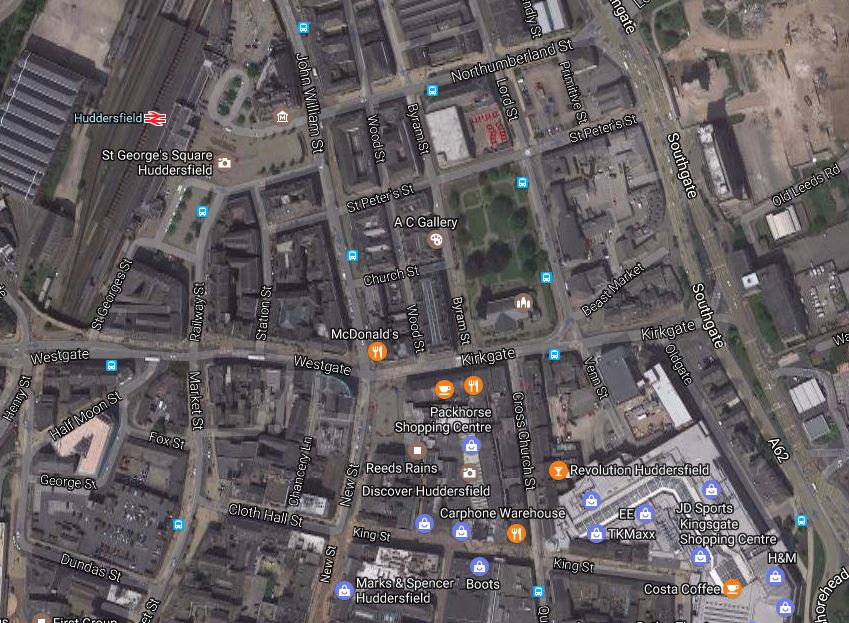
I feel that Huddersfield needs what most European towns of this size would have and that is a tram, that goes through the centre.
You would walk out of the station and in the square would be a tram stop. Trams would go South along a pedestrianised John William Street and New Street. Obviously the route would be designed to go through the town to the main hospital, the University and if possible the the Council Offices, the Courts and the football/rugby stadium.
Incidentally, if you search for Huddersfield Hospital, you don’t find the NHS hospital, but a private one. All major hospitals should have a name like Ipswich, Reading or Crawley Hospital. It should also be galleria for sports venues to constantly change their names.
Huddersfield might wonder, why it doesn’t get the visitors, it thinks it should. It’s because it isn’t visitor friendly.
If I was a businessman wanting to set up a depot, warehouse or whatever in a large town in the North of England, Huddersfield would put me off because of its non-existent and chaotic transport system, built around everybody having a car with a sat-nav.
From Blackburn To Liverpool
I took these pictures as I went from Blackburn to Liverpool by a rather roundabout route mainly using a Lancashire Day Ranger.

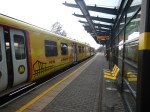


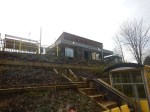
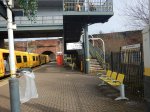

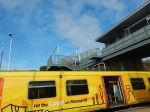


These are my notes on the pictures.
The North Wakes Up Slow
I usually wake up about five and listen to the early news and Wake Up To Money on BBC Radio 5.
One of the reasons, I stay in Premier Inns, is that when I’m in one, I don’t have to change my routine.
I often leave home around seven and get my paper from the shop on the corner, which opens at the same time. Even on Sundays!
But in Blackburn and many places in the North, try getting a paper at that time and nothing’s open.
The Morrisons in Blackburn Town Centre didn’t open until 08:30, which is almost the afternoon for me!
Clitheroe Station
I did take one of the first stations to Clitheroe station, which cost me just £2.70 with my Senior Railcard.
Clitheroe is the sort of station, that has a homely atmosphere and serves as the terminal for the Ribble Valley Line, with a ticket office, four-car platforms and an underpass to get across the tracks.
To Southport via Bolton
I took the train back to Bolton station and I just had time to buy a Lancashire Day Ranger in time to get a train to Southport station.
Southport station has a direct entrance to the town’s Marks and Spencer, so it must have the biggest food hall in any UK station.
I took the opportunity to pick up some sandwiches for an early lunch.
Kirkby Station
Kirkby station is like Ormskirk station, where the Merseyrail third-rail electric trains meet Northern’s services from Manchester or Preston.
It is not the best of designs, but Merseyrail are aiming to move the interchange to a new station at Headbolt Lane, which will hopefully have electric trains to Manchester on the Kirkby Branch Line, via Wigan Wallgate and Atherton stations.
Kirkdale Station
Kirkdale station is architecturally unusual, in that everything is on a step-free bridge across the tracks. Liverpool has another similar one in Wavertree Technology Parkstation, but why haven’t we got a standard station like this for lines in cuttings?
St. Luke’s Church
I always visit St. Luke’s Church, if I have time, when I pass through Liverpool.
It was one of C’s favourite places in the City and to me, it sums up Liverpool’s attitude to the troubles that beset us all!
Sadly, it would appear that La Bussola in old Street is no more, as it’s reincarnation as a Starbucks has been turned into a clothes shop.
The places of 1960s Liverpool are disappearing. At least Phred seemed to still be standing tall on the shell of the former Lewis’s Department Store.
Porterbrook Launch A Tri-Mode Train
In Bi-Mode Ate My Electrification, I asked this question.
Could We See A Tri-Mode Train?
Little did I suspect that just a few hours later, one would arrive.
This article on Global Rail News is entitled Northern and Porterbrook to convert electric trains to bi-mode.
This is the opening paragraph.
Leasing company Porterbrook is developing a bi-mode variant of Northern’s Class 319 EMU.
But that is not all, as this is said later.
Porterbrook said the design requires minimal modifications to the train. Additional batteries could also be fitted to improve performance on non-electrified sections.
So Northern will have a Class 319 Flex train that can run from electric, diesel or battery power.
That sounds like tri-mode to me.
Is It A Quad-Mode?
Some might even think it a quad-mode, as it could also run using 750 VDC third-rail electrification. It would help the trains charge the batteries at Southport, Ormskirk and Kirkby stations, which are terminals of Merseyrail’s third-rail network.
Will A Class 319 Flex Work Like A Hybrid Bus?
Several types of hybrid buses work, by driving the wheels using electric motors powered from a battery, that is charged from a small diesel engine.
When the battery is full, the engine is switched off.
So could, the Class 319 Flex be using hybrid bus methods to power the train?
The power-packs would keep the battery charged and the train would be driven from the battery or the external electrification.
One advantage of doing this, is that say on arrival at Blackpool with batteries without much power, the power-packs could charge the batteries before the train left for Preston and the overhead wires.
The driver would drive the train as an electric train, using electrification or battery automatically. The control system would cut the power-packs in to charge the batteries as necessary.
If they do go this route, could they be raiding the parts bin of the UK’s hybrid-bus manufacturers?
The 4.5 litre diesel engine and a 75 kW-hour battery, used by London’s Routemaster would surely be certified for use in a rail application and their performance and reliability will be well-documented.
Why Convert A Class 319 Train?
Who’d have thought that they’d convert a Class 319 train.
Consider.
- The class was built in the late-1980s.
- They are not the most stylish of trains, with all the panache of a house built by a Local Authority in the 1950s.
But over the last year or so, Northern have been refurbishing the trains and have probably found that under the skin, there are no serious problems and they have solutions for the minor ones.
They also scrub up pretty well and I suspect that if a bit more was spent on the interior, they could probably be better.
In my travels to Liverpool over the last year, I have talked to several drivers of Class 319 trains.
- Generally, they seem to like them.
- One told me, that on the West Coast Main Line, they will still hold 100 mph, so they are no suburban trundler!
- I have heard lavish praise for the brakes.
The only complaint, was that because of the softish suspension, the first few trains didn’t ride too well over Chat Moss.
They also have other things in their favour.
- There are 86 of the four-car trains, of which Northern has 32.
- The creation of a prototype, shouldn’t be a long process, unless Network Rail take forever to certify the train.
It should also be noted, that some of the similar Class 321 trains are having their traction equipment updated. So there may be some lessons from each program that can be applied to the other, especially as Wabtec are involved in both projects.
Will The Class 319 Flex Have Regenerative Braking?
The one problem with the Class 319 is that the trains don’t have regenerative braking.
If they did and they had onboard energy storage then the braking energy could be stored when a train stops at a station and recycled to get the train started after passengers have left and joined the train.
This would improve the energy efficiency and extend the range of the train, when running on lines without electrification.
How Will A Class 319 Flex Perform On Inclines?
Some of Northern’s routes like the Ribble Valley Line, climb into the hills.
Will the performance of the trains be sufficient to work these lines?
How Much Automation Will There Be On A Class 319 Flex?
The trains aren’t particularly complex, but with at least three power sources, it would probably help the driver, if changeover from one system to another was an automatically controlled.
It would also probably help if pantograph raising and lowering was automatic and could be at line speed.
Could A Class 319 Flex Be Able To Run Under Tram Rules?
In Zwickau in Germany, diesel multiple units, run through the town at slow speed under rules similar to those used by trams.
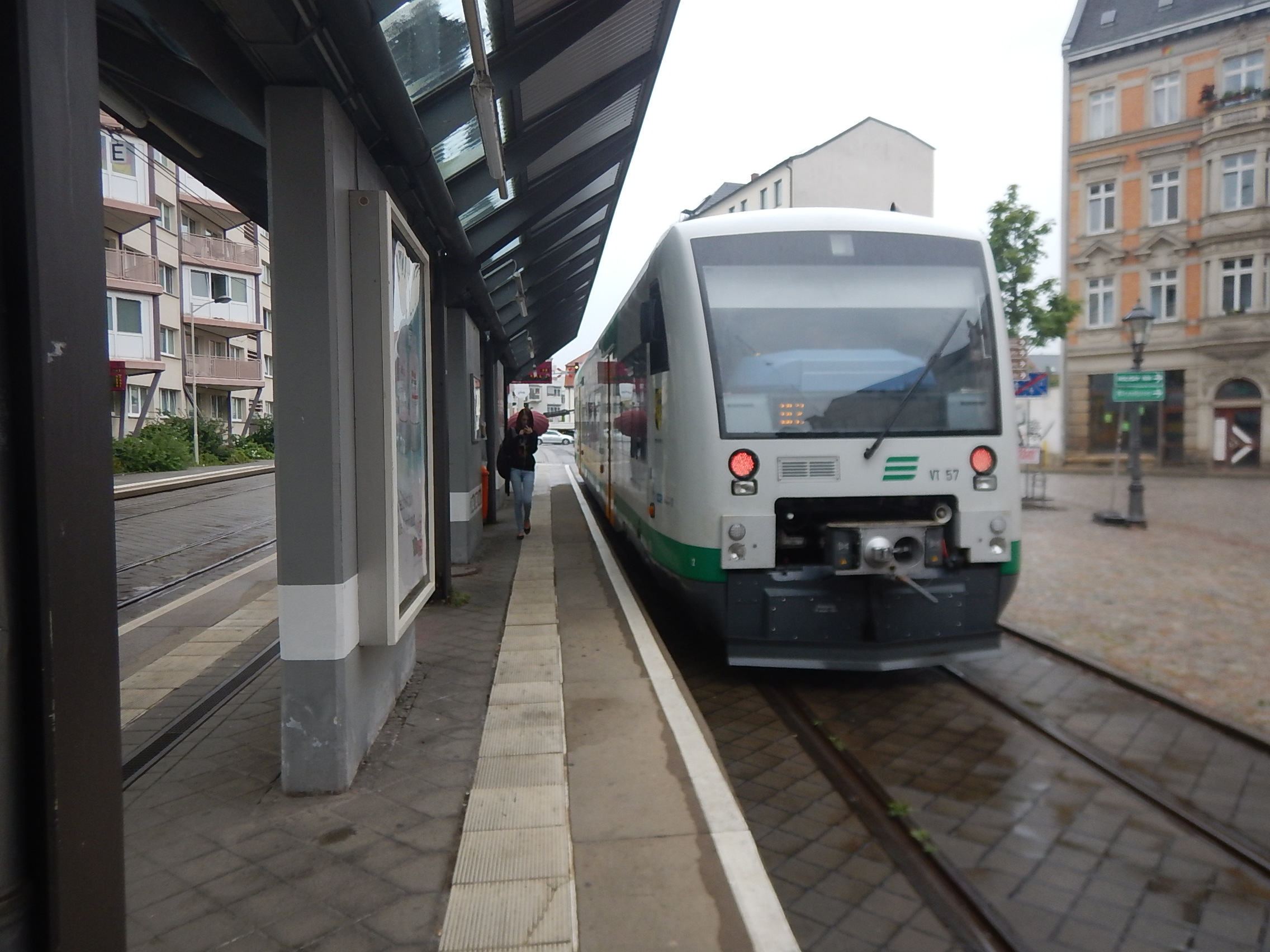
A DMU at the train stop in the centre of Zwickau
From Zwickau HbF to the Zwickau Zentrum stop, the diesel multiple units run on a line designed to the following rules.
- Slow tram-like maximum speed.
- A track with electrification just for the trams with which the trains share the line.
- Rail signalling.
- Simple stations, designed to fit the trams and trains working the line.
- Passengers can walk across the lines, as they can on any tramway.
- There’s even a couple of level crossings.
Zwickau’s system is more complicated than would be needed in the UK, as the trams and trains are of different gauges, so there is an unusual three-rail track, to accommodate standard- and metre-gauge vehicles.
Note that the system in Zwickau does not use a purpose-built tram-train, as the trains are standard Deutsche Bahn diesel multiple units, which were built by Stadler. They are very much like Class 172 trains. They just behave like trams away from the main line.
They are best described as Train-trams!
Will a Class 319 Flex be certified to do the same?
In a simple example, a Class 319 Flex could go through the buffers at Blackpool South station and continue through the car parks to a stop by the football ground.
Where Will Northern Use A Class 319 Flex?
Windermere To Manchester
When the franchise responsible for Windermere station changed from TransPennine to Northern, there was talk of electrifying the Windermere Branch Line , so that it could have an electric train service to Manchester or Manchester Airport.
But Network Rail’s electrification performance, stopped that, so passengers between Windermere and Manchester have to change at somewhere like Oxenholme Lake District station.
From Windermere, there is one direct train per day to Manchester Piccadilly and Manchester Airport, which takes two and a half hours and an hourly shuttle to Oxenholme.
I’m sure that Windermere to Manchester is the sort of route that Northern would like to cover with a direct hourly electric train. From December 2017 if Network Rail perform, the only part of the route from Windermere to Manchester Airport, that will not be electrified will be the ten miles of the Windermere Branch Line.
If Network Rail haven’t performed, the trains could use the electrified route via Nreton-le-Willows and the West Coast Main Line.
As it will take something like five hours to go from Windermere to Manchester Airport and back, it will need five trains yo provide an hourly service all day. Alternative power sources would only be used on the Windermere Branch.
Blackpool To Manchester And Liverpool
I would suspect that an early objective of the design of the Class 319 Flex, would be the ability to do a return trip between Preston and Blackpool, as this would enable services between Blackpool and Crewe, Liverpool, Manchester and Warrington.
The Blackpool Branch has the following characteristics.
- It is without electrification.
- It is only about fifteen miles long.
- It is has two current termini in Blackpool North and Blackpool South stations.
- There have been proposals in the last few years to reinstate services on the Fleetwood Branch Line to a new Fleetwood station.
The return trip would be about 30 miles on to each terminus, but trains could use their power-packs if needed to charge their on-board energy storage before returning to Preston.
Blackpool North to Liverpool Lime Street would only need a Class 319 Flex train to be delivered.
Blackpool to Manchester Victoria, Piccadilly or Airport, would need the Preston to Manchester electrification to be completed, unless they could sneak down the West Coast Main Line.
It looks to my simple mind, that as regards Liverpool, Manchester and Prestojn to Windermere and Blackpool, the Class 319 Flex is a very workable solution, whether Network Rail finish the electrification of Manchester to Preston or not!
As the residents and visitors of Blackpool should understand trams, I could see Class 319 Flex trains running to Blackpool South and Fleetwood through simplified stations without any electrification, under rules similar to trams.
If the Germans can do it in Zwickau, then surely Lancastraians can do it in Blackpool.
Being able to run four-car Class 319 Flex trains to Blackpool South would also help to increase services to the area, if the Open Championship were to be held at Royal Lytham. A simple station could even be built adjacent to the course.
Blackpool South To Colne
The East Lancashire Line spans the Preston between Blackpool South and Colne stations.
After a long chat with an off-duty conductor on a crowded train in Summer 2016 on this line, I’ve thought it was a line , that could do with an improved level of service and more capacity.
Since then I’ve experienced severe overcrowding after Ipswich played at Blackburn on the same day that Blackpool played at Accrington.
Consider.
- Blackpool South to Preston is about fifteen miles.
- Preston station is electrified.
- Blackburn station has recently been rebuilt.
- Trains going between the Manchester to Preston Line and the East Lancashire Line can bypass Preston station.
- Blackburn station has a West-facing bay platform.
- Preston to Blackburn is about ten miles.
- Preston to Burnley is about twenty-five miles
- Preston to Colne is about thirty miles.
It would certainly appear that the following services would be possible using Class 319 Flex trains.
- Blackburn to Blackpool South
- Blackburn to Blackpool North
- Blackburn to Manchester via Bolton
- Blackburn to Manchester via the West Coast Main Line
- Blackburn to Liverpool.
This opens up all sorts of possibilities for integrated services centred on Preston.
If Blackburn to Preston were to be electrified, this would probably bring Colne and Burnley into the operational range of Class 319 Flex trains.
Northern could have tremendous fun planning those services!
Colne To Skipton
This missing link in Northern’s network could be a worthwhile line to reinstate.
So why not create a single-track line without electrification between Colne and Skipton stations?
Consider.
- The missing track between the two stations is just 11.5 miles.
- The reinstatement would probably only need one expensive bridge, that would be North of Colne station.
- The line could be a valuable piece of tourist infrastructure.
- A Leeds to Blackpool service via Burnley and Blackburn through the Pennines would be possible.
It could be designed to be easily worked by Class 319 Flex trains.
I somehow like the concept of 1980s British Rail electric multiple units, built to bring commuters to and from London, being redeveloped as a tourist train, through some of the most beautiful parts of The North.
The Ribble Valley Line
The Ribble Valley Line could be an interesting challenge to run using Class 319 Flex trains.
Consider.
- The Southern section of the line is twelve miles between a hopefully electrified Bolton station and Blackburn.
- The Northern section is ten miles between Blackburn and Clitheroe stations.
- The Northern section is a climb into the hills.
- The Ribble Valley and East Lancashire Lines share tracks sround Blackburn station.
I think that if Preston to Blackburn were to be electrified, Class 319 Flex trains, might be able to reach Clitheroe.
Stalybridge
In the January 2017 Edition of Modern Railways, there is an article entitled Extra Platforms At Piccadilly Abandoned?.
In this article it suggests that electrification between Manchester Victoria and |Stalybridge might be late. This is also said.
However, any delay in wiring the section crates problems for Northern in that its plans for the move to additional electric services sees them terminating at Stalybridge rather than at Manchester Victoria, freeing up -platform capacity.
But Stalybridge is under nine miles to the East of Manchester Victoria, so a Class 319 Flex could be used to bridge the gap.
So do we have the bizarre result of obtaining some bi-mode trains freeing up platform space?
Manchester Victoria To Huddersfield
Once Network Rail get Manchester Victoria to Stalybridge electrified, Huddersfield is only another twenty miles, so could be in reach of a Class 319 Flex.
Southport And Kirkby To Manchester
North of Liverpool, there are two routes, which go between Wigan Wallgate station and Southport and Kirkby stations.
There are also three routes from Wigan Wallgate to Manchester.
The line between Bolton and Wigan Wallgate was supposed to be electrified by December 2017, but no work appears to be ongoing yet.
But when Manchester to Preston and Wigan to Bolton are electrified, there will be an electric route to Manchester Victoria, Piccadilly and Airport stations from Wigan Wallgate.
So could Wigan Wallgate to Southport (20 miles) and Wigan Wallgate to Kirkby (16m iles) be bridged by a Class 319 Flex?
One great advantage at Southport and Kirkby is that 750 CDC third-rail electrification is available. So could the batteries be charged using this electrification, whilst the train is turned back..
A Train Designed For A Specific Route
It seems that one of the great features of the Class 319 Flex trains, is that the number of different power sources will mean that trains can be designed for a particular route.
So if say on a route, like the Ribble Valley Line to Clitheroe, more power might be needed, then an extra battery might be added, as has been stated in some of the various Press Releases for the train.
Routes In The East
I have only looked at the routes I know in the West of the Northern franchise.
But as it is an extensive franchise providing services over a wide area, there could be routes in the East, where the Class 319 Flex could provide an increase in capacity and quality of service.
Porterbrook
I must say something about Porterbrook’s involvement in this development.
Porterbrook are a leasing company and they are not participating in this venture out of charity.
By financing the increase in the capabilities of this train, they are doing themselves a big favour by turning a Class 319 train of limited use and value into a more desirable asset for a train operating company, that they can lease for a higher price.
- Northern get a train they need to increase capacity and expand electric services.
- Passengers travel in a refurbished faster four-car electric train instead of a two-car diesel train of possibly dubious quality.
- Hopefully, the better train service will create economic activity and jobs.
Porterbrook will of course expect to make a return on their investment.
Other Customers
This article on the European Railway Review is entitled Porterbrook and Northern to jointly develop bi-mode Class 319 Flex trains. It says the following.
The first Bi-mode Class 319 Flex trains will be in Northern passenger service by 2018. The units will then become available to operators who wish to make full use of electrically powered rolling stock on partially electrified routes.
It will be interesting to see, who leases the trains.
Conclusions
I am drawn to the following conclusions.
- Nothing about the technicalities of the Class 319 Train is difficult and with my limited experience of project management in railway engineering , if Wabtec give a delivery date, it will likely be achieved.
- There are lots of ways to run these trains, especially if modes can be switched automatically.
- The trains would be more efficient and have a longer range, if they had regenerative braking.
- The trains will be incredibly useful in providing electric services across the Northern franchise.
- I believe that used on a line like Harrogate Line, they will also show whether a line should be electrified.
I think the concept is very sound and good for Porterbrook, Northern and their passengers. It will also create economic ctivity and jobs.
If the Class 319 Flex proves to be a success, I feel that other trains will be upgraded in this way.
Northern Rail’s Ticket Machines
This picture sums up Northern Rail’s ticketing machines; lonely, unreliable and crap.
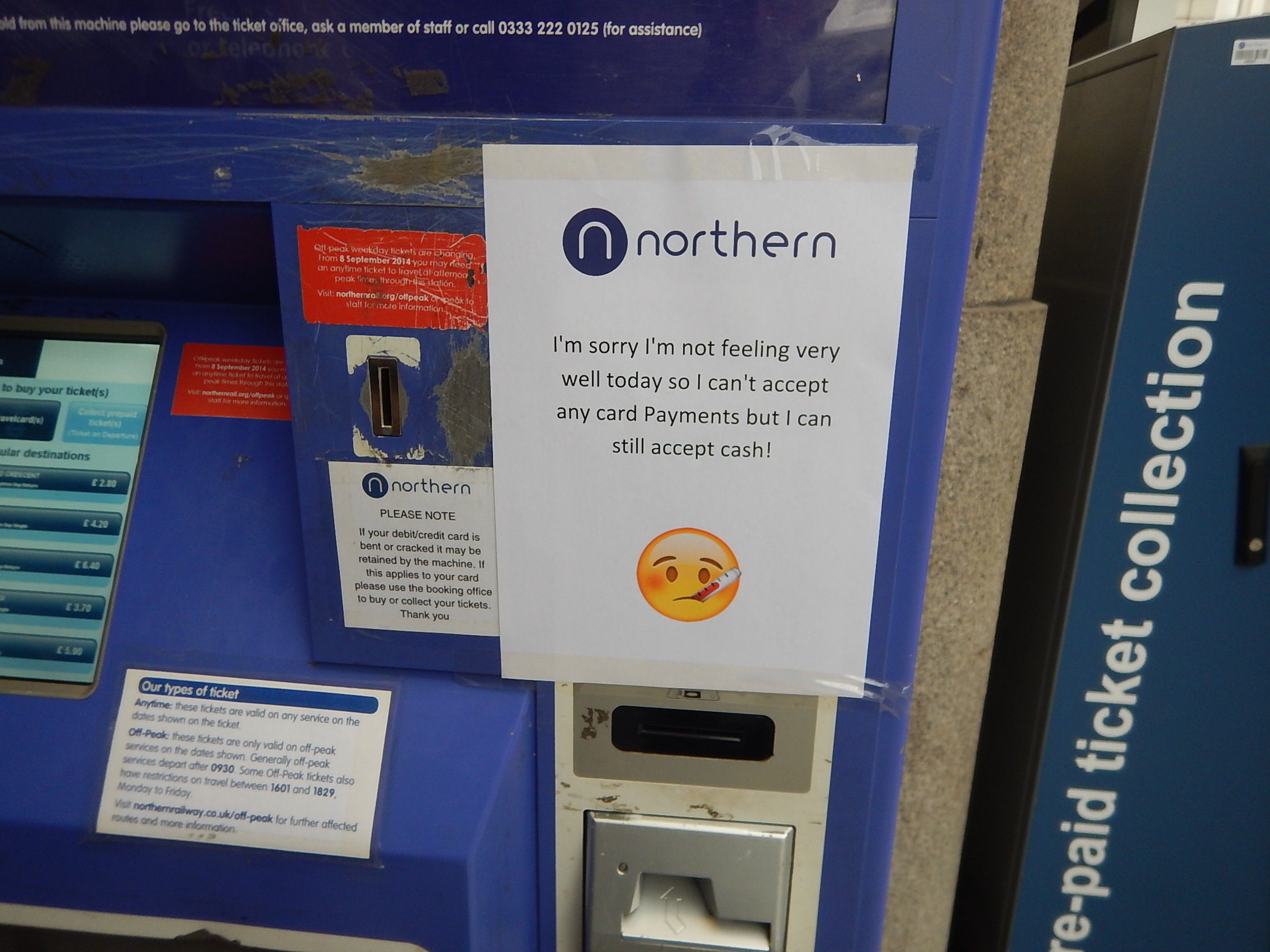
A Niortern Rail Ticket Machine At Manchester Victoria Station
This machine at Manchester Victoria station did work though and after scratching around for a few coins, I was able to get to Blackburn.
A few other comments on my trip to Blackburn on Saturday.
- On my arrival at Liverpool Lime Street station, the queue for the ticket machine was at least fifteen people. So by the time, I’d bought a ticket, my train had left.
- At Manchester Victoria station, there were only two machines for a very busy station.
- At Blackburn station, the machine was hidden in the subway.
- I never saw a machine at the two small stations; Clitheroe and Whalley.
- The last two stations have independent platforms, so if you’re travelling from one without a ticket machine, you’ll have to have a long walk first.
- When I passed through Manchester Piccasdilly on Saturday evening, neither of the Northern Rail ticket machines were fully operational.
The company needs a lot more machines, hopefully with better functionality and reliability. They should also make sure they’re better placed.
Whilst, I’m giving Northern Rail a good kicking, here’s some more annoyances
A couple of stations I visited had a truly dreadful mobile phone signal. I think the law should be that all stations and bus stops should have a top class signal, so that those, who need to text or call their partner, friend or parents can do so.
The two-coach Class 156 train, I rode from Blackburn to Preston was the most overcrowded train I’ve ever ridden. The staff must have known it was so bad as Blackpool had just been beaten at Accrington. So why weren’t we told by the station staff?
Probably because they were keeping well away!
At least we had a nun on board and she probably prayed for our safe deliverance to Preston.
Surely, Northern could have rustled up another or bigger train from somewhere. A four-car Pacer would have been manna from heaven!
What’s missing from this picture?
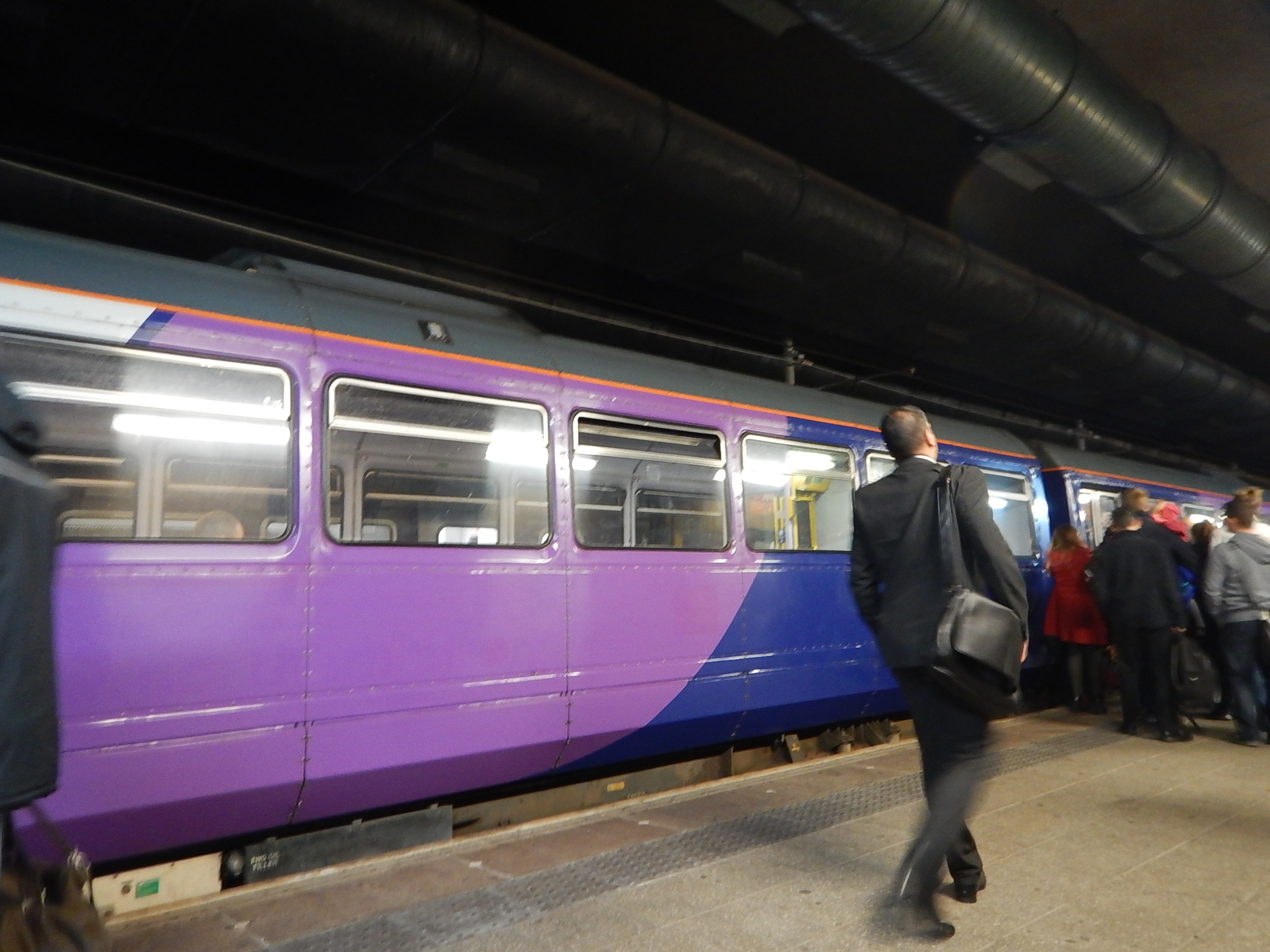
Getting My Train To Blackburn
Although, it was the Peak, there was no prominent staff on the platform to help unload and load this four-car Pacer.
I had to look it up on the Internet, whether our train stopped at Rochdale for a fellow traveller.
Incidentally, Manchester Victoria is starting to look tired and dirty. Is it all the diesel exhaust?
Northern also seem to specialise in bad information on stations. The bus information at Blackburn was abysmal and pointed you to a non-existent bus stop to get to Ewood Park.
I do wonder that Northern are worried if they improve things, then too many passengers might want to use the service and they’d have to buy more trains.
Driver Only Operation Of Trains
There was a wonderful demonstration of the benefit of DOO or Driver Only Operation, when I got my train at Horwich Parkway station.
The four car Class 150 train pulled in and stopped and about thirty or forty souls stood by the train doors in the rain, for perhaps two minutes, whilst the conductor, whose duty it is to release the doors, got to a point to press the appropriate button. He was probably delayed as the train was crowded.
Surely, the driver, could have pressed an appropriate button, when he had ascertained the train was safely halted.
As it was, passengers got wet before they boarded a dry train and moaned about it all.
It’s so crazy that when the Class 319 trains were cascaded from Thameslink, where they work under DOO rules, extra buttons were fitted for the conductors.
DOO operation doesn’t have to mean a crew of one, as on some of the services I rode, the conductor was also issuing tickets.
I do wonder if in some ways it’s traditional. In the 1960s in London on buses, everyone could push the button to tell the driver to stop at a particular stop. When I arrived in Liverpool, I did this on a Liverpool bus and was told off in no uncertain terms by the conductor, that it was his job.
Welcome to the weird, wonderful and wet world of Northern Rail.
If this article from Rail Technology, entitled Liverpool council joins campaign opposing driver-only operation, is anything to go by this daft method of working is going to continue.
Staff shouldn’t be on trains with little to do but on platforms and in stations helped passengers. Transport for London’s policy is laid out in Help From Staff on their web site. This is said about assistance in rail stations.
On the Tube, TfL Rail and Overground, station staff will also accompany you to the train and help you on board and, if needed, can arrange for you to be met at your destination. Anyone can use this service, but it is particularly used by blind and visually impaired passengers and people using boarding ramps onto trains.
If you would like to use this service, ask a member of staff when you arrive at the station.
It seems to work very well and should be UK law and mandated on all station operators.
New Trains For The North
That is the headline on a two page article in Modern Railways magazine.
It is an article that is strong on promises, in what it says that First TransPennine and Arriva Northern Trains will do.
Under a sub-heading of Bi-Modes for TransPennine, this is said.
FirstGroup is to invest over £400 million in a fleet of 44 new five-car 125 mph trains, which are expected to be based on the Hitachi AT300 design already being procured by sister operator Great Western Railway.
It also states that twelve will be electric only and the rest will be bi-modes.
The timetables state that the first bi-mode will enter service in December 2017.
Under a sub-heading of New and Upgraded Fleet for Northern, this is said.
Arriva is to invest £400 in 98 new air-conditioned 100 mph trains comprising 281 carriages, of which 43 will be three- and four-car EMUs and 55 two- and three-car DMUs. The latter will enable the withdrawal of all Pacers by the end of 2019.
The delivery schedule for the new trains stretches to 2020.
All these promises are all well and good, but I do wonder if they are deliverable with new trains.
AT300
Hitachi have been clever and have bought AnsaldoBreda, so they can build AT300 trains in Italy. This is said in the Wikipedia entry for the AT300, which is based on the Class 800 train, they are building in Newton Aycliffe.
In mid 2015 Eversholt Rail, a rolling stock operating company signed a £361m contract with FGW to purchase 173 new AT300 carriages, consisting of 22 five-car and seven nine-car trains. The AT300 trains are to be built at Hitachi Rail Italy’s Pistoia plant.
The trains are expected to enter service with Great Western Railway from December 2018. and are also expected to reduce journey times from London to Exeter by up to 5min, to Plymouth by up to 6min, and to Penzance by up to 14min.
It puzzles me how First TransPennine will be able to introduce the first bi-mode into service in December 2017, as where will the train be built?
It can’t be built in Italy, as Hitachi won’t have even delivered their first train until December 2017.
The only possibility will be to take trains from Newton Aycliffe and delay deliveries to Great Western Railway and Virgin Trains East Coast. Wikipedia and other sources is rather short on dates for the delivery of the Class 800 and Class 801 trains.
Hitachi in Newton Aycliffe are also involved in the building of AT200 trains for Abellio ScotRail. This is said in Wikipedia.
Abellio ScotRail will introduce a fleet of 46 three car and 24 four car Hitachi AT200 electric trains from December 2017, to operate services on the lines being electrified as part of the Edinburgh to Glasgow Improvement Programme, if it granted a three-year optional franchise extension, it will order a further 10 three car units
I doubt that we’ll see more than a token AT300 running on First TransPennine before the end of 2017.
Class 185 Trains
The Modern Railways article says this about TransPennine’s Class 185 trains
First is expected to retain 28 of the current 51×3 car fleet of Class 185s; the units to be retained will be refurbished.
This means that twenty-three of the Class 185 trains will be available for cascade.
Modern Railways says the two franchises will be jointly managed from Leeds, so would it be sensible to perhaps keep the current fleet together for refurbishment and maintenance?
So perhaps if the answer is yes, then common sense would dictate that the cascaded twenty-three trains would go to Arriva Northern.
Class 319 Trains
Handsome is as handsome does, goes the old horseman’s phrase and you couldn’t call a Class 319 train beautiful.
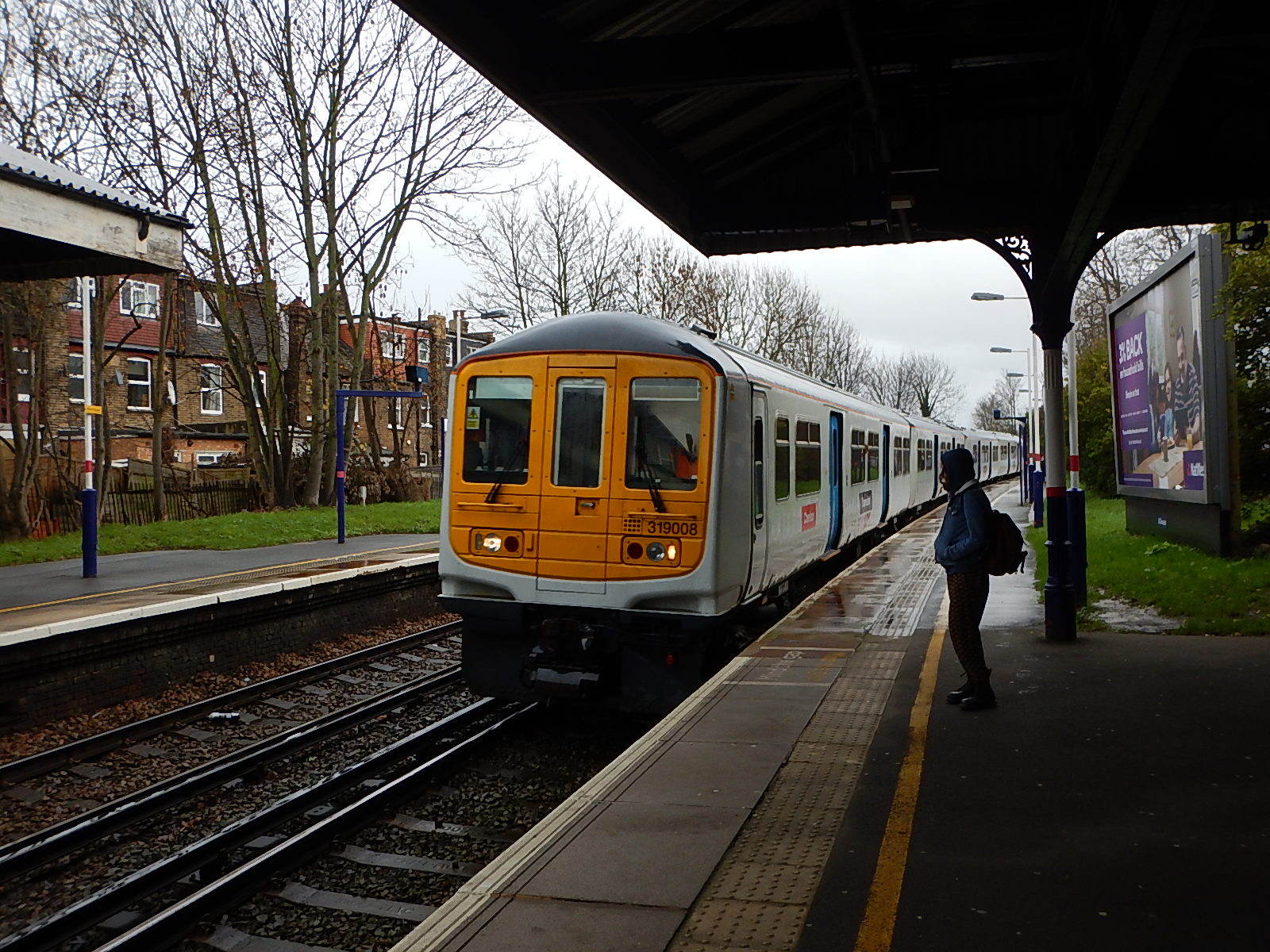
But for some of the electric routes in the North, they’re all we’ve got! And like some elderly actresses, they scrub up well.
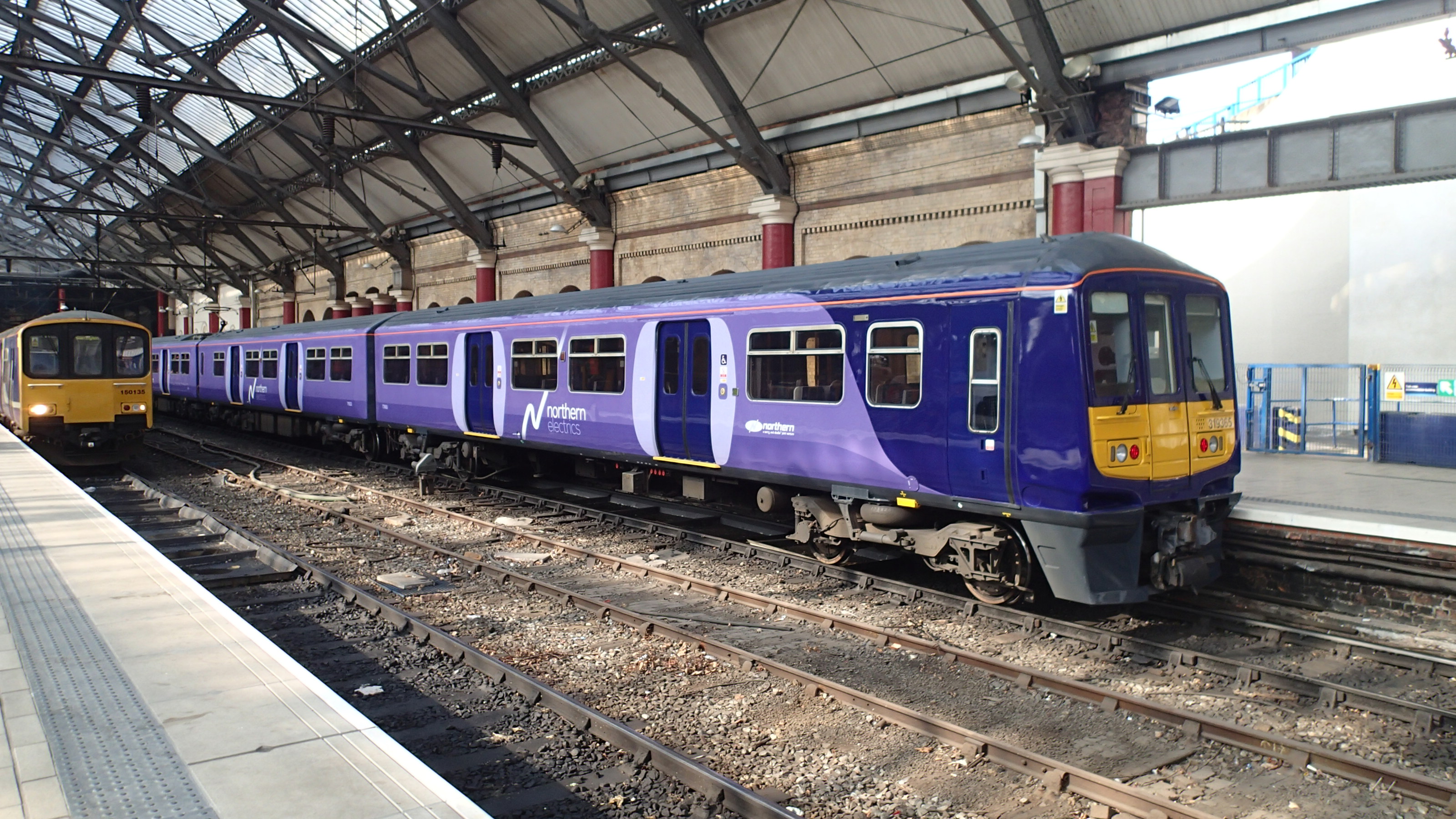
The Modern Railways article says this about Northern’s use of the Class 319.
It is understood that refurbished Class 319s will be used on these services on an interim basis until new build units arrive.
I suspect that these will soldier on for a few years yet!
At least there are eighty-six of these 100 mph four-car trains.
There must be a lot of laughter at reunions of engineers from BREL York, when they see how far their Bedpan Special has gone. after being built especially for the Bedford-Brighton route through the tunnels under London via St. Pancras in the 1980s.
He who laughs last, laughs longest!
Class 442 Trains
This is said in the Modern Railways article about Class 442 trains.
First says it did evaluate the use of Class 442 EMUs displaced from Gatwick Express workings hauled by diesel locomotives.
But they found it was too challenging and have discounted them.
So it looks like the Class 442s won’t be going anywhere in the North and probably have no worthwhile future.
Class 390 Trains And The West Coast Main Line
Virgin Trains have aspirations to run their Class 390 trains that work the West Coast Main Line, at their design speed of 140 mph in as many places on the route as possible. This section in Wikipedia gives more details.
At present because of signalling and regulations, trains are limited to 125 mph, but it is likely that once ERTMS is fully implemented, that pressure will increase to allow 140 mph in places on the West Coast Main Line.
TransPennine’s Scottish Services
TransPennine are increasing their Scottish services and this timetable is given.
- December 2018 – Liverpool-Glasgow service launched
- December 2019 – 12 new electric trains introduced on Anglo-Scottish services.
- December 2019 – Liverpool-Newcastle services extended to Edinburgh
This is said about the Class 350 trains currently running their Scottish services.
The 10 four-car Class 350/4 EMUs currently used on Manchester-Scotland services are expected to be phased out over the first three years and offered to other franchises. First say these trains are too small to run on many diagrams as single units.
So it looks like trains with this specification will be needed.
- Electric power only
- 140 mph top speed, as parts of the West Coast Main Line, will probably get upgraded to this speed, within the service lifetime of the trains.
- Five cars or longer.
- The ability to work in pairs. As all Glasgow trains will probably call at Preston, it might be sensible to join and split Liverpool and Manchester trains there to save train paths on the West Coast Main Line.
- Full on-board customer service.
The specification fits the Hitachi AT300 well, as these trains are available in five car sets and can be upgraded with minor modification for 140 mph running.
But will the timetable of 2019 for twelve new trains, fit the production capabilities?
As delivery into service by December 2019, to give TransPennine their promised service might be exceedingly challenging, could we be seeing something from another manufacturer?
After all, there are several around the world, who could create five-car 140 mph electric express trains?
- Some open-access operators like Alliance Rail are talking about using Pendolinos on Scottish routes, so Class 390 trains or an updated design of Italian-built Pendolino train must be a very real possibility.
- Siemens must also have a suitable train perhaps based on a German ICE design.
- The Chinese, Koreans, Spanish and Swiss shouldn’t be discounted.
If Hitachi can’t deliver, I’d put my money on a five-car Pendolino. After all, it is proven on the West Coast Main Line.
EMUs For Northern
Arriva have said, they will be buying forty-three 100 mph air-conditioned electric multiple units (EMUs), in a mixture of three- and four-car units.
These are probably the easiest trains to source and they might even already have been ordered or even built, in the shape of Class 387 trains. These have the following specification.
- Modern air-conditioned four car electric train.
- 110 mph capability
- Proven performance and certification.
- Bombardier can probably build them alongside all their Aventras at Derby.
But there are few electrified routes in the North, where they can be run.
However on the other hand!
I’ve believed ever since I rode the Class 379 BEMU or IPEMU demonstrator, that battery-powered trains based on this technology, are ideal for some of Northern’s routes.
Partially electrified routes or ones that run between electrified hub stations at Carlisle, Doncaster, Leeds, Liverpool, Manchester, Newcastle and York, could have virtually brand-new four-car electric trains, as soon as Bombardier can add IPEMU systems to Class 387 trains, currently in service or on order and staff can be trained.
A few months ago, I wrote Rumours Of Battery Powered Trains, where I said there were rumours of some of Great Western Railway’s order for Class 387 trains would be delivered as IPEMUs to help solve the shambles of the Great Western Main Line electrification.
Using an IPEMU is an attractive approach for several reasons.
- IPEMUs have a range of around sixty miles on the battery, if it is fully charged.
- IPEMUs have regenerative braking at all times, whether there is an electric supply or not! This improves efficiency and increased on-battery range!
- Bombardier feel that all trains should have energy storage for myriad operational reasons and the upcoming Aventra will be designed to accept an energy storage device as standard.
- Passengers will have the same experience on overhead line or battery power.
- On many routes, IPEMUs need no modifications to be able to run, except perhaps lengthening platforms for four-cars.
- On a scenic line or one in the middle of nowhere, the problems of electrification and its maintenance can be avoided, if services can be run by IPEMUs.
- Electrified hubs can be upgraded or created to charge the trains. In the North, Carlisle is being upgraded and Hull and Middlesbrough could be electrified.
- Some lines are currently run by some of the better diesel multiple units (DMUs) like Class 158 trains. Releasing these would probably eliminate a few of the dreaded Pacers on other lines.
All stakeholders will like these trains.
- Operators know that new four-car trains will attract more fare-paying customers.
- Network Rail will save money on electrification and can skip difficult bits.
- On many routes, opening up bridges and tunnels for the overhead wires is difficult, very disruptive and a time- and money-consuming process.
- Passengers and staff like new trains.
- More places can be served by electric trains.
- New four-car trains replacing ageing diesels will improve the prosperity of an area.
Routes that could be easily converted include.
- Barrow to Manchester Airport
- Chester to Manchester Victoria
- Windermere to Manchester Airport
- Blackpool North to Manchester Airport
- Liverpool to Manchester Airport via Warrington
Add in some electrified hubs and short lengths of tactical electrification to charge the trains and other lines like the scenic Tyne Valley Line between Newcastle and Carlisle could be run using new four-car electric trains.
I believe that these trains have enough energy storage to actually bridge the notorious forty mile gap in the electrification between Manchester Victoria and Leeds, thus creating an electric train service from Liverpool to Edinburgh via Manchester, Leeds, York and Newcastle
Note that news on development of IPEMU trains has been very quiet for several months and the only report is this article in the Derby Telegraph, which is entitled Battery-powered trains win award for Bombardier.
So someone other than I do, think the technology works and deserves its place on the railways of the UK.
Class 323 Trains
Before leaving Northern’s EMUs something must be said about the seventeen three-car Class 323 trains, that run services out of Manchester.
As they are being transferred to London Midland, they will need to be replaced.
Also, according to Wikipedia at times, some of the Class 323s are currently replaced by a pair of Pacers. So perhaps they need a bigger fleet anyway!
So until new units are ordered, will we see Class 319s working these routes? Or could they be a home for some of Porterbrook’s Class 387s?
It’ll all come out in time and in the contracts?
DMUs For Northern
Arriva have said, they will buy fifty-five two- and three-car DMUs.
Two factors could decrease this number.
- If Arriva go down the Class 387 IPEMU route, more routes will be running electric trains.
- The twenty-three Class 185 trains cascaded from TransPennine should they end up with Arriva.
- It seems likely that other companies including Great Western Railway could use the IPEMU route, thus making some high-quality DMUs available.
I won’t speculate on how many new DMUs will be actually ordered and built. If any!
Northern Connect
Northern Connect will be a sub-brand comprising a dozen long distance routes across the North.
Modern Railways publishes a table of the routes and indicates eight routes will be run by new DMUs, two by refurbished trains and two by new EMUs.
Obviously, Northern have a plan to create five of these routes by the end of 2018 and the rest by the end of 2019.
Where will the various classes of train fit?
- Some routes could be run by EMUs, with Class 319s providing an interim service until the new build arrive.
- Some routes could be run by Class 387 IPEMUs, once they are delivered.
- Some of the longer routes around Sheffield and Hull would be ideal for Class 185s.
If the long-rumoured Class 387 IPEMUs do appear, Barrow and Windermere to Manchester Airport, would be ideal routes on which to trial and showcase the technology.
Northern’s Train Philosophy
The Modern Railways article also says this.
Arriva says that it is still in negotiations with the supply chain but expects to sign a contract by April. It also says that the new fleet ‘has the capacity to grow’ with the trains ‘ordered as a family that are expandable’. The first 92 carriages will enter service by the end of 2018, with a further 163 by the end of 2019 to ensure all Pacers are replaced and the final 26 in 2020.
That is a very sound train procurement philosophy, which has a fairly relaxed delivery schedule, given the shortage of train building capacity in the UK and Europe. I suspect the Chinese could build them, but would that be politically acceptable?
I would not be surprised if Arriva went for a purchase of Class 387 trains, of which a proportion were IPEMU variants and some tactical electrification to produce electrified hubs in places like Huddersfield, Hull, Scarborough and Sheffield. It would be an afordable way of getting the benefits of new electric trains at an affordable price.
They would still need a few diesel multiple units, over and above the good ones they replaced with electric trains. But London Overground and hopefully Great Western Railway should be releasing some that are suitable.
Only as a last resort, would any new ones be ordered.
Class 387 Trains
I believe that the Class 387 Trains will play a large part in Northern’s plans.
They are a 110 mph four-car modern unit and currently there are twenty-nine units in service and another twenty-eight on order, if you ignore the separate order of twenty-seven trains for the Gatwick Express.
Thirty seven units are destined for the Great Western Railway and in Rumours Of Battery Powered Trains, I wrote about unconfirmed reports that some of these trains for the GWR would be IPEMU variants. I suspect that this will be confirmed, as it will enable electric services to be started on the shambles that is the Great Western.
The Gatwick Express variant of the Class 387 is going to be a train, worth looking at, as it will be the first Airport train we’ve ordered since the Heathrow Express.
There are to be twenty-seven four car trains replacing twenty-four five-car Class 442 trains.
There may be a few less carriages, but they are designed for the route.
They are also built as dual-voltage trains. Is that just so they can be tested on the West Coast Main Line, as was reported in this article in Rail Magazine, or because they think the type will have other Airport applications, like possibly Manchester, Cardiff, Glasgow, Luton, East Midlands and Stansted.
I can’t wait to ride one in the near future, as I think it might offer, a whole new experience of getting to an airport by train.
A lot of the services in the North West go via Manchester Airport. So would a follow-on order of this variant be ideal to get passengers to the fast growing airport?
Some questions have to be asked.
- As some of these services go all the way to Scotland, could the train be certified to the 125 mph of the West Coast Main Line?
- Could an IPEMU variant be created to bridge the gap between Manchester and Leeds?
- Could an IPEMU variant link Manchester Airport to Barrow, Blackpool North, Liverpool and Windermere?
- Can Class 387 trains be built in five-car formations?
If the answer to all or some of these questions is in the affirmative, Manchester Airport and the Nortrh might receive some interesting trains from Derby to create a 125 mph network of five-car Airport trains all across the North.
I suspect that Bombardier are working hard to see if they can fulfil that dream, as if they can, the rewards to the company, Arriva Northern, First TransPennine, Network Rail and the North in general, could be substantial!
There would be no waiting until 2018 for true bi-mode trains.
Could the silence on the IPEMUs be just because all parties don’t want to show their hands until all of the tiniest details are totally settled?
Political And Commercial Considerations
I mentioned in the section on the Class 387 trains, how important to get any trains, that can improve services in the North is to the companies involved and Bombardier in particular.
Bombardier have been going through a rough patch and were bailed out by the Quebecois. They seem to be sorted with large orders, but creating some more Class 387 trains, must be good cash-flow and profitable.
Network Rail are in a deep mess over electrification everywhere and desperately need some help in creating lines for electric trains. Peter Hendy is trying to sort out the shambles and there is a report in Modern Railways this month with a headline of Hendy Finds £2.5 Billion To Save Enhancements. The article says assets will be sold and there will be more money from the Government.
Arriva and FirstGroup have spent a lot of time and effort to create plans to give the North a modern world-class railway system. It is unlikely, that the train manufacturers will fail to deliver to agreed contracts, as all trains proposed for the North or either in service or at the certification and trial stage. The problem is the tracks. They will not be pleased if Network Rail fail to deliver, the electrification they have promised on time, as pictures of new trains stored in sidings are not good publicity.
Read a lot of the stories about new trains to run on newly electrified lines and dates have a vague air about them.
I suspect all will become a lot clearer, when Peter Hendry fills out his plan for Network Rail in the Spring. All we are getting at the moment are worthwhile aspirations.
And then there is the small matter of the local elections in May!
If the shambles is still persisting before the election, Corbyn and the Labour Party will have a field day, when they say they will nationalise the railways.
This would be a disaster for Arriva, FirstGroup and probably Peter Hendy. The companies would probably lose millions and Peter Hendy would have totally failed.
With my engineering hard-hat on, I’m getting more and more convinced that those clever engineers in Derby will pull the IPEMU rabbit out of the hat.
They have form for this, as in the 1970s, they created the peerless InterCity 125, after the wreckage of the APT.
Conclusion
Wait for April and hopefully before then a lot more will be revealed!
Now Huncoat And Rishton Want Todmorden Curve Service
The title of this article in the Accrington Observer says it all – Council writes to government calling for Huncoat and Rishton to be added to direct Manchester rail link.
It’ll be interesting to see what happens over the next year or so, as more diesel trains become available.
Along this line from Preston to Todmorden, everything though does seem to be on the up.
Did five hundred metres of relaid track ever cause a such a large positive effect before?
Northern Electrics Increase Services
Today the Class 319 trains started running services from Liverpool Lime Street to Manchester Victoria and Wigan North Western.
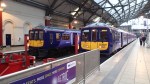
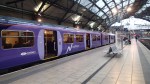
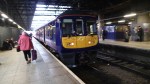
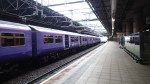
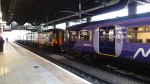
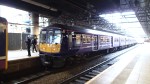
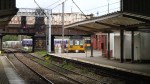
I took the pictures when I rode the 07:20 train from Liverpool to Manchester and some later when I returned to Manchester.
When I was travelling to Preston on the Sunday from Liverpool, my Class 156 train on the slow line between Wigan North Western and Preston was passed on the fast line by a Class 319 doing about a hundred. I estimated it was going fast as a couple of minutes later a Class 390 Pendolino roared past.
So it got me thinking, as to why some of the Wigan North Western services from Liverpool don’t go to Preston, as the tracked are electrified.
Then today, a student in Burnley asked me the same question, because as he said, it would make travelling from Burnley and Blackburn to Liverpool a lot easier.
There’s probably a very good reason, why they don’t!
I also asked a driver how they liked the Class 319s. He replied by saying they were waiting for more services to start out of Manchester.
He also said they were a bit bouncy on Chat Moss, where Network Rail had had trouble putiing up the overhead wires.
I have a feeling, that as Northern Rail get a few more Class 319 trains, they may do a bit of reorganisation of services around Preston.
Suppose :-
1. All Northern Rail trains between Liverpool Lime Street and Preston were to be run via Wigan North Western to a frequency of at least twice an hour by Class 319 trains. This might release some Class 156 trains.
2. The Blackburn service via Accrington, Burnley and Todmorden is extended to Preston and possibly to Blackpool North to connect with the Liverpool trains.
3. The Colne to Blackpool South service would also connect.
4. As more lines get electrified, the services would be optimised.
There’s also probably a good reason, why during the closure of the Farmsworth Tunnel, that the service via Todmorden isn’t extended past Blackburn to Preston. It could probably be something as simple as that when they planned the closure, the Todmorden Curve didn’t exist.
Coffee And Seats At Manchester Victoria
The upgrade at Manchester Victoria station is approaching completion and as I passed through yesterday, the refreshment room was open and their were extra chairs everywhere in a Northern Rail promotion.

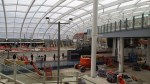
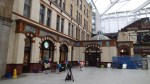


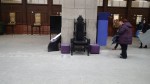

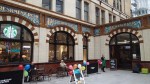
It’s just a pity that the coffee shop, just had to be those tax-avoiders; Starbucks.
 The Anonymous Widower