Are Londoners The Tunnel Kings?
I was born in 1947 and it was in the early 1960s, that I started to develop an interest in engineering, which eventually led me to study Electrical Engineering and Electronics at Liverpool University.
Like most Londoners, I was a frequent user of the Underground and for six or seven years, I took the Piccadilly Line many days between Oakwood and Southgate to go to Minchenden Grammar School. Often, after school, I would go on to my father’s print works near Word Green tube station.
But not memories of London’s tunnels were so memorable at that time. One day, we were driving to see my Uncle Bert in Broadstairs and we were held in the Blackwall Tunnel for an hour or so because of an accident.
Perhaps, this is why I can remember a black-and-white video of digging the Western Tunnel of the Dartford Crossing so vividly. But as Raymond Baxter probably explained to BBC viewers at the time, it dug using a Greathead shield under pressure to keep the water out. It was probably the last tunnel dug under the Thames using methods, that would have been familiar to Victorian engineers.
This British Pathe video shows some of the construction of the Western tunnel.
This paragraph from the Wikipedia entry for the Eastern Tunnel describes its construction.
Construction was approved in April 1971, with an initial expected opening date in 1976. Work was delayed due to a lack of funds, which was resolved by EEC funding granted in 1974. The second tunnel opened in May 1980, allowing each tunnel to handle one direction of traffic, by which time the joint capacity of the two tunnels had increased to 65,000 vehicles per day. Connection of the crossing to the M25 was completed on the northerly Essex side in September 1982 (Junction 31), and to the southerly Kent side in September 1986 (Junction 1a)
The tunnels may be inadequate in terms of capacity, but they have certainly done a reliable job for sixty and forty-three years respectively.
There are other tunnels under the Thames, that have been built in my lifetime.
- Thames Cable Tunnel – 1970 – National Grid’s 400 kV cable.
- High Speed One – 2007
- Dartford Tunnel (East) – 1980
- Dartford Tunnel (West) – 1963
- Dartford Cable Tunnel – 2004
- Docklands Light Railway Tunnel – 2009
- Elizabeth Line Tunnel – 2014
- Millennium Dome Cable Tunnel – 1999
- Jubilee Line Tunnels – 1999 – Planned by Artemis
- Blackwall Runnel (East) – 1967
- Isle of Dogs Jubilee Line Tunnels – 1999 – Planned by Artemis
- Docklands Light Railway Tunnel – 1999 – Planned by Artemis
- Deptford Cable Tunnel –
- Jubilee Line Tunnels – 1999 – Planned by Artemis
- Victoria Line Tunnel – 1971
- New Cross to Finsbury Market Cable Tunnel – 2017
- Wimbledon to Pimlico Cable Tunnel – 1996
- London Power Tunnels – 2018, 2011
There are also these tunnels, which don’t go under the Thames
Bank Station Expansion And New Southbound Northern Line Tunnel – 2022
- Elstree to St. John’s Wood Cable Tunnel – 2005
- Heathrow Rail Tunnels – 1998
- Lee Tunnel – 2016
- Limehouse Link Tunnel – 1993
- Lower Lea Valley Cable Tunnels – 2008
- Northern Line Extension To Battersea – 2021
- Piccadilly Line Extension To Heathrow – 1975-2008
- Thames Tideway Tunnel – Estimated completion in 2025 – Tunnelling ended in 2022.
- Thames Water Ring Main – 2010
Note.
- The date is the opening date.
- I am pleased to see that at least some projects were planned, with the software, I wrote in a Suffolk attic.
In my lifetime, at least 27 substantial tunnels have been completed, a very large proportion of which have been on time and on budget, with the possible exception of the Heathrow Rail Tunnels, which collapsed.
So Why Has London Got A Good Record On Tunnelling?
In Millicent And Ursula Prepare To Go Tunnelling, I describe my visit to the Tideway Open Day today to see the tunnel boring machines; Millicent and Ursula before they went tunnelling.
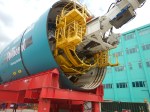
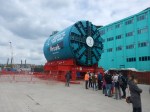
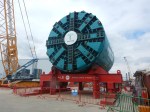
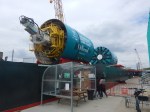
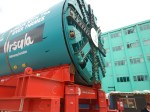
On that Sunday morning, I also chatted with the engineers and tunnelers.
- All had worked on at least one of London’s previous tunnels.
- One had worked on the Second Dartford Tunnel, the Channel Tunnel and Crossrail.
- A couple said, that after the Tideway finished, they would be off to High Speed Two.
Is London’s good record on delivering tunnels safely and on time and on budget, a case of lots of experience and practice makes perfect?
If it is, we should definitely think hard about how we handle large projects.
Wind Farms
Many have been constructed this way.
- The grid substation and connection to the grid is built.
- The foundations of the turbines are installed.
- The turbines are erected.
- All the turbines are commissioned.
This sequence or something like it can be applied to onshore and offshore wind farms.
- Most jobs are repeated many times by specialist teams using purpose-built cranes, ships and other equipment.
- Bigger wind farms, just need more repeated operations.
- All operations are generally in a small geographical area.
- I suspect specialist software has been built to project manage, the building of wind farms. If it hasn’t, I have my ideas.
Project management should be relatively easy.
Poo power To Heat Homes In West London As Thames Water Continues To Reduce Its Carbon Footprint
The title of this post, is the same as that of this press release from Thames Water.
These are the three bullet points.
- Thames Water unveils its second successful gas-to-grid project.
- Around 4000 homes in West London will be heated using converted sewage sludge from Mogden sewage treatment works starting early this year.
- This initiative is part of Thames Water’s commitment to reduce its carbon emissions across its operations thereby reducing its contribution to the causes of climate change.
These three paragraphs outline the project.
Thames Water has announced sewage sludge will be used to heat homes in West London early this year, after successfully delivering its second gas-to-grid (G2G) project, at its Mogden Sewage Treatment Works (STW).
The success of the gas-to-grid model established at Deephams STW in North London in 2021, where biogas is converted into biomethane to heat homes in Enfield, served as the blueprint for the project at Mogden.
Currently serving over 2 million customers, Mogden is the third largest STW in the UK, and has the potential to reach and supply gas to 4000 homes in West London. This comes as part of the company’s commitment on energy transition, by transforming the way it creates and uses power to reach net zero carbon emissions.
The press release then gives a paragraph of explanation as to how the system works.
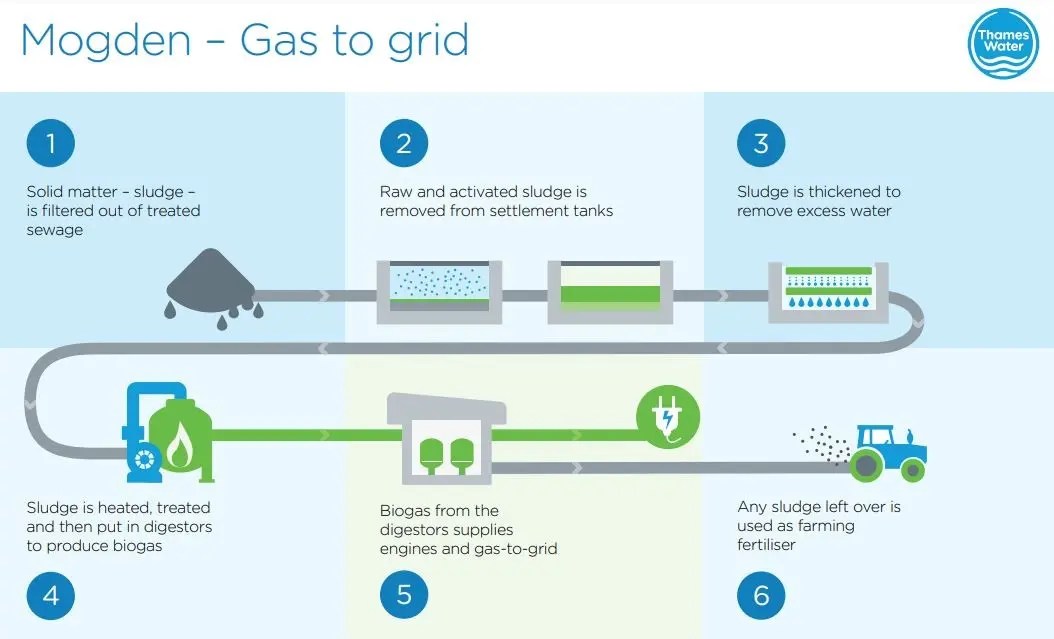
A byproduct of the sewage treatment process is sewage sludge, which is then digested to produce BioGas. Mogden STW then generates electricity with this BioGas via Combined Heat and Power (CHP) engines. The Gas-to-Grid plant, which will be managed by gas supplier SGN, intends to take a proportion of this BioGas and to ‘uprate’ it to export quality which is achieved by filtering, scrubbing and then compressing gas so it can be used as fuel for cooking and heating.
This Thames Water graphic illustrates the process.
This press release is not Thames Water’s image from many of its customers.
Firm Develops Jet Fuel Made Entirely From Human Poo
The title of this post, is the same as that of this article on the BBC.
This is the sub-heading.
A new aviation company has developed a type of jet fuel made entirely from human sewage.
These are the first three paragraphs.
Chemists at a lab in Gloucestershire have turned the waste into kerosene.
James Hygate, Firefly Green Fuels CEO, said: “We wanted to find a really low-value feedstock that was highly abundant. And of course poo is abundant.”
Independent tests by international aviation regulators found it was nearly identical to standard fossil jet fuel.
It certainly seems to have a lot going for it.
I have some other thoughts.
What About Disposable Nappies?
I wrote Are Disposable Nappies A Wasted Resource?, about making hydrocarbon fuels from disposable nappies.
Should Disposable Nappies Be Collected Separately?
My food waste is collected separately in a special bin. Hackney Council say this is what happens to food waste.
Food waste from households in Hackney is sent to an anaerobic digestion facility in south east England, where it’s turned into renewable energy to power homes and biofertiliser to be spread on local farmland to grow crops.
Surely, a similar or appropriate process could be used for disposable nappies.
Biomethane From Sewage Works
In Centrica Signs UK Biomethane Agreement With Yorkshire Water And SGN Commercial Services, I wrote about how Centrica have found a way to distribute biomethane from sewage works using the UK’s gas grid.
Could Firefly take the solids and Centrica the biomethane?
Given that water companies are regularly blamed for spilling sewage could there be an opportunity for a large sewage works to be a major producer of green fuels for agriculture, aviation, industry and road transport.
Energy Efficient Bricks Made From Human Waste To Help Build London Homes
The title of this post is the same as that of this article in The Standard.
This is the first two paragraphs.
New homes and factories will be built from bricks made out of the human waste of four million Londoners.
Dried sewage from millions of homes will be transformed into two million heavy-duty breeze blocks a year.
It’s all happening at Beckton.
 The Anonymous Widower