Hydrogen And Electric Propulsion Compared
Stadler have given us an interesting way of comparing the range and other properties of hydrogen-powered and battery-electric trains, as their Flirt H2 and Akku trains have both set Guinness World Records for distance travelled.
The Hydrogen-Powered Flirt-H2
In Stadler’s FLIRT H2 Sets World Record For Hydrogen Powered Train, I write about how a Stadler Flirt-H2 had set a record of 2803 kilometres, without refilling.
This page on the Stadler web site gives details of the Flirt-H2.
- Hydrogen Range – 460 km.
- Operating Speed – 127 kph
- Refuelling Time – < 30 minutes
- Seats – 116
This graphic clipped from the Stadler web site shows the Flirt-H2.

Like Greater Anglia’s Class 755 train, it has a PowerPack in the middle, which contains a fuel cell and the hydrogen tank, instead of the Class 755 train’s diesel engines.
The Battery-Electric Akku
In Flirt Akku And Class 755 Train Compared, I compare a Flirt Akku and Greater Anglia’s Class 755 train, after the battery-electric Akku had set a record of 224 kilometres, with recharging.
This page on the Stadler web site gives details of the Flirt Akku.
- Battery Range – 150 km
- Operating Speed – 160 kph
- Chrging Time – 15 minutes
- Seats – 120-180
This graphic clipped from the Stadler web site shows the Flirt Akku.
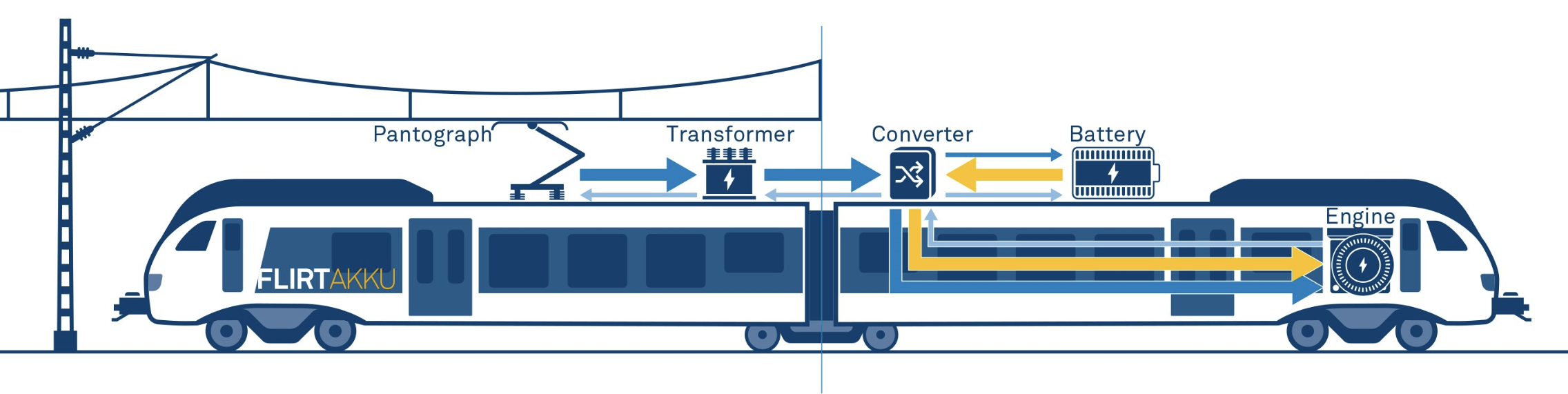
At a quick glance, the trains seem to be fairly similar, with the exception of the PowerPack.
- Both have regenerative braking.
- Both have the battery and the power converter on the roof.
- I would expect that the Flirt-H2 could be fitted with a pantograph and a transformer.
- Both trains have two passenger carriages.
I also suspect, both trains can be lengthened by adding extra coaches.
These are my thoughts.
Thoughts On The PowerPack In A Flirt-H2
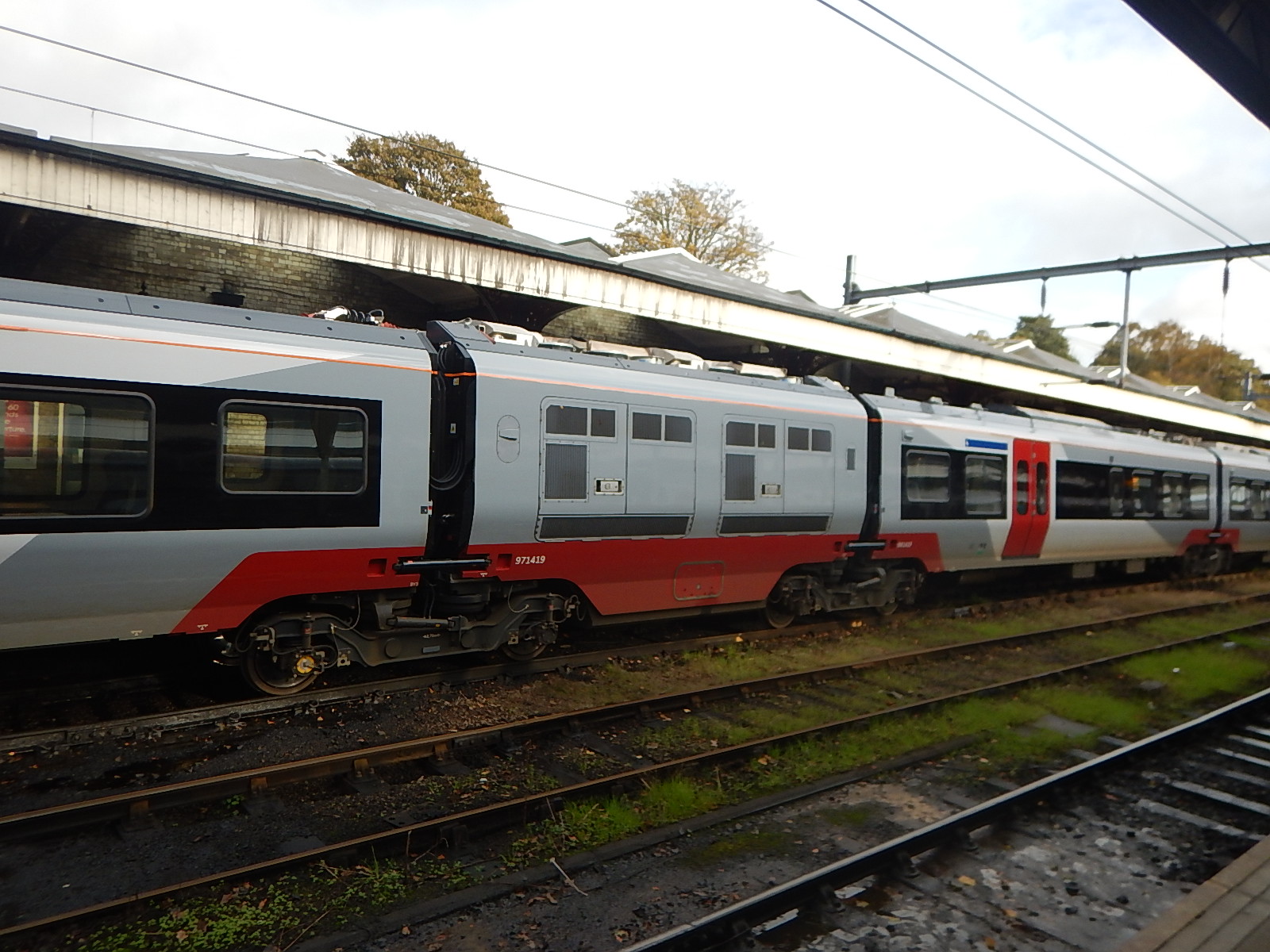
This picture shows the PowerPark car of a Class 755 train.

Note.
- These PowerPacks have slots for up to four 480 Kw diesel engines.
- PowerPacks on a Class 788/4 train with four diesel engines weighs 27.9 tonnes.
- PowerPacks on a Class 788/3 train has two diesel engines.
- In the UK, trains with PowerPacks have up to four passenger cars.
- The PowerPack has a walkway from one end of the car to the other.
As customers, might like to replace their diesel PowerPacks, with something that was zero-carbon, I would expect, that the hydrogen PowerPack would have the following properties.
- Hydrogen and diesel PowerPacks would be interchangeable.
- The hydrogen PowerPack would come in two handy sizes of hydrogen fuel cell; 0ne and two MW.
- The weight of both hydrogen and diesel PowerPacks would be similar, as if power and weight were similar, then this could help certification.
- The Flirt-H2 for California, which would only have two passenger cars, would have the smaller hydrogen fuel cell.
I would expect that a conservative designer would use any spare space for hydrogen storage.
- Perhaps, there would be one tank either side of the walkway.
- The quoted range of 450 kilometres for the Flirt-H2 is just under 300 miles, so it would probably cover most regional round trips in Europe without refuelling.
- On many routes refuelling would only need to be done once-per-day.
- Refuelling can be some distance from operation.
- Large tanks would explain the thirty minutes refuelling time.
Obviously, large tanks have the collateral benefit of setting distance records.
The Kinetic Energy Of A Flirt-H2 Train
In My First Rides In A Class 755 Train, I calculated the kinetic energy of a Class 755/4 train.
I said this.
I will use my standard calculation.
The basic train weight is 114.3 tonnes.
If each of the 229 passengers weighs 90 kg with Baggage, bikes and buggies, this gives a passenger weight of 20.34 tonnes.
This gives a total weight of 134.64 tonnes.
Using Omni’s Kinetic Energy Calculator gives these figures for the Kinetic energy.
- 60 mph – 13.5 kWh
- 100 mph – 37.4 kWh
- 125 mph – 58.4 kWh
If we are talking about the Greater Anglia Class 755 train, which will be limited to 100 mph, this leads me to believe, that by replacing one diesel engine with a plug compatible battery of sufficient size, the following is possible.
- On all routes, regenerative braking will be available under both diesel and electric power.
- Some shorter routes could be run on battery power, with charging using existing electrification.
- Depot and other short movements could be performed under battery power.
The South Wales Metro has already ordered tri-mode Flirts, that look like Class 755 trains.
The calculation for a Flirt-H2 train is as follows.
Train Weight – 82.3 tonnes
Passenger Weight – 10.4 tonnes
Total Weight – 92.7 tonnes
This gives these kinetic energies
- 60 mph – 9.3 kWh
- 79 mph – 16.0 kWh
- 100 mph – 25.7 kWh
It looks like the 79 mph; Flirt-H2 would only need a 16 KWh battery.
It seems when a battery is not for traction and only handles the regenerative braking, it can be surprisingly small.
Mathematical Advantages Of Hydrogen
I do wonder that on balance, there may be mathematical advantages to hydrogen; long range, less frequent refuelling and small batteries.
But as I indicated in Zillertalbahn Hydrogen Plan Dropped In Favour Of Battery Traction, the decision doesn’t always go hydrogen’s way!
Conclusion
I feel Stadler have the right approach of a modular concept that incorporates both hydrogen-powered and battery-electric trains.
I also think, if you have a route, you want to decarbonise, Stadler have the train for you.
Stadler’s FLIRT H2 Sets World Record For Hydrogen Powered Train
The title of this post, is the same as that of this article on Rail Technology Magazine.
These three paragraphs introduce the article.
Stadler’s FLIRT H2 has set the Guinness World Record for the longest distance achieved by a hydrogen-powered passenger train without refuelling or recharging.
The record attempt began on the evening of 20th March 2024 at the ENSCO test centre in Pueblo, Colorado, and concluded 46 hours later, with the train completing 2803 kilometres on a single tank filling.
A team of engineers from Stadler and ENSCO drove the vehicle in shifts during the attempt.
The journey is about the same distance as the crow flies between Edinburgh and Athens.
Stadler have also published this video.
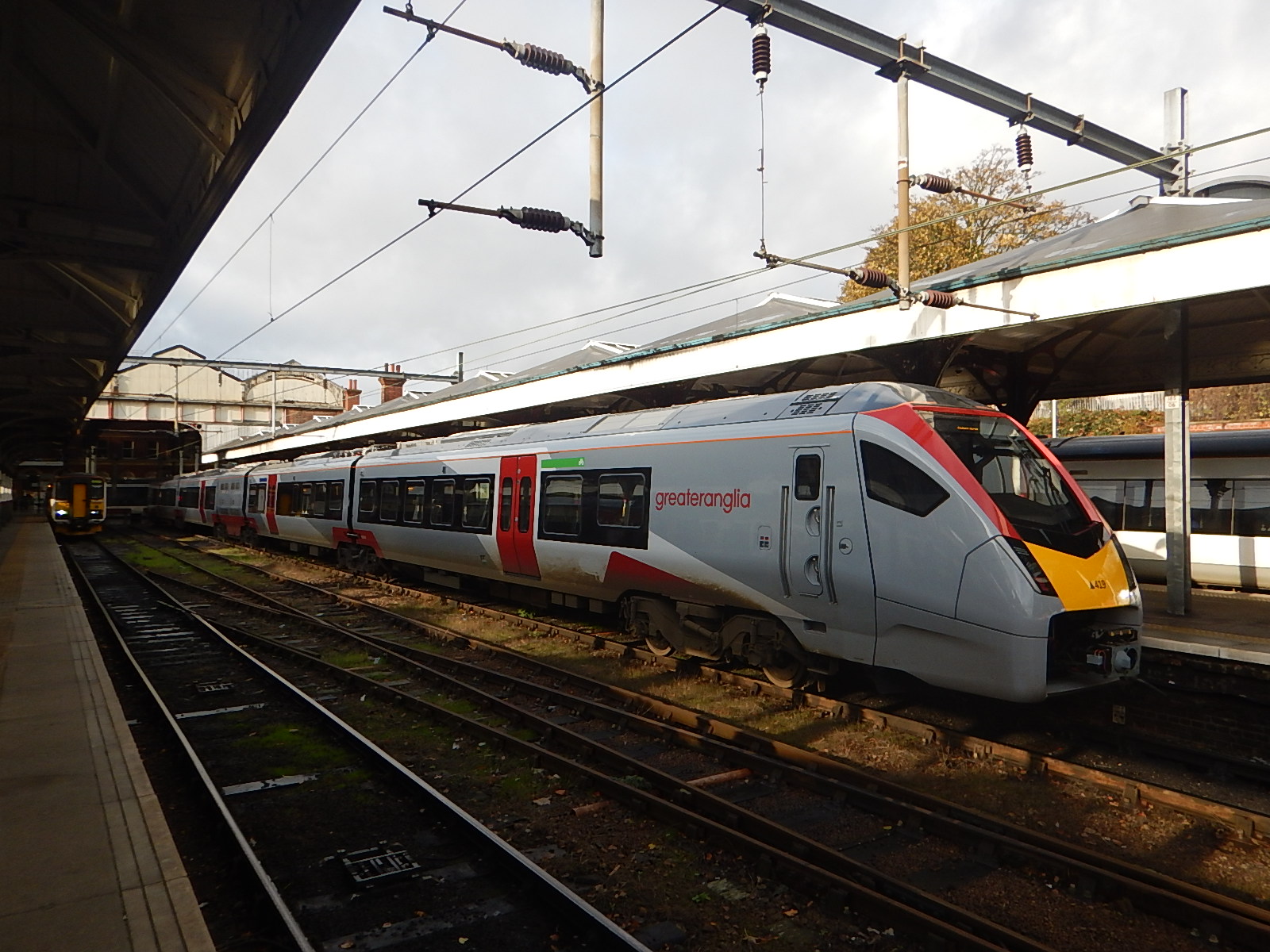
The train appears to be a a Flirt, like Greater Anglia’s Class 755 trains or Transport for Wales’s Class 231 trains, with a power unit in the middle.

Note.
- The picture shows a Class 231 train at Cardiff Queen Street station.
- A Greater Anglia driver told me, these trains are 125 mph trains.
- The Flirt H2 has only two passenger cars, but UK Flirts are have three or four cars.
Perhaps we should buy a few of these trains for long routes like Liverpool and Norwich or Cardiff and Holyhead!
They would surely be ideal for CrossCountry
US Hydrogen Train Contract Awarded
The title of this post is the same as that of this article on Railway Gazette.
This is the introductory paragraph.
Southern California’s San Bernardino County Transportation Authority has awarded Stadler a contract to supply a Flirt H2 hydrogen fuel cell powered multiple-unit to enter passenger service in 2024, with an option for a further four units.
The train follows the layout of Greater Anglia’s Class 755 train, with a power-pack in the middle.
The project was originally called the Redlands Passenger Rail Project, but it has now been renamed Arrow.
Stadler’s press release gives the following details.
- Two cars and a central power-pack.
- 108 seats and standing spaces.
- Operating speed of 79 mph.
- Entry into passenger service in 2024.
It looks to me, that Stadler are not being over-ambitious with their offering to the Californians.
But imagine replacing the diesel power-pack of a Class 755 train on the Felixstowe and Sudbury branches with a hydrogen power-pack!
Conclusion
Stadler could have designed the ideal train for branch lines!
Consider London Bridge and Uckfield.
- The train could use third-rail electrification on the 21 miles between London Bridge and Hurst Green.
- The train would use hydrogen on the 25 miles between Hurst Green and Uckfield
The train would need an appropriate sized hydrogen tank.
Could the required hydrogen tank, fuel cells, batteries and gubbins be fitted in a power-pack in the middle, which would not need any diesel engines.
This picture shows a visualisation of an Alstom Breeze train based on a Class 321 train.
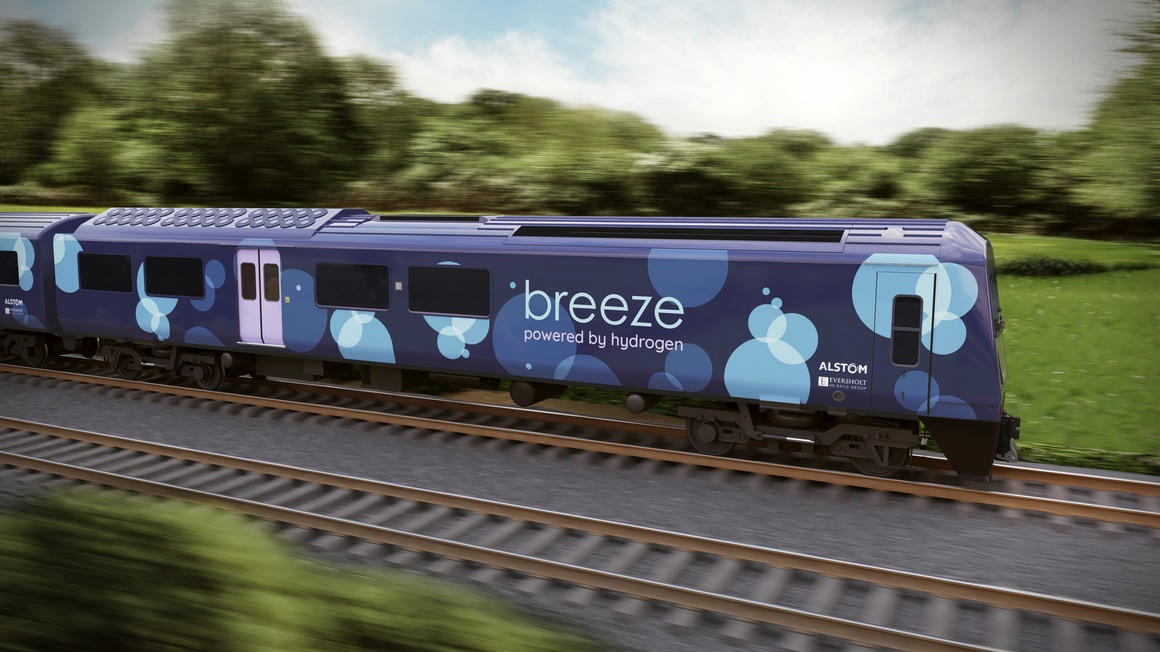
The hydrogen tank, fuel cells, batteries and gubbins are in the blocked off area at the right end of the train.
- As cars on a Class 321 train are twenty metres long, I estimate that the hydrogen section is about eight metres long.
- Stadler’s power-packs are 6.69 metres long.
Efficient design should mean that a hydrogen engine with a range of several hundred miles could be installed in a Stadler Firt H2.
Stadler’s unusual design with the power-pack or engine in the middle is looking good.
 The Anonymous Widower