Frinton-on-Sea Station
My family has had a typical relationship with Frinton, where it has been the butt of several jokes. But then C did get the odd nasty letter after the story of The First Off Licence In Frinton.
I dread to think what would happen to a lawyer doing something like that case these days.
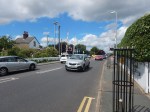
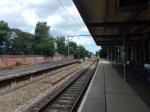
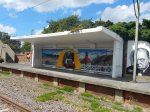
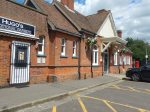
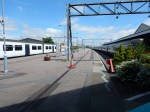
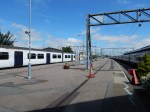
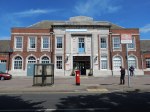
I finished my walk at Frinton-on-Sea station, where I took these pictures.




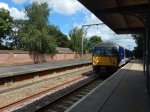
Note.
- You can clearly see, where the second track used to be.
- Trains always use the Southern platform.
- Frinton has rather a retro taste in artwork.
- The catenary seemed to be not of the best quality.
- The station has a proper booking office.
- Like Walton-on-the-Naze station, the platform seems to be able to accommodate eight-car trains.
- I didn’t see anywhere to park a bike. According tom this station facilities page, there are spaces for six.
According to Wikipedia, it would appear that both Walton-on-the-Naze and Frinton-on-Sea stations get about a hundred thousand passengers a year. Kirby Cross station, the only other station on the branch gets roughly four times as much.
This Google Map shows the station and its location.
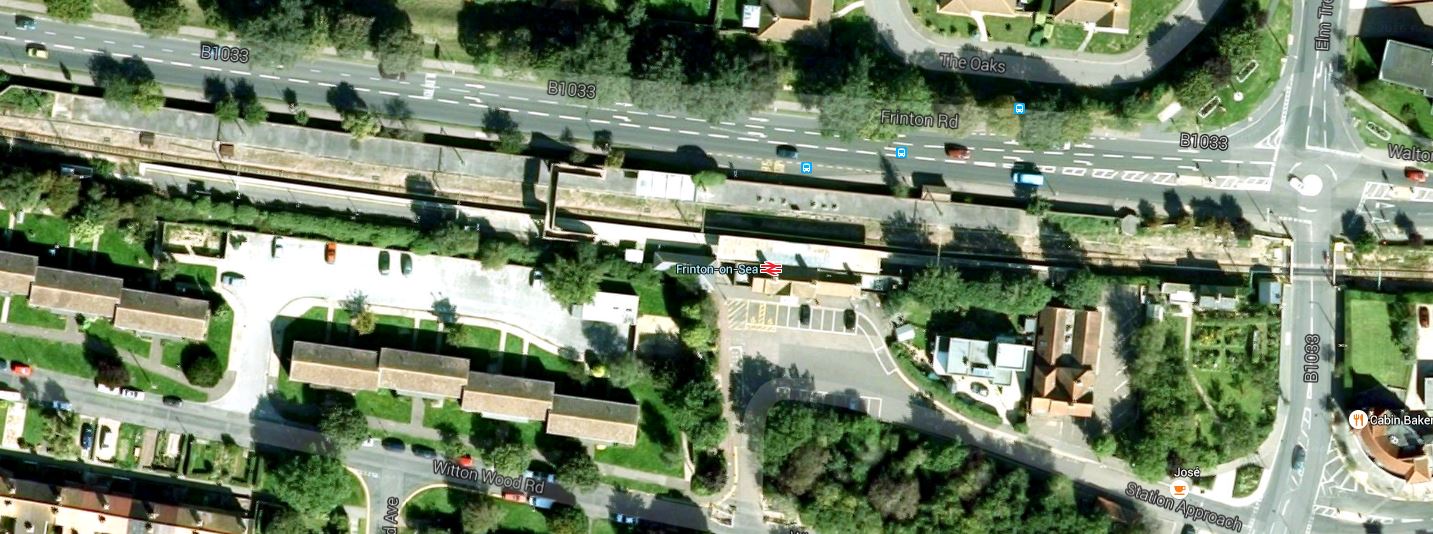
Frinton Station
A One-Sided Station
Note how one-sided the station is, with little except the unused platform and the road on the North side of the track. The station buildings with their traditional barber and the car park are all on the South side of the track.
I assume that anybody coming rom the North side and wanting to get a train on foot or on a bicycle has to go across the level crossing and round into the station.
In When Is A Train Not A Train?, I proposed running lines like this under tram rules.
This station would be ideal, as obviously most passengers arrive on the side with a plattform.
It could even have a light-controlled walk-across the track by the level crossing to allow passengers to cross to and from the north.
Electrifcation
I’m no electrification expert, but as an Electrical Engineer by training, I do feel that the wires, I saw at both Frinton-on-Sea and Walton-on-the Naze stations have seen better days and are probably up for replacement in the next few years.
If as I expect that the next East Anglia Franchise orders trains with the possibility of on-board storage, then I believe that instead of renewing the wires to Walton, the shuttle trains to Thorpe-le-Soken and the the direct Liverpool Street trains, could use stored energy on the Walton Branch.
They would charge their batteries, when running between Thorpe-le-Soken and Colchester.
Replacement of the electrification on the five mile long branch would conservatively cost several million pounds and need ongoing specialist maintenance. The money saved would surely pay for the onboard energy storage on the trains needed for the branch.
Removal of the electrification would give the following benefits.
- The branch would be free of high-voltage electricity.
- Stations could be of a simpler design.
- Trains would be quieter with no pantograph noise.
- Regenerative braking with all its electricity saving would be enabled.
- The track would be simpler, with less to go wrong.
- The line would be without unsightly wires.
But the biggest benefit would be that overall the line could be much safer.
New Track
But removal of the electrification would give other advantages, as any new track would not need to be electrified. New track might include.
- Provision of a siding at Walton-on-the Naze, where the second track used to be.
- Provision of a proper passing loop at Kirby Cross station.
- Reopening of Platform 3 at Thorpe-le-Soken station.
- Installation of a chord to allow trains to go from Walton-on-the-Naze to Clacton-on-Sea directly.
Whatever is done with respect to track, will greatly improve the service on the branch.
Conclusion
I believe that in a few years time, a visitor to Frinton-on-Sea station, will find it very different.
But probably very much better.
However, if the line is run by silent electric trains, will their curiosity bring too many visitors to |Frinton, for the residents’ liking?
Walton-on-the-Naze Station
As a terminus of the Sunshine Coast Line, Walton-on-the-Naze station has a certain level of importance.
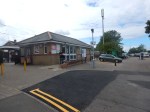
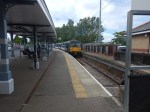

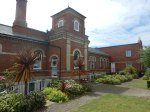
This Google Map shows its location with respect to the town and Walton Pier.
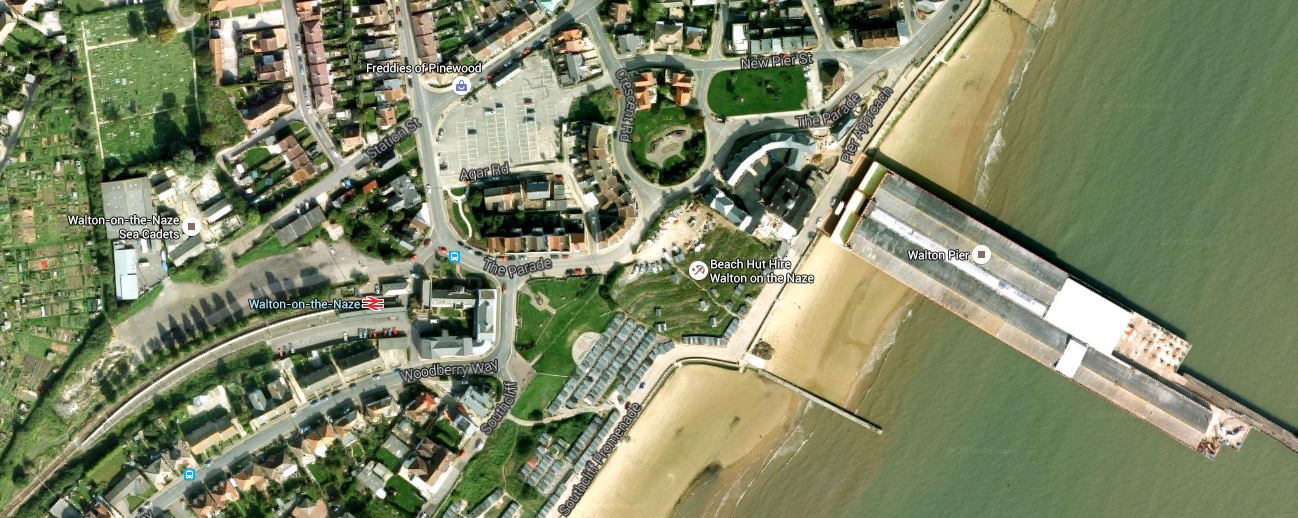
Note.
- The long curving platform in the station, which can certainly accommodate an eight-car train and might manage twelve-cars with a bit of stretching.
- The rather small station building with a neat and compact booking office inside.
- There would appear to be a very rudimentary level of facilities with no coffee stall or shop.
- The location isn’t too bad, but doing anything spectacular would probably be difficult.
- The Off Peak frequency of one train per hour, is probably half what is needed.
Services to London Liverpool Street station usually rely on changing at Thorpe-le-Soken station for a train from Clacton and take around one hour forty minutes.
There are also two direct trains in the morning.
- The 07:38 is a stop-everywhere on the Sunshine Coast Line and to Shenfield, which takes two hours and fifteen minutes.
- The 08:00 is a fast limited-stopper to Shenfield that takes one hour and thirty-six minutes.
Is this all they want to run?
All other trains require that change at Thorpe-le-Soken.
If the operator wants to increase the number of trains to London in the morning peak, they also have the problem, that it would appear, that the only place to stable trains overnight is at Clacton and Colchester, although I suppose one train can be stabled in Walton station.
Looking at the timetable, it appears that the shuttle train works hard in the Peak partly because of the limitations of the line’s layout.
- Only one terminal platform at Walton.
- No sidings to store trains.
- An extra platform at Colchester Town station would help.
- Do limitations in the layout at Thorpe-le-Soken station contribute?
In addition capacity problems on the Great Eastern Main Line make everything a lot worse!
But other things help.
- At least Kirby Cross station may or could have a passing loop.
- Trains only take twelves minutes to go between Walkton-on-the Naze and Thorpe-le-Soken. So two round trips an hour could be possible.
- The signalling was only installed in 2009 and I would jope it was future-proofed for possible developments.
I suspect Network Rail have a few ideas to increase frequencies on the branch.
Look at this Google Map of Thorpe-le-Soken station, with the lines running to the East and splitting into the two coastal destinations..
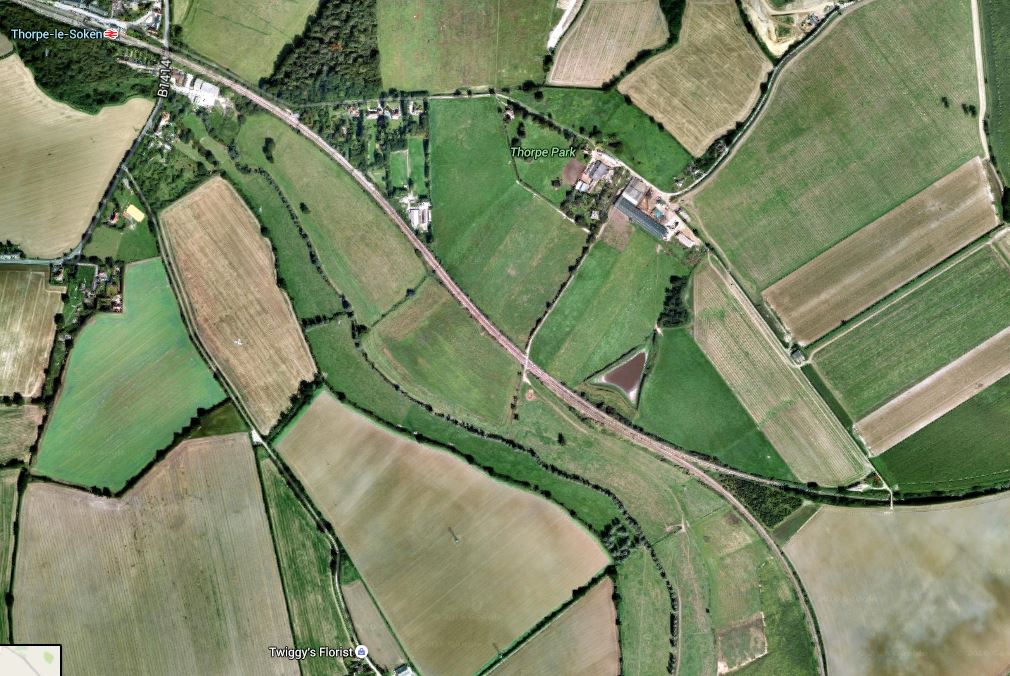
Thorpe-le-Soken Station
I know this is only speculation on my part, but Wikipedia says this about Thorpe-le-Soken station.
It has two platforms forming an island platform that is accessible via a footbridge. There is a clearly visible platform and trackbed on what would be platform 3; this is continuous with the other stations on the Walton branch. One of the double tracks that were originally on the line to Walton has been completely taken up.
This Google Map shows a close-up of the station.
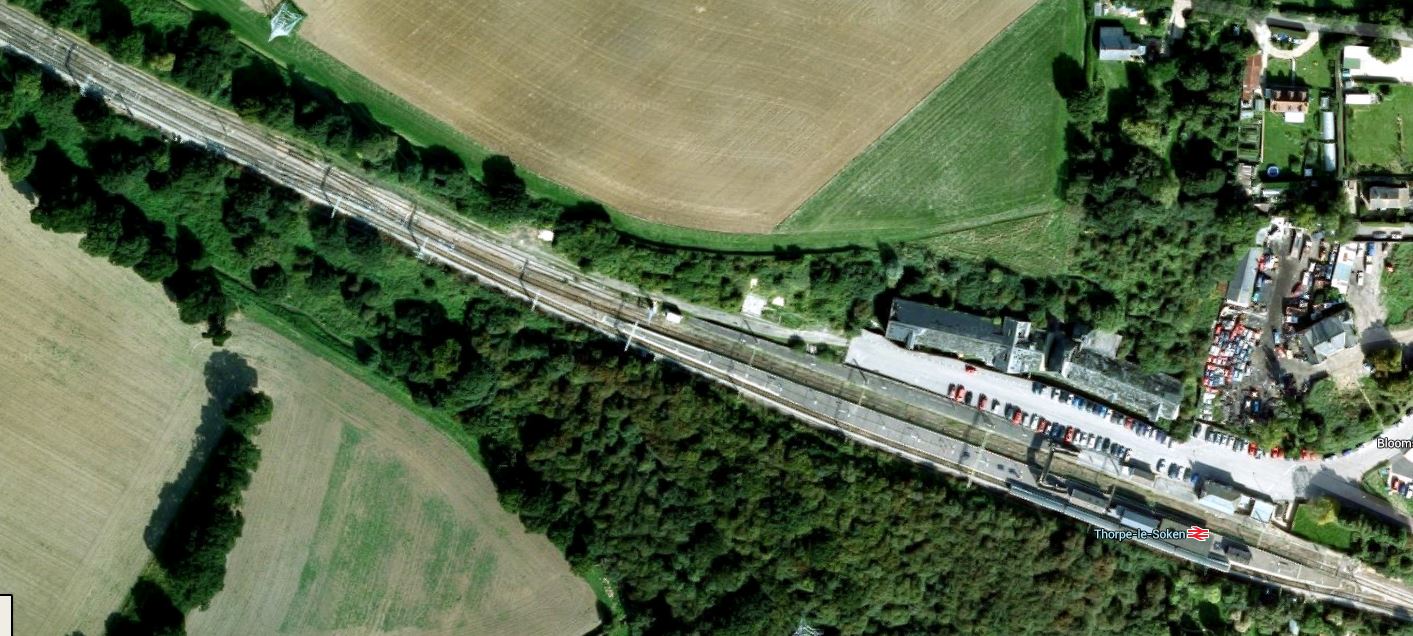
Thorpe-le-Soken Station – Close-Up
So it would appear that the station could be modified to provide a second platform for handling trains on the Walton branch. I suspect Network Rail have investigated this, as it must help towards increasing the frequency on the Walton Branch.
There must also be the possibility of building a single-track chord between the two branches to the East of Thorpe-le-S0ken station.
Such a chord would enable direct services if required, but it would probably be more useful for moving empty stock between Walton station and the sidings at Clsacton.
My conclusion, is that in a few years time, the service to Walton-on-the-Naze and Clacton-on-Sea will be very much better than it is today.
Both terminii will get at least two trains per hour to and from Colchester, with all trains being either to and from London or with a cross-platform change with a London train.
A Walk Between Walton-on-the-Naze And Finton-on-Sea Stations
One of the reason’s I went to Walton-on-the-Naze station today, was to see if I could have a nice walk in the sun along the sea to Frinton-on-Sea station and then take the train home.
This Google Map shows the two stations and the sea.
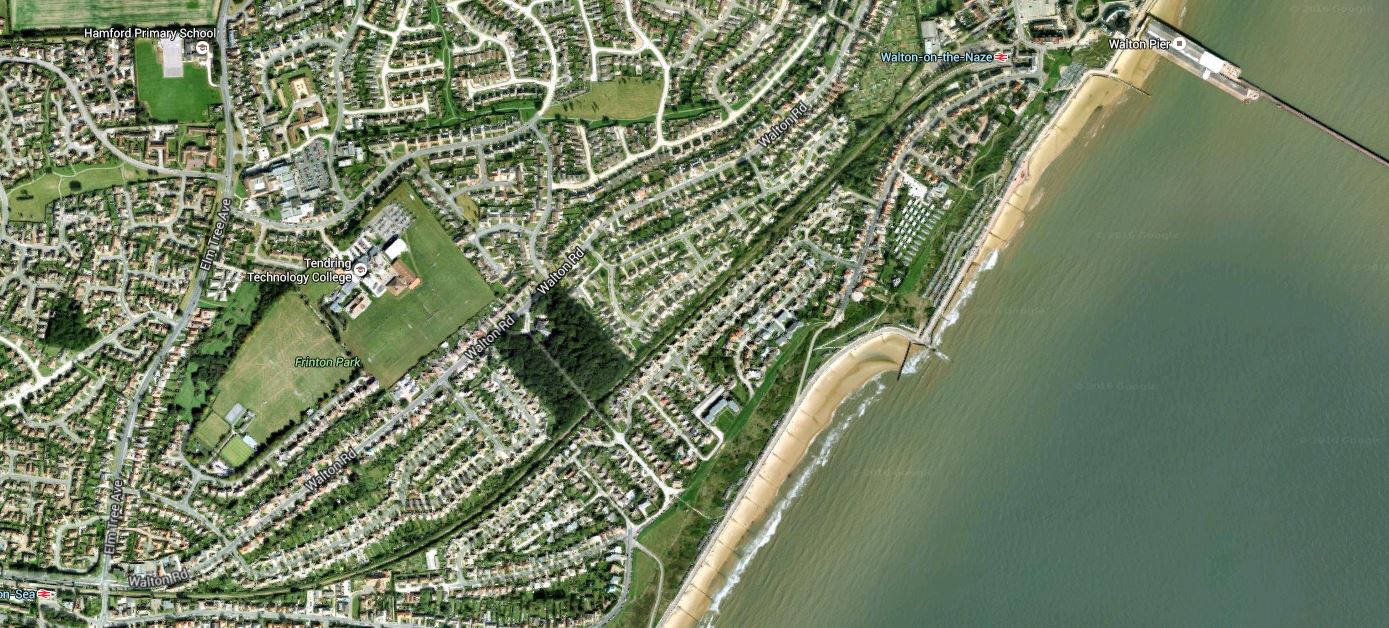
A Walk Between Walton And Frinton Stations
Walton-on-the-Naze station is in the North-East corner of the map by Walton Pier and Frinton-on-Sea station is in the South-West corner.
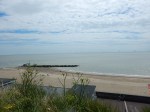
I walked along the promenade, which goes all the way to Clacton-on-Sea, between the beach-huts on the shore and the wide sandy beach and the sea.
I took these pictures as I walked.


Note.
- The number of Thames Sailing Barges in the sea. I saw five, but others saw six.
- The beach welcomes dogs.
- The memorial to PC Brian Bishop.
- I got lost walking from the beach to Frinton-on-Sea station. There were no signs or maps.
The walk took me about ninety minutes. Unlike at Clacton, I didn’t pass a decent cafe. I should have had lunch before I left Walton.
When Is A Train Not A Train?
Take a modern train, say something like a Class 172 DMU or a two-car version of say a Class 710 EMU.
The size and weight of these are very similar to that of one of Sheffield’s trams.
Many, if not all, trams in the UK run to a set of rules, which allow the following.
- Running at up to 50 mph on a dedicated track, which can be either single or double track.
- Running at slower speeds through City Centres and amongst pedestrians, as they do through Birmingham, Blackpool, Croydon, Edinburgh, Manchester, Nottingham and Sheffield
- Trams are driven, by a trained driver, who takes notice of everything and everybody around the tram.
- Passengers can cross the track in designated places provided they keep a good look-out.
- Passengers can only board a tram at a designated stop.
- All rail vehicles run to the same rules.
The rules must work, as you don’t often hear of trams having accidents with pedestrians. In fact fourteen people have died in accidents with modern trams in the UK since 2000. The rate seems to have dropped in recent years, so are drivers getting better and pedestrians learning how to live with the trams?
I believe that in Zwickau in Germany, local trains, run on the tram tracks in the City Centre. There’s more on it under Vogtlandbahn in Wikipedia.
So could some branch lines be run according to tram rules, but using standard modern trains, like Class 172 or Class 710 trains?
In A First Visit To Clacton, I said this about the Walton-on-the-Naze branch of the Sunshine Coast Line.
I do wonder whether some branches like the short one to Walton-on-the Naze could be run to tram rules using on-board energy storage. It might enable stations to be built step-free without electrification, lifts and bridges, provided trains kept to a safe slow speed.
In an ideal system, the rules could be.
- No electrification. Zwickau uses diesel vehicles, but ones using on-board energy storage would be ideal.
- Trains do not exceed an appropriate slow speed. Zwickau uses 80 kph.
- Step free access from platform to train.
- All trains on the line run to the same rules.
- No freight trains.
The advantages would be.
- There is no electrification.
- Signalling is standard railway signals and rules. Often routes would run under One Train Working, which is very safe and well proven.
- Many routes could be built as single-track without points and like the Sudbury branch trains would go out and back.
- DMUs would be exactly, the same as others of their type.
- EMUs would be too, but would have on-board energy storage.
- Extra stations could be added to the line, by just building platforms.
- The line could perhaps be extended past its current terminus.
I must get to Zwickau and see how the Germans do it.
A few examples of lines that could run to these rules include.
- Sudbury Branch
- St. Ives Branch
- Walton-on-the-Naze Branch of the Sunshine Coast Line
- Windermere Branch
Whether some of these would need it, is doubtful. Some though, like Sudbury and St.Ives, terminate as a single platform in a car park.
The Felixstowe Branch certainly couldn’t as it has lots of freight trains, although the final section, from where it branches off the line to Felixstowe Port could.
I said that no freight trains could run on the routes, but those devilish Germans have designed a freight tram that runs in Dresden to supply the Volswagen factory in the city. It’s called a Cargo Tram.
Could this be a way of bringing freight into a City Centre? as I said in The LaMiLo Project, this type of thinking is in the minds of planners.
A First Visit To Clacton
Despite living quite close to Clacton for perhaps about thirty years of my life, I’d never been to the town before today.
I needed some sun and felt that a visit and a walk along the front was in order.
Since the Shenfield Metro train service through East London to henfield has been run by TfL Rail, getting to places like Clacton and Sudbury, as I did, a couple of weeks ago, has become a lot cheaper.
Sudbury cost me £11.70 return, and Clacton today was £14.25! As Clacton is seventy miles from London, surely that is good value!
These are of some pictures I took of the trip from the time I joined the Sunshine Coast Line at Colchester.

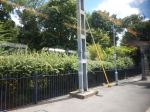


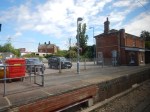
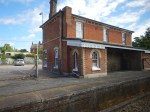








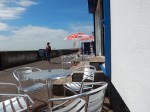

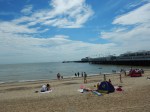
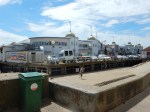


Note.
- The stations on the branch look reasonable, although Thorpe-le-Soken station could do with improvements.
- According to a local, the front at Clacton has had a recent makeover.
- There is a maintenance depot for the trains at Clacton.
- The line is an electrified double-track, although the branch to Walton-on-the-Naze and Frinton-on-Sea is only a single-track.
- I must admit to being surprised at the size of Clacton station with four platforms capable of taking twelve-car trains.
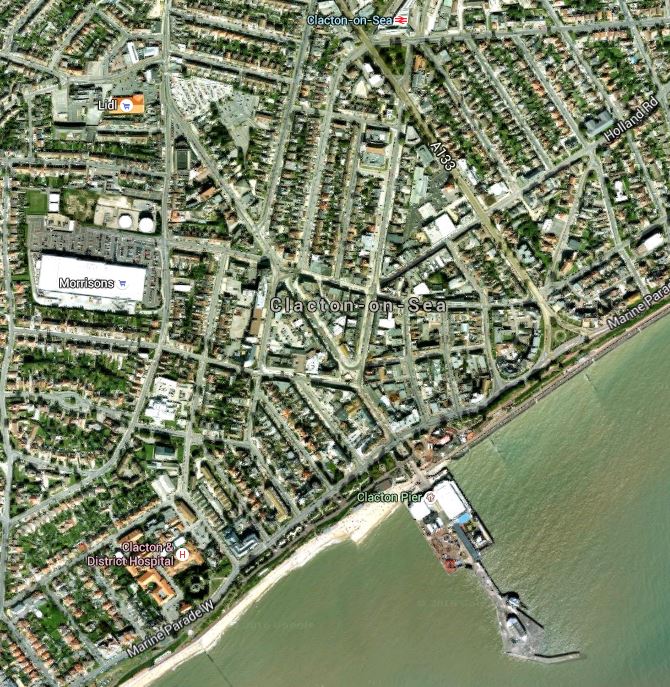
This Google Map shows the route where I walked.
Clacton
I walked down from the station to the sea front, along the promenade to the Pier and then back up to the station. It was virtually flat all the way.
One of the reasons, I went to Clacton was to look at the train service and see if it is likely, than the new franchise will improve it.
- As I said earlier, most of the stations I saw are in reasonable condition, although some may need step-free access.
- Thorpe-le-Soken station would appear to need improvement.
- According to Wikipedia Abellio has plans to improve stations at at Alresford, Kirby Cross and Weeley
- It is still possible to see the remains of the second track to Walton at Thorpe-le-Soken station.
- Generally, the Off Peak service to Clacton and Walton is one train per hour.
- Going to Clacton, I rode in an acceptable Class 360 train, but going back I was in a Class 321 train.
- Signalling on the Sunshine Coast Line was modernised a few years ago, but what is the state of the electrification?
- Colchester Town station is served by a spur from the Sunshine Coast Line, which has a low speed limit because of sharp curves.
There is certainly scope for improvement.
These are a few notes on what can be done.
Colchester Town Station
Wikipedia says this about the station.
As of 2013 there is only one platform, but there is space for a second which would make possible a more intensive service on the Sunshine Coast Line. To the east of the station, Colne Junction is the western extremity of a triangle which gives access towards Colchester station to the west and Hythe station to the east. The curve to the north from Colne Junction to East Gates Junction is sharp, with a continuous check rail which necessitates slow passage.
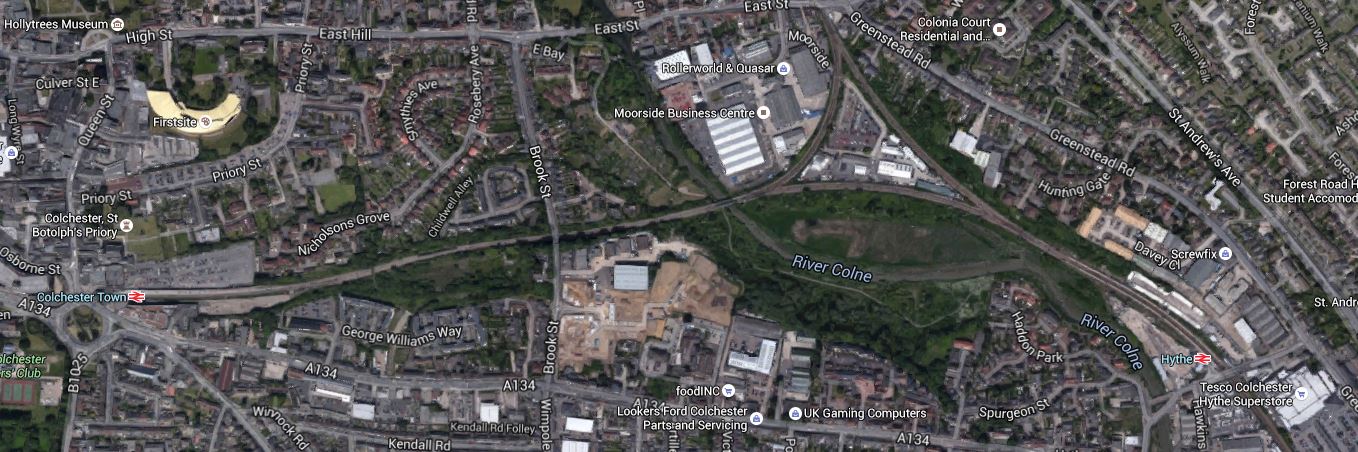
This Google Map shows Colchester Town station and Colne Junction.
Colchester Town Station And Colne Junction
Colchester Town station is at the Western side of the map and the lines lead out of the station to the triangular Colne Junction.
As the map shows, it is a much sharper curve to turn North than go to the Sunshine Coast.
The other station shown at the |Eastern side of the map is Hythe station, which is on the route to Clacton and Walton.
I suspect that there have been many sensible ideas to improve services through Colchester Town station, but that as train services in East Anglia have always had a low priority, nothing has been done.
These pictures show Colne Junction from a train between Clacton-on-Sea and Colchester.



I was surprised to see that all sides of the junction are double-track.But not surprised to see a collection of second-rate industrial and Royal Mail development in the middle of the junction.
An absolute minimum of improvements would be.
- Improving the curve to the North at Colne Junction, so that there is a speed increase for trains going to and from Colchester and towards London, that serve Colchester Town and the Sunshine Coast Line.
- A second platform at Colchester Town station.
- Opening Colchester Town station on Sundays.
I will be interested to see if improvements are proposed in the new East Anglia Franchise.
New Trains
In Could Class 387 Trains Do Norwich In Ninety And Ipswich In Sixty?, I wrote that to obtain these timings, North of Chelmsford, all trains must be capable of holding a 100 mph line speed or perhaps even 110 mph.
The Class 360 trains might be fast enough, but there are rumours in the Derby Telegraph, that a new fleet of Bombardier trains will be ordered, to fulfil a requirement in the new franchise agreement.
If a version of something like a Class 710 train is ordered, it could have the following characteristics.
- Four-car trains, able to run in four, eight and twelve car formations.
- 100 mph or 110 mph line speed.
- Regenerative braking.
- Provision for on-board energy storage.
On the Sunshine Coast Line, the trains would not use the onboard energy storage for primary traction, but to save energy, as I don’t suspect the line has been updated for regenerative braking.
These trains will certainly provide a better passenger experience. They could also be faster between Liverpool Street and Colchester.
Electrification
The electrification looked to be in good condition, but judging by the design, some of it, is fairly elderly.
I also have my doubts as to whether the overhead wires can handle regenerative braking. Use of regenerative braking in the UK have shown energy saving around 15%, but it does need a more expensive infrastructure.
So will we see, a project to renew the wires, transformers and other electrical equipment, as has been seen on parts of the Great Eastern Main Line?
I think we will, but the operator could use on-board electrical storage in new trains to simplify the electrification.Instead of returning braking energy through the overhead wires, it would be stored on the train for using the train to get started again.
One idea that could happen, is that to appease the sensitive souls in Frinton, that the Walton-on-the-Naze branch could be run using onboard energy storage to eliminate any pantograph noise. After all the branch is only five miles long. But that would be five miles less of overheasd wire to maintain.
I do wonder whether some branch lines like the short one to Walton-on-the Naze could be run to tram rules using on-board energy storage. It might enable stations to be built step-free without electrification, lifts and bridges. I wrote about Thurston station, where they have a walk across with lights in Two Solutions To Make Crossing A Railway Safe.
Track Improvements
As with Colne Junction, I suspect that there are some long-standing ideas to increase the line speed from the current 40-90 mph on the Sunshine Coast Line.
Only In Frinton
A common target of East Anglian humour is Frinton, as over the years the town has acquired a dubious reputation about being anti-fun.
In The First Off Licence In Frinton, I told the story of how C got the town its first Off Licence. Her version of the tale, always ended with Frinton were not amused.
Rumour has it, for years, the sign on Manningtree station, which said something like Harwich For The Continent had been annotated with And Frinton For The Incontinent.
Tonight I found this under Recent Developments in the Wikipedia entry for The Sunshine Coast Line, which is the branch line that serves Clacton and Frinton.
A £104 million engineering project known as the Colchester to Clacton Resignalling Project took place on the line between December 2006 and July 2009. Life-expired signalling equipment was replaced and a new control system was installed; 170 modern LED signals were installed and eight manual level crossings were upgraded to full barrier crossings with security cameras. The line was closed every weekend and on public holidays, with bus replacement services provided.
There was opposition from the town of Frinton to keep the manual gates, which were reportedly removed “under cover of darkness”. Folklore has it that townspeople used to lock the gates to keep out coach-loads of tourists.
It is a typical Frinton story. I have no idea, if it’s true!
 The Anonymous Widower