A Space Too Good To Leave Empty
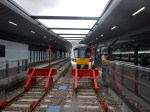
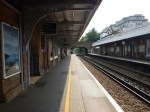
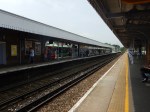
I took these pictures in the space between the Southbound Thameslink and Westbound Metropolitan platforms at Farringdon station.


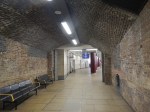
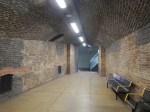
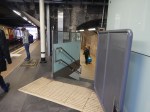
It’s just too good to leave empty!
But at least it’s a convenient almost step-free way to interchange between the two lines. Say from.
- Liverpool Street to Gatwick.
- Bedford to Paddington.
It’s just a pity that all the other connections at Farringdon, seem to be lots of steps.
Bermondsey Dive-Under – 27th June 2016
In A First Ride On A Class 700 Train, I went past the Bermondsey Dive-Under.
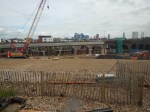
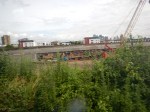
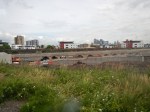
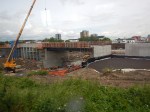
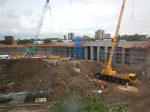

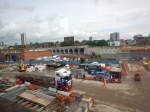
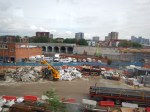
Progress seems to be continuing.I just wonder what is going to be built between the dive-under and the line on which my train was running.
I’m sure Network Rail have got viable plans.
A First Ride In A Class 700 Train
Today, I caught the 10:48 between East Croydon and London Bridge stations,. I took that train as this service was mentioned as the first one to be served by a new Class 700 train, in this article on Global Rail News.
As the pictures show it was one of the new twelve-car Siemens trains.
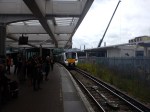

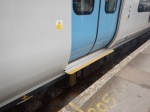
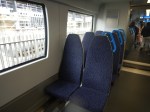
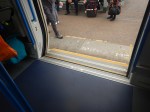

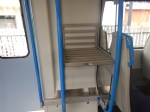
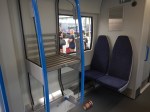
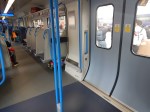
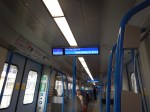

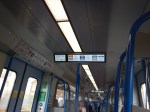
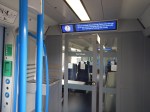
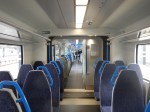


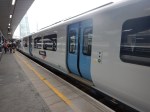
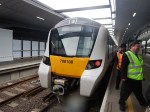
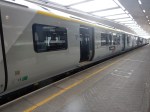
If I would give it a complement it would be competent, as most new trains seem to be these days.
The design features I like include.
- The spacious lobbies.
- The walk-through train.
- 2 x 2 seating.
- The comprehensive information system.
- The extra luggage racks, in addition to the usual racks above the seats.
- The simple colour scheme.
- The trains would work with platform-edge doors.
- Putting First Class at both ends of the train.
Passengers might complain about the following.
- The lack of audible messages. – I liked the quiet, but I’m not blind.
- The lack of tables in Standard Class compared with say the Class 387 trains, that currently work the line.
- The length of the train at 242.6m., if they get in the wrong carriage.
- The high step up into the train.
The last one is possibly to be compatible with other trains and is being addressed at East Croydon station, by raising the platforms. I didn’t go to Gatwick, but imagine large numbers of heavy cases being loaded and unloaded.
It will certainly be interesting to compare the Class 700 train, with Crossrail’s new Class 345 train, that is being built by Bombardier and could be testing later this year, with introduction in May 2017.
The length of the Class 700 and Class 345 trains at 242.6 and 200 metres respectively will certainly fuel the old chestnut about whether double-deck trains would have been better.
As I found with my short trip on a Class 700 train, walking from the back to the front could be a challenge for some. But commuters will develop strategies to make the journey easier.
So some may argue that double deck-trains might be easier on passengers.
But Thameslink and Crossrail have not been built for double-deck trains and certainly the older tunnels couldn’t accommodate them, without complete closure for a couple of years, so they could be rebored.
Both lines serve airports and stations, where passengers are likely to be bringing heavy baggage. This makes loading especially difficult on a double-deck train and delays the service.
Both trains have been designed with large lobbies and the Class 345 trains have three sets of doors on either side of each carriage. But they’ll need this space and doors as the longest trains carry upwards of 1,500 passengers.
These two fleets of massive trains will certainly change London. But I see problems in some areas, that must be addressed on Thameslink.
Stations
To realise the full potential of the Class 700 trains on Thameslink, some stations may need improvements.
Brighton could make for a lot of walking up and down the platform. Travelators?
I also think that Brighton needs a high-capacity East-West transport system to cope with the large number of passengers. Could the East Coastway and West Coastway Lines be connected together by a tunnel or a bridge over the station, which incorporated two connecting platforms?
East Croydon needs more improvements.
A dedicated island platform for Thameslink, as Crossrail has at Whitechapel, would knit all the branches together, so that journeys between any two branches were made easier and station footfall was reduced?
Gatwick is getting improvements, with a new concourse..
St. Pancras only has one big entrance in the middle. Does it need an extra Southern entrance? Or will passengers use stations like Farringdon, Finsbury Park and London Bridge to avoid the badly-designed station.
I certainly will avoid joining Thameslink at St. Pancras like the plague.
Step-Free And Disabled Access
The stations may be step-free, but the train-platform interface is not. However this is said in this document on the Thsmeslink Programme web site.
Platform humps at central London stations will provide level access for swift boarding by wheelchairs and people with buggies or heavy luggage – meaning no more ramps at the busiest central London stations.
I would assume humps would also be provided at stations like Gatwick and Brighton, if it were to be found they were needed.
I suspect, that in the end, humps will be provided at all stations served by Thameslink, as it will ease the logistics of running the system.
Platform Edge Doors
I don’t like platform edge doors as a passenger, but as an engineer, they make loading and unloading trains more efficient.
The Central Tunnel
The big problem with Thameslink, is that we are aiming to get twenty-four trains per hour under London.
Trains will have a schedule and must be driven exactly to those times. As the time between trains is just one hundred and fifty seconds.
So supposing, there was a problem with loading at say Purley and the train was delayed by five minutes, you have a serious problem, that would knock on for some time.
Every possible cause of delay should be eliminated.
- All stations must have humps for wheelchair users.
- Central stations may get platform edge doors.
- Stations must be improved so that passenger flows are not impeded.
- Train reliability must be as close to a hundred percent as possible.
As a Control Engineer, I strongly believe that all trains should be driven automatically.
An illustration of the problem was provided this morning at East Croydon, whilst I was waiting for my Class 700 train..
There were late trains all over the place, due to various problems including power supply, signalling and staff sickness.
, The Thameslink service is going to need all the help it can to get all the trains lined up and on time to go through the central tunnel.
What About Crossrail?
Crossrail has big advantages over Thameslink.
- ; All of the central stations have new platforms, which have been designed to fit the new trains.
- The branches to the four terminals, run for nearly all of their routes on dedicated tracks without other trains.
- The central stations have platform edge doors for safety, which may improve time-keeping on the service.
Overall though, Crossrail is a much simpler design than Thameslink.
Making Crossrail work will be a lot easier than making Thameslink work!
What Will Be The Service On The Great Northern Lines After Thameslink Opens?
When I did the short trip from Essex Road station on the Northern City Line, that I wrote about in Never On Sunday, I was surprised to see that the frequency of the service was Transport for London’s turn-up-and-go frequency of 4 trains per hour (tph), with 2 tph to going to Hertford North, with 1 tph extended to Stevenage and 2 tph to Welwyn Garden City.
The services at Essex Road station in the Off Peak include these trains.
- 6tph to London Moorgate
- 3tph to Welwyn Garden City via Potters Bar
- 3tph to Hertford North (1tph extended to Letchworth Garden City)
It is interesting to note that between 0800 and 0900 on a weekday morning, thirteen trains arrive at Moorgate.
From 2018, the new Class 717 trains will start to run on the Northern City Line. The number of passengers on this line will surely grow as the Southern terminus of Moorgate station will be on Crossrail from December 2018.
Assuming these six-car Class 717 trains can carry about half that of a 12-car Class 700 train, then in that hour they could bring 4,329 passengers into Moorgate station.
Will the low-level platforms at Moorgate station be able to cope?
Probably easily, if there is a direct tunnel and escalator access to Crossrail.
This map from carto.metro.free.fr shows the various lines at Moorgate.
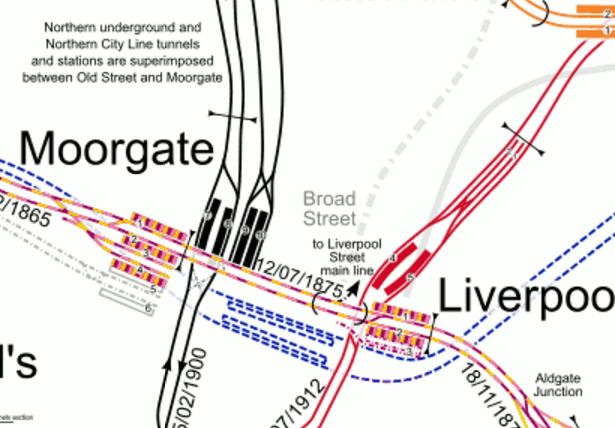
Note.
- The Northern City Line is superimposed on top of the Northern Line at Moorgate station.
- The 200 m. long Crossrail platforms almost stretch between Moorgate and Liverpool Street stations.
- Interchange between the Northern Line at Moorgate and the Central Line will probably be a three hundred metre walk.
- Crossrail should mean that all Liverpool Street to Moorgate interchanges will be desert dry in the wettest weather.
If this massive interchange doesn’t create a need for more capacity on the Northern City Line, I’ll be very surprised.
As there have been improvements to the lines on the Great Northern Route, between Finsbury Park and Alexandra Palace stations, I wouldn’t be surprised that when Crossrail opens, this Cinderella line, that nobody wanted is running eight, ten or even more tph between Moorgate and Finsbury Park stations and further up the route.
The services on the Great Northern Route are intense, but despite that, the route has some of the most crowded trains in the UK..
Thameslink is coming and that will change everything dramatically.
At present Cambridge has 4 tph to Kings Cross in the Off Peak, of which two tph are non-stop Cambridge Cruisers.
When Thameslink connects to Cambridge, the provisional timetable says it will add 4 tph semi-fast trains between St. Pancras Thameslink and Cambridge.
Thameslink haven’t said what services they will retain between Kings Cross and Cambridge, but I did read somewhere that they want to hold on to the Class 387 trains to run the Cambridge Cruisers.
At present, Peterborough has 2 tph Great Northern services to Kings Cross, in addition to several non-stop expresses.
As with Cambridge, Peterborough will get an additional 4 tph, when Thameslink opens.
I think the outcome will be lots of direct services between Cambridge or Peterborough in the North and Kings Cross or St. Pancras Thameslink in the South.
If you are prepared to change just once, you’ll be able to travel between any station North of Finsbury Park to any of the three London terminals; Kings Cross, Moorgate and St. Pancras Thameslink.
I believe that because Thameslink has such a large number of stations and connections, that many passengers will have a wide choice of route.
There is also the performance and quality of the various trains on the routes to consider.
- The current Class 365 trains are 100 mph trains built in the 1990s. They are starting to look dated as I wrote in The Class 365 Trains Are Looking Dated.
- The Class 387 trains are 110 mph trains built in the last few years. They are a quality long-distance commuter train.
- The Class 700 trains are 100 mph trains, that are being delivered at the present time.
- The Class 717 trains could have a similar performance to the Class 700 trains. I will be very surprised if they are not 100 mph trains.
A succession of 100 mph plus trains speeding up and down the Great Northern Route won’t be a slower service than is currently offered.
There would probably be four semi-fast trains to and from both Northern destinsations, stopping at all major stations, with well-connected stopping trains serving the intermediate stations.
There might even be service patterns like say four tph between Moorgate and Welwyn Garden City stopping at all stations, which have a same platform interchange with four tph stopping services to Cambridge and Peterborough. So from say Foxton to New Barnet, you’d always change at Welwyn Garden City.
As an example of how the new improved Thanmeslink will help passengers, look at the routes from my home to Cambridge.
I could.
- Take a 277 bus to Highbury and Islington station and get a Victoria Line train to St. Pancras for a Thameslink train to Cambridge.
- Take a 38 bus or walk to Essex Road station and get a Northern City Line train to Finsbury Park for a Thameslink train to Cambridge.
- Take a 141 bus to Moorgate station and get a Northern City Line train to Finsbury Park for a Thameslink train to Cambridge.
- Take a 277 bus or walk to Highbury and Islington station and get a Northern City Line train to Finsbury Park for a Thameslink train to Cambridge.
- Take a 30 bus to Kings Cross station and get a Cambridge Cruiser to Cambridge.
The possibilities will be endless.
I wouldn’t take the first option, as St. Pancras is A Fur Coat And No Knicker Station, with a long walk between the Victoria Line and Thameslink.
My choice of route, will probably be decided by the first bus that arrives and the quality of the smile on the driver’s face.
Beckenham Junction Station
Beckenham Junction station is one of the stations on a proposed South London Outer Orbital
These are pictures I took of the station, as I passed through.
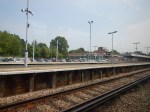
Beckenham Junction offers the following connections.
- A link to Tramlink.
- A link to Thameslink in the peak hours.
- A link to Victoria via Herne Hill
- A link to London Bridge via Crystal Palace.
I also think that as I said in Do We Make The Assets Sweat At Crystal Palace Station?, that there will be a good one-change link to Beckenham Junction from the East London Line.
There are worst stations to get stuck!
Sutton Station
Sutton Station is one of the stations on a proposed South London Outer Orbital
These are pictures I took of the station and the town as I passed through.
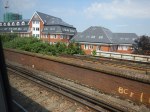
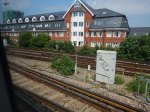
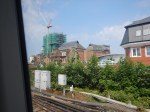
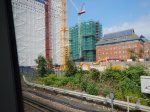
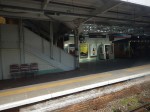
Sutton is one of those stations, that will see a dramatic improvement in services in the next few years.
- Thameslink will get newer higher-capacity Class 700 trains.
- The Tramlink may finally reach the town. I wrote about this and a further extension in Why The London Tramlink Should Be Extended To The Royal Marsden Hospital.
Given all the development around the station, more services will be desperately needed.
Sutton will develop into a major hub station like Wimbledon, but with not anywhere near as many services as East Croydon.
A South London Orbital Route should call at Sutton to tap into the stations excellent connectivity.
A New South London Orbital Rail Route
In the June 2016 Edition of Modern Railways in an article is entitled Turning South London Orange.
One of the proposals is to create new orbital route across South London.
The route is proposed to go through these stations, after starting at Woking.
- Guildford
- Horsley
- Leatherhead
- Epsom
- Sutton
- Wallington
- West Croydon
- Norwood Junction
- Beckenham Junction
- Bromley South
- St. Mary Cray
- Swanley
After Swanley, two of the proposed four trains per hour (tph) would go to the Medway stations, with the other two going to Maidstone East.
What Does The Route Do For Me?
From, where I live at the Northern end of the East London Line, this might seem a proposal with not much benefit to North Londoners.
But the link to the proposed route at Norwood Junction and West Croydon stations could prove very valuable.
- Getting to London terminals for the South like Victoria, Waterloo and Charing Cross, is not an easy journey, especially in busy times.
- Thameslink is promising to remove the one-change-route via New Cross Gate to get to East Croydon and Gatwick.
- Getting to Kent is particularly difficult, unless you use High Speed 1 from Stratford.
Crossrail 2 will help matters in a few years, but more needs to be done.
As an example of the difficulties we face in Hackney, today, I want to go to New Malden to take some pictures for A Very Bad Level Crossing Problem.
- Angel station is on the wrong branch of the Northern Line to get to Waterloo.
- I could take a 76 bus to Waterloo.
- I could take an East London Line train to Clapham Junction.
- I could take a Victoria Line train to Vauxhall.
- I could take a bus to Bank and get the Drain to Waterloo.
In the end i took the bus to Bank for the Drain.
You can see why Crossrail 2 is important for Hackney, Haringey, Tower Hamlets and Waltham Forest.
The new route may not help me today, but for many other journeys that need to be done from North East London, it creates an important by-pass of the inaccessible South London termini.
Two planned improvements will help this appalling connectivity in the next couple of years.
- |Crossrail will open up Kent from Abbey Wood. But why doesn’t it connect to Ebbsfleet International?
- Increased frequencies on the East London Line will increase services to Clapham Junction to 6 tph.
But there will be no major improvement until Crossrail 2 opens.
So Is The New South Orbital Route Feasible?
The Modern Railways article says this.
The major infrastructure addition would be a 3.2 km tunnel running northwards from Norwood Junction to Kent House, west of Beckenham Junction.
This map from carto.metro.free.fr shows the stations on and around the proposed route of the tunnel.
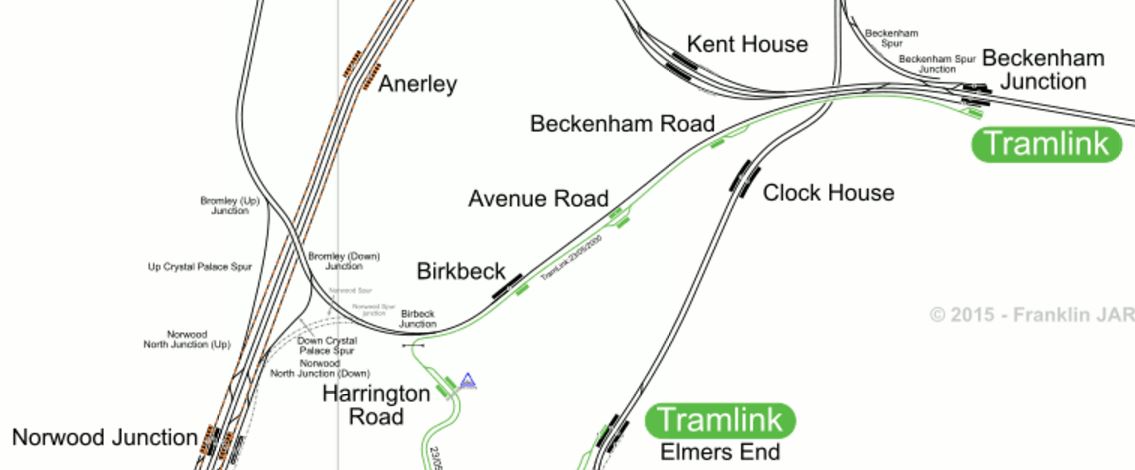
Norwood Junction To Kent House
I would assume that the tunnel would be double-track to accommodate the four tph, that are proposed for the route and its turn-up-and-go service.
This Google Map shows the same area.
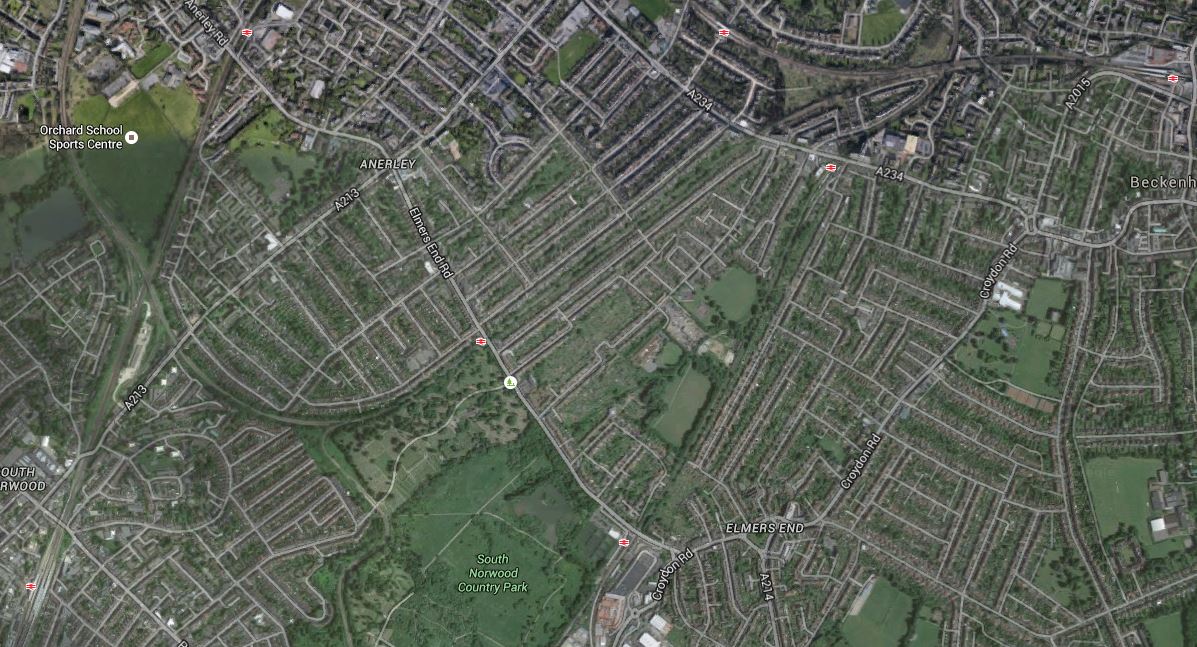
Norwood Junction To Beckenham Junction
Norwood Junction station is in the South-West corner of the map, with Beckenham Junction station in the North-East.
A friend of mine lives in the area and I wonder what he and his wife think of a tunnel under their house!
It may be possible to dig the tunnel in an affordable way, but I suspect another route could be used to bridge the gap between Norwood Junction and Beckenham Junction stations.
I don’t think that four trains per hour in both directions could be squeezed through the single-track section through Birkbeck station, but if they could it would avoid building the expensive tunnel.
There is always the option of splitting the service, as has been proposed for services across Suffolk, that I wrote about in Better East-West Train Services Across Suffolk. In that concept you have an island platform, where the trains meet and passengers just walk across to continue their journey. If say, Norwood Junction were to be used as the station for the split, then the Western service would go between Woking and Norwood Junction and the Eastern service between Norwood Junction and Swanley.
It’ll be interesting to see if the Newmarket scheme is ever built and if it is, how passengers react to it. If it comes over as a success, I think we’ll be seeing more innovative layouts to create new services from existing infrastructure with nothing more than minimal changes.
The Aim Of The Service
The Modern Railways article also says this.
The aim would be to provide a limited stop ‘turn up and go’ service that is competitive with the car, with train interiors designed to a comparable standard of comfort with more seats and Wi-Fi, rather than being of the metro-style used closer to the centre of the capital.
That I like! Sounds like the author is talking Class 387 trains with Wi-fi!
Thoughts On Stations Served
I’m giving each station their own separate posts.
West Croydon
Norwood Junction
Note that I’ve also included some lesser stations for completeness.
Conclusions
The conclusions are best put together for the various sections and features of the line.
Conclusions In The East
Swanley station with its four long platforms arranged in two islands is the key to the East.
Two tph to and from each of the Medway Towns and Maidstone East would give a turn-up-and-go service across the South of London through Bromley, Croydon, Sutton and Epsom.
But given that the station currently has the following services.
- 2 tph West Hampstead Thameslink to Sevenoaks
- 1 tph Victoria to Dover Priory
- 1 tph Victoria to Canterbury West
- 1 tph Victoria to Ashford International
It wouldn’t take a lot of imagination to see Swanley as a major interchange, providing 4 tph services to a whole range of destinations across London and in East Kent.
Sadly, at the moment Ebbsfleet International for Continental trains isn’t possible, but Ashford International is.
I feel that.
- Continental services will increase in importance, over the next few years.
- St. Pancras International will run out of capacity,
- Some Continental services will terminate at Ebbsfleet International.
Which leads me to feel that getting from Victoria and across South London quickly to Ebbsfleet International will be increasingly important.
A direct Swanley to Ebbsfleet link would be ideal.
But as I showed in Rochester Station, that problem could be solved by an enlarged Crossrail.
Bermondsey Dive-Under – 5th June 2016
These pictures were taken ass I came into London Bridge today.


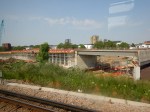

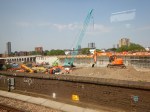
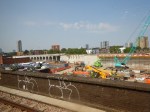



If you compare these pictures with those in Bermondsey Dive-Under – 10th April 2016, there would appear to have been a lot of progress.
It really is becoming an impressive structure, blending the best examples of brick, concrete and steel from the best part of two centuries.
A Tunnel Under Brixton
In the June 2016 Edition of Modern Railways in an article entitled Turning South London Orange.
One of the proposals is to create a tunnel under Brixton to cut out the need for fast Sutheastern services to cross Thameslink services on the level at Herne Hill.
The map from carto.metro.free.fr, shows the current lines between Battersea and Herne Hill.
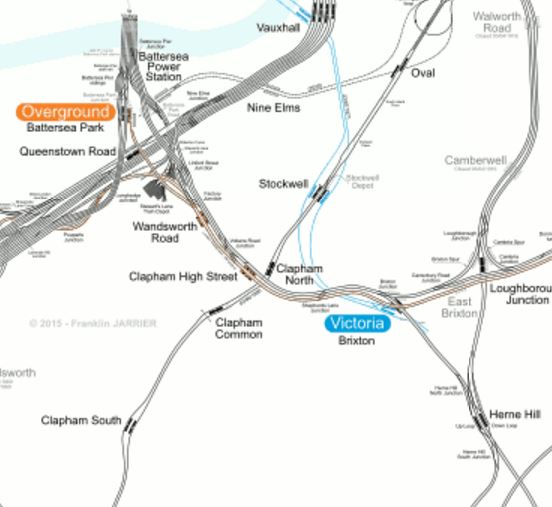
Battersea To Herne Hill
This crossing should surely have been sorted years ago, as it must be a severe bottleneck in the running of Thameslink services. It must be like having road-works controlled by traffic lights, where the M1 joins the M6. I wrote about the problems in Herne Hill Station.
Network Rail’s plan involved turning all Sutton Loop Line services at Blackfriars to ease the problem of getting the trains through the Thameslink tunnel efficiently, but politicians squashed that!
The Northern end of the tunnel would be in the Battersea railway lands North of Wandsworth Road station.
This Google Map shows the area.

North End Of Brixton Tunnel
The Southeastern lines come from Victoria and pass the Battersea Power station site on its Western side, before passing over the wide swath of lines going into Waterloo.
Fast services from Victoria to Kent would go straight into the tunnel, which would have its Northern portal somewhere between the power station and Wandsworth Road station.
Given there are proposals in the Centre for London report, for a new station at Battersea linked to the Northern Line Extension, it all seems to fit together fairly well.
A big winner could be the Battersea Bogs Home, as some of their space might be needed, but then organisations like that are much easier to deal with than irate home or business owners. I could see the charity ending up with some very good premises over the tunnel portal.
The Southern end of the tunnel would be between Herne Hill and West Dulwich stations.
This Google Map shows the area.

South End Of Brixton Tunnel
The Southern portal would be in the area, where the two railway lines cross to the North-West of the sports grounds.
It would seem with all the green space, that building the tunnel portal in the area would be easy.
But much of the land is owned by Dulwich College and they are not the most co-operative of neighbours according to various articles I’ve read.
So it would appear that the politics and public relations of a tunnel under Brixton could be much more difficult than the actual engineering.
The Centre for London report, doesn’t say much about the actual design of the tunnel, but it could be assumed that it would be a five-kilometre double-track tunnel, with or without low-level platforms beneath Herne Hill station. As none of the fast services currently stop at Herne Hill station, I would suspect that nothing more than provision for the platforms will be provided.
There will be various benefits of the tunnel.
- Eliminating the need for Thameslink services to cross the fast Southeastern services, must give benefit to both operators with respect to the robustness of services.
- Lengthening of platforms at Herne Hill will now be possible, which would allow longer trains on overcrowded services.
- Fast services would be removed from the lines through Wandsworth Road and Clapham High Street stations, allowing expansion of services on a reconfigured South London Line.
- Herne Hill station could get six ten-car trains per hour into Victoria calling at Brixton, Wandsworth Road, Clapham High Street and the new Battersea stations for the Northern Line.
It also has to be asked, if the tunnel, which would increase capacity on the Sutton Loop Line, might help with the problems of building Crossrail 2 through Wimbledon.
The other question that has to be asked is how does this all fit in with Transport for London’s possible plans to create a loop on the Victoria Line to serve Herne Hill station, which I wrote about in Will The Victoria Line Go To Herne Hill?
I think this proposal could be an idea, that could improve rail services substantially in this part of South London.
The Class 700 Train Launch At Blackfriars Station
I took these pictures when Thameslink launched the new Class 700 train this morning, at Blackfriars station.
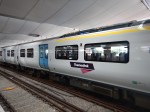
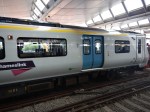

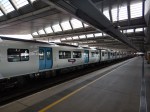
I’ll be very pleased, when I get to have a ride and take a look inside. I suspect six on a Sunday morning at St. Pancras Thameslink, will be a good place to start.
 The Anonymous Widower