Crossrail Looks To Yorkshire
Crossrail has made an appeal for firms in Yorkshire and Humberside to become suppliers to Europe’s biggest construction project. It’s all reported here in the Yorkshire Post.
I did write a post about Custom House station, which is being built in Sheffield and transported to London and installed on site. That sounds like a clever and affordable way to create stations.
Huddersfield Station Completed The Set For Me!
It wasn’t my visit a couple of weeks ago, but when I visited all football grounds in alphabetical order in 2011, but Huddersfield station was the last of the six Grade One Listed stations still used for trains that I visited.
The others are Bristol Temple Meads, Kings Cross, Newcastle, Paddington and St. Pancras.
The combined list of Grade Two Listed stations and Grade Two* Listed stations is an odd mix. It contains six stations, I’ve either lived near or used regularly; Cambridge, Cockfosters, Felixstowe, Liverpool Lime Street, Oakwood and Southgate.
But the list also includes Bury St. Edmunds, which matches the Abbey ruins and the truly awful Harlow Town.
Fyra Explained
I have just found this detailed explanation of the Fyra fiasco on the International Railway Journal.
The title of the article is “Fyra problems could be more political than technical” and it starts and finishes with the simple phrase, “What a Mess!”
We may create the odd mess in the UK concerning the trains, but usually it blows over in a couple of days as all the underlying technology is sound and managers and politicians come up with a quick solution.
To cap it all, isn’t the Fyra train one of the most ugly ones, we’ve seen in a long time?
Exploring The Woolwich Station Box
Berkeley Homes had the excellent idea of having an open day to show those that wanted the inside of the new Crossrail station box at Woolwich.

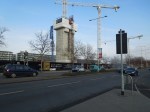
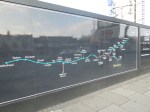



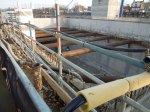


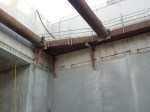
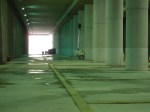

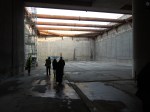
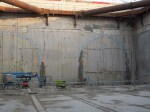


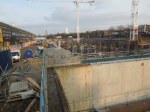

It was a very professionally organised visit and we had met in the Dial Arch pub and then walked down into where in a few years, trains will be either rushing through at up to 100 kph or stopping to drop off and pick up passengers.
I have called the two ends of the box, London and Kent. The former is the western end and the next station is Canary Wharf, whereas the other is the eastern end that leads to Abbey Wood.
There are going to be some stunning pictures here, when the tunneling machines break through on their way from Plumstead to Canary Wharf.
Don’t Get Your Facts Wrong
In August 2011, Richard Ford, published a table in Modern Railways showing track access charges for the new IEP against the IC125 and IC225.
Unfortunately, he made a mistake in the figures.
Then a Government Minister then used the figures to answer a question in Parliament many months later, giving an answer that was plainly wrong.
Probably, this shows the reasons why you shouldn’t use that thinking technique beloved of idiots everywhere; cut and paste.
The real problem here, is that the Department of Transport civil servant, who made the mistake, is probably too precious to be disciplined.
But Roger gave him or her, a good kicking in the article and has passed the real information to the National Audit Office.
A Paragon Of Track Kindliness
Richard Ford in Modern Railways uses this lovely phrase to describe the High Speed Train in an article comparing track access charges.
Needless to say, British Rail’s iconic 1960s design comes out almost as cheap or even cheaper to run than the new electric ones that are supposed to replace it.
It just goes to show, what a great design it is. Knowing the stubbornness of engineers, these trains will outlive me and might still be running in the second half of this century.
A Great British Compromise
This is the title of an article in Modern Railways which discusses how you measure how late trains are.
The trouble is that what is late to passengers is very different to what is late for the train companies.
Take these scenarios.
1. You are wanting to catch a particular train at 10:00 and you get there at that time, just as the train is moving off. You’ll be annoyed and ask why couldn’t the train wait. But then to the train company, every time they’re late away means they’ll have to catch up somewhere to avoid their punctuality figures being ruined.
2. If train timetables had contingencies, they’d all wait regularly, so they left and arrived on time. Do we want more time to sit and twiddle our thumbs?
3. What passengers like too, is being early and how many times, have you waited outside a terminal station for a platform, before arriving dead-on the correct time?
4. You’re catching a connection at somewhere like Ipswich and you have two minutes to get the other train. But you’ve got a heavy case and you’ve got to get across the overbridge, which has got lifts. The lifts however are busy with someone in a wheelchair and you miss the train you need to catch. Who’s fault is that?
You can probably think of many other scenarios.
You get annoyed because of the lost time, but rail companies get their statistics mucked up. You might not travel that way again and the train company is out of pocket.
So we have two possible solutions.
1, We either build enough slack into the timetables, as they do in some other countries, so that the trains always arrive and leave as the timetable says. But this means a lot more thumb-twiddling.
2. We adopt a good British compromise, with give and take on both sides.
If we go for the second option, passengers must accept that occasionally they will be late, but sometimes they will be early. So you win some and lose some.
There are also a few responsibilities, that the second option places on both parties.
1. The first is a variation of the mirror-in-the-lift solution. I can’t find a full reference, but there is this post on Yahoo Answers. Basically giving people something to do, makes the waiting shorter. So perhaps a cafe and a toilet would help pass the time. Even good informational posters will help!
2. Train companies must also provide information in a timely manner. I was on a train recently and as it approached a stop, an announcement told passengers wanting the train to Somewhere, that it was on Platform 3 over the bridge or whatever.
3. Some station signage is also pretty poor. If you get the Overground from Stratford, you walk up the stairs and there are often two trains at the top. So do you go left or right? A simple next train out sign, like several Underground stations have, would solve the problem.
4. Passengers should be prepared and if they don’t know what to do, then they should leave themselves more time.
So it’s all give and take and if we get it right everybody wins.
1960s Architectural Failures
Yesterday, I went to or through four stations; Highbury and Islington, Euston, Manchester Piccadilly and Huddersfield.
Huddersfield is a Grade 1 Listed Building which means it is one of the finest buildings in the country. The others are three of the worst examples of how we designed and built stations in the 1960s.
So it got me thinking about what are the worst examples of 1960s architectural design, that I’ve seen. I’ll start with the three I’ve already named.
Euston station – I probably went to Liverpool a couple of times from Euston before the current station was built and I have vague memories of catching trains there during the building in perhaps 1965 to 1967. The design shows classic “Think Small” attitudes as it was deliberately built with foundations that couldn’t support development above. Only twenty or so years later, Liverpool Street station was remodelled, which shows how good design can be applied to old buildings. Since then St. Pancras and Kings Cross have been rebuilt using similar thought processes to those used so successfully at Liverpool Street. One does wonder what would have happened at Euston, if the rebuilding had been a few years later. Euston is now to be rebuilt for HS2 and I suspect they’ll get it right this time.
Euston has another big problem, that you don’t see on the surface. The Underground station is one of the worst in London, with no step-free access, innumerable staircases and escalators and a dingy cramped ticket hall. The only good thing about Euston station is that coming off a train, it’s easy to walk to a bus, as I did last night. But try taking a heavy case on the Underground.
In some ways, Euston’s problems with the Underground should have been solved, when they built the Victoria Line, which opened at around the same time as the new Euston station. It just showed how bad project planning was in those days. The fact that the Victoria line was built on the cheap didn’t help.
Highbury and Islington station – This suffers badly because of the decision to build the Victoria Line on the cheap. Again it is not step-free and it perhaps is one of the worst stations for disabled access in the Underground, as when you get down the escalator, you then have a tunnel and a staircase to get to the platforms. At least the Overground platforms have lifts to the surface. Since I have moved to the area, the station concourse has been opened up considerably and it is not dark and cramped like it was a couple of years ago. To be fair to Transport for London, I think they’ve achieved the improvement without using tons of money. But solving the problems of access to the underground platforms will be very expensive.
Manchester Piccadilly station – This suffers in that it doesn’t have enough platforms and lines. Additionally, of all the main stations in the country, it probably has some of the worst connections to other means of transport. It makes you wonder if it was designed as a cheap stop-gap solution to accept the new electric trains from London. They are spending a fortune on the Northern Hub, but will it get rid of all the hangovers from the 1960s and all the resulting layers of sticky tape? Only time will tell, but judging by the improvement of planning in recent years, it probably will. If you want to read about planning failures in the area, read this Wikipedia topic about the Ordsall Curve, which is a crucial part of the Northern Hub. It would appear that it had the go-ahead ( and money) in 1979.
So that’s dealt with yesterday’s examples, what others can be added to this list?
Kings Cross station – Although not specifically 1960s, but a few years later, this now virtually demolished extension was best described as a wart on the face of the Mona Lisa. The man who designed it, must have had the biggest conservation stopper of all time. I can’t wait until I see the new Kings Cross plaza in the autumn.
Various stations – There were a lot of stations built in the 1960s that I don’t like, although some are listed. I would start with a short list of Harlow Town, Stevenage, and Walthamstow Central. Railways have a lot to answer for, but some of their worst excesses were reserved for buildings like this signal box in Birmingham. Many reckon that Birmingham New Street station is another bad example, but at least the operation of the station seems to be pretty good. In fact the planned reconstruction of the station; Gateway Plus, is all about greater passenger comfort. So yet another 1960s monstrosity will bite the dust. Gateway Plus has this condemnation of 1960s thinking.
The current New Street station was built to cater for 650 trains and 60,000 passengers per day, which was roughly the same usage it experienced when it was first constructed. It was believed that demand for rail travel would decrease. However, it now caters for 1,350 trains and over 120,000 passengers – twice its design capacity. Passenger usage of New Street has increased by 50% since 2000.[2] It is predicted that passenger usage of the station will increase by 57% by 2020.
We do seem to have cut corners for decades and only now the chickens are coming home to roost.
The HS2 Eco-Report
The Sunday Times is reporting the Eco-report for HS2 stretched to 50,000 pages and weighs half-a-ton.
Partly this is due to the fact that Parliament needs a hard copy.
Surely though, that in this case to save a large number of trees, they should receive it electronically.
Getting To Huddersfield By Train
Huddersfield is the tenth largest town in England, with a population of 146,000 or so. As I found on my trip yesterday, it has a grand railway station with good connections to Manchester and Leeds, but it doesn’t have any good connections to the South and London. Those that came up by coach and car from Suffolk, weren’t too impressed by the roads to get their either.
I went by changing at Manchester Piccadilly, which at least has a frequent connection to Huddersfield. Going as fast as you can that way it takes a few minutes under three hours, as it does via Leeds. Going via Wakefield can be a bit quicker, but trying via Sheffield say stretches the journey to nearly four hours.
Looking at the various rail lines in the area, there is a line from Huddersfield to Sheffield called the Penistone Line. If someone had a bit of sense, it would seem that this area of Yorkshire could be given better transport links by improving this line so that it provides a better link to the Midland Main Line, when that is electrified to Sheffield. Many countries would electrify the line, but seeing the terrain yesterday and looking at the map, it might not be a cost-effective project.
The current improvements and electrification of the Midland Main Line will probably mean that going via Sheffield to London will be quicker than the other routes in a few years.
And then sometime in the next century HS2 might reach Sheffield Meadowhall station!
You can’t get over the fact, that Huddersfield seems to be a bit of an afterthought in railway planning and it has been like that for many years.
 The Anonymous Widower