Wandsworth Common Station
This was the destination of my walk today, where I took pictures for Crossrail 2 Consultation – Wandworth Common Shaft
It is a strange station with two fast and two slow lines, that probably hasn’t been looked at by an architect since the 1920s.

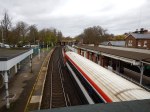
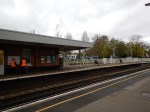


As you can see, it’s not a station for those who need step-free access and it also had one of the lsargest platform-train gaps I’ve seen in the UK.
Crossrail 2 Consultation – Wandsworth Common Shaft
This Crossrail document is entitled Wimbledon to Clapham Junction.
If contains a small section about a proposed shaft that will be built at Wandsworth Common. It says this about the two shafts between Clapham Junction and Wimbledon.
Between Wimbledon and Balham stations – one shaft in the Weir Road site and another within the Springfield Hospital development
Between Balham and Clapham Junction stations – one shaft on the eastern edge of Wandsworth Common, at the end of Honeywell Road.
A single worksite would be required to build each shaft and a typical shaft would take approximately five years to complete. Activity on site would fluctuate during this period. Once the site has been cleared and prepared, the major construction work to dig out the shaft would usually be complete within two years
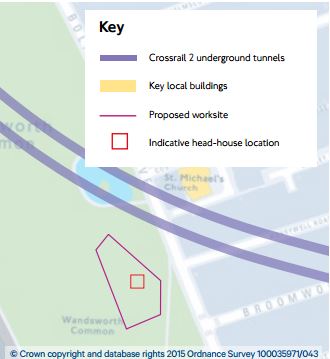
This map from the Crossrail 2 document shows the position of the shaft at Wandsworth Common.
Wandsworth Common Shaft Site
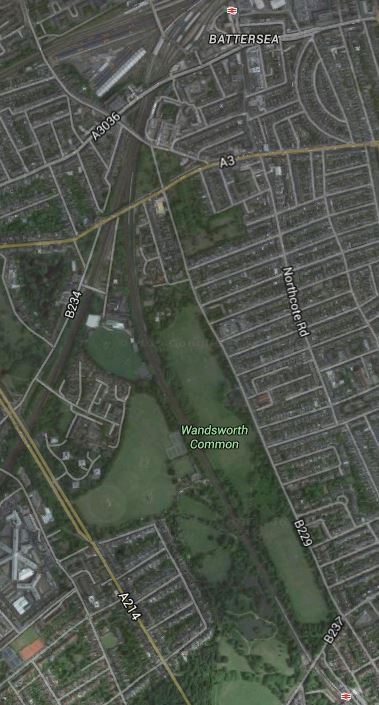
This is a map of the rail lines as they pass the site.
Between Clapham Junction And Wandsworth Common Stations
The shaft will be at the position, where the Google Map has the Wandsworth Common legend. The Crossrail 2 document says this.
The shaft would be on the eastern edge of Wandsworth Common, at the end of Honeywell Road (off Bolingbroke Grove). Our current preferred site has been selected because it is the only non-residential piece of land in the area which is large enough to allow construction of a shaft.
This morning I walked from Clapham Junction station at the top of the map to Wandsworth Common station at the bottom and took these pictures.
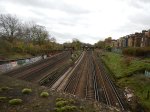





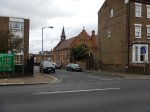



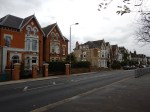








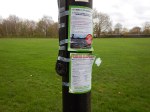
Most of my thoughts are in the comments for the pictures, but I would also add the following.
- The site of the shaft seems to have been chosen with care, so that no mature trees are affected. It’s all flat grass.
- I have a feeling that for Health and Safety reasons the designers like shafts in large open spaces. Crossrail trains hold 1,500 passengers. Evacuating them into Wandsworth Common or Mile End Park would be easier than say bringing them up in the City.
- Information appears to be very preliminary at the moment. That at Wimbledon is more detailed and I would expect more detail on Wandsworth Common in the future.
- I’d never been to Wandsworth Common before and what surprised me most, was that it appeared to be on top of a hill. I have a feeling that this could make the routing of the tunnel less complicated and it could be deeper under all the buildings.
The Head House
People worry, that they’ll get some awful head house on the shaft, like those for the Channel Tunnel Rail Link, which look like they were used as defences against Napoleon.
This shows the head house, that Crossrail is building in Mile End Park.
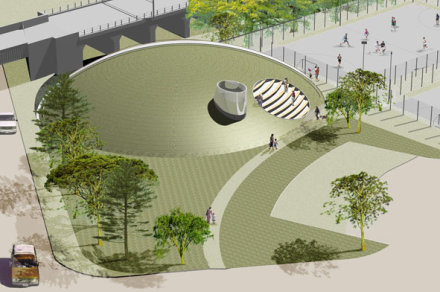
In fact the Mile End Park shaft, with an appropriate head house, would probably be closest to what is proposed to be built at Wandsworth Common.
- It will be a similar size underground.
- As head houses will be here for virtually ever, lots of care is taken in their design.
- They are both in large open spaces.
- They both have good road access on wide roads.
The shaft at Mile End Park was one of several designed by Fereday Pollard. Not all were actually built, as Crossrail cut a few out in the detailed design phase.
Construction
The biggest worry for many is the construction of the shafts.
This Google Map shows the site of the Mile End Park shaft under construction.
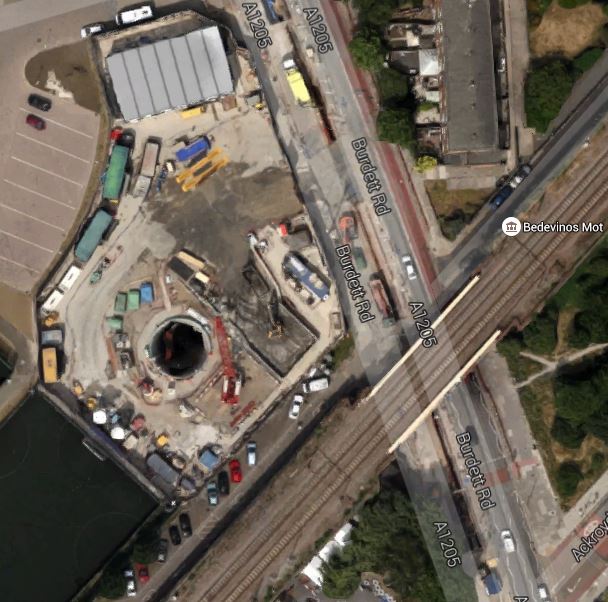
Mile End Park Shaft Site
I estimate the work site is around fifty metres across and has been deliberately positioned alongside the road.
The black hole is the actual shaft.
When I wrote How Will Crossrail 2 Affect De Beauvoir Town?, about how Crossrail 2 will affect where I live, I said this.
I’m pretty certain, that the digging of the southern shaft at Site A will be the only major part of the construction, that will affect De Beauvoir Town, as I suspect they’ll have to remove the spoil in a succession of trucks. I estimate there will be about 10,000 cubic metres of spoil to remove to create the hole for the shaft.
As the shaft at Wandsworth Common is probably the same size as that at Dalston, it would mean about a thousand truck loads, spread over the time that the shaft was being dug. Unless, they decide to use conveyors to move the spoil across the Common to the railway. I’m not sure what they did at Mile End, but I haven’t heard of any complaints.
The big difference between Wandsworth Common and a lot of the other sites, is that there will be no demolition.
It is a perfect green field site. I doubt there’s any gas mains or power cables across the site.
Conclusions
I think that everybody who lives in South London, will get lots more hassle from the large construction project at Wimbledon, where according to current plans, the station will be completely rebuilt for Crossrail 2.
If I lived near Wandsworth Common, I would start to think now, what would be appropriate for a head house to the shaft, as if cards are played right, then Crossrail 2 will provide it.
Wandsworth might like a temple in a garden.
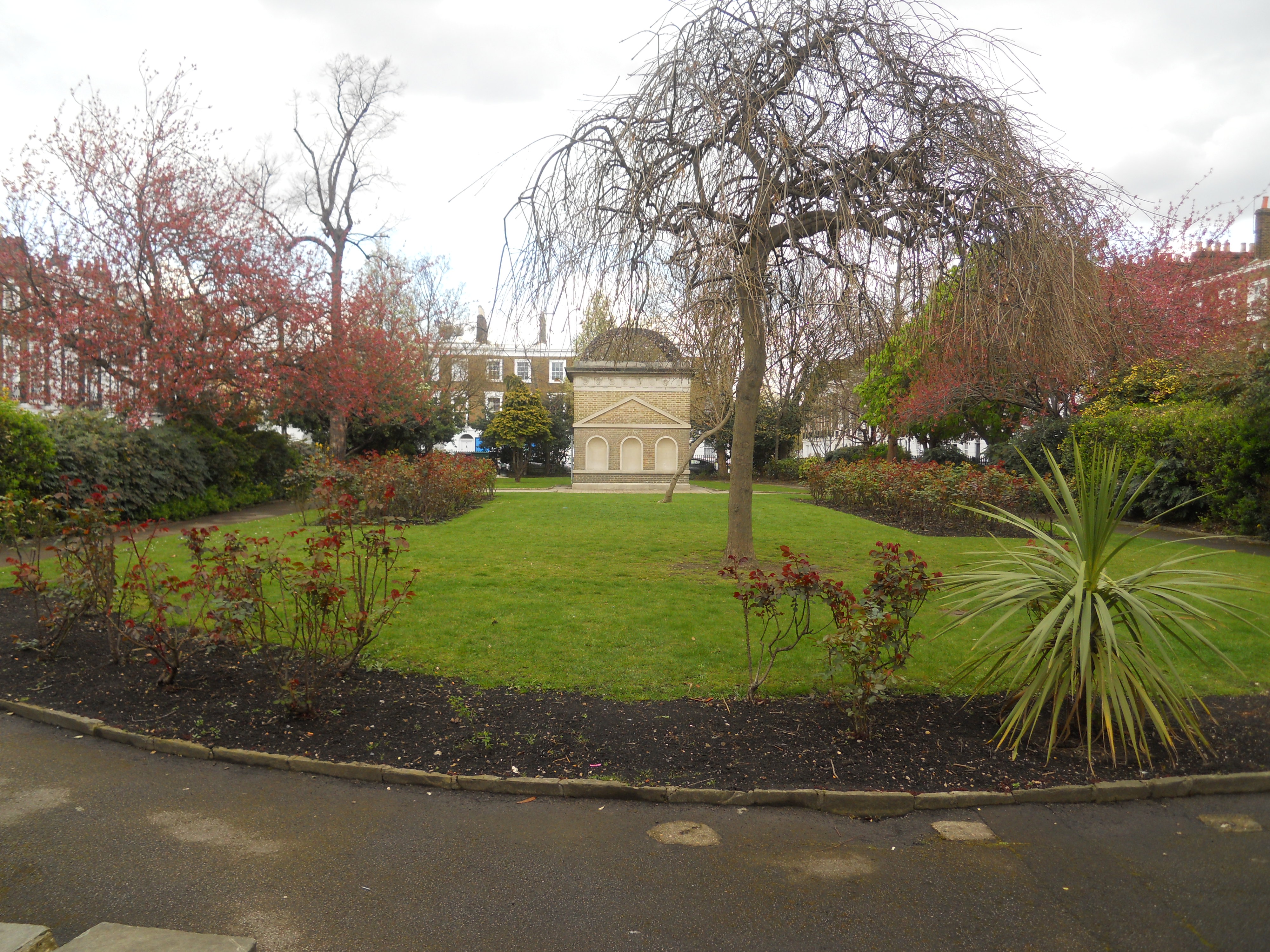
This was actually built in the 1960s as the head house of a ventilation shaft for the Victoria Line in Gibson Square, Islington.
We need more whimsey!
If Manchester Victoria And Birmingham New Street Were The First Two Courses, Is Carlisle The Third?
Manchester Victoria and Birmingham New Street stations have one thing in common with the Eden Project – They all have roofs made of a plastic called ETFE.
According to this article on Network Rail’s web site, which is entitled £14.7m upgrade planned for Carlisle station, Network Rail are going to fit a third station with an ETFE roof. This is said.
Eight of the platforms will be rebuilt, and an updated roof will also help to make the station much brighter.
The work will significantly extend the life of the station’s roof structure, which dates back to 1847, as well as reducing the amount of maintenance it will need. The existing roof covering will be replaced with one made from ETFE (ethylene tetrafluoroethylene), the same material used for the roofs of the new Manchester Victoria and Birmingham New Street stations.
There’s also a computer visualisation of how Carlisle station will look.
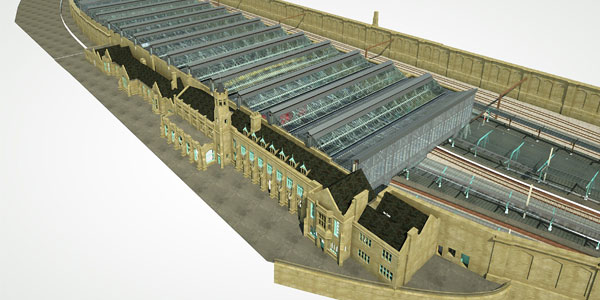
New Roof At Carlisle Station
This Google Map shows the station.
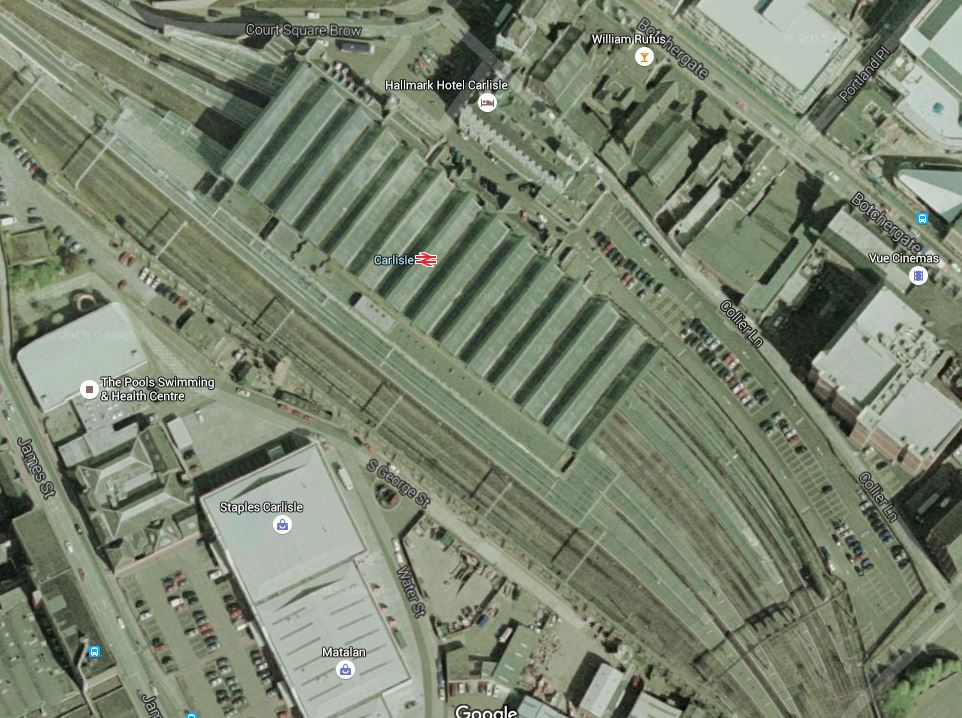
Carlisle Station
Note there are three through platforms, two bay platforms to the North and three to the South. I don’t think too many of the bay platforms are electrified.
I just wonder, if whilst they are rebuilding the platforms, they will electrify some of the bay platforms. Or at least do the preparation work!
This would enable IPEMUs to be able to be recharged, if they were serving routes out of Carlisle, like the Tyne Valley Line, Settle to Carlisle and possibly an extended Borders Railway.
Incidentally, I think that by the time Carlisle station is updated in 2019, IPEMUs or battery trains, would have enough range to reach Edinburgh. You can see the headlines in the Sun!
Investigating St. Johns Station
St. Johns station is a curious one, in that it is just two platforms on the slow lines, amongst a forest of lines.
This map shows the lines around St. Johns station to Lewisham, New Cross and New Cross Gate stations.
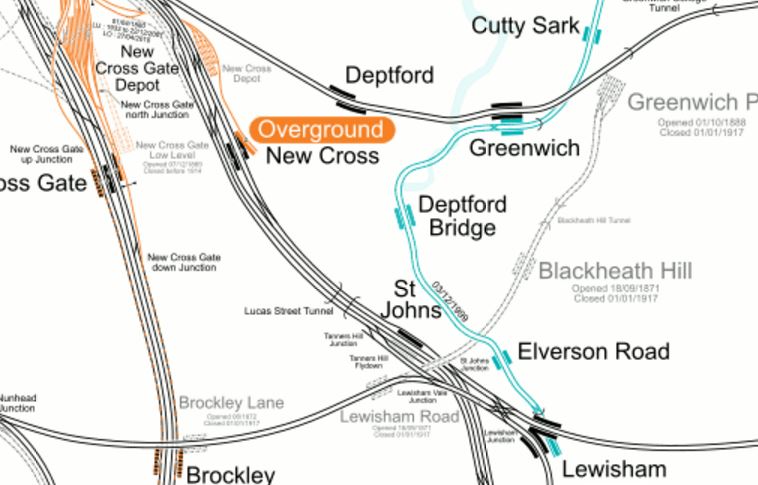
Lines Around St. Johns And Lewisham Stations
These are pictures I took of the station.




As the pictures show, it is a fairly basic station, although it does get over half a million passengers a year.
On the other hand, it does have Southbound services to Lewisham, Orpington, Hayes, Slade Green and a host of places all over South East London.
I believe that if the station were to be upgraded with step-free access to the street, a nice warm waiting room, a coffee stall and excellent information, then this station would become the preferred interchange for passengers on East London Line trains wanting to go to and from many places in South East London.
Changing At New Cross
If you get an East London Line Class 378 train and want to continue your journey South from New Cross station, you often just walk across the platform to catch your next train.
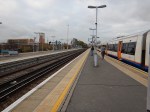
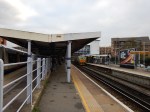
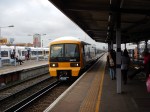
The pictures show how I changed at New Cross for St. John’s station.
There is no problem going South but coming North, you have to climb over the bridge from platforms A or B to get to platform D. The walk is step free, but modern station layouts would be designed, so that you walk across between trains or wait on the platform for a few minutes, until your train arrives.
In an ideal world Northbound East London Line services would start from Platform A, with Platform B being reserved for services to Cannon Street.
New Cross Gate station uses a layout with the East London Line trains calling at the outermost platforms.
This would not be possible at present with the trains terminating at New Cross in Platform D, as they have no means to get to Platform A, without reversing out and crossing the busy lines through the station.
But if the East London Line trains terminated South of New Cross, this would not be a problem.
The service frequency from New Cross to Dalston Junction would still be the same as now, but there would be differences.
- Passengers joining the railway at New Cross wanting to use the East London Line to go North would have to cross the step-free footbridge, just as passengers for Cannon Street do now.
- Usually, because the Northbound East London Line train is waiting, you can sit and wait in a warm train, rather than on a draughty platform.
- Passengers from St. John’s, Lewisham and other stations in the South might avoid at least one change of train, by using East London Line trains.
Remember too, that from 2019, Crossrail will run through Whitechapel, giving better access to the West End, Paddington. Heathrow and East London. Charing Cross and Cannon Street aren’t exactly connected well to Crossrail. This will surely see a lot of passengers going between New Cross and Whitechapel.
An Opportunity At Catford
I’d never been to Catford before, but several things drew me to the area.
- Catford Bridge station is mentioned as a possible stop for the Bakerloo Line Extension.
- Maps show it is very close to Catford station and I wondered why they weren’t one station.
- Catford is mentioned in the Appendix of TfL’s Transport Plan for 2050, as a place for a new link and/or station.
This Google Map shows the two stations.
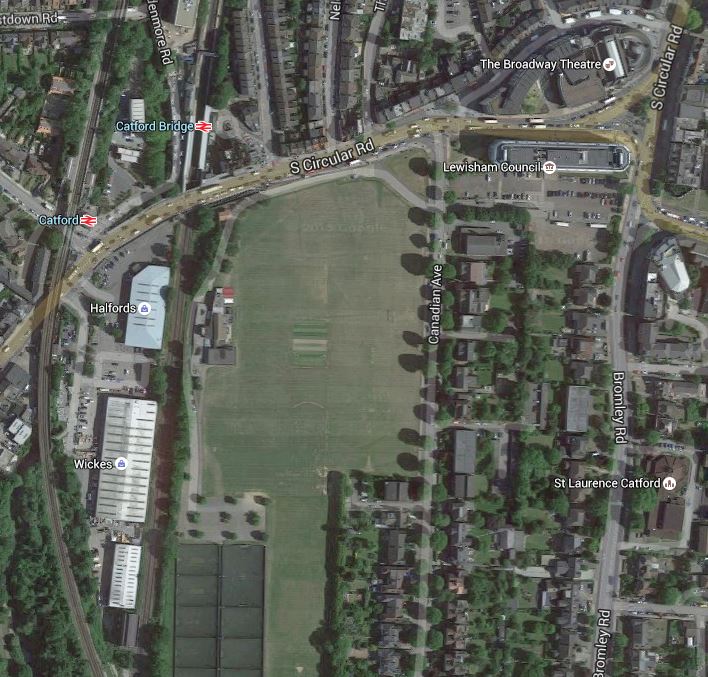
Catford Stations
The two stations are only about eighty metres apart and they are not that far from Catford Town Centre. The big drawback is that the road between the stations and the centre is the dsreaded South Circular Road, so it is busy with traffic.
To be fair to Lewisham Council, they have produced this document entitled Catford Town Centre Local Plan.
The plans are sensible and envisage improving the area of the two stations considerably.
This pictures show the area now.


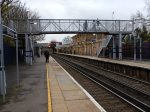


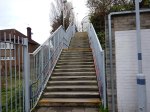


Barratts are building a large number of dwelling on the former Catford Stadium site between the stations. They call it Catford Green and there are more details on the Lewisham Council web site. This is said on the council web site.
The development – located between Catford’s two stations and Ladywell Fields – will comprise 13 blocks up to a maximum of eight storeys in height, along with associated landscaping, including naturalisation of the River Ravensbourne and the creation of a public plaza between the stations, plus a footbridge to Doggett Road.
I’m no architect, but even I can see that the site has a lot of possibilities, especially as the lines through Catford are on a viaduct and are thus higher than the lines through Catford Bridge. So perhaps this natural slope could be used to advantage.
Remember too, these facts.
- Over a million people use both stations in a year.
- Interchange passengers are over fifty thousand a year.
- I think it is true to say that neither station is very customer-friendly and I suspect Catford is rather cold and draughty.
- Catford station will see new Class 700 trains in a few years, as it is on Thameslink.
The effects that the last fact will have on passenger numbers, won’t be negative.
I think it will be unlikely if the two stations are not linked to each other and the town centre by an imaginative development, within the next few years.
London Gets Its First Community Rail Partnership
There are over fifty Community Rail Partnerships in the UK. This is an extract from the Wikipedia entry.
The Association of Community Rail Partnerships (ACoRP) supports its fifty or so member CRPs and also offers assistance to voluntary station friends groups that support their local stations through the station adoption scheme. Since 2005 the Department for Transport has formally designated a number of railway lines as community rail schemes in order to recognise the need for different, more appropriate standards than are applied to main line railway routes, and therefore make them more cost effective.
As the numbers keep increasing, I suspect that central and regional government, local authorities, passengers rail companies and staff, think they are a good idea.
Today’s in some ways surprising news, is that London is to get its first Community Rail Partnership in Hounslow. Sewvn stations are involved on the Hounslow Loop Line.
This article in Rail Technology Magazine gives more details of the partnership.
How many more Community Rail Partnerships will London embrace in the next few years?
Changing Trains At Brixton
These pictures are a record of changing from Brixton tube station on the Victoria Line to Brixton station for a train to Herne Hill.
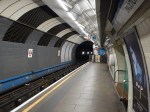








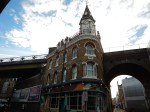
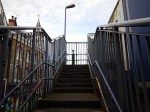
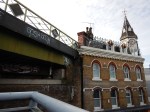


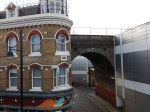
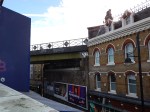
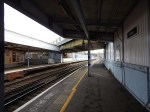


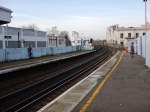




Note the following.
- The Underground station is step-free, but the rail station definitely isn’t!
- Platform 1 at Brixton station for Victoria is only accessible with difficulty.
- Platform 2 is by internal staircase with artwork.
- The platforms have two bronze figures on the platforms. I’d like to see more of the bronzes in store in our galleries exhibitied on stations. You certainly couldn’t nick them from Brixton station.
The Underground station is one of the best, but the rail station is best described as unusual.
This Google Map shows the two stations.

Brixton Station
Simple it isn’t!
How complicated and expensive a new station would be depends on how many connections, you want passengers to have.
Building an Overground station in the sky would be expensive, as height always costs money.
But putting decent stairs and lifts into the existing Brixton station would be routine compared to linking to the Overground.
The only way to connect all three lines would be to rebuild the Argos building as a triple dcker station with lifts and escalators.
But it would be horrendously expensive, even if there were some shops and a lot of flats on the top of everything.
But the bulding would be well connected!
I think that the best that can be hoped for is lifts and decent stairs in the main line station.
A Video About The Vivarail D-Train
I am sceptical about the Vivarail D-Train, but I do admire companies and organisations that think out of the box.
That is why I’m putting this link to a BBC video about the project.
In the UK, we are in such a great need of new trains, that any idea that works will probably have a niche somewhere. However small!
Of whom does the male BBC presenter remind you?
Beware The Tosser With A Digger!
This story from the Standard is entitled Digger cripples London Overground route after tearing down overhead wiring at level crossing.
This accident happened on a Sunday between Shepherd’s Bush and Willesden and it doesn’t appear anybody was hurt.
But it just illustrates how dangerous level crossing are.
Currently, several hours later,there is no service on the line.
 The Anonymous Widower