From Kassel To Frankfurt
I could have taken a German ICE train from Kassel to Frankfurt, but I took a regional train, hoping to get some good views from the top deck.

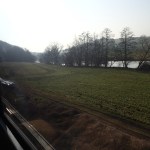

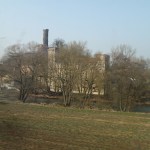


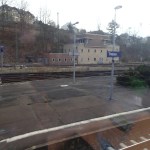
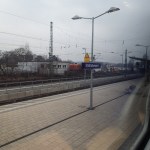
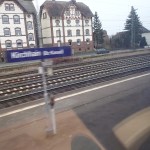
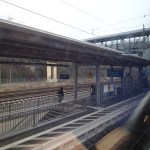

Unfortunately, as the pictures show, the weather wasn’t that good. But you do see the countryside better from the high position and the comfort and ride is of the same standard as something like the ubiquitous Class 377 in the UK.
One reason I took this train, was that I’d been told by the lady in the Tourist Office in Kassel to buy a Hesse Ticket.
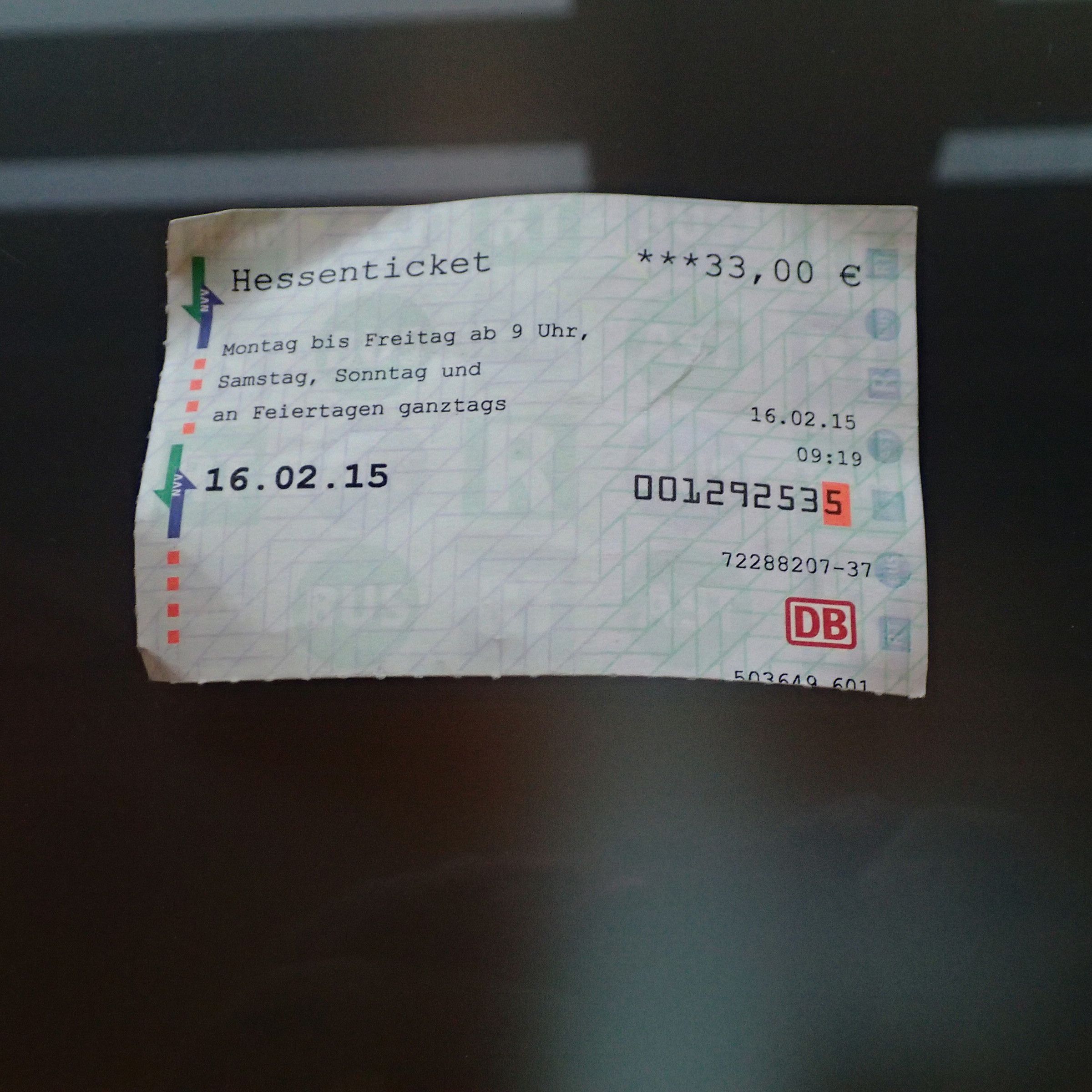
My Hesse Ticket
I thought it was a bit steep at €33 for twenty-four hours, but it did include the buses and trams in Frankfurt and the train between the two cities.
The price actually included up to five passengers. But there is no similar ticket for a person like me, who usually travels alone.
How visitor-friendly is that?
A Train With The Engine In The Middle
As I left Kassel, I saw this train, which appears to have an engine module in the middle.
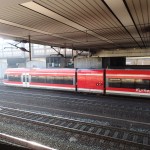
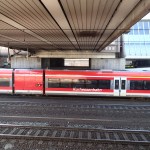
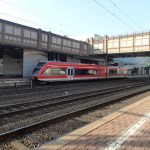
It is actually a Stadler GTW and it must be a good concept as over five hundred of them are working all around the world, in both diesel and electric versions..
One great advantage for passengers is surely that the noise and vibration problem of underfloor diesel engines is minimised. The train is also a low floor design.
The design is also very flexible.
- The power packs are probably interchangeable, so you could switch trains from diesel to electric according to need.
- A battery could be incorporated into the power pack, which is charged when running under wires.
- The articulated design goes well on curvy track.
- Extra passenger modules can be added.
- For the UK, they could be a way round not buying any more diesel multiple units. We would buy some diesel versions and if we had too many due to the march of electrification, we just swap the central module.
I wouldn’t be surprised if we saw more trains with a central power pack. I think if the UK used the same loading gauge as Europe, we’d have seen one in the UK on test by now.
Is The Battery Electric Multiple Unit (BEMU) A Big Innovation In Train Design?
By training I am an Electrical Engineer who specialised at Liverpool University and for a few years afterwards in the mathematics of the control of mechanical, electrical and other systems.
Over the last fifty years, I’ve liked to think of myself as scientifically green and in transport, I’ve come to the belief that we need to be as electric as possible, as this can produce a minimum of carbon dioxide and less noxious fumes and noise.
We may have produced a series of battery-electric vehicles for special purposes such as golf buggies, the electric milk floats of my childhood and light taxis and buses for historic city centres.
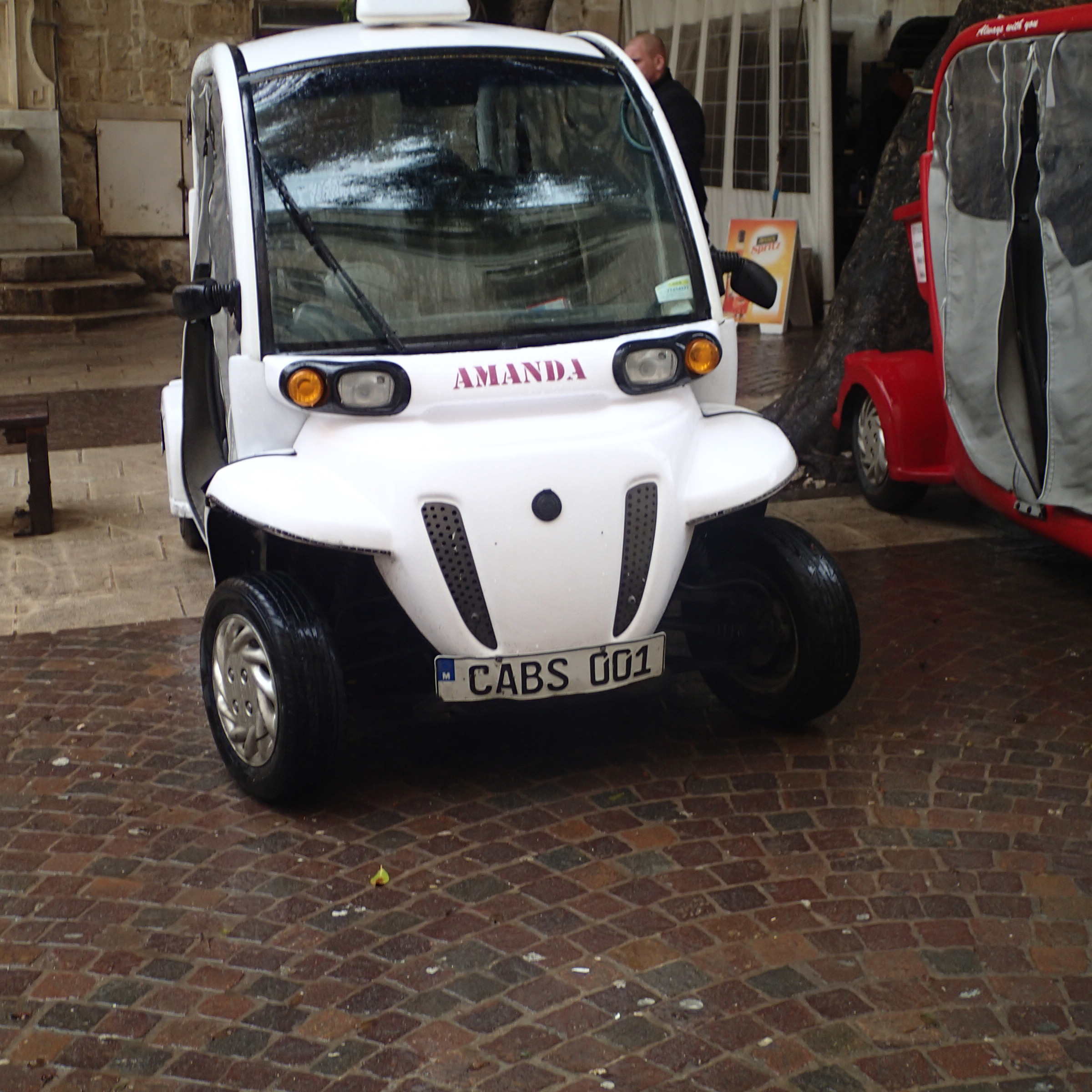
Electric Taxi In Malta
But where are the queues of stylish electric cars waiting for the charging points in my local car park in Dalston?
In my view, electric road vehicles with one or two rare exceptions, don’t really appeal to drivers, owners and users. You read reports that the economics are suspect without large subsidies. That’s as maybe, but having once owned a golf buggy, I can testify that battery life and performance wasn’t acceptable to the special needs on my farm.
So when Bombardier, Network Rail, Greater Anglia and others announced they were going to test a Class 379 4-carriage train as a battery-electric multiple unit (BEMU), I either thought they had more money than sense or there was something I’d missed.
Riding The BEMU
A desire to investigate found me on a cold morning in February boarding what looked to be a outwardly normal Class 379 train at Manningtree.

An Outwardly Normal Class 379 Train
The only visible difference was the Batteries Included sign on the side. Inside nothing appeared to have been changed
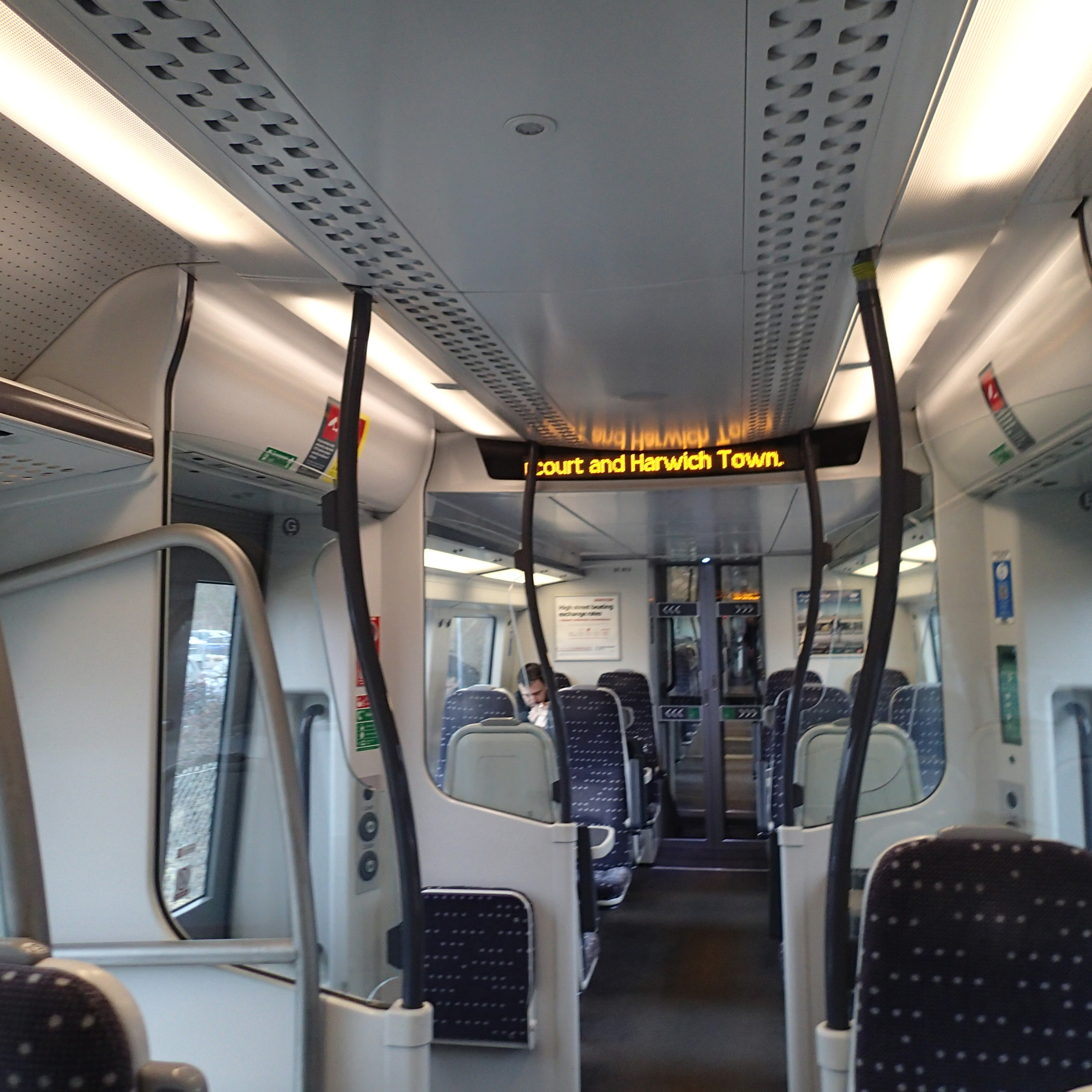
A Very Familiar Interior
Except for the destination display showing we were going the dozen miles to Harwich Town.
As we trundled away and breezed down and back up the Stour Estuary, I could detect no difference between the two runs and between train 379013 and its unmodified siblings, which I use regularly to Cambridge. The conductor assured me that they generally went one way under AC power from the catenary and the other on the batteries.
Returning from Harwich, I travelled with the train’s on-board test engineer, who was monitoring the train performance in battery mode on a laptop. He told me that acceleration in this mode was the same as a standard train, that the range was up to sixty miles and that only minimal instruction was needed to convert a driver familiar to the Class 379 to this battery variant.
It was an impressive demonstration, of how a full-size train could be run in normal service without connection to a power supply. I also suspect that the partners in the project must be very confident about the train and its technology to allow paying passengers to travel on their only test train.
It’s All About The Rolling Resistance
The physics of rolling resistance, explain why I was wrong to be sceptical and had now been so surprised and delighted by the Class 379 BEMU.
Most of us have driven a car with soft tyres and know that you need more power to maintain speed, as soft tyres have a higher rolling resistance.
Generally the rolling resistance of a steel wheel on a steel rail is lower, which helps trains move heavier loads for less power than road vehicles with rubber tyres.
But also if you read about the mathematics of rolling resistance, you will find that if you increase the load on a steel wheel running on a steel rail you lower the rolling resistance, so you can move the train for less power. This helps explain the impressive performance of the BEMU.
You have the paradox, that optimally-located heavy batteries, in a steel-wheel-on-rail vehicle, reduce the rolling resistance and mean it needs less power.
One of the most important rules of life is that you can’t disobey the laws of physics.
A Hybrid Train
In some ways to consider this train a battery electric multiple unit is wrong, as its nearest cousin is probably the hybrid bus, such as the New Routemaster in London. In the bus the battery is charged by a small diesel engine and final drive is all-electric.
In the rest of this article, I will continue to use BEMU, but hybrid electric multiple unit or HEMU might be better. It could be argued that the general public associate hybrid with something good, so there may be sensible public relations reasons for calling the trains HEMUs.
Using a BEMU
One of the main uses of a BEMU would be on a cross-country route that connects two electrified lines. The overcrowded Cambridge to Ipswich route would certainly be possible, as the gap between Haughley Junction and Cambridge is short of thirty miles and well within the capability of a BEMU.
Another use of a BEMU would be to extend an electrified route to an important town that needed a rail link bigger than can be provided by a two-coach diesel train of a certain age. London to Great Yarmouth via Norwich would be a typical route.
Branch lines off an electrified main line, such as the Felixstowe branch would be ideal for a BEMU.
The three East Anglian examples I have given could probably be served without spending a penny on infrastructure.
The Greater Anglia Involvement
Greater Anglia’s involvement in the project is significant as East Anglia has several routes suitable for a BEMU, in addition to those mentioned earlier.
The trains would also give the company the ability to extend some of the Liverpool Street to Cambridge services to perhaps Norwich, Newmarket and Bury St. Edmunds.
Some gaps like Ely to Norwich, might be stretching the range, but the trains could give the soon-to-be-two Cambridge stations much better access to a wider East Anglia from Peterborough and Wisbech in the West, Norwich and Cromer in the North and Yarmouth and Ipswich in the East.
East Anglia seems to suffer more than most from track and overhead wire problems and rebuilding. A BEMU would make a superb blockade buster and could even have been used to get passengers to Peterborough, when all the problems happened on the East Coast Main Line at Christmas, by jumping the gap from Ely.
The rail network in East Anglia also suffers from periodic overcrowding, especially in the summer, so extra carriages on many services would be welcome to Greater Anglia and users alike.
East Anglia for so long a rail backwater would love these trains.
Advantages To Network Rail
Network Rail is an infrastructure company so why is it getting involved in the design of trains?
Network Rail has some problems with electrification due to well-publicised issues and in some cases the large quantity, they are being tasked to install, which puts pressure on manpower and resources.
In some sensitive areas, there may be planning issues with putting up the overhead wires. A simple example in Suffolk illustrates the value of a BEMU. It is unlikely the Gainsborough Line will ever be electrified, as it runs through the Stour Valley and the Nimbys would have a field day if Network Rail decided to put overhead line gantries on the iconic listed Chappel Viaduct, which is the second largest brick structure in England. But as the line is only a dozen miles long, running a BEMU on the line would be a sensible idea.
There are probably a lot of places where using a BEMU, rather than electrifying saves Network Rail a lot of installation costs and lawyers fees. Passengers would get a brand new and probably larger electric train, from the day they can be delivered and after the train crew has been trained.
Electrification of passenger services is a proven revenue generator, but predicting how much electrification will increase traffic, is one of the blackest of black arts. The difficulty is illustrated by the North and East London Lines, which were built to run the three-car trains that were thought to be required for the level of traffic. London Overground is now going through the second train lengthening process to cope, which is also requiring various infrastructure changes. If London can’t get this right with their massive journey databases, how can you predict traffic on a branch line in say Dorset or Norfolk? A shiny modern BEMU could be a valuable tool for assessing the increase in traffic, by trialling one for a period to ascertain what needs to be done to improve a service. The solution could be anything from bringing back the terrible diesel multiple unit, through using a BEMU on the line to full electrification.
I think it is true to say, that Network Rail could probably cut the cost of electrification and line improvements, by better planning of the work.
There are also innumerable lines in the United Kingdom, where the distance is less than sixty or seventy miles and both ends of the line are electrified, which are possibilities for running BEMUs.
- Hurst Green to Lewes via Uckfield and the Marshlink Line in Sussex
- The Tyne Valley Line between Newcastle and Carlisle
- Many lines that link to electrified hubs like Liverpool, Manchester, Birmingham and Leeds.
- Lines in Scotland that link to the current electrification. This could include the new Borders Railway which is only thirty miles long.
- Any branch from an electrified main line.
Unfortunately for everybody concerned, the hundred miles between Salisbury and Exeter is probably just too far to run on batteries at present. But this could be possible in a few years, as the technology develops.
Many routes with minimal partial electrification could accept a BEMU tomorrow, which could be a more affordable alternative to full electrification.
- Full electrification often needs a lot of bridge and tunnel reconstruction to give sufficient clearance to the wires. With a BEMU, this is unnecessary.
- Deployment of BEMUs, could also release much-needed modern diesel trains for use on lines away from electrification.
I would argue it’s better to spend the money on rolling stock, rather than use it to enlarge bridges and tunnels.
The Biggest Advantage To Rail Companies And Users
The biggest advantage of the technology is a truly unusual one, which is akin to putting the cart before the horse.
It’s that the new BEMUs start to run as soon as they are delivered and even before the electrification is complete.
Suppose you are possibly going to electrify a line like Carlisle to Newcastle, where both ends are already wired.
Traditionally, you can’t run any electric trains, until the electrification is complete.
But if you used BEMUs to operate the line, you can actually deliver the trains and bring in the new service pattern before you electrify using the power at both ends to charge the batteries.
After electrification, you might replace the BEMUs with a non-battery sibling and move the BEMUs to another line to repeat the process.
So the passengers benefit earlier from new trains. The train company should also benefit, as hopefully all the publicity of better and possibly longer trains generates extra journeys.
Instead of the speed of the electrification works governing the pace of line modernisation, the limiting factor is how fast trains can be built and any necessary much smaller infrastructure improvements like platform extensions are completed.
A Possible Production BEMU
The partners in this project seem to have come up with some fairly tight performance objectives for the train.
- A sixty plus mile range. This seems to bridge a lot of network electrification gaps and the length of out and return on the average branch line – Achieved
- Performance similar to the standard Class 379 and enough to work the average secondary or branch line – Achieved.
- No change of passenger experience to a standard Class 379 – Achieved
- Identical Driving Characteristics to a standard Class 379 – Achieved
- An overall experience better than a Pacer or a Sprinter – Achieved by a wide margin. I’ve also ridden modern Class 171 and Class 172 diesel multiple units lately and the Class 379 BEMU was certainly better in terms of ambient noise.
Bombardier could just create a Class 379 BEMU, but I suspect that the upcoming Aventra train chosen for Crossrail would be used. After all, why would you use a boring old train, when you could have a sexy new one? Especially one that is lighter and more energy efficient. You could even borrow the use of a small on-board engine to charge the battery from the bus industry.
Probably the most difficult decision in the design is the train length, but why not make them all identical go-anywhere four carriage dual-voltage trains?
Incidentally, that go-anywhere capability will be enhanced when ERTMS becomes standard for all trains.
How Would BEMUs Affect Various Schemes?
The next few sections will look at various proposed schemes and how BEMUs might affect them.
The Felixstowe Branch
I’ve used the Felixstowe branch for over fifty years and the individual train capacity is now smaller than it was in the 1960s. But the frequency has improved and the service has got better since the Bacon Factory Chord was created.
It carries upwards of thirty freight trains each way every day and has long been mooted for electrification. Unless the complete route from
Felixstowe to Nuneaton and inside Felixstowe Port were also electrified, electrification of the branch line is probably a waste of time, as there would need to be a change of locomotive at some point.
I sometimes wonder if you want to have overhead wiring in a port or goods yard, with cranes lifting containers all the time.
I believe that the Class 88 locomotive is a better solution, as this would give electric haulage on electrified lines like the Great Eastern Main Line and diesel haulage on the branch and in the port.
Passengers on the line would like better and larger trains and this could be solved by a BEMU charging every time it returned to the Ipswich end of the branch.
Ipswich To Cambridge And Lowestoft
If you are going to run a BEMU from Ipswich to Felixstowe, then surely it would be a good idea to run the trains on the services from Ipswich to Cambridge and Lowestoft.
The gap between the overhead wires at Cambridge and Haughley Junction is less than thirty miles and would easily be jumped by a BEMU, charging itself at the two ends of the line.
Ipswich to Lowestoft is fifty miles which would certainly be too far for a BEMU going out and back on one filling of electricity at Ipswich. But as I believe a BEMU should be dual voltage, why not put in a shielded length of third-rail away from the platform side of the train in Lowestoft station. This picture shows the platform layout at Lowestoft with the current Norwich and Ipswich Class 156 trains in the platforms.
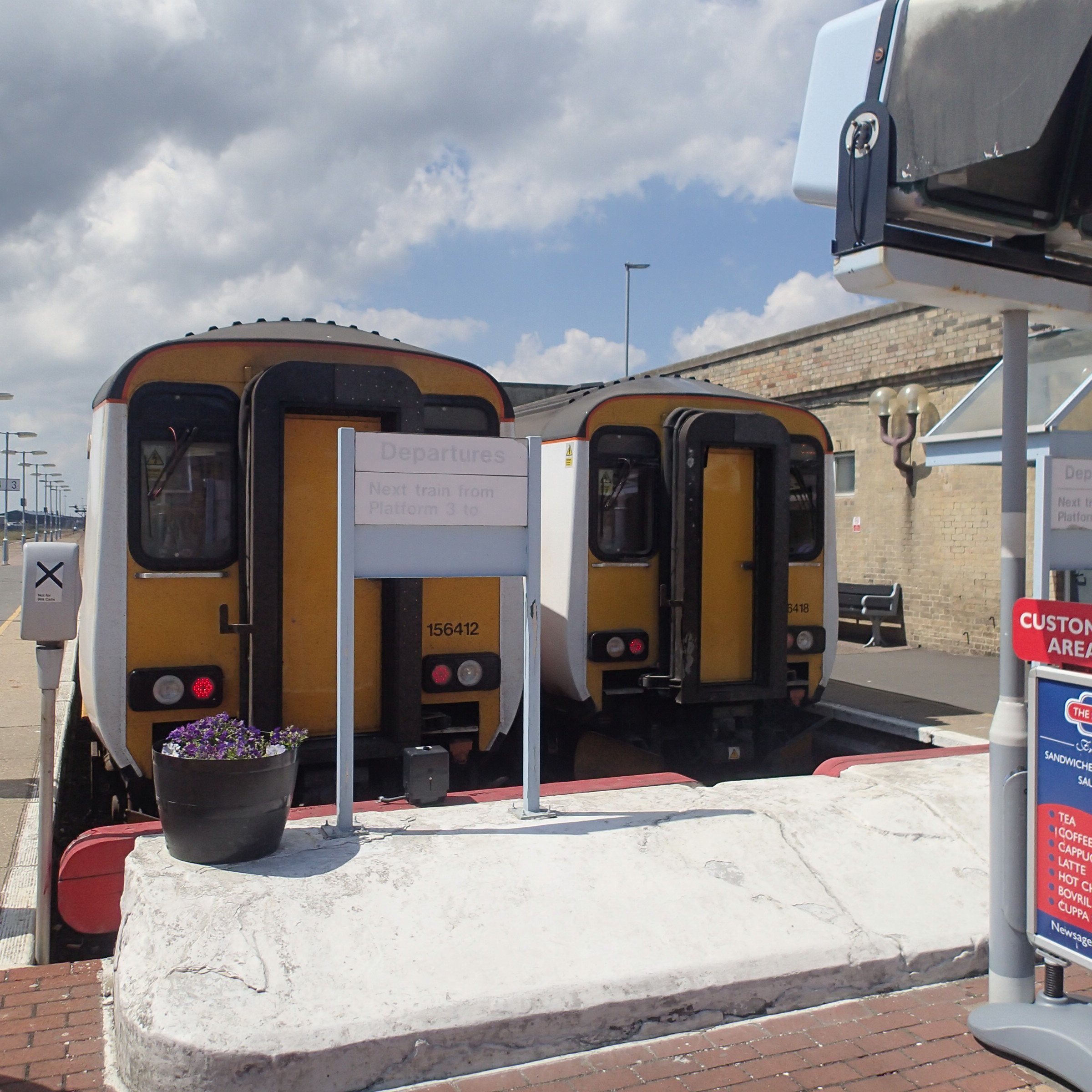
Surely, Network Rail’s engineers can come up with a third-rail system in the station for charging BEMUs, that meets the most draconian Health and Safety regulations.
If BEMUs were to also run the Norwich to Lowestoft services, then you’d have electrified the passenger services to the United Kingdom’s most easterly town.
What would a picture of two Aventra BEMU profiles in Lowestoft station, do for the town?
Completing The East Anglian Electrification Of Passenger Services
If some means of range extending like a third-rail-based charger in some terminal stations, then there is no reason that all unelectrified lines in East Anglia could be run successfully by BEMUs. These would include.
- Cambridge and Ely to Norwich on the Breckland Line
- Norwich to Yarmouth on the Wherry Lines
- Norwich to Cromer and Sheringham on the Bittern Line
- Marks Tey to Sudbury on the Gainsborough Line
The BEMUs would also be an ideal train for the proposed re-opening of Bramley Line between Wisbech and March and the possible creation of the Norfolk Orbital Railway from Sheringham to Wymondham.
Completing The Electrification In East Sussex
East Sussex Council has produced a document called Shaping Rail In East Sussex, and also proposes the electrification of the Marshlink Line and improving and fully electrifying the Wealden Line and Oxted Line.
I believe that BEMUs could be the key to completing the electrification of this important commuter area and releasing sixteen Class 171 diesel multiple units for areas with no electrification at all.
As BEMUs would effectively be a one-for-one replacement for the Class 171 and no infrastructure work would be needed except for the track work at Lewes, as the new trains were delivered, a Class 171 could be released to go and replace a Pacer or Sprinter.
The Borders Railway
I suspect that various Scots and their politicians will be a bit miffed, that a beautiful new railway will be running second-hand trains. I suspect that something like Class 171 or Class 172 will be used, but wouldn’t it be nice if four-coach electric trains were to be used on the route.
As the route is not being electrified, but power is available at the Edinburgh end and the line is only sixty miles out and back, the line would be an ideal candidate for equipping with sexy new BEMUs.
The only problem is that the Scots have just signed a deal with Hitachi to deliver a whole stable of new AT200 electric trains.
However, it should be noted that Abellio Greater Anglia is one of the partners in the testing of the experimental Class 379 BEMU and that Abellio ScotRail is the new Scottish franchise holder.
Incidentally, Abellio’s parent; Nederlandse Spoorwegen still have sa few diesel multiple units, so perhaps they have other motives in being involved with the BEMU.
Glasgow Crossrail And The Airport Rail Link
Glasgow Crossrail is a proposal to improve rail services in Glasgow described like this in Wikipedia.
The proposed Crossrail initiative involves electrifying and reopening the City Union Line for regular passenger use in conjunction with new filler sections of track which will connect the North Clyde, Ayrshire, and Kilmarnock and East Kilbride suburban routes together, therefore allowing through running of services through the centre of Glasgow in a North-South axis.
It has been an on-and-off project over the years, as has the closely-related Glasgow Airport Rail Link.
Perhaps by selectively using BEMUs on the City Union Line, some of the major problems of rail transport in Scotland’s largest city can be alleviated, until the budget allows full electrification across the city.
Replacing Pacers Out Of Electrified Hubs
I asked in the title of this post if a new battery electric multiple unit (BEMU) could be a replacement for the truly-dreadful Pacers.
On some routes out of Liverpool, Manchester, Leeds and other electrified hubs, Pacers perform out and back services, which could probably be replaced by a BEMU.
As electrification progresses more and more, Pacers will find that they operate more of their routes partially under the wires. All of these routes will become candidates for BEMUs.
As the new trains will elsewhere displace some modern diesel multiple units, these could also probably chase a few Pacers to the scrapyard.
So in my view, new BEMUs may not always directly replace the Pacers, but they will certainly hasten their demise.
Should The Gospel Oak To Barking Line Be Electrified?
I know that freight is an important driver of electrification of the Gospel Oak to Barking Line, but how would the availability of a number of BEMUs affect how the work will proceed?
The Gospel Oak to Barking Line is being electrified at a cost of £115million. In addition eight new four carriage trains are being ordered for the line.
Electrification of the line is said to be difficult, as there are numerous bridges and viaducts.
But the line is also desperately short of capacity for passengers and desperately needs the new electric trains.
As the line is partly electrified, why not drop the full electrification for a few years and buy eight new BEMUs?
They would pick up power east of Woodgrange Park station and around South Tottenham, leaving only about twenty miles to run on the batteries.
If the batteries need a top up at Gospel Oak, why not put in a short length of overhead wire at the western end of the line. Or heresy of heresies, a short length of third rail!
As circumstances and funds allowed the rest of the line would be electrified.
All of the flexibility in the schedule would be down to the unique characteristics of the BEMU.
Some residents along the line might be annoyed by the continuing noise and smell of the diesel freight locomotives passing through if the line remains without full electrification, but passengers will get twice as many carriages as at present, in brand new electric trains. Passengers won’t care that they’re powered by batteries, so long as they are reliable, comfortable and punctual
Conclusion
Who’d have thought that such a rather unusual concept of a battery electric multiple unit would have so many possibilities?
I think I’ve seen the future and it just might work!
George Osborne Sets Out His Vision Of Yorkshire
This article in the Huddersfield Examiner is entitled Chancellor George Osborne to set out long term economic plan for Yorkshire during visit to West Yorkshire.
Read it and there are some interesting snippets, that he believes will be part of a long term plan for Yorkshire.
One of them is this.
We will also increase speeds on the East Coast Mainline to 140 mph
It is already planned and if and when it happens it will significantly reduce journey times all the way up the line between London and Edinburgh.
George is not actually promising anything for which funds have not been allocated, but his words show he understands the value of infrastructure, something that can’t be said for all Chancellors of the Exchequer since the Second World War.
The one thing that George or any future Chancellor can ensure, is that by not cutting funds they will get this valuable project carried out!
Sunderland Port Gets A Rail Connection
I’m all for freight traffic to be on the railways, even if it sometimes means that noisy and smelly freight trains pass through residential areas. But on the plus side, I’ve seen how rail improvements connecting the Port of Ferlixstowe to the wider rail network, has taken so much traffic off the busy A14. It is my belief, that one of the best ways to increase motorway capacity, is to remove as much long distance freight as possible.
DB Schenker obviously want to promote rail freight for commercial reasons and they seem to be backing a lot of new rail developments like the Northern Hub.
So I was not surprised to see the company very much behind the re-opening of a rail link into the Port of Sunderland, as reported in this piece in Modern Railways. DB Schenker’s spokesman says this.
‘Ports play a crucial part in DB Schenker Rail’s growth strategy and we are delighted to bring rail back to Port of Sunderland.
It will be interesting to see how busy this rail link becomes in the next few years.
Increasingly, these last mile rail links are being created or renewed. The only losers are probably the drivers of heavy good vehicles.
This small rail link has been renewed in an area that could see a lot of development in the next few years. This Google Earth map shows the rough route of the rail link along the coast.
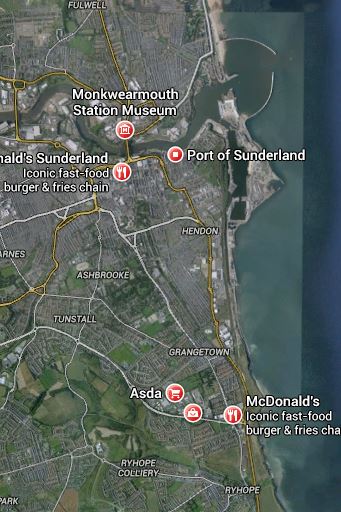
The Durham Coast South Of Sunderland
Sunderland Port is marked by the two curved breakwaters at the top and the link joins the Durham Coast Line that runs from Newcastle via Sunderland and Hartlepool to Middlesbrough, at Ryhope Grange junction, which is near to the marked McDonalds.
The Durham Coast Line has an hourly service between Newcastle and Middlesbrough and also connects various ports and sites to the rail freight network. It is also used by Grand Central services between Sunderland and London and as a diversionary route for the East Coast Main Line. Local groups are also keen that the line be upgraded with a better passenger service between the Tyne, Wear and Tees areas.
In a sane world, this line would be a prime candidate for electrification linked to the East Coast Main Line at Newcastle and Darlington. A few points.
1. It would be an important electrified diversion for the increasingly crowded East Coast Main Line.
2. I suspect Grand Central and other East Coast Main Line operators are pushing for this electrification, as it would enable direct high speed services between Newcastle and London via Sunderland, Hartlepool and Middlesbrough.
3. After the completed electrification of the Trans-Pennine routes, it would also improve services from towns and cities not on the East Coast Main Line to the western side of the Pennines.
However full electrification is probably not possible as the northern part of the line has been electrified for the Newcastle Metro to a different standard. But the new passenger trains like the Class 800 and new freight locomotives like the Class 88, would just switch to their on-board diesel power,
As an aside here, Tees Valley Metro, is being developed around Middlesbrough, in rather a stop-go fashion. Surely if the Durham Coast Line is electrified and that electrification is extended to Darlington and then perhaps on the Tees Valley Line to Bishops Auckland to serve both the National Railway Museum at Shildon and the Hitachi train factory at Newton Aycliffe. It would seem a bit mad to build a large factory to make electric trains and then have to haul them in-and-out with a diesel locomotive.
If nothing else, all of these options prove to me, that the North East should have a similar sort of autonomy as Greater Manchester is getting. That would enable the area to bring together all of the ideas about extending the transport system.
Looking at Wikipedia’s list of proposed rail infrastructure projects, these are in the North East.
Newcastle Station Redevelopment
Tyne And Wear Metro Developments
It’s not a long list. Other areas south of Hadrian’s Wall, like Bristol, Birmingham, Cardiff, Leeds, London, Merseyside and Manchester have much better developed plans on the drawing board, even if they know some will be a long time coming.
I wonder if Department of Transport officials when talking to representatives from the North East, say to them, you’ve got an electrified railway to London, the Tyne and Wear Metro, rebuilding of Newcastle station and a brand new train factory, so what more do you want?
Surely, local elected representatives should decide what is best value to the communities they serve. No-one based outside an area, can ever know all of the subtle local reasons, why things should or should not be done. As an example, Greater Anglia’s stations in East London are managed from Norwich. I don’t think they manage them very well and not for good reason are most being put under the care of Transport for London.
Most transport in the North East should be under the control of a single body, so that the limited finances available will be better allocated.
Orange Army Sighted At Lea Bridge Station
I was on the top deck of a 56 bus today and took these pictures at Lea Bridge station.

Could this mean that work is about to start on the rebuilding of the station?
It’s Not Just British Trains And Buses That Are Run By Foreign Companies
Some people, especially politicians, who’ve never run anything more difficult than an office with perhaps one employee, despair that a lot of our trains and buses are run by foreign companies. They think they should all be nationalised.
But then there’s this article from the Guardian entitled National Express To Run Nuremberg’s Overground Urban Trains.
This is the second such contract, National Express has obtained and the article talks about further contracts.
As an aside here, German trains have a lot of characteristics that we have long banished from our trains and buses, like bad customer service, as I experienced at Osnabruck.
Hopefully National Express will impose some of the excellent principles they use on c2c between London and South Essex.
Travel First Class For Less Than Standard
I’ve just booked my train ticket for the Rotherham Ipswich match next Saturday on East Midland Trains.
Coming back, the First Class ticket was actually four pounds less than Standard.
It’s actually costing me £38.25 with a Senior Railcard for the First Class Return. Typically, I pay £35.45 for a First Class Return to Ipswich, which is a journey that normally takes under half the time of one to Rotherham.
Electrification In East Anglia
East Anglia is very much a backwater as regards rail investment. Of the main lines only the Great Eastern Main Line is fully electrified and the trains on that line are not in the best of states. At least the line is going to be updated to allow refurbished trains to get to Norwich in ninety minutes and Ipswich in under the hour from Liverpool Street.
This speeding up of the easternmost line coupled with the improved links of Cambridge and Peterborough with Thameslink and Shenfield with Crossrail, will show up the rest of East Anglia’s railways for the crap they are.
Yesterday’s tiresome journey to and from Ipswich, illustrated how when there is major work or problems on the Great Eastern Main Line, the secondary routes can’t cope and bus replacements have to be used.
Suppose that the Ipswich to Ely Line together with the Cambridge branch had been electrified, as it should have been some years ago, when the bridges were opened up to take the larger freight containers.
This would have enabled passengers between Ipswich and London to have done the journey a lot easier with a change at Cambridge. Or for planned closures like yesterday, perhaps an hourly service could be run between London and Ipswich via Cambridge. As the part of the Great Eastern Main Line between Ipswich and Norwich was open, they could even have done the full trip with a reversal at Ipswich.
Electrification of the line from Ipswich to Ely and Cambridge, would give other benefits other than the broad one of flexibility, when a need for diversions arises.
1. More and more freight trains are going across Suffolk to and from the port of Felixstowe. At present all are diesel hauled, mainly by noisy and smelly Class 66s.
If there was an all-electric route from Felixstowe to Peterborough, then many of these trains could be hauled by environmentally-friendly and quieter electric locomotives. But that would mean electrifying the Felixstowe branch and the the port.
However, before this extra electrically eventually happens, we will see the arrival of the Class 88 locomotive. This locomotive which can run either using electric or diesel power will probably have sufficient diesel range and power to bridge the non-electrified gaps from Felixstowe to the East Coast Main Line.
2. Capacity on the routes between Ipswich and Cambridge and Ely is severely limited and electrification would enable something a bit larger than the current trains to be used.
3. Cambridge is overflowing with ideas, investment and jobs. But there is a shortage of space for housing where all the people drawn to the area can live.
So an increased capacity line to Ipswich, with hopefully a more frequent service, would surely help out with some of Cambridge’s space problems.
4. An efficient and good rail service between Ipswich and Cambridge, would certainly help development along the line and especially at Bury St. Edmunds and Newmarket. Both towns need stations to fit their increasingly important status.
5. Cambridge is getting a new station at the Science Park, This will not generally effect the line from Ipswich to Cambridge unless an extra curve is built at Ely to allow a direct connection between Ipswich and the new station.
6. Cambridge and possibly Ely are going to become more important rail interchanges, because of Thameslink, the new East West Rail Link and probable improvements in services direct to the Midlands and the North. Difficult journeys like Ipswich-Gatwick will possibly be easier with a simple change at Cambridge.
On the technical side, electrification of the Ipswich to Cambridge Line has a lot going for it, to make it not the most difficult electrification project. There’s no tunnels and the line has recently been upgraded to make the erection of overhead wires fairly easy compared to some other places. The line runs between two electrified main lines across fairly flat country.
There is probably a suitable resource of refurbished trains, like Class 317 or Class 365 that could be used on the line. Concerning the Class 365, which currently only run the Kings Cross to Cambridge, Kings Lynn and Peterborough services, many of which will be replaced by the extended Thameslink, where will these trains end up?
If Ipswich and Cambridge are joined together by an electrified railway, you can just hear the loud cries of unfairness from Norfolk, where the belief is that Norwich always takes precedence over Ipswich. After all Norwich is a city and Ipswich and Bury St. Edmunds are not!
But to be fair, a lot of the reasons for electrifying the Ipswich to Ely Line also apply to the Breckland Line, that links Cambridge and Norwich via Ely.
1. It would give the opportunity to run services direct to London, if the Great Eastern Main Line has to be closed for some reason.
2. It would enable capacity and frequency of trains to be increased.
3. It would help take the pressure off Cambridge.
4. It would help development all along the line.
5. The new Cambridge Science Park station is on the line.
6. Connecting Norfolk to Cambridge for all those ongoing services, would probably be a good thing.
The only factor which is not important on the line is freight.
If Norwich and Ipswich are fully connected to Cambridge and Ely by electrified railways, that only leaves one major line in East Anglia not electrified; the Ely to Peterborough line.
With all that freight going to and from Felixstowe, I can’t believe that this line will not be electrified.
You Can Do Better Than This; Greater Anglia
There has been a lot of anger from Ipswich Town about the lack of communication from Abellio Greater Anglia over weekend closures of the Great Eastern Main Line. This report on the BBC gives full details.
I took the 12:03 train out of Liverpool Street for Billericay. I had checked on the Internet and knew that this train gave me an arrival in Ipswich around two. But there had been a decided lack of information at Liverpool Street.
1. The staff seemed to have not been well-briefed.
2. Where were the informational posters, saying something like This way for all Chelmsford, Colchester, Ipswich and Norwich passengers?
The consequences was that there was a lot of confusion and an elderly couple travelling to Colchester with me didn’t know whether they should get out at Shenfield or Billericay. I wonder how many passengers missed the stop at Billericay and ended up at Southend!
One thing to which I’m right to object, is that I was paying the same £25.60 for a Senior Standard Class single, that I would pay on Monday for a similar ticket on a faster train all the way to Ipswich in just over an hour. Compare this with the price of £35.45, that I typically pay for a Senior First Class Return.
Abellio Greater Anglia also provided a Class 321 train without a toilet. Or at least I couldn’t find one. Many passengers would have expected a proper train with facilities and a rather tired Class 321 wasn’t good enough.
At Billericay, the system was much better organised and I even found a toilet. But then the town is in Essex and the county knows how to live on scraps and hand-me-downs.
I can’t complain about the coach that was provided either, except that it took what seemed to be an age to get to Ipswich.
There wasn’t much chaos at Ipswich, and I was able to enter the station to get a much-needed cup of hot chocolate.
The journey had taken two hours as against a normal direct journey of just over an hour. And of course for no reduction in price.
Coming home, I decided that it was better to go the long way round via Cambridge, where I could get a snack and then a train to Tottenham Hale. At least I got a First Class seat all the way, as I had the unused return half of a ticket for the last time I went to Ipswich, when I got a lift back home.
But the train was a rather overcrowded Class 170 train, although I did have a comfortable seat in First. But judging by the number of passengers on the 17:20 train after a match with Ipswich riding high in the Championship, a three car train is not big enough.
I just missed the connecting Tottenham Hale train, so I had to wait in the cold. But I did have time for a pit-stop and to purchase a snack in the Marks and Spencer in the station.
Normally, I get home about seven, but I didn’t get home until nine.
,

