London To Edinburgh In Four Hours
In the February edition of Modern Railways, details of the new Virgin Trains East Coast franchise are beginning to emerge.
One of the details is that there will be a half-hourly four-hour service between the two capitals.
Anybody with any marketing nous will reckon that this alone will give the service a tremendous boost.
As there are a considerable number of improvements that could be implemented in the next few years, I think that by the end of the decade several minutes under four hours will become the norm.
The new Hitachi Class 800 and 801 trains arriving from around the end of the decade, won’t be any faster than the twenty-five years old InterCity 225, that currently work the route.
In fact, Modern Railways says that these trains may live on as a Golden Stud on the flagship services between London and Edinburgh.
But by 2020, if all goes well with ERTMS, both the InterCity 225s and the new Hitachi trains will be cleared to run at their top speed of 225 kph.
Could we see times reduced between the capitals to around three and a half hours?
I certainly think that the train company will be looking to see how fast they can run a capital-to-capital service!.
The line is 632 kilometres long, so three hours would need an average speed of 210 kph, which the current and proposed trains could probably attain over a straight railway line with no other traffic for perhaps an hour or so.
This illustrates that although trains get all the headlines, the real improvements in timings over the next few years will come with improvements to track and signalling.
The engineers of the East Coast Main Line have plenty of work to do, but they may bring a bigger service improvement than those building the new Hitachi trains.
Will Dudley Get A National Very Light Rail Innovation Centre?
In London, there are several types of railway.
1. The main lines coming into London like the East Coast Main Line and the London Overground would typically be classified as heavy rail.
2. The London Underground is a metro, underground of rapid transit system. Take your pick on the name, but in London’s case it’s complicated by some Underground trains sharing tracks with heavy rail services.
3. The Docklands Light Railway is probably best described as what it says in the name; a light railway.
4. There is also the Tramlink, which in London is a tram that runs both on-street and on dedicated tracks.
Looking around the world, there are a multiplicity of types of railway and every country seems to have their own versions.
So I was interested to see this article on the BBC web site, which talked about a proposed Very Light Rail Innovation Centre and a new transport link in Dudley in the West Midlands.
So what is very light rail?
I suppose the only truly very light rail system in the UK, is the Parry People Mover in Strourbridge, which is a lightweight vehicle powered by an innovative electric drive train using a flywheel for energy storage.
It is my belief, that as you make vehicles lighter, they become more efficient and this improves the economics. This applies to both road and rail vehicles.
As the Dudley project is backed by the well-respected Warwick Manufacturing Group, I suspect that quite a few influential organisations, will think the Innovation Centre could be a worthwhile project.
This is a project that needs to be watched.
But consider.
1. The Docklands Railway is successful and liked by passengers and operators. So why is it, that there is no similar driverless system using the same technology?
2. How many proposals for trams and light rail systems in the ?UK, have never come to fruition?
3. Every tram system I’ve ever ridden seems to be a one off design from the stations and track to the vehicles and the ticketing system.
We must be able to do better!
And surely a properly-funded Innovation Centre, backed with the right technical resources wiill help us create better urban transport systems in the UK and the wider world.
Ipswich Town Get Angry
This story on the BBC follows a similar theme to one I wrote a week or so ago.
I remember some years ago, when Stoke Hill tunnel by Ipswich station was enlarged for the larger containers, and passengers were bused from Ipswich to Manningtree, that the rail companies involved ran an exemplary system, backed by copious information and publicity.
So it proves yet again that Abellio Greater Anglia generally see passengers as irrelevant except as cash cows.
The Only Decent Picture I Took Between Ashford And Lewes
My trip along the coast was not noted for warm, sunny weather.
This is the only decent picture I took as the train trundled from Ashford to Lewes.
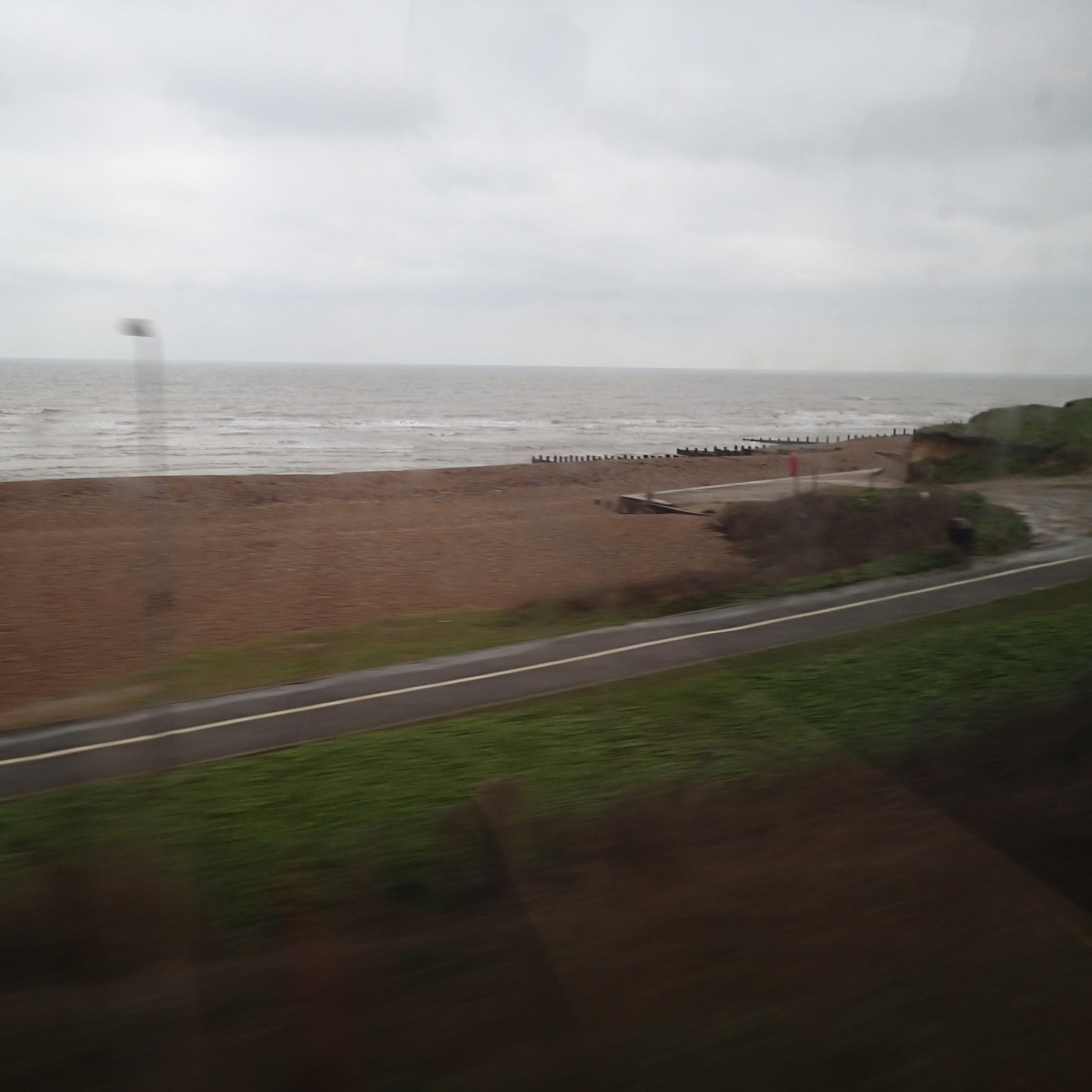
The Only Decent Picture I Took Between Ashford And Lewes
The others tended to be of sodden fields in the drab cold weather. The Scots and especially Carol Kirkwood, would have called it dreek.
Lunch At Rye
I stopped off at Rye for lunch at the Mermaid Inn, which was a gentle walk up the hill from the railway station.
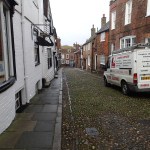
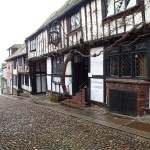
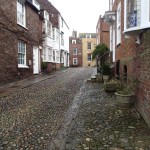
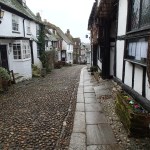
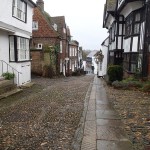
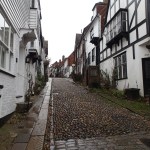
I had a simple but excellent lunch of grilled plaice, new potatoes and some freshly-cooked broccoli, washed down with half of real cider.
It really isn’t difficult to create a simple gluten-free meal, as the Mermaid showed. In some ways, it’s ironic to get a good gluten-free meal in a town with the name of Rye!
It was just what I needed on a bitterly cold day.
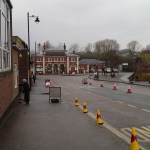
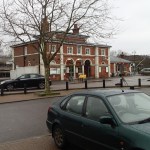
My only problem with Rye was that there weren’t any maps at the station and if it hadn’t been for the map I printed off the Mermaid’s website, it would have been difficult to find.
I shall go back in the sun and explore Rye. I’ll certainly find the Tourist Information and give them a piece of my mind on the lack of information.
To Brighton The Long Way
As it had been a long time, since I’d been to the Rye area in Kent, I decided to go to see Ipswich at Brighton, by taking the long way round via Ashford, Brighton and Lewes.
I arrived at Ashford on the high speed Class 395 from St. Pancras and from there to Rye, I had a very clean Class 171 to myself.
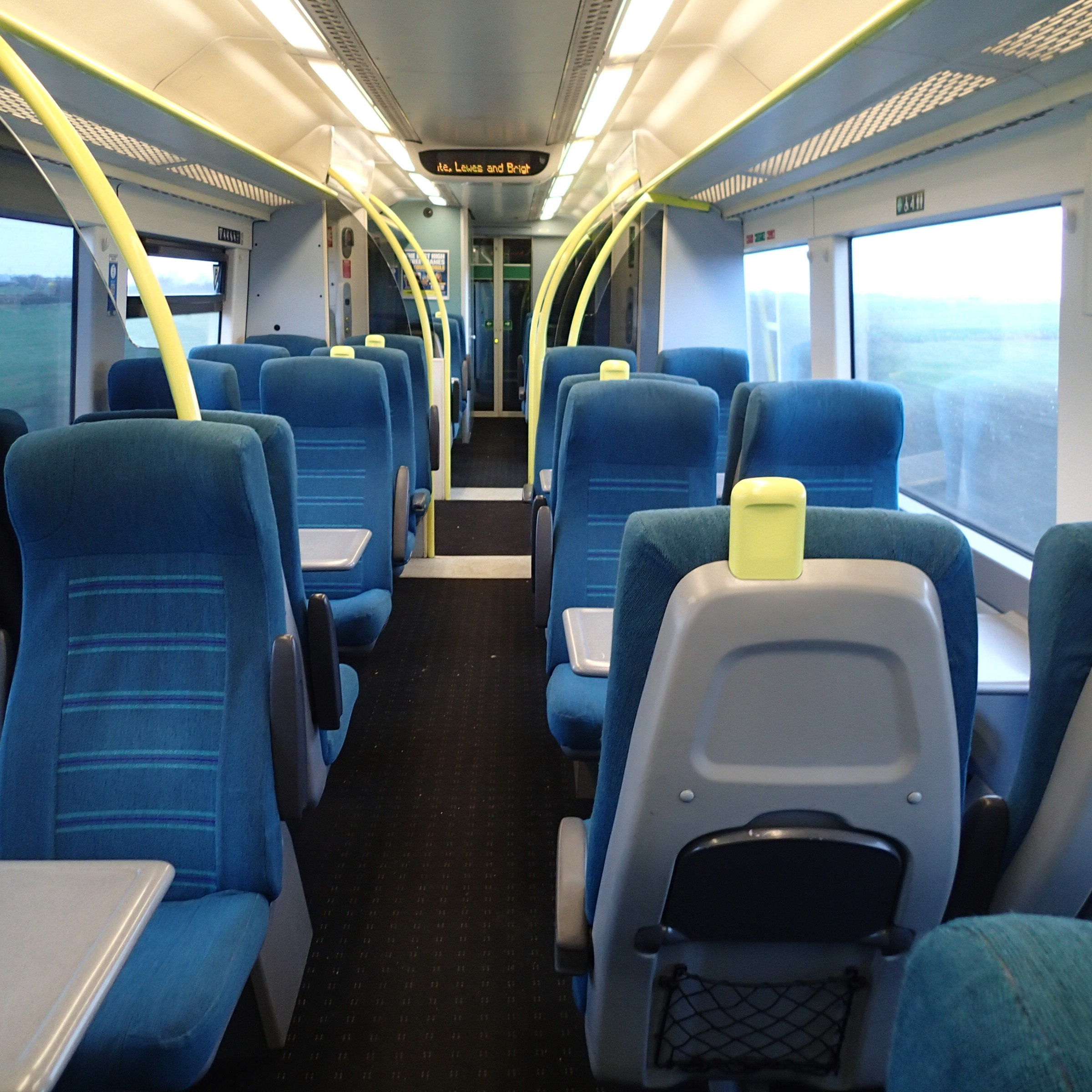
My Personal Class 171
With some of the controversy about the lack of toilets on Crossrail, it is interesting to note that the six car Class 395 has only two toilets, whilst the two car Class 171 has just a single. So it would appear that there isn’t much demand for toilets-on-the-go in Kent.
On a serious note, the journey from Ashford to Rye is on the Marshlink Line, which has recently been looked at for electrification so that high-speed services can come from St. Pancras to Hastings, Bexhill and Eastbourne via Ashford. It’s reported here in Kent Online.
If you look at the area from Ashford to Eastbourne, it is not one of the most prosperous places in the South East, although it has improved in recent years, so the promoters of the scheme might have a point, when they say an improved train service might give the whole area a lift.
An electrified Marshlink Line connecting Ashford to Ore where the existing third-rails finish could be one of those additions to the rail network, where because it’s there, you get all sorts of unexpected benefits.
The electrification would have to be third rail, which is probably something Network Rail want to avoid. But this would mean that apart from the freight services to Dungeness Power station, all the services along the South Coast could be electric, as third rail running is no problem for the Class 395. The Class 171 would find employment elsewhere.
The case is probably not a strong one, as if it was when the Marshlink Line had problems in Ore Tunnel a couple of years ago, the powers that be, would have taken the opportunity presented by the line closure to electrify it.
What will probably result in the electrification of the Marshlink Line is developments on the diesel-operated Uckfield branch of the Oxted Line. In the discussion of the future of this line on Wikipedia, various scenarios are put forward that could result in the full electrification of this line. If this happens, then electrification of the Marshlink Link would remove the Class 171 trains from Sussex and Kent, which surely would be a saving in train care costs.
According to this report in the Sussex Express, the council is backing electrification of both lines.
Electrifying two rail lines in East Sussex, including Uckfield to Hurst Green, is the best way of improving capacity, reducing journey times and boosting the county’s economy, a council chief said.
East Sussex County Council has designated the electrification and dual tracking of the Uckfield to Hurst Green and Hastings to Ashford lines as its key priorities for improving rail infrastructure and services.
The report also mentions an East Sussex Council Council report entitled Shaping Rail In East Sussex.
I have read this and it is a sensible document, that shows the council is serious about providing a good rail service for the area.
One thing the report mentions is that Thameslink was going to go to Eastbourne, but this has now been dropped. Other reports show that many commuters would like to be in London in seventy minutes instead of the current ninety and they had hoped a direct link via Thameslink would have helped achieve this. I doubt, going from Eastbourne to London via Ashford, would be anywhere near the magic seventy.
After 2018 when Thameslink is fully open, the pressure on railways in East Sussex will inevitably increase. Especially, as it is a county, where a lot of the roads are not an easy alternative.
I do wonder if electrification and dualling of these two lines is going to be one of a host of infrastructure projects announced before May.
An Information Free Journey
This afternoon, I took an Abellio Greater Anglia train from Bruce Grove to Hackney Downs.
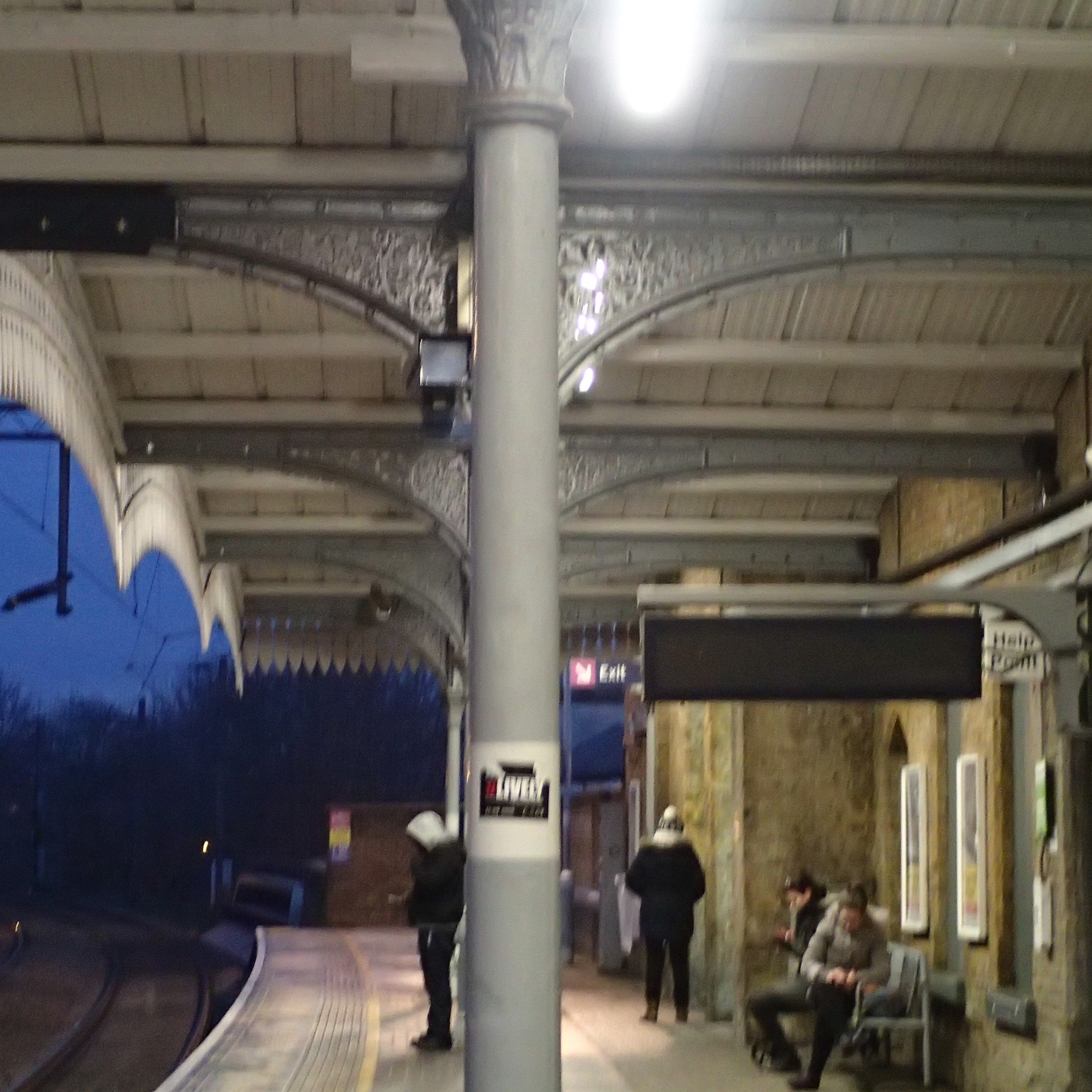
An Information Free Journey
The displays weren’t working on both platforms at Bruce Grove station and the only way to tell where the train was going, was to read the display on the cab, as the train trundled out of the gloom.
The Class 315 train, resplendent inside in all its girlie pink, doesn’t have information displays and as the driver was economical with his announcements, you were left peering into the dark to determine the stations, from the names on the badly-lit platforms.
Luckily, just before Hackney Downs station, is the floodlit blue Mossbourne Community Academy, and I was forewarned of our arrival, and didn’t end up in Liverpool Street.
I know that on the thirty-first of May this year, the Lea Valley Lines will come under the control of Transport for London, so Abellio may think they have reasons to provide minimal service on these lines.
But that is no reason to keep passengers in the dark!
An Interesting Correlation With Job Creation
Today, the Centre For Cities published their Cities Outlook 2015. The report is discussed here on the BBC web site, in a report entitled Economic growth ‘dramatically’ diverges between North and South.
They compare the top five cities; Milton Keynes, London, Cambridge, Brighton and Bournemouth for job creation with the five worst; Gloucester, Rochdale, Blackpool, Newport and Hull and conclude that the performance difference is due to the five best being in the south-east.
They can make their point, but if you look at the next five best and worst, I believe another pattern is starting to emerge.
In sixth to tenth place are Portsmouth, Coventry, Newcastle, Aberdeen and Nottingham and the next five worst are Grimsby, Huddersfield, Swindon, Wigan and Burnley.
I’m going to put a list of the top and bottom cities together with how many trains there are with less than two changes to London after 20:00 and what the time of the last direct or one-change train leaves.
This is the top ten.
Milton Keynes – > >20 trains with last train 00:24
London – N/A
Cambridge – >20 with last train 23:22
Brighton – 15 trains with last train 23:05
Bournemouth – 7 trains with last train 23:12
Portsmouth – 12 trains with last train 23:19
Coventry – 11 trains with last train 23:31
Newcastle – 3 trains with last train 21:15
Aberdeen – Not relevant, but you can fly after 20:00
Nottingham – 5 trains with last train 21:32
And this is the bottom ten.
Burnley – 1 train with last train 20:12
Wigan – 3 trains with last train 21:28
Swindon – 6 trains with last train 23:16
Huddersfield – 4 trains with last train 21:12
Grimsby – 1 train with last train 20:34
Hull – 2 trains with last train 20:57
Newport – 3 trains with last train 21:43
Blackpool – 1 train with last train 20:21
Rochdale – 1 train with last train 20:00
Gloucester – 3 trains with last train at 22:14.
I think it is true to say that for the top ten in the creating jobs table, they have much better return trains to London in the evening than the bottom ten.
Some of those in the bottom ten like Grimsby, Hull, Blackpool and Rochdale have truly dreadful services back to London.
I haven’t looked at the outward journey in any detail, but surely if the return is bad, the outward journey would be of a reduced standard.
So some of these cities are not only a long way to drive, but a complete pain on the train. Would you establish or expand a manufacturing plant or offices, if you knew that every trip might have to incorporate an overnight stay? Given that you could now fly to a lot of places in Europe, do a day’s work sand return to your own bed.
It is my view that we could improve the productivity of decision makers , many of whom are based in the London area, solely because London has such a large population, by ensuring that every major town and city south of Hadrian’s Wall could be reached from the capital in a reasonable time with no more than a single change.
One effect of this would be to create a multiplicity of places, where perhaps a new factory was located, or you’d be going to get something you needed manufactured. All too often, certain cities have advantages over their rivals, as when the money was being dolled out a few years ago, they got an improved railway or a better station.
Work To Start On Lea Bridge Station
According to this article on the Walthamstow Guardian web site, work could start soon on the new Lea Bridge Station and it could be open by the end of the year.
I first reported on this reopening in April 2013.
Should Every Train Have A Clock?
Every London bus shows a clock on the stop display and because of this, I rarely wear a watch these days.
Some trains now show a clock on their destination displays too!
I hope this is going to be universal.

