Is TransPennine Going For A One-Class Fleet?
This report on Rail News announces the awards of the two rail franchises in the North.
It says that First TransPennine will be committed to acquiring forty-four new trains comprising 220 vehicles. The article also says this about increasing services.
The frequency on many routes will be increased, so that there will be six trains an hour between Manchester and Leeds, and 35 a day between Manchester and Scotland — twice as many as now. A new route between Liverpool and Scotland will be introduced in 2019.
The numbers say they are five-car trains, which will certainly sort out some of their capacity problems.
At present First Transpennine has the following fleet.
- Class 156 DMU – 6 of two cars
- Class 170 DMU – 4 of two cars
- Class 185 DMU – 51 x 3 cars
- Class 350 EMU – 10 x 4 cars
All except the Class 350 are diesel-powered.
Add up the current carriages and you get two hundred and three.
So if some of diesel multiple units were retained, there would be a useful increase in fleet size.
But surely from the train maintenance and staff points of view, it would be better if there was one fleet of all the same type of train.
There may also be a slight problem with Scottish services, especially as the number of them is more than doubled.
This will mean that between Preston and Glasgow, they will need extra paths on the overcrowded West Coast Main Line.
I think we’ll see trains between Manchester Airport and Liverpool, and Glasgow, joining and splitting at Preston, as this will mean that Liverpool to Scotland services will not need any extra paths on the West Coast Main Line. Some could also split at Carstairs, with one train going to Glasgow and the other to Edinburgh.
I’ve used the Class 350 trains from Glasgow to Preston and despite being too small, they are also only 110 mph trains, whereas the Class 390 Pendelinos used by Virgin, usually run at 125 mph.
Simple common sense says, that if all trains cruised up the West Coast Main Line at the same speed, this maximises capacity. Also as parts of the TransPennine network in the East are also 125 mph lines, this might be desireable design speed. The government press release about the franchise award also talks about 125 mph trains.
But the biggest problem as is pointed out in the press release is that full electrification is not expected to be complete until 2022.
So trains will need some form of independent power source to bridge the gaps in the electrification.
- Five carriages
- The ability to run in pairs.
- 125 mph cruising speed.
- Some form of independent power.
Logic says that this means they will be Hitachi Class 800 trains, which would use their on-board diesel engines as required.
Currently, the factory at Newton Aycliffe is busy with Class 800/801 trains for Great Western Railway and Virgin Trains East Coast and EMUs for Scotland, so like the extra Class 800s for the South Western routes, they would probably have to be built in Japan.
Would this mean that early introduction into service would be very difficult?
The only alternative would be to stretch the current four car Class 387 trains to five cars and make them IPEMU variants, which would then use their on-board energy storage to bridge gaps in the electrification. If the technology can be proven for a route like Leeds to Manchester, then they could probably start to be delivered next year.
These are some points and questions about Class 387 trains and Bombardier’s IPEMU technology.
- Class 387 trains are built in Derby by Bombardier.
- There are currently a total of fifty seven four-car Class 387 trains either built or on order.
- There must be some standard Class 387 trains sitting in sidings, as they are destined for routes on the Great Western Railway, where there are no overhead wires.
- I doubt it would be difficult to lengthen the trains to five cars, as the closely-related Class 378 trains have received an extra car twice.
- This report in the Derby Telgraph, says that Bombardier have recently received an award for their IPEMU technology.
- This article in Rail Technology Magazine, states that Bombardier are doing extensive testing of the batteries at Mannheim
- IPEMU trains could be more efficient, as regenerative braking is used to recover energy instead of always recharging from external sources.
- As IPEMU technology improves, the range will get longer making it possible for electric trains to serve more destinations in the TransPennine network.
- Bombardier’s next generation train, called the Aventra, will all be wired for the fitting of on-board energy storage,
- The new franchise for First TransPennine has effectively started, as it just a continuation of more of the same. So early train delivery would show they meant business and it wasn’t just jam tomorrow.
- The standard Class 387 trains could be introduced on Scottish services as soon as trains were delivered.
If the IPEMU technology can be proven to be viable on First TransPennine, a lot of companies and groups will benefit.
- Network Rail will be able to avoid a lot of difficult, sensitive or expensive electrification.
- Bombardier could sell a few more trains.
- Passengers will get new electric trains in many places, as fast as they can be built.
- Some politicians and others could get a lot of credit.
It’ll be interesting to see what First TransPennine have decided to do!
Is Network Rail Only Part Of The Problem?
We like to have something simple to blame for our troubles!
I have just read this article in Rail Magazine entitled Carne opposes five-year funding cycle for big projects. This is an extract.
Network Rail Chief Executive Mark Carne told the Public Accounts Committee “there is no doubt at all in my view” that the Great Western Main Line electrification programme should have been managed in the same way as projects such as Crossrail and Thameslink.
“Personally, I think it [five-year funding cycles] is a really good way of funding ongoing operations, maintenance and renewals. But I am not sure it is a really good way of funding major investment projects,” he said.
We can look at various rail projects, that have been successfully completed without too much trouble, in the last few years.
Borders Railway
The Borders Railway seems to have been completed on time and on budget.
The only problem so far seems to be crowded trains and difficulty in finding more carriages.
So what’s new? This is only another manifestation of New Railway Syndrome.
Chords, Curves and Flyovers
Network Rail have also successfully built a few short railway lines to make the rail network and trains, easier to manage. This is a selection.
- The Allington Chord removed a bottleneck on the East Coast Main Line.
- The Hitchin Flyover removed another bottleneck on the East Coast Main Line.
- The Ipswich Chord allowed better access for freight trains to Felixstowe Docks and removed a lot of truck journeys from the roads.
- The Todmorden Curve allowed trains from Burnley to reach Manchester.
The only one with a problem was the Todmorden Curve, where Northern Rail had trouble finding trains for the new service.
Great Northern and Great Eastern Joint Railway Upgrade
The Great Northern and Great Eastern Joint Railway has been upgraded from Doncaster to Peterborough via Lincoln to act as a freight route away from the East Coast Main Line.
I talked about this upgrade in Project Managers Having Fun In The East.
This was no small project, as it involved resignalling, improving nearly a hundred miles of track and dealing with well over a hundred bridges and culverts.
It cost £330million and few people have heard of it.
But there doesn’t appear to have been any problems with the delivery of the project.
Rebuilding Birmingham New Street, Kings Cross, Manchester Victoria and Reading Stations
The rebuilding of these stations has not been trivial.
- The Birmingham New Stret rebuilding had its design and planning problems, but cost of around £500million
- The King’s Cross restoration cost £500million
- The Manchester Victroria renovation cost £55million.
- The Reading station redevelopment and some other works cost £850million
All were delivered on time, with the exception of Reading, which was delivered a year ahead of schedule.
You could add into this section, the substantial upgrades at Leeds, Newcastle and Peterborough.
Stafford Area Improvements Program
The Stafford Area Improvements Program is a £250million improvement to the West Coast Main Line.
It removes a bottleneck and allows extra trains on the line.
But few people have ever heard of it.
Summing Up Well-Managed Projects
So it would appear that Network Rail can manage some projects well and deliver them on time and on budget.
In my experience, they do seem particularly good at stations and always keep the trains running as much as possible.
If these projects have one thing in common, it is that they could all be well-defined before the project was started.
The Projects That Didn’t Go So Well
The following projects didn’t go as well as the previous ones.
Edinburgh to Glasgow Improvement Program
The Edinburgh to Glasgow Improvement Program is a £1billion program to upgrade and electrify the lines between the two largest Scottish cities.
It has had a rather chequered history and the original program has been reduced in scope.
Wikipedia says this in its entry about the project
It was reported that the project was delayed for up to three years due to the need to negotiate for the demolition of the west wing of the Millennium Hotel and works on Winchburgh Tunnel.
It has not been an easy project.
Great Western Main Line Upgrade
The Great Western Main Line Upgrade involved resignalling, electrification and a lot of track and station work on the Great Western Main Line.
To say it has been the project that keeps on wanting more time and money would not be an understatement.
This article in Rail Magazine says that the project could be two years late and cost three times as much as original estimates.
I have no insight into what has gone wrong, but there are several factors that have conspired against the project.
- Most electrification in the UK has been done in a series of phases, but on this project, they went for a faster approach, using a special train, which hasn’t worked very well.
- There have been planning problems in places like Bath, Goring and Oxford.
- The scale of the project is very large, with over a hundred bridges and tunnels to be modified.
- Politicians have changed the project several times.
It has been an unmitigated disaster.
However, I do feel that the engineers have got out the fag packets and envelopes and that they will find a way of getting this railway running under electric power. Or at least partially!
Politics is the science of spin and illusion, whereas engineering is the science of the possible.
North Western Electrification
The electrification in the North West, should have been a simple project, as the country is flat and the engineers must know the busy lines between Blackpool, Bolton, Liverpool, Manchester, Preston and Wigan like the back of their hands. It’s also a join the dots exercise with the electrification, so this should just be connected to the main line electrification at Liverpool, Manchester, Preston and Wigan.
But the benign flat lands have bitten hard, just like they bit George Stephenson.
My generation grew up with boyhood stories of George Stephenson’s problems as he crossed Chat Moss and where did his twenty-first Century successors have trouble, whilst electrifying Liverpool to Manchester? Chat Moss!
They’ve also suffered the well-publicised problems of the reconstruction of the Farnworth Tunnel and several other issues on the Manchester to Preston Line.
I think Network Rail appreciated the problems before they started and made the North West Electrification, more of a series of smaller projecs, than one large one.
The project is now on course for a two year delay, but the project now looks to be more likely to be completed.
Ordsall Chord
The Ordsall Chord is on the face of it, a simple project that should have been built years ago, to connect Manchester Victoria and Piccadilly stations and allow a large increase in number and quality of TransPennine services.
If anybody doubts the value of the Ordsall Chord, then read this article in the Manchester Evening News.
But sadly, the project has been delayed for many years, firstly by politicians and then by a veracious litigant.
I suspect that any Mayor of Manchester, would have built this important piece of railway many years ago.
Thameslink
Network Rail would probably say that the Thameslink upgrade is going well. Looking at the massive bridges and embankments, I’ll give them the benefit of the doubt.
I have added it to the list of failing projects, as there is no denying that they had their problems last Christmas, when they changed all of the routing. Network Rail received a £2million fine for their part in the chaos.
The Thameslink upgrade has been contentious and a long time coming, as it was originally approved in 2006.
I know there has been a major recession and effectively two changes of government since then, but the outcome when the project is delivered in 2018(Hopefully?), will be the same now, as was proposed a dozen years ago.
I think some major mistakes have been made.
- Network Rail were bullied by politicians to abandon their plan to terminate Wimbledon Loop services at Blackfriars, which would have taken pressure off the central tunnel.
- A protracted tendering process for mew trains, resulted in an interim fleet of Class 387 trains being delivered to fill in before the new Class 700 trains. Any sensible person would say, that Thameslink and Crossrail should have very similar trains.
- Before the major timetable change at Christmas 2014, the East London Line should have been running five-car trains and possibly more services, so make up for the reduced London Bridge services.
I would also have seen if by increasing other services, they could take the pressure off the overcrowded routes through London Bridge and on Thameslink.
In my view the project management of Thameslink has not been good. But then it is a London project managed nationally and responsible to Central Government. Crossrail on the other hand is a separate project, which is more under the control of Transport for London.
Summing Up The Bad Projects
These projects have various themes running through them.
- You could argue that the recession of 2008 and three changes of government have not done these projects any good.
- Public protest has caused delays and in the case of Thameslink unwelcome changes.
- Some of the projects don’t seem to have an independent structure that makes it easier to get things done and for the public to relate to the project. Thameslink for instance doesn’t have Crossrail’s openness.
- The time and budget constraints put on the projects by politicians have probably been a tad unrealistic.
It is my view, that the project management of these projects could have been a lot better.
I also feel, that Network Rail didn’t seem to have the strength to say No to politicians.
Is Mark Carne Right?
His first point is this.
There is no doubt at all in my view, that the Great Western Main Line electrification programme should have been managed in the same way as projects such as Crossrail and Thameslink
He is generally right on this, although I think Thameslink could learn from some of the actions of Crossrail, in the way they deal with passengers and public who are inconvenienced.
Thameslink is an information desert. If you tell people nothing and just give them hassle, you’ll reap your just rewards.
Mark Carne’s second point is this.
Personally, I think it [five-year funding cycles] is a really good way of funding ongoing operations, maintenance and renewals. But I am not sure it is a really good way of funding major investment projects.
In the 1960s and 1970s, it was a cardinal sin with large projects to mix them in with ongoing maintenance and general operation. Or it certainly was in ICI. One accountant told me that the separation , means you don’t get complicated lines of management and it controls costs better.
So it is my view that larger projects should be managed on an independent basis.
Network Rail Must Say No!
I think Network Rail can be accused of not fighting its corner against politicians and local vexatious litigants.
Hopefully Sir Peter Hendy’s Arrival at the top will help.
Projects Should Be More Like Crossrail
In some ways Crossrail is a project, that is broken in quite a few distinct smaller projects, which can be delivered in sequence.
Perhaps because of its size, it seems to have more sub-projects than say Thameslink or the Great Western Electrification.
But although some of the sub-projects are large on Crossrail, they do seem to be much smaller in scope than some of the sub-projects on the other projects.
If I look at some of the troubled projects, their structure and order is often more complicated than the much bigger Crossrail.
Both Thameslink and much of the electrification involve bring in new trains. Crossrail has the luxury of being able to introduce its new trains on the almost separate lines of the Shenfield Metro. So if the new Class 345 trains have some teething troubles, they will hopefully be very little collateral disruption to other routes.
Conclusions
Looking at this, I feel that the biggest problem is when Network Rail tries to manage large projects, especially when they are in a political or protester-rich environment.
They seem to manage better with smaller projects or one that are less politically important. But surely smaller projects are easier to give to a contractor to do the complete job.
The Crossrail structure of an independent project, seems to give a better result for large projects. In this independent structure, I suspect that the politicians and protesters still have influence, but this is direct to top management of the project, in hopefully a controlled manner.
Perhaps, all projects should be independent?
Years ago, when I worked for ICI, they used to like everyone working on a particularly project to be located closely together, if that was possible. They had found it got a better design, that was delivered faster and for less money. Communication between everybody on the project was also very good.
Is The Cavalry Arriving?
I can’t understand this article on Global Rail News entitled Porterbrook buys more trains from Bombardier. This is said.
Rolling stock company (ROSCO) Porterbrook Leasing has announced that it will purchase an additional 80 Class 387 vehicles from Bombardier.
This deal is in addition to the 256 vehicles in this class already on order. Delivery from Bombardier’s Derby factory will take place between October 2016 and June 2017.
Now I’ve ridden in Class 387 trains many times and they are a very good 110 mph electric multiple unit. In a Future section of their Wikipedia entry this is said.
Once the 387/1s are released from Thameslink they will be cascaded to the Great Western Railway franchise. It will also receive eight new Class 387s, which will be built after the 387/2 order for Gatwick Express. They will replace Class 165 and 166 diesel multiple units on the newly electrified Great Western Main Line from London Paddington to Oxford and Bedwyn. This is scheduled for December 2016, however delays may defer this.
In November 2015, Porterbrook Leasing announced it had ordered a further a total of eighty additional Class 387 vehicles to act as a buffer stock of trains guarding against future demand for electric units, with a number of operators already expressing interest in obtaining the use of them.
At present, the trains are arranged in four-car sets and delivered or on order are 29 for Thameslink, which will be released as the Class 700 trains arrive, 8 for Great Western Railway and now 20 for Porterbrook. In addition there are also another 27 for the Gatwick Express, which can be ignored in this analysis.
So that means we have a total of fifty-seven four-car electric trains to accommodate on the UK rail network. There is one problem on the GWR, where 37 would have been used and that is that the electrification isn’t complete.
So they’ll be parked in sidings!
A couple of months ago, Modern Railways talked about rumours that the extra eight Class 387 trains for the GWR would be IPEMUs. I wrote about it in Rumours Of Battery Powered Trains.
In early 2014, I rode the prototype IPEMU, which was based on a Class 379 train between Manningtree and Harwich.
I was impressed and the prototype is now back in service as a regular Class 379 train.
So it would appear that converting Class 379 trains from standard to IPEMU is not an exercise that needs to completely rebuild the train. Incidentally, Bombardier have told me, that in the upcoming Aventra train, you just add and remove battery modules as required.
These facts lead me to speculate that a cunning plan is emerging.
Consider the following.
- Why would a professional company like Porterbrook buy trains on spec, just to have them sit in sidings? If that was their plan, then imagine the headlines in the Mirror and Mail!
- Changing production at Bombardier from Electrostar to Aventra will introduce a gap in the production of trains. Look at the gap, when Ford bring in a new Mondeo, for example.
- Bombardier has probably got the production of Electrostars down to a fine art, given the numbers of Class 375s, 377s, 378, 379s and 387s, they’ve produced in recent years. So if someone will order Electrostars, they’ll build them!
- Bombardier have proven that the concept of an IPEMU works.
- Everybody is getting fed-up with Network Rail’s performance, from David Cameron and George Osborne down to the passenger on the crowded Leeds-Manchester train.
- There is a need to get rid of a lot of tuly dreadful diesel trains.
- As the Class 700 trains arrive from Siemens, could the replaced Class 387 train be converted to an IPEMU immediately? This would enable the cascade of some diesel trains . It would just be an amusing game of musical trains!
- The new Hitachi factory is coming on stream to deliver Class 800/801 trains. Luckily they can be fitted with diesel engines, but we don’t need too many more high speed diesel trains. There have been rumours that Hitachi have been asked to dliver more electro-diesel version to Great Western.
If you look at all this together we end up with an oversupply of electric trains and a chronic shortage of quality diesel trains.
But suppose that Bombardier is building a virtually new production line for the very different Aventra.
Would it be economic for them to continue building Electrostars at a rate of several a month? You bet it will!
And would it be feasible to produce these trains as IPEMU variants as these could then be used to bridge the gaps in electrification on the TransPennine and Midland Main Lines. Using IPEMUs on these lines would probably release some quality Class 185 diesel trains.
They could also be used to release quality diesel units by running on routes like.
- Gospel Oak to Barking – Class 172 trains leased from Angel Trains
- Marshlink Line – Class 171 trains leased from Porterbrook
- Uckfield Line – Class 171 trains leased from Porterbrook
These three lines alone, would release eighteen two car and six four-car high quality diesel multiple units.
Note the following.
- The leasing company for the Class 171 trains is Porterbrook.
- Southern already operate Class 387 trains.
- Southern gets an all-electric fleet if they replsce the Class 171 trains with Class 387 trains.
So will Porterbrook swap the trains here, to release the Class 171s to serve elsewhere? If it’s profitable of course they will.
It almost looks like you get a free quality diesel train with each new electric IPEMU, without having the expense and inconvenience of putting up the wires or laying more third rail.
Another article in Rail Magazine about the Porterbrook order says this about who might receive the trains.
A number of parties have already expressed an interest in leasing this new fleet, notably Rail for London but also established operators and prospective bidders of upcoming franchises
Rail for London is one of TfL’s operating companies.
Incidentally, I was at Upper Holloway station today and took this picture of a bridge that is being replaced by 2017.
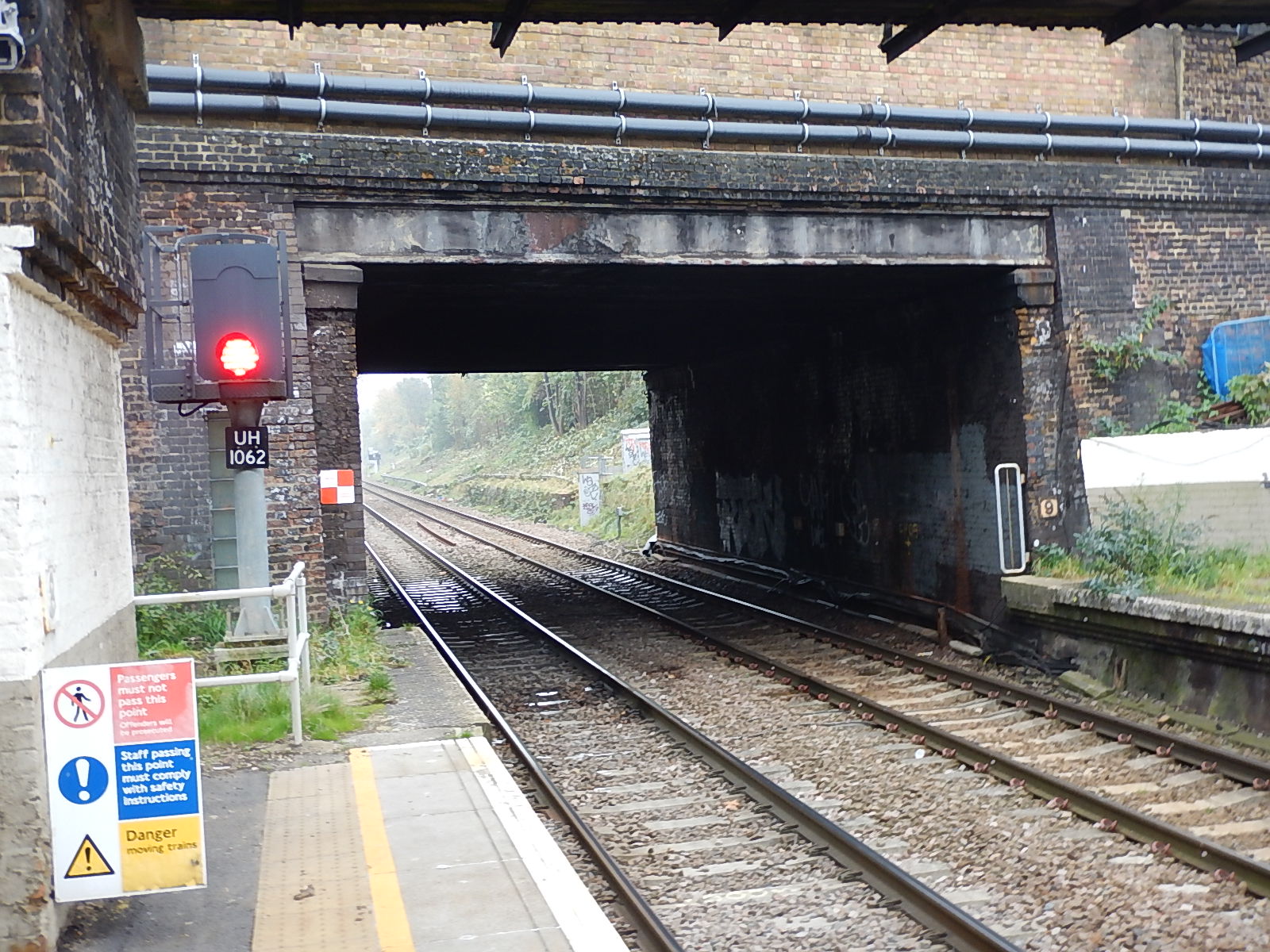
Upper Holloway Bridge
Someone told me, that the bridge will take longer than that. You certainly couldn’t electrify it now!
So I can’t see conventional electric trains running on that line before 2019 at the earliest, thus delaying the cascade of the much-needed Class 172 trains.
But an IPEMU variant of a Class 387 train could run on that line much sooner than that.
Just replacing the Class 172 trains with Class 387 trains would solve one of the major problems on that line, which is a chronic lack of capacity.
There would probably need to be a few platform extensions, but surely the increase in passengers would compensate.
In some ways, the beauty of this approach, is that where you are using IPEMUs to bridge gaps in electrification, when you electrify the gap, you can either convert the IPEMUs to standard trains or replace them with something designed for the line and send the IPEMUs on to another line to work their magic there!
I suspect George Osborne will order the cavalry to charge in the Autumn Statement on November 25th.
Will IPEMU Trains Transform The Greater North-East?
I think before I write this, I should define a few terms.
The Greater North East
By this area, I mean that area of England, that is North of the River Humber and is bordered in the West by those towns and cities that lie on or just to the West of the electrified East Coast Main Line. So they would be working Northwards up the line.
- Doncaster – On the ECML
- Sheffield – Including Meadowhall
- York – On the ECML
- Leeds – On the ECML
- Bradford – Electrified from Leeds
- Darlington – On the ECML
- Newcastle – On the ECML
It would also include those branches that reach to the West to places like Bishop Auckland, Carlisle, Halifax and Hexham.
IPEMU Trains
IPEMU stands for Independently Powered Electric Multiple Unit and is a normal train, that has on-board energy storage which is uses on lines that are not electrified to power the traction and other systems on the train.
To a passenger they would appear to be a normal four-car electric muliple unit. I described my ride in the prototype between Manningtree and Harwich in Is The Battery Electric Multiple Unit (BEMU) A Big Innovation In Train Design?
I was extremely sceptical until I rode the train and looked into the physics.
Bombardier are developing a new train called the Aventra, which will be wired so that it can be converted to an IPEMU, if operators need the capabilities.
An Aventra IPEMU have at least the following properties.
- At least a sixty mile range on the stored energy (Batteries or perhaps KERS?)
- Identical passenger experience to a standard train.
- The energy storage would be charged when the train was running on electrified lines.
- Regenerative braking would also be used to charge the energy storage.
- The energy storage could be used to move the trains around depots and sidings that were not electrified.
These trains sound almost too good to be true!
But as a Control Engineer by training, I have a feeling that the Ultimate Aventra IPEMU might be an impressive beast with a two hundred kilometre per hour top speed under wires, a range greater than sixty miles on energy storage and a very impressive electrical efficiency, which would make the train more affordable to operate.
I would also feel that the trains could use some form of mechanical energy storage like KERS in Formula One. Batteries are rather naff, but using something lifted from Formula One could be rather sexy and high-performance.
IPEMU Hubs
Suppose you were to build a series of IPEMU hubs, where the storage on IPEMU trains could be charged.
In several cases these hubs already exist, as they are stations with electrified platforms.
- Carlisle
- Darlington
- Doncaster
- Leeds
- Newcastle
- York
Some like Carlisle, Darlington and York would only need a couple of extra platforms to be electrified.
There would also possibly be other stations, where some form of charging would need to be provided, so that trains could be topped up with energy before returning to a main hub.
Stations in this category might include.
- Cleethorpes
- Hull
- Scarborough
- Sheffield
- Whitby
Sheffield will get fully electrified under the Midland Main Line electrification program anyway.
Services
The big route that could be run by IPEMUs would be North TransPennine, as IPEMUs would be capable of bridging the gap between Leeds and Manchester.
Also given the right structure of IPEMU hubs, virtually every passenger service in the Greater North East could be run using IPEMUs.
Conclusion
Who needs conventional electrification?
Freight services do!
So eventually the main freight routes will need to be electrified. This will mean that the primary use for the energy storage in the IPEMUs would be to make the trains more efficient.
From Hull To Sheffield
I escaped from Hull on a train to Sheffield, as on my walk across the city from my hotel to the station, I didn’t pass one welcoming looking cafe or a suitable shop to buy my copy of The Times. I did finally find a cafe in the station called the London Way Cafe, but I’d already bought my ticket and didn’t fancy waiting an hour and a half for the train after the one I was catching.

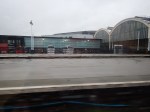
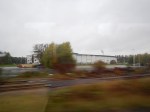
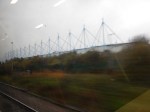
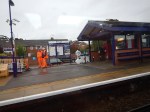

The route to Sheffield via Goole and Doncaster is across very flat country as the pictures show.
Can I come to any conclusions?
- I think the last time, I did this journey it was in a dreaded Pacer, but this time it was a clean Class 158 train. So some things are getting better!
- Part of Hull station has been turned into a bus station, which is properly integrated with the trains.
- The signposting in the station to local attractions like The Deep and the KC Stadium can’t even be judged on quality, as there isn’t any.
Much of the line is the Hull to Doncaster branch, which effectively connect the two TransPennine routes into Hull and Cleethorpes at Gilberdyke and Thorne. It is not electrified, but given the fact that Doncaster is and Sheffield could be in a few years, this line would be ideal for IPEMUs running a possible half-hourly electric service between Hull and Sheffield via Doncaster.
At present Hull trains from London take two hours thirty minutes for a direct run via Selby and if you change at Doncaster it takes a few minutes under three hours using Virgin East Coast.
So perhaps if the Sheffield to Hull service is improved using IPEMUs and a bit of selective electrification is installed from say Doncaster to Thorne or in Hull station, the service from London with a change at Doncaster could be reduced to almost the two and half hours using the direct train.
But if IPEMUs can do Doncaster to Hull, then surely Hull Trains could use them on the Doncaster route to go to Hull as an all-electric alternative. They could still serve Brough, but Selby would need to use that route.
This simple exercise shows how IPEMUs could change the rail landscape of the UK.
Scarborough
I’d never been to Scarborough before so I took the opportunity to visit on my way from York to Hull.
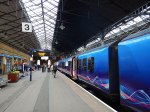

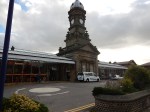


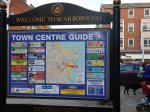
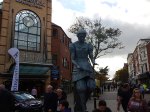



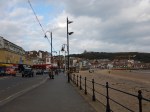
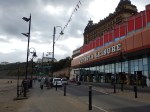
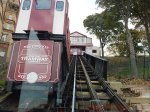


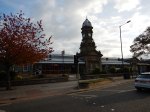
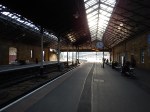
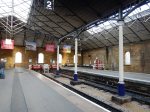
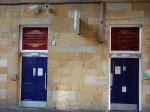
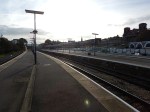
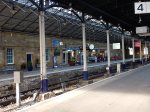

Looking back from a few days away, I think that Scarborough, would be a better place to stay than Hull.
I came to Scarborough station on one a Class 185 train and left in a Class 158 train, so I didn’t have to experience a Pacer. According to Wikipedia the Hull to Scarborough Line is usually worked by the very acceptable Class 158 trains, sometimes coupled to something else for more capacity. This is said.
Services are usually worked by Class 158 DMUs. Summer weekends see services operated by a Class 158 coupled to a Class 153 or extra Class 158 providing a 3/4-car unit for additional capacity. Sundays also see a variety of traction traversing the line to retain crew knowledge; this can include Class 153, Class 150, Class 142 and Class 144.
You do wonder how much traffic this route could generate if it was electrified and run by a new four-car electric train.
It would be very expensive to electrify, as until Hull is electrified, it would be a stand-alone system for about forty miles, that was a long way from any other electrification.
But if some means were to be provided to charge the trains at Scarborough and Hull, I suspect that IPEMUs could provide services between Scarborough and Hull and Scarborough and York with ease, given the easy nature of the lines.
This would also allow the TransPennine services from Scarborough to Manchester and Liverpool to be run by high-speed IPEMUs, which could bridge the electrifdication gap between Leeds and Manchester.
In an ideal world, a service should be provided between Scarborough and Whitby, which if there was an improved service around Scarborough would probably be needed to serve the tourism industry.
That area of East Yorkshire needs to be developed with respect to the leisure and tourism opportunities it offers.
Is Northern Electrification Going To Use Battery Trains?
This report on the BBC is entitled Network Rail to restart electrification of train lines. This is said.
The electrification of two railway lines is to be restarted after the projects were halted so a review could be carried out, the government says.
Work on the TransPennine Express Railway – between Manchester and York – and Midland Mainline – from London to Sheffield – was paused in June.
Sir Peter Hendy, chair of Network Rail, said the “temporary pause” had “given us the space to develop a better plan”
The Aventra IPEMU
Looking at the electrification of the two lines in posts over the previous few days, I have come to the conclusion that properly engineered battery trains built by Bombardier in Derby called Aventra IPEMUs (Independently Powered Electrical Multiple Units) could charge their batteries on existing sections of electrification and jump the gaps at speeds of up to at least 110 mph and possibly 125 mph, by running on batteries.
If that sounds like something that is too good to be true, I don’t believe it is! I was impressed when as a paying passenger, I rode the prototype train between Manningtree and Harwich.
For those who think that a battery train is just so-much Mickey Mouse-technology, note that the battery supplier; Valence is linked to Tessla; the electric vehicle manufacturer. A review of their latest car is on Autocar. The biggest problem with the car is not the power, range and performance, but the time it takes to charge the car from a typical supply. In addition to the overhead wire or third rail of the railway, an Aventra IPEMU has to charge the battery, the train will also charge the batteries using the regenerative braking system.
The TransPennine Line
On the TransPennine Line from Liverpool to Newcastle, the only gap in the electrification is the forty-three miles between Leeds and Manchester.
Aventra IPEMUs have a range of sixty miles, so Liverpool to Newcastle would be electric all the way and could be faster by up to thirty minutes on the current three hour journey.
Read Jumping The Electrification Gap Between Leeds And Manchester for full details on what it would entail.
The Midland Main Line
On the Midland Main Line, the electrification reaches from St. Pancras to Bedford.
As Corby, Kettering and Leicester are all within an Aventra IPEMU’s range from Bedford, these places could be served by these trains, once a certain amount of track and station work had been completed.
Read Thoughts On Midland Main Line Electrification for full details.
Delivering The Projects
The BBC article says this about the schedule.
The TransPennine upgrade is expected to provide capacity for six “fast or semi-fast trains” per hour between Manchester, Leeds and York , reducing journey times by up to 15 minutes.
The Manchester to York section of the work is now planned to be completed by 2022.
Once completed, the whole line from Liverpool to Newcastle will be fully electrified, the Department for Transport added.
The electrification of Midland Mainline north of Bedford to Kettering and Corby will now be completed by 2019, and the line north of Kettering to Leicester, Derby, Nottingham and to Sheffield will finish by 2023.
My project management knowledge and observations of Network Rail, say that to get electric trains to Kettering and Corby by 2019, would be a very tight schedule to perform on a working railway using conventional electrification!
But if it were needed to replace the current Class 222 trains with Aventra IPEMUs, it would just be a matter of certifying the line for the new Aventra IPEMUs and training the drivers and other staff.
There would be little or no work outside in the elements and all of the electrification would effectively be done in a comfortable warm factory at Derby!
I also feel that if say Network Rail said that the projects would be delivered on a particular date, that the risk of non-delivery would be very small.
Aventra IPEMUs can’t be delivered earlier, as the Derby factory will be jammed solid with production of Aventras for Crossrail.
On the other hand to prove the concept, would Bombardier modify a Class 387 train to create an IPEMU variant to run in passenger service between St.Pancras and Corby. Note that there have already been rumours of Class 387 IPEMU variants for Great Western Railway.
I wouldn’t be surprised if such a train is created, as it would be a superb way to identify any problems, train staff, prove the credibility of battery trains to a sceptical public and even deliver electric trains earlier.
A Cunning Plan
There are twenty seven Class 387 trains running on the Thameslink route at the moment, that will be replaced by Class 700 trains between 2016 and 2018.
As the Great Western Main Line won’t be electrified to Newbury, Swindon and Oxford until 2019 or whatever, there does seem to be the possibility of some very new Class 387 trains going into storage.
But as they are very similar to the Class 379 that was used for the IPEMU demonstrator, I do wonder if those clever engineers at Bombardier could convert some of these 110 mph trains into an IPEMU variant that could be used on services on TransPennine and the Midland Main Line.
If there were any spare Class 379 trains, I’m sure that other train companies would find a use for them! Especially, if Bombardier developed a plug-in battery system for the trains, so they could be used to prove if IPEMUs improved the lot of passengers on secondary lines.
You have to make your assets sweat.
Conclusion
I may be wrong, but I can’t see any other way to meet the schedule that has been published, unless some form of IPEMU is used to bridge the gaps in electrification..
It could be said that the North needs fast electric trains now and George Osborne needs them by 2020, as he has an election to win!
It might not matter much to most people if the trains didn’t run until say August 2020, but George Osborne would be unlikely to win an election in May 2020, if the trains were not delivered and running smoothly.
Jumping The Electrification Gap Between Leeds And Manchester
The Battery High Speed Train
An Aventra uses a modern version of the same bogies that are used in the Class 222 trains, which are capable of 200 kph. As the Class 387 train, which is a version of the Electrostar, can travel at 110 mph, I wouldn’t rule out that the more modern Aventra could run at 200 kph or 125 mph. Obviously, this speed would probably only be attainable in places on the East Coast Main Line.
Example times between York and Newcastle include.
- East Coast InterCity 225 – 56 minutes
- East Coast InterCity 125 – 62 minutes
- Transpennine Class 185 – 67 minutes
So if the performance on the line of an Aventra IPEMU was the same as an InterCity 225, then this would knock eleven minutes of the trip to Newcastle
Acceleration on batteries would be the problem, not maintaining a high speed. that had been built up whilst running under the wires.
When jumping the gap in the electrification between Leeds and Manchester, as the train will have been running from either Liverpool or York, I would suspect that it would set out over the Pennines with a full load of electricity.
Manchester To Leeds Electrification Gap
The Manchester to Leeds electrification has now been paused and it is likely that it will not be completed in the next ten years.
The line has its problems as the three-car Class 185 trains, that work the line, are totally inadequate for the route.
There are two major routes between Leeds and Manchester.
- The Huddersfield Line via Dewsbury, Huddersfield and Stalybridge.
- The Calder Valley Line via Bradford Interchange, Halifax, Hebden Bridge, Todmorden and Rochdale.
The shortest distance by rail between Manchester and Leeds is just 43 miles. When I saw this, I didn’t believe it, but it’s all in this article in the Guardian.
So this means that if you want to run an electric train between Liverpool and Manchester to Leeds, York and Newcastle, the Aventra IPEMU would bridge the gap with ease.
The demonstration version of the Aventra IPEMU was a modified Class 379 Train and had a range of sixty miles on batteries.
So even this modified Stansted Express would have been able to bridge the gap on both routes with ease.
A fully engineered production Aventra IPEMU would be unlikely to have a shorter range on batteries.
So Aventra IPEMUs create a fully-electrified TransPennine route from Preston, Liverpool and Manchester in the West to Leeds, York and Newcsastle in the East.
Destinations In The West
These are all current Western destinations for Transpennine Express.
- Barrow – On an unelectrified branch line from an electrified Carnforth.
- Blackpool North – On an unelectrified branch line from an electrified Preston.
- Liverpool – On a direct line from Manchester that is completely electrified
- Liverpool via Warrington – On a direct line from Manchester that is partially electrified.
- Manchester Airport – Electrified from Manchester
- Windermere – On an unelectrified branch line from an electrified Oxenholme.
All could be served by using Aventra IPEMUs.
I suspect it would also be possible to serve Chester.
I’m not sure how Aventra IPEMUs would affect slower services like York to Blackpool North across the Pennines, but I suspect they would be faster than the current diesel multiple units.
With the franchises being reallocated, I suspect that it will be done in such a way, that the trains across the Pennines give a much better service.
Destinations In The East
These are all current Eastern destinations for Transpennine Express.
Cleethorpes – Probably too far, but the Class 185 trains could run the service as they do now!
Hull – Hull is perhaps fifty miles East of the East Coast Main Line and I believe that a solution can be found to do this on an out-and-back basis.
Middlesbrough – This is a few miles from Darlington
Newcastle – Electrified all the way from Leeds
Scarborough – The York to Scarborough Line is forty two miles long and I believe that a solution can be found to do this on an out-and-back basis.
Whether Aventra IPEMUs can do the return trip from the East Coast Main Line on an out-and-back basis to Hull and Scarborough, depends very much on how the range of the trains work out, when the production trains are delivered. I suspect Bombardier know and have either calculated it or proven it on a test rig, but obviously they are keeping it quiet and sticking with the sixty miles total range obtained with the Demonstrator.
If they can’t make it, I suspect that they can provide some form of charging at the Eastern termini.
I do suspect that because of the reorganisation of the two franchises we may see some extra destinations in the East.
Times Across The Pennines
At present times on the major routes are.
Liverpool to Newcastle – 3 hours
Liverpool to Hull – 2 hours 30 minutes with a change at Leeds
As I indicated earlier there is eleven minutes to take off the Newcastle journey and the change at Leeds probably wastes ten minutes on the Hull trip.
Other factors would have an effect.
- The time spent on a stop by the Aventra IPEMU will be less than that of the current Class 185 trains.
- If diesel multiple units on the two TransPennine routes can also be replaced with Aventra IPEMUs, then these trains would be less likely to slow the fastest expresses.
- The Aventra IPEMUs are faster than the current trains.
- Network Rail will probably be able to do some small amount of trackwork to speed trains up in places.
I have no idea what the eventual TransPennine time will be, but it will be a few minutes less than today’s times.
 The Anonymous Widower