Upgrading Ravensthorpe Station
Ravensthorpe station is due to be upgraded as part of Network Rail’s £2.9billion project to upgrade the Huddersfield Line between Huddersfield and Dewsbury stations, that I wrote about in Network Rail Reveals Detailed £2.9bn Upgrade Plans For TransPennine Route.
This Google Map shows the station and the surrounding land.
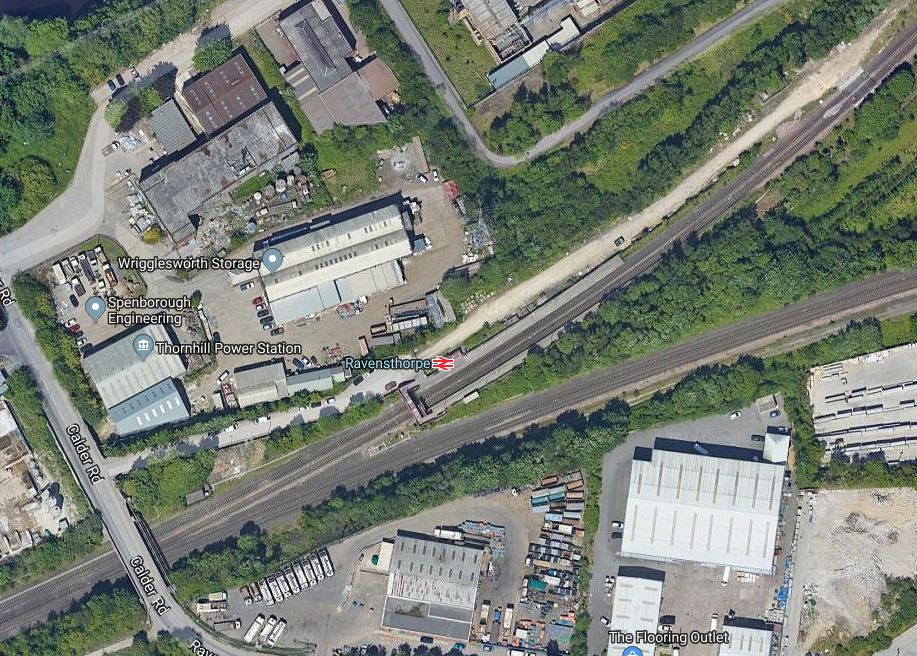
Note.
- The lines through the station go between Huddersfield in the East and Dewsbury in the North-East.
- The line going East goes to Wakefield.
These pictures show the station.
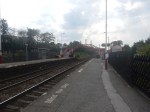
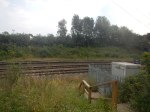

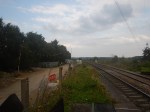
I did try to get a picture of the bridges over the River Calder, but I was unable to find the route and the weather was about to deteriorate.
The station is currently just two platforms on the lines between Huddersfield and Dewsbury, with a terrible overbridge, a poor shelter and a couple of seats.
The Wikipedia entry for Ravensthorpe station says this.
Ravensthorpe station is adjacent to Thornhill LNW (London North Western) Junction, where a line branches to Wakefield Kirkgate. There are plans to extend the station by building new platforms on this line, which was built by the former Manchester and Leeds Railway.
This document on the Digital Railway web site is entitled Transpennine Route Upgrade SDO1 ETCS – Analysis.
It is mainly about using digital signalling called ETCS on the Transpennine Route, but it does give these track layouts between Huddersfield and Dewsbury.
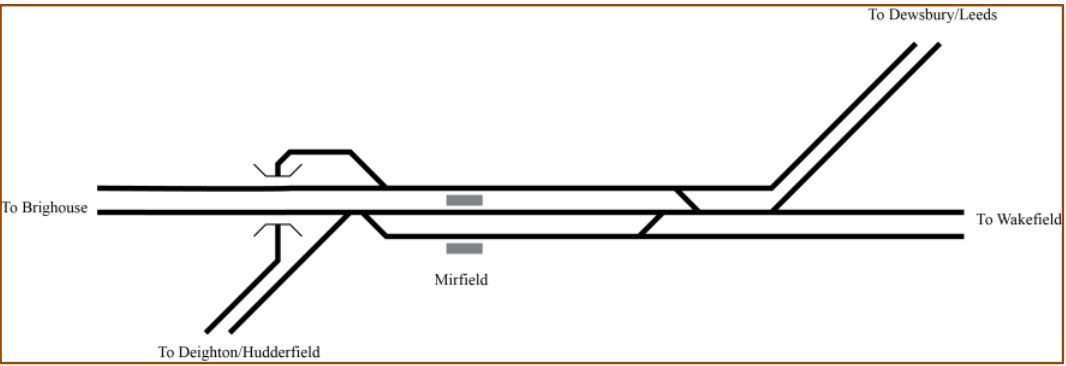
This is the current layout.
This is a reduced four-track layout.
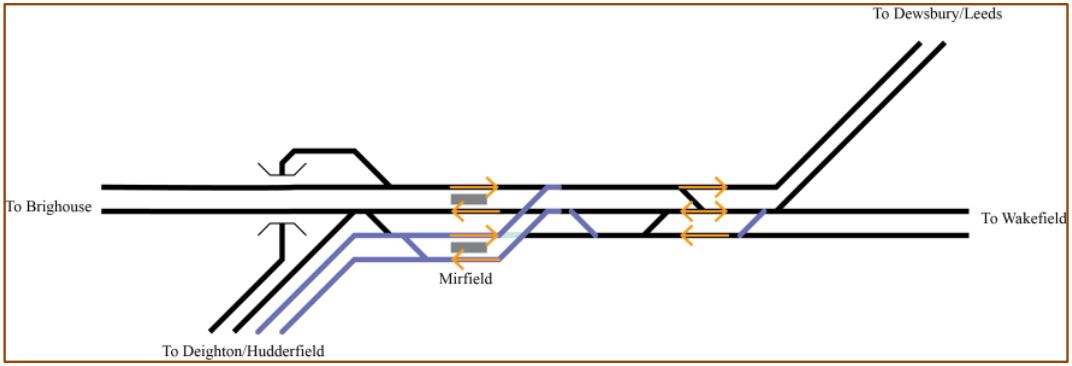
In Proposed Track Layouts Between Huddersfield And Dewsbury, I came to the conclusion, that the reduced four-track layout or something better could handle the current trains through the area.
If the reduced four-track layout is used, the requirements for a new Ravensthorpe station can now be stated.
- Two platforms on the tracks to and from Dewsbury.
- Two platforms on the tracks to and from Wakefield.
- Some better shelters than at present.
- Step-free footbridges.
In Winner Announced In The Network Rail Footbridge Design Ideas Competition, I wrote how the competition was won by this bridge.
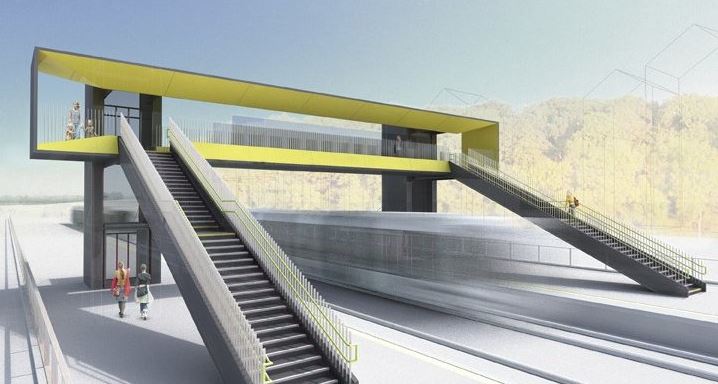
So could a factory-built bridge like this be installed at Ravensthorpe station?
- The platforms from Dewsbury and to Wakefield, could probably be arranged as a walk-across interchange.
- This would mean that the flexible nature of the bridge design would enable a single bridge with three lifts and three sets of stairs to be erected to join all the platforms together.
- The bridge would have the correct clearance for the electrification.
I doubt it would be the most complicated of stations.
Proposed Track Layouts Between Huddersfield And Dewsbury
Tracks between Huddersfield and Dewsbury stations are due to be upgraded as part of Network Rail’s £2.9billion project to upgrade the Huddersfield Line between the two stations, that I wrote about in Network Rail Reveals Detailed £2.9bn Upgrade Plans For TransPennine Route.
This document on the Digital Railway web site is entitled Transpennine Route Upgrade SDO1 ETCS – Analysis.
It is mainly about using digital signalling called ETCS on the Transpennine Route, but it does give these track layouts between Huddersfield and Dewsbury.
This is the current layout.
This is a full four-track layout.
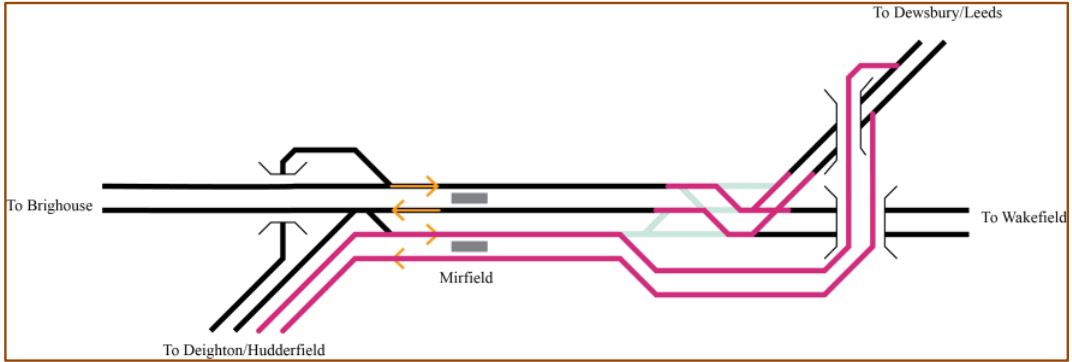
This is a reduced four-track layout.
As I see it, if the reduced layout can handle the required number of services, it has major advantages over the full scheme.
- There are no changes to track layout between Ravensthorpe and Dewsbury stations.
- Rebuilding Ravensthotpe station should be a smaller project.
- The current and reduced layout have three tracks between Mirfield and Ravensthorpe stations.
- There are no expensive new bridges to be built.
By using bi-directional running on the centre track between Ravensthorpe and Mirfield stations, which is controlled by ETCS, the track layout is simplified, with three tracks instead of four.
- Slow trains from Huddersfield to Dewsbury will dive under the Brighouse lines and call in/pass Platform 1 at Mirfield station before going straight on to Ravensthorpe and Dewsbury. This is as trains do now.
- Slow trains from Dewsbury to Huddersfield will use the centre track from East to West and call in/pass Platform 2 at Mirfield station before turning South-West on to Huddersfield. This is as trains do now.
- Fast trains from Huddersfield to Dewsbury will call in/pass Platform 3 at Mirfield station and then cross over to the top track and go straight on to Ravensthorpe and Dewsbury.
- Fast trains from Dewsbury to Huddersfield will use the centre track from East to West and call in/pass Platform 4 at Mirfield station before turning South-West on to Huddersfield.
- Trains from Brighouse to Wakefield will call in/pass Platform 1 at Mirfield station and then cross to the centre track and go straight on to Wakefield. This is as trains do now.
- Trains from Wakefield to Brighouse will use the centre track from East to West and call in/pass Platform 2 at Mirfield station and go straight on to Brighouse.
Note.
- Platforms at Mirfield station are numbered 1 to 4 from the North
- The slow lines between Mirfield and Huddersfield are shown in black.
- The fast lines between Mirfield and Huddersfield are shown in blue.
- Passengers can use Platforms 1/2 as a cross-platform interchange between slow Huddersfield-Leeds and Brighouse-Wakefield services.
I also think it likely, that the proposed layout will improve the timetable.
Conclusion
I think it is highly likely that the reduced four-track layout will be used.
Unless of course something better is devised.
Network Rail Reveals Detailed £2.9bn Upgrade Plans For TransPennine Route
The title of this post is the same as that of this article on Rail Technology Magazine.
It is planned to be a comprehensive upgrade to the Huddersfield Line that includes.
- Improvement between Huddersfield and Westtown
- Grade separation or a tunnel at Ravensthorpe
- Rebuilding and electrification of eight miles of track.
- Possible doubling the number of tracks from two to four.
- Improved stations at Huddersfield, Deighton, Mirfield and Ravensthorpe.
This project should be a major improvement to the Huddersfield Line.
Here are my thoughts on the upgrade.
Where Is Westtown?
Westtown is a difficult place to find on Google Maps.
This Google Map is the best I can do.
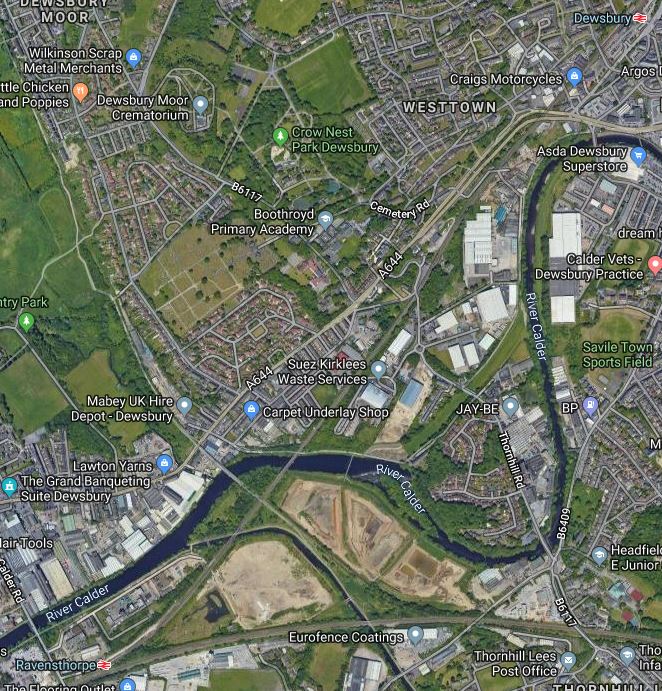
Note that Dewsbury station is at the North-East of the map and Ravensthorpe station is in the South-West corner, with the Huddersfield Line going through both stations.
- To the South-West the line goes to Mirfield, Deighton and Huddersfield.
- To the North-East the line goes to Batley, Morley, Cottingley and Leeds.
Westtown can be seen indicated to the West of the Huddersfield Line, North of the River Calder.
Railways Between Dewsbury And Huddersfield
This map clipped from the Wikipedia entry for the Huddersfield Line, shows the route between Dewsbury and Huddersfield stations.
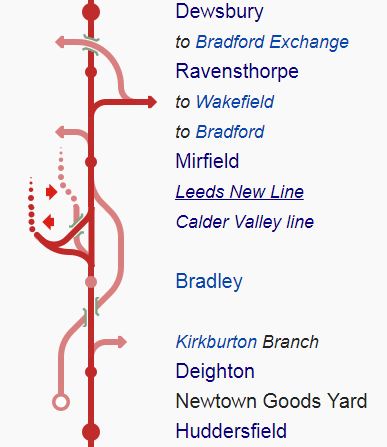
Note the Leeds New Line, which was built by the London and North Eastern Railway and opened in 1900.
It appears to have been closed between 1960 and 1990.
Everybody blames Beeching for the closure of railways, but this closure started before he reported.
But it does seem, that LNER decided that four tracks were needed between Leeds and Huddersfield and that British Railways felt that two was enough.
It now appears that part of the solution to increasing capacity is to create a four-track section of the Huddersfield Line between Huddersfield and Westtown.
We often blame the state of our railways on poor Victorian planning and engineering, but it does appear that they got it right here and British Rail got it wrong, in the 1960s.
A Very Busy Line
If you look at the traffic through Dewsbury station, it is a busy train-spotters paradise, with five scheduled trains per hour (tph) typically stopping at the station and several more passing through.
Four-Tracking Between Huddersfield And Westtown
This is Network Rail’s preferred solution to providing more capacity between Huddersfield and Desbury.
It is not going to be simple engineering all the way.
This Google Map shows the Huddersfield Line crossing the River Calder and the Calder and Hebble Navigation Canal South of Dewsbury station and to the North of Ravensthorpe station.
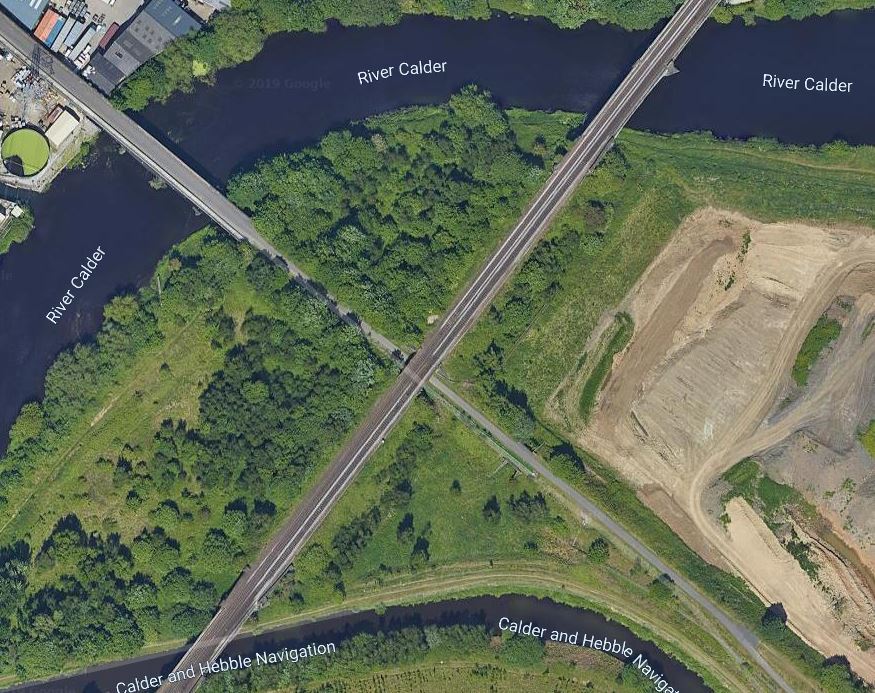
Note the two double-track bridges over the waterways.
This page on Georgraph has a picture of the bridge over the River Calder. It looks an excellent example of a Victorian wrought iron bridge.
Depending on their condition, these might need to be replaced, but they will certainly need to be upgraded to four tracks.
This Google Map shows Ravensthorpe station and the rail lines in the area in more detail.
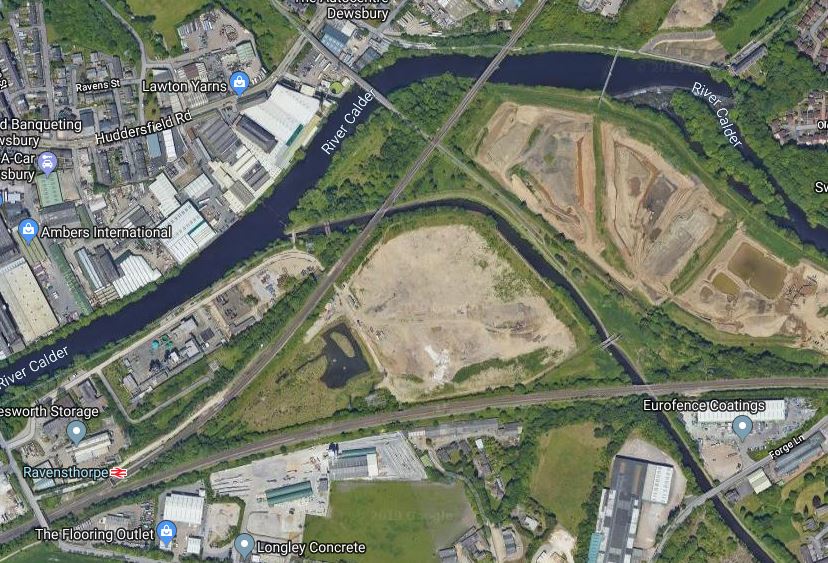
The line going East from Ravensthorpe goes to Wakefield Kirkgate station, although there are no platforms at Ravensthorpe.
The Wikipedia entry for Ravensthorpe station says this.
Ravensthorpe station is adjacent to Thornhill LNW (London North Western) Junction, where a line branches to Wakefield Kirkgate. There are plans to extend the station by building new platforms on this line, which was built by the former Manchester and Leeds Railway.
It looks to me that there are possibilities to rebuild Ravensthorpe station and the lines in the area to meet the following objectives.
- Two fast lines and two slow lines through the station.
- Platforms for Dewbury and Leeds services.
- Platforms for Wakefield Kirkgate services.
- Four tracks to as close to Dewsbury station as possible.
It must help that a lot of the land North of the line to Wakefield Kirkgate, appears to be devoid of buildings.
The engineering would not be difficult, but probably extensive and expensive.
It should be noted that the Werrington Diver Under near Peterborough, which is a similar scale of project, was costed at £200 million.
West of Ravensthorpe station, there appears to be plenty of space to fit in two extra tracks alongside the current pair.
This Google Map shows Ravensthorpe station and the tracks to the West.
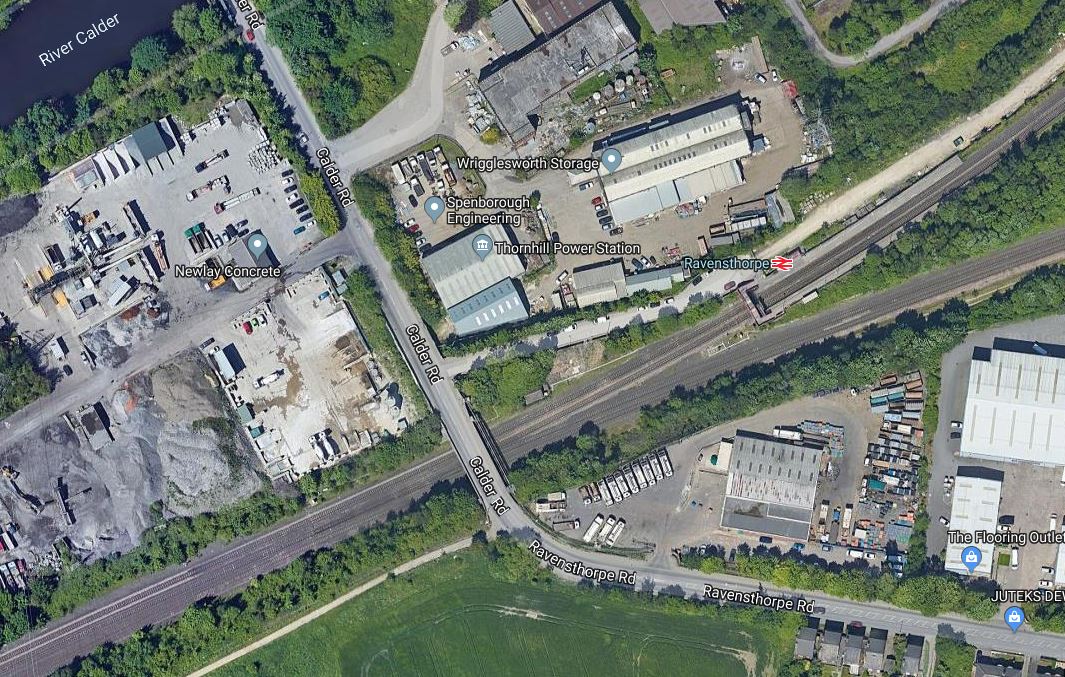
Note that there is space on both sides of the current tracks and a bridge.
But between Ravensthorpe and Mirfield stations, there are at least three more bridges.
This Google Map shows Mirfield station and the tracks to the West.
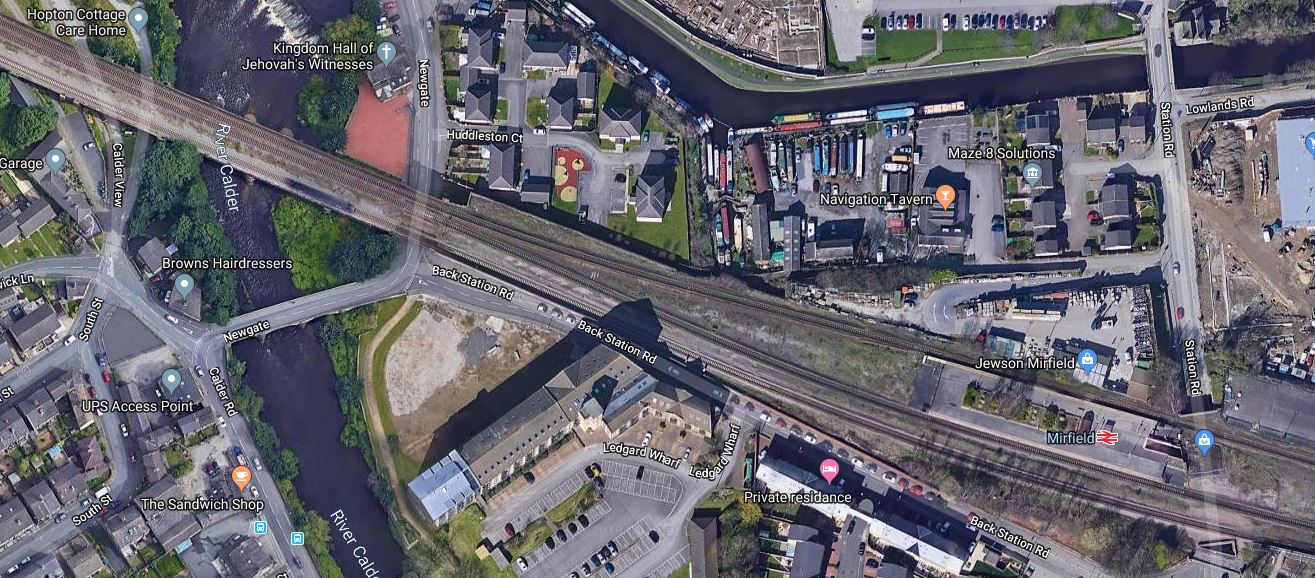
There could be problems adding extra tracks here.
- The track and platform layout is unusual.
- There may be a lack of space at the station.
But the biggest problem will probably be four-tracking the bridge over the River Calder.
This Google Map shows the bridge in more detail.
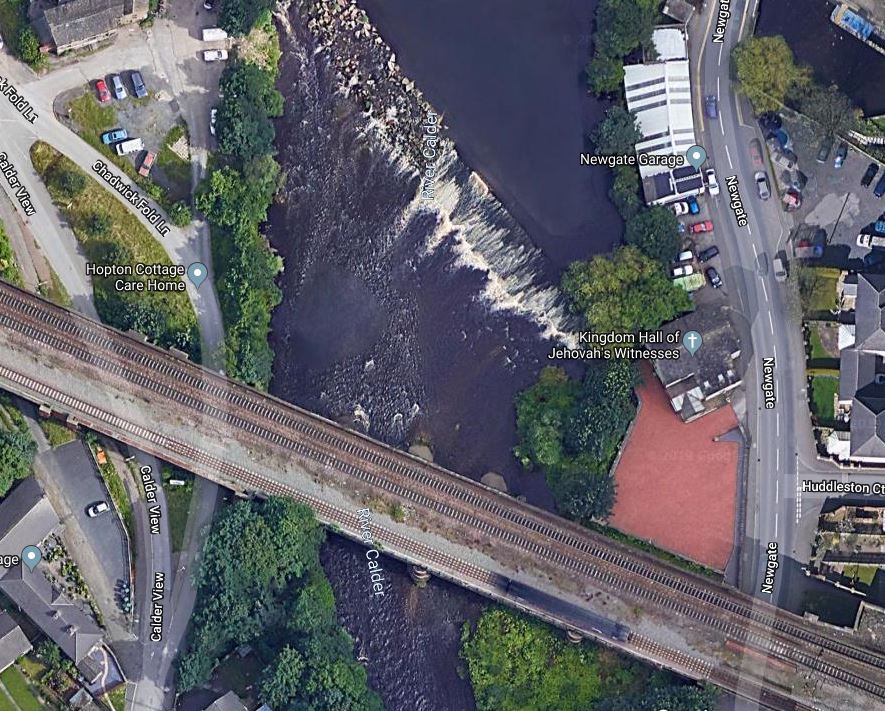
It does appear that the bridge currently has three tracks and might have at some time had four tracks.
If the two extra tracks could be added to this bridge, it would probably be heroic engineering at a high cost, given the difficulty of the site.
But I think engineers have replaced similar bridges on UK railways in recent years.
After Mirfield, the tracks take a wide loop to the North to go to Deighton station.
The tracks were probably built to follow the contours above the River Calder, so hopefully despite the terrain, they could be fairly level.
This Google Map shows the tracks through Deighton station.
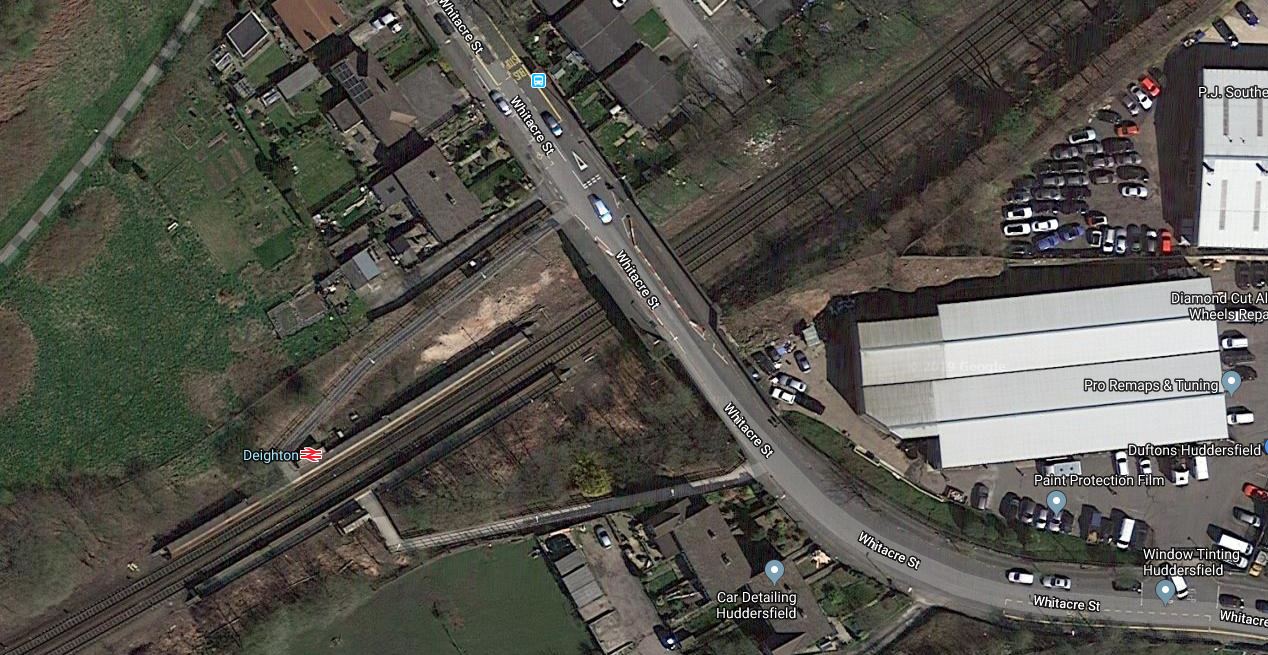
It certainly looks that there should be room for two extra tracks.
Between Deighton and Huddersfield stations, it would appear that four-tracking would be as easy as any part of the route.
Looking at the stations from the air from my helicopter (i.e. Google Maps), I suspect that one way to four-track the line would be to proceed in something like this way.
- Rebuild and four-track the bridge over the River Calder at Mirfield station.
- Build the junction and the bridges to the North-East of Ravensthorpe station.
- Create a pair of fast lines on the South side of the current tracks.
- Move all traffic onto these new fast lines.
- Rebuild the existing railway and the stations.
There may be a need for replacement buses, whilst the stations are rebuilt, but hopefully through services could continue.
Electrification
The Rail Technology Magazine opens with this paragraph.
Major station upgrades and plans to rebuild and electrify an 8-mile stretch of track have been put forward by Network Rail as part of a public consultation on a major upgrade to the TransPennine route.
As it is eight miles between Huddersfield and Dewsbury stations, it would seem likely that the electrification will stretch between the two stations.
This would enable TransPennine Express’s Class 802 trains to switch between electric and diesel power in the stations, if this is preferred by the operator.
Line Speed
The eight miles section of track will never have a particularly high speed, given the not very straight route and the terrain.
Currently, trains that stop at both Huddersfield and Dewsbury stations take eight minutes for the trip. Even trains going at speed through both stations seem no faster.
Four-tracking will surely allow fast expresses to pass local services and freight trains, but will the improvement save much time?
If trains could average 100 mph between Huddersfield and Dewsbury, just over three minutes could be saved.
Station Upgrades
The three stations between Huddersfield and Dewbury will all be upgraded, as will Hudderfield station.
The three smaller stations will probably be rebuilt as four platform stations or two platform stations with two through lines for fast services.
In Huddersfield And High Speed Two, I showed several pictures of Huddersfield station.
- It will not be easy to upgrade to a full four-track station.
- There are three through tracks and some bay platforms.
The two main through platforms are on the South side of the station, so if the two fast lines were on the South side of the route between Huddersfield and Ravensthorpe, this could enable an efficient station at Huddersfield.
I also think, there could be a problem at Huddersfield station, with trains to Sheffield on the Penistone Line, if more and faster trains were going through the station.
A New Timetable
I suspect that, if and when the upgrade is finished, that a new timetable will be brought in.
A possibility could be. that TransPennine Express trains run non-stop between Huddersfield and Leeds.
Now that Northern are getting new trains, perhaps these could run a Turn-Up-And-Go service of a train every fifteen minutes between Huddersfield and Leeds.
Heritage Issues
Huddersfield station is a Grade I Listed building and I suspect that the three bridges I have noted are lListed as well.
Will the Heritage lobby object to electrification in these sensitive areas?
Onward To Manchester
I have flown my helicopter between Huddersfield and Stalybridge and if the proposed improvement is successful, I suspect that the route to the West can be improved as far as Stalybridge.
- The route is at least double track.
- It looks like in places, it once had more tracks.
- The trackside margins are fairly generous.
- There doesn’t seem to be too many bridges.
- Electrification will soon be as far as Stalybridge from Manchester.
After my quick look, I don’t think that electrifying between Huddersfield and Manchester would be too challenging, except for possibly, the Standedge Tunnel.
Onward To Leeds
The route between Dewsbury and Leeds is double track, with the only complication of the Morley Tunnel.
Conclusion
It looks to me, that all the difficult bits to creation of an electrified route between Manchester and Leeds via the Huddersfield Line, are in the stretch between Huddersfield and Dewsbury.
So perhaps it makes sense to sort out the difficult bits first, with this £2.9billion project.
Thoughts On A Battery Electric Class 88 Locomotive On TransPennine Routes
In Issue 864 of Rail Magazine, there is an article, which is entitled Johnson Targets A Bi-Mode Future.
As someone, who has examined the mathematics of battery-powered trains for several years, I wonder if the Age of the Hybrid Battery/Electric Locomotive is closer than we think.
A Battery/Electric Class 88 Locomotive
After reading Dual Mode Delight (RM Issue 863), it would appear that a Class 88 locomotive is a powerful and reliable locomotive.
- It is a Bo-Bo locomotive with a weight of 86.1 tonnes and an axle load of 21.5 tonnes.
- It has a rating on electricity of 4,000 kW.
- It is a genuine 100 mph locomotive when working from 25 KVAC overhead electrification.
- The locomotive has regenerative braking, when working using electrification.
- It would appear the weight of the diesel engine is around seven tonnes
- The closely-related Class 68 locomotive has a 5,600 litre fuel tank and full of diesel would weight nearly five tonnes.
The locomotive would appear to be carrying between 7 and 12 tonnes of diesel-related gubbins.
It is worth looking at the kinetic energy of a Class 88 locomotive hauling five forty-three tonne CAF Mark 5A coaches containing a full load of 340 passengers, who each weigh 90 Kg with baggage, bikes and buggies. This gives a total weight would be 331.7 tonnes.
The kinetic energy of the train would be as follows for various speeds.
- 90 mph – 75 kWh
- 100 mph – 92 kWh
- 110 mph – 111 kWh
- 125 mph – 144 kWh
The increase in energy is because kinetic energy is proportional to the square of the speed.
Supposing the seven tonne diesel engine of the Class 88 locomotive were to be replaced by a battery of a similar total weight.
Traction batteries seem to have an energy/weight ratio of about 0.1kWh/Kg, which is increasing with time, as battery technology improves.
A crude estimate based on this energy/weight ratio would mean that at least a 700 kWh battery could be fitted into a Class 88 train and not make the locomotive any heavier. Given that lots of equipment like the alternator and the fuel tank would not be needed, I suspect that a 1,000 kWh battery could be fitted into a Class 88 locomotive, provided it just wasn’t too big.
A short length of electrification could be installed at terminal stations without electrification to charge the batteries during turnround.
This size of battery would be more than large enough to handle the braking energy of the train from full speed, so would improve the energy efficiency of the train on both electrified and non-electrified lines.
It would also contain more than enough energy to accelerate the train to line speeds that are typical of non-electrified routes.
TransPennine Express will soon run similar rakes of coaches hauled by Class 68 diesel locomotives between Liverpool and Manchester Airport and the North East.
The following sections of the Northern TransPennine route, are not electrified.
- Stalybridge and Leeds – 35 miles taking 46 minutes
- Leeds and Colton Junction – 20 miles taking 18 minutes
- Northallerton and Middlesbrough – 21 miles taking 29 minutes
- York and Scarborough – 42 miles taking 56 minutes
When running on these sections without electrification, consider the following.
- The train consists of modern coaches, which must be energy efficient.
- The train would enter the sections with a full battery, that had been charged using the 25 KVAC electrification on part of the route.
- Scarborough and possibly Middlesbrough stations, would have means to charge the battery.
- The train would enter the sections as close to line speed as possible, after accelerating using electrification.
- Regenerative braking would help conserve energy at any planned or unplanned stops.
- The driver will be assisted by a modern in-cab signaling and a very capable Driver Assistance System.
- Stadler and Direct Rail Services must have extensive theoretical and measured data of the performance of Class 88 locomotives and the related Class 68 locomotive, when they are hauling trains across the Pennines, which will enable extensive mathematical models to be built of the route.
For these reasons and especially the last about mathematical modelling, I believe that Stadler could create a battery/electric locomotive based on the Class 88 locomotive, that would be able to bridge the electrification gaps on battery power and haul a five-coach train on the Northern routes across the Pennines.
A Quick Look At The Mathematics
As I said earlier, the weight of a Class 88 locomotive and five Mark 5A coaches, full of passengers is 331.7 tonnes.
There would appear to be little weight difference between a diesel Class 68 locomotive and an electro-diesel Class 88 locomotive, so in this rough exercise, I will assume the train weight is the same.
The current Class 185 trains, that run across the Pennines have the following characteristics.
- Three-cars
- A weight of 168.5 tonnes.
- A passenger capacity of 169.
- Installed power of 560 kW in each coach, which means there is 1560 kW in total.
If each passengers weighs 90 Kg, with all their extras, a full train will weigh 183.7 tonnes.
So a full train has a power-weight ratio of nine kW/tonne, which must be sufficient to maintain the timetable across the Pennines.
The diesel Class 68 locomotive, which will be hauling trains on the route in the New Year, has an installed power of 2,800 kW, which gives a power/weight ratio of 8.4 kW/tonne.
I would be interested to know, if a Class 88 locomotive running in diesel mode with a power output of only 700 kW, could take one of the new trains across the Pennines. I suspect Stadler and/or DRS know the answer to this question.
But it would be a power/weight ratio of only 2.1 kW/tonne!
The challenging route is between Stalybridge and Leeds via Huddersfield, where the Pennines has to be crossed. I’m pretty certain, that all the other sections lack the gradients of the section between Stalybridge and Leeds.
So would a Class 88 locomotive with a 1,000 kWh battery be able to cross the Pennines with a full train?
Theoretically, up and down routes are good for battery/electric trains with regenerative braking, as energy used going uphill can be recovered on the other side.
The thirty-five miles between Stalybridge and Leeds take forty-six minutes, so for how long on this journey will the locomotive be applying full power? Perhaps for twenty minutes. If the locomotive applied an average of 2,000 kW for twenty minutes or a third of an hour, that would be 667 kWh.
With an electric multiple unit like an Aventra, where most if not all axles are driven and they can also contribute to regenerative braking, reasonably high rates of braking energy can be recycled.
But what proportion can be recycled, when the locomotive is doing all the regenerative braking. Any braking done by disc brakes on the coaches will result in lost energy.
As an aside, I wouldn’t be surprised to find out that train manufacturers simulate train braking in order to develop braking systems, that turn less energy into wasted heat.
I’d also love to see a simulation using Stadler’s real data of a Class 88 locomotive with batteries attempting to cross the Pennines, with a rake of Mark 5A coaches!
- What size of battery will be needed?
- Can this battery be fitted in the locomotive?
- Would distributing the batteries along the train increase performance?
- Would short lengths of electrification on the route, increase performance?
I was doing problems of similar complexity to attempt to design efficient chemical plants nearly fifty years ago. We had our successes, but not as great as we hoped. But we certainly eliminated several blind alleys.
My figures don’t show conclusively, that a Class 88 locomotive with a 1,000 kWh battery instead of a diesel engine and all the related gubbings, would be able to perform services across the Pennines.
But.
- Battery technology is improving at a fast pace.
- Train manufacturers are finding surprising ways to use batteries to improve performance.
- I don’t have access to Stadler’s real performance figures of their diesel locomotives.
- Finding a way to make it work, has a very high cost benefit.
Who knows what will happen?
125 Mph Running
The Class 88 locomotive, has a similar power output to the 125 mph Class 91 locomotive of the InterCity 225 and I believe that the locomotive might have enough power, when running on 25 KVAC overhead wires to be able to haul the train at 125 mph on the East Coast Main Line.
Conclusion
I believe that it is possible to create a battery/electric version of the Class 88 locomotive, that should be able to take a rake of five Mark 5A coaches across the Pennines.
Timings across the Pennines would benefit substantially, without any new infrastructure, other than that already planned and the charging system at Scarborough.
Colne To Skipton Rail Line Re-Opening Campaign Moves Forwards
The title of this post, is the same as that of this article in the Lancashire Telegraph.
This is the first paragraph.
A meeting at the House of Commons hosted by Pendle MP Andrew Stephenson and his Labour counterpart for Keighley John Grogan convened senior officials from the Department of Transport (DfT), Transport for the North (TfN), Network Rail and commercial companies with an interest in East-West rail links.
Like many at the meeting, I feel very strongly that this link should be built.
There are obviously local reasons, like better passenger services between the conurbations of Blackburn/Accrington/Burnley and Leeds/Bradford, but there is something far more important.
Extra Train Paths Across The Pennines
Currently, trains take about twenty minutes between Rose Grove and Colne stations, over the mainly single track line.
I think it would be possible for experts to design a railway between Rose grove and Skipton stations via Colne, that would offer paths for three trains per hour (tph) across the Pennines in both directions. It might even be possible to accommodate four tph, using a combination of passing loops and digital signalling.
It should be noted that currently, the traffic through Accrington on the Calder Valley Line, which is to the West of Rose Grove station is around three tph in both directions. As the route is double-track, with modern trains and modern signalling, surely a higher frequency can be achieved.
These extra paths would be invaluable during the upgrading of the main TransPennine routes from Leeds to Manchester via Huddersfield.
I have some questions about the link.
Should The Link Be Double-Track?
Given that it will probably be difficult to put a double track on the Bank Top Viaduct over Burnley, I feel that to get the needed extra capacity, where it is possible to squeeze in a double-track, this should be done.
Should The Link Be Electrified?
Operationally, this would probably be preferable, but there are reasons why it could be difficult.
- There are a lot of quality stone bridges over all routes in the area.
- The heritage lobby might object to gantries marching across the Pennines.
- Network Rail’s abysmal performance on installing electrification.
It would also be sensible to electrify between Preston and Rose Grove stations, which would add substantially to the cost.
Passenger services wouldn’t be too much of a problem, as I am fairly certain that hydrogen-powered or battery trains could be used. The four-car Class 321 Hydrogen would probably by ideal.
Freight trains are probably better under electric power, rather than the awful Class 66 locomotives. Especially, if freight trains were run in the middle of the night.
I think the budget will decide on electrification.
Conclusion
I feel it is imperative, that to reduce the chaos of the TransPennine upgrade, work should start on the creation of the Skipton to Colne Link immediately.
 The Anonymous Widower