The Longest Underwater Electrification In The UK Since The Channel Tunnel
It may only be a tunnel seven kilometres long and a lot shorter than the Channel Tunnel, but the Severn Tunnel has two tracks, which both have to be electrified, so that the Great Western Railway can run electric trains to and from South Wales.
But the Severn Tunnel was built between 1873 and 1886 and it posed various problems during its construction with water ingress and since with operation because of its length, profile and the pumping of constant water. There is a section in Wikipedia, which is called General, which gives more details.
The Severn Tunnel is probably one of those places, sane engineers wouldn’t want to electrify a railway.
So I was interested to read this article in Rail Engineer, which is entitled Preparing For Severn Tunnel Electrification. The article gives this overview of the project.
The electrification project now moves on to probably one of its biggest challenges: the electrification of the 7.012km long Severn Tunnel. The tunnel will be closed to trains between 12 September and 21 October for the work. It is referred to as the “Severn Tunnel Autumn Disruption” or STAD for short and, just to make it a bit more interesting, included in the STAD are the Patchway Tunnels –1.139km Old (Down); 0.057Km Short (Down); 1.609Km New (Up).
Some facts about the tunnel and the work already done.
- More than 76.4 million bricks were used in the construction.
- Between 10 and 20 million gallons of water have had to be extracted every day to prevent flooding.
- There is also a ventilation shaft through which 80,000 cubic feet of fresh air can be forced into the tunnel each minute by means of an eight- metre diameter fan at the top.
- The contractors first had to scarify 2,500 square metres of tunnel lining to remove more than 35 tonnes of soot.
It is not a small job. But at least the tunnel was in better condition than expected.
The article gives a deep insight into how the Severn Tunnel electrification is a collaboration between several major contractors, who are installing a Swiss system from Furrer + Frey called Rigid Overhead Conductor Rail System in the roof of the tunnel. The ROCS system uses a rigid aluminium rail supported on appropriately designed fittings fixed to the roof of the tunnel. There is more on the ROCS system in this article in Rail Technology Magazine.
To makes things more difficult, the engineers have only got thirty-nine days to do the work.
And if it all goes wrong, there are two sets of politicians who will get very angry!
Building A Tram-Train Tunnel In Karlsruhe
Karlsruhe has quite a few tram–trains routes in the Karlsruhe Stadtbahn. This is said as an introduction to the system in Wikipedia.
The Karlsruhe Stadtbahn is a German tram-train system combining tram lines in the city of Karlsruhe with railway lines in the surrounding countryside, serving the entire region of the middle upper Rhine valley and creating connections to neighbouring regions. The Stadtbahn combines an efficient urban railway in the city with an S-Bahn (suburban railway), overcoming the boundary between trams/light railways and heavy railways. Its logo does not include the green and white S-Bahn symbol used in other German suburban rail systems and the symbol is only used at stops and stations outside the inner-city tram-operation area.
It works according to the Karlsruhe model.
A typical tram-train route could start on say the west of the city running on a typical suburban railway electrified to the German standard of 15 kVAC. It might share the tracks with any passenger or freight train, just like any EMU in the UK shares the heavy rail tracks.
For passing through the centre of the city, the tram-train takes to the tram tracks with their electrification of 750 VDC and runs like a normal tram. Provided the platforms are of a compatible height and the gauge is acceptable, Karlsruhe’s tram-trains can go anywhere a normal tram could go in the city. But in Karlsruhe, there doesn’t seem to be any normal trams any more so all the lines in the city are full of tram-trains, running at typical tram frequencies.
After passing through the city centre, they would take to the heavy rail system again. Some routes even go quite large distances into the surrounding countryside.
I didn’t actually find a place where voltages change, but it looked to be automatic, with ceramic rods isolating the different voltages.
This is a map of the system.

Karlsruhe Stadtbahn
I think that Harry Beck would have approved of this map, as it certainly has a touch of the Londons about it!
Note the east-west line of routes across the map. These run along Karlsruhe’s equivalent of Oxford Street in London or Lord Street in Liverpool.
So they have decided to build a tunnel using cut-and-cover methods from one end to the other. A section in the Wikipedia entry for the Karlsruhe is called New Tunnel In Karlsruhe, and gives more details. This extract gives some objectives of the new tunnel.
The tunnel will shorten the travel time for the Stadtbahn through the pedestrian zone and the stability of the timetable will improve. In addition, the platforms of the station’s tunnel will have pedestals that are about 15 metres long with a height of 55 cm above the rail so that the first two doors of Stadtbahn trains will have step-less entry. This will make possible stepless entrance on lines S 4 / S 41 and S 5 / S 51 / S 52 in Karlsruhe for the first time, reflecting a trend that has long been standard elsewhere.
These pictures show the current state of the project, as I first walked in an easterly direction down the main street and then approached it from the East in a tram..
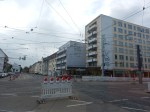




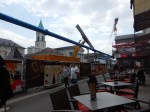
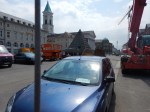
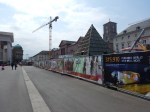
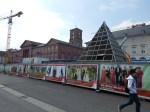
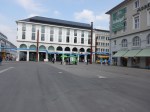


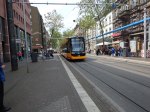
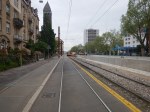


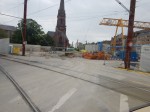
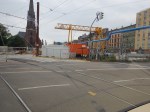

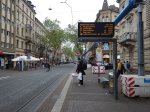
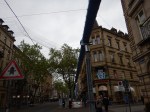

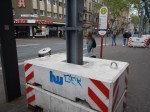
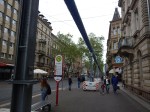

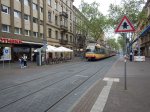
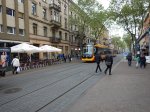
When I wrote Exploring Karlsruhe And Its Trams And Tram-Trains, it was in a much worse state.
But I don’t think the digging of the tunnel has been without problems. Note the blue pipe running along the street, which wasn’t there last time I visited. One of the locals told me it was all due to the wasser and gave flooding actions.
It would certainly appear, that they’ve had a lot more tunnelling problems than Crossrail.
I do think that the Karlsruhe tram tunnel, is one of the most significant transport ideas of recent years.
I shall be visiting the city of Karlsruhe again, when it opens.
Just imagine what Manchester would be like, if instead of its current tram system, they’d used a tunnel. Perhaps something like this could have been built.
- A double track tunnel was built under the city from Piccadilly to Victoria.
- The tunnel would be able to take Karlsruhe-style tram-trains.
- There would be sensibly placed underground stations at places like Arndale Centre and Piccadilly Gardens.
- Tram-trains were used on the various suburban routes, would connect back-to-back.
Unfortunately, the technology to create such a system has probably only existed for ten years and it was only developed after Manchester’s tram system was built.
But that doesn’t stop a tram-train route being created across the city, if the tracks were connected at the two main stations. After all the Class 399 tram-trains, which are UK versions of The Latest Citylink Tram-Trains In Karlsruhe, will be running through the centre of Sheffield.
So will we see them running through Manchester? Don’t underestimate the engineers!
I don’t know the Tyne and Wear Metro very well. Regarding the system and the trains.
- The trains are very elderly and there is talk of replacement.
- If say Pelaw Junction to Sunderland or any other part of the network needed to be electrified at 25 kVAC, Class 399 tram-trains would take it all in their stride, just as they do in Karlsruhe.
- The Leamside Line could be reopened to Washington for the Metro and as a diversionary route for freight. It would need electrification of some sort, but surely 25 kVAC would be better, as it would allow electric haulage of freight trains. Class 399 tram-trains wouldn’t care, so long as there was volts and amps!
- Extensions up the East Coast Main Line might be easier.
- If the Durham Coast Line is electrified, the Metro could go all the way to Middlesbrough.
- The Tyne and Wear Metro is based on the Karlsruhe model.
So could the trains be replaced directly by Karlsruhe-style Class 399 tram-trains?
I have no idea, but I do foresee some problems.
- The Metro runs on 1500 VDC. But I suspect any decent electrical engineer with rail transport experience could modify the design of the Class 399 tram-trains, so they ran on 1500 VDC and 25 kVAC.
- Is the platform height compatible? I suspect that if they aren’t then it could be quite easy to build the new fleet of trains to fit the current platforms.
Any Geordie with a little bit of imagination must be able to see the opportunities that would be created, by changing the rolling stock with what I believe could become Europe’s standard tram-train.
And then there’s Sheffield!
I can’t wait to ride the new Class 399 tram-trains in the city!
Note.
- The layout of Sheffield station is similar to Karlruhe-Durlach station, that I wrote about in Tram-Trains From Karlsruhe-Durlach Station.
- Sheffield will need to add to or replace its fleet of trams in the near future.
- Connections at Sheffield station between the two rail systems, would allow tram-trains to go to places like Manchester, Barnsley and Worksop, once the main lines are electrified.
I saw the future in Karlsruhe and it will come to Sheffield.
I can envisage a day, when I catch a Class 399 tram-train at Sheffield Cathedral and after running along the picturesque Hope Valley Line, I will alight at the Piccadilly Gardens tram stop in the centre of Manchester.
If you think that is fantasy look at the reality of Karlsruhe, where tram-trains go between the centre of the city and places further away than Manchester is from Sheffield.
Crossrail’s Giant Pimple
If you travel North from Canary Wharf on a 277 bus towards Hackney and Highbury and Islington station, as you go under the railway bridge that carries the c2c trains between Fenchurch Street and West Ham stations, you’ll see a Cerossrail building site on your left.
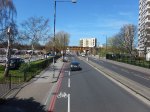
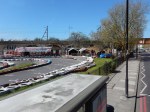
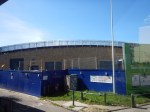


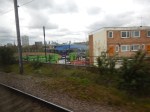
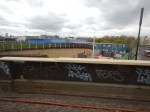

It looks like a small hill or just a giant pimple in the corner of Mile End Park.
Note that the last three pictures were taken from a c2c train passing over the railway bridge.
It’s actually the vent and evacuation shaft for Crossrail and it has been arranged, so it can be used as a view point for the nearby football pitches.
Custom House Station – 20th March 2016
Progress at Custom House station.
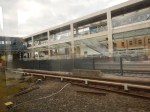


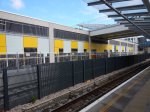
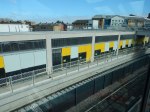
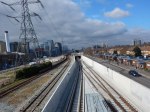
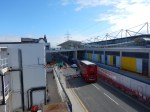
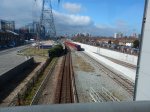
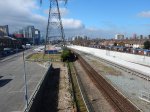
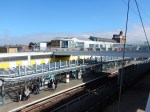
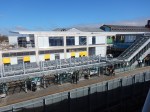
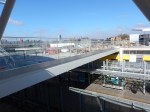
It’s certainly going to be an impressive entrance to Crosrail from the Excel.
What Will The Northern Line Extension TBMs Be Called?
This article in Global Rail News is entitled Northern Line TBMs Complete.
So all that is needed now is to find two suitable female names for the machines.
As the extension goes to Battersea, surely they should be given the names of famous dogs.
How about?
- Beauty – The world’s first rescue dog – Awarded the Dickin Medal in 1945.
- Judy – A pointer, who helped keep morale high in a Japanese prisoner-of-war camp – Awarded the Dickin Medal in 1946.
- Sasha – A labrador, who died with her handler in Afghanistan – Awarded the Dickin Medal in 2014.
- Susan – The queen’s first corgi.
There must be quite a few others.
An Hour In Farnworth
You might ask, why I spent an hour in Farnworth.
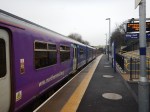
I wanted to take pictures of the Farnworth station and the tunnels nearby and as there is only one train an hour in both directions, that seem to arrive almost together, it meant I had to wait an hour in the rain.


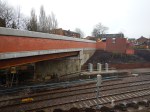
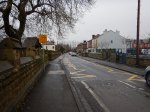
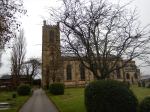
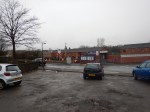
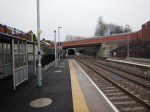
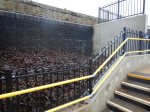
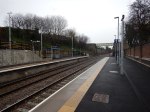

This Google Map shows the station and the town.
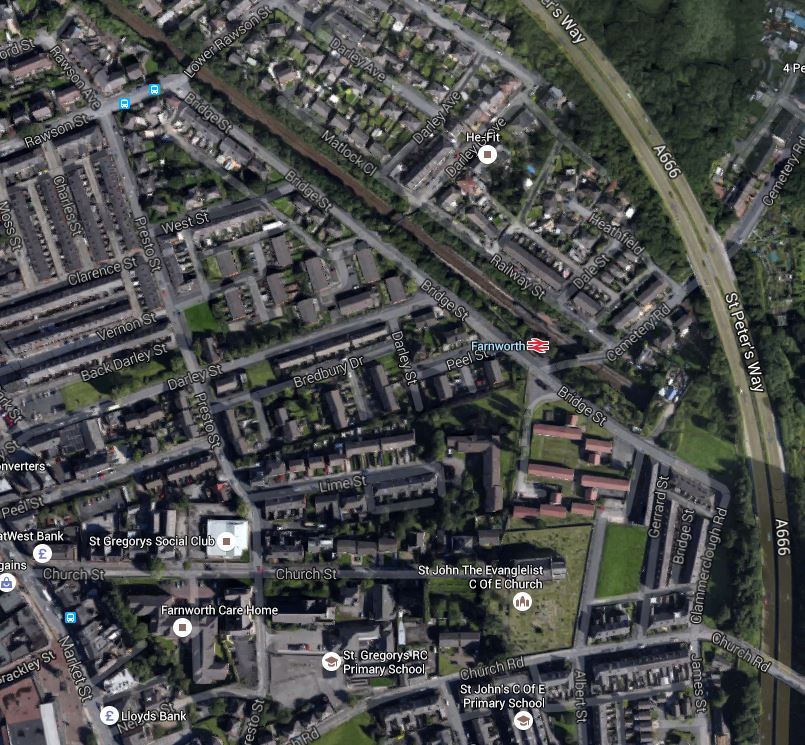
Around Farnworth Station
Note the A666 goes over the top of the tunnels. An omen?
Note the following about the station and the area.
- The station has a sturdy reconstructed bridge at each end, which could surely be used to support the overhead electrification.
- I was surprised that there was no obvious place to put the gantries to support the wires between the bridges.
- There was no ticket machine and I had to buy one from a person, which meant a walk up to the office.
- One train an hour isn’t enough, but hopefully this will change with electrification.
- There are no facilities near the station and I had to walk up the hill to Farnworth to get a cup of tea.
- Two locals were very adamant that no new trains will be added, as all money is spent on Metrolink.
The station very much reminded me of Crouch Hill station on the Gospel Oak to Barking Line.
- Access is from a road at one end.
- They are between bridges.
- How the stations will be electrified is not obvious.
It will be interesting to see how these stations are electrified.
How Not To Handle An Environmental Issue In A Large Project
On my holiday in Poland, I met someone, who lives on the route of HS2.
They told me that a million tons of tunnel spoil will be dumped on farmland in the Chilterns.
I was rather surprised to say the least, as having followed major projects for the best part of forty years, I know that project managers, engineers, architects and construction companies, don’t want hassle from what are collectively termed Nimbys, so they do their utmost to design projects, so that disruption and damage to the environment is minimised.
Crossrail had its problems early on, as Mayfair didn’t want the rsailway or the disruption of ten years of construction. So they devised a strategy based on openness and archaeology, which sold the project to Londoners, as something more than a railway. They have also been very helpful in giving access to the general public in events like Open House.
So I typed “HS2 tunnel spoil” into Google and found this article in the Bucks Free Press, which is entitled HS2 tunnel spoil to be dumped in Chilterns AONB. This is an extract from the article.
The announcement was made by HS2 Ltd’s Country South Area Manager Neil Cowie at a community forum in Little Kingshill on Tuesday.
He said it would be placed within a ‘sizeable area’ within two or three miles of the planned tunnel portal at Mantles Wood near Amersham – but he added HS2 Ltd did not want the location to be made public yet.
Mr Cowie said: “Rather than taking it longer distance along highways, we’ve taken some additional land alongside the route which we will landscape.
“When it’s finished it will be properly landscaped and will look very nice.”
I’m no diplomat, but it does seem a rather poor statement, which probably came out of a forum, where things were not up to scratch.
I’ve been to several Transport for London foums about projects like Camden Town station, Crossrail 2 and Hackney station and at each one, there has been an architect, engineer or project planner, who understands in detail what is proposed.
A later statement in the article says this.
In a later statement, HS2 Ltd said: “We will not being be depositing spoil/excavated materials from tunnelling in the AONB – it will be excavated materials from the cuttings going through the AONB. All tunnelling excavated materials from that part of the line will be taken out via the Colne Valley construction site.”
When dealing with any sensitive project from a children’s playground upwards, you must get your facts right! Once errors are in the local culture, they can only be eradicated with great difficulty and tremendous expense.
With respect to HS2, my project management and engineering instincts lead me to the conclusion, that HS2 will probably come up with an innovative and non-disruptive way to remove the tunnel spoil from the area.
If they don’t, then they don’t deserve to be building the line.
The Summit Tunnel On The Calder Valley Line
Until I started writing my post called Manchester Victoria To Hebden Bridge, I’d never heard of the Summit Tunnel on the Calder Valley Line.
Reading Wikipedia, the tunnel sounds like a masterpiece of Victorian engineering.
- It is 2.6 km. long and was built by hand through shale, coal and sandstone, in the 1830s.
- It was once the longest rail tunnel in the world.
- The tunnel takes two tracks in a single horseshoe-shaped bore, which is lined with twenty-three million bricks.
- It has caused odd bits of trouble in the last thirty years, so I suspect it is well known to and respected by tunnel engineers.
- It has been in continuous use since it opened.
I suspect many engineers will let this sleeping giant lie, after taking every check that he or she is fast asleep.
I also suspect that the heritage lobby, could get very protective about this tunnel.
If they electrify the Calder Valley Line, they would probably treat this tunnel in one of two ways.
- Leave well enough alone and use electric trains with an IPEMU capability.
- Call in the Swiss, who seem to be the experts in electrifying tunnels.
I would think, that the first option will be chosen, as it will be more affordable and probably have no more risk, than today’s use of diesels through the tunnel.
The IPEMU could have been designed for this tunnel, as it is the only electric train, that could pass through, without any modifications to the tunnel.
Manchester Victoria To Hebden Bridge
The weather wasn’t good as I took the hourly train on the Calder Valley Line between Manchester Victoria and Hebden Bridge stations.
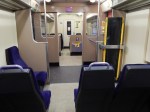




The train was a Class 150 train, which as the first picture shows had been refurbished, but really on a line between the two of the biggest cities in the north, shouldn’t something better be used.
As with my earlier trip from Burnley Manchester Road to Manchester, the line has a fair selection of viaducts, tunnels and challenging structures.
The tunnels include the Summit Tunnel, which is a masterpiece of Victorian engineering, that has been in continuous use since the 1840s.
I don’t know whether Network Rail will want to electrify the Summit Tunnel, but I believe that it could be declared safe for IPEMUs to pass through without extensive modification.
East Of Todmorden
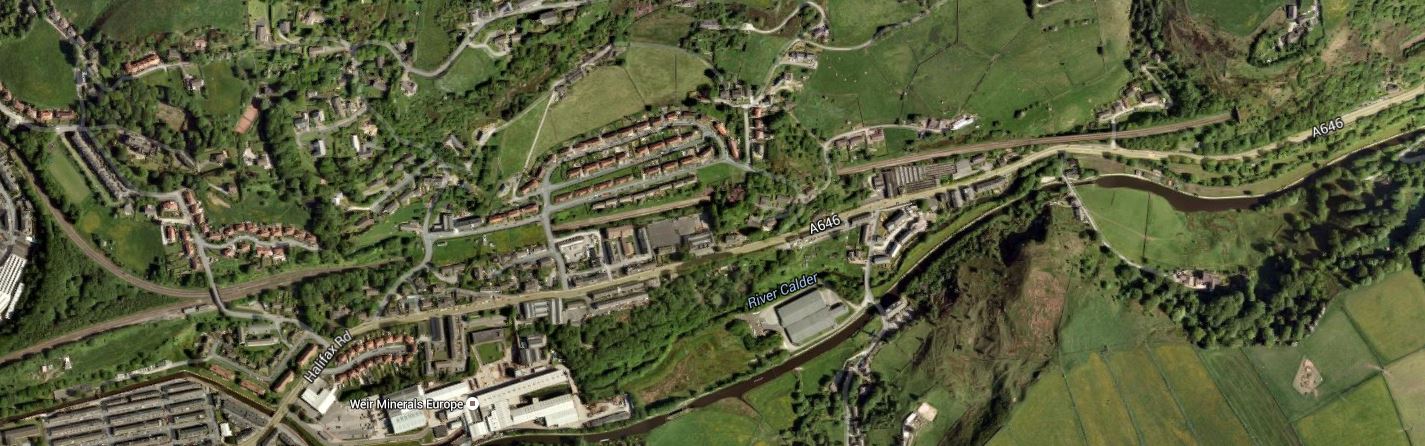
Between Todmorden and Hebden Bridge, there is the Hall Royd Junction, which incorporates the Todmorden Curve and three more smaller tunnels. This Google Map shows the line East of Todmorden.
Note that the Todmorden Curve had not been built, when the Google Map image was taken. The three tunnels are not as long as the Summit Tunnel and are each about two hundred metres long.
The engineering isn’t probably as challenging as that between Burnley and Todmorden, but there will be a lot of it.
If IPEMUs are used, provided the track, tunnels and viaducts are up to scratch, then all that will need to be done is check everything out.
Crossrail Gets Its Rails
There is an article in Rail Engineer with this title and it describes how Crossrail’s contractors will fit out the line.
In some ways, one thing that surprised me is that the massive concreting train, that lays the concrete slab for the rails is a refurbished one from France. At least they were able to drag it here, through the Channel Tunnel.
It’s a fascinating article, that is well worth reading.
 The Anonymous Widower